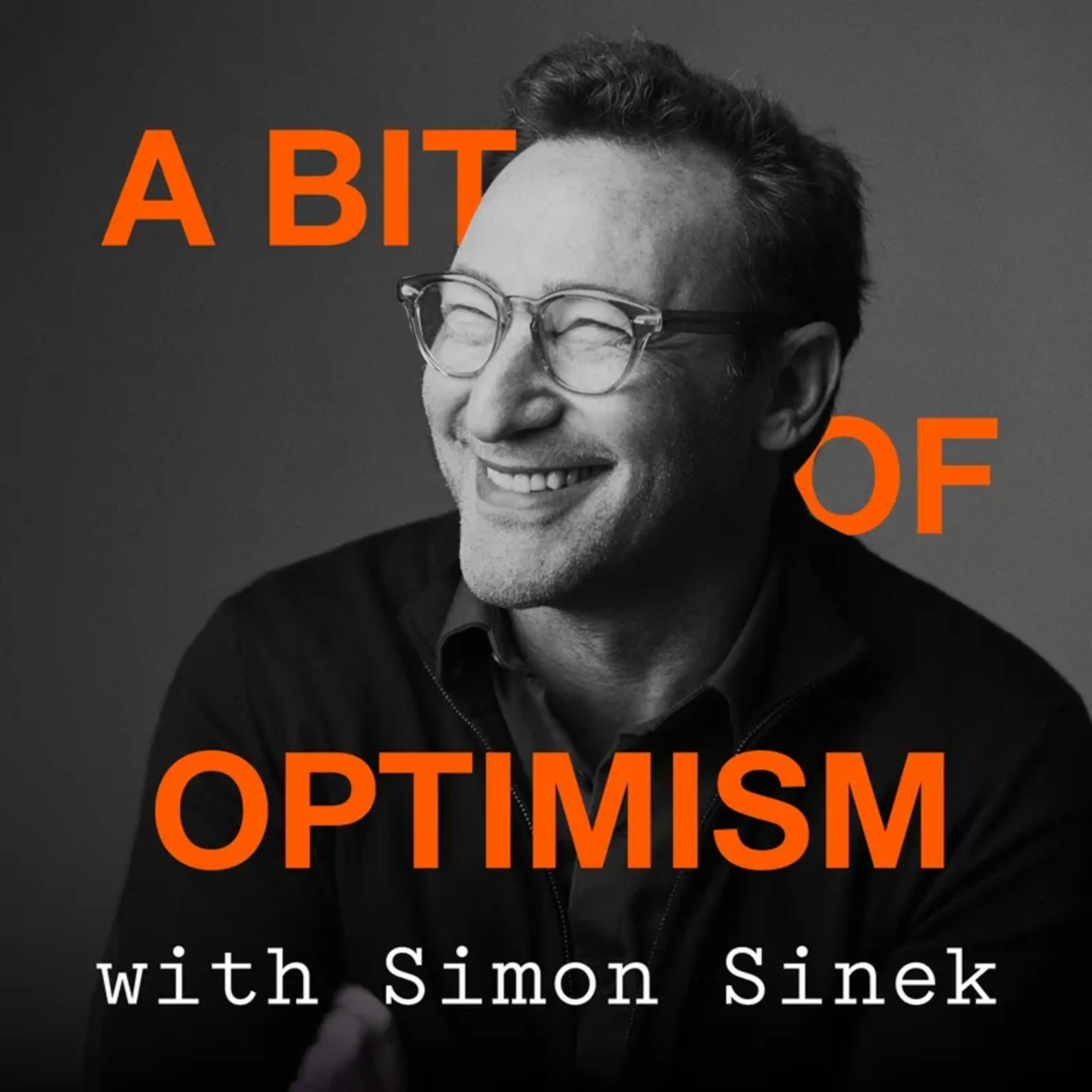
Season 6, Episode 18 · A Bit of Optimism
Remembering Bob Chapman: The Mentor Who Changed My Life
23 Jun 2026 · 52 min
Season 6, Episode 18 · A Bit of Optimism
23 Jun 2026 · 52 min
Sixteen years ago, an unknown CEO running a manufacturing company in the Midwest saw my TED Talk and recognized something in it. He sent me a letter and we made plans to meet. What started as a one-hour lunch turned into three, then four days touring factories together across the Midwest, and an idea I had only imagined turned out to already exist in reality. That CEO was Bob Chapman. Over five decades, Bob grew an unassuming manufacturing company in the Midwest into a global proof point that leadership grounded in humanity can scale and outperform. Bob saw the people in his company as human…
I can no longer be accused of being a crazy idealist if what I imagine exists in reality. That's how I felt after I met Bob Chapman and learned about Barry Waymiller, the company he led. Sixteen years ago, Bob saw my original TED Talk about the Y and sent me a letter. He claimed to have built a company like the one that I described in my work. The only problem is I tend to write about what's possible, My vision is more of a striving. Clearly, my curiosity was piqued. And so a couple of months later, I met Bob for lunch. To say he was amazing is an understatement. He had an energy like few other CEOs I've ever met before. And so I met Bob for lunch.
And that one hour lunch turned into spending three hours together that afternoon. Bob told me story after story about his culture and his people and how they were responsible for the reason the company outperformed the S&P year after year after year. Now, you have to understand, CEOs often try to convince me that they have the best cultures. And very often after I take a look for myself, I learn that, well, they don't. As much as I loved meeting Bob, I wanted to see it to believe it. And see it, I did. We spent four days together traveling from factory to factory across the Midwest. And what I saw blew my mind. This unknown CEO leading a company with a hard to remember name had built a culture that could be the model for all companies. Barry Waymiller figured out how to build a business model and a corporate culture that kept people safe, really safe.
as well as psychologically safe. They didn't send jobs overseas to save money. They didn't lay anyone off during the 2008 recession, and they won't be replacing people with AI. This company wasn't built for the short-term ambitions of investors, but for the long-term benefit of the people who worked with and for the company. It's built to last generations. Bob built something that he and I both believe deeply. that business can and must be a force for good in the world, not just by giving money away, but by the very business model itself. The very existence of Barry Wehmiller meant, as I said before, that I can no longer be accused of being a crazy idealist if what I imagine exists in reality. I went on to write about Bob and Barry Wehmiller in my book Leaders Eat Last, and Bob and I went on to become very dear friends, and he became a very close mentor.
In September 2025, I decided to go back to one of Bob's factories in Phillips, Wisconsin. Except this time, I brought a camera crew with me. I wanted to show the world what Bob had built. We made a mini documentary so that the world could meet some of the amazing people who worked in Phillips and to hear from Bob himself. That episode went on to be one of the most popular episodes we've ever released. And I'm so glad we made it because six months after our visit, Bob passed away.
I miss Bob desperately. There's barely a day that goes by that I don't have an impulse to call or text him to ask his advice, make fun of him, or talk about our shared passion for what business and capitalism can and must become again. Years ago, I sent Bob an email in which I made him a promise. What I didn't know was that Bob had that email printed to hang on the wall of his office. There's no force strong enough to pry me from your side, I wrote.
I am with you always. I will carry your torch for decades to come. And when the time is right, I will in turn pass it on to another. Our impact will last generations beyond us. This is what we must plan for. And it is with that promise in mind that I wanted to release the full conversation I had with Bob from the time we spent together in Phillips. I want as many people as possible to hear him and his message. It will, I promise, inspire you. Thank you, Bob. I miss you, and I love you. Bob, what a treat. Ooh, there's a big bee. Big wasp. Let's move the wasp. He wants to be in the show. He wants to be in the show.
Wasp, wasp, God. Bob, when I walked back in here, back in Phillips, Wisconsin, the flood of memories, the flood of emotions, I've been here a few times over the years, but I haven't been back for probably six or seven years. And I remember when you and I first met, whatever it was, 15 years ago, you told me about what you'd built, this amazing business where people care about each other. And it's such a treat to come back and talk to you in the very place where you took me on my first tour to see it.
I'm so curious, like when you meet people and they say to you sort of, Bob, what have you built? What's your business? How do you talk about this? Well, as you know, my first half of my career was very traditional about management, financial results and growth. And through the series of revelations I went through were the lens through which I saw people, because I saw them as machinists, labor, union members, office people, people working on the floor, all the traditional ways we talk about it. And the lens was reversed and I saw them as somebody's precious child.
that's been placed in my care, everything changed for me. So the lens through which you see people affects the way you treat people. Because I was raised that you need people to achieve results. And when you don't need them anymore, you let them go. So the revelations I went through that changed the way I see people. So. The lens was clearly seen. If you see people as somebody's precious child, it profoundly affects your leadership style. My major responsibility to people in our company is to give them a grounded sense of hope for the future. They can trust in my care. I take that incredibly profoundly seriously.
I know you and I have talked about this, about sort of how being a parent and being a leader are very similar. You talk about how being a parent, this child is brought into your life and you're responsible for its growth and its upbringing. And in business, a person is brought into your office and you're responsible for their growth and their upbringing. I appreciate that the lens for you changed where you stopped seeing people as line items and mechanisms for your success, but rather that you are now responsible for their growth, their success, their happiness, their well-being. But how did you learn leadership? It's one thing to say it. It's one thing to read it in a book and be this leader who just sort of views people as items on a spreadsheet. How did you make the conversion to being the leader you are now?
Because a lot of people, especially the people who either listen to this podcast or read my work, they're on that journey. You went through that journey. What was it that you were able to make that conversion to be this heartfelt leader rather than just all head in all numbers? It was a journey, as you said. And when I realized that day at the wedding that all 12,000 of our team members around the world are not functions for my success, they're somebody's precious child who I have in my care for 40 hours a week.
It changed everything. And a young man asked me about that time, what is your greatest fear, Bob? Now, you know me. I'm an internal optimist. And I had to stop and think. And I said, my greatest fear is that we were blessed with the message of the way the world was intended to be. where people would genuinely care for each other and would be dependent upon me. And I would leave this company, this earth and what I built would fall apart because I've seen that happen in churches and companies all over the world. So my greatest fear is that this blessing we've been given would not live beyond my time. So I, We began, I had an incredible team around me called the Empowerment Team. You know some of those members. And I said, how do great religions survive all the time? You know, that's just how we devour from great religions. And we said, they articulate their beliefs, which we have in the Guiding Principles of Leadership. And then they have disciples who carry this message forward beyond the Founder.
Because it's not Bob. We all believe this is the way we should treat each other. So we said, how are we going to do that? We can't send people back to universities to learn to be truly human leaders. So this eclectic team for the whiteboard said, well, we're going to create our own university. And they came up with three powerful classes that in hindsight, we were blessed with because Empathetic listening, which is the most powerful of all human skills. Recognition and celebration. How do you let people know they matter in thoughtful, appropriate ways? And then culture of service. Serving from what's all about me to actually care about you. So seizing the afternoon. So, you know, it was just kind of this journey and this eclectic team. And we started teaching it.
So give me some of the principles that you teach. And I know all of the classes that you teach are voluntary. People choose to go through it. And if they don't want to go through it, then that's fine. But people can see the impact that it has on their co-workers, their colleagues and friends when they do go through these classes, which is why I know that there's a good long waiting list for people to get into your classes. What are the core ideas that you teach in the empathetic listening class, for example?
Well, first of all, one of the things I've learned in teaching this, because again, it was our team member, David Vonermullin, who came up with the idea. Because when somebody said, if we're going to start a university, we need to teach people to listen, I thought, why would we need to teach adults to listen? We all know how to listen. Okay? That is the biggest revolution we realized, that we don't know how to listen. Okay? We're taught to speak, and we're taught to debate, but we're not taught to listen.
Okay. The divide we have in this country and the world is because we have a lot of people, I'm right and you're wrong. Okay. That's the world we see it in politics between our countries. And so this team came up with this idea that we would teach empathetic listening. Okay. Which is the most foundational human skill. that you can possibly have because you validate the worth of others when you listen to them without judge, not listening to debate, not listening to respond or judge, simply listening to validate the other person. And when you do that, it still amazes me, Simon, that this eclectic journey we've been on, we were simply trying to change managers into leaders, into disciples, people who would carry this forward well beyond my time. 95% of the feedback, 95% was how it This class was built to help people function better at work, right? That they would communicate better at work. Right, right. I thought when you hire somebody, the pay and the benefits was in exchange for the present. As long as you needed them, you would pay them. But when you didn't need them, you'd let them go. And this changed everything because what we realized is what people want to know is that they matter.
Okay, we have a very prosperous economy, but we do not have a healthy economy because we have depression, anxiety, because people don't feel valued, they feel used. So this listening class still amazes me 20-some years later that we've taught all over the world. This is not an American issue. This is a global issue. When you teach people to listen, they tell you the stories of how to improve their marriage and their relationship with their kids. So when we say what's wrong with kids today? Mm-hmm.
And so where did they come from? It came from families where parents probably came home from a job where they don't feel valued because of that stress and anxiety, whatever, and concern about the future. Probably don't treat their spouse as well as possible. And what do our kids see? They see the behavior of our parents who don't know how to care for each other. They may be in love, but they don't know how to listen to each other. And so it was unbelievable the feedback we got. If your listeners could have heard the thousands of people I've heard around the world who've taken this class from India to Serbia to China, it's a universal truth.
The healing power of listening is profound. This is such a, you know, we bifurcated the world, right? It's like you have your home life and you have your work life. And we forget that it's not two different worlds. It's one very integrated world because the people who are going to work go back home and vice versa. And so if they go to a place of work... where they don't feel like their work matters or they don't feel like they matter. They don't feel like their leaders care about them as human beings. They only see them as means of production. That stress that they carry, of course, has to go somewhere. And it comes in the form of lack of sleep, high blood pressure. It comes in the, you're grumpy, you're short-tempered, and that affects one's own health, but it also affects the health of the family unit. As you said, you know, you come home stressed from work just because you have a a shitty boss, you know, not a toxic person, not somebody who's like screaming and yelling, just doesn't make you feel like you're mad or they just care about your productivity. That stress comes out at home and that affects kids' grades, kids' self-confidence. And it's an amazing concept.
Logic is so simple. Logic is there, which is- It has to be simple because it occurred to me. It has to be simple. Which is if you're teaching these people how to listen, empathetic listening, so that they can better communicate at work. Those skills are the skills. They're going home. Not only do they feel better at work, they're taking those skills and they're raising their kids better. I mean, that a good job and a good place to work is good for my family occurs to nobody. Right.
And that a company would say, come work for us. It's good for your family other than just the money we're going to pay you because that's usually how we measure if it's good for your family. How much can I provide? In my education, undergraduate accounting, MBA, Pricewaterhouse, then running a family business, I was never taught, never told, never made aware that the way I would run this company would affect people's personal lives other than the compensation and the benefits. We think that is the exchange. You give me your gifts. I'll pay you fairly. Yeah.
But the most powerful thing we do to people is validate their worth. And the greatest source of happiness is a good job doing meaningful work with people they enjoy. Back to your point. I get in front of CEOs all over the world and I say, you're all worried about the cost of health care? You are the problem. 74% of all illnesses are chronic. The biggest cause of chronic illness is stress, and the biggest cause of stress at work. Jeffrey Pfeiffer at Stanford wrote a book, Dying for a Paycheck. And he doesn't mean anxious to get it. He estimates 120,000 people a year die of work-related stress, okay? These things I was never taught, never made it, because it's really about creating economic value, okay? And we thought the pay was human value. The real value is feeling valuable.
Can you imagine if we taught in our MBAs, in our MBA classes, that how you lead will directly affect someone's health? And that if you're a bad leader, there's a very short chain of logic that you're actually killing somebody. Increase in cortisol hurts the immune system. You know, this slow, steady drip of cortisol because of the stress at work. I mean, to your point, which is... People don't feel responsible for the lives of the people in their span of care because nobody's connected the dots for them. One of the things I find so remarkable about Barry Waymiller, which is that all of your leaders understand that it's not just this mushy, mushy, hippy, dippy stuff that you're doing this, that there's a deep sense of responsibility to the lives of the people who their parents gave you, their children, to look after.
Yeah, I mean, seriously, Simon, when you look at the feedback I've had all over the world, again, it's so foundational to the world. We just don't know how to care for each other. And what we've learned is you can't, as the CEO roundtable did, you can't ask people to care. You have to teach them how to care. You can't ask people to speak Chinese. You have to teach them how to speak. We found that caring is a teachable skill. And the good news, back to your MBA program.
is that with your encouragement and support and the evolution of this, that we're working with a number of major universities now to transform business education, to create tomorrow's leaders who have the skills and courage to care, to bring these human skills in with academic skills. So when they leave our education system, they're ready to live in the beauty of diversity, not the conflict of diversity. They're ready to be good stewards of the lives at home, in their community, at work. But it's a teachable skill. But we have always felt academic skills are the key to success. And we forgot the human skills. What was the second class? So the first class was empathetic listening. The second one was recognition and celebration. Okay. So what are the core tenets of recognition and celebration? Why did the company make that Great question. Cynthia and I had the blessing to raising six kids. Cynthia, who... My wife. Yes. Had a blessing to raise six kids. Because nobody teaches you how to be a good parent, we went to classes. And I'll never forget this one class where this gentleman said, a key to raising healthy kids is you need to compliment them five times more than you suggest things they could do better.
OK, that really made an impact on me because we tend to, you know, why didn't you get your whole schoolwork done? Why didn't you get home in time for dinner? And said, boy, thank you for being down here and dinner. Thank you for cleaning up. So it really impacted me. And I realized in my journey that adults are no different. Gentlemen, our plant said to me one time, you know, Mr. Chapman, I get 10 things right and I never hear a word. I get one thing wrong and I get my ass chewed out. And everybody, every time I say this, you see like this in the audience, because we have a world where we focus on the brokenness, not the goodness. Okay. So what we do through our recognition and celebration program, and again, it's not about five years service. You get a plaque. It's about shining a light in the organization, looking for the goodness, holding them, saying thank you in a thoughtful way. There's a skill in recognition. It's not that a boy pay raise. It is feelings, behaviors, and impact.
And there's a skill and we're teaching that skill in universities. We have people for 40 hours a week. And when they leave our care, they're inundated with the brokenness of the world. But I've got them for 40 hours a week while they feel valued, if they feel heard, if we recognize the goodness. Because when you recognize the goodness of Mary or Bill and you do it in a thoughtful way in a group, everybody feels good. So, yeah. Our key to our culture is continually looking for the goodness and holding it up and saying, thank you. I've heard you say so often we catch people doing things wrong. You teach people to catch people doing things right. What are some of the specific ways that you do recognition in the company? I mean, in a place like this, it's a factory environment. It's manufacturing. How do you do recognition here?
It's very personal. We have basically called the Shine a Light Award and people can submit to us somebody who they feel embodies the spirit of our culture that they want to say thank you to. It didn't occur to us at the time, but when you actually say to 12,000 people in the world, why don't you write and let us know somebody you think lived these values? All of a sudden, you get these notes from people all over the world. I mean, from Serbia to China, whatever. And the beauty is that they have to stop and think about the goodness of somebody else. Okay? Not the number of years of service, not the top sales award, just their goodness. Okay?
The ramifications, when people see recognized for goodness, you just feel good, okay? Our goal is when you leave our care for 40 hours a week, you go home with the energy to deal with the brokenness of the world. Because you've seen 40 hours a week, you saw the goodness in the world. So it's a skill. Again, it's feelings, behaviors, and impact. We actually teach a class on how to do it. And quite often, if we can't. On how to give someone a compliment. Yeah.
Quite often we do, yes, how to recognize the goodness in somebody. So quite often we surprise the person and their family members come to witness it. And it is profound, the impact. Because for a son or daughter or mother or father to see their child recognized for their goodness in front of an organization – You can't even, you can't measure that. This cadence of constantly looking for the goodness of the world, which I wish our media did. Remember the expression in journalism, what bleeds reads. So what do we inundate our country with every day? The brokenness of the world, because that's what they feel creates leaders, which creates income for their media. So where do we see the goodness in the world? Let me...
Jump ahead a little bit, which is, you know, I'm sure there are some people who buy into what you're saying, but there are some people who are cynical that this is all fine and good and hippy-dippy when the economy is great. But when the economy dips, you got to tighten the belt and focus on the numbers. And, you know, and we see it all the time, even well-intentioned companies. As soon as, you know, something dips the numbers, the first thing to suffer is the people. They cut the recognition programs. They cut the spending on the leadership programs. They lay people off. Right.
It's the first thing we do. So it sounds like these things are all nice to have if you're thriving. What do you have to say to those companies that that's the first thing they cut? People and programs. I mean, what does Barry Waymiller do? Well, it starts with... We have a constitution of our culture, the guiding principle of leadership. And the vision is we measure success by the way we touch the lives of people. So we kind of have a constitution that guides us like our country does in terms of the responsibility of leadership. So if you embrace that and you end up with an economic situation, you're going to have which we did in 08-09, which you've talked about for many years, it opened our mind to a totally different way. So it was shared sacrifice. So as you know, in 08-09, because our orders dropped by 30%, and I was taught, well, you know, what you got to do is you got to let people go. Because, you know, that's just what you do. It's not personal. It's just what we do. I once, as you know, in the Air Force, asked some of the generals, how do you teach these young men and women to kill? And they said, we don't. We teach them to take out targets that made bad decisions. They try to dehumanize targets.
the hurt they're going to infect and dropping bombs. We do that in business. We right-size the company. We organize the company. We give the shareholders what they want. Reduce headcount. We dehumanize the impact. The psychological studies show that when people are let go, I walk up to you and say, sorry, I know you just bought a house, but I'm going to have to let you go because we got to make the numbers work. It is a... major failure of stewardship because I tell our people around the world, my primary responsibility as the leader of this company is to have a business model that you feel safe. Okay. That you can raise a family, you can have a home. And when people feel safe, you see a dramatic difference in their sense of the way they share, the way they help each other, because they don't, they're not, there's cloud over their head. Now worry about layoffs are a broken part of our society means your business model failed.
You let people down. I got to go deeper in that. You see, if you embrace layoffs, it means your business model failed. Yes. Most major public companies, and unfortunately a lot of private companies, but most major public companies have fully embraced layoffs as a regular mechanism to balance the books. Have their business models failed? Yes. Well, their leadership failed. Remember, very profitable companies failed. Jack Welch taught us years ago, you can always probably let 5% of your people go and you'll actually do better. Not just to reduce costs, but it's good to kind of take the low performance out. So I was taught from various relations, layoffs are a positive thing you do for a company because you improve profitability. And investment advisors will come to your company and say, you want to improve your image in the market?
Lay off some people and say, we're going to make more money in it. So part of it is the investing public rewards companies that do this. Their share price goes up when they lay off people. To me, it should go down because they, I mean, I guarantee you when a board considers, a public company or private company considers a layoff where you're going to hurt people, okay? You're going to hurt people. They don't talk about the consequence of those people. It's just business. They'll find another job. How many weeks should we pay them for? I've never heard, ever in my 50-year career, ever heard a human way of talking about layoffs, downsides, and rises. But we're taught just one of the things you do, it's not fun. It's not pleasant. So my responsibility to our people is, is make sure you're safe in my care, where we can create economic and human value in harmony. And when people feel safe, they will share greater gifts with you. You will attract greater talent. There's no downside to caring. Okay, no downside. Some people think it's just about being nice, okay?
It's much more profound, like parenting is being nice. Parenting is not being nice. It's being a good steward of the child in your care. Leadership is identical. And part of it is having a safe business model where they can raise a family, they can count on you and put their trust in you and have a career with you. That is a foundational responsibility. And I've never heard that said before. Yeah. I think a lot of leaders forget about the ripples, right? Which is they understand that, you know, even though they don't talk about it or think about it, the impact it has on people's lives when they get laid off. They also forget about the people who didn't lose their jobs, but they watch their friends get laid off. Now fear is injected into the system. Am I next? You know, and one of the craziest things I've seen is companies announce we're going to lay off.
20,000 people, we're going to do 1,000 a week. And you're just like, how on earth do you think that risk-taking and entrepreneurship and sticking your neck out for the greater good is going to happen? People are going to retreat. They're going to keep their heads down because the unbelievable fear that I'm next, not to mention the fact that it sucks to see your friends get laid off. for no fault of their own. It wasn't a meritocracy. And you said boards aren't talking about the impact on the lives of the people they lay off. And they're also not talking about how it'll affect the culture for many, many months beyond, if not years. You know, Simon, some people say to me, how do you justify this investment, this cost of caring for your people, your university, your classes? I look at them, I say...
I don't need to justify caring. How do you justify not caring? Because people really struggle going from using people to care about people because, you know, there's major bridge to cross for most people. But I say nobody has to justify safety. In other words, safety glasses, hard toe shoes, safety. No company. Why? Because we have work. It's compensation insurance and we want to manage the cost of it. So it's a cost. Okay. So I would say to you, we don't have to justify safety. Why do we have to justify caring? Because this caring is the safety of your soul, that treating that young man or young woman or person in your care as you would want your son or daughter treated. I mean, a lot of people ask me, what do you do about the people who don't get it? I said, treat them like you would want your son or daughter treated if they didn't get it. Oh, that would be different. I said, why is it different?
That's somebody's son or daughter you're treating. So the way we see people affects the way we treat people. And if you see them as functions, it's a lot easier to downsize, lightsize. But if you see them as somebody's precious child who simply wants to know the matter, it profoundly shapes the way you take the responsibility for your business model, how you're going to deal with the ups and downs of business. And all I can tell you is our culture is attracting unbelievable talent opportunities to bring other companies together into our family and our customers love our culture, love our culture. It is inspiring a lot of people because it's a foundation is I was never taught this. As you know, it occurred through a series of revelation, but caring is contagious. When you treat people with respect and dignity, it releases in them the capacity to care for others and the pride you will get, the healing you will get and is, is profound. And so I would say to you, I don't need to justify this because you know, our company, we've had a, 25 year growth in our share price, like 12% compounded for 25 years.
12% compounded growth for 25 years. For 25 in your share price, okay? In your share price. Because we have a very technical way of creating share price that emulates the market. And so I'd say to you, we have exceeded almost everybody you know for a long period of time. We take a long-term view. So anybody cynical who says no, but performance, performance, performance, okay, fine. What you're demonstrating is that your leadership strategy outperforms the market. So if you just look at the statistics that you've heard me say, that 88% of all people feel they work for an organization that doesn't care about them. And if you hear the statistics, three out of four people are disengaged in what they're doing. When you look at the 12,000, 5,000, 200 people work for you, and you know these statistics say that they're doing what they need to do to keep their job, they're not giving you their gifts, and you're sending them home.
damaged because you were not good stewards of that life. It just changes the view I was taught and I experienced in the first half of my career. And that's why I say business could be the most profound source of good in the world if we simply knew how to care for the people we have the privilege of leading. We have a society right now based on money, power, and position. It doesn't matter how you get it as long as you get it legally because then you can write a check to charity and they'll have a banquet to celebrate your goodness. They won't ask you how you got They'll celebrate you. And I say to CEOs around the world, the greatest act of charity is not to check you right. The greatest act of charity is how you treat the people you have the privilege of leading.
I have CEOs on here now and then. And honestly, in general, CEOs are the worst guests because it's hard to have candid conversations with them. They're very, very media trained. They come in with their talking points. You know, it doesn't matter what I ask. They know how to get their point across. They're going to tell me about their success. They're going to tell me about their product. They're going to tell me about the quality. I mean, I'm sitting here in one of your factories.
And not once have we talked about your product, what this factory makes, the quality that you're outperforming the market. And this is completely opposite than almost every other CEO I talk to. Well, Simon, again, it was a couple of years ago that Washington University organizational development professors interviewed me for an hour and a half, normal interview. And at the end of hour and a half, they said, we have never talked to a CEO that never talked about your product.
And I sat back and I said, we've been talking about our product for the last hour and a half. It's our people. Okay. I'm not going to go to my grave proud of the machinery we built because we built great machinery. I'm going to go to my grave proud of the people that built that. It caught them completely off guard. I met you because you reached out to me and showed me this magical place. I got to know you and I decided to write about this amazing place that you had built in a book I wrote called Leaders Eat Last. You're sort of the central character in that book, I would argue.
And you and I have become friends over the years and you've been a mentor to me. I've learned a lot about how to improve my own leadership ability from you. What have you learned even about yourself over these past 15 years? Like the Bob I met 15 years ago and the Bob now, tell me what's different, what's grown, what's new. Well, again, because of my traditional education background, I was totally focused on organic growth and profitability and market share, all the things that you were focused on. That was the first half of my career. And I did well. I inherited a business that was challenged, $20 million business.
Went through my challenging periods, but I grew from it. And I was doing well when these revelations happened. It wasn't desperation or failure. No, no, no. We were doing very well at the time. But when you have these revelations about... seeing people not as functions, but as somebody's child who's placed in your care, knowing that the 40 hours you have them will profoundly impact their marriage and their relationship with the kids and their health. It changes everything. I get that. But what have you learned over the past 15 years since I met you? Because you'd already had that revelation when I met you. That's why I met you. I mean, you wanted to show me what you had built. In the past 15 years, because I have an answer, I'll tell you something I've noticed that's different about you since I met you. But I'm curious what you think yourself Well, Simon, when you came, we were on this journey. Yeah. And it was just an incremental journey. And you came in and you saw something that we didn't see. I mean, we thought things were going well, but you amplified our awareness that we had been blessed. And so what I have learned, because since we first met, I've given hundreds of speeches around the world. The Harvard case study, the TEDx talk you did, the book, etc.
There's no question, as I sit here today, since we first met, that some higher power is using us to show the world the way he meant it to be, where people genuinely care for each other. Today, I feel this tremendous calling to take this responsibility of this message I've been blessed with. and make sure it lives well beyond my time with voices like yours, your books, your talks around the world. So I feel this tremendous sense of obligation. Why would somebody pick a manufacturing company in America that makes machinery to show the world what it should be? Okay. Okay. Why would he pick a carpenter to, you know, be the father of our christ so i would say to you i feel a profound and it grows because the reaction i mean i speak in health care i speak in the military i speak in congress i speak in united everywhere i speak i see the hurt in the world and so i'd say to you what has been amplified is because you've opened the door to the world how could we have a culture here in a traditional business that the world said, I've never seen anything like it. How is that possible? I'm just a simple accountant from North St. Louis running a manufacturing company because we were blessed with a message that could heal the world. And when I look today as we talk, the issues we face in the world, I see business as a source of destruction, creating economic value, but not human value. And I feel a profound sense of responsibility with you and our partnership. Change the way the world sees its responsibility to people they have the privilege of leading.
I really like the way at the beginning of our conversation you distinguish between we have a prosperous economy but not a healthy economy. We have prosperous companies but not healthy companies. They're prosperous because they make money but they're not healthy because the lives of the people who work in those companies are not healthy as a result of those broken corporate cultures. I like that distinction. And we want our companies to be healthy and prosperous.
not healthy or prosperous or prosperous or healthy. I love that distinction. And I want to tell the story when I first went on the tour of all your factories and I saw this thing and I remember saying to you, I can no longer be accused of being a crazy idealist because what I imagine exists in reality. I remember seeing the magic and then you introduced me to the culture team that was responsible for these classes and helping you implement what you imagined.
And after I'd seen this tour and you knew my opinion of what I'd seen, I remember they were all sitting there with big smiles thinking I was just going to say, you guys are amazing. You guys are amazing. They were all waiting with a big smile on their face. And I remember my first comments to your culture team. were, I think you may be the most selfish company I've ever met, I said. And I remember them all shocked. And I said, oh, yeah, I saw what you built. And it is nothing short of remarkable. And it is incredible what you have done for the lives of back then 3,000 people.
I said, meanwhile, there are millions of people struggling at work and you are keeping to yourselves something that the world would benefit from. And I remember it was on that day you sort of said, batter up, and you started thinking on the speaking circuit to share what you've done. You've written your book, Everybody Matters, to get the word out there. You've set up a consultancy to help companies learn what you're doing. You set up a not-for-profit to bring the listening courses to civil servants around the country so that they may benefit from the learning so you can help policing organizations, ambulances, nurses, firefighters. These are the people that you're helping with these courses. It's been an amazing thing for me to watch The small company that was very insular and doing something amazing that you really are one of the leaders of the movement to make business a force for good for the health of people, not just for the prosperity of people. It's been an amazing journey.
Simon, as you know, while we're sharing this message with your encouragement and looking for people who believe what we believe and show it's possible, and it still amazes me in the work we've done in the last 15 years. All my talks around the world to every part of the society, nobody debates what you and I are just saying. I know. They just have no idea because we have a society that... that is founded on success is money, power, and position. And so what we're working desperately on is the long-term cure. I can go out and work with major companies and help them learn to care, which we're doing through the Chapman Leadership Institute, major corporations, and the feedback is phenomenal. We're fixing adults. And as you know, one day I said, why do we need to fix adults?
And I looked and I said, oh, my God, our education system is around academic achievement. Yeah. But we're not teaching as we are in our university human skills. So now we're incredibly dedicated to elevating the purpose of education to create tomorrow's leaders in every part of our city from health care to nonprofit to military government. who have the skills and courage to care. And that means the board of directors. I mean, we just have a society that's built around successes, money, power, and position. And until we change that, people want to have a successful life. And then they get there and it's not fulfilling. They're not happy. So again, we're kind of self-destructing for economic gain and we're hurting people in the process. And we're destroying the future for our kids. Do you want to know how I've seen you change since I've met you?
I got an older. Not in spirit. You had the same amazing energy from when I first met you. You are softer. And I don't mean your voice is softer. It took years before I saw you choke up for the first time because of what you were saying. And I see you choke up more often now. It was always personal, but it's become... really personal and and you're more willing to wear your emotions on your sleeve more than you used to used to give me like you know sort of like good to see assignment sort of like a tap on the shoulder you know and then it became like a tap on the back and then it became a bro hug and now you hug me you know you hug me with love and i've seen that i felt that that's gonna it's Um, I wish leaders took leadership as personally as you do. You know, they see it as a rank or position. They see it as power and authority. Um, but they don't take it as seriously as raising a child. And you take taking care of your people as seriously as taking care of your children. I mean, yeah.
It is not a punchline when you say that everybody who works for you is someone's son and someone's daughter. I mean... You deeply mean it. You deeply feel it. I have the pleasure of getting to talk to you when we're off camera. And what people don't understand is this preaching that you do when you're on a microphone. This is how you are all the time. I mean, like, can't we just have dinner? My wife reminds me of that all the time. Can't we just have dinner? It's like, oh my God, my God, I heard it.
But it's so ingrained in who you are and how personally you take this. It's such a source of inspiration. I got to tell you, I know people who turn it on and turn it off. And you can't turn it off. It's core to who you are. I always say, Simon, you can retire from a job, but you cannot retire from a calling. Yeah. I'm sure you can imagine what it feels like when I get in front of crowds all over the world and I see people come to tears, get standing ovations. Because can you imagine how it feels? Again, all the talks I've given in all parts of the country to have the most healing message that people ever heard. I mean, the reaction to our message universally, standing ovation, emotions, because it gives people hope. To think that some higher power...
selected this kid from North St. Louis with an accounting degree to show the world the way he meant it to be is profoundly meaningful. I mean, I don't know how you don't get emotional when you think I'm carrying a message that could heal the world. I mean, how do you handle something like that without emotion? I mean, it's not an academic feeling. It is right down here, and you can't say things wrong. about this message when you get the feedback the healing power of this is profound and when you look at the issues we face in this country in the world but i get this exposure to talk to people all over the world and i see the same reaction it's a universal truth in our world that people simply want to know they matter big joke of it all the big joke of it all is you are one of the highest performing companies in your category. You outperform the markets. Your people love working here. People want their children to work here. You have generations of people working here. I met Lance before. His dad worked here. He works here. His kids work here. His daughter-in-law works here. His wife works here. I mean, and there are other opportunities. There are other places to work.
In Phillips, they want to work here. They want their kids to work here. Like to have that level of devotion and love. I talked to people. I walked around today. We talked to some of your folks who it is a joy for them to go the extra mile for you. It doesn't feel like a burden or a task. They are grateful to give you more. And this is what is so astonishing to me. that though you don't do it for the business reasons, the connection is so damn obvious. Your people are just better people than in other companies. They themselves are not better, but they're given the opportunity to be their best selves at Barry Waymiller. And the company and they are the beneficiaries because a profitable company means you can expand and take better care of your people. You can expand the number of classes available. You can invest in training and you can invest in all the nice things because the business model works.
And this is the thing that drives me nuts. It drives me nuts that people want us to give economic reasons why they should do this rather than human reasons. I mean, it's like, give me an economic reason why I should be good to my child. If I'm good to my child, will my child increase their earning potential? You know, why not just raise a good kid? and see what happens. Like, inherently, we know that. And to think that it's different here. And you're right. The level of dehumanization. You're 100% right. And we see it in our nation, right? When we dehumanize the other.
When we create names to distance ourselves from that person being a human being, we see it in politics. We see it around our nation. And when management dehumanizes the people who work for them, as you said, what's the head count? I know in your company you don't have head counts. You have heart counts. It's very hard to reduce a heart count. I'm aware that language matters. Nobody here says, my boss. They say, my leader. You say all the time, nobody wakes up in the morning to be managed. We wake up to be led. There's no managers here. They're all leaders. I understand that the language matters. And you're using language that humanizes people, whereas the rest of business is using language that dehumanizes people. So even when they do do layoffs, They do it in such an inhuman way where you show up to work and your key card just doesn't work. You get an email that says, sorry, just business. You have no job anymore. Effective today. Right? The more we've dehumanized the workforce, the more we treat them as if they're not humans.
Because remember, Simon, going back to what I said, what I was taught and what I experienced in the world is the lens that was shaped by that education experiences. People were functions for my success. I needed that person, that machinist, that assembler, that accountant for my success. I was a nice guy. We had a nice company. But I saw people as functions for my success. And that day at the wedding, when I saw those two precious kids getting married...
And I realized that all 12,000 people around the world are just like that young man and young lady. They simply want to know the matter. That day, my lens reversed and I saw people as somebody's precious child. The way we see people affects the way we treat people. If we treat people as labor, as workforce, as union members, as shop people, the language of business is broken. It dehumanizes, okay? And so again, the good news is that we are clearly, with your help, your voice in the world, your book, your voice, is the world is validating that this is the way to go. And we are on a journey to transform and create a more caring world where people feel they matter, regardless of your role in the company that you feel you matter. And when you do that, You see this goodness come out of people. Again, I want to make sure you cannot ask people to care. You can't go to the CEO of a major company and say, you need to care about your people. They'll say, sure, I do. But we're going to have a layoff next week. But, you know, I care about them. Okay, good. I pay them well and I got good about them. We have to change the whole perspective of our society.
where we are stewards of the people we have the privilege of leading. Greatest act of charity is not the checks you write to the Cancer Society or all those other noble causes. The greatest act of charity is how you treat the people you have the privilege of leading. That is the greatest. And if we had that, we wouldn't need all the charities to fix the brokenness of the world. You told me a story a bunch of years ago of a wealthy guy who had retired and he'd made boatloads of cash.
running a very, very large business. And he came to you for advice on how to be a philanthropist, on how to distribute that money. And you asked him, what are you proud of? And he said, well, I started this charity where we help inner city kids go to college. And you asked, well, how many kids have you helped? And he says, so far 13. And he said, I'm really, really proud of the work we're doing. And you said to him, I find it confusing that you're proud of the charity, that you're proud that you helped 13 inner city kids go to college. Yet you did it. You accomplished that by destroying the lives of the hundred thousand people who worked for you. That it never occurred to him.
that he could be helping people throughout an entire career rather than saving money and then trying to help a lot fewer people at the end of his career. Yeah, this is a gentleman in traditional terms, extremely successful, had contributed $120 million to his alma mater and had heard me speak and just flew out to talk to me. He was touched by my speech. Good Christian man, good values, good Midwestern values. And again, what led to that is I said, what are you proud of in your life?
And he said, this minority student athletic scholarship program. I had no idea of his company. So I just said, again, how many people work for your company? He said, 100,000. I said, so you really care about five or six people? You can help with a scholarship and you don't care about the 100,000 people? And he virtually leaned back in his chair and he said, I never thought about that. And again, the one other story that amplifies that is giving a speech in a church, a major church.
to a luncheon event. And I did it as a favor to somebody. And a gentleman came up to me running a major international organization. She said, I thought my job was to be the market leader in our industry, in the world. And we achieved that. I thought that was my job. But until I heard you speak, I, It never occurred to me to care for the 130,000 people in our organization. Then he added, you've given me a whole different purpose to my role. So again, the biggest message, Simon, is the way we treat people affects the way they go home and live. If we're worried about kids today, what's wrong with kids today? Where do they come from? They come from our families, okay? What's wrong with their families? Parents come home from work.
exhausted. Okay. TGIF. Thank God it's Friday. Get out of that place. I imagine a day with the work we're doing together, we're going to go to TGIM. Thank goodness it's money. Get away from the kids, the spouse, and be back to a place where I really enjoy being a part of the team. So I would say to you, the vision that we've been working on for 13 years is, We have made tremendous progress in bringing this message to the world and to make sure that it will not die with me, that it will live on well beyond our time with your work, your book, your talk, and our new book, Everybody Matters, a new edition. We have a chance to shape the world that desperately is looking for hope right now. Well, I promised you, I sent you an email years ago. I know. It's framed in my office. I know, I know. I promised you years ago in an email I sent you that I will carry your torch. Hmm.
for all the years I have left. And then I'll pass it on to the next person. Thank you for your stewardship. I love you. I really do. I'm so grateful for that crazy one-hour lunch that became a three-hour lunch. And this crazy adventure you've taken me on. You know? Because we've said it a thousand times to each other. We validate each other's work, you know. I validated your work by saying my work. That's the right way. You know, I know I validated your theories and your ideas at scale. And you validated my work because I'm just an idiot idealist who writes about what could happen.
And you made it real. This is a very large company. Make no mistake of it. This is thousands and thousands of employees, billions of dollars worth of revenue, international global company. I mean, this is not some little mom and pop corner store that takes care of its people. This is a large operation at scale. And you prove that not only are the people happier and their families are happier and their communities are happier, but... But it is a phenomenal recipe for prosperity. Healthy people make for prosperous companies and healthy people make for prosperous nations. Bob, thank you for being a light, a beacon. Thank you for being who you are. You know, we should probably turn it off right now. It's just a blubber fest. But you, I see your soul when you talk because we've touched your soul, not your mind, your soul.
This is the way the world was meant to be. And when you see it, you know that this is the way it was meant to be, that we learn to care for each other. Amen. Amen. Thank you. As always, thanks for listening. And if you liked this episode, please do remember to subscribe to A Bit of Optimism wherever you enjoy listening to podcasts. And remember, new episodes drop every Tuesday. A Bit of Optimism is a production of The Optimism Company, lovingly produced by our team, Lindsay Garbenius, Phoebe Bradford, and Devin Johnson. And if you want more cool stuff or just to find out what I'm up to, visit simonsynic.com. Until next time, take care of yourself, take care of each other.
Transcript supplied by the publisher with the episode.

by Simon Sinek · English · Business
My career is an accident. It started when I set out to rediscover my passion and reignite a spark I’d lost — and that journey led me to the work I do now. If you know me from my books or my speaking, you know I’m fascinated by why people do what they do. What makes someone find joy and meaning…

S6 · E21 · 14 Jul 2026 · 58 min
Welcome to Feelings at Work, a special series from A Bit of Optimism with Simon Sinek. Work isn't just about deadlines, meetings, and getting things done. It's also where we experience frustration, excitement, trust, anxiety, belonging, conflict, and joy. If we want to build healthier teams and better workplaces, we have to get better at understanding the emotions that shape how we work together. That's what this series is about. In each episode, Simon Sinek sits down with Yale professor and Lifeshop founder Alex Simon to explore one emotional challenge that affects how we work, lead, and…

S6 · E20 · 7 Jul 2026 · 54 min
Maybe this sounds familiar: you fall hard for someone, and over a year later you're fighting about the very things that drew you to them in the first place. And you can't figure out how the person who felt so right suddenly feels so wrong. Dr. Harville Hendrix has spent 50 years studying love. And he’s also lived through its hardest challenges: one divorce, two near-misses in his current marriage, and a couple’s therapist who fired him and his wife, calling them "the couple from hell." That marriage is now 45 years strong. Harville is a couples therapist, and alongside his wife and creative…
S6 · E19 · 30 Jun 2026 · 51 min
We tell ourselves the reason we never chase the big dream is that we're not ready, not brave enough, doomed to fail. Nelly Attar would tell you she felt all of that too… but she chased them anyway. Nelly is a psychologist turned extreme athlete and mountaineer. She built Saudi Arabia's first dance studio, MOVE, at a time when women couldn't train publicly by sneaking classes into a warehouse and office building after hours. She's the first Lebanese person to climb the five highest peaks in the world, like Everest. And she also became the first Arab to summit K2, the world’s second highest…
S6 · E17 · 16 Jun 2026 · 59 min
Be honest: AI makes you a little nervous. Maybe you're afraid it'll take your job. Maybe you're overwhelmed by all the advice about prompts and agents and which chatbot to use. Or maybe you're just quietly hoping it'll all slow down. Ethan Mollick says we're underestimating our own agency in the age of AI. Instead of worrying about what AI will do to us, we should focus on what we choose to do with it. Ethan is a Wharton professor, the author of the bestseller Co-Intelligence: Living and Working with AI, and the writer behind “One Useful Thing,” one of the most popular newsletters on AI,…
S6 · E16 · 9 Jun 2026 · 57 min
Most of us are so certain about, well, everything. We think we can predict what's coming, what that off-hand comment really meant, what that look was about, what's going to go wrong. And according to Dr. Ellen Langer, that certainty is making us miserable… and possibly making us sick. Dr. Langer is a psychologist, Harvard professor, and the "Mother of Mindfulness." In her book The Mindful Body, she makes the case that the way we think directly shapes the way we heal, age, stress, and recover. Her conclusion: the mind and the body were never two separate things to begin with. And we have far…

E227 · 2 Jun 2026 · 57 min
In a world of job-hopping, side hustles, and an endless LinkedIn feed, Tim Harris did something almost no one does anymore. He stayed put. Few executives spend an entire career helping build a dynasty. Tim Harris spent 35 years with the Los Angeles Lakers, rising to President of Business Operations and helping transform the franchise into a global brand. Through championship eras, iconic athletes like Kobe Bryant and LeBron James, and decades of change in professional sports, Tim's influence was felt not on the hardwood, but in the culture, leadership, and business excellence that powered…

S6 · E33 · 6 Oct 2026 · 56 min
Team Simon here! A Bit of Optimism is on a short break, and brand-new episodes return October 27. Until then, we're revisiting a few conversations we keep coming back to. This week it's Arthur Brooks, a longtime friend of Simon's and one of his favorite people to talk to. Have you ever felt like you're falling behind? Everyone else seems to have a plan, a timeline and the next rung on the ladder lined up. Any detour, like a gap year, a pivot or a job that isn't quite right, feels like losing ground. Arthur Brooks thinks you're running the wrong race. Chasing a finish line is one of the…

S6 · E32 · 29 Sep 2026 · 1 hr 2 min
Hello from Team Simon! We're taking a few weeks off and will be back with brand-new episodes of A Bit of Optimism on Tuesday, October 27. Until then, we're revisiting some of our favorite conversations, starting with one of the most fun we've ever had: Rob Lowe. Maybe you know the feeling: you've got an idea, a joke, a risk you want to take… and you talk yourself out of it before anyone else gets the chance. Rob Lowe has spent four decades doing the opposite. He calls it a healthy case of the "screw-its." It's how he survived an industry famous for chewing people up. He went from movies to…

S6 · E31 · 22 Sep 2026 · 1 hr 2 min
Be honest: you've taken a mental health day that made you feel worse. You stayed in bed, you avoided the thing, and by evening it was still waiting for you—with less of the day left to face it. Amy Morin thinks the problem starts with the word. We treat mental health as something you either have or you don't… and framed that way, there's nothing to actually do on a bad day. Her work runs on the opposite premise: mental strength is a practice, and you build it like you'd build anything else. Amy is a psychotherapist, a clinical social worker, and the author of the bestseller 13 Things…

S6 · E30 · 15 Sep 2026 · 50 min
The internet is flooded with advice for dating in the smartphone age: know your type, trust the spark, watch for red flags, protect your peace, never settle. It sounds like self-respect, but relationship expert Amy Chan thinks it’s a big reason dating feels impossible right now. Her argument: we need to correct the lessons we’ve learned when it comes to dating. The person who’s great on a first date isn’t necessarily great at a relationship. Instant chemistry isn’t always a good sign. A red flag could just be an imperfection. And keeping our options open has made a lot of us genuinely bad at…

The Melo app keeps playing with the screen off, works in the car and on your watch, wakes you to your station, and browses the whole catalogue offline. Free, no ads, no account.