

Episode · Bankless
ROLLUP: Bitcoin’s Fork Died in 2 Blocks | Saylor Sells Again | Robinhood Chain | Fidelity Staking
13 Aug 2026 · 55 min
Episode · Bankless
13 Aug 2026 · 55 min
Bitcoin’s latest fork died after just two blocks. Ryan and David unpack what the failure says about Bitcoin maximalism, why Saylor keeps selling BTC, Robinhood Chain’s breakout, and Fidelity’s push to bring staking yield to Wall Street. --- 📣SPOTIFY PREMIUM RSS FEED | USE CODE: SPOTIFY24 https://bankless.cc/spotify-premium --- BANKLESS SPONSOR TOOLS: 🔓NEAR | TRADE CONFIDENTIALLY, GET 20% BACK https://bankless.cc/near-pod 🔑BITKEY | GET 10% OFF USE CODE: BANKLESS | #bitkeypartner https://bankless.cc/bitkey ✈️COINBASE ONE CARD | EARN 5% BACK IN BITCOIN https://bankless.cc/coinbase-one-card…
Ryan, when's the last time you thought about Bitcoin ordinals? Oh, my God. It's probably been a good 12 to 18 months. Well, you know how the Bitcoin community just, they started to have a sort of like actual civil war about it. And, you know, when you say Bitcoin civil war, it stokes fears, memories of the block size wars where Bitcoin actually split into Bitcoin cash and Bitcoin. That actually happened. We had a fork of Bitcoin. We had Bitcoin had a fork.
A very like a very few instances in Bitcoin's past has actually had a fork. This is probably the most impotent one, I think. Yeah. This was like Bitcoin's forks, but it's still notable nonetheless. A January 6th insurrection, like not a real insurrection. Wow. Yes. Even less than that, though, I would say. Well, I want you to tell me about it. Yeah. We're going to talk about the fork in Bitcoin land and why Nick Carter is calling this the death of Bitcoin maximalism.
What else we got in the news? Also, Saylor, he sold some more Bitcoin. Dude, that's like three weeks in a row. I know. He keeps selling. Also, Robinhood chain. It's the number one Ethereum L2 by revenue. took the crown in the first month. We'll talk about that. 38% of all L2 revenue. And David, I want you to fill me in on this. Fidelity is filing to stake up to 100% of its ETH ETF, and it wants to pay holders a dividend. Also, I'd love for you to give me an update on what's happening with the EIP we talked about last night with the ETH issuance cap and whether that's tied into this story too.
Yeah, hopefully the answer to that question is no, it's not tied into the story, but we'll cover it when you get there. First, before we get into the markets, we've got some hot market markets to talk about. We're going to talk to some of our friends and sponsors over at Near and Near.com. Near.com is kind of like where Near is dogfooding a lot of their products. It's like a first-party product that uses a lot of the Near infrastructure. Just launched on near.com is confidential yield with some vault technology powered by near intense.
So you can confidentially deposit into a vault and get yield confidentially through near.com. You can do it. You can do it elsewhere in near because it's all powered by near intense. It's kind of like weaving together everything cross chain. but they're integrating confidential intents plus vaults brought by Taylor Finance. So you can get yield confidentially. I'm saying the word confidentially a lot because like I'm trying to like, what's the word?
Manifest privacy in the rest of the crypto ecosystem. Like in the world of like meme coins and sailor posting AI hype videos, like I'm trying to manifest some substance here and like comes in the form of privacy. And so... Pretty cool that near.com has this built for anyone. I don't know if you ever use near.com, Ryan, but it's actually like they're integrating like all their first party features one by one by one is it's coming like becoming one of the most powerful wallet front ends because they keep on integrating all the features of crypto via near intense, but confidentially, it's kind of cool.
Yeah, I keep saying this. One of the shippiest teams in crypto, and they keep shipping. David, let's start markets off with the CPI numbers. So consumer price index just came in at 3.4%. People were wondering whether we would be hot on inflation, and... It wasn't hot. It was about at analyst expectations. So just up 0.1% versus last month, June. This must be because oil prices are down a little bit, did not factor into that. But CPI pretty much flat and right along expectations.
I think the S&P and the NASDAQ were like, up slightly on that news and certainly not down. But let's talk, take a look at maybe the prices around the markets. What about Bitcoin? What's the reaction on the week to Bitcoin? The notable thing about Bitcoin, it's been pretty flat and it's continued to be flat. The notable thing about Bitcoin is it fell below the 200 week moving average. And we were just marginally above the 200 week moving average. We were hovering around like 64 to 65,000.
And we fell about two and a half percent on the week down to 63,300. The 200-week moving average, Ryan, is at $64,000. And so we are right below it. Even though it's like kind of the same price it's always been at. But the 200-week moving average has been creeping upwards. When we had that low, that capitulation dump, where Bitcoin went from $75,000 all the way down to $59,000, at that time, the moving average, the 200-week moving average, was $61,500.
Now it's $63,000. So it's creeping upwards. And we're kind of writing it. We're writing the 200-week moving average up. And what's notable on top of that is Saylor dumped another clip of Bitcoin into the support, into Bitcoin support. And so despite Saylor, the Michael Saylor, selling at the 200-week moving average, Bitcoin is kind of holding the 200-week. So it's a little bit notable that the biggest buyer is selling into the 200-week moving average, and we're seemingly like not dead.
So... That's my analysis of the week. Still under it. I guess like it isn't just the algorithm. You just buy Bitcoin under the 200 week moving average and like you're doing OK. I mean, it hasn't stayed there. We are a fingernail under the 200 week moving average. So I don't know if you're like a deep value buyer. This is not what you are looking at. You're looking at you're trying to get like five to 10 percent plus below the 200 week moving average.
And we have only been under that like very briefly this cycle and not not very deep. So deep value may want to wait for that. But fair value, I mean, under the 200- We are in fair value. We have been in fair value. Yeah. The other price chart to look at, I think, that's been interesting and somewhat surprising, I think, for a lot of people who came out of nowhere, is gold is back up. So gold has been up 14% since July 17th, David. So gold futures now at 4,500.
They cleared that for the first time since June 5th. Gold, of course, earlier this year had been a massive story. I think what we peaked in like January, February. Remember silver went on a tear? Yeah, definitely. end of January it peaked at 55,000 to 56,000 did we go to 56,000 an ounce 56 the pico the pico top yeah okay we were there briefly but we did wow yeah seeing the charge we did hit that and we went as low as what 3,800 an ounce something like this Yeah, it's just below $4,000 an ounce.
And like notably, it started, but gold started the January 2024 at $2,000 an ounce. It started January 2025 at $2,600 an ounce. And then it just, you know, crescendoed for 14 months from $2,800 all the way up to $5,600. And this is gold. This is gold. This is number one asset in the world. Yeah, like a $20 trillion asset that became like a $30 trillion plus dollar asset. Absolutely monster move in 2025. So the question is, is it back? I mean, we're up 14, 15% right now.
Is this the debasement trade? There are a few answers to that that I've seen that are good. I think the best answer probably comes from Michael Howell's work. He follows global liquidity. As you know, we talk about him often. He's been on the Bankless podcast before. And he just points to the PBOC, People's Bank of China. They are back in the market injecting liquidity. They have their own debasement thing going on with the yuan. And the proceeds from that liquidity, the liquidity that the PBOC injects, Michael Howell argues, that goes into the price of gold.
They went on pause in terms of injecting liquidity in the market sometime February, March-ish. And you also saw gold price start to go down because you lost that large marginal buyer. He's unclear on why they went on pause for so long. Maybe it's something to do with Iran, war, oil demand. They just didn't want to put too much liquidity in the market. But it seems like the PBOC is back now. with their own debasement trade. And so he forecasts gold could have bottomed and we could continue to rise from here with the PBOC throwing off global liquidity.
I think that's probably the best story I've heard around this. Is this a PBOC, like, minting money to buy gold or minting money to inject liquidity and then, you know, three, four, five dominoes happen and then there's a bunch of gold buyers at the end of that? I think it's kind of both. It's a little bit of both. Bank of China, China is purchasing gold and also liquidity kind of sloshes around and finds its way into gold primarily in China market.
Michael Howell argues this is because, like, crypto is banned, Bitcoin is banned, there's a lot of capital controls Property has burnt so many Chinese citizens over the years. They had been investing in Chinese real estate. That's no longer an asset class. So their store of value asset really is gold. And that's why gold number go up when China debasement starts to happen. So- You think this is taking some oxygen out of Bitcoin? No, I think it's actually, all right, so like, I don't think so.
I think what's happening is it's actually giving some dry tinder for Bitcoin later. This is a really interesting chart from Michael Nado. Sounds like Cople. No, like, I mean, look at this. You tell me if this is compelling. So this is a Bitcoin gold ratio. And you could see this is again the cycles. You know, I don't know why anyone in crypto disbelieves the cycles these days because it's in every chart I've ever seen. Here's another chart of the cycles.
So you see the Bitcoin gold ratio in the 2018 bear market, we had an 82% decline in the 2022 bear market, a 75% decline. If you look at this chart, it seems like we may have bottomed on the Bitcoin gold ratio versus gold. Right. So Bitcoin versus gold at about a 69% decline. Okay. And we're off the bottoms. Yeah, it is nice. We're off the bottoms right now. And, you know, this means if gold price go up and Bitcoin can follow it and possibly will follow it, of course, if this ratio is bottomed.
So I think maybe it's Coke, but. Look, Bitcoin is a scarce asset. Gold is a scarce asset. They're both store value assets. The reason gold is getting a pump right now is because it's PBOC liquidity. If we start to get Fed liquidity on the U.S. side, the rest of the world side, Michael Howell, again, argues that that's what really props up and pumps the price of crypto assets, including Bitcoin. Buying Bitcoin right now feels a little bit early in the sense that we still have like the doldrums of boredom to get through, like the flat part of the bear market to get through.
But like I think it's one of those things where like you'll look back on it and you'll be very, very rewarded at these very, very good prices and you're going to be glad that you bought. You just have to kind of work through a bunch of bullish things happening that you would think are catalysts for Bitcoin. And then they don't show up in the Bitcoin price and you're going to get frustrated because you're buying it early. But ultimately, it's all going to play out.
But this is how it works. It's like, why would you buy Bitcoin when Bitcoin is exciting? That's like the exact wrong time to buy Bitcoin. The time to buy is when it's back to boring mode again. And we're definitely boring. It does feel quite boring, however. It's like everyone's just watching Michael Saylor's tweets about like how much Bitcoin he sold. Well, speaking of which, so you mentioned earlier, Michael Saylor did sell some Bitcoin this week and he positioned himself for his reserve and SDRC preferred shares in a little bit of a healthier cash position.
So what happened on the week? 1,691 Bitcoin were sold over the last week, increasing the USD reserve by 650 million. So now, in sum, strategy has 2.7 years of yield in dollars, not Bitcoin, in dollar yield. This is the third week in a row that Saylor has sold like a meaningful amount of Bitcoin. And I do think that this is kind of why we dipped under the 200 week moving average and we kind of like dipped to this week, even though we only did like a little bit.
Like I said, fingernails below the 200 week moving average. I think people are now kind of wondering, myself included, it's like, oh, OK, third week in a row. Like, OK, all right. Like how many weeks in a row? You're going to stop. You're going to stop at some point, right? Because when he sold the 32 Bitcoin and Bitcoin fell by like $75,000 down to $65,000, $62,000, we were like, we're all in agreement that that was the market front running all of these sales by Saylor.
But like, did the market guess the total amount of Bitcoin to be sold by Saylor at these current levels correctly? Or is Saylor going to surprise us by saying? Week after week, clipping away another 1,700 Bitcoin week after week. It seems like it's not that much sell pressure to be able to be absorbed. And notably, Ryan, both the Bitcoin and the Ether ETFs are net buyers since June. So June and July and so far in August, the ETFs are net buyers. And so, like, you know, you can kind of count it like sailors was handing his Bitcoin to BlackRock and people are buying it up over there.
But like, I don't know, like, is he like, just going to be selling Bitcoin for the rest of the year? Because that's going to be really hard as a narrative to like overcome. I mean, it's really clear he wanted to get STRC back into a healthy territory and now it's trading above 95. So it's as close as it's been in a while. Yeah, it is above $95. Yeah, to 100. So that seems to have been a priority, judging by what he did. You kind of wonder at this point in the market, I mean, does have this great, I guess, great from one perspective, credit structure now in place with STRC, but also like...
I mean, he's taking his eye off the ball of just buying Bitcoin cheap with cash, right? It's like his average cost basis is something like 75K. Like he is under his average cost basis. He's selling for a loss. It's like, would it have just been better? I mean, and he's starting to sell Bitcoin at a loss from his cost basis. Yeah. Would it have just been better for him not to do the credit instrument and get tied up there so he could continue to accumulate, at least not sell Bitcoin at these fair value depressed prices?
I don't know. I mean, time will tell. We'll have to see what he does. But it's clearly his priority has been on making sure that STRC is still a good credit vehicle for him moving forward. Are you in the camp that Sailor needs to sell Bitcoin and get out of the way so Bitcoin can appreciate? Um, no, I think I think I'm still in the camp of what we talked about last week, which is sort of he was a main character because we were worried about a unorderly unwind from him.
And now that that concern is on the back burner, he's kind of a back burner. And I don't think Saylor is the main factor suppressing Bitcoin prices or doing anything. What do you think? Um, I do kind of wonder, like markets are very, very intelligent. And so I do kind of wonder that like it's sailor keeping the price down and he still has to kind of puke up a bunch of Bitcoin for it to like kind of like awaken, reawaken, burn from the ashes. Yeah.
And like the, the slow deflation is just him staying in the way for too long. Um. But then it's like, okay, can he wait this thing out until something like fundamentally bullish comes in? But like still to this day, I am of the belief that like the sailor needs to, it would be easier and better for everyone if he just puked up a bunch of Bitcoin, but he's not going to be doing that. Yeah, he's not puking it out. It's not a violent vomiting. It's more like a kind of a burp, you know, like a steady burp of Bitcoin coming off the balance sheet.
Yeah. At the same time, could the Ethereum ecosystem ask for a better buyer, alternative to Michael Saylor than Tom Lee? This guy has not sold any ETH and he has purchased every single week since like this time last year, like even before that. I get this notification, like looks on Shane and my telegram saying, Hey, Tom Lee, here's a picture of Tom Lee. This man just bought $25 million of ETH. I get it every week. That's what he did. He just bought another $25 million of ETH last week, has not sold any, does not have this credit instrument, of course.
So as a, a cleaner, more simple balance sheet and, um, Man, it's just like a total blessing for Ethereum and ETH holders, I think. I mean, everyone's got to be very thankful. Where would ETH price be without Tom Lee right now? I don't want to imagine. I do not want to know. Oh my God. I want to know. He was at 4.8% last time we checked in. I don't know how far 13,000 ETH. 13,000 ETH doesn't really move the dial on that. Yeah, probably not. Yeah, 13,000.
Yeah. So I think he's still 4.8 plus now. Not quite at 5%. Well, so the question, of course, the market section to conclude with is like, you know, Michael Nato says we're 85% of the way done. We've got two more months. That'll get us to 12 months. That's how long bear cycles last. We should see a bottom sometime in the next two months. David, so that means we're almost done here. OK, and the time based capitulation story, according to the cycles theory of everything.
The question there, if you believe in that, is will we see another low, a lower low for Bitcoin? Will we get to 55K? Will we get under that? Will we get into the low 50s? Will we get into the 40s? What do you think? What's your take right now as you look at the market and get the sentiment and pulse of crypto? Yeah. Um, previously I have stated that I have gotten more and more bullish because like Saylor is just not FTX. He's not three hours capital.
We don't have that same sort of like sins to pay for compared to last cycle. When last cycle, Bitcoin did meaningfully go below the 200 week moving average because of all that contagion that we had to deal with. And so this cycle doesn't look anything like that. I'm less and less bullish these days. I'm moderately more bearish, trending more bearish just a little bit. So, like, I think maybe two weeks ago I was saying I was like 60% plus we've already bottomed, and now I'm like 40% plus we've already bottomed.
And my analysis that I'll make up on the spot this week is that – I do think Saylor's getting out of the way of the market, as I've said, which is what's kind of needed. He is doing that. Yet, nonetheless, like, what if the market just bottoms and pukes anyways? Yeah. Because of whatever reason. And again, not a huge amount. But just like sets a new low, calls it good. People get very mean and frustrated about Bitcoin. And they go by the top of the AI stonks in October, which is when Ben Cowan, who knows more than me, is saying that we're going to bottom around October.
And then we're up only from there. And so I am keeping an open mind for that possibility. I am not yet a buyer of Bitcoin, but I do plan on Bitcoin. backing up the truck if that does happen. Backing up the truck, what, selling what? Selling AI stocks for this? Would you dare? Yeah. David plans to time it perfectly. You know, you get the top on AI stocks. Yeah, exactly. And you get the bottom on Bitcoin. I always intend on timing it perfectly. Perfect timing here.
Let's talk next, after the sponsor break, about the Bitcoin fork. Speaking of perfect timing. Fork died in two blocks. What was going on here? Nick Carter called it the death of Max Flesser. Worst fork ever. in history. Also, the Robinhood chain, we'll discuss that, is going very well. We'll see if that can be sustained. All this and more, but before we do, we want to thank the sponsors that made this possible. I've been trading crypto assets for almost a decade, and I've used so many wallets, exchanges, aggregators, front ends, and I'm kind of always looking for the same thing.
One interface with deep liquidity across a bunch of chains and assets, and the ability to act in private, and I still control my own funds. And I've never really found it. And I'm always switching wallets, juggling gas fees, or getting eaten by slippage. Near.com feels fundamentally different to me. My account is easy to use and I can take all the actions I want from any chain while my activity remains confidential. It runs on Near, which has moved over $23 billion cross-chain using post-quantum signing and has over five years of uptime.
Near.com is the best way to be on-chain and be in control. Get 20% of your trading fees back through the bankless link. It's in the show notes, not investment advice. Self-custody won, but it still has a usability problem. A seed phrase on paper is still a single point of failure. Phones get lost, devices break, backups disappear. BitKey is a self-custodial hardware wallet built for that reality. It uses a two of three multi-sig with keys split across your phone, the BitKey hardware device, and Block.
No single key can move your Bitcoin, and Block can never move it alone. There's no seed phrase to lose or expose, and if you lose your phone, your BitKey, or both, built-in recovery gives you a path back. The hardware screen also lets you verify the destination before approving a transaction. And that's the point. More control without one mistake putting everything at risk. So download BitKey today and use promo code BANKLESS to get 10% off of your BitKey.
This episode has been sponsored by BitKey. On Saturday, August 8th at block 961,632, Bitcoin forked. when a handful of Bitcoin nodes enforcing BIP-110, which is a soft fork, rejected the ant pool block that mined the normal block because it didn't carry the required signal. So Bitcoin forked into two forks. This had been planned for months. This is what BIP-110 was. And this was all of the anti-ordinal anti-NFT, anti-arbitrary data in Bitcoin camp created BIP10.
So at this block, they were going to fork and all the Bitcoin purists, which is to get the data off of my backyard people, were going to fork off into their own chain and have an even more constrained version of Bitcoin that had minimized all of the surface area to add arbitrary data to Bitcoin, which allowed for the ordinals. And the worry was that this... This is like a story of weird internet culture because like the Epstein files became a relevant variable in this whole thing.
Wait, what? Because these hardcore Bitcoin purists, including like some of the like hardcore religious types were like, if you allow, I can't believe this is real. If you allow for arbitrary data in Bitcoin... people might put child pornography in the blockchain as an attack on Bitcoin to censor it. So anyone running a Bitcoin node would have to download the CP and that would make them in violation of their laws probably, wherever they live. And the government would shut it down.
And then also you as a runner of the Bitcoin node would also have some moral legal responsibility. And isn't that disgusting, terrible... And so that's why we should only allow Bitcoin transfers, essentially, in the Bitcoin blockchain, not some sort of arbitrary data that had been opened up by previous forks. And this whole side of the Bitcoin camp, to call it a side is like doing it too much justice. There's not that many of these people. But this is like the Luke Dash Jr. camp.
And Luke Dash Jr. is very, he's a Bitcoin core dev, been around for forever. Very religious and ironically has put plenty of like Bible proverbs in the blockchain. Like he wrote that in there. A Bible verses? A Bible verses. But, you know. To each their own, I guess. Anyways, the day finally came when all of these people, which are these hardcore purists, maximalists, zealots, like religious zealots type, they decided to fork. And so we all got to kind of see how much consensus this fork, the anti-ordinals fork had.
It had, Ryan, 2.5% of hash power, which I'm actually impressed that they got that much. Yeah. They had 2.53% of mining power from the fork. The goal was to have 55%. The problem when you only have 2.5% of hash power is that they forgot to change the difficulty adjustment because they thought that they were going to get more hash power, I guess. And so the difficulty for mining a Bitcoin block stayed where it was, but they only had 2.5% amount of hash power.
So the typical block was supposed to be like, or is going to be mined in some time in like the next year or something rather than the next 10 minutes. And so it killed it on delivery. Like it was a, what's it called when a baby's dead on delivery? Oh my God. It's that, it's that, whatever that word is. Okay. Yeah. Jameson Lopp, he said, I won't be welcoming back or unblocking on Twitter any BIP10 supporters. I expect that Bitcoin Puritan culture will continue on its path to becoming even more unhinged.
Anyways, that's your update and drama of Bitcoin land. What are your thoughts? There's a few other things, I guess. So, one, I think that's interesting is it's been a while since we've seen a fork. And there's always the question of who decides what is... real Bitcoin and what is Bitcoin. This is the first time, to your point, that we've actually really tested this in some way since 2017 when some big things happened in 2017 with kind of the Bitcoin Cash versus Bitcoin and individual node runners, the exchanges came in on one side.
So kind of like an overarching question to you is just like, Well, who does decide what is Bitcoin? So in a sense, the BIP 110 supporters, they sort of forked themselves off, right? Because they had nodes, Bitcoin nodes, most of them being non-mining nodes, of course. They're not necessarily miners. They downloaded the BIP 110 version of Bitcoin and started running it, right? And there's a question of like, once... Some users with nodes start to run this software.
How many other users can they get to also run the software? And then does the economics flow as well? So there are other stakeholders. Do the exchanges decide to list whatever the ticker might be for this? Yeah. Let's say it's like BIP, BTC or something like that, right? Do exchanges decide to launch that? If exchanges launch it, what is the market price of this relative to Bitcoin? If there's enough market price and value, then miners may decide to get on board.
And that's how you sort of start to get legitimacy, enough consensus that this is a thing. We didn't even reach... nearly that threshold. Like no exchanges listed the thing. Yeah, never came close. Yeah, it didn't get close. Like miners, you know, did not mine it. It was like a complete failure. Didn't even get to a threshold to test this. But it goes back to the question of like, who does decide what actual Bitcoin is? It's kind of a squishy mix of users running their own nodes plus block producers, Bitcoin miners, plus...
social layer in the economy of exchanges and ETF issues and everybody else. But I think it's changed a little bit since 2017. I think those are all the parties involved, but there have been some parties that have gained more influence in these types of decisions, I suppose, and others that have waned in influence now. At least it seems like that to me. I mean, Michael Saylor wasn't around in 2017 in those fork wars, for instance. Now he is. It also seems like the Bitcoin maximists, like the hardcore Bitcoiners, are more muted, more dormant.
I mean, Nick Carter called this the death of Bitcoin. of uh bitcoin maxis uh he said their most hardcore foot soldiers defect to a doomed ultra orthodox faction never to return their most purist influencers exposed by shilling cold card cold card was the hack we talked about last week that was like a bitcoin only hardware um device and that was just like that did not work out for a whole bunch of the holders um another purist merchant payment service hack.
So he's listing a whole bunch of flesh wounds that Bitcoin maximalists have taken this year. It's interesting, back in 2017, I would have called Nick Carter a Bitcoin maximalist, right? So like, the social landscape has completely changed and like, yeah, I don't know, what do you make of this? Who is deciding what Bitcoin actually is now in 2026? And has that changed? I think always the answer to this question about who decides what is Bitcoin is like the market, which is in terms of just like efficiency and correctness.
I feel like it hits some sort of like efficiency frontier and just like, yeah, you named a bunch of players in the Bitcoin space. You add them all together. You just get the market. The market decides. Like, even if exchanges, you can take out any one part of like all the interlocking and set of incentives that compose together, create Bitcoin. But like if you can take away the exchanges and leave the rest, that's, you know, the market is deciding.
You know, you can take away the node operators, but you leave the rest, that's the market deciding. So to me, the answer is always just like, it's the broad nebulous idea of the market. And ultimately, it's really probably the price. The price of Bitcoin is determinant of what Bitcoin is. And this is why when Bitcoin Cash and Bitcoin had their actual civil war, there was that one day that Bitcoin Cash almost flipped Bitcoin. It came within pretty close.
I forgot about that. Yeah, it almost flipped Bitcoin. It came within 15% of flipping Bitcoin. And like if that if it had flipped Bitcoin and then maintained it, it would like we would not we would just be calling that Bitcoin. And then the other one would be like Bitcoin classic or something. What a different universe that would be. I guess my last question on this thread to you then is if Nick Carter is right and Bitcoin maximalism is dead, he's defining it in kind of like, you know, purist, super orthodox.
There's only Bitcoin, that level of maximalism. If that's dead, is that good for Bitcoin? kind of thinks the Bitcoin maximalist side of Bitcoin has become increasingly irrelevant over the years. Like, even Saylor is, like, not that max-y in the sense that, like... he talks positively of other chains. And so, yeah, in the broad scope of things, like, especially this hard fork with these, like, weird zealots who are completely unhinged, like, their logic and calculus being a part of the Bitcoin conversation is just not helpful and it's best that they're not around.
It's a different era though, isn't it? I mean, the cyber hornets are kind of dead. Their legacy, they're back in 2017, 2018, 2019. It's a different group now. And this is kind of the last vestige of that group, I think. And they've just forked themselves off Bitcoin. So there you go. Bitcoin fork that no one even knew about. Actually, they never. Just kidding. Failure to launch. Tell me about the Robinhood chain. Yeah, back into Ethereum land. Okay, so Robinhood chain is now the number one.
It has been, but the data of the last week has really cemented it. Robinhood chain is now the number one Ethereum L2 by blockchain revenue. In its first full month of being live, it has generated $3.6 million in July revenue. I think I was, last week I projected it to come at like $3.2 million in revenue, but this last week of time, Oh, we're in the second week of August. I don't know what's going on. It has crescendoed in revenue because there's like a flurry of meme coin tradings, but not just meme coin tradings.
Some of the metrics just look really good. App layer protocol TVL on Robinhood chain is just shy of $1 billion. That's across like Morpho, Uniswap, a few others. There's over a $1 billion supply of stable coins on Robinhood chain. Dex volume is tapering off, but still pretty healthy. Uh, and then stock token TVL, which is like the most important metric, which is still weak. It's nonetheless up a three X. It's up from a $10 million to $30 million.
Pip squeak numbers, but it's tripled, uh, So $30 million is still a good number. And so it's also interesting to note that base is not number two. It's number three behind Polygon, proof of stake. Other than Polymarket, what else is on Polygon putting in the transaction numbers? I mean, stable coins, you know, like Polygon. Also Polymarket. Yeah, you said Polymarket. But yeah, there's... Polygon is surprisingly active, I think. They've just been continuing here.
But yeah, that's a surprising amount of revenue from Robinhood. I guess my question is, do you think it can be sustained? Because when I look at what's happening on Robinhood, there's an element where there's nothing really new here. Maybe it's a new user base. It definitely feels like new energy into crypto, which is great. But it's all of the DeFi protocols that we've already had. Meme coins as a use case is something we have elsewhere. And that's a very much a known thing.
Tokenized stocks, maybe that's kind of a breakout. But like... That's the new thing, but that's why it's notable that it's so low. Yeah, exactly. Maybe that's why it's so low because it's brand new. Well, 30 million of the what? You said about 1 billion? A billion dollars of protocol TBL. So it's not like it's tokenized stock that's propelling this thing. So my question to you is like, do you think this can be sustained actually? You can look at the behavior of Vlad, and this is what a lot of the meme coin traders are looking at for Signal.
Vlad on Twitter is really leaning into Robinhood chain. They listed Cash Cat, which I hate talking about this, but Cash Cat was the meme coin on Robinhood chain. They listed it on the Robinhood app, and so all of the meme coin people and traders are happy because they're like, being supportive of, yeah, they are supporting the meme coin trenchers dumping their bags on Robinhood retail. They're supportive of that. But nonetheless, I think for some reason, like the trenchers really look to the leadership and be like, is the leadership like legitimizing our hobby, our passion, our way of making money?
And the answer is yes. Like Vlad is doing that. But Ryan, I'm going to tell you a sentence. You're going to tell me what year it is. The sentence is, an NFT mint was happening, happened on Robinhood chain. It sold out. 37,000 NFTs were purchased for $17 each. 5,000 more were sold for 117 for a total of $1.3 million. About almost $700 in ETH was sold for NFTs on Robinhood chain. What year is it? I mean, that felt like 2021, except you said Robinhood chain, which was like completely anachronistic for that year.
So, but are NFTs really making a comeback or doing something on the Robinhood chain? Is that part of the story here? I mean, a sold-out NFT mint that made $1.2, $1.3 million is not from 2021. No, it's not. Because it would be like hundreds of millions of dollars. A hundred X that number, yeah. We had to down price these things appropriately. But this was minted. This whole project is called Spritehood. So they're little sprites, little pixel arts.
I'm not sure if we know exactly. They're all kind of hidden. So these are not the NFTs that we're looking at. They're kind of the placeholders because they're going to get revealed in the future. Okay. But Coal... who's the guy that created Pudgy Penguins back in the day, he minted these. So this is Cole, like, season two, like, NFT project season two. He sold Pudgy Penguins to Luca. Everyone knows Luca is the guy behind Pudgy Penguins because he sold it to Luca in, like, 2022 or 2023.
So, yeah, we're doing NFT mints. You know, it just surprised me as I didn't realize this is a link to OpenSea. I'm on OpenSea again. What year, dude? What year is it? It looks so different, but it also looks the exact same. So, I mean, what's the probability that NFTs make a comeback, you think, in some form in crypto? Teens? Teen percentage? I think it's pretty high. I think that at some point, NFTs will make a comeback. I don't know if that means the original.
Like new NFTs coming to market or old NFTs coming back? New NFTs and then some of the OG NFTs will kind of do well in the afterglow of some new NFT mania of some sort. I mean, it could take a while still. This may not be it. I'm not saying this is it, but the NFT use case, I think it's going to come back. Punks are currently 31 ETH floor, which has basically been where it's at in a while. So it's not yet in the punk flood. Data is not on my side in that argument.
We got more to discuss. Meme coins are on your radar, David. More meme coins. We're going to talk about meme coins some more. Yeah, FOMO versus POMP. I want you to tell me about this. Also, Fidelity's ETH dividend. What's that? And the Clarity vote coming up. What's the probability that that passes all this and more? But before we do, let's thank the sponsors that made this possible. Travel rewards have gotten way more complicated than they need to be.
You've got points that expire, transfer partners, blackout dates, and somehow you still end up wondering if you actually got a good deal. Coinbase is taking a much simpler approach. When you book flights, hotels, rental cars, or vacation rentals through the Coinbase One travel portal using your Coinbase One card, you'll earn 5% in Bitcoin on eligible travel bookings. Book a $400 flight and you'll earn about $20 back in Bitcoin. No reward charts, no transfer partners, no redemption games, just Bitcoin that you can hold or trade.
And every other purchase on your Coinbase One card can earn up to 4% back in Bitcoin. Plus new card holders earn a $50 Bitcoin bonus after spending $100 in their first 30 days. So if you've got travel coming up, check out the link in the show notes and see if you're approved today with no impact on your credit score. Or just visit Coinbase.com slash bankless. Terms apply. That's Coinbase.com slash bankless for more information. Some exciting news.
We are launching a new podcast to help people figure out the crypto cycle, how to navigate it. The best crypto cycle investor I know, his name is Michael Nato. He runs the DeFi Repair. This is the guy that sent me a sell alert before the 1010 price drop happened. His cycle analysis has been absolutely on point. I've been following him for years. And this year, we started recording weekly podcast episodes. Each one, we get into his portfolio, what he's holding, the market structure, entry targets, fair market value of Bitcoin and Ether, and where we are in the cycle.
There's new episodes that are released every Wednesday. They're 30 minutes. They're short. They're punchy. I think this crypto cycle is harder to navigate than most. So let's do it together. Go subscribe to this podcast. Search The DeFi Report wherever you get your podcasts, YouTube, Apple, Spotify, or find the link in the show notes. There's a new episode waiting for you now. Ryan, are you familiar with FOMO? I've heard of it, not used it. Basically a breakout.
I don't know if it's a breakout into mainstream, but it has certainly broken out to basically everyone who's going to trade new tokens, new meme coins on crypto. It's a really friendly wallet. It's a lot of ex-DYDX and ex-Uniswap people to come out and build a FOMO. It feels like the phantom of this cycle. where they just have like breakout adoption, really good onboarding experience. And so you can get money into the app pretty easily. And that's very much mobile first, right?
Mobile first. Yeah. There is a desktop, but it's very, very mobile first. And they've just had a gargantuan rise in users. So they've had 40,000 new signups in one month. And one user is direct revenue. It's not like a two-stage thing. I mean, I guess it is where you can download the app and just like look at it, but people tend to convert into putting money into the app and then trading, which is where FOMO gets their revenue from. They get money on the swaps.
And so for 30,000 new active traders in the last month, making about 400,000 or 500,000 trades. But what are they trading? So I'm looking at the app here and I see a bunch of meme coins on the left. Is it primarily a meme coin trading platform? It's primarily meme coins. You can buy everything. You can buy Bitcoin, you can buy ETH, you can do perps, but it's primarily meme coins. There's a bunch of social features built into it as well. And so you can follow your friends, you can see what tokens they're buying, you can see how down bad they are.
And so it's leaning very heavily into social trading features. And you could say the negative take or the... Not negative, but just like they're wrapping up PumpFun into an app and they are the consumer front end for PumpFun because so much of their revenue is Pump tokens or other meme coins. And it doesn't matter what chain they're on, like you can do them on FOMO. But there has been a growing crescendo of tension between FOMO and Pump because Pump has its own app.
Because it wants to verticalize, right? So like Pump first off started off as just the bonding curve token launchpad. Right. And then they verticalized into PumpSwap and they kicked out Radium so that they could internalize their own fees from their AMM. So they built their own AMM so they would stop giving all their fees to Radium. And so they verticalized into that. And then they verticalized into the pump app. But FOMO is competing with them at the app level.
And because owning the user, owning the consumer is so lucrative that that's really where you want to be. And so FOMO revenue is like through the roof, but it's coming out of pump's pocket because they're not owning those users. So now there is a fight for user acquisition between the pump app and FOMO app. And they're at each other's teeth on Twitter saying, talking about which app is the more user-friendly app, which takes less fees and which gives more tokens back to their users.
And that's the current drama on CryptoTrader right now. Why can't they work together? So just Pomp and FOMO, they both take a cut of, I don't know, trading fees? Yes, they do. That's right. Yeah. It strikes me that FOMO is sort of a front end on Pomp, That seems like that could be very collaborative, right? It's like MetaMask and Uniswap or like, you know, Phantom and even Pump or some exchange on Slack. I think Pump just wants to own the whole entire vertical.
You are right in that like more FOMO users will end up being like good for Pump protocol, but not the Pump app. And the Pump team is probably like, well, we can make the most amount of money if we own the end-to-end user relationship. Yeah. The durability of meme coins has been surprising to me, even because we are in a bear market and still like pump is throwing off a lot of revenue. FOMO, you said 40,000, you're like new traders in the month. This is all meme coin stuff.
Even Robinhood, the life is in meme coin stuff. Meme coins have been very persistent. I mean, there's the argument that they would just go the way of NFTs. They were like a previous cycle thing, but they have stayed around. even this bear cycle, which makes me think they might have a role to play in the next bull cycle. I don't think they're going away, David. Yeah, that's a good point. I don't quite get it because we structurally know that meme coins take people's money away.
Structurally, that's what they do. A few people win, a lot of people lose. Where does all of this money keep on coming from to finance all of these meme coin activities? And so like the level of extraction that meme coins represent, yet the level of durability that they do have, I don't know how to answer that question. Yeah, it's been surprising. People like meme coins, I guess. Maybe just like going to the casino. David. The Clarity Act, not looking too good.
I think it's down below 20% probability on Polymark. I saw 15% at some point this week. I think at the time of recording, it's about 18% probability that the Clarity Act happens this year. What is the kind of the next step? What has to happen next for Clarity to actually have a shot at going to effect this year? Well, we're getting a vote on it in September. So we still see a vote probably, I think. The Congress is going to go on recess and then we're going to get a vote.
But despite like getting a vote or at least being told that we're going to get a vote, people are still bearish on it. Because A... So delaying benefits both the Democrats and the banks. Democrats just want to delay until post-midterms. And this is just like, maybe they're just saying, yeah, we're going to delay until September. And then September comes. Like, yeah, we're going to delay it post-midterms. And then midterms come. And then even if the vote were to go, there's no guarantee that it would pass.
And so, you know, it's just the doors seem to be closing. You know what's kind of funny here, though, is there's a silver lining in that we may still get a lot of these provisions in the interim with the Palatkins SEC. I saw more headlines like this from the block. The SEC could propose pivotal crypto rules that may start with a token safe harbor. This is from TD Cowan. So this is like... Paul Atkins doing parts of the Clarity Act by regulator, and that's good.
And then also, remember the Clarity Act for the compromise of the banks? We were going to lose our stablecoin yield loophole. So if Clarity doesn't pass with that loophole closed, we're still getting the yield on our stablecoins. I mean, that's kind of a silver lining, isn't it? The banks don't get to take that from us? I think so. Yeah. There's that, I guess, even if this doesn't pass. Yeah. I still want native stablecoin yield. It feels right, but I guess I'm being picky.
Yeah. It is a big question of like how much can Paul and Atkins and the SEC, how much can they do and how much will stick depending on the outcome of the 2028 election. That's the big question, of course. David, Fidelity is adding staking and quarterly cash distributions to its ETH ETF. So it's going to give staking yield to ETH ETF holders for the Fidelity ETF. I think it's about a billion dollars in there right now in their Ethereum ETF. And they talked about potentially staking up to 100% of their ETH holdings.
I guess they can do that from a risk perspective. That's interesting in and of itself. I guess I wanted to ask you, I haven't really checked in too much since we talked about it last week, but the whole... EIP kerfuffle around capping staking issuance. Has that had any movement? I know you talked to some people on the kind of the anti side, you talked to Stani and others, and you're looking to talk to people on the kind of the pro side. But is that proposal like dead?
Or is there still some life? What is the more recent debate this week on, you know, staking cap? It's not dead in the sense that people are still discussing it and the conversation is ongoing, but it is dead in the sense that I think it's very, very, very unlikely. And a lot of people don't want it to the point. And so what we said last week is like, you need a lot of consensus to change monetary policy. And we don't even have a little bit of consensus on this.
So I record with Jerome and maybe one more person. Yeah. I have been going around to ask who from the pro-Eth stake targeting side wants to come on and discuss. Not a lot of takers. Pro arguments. And the general answer is that if you are inside of the Ethereum Foundation part of the world, including its recent spinoffs, you don't want to expend your social capital on arguing the pro side because my interpretation is that it's a losing cause. And so why bother expending social capital here?
Um, so that's not a good sign that it has that like longevity if people aren't willing to like go up to bat and fight for it in public. But nonetheless, uh, Jerome, who's not inside of the EF, uh, who's been like one of the pioneers, the leaders, the pushers of this, uh, EIP, he's going to come on and maybe I'm going to get one more. And he's still championing this. Sam Jernigan is, uh, you remember Sam Jernigan? Like he's very pro this. And so maybe, maybe it's him, maybe it's them too.
Okay, so, and Jerome's not yet backing down from this, so still publicly supportive of it. No, he's, like, yeah, public, he's the guy that, like, introduced it in the first place. Gotcha, okay. Well, we'll see where that goes, but I'm considering it dead and ignoring a lot of the conversation around it because I just find it... Yeah. Bear market conversation. It just gets me down. Yeah. I do think it's interesting that there's going to be an ETH ETF with staked ETH that pays a cash dividend.
And I am going to enjoy the data that we get from this about like how many people are Like the BlackRock version of this ATTF versus the Fidelity version, the BlackRock, it just accrues in the value of the underlying, whereas Fidelity pays you a cash dividend. So we get to run those two experiments, even though like economically they're the same. Tax, they're slightly different, but economically the same. And so we get to see like how much people really like the dividend.
I agree. And this is another thing, just from a pure memetics conversation and just like a, I don't know, me market fit for the asset. I think Wall Street and I think investors like the idea of issuance. They like the idea of yield on a bond. And that is a distinction versus Bitcoin. And I think it's a useful distinction, right? I think this is part of the reason that Wall Street and investors... like prefer ETH to the extent that they do prefer ETH to Bitcoin is because it has some yield.
So just from that perspective alone, I don't know why we would, unless there was like a really compelling ironclad reason that made a lot of sense. I don't know why we would cut that. And it's like, we want to become more like Bitcoin, even though ETH issuance is lower already and people seem to like the idea of an internet bond with yield and are getting used to That was my conclusion with my episode with Stani and Mike, whereas like going in the opposite direction doesn't feel correct.
Like let's not just arbitrarily increase issuance because we like yield. Of course. But let's not delete issuance either. There's probably a Goldilocks zone. It feels like it should be in the hard money end zone, which feels like it's in the 1% to 3% yield range, which is where we're at. That's where we're at. And annualized issuance for ETH right now is just at the same or less than Bitcoin. It's like under, you know, 0.8% per year. So that's a good place to be.
Certainly less than gold. David, let's end with this. On-chain, the VVV, Venice is still doing quite well from a revenue generation perspective. What's seven days straight confirmed of all-time highs in Venice revenue? Is that what I'm seeing? That's right. Okay, so Venice Revenue and VVV on-chain burn are like one-to-one ratio in terms of just like these are one-to-one correlated with each other. And we have had seven days in a row of VVV burn hitting all-time highs.
And so the last seven days have been higher than, you know, yesterday was higher than the day before, higher than the day before, higher than the day before for seven days. I'm looking at it right now. We might not hit eight. Yeah. but today might be tied for a second. So August 10th is currently the number one and it burned $14,000 of VVV. We were looking to burn $13,000 of VVV. But it's notable that Venice has been crescendoing in VVV burn. It's been since like July, it's been hovering around $10,000, $9,000 a day of VVV burn.
And that's been the equilibrium and seemingly we're breaking through that. So the new question is, where does the new equilibrium lie? It's just something I'm watching because like the VVV price has been going down. It has like kind of blow off top of $20. But, you know, token price goes down, revenue goes up. I know it happens when those two things happen at the same time. What should happen anyway? I'm not sure what ought to happen, yeah. All right, Bankless Nation, that is it for this week.
We will be back in a week. Oh, yeah, we didn't really talk about it, but it's released a day early because of scheduling reasons. Should we say that at the beginning? Yeah, it's fine. People know now. All right, well, if you made it to the end, it's because of scheduling reasons. That's why you got this on Thursday. Anyways, crypto is risky. That is why we are here, however. The institutions have landed, so we are going even further west. This is the frontier.
It's not for everyone, but we are glad you're with us on the Bankless journey. Thanks a lot.
Transcript supplied by the publisher with the episode.
by Bankless · English · Tech & Science
The Ultimate Guide to Crypto Finance. DeFi, NFTs, and cryptocurrencies. Level up. Go bankless.

20 Aug 2026 · 1 hr 23 min
Ethereum may be paying too much to secure itself, and the consequences could extend far beyond a little extra ETH issuance. Jerome de Tychey, co-author of EIP-8363, and Sam Jernigan join David Hoffman to make the case for stake targeting, a proposal designed to stop Ethereum’s staking ratio from climbing indefinitely. They debate what happens if more than half of ETH becomes staked, whether today’s issuance threatens credible neutrality, why staking may be crowding out DeFi, what lower rewards could mean for ETH’s monetary premium, and whether solo stakers and institutional holders…

17 Aug 2026 · 1 hr 9 min
The Fed may no longer be a one-person institution, and markets are not ready for the consequences. Jim Bianco joins David Hoffman to unpack Kevin Warsh's emerging 12-voter Fed, the end of forward guidance, and the counterintuitive case that higher short-term rates could actually pull long-term yields lower. They also explore sticky inflation, why balance sheet reduction cannot happen overnight, how AI capex is reshaping the economy, why the AI bubble may look more like 1998 than 2000, and why Bitcoin needs more strong crypto rather than deeper dependence on Wall Street and Washington. ---…
14 Aug 2026 · 43 min
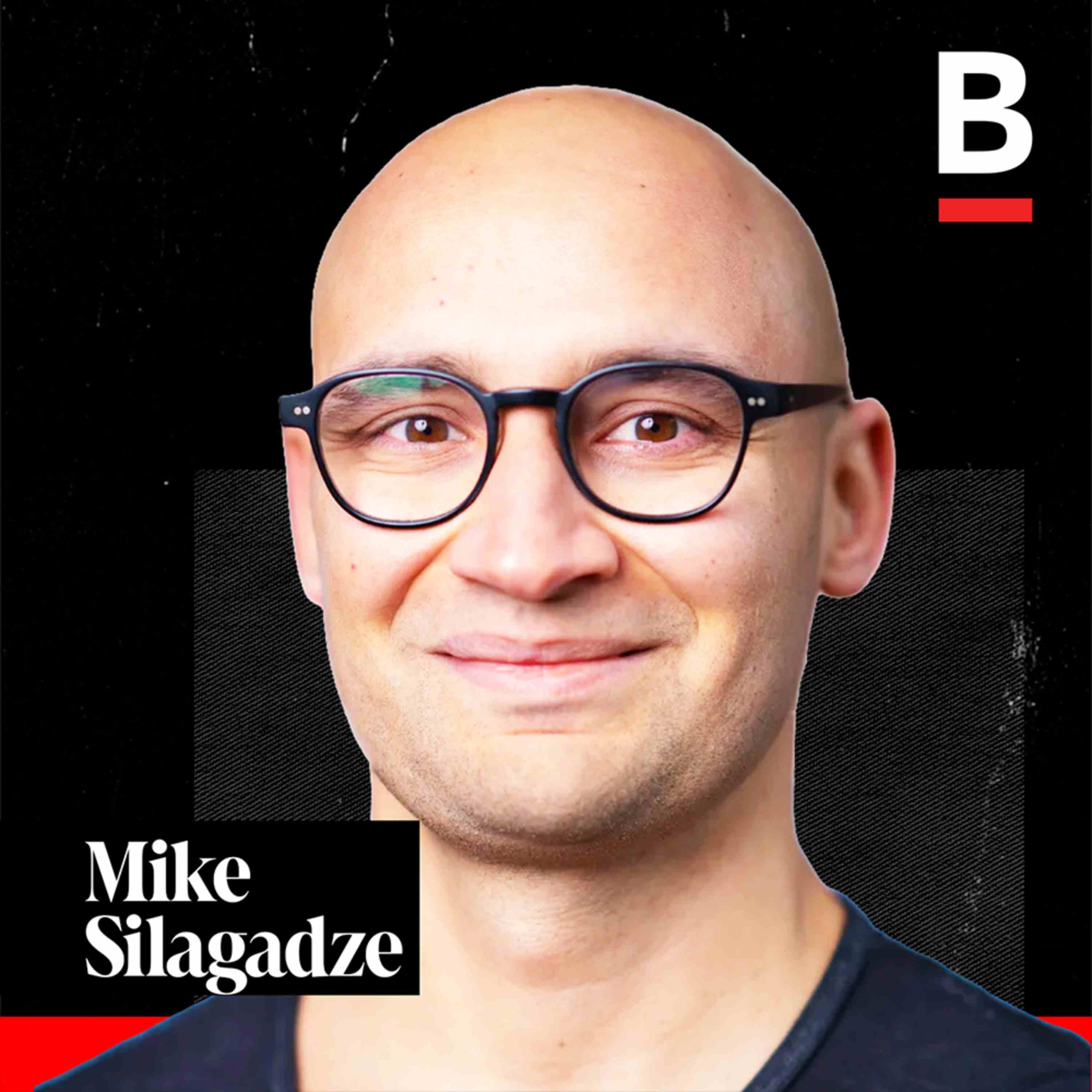
EtherFi is expanding from a crypto-native neobank into a broader financial account built around DeFi. Mike Silagadze joins David to break down the next version of the product, including tokenized stocks and metals, Aave V4-powered credit, yield-bearing balances, global fiat rails, and a much more normie-friendly experience. --- 📣SPOTIFY PREMIUM RSS FEED | USE CODE: SPOTIFY24 https://bankless.cc/spotify-premium --- BANKLESS SPONSOR TOOLS: 🔓NEAR | TRADE CONFIDENTIALLY, GET 20% BACK https://bankless.cc/near-pod 🔑BITKEY | GET 10% OFF USE CODE: BANKLESS | #bitkeypartner…

11 Aug 2026 · 52 min
What if staking a token could keep an AI agent thinking? NEAR cofounder Illia Polosukhin joins David to explain NEAR’s new staking-powered inference model, where yield funds access to confidential and verifiable AI. They unpack how NEAR AI Cloud, IronClaw, Intents, and the NEAR token fit into one integrated economy for autonomous agents, why AI outputs may need cryptographic proof when money is at stake, and how GPU compute could become a liquid global market. --- 📣SPOTIFY PREMIUM RSS FEED | USE CODE: SPOTIFY24 https://bankless.cc/spotify-premium --- BANKLESS SPONSOR TOOLS: 🔓NEAR | TRADE…

10 Aug 2026 · 54 min
Ethereum’s latest staking proposal is sparking backlash across DeFi. Aave founder Stani Kulechov and EtherFi CEO Mike Silagadze join David to break down why stake tapering could push ETH yield toward zero, weaken solo staking, drive capital out of DeFi, and make ETH less attractive to institutions. They debate Ethereum’s monetary policy, whether the network is overpaying for security, and why trying to make ETH more like Bitcoin could undermine what makes Ethereum valuable in the first place. Subscribe for more conversations from the frontier of crypto. --- 📣SPOTIFY PREMIUM RSS FEED | USE…

7 Aug 2026 · 1 hr 7 min
Ethereum’s monetary policy is suddenly up for debate. Ryan and David unpack the issuance fight dividing researchers and DeFi builders, the Coldcard exploit that hit users who “did everything right,” Saylor’s latest Bitcoin sale, and markets ripping back to all-time highs. --- 📣SPOTIFY PREMIUM RSS FEED | USE CODE: SPOTIFY24 https://bankless.cc/spotify-premium --- BANKLESS SPONSOR TOOLS: 🔓NEAR | TRADE CONFIDENTIALLY, GET 20% BACK https://bankless.cc/near-pod 🔑BITKEY | GET 10% OFF USE CODE: BANKLESS | #bitkeypartner https://bankless.cc/bitkey ✈️COINBASE ONE CARD | EARN 5% BACK IN BITCOIN…

9 Oct 2026 · 57 minNew
Could AI break crypto before quantum does? Ryan and David unpack Justin Drake’s “bunker mode” warning, whether holders should move funds, Tom Lee’s decision to stop buying ETH, and the shutdown of two Ethereum L2s. --- 📣SPOTIFY PREMIUM RSS FEED | USE CODE: SPOTIFY24 https://bankless.cc/spotify-premium --- BANKLESS SPONSOR TOOLS: 🔓 NEAR | TRADE CONFIDENTIALLY, GET 20% BACK https://bankless.cc/near2026 🎯 THE DEFI REPORT | ONCHAIN INSIGHTS https://thedefireport.io/bankless 👑 BANKLESS CONTENT MCP https://www.bankless.com/premium --- TIMESTAMPS & RESOURCES 0:00 Intro 1:51 Yields, Oil &…

5 Oct 2026 · 44 min
NEAR just got a new institutional gateway, but the ETF may only be the beginning of the story. Bitwise CEO Hunter Horsley and Sovereign’s Sal Ternullo join David to unpack why investors are starting to view NEAR through the lens of AI, how NEAR Intents has already processed more than $32 billion in volume, what staking and token buybacks mean for the asset, and why a future filled with many AI models, chains, agents, and stablecoins could play directly into NEAR’s strengths. --- 📣SPOTIFY PREMIUM RSS FEED | USE CODE: SPOTIFY24 https://bankless.cc/spotify-premium --- BANKLESS SPONSOR TOOLS:…

4 Oct 2026 · 1 hr 5 min
Venice‘s Head of Strategy Jon, joins David for the September $VVV community call to unpack Venice reaching 250B daily tokens, the latest $VVV emissions cuts and $DIEM supply changes, accelerating burns, rising demand for private AI, Venice Minds, the upcoming data center rollout, and what comes next. --- 📣SPOTIFY PREMIUM RSS FEED | USE CODE: SPOTIFY24 https://bankless.cc/spotify-premium --- [TIMESTAMPS] 0:00 Intro 0:21 September AI Update 2:12 Token Growth Surge 8:36 Emissions and Diem Supply 16:10 Burn Mechanics Explained 23:40 OpenAI Privacy Controversy 32:00 Data Retention Warnings 35:52…

2 Oct 2026 · 1 hr
Bitcoin just broke its bearish market structure, but surging bond yields could still test the rally. Ryan and David unpack Uptober, Robinhood’s trading push, the Bitget hack, and prediction markets’ path to the Supreme Court. --- 📣SPOTIFY PREMIUM RSS FEED | USE CODE: SPOTIFY24 https://bankless.cc/spotify-premium --- BANKLESS SPONSOR TOOLS: 🔓 NEAR | TRADE CONFIDENTIALLY, GET 20% BACK https://bankless.cc/near2026 🎯 THE DEFI REPORT | ONCHAIN INSIGHTS https://thedefireport.io/bankless 👑 BANKLESS CONTENT MCP https://www.bankless.com/premium --- TIMESTAMPS & RESOURCES 0:00 Intro 0:09 Bitcoin…

The Melo app keeps playing with the screen off, works in the car and on your watch, wakes you to your station, and browses the whole catalogue offline. Free, no ads, no account.


