
Episode notes
This is a free preview of a paid episode. To hear more, visit bigbiology.substack.com How are camera traps used in the conservation of cryptic species such as the African golden cat? How can local communities be engaged to foster the success of conservation? In this episode, we talk with Mwezi Mugerwa, winner of the 2025 Indianapolis Prize Emerging Conservationist , a National Geographic Explorer, and President of the Society for Conservat…

Big Biology
by Cameron Ghalambor and Marty Martin · English · Tech & Science
The biggest biology podcast for the biggest science and biology fans. Featuring in-depth discussions with scientists tackling the biggest questions in evolution, genetics, ecology, climate, neuroscience, diseases, the origins of life, psychology and more. If it's biological, groundbreaking,…
More from Big Biology
-

23 Apr 2026 · 30 min
The Voracious Ctenophore and the Silent Sea (Ep 148)
This is a free preview of a paid episode. To hear more, visit bigbiology.substack.com How is climate change affecting the movements of small predators in the sea? How do diatoms affect ocean carbon cycling? How do Cassiopea jellyfish act like ecosystem engineers? On this episode, we bring you a live conversation from the recent University of South Florida Climate Teach-In where Marty interviewed his colleague, Associate Professor from the…
-
2 Apr 2026 · 52 min
The Genetics of Vice (Ep 147)
This is a free preview of a paid episode. To hear more, visit bigbiology.substack.com What role do genes play in complex human behaviors? If behavior is largely shaped by a combination of experience and luck, how should we rethink blame, punishment, and forgiveness? In this episode, we talk with Kathryn Paige Harden , a Professor of Psychology at the University of Texas at Austin, where she leads the Developmental Behavior Genetics lab and…
-

12 Feb 2026 · 32 min
Evolution at the speed of life (Ep 145)
This is a free preview of a paid episode. To hear more, visit bigbiology.substack.com What are eco‑evolutionary dynamics and how can we study them in the wild? Why do some fish evolve placentas? In this episode, we talk with David Reznick , Distinguished Professor of Biology at the University of California, Riverside. David has spent much of his career studying Trinidadian guppies to understand adaptation in the wild. In our conversation, …
-

1 Jan 2026 · 1 hr 2 min
The Vital Question: The Chemistry of Early Life
How did life originate on Earth? Why is it that eukaryotes but not bacteria or archaea evolved large size and complicated body forms? How likely is that life has arisen independently elsewhere in the universe? On this episode, we talk with Nick Lane , a biochemist and professor at University College London, about his 2015 book The Vital Question . Nick argues that protolife arose in alkaline hydrothermal vents deep in the early Earth’s oceans. The key early event was the evolution of metabolism powered by proton gradients. In other words, metabolism came first, and all of the rest of traits…
-

11 Dec 2025 · 38 min
From Steppe to Stable (Ep 143)
This is a free preview of a paid episode. To hear more, visit bigbiology.substack.com How and when did humans domesticate the horse? How did horses shape our language, culture, and history? On this episode, we talk with Dr. Ludovic Orlando , a research director for the French National Center for Scientific Research and founding director of the Centre for Anthropobiology & Genomics of Toulouse. Ludovic is also the author of the new book Hor…
-
20 Nov 2025 · 31 min
Doctors by Nature (Ep 142)
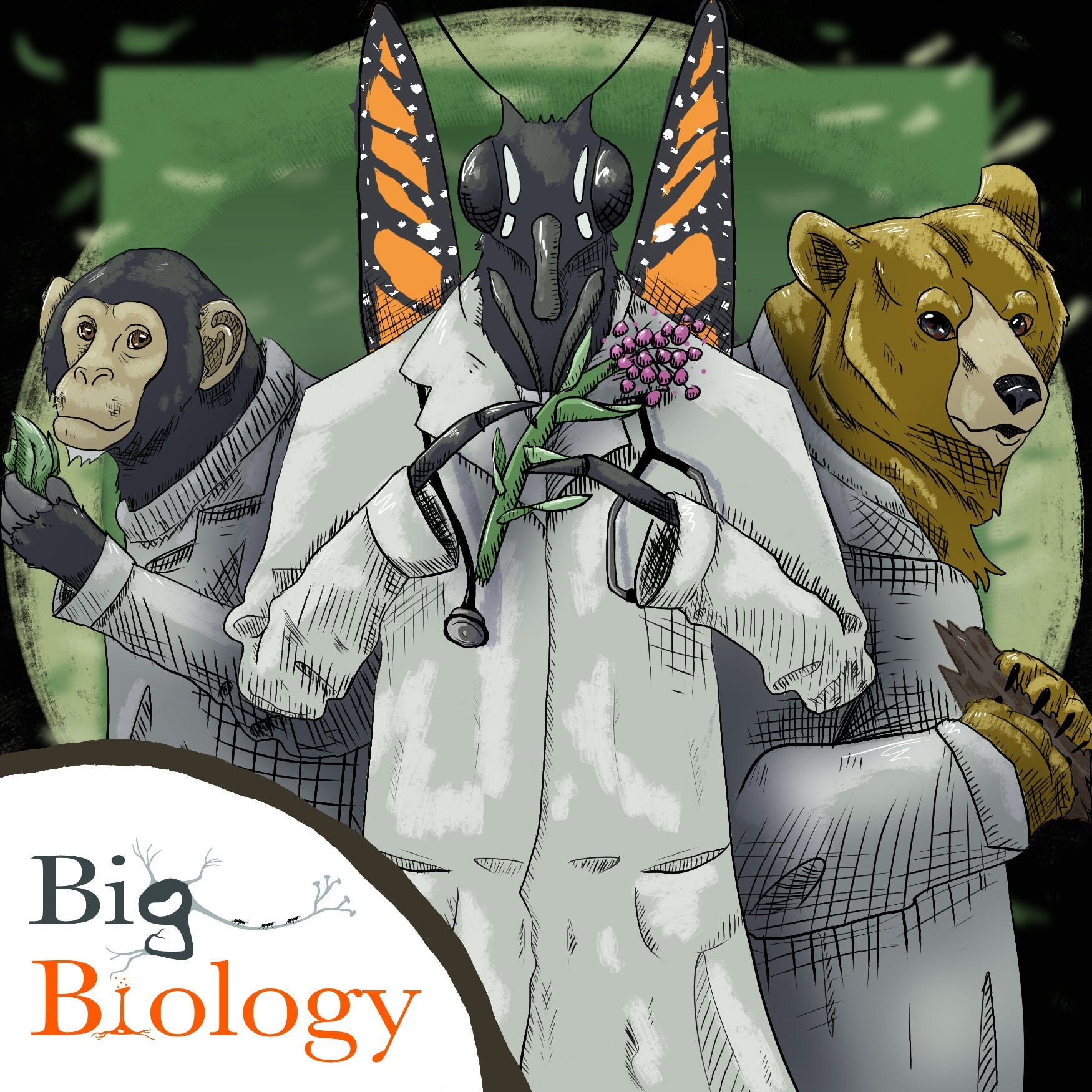
This is a free preview of a paid episode. To hear more, visit bigbiology.substack.com How do animals use medication and can humans learn from them? What are the evolutionary consequences of animal self-medication? In this episode, we talk with Jaap de Roode , the Samuel Candler Dobbs Professor of Biology at Emory University and author of the book Doctors by Nature: How Ants, Apes, and Other Animals Heal Themselves . Jaap’s research on monar…
-

1 Oct 2026 · 1 hr 2 min
Conservation in a cup with David Lodge
How do you find an invasive species that no net can catch? What happens to the scientist whose research samples end up in federal court? In this episode, we talk with David Lodge , a freshwater ecologist at Cornell University and past president of the Ecological Society of America. In 2009, David’s lab detected invasive carp from DNA in bottles of Illinois River water, including above the electric barrier meant to keep the carp out of the Great Lakes. That result helped found the field of environmental DNA, and it brought congressional testimony, a Supreme Court filing, and five hours of…
-
10 Sep 2026 · 1 hr 11 min
A tribute to slow science: remembering Bob Ricklefs
This is a free preview of a paid episode. To hear more, visit bigbiology.substack.com What was distinctive about Bob Ricklefs’ mentorship style, and how did he influence his students and collaborators? What were Bob’s major contributions to biology, and how did these ideas leave a lasting legacy on the field? In this episode, we commemorate the life and work of Bob Ricklefs, who passed away recently. Bob was a giant in the fields of ecolo…
-
13 Aug 2026 · 58 min
Flower power (Ep 153)
How have flowers shaped the modern world? Why do we and many other species have such intimate and long-term relationships with them? On this special episode, we talk with David George Haskell , a writer and biologist. We discuss his most recent book, How Flowers Made our World , which explores the creative powers of flowering plants. Big Biology blogger and Biology PhD student, Clayton Glasgow , interviews David as an outreach project for the Young Voices of Science program. They discuss how flowers have played key roles in many ecosystems, the genomic innovations that underpinned the…
-
23 Jul 2026 · 1 hr 13 min
A coevolutionary conundrum (Ep 152)
When a bee visits a flower, what decides the match? How can a neutral model explain community assemblages? Why are long-term ecological studies so important? In this episode, we talk with Diego Vázquez , a community ecologist at CONICET in Mendoza, Argentina, who has spent his career mapping the networks of interaction between plants and pollinators. Textbooks still teach coevolution as tight, faithful pairs, but Diego’s work tells a different story, that specialists mostly interact with generalists, and the best predictor of pollinator visits to plants turns out to be not matching traits or…

Take it with you
The Melo app keeps playing with the screen off, works in the car and on your watch, wakes you to your station, and browses the whole catalogue offline. Free, no ads, no account.