Episode notes
On this episode: the story of Pullman abstention, the first of several abstention doctrines the Supreme Court invented to let federal judges decline to decide cases that they have jurisdiction to decide. Click here for transcript. Railroad Commission of Texas v. Pullman Co.
Bound By Oath by IJ
by Institute for Justice · English · News
Bound by Oath is a podcast series from the Center for Judicial Engagement at the Institute for Justice. It’s where the Constitution’s past catches up with the present. Article VI of the U.S. Constitution requires every judge to be “bound by Oath” to uphold “this Constitution.” But to understand if j
More from Bound By Oath by IJ
-
S4 · E4 · 4 Sep 2026 · 1 hr 11 min
Younger abstention | Season 4, Ep. 4
In 1966, Los Angeles officials tried to put a man in prison for handing out leaflets in protest of a fatal police shooting. Today, we know the case as Younger v. Harris , which kicked off the doctrine of Younger abstention, the bane of many a civil rights plaintiff. On this episode, we examine the origins, the impact, and the relentless expansion of the doctrine. Younger v. Harris Click here for transcript.
-
S4 · E3 · 29 Jun 2026 · 47 min
Oath or Affirmation. (And Treason.) | Season 4, Ep. 3
On this episode, we recover a lost part of the Fourth Amendment that the Supreme Court essentially erased in 1960. In the case of Jones v. United States , the Court ignored text, history, and tradition, and disfigured the Warrant Clause, allowing law enforcement to knock down doors based on mere hearsay and with scant consequences for lying or mistakes. Jones was wrong the day it was decided, and the Court should overturn it. Click here for transcript. Jones v. United States (1960) Mendenhall v. Denver
-
15 Apr 2026 · 1 hr 20 min
Rooker and Feldman and Treason | Season 4, Ep. 1
Next week, the Supreme Court is going to hear a huge civil rights case that no one is talking about—because the legal issue before the Court is the Rooker-Feldman doctrine, an obscure and slightly treasonous doctrine that lets federal judges throw worthy cases out of court without reaching the merits. On this episode, we examine the doctrine’s impact as well as its origins, including the life and times of the litigants for whom it is named, William Rooker and Marc Feldman. Rooker was a big shot Indiana lawyer who represented lynching victims and Klansmen. And Marc Feldman was a professor of…
-
S3 · E14 · 14 Oct 2025 · 1 hr 12 min
Indian Country | Season 3, Ep. 14
In our final episode of the season, we head to Indian Country and survey several strands of Supreme Court precedent that prevent Native Americans from putting their property to peaceful and productive use. Click here for transcript. United States v. Kagama Cobell v. Norton
-
S3 · E13 · 16 Jun 2025 · 1 hr 13 min
Neat Takings Tricks | Season 3, Ep. 13
The Fifth Amendment says that the government must pay just compensation when it takes private property for public use, a command that, regrettably, is often treated as a mere suggestion. On this episode, we take a look at a variety of gambits and flim-flammeries that let the government take property without paying for it. Click here for episode transcript. Agins v. Tiburon First English v. County of Los Angeles
-
S3 · E12 · 24 Apr 2025 · 46 min
Trust But Verify | Season 3, Ep. 12
In 1973, federal narcotics agents raided a pair of homes in Collinsville, Illinois by mistake. They didn’t find any drugs, but they did terrorize two innocent families. The incident sparked nationwide outrage, and in response Congress passed legislation crafting a legal remedy for victims of federal law enforcement abuses. Over the years, however, lower courts have chipped away at the law to the point where it has essentially been repealed: Last year, a federal appeals court rejected claims from an innocent family, the Martin family, who were held at gunpoint after the FBI mistakenly raided…
-
S3 · E11 · 30 Jan 2025
Everything You Eat, Drink, and Wear | Season 3, Ep. 11
Government officials must obtain a warrant before forcibly entering a home (absent consent or an emergency). That rule goes back to the Founding. But in a series of cases, culminating in Camara v. San Francisco in 1967, the Supreme Court announced an ahistorical exception, holding that the Fourth Amendment is less protective when it is a health inspector, rather than a police officer, knocking at the door. On this episode, we hear from Marshall Krause, who argued Camara on behalf of the ACLU of Northern California. And we head to Pottstown, Pennsylvania, where a challenge to the borough’s…
-
S3 · E10 · 1 Jan 2025 · 1 hr 8 min
Special Weapons and Tactics | Season 3, Ep. 10
In 2020, a police SWAT team blew up Vicki Baker’s house after a fugitive barricaded himself inside. On this episode, we ask: who pays the tab when the government damages or destroys private property for the public good — the unlucky owner or the public as a whole? Click here for episode transcript. Pumpelly v. Green Bay & Mississippi Canal Company Armstrong v. United States
-
S3 · E9 · 30 Aug 2024 · 1 hr 14 min
Punishment Without Crime | Season 3, Ep. 9
Civil forfeiture is a civil rights nightmare, allowing police and prosecutors to seize billions of dollars’ worth of property annually—cash, cars, houses, bank accounts, and more—without charging anyone with a crime, let alone obtaining a conviction. On this episode, we trace the rise of the modern forfeiture regime in the 1970s and 80s, and we look at forfeiture’s historic roots. Click here for episode transcript. Miller v. United States The Palmyra Bennis v. Michigan
-
S3 · E8 · 21 Jun 2024 · 1 hr 5 min
Public Purpose | Season 3, Ep. 8
In 2005, in the case of Kelo v. New London , the Supreme Court allowed officials to seize and raze an entire neighborhood of well-maintained homes and businesses in the hopes that someone else could build fancier homes and businesses. According to the dissenters, the majority’s opinion effectively deleted the provision of the U.S. Constitution requiring that takings be for a “public use.” On this episode, we ask: what, if anything, is left of the prohibition on using eminent domain to take property from Person A merely to give it to Person B? And we look at some current litigation that can…

Take it with you
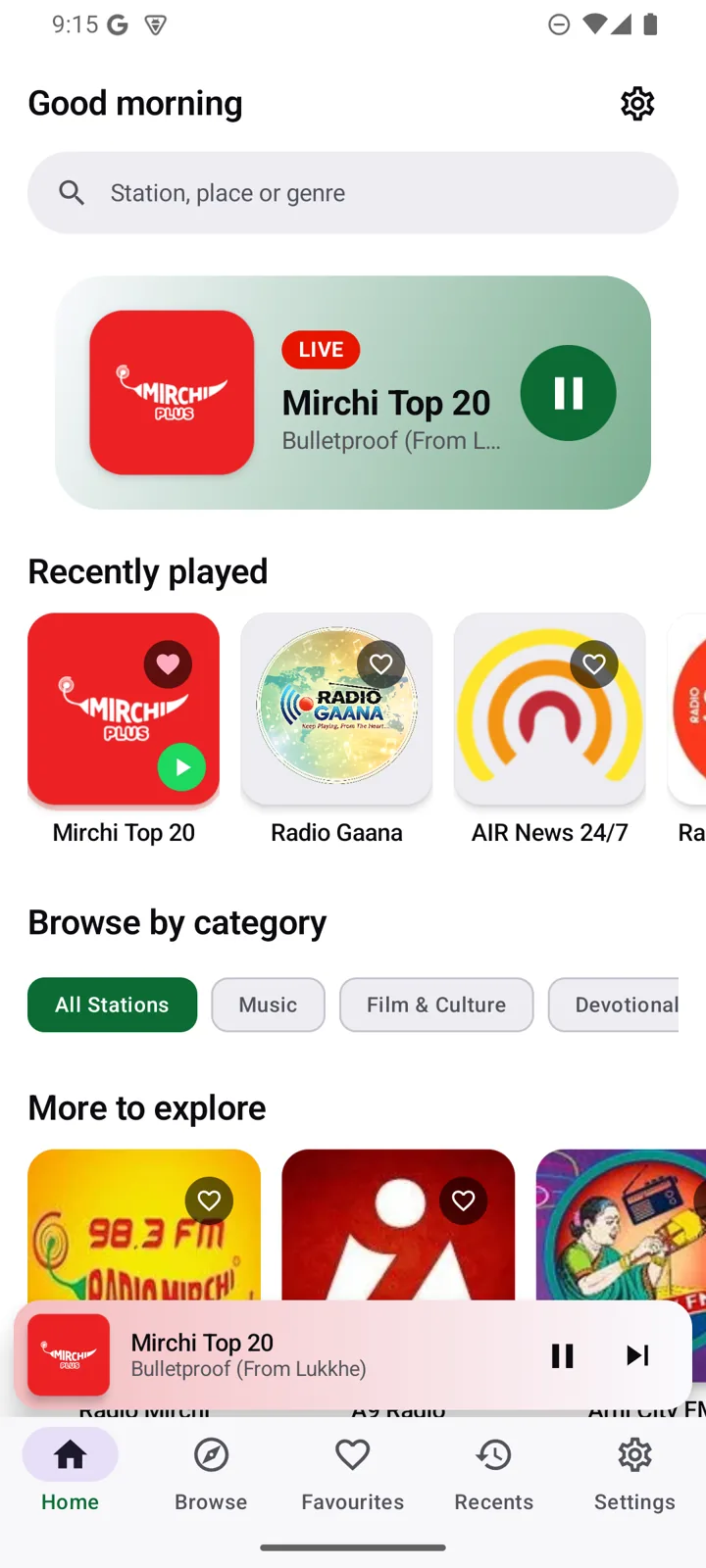
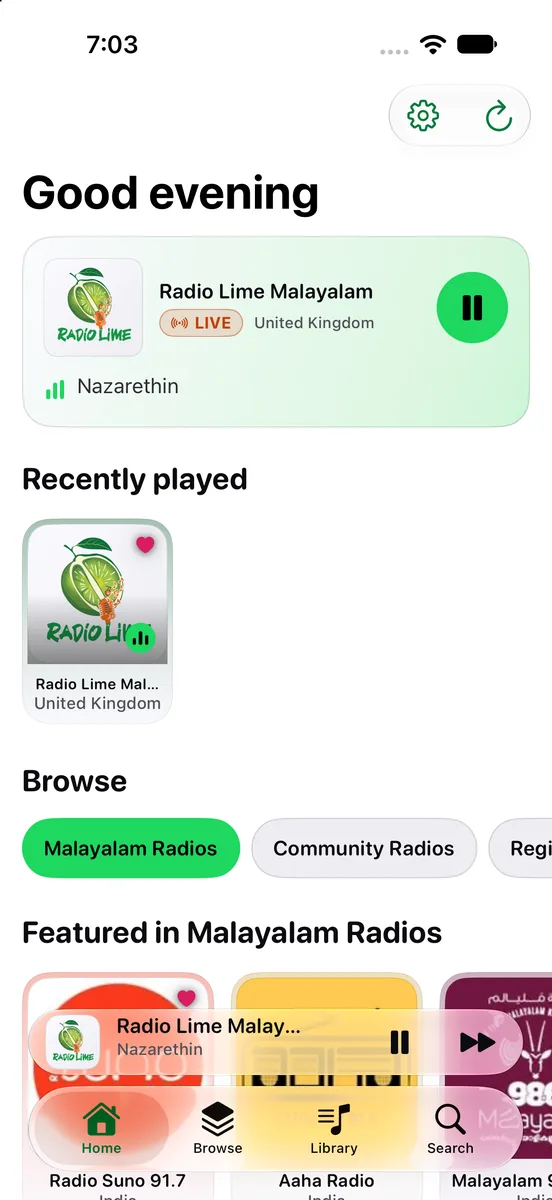
The Melo app keeps playing with the screen off, works in the car and on your watch, wakes you to your station, and browses the whole catalogue offline. Free, no ads, no account.