

Episode notes
Have you ever seen your dog play with another dog? Have you seen squirrels chasing each other in the woods? Are they playing or are they doing something else? We look at the behavior of animals with Marco Wendt, Wildlife Ambassador for the San Diego Zoo Wildlife Alliance and host of Amazing Wildlife: A San Diego Zoo Podcast . Also in this episode: Why do pigs like to play in the mud? Why do elephants like to play in the mud? Why do hamsters like to play? Is it okay for animals to live at the zoo? Download our learning guides: PDF | Google Slide | Transcript
Transcript
Read the transcript · about 6,360 words, follows along as you listen
Jane: This is But Why: A Podcast for Curious Kids from Vermont Public. I'm Jane Lindholm. On this show, we take questions from curious kids all over the world, and we find answers. You guys ask the best questions, and they take us in some really interesting directions. So, I feel lucky to get to talk with you and help you get answers to your questions, because I get so many answers. I actually had a question of my own the other day. I was walking my dog, Wilson, in the woods when we came upon another dog named Dexter, who lives in our neighborhood. Wilson and Dexter started running back and forth as fast as they could. Wilson would run in between trees like weaving in and out of trees that are really close together and then around the back of another tree to see if Dexter could keep up with him. And when Dexter started to lose interest, Wilson would bark at him to do it again. Then Dexter decided he wanted to do something different so he led Wilson over to a river and they splashed around for a while before deciding to wrestle over a big stick, and then peeing in the same place multiple times. It sure looked to me like they were playing,
but is that what they were doing? Do animals play, and is it just for fun, like humans do? Wilson is three years old, so he's kind of moving from teenager status to young adult in the dog world, but he still acts very much like a puppy, so that made me wonder, too, is play just for young animals, including humans, or do animals, including humans, play for their whole lives? Turns out I'm not the only one wondering about this, so we took your questions and mine to someone who spends a lot of time observing the behavior of many different animals.
Marco Wendt: My name is Marco Wendt. I'm the Wildlife Jane: A wildlife ambassador, what is that? Ambassador for San Diego Zoo Wildlife Alliance. Marco Wendt: Wildlife ambassador is the coolest job. I get to talk about conservation projects all over the world, animals like an axolotl to an elephant to a cassowary, but I also get to interact with a lot of fun wildlife and people who work in a zoo environment. So I could maybe communicate fun animal facts on a podcast, like you and I are doing today. It could be social media. You can even find me at the Safari Park or San Diego Zoo, which I'm always running around having a fun adventure.
Jane: How often do you get to actually interact with or see the animals at the zoo? Marco Wendt: Every single day, minus my weekends, even though I have animals at home. So, technically, I got animals all around me every single day. But one of my favorite things about working for a zoo organization is I get to go into the safari park or the San Diego Zoo before it even opens, so I get to hear the lion roaring in the morning, or the smell of a gorilla, or maybe a capybara maybe farting in the water. You never know what you might hear.
Jane: What does a gorilla smell like? Marco Wendt: A gorilla smells like if I were to go camping for maybe a month without showering, that's kind of what a gorilla smells like. I mean, I maybe get a little more specific. I'm really talking about the male gorillas, are called the silver back, or before that become a dominant gorilla, it's blackback. So, blackback, silverback, the technical smell that I'm smelling is testosterone, which is it's a hormone that helps with maybe growing muscle, and for this particular case, it helps gorilla boys start turning their fur silver in the back and getting these physical attributes. That's kind of a sign that I'm ready to start my own gorilla family. So, that is gorilla smell!
Jane: Sounds kind of unpleasant, but I'm not gonna lie, I still kind of want to smell a gorilla. Marco says when he was a kid, he spent a lot of time in nature with his family. Marco also grew up watching cartoons like Captain Planet, where the little kids had special powers to protect Earth. Those experiences helped inspire him to grow up to be someone who works to protect wildlife. Marco Wendt: Being a wildlife ambassador, I do feel, and it's my own way of giving myself the energy that I am a, I like to say, a little superhero, yeah, for wildlife and helping connect people with this amazing blue planet.
Jane: Well, we're excited to talk to you, and what we wanted to focus on today is how and why and if animals play, and we have a lot of playful questions for you. Caden: My name is Caden, and I'm born from Netherlands, and I'm from Korea. And my question is, why do baby animals play? I am eight years old. Marco Wendt: Caden, I love that question, why do baby animals play? My first answer to that is a question, you know, depends on what kind of animal. Animals will play for all sorts of reasons. The number one is for fun, right? There's evidence all over the world that animals play for fun. It could be maybe a dolphin blowing rings of air pockets in the water and going through them for fun. It could be maybe a crow that's been seen sliding down a rooftop of snow, no particular reason other than fun. But there's other, will be called like very species-specific reasons, and by that I mean there's a very specific reason why maybe a lion plays the way it does, maybe versus a bird of prey, like a hawk, or maybe versus a goldfish. So, for instance, I could say a cheetah cub will play with its brothers and sisters by doing chase behavior,
so it's almost like playing tag, right? So a brother will chase, maybe a sister, chase it, and maybe with its little paws hit the back legs, maybe trip its brother and sister, and it's a lot of fun, but that also is teaching that baby cheetah how to one day be an adult cheetah, because it's a predator and predators have to eat meat, so they have to take down another animal, and the best way to do that for a cheetah is tripping them, right? So it kind of depends, so all different animals have different reasons for play.
Jane: So some animals do play for fun, but a lot of them, when they're babies, they're learning behaviors that they're going to need or use as adults. Do adult animals play? Marco Wendt: I would say all animal babies can play for fun. It's just sometimes there's other reasons also, right? Why they play for fun. Adults also play for fun. In fact, a female cassowary, so this is a big bird that can't fly. Jane: Cassowaries are these huge, majestic birds native to northeast Australia and the surrounding islands in the Pacific Ocean.
Marco Wendt: Looks like a dinosaur, Jane: Marco says at the San Diego Zoo, there was one particular cassowary who was really fun to watch. Marco Wendt: Yara is her name, and Yara had a favorite kicking tree, so by that I mean cassowaries have to defend themselves, they have really strong legs and they can give a really strong kick, so Yara, as a baby, started practicing how to do that, but then it became kind of fun for us, or anytime I don't know if you ever get the zoomies, or you just kind of want to like run around with their hands up in the air, right, so castaways have their own version of that, and Yara would run around the habitat, jump up in the air, and run to this palm tree, and bam, bam, and they kick the palm tree, and that was kind of her fun way. So, yes, I would say, and I can give you many examples, but there's lots of evidence of adult animals also playing for fun.
Jane: I'm picturing a cassowary doing parkour right now, like running around, you're like parkour, parkour. Marco Wendt: I would love to see it, totally. And it's such a cool bird that you can actually see in one of the areas that I work, called the Safari Park. So, I highly recommend seeing what a real-life dinosaur looks like. I would check out a cassowary. Jane: I mean, if we're talking about what a real-life dinosaur looks like, all we really have to do is go look at some chickens. We hear at But Why actually just made a whole episode about how all birds are the direct descendants of dinosaurs, and we'll link to that episode in our show notes.
Marco Wendt: There is a small bird in South America called the tinamou, looks very much like a chicken or maybe a quail-like bird, but there is evidence from their dentition and DNA that that is one of the closest living descendants of Jane: teeth, so even if you think there's no way that looks Tyrannosaurus Rex, and think about while big Tyrannosaurus X was, and now it's a little tiny bird, but it shows you how cool Mother Nature is, right? How things change all the time. It's what it's one of the reasons why I love wildlife so much. You can never know everything, and you can always be a student for life, so that I think that's amazing. Yes, chickens, 100% like a T-Rex through things like your teeth or fossil records, you can see how things change, so even when your eyes deceive you, scientists are trying to find ways to think, okay, well, it doesn't seem logical, but science is telling us this is a connection that's so cool.
Marco Wendt: right? No, and there's so many bird-like animals at the time, when we think of dinosaurs, some through evolution, or you know, adapting your body as the time progresses on the planet, so there was evidence of birds with beaks and teeth at one point, you know, which is crazy to think about, or maybe even dinosaurs with a little bit of feathers on them too, but it just shows how, how connected I think birds are to what we think of dinosaurs, right? So that's why I'm a, I'm a huge fan of birds, I love all wildlife, but birds are number one in my book.
Jane: All right. Well, we don't know if dinosaurs played, but maybe that's a topic for another podcast. Tzvi: My name is Tzvi. I live in New York City. I'm four years old, and I want to know why do pigs play in the mud? Isaiah: I am Isaiah from Nicholasville, Kentucky. I am five years old. My question is, why do pigs like to roll around in mud, and why do they like mud so much and why do they never take baths. Casper: Hello, I'm Casper. I live in South Carolina. I'm four years old. Why do pigs play in the mud a lot?
Marco Wendt: Ooh, that's an awesome question. So, I mentioned earlier that pigs or animals play for a lot of different reasons, and fun is definitely one of them, and I've seen not only domesticated pigs, and, by domesticated, I mean, maybe you live in a farm, and maybe your family has pigs, those are domesticated pigs, right, and I've seen them wallow or play in the mud. I've also seen wild hog or pig-like species, like, for instance, I've seen a warthog, red river hog, which is from Africa, babirusa, where they're from Asia. I've seen all these wild pig species play in the mud, also. And it's a very unique reason why they also play in the mud. Now, if we kids are listening right now, touch your forearm, touch your skin, know how sensitive your skin is, right? I put on sunblock, and I also put on lotion, because my Jane: who knew that pigs could get sunburned just like humans?
skin gets really dry sometimes, and itchy, and also I don't want to get a sunburn. Sunburns are no good. So, a pig has very Marco Wendt: Exactly right. May: My name is May. I live in Phoenixville, Pennsylvania. My similar skin, especially those domesticated pigs, like a farm favorite animal is an elephant, and my other favorite animal is pig. And so, what they do is they play in the mud, because it a monkey. And how does elephant like to play in mud? Because gives them a natural sunblock. Also, it helps them to soften it's because they get hot in the sun, so they play in mud instead their skin a little bit, and it also can protect them, because I've seen elephants. I know it's not a pig, but also elephants I've seen wallow in mud for this very same reason. Mosquitoes, nobody likes a mosquito bite. So, a lot of times, rolling in the mud can also protect you from mosquito bites.
of water. Jane: Why are they playing in the mud instead of the water if they're hot in the sun? Marco Wendt: Oh, that's a very awesome question, May. And I love elephants for all that play behavior in the mud and the water. The Safari Park here in San Diego, we have a brand new elephant habitat called Elephant Valley, and you can get close to elephants like never before. May, I could smell the elephants, I can see the eyelashes, and guess that day when I was there one day it was a rainy day, and there was a big, there's a big giant pool, a watering hole for them to dive into, but there's also a mud wallow, and I talked to the elephant staff, and by that I mean the humans that work alongside the elephants, we call them wildlife care specialists, or for around the world they're known as zookeepers. So, I'm going to say zookeeper for right now. So, the elephant zookeepers are telling me that a lot of times the elephants prefer the mud over the water, because of all the reasons I gave for the pigs, the elephants love that too. I mean, yes, going in the water is a lot of fun. It can cool you off in a hot, sunny
day. Mud can also cool you off on a hot, sunny day, but it also provides sun block. It also provides protection from insect bites, and it's also an exfoliant, which I never knew. But the elephant herd at our safari park, one of their favorite things every day - sunny day, cold day, doesn't matter. They like to wallow, and they like to play in the mud, and they get very special mud that's very similar to the kind of soil from Africa, as an example. And this mud will dry, and once it dries, you know what, May, they actually scratch on the branches, and they scratch. I've seen an elephant butt being scratched on a rock and exfoliate, so by that I mean it helps break up the dead skin, you know. Maybe I may buy a facial for my mom and she gets a mud mask and it costs a lot of money, but elephants can do it for free. And so that's one of the main reasons.
Jane: Avery in Lakeville, Minnesota, has a question about an animal that I'm wondering if maybe Avery has this animal at home and has been able to observe the behavior. Avery: I live in Lakeville, Minnesota. I'm five years old. My question is, why do hamsters like to play? Marco Wendt: Oh, Avery, I love this question. You know, I had a pair of hamsters when I was a kid, and it's for the same reasons that I mentioned before, we're always going to assume play is fun, right? So, hamsters, of course, have fun play behavior also, but there's something very unique about hamsters, if they're part of a family, like other rodents, the rodent family, right? So, I'm thinking about maybe a guinea pig, I'm thinking. Thinking of a hamster, I'm thinking of a rat, or even a porcupine, or a beaver, I'm thinking of a capybara.
Jane: Capybara, boy, imagine having one of those in your house, much bigger. Marco Wendt: Right? Way bigger. I know that's a very big rodent in your house, but with your hamsters, you know, the number one thing that I can say personally, in my experience, knowing different types of rodents is they also have social structures as well, so sometimes a hamster, to adult hamsters, I'm not talking about baby hamsters, sometimes adult hamsters might show some play behavior, and it could be fun, but part of it could also be part of dominance, showing that one's maybe more of a leader than the other, because those animals, they're social, and by social I mean they spend a lot of time with other individuals of the same species. In this case, we're talking about hamsters, right? So, maybe a cassowary that's solitary, by that I mean they spend their time by themselves, doesn't necessarily have to do play behavior to set dominance, but a hamster, there's a lot more social dynamics, right? So they have a lot more individuals in their family group that they have to navigate, so that would be my, my number one guess. Why adult hamsters would do some
play behavior. Jane: When animals are doing different behaviors. Do you have a way to tell if they are playing or if they're doing something for another reason? I mean, is it just observation, or can you tell if an animal is having fun? Marco Wendt: Yeah, it's... I think it is observation, number one. But what I always tell people is that every single animal on the planet communicates. We just have to learn how to listen, and not every animal communicates in the same way, just like human beings, maybe some people communicate with their hands and some people communicate with their voice, and that's okay. It's just how you communicate.
So, I would say, I'm giving you a zookeeper tip. If you want to do observations like a zookeeper. For me, because I work with so many different kinds of animals, and sometimes I don't know anything about maybe a rhinoceros hornbill, so then I have to study about the rhinoceros hornbill, because that's very specific behaviors for that bird, versus maybe a domestic pig versus an elephant, right. So I would say number one, let's say you're brand new to a hamster, learn about the hamster's history, where they're from, how do they interact with each other, how they eat, their social dynamics, if they have them, and then you can apply your observation skills, watching them, and try to determine what those behaviors are, and what play can be. It can look differently for one animal versus another. As an example, one other example I can give you is, I've seen young peregrine falcons, which are a bird that can fly and hunt other birds, are the fastest animal on the planet, and I've seen one chase another one and grab its tail, and a buddy of mine, a friend, told me, "Oh no, that falcon's being mean to the other falcon," and I told them, "No,
falcons hunt other birds, and they have to practice chasing. So these young falcons are practicing hunting by chasing its sister and grabbing the tail of the sister. " Maybe if I didn't know the behavior or the background of the peregrine falcon, I would not think of it as play. I think of it as maybe being mean or aggressive, but that's what my point means, so that you have to learn about the animal first, right? And then apply your observation.
Jane: Yeah, I mean, you can do that even if you have, like, a dog or a cat at home too, right? Like, sometimes my dog plays with other dogs, and they're barking, and they have their teeth out, and one of the dogs is drooling, and it can look very aggressive, but I know they're friends, and as soon as we say, "Come on, guys," then they keep coming along and walking and having fun, and you can start to tell the difference between when your dog is having fun with another dog, or what its behavior is when it's maybe not having fun, like the way its ears might be up and just alert if it's having fun and back if it's not having fun. So you can start to see those observations over time can give you a lot of insight into the animals, whether they're wild animals or the animals that you live with.
Marco, do animals have friends? Marco Wendt: Animals do have friends, and you know, I want to begin by saying, is there's many instances where we want to put human behavior and relationships onto animal behaviors and relationships, so by that I mean kids, that maybe the way you look at your best friend is not maybe the same way an orangutan may look at their best friend. It just depends on the scenario. I'm not saying that they don't have friendships, but we know a lot about wildlife, but I can tell you that I don't know specifically if maybe, for instance, I'm going to go back to the elephant herd. We have the elephant herd, and different individuals have different relationships with each other.
Sometimes one elephant that is maybe the lowest of the the the ladder of power, so by that I mean there's the dominant female, the matriarch, the abuelita, the the leader of the herd, and then there's different leaders that go down in order, and sometimes the one who's at the very bottom who has a very important role too might become the best friend of the daughter of the leader, because if I do that, then maybe I get some better yummies or some extra snacks. So, so by that scenario, I mean that there could be different reasons why animals also have friendships, but I do believe in my heart of hearts that they probably have friendships just like we do, but maybe we don't see them in the same way as maybe an elephant or a crocodile would, right? It just depends on the animal.
Jane: Are there any other examples of animal play or animals playing that you think would be cool for us to know about? Marco Wendt: There's one that I saw recently that wasn't even at the zoo or the safari park, and it was bumblebees. I actually never knew that there's studies and research that shows that bumblebees also like to play, but what I love about is we also have what's called the entomology team, or the insect team, at the San Diego Zoo, and I talked to them about this before, and they told me that, yes, they've also seen play behavior in bumblebees as well, and that just blew my mind, and that just shows you how special our planet is, that we have animals like elephants and bumblebees and reptiles and birds that can also show play behavior, and I think that's really, really cool. So that one, for me, blew my mind, and I just recently learned that one too. So I thought that was epic.
Jane: You know, I actually spend a lot of time looking at bumblebees in my own yard, so now I'm gonna have to go out and see if I can observe them doing anything that looks like play. Maybe you'll do that too. Coming up, we ask Marco why some animals live in a zoo, and also what happens in the zoo at night. This is, But Why. I'm Jane Lindholm. Today, I'm with Marco Wendt, Wildlife Ambassador for the San Diego Zoo Wildlife Alliance. Since we have him, we wanted to pose a few other questions you've sent us that he is really well positioned to answer: questions about zoos.
Celeste: My name is Celeste, and I'm seven years old. I live in Massachusetts. Is it good for an animal to live in a zoo? Marco Wendt: I love that question. You know what I always tell people is, if I could say that all wildlife, all animals, all plants could be safe and protected and happy on our planet, I would quit my job right now. But you know, the reality of the world is that we need special spaces. Sometimes I call them sanctuaries or homes, right, where wildlife can be protected. Because it's sad to say, but there's places on our planet where there's habitat being destroyed, where animals are being taken from their families through wildlife trafficking, which is super sad. There's other reasons that disease, that little things that are affecting wildlife in so many different ways, and we as human beings, you know, we're very unique animal, right? And we have grown, our population is getting really big on this planet. So, what makes me so happy to represent a zoo or an aquarium is the conservation work that we do. So, there's a lot of work that we do in our zoo that can help out also wild animals. So I mentioned
elephants, so I want to keep with elephants, just to give you an example. So elephants are thriving at Safari Park, because it's a little sad story, but I'm going to share with all of you this story. So I mentioned, remember the word matriarch means like the leader of the herd, now our matriarch, her name is Swazi. Now Swazi and her friends, because they weren't sisters, Ndlula and Umngani, those three adult elephants lived in a place in South Africa that was protected land, and it was limited space, and unfortunately the space got so crowded with other endangered animals that the people working in that area had to make a really tough choice that we can't save and protect all these elephants in our space, we don't know what to do, so they gave us a call and we had space and we were able to give Swazi at home, because unfortunately, without getting too sad about it, she wasn't going to survive living in that place in South Africa, and her friends too, Umngani and Ndlula , so we were able, because being an accredited zoo, and by that I mean that we work with other zoos and aquariums in
the world to make sure we have this right standards, the right rules, right?, to take care of wildlife, and so Swazi, Indula, and Umgani have been living now at our safari park close to 30 years. They've had daughters, and they're growing as a herd, and all that is going to help out the population of endangered elephants. And we're also learning things from our elephants here at the safari park, which is going to help out our partners and our friends out back in Africa, so that's just one small example of why animals do so well in zoo settings, and I also want to preface that we all want wildlife to thrive in the wild, and that's why we have zoos and aquariums right now.
Jane: Well, what you were saying about these elephants coming from South Africa all the way to San Diego leads us to Wilbur's question. Wilbur lives in Berlin, Germany, and is wondering: Wilbur: How do people transport zoo animals from one place to Marco Wendt: There are specialists all over the world, another? you know. I've never worked in the Olympics before, but imagine all those humans that have to navigate other humans and move them all the way around the world to different countries, and I'm sure there's all these rules and guidelines to do that, and it's kind of the same way with wildlife. But you know, we are specialists in our own right, working with all sorts of animals, it could be a big elephant, it could be a giant panda, it could be a tarantula, or a king cobra, you never really know, but we have our specialists that have these rules and protocols. So these, let's give them like guidelines on how to safely move an animal from one place to the other, and maybe kids are thinking, well, why do I want to move an animal from one zoo to another? It kind of depends on the scenario. If
you remember earlier I talked about gorilla boys needing to leave their family troop, so at the safari park, as an example, we've had a situation where we have our family of troop of gorillas, one dominant male with females and their baby boys. The baby boys got big, and eventually they got too big that they needed to move away from the troop, and that's what they do in the wild. So we had to move those animals to a different part of the safari park, and we call it the Bachelor Troop, and the Bachelor Troop is a mix of boys, not only of our park, but also the Bronx Zoo in New York. They moved three young male gorillas, called blackbacks, to the safari park, and now we have five bachelor or young gorilla males learning to be gorilla males, because that's really important for gorilla males to learn how to be a male, for a gorilla to be around other males, and so we need to do that. So that's just one example of maybe a scenario where we might move one animal to the other, so it could be a physical move with maybe a vehicle, maybe for traveling across seas. We did a, we used a plane for a giant panda move from China to San Diego Zoo, as
an example. So, it really depends, but there's a lot of people, a lot of professionals, a lot of guidelines that we follow to make sure everything is safe and secure. Jane: Are you using the same kind of planes that humans fly in? I'm trying to picture a plane full of zoo animals, the giraffes up tall, being able to see down the aisle, and you know, maybe the hippopotamus being like, I can't fit down this aisle to get to my seat! Marco Wendt: I know, right, maybe he wants more peanuts, I would, I would love to be on that plane, but no, it's not usually like that, I can give you my personal examples where we have moved African vultures to a facility in the other parts of the United States using a non-human plane, more like for cargo, like a FedEx, but we have animal standards, so it's not being moved like a package, but we have our own rules and regulations, so sometimes it could be a plane like that with no human beings, but there are some times where we have used a plane and maybe moved the animal using that space, maybe a smaller animal. Once I had to move two California condors from
our facility at Safari Park to be reintroduced in the wild in Mexico, and what we did then was myself and another colleague with two giant condor transport carriers in a teeny tiny little plane, and we flew from San Diego over Tijuana out to the outskirts of Ensenada to a national park reserve, and then in a vehicle up a mountain to get to the very top where those condors get to live and learn how to be wild condors, you know. So it kind of depends.
Jane: That's so cool. Okay, one more question for you. And this one is from Nora, and I'm curious too, because when my kids were little, one of the favorite books we read at night was called Good Night Gorilla, and it was all about a zookeeper going around and saying good night to all of the animals, but the gorilla was a little bit sneaky and took the zookeeper's keys and let out all of the other animals, and then they all went home and got in bed with the zookeeper, who then realized when he said good night to his partner that all of the other animals said goodnight too, and he was like, what, and he had to go put them back where they were supposed to be living, but anyway, to Nora's question, Nora: What happens at the zoo at night?
Jane: what happens at the zoo at night? Jane: cool, diurnal and you're nocturnal, so Marco Wendt: Oh, Nora, I love the zoo at night and the safari park. It completely transforms, but you know one thing I do want to say: not all animals sleep at night, you know. So we have staff, we have zookeepers, we call them wildlife care specialists, who are at the safari park or the zoo every day, every night. Now, some animals are what we call.. I'm going to teach you some words, kids. So, ready, these are fun words. So, my two favorite words right now to learn is diurnal.
So, diurnal means I like to be up during the day, like my husband. He loves to be up during the day, and the second the sun goes down. He gets sleepy, and I want to go to bed, so some animals are diurnal, right? Like a, like a gorilla, as an example, is diurnal, but there's some animals that are nocturnal. I'm a little more nocturnal myself, and that for I'll tell you what I am, and this is a word we learned in a nocturnal animals, you're up mostly at night, right, and you're sleeping during the day. So we have animals that are recent episode about rabbits, but I am a crepuscular person, nocturnal. So, for instance, everyone loves a sand cat at Safari Park called Newman. Newman, if you look up, have so I like dawn and dusk, that's when I feel most awake and your parents look up sand cat, they're the cutest wild cat.
They hunt snakes and scorpions in the deserts of the Middle active, so that's one of my favorite vocabulary words. East area. Now, Newman is really popular because every time the guests see him, he's sleeping, and he has a nice, cute little sleepy face. But I, I have been at the safari park at night, and I have seen Newman at nighttime, because he's nocturnal, and he is stocking his habitat, he is pouncing, he's running. We've also learned that, for instance, rhinos and elephants feed not only through the day but also at nighttime, so we have staff that specifically will feed certain animals at nighttime hours, like the rhino, as an example, or like our mountain lions, also are nocturnal, so they get fed at night time to match their, their sleeping patterns, right? So it kind of depends. I would say.
Marco Wendt: I love that word, and one of my favorite crepuscular animals is a great horned owl, I mean, they're really, really great, too. Sometimes people call them nocturnal, but I say they're crepuscular, because that's generally where animals are either leaving for the night or coming in for the day, depending on the time, and those owls are kind of waiting for a little snacky snack. Jane: Wow, I learned so many cool animal facts today. Before we let Marco go, he wanted to leave you with some encouragement.
Marco Wendt: As a little kid, I was watching cartoons like Captain Planet, and I wanted to be a superhero to protect the world. And you can do that right now. Don't leave it for the adults, and you know all you need to do is learn about wildlife. If you can visit your local zoo and aquarium and help support the good work that they do, but just get inspired about Mother Nature, go outside and maybe, maybe feel the grass underneath your feet, maybe feel the sun on your face, and you too can be a superhero for wildlife. So, you have the power. So, I want to make sure that you know that, because you're super special.
Jane: Thanks to Marco Wendt for sharing so many cool animal facts with us today. Marco actually co-hosts his own podcast. It's a great show called Amazing Wildlife, a San Diego Zoo Podcast, and he shares his work on social media using the handle or name ZoologyMarco. That's it for today. As always, if you have a question about anything, have an adult record you asking it on a smartphone using an app like Voice Memos, then have your adult email the file to [email protected]. Don't forget to be in a quiet place if you can, and tell us your first name, where you live, and how old you are, along with your question. But Why is produced by Sarah Baik, Melody Bodette, and me, Jane Lindholm, at Vermont Public, and distributed by PRX. Our video producer is Joey Palumbo, and our theme music is by Luke Reynolds. If you like our show, please have your adults help you give us a thumbs up or a review on whatever podcast platform you use to listen to us. It helps other kids and families find us, and if you're so inspired, we always appreciate donations, because we're part of public media. If your family is looking for a way
to contribute, you can always support But Why by going to butwhykids.org/donate. We'll be back in two weeks with an all new episode. Until then, stay curious!
Transcript supplied by the publisher with the episode.
Podcast
But Why: A Podcast for Curious Kids
Vermont Public · Kids & Family · English
But Why is a show led by kids. They ask the questions and we find the answers. It’s a big interesting world out there. On But Why, we tackle topics large and small, about nature, words, even the end of the world. Know a kid with a question? Record it with a smartphone. Be sure to include your…
More from But Why: A Podcast for Curious Kids All episodes →
-

E300 · 18 Sep 2026 · 36 min
300th Episode: What’s your favorite?
This is But Why’s 300th episode! It’s safe to say we’ve answered several thousand questions from kids all over the world. We asked our listeners to tell us about their favorite episodes and today we’re hearing from all of you! We also hear a bit from a few of the podcasts you have on repeat! Download our learning guides: PDF | Google Slide | Transcript
-

E299 · 4 Sep 2026 · 26 min
Why does my voice sound weird when it’s recorded?
How does our body make our voice? How do voice boxes work? What makes our voices so different? Why are boys' voices often lower than girls' voices? Why does your voice sound different when you are sick? Why does your voice sound weird when you listen to a recording of yourself? Answers to questions about voices with Dr. Anne Hseu, an otolaryngologist (ear, nose and throat doctor) at Boston Children’s Hospital. Download our learning guides: PDF | Google Slide | Transcript
-

E298 · 21 Aug 2026 · 31 min
What are fossils?
What is a fossil? How are they formed? Where are they found? What’s the oldest fossil, and what’s the biggest? When you think of a fossil you might be picturing a full dino skeleton preserved at a museum. But fossils come in many different shapes and sizes. We taped this episode all about fossils in front of a live audience at the South Burlington Public Library in Vermont, with special guest Charlotte Mehrtens, a retired geology professor from the University of Vermont. Download our learning guides: PDF | Google Slide | Transcript
-

E297 · 7 Aug 2026 · 48 min
Where do constellations come from?
How are constellations formed? How many stars are there? What are stars made of? Why are there stars in the sky? Why are stars white? Why are some stars red? Why do stars twinkle? Why do we only see the stars at night? Why is the north star always facing north? We answer your questions about the stars and astronomy with Talia Sepersky of the Museum of Science in Boston. Download our learning guides: PDF | Google Slide | Transcript
-

E296 · 24 Jul 2026 · 46 min
Why does space have so many planets?
Join us on a tour of our solar system with John O’Meara, chief scientist at the W.M. Keck Observatory in Hawaii. We’ll answer all of your questions about planets! How were the planets in our solar system made? Why are some planets made of gas and others are made of rock? How do planets stay in space? Why is Venus the hottest planet if it's not the closest to the sun? Why is Earth more like Mars than Venus? Why do dust storms happen on Mars? Why is the storm on Jupiter red? Why does Saturn have rings? What is a dwarf planet? Download our learning guides: PDF | Google Slide | Transcript
-

E294 · 26 Jun 2026 · 28 min
When was the first World Cup?
Right now, the 2026 FIFA men’s World Cup is happening across 16 cities in the United States, Canada and Mexico and it’s time to learn a little bit about soccer…or should we say football? That’s one conundrum we’ll be tackling: why is it called soccer in some countries and football in others? We’ll also look at World Cup questions like where the first tournament was played and what makes the trophy so special. Plus: what are the basic rules of the game? Why are soccer balls often black and white? How come goalkeepers are allowed to use their hands? And what does offside actually mean? In this…
-

E293 · 12 Jun 2026 · 27 min
How are video games made?
How are video games made? Who invented the concept? Why do games have levels? Who invented them? Why are game consoles so expensive? Why do people like playing these games so much and do they turn your brain to mush? What do you do if you can’t make yourself stop playing? In this episode, we talk with Patrick Klepek, writer and editor of Crossplay, a newsletter focused on video games and parenting. Download our learning guide: PDF | Google Slide | Transcript
-

E292 · 29 May 2026 · 27 min
What is ADHD?
What is ADHD? How does ADHD affect the brain? Why do only some people have it? How can we control our brains? An estimated 11 percent of U.S. kids are diagnosed with the neurological condition known as ADHD, so you may have it or have a friend or classmate with this unique way of thinking. In this episode we explore how you can learn to balance the strengths and challenges of ADHD with Dr. Liz Angoff, author of the Brain Building Book . Download our learning guides: PDF | Google Slide | Transcript
-

E291 · 15 May 2026 · 23 min
What are eels?
What are eels? And why are some eels electric? We head to Poughkeepsie, New York to learn about eels with Chris Bowser, Hudson River estuary educator with the New York Department of Environmental Conservation. Plus we learn about electric eels. Electric eels have captured the imagination of many people, but they’re not actually considered eels by the scientific community. They’re a type of knife fish, more closely related to catfish and carp. But they are electric! So we’ll tackle why they’re electric and how they create electricity. David de Santana, of the Smithsonian Museum of Natural…
-
E290 · 1 May 2026 · 36 min
Why does green mean go and red mean stop?
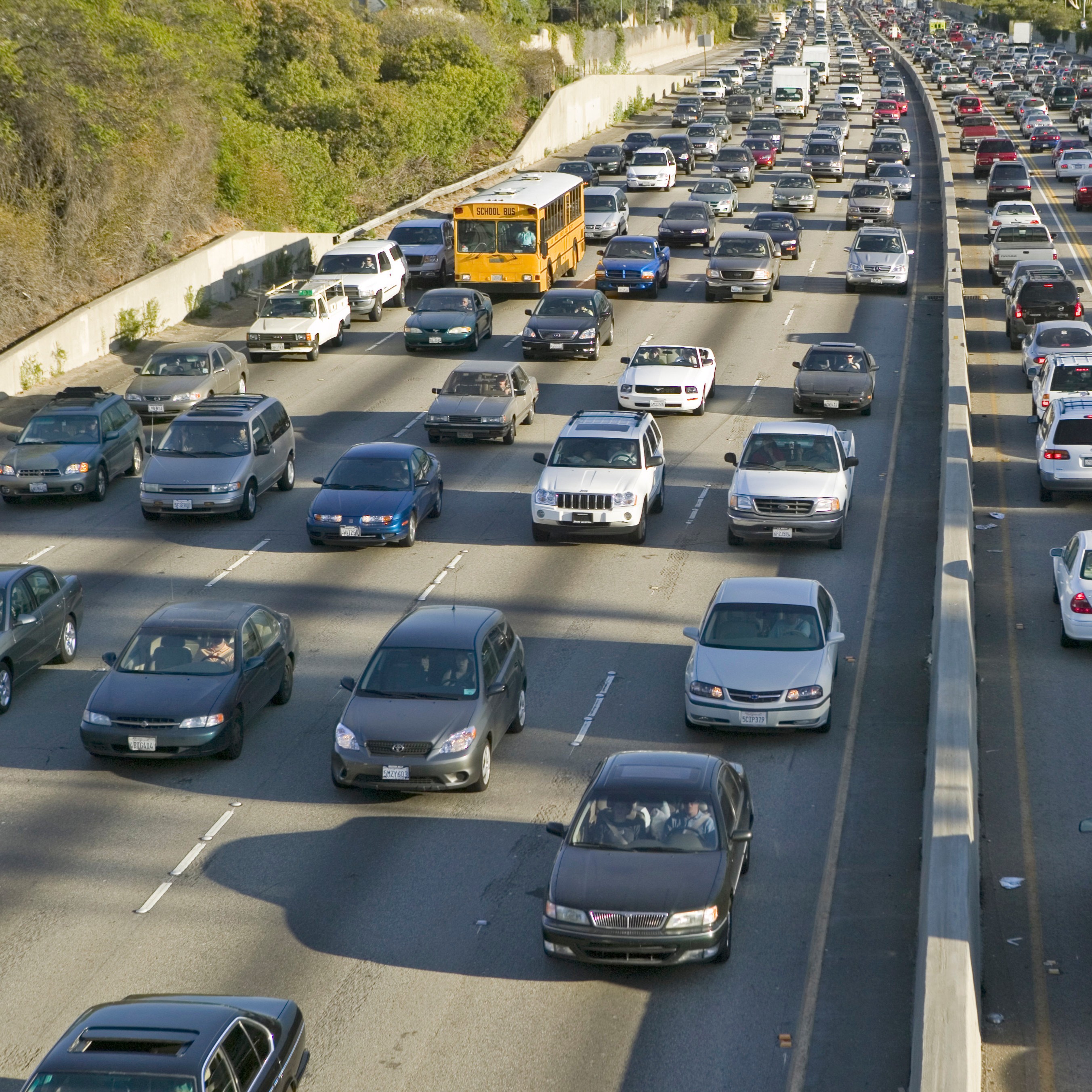
Why is there traffic? How do traffic lights work? How do they know when to turn red and green? Why does green mean go and red mean stop? Why are cars able to go faster than they are allowed to go with the speed limit? Why do we drive on the right side of the road in the United States? Why are some roads bigger than others? Answers to your traffic questions with Mike Knodler, professor and director of the Transportation Center at the University of Massachusetts. Download our learning guides: PDF | Google Slide | Transcript

Take it with you
The Melo app keeps playing with the screen off, works in the car and on your watch, wakes you to your station, and browses the whole catalogue offline. Free, no ads, no account.


