Episode · Chakravyuh
From Shallow Surgical Strikes To Deep Precision Strikes | Chakravyuh | EP 35
14 May 2026 · 24 min
Episode · Chakravyuh
14 May 2026 · 24 min
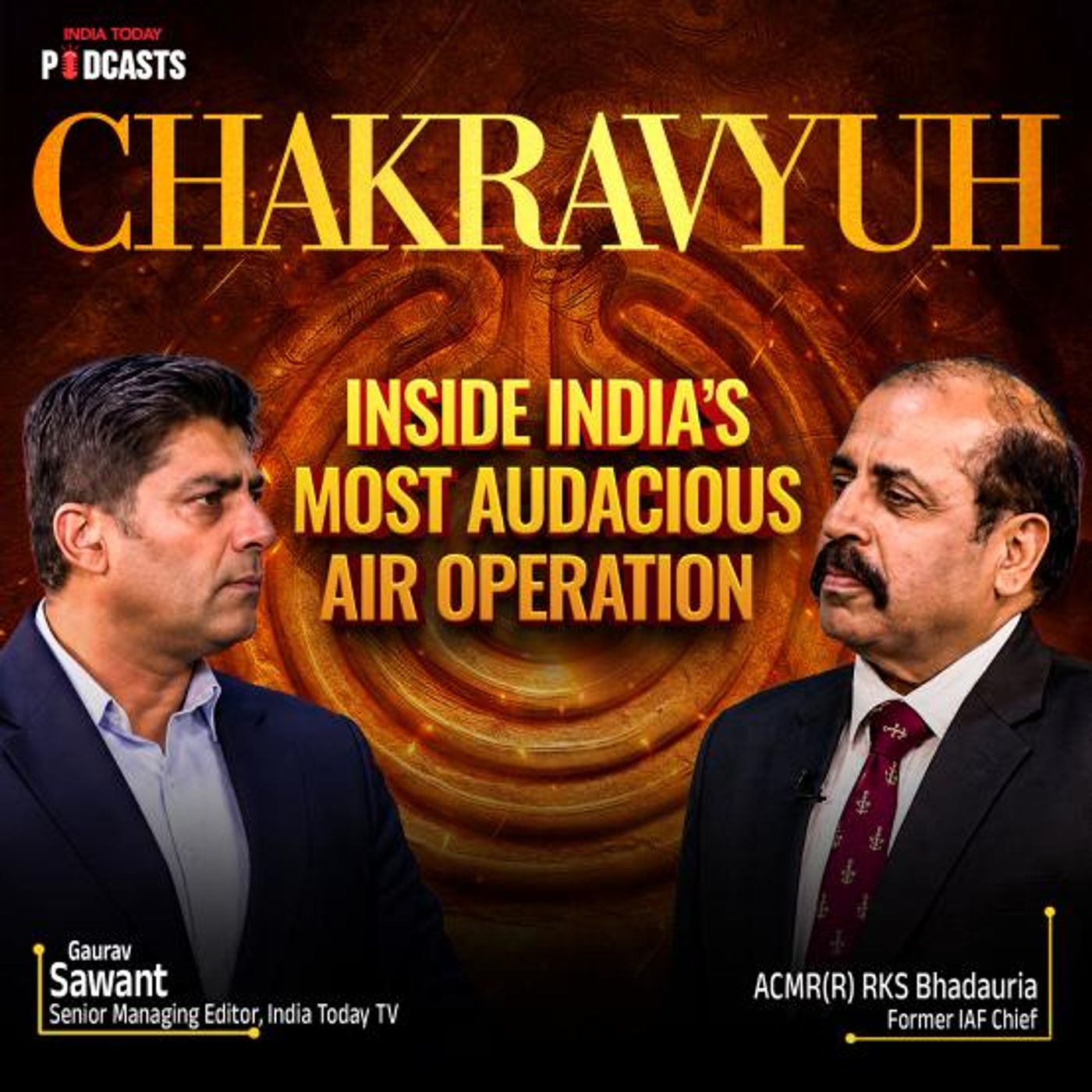
In this episode of Chakravyuh, host Gaurav Sawant speaks with former Indian Air Force chief R. K. S. Bhadauria on how Operation Sindoor forced Pakistan to seek a ceasefire within 88 hours. The discussion breaks down India’s unprecedented strikes on terror hubs like Bahawalpur and Muridke, the role of Rafales, S-400 systems, drones, and precision weapons, and how India punched through Pakistan’s air defence network under a nuclear overhang. From Balakot to Operation Sindoor, the conversation explores India’s evolving military doctrine, escalation control, indigenous defence capability, and…
Speaker 1:This is India Today podcasts.
Speaker 2:In eighty eight hours, India was able to get Pakistan to seek a seas fare.
Speaker 3:Which after more than forty days of.
Speaker 2:Bombing America hasn't been able to get Iran to seek a cease fire. So how was Operation Sindhur different even though that operation is still on. Let me quickly cut across and bring into this conversation a chief martial artist.
Speaker 3:Maadoria, former Chief of Air Staff, Sir, welcome on.
Speaker 2:India first and congratulations on the first anniversary of Operation Sindur.
Speaker 3:India was able to send across a message, Sir?
Speaker 2:What was that message in your view that India was able to send across to Pakistan that Pakistan short a seas fare in eighty eight hours.
Speaker 1:The implementation of Operations Sindhur started with very clearly defined objectives that was to hit the terror targets. That was met. And thereafter when Pakistan started to attack military targets with all the don startingmulition followed by missiles and weapons, we responded proportionately, responded robustly, and you see what happened on ninth and tenth and the kind of excavation control and the kind of damage we inflicted on tenth I think was important which forced them to come to cease fire.
Speaker 3:So I tried uncle on the tenth of May. He cried uncle and short of ceasefire.
Speaker 2:Yeah, what did India do on the night of ninth and tenth of May that Pakistan short seas fire? Because while the government has said so multiple times, there appears to be some kind of ambiguity on what was India able to achieve.
Speaker 1:No, you must understand the sequence of what we did. Firstly, we hit nine terror targets, out of which some were very very big and complex, powerful like you mentioned, unthinkable targets. So the choice of targets was was really really very strong.
Speaker 3:So tell me some thing when the terror attack happened.
Speaker 2:Yeah, Uh, India went and hit Bala Court.
Speaker 1:Yeah that time?
Speaker 3:Why it wasn't Maury and Bahawalpur hit?
Speaker 1:What was the thinking that time?
Speaker 3:In twenty nineteen.
Speaker 1:No, you must see that while the political will and the resolve was indicated by Prime Minister's articulation of zero tolerance, to tell very clearly, it was a paradigm shift and a very strategic shift on how we are going to deal with cross powder terrorism. But thereafter it was built step by step. The surgical strike happened. First, Balacote strike was important. It was the first time airpower was used. So myth of not using airpower because of escalation dangerous was busted. The myth of using airpower against nuclear arm you know country and therefore invoking nuclear that roads, that was busted. So Balacot was important, It was a very important.
Speaker 1:It was a paradigm shift.
Speaker 2:And for the benefit of our viewers, Pakistan is a nuclear weapons state. No other country has used this kind of airpower against another nuclear weapon country. The manner in which India hit Pakistan first and Balacot in twenty nineteen.
Speaker 3:And then during operations Sindhur. Is there any other example anywhere in the world, not.
Speaker 1:In this manner, not nowhere. And remember after Balacote. So so the political will followed by the change in scene of how we are going to deal with the strategic resolve. That Balacote was indicative of what we are ready to do, and that thereafter what happened in Pelgam for the nature of terrorist attack that was conducted, Prime Minister's direction were very clear, unimaginable punishment for the terrorists and for the backers and the choice of those nine targets was indicative of what he had in mind.
Speaker 3:So Mrike which is.
Speaker 2:The headquarters of Lashkari Taiba and Bahawalpur which is the headquarters.
Speaker 3:Of Jeshi Muhammad.
Speaker 2:Remember Lashkari Taiba and Jessha Muhammad, the two terrorist organizations that have bled India for decades, whether it's the Parliament attack of two thousand and one or the Ragunat Temple attack or a series of other attacks that have taken place in our country including Pulwama, Pathan Court, other attacks that have taken place. Why weren't Bahawalpur and Mrike hit earlier? Was it because Pakistan's Pajab provinces. Pakistan Army is redlined because Pakistan thought we'll never hit them in Punjab.
Speaker 1:No, you must understand when Balocote was done for the kind of target that was required at time and the kind of change that we were doing of using air power, that was I think a good stepping stone, well calibrated, well chosen and well executed. Thereafter it gave obviously the political mandate came for the next higher level of attacks and the confidence in the you know services to handle any kind of such this thing increased. Also remember post Baralocote and post fourteen fifteen with the focus on Arthmirwatha, the focus on our military industrial complex, focus on developing our own capability, our own weapons. That was there was intense focus along with it the kind of weapons and combat capability that we inducted post Ballocode. All that gave us much better capability and strength.
Speaker 2:And therefore, for example, what you're saying is during Balacote, we did not have the bvrs that we required, the beyond visual range missiles that we required, or the raphaile aircraft that we required. And what happened subsequently we had we had the raffailes and we had our beyond visual range missiles besides that can hit more than one hundred kilometers away.
Speaker 3:Do I understand that correctly?
Speaker 1:Absolutely? And we had dromos conducted with on two thirties into the Air Force. We had s four hundreds that got inducted. We had taken our networks to a higher level. Many other actions that were taken a long didn't. Precision weapons got included, drones got included in the three services. Counter drone systems started to come in. Jammers across the board, a lot of capability development and therefore, when Pelgam happened and for the nature of no the Terror Act at Pelgam, a higher response was required and government took that call despite the political risk. It was a very very strong decision by the government and it shows also their confidence in the services.
Speaker 2:So basically the government had to wane that you're hitting a nuclear weapons state, absolutely a radical Islamist country. You're hitting and he can escalate by hitting you anywhere, and he can try and mobilize the point five percent that he thinks that two and a half front they can activate the Bangladesh front.
Speaker 1:Is that what was the apprehension? No, I think state apprehension. Firstly, in the mind of this government, there's no apprehension. Once it was decided, the will was there, the strategic resolved to change how we'll tackle this was already there. So there was a very clear cut objective laid out and they knew that services will deliver, services are capable. They have built up Okay, we have built up indigenous, we have built up Okay and therefore the delivery was no surprise to them. You must remember hitting those nine targets when Pakistan is fully alert is no small achievement, no mean achievement and hitting all successfully and the kind of damage that you see at Murike and Balpur in particular, those were with weapons from you know, the latest weapons that we just talked about, and that it was for the whole world to see. So the world and Pakistan woke up to a new dawn, you know, and the new normal that India shifted to.
Speaker 2:On seventh of Kistan lost one hundred terrorists by nearly one hundred terrorists, one hundred terrists. They that must have hurt the Pakistan Army losing their sons, losing their brothers.
Speaker 1:Absolutely, that must have hurt for sure. And the way you saw on some of those funerals, the senior Pakistani Army officers attending those funerals, Pakistan in many ways was exposed to the world. And and what you talked about thereafter, what happened when.
Speaker 3:They responded, They tried to target on military assets.
Speaker 1:Yeah, so you know, we know the psych of Pakistan Army, Pakistani Air Force, we knew they will respond. They responded with drones, with with the you know a lot of disruptive kind of and the pl fifteens they are still behind. Initially they did not you know, going to weapons. They depended on drones and some of their lotting minition. And when that did not affect when our army and a FOCE countered, that did not allow it to interfere in our system. And for that although our entire counter drones you know emerge evolving capability was not in place, but whatever was in place was very well tackled. Uh. That is when they went for a much higher level and when they were doing this drones, lotter ammunition, et cetera. Uh, you know, we targeted very intelligently in a very calibrated manner the radars, there's some stams and and we were already building towards UH supparassion plan which could come in handy later.
Speaker 3:So basically what we did was we punched holes in the air defense systems.
Speaker 2:Absolutely their systems, the what's the Honky sixteens, h Q sixteens and.
Speaker 1:The HQs series that those are the latest and fairly capable. Sam's given and some of their radars, one or two command and control center and thereafter what Pakistan Force tried was to launch a very serious attack with with the capable weapons on some of our air bases and military targets. When they tried to target right across uh start and going, they launched, they launched missiles, they launched stand up weapons. They attempted to launch a much higher weight of attack also on military targets. So that was negative, including their attack on r S four und side. Yes, so that was you know, kind of neutralized and very fast, very rapidly.
Speaker 1:We launched what you saw on ninth night and tenth morning, So those were gives were in response to Pakistan looking for attacking some of our critical targets and then then calling it off on a winning note. And that is why where our planning and our capability thereafter came in and this entire eleven basis attack. That is when this happened a series of attacks.
Speaker 3:Then ninth night, yeah, May ninth night and maintene morning.
Speaker 2:That was the time that Nur Khan Air Base was targeted, that Rahimiar Khan was targeted.
Speaker 3:That I believe is a dream for all of.
Speaker 1:You start these bases thereafter, okay eleven which is a NATO base, Yeah, yeah, eleven targets and more importantly all were hit the kind of you know we call d MP the point of impact that you want their command and control centers, their critical hangars which had aircraft including their you know a W and C, their run bays where it was critical where we wanted to you know, ground the forces there so that they don't interface should there be anything more and targeting successfully across Pakistan and some more holes were punched into their EDDY network so the relevant EDDY portion was suppressed. And if with imfinity we struck all these bases or successful, this is a huge achievement. And they knew that if this has happened, suppose we had done one more way, what would have happened.
Speaker 1:We would have just multiplied the damage. So we had oh yeah, if you'd hit them, hit them harder, because we have evolved into a very mature defense force. When this itself was a spike which was well controlled. Remember you're trying to control the escalation ladder between two nuclear armed countries, so you don't want to go beyond a limit, but you want to keep starting the limit. So this spike itself, I think militarily we have to really praise the CEDIUS and the service team. The way this was planned and achieved. This itself was audacious militarily under a nuclear overhang. Very audacious military move so so to target this and thereafter we forced them for you know, running for a ces fire. If we wanted, we could have stuck more. If he had continued, we would have stuck more.
Speaker 1:But there are also professionals in many areas and they realized that they cannot afford to extend any further extension. We would have continued to ground them. Twenty percent was already hit. There was if we have struck with the impunity, what makes you think that we next way would not have gone through. We would have gone through.
Speaker 2:My favorite stories is a Pakistani air Defense aircraft an AVAX, being taken down by an S four hundred more than three hundred kilometers over.
Speaker 1:Yes, now that is believe that is important to understand. So while we hit and achieved all our targets, we did not allow them their weapons to hit us because the weapons were intercepted. The aircraft launching weapons were not allow to come within about one fifty odd kilometers in Pakistani space across LAC.
Speaker 3:So that was the zone one hundred and fifty inside.
Speaker 1:The aircraft could not even absolutely so no, and they could not drop eavent. They could they can take off and get away from the zone and be safe, but they could not drop their weapons, and the weapons that were dropped were intercepted. They attempted on S four hundred, but we had, you know, taken other measures where we ensured that it was safe. But important thing is we not only denied airspace over us to them and effectively tackled whatever they launched. And they launched a fair amount of ordance. Remember this, many people don't realize it, but we denied their space within Pakistan to them.
Speaker 2:And because say that Pakistan tried to fight back. Obviously they tried to fight back.
Speaker 1:They were looking for a very good strike, a strong hit in our basis and thereafter call it off. And this is what we denied. We instead hit their basis so strongly they could not have imagined. We got their wax in the air and we got many other aircraft that were flying in the last two days.
Speaker 2:So when you hit his aircraft in the air and on ground as an aviator, what's the impact on the Pakistan Air Force moral, especially when Pakistan fails to acknowledge it as a country.
Speaker 1:No, the impact is for you to see, you know, you must understand Pakistan overall military capability and the kind of equipment, the kind of air defense network they had put up. It is fairly at parer with us in terms of technology and capability in terms of potential. But the fact that we degraded stroke, destroyed the relevant portion and were able to hit all these bases across is what would have changed his psyche totally. And what we hit in the air, so now he didn't have option to hit again in the air Hitar basis and also he washat on ground. They had no choice what to go in for a ceasfire. There was no way they would have they could have continued. So this is the best part of us. It was militarily a very audacious strike what we did on tenth morning under a nuclear overeng So when you.
Speaker 2:Look at the way Pakistan launched its bronze missiles, rockets and aircraft in India's direction and India's air defense system, it.
Speaker 3:Provided results.
Speaker 1:It performed absolutely.
Speaker 2:Countries like Saudi Arabia, countries like the United Arab Emirates when Iran faz at them, why are they so vulnerable?
Speaker 1:What is your reading? Okay, you know what we have done with our air defense. Our i CCS Integrated Air Command and Control System integrates all our radars span India AKASH there integrates all army radars and their weapons in our ISCS. Many of the weapons SLAMS are already integrated. Our aircraft flying with combat capability many are integrated into this. So we have a very networked environment all across, so our ability to detect, our, ability to control the aircraft, manage and in short distance tackle everything is very high.
Speaker 2:So countries like Ua and Saudi Arabia, victims of Iranian attack should be looking at our explain.
Speaker 1:What happened there. They had robust defense capability US deployed for US basis, either US deployed or whatever they've bought. In areas they had totally technologically even superior capability, but there were enough gaps if you look at the capability on low r c s like lotter ammunitions, et cetera. Also, if you think the complete networked across the Gulf State, I don't think was available.
Speaker 3:Because we have a bigger border.
Speaker 1:We have a much bigger a bigger border, so over overall, you know, our ability to UH unilaterally tackle everything together in one go is very high they were. They were in groups and in distributed they had higher techechnology, but they had enough gaps. Iran. Instead of attacking only Israel started attacking, attacking US bases and Gulf states, you know states because of they wanted to attack and you know, get some destruction there. Israel is at longer range and their air defense network was strong.
Speaker 3:So okay, let me for a moment.
Speaker 2:Come back to USA government says Operations induris still on. Should there be God forbid another terror attacked by Pakistan which is traced back to Pakistan's military terror complex. Now Pakistan knows what we intend to do. You know, for example, we can hit Bahawalpur. He would have put air defenses at Babelpur or muri Ke or his air bases.
Speaker 3:They would be better protected.
Speaker 2:Perhaps this time he may launch his missiles and air strikes and drones.
Speaker 3:How do we, you know, stay one up on him.
Speaker 1:Yeah, that's important. We were a to achieve what we did because we learned our lessons well after Ballacotte and our reading well of uh you know what political directions will come in any such case in the future, and what we need to do. So our capability building was very good against against you know whatever we thought that we are likely to do. Pakistan already had a good network. Don't think that at the moment it wasn't there. Of course, they will now try and cater for our strengths for sure, and that's why it is important for us to go to the next level, which is which is you know I our ir capability to our next higher level, integrating our space for real time integration into our network.
Speaker 2:So intelligence surveillance and reconnaissance needs to be next level, to next tlevel.
Speaker 1:It's already there, but we need to go to the next level and have it available in real time, make it AI enabled, go to enough numbers and much more capable. Uh vision.
Speaker 2:How do you deal with this threat when Pakistan and China operate in tandem like they did during operations.
Speaker 3:So even though China may officially.
Speaker 1:Seek to deny it, but we know they We surely knew what equipment has gone across, except for some things which came at the last minute. But we also knew that they would collude in information and that proof was there in Sindhure where entire IESR and many of the other support was given by China. So so the collusion is to be expected. What we have to cater is what equipment goes across. We have to cater to be able to tackle that. And next time, whenever we tackle any such situation, whatever comes up in the adversaries, you know, area of operations in terms of whatever new they put in, whatever new networks, what our new capabilities, we have to study and plan to punch holds in that. So so we have to stay one step ahead, which I'm sure our services are moving to. And finally it's a question of will yes, you know, our our psyche has changed, the way we operate has changed, and that is you know, the biggest part of our winning. And any further, any new operation on template or on any conflict, you will find this psyche that is there of being offensive and winning.
Speaker 2:Because there are two things that I thought was lacking on on our part. One was information warfare, where his lies would travel faster than the truth as far as Pakistan was concerned, and his narrative stayed on ki plane gad g versus that he could not even fly on the tenth of May.
Speaker 1:And that's point one.
Speaker 3:In point two, should we have hit him from the sea, hit him harder from the.
Speaker 1:Yeah, you see what happened at tenth termination. We had just hit eleven bases. Yes, uh, you know Karachi was looking nervously at her navy. They were just poised to launch. That is another factor. Our army was aggressively handling everything that was coming across, in terms of drones, in terms of whatever else. So our aggression at LC and IB was very strong. So overall they were staring at a you know, try service offensive and they knew that they have no choice. So our naval deployments and virtually they were almost If one more wave had gone through, probably you would have seen Karate being it and which they would have realized, so they knew we mean business. They just had to stop and you know, better sense prevailed there. Otherwise, one more wave and they would have been further exposed and further and we would have still control the escalation.
Speaker 1:But but I'm glad that they saw sense and we stopped at the right time.
Speaker 2:But would this data Pakistan from carrying out the next attack knowing that radical Islamist jihadi mindset of Assemuni and co.
Speaker 1:They will think twice for sure. After Balakote happened, there was a big period wherein such level of attacks didn't take place. Earlier it was quite regular. Okay, now when Pelgrim happened, this action has been taken. They know our policy has changed, they know the political will, they know the military might. Now they know what our industry, how it is developing, our indigenization or nirwatha. So they know how our capability is building up. But they are not rational to the code. They are irrational and for them to do any such action when they're back to the world, we need to be prepared for that. So we cannot say that okay, this has happened the better seasons.
Speaker 2:If that was the case, they would be in case they meant Afghanistan, perhaps that wall should hurt them even harder in times to come.
Speaker 1:Yeah, yeah, the wall and the snakes will hurt them.
Speaker 2:They will come to snakes in their backyard and from across in the Durant line is where Pakistan is already feeling the pain. Perhaps they should feel even more pain. Chie fashion Padoria for joining me here on this India.
Speaker 3:Today Special broadcast. As always, many thanks.
Speaker 1:Sir, thank you for having always a pleasure.
Speaker 3:Operation Sindhur is still on India remembers are Braves.
Speaker 2:Those families who were singled out, men were asked their religion. They were killed because they are Hindu, because they were Hindu. That's one message that we must never forget the kind of war these radical Islamists in.
Speaker 1:Pakistan are waging against India.
Speaker 3:We'll be tracking developments on that story very closely. That is all I have for you on this India Today Special podcast.
Speaker 1:Thanks for watching.
Transcript supplied by the publisher with the episode.
by India Today Podcasts · English · News
Chakravyuh with Gaurav Sawant is India Today Group’s sharp new podcast that cuts through the fog of war and diplomacy. Join veteran war correspondent and one of India’s most trusted voices in defence journalism, Gaurav Sawant, as he dives deep into the world of national security, strategy, and geopo
14 Aug 2026 · 34 min
On this Independence Day special episode of Chakravyuh, host Gaurav Sawant speaks with former Chief of Air Staff RKS Bhadauria about India's quest for defence self-reliance. They examine India's dependence on foreign weapons and fighter engines, the unfinished Kaveri engine programme, and why technological sovereignty is essential for future wars. The discussion also explores whether buying foreign fifth-generation fighters such as the Su-57 could undermine the indigenous AMCA programme, and how India can build a stronger ecosystem around drones, AI, missiles and indigenous defence…
2 Jul 2026 · 12 min
In this episode of the Chakravyuh podcast, host Gaurav Sawant speaks with Congress MP and strategic affairs commentator Manish Tewari on the growing debate over resuming dialogue with Pakistan. The discussion comes in the backdrop of an open letter signed by 117 eminent personalities from India and Pakistan calling for the restoration of diplomatic engagement, trade, people-to-people contact and broader normalisation of ties between the two neighbours. Questioning the timing of such appeals, especially in the aftermath of the Pahalgam terror attack and decades of Pakistan-sponsored…
11 Jun 2026 · 39 min
In this episode of the Chakravyuh podcast, host Gaurav Sawant speaks with Admiral DK Joshi, Lieutenant Governor of Andaman & Nicobar Islands, Vice-Chairman of the Islands Development Agency and former Chief of Naval Staff, about the Great Nicobar Island Project. Joshi explains why the project is strategically vital for India, highlighting its location near key maritime choke points and its potential to strengthen India's position in the Indo-Pacific. He addresses criticism surrounding environmental concerns, tribal displacement and forest diversion, arguing that safeguards are in place and…

7 May 2026 · 14 min
In this episode of the Chakravyuh podcast, Gaurav Sawant speaks with the Deputy Commander of the Netherlands Navy, Major General Rob De Vitt on rising global maritime tensions as the Strait of Hormuz remains choked amid the Iran conflict. The discussion explores how navies from over 40 nations, including India and the Netherlands, are preparing to secure vital sea lanes of communication once a ceasefire is in place. From mine-clearance operations and drone threats to Indo-Pacific deployments and India-Netherlands strategic cooperation, the conversation examines the future of naval warfare,…
9 Apr 2026 · 18 min
In this episode of Chakravyuh, Gaurav Sawant speaks with Israel's Ambassador to India, Reuven Azar on the fragile ceasefire in West Asia after weeks of conflict. While tensions with Iran ease temporarily, Azar makes it clear that the front remains active, stating that “operations against Hezbollah will continue” in Lebanon. He outlines plans to neutralise threats and maintain a buffer along the northern border, signalling no pause in military action there. They also explore shifting regional dynamics, ceasefire uncertainties, and whether diplomacy can hold amid continued strikes and rising…
2 Apr 2026 · 24 min
In this episode of Chakravyuh, Gaurav Sawant speaks with Vice Admiral Krishna Swaminathan, Flag Officer Commanding-in-Chief of the Western Naval Command of the Indian Navy on the escalating West Asia conflict and its impact on maritime security. Swaminathan explains how disruptions in key choke points like the Strait of Hormuz are threatening global trade and India’s energy lifelines. He says India’s heavy dependence on sea-borne imports makes maritime security critical, with the Navy actively escorting tankers and maintaining surveillance. He also highlights lessons from the conflict,…
28 Sep 2026 · 39 min
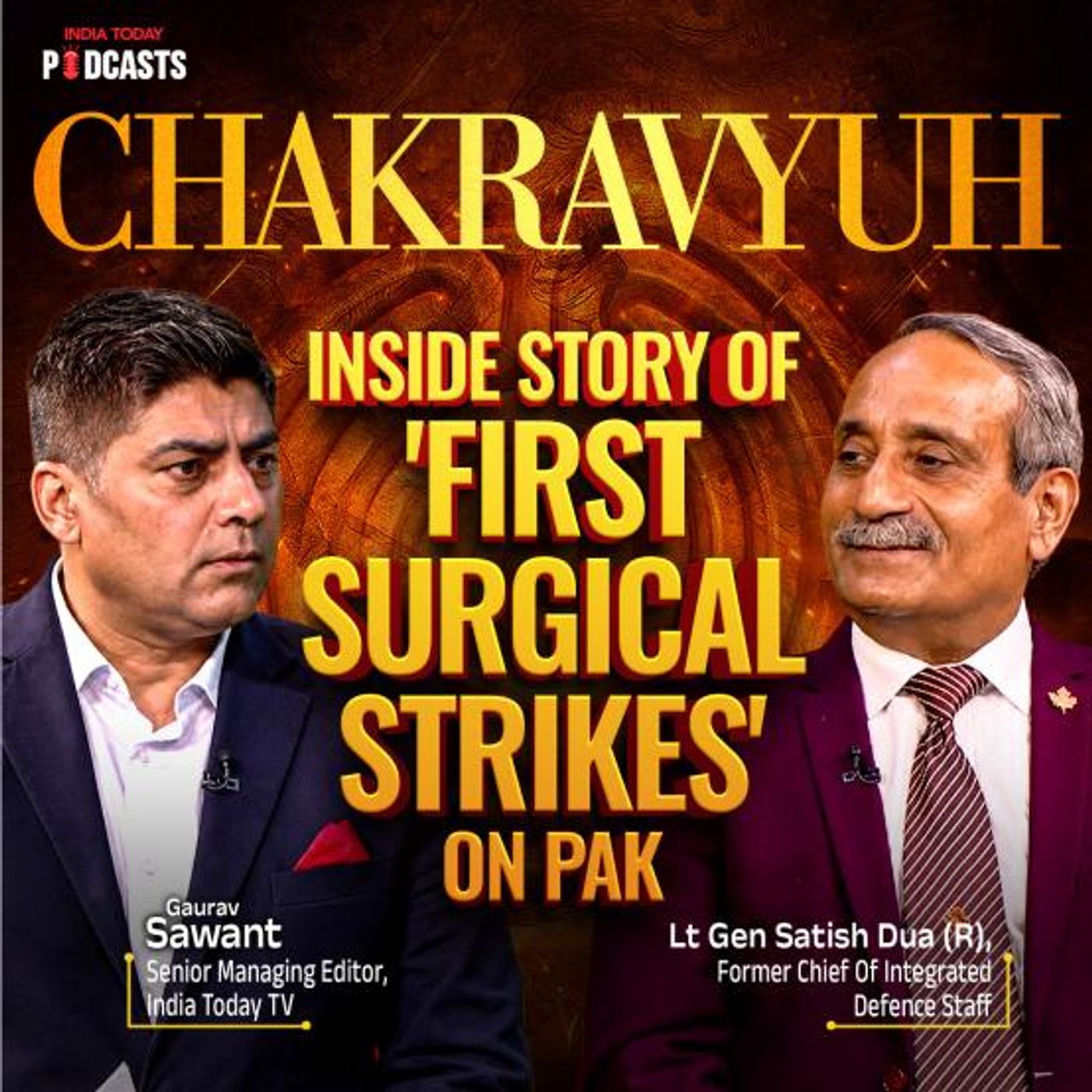
Ten years after the Uri terror attack, Chakravyuh looks back at the events that led to India’s 2016 surgical strikes in Pakistan. Host Gaurav Sawant speaks to Lieutenant General Satish Dua (Retd.), Former Chief of Integrated Defence Staff and the then Kashmir Corps Commander, about the September 18, 2016 attack, the loss of 18 Indian soldiers and the decisions that followed. Lt Gen Satish Dua recalls receiving the first information about the attack, reaching Uri after the four terrorists had been eliminated and dealing with the scale of the casualties. He speaks about the security gaps at…

25 Sep 2026 · 29 min
Can the conflicts in West Asia and Ukraine develop into a much wider global crisis? In this episode of Chakravyuh, host Gaurav Sawant speaks with Dr. John Sfakianakis, Chief Economist at the Gulf Research Center, for a detailed look at the wars, economic pressures and strategic risks shaping the region. The episode examines the continuing conflict involving Iran and the US, the growing pressure around the Strait of Hormuz and Bab el-Mandab, and the consequences for Saudi Arabia and the wider Gulf. Sfakianakis discusses the possibility of continued escalation, the role of regional proxies and…

17 Sep 2026 · 23 min
On this special episode of the Chakravyuh podcast, Gaurav Sawant speaks with Hanuman Ansh director Dr. Vishal Chaturvedi about the film's extraordinary theatrical journey. From a reported ₹2 crore production budget and a modest opening day to ₹231 crore-plus in India net collections, Chaturvedi explains how promotions helped bring audiences in initially, while word of mouth eventually drove the film's growth. He also shares stories from the making of Hanuman Aansh, his spiritual experiences, his connection with Neem Karoli Baba and the role of Hanuman devotion in inspiring the project. The…
26 Mar 2026 · 15 min
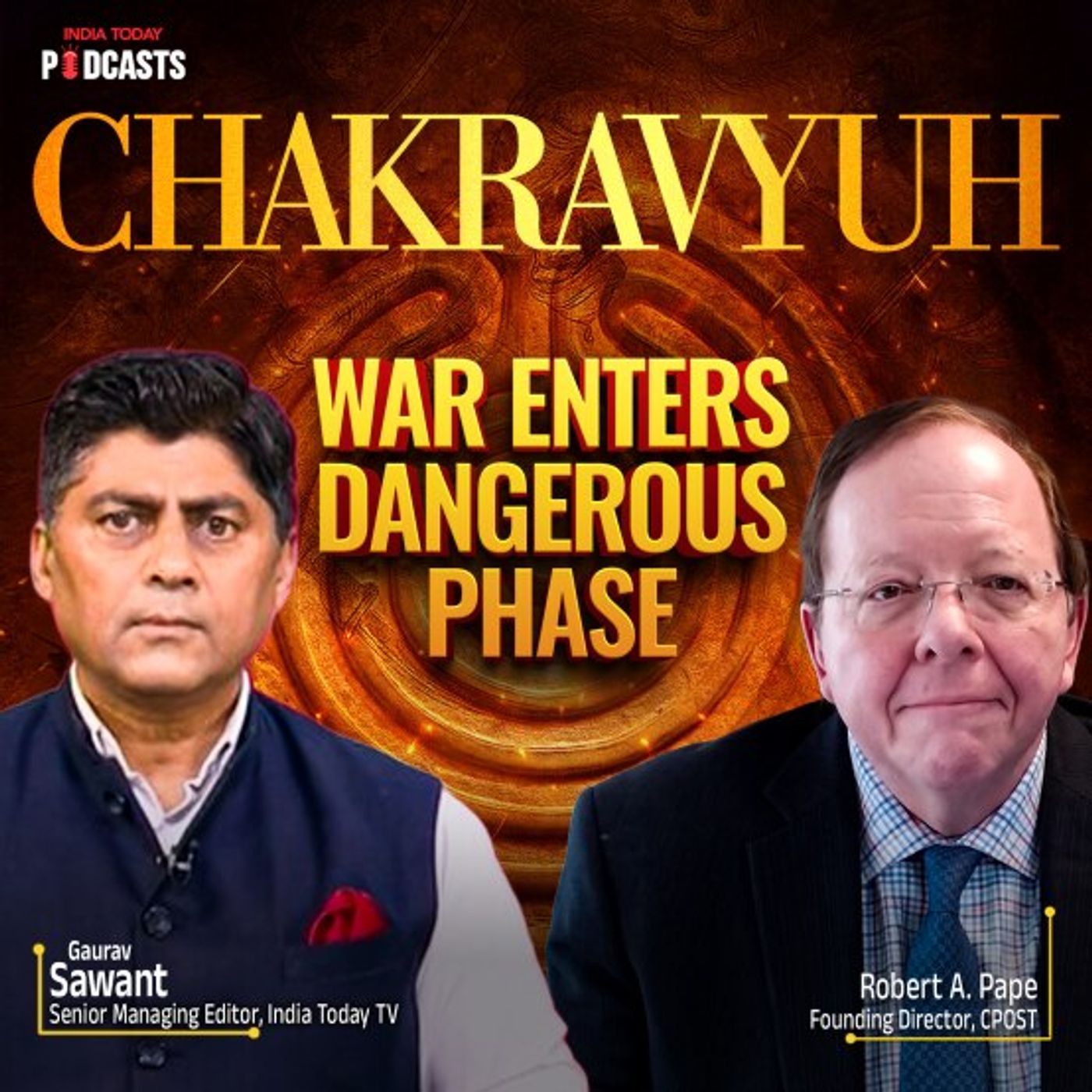
In this episode of Chakravyuh, Gaurav Sawant speaks with the founding director of the CPOST, Robert Pape on the reported deployment of US Marines and 82nd Airborne troops to West Asia. Pape describes the situation as an “escalation trap,” warning that tactical gains against Iran may not translate into strategic success. He cautions that ground operations could trigger a prolonged war of attrition, rising oil prices, and wider global instability. He also highlights risks of terrorism beyond the region, including potential threats to US and global security, as the conflict expands both…

The Melo app keeps playing with the screen off, works in the car and on your watch, wakes you to your station, and browses the whole catalogue offline. Free, no ads, no account.