Episode notes
It turns out that the whole world wobbles. Everything has a natural frequency - the rate at which it moves when disturbed - be it a cup of tea, a building or a human organ. Even more incredibly, if an external force matches an object's natural frequency, it causes it to absorb that energy and vibrate with increasingly large waves; and that can have consequences, from helping a spider find its lunch to making a bridge collapse. On the trail of good and bad vibes and everything in between, Hannah and Dara investigate whether the famous 1940 collapse of the Tacoma Narrows Bridge in the USA was…
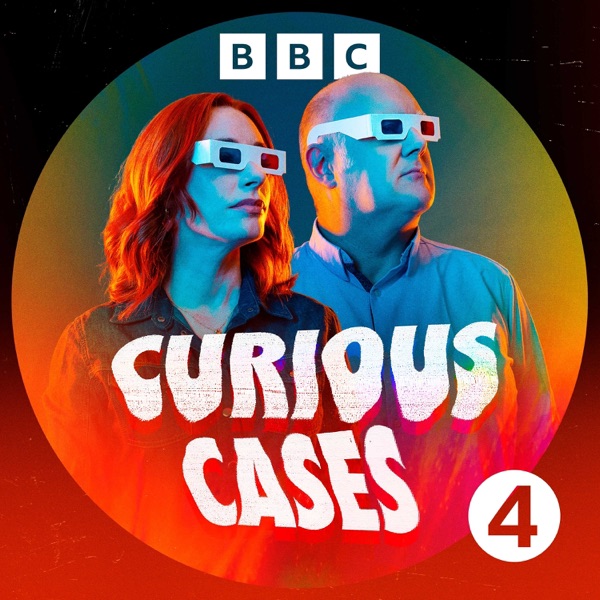
Curious Cases
by BBC Radio 4 · English · Tech & Science
Hannah Fry and Dara Ó Briain tackle listeners' conundrums with the power of science!
More from Curious Cases
-
7 Nov 2025 · 29 min
Going Viral
Cold and flu season is well and truly upon us, and whilst most of us are busy bemoaning the pesky viruses behind our sniffles and chesty coughs – one of our listeners has other ideas. Elizabeth wants to know whether we’re too hard on these oft-maligned microbes? We’ve all heard that some bacteria can be good for us, but what about viruses? Could they have a softer side too? Hannah and Dara explore the virome, from prehistoric placental proteins to ultra-precise disease fighting phages to find out if Viruses truly are the villains of the microscopic world or whether they just need a better PR…
-
31 Oct 2025 · 29 min
We Didn't Start the Fire
It has been said that you can't start a fire without a spark, but as Hannah and Dara are about to discover, that's not true! Welcome to the fiery phenomenon of spontaneous combustion, when something can ignite all on its own: no matches, no sparks, no external flame. It happens when certain materials heat themselves up internally through chemical or biological reactions, and if that carried on unchecked and the material gets hot enough, it can eventually ignite itself. This process can occur in various everyday items such as piles of hay or grass clippings, oily rags and in certain instances…
-
24 Oct 2025 · 29 min
Just My Luck
Are you a lucky person? Do the cards just fall well for you? Whether it's always finding a parking spot when you need one or chance encounters that change your life's trajectory for the better, some people seem to have more luck than others. Hannah and Dara explore the world of probability and psychology to figure out if some people are luckier than others, and if there's anything we can do to turn things around. You can send your everyday mysteries for the team to investigate to: curiouscases@bbc.co.uk Contributors David Spiegelhalter - Emeritus Professor of Statistics in the Centre for…
-
10 Oct 2025 · 29 min
To Crab, or Not to Crab?
We can all picture a crab, but did you know that nature has reinvented those claw clicking, sideways scuttling crustaceans at least five separate times? In recent years the internet has run wild with the idea that crabs are the ultimate life-form, and that even humans might one day end up with pincers too. But is there any truth behind the memes? Hannah and Dara scale the tangled tree of life and tackle taxonomy to figure out if ‘crab’ really is evolution’s favourite shape. Exploring coconut to spanner, ghost to hermit, soldier to spider they learn how to tell the ‘true’ crabs from the…
-
1 Oct 2025 · 2 min
Trailer
Hannah Fry and Dara Ó Briain return to Curious Cases HQ for a brand-new series. And curios, there’s a lot to unpack! Coming soon to BBC Sounds.
-
4 Jul 2025 · 29 min
Clever Crows
The term 'bird brain' might suggest our feathered friends are stupid, but Hannah and Dara learn it's completely untrue. They play hide and seek with a raven called Bran, and hear how his behaviour changes depending on his mood. Corvid expert Nicola Clayton explains these creatures are actually cleverer than the average 8-year-old, and can learn how to choose specific tools for different scenarios. And neurobiologist Andreas Nieder tells them that while crows evolved totally different brains from humans - 300,000 years apart - they might just be capable of the same type of intelligence.…
-
29 Sep 2026 · 1 min
Trailer
Hannah Fry and Dara Ó Briain return for a new series, and a whole lot of new problems to solve!
-
2 Jan 2026 · 29 min
Frosty Fractals
One winter morning, listener Jane opened her curtains to find her car roof covered in breathtaking, fern-like frost so intricate it looked like a William Morris print. But how does something as ordinary as ice create patterns so beautifully complex? Hannah and Dara explore this crunchy, slippery, delicately patterned branch of chemistry to uncover the rules and mysteries that govern the extra-ordinary world of ice. Why does ice come in so many shapes and sizes? And does all ice form at 0 degrees Celsius? Is every snowflake truly unique? We have questions a plenty for our eager chemists, who,…
-
31 Dec 2025 · 28 min
Mining for Gold (GOLD!)
From pharaohs' tombs in Ancient Egypt and medieval currency, to priceless royal jewellery and Spandau Ballet songs - gold has been prized for millennia. But it's only really in the last century or so that we've started uncovering its usefulness in less decorative applications. Today, gold is used in masses of electricals; it's also revolutionised part of the manufacturing sector by stopping a dangerous reliance on mercury as a catalyst; and it's vital to space missions. Although there are also some more frivolous modern uses for gold, as Hannah and Dara discover. (Gold-leaf in your cocktail,…
-
19 Dec 2025 · 28 min
Phantom Pain
What exactly is 'phantom pain' and how does it work? Hannah and Dara investigate a medical phenomenon that's been known about for centuries but is often misunderstood; and involves masses of unanswered questions. The condition 'phantom pain' is when someone gets a sensation of pain that feels like it's coming from a part of their body that's no longer there - so that could be an amputated limb, or perhaps something that has been removed, such as a tooth or an organ. It's thought to be caused by how the brain and body process pain and physical awareness, but there's still debate around what…

Take it with you
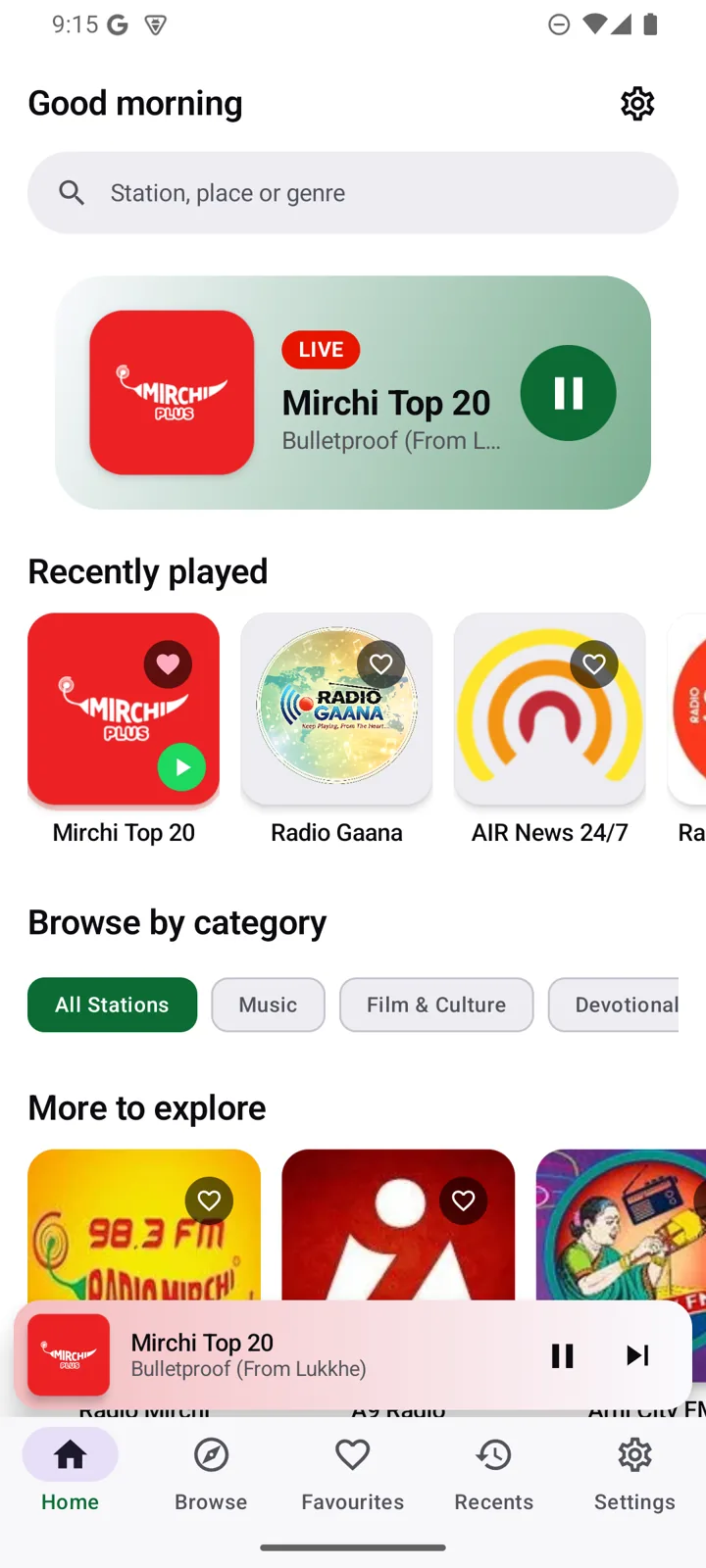
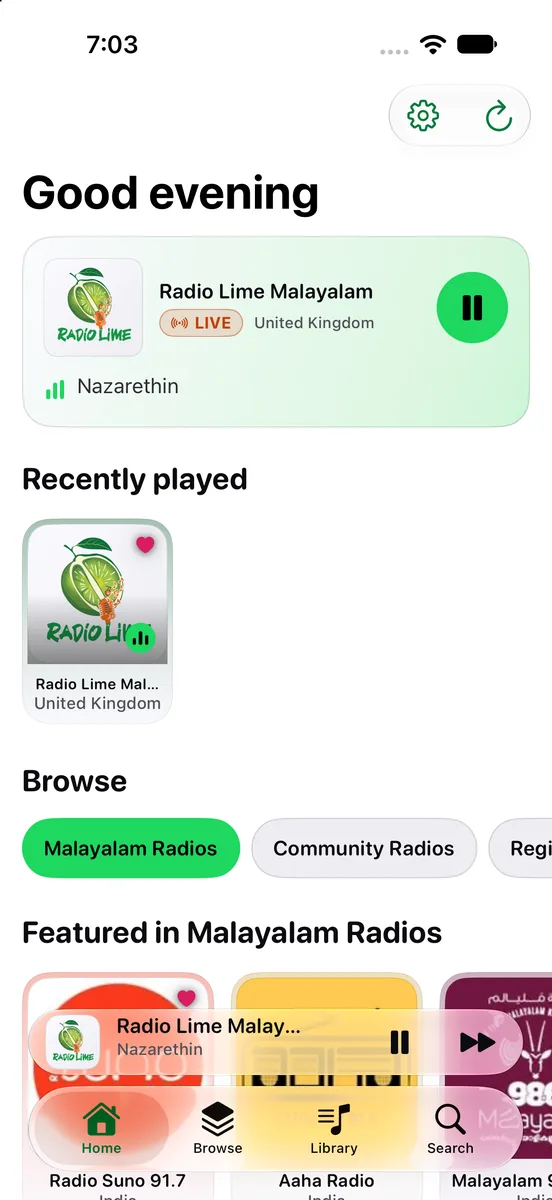
The Melo app keeps playing with the screen off, works in the car and on your watch, wakes you to your station, and browses the whole catalogue offline. Free, no ads, no account.