
Episode · Express Conversations
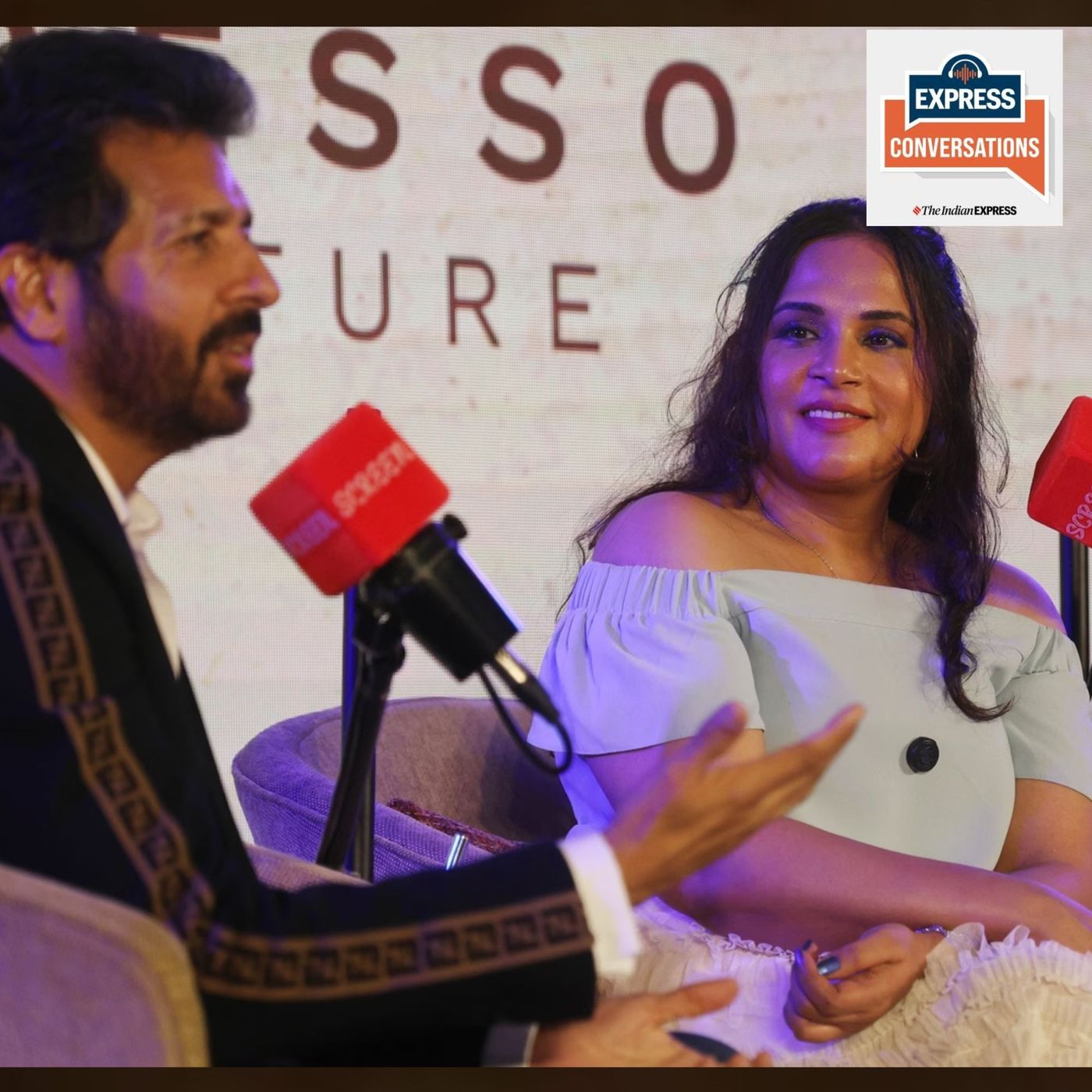
Kabir Khan & Richa Chadha Exclusive On Struggles, Stardom & Stories That Matter
15 Aug 2025 · 51 min
Episode · Express Conversations
15 Aug 2025 · 51 min
In this insightful and inspiring interview, acclaimed filmmaker Kabir Khan and celebrated actress Richa Chadha come together to share their remarkable journeys — from facing struggles in the early stages of their careers to becoming influential voices in Indian cinema. Titled “From Struggles to Stardom & Stories That Matter,” the conversation explores the personal and professional milestones that shaped their paths, as well as their commitment to storytelling that goes beyond entertainment. Kabir Khan, known for his powerful and socially resonant films like Bajrangi Bhaijaan, Ek Tha Tiger,…
Speaker 1:Welcome to another episode of Express Conversations, a podcast where eminent voices from the world of politics, governance, sports, business and arts talk to us about their life, work and issues that really matter. In this episode, we will hear from acclaimed filmmaker Kabir Khant and the celebrated actor Richa Chadha. Our guests are in conversation with Wanda Tamishra from The Indian Express. In this episode, these two incredible artists come together to share their remarkable journeys, from facing struggles in the early stages of their careers to becoming influential voices in Indian cinema. The conversation also explores the personal and professional milestones that shape their paths and more.
Speaker 2:It's a delight to be here sharing the stage with both of you, Richard and Kabir, if I may call you that.
Speaker 3:So if we can begin.
Speaker 2:With the fact that in twenty twenty five, both of you have actually marked milestone of your career.
Speaker 3:Uh.
Speaker 2:Ten years ago you did and ten years ago you did Massan.
Speaker 4:And Uh Massan was that.
Speaker 2:Film which brought out you know, the small town the strong headed woman caught in that Choti Jagati. Such I think punculturate party. Character tells your character Daviki yebo jaga jabe chosett, I mean a high strain, Rukti a high strain, Rukti had choset yeah, Luktina yeah, Annasa Jan. So it was that kind of a confine which your character, who's strong headed and rebellious, she's fighting for her independence. She's fighting a morality and a sexuality issue there. But of course took a story which had congealed violence, congealed jingoism, suspicion, distrust, and tried to recast that story in humanitarian then kind.
Speaker 4:With kindness and with love.
Speaker 2:So for both of you, when you look back, how Seminal was Baji high Jump for you for instance, and how Seminal was Massan for you? How has it shaped your you know, these ten years and the next to ten years to follow.
Speaker 5:Obviously, when you're making something, you don't know it's going to be Seminal, so you start out making it with honesty.
Speaker 4:It's a really sweet kind of experience.
Speaker 5:Because Nirajgevan, the director and writer of Massan, was the content script supervisor on Gangs of Assigord, and Warn Grover was like the lyricist for Oh Lucky Lukie the songs that Snihaknvulker had composed, So I had known.
Speaker 4:Them like that. And then they can to me saying they've written something set in banaas.
Speaker 5:Got this girl you know who has very sort of healthy sexual curiosity, would you like to do it? And then and they just sort of fell into place while making it definitely seem like a really interesting project and something that was already an Indo French co production. So I knew that, you know, it had the possibility maybe to travel to film festivals, but no one knew that it would just have so much everlasting love. I think it turns at your heart a little bit and makes people feel things so they remember the feeling way long after the experience of actually having watched the movies ended.
Speaker 2:So but it did become a reference point for you for your later choices.
Speaker 4:No, not really.
Speaker 5:I wish I got scripts as complex as layered, as coded as Massan later. Also, that's any actor's dream to keep getting better and better scripts that are, you know, it's a big compliment of something's written for you.
Speaker 4:My choices have always been my.
Speaker 5:Choices because of where I come from, how I think what I think of acting, what I think of movies. So I wouldn't say that it shaped a lot of my later choices, but I would definitely say I was very lucky to get that film so early in my.
Speaker 3:Career and for you so, you know, like Richard said, when you're making a film, you really don't know that it is going to become this monster's success and what it's going to do for you in terms of your career. But why but Jungi as a story was important for me was because it brought together in a great balance what I've always tried to do with my film. See. I come from a background of documentaries, and when I used to look at Bollywood films, I used to struggle sometimes as an audience which stories set in with no social context, historical context, of political context. And therefore, growing up, my favorite filmmaker was Money Rut them from the South, who was doing that. When I came in with a Kabul Express, which was hugely political to set in Afghanistan, it was still a small film. And from there then Adita Chopra, who was my producer of my first three films, he felt that, you know, he said, I'm apolitical. But when I was watching Kabul Express, you let me access the politics when I needed to understand what's happening. And if you can do that, I feel you should go a little more mainstream. And then followed a film called
Speaker 3:New York, which also became very successful. It was against the backdrop of post nine to eleven illegal detentions that took place, so when it and then I did Tiger, which was the start of the whole spire verse, which was also a little, you know, from my point of view, very political because it was actually subverting what we called, you know, this so called sense of jingoism and nationalism. And then in Tiger, I had a lot of tussle with Salman because that's the first time I'd just done two films. He was the raining sort of superstar of the industry. But in that tussle I sort of understood him.
Speaker 3:I spent a lot of time with him, and I realized that he feels very strongly about certain issues, like the composite culture of India, about secularism, about you know, and I said, but you never articulated this on the on the platform of which you're a demigod, and why is that why are we And the pressure after creating Ichtha Tiger was to make another Tiger, right, because that's the conventional wisdom in the industry. You make a hit film, you have to make another head film. Even after New York they told me make a sequel, and I had to tell them, have you seen the film? I've shot everybody there? How do I make the sequel? And I didn't want to go down that too. I didn't want to do a Tiger too. I was I had had my fun with doing action, and I said, okay, that's enough.
Speaker 3:I want to move on. And I took this story to Salman, knowing it's the anti thesis of what Salman was at that point in time. It was the anti thesis of what he and I had created in terms of this super character called Tiger. But he jumped it because it really hit home and he said that, you know what, We'll produce this and became his first production because there was no action. In fact, he's only being beaten up, and that too by Pakistani policeman, which is completely taboo, but so in a sense it brought together for me what I was always trying to do when I moved from documentaries to mainstream cinema. I knew I want to use the format of mainstream cinema but yet have a political base, have the politics in the layers beneath.
Speaker 3:But I always look for that balance where you can watch the film and enjoy it at face value, but if you can access the politics in the layers beneath, you'll just find that film that much more profound and enjoyable. And which is what exactly happened with Bajungi. People loved it at face value. It was a very entertaining, enjoyable, emotional film. But those who access the layers beneath found it that much more better. And that's why it still gets the love that it does, you know after ten years.
Speaker 2:Any of the themes that you spoke about now, But to take you both back to the fact that both of you come from non filmy families. Both of you studied in Delhi and came to Bombay, so presumably with.
Speaker 4:Stars in your eyes as they say, so how.
Speaker 2:Difficult it was that journey in the sense that how difficult was it to break through Bombay's rhythms which were different from those of Delhi.
Speaker 4:And also today is Bombay still the.
Speaker 2:Storytelling capital that it used to be always was, because now you know, anybody with a mobile phone, a smartphone can create content also find an audience.
Speaker 4:So does Bombay still have that place on the you know.
Speaker 2:The imagine the imagined landscape of the nation that it had when you guys came to Bombay.
Speaker 5:I don't know what the I know what the film industry, but definitely I didn't make it a jamia even the entrance and I didn't get in. So when I first came to Bombay, I studied for a year at so far call it social so.
Speaker 4:You can studied here, yes, and loved it.
Speaker 5:That was the best one year for me education wise, and it helped me understand the city that there's east and west, there's Kanda and Batata.
Speaker 4:Haya and all those things.
Speaker 5:And it I started dooming with a friend of mine.
Speaker 4:Who had gone to become a writer. She like, we shed this really.
Speaker 5:Tiny I mean, I think my kitchen is the same size now, but that small flat. And I used to do an internship with Man's World magazine as a small time illustrator and advertorial right, So my struggle really was to find out where the auditions were happening, because that was the time when mobile phones were not so I mean there was no instant intuition and you would drop your photos and with your phone number at the back of it, two different agencies and so find out who's in advertising, who's doing film work.
Speaker 4:My break was easy, I think.
Speaker 5:Because I started doing a professional play with my guru Bala John here. That's I think the only play is done in recent times in Bombay. It was called Baghdakla ironically, same play that Sharru Khan had done in nineteen eighty eight with the same director. And from that I got cast for Oil Lucky by a condition. But I think what happened after that was the release of Oi Lucky coincided with like the twenty six to eleven blasts and no one metal theater for like months, except the film slowly started to.
Speaker 4:Pick up in Telly and then my performance started to get talked about. So I think the break was okay.
Speaker 5:The break came in like maybe five months, But it was the two years of waiting and doing nothing waiting for Gangs of Vasport that also came to me because five other people rejected it.
Speaker 4:Uh. That's uh that the waiting game is.
Speaker 5:And now I learned that it's a part of the actors, like whether you're waiting in the vanity man, you're waiting at for a.
Speaker 4:Good script, got wat Yeah. Yeah.
Speaker 2:Are the things about Bombay that still you're uncomfortable with, Things that about Deli that you remember long for no.
Speaker 3:I I for me, the shift to Bombay was really to follow my dream to make films on the big screen. I was a documentary filmmaker based over there. I landed in in Bombay. I didn't know anybody in the film industry. I mean, my wife was the you know, cool check, she was the MTV v J. She's the only one who knew like people in the industry. And we did, I think, speak to a few people. But otherwise so it wasn't easy. And remember I mean in those words, the D word was a bad word, like you tell people to say. But any documentaries weren't there, so you know, otherwise you won't get a job. They'll think you'll bo the hell out of them. And but I knew that, you know, I was I was going through a bit of a dilemma where I was making documentaries. This is you know, these this is predating the OTD platforms and youtubes.
Speaker 3:There's difficult finding audiences, even though I was getting very good commissions internationally, and I was, you know, shooting documentaries in Afghanistan in those days. And there was actually something that happened one day in Afghanistan which made me realize that you have to just tell stories. And literally, Bollywood saved my life. I was going to be shot by Mujaiden uh in the mountains and I, you know, when he was coming with that, I had just jumped off a helicoptermy and my friend trying to enter, and he came towards us, and I thought, that's it. That's the way my life's been written. I'll be shot dead in these mountains and nobody will know. And I just kept saying Hindustan, Hindustan, because I knew that the Mujaiden had a soft spot for India. And suddenly he hears what I'm saying and he stops, and he smiles and he starts singing. And that's the day I knew that there's no media power more powerful than Bollywood. It saved my life, and I went back and started writing my story based on my experiences, and I landed up over here. It wasn't easy I went to all these new so called
Speaker 3:champions of alternate cinema. They all loved the story. Nobody was ready to put their money with their where their mouth is. Everybody said, there's one studio you should never go to, and that's Yes Shut Studios, because you know they don't do this kind of stuff. But unknown to all of us, as typical of Ara, he was thinking ten steps ahead. And somehow, you know, my script reached him and I out of the blue get a call from uh yes, Shutch Films that says that wants to speak with you. I'm like, wait a minute, does didn't exist?
Speaker 3:You know? The joke in your shut is that yes, you created Ardi just to scare people. He doesn't really exist. So I was saying, okay, really and I wasn't and I thought it's a prank, honestly, because Mini was in MTV. All of you know, VJ friends knew the struggle and going through and I thought it's part of MTV bakra, you know, like Brocha is going to do and I'm suddenly but in the course of the conversation, I realized that that lady is like serious, and I said okay.
Speaker 3:And on the day that she told me I went there, there was no brooch jumping out of the bushes and she They said, yeah, he's waiting for you, and I, you know, entered and I still remember the visual of entering a thepla's room and he was cleaning his glasses with the you know, with his shirt, and he turned around and said, we have radioscript, when can we start? And that's how it happened.
Speaker 2:So your films, in your film's character, location, the place is almost like a character. It's like it's not just a backdrop when you become a very successful director as you have, or a very very successful actor as you have. Isn't it also an isolating thing in the sense that, you know, John Abraham had come to an event in the Indian expression Deli, and he said that the feedback that he gets on his work is actually when he sits next to people in a plane, you know, when he's taking plane journeys, and there are other passengers who tell him we liked you here.
Speaker 3:Or we didn't like you there.
Speaker 2:So is the life of an actor or a director, of very successful director and isolating one in the sense that how do you keep alive that sense of place and location and a sense of other worlds that you have done. Where are your windows? How do you keep them open?
Speaker 4:I think we didn't close the.
Speaker 3:Window, wrong, candidates, We just never did that, just never never got into the trappings of what you're calling.
Speaker 4:You don't have to rely on what passengers sitting.
Speaker 3:Next, you know, I mean many know. I just love chatting up people, and I've never and honestly, I mean for Richard's different, She's still an actor. But for a director, I mean, what is at best is going to be a few selfies and shaken. People tell you that they loved your film. All they tell you they hated your film, but that's about it. So I've never I love traveling. For me, the reason why you said, you know, locations are a character in my film is because you know, I'm re mentioned my stint with said Nakwi, and I with him in about six years, did eighty countries. So for me, my entire like, I was never here, I was never in India. I was always traveling and it opened me up my horizons, my it shaped me as a person. And therefore, you know the locations of my films, our characters. A Kabul Express can only happen in Kabul.
Speaker 3:That story won't stand in any other place. New York can only happened in New York. That story won't stand in London or Sydney. You know so, and that's why, And that comes from the fact that I love traveling. I would see those locations as bringing a uniqueness to the story, and then you know, I would just sit and write them. And of course I was at the great privilege that we opened up his checkbooks and allowed me to travel everywhere. The joke was that Kabius writes the locations into his scripts and goes there. I wanted to go to Cuba, and then okay, so Tiger and so I were in a Cuba and I was in Cuba filming there. But that's been one of the greatest thrills for me in my films.
Speaker 2:So for you, travel has done that you and your past as a documentary filmmaker. And what about you, Richard, how do you manage to still connect to different voices, different characters, different people.
Speaker 5:I actually really just I think it definitely helps that you're not born into the business, because then I see that the kids that are born here there's a different understanding of especially if they're like the children of actors. For them, Fridays means such a different thing than they do us. Like there's so much pressure, and I think that the trick is to not surround yourself with sick offense. I mean, we've seen many a great director just collapse at the altar of this, like they surround themselves with the s men and then no one tells you that, Like your last good film was twenty years ago, So it happens. So I mean when you were seeing the passenger on the plane, I am the passenger. So I do all my grocery shopping. So I'm regularly in touch with my sounds really housewife, but like maybe this is my dread by feara after just giving worth. But you know, I know the price of vegetables. I'm in constant contact.
Speaker 5:Once in a while, I'll go to the other subsy Monday in the morning and pick flowers and subsy also from there.
Speaker 4:I take a break every now and then.
Speaker 5:I walk a lot in the city wherever I can, wherever there is roads in Mombay to walk, pavements and things. But yeah, I think that it's so important to keep yourself grounded, and that because then otherwise you will never know.
Speaker 4:I mean, one of the pet.
Speaker 5:Peeves I have is if you're performing a character and it's set in like nineteen fifty two, you cannot sound like you cannot have this kind of accented English or like this bandra sort of.
Speaker 4:I mean, I just.
Speaker 5:Feel like to get that reality, it has to be in your ear, it has to be in your visual. You have to care about other people. You have to care about somebody who's running after a bus. You may not have taken a bus in Bombay ten years, but you have to care for that person and what it means to them.
Speaker 4:Yeah, so both of you.
Speaker 2:Have also, in that sense shared this. It's a sort of an urgent and wide engagement with the world around you. So it shows the themes that you take up, It shows and the stories that you take up. Has this also been a problem for both of you in the industry because this is not how most actors are.
Speaker 4:This kind of engagement is missing.
Speaker 2:We don't see them talk about issues like whicha has you know, ranging from I think the fixation of fair skin uh to body you know, to these unrealistic beauty standards from you know, the place of women why they are not there on the set more in more numbers from there to Uh, I think hindu and Hinduism.
Speaker 4:So and in your.
Speaker 2:Case, you have used these stories and told them in your films.
Speaker 4:So is that a problem? Also? Does is there a blowback to that? Is it difficult to find projects? For instance?
Speaker 2:Uh?
Speaker 3:Big big?
Speaker 2:You know money to come for your projects? Is it difficult to find funding for it?
Speaker 3:Watchage lot now? Uh? Uh?
Speaker 4:No?
Speaker 2:You see the the studios, the studio buses do they?
Speaker 3:Studios only see the success of your films. They don't really care about your story. Honestly, they know that if it was successful director, they'll follow you and then ask for the story. So maybe till the point that you're successful, we will not be questioned. And the day you know we're not successful, we will be questioned multiple times about what we're trying to do. But I think to answer the fact that we have been vocal about what we feel, I think that has to be I mean, in fact, I don't look at it as a problem. I look at it as a privilege we have that we have a platform where we are able to express our views about what we feel strongly about. I of course has a director get the platform of my films. I do most of my speak speaking through my films. All my films are political. And when I say politically, a lot of times people say no, but but how is it political?
Speaker 3:Like they'll say, but eighty three is a sports them. I said, politics doesn't mean politics between two political parties or hard politics. Politics is the way you look at anything in life. Right. The way I frame my actors, the way they speak, what they speak about about anything in life is reflecting my politics. You know, you can't be a political. That's one of the biggest piece that I have in Hollywood that I hear. A lot of people say a political and apolitical care very botily political, But a person cannot be a political. The very statement that you a political is the most political statement. It leaks a privilege because you're so rich and secure in your life that nothing affects you. So no, I feel as I've enjoyed the fact that we've lived in all kinds of situations and conditions and you know, surroundings, but be able to, you know, bring your point across. The whole point is to also bring your point across in a way you don't have to be you know, confrontational in it. You have to be able to say what you want to say and let people think about it without sort of being you know, controversial for saying it
Speaker 3:in a way that can polarize people. I think that, and especially being a mainstream cinema maker, I have to be very aware of that that I have to at the end of the day also engage and entertain people. By entertaining, I don't mean like making them laugh and you know, follow the seats. I mean pull them into a world. That's entertainment for me. You bring somebody into a world for two and a half hours and keep them there with your characters and let them agree or disagree with what they're saying. I mean my first film, Kabul Express, one of the main protagonists of Taliban. I do not at all agree with the politics of a Taliban, but I do want to see his human side. I do want to see, okay, what was his story because it was based on a true story. It was based on my interaction with the Taliban in Afhanistan. So it's very important and I feel blessed that we have a platform.
Speaker 3:We get platforms like this to engage and speak with people and speak about what our ideology and politics is.
Speaker 4:Yeah.
Speaker 5:Me, I would like to say that because I'm only I've only produced one film and it's an independent film, then I'm always struggling for funding because usually they're about a topic that is like the first film you produced was about a young girl sexual awakening, teenage sexual awakening and what the presence of a young boy in her class does to her and her relationship with her mother. So tricky subject, but it kind of worked out for.
Speaker 3:Us, a lovely film.
Speaker 4:Thank you, Thank you me and your socie. Thank you.
Speaker 3:I forgot I know.
Speaker 5:Sometimes it creates problems for me. Yes, my parents called me, and then my husband calls me. Everyone scolls me. Sometimes I think I can't help myself. But I do think that a lot of my feistiness, my angry young woman energy, my rebel energy, has been teemed with the birth of my daughter. I just think she really puts things in perspective, and this whole experience has really softened me. I'm more patient and more I like speak more softly, I'm on time, etc.
Speaker 5:Life really changes. It forces you to grow up. I wake up early. Yeah.
Speaker 2:No, like you said, everything's politically the way you frame a character, the way you like the character, where the character is in the story, all of them. Those are political choices. But having said that, there is a more explicit politics, there's a more direct politics, and we are living in times where there is also rising political polarization. So what does an artist? What does a filmmaker? What does an actor do? Is the primary responsibility that of finding the common ground?
Speaker 3:Or is the.
Speaker 2:Responsibility of actually posing the questions sharply that you know there can be greater understanding on those questions.
Speaker 5:M I think we are living in these times all over the world. It's very obvious. Sorry, I really it's also.
Speaker 2:It's also a time when you see that films that become propaganda are rewarded both at the box office and also artistics, I mean in.
Speaker 4:Terms of the awards. So does that disheartt you? Does that.
Speaker 2:Provoke you to make a different film? How do you are there red lines that you draw for yourself?
Speaker 3:Yeah? I mean sometimes yes, You're absolutely right. It can be disappointing to see sometimes films being rewarded for being propagandist or unnecessarily essentially putting one very strong point of view, which is not And there's no sort of artistic merit in that. But having said that, I mean, if those are the times you're living in, I cannot change what I make as an artist. There's no way I can change what I'm doing. See, I'm a storyteller, and my stories will always always reflect what I am, what I believe in, what my ideology is. I'm not a I'm not a trader, so I can't like if coffee is not selling and soya is selling, I can't sell soya if I can only sell what I believe in. And I think we as filmmakers have to reflect the times we are living in, not the market we're living in ten twenty years from now. I need to be proud of those films. People who see me know me, need to be proud of those films and said, yeah, these are good films. And nobody will remember the box office, trust me, but they will remember for me. I've realized now I've been in the industry long enough. I've had I've had blobbusters, I've had films that have not done well.
Speaker 3:I've had you know, it's have them all, And I've realized it's not the box office that's remembered. It's the longevity of that idea that stays. Gobble Express is the least earning film of my filmography. I still get people after nineteen twenty years saying I think that's your best film. Now. Whether I agree with them or not, that's a different matter. But I feel that's a successful film. I have done films that have done really big numbers. People don't remember them.
Speaker 3:They don't talk to me about it. H And that's not a successful film for me. But didn't.
Speaker 2:As I said, it is the optavi, the many subversions Hijan. You take bai the name, you steep him in the Hindu tradition. You add you associated with Hijan, you were connected to Baijan. You have the character of Ompuri, who's a molana who says Jeshiram. You have the vasagin Sidiki, who helps the main character find that.
Speaker 4:You know the girl her home.
Speaker 2:And you have also on the Indian side that whole thing of non vegetarian food and vegetarian food. There's a song, there's a lovely song about chicken that this strictly vegetarian massalman fan saints to amuse the little girl. So can all these subversions happened today? You made this film ten years ago. You think you can make a film like that again today?
Speaker 3:I think I can, because if the film still gets love, then it means that somewhere at hit Home, I feel it's the gatekeepers who sometimes drop these limits and say, oh this. I remember the conversations I had on Virjungkia, I remember the conversations I had with the sensor Border at that point in time. Who There's a scene with Ompuri, as you mentioned, who is the Pakistani Molana And he's saying goodbye to junkie and he sees that the JUNKI hesitates and saying face. And he turns to Navazaz and he says, and I was Jes he says, and without bitting an eyelids says, jess Ram. And the sense of actually asked me to cut that. I said why. They said, the Muslims will not like it. I said, so what's my name? I don't mind it at all. I've grown up in a deli where jesshi Ram was not a political salutation. It was used by everybody. And I have I've really I've grown up. I've been in Jes was like saying hello, goodbye, good morning. So I said, why will they feel bad about this? I fought for it.
Speaker 3:I stuck to it and I went on the opening weekend too. To those of you from the industry, there there's a there's a theater called Katikati Galaxy in in Bandres, like the barometer of of how people react, and a lot of the people who come there and just the EA release are sort of these blue collar Muslim workers, you know, come to getty and I was there and that scene came where the Pakistani Molana says Jashi Rahm and the yell of approval that wind up in that or I'm getting goose plush thinking of it now, and I was saying the sense of ho, they will not like it, you know, so I feel you have to stick to what you believe in and at the end of the day, you know it's goodness. Why will people like it? As I said, sometimes the gatekeepers come in and stop that, but the people don't. People love that.
Speaker 3:People loved, you know, whatever we were able to show in that film the politics behind it, and have really appreciated it. It's because without that they would not still be loving the film.
Speaker 4:Richard.
Speaker 2:In the last year you've had some important things happened to you, so three of them. Man, this is not in any particular order of hierarchey. There's your daughter, you had a daughter. You also said that you always wanted to work with Ansali, and you did. You did Hira Monday with him, and you turn producer. Yet after a year like that there, I'm just going to read out from a post that you put out in.
Speaker 4:April. I think I'm.
Speaker 5:Starting to feel a sense of dread creeper.
Speaker 2:So in April, you wrote a social media post saying there is an inexplicable sadness, a feeling of impending and imminent.
Speaker 4:Do a numb kind of hopelessness born. Now that was why? Why was that?
Speaker 2:And you ended it by saying what would make you relaxed, healthy, creative content, and most importantly happy?
Speaker 4:Why?
Speaker 5:I actually was not talking about myself, even though I mean, all of you know postpartum is no joke. It's really like a whole rewiring of your internal insights and outsides. But I was talking about I have some friends in Europe, and I was talking to a friend of mine.
Speaker 4:Who's just casually.
Speaker 5:He told me he's a very successful photographer, works with some of the best names in the world. And he said, I'm so sad the day my dog dies, I'm going to kill myself. And he was not joking and he was not trying. It was so matter of fact that it really hit me. And I said, Okay, what's wrong.
Speaker 4:With your life?
Speaker 5:Because I look at all this greenery and clean air around you and I'm like, wow, you're living the life. And it was some I don't know what it was, but it was this feeling. I think a lot of us have had it since after COVID. I feel like no one's really talking about it, Like year after year the Happiness Index survey comes and India is one of the saddest countries.
Speaker 4:In the world.
Speaker 5:Why what's wrong? I mean, something's definitely, you know, not working out. I wanted to get to that point, like what is it that is it that people are more into technology and find themselves isolated? Is it the collapse of like say, even the nuclear family system where people are working in different cities and rarely.
Speaker 4:Get to see people they love.
Speaker 5:Is it the fact that you're always feeling like a hamster on a wheel, having to earn a living, eke out a living and never getting arrest what is it? I was trying to get to that feeling. And I often do this as an artist. I like, really talk about these things because I want people to have like the thasis.
Speaker 4:I want them to, you know, hug me and cry if they need to.
Speaker 5:But I want to hear what's going on in people's lives, and a lot of people, if you note the comments, the people are coming forward and sharing how they're going through something similar. I wonder if it's the Many Wars, because no matter how we feel sitting in in India, it's slightly isolated from it. You're constantly watching like a live streamed genocide, and then you know, you're scrolling and there's like a father holding his dead baby who doesn't have a head, and then you scroll there's somebody's birthday photo, and then you scroll then there's somebody with like a makeup tutorial, and you go down and there's a famine somewhere else, and then a genocide somewhere else, and it gets to you. I think artists feel very deeply, and all of you also feel deeply, but you just mask it better, so it comes on in different ways. It comes out like autoimmune diseases or bipolar disorder or diabetes or I don't know what, but I was trying to get to this point that I feel like the like.
Speaker 4:Krishnamuti said, it's no measure.
Speaker 5:Of good health to be well adjusted to a sick society, something to that effect. So I'm thinking society is getting sicker, and I'm interested in finding out why and how we can change it.
Speaker 4:Both.
Speaker 2:A few are also in interfaith marriages.
Speaker 4:Your father and mother were also. It was an interfaith marriage, and.
Speaker 2:I remember reading something that your sister wrote about your parents. She said their young love blossomed in an even younger, newly independent nation. The fact that they belong to different religions, languages or cultures was exciting rather than an impediment. That was then we've come a long way, not in all ways. We haven't evolved as which are just described. There are so many ways in which we have taken backward steps. So does an interfaith union today for both if you feel more exciting and less an impediment or is it vice versa?
Speaker 3:I mean it's for many and me honestly, see were also in a position of privilege. We will not people will not attack our interfaith marriage the way maybe you know, somebody in a small town would be today, So it's not that directly that many and I would be feeling any effects of it. But yes, growingly one is reading about all this in the newspapers and just troubling because I have only seen the best of both the worlds. I cannot understand. I feel people are just richer by having an interfaith union. Growing up, I got best of both the worlds. You know. I've got to celebrate every single festival in this country. I have gone to the Mussage to pray and try and imitate my you know, relatives from my father's side, and trying to do nomas when they were doing it. I have gone with my mother's side to every temple and enjoyed all of it. Right, I had myself stayed an atheist. I decided not to take up either religion. But at the end of it, I was that much richer in terms of my exposure to Indian culture and Indian traditions because I was in a mixed marriage and even my children. I feel that much richer because of that. And I when I think back,
Speaker 3:and I say, if I didn't have that kind of exposure, would I be the same person I wouldn't be, so I feel there's only to gain, uh from that, And it gave me a world view which and even I have. One of my greatest passions is still photography. You know. It actually comes back to one of the questions. I always just any festival, any mela in this country. I'm there with my cameras and whether it's push kermela, whether it's kummela. In fact, strangely, this time I was asked a question, and I've been for three kmba for one, you know, reporter decided to ask me and said, so you're a Muslim, why did you come to the kumbula?
Speaker 3:And I said, since when did this become about religion? This is about Indian civilization. You know, if you're a part of Indian civilization, you will come and enjoy it and be a part of it. And he neediately realize when became apologetic. But I said, you know, I realized that it's made me that much more privileged person by being exposed to the two religions. So I can only see goodness in it.
Speaker 4:Yeah, same, I mean I love being in an interfaith manager.
Speaker 5:I think it is exciting, It's I get to learn so many new things, like you know, my dad is Punjabi, my mumm is Bihri, so that in itself was a unique combination when they got married in the eighties, and then between Ali and I, even though we're very sort of secular progress spiritual people and you know, we each do things with the other person's religions sort of because you know that, it's just amazing. I love being in his ancestral house for eth which is luck now and how people come and then it's like everyone comes. It's not just Muslim people who come to eat biyani at his house on Ethe or eat yak nipola.
Speaker 4:It's the whole society.
Speaker 5:And there's a separate set of dishes for the Jeans who live across the road, and it's wonderful to see that they sit around a pann has made at least ninety year old Grandma will make a pan and then the whole Mahal.
Speaker 4:Is so joyous. And likewise, when he.
Speaker 5:First came into the family fold and looked at things like Baidu Jindivali and all the spate of festivals that happen now, which is just around the corner corner actually he was just he was so happy and you know, came dancing to a big fat Punjabi wedding recently and he was just shower and smothered in love. I think we must take a cue from nature. In nature, what causes diseases, congenital diseases is often interbreeding.
Speaker 4:What does that mean? That means that nature wants you to.
Speaker 5:Share and spread and sort of that's how you evolve and grow.
Speaker 4:Yeah, swaft.
Speaker 2:Yet after your turn producer, this with girls will be girls. I heard you say that you wanted a set which was one hundred percent female, but you couldn't manage, and so you managed with seventy yeah. Yeah, And you mentioned, as a brain said in her introduction that I think lighting is one part where you don't find women who are trained in lighting. And you put out a module, a free module to train some girls for that, women for that.
Speaker 4:So what are these gaps? And now as you go on you're making many more films as producer, are you inching closer to that hundred percent goal?
Speaker 3:You know? Why is it needed?
Speaker 4:Honestly?
Speaker 5:This demand As a producer, I have to give my director what she wants. She wanted an all females set because of the nature of the theme. Yeah, she wanted the very young actors. A girl was I think twenty two or twenty four and we shot and then so was the boy and they just wanted a safe space but they could, you know, just like explore and express. For that reason, she wanted all female crew. But we realized there are only like boys in the industry, and they're amazing. But you know, some things need to change when you realize they need to change when you encounter them.
Speaker 5:Till such time, you don't know, Like, there was a weird rule earlier, maybe like two decades ago, that women can't we make up at this I don't know remember that.
Speaker 4:I keep hearing that was before my time. But women can't be makeup artists. Women will be headdresser d D.
Speaker 5:And then they'll also take the sali and walk with the heroin into the van or to use.
Speaker 4:The bathroom somewhere.
Speaker 5:But so these rules are really strange, and and we found that the you know, the reason women were not giving grips or lighting jobs is because of how will they lift. Now it's very convenient because when in the village women have to fill water, they have like five pots on their head and they're walking two kilometers in like forty degrees.
Speaker 4:No one is asking Naha kees Italia. So we wanted to change that.
Speaker 5:So we applied for a grant to Berlin aale and won a little bit of money, and then we went to Nasif from Light and Light, and I thought it was amazing because his whole team just came ahead and they were like, Okay, we'll train the girls and it was like an intense one week training workshop, which Ali also attended. But what I realized later was if there was a lot of speaking, a lot of showing lights, a lot of lifting, a lot of work, and all the men in that company, Nasay's company Light and Light, were fasting, so they were on their rosa so they would finish the class and then have their first sip of water. I mean, I just thought it was so beautiful that they're spending all this time to educate girls, girls who've come from Chutte's girl who can't even speak Hindi, their tribal girls, girls from bombing girls from Delhi, Bangalore, Jarkhunt.
Speaker 5:So it was really really rewarding, and I want to take this opportunity if there's anybody from HSBC.
Speaker 4:We are going to do the second edition this year.
Speaker 5:Please give us some money, give us some money. We want to do it properly and we want to When we had mentors last time, we didn't give them a stipend, but I would like to, because we gave all the girls a stipend for three months so that they could learn lighting properly and leave their regular day jobs.
Speaker 4:Yeah.
Speaker 2:I mean, you just spoke about how Selman Khan shared the politics of budget and that that's why you worked with him in from the film.
Speaker 4:Is it important to you to work with like minded people?
Speaker 2:What if you had to work let's say it just off the then Richard has worked with So does that does that create a problem?
Speaker 4:Does that create fiction? Fiction?
Speaker 3:In my experience, I've mostly worked. I mean, it's not like a selected the people I've worked with on the basis of what their point of view is or what their politics or their ideology is. But I think what happens is when you tell us a story and direct a story to your actors, and if that story inherently has a certain political viewpoint, and the actors sign on because they like the story, then they are already on the same page. I am a feeling that maybe if they are from a divergent point of you, they might not just like the story and say no. So in my experience, I've actually managed to collaborate mostly with people who have identified with what I've tried to say in the film. I've enjoyed what I've tried to say in the film. So yeah, I think I've been that since I've been blessed. I've never had to convince people beyond the point as to what I'm trying to say in the film.
Speaker 5:I honestly, I think I worked with Kangana when the only thing I knew about her was that.
Speaker 4:She was coming off of a.
Speaker 5:Bad breakup because she had been speaking about it, so that's about all. And she wasn't like as vocal about her opinions and had.
Speaker 4:No didn't seem like she wanted to go into politics.
Speaker 5:So having said that, I really didn't discuss anything with her and or actually even be friendly with her. But I think it's okay. I think we don't have to become friends with everyone we work with, and you should be able to work with everyone.
Speaker 4:In your case, you're the director, often the producer.
Speaker 5:I mean you know it's a very different thing, but as an actor going on set now, anyone can become Yeah, you're.
Speaker 4:Writing the story of your next film?
Speaker 3:Is it?
Speaker 4:I wrote?
Speaker 3:So?
Speaker 4:Yeah? So does that.
Speaker 2:Mean you're taking steps a step from being an actor and now a producer to also becoming a writer?
Speaker 3:Is that?
Speaker 4:I mean?
Speaker 5:I don't think I can become a writer, but I had time and I wrote it in the lockdown. I've just been polishing it ever since. I've I'm fairly under confident about sharing it with anyone.
Speaker 4:But it's like.
Speaker 5:It's it's the kind of childhood I had growing up in Delhi. I grew up in a large joint family for the most part, lots of female like boas the these from my dad's side, and a lot of observation about what what happens in your life and your mom is not a working mother or is not terribly educated. What kind of proposals you get if you're a little bit darker, what do people say if your nose is a little unique?
Speaker 4:And how the men have this?
Speaker 5:So it's about a woman who's not getting married, who starts too fast on Mondays for that solar so so, and it's laced with comedy and obviously it's very coded.
Speaker 4:So let's see.
Speaker 2:Yeah, and you you're doing an India China production.
Speaker 3:Next, I'm collaborating with some filmmakers from Hong Kong. We've been talking actually very interestingly about the fact that the three sort of powerhouse film industries of this part of the world are India, China and Korea, and why don't we have more collaborations because we also share a certain commonality in terms of our social structure, in terms of how we feel, you know, even civilizationally, there there's a lot of commonality. So it's been a very interesting process of you know, thinking outside of just what you can make in Bollywood. Uh and that now you know, I've done so many films. I know how to do that, how to put a film together for Bollywood, how to get the actor and then get the funding in go it and make it. But this is a new territory that I'm trying to explore, which will allow me to access stories that I might not be able to tell in Bollywood from our part of the world. Uh. And there is this I can see. And I've been making trips to la and speaking with studios and as I can see a growing excitement for stories from this part of the world being told by a storytellers of this
Speaker 3:this part of the world, not a Western I coming in and taking I think that's spars it. I think that's not China. No, no, it's no. Actually these are There's nothing to do with China apart from the fact that we are collaborating with filmmakers from Korea, China, and India. It's not about stories in China. It could be from Afghanistan, it could be from Iran, it could be from Sri Lanka. You know, this part of the world that we would tend to understand better than a Western storyteller. And the fact that these three giant industries can come together to tell stories which might not otherwise find funding in a non sort of in a regular Hollywood structure, Because why should I, as a storyteller, also limit myself to stories that can only sort of service mainstream cinema. There are some stories that I get excited about, but I know they will not be able to fall within the structures of a mainstream film. And if I can access, you know, these markets, explore ideas with them, they can explore ideas with us, then it just opens up the world for us.
Speaker 3:Literally much Thank you.
Speaker 1:You were listening to Kabir Khan, Andrew Chad and Express Conversations. If you like the show, then do subscribe to us where you get your podcasts. You can also recommend the show to someone you think we'll like it, share it with a friend or someone in your family. It's the best way for people to get to know about us. You can also tweet us at Express Podcasts or write to us at podcasts at in your Express dot com
Transcript supplied by the publisher with the episode.

by Express Audio · English · Society & Culture
Express Conversations: Listen to celebrities and public figures dive into their lives and careers, and discuss contemporary issues as they are interviewed by our editors from the Indian Express. Join us to hear the wisdom of the some of the greatest living legends of our time
7 Sep 2025 · 32 min
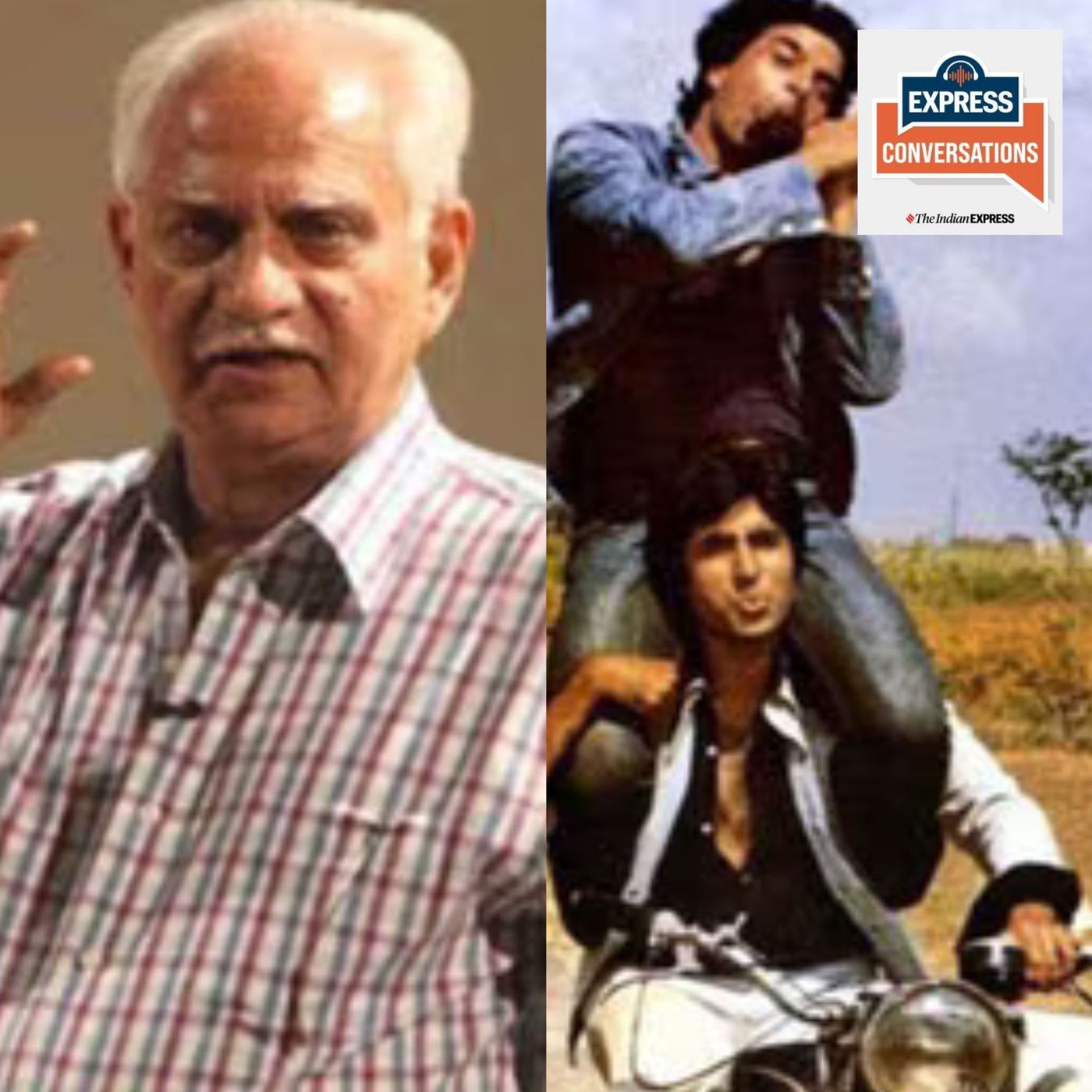
In an exclusive interview with Devansh Sharma, filmmaker Ramesh Sippy talks about 50 years of Sholay, its controversial ending and restoration, what if Amitabh Bachchan had played Gabbar, and if the film can be made today. Edited and Mixed by Suresh Pawar
29 Aug 2025 · 42 min
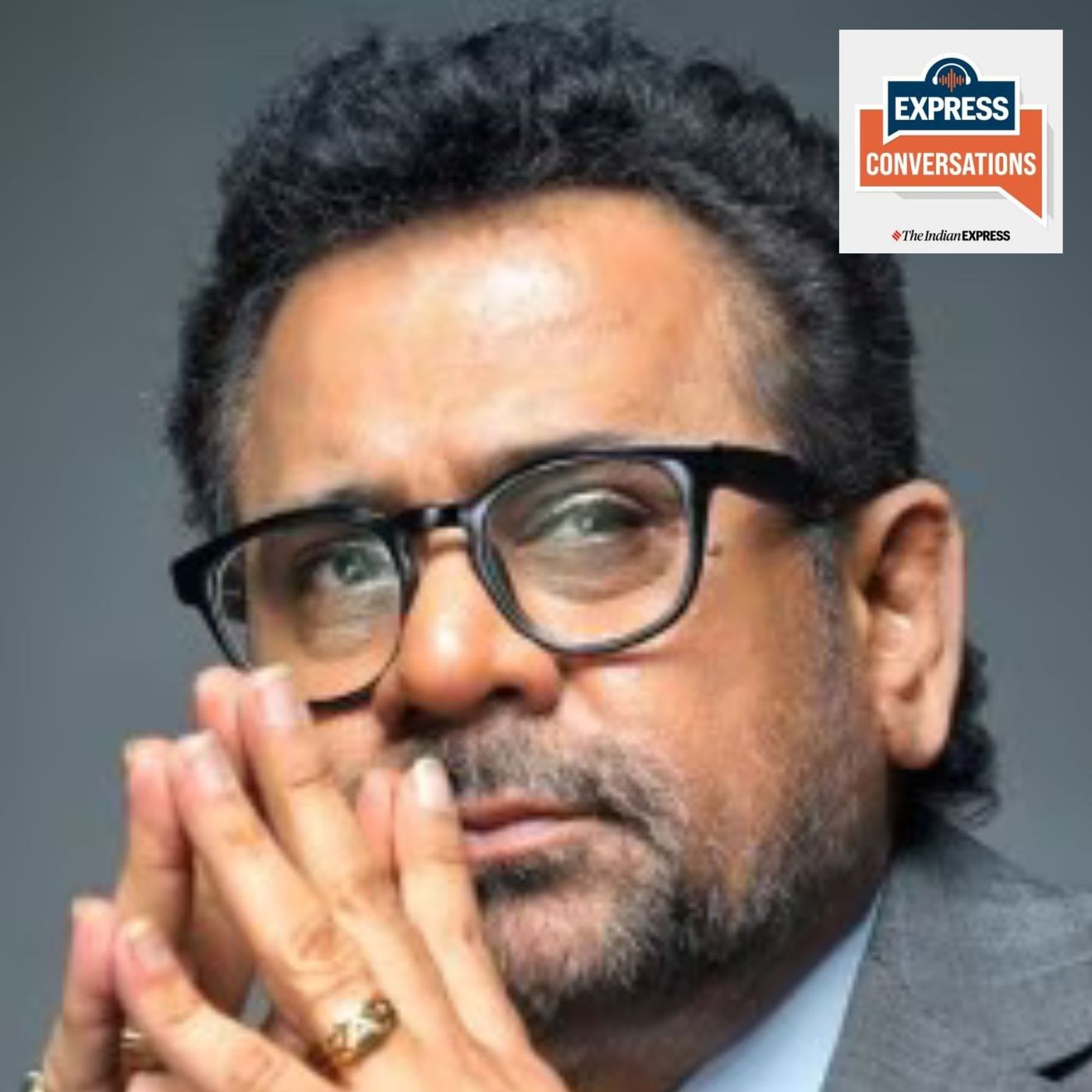
In an exclusive interview with Devansh Sharma, filmmaker Anees Bazmee talks about 20 years of No Entry, directing the long-awaited sequel No Entry Mein Entry, fate of Welcome Back, and why he's not directing Welcome to the Jungle and Hera Pheri 3. Edited and Mixed by Suresh Pawar
22 Aug 2025 · 20 min
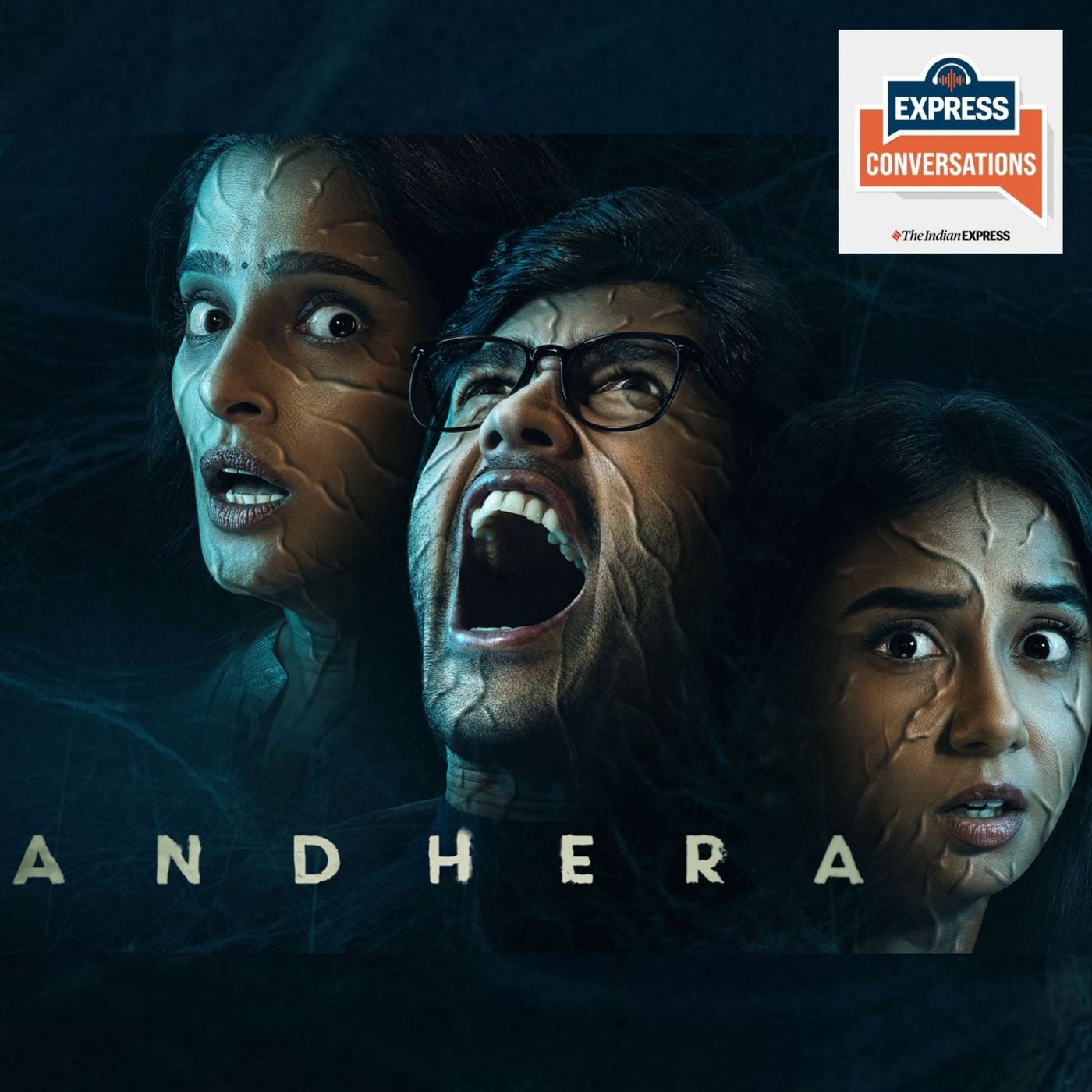
In an exclusive interview with Devansh Sharma, actors Prajakta Koli and Karanvir Malhotra, and creator Gaurav Desai talk about their new show Andhera on Prime Video, how horror has come a long way, and dabbling in the genre after young adult dramas. Edited and Mixed by Suresh Pawar
8 Aug 2025 · 1 hr 14 min
Join us for an insightful conversation with Kal Penn — acclaimed actor, author, and former White House staffer. Known for his breakout role in Harold & Kumar Go to White Castle (2004) and his powerful performance in The Namesake (2006), Kal Penn has long been a familiar South Asian face in both Hollywood and public service. In this engaging session, Penn reflects on his journey from Hollywood to the White House, where he served as Associate Director of Public Engagement under President Barack Obama. He discusses his advocacy for young Americans, Asian Americans, and the arts, as well as his…
1 Aug 2025 · 18 min
In this exclusive chat with Nawaz Kochra, Kajol and Kayoze Irani open up about their film 'Sarzameen'. The duo talks about working with Ibrahim Ali Khan, Kayoze’s directorial debut, and share thoughts on kids from film families. Edited and Mixed by Suresh Pawar

11 Jul 2025 · 14 min
In this exclusive conversation Rajkummar Rao and Manushi Chhillar speak to Anas Arif about their new film Maalik. They discuss their respective roles, what they look for when choosing a script, and the kind of experience audiences can expect from the film. Edited and Mixed by Suresh Pawar
4 Oct 2026 · 1 hr 3 min
This time, the spotlight is on Prithviraj Sukumaran, Kareena Kapoor Khan and Meghna Gulzar, who joined us for a candid conversation. During the session, the trio spoke about their upcoming film Daayra, the complexities of its central characters, their creative choices, and the differences between the Malayalam and Hindi film industries. Edited and Mixed by Suresh Pawar
8 Aug 2026 · 1 hr 9 min
Will Netflix bid for IPL rights? Why did it bring Samay Raina’s India’s Got Latent to the platform and how is AI transforming entertainment? Netflix Co-CEO Ted Sarandos joins Anant Goenka for a wide-ranging conversation about Netflix’s ambitions in India, the future of streaming and the changing rules of global entertainment. As one of the most influential leaders in global entertainment, Sarandos has transformed how audiences around the world discover, watch, and experience content. With India emerging as one of the most important content markets globally, his perspectives offer valuable…
15 Jun 2026 · 25 min
Writer-director Imtiaz Ali discusses his recent film 'Main Vaapas Aaunga', that released on June 12, in an exclusive conversation with Alaka Sahani. Inspired by real stories from the 1947 Partition, the film explores themes of identity, loss and belonging. Imtiaz also talks about reuniting with Diljit Dosanjh after Amar Singh Chamkila, working with Naseeruddin Shah, and casting Vedang Raina and Sharvari in key roles. Edited and Mixed by Suresh Pawar
1 Jun 2026 · 14 min
In an exclusive conversation with Devansh Sharma, Madhuri Dixit, director Suresh Triveni, producer Vikram Malhotra and Ruchikaa Kapoor, Director of Original Films at Netflix India, spoke about their film 'Maa Behen', which released on June 5. During the discussion, the team also reflected on how stars from the 1980s are making a strong comeback in today’s entertainment industry and shared their thoughts on whether the growing trend of casting influencers is affecting opportunities for trained actors. Edited and Mixed by Suresh Pawar

The Melo app keeps playing with the screen off, works in the car and on your watch, wakes you to your station, and browses the whole catalogue offline. Free, no ads, no account.


