Episode · Express Conversations
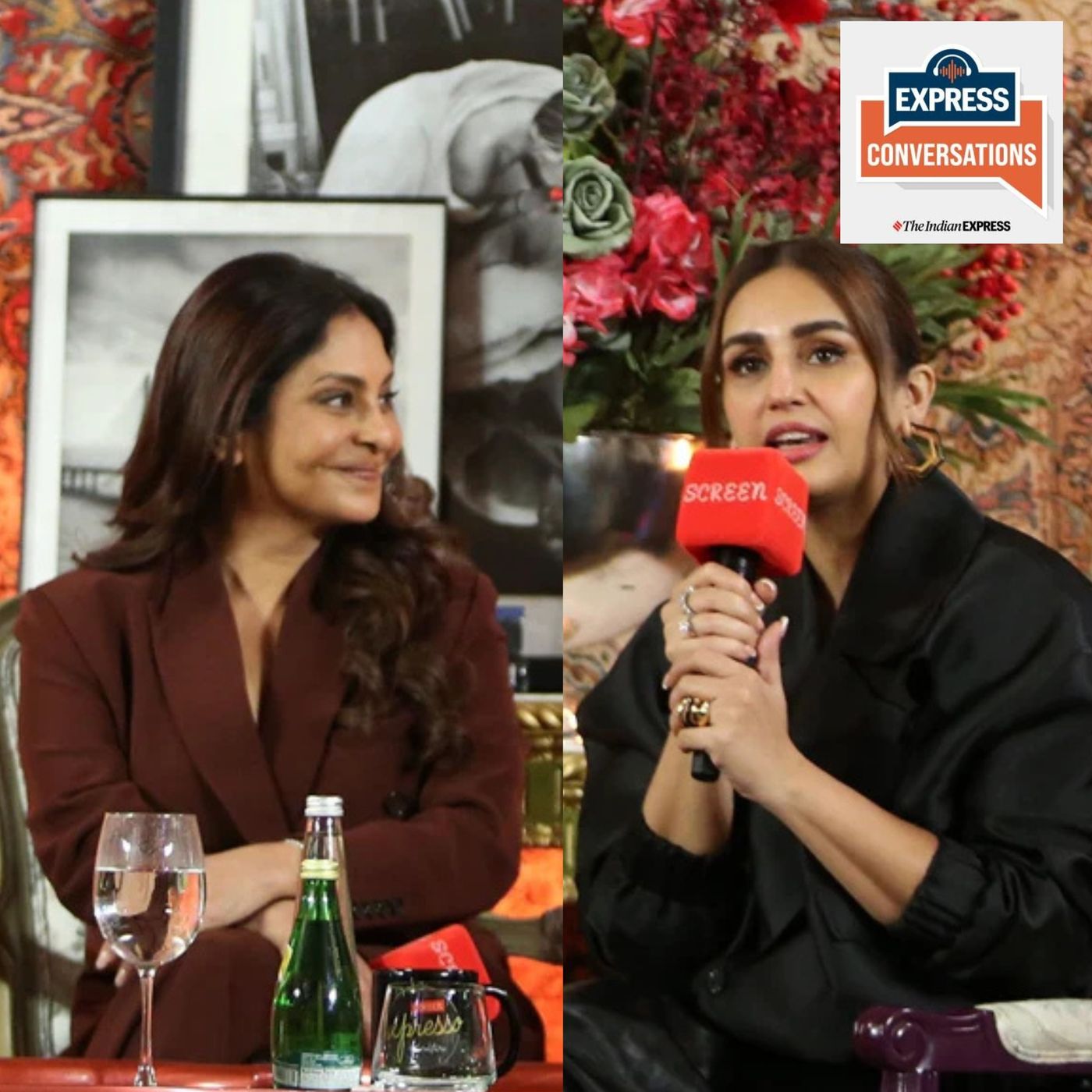
Beyond The Screen: Huma Qureshi & Shefali Shah On Life, Choices & Identity
16 Mar 2026 · 46 min
Episode · Express Conversations
16 Mar 2026 · 46 min
In this exclusive conversation, Huma Qureshi and Shefali Shah open up about the choices that shaped their journeys—both on and off the screen. From identity and representation to life beyond fame, the two powerhouse performers share honest, insightful reflections you won’t want to miss. Edited and Mixed by Suresh Pawar
Speaker 1:Welcome to another episode of Express Conversations, a podcast where eminent voices from the world of politics, governance, sports, business and arts talk to us about their life, work and issues that really matter. In this episode, we will hear from Indian actors Huma Kurashi and Shafali Shah. Our guests are in conversation with Shubra Gupta of The Indian Express. In this interview, whom I and Shefali open up about the choices that shape their journeys both on and off screen.
Speaker 1:They share honest and insightful reflections on acting, films, representation, identity and more.
Speaker 2:Both you, ladies, are people who actually work their way to where you are without any help, without anything at all.
Speaker 3:So welcome to both of you.
Speaker 2:And I'm sure we're going to have a great conversation around this. So because Netflix is here and you are with Netflix right at this moment, I'm going to start with Deli Crime Part three, which Homa joins you as Madam Sir and she's the antagonist. How many people here are either watching it or have watched Deli Crime? Okay, that's like, thank you guys, A lot of people.
Speaker 4:So I remember one because of you. Guys.
Speaker 3:Ah, so yeah, So let me ask you.
Speaker 2:Let me start by asking you when you started when Richie Metta came to you with this idea of you playing this cop.
Speaker 3:What was the first thing that came to your head.
Speaker 5:Hi, good evening everyone. It's an absolute honor and pleasure to be here. Very inspiring story, Citu. I love this entire setting. It's beautiful and it's just wonderful being here. Imrin, You're a darling. When Rushi came to me, I said yes to this project in less than five minutes. When the Nailpaia case had happened, all of us had one question. I had it too, that why is no one doing anything about this? And when I heard the script, I realized there was somebody doing something about it and it was a woman. So there was no way I was going to say no for that. The lady who cracked the case, man Chaya Sharma, a complete rockstar, and I had the opportunity of playing that part and in some small way feel like, Okay, there is hope, there is someone who's out there protecting us. And to step into those shoes, which were very very big, has been overwhelming and just humbling. So there was no way I would have said no for it. Really it was a no brainer, right.
Speaker 2:What about you, Huma, when people came to you, I mean, when Netflix came to you with this one, did you at any point say, oh my god, no, because people are going to be petrified when they look at me.
Speaker 3:Well, Douse, you play a hard.
Speaker 2:Nosed, open trafficker, and that is the really one of the hardest things that for an actor to pull off without actually being hated.
Speaker 4:Absolutely good evening, everyone lovely to be here.
Speaker 6:And I think I've just been a fan of Deli Crime and I've been saying this from day one. So when a pool with the producer called me, I mean I thought they offering me a cops part because of, you know, the kind of work that I do. But she said, no, Wabe, this is something different. This is actually the antagonist, and I had never imagined. But then the moment she said, I was like, actually that makes a lot of sense.
Speaker 4:You know.
Speaker 6:And of course I met Tanoja read the script and it was really dark, and a part of me was really excited about doing something so different and so challenging. You know, actors often like we get boxed into ideas of by ourselves also, not just the audiences or like producers, but we also start believing that, Okay, this is the kind of work I want to do.
Speaker 4:So it's nice to be challenged.
Speaker 6:Sometimes it's nice to play somebody with zero model compass who has no excuse for being so terrible. I mean she does actually in a way, because I mean we'll come to that at some point, but just someone who's out and out black, not gray, not peach, not pink, but just black. And I think also as a woman doing that, because you never see women gangsters in that sense of bad people.
Speaker 4:You always see them.
Speaker 6:As they go naked peach, one hot girl is standing, and I thought it'd be nice to just play like, you know, the baddie for a change, the.
Speaker 3:Non hot girl sing lado scary that is.
Speaker 6:I mean, that was like I wanted to do, like a like a nursery rhyme, almost like it was my version of Twinkle Twinkle Little Star.
Speaker 4:Yeah, you know, because.
Speaker 6:In my head, all the learning and the empathy and the understanding and who I am and what I really stand for, and like, okay, I'm going to use that to the opposite. So if you're going to sing a lullaby to a child to comfort them. This is how she's comforting them by doing lad because she knows what she's doing, you know. So I mean I don't know when I say this. Also, it makes me like sort of shrink, But yeah, that was a thought behind.
Speaker 3:Right, uh Chafanie.
Speaker 2:I wanted to ask you, uh, you know, are you one of those actors who actually decides that, Okay, if I have to play a cop, I'm going to like sit and talk to a real cop. Because I also know that many years ago you spent some time in a prison when you were doing it. Well, you visited a prison when you were doing a.
Speaker 3:Role, so this was years ago.
Speaker 2:I think it was a Rahul Boast film, if I'm not mistaken. So yeah, I wanted to know, do you actually do you know sort of in your when when you are prepping, what are you thinking of? Are you thinking of talking to real life? This is completely out of your own imagination.
Speaker 5:So if anybody had respect for me because I am a method actor, I'm going to drop that right now.
Speaker 4:I never went to a prison.
Speaker 5:To study anything, So I'm going to be very very honest about it. I don't know what what film, what is interview. I was reading not mine.
Speaker 4:Please say it wasn't mine. Please. I couldn't be so delusional.
Speaker 2:Researching okay, yesterday it came up in something of mine.
Speaker 4:Okay.
Speaker 5:So to set the record straight, no, I did not go to the prison. I had the honor of meeting Chaiamam Chaia Shelma briefly for two hours. But it's impossible to uh, to soak in somebody's entire personality in two hours.
Speaker 4:It's not possible. But I did.
Speaker 5:I think obviously the model compass was right there. All of us felt completely appalled with what had happened, and we wanted to solve it. Really luckily and gratefully for us had the power to do it.
Speaker 4:So I did meet her.
Speaker 5:But at the same time, Bartka had to be her own person, and there was a script in front of me, which was a solid blueprint, which she meant that I had taken six years to research on and write.
Speaker 4:So it was he made it very easy.
Speaker 5:And then it's also one of the most wonderful things Richie had told me when he first met me is he said, I don't want an actor, I want a collaborator. And I've written this, but now I want you to take it and make it your own.
Speaker 4:And that's how it happened.
Speaker 5:Of course, there is a lot of thought, emotion, heart souls, Studying is the wrong word, reading, questioning, dissecting every word, everything that goes into it. But I, and with all due respect, I don't believe I don't follow the path of method acting. The more time I got with someone, I would be highly obliged, because it would be only wonderful to soaking in, you know, the sense of someone. But I let at some point of time the instinct takeover.
Speaker 6:I want to second that, actually, because a lot has been said about actors and the method and all of that, and sometimes it makes for great interviews, you know, and it makes for great like headlines henikayat jail you know, yeah, many.
Speaker 4:Depressed, Okay jail gay.
Speaker 6:You know, so that there's your headline right there, right, that's the next clickbait. And it sounds also really cool. But I feel, actually what chef said, it's script common sense. Like out director kebat So no, just come little prepared, and I think the most important and I've seen her also do it just be in the moment, you know, I think the magical hour for all actors is between action and cut and what you do in the middle, not before and not after. But much has been said and conversations we had about like prep Katha, yeah, about darkness.
Speaker 6:You know, No, just because I had to kill somebody in a film, I don't actually start killing people, you know, just because I'm romancing a hero, I don't have to have an affair with him.
Speaker 2:I'm going to take you back to your beginning sort of. You came into the movies through advertising, right, commercials and was it? So she said, you have potentials, so come and give you a three film deal.
Speaker 6:There was this casting director called Tia. I don't even know if she still does casting anymore. Who aud she does? So Tia, I love you because she cast me for this and we're not in touch anymore. For this ad with mister Amil Khan for a mobile ad, it was a four day shoot and buy in punch. So very happily. I've gone there on the second day of shoot and this was, by the ways first ad. This is the first time he started directing an ad. But I had done now by now, I'd done ten ads, so I was quite I thought of myself as the DELI girl a veteran.
Speaker 4:So of course I walked in.
Speaker 6:I've done ten ads and uh and I had a lot of makeup on which is the ad? Whatever is appropriate. So he's come and he's like, what is this? So I said, A I swear this has happened.
Speaker 4:I swear.
Speaker 6:I think maybe that's when he saw thought cast relate or yay gangs gang member to I literally said, and now I think, I'm like, what guts but that but or that GARGHI college enthusiasm and that deadly spirit.
Speaker 4:And on the second day you told me, I think I'm going to cast you in making this movie. I'm going to cast you.
Speaker 6:And again I one more one line that I've given. I said, I have just come. I to struggle a little bit.
Speaker 4:How you saying it like that? Like but you know what I mean?
Speaker 6:So anyway, that's how Gangs of Us it happened, and I got paid. I keep saying it again and again, sixty five thousand piece. There was no three film deal, but it was the best experience of my life and I would do it all over again for like no money, but just to have that experience, to work with all those amazing people all over again, I think that's that that film has really changed my life and has changed I mean Indian cinema in so many different ways, like by giving it so much talent.
Speaker 4:So yeah, whateverd for.
Speaker 2:So fally, I want to ask you what got you into the movies. I know that your journey from television. I think at that time Indian television was going through a renaissance which I haven't seen happen after that, because you acted in some of some of the early shows that were fantastic, including Banneghiya Pnibat. Impact was something I think it was ahead of its time in the way it presented you as a woman who actually was going to be very happy, not being happy in an unhappy marriage, and that was a radical role.
Speaker 3:For that time.
Speaker 2:So talk us through a little bit about that time of your coming into the entertainment industry and how television was your first stop, so to speak, and from there how.
Speaker 3:You went into the movies.
Speaker 5:Long question, but so I'm allowed a long answer. I came into acting very incidentally. It was not a plan. It was definitely not on the agenda. It wasn't even one of those dreams you dreamed that you know, I'm going to be a part in the Miss universe, or I'm going to be an actor.
Speaker 4:I wasn't being unrealistic like that.
Speaker 5:So one of my teachers had seen some photographs that my mother used to click. This is when I was ten years old and her husband was a playwright for Gujati Theater, and you know, they came and asked my mom if I would be a part of that play. She said, I don't think she's going to be able to pull it off, but you can try it. And I did that play. It was based on omen, so there's this child who's possessed. I think I fitted very well, and then there was a lot I did. The play, got great reviews. That was the end of it. And then when I was getting admission into a college, I got it also because I had all these reviews and that college particularly had a very very strong dramatics faculty.
Speaker 5:And then I started doing intercollegeate and that landed me some place. So I did theater and then somebody recommended my name somewhere else or whatever, and then I landed up doing television. It was really just happening. And I think after maybe six months or.
Speaker 4:A year or whatever, you know.
Speaker 5:I said, I do this every day I get paid seven hundred bucks or something like for a show.
Speaker 4:This must be my job. And that's how I just went into it.
Speaker 5:I'm glad I was a part of television when it was it really held a lot of heart, soul and metal because sadly, and I'm not trying to, you know, pass a judgment on anything. But later on, when I started getting offers much later, it was about meeting the TRP and the deadline.
Speaker 4:You know, we just have to do it. There was nothing fresh there once. There wasn't a beginning, middle and end.
Speaker 5:Luckily, when I did television, there was a proper story, great characters, and that show did have an end at some point of time, so you could do something else with your life, unlike like just keep doing that for the rest of your life kind of a thing.
Speaker 4:So that is And yes, like you said.
Speaker 5:That got me a lot of It got me a lot of love because you watched this person every single day, you know, in your living room, which I feel really obliged for. And then I think, just as a somebody said, ye a film CUTO, why don't you meet X Y Z, or they said why don't you you know, audition this girl, and I did Dranguila, which I like to skip, and then Satya happened, and then Monsoon Wedding happened, and then just.
Speaker 3:Yeah.
Speaker 2:So let me talk to you very quickly about both of my favorite role, the Satya and that absolutely fantastic conversation that you all have at the dining table. You're talking about Chickilee and Monsoon wedding, which is one of the darkest characters, and I think your character plays a very very crucial role in how the movie pans out and the way it turned all the Shahdi movies of Bollywood on their head because it was Monsoon, a season where weddings don't really happen. But there is Mira's film and Declan's camera has barished all through, and there is Shefali who comes in and I'm talking to you at the third person. The Shefali's character comes in and completely changes the tone and the tenor of the film. Do you remember what that doing that role felt like? Because it was a I think it's one of the most unusual roles that has been played by an actor.
Speaker 5:So when I first when Mira called me for the part Mira and Iyer, she called me for it, and she spoke to me in Hindi and she said, muje patta you know English or no, because I'd done Satiya and that's what.
Speaker 4:She had seen. So I was like, oh, great, that's wonderful.
Speaker 5:And I read the script and even though I did not have, let's say, the understanding that I do have today, there was one thing that stood out, and that was, you know, every every single woman has probably gone through something like this. After the film released, so many women girls have said it became a It gave us voice. You know, something we never spoke about came out. I remember a lot of our friends and we were sitting and having a conversation and every single one had had an experience. The extent of it varied, whether it was a cat call, whether it was somebody you know, touching you inappropriately, or somebody from the family behaving badly. Everyone's had it, just that there was no voice for it.
Speaker 4:And monsoon Wedding became that voice. You know.
Speaker 5:I don't remember a film before that where it was so loudly out there, spoken out, and not just because of what Ria does, but it's also because of the stand her father takes, her uncle takes. You know, there's a beautiful line in the film which Nasibai says that I will protect my children from myself if I have to, which is just beautiful. I get goosebumps when I say it. So that is what the film did. And till date, I remember I.
Speaker 4:Have to say this. Till date.
Speaker 5:I think a year or two years ago, I was in Delhi. We had had one of those night shoots and I I came back to the hotel. It was early morning or something, and this beautiful, handsome couple walked up to me. I think the lady must have been seventies and the gentleman was around eighty.
Speaker 4:Or whatever, walked up to me.
Speaker 5:The woman, the lady just held onto my hand without saying a word, and the gentleman was speaking to me, and he said, I'm a colonel and whatever whatever, and I have seen your film and we love your work. And she just wouldn't let my hand go, and she had tears in her eyes. So I didn't know exactly what to do except just hold onto her hand. And he said, when she was a child, she went through this and she could not speak about it until she's home. Onsoon wedding and I get goosebumps when I say this, and it was.
Speaker 4:Just I think I wouldn't.
Speaker 5:Say it is gratifying because I wouldn't wish this on anyone, But it did give a voice to a lot of people. It gave that strength of I don't have to keep quiet and it's not my shame to carry, you know. So I think it played a very very important part in my life, in creatively and even personally and emotionally.
Speaker 2:Yes, And I think it also added to the cultural conversation around that whole taboo subject. No one spoke about it, and I think part of some impact. A lot of your own films have been very interesting to me because they've actually opened up doors which were closed up until then, including dildher Anudo, which I will come to you later. But I wanted to Huma in Gangs of Whippur when you're sitting there with Navazudin's character and your character says that famous permission permission Tolenaa?
Speaker 3:Was that your line?
Speaker 4:I wish, Well, that's.
Speaker 6:The biggest fight Navasa and I have because I made it mine, but it happened to him, and I think it's kind of crazy, right, Like sometimes even if you wanted to sort of go back in time and write history and write your own career. I don't think I would have ever imagined that I could have written a better start to it, that the first line I'll ever say would be permis and.
Speaker 4:You know, Sbrah.
Speaker 6:When when that film released, I was very nervous about it because I'm I'm barely there in the film in a two part series, in two part film, I'm there for probably what twenty five minutes. So I really wasn't shocking What's going to happen to that film, you know? And so I would the people who knew around me knew about it or whatever, and we were getting some special treatment that I'm being launched or whatever. But and so when part one released, I'm talking about theatrically, and that scene became a thing.
Speaker 4:I didn't know what hit me.
Speaker 6:I didn't And that's when you understand the power of movies and films and the reach that they have and how they become part of popular conversation.
Speaker 4:Was tampe I had just.
Speaker 6:Sort of joined Twitter, and suddenly people started following me, and they were people were tweeting to me and writing to me, and you know, having a conversation about me and third person and like tragging me, and I'm like, oh this, and it's very surreal to sort of have that, you know. And I would just sit at home on my couch and just be reading things and like, oh, this is this, this is what it feels like. Right, but it's really magical to sort of go through that.
Speaker 6:And yeah, I think I'm happy that And maybe in a way it sort of was sort of showing me my parts in terms of work. I would later also do I think that line in a way sort of sealed my fate.
Speaker 3:Yeah, And I think you know it was. It was said in jest.
Speaker 2:It's kind of like it's a throwaway line, but it became so much a part of permission, about consent, about the whole thing, about something that most people don't even talk about in mainstream center. So I think part of it, your roles are segued into It's become a popular meme and I become a fact. I feel it's so important. That's what it taught me as well.
Speaker 6:Right, Sometimes really heavy things or really important things don't necessarily need to be said in a heavy and an important and a self aware way. It's important that didn't go the younger people that they actually understand.
Speaker 4:And talk about it.
Speaker 6:But what happens we think if you don't, we need to speak a certain way if you're talking about serious things. So the people didn't life koye actually because kids are not watching documentaries, kids are not reading articles. Kids like they're watching what popular music, watching a film, you're watching reels. Basically, they're watching reals today. So I'm saying today, I'm happy to know it's a real. So maybe somebody will send to a girlfriendor a boyfriend and they'll maybe learn to laugh about it, but maybe it make make them also think about something.
Speaker 3:It's definitely did.
Speaker 2:And in fact, that brings me to my question to both of you, and I'm going to ask you Shapali your guild her new role.
Speaker 3:Role again, it was a role which was.
Speaker 2:I think a lot of us will remember that one scene of yours in front of the mirror, right It is I think one of the seminal scenes in that.
Speaker 3:Will and it stays with you.
Speaker 2:It doesn't, it doesn't go away at all, and it's so much move It's so moving to see a woman being so vulnerable and so naked in front of the camera, what brought you to that moment? And I then I'm going to broaden the conversation a little bit, but please do talk about that one.
Speaker 5:Should I talking about the moment where she's ready and he's standing there?
Speaker 4:Yes, that one? Yes?
Speaker 3:Absolutely?
Speaker 2:Uh.
Speaker 5:Sadly, how many of us have actually gone through it? A lot, a lot of us, a lot of us. And uh, of course she was in a really bad marriage and situation. But a lot of people, even if they're in a healthy relationship, forget to appreciate. And after a point of time, it's not so much about am I looking pretty? It's about you saw me? You know, every relationship. I mean I read a very I think I saw a film or I saw a clip where you know, this actress is saying, do you know why people get married?
Speaker 4:Because they want to be seen?
Speaker 5:Because they want their entire life to be documented in somebody else's eyes.
Speaker 4:And that's what that moment is about.
Speaker 5:Yes, Nila Merra is an apathetic marriage, but it was actually about that that we we just don't appreciate enough and all we want is to be seen.
Speaker 4:So that's what you asked me, right, absolutely?
Speaker 3:All right?
Speaker 2:So now I wanted to actually broaden the conversation from your specific roles to though I will ask you, but MAHRANI two about the fact that right now maybe the best time for women oriented roles to be out, not in cinema but on the web series. So what has the existence of platforms which are ott over the top done too? I think choices and opportunities that are opening up right now.
Speaker 4:As we speak.
Speaker 3:I want to take it first.
Speaker 4:Yeah, everything, absolutely.
Speaker 6:I think I remember doing a show called Ela with Netflix, which was I think the first female forward sort of show that they had put out, and it was a wonderful experience, and I worked with a wonderful, wonderful director called de who I think working with her really changed something inside me, you know, because for the first time there was somebody who told me that I didn't need to It was very radically for me at that point. I didn't need a hero. I could be the hero of this whole piece and the camera could be literally like an inch away from my nose. I didn't need to wear makeup to look beautiful or to feel secure, and I was enough, you know. She was the first person who made me feel like I was just enough and it was just it's like a little like a not like like a like a like a switch inside you that turns and suddenly you feel like, oh, you see the world a little differently. And that's what I think working on that show and that experience gave me, and I think, of course then many many other and much bigger successes followed, but that was the starting point.
Speaker 4:If I really look back at.
Speaker 3:It Pray's book before.
Speaker 6:I had, I had, and I think what has gone on to happen, whether it's Netflix or any of the other platforms, is that they're slowly, slowly sort of rejecting this conventional wisdom about theatrical business only being led by men and hence only those films will get greenlit.
Speaker 4:About those it's.
Speaker 6:It's like a it's like a circle, right, because you feel like only men go and watch movies.
Speaker 4:Enough, women don't actually go out and watch movies.
Speaker 6:So those subjects are what get made, and there's a certain lens and a gaze to it, and that that thing will never stop. However, having said that, today, uh, you know, the O T these space has shown time and again that there's a ready audience, there's a captive audience.
Speaker 4:It consists of women and men.
Speaker 6:I don't think shows like Deli Crime Amarani are only seen by women. They're seen by everybody, and they're loved by everybody. Those numbers speak for themselves. Hence, if to borrow Deli Crime was to be a film, I'm sure a lot of people would go and watch it, you know. But again it's it's because there's so many gatekeepers, you know, from the time of film is made to the time it's released that actually, and they come with a lot of buyers and a lot of traditional understanding of how the business has been working in the past.
Speaker 4:It takes a lot for things to change, and it's really unfortunate, but it is true.
Speaker 6:But definitely, players like on streamers like Netflix are changing the game. They're showing us and hopefully one day somebody will read that Excel sheet and be like, no, we can do things differently.
Speaker 3:Yeah, Pali, what about you?
Speaker 2:A lot of your recent work is on on the streaming platforms, including the I think I mean Asharun's uh the Three of Us, which was on Netflix, and what was the other one which you had done with Alni Richkabi Once again once again, yes and now they're so do you think that theaters are no longer receptive to stories with your character driven.
Speaker 3:Are they only ten pole you know sort of.
Speaker 2:Uh, you know, the kind of big budget ten pole event films that have now crowding our theaters.
Speaker 4:On the contrary, I think it's kind of changing now.
Speaker 5:Sadly, theaters were limited to these big budget films earlier. I genuinely believe that going to a theater watching a film with your family and friends eating a samosa is a culture in our country. Like cricket, it can never go away, and it should never go away. Having said that, there are stories that need to be told. You know, if you go back to sixties seventies, there were so many films led by women. You talk about Aradhna, Amar Paim Ghar, guide Anhi, and sadly there came a patch where a woman became an accessory to the film. Also, you just had to be tall, pretty thin, and between eighteen to twenty.
Speaker 4:Five if you were lucky.
Speaker 5:Besides that, they had no space for anyone, and the ott platforms changed it. It started giving full fledged roles, stories which you may not have heard and which may not conventionally be fitting.
Speaker 4:The box office or whatever it required.
Speaker 5:And so many creative people, and I can say that, I mean so many creative people who always probably who have been brilliant, but they never got the opportunity or all the compliments never translated into work. You know, when I see a Navas, I see a jed Deep, I see a Rashkumarao, I see Wija, and I feel, oh my god, I'm so.
Speaker 4:Happy there where they are.
Speaker 5:They deserve this and rightfully so so I think the OTD platform gave that opportunity, not just to actors, but even to writers, to directors. There were stories and you know that a lot of people must must have been shut up, like shut down saying this is not going.
Speaker 4:To work in the theaters.
Speaker 2:But my question is still something that I've been observing over the years, that people will not come into the movie post COVID, particularly, there has been a sea change in the way we actually go to the movies. Right, what about you do? Did people come for Single Selma as many as you expected to?
Speaker 4:So again, I'm glad you actually brought it up, so thank you. So.
Speaker 6:Single Selma is a film that I did. It released on the thirty first of October, and no, it not many people got to see it. It wasn't really promoted. There was no marketing spend on it. I mean not even like Bare Minimum.
Speaker 4:It was no real sort of.
Speaker 6:Buzz around it or conversation around it. Because the belief was QK now is going to come on a streamer and that whatever's done. So there is no point in it because of what you said, there's a thinky people are not really coming into theaters, which I feel what it's going to do, and that kind of already knowing it's just going to kill the business because the big muchI ismore films and the big blockbusters are not going to sustain the business.
Speaker 4:It's the small and the mid sized films that always have and always will keep the business going.
Speaker 6:I don't have the exact metrics, so I don't want to say something wrong in a platform like this. But if there were ten thousand, for example, films being made we are making today in the Hindi film business, half of that number, it probably doesn't affect me or you know, share for anybody else, but definitely affects their life. The daily wage laborers, it's definitely affecting those people. So what's happening is to trickle down effect, and that is something we need to really do something about if you want the business to sustain.
Speaker 4:We want stories from all across the country.
Speaker 6:We don't only just want to make one kind of story and one kind of thought.
Speaker 4:And you know, and there's nothing wrong in that.
Speaker 6:I just feel all kinds of films must be made so there's a single selma, and especially for somebody like me, when right now I have a maharani, I have a daily crime. I had a Jolly Lbs in theaters two weeks before that, which did about a hundred something. So in the middle of all this, a small film is coming. The least one expects is for that to get a basic level of showcasing. It didn't even get a two hundred screen release in Andhiri, which is close to where I live. I live in Juo, so I was checking shows.
Speaker 6:There was one show and on theh Hari at two hundred and fifty bucks a ticket at four thirty So what are we even talking about? So and it really broke my heart when I saw that, And of course I tried to do whatever. There's only that much you can do when the ships say, but so I feel like a can you imagine if today a young person wants to be a director or a producer an actor in the indie film business. What opportunities do you really have or what options do you really have? Not very many?
Speaker 2:Well, uh, you know you having you raised that so I can talk about how can you beheld? Agra which was released last Friday. It didn't get anything at all, you know, no shows at all when you're talking, and that was a can I have a film.
Speaker 6:That went too I have a film called Bayan which went to tiff it went to Busan, it's at the Cairo Film Festival. We still haven't sold it to a streamer. And my fear is I hope it doesn't happen. I hope in Charlotte doesn't happen. But if so, if out of the two or three players that are there, the major players, if it doesn't get picked up, the producer will be forced to release in the theater. Then what happens to a film like that Because it's a small budget film, it cannot afford and it cannot compete with the big blockbusters of the world.
Speaker 4:So what do you do?
Speaker 6:Then it will come, it will go, and he'll say picture Cellini, but achieved in the r we actually really connected with it. So what needs to happen fundamentally is we have to figure out is there a way where all the different players get together and be like, Okay, we're going to go discounted tickets, We're going to go special short timings. We will make sure that a marketing spend is lesser and it is possible if everybody aligns, because in the long term, it'll be better for the business.
Speaker 4:Sorry, I'm saying so much.
Speaker 6:I'm really passionate about this.
Speaker 2:Uh this No, this is why we are here and talking to you, so that the thing with this is what you just said is like when people like us who watch movies and write about them generally, my the one question that used to be asked for Ya Bally pictured Cassie here, I'm taking now the first question I get asked is a see, this is the kind of system and this is the kind of lives that we are now living in. But having said all of this, both of you are getting into production or are you already producers?
Speaker 3:Because is this something you can change?
Speaker 2:You know, if you if you are going to be producing your own films, will you have will you have the power or to shape the films and their release. Is that something that either of you or both of you are considering or have you already done so because one of your one of your line You're co producer on Debbie Crime.
Speaker 4:Right, I'm an executive producer, Okay.
Speaker 5:I just wanted to own every possible space of a show that I love so dearly.
Speaker 4:And that's how it is.
Speaker 6:Uh.
Speaker 5:Am I a producer on job, like actually on set doing my duties as a producer, or while I'm making the you know, excel sheet.
Speaker 4:No, I'm not.
Speaker 5:But will I contribute everything I can in my capacity and more?
Speaker 4:Yes? I will.
Speaker 5:So it's not something that I would be you know, if you tell me, Am I going to independently produce?
Speaker 4:No, But if you ask me, would I direct? Yes?
Speaker 5:I would love to. And if that can change a narrative. I think I have the privilege of a mic and a camera and if I don't use it to at least a small extent, it would be really unfair. So that is that something that you're thinking about of directing? Yes, I want to, But I also understand the kind of hard work and money a producer, a spot boy, everyone puts into it. So I need to really know what I'm getting into before I dive in.
Speaker 3:And humar, what about you? Have you thought about getting into production?
Speaker 6:We are so Saki, my brother and I we have a production company called Salem Siblings, I mean explanatory, yeah, and we've actually produced a film. We've raised some money and put some of our own to make a film called Baby.
Speaker 4:Do Die Do? Like caermarker, it's actually a yeah, so do I do? So Baby Do Di Do?
Speaker 6:And we are looking at a released next year. Of course exactly what we're discussing. Do we do a theatrical release? Do we sell it to a stream? But you know, when we start the journey for this film, we just want to make a film and we want to tell stories. In some ways, we're very silly, both of us. Uh you know still and we still believe that, you know, could be possible here. That's the same I think thought and ambition with it take and I went to Mumbai, key hi. But we'll walk into a room, will do an audition and you know, maybe we've become a movie star.
Speaker 4:But guess what we did?
Speaker 6:So with that same kind of silliness, you know, we're thinking, yeah, we're going to be first generation producers, and we don't know how everything works today, but we'll figure it out and we'll make one film, we'll make another film, we'll make a third film. Y y cha yoga.
Speaker 4:So that's the that's the thought. And uh no.
Speaker 6:And I feel, you know, so just to come back to what you were talking, you know, I feel very blessed. And I'm not trying to uh ship on the streamers because I really do believe it.
Speaker 4:Today we have a show like Deli Crime.
Speaker 6:I'm I'm the face of a show called Mahrani which is on Sony Live, and they're both on number one and two respectively right now, and it's really changed my life, you know, for the better. Having said that, I feel for for the business to flourish, each and every kind of film needs to flourish. So hey, maybe some films we need to protect a little bit more, you know if and and I feel the responsibilities on us also to make better films, but also on you guys to go out and support such kind of films and watch them because sta you know. But then it's it's a two way thing, right. We are actually artists. We perform for you and you guys have to go and support the movie.
Speaker 4:So it's uh, it works both right.
Speaker 5:I have a you know, I agree with what Homas saying, but I also feel that the odd platforms really open doors. I remember this film with Nikai called Once Again, and when the film got made, and the producers and the director and we were all sitting together and they said, you know, let's do a theatrical And then they asked me, what do you think. I said, I'd love to see myself on a poster, but is anyone going to come and watch it? Why would you want to throw away a beautiful film? Because what will happen is it will release on Friday. It won't make the numbers, and people will say flop him, cut up.
Speaker 4:The fate of a film which has.
Speaker 5:Been worked on by a million people over a year, two years, will be decided on that one Friday, which is really not fair. So OTD is giving you an opportunity of all of it, and not to forget that it's broken those boxes. There is no hero, heroine, villain or Bakisa so far, chair Jovie bansape kind of a thing.
Speaker 4:You know. They all have parts, they all have stories.
Speaker 5:So I think it's a great great place, and uh ah, honestly, it's not like it's not like I ever got the people to the theaters, so it doesn't matter to me. I'm very happy as far as they're watching my work. It's reaching the world, and I'm really excited about it.
Speaker 2:I wanted to ask you, what do you do when you want to just like kick back? Do you do you watch other people's movies? Do you watch your own films?
Speaker 3:Do you do? You do nothing? What do you do?
Speaker 4:I don't like to watch my own films.
Speaker 6:Okay, I hate watching my own films because I'm so shallow.
Speaker 4:I'm only looking at my hair and my one pimple. I swear, I swear like all any actor telling you that I'm looking at my performance. I don't even cry looking at performance or face. Either ways, it's not going to work. So I'm just like.
Speaker 6:Neither, which is why I never even see the monitor, because I'll not be looking at the shot. I'll be looking at the baltik like my mind is only tuned that way, very very vain. But but I do like watching films. I like reading, I like traveling, I like eating.
Speaker 4:I like being fed.
Speaker 1:Right, good, Okay, what about you Shapali actually exactly that. I don't watch my work because I know I won't like it, so why go there?
Speaker 3:Are you your hardest critic, harshest critic?
Speaker 5:Yes, yes, And every single time I feel I just got lucky. I have this massive imposter syndrome of actual Last time ye tell yeah it was fluke upcakering, next set for caring, and now.
Speaker 4:You'll get caught. It's that whole thing. But I love reading, love imposter syndrome, chact It's so. I love reading, I love traveling, I love food. What else? Movies? I want to watch everything that's released.
Speaker 2:Right, But now that I have both of you captive, I wanted to ask you, as a film critic of you know, I've been doing this for a while now.
Speaker 4:How do we've read all your reviews? How do you I was dying to say this all evening. How I think you've been for being very kind to teligrime?
Speaker 3:Yes, that's a that's one. I'm never kind. I really genuinely like it. I'm just right.
Speaker 4:But how do you?
Speaker 3:How do you respond to critiques? Do you read them? Do you have your team read them to you? Do you do you follow?
Speaker 4:How?
Speaker 2:And do you actually read it to actually say, Okay, this is a person who's saying it for this reason, and maybe I should, you know, maybe you should sort of bring it back into your work.
Speaker 3:Is that a thought that comes to you.
Speaker 6:I do read reviews, of course, because how else did you know that Friday when you're sitting and show at a film is releasing, Like what you do? You have nothing to do because now the promotional marketing teams have also left you. You know, you're really sort of sitting at home and just waiting for that verdict.
Speaker 4:Does it affect you? I guess you are. You're curious about what people think about your work.
Speaker 6:And there's some people, like some actors I'm sure you like a little more than the other. Some reviewers you like a little bit more than the others because you've also followed their work right, and they also I think their work speaks for them for itself. Having said that, I do believe, like I'll give you an example, like like like Maharani is a show.
Speaker 4:I do believe that.
Speaker 6:You know, when season one came out, the English media completely shat on it. In fact, we all read the reviews and we all were depressed. Kiar Galadbanya. Maybe you know, we'll try harder, we'll do something else, and we'll maybe we misfire it. And and we took it very sportingly. But by Monday, when the show's numbers came, it was it was just crazy. And today we're sitting on season four and even then, and then I think by the time season two and three came, then it when the other extreme. Then everybody loved everything, so men can now one needs to also understand that perhaps it's over correction, but I think it was saying something about the people also review because it's it's like, you know, something is vernacular or something is little massie, so it doesn't need to necessarily be you know, not respected or spoken about.
Speaker 4:A certain way. So I don't take them too much too heart.
Speaker 6:I feel eventually it's whether it's a series or a film, the audience is the ultimate metric of you.
Speaker 3:Know, what about you? Shah Pali.
Speaker 4:So earlier I used to get very deeply affected.
Speaker 5:If anybody, anybody, you know, even Mari building a Watchman, if he didn't like me, I was like Barbad total like Richavala did not like my work finished, that's the end of it. I want to go and hide under a rock. And obviously when a critique is, you know, saying something about your work, it's even more disturbing.
Speaker 4:But now I kind of I can wait, right, I mean, I've seen.
Speaker 5:Ninety eight good reviews and two not good reviews. I know where it stands. And also, when you're doing a project I like when I did Deli Crime, we didn't know where it was going to be even showcased, but we were so proud of what we created that it didn't matter you don't like it too bad. And honestly, art is subjective. You know, somebody may love it, somebody may not like it, but I am very proud of what we created together.
Speaker 4:So yeah, on that.
Speaker 2:Happy note, thank you very much for being a great audience.
Speaker 4:Thank you very much, Thank you, thank you so much.
Speaker 1:You were listening to Huma Kurashi and Shifalisha on Express Conversations. If you like the show, then do subscribe to us wherever you get your podcasts. You can also recommend the show to someone you think we like it, share it with a friend or someone in your family. It's the best way for people to get to know about us. You can also tweet us at Express Podcasts or write to us at podcasts at indian express dot com
Transcript supplied by the publisher with the episode.

by Express Audio · English · Society & Culture
Express Conversations: Listen to celebrities and public figures dive into their lives and careers, and discuss contemporary issues as they are interviewed by our editors from the Indian Express. Join us to hear the wisdom of the some of the greatest living legends of our time
17 Apr 2026 · 22 min
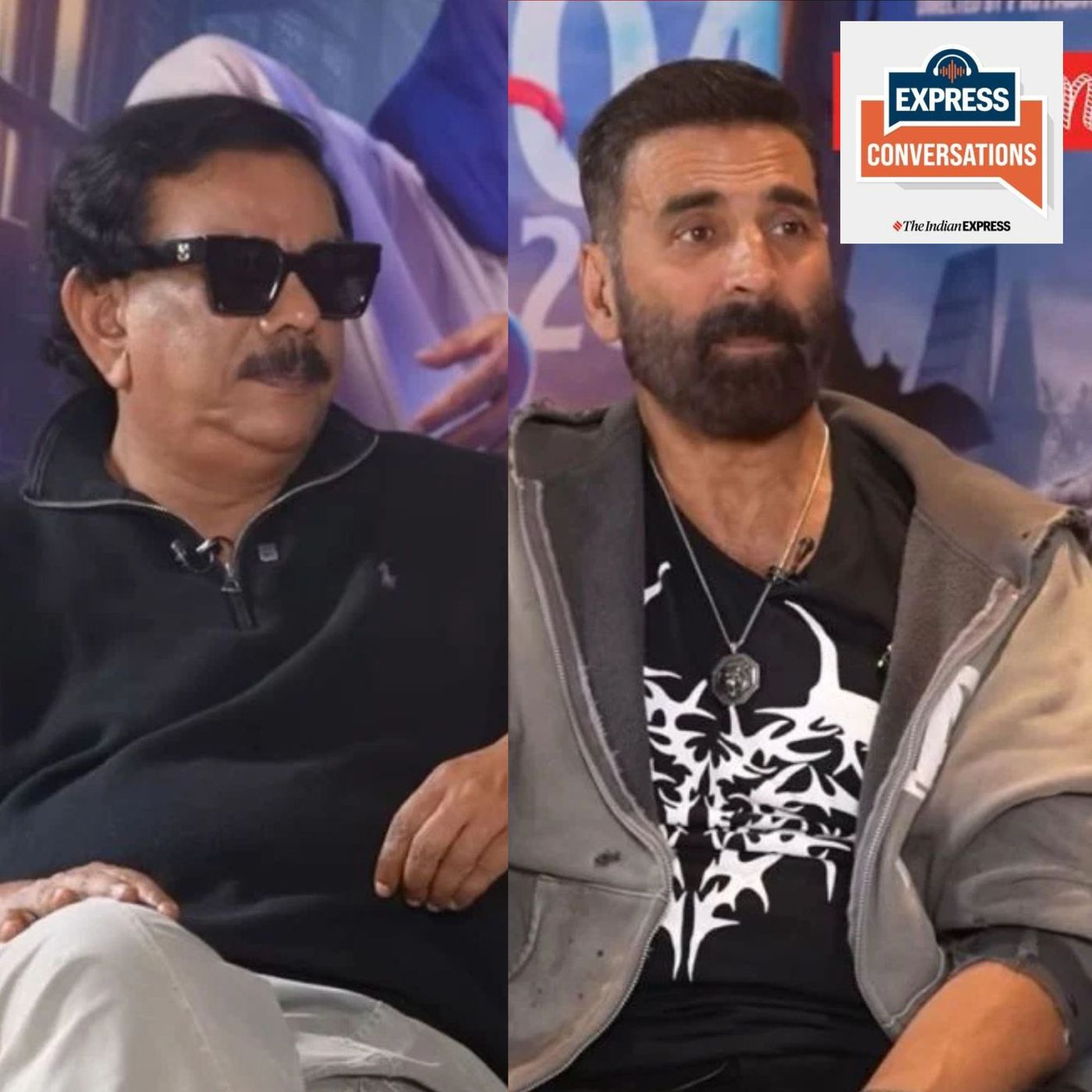
Akshay Kumar and Priyadarshan have revealed exciting details about their upcoming film ‘Bhooth Bangla’, sharing insights into the storyline and their collaboration. They also discussed working with veteran actor Asrani and addressed the Rajpal Yadav controversy, providing clarity while highlighting the film’s unique blend of comedy and horror, along with its strong ensemble performances. Edited and Mixed by Suresh Pawar
7 Apr 2026 · 37 min
Is AI coming for your job? Aneesh Raman, Economic Opportunity Officer at LinkedIn, has an unexpected answer: that's not the right question. In this candid conversation with Aishwarya Khosla, of the Indian Express, Aneesh — a former war correspondent and presidential speechwriter — cuts through the fear and fatalism surrounding AI. He argues that the work we're afraid of losing isn't work that ever let us bring our best as humans. He explains a simple 3-bucket method to figure out if AI is coming for your work, practical first steps for anyone feeling afraid (including a 30-60-90 day plan)…

20 Mar 2026 · 43 min
In this episode of Express Conversations, filmmaker Sooraj Barjatya talks about his new show 'Sangamarmar'. He discusses the growing relevance of 'Rajshri Productions' in today’s action-heavy cinema landscape, shares insights into the production house’s new business strategies, reflects on the evolution of the iconic character 'Prem', and reveals what he continues to learn from younger filmmakers like Aditya Chopra, Karan Johar, and Aditya Dhar. Edited and Mixed by Suresh Pawar
27 Feb 2026 · 1 hr 6 min
A poet at heart and a storyteller by instinct, Zakir Khan has redefined Indian stand-up comedy with humor drawn from everyday life and emotional honesty. From the lanes of Indore to some of the biggest stages in the world, Zakir has become one of India’s most relatable and influential voices. In this special episode, Zakir Khan talks about his journey and iconic specials like Sakht Launda and Haq Se Single, as well as Kaksha Gyarvi and Tathastu. He shares how comedy, poetry, and personal experiences shape his storytelling, and what it means to connect with audiences across generations. As he…
24 Feb 2026 · 50 min
In this exclusive interview, Sam Altman, CEO of OpenAI, answers 40 rapid-fire questions on ChatGPT, artificial intelligence risks, AI safety, regulation, AGI, and what the future holds for humanity. Sam Altman addresses growing concerns about AI safety, government oversight, misinformation, job disruption, and whether artificial general intelligence (AGI) is closer than we think. He also discusses the evolution of ChatGPT, the competitive AI race, ethical safeguards, and the responsibilities of tech leaders in shaping powerful AI systems. Is AI becoming too powerful? Should governments…

20 Feb 2026 · 52 min
An artist with the bat and a true pioneer of 360-degree stroke play, Suryakumar Yadav has redefined T20 batting with flair, innovation, and consistency. One of India’s most successful and influential captains in the shortest format, SKY is not just a superstar cricketer—he’s a visionary, much like what Sunil Gavaskar was to Test cricket. We are thrilled to welcome Suryakumar Yadav for an in-depth and lively conversation. From his journey as a trailblazing batter to leading India to a recent Asia Cup victory, SKY opens up about his philosophy, mindset, and the road ahead with the T20 World…
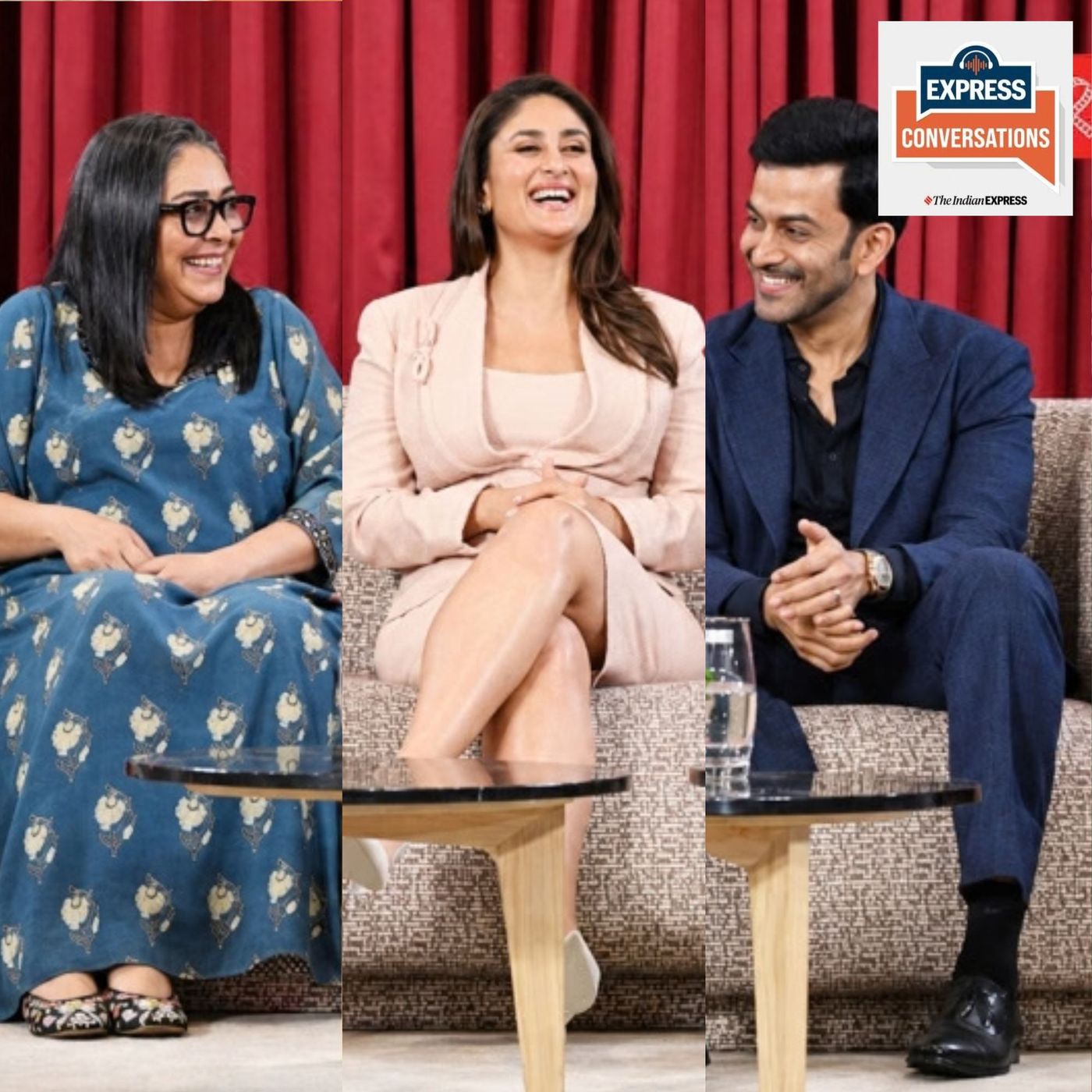
4 Oct 2026 · 1 hr 3 min
This time, the spotlight is on Prithviraj Sukumaran, Kareena Kapoor Khan and Meghna Gulzar, who joined us for a candid conversation. During the session, the trio spoke about their upcoming film Daayra, the complexities of its central characters, their creative choices, and the differences between the Malayalam and Hindi film industries. Edited and Mixed by Suresh Pawar
8 Aug 2026 · 1 hr 9 min
Will Netflix bid for IPL rights? Why did it bring Samay Raina’s India’s Got Latent to the platform and how is AI transforming entertainment? Netflix Co-CEO Ted Sarandos joins Anant Goenka for a wide-ranging conversation about Netflix’s ambitions in India, the future of streaming and the changing rules of global entertainment. As one of the most influential leaders in global entertainment, Sarandos has transformed how audiences around the world discover, watch, and experience content. With India emerging as one of the most important content markets globally, his perspectives offer valuable…
15 Jun 2026 · 25 min
Writer-director Imtiaz Ali discusses his recent film 'Main Vaapas Aaunga', that released on June 12, in an exclusive conversation with Alaka Sahani. Inspired by real stories from the 1947 Partition, the film explores themes of identity, loss and belonging. Imtiaz also talks about reuniting with Diljit Dosanjh after Amar Singh Chamkila, working with Naseeruddin Shah, and casting Vedang Raina and Sharvari in key roles. Edited and Mixed by Suresh Pawar
1 Jun 2026 · 14 min
In an exclusive conversation with Devansh Sharma, Madhuri Dixit, director Suresh Triveni, producer Vikram Malhotra and Ruchikaa Kapoor, Director of Original Films at Netflix India, spoke about their film 'Maa Behen', which released on June 5. During the discussion, the team also reflected on how stars from the 1980s are making a strong comeback in today’s entertainment industry and shared their thoughts on whether the growing trend of casting influencers is affecting opportunities for trained actors. Edited and Mixed by Suresh Pawar

The Melo app keeps playing with the screen off, works in the car and on your watch, wakes you to your station, and browses the whole catalogue offline. Free, no ads, no account.