Episode notes
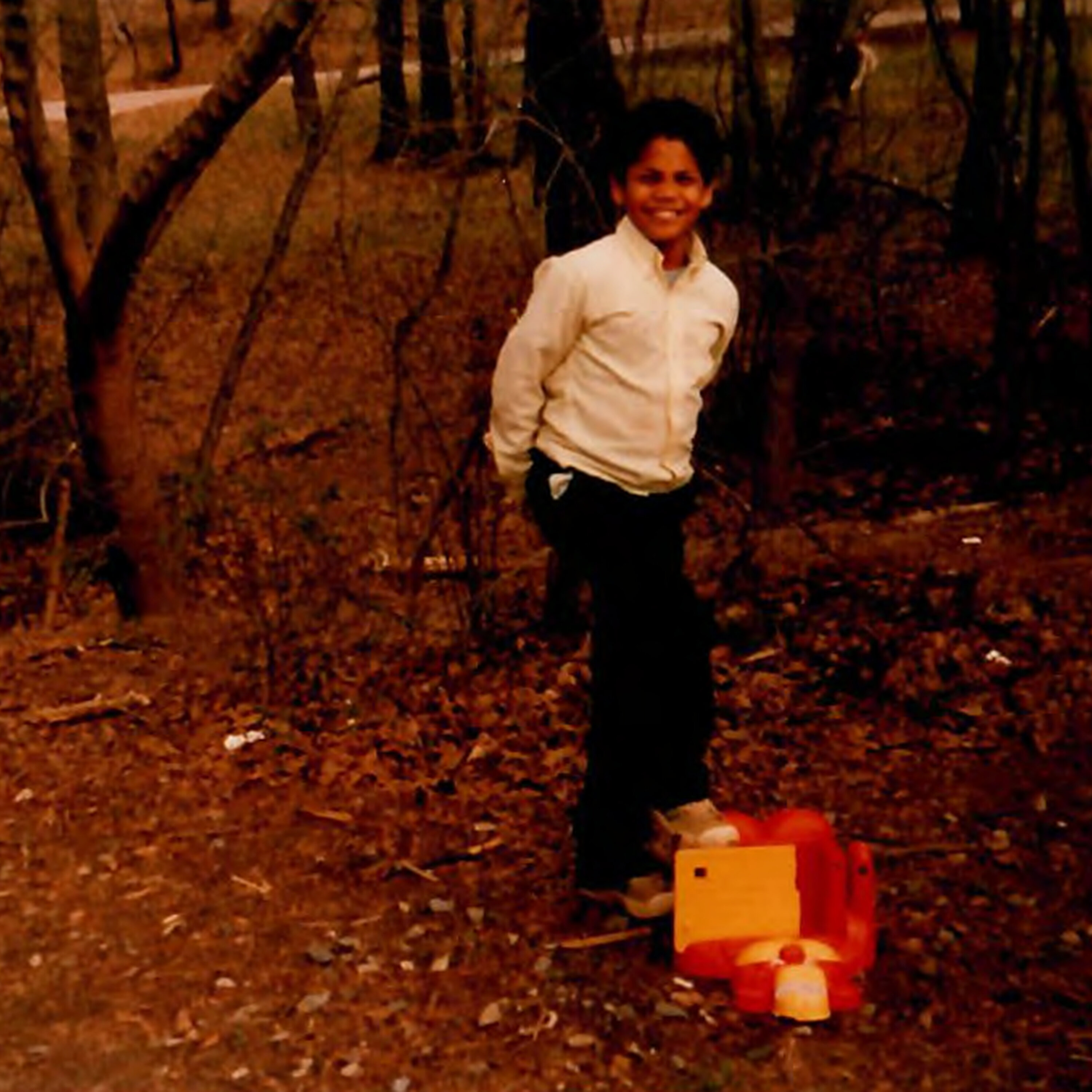
When Songe was 8 years old, he made fun of a girl with a facial tic. Just months later, he developed tics of his own—the first signs of the Tourette Syndrome he still lives with today. It felt like cosmic punishment. Songe has wanted to apologize to the girl ever since. See omnystudio.com/listener for privacy information.
Transcript
Read the transcript · about 5,160 words, follows along as you listen
Speaker 1:Hi. How are you, Stevie?
Speaker 2:Hi, Grandma.
Speaker 1:What have you been doing?
Speaker 2:I'm going to be hosting the second episode of this season.
Speaker 1:Oh, so let me know and I'll put it on.
Speaker 2:Have you ever had anything that you... I mean, you know the point of the show. Have you ever had anything that you want to apologize for?
Speaker 3:Oh, yeah.
Speaker 1:There are probably many things. I'm sure I've been thoughtless in many ways. You know what I say to my daughters today?
Speaker 4:I'm a b * * * *.
Speaker 3:Grandma.
Speaker 1:I don't know if I did a lot of things on purpose. Right, right, right. But then again....
Speaker 2:From Pushkin Industries, I'm Stevie Lane, and this is Heavyweight. Today's episode, Song. Right after the break.
Speaker 1:Hey, Song. Hi. How are you doing?
Speaker 3:This is Song. All right.
Speaker 1:There's going to be a lot of peripheral noises coming from me. But I guess that's part of the story, too.
Speaker 2:Actions have consequences. The world is ruled by cause and effect. So when Song tells the story of how he became the person you're hearing today, it's hard for him not to see it in karmic terms. His fate feels predetermined by something that happened one day in 1983 when he was eight years old. Song was living in Atlanta with his dad.
Speaker 1:And my father decided that he would send me to a Muslim school. And I just went for a year.
Speaker 2:Song's dad was Rastafarian and his mom Catholic. But for this one year, he attended a strict Muslim school.
Speaker 1:So, yeah, that day, the day in question, we had mosque and prayer. One of the teachers told us that there were three girls that had written a song praising Allah, praising God, and they wanted to perform it for the school.
Speaker 2:The teacher brought the three girls up, and in front of everyone, they sang.
Speaker 1:And it was a really cute song. I couldn't sing it.
Speaker 2:Could you try to sing it?
Speaker 1:Oh no, don't do that to me. The only part I remember is at the end, it went, a la whack bar, a la whack bar, repeated three times.
Speaker 2:Song and two of his friends were sitting up front, close to the girls.
Speaker 1:One of my friends noticed that one of the girls had a nervous tick, which was eye blinking, and pointed it out, and the three of us started to laugh about it.
Speaker 2:Laugh and imitate the girl's tick. A teacher caught them doing it, and after the girls were done singing, asked Song and his friends to stand up. Then, to publicly shame them for having mocked the.
Speaker 1:Girl, he made us sing the song you know, in front of the whole school and imitate her while we were singing it. Oh, my God. So, yeah, we sang the song, and we imitated her tick, and everybody laughed, and everybody laughed.
Speaker 2:I have to say, like, it strikes me as, like, a really strange punishment because it feels like it would just be doubly horrifying for her.
Speaker 1:Right. I remember looking at her and she was crying. And she was crying while we were singing it. I remember she was crying afterwards.
Speaker 2:What was going through your head?
Speaker 1:I was ashamed. I was ashamed of having laughed at her. And, of course, I felt terrible for her. I mean, that also adds to the shame. is having to watch somebody else in pain because of something that I had done.
Speaker 2:Afterwards, Song and his friends were brought to a back room where they were beaten with a large paddle.
Speaker 1:That they called the Board of Education. It had that written on the board. Wait, really?
Speaker 3:Yeah.
Speaker 1:It had holes drilled into it so that there would be less wind reduction. Oh, my God.
Speaker 2:Song's memory of the incident, though, ends there.
Speaker 1:I don't remember any more interaction with her. I wish, you know, like I don't remember her name. I just remember the situation.
Speaker 3:Yeah.
Speaker 1:And it's hard to say whether or not it would have stayed with me had not my own condition progressed in the way that it did. Okay, so... You can probably hear it a little bit, but I have Tourette's Syndrome. And it varies in severity, but I'm considered to be a pretty severe case.
Speaker 2:Song says it was right around that same time the summer after that school year in 1983, that he first started displaying signs of the disorder, signs that were eerily similar to the singing girl.
Speaker 1:The tics that I had in the beginning were mostly facial, you know, and that was like the same ones that we were laughing at that girl for. It was like eye blinking and stuff with my eyes, you know, make faces, smiling, or opening my mouth wide. Yeah. And other people around me were commenting, like, why do you keep doing that? And, oh, wow, you're doing this thing. Hey, you're doing this thing. And, you know, I would try to hide it and stuff.
Speaker 2:What does that feel like in your body?
Speaker 1:I can suppress it. It's very difficult. Anytime I'm suppressing it, I have to pay for it, you know. Like, it comes out worse afterwards. You know, it's like if you're in a staring contest with somebody and you're trying not to blink, you can feel when your eyes want to blink. But if you're not thinking about that, you're just going to blink. It just happens so quickly that you can't really stop it. Right, yeah. By the time you're aware that it's coming, it's already happening.
Speaker 2:But back then, when Song was 8, 9, 10 years old, it was all just new and confusing.
Speaker 1:Were you, like, scared?
Speaker 2:I don't know.
Speaker 1:It's funny.
Speaker 2:I remember, like, because— and I'm not equating these things, but, like, growing up, I had a lot of, like, OCD compulsive behavior. And I remember this one time doing this thing with my hands and my friend saying, like.
Speaker 1:What are you doing?
Speaker 2:And I was, like, embarrassed, but I had to do it. And I just was, like— First, I was like, what? You know, like, like, like, well, I was trying to deny the thing that, like, was happening right there. And then I was just like, I don't know. And I, like, really didn't know.
Speaker 1:Oh, wow. That's, yeah, that's, that's so similar, what you're describing, that, that compulsion. And you're not, you're not wrong in equating everybody. OCD and Tourette's are comorbid. But yeah, that's what it's like. Yeah, people would be like, why are you doing that? I'd be like, I don't know, you know.
Speaker 2:Song didn't know, and for a long time, his parents didn't know either. They thought he was just acting out. Song remembers conversations between his dad and grandmother and aunt around the kitchen table, them all talking about him and his tics as though he weren't sitting right there.
Speaker 1:My mother was a little more proactive, to put it in a positive light.
Speaker 3:Wait, wait, what do you mean?
Speaker 1:Well, she, you know, she thought that she could punish it out of me you know so like her and like my stepdad used to be like this is how much money I'm gonna spend for Christmas and every time you make one of those noises I'm gonna take five dollars off yeah yeah I remember like her recording me and playing it back and being like this is what you sound like and stuff like maybe she could embarrass it out of me I don't know it was always like the idea that I was, doing it on purpose.
Speaker 2:It wasn't until Song was 14 that he was officially diagnosed, but that didn't offer much help.
Speaker 1:They didn't know anything back then. So I've been prescribed a lot, a lot of medications. I would say that through most of my adolescence, I was pretty zonked out on antipsychotics.
Speaker 2:Most kids with Tourette's syndrome largely outgrow their tics by adulthood, but Song never did.
Speaker 1:There's a lot of things. Eye blinking, abdominal clenching, jumping. I poke myself in the eye sometimes. I grind my teeth to the point that some of them have been broken out of my mouth. Oh, my God. Yeah, I gave myself two hernias. From the age of 17 to 22, a lot of vocalizations, noises. I was biting my tongue for a while. I have a huge scar on my tongue from chewing on it. At some point in everybody's life, their body will rebel against them. And it's just sort of part of the process of living, right? You never know how it's going to go, but it's going to happen.
Speaker 1:If you're lucky, that's like in very old age. But to be aware of the weight of that, you know, in your youth, and to have to carry that around with you your whole life, it's just a nightmare.
Speaker 2:As Song got older, as it became clear that his tics were here to stay, he started asking himself, why?
Speaker 1:Why me? I had this sort of nagging suspicion that me having Tourette's was connected to me making fun of that girl. It was some sort of punishment that I was inflicted with because of what I had done to her. It's easy to imagine some supernatural connection. There were times where I thought, maybe because I did this in a house of worship, the deity is punishing me.
Speaker 2:It felt like there must be some karmic connection. It was all too uncanny. The timing of his symptoms, the similar facial tics he shared with the girl. Had you ever experienced bullying?
Speaker 3:Oh, yeah. Oh, yeah. Yeah.
Speaker 1:Like, it's constant. It goes on today, to this day. It happened on the train on the way here. What?
Speaker 3:Yeah.
Speaker 1:People making fun of me. You know, it's just, it's, yeah, it's constant. I mean, it was really bad in high school. And that was just your peers just making fun of you all the time. Teachers as well. Teachers as well? Yeah, like mocking me in class. I dropped out in 11th grade. I was pretty depressed. I just couldn't be there anymore.
Speaker 2:Of course, Song is a reasonable person, and the most rational part of him understands that his Tourette's wasn't caused by his making fun of the girl.
Speaker 3:And yet.
Speaker 1:it still hasn't stopped me from thinking about it.
Speaker 2:Yeah.
Speaker 1:For most of the time, I've really just felt like I wanted to apologize. You know, I'm regretful. I know how it feels. You know, this is the other thing. When you deal with something like that that's socially stigmatizing or isolating, any effort that you make to make yourself visible... is a victory. Like, I feel like any time I leave the house, any time I go out in public and socialize, like, I'm proud of myself. And so, you know, to do that at that age.
Speaker 2:To stand up in front of a school, you mean?
Speaker 1:Yeah. That she got up there and did that is, you know, that's a courageous person. I also want to know that she's doing okay.
Speaker 2:Yeah, when you think about her, like, do you imagine that she has Tourette's too or no?
Speaker 1:I mean, that's the thing. You know, I'm like, I just hope that, I hope that it was just a tick and it went away when she was a kid. You know, nobody should have to go through this. That's why I was saying, I hope that she's doing okay.
Speaker 3:Yeah.
Speaker 1:I don't know. I'm just sorry. You know? I'm just sorry.
Speaker 2:It's been 40 years since the incident. 40 years since Song has seen the singing girl. He has no idea how to find her. He doesn't even know her name. Which is why he reached out to me.
Speaker 1:I mean... I just don't know where I would start.
Speaker 2:Song isn't in touch with anyone from the school anymore. He was only there the one year. He can't offer much besides the name of the school.
Speaker 1:Sister Clara Muhammad.
Speaker 2:Though Song admits to me, his lack of leads isn't the only reason he reached out.
Speaker 1:Because what would I do? Would I just like show up at somebody's door if I was able to find them and knock on the door and be like, hey, remember me from that time? Hey, I've been tracking you. I've been looking for you for 40 years. Right. That's like super scary.
Speaker 2:And so... I go searching for the singing girl.
Speaker 1:After the break.
Speaker 2:I think about the task ahead of me, finding a girl from a random school assembly 40 years ago without so much as a first name. or even a school photo. It's not a lot to go on. But though Song doesn't remember the singing girl, all I need is to find one person who does. One person who remembers the incident and can say, oh yeah, that was so-and-so. And so, I begin with the information I do have. The name of the school.
Speaker 5:Good afternoon.
Speaker 4:I'm having a great day at Muhammad School. This is Rashida.
Speaker 3:May I help you?
Speaker 2:I'm hoping the school might have class lists or yearbooks where I can find the names of Song's old classmates. But I learn they don't keep records that far back. I couldn't help you.
Speaker 4:You said 1983.
Speaker 2:As for the teachers who worked back then, most all of them have since retired. But I get the names of a few.
Speaker 6:And I give them each a call.
Speaker 2:To see if they have any memory of Song.
Speaker 5:I don't remember teaching anyone with the last name Little.
Speaker 1:He was in fourth grade?
Speaker 2:None of them do. And it turns out Song's fourth grade teacher died some years back.
Speaker 1:Why is he trying to find this girl?
Speaker 2:Can I actually tell you this story? One teacher does give me something useful. The name of one of Song's old classmates. A woman who, she says, has an amazing memory. Her name is Crystal.
Speaker 4:She would have noticed and she probably would have remembered.
Speaker 1:So she may be the best person to go to.
Speaker 2:Hello? What with all the scam callers these days, I try to sound relaxed and casual. Hi, I'm calling for Crystal.
Speaker 1:Is Crystal available?
Speaker 2:Do you know Crystal? Nailed it. Do you know Crystal?
Speaker 1:Uh, she's my mom. Oh, okay. This is not a spam call, right?
Speaker 3:No, no, no, no.
Speaker 2:Sorry, I'm a journalist. I'm a radio producer, and I'm working with an old. It's not spam, I promise.
Speaker 1:Okay, sounds good.
Speaker 5:He was different insofar as he was not Muslim when he joined our school.
Speaker 2:As promised, Crystal's memory is sharp. She remembers Song immediately.
Speaker 5:I think he might have been maybe the first non-Muslim student that I knew. And if I remember correctly, he was like light skin with curly hair.
Speaker 2:Crystal doesn't recall the incident at mosque, though. But she does provide me with the names of other students at the school.
Speaker 5:Fatima, Jamila, who else was with them? Rukia.
Speaker 2:And those students provide the names of more students.
Speaker 5:Nassim.
Speaker 1:Sakina.
Speaker 3:Malik.
Speaker 5:And those students have theories.
Speaker 2:But none of them bear out. I don't know who.
Speaker 4:He's talking about.
Speaker 5:Yeah, no, my sister didn't have a dick.
Speaker 2:After a few months, I start running out of people to call. As I'm told over and over, Clara Mohammed was a tiny school, only about 10 kids per grade, sometimes fewer. It was the sort of school where everyone knew everyone and where everyone is still in touch. Many of Song's old schoolmates now attend the same mosque. And whenever I can't find a name or number, it's always someone's cousin or close friend.
Speaker 3:I can get his number too.
Speaker 1:I was married to his sister for a minute. No, really? Yeah, so I can definitely get that number too.
Speaker 2:I get numbers, and I reach out to all of them. Group texts are texted, Facebook groups alerted, alumni chats queried. I even contact the imam of the school mosque back then. Everyone is friendly and seems to genuinely want to help. But over and over, I hear the same thing.
Speaker 5:I don't remember that incident at all. And I'm sure I was there. No, I don't remember any of that. And I've never heard it since.
Speaker 1:I don't remember it happening. None of us remember the incident. I don't recall that at all. Not at all.
Speaker 5:No, none of this sounds familiar.
Speaker 1:Unfortunately, I don't.
Speaker 3:And I don't remember who this person is.
Speaker 1:I don't remember any children having tics.
Speaker 5:I just don't know if he's going to find the person who he's looking for.
Speaker 3:I don't know.
Speaker 2:I search for over two years. No one remembers the incident. No one remembers the singing girl. I feel like by now, if it were possible to find the singing girl, I would have. So there are a few possibilities. There were two girls I learned who've died in the years since 1983. Maybe the singing girl was one of them. Or maybe she's one of the very few students I somehow haven't been able to reach. Or maybe there's something Song is misremembering. I speak with a psychologist who studies memory, and she tells me that we often distort memories in ways that help us make sense of the world. It's possible that while some parts of the memory are true, there are other parts Song invented to help explain his Tourette's.
Speaker 1:I will say.
Speaker 2:The number of people from your school that I've talked to, like the sheer list of names is so long. And I mean, I check in with Song to run through all the names I've called.
Speaker 1:Whoa, that's a lot.
Speaker 6:Whoa.
Speaker 1:And nobody remembers?
Speaker 2:Nobody remembers.
Speaker 1:Wow. That's crazy. Yeah.
Speaker 2:For years, Song has been holding this apology that he needs to express. And now, it seems, he has no one to express it to. But maybe there's still another way forward. Recently, on a long flight, I watched the movie Rental Family. It's about this industry in Japan where actors are paid to play family members or friends in real people's lives. Stand-ins, they're called. For instance, a lonely client might hire a fake friend to go to the movies with, or a widower might hire someone to play the role of his late wife so he can say to her the things he wishes he still could. It sounds like science fiction, but apparently it works. Clients know the actors aren't their real daughters or fathers, but they can still solve real issues by proxy. As wild as it sounds, I wonder if something similar might help songs.
Speaker 2:Not a professional stand-in, but an unofficial one. Maybe there's a conversation Song can have, not with a singing girl, but with a stand-in of sorts, that will allow him to move on. So I start looking around. I want someone who will get Song, appreciate his candor and dark sense of humor. I contact Tourette's advocacy groups, put out calls on social media. I speak with a number of kids with Tourette's who are all great, but not quite right. I search for nearly as long as I searched for the singing girl herself. Over a year goes by. And then I meet Chloe. Chloe is 13 years old and lives in Ireland. The first time we speak, she tells me about her newest tick, blurting out the sentence, I love cocaine. She says, it's a real problem at the airport.
Speaker 2:And in that moment, I know my search is over. When I bring the whole idea up to Song, he's skeptical.
Speaker 1:Of course he is.
Speaker 2:But I tell him more about Chloe. She's from a small village where she doesn't know anyone else like her. She's only ever met one other girl with Tourette's who lives far away, so she doesn't have many people to talk to. That's something Song understands. So Song says he's open to talking. He hopes it might be helpful for Chloe, and I hope it might be helpful for him. Both of our hopes come true, but not in the way either of us expect.
Speaker 1:Hi, Chloe. How are you?
Speaker 3:I'm good, thanks. How are you?
Speaker 1:Pretty good.
Speaker 2:On what is morning for Song and evening for Chloe, we all meet up on a video call. Chloe and Song make polite small talk at first, chatting about their hobbies.
Speaker 1:Baking spray everyone yeah i like to bake as well.
Speaker 3:Yeah it's difficult yeah everything that i bake turns out scones does that mean they're hard yeah dick and hard.
Speaker 2:But it's not long before they're talking about their tics.
Speaker 3:One that i don't like is i blow kisses at people and i have that one quite.
Speaker 1:A lot If I was doing that, it could be a problem.
Speaker 3:Luckily, I'm a child, so it's not, like, as weird.
Speaker 2:Like Song, Chloe's tics have changed over time. She says she's constantly picking up new ones.
Speaker 3:Like, my meowing one, I got that one because I was, like, messing around with my cat. And then, yeah, and then it just kind of stuck.
Speaker 1:Yeah, it's annoying whenever I pick up new ones. I'm like, oh, why am I doing that now?
Speaker 3:Yeah, I'm like, goddammit, it has to be that one.
Speaker 1:Yeah, like, why don't I have one that's, like, running my fingers through my hair? Mm-hmm.
Speaker 3:I've always thought, like, what if I go to France or something and then I pick up a French chick? A French chick? I kind of want to have a French chick now.
Speaker 2:LAUGHTER Song has been living for 40 years with something relatively new to Chloe. She has questions for him about what life might be like when she's an adult.
Speaker 3:What's it like in work with your tics?
Speaker 1:Well, I mostly work from home.
Speaker 3:Okay.
Speaker 1:But I've worked in comic stores for about 14 years.
Speaker 3:Did you get any rude customers or anything about your tics?
Speaker 1:Sometimes, yeah. Huh.
Speaker 2:Song tells Chloe a story from when he was living in London, working the counter at a comic store there. A blind man walked in with his guide.
Speaker 1:It's a really weird image. The blind guy was maybe like a 70-year-old white guy, gray hair, dark glasses. And his guide was like this tall, really muscular black guy.
Speaker 2:Song says they looked like they had just walked off the pages of a comic book themselves. The blind man approached Song, started talking to him.
Speaker 1:He was talking about blindness. And then he goes, but, you know, we all have our thing. You know, I'm blind and you've got a neurological disorder. I'm like, how do you know that? And he's like, oh, it's a different smell. People with neurological disorders have a different smell. And I was like, what do we smell like? And he said, he said like ozone. Like electricity.
Speaker 2:It made sense to Song in a weird way. He says there's this feeling of electricity in his spine, a tingling or buzzing.
Speaker 1:It's like always there, right?
Speaker 4:Yeah.
Speaker 1:So you feel that as well? Yeah.
Speaker 3:Pretty much constantly, to be honest.
Speaker 1:Yeah. And that just kind of tripped me out. I was like standing there dumbfounded. It's like, yeah.
Speaker 2:How did that make you feel?
Speaker 1:I mean, at the time, I don't really deal with this as much anymore. I've gotten to a point where I just don't really give a shit about what anybody thinks, you know. But I think when I was younger, I used to really feel like I was repulsive to people. At the time when the guy said it, the way that I thought about it was like, Wow, even to blind people. Like, even somebody who can't see what I'm doing has a response to me.
Speaker 6:You know?
Speaker 3:Definitely. I do just get that feeling a lot because I feel like a lot of people don't like me. I'm not sure if it's, like, my tics or what. Like, especially at school.
Speaker 2:Chloe tells us about something that happened at an after-school club. She was sitting with some friends when a boy came up.
Speaker 3:And he started being like, bah, bah, bah, and just mocking me a bunch. And he told me that I sounded like a dying pig. To the point I started crying, just hysterical. I was like, I have Tourette's, it's a neurological condition, I can't help it. And he was like, I don't give a shit. And then just kept doing it. I remember going home later and then I was like crying. I was saying, I just want to be normal. I just want to be normal. I was like, I felt that for the longest time. I'm just not normal. And then I just would love to be normal. That'd be my one wish if I got one.
Speaker 6:Yeah.
Speaker 2:Song pauses.
Speaker 1:Talking to him after did you ever feel like there was any any sense of I don't know like accountability for him having done that or regret for having done.
Speaker 3:That no like once he did give me half an oreo so that was.
Speaker 2:Great did he ever apologize to you.
Speaker 3:No I don't think anyone has ever like apologized to me for making fun of my terms?
Speaker 1:Well, so, I used to go to a Muslim school for one year when I was about, when I was eight years old.
Speaker 3:I hope she knows that, like, you tried and, like, that you are very sorry about it.
Speaker 2:For a moment, Chloe considers the boy who made her cry at after school.
Speaker 3:I'd be very grateful if he, like, apologized to me. I'd be like, thank you for apologizing. Like, it would mean something to me, like, for him to apologize.
Speaker 1:He still may. He still may. Sometimes it takes people a while to figure out what it is that they've done and what effect it's had on other people. Like I know I can say for myself, like the idea of apologizing, I don't think really hit me until I was in my, in my twenties, you know, so it could happen sometimes, sometimes people surprise you.
Speaker 2:But until then song offers this, not to the singing girl, but to this one.
Speaker 1:Well, I mean, in the place of a boy, I would say, I'm sorry. I'm sorry that I hurt your feelings. I'm sorry that I made fun of you. It wasn't right. I didn't understand what it was to not have control over my own body and how frustrating that could be. I know that it's not your fault. And I know that it's hard for you. And I shouldn't have made things worse for you. You know, I've been around for a while now. And if I was going to put a bit of, you know, 50-year-old into this boy's apology, I would actually say I had things about myself that I felt insecure about. And it has nothing to do with you. It has everything to do with how I feel about myself. And I would say that you are very brave and very strong to be you and to live your life in your skin. And It's not your fault.
Speaker 1:And I'm sorry. I'm sorry.
Speaker 4:It felt, like, just really good to hear that.
Speaker 3:Or just to imagine, like, the kid that was making fun of me being so nice. That just feels amazing.
Speaker 2:I thought Chloe could act as a stand-in for the girl in Song's story, but it's Song who acts the part of the boy in Chloe's.
Speaker 3:I really hope that he does now feel remorse for it and is like Song in the way that he feels bad for it and how he's so nice.
Speaker 6:Yeah.
Speaker 1:Mm-hmm.
Speaker 3:All I need to do is, the next time I see him, just around my village or something, I need to get his number, then when this podcast comes out, I'll send.
Speaker 1:It to him.
Speaker 3:Oh, wow. And be like, you better do this for me. You will apologize, I'm forcing.
Speaker 1:You to.
Speaker 3:And give me the other half of that Oreo while you're at it.
Speaker 1:That's amazing.
Speaker 2:In the end, Song got to apologize. Not for karma, but for Chloe. After the call, I check in with Song. He's really happy to have apologized to Chloe, and he hopes it made her feel better. But it hasn't entirely made him feel better. There's still some small part of him that hopes the singing girl is out there, that hopes that maybe, one day, he'll find her and finally get to say sorry. There's an undeniable instinct to explain the randomness of our lives. Maybe that's all karma is, really, a collection of consequences to which we assign causes. It's just the way it is is a lot scarier than things happen for a reason. And so we can't help but search for order, for answers, for solutions, even when we know there are none. I used to think maybe I would be cured if I was struck by lightning, Song once wrote me. This thought first occurred to me while riding my bike across the Williamsburg Bridge in the rain.
Speaker 2:So it's kind of like a fantasy that I'll get hit by lightning and be fixed. And honestly... Who knows, Song said. It just might work.
Speaker 4:Piano plays softly.
Speaker 6:Is returning to its goodwill home now that the last month's rent is scheming with the damage deposit take this moment to decide if we meant it if we tried From things that accidentally touch.
Speaker 2:This episode of Heavyweight was produced by me, Stevie Lane, along with Jonathan Goldstein and Lisa Wang. Our senior producer is Kalila Holt. Editorial guidance from Emily Condon. Special thanks to Phoebe Flanagan, Daphne Chen, Ben Nadefhafri, Neil Drumming, and Dr. Jillian Murphy, who was extremely helpful on the subject of memory. Emma Munger mixed the episode with original music by Christine Fellows, John K. Sampson, Bobby Lord, and she herself, Emma Munger.
Speaker 2:Additional scoring by Chris Zabriskie and Blue Dot Sessions. Our theme song is by The Weaker Thens, courtesy of Epitaph Records. Song is an artist, animator, and illustrator. And if you'd like to check out his work, and you should, you can find it at songriddle.com, spelled S-O-N-G-E, riddle.com. Follow us on Instagram at heavyweightpodcast or email us at heavyweight at pushkin.fm. We also have a free newsletter at patreon.com slash heavyweight. Jonathan will be back next week with a brand new episode.
Speaker 2:Thank you.
Transcript supplied by the publisher with the episode.
Heavyweight
by Pushkin Industries · English · Society & Culture
Maybe you’ve laid awake and imagined how it could have been, how it might yet be, but the moment to act was never right. Well, the moment is here and the podcast making it happen is Heavyweight. Join Jonathan Goldstein for road trips, thorny reunions, and difficult conversations as he backpedals his
More from Heavyweight
-
S10 · E3 · 1 Oct 2026 · 47 min
#69 Tamara
Tamara and B were best friends and roommates at their Christian boarding school. Then, in 12th grade, a teacher declared B to be possessed by a demon and an exorcism was performed. B and Tamara stopped speaking soon after. Tamara’s worried about B ever since. If you or someone you know is thinking about suicide, dial the US National Suicide Prevention Lifeline at 988. Those outside the US can find your local helpline at befrienders.org . See omnystudio.com/listener for privacy information.
-

S10 · E1 · 17 Sep 2026 · 38 min
#67 Jenna
When Jenna was eight years old, she was taken from her mom and placed with a foster family called the Grizzles. For two and a half years, she built a life with them, and when they asked to adopt her, Jenna was thrilled. But then, abruptly, the Grizzles changed their minds. Three decades later, Jenna still wonders: What happened? See omnystudio.com/listener for privacy information.
-

S10 · 3 Sep 2026 · 2 min
Trailer: Heavyweight Season 10
Heavyweight returns on September 17. Listen wherever you get your podcasts. Pushkin+ subscribers can get all episodes ad-free! Sign up on the Heavyweight Apple show page or at pushkin.fm/plus . See omnystudio.com/listener for privacy information.
-
S10 · 2 Jul 2026 · 40 min
2026 Update: James
James’s father’s dying wish was for his ashes to be spread on the 18th hole of a fancy private golf course. That was 16 years ago. In this episode, James, Jonathan, and their friend Howard attempt a golf heist to get into the club and set things right. In today's update, Jonathan calls up James for one last interview. Just when James thinks he's out, we pull him back in! You can sign up for our free newsletter at patreon.com/heavyweight This episode was produced by Jonathan Goldstein, Wendy Dorr, Chris Neary, and Kalila Holt, with editing by Jorge Just and Alex Blumberg. Special…
-

S10 · 25 Jun 2026 · 36 min
Jonathan Vs. Kalila on Smash Boom Best
Jonathan and Kalila go toe-to-toe as guests on the children’s debate podcast, Smash Boom Best , where they debate the merits of phone calls vs. texting. We had a lot of fun doing it, and—if it’s not too bold to presume—we think you will have fun listening to it. See omnystudio.com/listener for privacy information.
-
S10 · 18 Jun 2026 · 36 min
2026 Update: Julia
In grade 8, Julia was bullied so badly by a group of girls that she changed schools without telling anyone. Soon after, the girls from her old school showed up at her house and rang her doorbell. She didn’t answer it. For the past 20 years, Julia’s been wondering what those girls wanted. Ten years after the release of this episode, we check back in with Julia, to hear how her life changed in the aftermath of the episode. You can sign up for our free newsletter at patreon.com/heavyweight This episode was produced by Jonathan Goldstein, Chris Neary, and Kalila Holt, with senior…
-

S10 · 4 Jun 2026 · 40 min
2026 Update: Brandon
Throughout high school, Brandon was a misfit. Then one day, out of the blue, one of the school’s prettiest, most popular girls asked him to prom. Fifteen years later, Brandon wants to know: why him? Four years after the release of his episode, we check back in with Brandon to learn what's changed and get an update on his underwear situation. You can sign up for our free newsletter at patreon.com/heavyweight This episode was produced by Stevie Lane and Mohini Madgavkar. The senior producer is Kalila Holt. Special thanks to Emily Condon, Alex Blumberg, Sharon Mashihi, Mimi…
-

S10 · 21 May 2026 · 37 min
2026 Update: Frederick J. Brown
Maia found a painting in the garbage and took it home. But as it turned out, it wasn’t just any painting. In this update, Kalila learns that she might have been looking at the painting all wrong. You can sign up for our free newsletter at patreon.com/heavyweight This episode was hosted and produced by Kalila Holt, along with Jonathan Goldstein. Our supervising producer is Stevie Lane. Production help from Damiano Marchetti. Special thanks to Sam Reisman, Emily Condon, Alex Blumberg, Lydia Polgreen, Marcy Flynn, Karl McCool, Caitlin Kenney, and Kayla Lattimore. The show was mixed by…
-

S10 · 7 May 2026 · 48 min
2026 Update: Christina
When Christina was in 11th grade, her foster mother made her quit playing basketball. After that, she felt like her life never got back on course. And so, she’s always wanted to ask her foster mother: why’d you make me quit? Now, 9 years after the episode originally aired, we check back in with Christina, and she tells us about seeing her foster mother one last time. You can sign up for our free newsletter at patreon.com/heavyweight This episode was produced by Jonathan Goldstein and Kalila Holt, with editing by Jorge Just, Alex Blumberg, and Wendy Dorr. The senior producer is…
-
S10 · 23 Apr 2026 · 50 min
2026 Update: Skye
When Skye was in middle school, her best friends showed up at her home one night and wrote “f*ck you” on her garage door. After that, they never spoke again. Decades later, at the urging of her eleven-year-old son, Clark, Skye sets off to finally ask them why. In this update, Skye tells us how that confrontation has shaped her and Clark in the years since. You can sign up for our free newsletter at patreon.com/heavyweight This episode was produced by Jonathan Goldstein, Kalila Holt, Peter Bresnan, and Stevie Lane, with editing by Jorge Just and Alex Blumberg. Special thanks to…

Take it with you
The Melo app keeps playing with the screen off, works in the car and on your watch, wakes you to your station, and browses the whole catalogue offline. Free, no ads, no account.