Episode notes
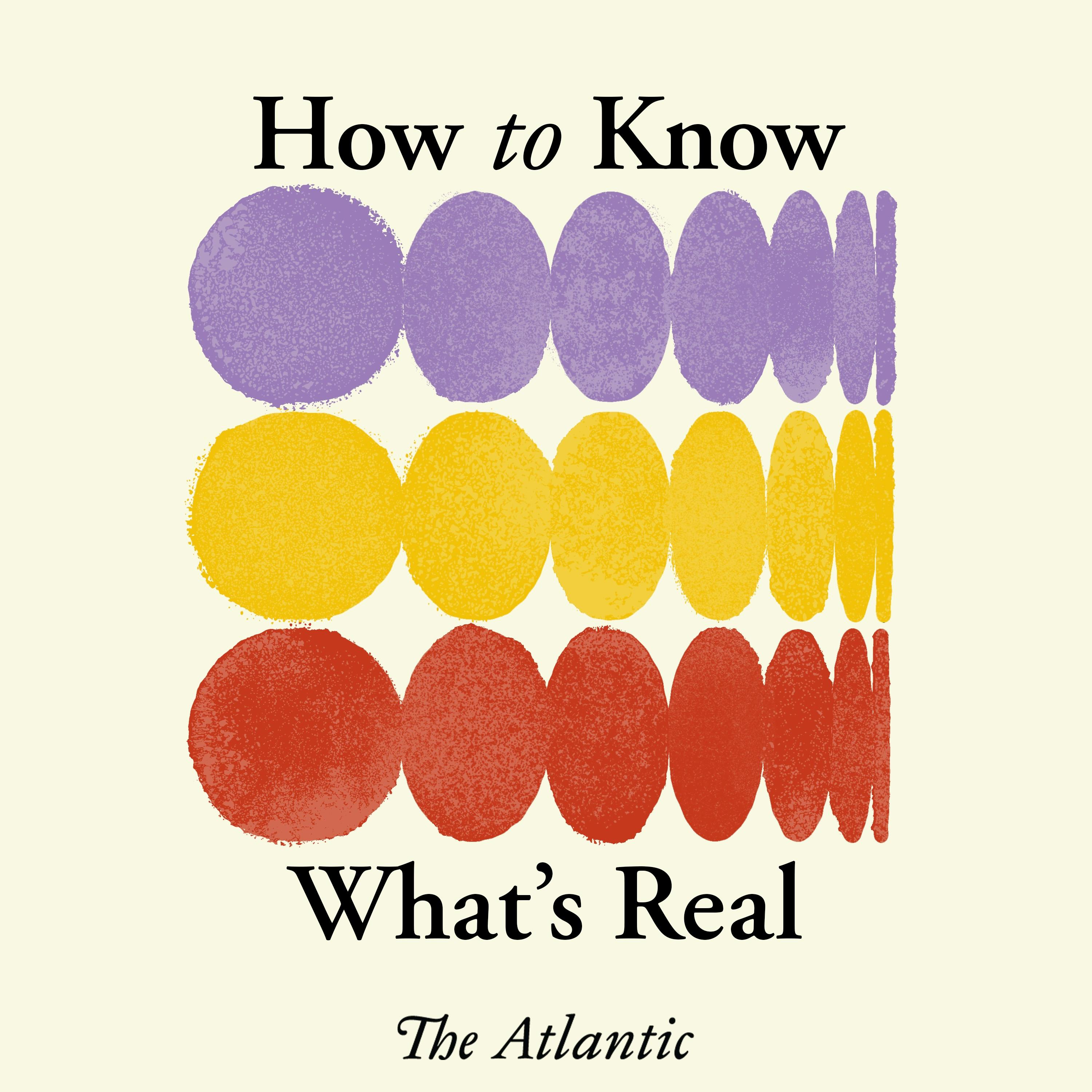
What is “real life,” now that the internet and AI are integrated into so much that we do? In the new season of The Atlantic’s popular How To series, co-hosts Megan Garber and Andrea Valdez explore deepfakes, illusions, and misinformation, and how to make sense of where things are really happening. How to Know What’s Real examines how technology has altered our sense of connectedness and how to determine what is authentic and true. Write to us at howtopodcast@theatlantic.com. Learn more about your ad choices. Visit podcastchoices.com/adchoices
How to Touch Grass
by The Atlantic · English · Learning
It may be time to rethink our relationships with our devices.
More from How to Touch Grass
-

S6 · E3 · 27 May 2024 · 33 min
How to Know What's Real: How to Trust Your Brain Online
This episode explores the web’s effects on our brains and how narrative, repetition, and even a focus on replaying memories can muddy our ability to separate fact from fiction. How do we come to believe the things we do? Why do conspiracy theories flourish? And how can we train our brains to recognize misinformation online? Lisa Fazio, an associate psychology professor at Vanderbilt University, explains how people process information and disinformation, and how to debunk and pre-bunk in ways that can help discern the real from the fake. Music by Forever Sunset (“Spring Dance”), baegel…
-

S6 · E2 · 20 May 2024 · 28 min
How to Know What's Real: How to Live in a Digital City
While the vibrance, innovation, and cacophony of online life can feel completely unlike anything humanity has ever created before, its newness isn’t wholly unprecedented. Humans reckoned with many similar challenges to life as they knew it while navigating a different kind of social web: the city. In this episode, Danah Boyd, a partner researcher at Microsoft Research and Distinguished Visiting Professor at Georgetown University, explains how the sociological work conducted during a time of rapid urbanization in the United States reveals a lot about human behavior and what we need to feel…
-
S6 · E1 · 13 May 2024 · 29 min
How to Know What's Real: How to Know Who’s Real
Social media has made it easier to build more parasocial relationships with celebrities and influencers. What impact are those connections having on our relationships IRL? And how do they shift our understanding and expectations of intimacy and trust? Florida State University assistant professor Arienne Ferchaud defines parasocial relationships and discusses how new technologies are changing the role of entertainment in our lives. Music by Forever Sunset (“Spring Dance”), baegel (“Cyber Wham”), Etienne Roussel (“Twilight”), Dip Diet (“Sidelined”), Ben Elson (“Darkwave”), and Rob Smierciak…
-
S5 · E6 · 15 Jan 2024 · 42 min
How to Keep Time: Can We Keep Time?
It can be tough to face our own mortality. Keeping diaries, posting to social media, and taking photos are all tools that can help to minimize the discomfort that comes with realizing we have limited time on Earth. But how exactly does documenting our lives impact how we live and remember them? In this episode, diarist and author Sarah Manguso reflects on the benefits and limitations of keeping track of time, and Charan Ranganath, a professor of psychology and researcher at the UC Davis Center for Neuroscience, discusses what research reveals about how memories work and how we can better…
-
S5 · E5 · 8 Jan 2024 · 36 min
How to Keep Time: Time Tips From the Universe
Time can feel like a subjective experience—different at different points in our lives. It’s also a real, measurable thing. The universe may be too big to fully comprehend, but what we do know could help inform the ways we approach our understanding of ourselves, our purpose, and our time. Theoretical physicist and black-hole expert Janna Levin explains how the science of time can inspire new thinking and fresh perspectives on a much larger scale. Music by Rob Smierciak (“Slow Money, Money Time, Guitar Time, Ambient Time”), Gavin Luke (“Time Zones”), Hanna Lindgren (“Everywhere Except Right…
-
S5 · E4 · 1 Jan 2024 · 35 min
How to Keep Time: How to Rest
Between making time for work, family, friends, exercise, chores, shopping—the list goes on and on—it can feel like a huge accomplishment to just take a few minutes to read a book or watch TV before bed. All that busyness can lead to poor sleep quality when we finally do get to put our heads down. How does our relationship with rest impact our ability to gain real benefits from it? And how can we use our free time to rest in a culture that often moralizes rest as laziness? Alex Soojung-Kim Pang, the author of several books on rest and director of global programs at 4 Day Week Global, explains…
-
S9 · E5 · 24 Aug 2026 · 40 min
What It Takes to Reclaim Your Attention Span
Of all the potential effects of using smartphones, the one that seems to inspire the most anxiety is what scrolling could be doing to people’s attention. On social media (ironically), many people express a desire to “heal” their attention spans from the damage they feel technology has done. They’re picking up on something real. In one 2025 study, researchers found that blocking the internet on people’s phones for two weeks led to improvements in sustained attention equivalent to reversing 10 years of cognitive decline. In this final episode of How to Touch Grass, host Julie Beck embarks on…
-
S9 · E4 · 17 Aug 2026 · 33 min
Why Learn Something That a Machine Can Do for You?
Children still learn long division even though calculators exist, and many people continue to study languages even as AI translation becomes faster and more accurate. Is there a deeper purpose for learning that technology will never touch? In this episode of How to Touch Grass, hosts Natalie Brennan and Julie Beck hear from Michelle Miller, a cognitive psychologist at Northern Arizona University who studies technology and learning. She explains that although the changing tides of tech may shape what and how we learn, as humans we still have the autonomy to build the minds we want. Learn more…
-
S9 · E3 · 10 Aug 2026 · 37 min
The Internet Is More Image-Focused Than Ever
It wasn’t that long ago that “body positivity” was all over the internet. Oppressive beauty standards hadn’t gone away by any stretch, but many people on social media were pushing against limits on what an “ideal” body could look like. Now, things have swung in the opposite direction, with the rapid uptake of GLP-1s and the resurgence of a skinny ideal, combined with a new frankness about plastic surgery. The calls for “self-love” and “health at any size” can be harder to hear these days over the roar of looksmaxxers and influencers talking about weight loss and cosmetic procedures. In this…
-
S9 · E2 · 3 Aug 2026 · 28 min
How AI Could Make People More Anxious
Nothing sucks you in quite like the internet. It seems to have a way of figuring out what you’re currently obsessed with and serving you more and more of it, whether that’s cat videos, cookie recipes, or information about your most pervasive and seemingly unshakeable anxiety. (At this point, anyone who’s never spent a late night Googling their worries should be studied by science for their willpower.) But with the rise of artificial intelligence, the internet may be fueling a different kind of engagement. Elias Aboujaoude, a psychiatrist at Stanford University, and Ashleigh Golden, a…

Take it with you
The Melo app keeps playing with the screen off, works in the car and on your watch, wakes you to your station, and browses the whole catalogue offline. Free, no ads, no account.