Episode · No Filter
Kate Ceberano Has Spent 40 Years Trying To Figure Herself Out
24 May 2026 · 1 hr 17 min
Episode · No Filter
24 May 2026 · 1 hr 17 min
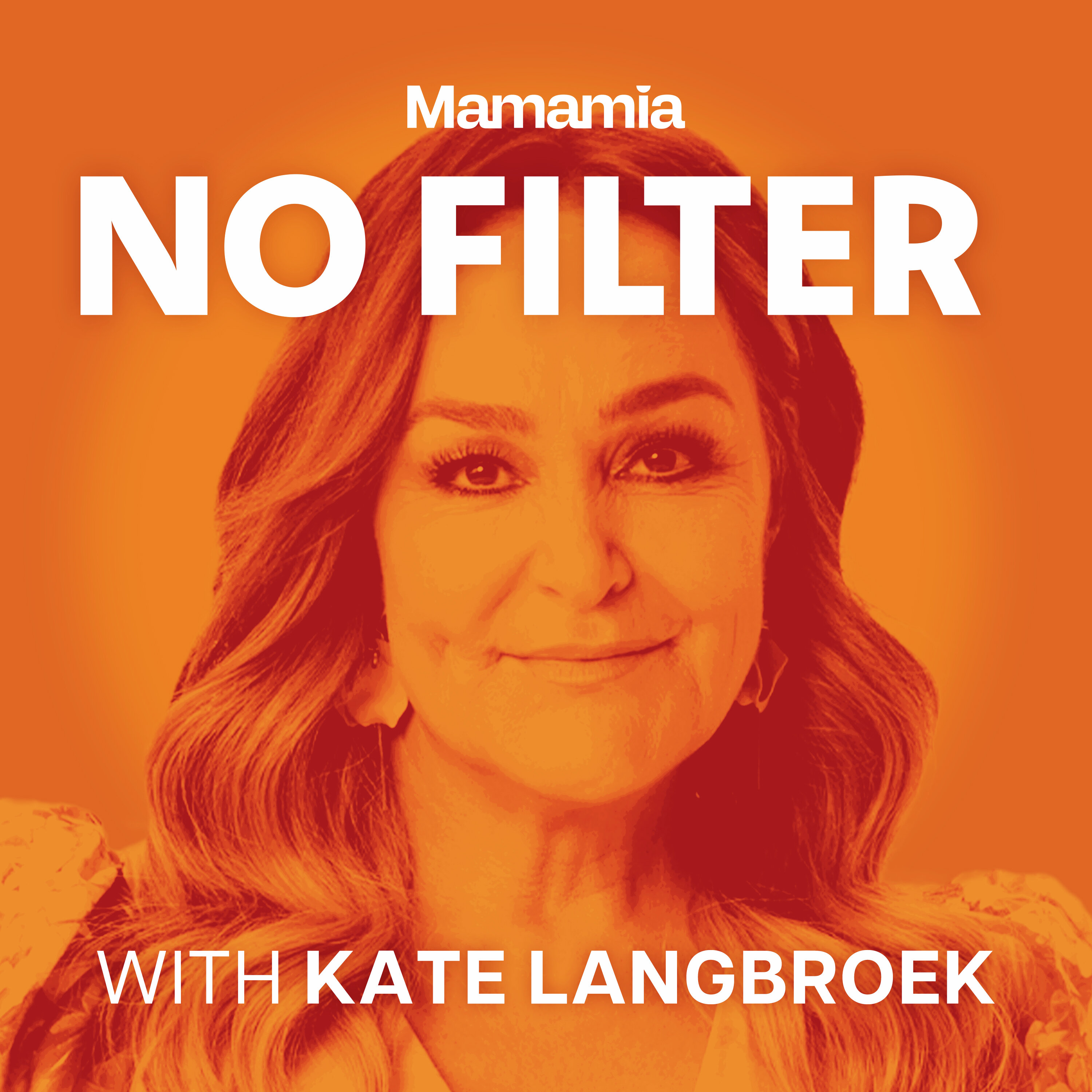
In this episode of No Filter, Kate Langbroek sits down with ARIA Hall of Fame inductee Kate Ceberano for a conversation that feels less like a formal interview and more like two women circling the biggest questions of identity, ambition, creativity and reinvention together. There’s also a deeply personal connection between them that slowly reveals itself throughout the episode, shaping the intimacy and honesty of the conversation in unexpected ways. Kate Ceberano reflects on growing up in Melbourne’s music scene, the chaos and excess she witnessed as a young artist, and the ways…
Speaker 1:So you sit down. I had the ugly conversation with my husband. I'm like, this has been great. We've really enjoyed each other. We've really had the very best life you could possibly wish for. I dearly want to get pregnant and I really don't give a shit what you think about that.
Speaker 2:Ah.
Speaker 1:Hi, I'm Kate lane Brook. There are some guests where the conversation begins before the microphones are even turned on, and Kate Sobrano is absolutely one of them. This is a slightly unusual episode of No Filter, a very personal one because Kate Sobrano and I already know each other, and I think you can feel that intimacy almost immediately in this chat. What unfolds is less a formal interview and more two women sitting down together to talk honestly about creativity, ambition, aging, marriage, motherhood, music, and what it actually costs to build.
Speaker 3:A life as an artist.
Speaker 1:We talk about the opportunities Kate turned down, the Korea highs and heartbreaks, the pressure of constantly reinventing yourself, and why, at nearly sixty, she feels more certain of who she is than ever before. There are stories about Melbourne in the eighties punk music, motherhood, Karl Minogue, Tom Cruise, Coconut Cake, and the strange intensity of surviving four decades in the spotlight while still remaining entirely yourself. It's also funny, theatrical, emotional, and completely unpredictable because this is Kate Sobrano. I am looking forward to this so enormously, not just because I think you're a true ornament to this country, but also I have a lot of love for you that comes through a personal relationship that will touch on later. Some of the listeners will already know, and some maybe, oh.
Speaker 3:What could it be, Kate Sebrano, Leave them hanging on a thread, darling, and leave them hanging Welcome to No Filter.
Speaker 1:Oh I'm very, very happy to be here. This kind of feels grown up and beautiful to be sitting actually talking to someone who I know and love, as opposed to someone who is interrogating me. Right, Okay, you know, yes, I've been for forty years at the other end of misfired questions. And I say misfired because they're like they usually do them around me to get one single answer, right.
Speaker 3:It's like a right, a volley of what are they looking for? An answer.
Speaker 1:I think what people are trying to discover usually when they ask an artist any questions is why why are they the way they are? Yes, I don't reckon that's a It's almost like it's kryptonite to the artist, because I think if you try to too carefully unpack that, you leave your flanks a bit open, and a part of you feels well. I do anyway, a part of me feels undressed and right, sort of a strange freak because I can't really explain what happened or when it happened exactly. They always want a very specific time in a place.
Speaker 3:I heard Ricky Lee.
Speaker 1:Say to you, you don't want to show how the sausage is made?
Speaker 3:Clever? Yes, isn't she yes?
Speaker 1:Funk like seriously, she's a very wise and a natural artist. Yes, And on stage she has a lot of what you have on stage, which is this incredible giving of herself. You have this the first time I saw you on stage, which, strangely though I've seen a lot of gigs and I've said this to you before, I hadn't seen I think i'd seen you as part of line ups or whatever, but I've never seen you as a solo artist. And when I saw you, it was with your tour that you did with the symphony with the orchestra, and I was so astounded at my own cultural ignorance at not having seen you earlier, but that stuff just happens, but also at the power and range and freedom on stage of you that I remember sitting there thinking she could perform at the Milan Opera House. I remember thinking that you weren't singing opera, but you could.
Speaker 3:Yeah, well, opera is a state of mind, isn't it after all? Well I don't think so you don't think can we explain myself? Because I love it.
Speaker 1:I love it when when you offer me that, And I'll tell you why I said exactly. That is because Rosalia is an artist who's pop act. She's just like Taken over the Road. Yes, she's an opera singer, she's like a she's like the reincarnation of Maria Carlis, but she's in a contemporary skin. Yes, And so the kind of like if you put that into that sausage machine, as we're just talking about and getting back to Ricky Lee in a minute, but what you end up getting is this hybrid version of modern opera, Right, That's what I mean. Like sometimes when I get up there, I feel a little bit like, you know, especially when I'm like letting it rip, like I've got the blonde, the blonde.
Speaker 3:Braids and the right.
Speaker 2:Valk.
Speaker 3:That's what I mean. Opera's a state of mind.
Speaker 1:I don't really know opera very well, so I can't claim to know anything about it. But when I hear opera singers and when I feel I feel like they're kind of an engine that has more fuel than most average normal people. Yes, Rosali has more fuel. Yes, I have seen an inexhaustible supply of fuel. When I'm on stage, like the stage itself, the power creates extraordinary it. Sometimes it's like sometimes I've got to borrow from the future to just keep it together and not just like blow up like Shrek.
Speaker 3:You know the bird that just goes yes, yeah, yeah, feathers everywhere. You know.
Speaker 1:Your mum said an interesting thing. It was also the first time that I meet her. I was after that gig, and she said to me, and I was just we were just really wowed by you. And your mother said, and you know, she's got that that very brusque way of speaking.
Speaker 3:She goes.
Speaker 1:It's the only time she's happy is on stage.
Speaker 3:But that is also the artist, isn't it.
Speaker 1:Yeah, I think I'm dissatisfied or I have Yeah, I'm concert itchy, scratchy in the days in between stage.
Speaker 3:Yes, and it's getting worse.
Speaker 1:Wow, really so much so that I've had to calm my nervous system and stop myself from picking at these creative.
Speaker 3:Scames, if you will. It's a really disgusting way to describe.
Speaker 1:But you know, like this sort of thing, you know, I've got an idea, I've got a thought, I've got to I've been.
Speaker 3:Doing things with my hands, as you know, and I really craft.
Speaker 1:I get right into it as a meditation of sorts, because so you're embroidering, painting guitars and build things. I get to the piano. I do scales and pilates and all sorts of stuff. But it's mostly in an effort to stop stop scratching it, you know. And why do you want to stop scratching it? Is it because it's unbearable. I think it creates a lot of trauma. Not trauma, that's a really that's an overused word.
Speaker 3:It is an overused word.
Speaker 1:It is an overused especially when I'm about to see what it's like.
Speaker 3:You'll be like.
Speaker 1:Good thing you change that. I think it's it's intolerable for people to live around ah, yes, because like you're constantly generating activity and other people around you sometimes need rest from you. Yes, And if you're not aware of it, then you lose touch with kind of what's important, Like I know, well, giving it back to you as a mother to mother and will reveal the way we know one another so well as mothers later. But there's a dedication you have and to keeping the tribe together. Now, this is interesting about you because we are all familiar with the template of the artist, who by dint of the definition of what an artist is, it requires a huge, huge degree of selfishness, which is to focus on the self and the calling of the self. But you also straddle a more prosaic world, which is as a wife, a more like earthy world as a wife and a mother and a daughter and a sister and an aunt and blah blah blah. How is that tension served by an artist? And what are the sacrifices that you have made?
Speaker 1:Because it comes at a cost.
Speaker 3:Absolutely, I think you have to.
Speaker 1:Own up to the bipolarity of trying to do all of those things knowing that it's going to take extra work for you to come back from an all time high fifty thousand plus fo one hundred thousand people on an afternoon. The adrenals have turned on in a way that you could walk into a fire and be un scared.
Speaker 3:That's the sort of like, yeah, that's the.
Speaker 1:Feeling, the way your senses have been heightened, so to come back into a family environment and dominate the space when you're in that elevated I recognized early on in the piece that it was, as I said, it was causing some impact on people in and around. I don't love to watch it. I don't like to see the fallout of that. Like you're too much lily or too loud, you just just bring it down. So but I think, sorry, the quick answer to your question is this, just accept that you are going to always be strange and strange to the most because you've had a glimpse of something which most common people and I'm not saying using that word like common in terms of.
Speaker 3:The lesser people.
Speaker 1:It is the people who don't get into they don't get themselves into that kind of mischief.
Speaker 3:Every day. You're calling for mischief every day, but sometimes it's hard for people to come back from that.
Speaker 1:And you know, if I look at your career, which you are now being honored by the ARIA Hall of Fame, which is an extraordinary it's.
Speaker 3:A massive it's a massive honor, well.
Speaker 1:Earned and a long time coming, given that I believe you've never actually they never gave you an Aria.
Speaker 3:They never gave you an We're good.
Speaker 1:Yeah, but you know what though, you actually what you're saying is one can say it's quick. There are a lot of eligible artists who look, yeah, everyone's eligible. And in my lifetime, if they were going to be handing them out one a year, there's absolutely no way I would have had it in my lifetime. It would have definitely a posthumous award. And I think I've kept my life fairly. I think I've prioritized the right things when I've needed to.
Speaker 3:Yes, yes, but you don't always know.
Speaker 1:You don't do that, No, you don't. So I only know when you put the baby on the nipple, there's something that transforms you. Right, Not every woman will have that opportunity to feel it, but when it does it tends to pull in all the parts of you that have been extending well beyond your natural self, right, and you actually have to say, okay, no, that one, that extension over there is wow, it's amazing. But we're going to rope her in a little bit because that's definitely going to go into crazy town. What I'm saying is like, I don't know necessary. I can't say whether my husband and I at thirty six would have remained together at sixty had we not had that crossroads. Yes, right, So there were things that compelled us to change our habits and our expectations of ourselves and life and in our careers respectively. We had to actually really put them on the table and go, so what are you prepared to give upright? And then he said, well, what are you prepared to give up? And it was like game one, a real conversation. Oh shit, chah, because because I was wanting to see if we could have children at thirty six,
Speaker 1:which they called me, you know, a geriatric.
Speaker 3:Yes, I had all my children as a geriatric. When she said it was.
Speaker 1:I know, it's like when you go range that that and being told you you're.
Speaker 3:Obese, like normally I'm also normally I love it.
Speaker 1:So when you've been given these these treasures of platforms to walk into and represent, like those two things which really suck, so you sit down. I had the ugly conversation with my husband. I'm like, this has been great. We've really enjoyed each other. We've really had the very best life you could possibly wish for. I dearly want to get pregnant and I really don't give a ship.
Speaker 3:What do you think about that?
Speaker 1:It's like, yeah, I just love our life.
Speaker 3:I'm not sure how we'd change it and make it better. Well, you never are.
Speaker 1:No, No, he was right. He was being very very honest. I always on his honesty. And then Paul Bastard, I said to him, like, you know, you don't always get pregnant.
Speaker 3:The first time it was boom, and that was that was maybe. Yeah.
Speaker 1:I would like to say it was propelled first by my wish, but then afterwards, and I have this engraved in our wedding ring. He then said, oh my god, and he meant it to think we nearly didn't do this, Yes, to think we nearly.
Speaker 3:Didn't do this.
Speaker 1:It was a profound moment for him and I and I had to grant him that and say, well, maybe that was my job was to make us do this.
Speaker 3:Okay.
Speaker 1:So I'm curious about this because I think if you, you know, as everyone does this by the way, everyone compares their career to people who are in their orbit.
Speaker 3:Yeah, it doesn't matter what feel they're indred percent.
Speaker 1:But in the arts it's a particular sort of thing because you can really see who the spotlight is falling on and who it's not falling on. And the spotlight has fallen on you a lot. You came bouncing out of the barriers at fourteen, a wilding, A wilding, Yes, absolutely proper, solute, proper, like a banhiem. Yes, I know, war cry, singing everywhere anywhere on stage in all the Haunts of Melbourne. You went overseas solo at what age soloman in a way I'm talking about. Yeah, in my twenty just before I turned twenty, we went in and over there. But I'd already had several bands before I I was relentlessly kind of pursuing a life because I look, it all comes back, it doesn't it to an education.
Speaker 1:I just knew that the education I was being delivered at growth on high much as I loved them all madly, I just was just a freak.
Speaker 3:I was just like a fart in a bottle. I just were you speaking? What does that mean? I was like I'd sit in.
Speaker 1:I just I was like in and out of the interest of the school culture.
Speaker 3:What did you like at school? Anything? Was there any of the learning that resonated.
Speaker 1:It's that classic I'm that classic artist type music English, yeah, and art okay, and the rest was like, you know, trying to get in there to absorb water.
Speaker 3:It was like I can't get in. I can't get in, and they go, well, just work harder, and I'm like, I don't want to.
Speaker 1:I was completely resistant to just I was like, give me a reason, give me some template where I'd use any of it, and they were it's not for us to give you the template.
Speaker 3:So different. I was different. I was the youngest, I was wild.
Speaker 1:I was And you didn't look like other people at that time either.
Speaker 3:I mean you still don't.
Speaker 1:No, no, you look like yourself, but you were Hawaiian Filipino.
Speaker 2:Oh.
Speaker 1:And we were called every name under the sun, moon and stars, and you know, my brothers had to bear a lot of those arrows and they sort of would deflect it so that I could just walk through.
Speaker 3:The garden bath with the sunshaping on my face. She's exotic. By the time it got to me, it was exotic. But before then it was a wog, it was a chink.
Speaker 1:It was you know, like it was everything under the sun, moon and stars, and they would just be like kitching, kitching, my elder brothers, you know, you know, protect the child, protect the kid, as I said.
Speaker 3:By the time I got there, I was like, I don't give a shit.
Speaker 1:I think I'm gorgeous and I just want to play and the stage isn't anyway. So once I actually got to the stage, it was your I realized that education. I was going to take that opportunity which they used to call it. Do you want to be eligible for work or you want to continue in education?
Speaker 3:You have a right, which you.
Speaker 1:Don't these days. But that was the kind of like the coal miners theory. You want to pay paying rent.
Speaker 3:Which I did. Have you got a job? Are you eligible? I had four gigs that in a week every week at fourteen. At fourteen a license venues. My brother's used to chaperone. They drove me. I'd catch a tram.
Speaker 1:I'd go to work, they'd pick me up, they'd take me to the gig. They'd enjoy the gig, and then we'd drive home.
Speaker 3:And how are your mom and dad about this?
Speaker 1:Oh? We were seventies parents where both parents It was the first time both parents had been.
Speaker 3:To Were your mom and dad still together?
Speaker 2:Then?
Speaker 3:Oh? Sure, okay.
Speaker 1:Dad had a very successful martial arts community all across country.
Speaker 3:He's quite a superstar. Actually, yeah, yeah, he's the Bruce Lee Australia.
Speaker 1:Right, And we had often like entered the dragon, a hundred black belts in the backyard every we.
Speaker 3:Literally, so I was very safe, right And did you do that? No? You never did it.
Speaker 1:No. I thought it was unfeminine. I didn't like the sound of a woman kiying.
Speaker 3:Didn't dig it.
Speaker 1:But but no, we're back to the just like that, that fact of being free. I was completely left alone at the at the end of three boys, you know, I was. I was literally left to my own device, and my grandparents were in the house, so they were always there should I want to come in at any time at the night or morning. And there was safe dear numbers there, and the world was a different place Kate, like I would spend I'd catch a tram down Cothain Road all the way into town, catch down some and killed the road, stay in sharehouses after a gig at the ballroom, all through the area that we live and work around now, And I just there isn't a place I haven't played or slept in. And there were very like and younger people were old. Yes, right, I think young people today are young. Yes, I'll be back with Kate Sobrano after this short break. Like, I think you and I are fundamentally similar because of the era we were designed in, like without a phone and there were analog phones, yes.
Speaker 2:And.
Speaker 1:Quite often neglected in a good way by parents in that they were busy doing other stuff important to them, watching my brother in my case, which was good right, yeah, there you are so and you were in put yourself in a position where they really couldn't keep eyes on you.
Speaker 3:Well yeah.
Speaker 1:And also my brother and I Phil, Yes, he was like my he was the naughty half of my so called good half. Like he'd just delighted me endlessly on what mischief he would get up to because he became the first to drive. So we would go to each other's parties and he would be the designated driver. He and Gumpy Phillips, a very extreme and crazy kid, and we would listen to David Bowie on repeat and we were living. We were pretending we were in the streets of London, running, running from things, running towards things, running away from things, making mischief. And my brother was a mod so I followed him into that trend. And then then he got into like a rhythm of blues and started playing guitar rock guitar like Stevie Ray Vaughn and Hendrix.
Speaker 1:And then I invited him in my band and then he started to just was like funk and so Steve Kearney on the drums, right, So Steve laste string and you're comedy. Well, the Last Laugh was the home of Gena, Riley and Ricky. That was the That was the seed for all of what I considered Melbourne comedy actually, and I was sort of half raised with wild punk comic, you know, crazy crazy people, and then on the other half raised by Henry Mars, the Nightcat, Brunswick Street, the Marios, right, and I have this polarity all the while, you know, hitching rides back to Baurn each night at four am in the mon Okay, because you were so young, I wonder if mum and mere people can actually handle this kind of.
Speaker 3:Like, well, I don't know, but this is cake people don't know. I think I'm one out of.
Speaker 1:But because it was a world and the music world has always been like this, and it's sex and drugs and rock and roll, you were so young, how was.
Speaker 3:That for you?
Speaker 1:You always seem to have had this shield of protection around you, partly in the form of your brothers, as you said, but also you seem to have this strength around you as well. Was that always the case or did you find yourself in situations that were I don't tear myselfs.
Speaker 3:It's funny.
Speaker 1:I don't see myself as being very strong because I'm frightened by many things. Actually, like I think I'm I chose not to engage with a lot of the elements of my culture, mostly out of fear, like a lot of my pals at the time of fifteen years and twenty years older than me.
Speaker 3:In fact, my boyfriend was eight years older than me and I was in Trent. I loved the fact that they.
Speaker 1:Were romantic, they understood literature, they understood art. They knew what to do when we'd go into a gallery, they know the protocol of how to.
Speaker 3:To find dining restaurant.
Speaker 1:Like I was completely you know that that character in Pigmiley and it's like, let's teach this girl how to speak properly, and I was like, yeah, the rain, you know.
Speaker 3:And I was the willing kind of angenue.
Speaker 1:So I didn't want to do the lines of coke that were keeping them up all night.
Speaker 3:I didn't want to.
Speaker 1:I'd drink and dance on the tables and entertain the folks as a young jazz.
Speaker 3:But mostly on the tables.
Speaker 1:I realized, up high in a room, you could watch it all, but you didn't actually have to engage. Right, Yes, the safest place to be, place to be and out of reach, out of reach right could do the most amazing things right. And Josephine Baker was born like strip me off and put me in a banana skirt, and I was in heaven.
Speaker 3:Quite literally. So I am a bit, I'm a bit, I.
Speaker 1:Am an anomaly, I am one of I think I am an artist, true and true, made solely from Melbourne. I found it very hard to integrate into other countries. When I tried to go overseas, right because interest, Yeah, because they already had people like me. I worked with Malcolm McLaren and he said, oh, no, I've done you.
Speaker 3:We've had Anna Luen from Bow Wow. Yeah, rightly done you. Yeah.
Speaker 1:He literally said those words, Oh no, I've had you. So you couldn't be a buffalo girl, no kind of buffalo.
Speaker 3:I couldn't go.
Speaker 1:And be Billie Holiday because when I go to America, they only see me as the gardener's daughter, right, a little Filipino girl, right, who which in the era of.
Speaker 3:The eighties and in New York and the Epstein's, I was.
Speaker 1:Not their jam really because you were I mean you are, but you also then were just so impossibly beautiful in a very making impact on self aware way.
Speaker 3:When I made an impact was when I'd find myself in clubs downtown like in New York. Yeah, so a bit grittier.
Speaker 1:This is, yes, exactly, with artists like John Cusack or there was the sex player from Stranger Than Paradise, you know these John Lewie and Tom Waits and these were people that would go to these clubs and there was I have cinematic experiences repeating my life either New York parison, but where I get discovered by those people. They're not filmed, they're not recorded, but they will at times, and I've seen it documented later, like from George Michael or Bono.
Speaker 1:There's this girl, which to me, that law is so much more valuable to me. It's more, it's worth more than all the money in the world to build a career, because I literally at this time there was Robert de Niro was in the audience. There was and it was a small club run by a friend of mine who was the hat check girl at a at a at a very popular nightclub. And one of us singers couldn't make it that day and she said, hey, kay, you sing, don't you? And I was like, uh huh, And she goes, do you think you could cover?
Speaker 3:Sure? And I don't know what was the what what was the music? That you were jazz?
Speaker 1:Right, and they were a very fine jazz band. But I went up there and this is just this smug part of me, which has been there since I can remember, walks up and says, hey, play Skylark in the KYVG, but don't come in until the verse, and then you start and it's those moments that you can't repeat evoe, but the din of the room goes sindrop, and the aperture and the and the crowd go what the fuck you know?
Speaker 3:To me? I think I live for those moments.
Speaker 1:Those those are the most rare, and they're the most unpretentious because that you couldn't have actually created it or caused it, And you certainly couldn't have a board of directors around a record label inventing that.
Speaker 3:There's no miss that could. They can't do that. No, you can't. And you and I share the very privileged position of being entirely self made women. Yes, every moment of our life. Heart.
Speaker 1:No, it's bloody heart, and it's actually it's an awful road.
Speaker 3:Don't do it, don't don't, don't do it.
Speaker 1:Well, it's not that you chose it, almost like it chose you.
Speaker 3:Oh, I'm bound to it like I am.
Speaker 1:I'm like definitely, I'm playing in the hands of some other auto over here, and you are too. Because you know why, Because because we've listened to the to the authors of those books that have had as puppets on the end of a string having his cry and laugh and perform acts in our lives right to honor these great writers, these great filmmakers. These I don't know about you, but every time I see a movie, I don't ever remember who I've gone to see it with because I'm in the movie, right, Yeah, I am in the movie, like I'll pick apart, yeah, and I'll walk out of that cinema and God help me if I'm not that person for at least another twenty four hours.
Speaker 3:Okay, So in the movie of your life? Who would play? Who would play you? Do you know it's an interesting Jessica Melboy.
Speaker 1:Ah, yeah, because did you see her in that film, the Australian film about Vietnam? Oh? Yes, yes, she is very good. She's great, so Jessica Malboy, because she's very good. Well, because she'd probably do all of the spectrum of me right, which is success and failure, well right, pathos right, she could sing she's like me, meaning we have a similar sort of history in Motown, Aretha Franklin.
Speaker 3:But what she has a breadth to her, She's got spectrum.
Speaker 1:And the thing that she also has, which I really love, is that she's very She's grateful forever ever.
Speaker 3:Been anywhere she is. She's just so grateful to pinch me.
Speaker 1:I mean, yes, I remember one time I saw her at the Arias and she was slay because she misread the Q card and she said debit instead of debut. Oh that's right, yes, and that's very Kate Sobrano right, Like, just when I want to finesse or find a part of me that could tell everyone by my gestures that you're all wrong, I'm actually very very I know what I'm doing. I'll just do something like fall off the cluts, yeah, which means that I'm huge women, yes, and I'm not.
Speaker 1:I'm not polished, you know. So I don't know if you're in Jessica, I want you to play me. Okay, when you see failures before success and failures, what what are the failures?
Speaker 3:Herculean failures? Are they?
Speaker 1:Oh? Yeah, like hands on hands and knees on the ground, braying like a donkey, with the sheer agony of like lost opportunity?
Speaker 3:Really many, many, many many? What? What? Mostly? What what's the top of that list? I got this really, I can think of it. Well.
Speaker 1:I mean there are the obvious ones which come to mind, which is declining the offer to sing the title track for Strictly Borom because I thought that Borim dancing was pretty daggy. Oh really, but that's also very unlike you response. Well, not at the time, because borom dancing was pretty daggy when I grew up, rather flamenco. It was generally because you're always drawn to you, you seem to be a yes and person No. Well, back then, I said no to a lot of things Stockache and Morteman. Right, I've said no to at the time, you know, just defending my right to be, you know, a punk at the time.
Speaker 1:And actually, you know, Virginia Trioli, who's another great Melbourne girl, one of our kind, she said, you've got to stop apologizing for this stuff because actually you were performing the very duty of a punk made in the streets of Melbourne to decline the offer of doing these things. Right, She's like, stop looking at your life like a sliding doors. She was sort of slapping me on the cheek and saying, wake up to yourself. But there are things that you know as an artist that some opportunities only come one well, the one thing, the things that really hurt when you're on on the brink of releasing an album you've spent three months making and because of a change of guard and a label, one person left and another comes in and in the room. In twenty four hours, they've canceled your whole release and you're no longer going to have a career in New York. Like her heart rendering horrible, right, a woman who's coming to save all women in music?
Speaker 1:To me, was this what I was? She's sitting there with sunglasses on a fur coat, sitting and just does the caesar on the gig, just says no taking this. And You're like, well, okay, but I'm signed, I have a contract. What are you going to do about that? She was like, sort of stiff shit. You just get the record and you.
Speaker 3:Do what you want.
Speaker 1:I've never released it, and so you pick yourself up, You pick yourself up, and you go okay. You ask yourself questions like why are you so stupid? Why did you make this record? Surely nobody out there wants it? Why are you doing this? At the heart of it was actually I'd come off Superstar and I was on a very big high. Every night, sixteen to eighteen thousand people a night, hundreds of shows.
Speaker 3:It was like one hundred shows and more.
Speaker 1:Actually, I thought I was pretty I was. I thought I was pretty infallible.
Speaker 3:Actually you were Mary Magdalen right right? Yeah, it felt it felt amazing. Yeah.
Speaker 1:And then Fred Maher, who I loved again. I'm going back into this the underwell. I think I rate him because he drummed for Lou Reed for fifteen years and he knows David Byrne, and I'm like, I'm going to make a record with him. You see, two things don't really align. It's like, you could have gone and worked with Celine Dion's producer. You could have gone and worked with you know, stock Caakee and No. I chose to work with Fred Maher because he was cool and he had seen me in a club, the Continental in Greville Street singing jazz when I was with I'm talking and he said, I'd like to make a jazz album with your kid. And so what's the first thing I did when I left Superstars.
Speaker 3:I go to New York.
Speaker 1:I plant myself into New York and I make a jazz album, which nobody wants. And it was wonderful, and it hurt me and I never recovered until Mushroom came along and said, Kate Serrana, you better make a record with us because it's time. And I made Pash and we went and made that in La and Wow, a different story.
Speaker 3:And then how was the punk part of you?
Speaker 1:Mark Seymour writes about it, So the singer of Hunters and Collectors writes about it. And it's a cruel joke to play on people when you're a teenager to politically align yourself like see for instance, he was saying the bands and Australian bands at the time were like they were kind of like a socialist movement. You were one, everyone was equal, You got paid the same amount. No one got paid roy the royalties you still burden if you leave the band, you're still paying for the band forty years later, you know, like okay, so it's not it's quite a socialist kind of kind of concept right to step out of that politic kind of thinking with music and going to being a superstar. And the two don't sit comfortably with each other. I'd constantly go, I want it, I don't want it. I want it, I don't want it. I want it, I don't want it.
Speaker 1:And I just think that's only just settled in me these days when I look at my daughter's career and her music career, and as me coming into my sixtieth years as a human and my forty year career going enough of the indecision if you want it, go and have it right, or just stop complaining about it and do something else.
Speaker 3:Yes, but there has to be that singularity.
Speaker 1:And so I sort of think, and I know you've talked about Kylie Minogue for instance, if we talk about Australian music, you can't not talk about Kyle but that she had a singularity without the distractions that we talked about before of family and you know, no husband, right, there was something in you that did not that couldn't embrace that singularity. You know, I have to sometimes create an adversity to overcome and to just triumph somewhere sometimes like it might be, Oh, I've got a bit of a sore throat. I must triumph and I sing and coy despite it.
Speaker 3:You know I could.
Speaker 1:I could create an adversity out of the face of Australian music, which appears to be very blue eyed and blonde. I could say that, yeah, And I could travel especially then then now into the future and sail away with the Oh my life.
Speaker 3:If you hadn't been Olivia Newton John.
Speaker 1:But actually this kind of species, that's wrong because that's they're not that they are women surviving and thrive as themselves. You can't stand in competition with another woman who's actually making it go, right.
Speaker 3:No, you can't. No, but it's a natural thing.
Speaker 1:But well, I have used the adversity just so you know, internally sometimes for the energy to fight back. Right, I'm not saying it's right. I'm not even saying it's really good.
Speaker 3:Yeah, yeah, but whatever you need to get you out of bed. Well do you do you know what I mean by it? Like, is it just me a sort of No.
Speaker 1:I think it's a very common Like I said, these are conversations in your case about the arts, but I do think it's extrapolated very broadly through people. Yeah, if I can only prove that person wrong who told me, I'd turn into nobody.
Speaker 3:If I could just tell that.
Speaker 1:Bully on the at school that she was wrong about me, I'm not a pushover or I'm not as you know, like these words they seem to impregnate into your thoughts as a human and they'll drive your choices. But it's interesting that some people are cowed by the no.
Speaker 3:And some people use the know as fuel.
Speaker 1:Well, the no was fuel until now, and now I realize now that i'm actually you know, I'm very good friends with monogques, and I'm very good friends with that. Actually now we're in the sisterhood, so the nose have changed. I have other nose now, like like, for instance, I think it would be a disservice to women of my age to stop performing. Now, yes, I agree, Okay, so you see how I feel the same about Madonna, even I'm on board with her, even though it's a white knuckle ride, you know, but I.
Speaker 3:Did see it like, let's let's let's talk, because you've.
Speaker 1:Interviewed Madonna, which I've always rated, like I have asked you always and tell me you.
Speaker 3:Go fireside fireside chat with.
Speaker 1:Kate language tell me more about it, and what was she wearing and what did she say? And she liked you because she's an instinctive animal who knows another one who's like her is in the field and on the field. She knew you, didn't she above and beyond the thousands. But it does seem to have that in she's she's like and which I think you need as a survival.
Speaker 3:Definitely must.
Speaker 1:Yeah, I definitely said that you can survey what's on the savannah. You do, and you cast like you would have film the people with whom you want to be like or seen like, or rub shoulders, or at least having within your sights so that you can measure one another up and come to up to like.
Speaker 3:For instance, she.
Speaker 1:Was probably looking at you, going, okay, in what classy questions could you ask me that that person just did that they failed to get the goods because she stopped with you for a bit and actually gave you her time.
Speaker 3:Didn't she? Yeah, she did. She was great. I don't want you to talk about Madonna. I want you to talk about you.
Speaker 1:Well I well, okay, it's just it's but we are of an age now where we put down those those ridiculous kind of adversities.
Speaker 3:I claimed them. I don't. It's kind of been on Wester joke now.
Speaker 1:And that's why my girlfriend said to me, she said, I'll quit with the old bug bear, you know, like it's not even yours about whatever, about being the marginalized other. Yes, good, think of yourself as a mother. Oh yeah, mother, mother, that's yeah, mother.
Speaker 3:Yeah.
Speaker 1:The gays have got it right, mother, and it is that energy. But it's the gays absolutely, you know, because ones and even in even in the in any in any.
Speaker 3:Culture in the world, we can all aground one thing. We all were born.
Speaker 1:Yes, okay, even if we have to reduce it to that, right, it's a good idea, okay.
Speaker 3:And so to whomever is born into this world.
Speaker 1:Yeah, we have to agree that we all need someone to show us the way. Yes, even if it's just for temporary or it could be a like I mean, it might be just for a small time a period of time, Yes, and make up the damage of potentially other mothers who didn't have skill sets and weren't good at doing exactly that.
Speaker 3:Stay with us.
Speaker 1:My conversation with Kate Sobrano continues after this break. You know how you said it's your responsibility to keep performing. How does that relationship change? Obviously physically you change. There's been a number there are a number of changes through your life. Yeah, how does your relationship with yourself change?
Speaker 3:On stage?
Speaker 1:Because you're very I don't know what the right word is, but you exude a great sexuality on stage. I love that because I don't feel ready to put that part of me down. Let's be frank. When you start menstruating, stop menstruating, you start dying. The body as a physical unit, it no longer creates that life force that all the potential for it, So you do sollularly start dying. Yes, okay, thank you doctor. You're like the doctor who describes the pregnancies as Jerry.
Speaker 3:Well and morbidly obese.
Speaker 1:And I sent the time because then I have to tell you then, so what choices do you have?
Speaker 3:Yes? Okay.
Speaker 1:So I woke up out of COVID and I had come through menopause during COVID, well the worst of it, and wondering, you know, and i'd stopped, finally stopped, and the grief I felt of not being productive.
Speaker 3:Right yeah, yeah was.
Speaker 1:So strong because I thought, will this contest my right to be sexual, like to look and behave in this way? Am I actually going to have to tidy.
Speaker 3:It all up?
Speaker 1:Yeah?
Speaker 3:Right, and hide and hide it away?
Speaker 1:And will I actually and also will I just lose all? Because music for me is been driven by a sense to sort of like kind of stimulate people, which, let's face it, creativity and sexuality are kind of equal. They stimulate a part of you on a cellular level. They stimulate your thoughts and energies and your response to act and behave to wear clothes, to dress a certain way, to tell another human around you, just by your presence, how you.
Speaker 3:Feel about yourself really, you know. And so I had to make a pledge with myself and it wasn't going to be pretty.
Speaker 1:But you're going to have to pull yourself up right, and you're going to have to go and get that body bag, and you're gonna.
Speaker 3:Have to throw that bodybirg on the reformer. You're body bag right, and you're going to have to.
Speaker 1:Wake that body bag up, and you need to show others.
Speaker 3:Don't go to sleep.
Speaker 1:Yeah, don't go to sleep, because unfortunately, if you fall asleep, it's the opium sleep.
Speaker 3:In the poppy field.
Speaker 1:You will stay asleep and things will less, they're less, they will become less and less important to you. Yeah, suddenly you won't see. Gypsy said something so magnificent the other day. We were, Yeah, my darling, we were sitting at a cafe and we were admiring this woman sitting there. She had her two dogs and she'd put a face on and she looked amazing. She must have been in her seventies, and she's sitting there and then all of a sudden, she just starts screaming at the for service, bang bang bang, excuse me, excuse me?
Speaker 3:Where's my menu? You haven't given me my menu? How long must I wait? You know, this is the woman with her puppies.
Speaker 1:And we were like, whoa okay, And then after it all sort of stopped and she got up and left in a huff. My daughter deduced she said, she said, it's kind of sad, isn't it, mum? Because a woman of a certain age thinks she's invisible. What a way to flip it? So rather than going well that was a bit untidy. Yeah, I hope we don't grow.
Speaker 3:Up into becoming that. She said.
Speaker 1:She thought she was invisible, and unfortunately it provokes rage in her and the rage can't be spent, and so she had to leave.
Speaker 3:She knew with regret.
Speaker 2:She let her read oh no, okay, yeah, and that was horrible, and we both sat there and we grieved for her.
Speaker 3:Yeah, and then the very cry. There's a lot of crying in your household. There's a lot of crying. You're nearly crying.
Speaker 1:Now we don't maybe nearly cry the other day, Well, so it was your daughter's twenty first birthday, Yes, Sunday, and we were and you had your house full of family as only you guys totally know how to do it. Just is such the most beautiful sensation. And your mother in law was there. Now, your mother in law was certain she would die at eighty and she.
Speaker 3:Did because her mom did right.
Speaker 1:Yeah, and this is the rage against the dying of the light. She threw her body bag onto the floor with all of her other mates. And how fierce and sexy she just got this dress which she plucked or got out of the bags and stole back her fr coat.
Speaker 3:She came in rocking at like slid stone and you're like.
Speaker 1:Wow, And she is determined to show herself that this is not over until she says so.
Speaker 3:Yes.
Speaker 1:So anyway to go back to your why did that nearly make you cry? Well, because I just I moved by it, like I moved by the humanity.
Speaker 3:I moved.
Speaker 1:I moved when people do things that are unpredictable. Yes, me too, You know me too, Well, something unpredictable has happened to us. How come you're at my family parties, Kate, are you going to? And also I want to know how there was a sort of Okay, so well we're both each other's mother in law's yes, and for three years celebrating recently, yeah, an anniversary our babies. Okay, So your daughter Gypsy is dating your son Lewis. Yes, yes, and I need to ask you this, right. I told the kids this morning. I saw them at breakfast this morning.
Speaker 1:I said, we're going to talk about how you two met, right, and Gypsy sort of went, ah, that'll be fun. Anne Lewis was just he was making a breakfast.
Speaker 3:He was like, h I don't So this is what we'll share this with listeners.
Speaker 1:Right, So this is my understanding of how it happened, but we've never actually had this conversation. So three years ago, our mutual friend Trudy Joyce, a brilliant makeup artist, came over from wa to do your makeup. You were doing a Woman's Weekly, I think, and it was a stunning spread and she was staying at my house because we're around the corner from where you were shooting. She came home on the first day and she said, oh my goodness, it was so amazing.
Speaker 3:She looks so beautiful. Blah blah blah.
Speaker 1:Kate said to say hi, and I said, oh, I love Kate Sabrana. I don't see her very often, but I really like her. And she said, Gypsy likes Lewis. And I said, oh, Gypsy her daughter, right, I said, does she know? Does she know Lewis?
Speaker 3:And Trudy said no.
Speaker 1:But Kate spotted Lewis and went, he looks like a nice guy.
Speaker 3:It's a slight Okay, all right, tell me what tell me how you even knew him?
Speaker 1:It's it is true. Well, you know I'm a weeper. Sorry, let's just froll it back. I won't take long viewers. I just need to just clarify this with the other case Kate squared. So it actually rolls back to reading your book in Covid chow Bella about us living in Italy, and I was very moved by the story of Lewis and you and this family's decision to kind of outrun that whole history of that and change it up. I loved your story of changing your career yes and where you wanted to. I was so in bold, like I just thought, wow, she's so brave, right, So that's what.
Speaker 1:And then I get to the center and there's the family, and I look at this toy.
Speaker 3:I love the photos.
Speaker 1:I love those books. I love the photos in books. I can pour over them again and again and again. I'm always referring back to as well, so as I actually always see you in my mind's eye when I'm reading the book, and I see this, this lovely tol lad leaning in against the veranda with the family photo, and I thought.
Speaker 3:Now, I love my daughter. He's sitting upstairs.
Speaker 1:It's covid, so brutal, you know, to meet someone who reads as nice as that. And so Trudy was doing my makeup, as he said, and I said to her, I've got something if you don't mind. When we talked and determined that she was actually in Lewis's car that day, could you ask Lewis to come and pick something up at the house because I got something I think she might like, Kate might like and over the garden gate. Yes, And Gypsy asked him out to the movies. Yeah, right, So what happened was we were going to he said, Mum, what's going on?
Speaker 3:I'm getting these messages from this girl Gypsy.
Speaker 1:I went on gypsy, right, I said, He said, we're gonning. She's got something I need to pick up. That's right, right, and beautiful she was. As I said to Lewis, the ladies in the village.
Speaker 3:Are matchmaking you, my darling. And I said, I'm not. I'm not. I promise I'm not involved, but I'm not anti it. Right, this is what I see to him. But you just need to know you've been you're being match mate. It's true anyway.
Speaker 1:And then there was some embroidered place mats which I loved, really beautiful linen vintage place mats that Lewis was sent.
Speaker 3:Over to pick up.
Speaker 1:But by that stage, Peter and I had left for overseas and we were going back to Italy for the first time since we'd left. I'm living there and Peter was going to Paris for the first time ever, which he was going to do, but we're in lockdown.
Speaker 3:He never went right.
Speaker 1:By the time we got to Paris, which was three weeks later, Lewis facetimed us and we're in our little Airbnb apartment having breakfast and he's really happy and he says, I say, what are.
Speaker 3:You doing today? He goes, oh, I'm going to the movie's mum, I said, who are you going with? And he said Gypsy And I said, so that was three weeks of.
Speaker 1:Going for walks blah blah blah. And I said to him, have you got a girlfriend, darling? And he said, I think I do, Mom, And that was your daughter. They have been together three years now and they're very just lovely together. And you know what I love most about them is there they are a sellon to themselves, like they have big mothers, big familieses, big families, big stories going on for some reason, the two of them, they're just orbiting together, yeah, managing fluid.
Speaker 2:Right.
Speaker 1:So we still have very busy lives you and I, Yes, and I come and go as as so often as you probably do.
Speaker 3:As you and Peter are also very connected.
Speaker 1:As a couple still too. It's not like you kind of grew up apart like and I. We work and tour together always, I know, which is amazing. It's amazing that you and I are so similar in this way. If you need a break, you both go together. Yes, and similar to us. So the fact that Lewis and Gypsy are growing up together being each other's pals. Yeah, you know, is a great comfort to me. But do you remember the night that you came over. When you came up for the first time, you did a drop in at twilight, which is always for me like proper witching hour. I'm cooking, I was making lasagna. There's a knock the door. I opened the door. It's Kate Soebrano with her daughter and my son holding a puppy. Sorry, so you inheritance and we also dog a puppy. But you came in that night and you said, do we need to talk? Which is another aspect of your life that I think has kept you very grounded. And you said to me because when when word got out amongst people that Gypsy and Lewis were going out together, religion came up. Because of your religion, you're a scientologist. And you came in and you said, do we need to talk?
Speaker 1:Is there anything you need to know? You can ask me anything.
Speaker 3:Do you remember this?
Speaker 1:Not really, but I know that we were having some one probably that's why. Yeah, I actually love talking with you about religion, about everything.
Speaker 3:Me too.
Speaker 1:And I love this because Peter and I said to you, we've already had this discussion and we have got the measure of you through your daughter, who's a very beautiful woman obviously a product of stability and love and whatever. And we had decided whatever rah rah people have about and people seem to be about a religion that's not theirs. They're always like, that's just how people are look at the world. But we had said, let's just take these people as they come to us. And we said that to you at the kitchen table. We said, we just however we find you, and how we have found you is to be beautiful and in fact, whatever the I don't know how much of it is you and how much of it is your beliefs, but we have been very struck by the beauty, the welcoming to the world, and also very good mental health. Right, yeah, I'm assuming you maybe not you not means.
Speaker 3:Do you know what I mean? Very good? One doesn't.
Speaker 1:I would I would hate for people to just assume that gipsy inherits all of the practices of my life, because that's not true of our community group, in terms of my religious groups, not assumed society. You also said that, I say, well, that you have to. But when you, as a parent, parent, you make choices that are entirely your prerogative and responsibility.
Speaker 3:You have to like and it doesn't matter where you get it.
Speaker 1:If you want a moral compass, and you need to find it somewhere, and you find it in anything that's goods or calisthenics or.
Speaker 3:Yeah, you know what I mean.
Speaker 1:Like, people have to make that choice as parents how they're going to parent. And we made the choices parents to guide her by anything that we knew that could be of value to supporting her dreams and goals, right, But to insist or or make those decisions for her were completely anathema to us. It had to be entirely well, she has to herself live her own life, yes, and she is showing you her life. She is, in my opinion, a new and improved model of me because she has deeper thoughts and has come to conclusions. It took me years and years and years to make like that one about parents like that adult. Yes, she has difference, she's the differences that are quite unique. And Lewis has differences about the way he sees the world that are totally unique to him and his generation. And I see, in a kind of way, in a weird way, they're uninfluenceable like they are themselves. You and I can study and read any book, and in fact I do like I don't think anyone can make any judgment unless they're fully fully involved themselves in a subject. So let's just take religion off the plate. For instance, I don't like celebrities
Speaker 1:who bang on about politics.
Speaker 3:No, I hate it.
Speaker 1:Okay, Yes, I don't like it, and I don't like it when and I also actually think it's it's not helpful.
Speaker 3:Well, first of all, we don't know.
Speaker 1:The value of their education on it, and I, having left school early, know what it feels like to be stigmatized because I wasn't educated, right, Okay, so I'm very aware that I almost have to overcompensate in study my own private studies to just legitimize my life because education is a very stable way of assessing a person's worth in society.
Speaker 3:Right.
Speaker 1:It's a currency, it is, and you have to acknowledge that. So when someone comes to me and they've got these strong views and they're using their platform to espouse these views, I want to know what qualifications do they have to tell me those things?
Speaker 3:Right?
Speaker 1:So I'm sort of always like, I use my platform when I feel I'm really enlightened on the subject, right.
Speaker 3:So like I'm.
Speaker 1:A pilates teacher now and really enlightened on that. I use my platform to talk about getting gigfit. I invite people to look at this method of using a body. I invite methodis I never ever tell them how to eat or diet because I'm not an expert in neutropathy or you know, and not eating things or.
Speaker 3:Worse, I don't want to be.
Speaker 2:I'm not.
Speaker 1:I don't want to be seen to be weighing in one way or the other. I know that sounds a bit maybe wishy washy on that. But one thing to do with faith, and that's I feel that faith is a very natural thing like inhuman in human me too.
Speaker 3:Yeah.
Speaker 1:So if we were to take the word the words out of it and we just deliver faith, it's really much like plowing a field, right. You know, it has to be healthful to start, when you put a seed in, and when the sea grows, it blooms, it's inevitable. We know we can, we can nourish.
Speaker 3:Ourselves from it. Faith.
Speaker 1:That's as simple as I can make it. I say to my daughter, take as much reject as much as.
Speaker 3:You want know that you are your own bloom. We planted you.
Speaker 1:But hey, you're yourself, aren't you? And the two of our babies, in fact, all of your children. So can I just get back to the twenty first birthday for just a second. Okay, but this is an interview with Kate Zerbrn. No, I do I know, but we're Kate and Kate and we're sort of becoming one of the same things. Lawis did say the first time he came, the first week that he'd spent at your place, he came back and he said, she's exactly like you, mum, And I said.
Speaker 3:Oh, is she in what way it? And but no, hang on.
Speaker 1:Then like two weeks later he goes, you know how, I said, she she is right? And I never found out the way in which I was exactly like you, And then I didn't find out the way in which.
Speaker 3:I wasn't like you either. But well that's why that was like you still naked in the bar.
Speaker 1:Ha oh play let's let's let's let that be enigmatic in herself. Hey, I think Lewis is an enigma, and I think he and Gipsy are still they're they're finding the shape of themselves.
Speaker 3:Yes, they are like water to me.
Speaker 1:They change all the time, they they move in their shape, and they just like water.
Speaker 3:But I was I was allowed to like water.
Speaker 1:I was allowed at the twenty first to become invisible in your family. And sometimes when Kate Samranna can be like being Julia Roberts in notting Hill.
Speaker 3:Oh my goodness.
Speaker 1:But also so many members of my family and Peter's family are so excited by you, and it's because we can just take advantage of the fact of knowing that they just are like, oh my god, Kate, so Brian, your sister in law is born on exactly the same day as me, So that was like a revelation to us.
Speaker 3:But the twenty first birthday many revelations.
Speaker 1:Your Sunday's godmother a beautiful Filipino girl, Alice. So we find all these similarities right, and we realize actually, in and at this birthday party, it's okay to dissolve into the spaces. Sometimes you don't have to stand out. One doesn't always have to be the interesting flower and base to just be.
Speaker 3:It was so relaxing.
Speaker 1:And I took some video footage when you weren't aware of you and Sunday dancing to Abbas and it looked like the scene actually the scene from Mama Mea the movie, and which only now I'm just realizing how beautifully this ties in considering where we're talking on what platform. But it was that moment, and I can't find a person who wasn't moved by this scene where that Meryl streep in, you know she multi generally generationally passing on love. And then to the soundtrack of Abba, which seems to be the most beautiful and eternal now and it broke me the two of you, this beautiful woman come of age in a beautiful dress which her godmother had bought for her that day. The house was a bloom with light and flowers and neon lights, and we were all we were all just I don't know, we were just all the flowers on the field.
Speaker 3:It was just incredible. Are you going to cry? No, I'm not.
Speaker 1:I'm just I'm just I'm just marveling that I was allowed to dance with my daughter. That's kind of why I wanted to capture it, because you know, our our kids are not our children that they are they what's that beautiful old quote? You know, they are the children of tomorrow. You know, they're not really ours now that they're twenty one in their adults, their choices are their own. There the way that they will design their lives will be entirely their own. And we sit now they've done our job. They've offered them all the wisdom in the world that we can muster out of.
Speaker 3:Our our reckless lives. Yeah, rested up for them.
Speaker 1:I would be remiss if I didn't ask you about tom cruise. You actually would, I literally, I mean, come on, everyone in the else to whom I want to talk to about a hit me.
Speaker 3:Do you get the coconut cake every year? What I do? What you me?
Speaker 2:No?
Speaker 1:I do you get the coconut cake. I get the coconut cake. I'm very special. I just don't go on about it. Okay, that's given me goopunks. I only recently found out about the coconut cake. The coconut cake is emblematic of his his whimsy. He's he is everything that you think he is. Actually he's that sort of hard working, you know, relentlessly sportive like I'm not sporty like his is. And I won't go in any plane with him. And I won't do any of that, Nicole. I remember when I first met them, when they were married. We shared an incredible experience in a chateau in France, surrounded by luminars like Bruce Willis and Demi Moore and Naomi Wattson.
Speaker 1:We did we had a we did you sing? Of course, I say, I say with Wilson from heart. I got to sing.
Speaker 3:I got. She turned to me and and quite rightly said.
Speaker 1:You know, there's no other singer on the planet like my sister, so don't really try. Oh my, yeah, maybe you've just met one. But Tom and I we're very very good mates. Wear those forever mates, because a bit like a bit like you and your tusy. Right, Okay, we've seen he doesn't give me a coconut cake on my birthday.
Speaker 3:Oh there's other versions of coin true.
Speaker 1:That's he comes to have a sawn with me and leaves the bandages from his dad. When what days your birthday? And what days the coconut cake coming? My birthday is on the seventeenth of November. Okay, I'm coming couty.
Speaker 3:But I don't get it for birthday. You don't get it for Christmas?
Speaker 2:Oh?
Speaker 1:Is it for Christmas. Can you choose or that's his that's his choice. That sounds che and it's absolutely sublime, and it's like.
Speaker 3:It comes from America. Look, i'll give you the videos if you want to.
Speaker 1:I don't actually share them with the world because it invites just way too much conversation. But now you're the only person I know who gets the coconut cat. Well, well let me give you just a little bit more skinny on it, right, Okay, So is it delicious?
Speaker 3:It's it's amazing.
Speaker 1:I mean, first of all, I just just historically, my relationship with Tom was founded by Nicole because Nick, you know, she made the she made the dots meat and oh of course.
Speaker 3:We became out and Aussie. That's correct, and they are.
Speaker 1:But I always look so to be honest with you, and like every other woman at the time, I looked at him, I'm like, thanks, Nick, this love it.
Speaker 3:Why didn't you marry me? Right? Yeah? We would have been so perfect? Okay, I was.
Speaker 1:I was just starting to date Lee. Really he was almost a bit like a Tom Cruise look alike when if you wanted a little yeah dark And I was like, okay, this is the things that I find a fundamentally different about being Australian an American. Every reason why I think Australians do best with Australians, Americans do best with them. There are ideological differences in the Oh my god, yes, and in fact there's even an intensity of energy that Americans had, they vibrated a different frequency to Australia. You absolutely one percent know what I'm talking about. And so you know when there's a point when you've known someone that you thought one day we'll kiss, one day we'll get and then you kiss them and it's like it was kiss. I've never kissed Tom Cruise, right, Okay, I thought about it a lot, but in our years of knowing one another it converted into a much deeper friendship where I respect and admire how he operates so well.
Speaker 1:I think the world has as well, because I think he had he had an era where the world was and now again people are just like, this guy is incredible. He's just doing the incredible that in the end, there is only the work. I know, I'm not the first person the work, and at sixty I can absolutely tell you if you're headed anywhere, just work harder.
Speaker 3:It's just work hard.
Speaker 1:If you're headed in any direction, and that could be anything being a better my better wife, being a better you know, traffic cop. Whatever you're doing, Just work harder and be the best traffic cop. I'm just saying, I just thought I just saw the opening. Yeah, that's Italian traffic. What the hell is with that?
Speaker 3:That's so amazing.
Speaker 1:I justdn't thought that, Kate Sebrano, when you were trying to imagine normal jobs guys goes.
Speaker 3:A mum actor traffic cop. I thought that because.
Speaker 2:I instantly go to a Fellini film and I'm there with white gloves on a Manhattan noizzle, and I'm like, you know, in the middle of Italy, no one ever.
Speaker 3:Knows where your mind is going. No, and why would I want to let them know that? It's for me to work.
Speaker 1:Out One more question about the coconut cake, which okay, so then all roads lead to the coconut cake. The coconut cake is symbolic of the deepest relationship being a friend to Tom.
Speaker 3:So Tom makes them and gives them. Oh he makes them, he has done, I believe him.
Speaker 1:Now gets some mommy special place like a Magnolia baker or something.
Speaker 3:They are.
Speaker 1:Emblematic emblematic of his love for the person for whom he's sending him to.
Speaker 3:He wants to.
Speaker 1:Say, you are as delicious and as sweet and loved as this this cake I'm giving you, and with every spoon, I want you to think of me.
Speaker 3:And I do. And nutty is a coconut. Coconuts are not nutty. I just want you to and I'm telling you it's more.
Speaker 1:It's not nutty. It's probably too sweet. Oh American though, right, yeah for me. But the shaved coconut is everything, right now. I could eat gads of shaved coconut because my dad used to make coconut fridters for me.
Speaker 3:And I know you make pancakes for the kids, Yeah I do.
Speaker 1:I'm going to make these coconut macaron fridders, oh for you guys one one Christmas morning, filipeanut and food and you have to grate it with great fresh coconuts. Yeah yeah, yeah yeah, great shredding coconut thing in and make sweet potato and something else from glutenous rice. You make little things like this, you're splintered and like macaroons and you fry them up and icing powder.
Speaker 3:Wow.
Speaker 1:Okay, that's enough now, that's the coconut cake. I'm so sorry, Christmas, it's yours.
Speaker 3:Kate Sebran.
Speaker 1:Who needs Tom Cruises coconut cake when you've got Kate Sobrano's coconut macron It's.
Speaker 3:True, right, but we don't have them yet.
Speaker 1:Well if I don't, if I don't make them for you, I'll definitely bring the cake over and you can have that for Christmas?
Speaker 3:Is that a better? I want to try that cake. It was one more thing I want to ask you. I can't I know what it is. Oh yeah, what do you want to do? What do you want to do?
Speaker 1:I would like to establish an artisanal community that's like Prata for myself in Australia, where I invite every person that I love and work with to sit so Embroider, get off their phones, sit around Nona's kitchen, have scads of spaghetti while I get to just chill out and make music for no one who's no one's listening, but we're just working. That is my dream, Like I want to find that place that's like an old village.
Speaker 3:I want that. Yes, I might have to move yearning for it. We think we know how to do it.
Speaker 1:Well, maybe we're parts of a whole, and that maybe when we get to a certain age we can talk about this because I can't kids wanted to. I don't think it's a certain age thing. I think it's a certain age of technology thing, right.
Speaker 3:Don't you. I do too well.
Speaker 1:I know that the relief I get from getting off that stupid phone and stitching for a few hours. I have got workshops in mind where I want to do wellness of the mind and have people apply themselves with their hands to old fashioned artis and all things. And it could have Lewis cooking there, and it could have us sewing. It could have us because you paint and I don't paint.
Speaker 3:Sunday paints. I don't paint.
Speaker 1:Oh I thought that was your paintings painting. Yeah, that's Sunday's painting. If she's very good, she's really good.
Speaker 3:Yeah.
Speaker 1:So even when we do this communal, what will I contribute is that where you're asking at.
Speaker 3:Okay that you host? Can you read the cocktails?
Speaker 1:I'll host the saunas, I'll make the car I also will cook.
Speaker 3:Yeah, no, you are an cook. Well, that's what I heard once.
Speaker 1:Mutchaprato had her mother and every lunch, they'd all break and all of the workers that she was working with in their white cap come from the center table and eat.
Speaker 3:Right and then they have a CS. Now everyone everyone, Yeah, I want that. I want that too. I want that. I love you, Kates. You, the country loves you. You. You cannot be loved too much. I don't think you've got your due. I don't think you've got your due. And you've got a lot, You've already received a lot, but I believe that there should.
Speaker 1:Be more for you, because you are truly extraordinary, extraordinary. My love, well, I love you very very much. I love the family we've made than we're making. Maybe when I break up, we'll do another interview. And that, my friends, was Kate Sobrano. Our lives have overlapped through family and motherhood and our children becoming close in a way that I was intrigued to get to the bottom of. So as actually very lovely and revealing to finally trace back how all of those threads came together. And I think because of that history, we were able to have a different kind of conversation, one about creativity and marriage and motherhood and ambition and aging and what it means to keep choosing an artistic life over and over again. Thank you so much for listening to No Filter. I'm Kate Lanebrook.
Speaker 1:I will see you next Monday.
Transcript supplied by the publisher with the episode.
by Mamamia Podcasts · English · Society & Culture
Riveting stories. Fascinating lives. Australia’s #1 interview podcast, with Kate Langbroek.

7 Jun 2026 · 1 hr 6 min
Grace Rouvray thought she knew what grief was. Then her best friend Katie died. In this deeply moving conversation with Holly Wainwright, Grace shares the story behind her memoir Is It Too Early To Bitch? — a love letter to the friendship that shaped her life, and the devastating loss that changed it forever. Grace and Katie met at drama school in 2009 and quickly became inseparable. Through awkward share houses, terrible dates, career highs, creative projects and countless late-night phone calls, they became each other's person. The kind of friendship that can feel every bit as…

31 May 2026 · 1 hr 11 min
Dr Jeni Haynes survived years of horrific abuse by creating what she describes as 2,682 personalities — voices and protectors who helped carry trauma, fear, and survival. In 2019, she became the first person in Australian legal history to have those personalities accepted as evidence in a criminal trial against her father. Now the subject of the documentary We Are Jeni , Jeni joins Kate Langbroek for an extraordinary conversation about trauma, memory, resilience, and survival. We Are Jeni premieres on Sunday 7 June 2026 at 7:30 PM on SBS or stream on SBS On Demand . Content warning:…

28 May 2026 · 1 hr 22 min
Sally Hepworth is one of Australia’s most successful and best-loved authors. Her novels are regularly top bestseller lists around the world. She’s known for writing darkly funny, page-turning stories about marriage, motherhood, secrets and betrayal. But in this episode of No Filter , Sally shares her own story — and it’s as layered and compelling as one of her books. Sitting down with Kate Langbroek, Sally talks candidly about ending her 20-year marriage, co-parenting with her ex, and why she no longer believes marriage is a good deal for women. She also explains why…

21 May 2026 · 57 min
British pop star Maisie Peters first came to Australia supporting her friend (and boss), Ed Sheeran. Since then, she’s released one of the most beloved breakup albums in modern pop, toured with Taylor Swift on the Eras Tour, gone viral for reasons both good and brutal, and built a fiercely devoted fanbase drawn to her razor-sharp songwriting about love, heartbreak and, yes, “mid men”. Now, Maisie is back with a new album, Fluorescence — a record that feels softer, happier and more grounded than the chaos of The Good Witch . In this conversation with No Filter…

17 May 2026 · 1 hr 39 min
In December 2019, Stephanie Browitt boarded a tour to Whakaari, also known as White Island, with her father Paul and younger sister Krystal during a family cruise through New Zealand. At 2:11pm, the volcano erupted. Krystal was killed on the island. Stephanie and Paul survived, but suffered catastrophic burns. Weeks later, Paul died from his injuries too. Stephanie spent months in hospital undergoing surgeries, skin grafts and rehabilitation, while her mother Marie faced the unimaginable reality of caring for her surviving daughter while grieving both her husband and youngest child. In the…
14 May 2026 · 1 hr 7 min
Kayla Jade didn’t plan to become one of the most recognisable women on Australian TikTok. She didn’t plan to become a sex worker, or a mum, or a viral sensation. But somehow, she’s all of those things and more. In this episode of No Filter , Kate Langbroek sits down with Kayla to talk about the story that wasn’t supposed to be told. The one that includes a man named Peggy Sue, an A-Lister who asked for too much, falling for one of her clients and that infamous meet up with Drake. It's deep dive into the wild, unfiltered life Kayla’s built - one storytime at a…

2 Oct 2026 · 1 hr 19 min
Want to listen before everyone else? Mamamia subscribers get exclusive early access to No Filter from 6am every Saturday, a full two days before regular listeners. Click here to subscribe now . Koko Casey was a flight nurse. She spent her career flying into disaster zones and distant countries, keeping critically ill strangers alive at 30,000 feet, until the night a routine medical retrieval turned into the plane crash she was never supposed to survive. On the 17th of November, 2009, the jet she was working on ran out of fuel in a storm off Norfolk Island and ditched into the ocean at close…

1 Oct 2026 · 34 min
Here is a very special episode of Unleashed , Mamamia’s podcast for Gen X women. One of the hosts of Unleashed, Dr Ginni Mansberg, has been going through something incredibly difficult. Ginni’s mum had been very ill for a long time and made the decision to choose voluntary assisted dying. Ginni wanted to talk about what was happening with her mum and her family on Unleashed. And rather than just having a conversation about VAD, they decided to tell the whole story. It’s about what happens when you know someone you love is going to die. About family, grief, love and all the…
25 Sep 2026 · 1 hr 8 min
Want to listen before everyone else? Mamamia subscribers get exclusive early access to No Filter from 6am every Saturday, a full two days before regular listeners. Click here to subscribe now . Jason Donovan has spent almost forty years being reinvented in public: teen heartthrob, chart-topping pop star, tabloid cautionary tale, musical theatre mainstay. In this conversation with Kate, he finally puts it all together in his own words, including the night at LA's Viper Room he still doesn't love talking about, and what he now understands about why it happened. Jason opens up about growing up…

18 Sep 2026 · 45 min
Want to listen before everyone else? Mamamia subscribers get exclusive early access to No Filter from 6am every Saturday, a full two days before regular listeners. Click here to subscribe now . For the best part of a decade, Cassandra Thorburn has been publicly known as one thing: Karl Stefanovic's ex-wife. The headline that ran when their 21-year marriage ended in 2016, and pretty much every headline since. But Cassandra was a journalist and a television producer long before any of that, working across Australia, New Zealand and the US, and in the years since her divorce she's quietly…

The Melo app keeps playing with the screen off, works in the car and on your watch, wakes you to your station, and browses the whole catalogue offline. Free, no ads, no account.