Season 8, Episode 11 · Projectified
The Art of Project Management: Creativity, Connection and Joy at Work
5 Nov 2025 · 21 min
Season 8, Episode 11 · Projectified
5 Nov 2025 · 21 min
Project professionals across the globe deliver meaningful work in myriad ways—all with a goal to make the world a better place. So how did two project managers start their careers, one producing concerts across the globe and the other inspiring teams at LEGO? We discuss what makes them proud to be project managers, some of their favorite projects and more. Our guests are Jim Digby, PMP, project manager and tour and production director at Show Makers in Philadelphia, and Liliana Janette ...
Transcript
JIM DIGBY
Project management is an art form. There’s just no question about it. It is an art form. This is my new pursuit: How can I help take these skills and perhaps pass them on to the next generation of people doing what I do for a living?
STEVE HENDERSHOT
Hi everybody. This is Projectified ®. I’m Steve Hendershot.
International Project Management Day is on the 6th of November, so let’s celebrate by having project leaders explain how they’re using their skills to bring some joy into the world.
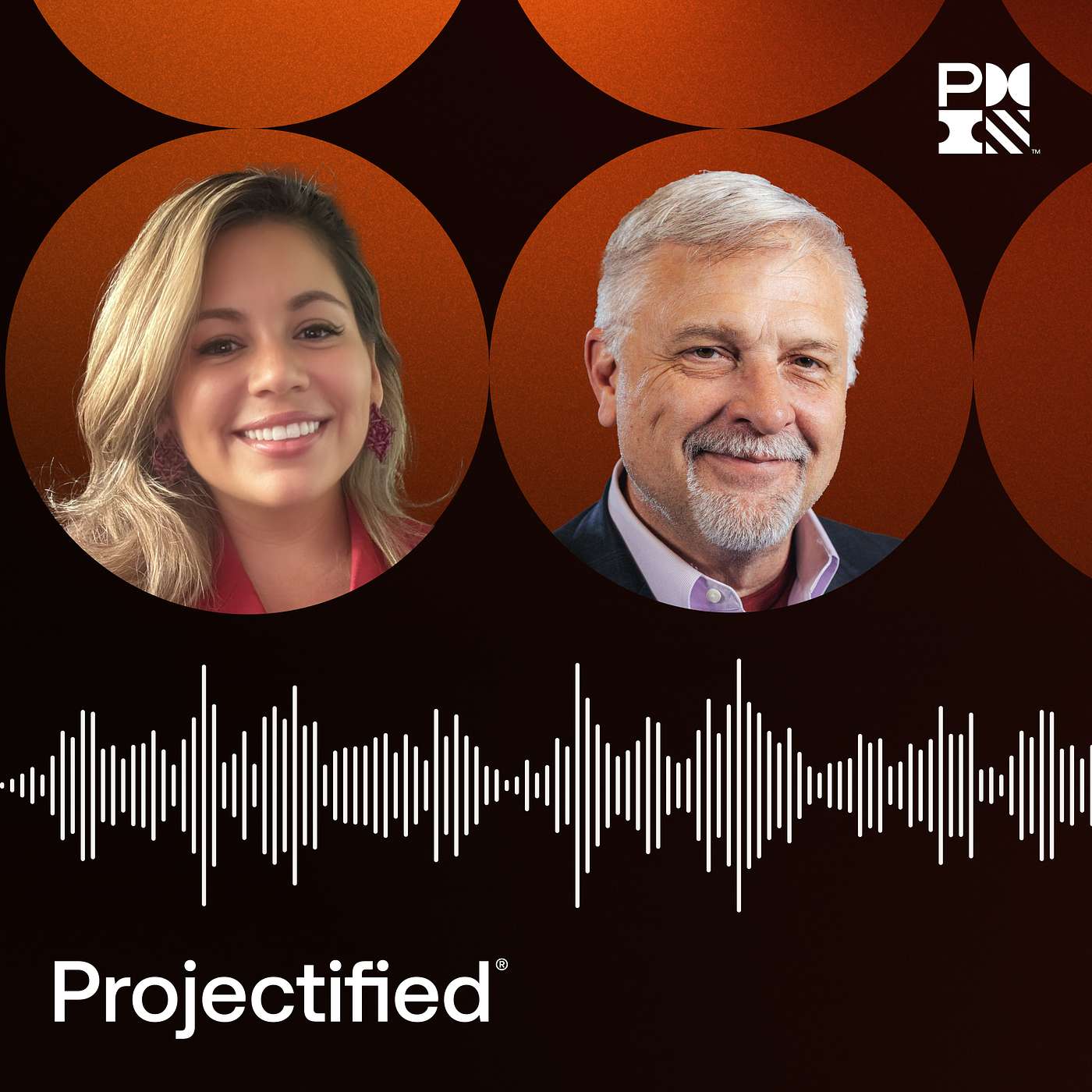
I’m joined by two project leaders with really fun jobs. We’ve got Liliana Gómez Castrejón, a project manager at The LEGO Group in Herning, Denmark, and Jim Digby, a project manager and tour and production director at Show Makers in Philadelphia, which produces events around the world. He’s toured with acts like LINKIN PARK, Genesis and Avril Lavigne. Both Lily and Jim have PMI’s PMP (Project Management Professional)® certification .
Lily and Jim, thanks for joining us.
JIM DIGBY
Thanks for having us, Steve.
LILY GÓMEZ CASTREJÓN
Thank you for inviting us.
STEVE HENDERSHOT
All right. I want to start by finding out how both of you got into project management and specifically into these really fun corners of project management. Lily, let’s start with you.
LILY GÓMEZ CASTREJÓN
Okay. Well, I realized I’ve been a project manager almost all my life. It started when with my family because my family has great ideas. They always want to do a lot of things—vacations, concerts, baby showers, birthdays—but they never had a plan. So I was always making the plan, making the vision board, making sure [of] the purpose and the theme, the resources, scheduling everything. And then in university, I studied industrial engineering, and when we had to make some tech projects, I was the one organizing the project, getting the procurement, making the timeline, and making sure everybody was doing all right, team building. So I realized I’ve always done it. But professionally, I started in logistics, and I was more supply chain managing. But then I looked at projects, and then it started interesting me.
STEVE HENDERSHOT
Okay, so 9-year-old Lily was making a risk register for vacations.
LILY GÓMEZ CASTREJÓN
Yes. The first time I let my parents plan the vacation, they didn’t book any hotels. We would go in the middle of the night looking at three hotels. They were fully booked. I was traumatized by that at 11 years old. So after that I took over the planning.
STEVE HENDERSHOT
And then what about LEGO? So somehow this career in logistics and then projects landed you at a really fun company?
LILY GÓMEZ CASTREJÓN
It was really lucky. Immediately when I moved to Denmark, I applied to LEGO, and LEGO was really starting to grow up a lot, so they were hiring a lot. And I started in engineering, so I was assisting projects, mainly building factories and especially traveling a lot from Denmark to Mexico to build a factory.
STEVE HENDERSHOT
And then Jim, why project management? How project management, and then you’re making a career in rock and roll?
JIM DIGBY
It’s interesting. It must be a common denominator for us because like Lily, I told my mom I wanted to be an architect when I was six or seven years old, and I wanted to have 12 carpenters and five plumbers and listed the teams that would be working around me as we built things. And somehow, here I am.
So I’ve always worked in the entertainment business one way or another. It was fifth grade, at 10 years old, when I had a teacher see me for the first time and offer me the opportunity to be the master of ceremonies for the May Day Parade and the technician, which equated to rolling out some speakers, I think at that time. And I was fortunate to grow up in an era when the arts were widely funded in school. And so that gave me a space to go learn the craft at that age and work on the stage at that age. And I happened to be very technically inclined. This technical aptitude led to some theater and arts work in the nightclub business, which led to a technical director role, a little bit of film school. And then I landed the first tour as a technical director, which led to Genesis and working for other musical artists and slowly journeyed up the food chain to stage manager and then production manager, which is the equivalent to project manager.
And then I found PMI and PMP late in my career, but embraced it wholeheartedly because it was, “Oh, geez. I’m already doing all these things, but now I know that there’s a process for them. Let me figure out what that looks like.” That’s how I landed here.
STEVE HENDERSHOT
That’s an interesting point of comparison. So you found your field first. What did you encounter that made you sense or intuit that the project management training or just that toolkit would be useful in the work you were doing?
JIM DIGBY
I was helping to produce the first ever live international concerts in Saudi Arabia. In the second year of that, 2019, there was a gentleman at the table in all of our meetings who was taking copious notes, and out of curiosity one day, I asked him what he was doing. And he told me that he was the project manager for PricewaterhouseCoopers on these government-led projects. And I’m like, “Well, what is that?” He gave me the understanding of what PMI and PMP was. I told him what I was doing, and he said, “You’re absolutely a project manager.”
If I were to try to take my skillset and describe it to someone else prior to PMP, I’d say things about my music touring and those experiences, and they might not translate at a corporate headquarters. But take all of those skills and turn that into PMP, and now suddenly it translates in a tremendous number of places.
STEVE HENDERSHOT
Lily, kind of an opposite path. You were already a project manager. What makes LEGO a unique environment in which to be a project leader, and how did your skills translate? In what ways were you challenged.
LILY GÓMEZ CASTREJÓN
LEGO is all about developing people and so on. So after a few months, they offered me, “Do you want to get [PMP] certified?” So I got certified, and it was eye-opening to get certified and learn a framework and also a logic. And yeah, it definitely made my life… not easier because work is always challenging. But yeah, it made me solve some problems easier.
STEVE HENDERSHOT
In what ways do you think project management skills, whether acquired through that PMI process or just generally through your career, [which] skills are most important to enabling you to be effective in your role?
LILY GÓMEZ CASTREJÓN
I will say it’s strategic leadership, also stakeholder management and communication management. Strategic [leadership] because we always need to look at the big picture and make a plan long term. Not compromise the long term for the short term, right?
And then stakeholder [management] was a game-changer for me because before having a framework, I will sometimes, I don’t know, forget to involve some people or forget to make a clear overview. After the training, I started to be very logical and also very visual. I always make visual stakeholder overviews. And yeah, make sure I didn’t forget anyone. And then the communication plans to know how we are going to communicate and for what reason. And if it’s [to] inform or if it’s also [to] consult decision makers, etc.
STEVE HENDERSHOT
Jim, how about you? What’s the project management skill or a couple of skills that are most useful to you?
JIM DIGBY
It’s a very loose industry that has very few requisites for anyone in the positions of authority. And therefore you see all manner of organizations and organisms operating the different artists on the road or operating the different events. But I find that stakeholder management and comms management have been significantly helpful for me. We hire a wide variety of human types, and we say, “Hey, today you are the carpenter,” or whatever the role might be. It’s 16-hour workdays in a lot of cases. So that scope document and being able to help people understand what’s expected of them and how to measure their own success and giving them North Stars has become a super helpful tool from the toolbox of PMI for sure.
STEVE HENDERSHOT
That’s a great segue into the next topic I wanted to broach, which is a challenge that you faced that was significant, and what the solution was? How PM (project management) discipline enabled you to get there?
JIM DIGBY
One of the greatest tools that I use consistently—and sometimes forget to use—is, as Lily said, it’s stakeholder management. And the responsibility [is] not just to manage the stakeholders down the ladder from you, but also to manage the management stakeholders and those up the ladder from you so that everyone has the information necessary to be a part of the project decisions. And who needs to be a part of those project decisions? Having a framework for that, which didn’t exist prior to my journey with PMI, having a framework for that has helped me to be more diligent and respectful and conscious that I have a need to pass information both up and down the food chain. And that has led to easier days.
STEVE HENDERSHOT
Yeah. Great. Lily, how about for you?
LILY GÓMEZ CASTREJÓN
Resource management, which I don’t like the title—I like to call it leadership—has been the biggest challenge. Because when I was junior and just got the (PMP) certification, I thought a lot about planning resources’ hours and aligning the resource availability and so on. And also my leadership style. Especially when I started first in engineering, I wanted to fit the traditional leadership styles that are more traditionally male-characteristic-oriented. And I didn’t feel natural. I didn’t feel strong in that. With the years, I decided to embrace more my authentic self, my leadership style, and it is very caring, very personal, and for me, it’s important that everybody feels good.
Trust is my main pillar, and that everybody plays and have fun, especially in my field of work. Well, our purpose is to create play experiences, so also when we work, I make sure we have fun and that we have opportunities for playing. Today I work in design, so I need to make sure that design teams are always inspired.
It’s not enough to have an organized project, organized resources and so on. We also need to go on inspirational trips. We need to make sharing sessions with other design teams or even with other organizations. We need to think out of the box and to play. And sometimes, when the teams are stuck, we just need to go for a walk and talk, and have a little play and get out of the office.
STEVE HENDERSHOT
So when I think LEGO, first, I think colorful and fun and playful and creative. But also it’s a company that has been around for many, many decades and probably had some ways of doing things. So when you did get in there and decide, “You know what? No, it’s time for a little Lily personality and vision and spark to come in,” was there any friction there? What did that look like to sort of make that change happen?
LILY GÓMEZ CASTREJÓN
It depends from team to team. So what I struggle [with] more is in the operational teams. It was a bit of a struggle because there is a way to make things. And now that I work in design, they are more risk-taking, but also because we create trust, right? What has made a shift in the Lily style, as you call it, is always opening up for opportunities. We follow in the design disciplines is a diamond. Diverge, converge. Diverge, converge. That is very, very important in our processes.
STEVE HENDERSHOT
You’re working with creatives, and just your own personal embrace of creativity. How does that affect the way that you lead both these particular teams and your philosophy on and approach to project management generally?
LILY GÓMEZ CASTREJÓN
I do project management with the scope, cost, quality, all the PMI framework. I need to do it, but the magic is to make it invisible because maybe it’s not so interesting for the creative teams. And on top of that, I need to make sure that they are stimulated, that they have spaces for creativity, innovation. It would be super normal to see me running around, preparing workshops with toys, with [LEGO] bricks, with different materials for inspiration or for some explorations that we want to do when we are opening up the funnel for innovation. I will also be organizing sharing sessions with other departments or with other external creative teams so we can share and learn and inspire each other.
JIM DIGBY
I think I’m going to bring LEGOs to the office. It sounds like a great opportunity to get people to remember to play, and it’s such an important thing to remember. I think we, Lily and I, share an interesting role as project managers in that we work in a space where the art form is collaborative. In my instance, you have the musicians, they write the music. They create the idea for what the sound is going to be, but then all of those supporting roles, of which I, mine is one. And in our case, there are a hundred or more on tour with us. In all of those supporting roles, we are all collaborative artists that help to execute the vision along the way. I could go through the list of team members and their scopes and say “You are an artist” to everyone on the team. The chef that cooks the food for us, the bus drivers, the truck drivers, every member of the team in our sense contributes to the delivery of the art.
And I think it sounds like LEGO does the same thing where everybody has a chance to have a voice and bring their vision to the table. And I think leading a team in that way where their artistic ideas see the light of day—and then potentially get actioned if they’re great—that too is an art form. And I think that’s what good project managers are doing on a day-to-day basis.
STEVE HENDERSHOT
What’s the coolest project that each of you have been a part of and helped to execute? I’ll wait for whoever’s the most excited to talk about theirs to go first.
JIM DIGBY
Lily.
LILY GÓMEZ CASTREJÓN
I’ve launched a lot of cool products, of course, and experiences and many things that always made me so proud. But of course I will choose something that I like, and for me, fashion is so important. So I was very excited when I was project manager for an all collaboration that we had with Adidas and Levi’s. So when we engage in a brand partnership to make fashion with Levi’s, [it’s] a lot of beanies, hoodies, and denim jacket with LEGO elements on it. And we made in-store activations.
And also with Adidas, a lot of shoes. I have a collection of like 10 pairs of shoes, Adidas by LEGO. For me, that was super cool because we had never done it before, and I really like going [through] innovation—things that we’ve never done, in the future, and then making it happen is very, very, very cool for me.
STEVE HENDERSHOT
Jim, how about you for a signature project?
JIM DIGBY
Building the LEGO Death Star. No. There’s this instant kind of gratification that comes on every show day when the house lights go out and the audience cheers and the band takes the stage. There’s a joy in that, and I think the human that I’ve become thrives on that instant gratification. The world of live gives you that sense of completion.
Coming full circle and bringing project management back to my most consistent client, LINKIN PARK—who I’ve been with for 24 years now—and being able to use those resources to ensure that this chapter of their career journey operates as efficiently as possible and has the healthiest mindsets on the team. And everyone throughout the stakeholder chain, top to bottom, is feeling respected and seen, and their work is being able to be accomplished in a manner that satisfies themselves as well as the needs of the artist. I don’t want to oversell it, but I’m blessed to have found PMI and to have been able to stitch together something that I was chaotically doing prior to project management in a way that I feel is, “Oh, okay. Now I understand why I’m doing what I’m doing.”
STEVE HENDERSHOT
What makes each of you most proud to be a project manager? This could be impact, it could be team, leadership, culture. Take your pick, but what are you most proud of?
JIM DIGBY
What we’re building is a healthy culture on tour, and that is a long, far cry from where the business has come from. And I’m most proud that, in the case of this current project I’m on. We’ve got a third of the team, it’s super young, under 30 years old. Some people are touring for the very first time. They’re in environments that are safe and healthy, and I believe they feel safe and secure. My RFPs go out to the vendors requesting, “Look, we are a safe environment for all types of humans. Please be creative and get us all types of humans.”
We do everything we can to demonstrate you are actually valued here. You are seen here. And in a lot of cases, it’s the first time. They love the business, but this is the first camp they’ve ever been in that feels safe for them, and they’re all growing. So as our team matures, it’s super satisfying to see people spread their own wings and become a better version of themselves or a more skilled version of themselves, and to see new opportunities open up for them and to see their confidence grow. That’s, for me, the most satisfying part of it.
LILY GÓMEZ CASTREJÓN
I have two layers to this. On the personal side, I’m proud to create play opportunities, right? And professionally, my purpose is to connect with people and to create spaces of trust, psychological safety, and also forming innovative environments, making sure we create spaces where we connect with different functions. Diverse creating environments where we are diverse teams coming together to create new ideas. I find that super stimulating, and I’m proud when we create ideas and we actually produce some innovation.
STEVE HENDERSHOT
Both of your jobs are so awesome. Thank you for walking us through both of them as we celebrate International Project Management Day. Yeah. Jim and Lily, thanks again so much for joining us.
JIM DIGBY
Thanks, Steve. It’s been a pleasure.
LILY GÓMEZ CASTREJÓN
Thank you, Steve.
STEVE HENDERSHOT
Thanks for joining us. Like the episode? Subscribe to Projectified on your favorite podcast platform and leave us a rating or review. Your feedback matters a lot—it helps us get the support we need to continue making this show. And be sure to visit us online at PMI.org/podcast , where you’ll find the full transcripts for episodes as well as links to related content, like useful tools and templates, the latest research reports, and more. See you next time!
Transcript supplied by the publisher with the episode.
by Project Management Institute · English · Business
Projectified[R] is your guide to the future of project management. Created by Project Management Institute, this podcast is for people who lead strategic initiatives and collaborate on teams to deliver value to their organizations. It features dynamic thought leaders and practitioners who share thei
S8 · E14 · 17 Dec 2025 · 28 min
Gigaprojects aren’t hard to spot: deep complexity, massive stakeholder groups, wildly ambitious scopes and a major boost to national economies. We discuss two gigaprojects with: Ryan Banas, project director for the Hampton Roads Bridge-Tunnel expansion project and VP at HNTB in Norfolk, Virginia, USA; and Chris Hall, district engineer at the Virginia Department of Transportation in Hampton, Virginia, USA: Banas and Hall discuss how their teams prepared for the years-long bridge and tunn...

S8 · E13 · 3 Dec 2025 · 19 min
Success is in the eyes of the beholder. For projects, that means winning over the top decision makers in the C-suite. How can project management office leaders best share project progress with executives? How can you better engage the C-suite to manage their POVs? We discuss this with Douglas Pulini, PMP, PMI-PMOCP, head of the strategic management office at SPC Brasil in São Paulo, and Stephan Wohlfahrt, PMI-ACP, DAVSC, PMP, head of the project management office at Bosch Mobility in Stuttgar...
S8 · E12 · 19 Nov 2025 · 18 min
Every project—no matter the sector or region—can be led and managed more sustainably. How can project professionals gain executive buy-in for sustainability efforts? How have they put environmental and social responsibility front and center in their work? And how can other project leaders further develop their knowledge of sustainability in their sectors? We discuss this with Pratik Mishra, PMP, senior strategic portfolio manager at Zalando in Berlin, and Michael Mylonas, GPM-b, PMP, director...
S8 · E10 · 15 Oct 2025 · 19 min
Projects and products are becoming increasingly entwined. That ramps up the need to build greater collaboration between project managers and product managers. What’s similar—and different—about the roles? What strategies can you use to boost collaboration? And how does agile help everyone stay aligned? We get insights and tips from Adam Motiwala, a product manager at Google in Irvine, California in the United States, and Meg Sawachi, PMI-ACP, PMP, a senior project manager at GlobalLogic...
S8 · E9 · 17 Sep 2025 · 23 min
Iterating has become the business norm—but project teams are struggling to keep up with the relentless pace of change. How can change management professionals and project leaders help? We discuss this with: Sharon Casey, director, change management, Adobe, Austin, Texas, USA: Casey discusses how the persistent pace of change is affecting project teams and contributes to change fatigue. She also explains how change practitioners can support project professionals and teams going through c...
S8 · E8 · 13 Aug 2025 · 20 min
As geopolitical volatility reigns, organizations must increasingly anticipate, assess and manage the risks that come in such a complex project environment. How is this turbulence affecting project leaders? How are they incorporating geostrategy into their risk management processes? We discuss this with: Heather Buchanan, PMI-RMP, PMP, supply chain project manager, Canada Goose, Toronto: She discusses how geopolitical volatility’s impact extends beyond the triple constraint. She explains...
S10 · E2 · 16 Sep 2026 · 27 min
Many organizations have sustainability goals, but turning them into project decisions is where the work gets harder. How can project professionals build sustainability into requirements and design before options narrow? How should they weigh cost, schedule, quality and long-term value when priorities compete? And what changes when stakeholder trust or new information requires a different path? We discuss this with Preston Welker, PMP, global climate program and operations lead at The Nature C...
S10 · E1 · 19 Aug 2026 · 25 min
Career growth doesn’t always come with a new title or a move to a new organization. So how can project professionals keep building momentum when a promotion or outside opportunity isn’t immediately available? Which human skills matter most as AI takes on more coordination work? How can professionals create opportunities, track their impact, and build visibility without sounding self-promotional? And how do they know when staying put is still helping them grow and when it may be time to move o...
S9 · E4 · 18 Mar 2026 · 22 min
Project professionals know anticipating the need to pivot is a mainstay on any project. But what warning signs should you look out for? How can project managers identify them? And how should you inform the C-suite of major red flags? We discuss this with Mary Hladio, PMP, senior productivity and program leader at GE Aerospace in Grand Rapids, Michigan, USA, and Franziska Höhne, PMP, project manager for international internal auditing at ALDI in Essen, Germany. Key themes 01:25 Sp...
S9 · E3 · 18 Feb 2026 · 22 min
Today’s project professionals are feeling the pressure. And when they don’t manage it well, it could steamroll into full-fledged burnout. What’s the difference between burnout and regular stress? How can burnout effect project outcomes? What early warning signs might show that you or your teams on are the verge of burnout? And what can project leaders do to reset and recharge? We discuss this with Michele Badie, PMP, CPMAI, a program manager in Charlotte, North Carolina, USA, and Valerie Carm...

The Melo app keeps playing with the screen off, works in the car and on your watch, wakes you to your station, and browses the whole catalogue offline. Free, no ads, no account.