
Episode · Straight Talk with Mark Bouris
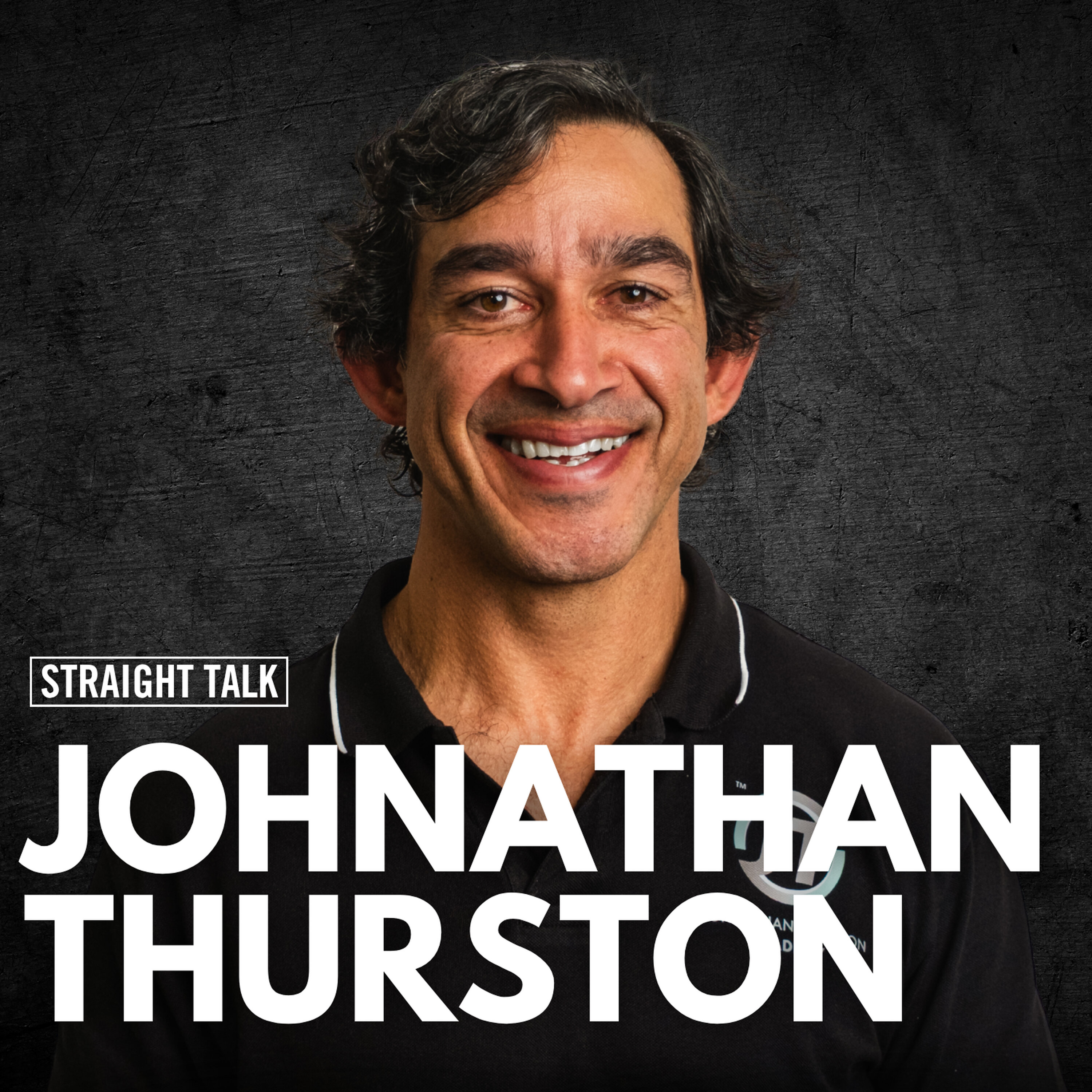
Johnathan Thurston "I was going down the wrong path": The Decision That Changed My Life
13 Sep 2026 · 1 hr 11 min
Episode · Straight Talk with Mark Bouris
13 Sep 2026 · 1 hr 11 min
Johnathan Thurston didn't make the Broncos academy as a kid — and that rejection lit a fire that carried him to four Dally M Medals, three Golden Boots, and the most iconic grand final moment in NRL history. But this conversation goes well beyond football. JT breaks down the chess match inside rugby league in a way you've never heard before — body language reads, defensive line manipulation, kicking routines under grand final pressure. And then he talks about the work he's doing now, pulling kids away from the justice system and back into school, one program at a time. This is…
Speaker 1:Jonathan Thurston. That's it.
Speaker 2:That's done everything. Straight up.
Speaker 1:Welcome to Straight Talk, mate.
Speaker 2:Thanks for having me. It's a huge opportunity and I'm extremely grateful.
Speaker 1:I'm just, I'm not sure how my audience is going to take me sitting here talking to a Queensland legend, but anyway, don't worry.
Speaker 2:I'm one of the good ones. For Queensland, you definitely were good. Too bloody good.
Speaker 1:No, mate, I appreciate being here. It's an awesome opportunity. Now, Want to get to know Jonathan Thurston, though, much better. So were you actually born in Queensland? Because a lot of Queenslanders aren't born in Queensland. Were you actually born in Queensland?
Speaker 2:I was. I was born in Brisbane. Yep. Spent most of my life there. My mum's a proud Goongaroo woman and bidger.
Speaker 1:Which part of Brisbane is that?
Speaker 2:No, so that's from Mitchell. So that's about eight hours west of Brisbane. Wow. So that's where she grew up on a little yumber out there. So she's one of 13. 13? Yes, one of 13. She's pretty much the matriarch of the family. Her older brother, she's the second eldest. So I grew up in a loving household. My dad's from New Zealand. I don't tell anyone that. Whoa.
Speaker 1:But he's a New Zealander?
Speaker 2:Yeah, dad's a Pakeha. White guy? Pakeha, yeah, Pakeha. So he come over in the late 70s, met mum. Uh, around then had me in 83, uh, grew up in Brisbane, uh, with my other brother. Um. There's just two of you? Yes. Well, dad's got a daughter from his previous relationship and mom's got a son from her previous relationship.
Speaker 1:And then there's you and your brother.
Speaker 2:Me and my brother. Yep. Shane.
Speaker 1:But the same mom and dad? Yes.
Speaker 2:Yeah. Okay. Yep.
Speaker 1:So it's basically four kids, but two of your biological brothers and sisters.
Speaker 2:Yeah. On Blackfella Talk, we're just brothers and sisters.
Speaker 1:A hundred percent.
Speaker 2:Same with Whitefella Talk, mate.
Speaker 1:We're brothers and sisters. But I just want to understand the biology. So is your brother your.
Speaker 2:Yes, both of my older brother and older sister from my mum and dad's previous relationship.
Speaker 1:And your younger brother.
Speaker 2:Yeah.
Speaker 1:And was everybody sort of talented at sport?
Speaker 2:They gave it a go, but yeah, I think I was the only one that, Yeah, loved rugby league. I grew up in a rugby league. Mum's got nine brothers, so they were always playing cricket or footy with me in the backyard. So I had a lot of family living at home as well.
Speaker 1:Where did you go to school?
Speaker 2:So I went to Casey Ridge Primary School and then I did year eight and nine at Salisbury State High. And then grade 10, that merged with another school and became Nyanda.
Speaker 1:But you didn't go to one of the sporting schools?
Speaker 2:No, no, no. So through my teenage years early on, I sort of fell out of love with the game.
Speaker 1:Oh, really?
Speaker 2:Yeah. So if you're half decent in Brisbane, you're contracted scholarship to the Broncos. And when I was playing against other teams, they weren't coming to the game in their team outfit. They were coming in their Broncos track suit. I'd be looking at them going, thinking to myself, I'm going to school you this game. Like, I'm going to put you on show. And that was always my mindset because I was like, where's my Broncos track suit?
Speaker 1:Were you filthy?
Speaker 2:Oh, that was 30 years ago and I'm still filthy.
Speaker 1:That's why Queensland do so well instead of Orange. You just can't let it go, can you?
Speaker 2:No, no.
Speaker 1:Don't score a point on me.
Speaker 2:I'm going to get you. So I always had a chip on my shoulder when I was playing. And then, yeah, sort of fell out of love because I was like, oh, I'm not going to go anywhere. Started going down the wrong path as well, making some poor choices.
Speaker 1:With the wrong friends?
Speaker 2:Yeah, I'm still mates with those boys today. Yep. But I had to make a decision. One of my uncles used to referee, knew the principal of St. Mary's College, which is in Toowoomba. So I got an opportunity to go up there to do year 11 and 12. And at the start of year 10, the interview went well until they seen my report card. They said, you can't come to a school like this with a report card like that. They said, if you want to go back to school in Brisbane, come back at the end of year 10 and we'll have another interview and see if you really want to come. So that was probably the first time I understood the power of my mind when I put my mind to it, what I wanted to achieve.
Speaker 2:And I had to make a decision. So I sort of removed myself from the boys that I was hanging around because we were always disrupted. I got suspended a couple of times. And Yeah. Moved to the front of the class. Oh, really? Copped a fair bit of shit for it, as you could imagine.
Speaker 1:Yeah, yeah.
Speaker 2:And mid-90s. And then, yeah, started to put a little bit of effort into my studies. I was never an A-type student, but yeah, it was probably the first time I'd seen the inside of a library too. So I got my grades to a satisfactory level.
Speaker 1:What do you put it down to though? What do you put down to that change in attitude? Like, mom, dad, brothers.
Speaker 2:Yeah, like I had a great support network around me to break that cycle that I was going down. And this was an opportunity to go to a rugby league school to try and, you know, crack it. Like, you know, I threw all my eggs in the one basket. I didn't have a plan B. And yeah, so I was like, all right, if I really want to have a crack at rugby league, this is the path that I need to go down. So they're the choices that I made.
Speaker 1:And that's pretty mature though for what you were 16, 17 or something.
Speaker 2:Yeah. 15, 15. So yeah. Yup. And it took a lot of confidence, uh, took a lot of courage and belief in myself to be able to do that. So, um, yeah, went back at the end of year 10 and they accepted me for year 11 and 12. And yeah, they were probably the two best years of my schooling, uh, at that school. It's an all boys school, a rugby league school. And, I created a lot of great friendships, still great mates with those boys and those families that I lived with back then. So, yeah, that was a really turning point in my life because I was either going down the wrong path or I was throwing all my eggs in the basket with rugby league.
Speaker 1:That's just– that's sort of fairly mature decision-making for a 15-year-old to say, you know what, I'm probably not going down the right direction here. Or I got some skills which I should have made better use of. Yeah. And maybe another way of putting it. Because it's not to say, you know, those kids hanging around with going down the wrong path. I mean, they're all sort of value judgments and sort of ethical issues. And sometimes we probably shouldn't judge the reasons or the things that people do because they do them for various reasons. And they're maybe not as lucky as you. Maybe didn't have as good a back family as you or perhaps, or maybe no one actually brought it to their attention. But the point being is, what you just said is making, taking better advantage of whatever skills you had and optimizing.
Speaker 2:Yeah.
Speaker 1:And recognizing it.
Speaker 2:Yeah. So yeah, I remember the drive from Toowoomba to Brisbane and my uncle was grilling me. What about? I just, you know, like you got an opportunity here to do something with your life. So I was sort of, Pretty handy as a footballer at that age. But when I was not making rep sides, I was dinting my confidence and, you know, seeing the other boys that I thought I was, you know, better at that age, getting those Broncos scholarships, that was– yeah, that was– Why didn't you get one?
Speaker 2:What do you reckon? You'll have to ask the Broncos that.
Speaker 1:No, but what do you think in hindsight?
Speaker 2:Well, I always got– The boys are going to drill me for this too. But, you know, I was always the smallest in the team and had this– you know, I couldn't tackle, you know, all that type of stuff.
Speaker 1:They would say that.
Speaker 2:Yeah. So I always had that hanging over my head as well. So, you know, and I was never the biggest or the strongest, but I thought I had pretty good technique to bring players down. So, yeah, it was disheartening at the time, but, again, it just– It gave me a bit more resilience and a bit more determination to go. Having that chip on my shoulder was like, all right, when I played against these boys that were wearing those tracksuits, it was me or them, and that was my mindset.
Speaker 1:Would you say you had a chip on your shoulder or you were just fully competitive?
Speaker 2:Uh, both fully, like I am fully competitive. Um, and you know, naturally, naturally. Yep. Yep. So, you know, I remember as a child playing in the backyard, uh, with my uncles and if they were beating me, I'd get the shits and start crying and run into mom, you know, they're playing too hard and rough and, Mum goes, don't come in here complaining. Get back out there and play.
Speaker 1:Tough love.
Speaker 2:Go back out and, yeah, keep playing. So, yeah, I just hated losing. I just couldn't stand losing. We'd lose a match and I'd be bawling my eyes out because I couldn't stand that feeling.
Speaker 1:It's funny, you know, and I just want to just bring it forward a little bit. When I go to a game... And sometimes I get to go down the sheds, particularly when I used to sponsor Origin. If you're in a losing team, one of the things I observed in the room after the game, particularly at Origin, it was like someone.
Speaker 2:Had just passed away.
Speaker 1:It was like the difference between winning and losing, the vibe in the room, like it's mental. Like I got a shock in my life. And I used to think to myself, and if I looked around the room and I saw somebody who wasn't that down on it, upset about it. I used to think to myself, but whereas the rest, I used to think to myself, there's a major difference and maybe that's the reason we did lose is because you're one or two players who aren't thinking it's a really big deal to lose. Like some players, it's okay, it's just a game of football.
Speaker 2:Yeah.
Speaker 1:The best players, there's no such thing.
Speaker 2:Yeah. No, definitely not. Like I said, and I've had that since I was a child.
Speaker 1:And is that something you've experienced later on in your life with other blokes, other great players?
Speaker 2:Yeah. Yep, yep, yep. And I remember when I got to the Cowboys– you know, we lose and I'd still be kicking stones, you know, four or five days afterwards and we're preparing for another match and Ty Williams actually chipped me. He was like, mate, fucking let it go. We play this weekend, you know, it happened. So then, and I was the skipper at that time too. So I was like, oh yeah, he's right. You know, like I need to be setting an example. Yes, I'm disappointed and I hate losing, but You know, you've got to learn from that and then, you know, analyze your own game, why, you know, you didn't play well or why the team didn't play well. And then, you know, you need to be able to squash that and then try and move on quickly to the next. But yeah, origin, kangaroos, like you said, it's like someone's passed away when you lose because those games, there's a bigger purpose, right? There's a higher purpose.
Speaker 1:It's funny you should say that. It definitely is a high purpose. It's like Queensland. It's Queensland's purpose.
Speaker 2:Yeah.
Speaker 1:In your case, whereas New South Wales, you know, purpose in a New South Wales, Walsham's case.
Speaker 2:Yeah.
Speaker 1:And it's when you don't have that purpose and why Queensland, I mean, you had a great, the squad you were in were an amazing squad, like man for man. And also as a squad, you all coordinated extremely well for a long period of time. But still, you played for Queensland.
Speaker 2:Yeah.
Speaker 1:And it's a thing. You know what I mean? And New South Wales, when I say we, New South Wales is starting to work on that process to become similar to that. But Queensland used to play right to the very end. They'd never, ever give up. I remember Gus used to tell me when he was a coach in the New South Wales side, he said, Queensland never stopped. You can be winning, but they'll just keep going and keep going because there is a greater purpose.
Speaker 2:100%.
Speaker 1:It's not just about you playing well. It's I'm playing for a greater reason.
Speaker 2:Yep.
Speaker 1:Every player.
Speaker 2:And that's what's so great about that game in the State of Origin series, right? Because, you know, and we've had it at times where New South Wales has done a Queenslander on us, you know, where they've won the game in the last couple of seconds through a try or try saving tackle, you know, and as you said, there's a high purpose. That's why people love it. It's a tribe. It's very tribal origin. And yeah, the way that it's going, It's, yeah, it's a beast.
Speaker 1:If I could ask you a sort of advisory question. You're sitting in the sheds after the game. Coach, as you know, normally addresses the game a little bit. Mostly they say something. Sometimes they kick the shit out of the door and walk out.
Speaker 2:We've seen that.
Speaker 1:But they just say the coach tries to be sensible.
Speaker 2:How sensitive.
Speaker 1:players, given there's a turnaround of five, six days before they play the next week because they can't afford to lose the next week, they've got to win again. How sensitive does a coach have to be to the players' feelings so that they don't feel like they're losers by saying how shit they were? I mean, how does that work in a player's head?
Speaker 2:Yeah, you've got to be very articulate with the way that you communicate with players these days. You know, I was always the one where like just hit me between the eyes with it. All right. So I know where I need to be better. Yeah. Be it around the bush. Um, you know, if I made them an error, um, you know, I'll own up to that. And that's always been how.
Speaker 1:What about his attitude with shit? If, if it looked like you just didn't put in, would you cop it? They said, well, you didn't put up.
Speaker 2:No, like as a leader and as a skipper, like if there's people that you know, aren't just going through the motions, um, They're the conversations that you need to know and need to be able to have.
Speaker 1:Would you have it on the side though? Would you call it on the side?
Speaker 2:Yeah. Well, in that team environment, there's different players that connect with different players. So you'll have a leadership group in that team. So if I didn't get along well or if I– didn't have a close relationship with one of the boys, I would lean on one of my leadership group or go, Hey, you know, have you been noticing this? Yeah. Yeah. I said, well, just have a quiet conversation to him on the, on the side and just let him know that, you know, we're all rowing in the same direction here. And we've noticed some, a couple of things, you know, with the attitude. So is there something going on outside of footy? You know, talk to us so that we know that, you know, cause we don't know what's going on in the home life when they leave. So that might be a, Attributing to why they're coming in and doing what they're doing. Or not doing. Or not doing. Exactly right. But I was always the person that I could leave anything at the door as soon as I walked in because that was my focus.
Speaker 1:Because we do see some coaches who don't articulate and they actually lose it. And we know that.
Speaker 2:It's an under pressure environment.
Speaker 1:Because they're under pressure.
Speaker 2:Yeah, 100%. And it's a results driven business, right? Yeah. Yep. So- Everyone wants to win and you've got to be very articulate with the way that you communicate with the players.
Speaker 1:Do you think they're more sensitive now?
Speaker 2:I do. Yeah, yeah, yeah. Yeah, definitely. You know, and I remember when I first come through at the Dogs, you know, like I wouldn't say boo to the first grade team, you know, like– I'd be too scared to say hello to them because there was just this hierarchy, right? And you had to earn your stripes where, you know, the under-20s boys, when that competition was coming in and then, you know, they'd come in and get their spots and they'd be good banter. But, you know, it was like, you're too old. Like, you know, they're giving it to you.
Speaker 2:I'm like, oi.
Speaker 1:But that was how you would receive it?
Speaker 2:Yeah.
Speaker 1:Stuff you?
Speaker 2:Yeah, yeah, yeah. Yeah, so, you know, they've got a lot more confidence these days to have that banter with the older blokes where when, yeah, you know, I'll come through in the early 2000s and, you know, they were hard heads.
Speaker 1:It was actual hierarchy.
Speaker 2:Yeah, actual hierarchy, right? So there was no– Leadership group, there was no– it was a skipper and you earned your stripes. You know, the rep players, they're the ones that were making the decisions and putting you in your place.
Speaker 1:Did you ever feel like, well, hang on, like maybe I haven't been here long enough, but I reckon I could just– I could match up with that particular individual if I needed to. But did you have to bite your tongue?
Speaker 2:Yeah, yeah, yeah. So my greatest strength was my fitness.
Speaker 1:Oh, wow. Super fit.
Speaker 2:Yep, yep.
Speaker 1:Naturally or do you?
Speaker 2:Yeah, yep, yep. So when I got to the dogs, it was that like I was coming into a team that was already based in the early days. Ricky Stewart was our coach. So how am I going to crack this team? And they trained hard and all. Yeah, I would eat that training up and lead everything.
Speaker 1:We're talking like beep tests and stuff like that?
Speaker 2:Beep tests, yep. You'd tell them up? I was like, yeah, yep. Every training session that we did with fitness, I would be leading the pack. That was my way of going, you know, I'm here to.
Speaker 1:Was that a strategy though? Was that something that Jonathan thought, well, that's the way I'm going to do it?
Speaker 2:Well, because I come down through halfway through the year, so the Jersey flag team was already picked. So it was a train and trial. So this was my one and only shot at, you know, getting a contract. And yeah, so that was, like I said, my strength was my fitness and any fitness that we did, I would win that.
Speaker 1:I'm always curious to know how someone builds up that level of fitness. I mean, I love the boxing world and one of my greatest fighters that I've ever watched and I still love, watching his old fights with Jeff Vannick. And he was probably the fittest boxer in history. Maybe not the most skilled, certainly the most courageous and the maddest. You couldn't knock him out. But he was definitely the fittest. Definitely the fittest. And I'd say today there's no one ever been fitter than him in boxing. And it was his strength. It was his strategy. His strategy was to be that person.
Speaker 2:Yeah, well, I found the fitter you are in high-pressure situations, the calmer you are. That's interesting.
Speaker 1:You found that for yourself. Yep. So if your fitness dropped off, you would not be as calm.
Speaker 2:Well, if your heart rate's going through the roof, you need to be able to think slow.
Speaker 1:That's very interesting because, you know, it's funny you should say that, John, because scientifically, if you're heart rate's going fast is usually because your adrenaline and your cortisol is out of control. And what that does is it shuts down the front part of your brain where you make decisions because it's just.
Speaker 2:Fight or flight. Yeah.
Speaker 1:I'm either going to fight or I'm going to run.
Speaker 2:Yeah.
Speaker 1:I'm going to get out of here. And no decision making. In fact, your whole digestion stops. If you have food and something like this happens, your body stops digesting food.
Speaker 2:Yeah. So you're right.
Speaker 1:That makes sense. A hundred percent makes sense. So we're going back, how old.
Speaker 2:Are you now? 53.
Speaker 1:So, but if we go, we're going back to 30, 20 odd years, you knew that then that if I I could make sure that my fitness was such that my heart wasn't jumping out of my chest, I can make better decisions on the field, better judgments.
Speaker 2:Yeah, 100%. You can. Yeah. So that was always.
Speaker 1:My- That's in FLEG. That's a FLEG. What was FLEG then? 18? 12?
Speaker 2:12? I think it might have been under 21s. 21s was, yeah.
Speaker 1:They kept changing around. So you came in and played flag halfway during the season. Teams already picked.
Speaker 2:Yep.
Speaker 1:But you're backing yourself to be fitter than everybody else on the side.
Speaker 2:Yep.
Speaker 1:Were you already– training to be, before you came down, were you already super fit?
Speaker 2:Yeah, yep, yep. So I was playing local A grade when I was at high school in Toowoomba and playing against grown men at that age, it accelerated my ability to move. Yeah, because you're going to get out of the way.
Speaker 1:Because if they grab hold of you, they're going to bilge you.
Speaker 2:Yeah.
Speaker 1:Especially at A grade then.
Speaker 2:Yeah, that was a really strong competition in the late 90s there. So yeah, that taught me a lot. And then, yeah, getting down to Canterbury, I was like, all right, this is my opportunity. So I was never the strongest, but my strength was my fitness. So I used that and always found that being the half, you have to be the fittest because you're the one that's making the decisions in high-pressure moments. Yeah, you're touching the ball the most. You're touching the ball the most. Other than the dummy half.
Speaker 2:And your teammates get you in a position to ice the game or close out the game. And, you know, through experience, you know, that keeps evolving. But, yeah, you see things happening before it does.
Speaker 1:How long did you stay in FLEG for?
Speaker 2:Well, I played a few games and then started playing reserve grade. I sit on the bench for reserve grade. And then, yeah, we won the FLEG grand final in 2001.
Speaker 1:Do you remember your first game of first grade?
Speaker 2:I do, yeah, against Penrith, out at Penrith.
Speaker 1:Who was in your side then?
Speaker 2:Willie? Mason, yeah, Braith, Nigel Vungana, Woolly Talal. Good side. Adam Parry, Marco Mealy, Bob Cutt, Steve Price. Oh, great side. Steve Reardon. Great side. Yeah. I was just playing with all these, like, proper hard nuts. Yeah. Like, you know, and, yep. And, yeah, it was nerve-wracking, but. You know, that was my dream, right? It was my dream to play in the NRL and achieve that. And then you set new goals and you just keep going forward.
Speaker 1:Were you nervous?
Speaker 2:Yeah, yeah, yeah, yeah. The boys that I was playing with made me relax because, you know, they were an extremely strong side. And, yeah, so.
Speaker 1:Who was coach?
Speaker 2:Steve Folks. Folksy. Yep, yep. So, you know, Joe Nulliver was there. Pull a tour. That's a pretty solid tour. Yeah, and those two boys were just running at me the whole time. But, yeah, it was a great experience.
Speaker 1:You went on from Canterbury and played for North Queensland, for the Cowboys. You're moving out of– well, what was it like, by the way, I should ask you this one, to come from Brisbane to live in– where were you living when you came down to play for the Dogs?
Speaker 2:Belmore.
Speaker 1:Belmore, okay. So you're right in the middle of it. So you're living in Belmore. So you've gone from Brisbane out to Toowoomba, back to Brisbane, perhaps. So down to Belmore.
Speaker 2:Down to Belmore, yes.
Speaker 1:And were you living by yourself?
Speaker 2:No, I was in the Bulldogs' house. Oh, yeah, okay.
Speaker 1:They got joined there, yeah.
Speaker 2:Yeah, yep. So Roy Asatasi, Jason Williams, Ben Harris, Sonny Bill Williams, Nate Miles.
Speaker 1:Oh, you were the SPWs on that side?
Speaker 2:Yeah, yep, yep. So it was a great house to be in with Pete and Mary, the caretakers there. And yeah, it was good fun.
Speaker 1:And you're living in Sydney and playing for the Canterbury Bank Centre, playing for the Dogs, and then you move from Sydney, though, from Belmore to Townsville.
Speaker 2:To Townsville, yeah.
Speaker 1:That's a big change.
Speaker 2:Yeah. Not as big as the one moving from Toowoomba to Belmore. You know, and I really enjoyed my time there, and I didn't want to leave. But, you know, they threw all their eggs in the basket with Braith and Brent Sherwin at the time. And also.
Speaker 1:How did you feel about that?
Speaker 2:I thought I was good enough to cement a spot there. But, yeah, you know, folks, when I had the conversation with him, you know, he said, we can't match what the Cowboys are doing, have given you. So he pretty much said, you know, you've got to take that because we don't have a spot here for you.
Speaker 1:Do you think it was salary cap related or.
Speaker 2:Well, I think it was just more... That day through the eggs and with, you know, Braithwaite was playing for Australia at the time. Brenton just signed a five-year deal. I think he was the first ever. So that was their path. And also I probably had to get out of Sydney as well. The bright lights. Two for one. Yeah. Yep. Yep. So, and I, at that stage, you know, I only played, When I left, I think 28 first grade games over three years. And that was due to injuries and being in and out of first grade and whatnot. But I wanted the keys to the team.
Speaker 1:To run the team.
Speaker 2:To run the game. Yeah. And going to Townsville to the Cowboys, that was the opportunity for me to do that.
Speaker 1:Have you kept mates with all those Canterbury guys?
Speaker 2:Yeah, there's a group of them that I'm really close to. So I'm still in touch. I'm obviously... um you know won the 2004 grand final with those boys as well so i remember the game create a special bond i.
Speaker 1:Remember it i was there i was at that game.
Speaker 2:Sorry i remember.
Speaker 1:And uh yeah i remember well actually um i think hojo was playing for us actually hojo was on the bench yeah yeah we put the end of going on the bench but uh sunny was sort of telling us up a fair bit yes i remember the game uh I remember I was sitting there and I was sitting, I was with Nick Ployser, sitting on the tunnel, right on the edge of the tunnel where the tunnel is there at Ackle. And across from me was the Bulldog supporters. And they recognized that I can't, some recognized me and they knew that I grew up in the area. And they all give me so much shit about being a Rooster supporter.
Speaker 2:Oh my God.
Speaker 1:It was full on, full on. And then I thought it got a bit heavy, you know. I thought it was going to be, you know, I yelled out something to somebody, said.
Speaker 2:Something to the lightest, whatever. Very passionate.
Speaker 1:And I thought this is going to turn to something. So I thought I better look for the security guy. And I turn around and the security guy is a bloke I knew from the suburbs. Mate, he couldn't, he wouldn't hurt a baloonish. Like he wouldn't hurt anything. Like he was like, I'm looking at him and I'm like, oh my God, you're not the guy who's going to look after this situation, eh? But that was a great game.
Speaker 2:That was a great game. Amazing. Yeah, like that.
Speaker 1:Ricky was our coach.
Speaker 2:Yeah, yeah. Well, he coached me in Flick Sticky in 2001, then went to the Roosters.
Speaker 1:What did someone like you learn from someone like then, when you were just a young guy, from someone like Ricky Stewart? Who's a halfback, of course.
Speaker 2:Yeah, yeah. Well, I was a Canberra Raiders supporter growing up. Oh, really? Yeah.
Speaker 1:So you would have loved him.
Speaker 2:Oh, yeah. I was fangirling.
Speaker 1:But he's always giving everyone shit. Yeah, well, he– yeah, they reckon– In the game or something?
Speaker 2:In the game, yeah. He was very chirpy.
Speaker 1:Talking to the front rowers, saying, you know, you look like a big girl.
Speaker 2:Or something like that. Yeah, he was very good sledging. Good sledger.
Speaker 1:Did you sledge?
Speaker 2:No, not really. Not really. If someone poked me, yes. But, you know, I was never one to go out there and try and sledge people to get them off their game.
Speaker 1:That's what his thing was.
Speaker 2:Yeah, yep. See, I was too focused on what I needed to do for the team, so. Um, there were opportunities.
Speaker 1:But what did you learn for someone like him in terms of, well, he's an unbelievable competitor.
Speaker 2:Yeah.
Speaker 1:Crazy.
Speaker 2:Yep. Yeah. A lot. Um, you know, his passing game was, you know, the big spirals as well. Like a rugby union stock pass. Yeah. Yep. Yep. So, um, but just his attention to detail, uh, with the game as well. So, um, Analytically, you mean? Yeah, yep, yep, yep. So that's when all the computers started to come out where you can start watching your own game on the computers. Before then, it was the VHS. Yeah. So, yeah, sitting down with him and going through your game, you're learning a lot, right, because he's obviously experienced the highest level. So, yeah, my knowledge certainly grew. about rugby league with the time that I had with him.
Speaker 1:And your approach to the game in terms of being more analytical, do you think that was something you enjoyed?
Speaker 2:Yeah, yeah. Well, that's what I also loved about the game. Like, it was, I enjoyed manipulating the defensive lines. Like, that's what I really liked.
Speaker 1:So you would study the defensive line of your opposition and then you would manipulate that?
Speaker 2:Yep, yep. So you're trying to get players outside of their comfort zone on the field, right? So you're trying to get, you know, front rollers on the short side that you can take them on with your speed. You're trying to, you know, attack a third man out late, um, back and behind the ruck or, you know, as a half, you know, you're watching what, you know, the halfback is doing, the defensive halfback's doing, whether he's sitting in the seat and you're watching what the center's doing, whether he's in a starting position to pull the trigger and try and jam.
Speaker 2:And then you're also watching what the wing is doing. So, and then when you get down to that part of it, you're trying to set them up to catch them out. So, you know, I'd play short into the back row to get the half sitting in the seat. Oh, the center jammed then. All right, let's get back to that same field position and put that same play on and see if he jams again. He's jammed again. So you go straight across the face of the fullback and hit the center.
Speaker 2:And then it's a two-on-one with the winger.
Speaker 1:That's a pretty intense thought process. That's just one example, but that's pretty intense. That was in your playbook.
Speaker 2:Well, that's what I loved about it. So, yeah, that's... That was just.
Speaker 1:One aspect of your playbook.
Speaker 2:Yeah, yep, yep.
Speaker 1:Would you watch their faces too? Are you looking for a tie?
Speaker 2:More their body language.
Speaker 1:Yeah.
Speaker 2:So, like if the halfback's got his weight on his outside foot, then... you know that he's going to have a weak inside shoulder tackle. Wow. So when you go into the line, if he's starting to turn out, then you know it's going to be a weak inside shoulder tackle. So if you play short, you're going to get a quick play of the ball. You can jump the short side or you can go back through the middle. So, yeah, just, you know.
Speaker 1:So it wasn't instinct. This is actual analytics.
Speaker 2:Yeah, that's what I loved about the game was breaking it down. So I would tell my forwards who to run out.
Speaker 1:Wow, good, from what you can see.
Speaker 2:From what I can see, so then I can see who's moving in the defensive line, so then I can play off the back of that.
Speaker 1:I find that amazing. I mean, I've never heard anyone speak like that before, because I was going to ask you, you know, when I, no, I was going to ask you, because, like, you know, I've been watching rugby for a long time, and, you know, the great players, of which you're one of the great players, especially in the halves, 5'8 and halfback, they tend to have, what appears to me as an observer, more time when the ball's in the hand, they seem to have more time than everybody else. I don't know, time slows down for some reason. And I often wonder to myself why that observation is the case. Why does Jonathan Thurston, Darren Lockyer, Brad Fittler, et cetera, these guys appear to have more time when they've got the ball?
Speaker 1:Cooper Cronk too. They just seem like they've got more time with the ball. What is that? Is that because the other team is just waiting because they know you're going to do something? Joey Johns.
Speaker 2:Yeah. Well, it's all circumstantial, right? Yeah, you've got time on the field and time to make decisions, but also if a player comes shooting out of the line to try and limit your time, then– When you pass the ball, they've exposed their teammate for a one-on-one tackle. So whilst they've taken me out, they've got to get back another 10 meters so I can still get up and still manipulate the defensive line because they've made a bad or poor choice defensively. So, yeah, it's all about body language when you're a half and trying.
Speaker 1:To– Your body language too? What about your body language?
Speaker 2:Definitely, yep, yep.
Speaker 1:Even if you're sort of a bit ginger somehow, I mean, are you, are you trying to, do you think yourself, um, the opposition, you know, like, uh, Mitchell Pierce watching my body language, um, in the grand final, uh, I, even though I might be a bit ginger on the left side, I'm not going to show it.
Speaker 2:Yes. Uh, well that's, yeah, yeah, yeah. I was, uh, I'm a very emotional person. I'm an emotional person. I see that as a strength of mine. Um, I'm not afraid to show my emotions and, That probably got the better of me at times, but also my teammates can see that emotion as well. So you've got to be very careful the way that you're exposed.
Speaker 1:If it's a negative emotion.
Speaker 2:Yeah, exactly right. So that's when I take things from different players that I got to play alongside, especially Cameron Smith and Darren Lockyer. You don't know whether they're winning by 10 points or they're behind by 10 points because they just say, They're so calm. So that was something that I had to really learn to do was try and control my emotions. But yeah, like.
Speaker 1:Or not show them.
Speaker 2:Not show them. Yeah, exactly right. So, but again, you know, it's all circumstantial what's going on in the field.
Speaker 1:Many years ago, I used to go to the footy with Kerry Packer and he often would get, we'd often ask, you know, Ron Coote or someone like that to come along to the game and other beats. And Kerry, he never, invariably would take them away from watching the game we went to watch, and he started talking to him, and I used to sit there sometimes listening to him, and he'd always ask the same questions, and I want to ask you the questions, because I think it's a great question. Kerry, do I say to Cootie and also to Arthur, et cetera, who was the hardest player, the toughest player you ever had to tackle, who you just hated having to play against?
Speaker 2:It was always the back rows, the back rows of the opposition. Being a half, you're always targeting the opposition halves, right? So the back row was, you know, Sonny Bill in the back row was hard to tackle. Sam Burgess in the back row, say like, I remember playing a game and I was exposed on the short side and he was opposite of me and I was just going, please do not pass him the ball. Please do not pass him the ball. And they go the other way. Thank God. Yeah, so those big boys that are targeting you to try and get one-on-one tackles, yeah. So, yeah, I'd have to say the back rowers because they're the ones that, They get the bumper bars up. They get the, you know, they got the solid hips. You know, you go low, you hit their hip, you get a burner. It's, yeah.
Speaker 1:And what about in terms of someone you love to play alongside?
Speaker 2:There's a few.
Speaker 1:Yep. Obviously Smith.
Speaker 2:Yeah. Yeah. Well, Smithy was probably the best that I played alongside. Person that I love.
Speaker 1:Why is he so good?
Speaker 2:I was fortunate enough to play a test match alongside Joey, my first ever test match, and he took my knowledge from here to here with the game as well. His skill set was the best of everyone, and he was a few sets ahead of what the opposition was doing. Cam Smith, he could control the game. So the decisions that he's making right now isn't for that He's making it for five, six sets down the track. So he just had this unbelievable ability to manage the game. And the referees. Hey. And the referees. I know. I wish I learnt that off him. But, yeah, my favourites to play with was Matty Bowen. Oh, wow.
Speaker 1:Matty Bowen.
Speaker 2:Matty Bowen and G.I. Greg Inglis. Oh. Matty Bowen, you just had to get him the ball in space and he could do the rest.
Speaker 1:Not much of him either, but amazing.
Speaker 2:He was a big reason why I moved to Townsville, was to play alongside him. We formed a great friendship and a great bond on and off the field. Then through the rep footy, I loved having GI outside me on that left side. He just was so powerful, so skillful. When he was on... It was just like, there's no chance we're losing.
Speaker 1:And then Matty was, he would have been in the fullback. He's probably still playing footy, is he?
Speaker 2:Yeah.
Speaker 1:Someone told me, like, is he A-grade or something?
Speaker 2:I don't know. Yeah, so, yeah, he was a sharp footy brain as well. But, yeah, his speed off the mark, like, it was his skill set, you know, nailing three-on-twos or, you know, being able to beat, Defenders one-on-one, yeah, there wasn't too many better than him.
Speaker 1:And would you consider yourself, when you're playing at your peak, would you consider yourself as what they call an eyes-up footy player? Or were you more structured?
Speaker 2:No, I was blended with the both.
Speaker 1:With the both.
Speaker 2:Yep, yep. I loved the eyes-up footy, but I also loved manipulating the defensive line throughout that set of six.
Speaker 1:Because when I look at Smith and the teams that he played in, he played in very structured– I'm talking about Melbourne. He played in very structured sides. It was a very structured game. Cooper, Smith, Billy at the back. And they had these processes they just went through and it's very hard to stop.
Speaker 2:I hated playing in that team.
Speaker 1:They were good. But they were good. It was a machine.
Speaker 2:Yeah.
Speaker 1:Your game style of footy, did you ever feel pressure? when you played origin, when you're playing with those individuals who had a style in Melbourne to play their style?
Speaker 2:I wouldn't say pressure, but.
Speaker 1:Well, how do you deal with that? And what do they say to you?
Speaker 2:Yeah, yeah. Well, again, it's a team sport, right? So you've got to play to your strengths. And, you know, like I was blessed to play alongside Lockie in my early years. So, you know, Smithy would get the boys around the park and my role was to get locky the ball when he when he wanted it but he gave me free reign uh to play the way that i like to play um but when cooper started coming in and then when he got seven uh then with billy so there was that melbourne dynamics right so you know you have to have a conversation with those boys to go hey i know you three are you know at the peak of your powers everywhere, but I've got GI sitting outside me. Yeah, give me the ball. When I need the ball, I need the ball.
Speaker 1:So would you say to Coop, like, mate, give me the ball?
Speaker 2:Yeah, you have to. Yeah, you have to. Because I've got to get it. Because I've got him on my left side. Yep. Outside me. He had Hodjo outside him on his side as well, so he had a handy centre as well.
Speaker 1:So do you talk to Cameron or do you talk to?
Speaker 2:Cooper. No, well, you've got to have the conversation with all of them, right? Right. Because it's a team sport. Everyone needs to be on the same page.
Speaker 1:So when you're, when you're an origin side, I mean, that was an amazing origin side, like seriously, you know, like it's ridiculous. So good. But when you think about it, but, um, you know, like if you're, you're in the situation because, you know, you're, you come together for whatever it is, nine weeks or something like that. And all of a sudden you're all arrive at the training environment. You've all been chosen or picked by the coach. and you turn up, do the spines sit down? Do you just go and go up to the spine, maybe alongside GI and say, look, guys, this is how we're going to do it? Do you have a negotiation?
Speaker 2:Yeah, the spine would come up with the style of footy that we like to play. And we could also roam as well. If I was wearing the sixth jersey or the seventh jersey, I could jump in and be first receiver for Lockie, or Lockie could be first receiver for me. You're trying to just create that five-on-four– style of footy to, you know, get that advantage where you can to create that ruck speed to, you know, manipulate the defensive line. So, you know, if you're coming off a sideline, you know, the seven, nine, six to one would be getting the ball. So you go sideline to sideline and we would get that structure put in place so that, you know, if Cooper had to go down the right side, then, you know, we could all just fall back into the shape where we could you know, pull the trigger and go from side to side.
Speaker 1:Go to the other side.
Speaker 2:Yeah, or you break it down and then you've got, you know, someone out of position and then you can pull that part of the defensive line apart.
Speaker 1:Did you ever have situations where you might have been behind in an origin game and Billy comes up and goes, listen, just go this direction. Like, not as, he's playing, he was saying, let's just take it down this direction.
Speaker 2:Would you have that, like, Yes, it happens very fast. It happens extremely quickly, right? So if I see something, I would scream to the fullback to come with me. Literally? Yeah, yeah, yeah. So if you start kicking early, the defensive wingers start dropping back a bit more. So from the midfield, if they're detached from the defensive line and you can see that, then you need to get the ball out there to, you know, create that opportunity that you get. So if I had seen that, you know, you call the overriding call and then you get, you scream to your fullback that you call the play, say that he's sweeping around and then he creates that extra man that's detached on the end of the line and that's how you manipulate it.
Speaker 2:So you're watching everything unfold, right?
Speaker 1:So how does that process work? I mean, like, I just can't work it out. Obviously, I've never played like that, but how do you work it out? How does Jonathan Thurston and others detach themselves from the hustle, the scrambling, all the stuff that's going on out there with that two seconds and enough to be able to put yourself, make a decision and make a call?
Speaker 2:Yeah.
Speaker 1:What's your process?
Speaker 2:Well, you're watching it all unfold as it happens, right? So when an attacker takes the ball into the defensive line, there's normally three players in that tackle. Sometimes there's four. So then you're seeing who's coming out and who's out of position. And that's what you're trying to attack.
Speaker 1:Yeah, but you've got to calculate all that stuff or analyze and calculate it within seconds.
Speaker 2:You see that happening and then, all right, if nothing, if they get their defensive line set, all right, then you just keep going until you get the opportunity. So you're trying to manipulate the defensive line to create those opportunities throughout that set of six.
Speaker 1:There's like 20 or 30 moving parts there.
Speaker 2:Yeah. Well, it's through experience too. Yeah, yeah. I played it since I was six years of age, but the more you get in those situations, and like I said, that's what I loved about the game was you know, watching the footy, watching the opposition edges and then trying to manipulate that, right? Because if you see, when you're taking the ball into the line and as a half, right, you're trying to get to the back rower. And if you've got your back rower leading and then you've got your fullback at the back, you've got a five on four opportunity. And then you're trying to just, your vision is seeing what the halfback and the center are doing.
Speaker 2:So if the center's, a meter ahead of the halfback, he's more than likely going to pull the trigger and try and shut down the fullback. So that's when he goes straight across his face to the center. If he's still got his feet planted square, he's not pulling the trigger. So that's when he just hit the fullback and the fullback with his speed beats and he's got a three on two.
Speaker 1:This is so technical.
Speaker 2:You're watching what the opposition body language is.
Speaker 1:Were there any coaches you hated playing against? What I mean by playing, you would think, oh my God, he's the coach, it's going to be hard to beat this side. Are there coaches who sort of fill the same position as some of the blokes you never wanted to run, who you never wanted to run at?
Speaker 2:Yeah, Melbourne for me was always... Bellamy. Bellamy, yeah. Got a huge respect for that club. And yeah, didn't get too many wins against them. But yeah, they were... Like you said before, they were a team that would just strangle you and suffocate you. You know, I remember watching some vision from the game and I remember telling them, have a look. You're like, there's three blokes on me and you couldn't see me except my feet. Yeah, they smothered.
Speaker 2:They just smothered me like, you know, so you got no, you know, and that's what they did extremely well. What do you think of the new rules? Now you're an observer.
Speaker 1:You know, you're a commentator. You like the six again. Yeah. Is it because it would have suited Jonathan Thurston more when you're playing?
Speaker 2:Yeah. The only thing that I don't like about it is it's called a ruck infringement, but you don't know what that ruck infringement is. Yeah, yeah. All right. So, yeah. Is it marker not square? Is it, you know.
Speaker 1:Laying on the player.
Speaker 2:Laying on the player for too long. You know, like, so I think when they make that decision, it would be good to know. That was the call. So then as a watcher, because you don't know what, it's just called a ruck infringement. There's three or four different ruck infringements. So that's the only part that I don't like about it. I wish we could have the referee say, not square, six again. Yeah, yeah, yeah. There you go. So, all right, everyone knows.
Speaker 1:Or even appear on the screen or something.
Speaker 2:Yeah, you know, so, but yeah, I love the way that the game is going now. The ball in play is what I loved. especially playing in Townsville where it's hot. So you wouldn't be kicking it out to try and slow the ball down. You're trying to fatigue the opposition. And, you know, there's so much entertainment in the game now. And, yeah, I love the way it's being run.
Speaker 1:Valandis has sort of had a big role in some of those changes. We had him on the podcast a couple of weeks ago and he was talking about why he brought the six again in. And How do you feel now where you've got potentially 22 teams in the comp, definitely PNG and the Chieftains and also West Australia, the old bears? How do you feel about the competition expanding?
Speaker 2:I love it. I love it. I think 20 teams is our mark. And then I'd like us to see us grow the international game.
Speaker 1:You're talking about like European League, France, those teams?
Speaker 2:Yep, yep. I'd love to see us invest more in the international game. Our players are playing so much footy now. You know, our best players, they're playing every game for their club. They're playing Origin and then they're playing for Australia. And then you've got trials at the start of the year, you've got All-Stars. So I think if we had 20 teams … Each team plays each other once, go into the finals, and then you have two months of international footy.
Speaker 1:Well, you're an influencer in rugby league today, particularly.
Speaker 2:I wouldn't say that. No, you are.
Speaker 1:No, you are, Jonathan, because everybody respects you, not just from your, particularly now I have a greater, different, deeper understanding of you, but also from your analytical ability. As more an observer now, where would you prefer your next club to come from for Ranarel? Would you like to see someone from, like, there's a lot of talk about west of Brisbane, like Ipswich, that type of area, probably out to Toowoomba?
Speaker 2:I think there's enough corporate uh sponsorship to have a fourth team there in queensland in queensland yeah yeah and would you like to see something west.
Speaker 1:Of brisbane yeah that that corridor yeah.
Speaker 2:Uh screaming out for an nrl.
Speaker 1:It's pretty strong too it is it is it's very.
Speaker 2:Strong and also um you know the other sport in afl are trying to get a stranglehold in there as well so we gotta stop them we gotta stop it yep yeah it's It's heartland. They love their footy. You know, I think the Warriors have set up an academy there because of how much talent is there as well. So, yeah, I definitely believe that, yep, that team. Then you've got, you know, we want to create rivalries in our game and then you've got You know, the Dolphins, Brisbane, Gold Coast and there, that's a huge rivalry network. And then obviously the Cowboys as well. So, yeah, I think.
Speaker 1:How do you feel about the Chiefs? What do you think about that? That's a bit of an experiment, I guess, to some extent. But what do you think about it?
Speaker 2:I love it. I've been to PNG many times. The people are great.
Speaker 1:They love their footy. They love their footy. Not just love your foot. It's the only sport.
Speaker 2:Yeah, exactly right. So, you know, and they're doing extremely well with their recruitment for their first season. So, you know, they need to be successful, as do the Bears.
Speaker 1:Yeah.
Speaker 2:The Bears need to be successful as well. That's harder. Yeah. Yep. It's going to be hard, but we need to make sure the new franchises that come in, they need to be successful. It's going to take some time for them to be successful. But yeah, I think PNG, yeah, they love their footy. They're great people. And from a social perspective as well, what the game could do for that country.
Speaker 1:Unbelievable.
Speaker 2:Unbelievable. Yep.
Speaker 1:Because everybody watches footy.
Speaker 2:Yep. Somehow. That's right. Yeah. Yep. So, and yeah. I've had ambassadorships up there as well where I've gone into the communities and seen what it's like. So yes, they love their rugby league, but that can be the power to bringing better social outcomes for that country as well.
Speaker 1:That's interesting you talk about social outcomes. How important has rugby league been to you to be able to shine light on cultural issues that exist within Indigenous communities? given how famous you became.
Speaker 2:Yeah. Yeah, that's a privilege and an honour and something I don't take for granted. I'm extremely proud of my Indigenous heritage, my culture, and I have a deep understanding of the history of our nation and what our culture has endured. So I've used that platform through what Rugby League has given me to give back to the community and try and create benefits better social outcomes for the young people that I get to work with. So that's where my passion lies now with the Jonathan Thurston Academy.
Speaker 1:Let's talk about that for a minute. So explain what that is. I mean, I know what it is, but give the audience an expression.
Speaker 2:Yes, back into my career, I started to become– ambassador for different programs, indigenous programs with the Cowboys and the Fogs and really enjoyed.
Speaker 1:The Fogs being the origin of grace?
Speaker 2:Yeah, yep, yep.
Speaker 1:That's a Queensland concept?
Speaker 2:Yep. So, yeah, I really enjoyed those social outcomes that the kids were making, whether they were setting goals and, you know, understanding their values and, you know, increasing their attendance or whatever it was, I really enjoyed making a difference on that side. So I spoke to my manager, Sam.
Speaker 1:The famous MEAU.
Speaker 2:Thinking, do I have a big enough brand to go out and do this on my own? And we set up a structure. We launched the academy in 2018 and we got a bit of funding from the feds to run programs in Yarrabah, Cowanyama and the Torres Strait. And we call that our JT Believe program. What is that? So that's a co-ed program, attendance program for the schools.
Speaker 1:It's run by the schools?
Speaker 2:Yeah, so our facilitators run the program.
Speaker 1:In the schools?
Speaker 2:In the schools, correct. So we named it JT Believe program because after an origin, a mate of mine was working in Arrokoon and there was a bit of community unrest. We played in Sydney and won and gave a shout-out to our raccoon and the community. I was like, keep believing in yourselves and keep turning up to school. And it was their biggest attendance day the next day.
Speaker 1:Oh, you went there?
Speaker 2:Yeah. Did you go there? No, I've been there.
Speaker 1:But you shouted out, but a shout-out.
Speaker 2:Yeah, so I did a shout-out after Origin. So that's why we named that the JT Believe Program. And that went extremely well. And then I was approached by the Assistant Police Commissioner for just around COVID about an early intervention program. In Queensland? In Queensland, yep, yep. So he said, if you can do that, come back to me. And so JTA designed a four-day intensive. JTA? Yep, yeah. Jonathan Thurston Academy designed a four-day intensive program. QPS would pay us.
Speaker 2:We had 130-odd kids come through 18 programs. Sunshine Coast University did an evaluation on that, which QPS paid for. And then they randomly selected 30 of those young people. And I think it was nine months, 12 months prior to program, they had 192 charges between them. And then post program up to nine months from those 30 kids was a reduction to 42. Wow.
Speaker 1:We need something like that in Moree and a few other places down in New South Wales.
Speaker 2:To be honest with you. I took that to the state government at the time, and I was like, if we're getting those type of behavioral changes with 20 hours of content, how about we redesign the program and run it over 10 weeks and try and re-engage the young people back into school, into mainstream schooling? So we got some funding to do that. I got some... great outcomes with that re-engaging kids back into school you know diverting them away from the justice system you know emotional regulation healthy relationships yeah so that was something that I'm extremely passionate about because I was one of those kids going down that path and I shared that with them and when I did my autobiography I was contemplating whether putting that in there but I thought, you know what, if I can do it with the support network I had around me, it's important to put that out there. And, you know, with the right support network, you know, other children and other young people can break that cycle as well.
Speaker 2:And that's what I want JTA to be. So, yeah, now I've been to Canberra to hopefully get some more funding to be able to run the program in school. So I've also done a partnership with James Cook University to co-design this program now to be run in school. So extremely excited about what lies ahead for the Academy. And yeah, that's where I put a lot of my energy into now.
Speaker 1:Do you do that because you feel like you're paying forward what you were lucky enough to have done by going out to the Catholic school out there at Toowoomba? Um, and sort of, obviously they were, that was a massive moment in your life, you know, change your life. Um, You were lucky enough to have great support and people encouraging you to do it like your uncle, et cetera, and no doubt your parents as well. Is this Jonathan Thurston saying thank you? Or are you more driven to help your community?
Speaker 2:Yeah, I think it's more driven. I understand the power of sport, but our programs aren't about sport. It's about building young people's self-efficacy. So once we spend that time with them and through our program, they're starting to understand who they are as a person. They're starting to understand their cultural connectedness. Like I said, emotional regulation, their healthy relationships. So they're doing effective communication now. And the young people that we have been working with their numeracy and literacy levels are much lower than the rest of their fellow peers that are at school. So we want to try and get that up to the level so that they're confident in going into school and feeling comfortable in school so they don't get bullied or whatever it is that they do. So that's what JTA is trying to do is build their self-efficacy so once they understand that they can achieve the task that is in front of them, you know, they have the confidence then to, you know, be on their own two feet and make positive, uh, contributions to society.
Speaker 1:It sort of like takes us right back to the very beginning when you talking about how you felt. I mean, like how you, you, you probably, um, apart from doing well and that giving you an opportunity to go and play footy, then one day be coming down and play for the Bulldogs, Jersey flag, all that stuff. And, but like that sort of sense of, um, purpose. And also that sense of, yeah, I'll make home as good as everybody else. That sounds pretty basic and fundamental, as we say, but it's so bloody important.
Speaker 2:Yeah, yeah. I was lucky, not lucky, I was blessed to have things already in place for when I retired from rugby league. But what I was really struggling with was where am I going to find those moments that I loved about the game? So again, speaking to a sports site, which I've had all my life and this person has helped me overcome a lot of personal issues as well. Um, Yeah, I had to find them elsewhere. So I had to change my mindset, right? And I get that now through the success stories of the young people we work with. I've got four daughters as well and a wife. I get that part of it as well, obviously.
Speaker 2:But yeah, I've changed my mindset now to find those moments elsewhere. And I feel like JTA has given me the same highs that rugby league has. gives me through the success of what we're being capable of doing and changing lives of young people. You know, the one young lady through the partnership that I've got with Coles, she came to us with no drive, no goals, nothing on court orders. Through our program, she's gone on to do other programs and she did a A barista course, I think it was, a hospitality cert, and she rang the academy asking if we can go to the graduation. So I went to the graduation with her to see how far she had come. She said to me, if it wasn't for your program, I wouldn't have been here. She now has a part-time job at Coles. She was on court orders. She had no drive, no goals or anything.
Speaker 1:Or self-esteem probably.
Speaker 2:Yeah, exactly right. So now it's great to see through our program now this lady, this young lady is a strong young lady and has got a life on track and she's contributing to society in a positive manner and she's got a part-time job. She's still going to school now. And there's been countless of those stories with what JTA has been able to achieve over the years since 2018.
Speaker 1:That's crazy. I think that's an amazing outcome and it's obviously something driven by you. And it's interesting you said that we get this little drug in our system that we produce ourselves. This comes from playing footy, for example, in your case. And then you think, well, where am I going to find that? And I can find, can I find that by helping others? And, uh, it is great that you lean into that. And speaking of that drug, um, you know, apart from, you know, Dallium medal, four times, 05, 07, 14, 15. Um, uh, first player in history to ever have that award to them. Um, golden boot three times, best player in the world. Um, 17, 37 state of origin matches. Um, I'm not going to talk too much about that because it kills me. Um, 38 tests for Australia, including kangaroos, 2013 World Cup victory.
Speaker 1:But the big one, mate, Cowboys grand final, uh, kicking that goal.
Speaker 2:Tell me about it.
Speaker 1:Tell me what was going through your head in the, the dying moments and, uh, and what you're going to do.
Speaker 2:Yeah. Um, that was a crazy year that year. Um, Lost our first three games and all the knives were out for us. And then we ended up beating Melbourne and Melbourne in extra time up in Townsville.
Speaker 1:Which is rare.
Speaker 2:Yes, very rare. I think I kicked two field goals to win the game. And then we went on a run and we had so many tight games where we won by less than four points. So it didn't matter what the school board was showing or what the clock was doing. we had this belief in ourselves that if we get an opportunity, we can win the game. And when the Broncos started kicking it out to try and run down the clock, that's negative.
Speaker 1:That's negative.
Speaker 2:That's negative. From their point of view. From their point of view. So that was building my belief that, you know what, we can win this game. And yeah, that last play where I end up finding Morgo and Morgo, you know, flick passes it to Felty. And that's what I love about, This game and that grand final is two local boys, Bourne and Brett and Townsville, pretty much win the game for the Cowboys. Who put you in a position to kick the goal. Yep, yep. And that's a place where I love to be. Like there's nowhere else in the world I want to be than in that moment because I'd trained and dreamt of that moment.
Speaker 2:Of the field goal? Of the goal kick from the sideline.
Speaker 1:Yeah, yeah, yeah. If I could go back a step, the goal kick from the sideline, but can I go back a step? Are you nervous as shit? Are you thinking to yourself, if I stuff this up?
Speaker 2:No.
Speaker 1:You're not?
Speaker 2:No, no. You're serious? No.
Speaker 1:The whole game, I'm either going to win or lose it.
Speaker 2:Yeah, yeah. Give me that opportunity every day of the week. I'm backing myself.
Speaker 1:I just watch players do this now and I get nervous. I'm serious. Is it because you've practiced so many times?
Speaker 2:Yeah, and I always put myself in scenarios.
Speaker 1:Do you talk to yourself?
Speaker 2:Yeah, well, I'll get the boys to, all right, give me a scenario, boys. I'm kicking from here. All right, we've just scored. We're one point behind. You've got to kick this from the top.
Speaker 1:You mean in a game or a training?
Speaker 2:Like a training.
Speaker 1:Training, yeah.
Speaker 2:And, you know, they would be flicking me. They would be spraying water on me or, you know, trying to put me off in ways. So you're just completely zoned in on your routine. And that's what gives you the confidence.
Speaker 1:Because I see someone like Burton, before he kicks, for example, when he's kicking for a goal, he talks to himself. I see his lips. Like I see Sammy Walker do it too.
Speaker 2:Do you– No, no, no. So my routine was my, that gave me the confidence. Every time I stood over the ball, I was kicking it through the sticks. There was no other option. Yes, of course I missed, but my mindset was this is going through the sticks. So I've got a routine. I pick out a target outside the upright. I take a couple of deep breaths when I'm standing over the top of the ball. And then I take my five steps back. make sure I'm still comfortable, wriggle the headgear. I'd wriggle my toes as well because I always love to get in the feeling of where I'm going to strike the ball on my foot. And then I take my two steps to the left and then half a step back. And when I'm in that moment, wriggling my toes, I visualize my walking, visualize kicking the ball, visualize a ball going through this.
Speaker 1:Before you do it, before you run.
Speaker 2:Yep, and visualize a ball coming back on the tee. Take a breath.
Speaker 1:It comes back to you on the tee.
Speaker 2:Yeah. That's what I visualise.
Speaker 1:Did someone teach you that?
Speaker 2:I've always been a visual person. I'd always sit in bed the night before a game visualising the game plan, visualising being in parts of the field. This is what I'm doing when we're in this part of the field. It's laying in bed and just visualising it all. Always being visual and that's just do it for real. When it come off the foot, I... I would have put my house on it. It was going through the sticks. Like, it just felt pure and flush.
Speaker 1:Would the same go for a field goal when you're scrambling it, like, you know, in an extra time?
Speaker 2:Yeah, yeah. Well, that's what happened, right? So it hits the upright and it crushes my dreams. Because you don't know whether you're going to get another opportunity, right? Because Broncos could have won. So if it didn't go our way, like, I would have been– in the fetal position and probably never forgive myself for that goal kick you know but you got another chance i did get another chance and yeah i just remember yeah so when you when you're going for a field goal you want to play the ball to be outside the 10 meter line because if it's inside the 10 meter line the defense only.
Speaker 1:Has yeah they're gonna get to you to.
Speaker 2:Get to you so you know, if you're 12 metres out from the trial line, that's perfect. Then the defensive line, only the markers can try and get you. If you're deep enough, they're not going to get to you in time.
Speaker 1:And you're also close, still close enough.
Speaker 2:Still close enough, exactly right. So, yeah, we got ourselves in a really good position and then, yeah, slotted that field goal and, yeah, it was, yeah, it's my greatest memory on a rugby league field. Oh, really?
Speaker 1:It's your greatest memory?
Speaker 2:Yeah, yeah.
Speaker 1:Could I just dig into your, before we go, just dig into your expert opinion for a moment. We're in the middle of the 2026 competition. Who do you think will be two teams in the grand final and why?
Speaker 2:Cowboys.
Speaker 1:No, this year, 2026.
Speaker 2:Yeah, we're in the finals. Okay, right. Okay, who else? Look, history shows it's going to be the top four teams. Yeah, one of the top four. Yeah.
Speaker 1:Because it's very hard to come from fifth, sixth, or seventh or eighth.
Speaker 2:Yes, it is. But history's… Meant to be broken and maybe there's a team outside that could.
Speaker 1:Potentially. But, like, if you had to have a, not that you're allowed to bet or you do bet, but who do you think's, like, looking form-wise probably the gun? Because, I mean, I obviously got to say the Roosters, but, like, I really, I think the Dolphins are playing fantastic football. I mean, Penrith's really good. Auckland's, my God, New Zealand's, the Auckland, they're a good side.
Speaker 2:They're a role. I can't, yeah, the top four sides, it's going to be hard to beat those top four teams.
Speaker 1:What could go wrong apart from injuries, the usual stuff?
Speaker 2:Well, that's the thing, right? You need your best players. playing at that time of the year. And those top four teams have a lot of rep players in their team. So I don't know how to get the big games done.
Speaker 1:Is there a team that, apart from North Queensland, but apart from the Cowboys, but is there a team, like each year you watch, I really love watching that side play. You know, is there a side that you love to watch play?
Speaker 2:The Warriors. Yeah, they're great, aren't they? The Dolphins. The Dolphins.
Speaker 1:The speed of the Dolphins. Actually, speed in defense is mad.
Speaker 2:Yeah.
Speaker 1:I mean, not just speed in attack.
Speaker 2:Yeah, those two teams are phenomenal at the moment.
Speaker 1:It looks like Herbie Farnsworth hates being tackled. He looks like he's filthy if someone grabs hold of him.
Speaker 2:Yeah, yep. So, yeah, those two are the teams I enjoy.
Speaker 1:Yeah, because they're fast and they're quick and they move.
Speaker 2:The ball a bit. Yeah, great ball movement coming out of the backfield as well. So, yeah, they're both handy.
Speaker 1:Well, Jonathan Thurston, good luck to the Jonathan Thurston Academy, mate. You're doing great work there. And I'm so happy to be able to talk to you about that today. And well done. And I can only say from every New South Welshman, they truly do believe this. What a brilliant career you've had, mate.
Speaker 2:Thanks very much. Appreciate it.
Transcript supplied by the publisher with the episode.
by Mentored.com.au · English · Business
Too often, we avoid real conversations. Entrepreneur Mark Bouris sits down and gets to know people, understands what makes them tick, and shares the great and unusual things they’re doing. There’s no sugar coating. There’s no hiding behind fancy marketing slogans. Just an honest conversation.

30 Sep 2026 · 1 hr 2 min
Adam Gilchrist built one of the greatest cricket careers Australia has ever seen — and almost nobody knows how close he came to losing it. In this episode of Straight Talk, Mark Bouris sits down with Gilly to unpack the mindset behind elite performance: what it's like to get booed onto the field at 22, how a single email from a mate mid-Test-match changed the way he thinks forever, and why the 2005 Ashes nearly broke him. Plus, the real story behind his tequila business, El*Arquero and what every Australian entrepreneur can learn from it. Subscribe to the Mentored newsletter here:…

21 Sep 2026 · 1 hr 5 min
Australian rugby has a massive opportunity ahead of it. A home World Cup in 2027, a new Wallabies coach and a chance to rebuild one of the great sporting teams in the country. Les Kiss is the new head coach of the Wallabies, a former Queensland State of Origin player and one of the few coaches to have worked at the highest level across both rugby league and rugby union. In this episode of Straight Talk, I sit down with Les to unpack his journey from growing up in Bundaberg to coaching the Springboks, Ireland, the Queensland Reds and now the Wallabies. We get into the real problems facing…
17 Sep 2026 · 1 hr
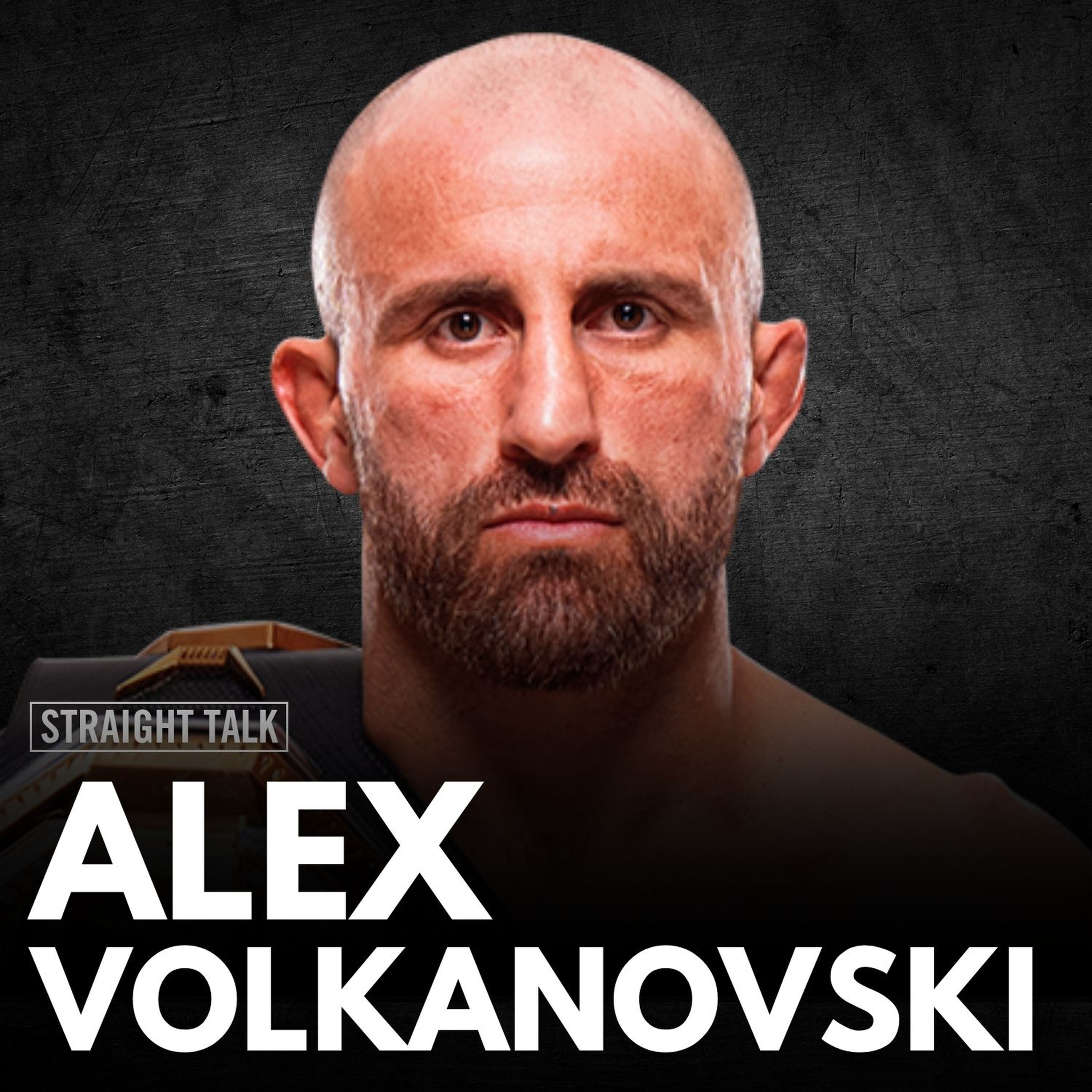
Alex Volkanovski walked into Mark's studio years ago with no idea what his brand was. Now he's a former UFC featherweight world champion, part-owner of a fight gear company, building a media presence through Cooking with Volk, and defending his belt at 38 — by choice, not necessity. This is a conversation about identity, purpose, and what happens when elite athletes build something that lasts beyond the sport. Volk is as calculated in business as he is in the octagon, and this conversation proves it. For more content like this: Subscribe to the Mentored newsletter here:…

9 Sep 2026 · 51 min
Two journalists from The Australian spent years digging into the real story behind tech giant Atlassian, and turned it into a book. It traces how two UNSW graduates built a global software company from a Glebe share house into a NASDAQ listed giant worth more than $100 billion at its peak. Along the way, Mike Cannon-Brookes and Scott Farquhar became best men at each other's weddings and eventually bought mansions next door to each other in Point Piper. But the book also uncovers how internal tensions, diverging lifestyles and a neighbourhood renovation dispute ultimately drove a wedge…
2 Sep 2026 · 56 min
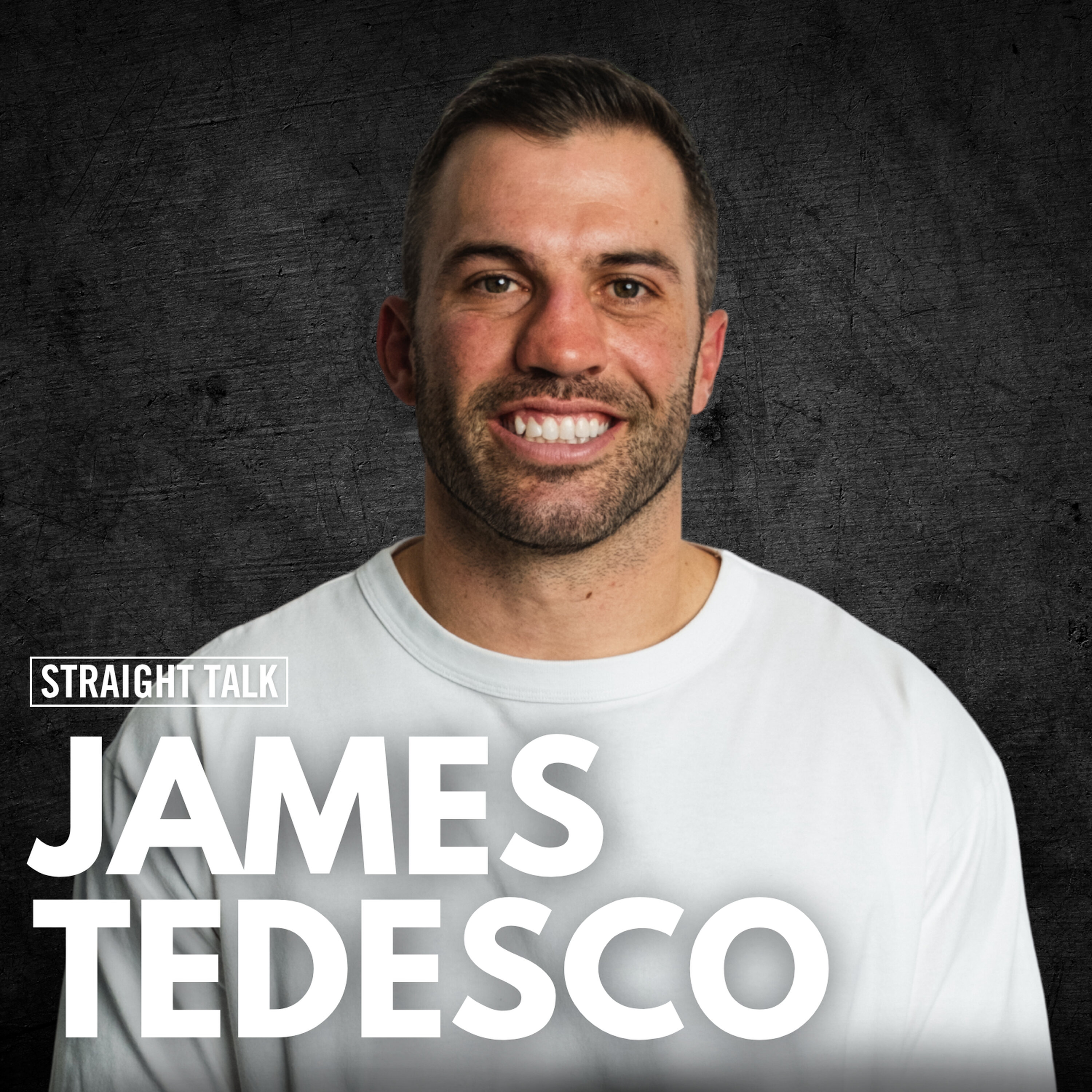
James Tedesco has won grand finals, captained his state and country, and collected more Jack Gibson Medals than anyone in Roosters history. But what drives a man who's already achieved everything rugby league has to offer? In this episode of Straight Talk, Teddy discusses the self-doubt that never goes away, the mindset work he's done since 2015, and the brutal discipline of consistency that separates the talented from the great. For more content like this: Subscribe to the Mentored newsletter here: https://the-mentored-platform-pty-ltd.myklpages.com/l/WWJGc5 Join my exclusive Mentored+…
30 Aug 2026 · 1 hr 5 min
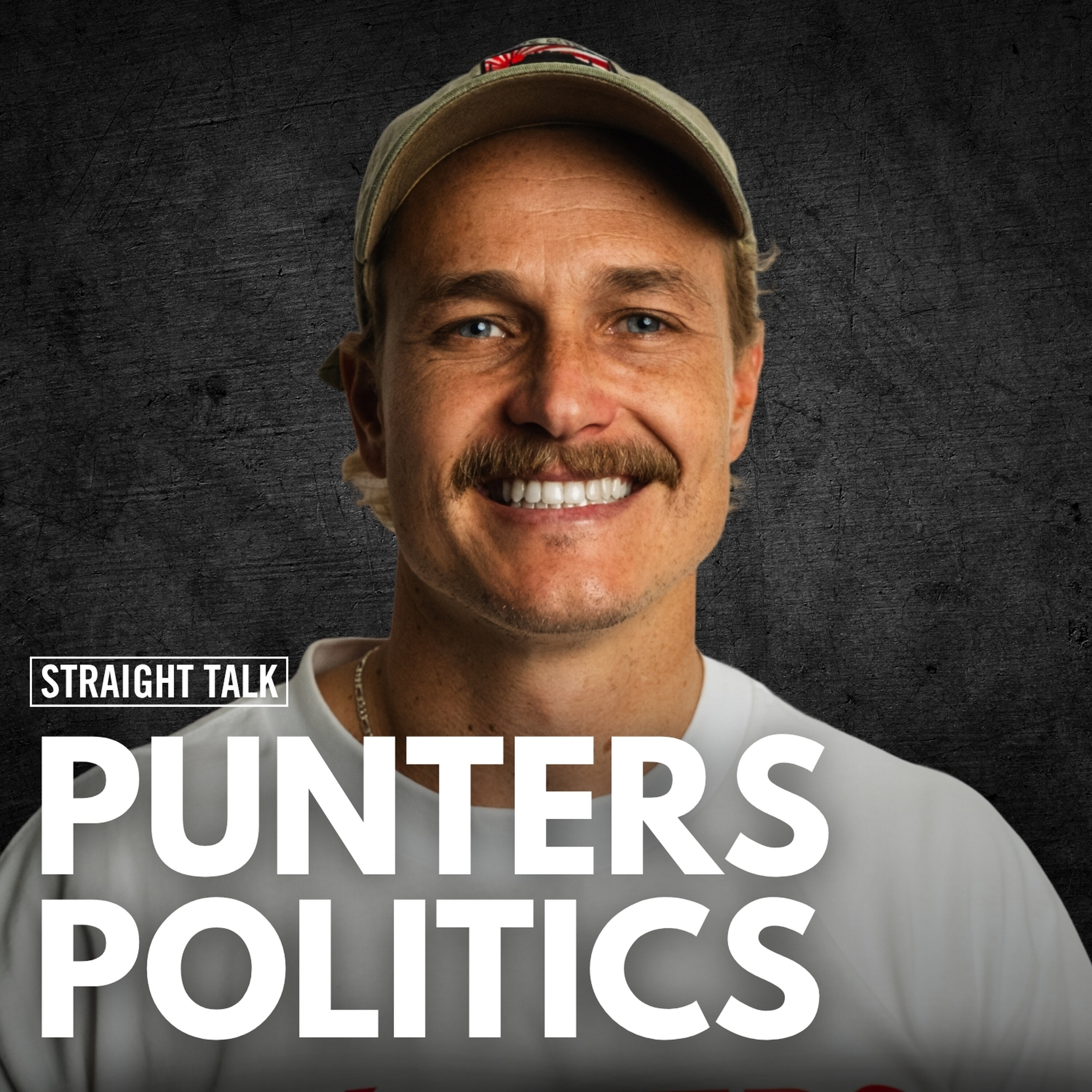
Konrad Benjamin is the creator of Punters Politics, one of Australia's fastest-growing independent political commentary channels, and a former economics and PE teacher who taught across Victoria, New South Wales and China. In this episode, he sits down with me to dissect the incentive structures that shape Australian politics, corporate power and the housing crisis. The conversation moves from classroom economics to gas royalties, corporate lobbying, the staffer-to-lobbyist pipeline, and what a genuine fix might actually look like. For more content like this: Subscribe to the Mentored…

7 Oct 2026 · 1 hr 9 minNew
Australian house prices are down 7% from their national peak — and according to SQM Research’s Louis Christopher, there’s an 80% probability they’ll fall another 5–10% over the next six months. In this Straight Talk roundtable, Mark Bouris sits down with Louis and auctioneer Tom Panos to unpack what’s happening in Australia’s property market, why buyers are losing confidence and where prices could go next. From sharp falls on the Gold Coast to first home buyers walking away, rising government spending and the risk of recession, they examine…

26 Aug 2026 · 54 min
Charlie Gearside co-founded a $1.6 billion telehealth empire from scratch. No medical background, no blueprint, just a bet that Australians deserved better access to healthcare. But now he's turned his attention to something bigger, a cultural movement to remind Australia how to take risks again. This episode covers how Eucalyptus went from a $2 million Blackbird raise to a US acquisition, why Australia's business creation rate has been declining since the 1970s, and what Charlie is doing about it through Build Australia. Learn more about Build Australia here: https://buildaustralia.com/ For…

23 Aug 2026 · 1 hr 24 min
Mark Webber is 1 of only 5 Australians to win a Formula 1 Grand Prix and a 9-time race winner who competed at the highest level of motorsport for over a decade alongside Michael Schumacher, Sebastian Vettel, and Lewis Hamilton. In this episode, Mark traces his journey from being a ball boy for the Canberra Raiders in Queanbeyan to holding up that 1st-place trophy on the infamous Monaco podium... twice. Webber took me through the decisions, mentors, and mindset shifts that defined his incredible career, covering how he went from a 2-race contract to a successful Formula 1 career, what he…

19 Aug 2026 · 1 hr 8 min
Peter V'landys is the Executive Chairman of the NRL and one of Australia's most decorated sports administrators, having previously led Racing NSW through a comparable transformation. In this episode, he joins me to break down how he turned a financially fragile NRL, two months from insolvency during COVID, into a $500 million asset base backed by a record $5.3 billion broadcast deal. The conversation covers negotiation strategy, rule innovation, the PNG Chiefs expansion, the growth of the women's game, and Peter's personal approach to health and longevity. Subscribe to the Mentored…

The Melo app keeps playing with the screen off, works in the car and on your watch, wakes you to your station, and browses the whole catalogue offline. Free, no ads, no account.


