
Episode 896 · The Advanced Selling Podcast
It's Not a Skill Problem, It's an Identity Problem
24 Aug 2026 · 23 min
Episode 896 · The Advanced Selling Podcast
24 Aug 2026 · 23 min
Send us Fan Mail Why do good sellers freeze up the second a conversation moves from a director-level buyer to the CFO? It's not a skills gap — it's identity. Bill Caskey and Bryan Neale break down why sellers resist doing new things, even when they know exactly what it's costing them. Bryan shares what happened when he volunteered to try something brand-new outside of sales — nervous, uncomfortable, and more locked-in than he's felt in years. That leads into why "just say this instead" ...
SPEAKER_00:Welcome back to the event selling podcast, the longest running sales training podcast, podcast history. I'm Bill Kaske. I'm Brian Neal. Brian, it's been a couple weeks since we've usually we record a couple episodes at one time, and it's been a while with your schedule and my schedule. We've had some had some uh reschedule, if I can use that word for one sentence. Yes. Um here we are back at it, uh back at it today.
SPEAKER_01:So I'm glad and I owe you a public apology. I already apologized off air, but and even when listening to this might go, what's wrong with Brian's microphone? Well, everything is wrong with Brian's microphone because I just had a situation where my wife's car had flat tire uh this morning, take the kid to school, had to adjust, and then I went to go set up my roadcaster and I couldn't find a power source to the road caster. And I looked and looked and I ran out of time.
SPEAKER_01:So I'm on AirPods. I apologize. And you know how important quality audio is to the show. It is, it is, but it's not bad. It's not bad, it's it's not horrible, just not up to ASP quality. Let's call it what it is. Um, so yeah, I've been gone, I've been traveling a bunch for my other job, talking code a little bit, and um uh and I don't know if this is me, uh, this is something I've been noticing traveling, and we'll get to the topic here in a second, but um I feel like the uh respect of lines or cues, as they say, in uh, you know, in the in Europe has basically disappeared.
SPEAKER_01:People have no problem if you're standing like ready to board a plane or get on the shuttle bus, literally you're standing there right at the curb, and then 14 people walk right in front of you and get on in front of you. And I try to have some page, I'm like, okay, it's fine, but I'm like, what have we lost common sense? Have we lost common courtesy? And I didn't know if that was just me being overly sensitive to people just jamming in in front of a line, or is it um, you know, is it the way is the society just changed and lines don't matter anymore, and whoever wants to go first can go first.
SPEAKER_01:Free for all. Yeah, just a free for all.
SPEAKER_00:Yeah, when there's no what do they call those things that they put up that kind of yeah, like yeah, like the the line, the the yes, the little snake things, yeah. Yeah, um, yeah. The one I have trouble with is where there's three lines, like when I go to let's say go to Dairy Queen or Culver's or whatever, there's three, there's three registers open, and there should be one line feeding those three registers, not clapping everybody's on their own, especially in in banks.
SPEAKER_00:They're do that, like the Chase bank I go to. You're you're lining up in queue and the first register opens, same way at the airport. So that's yes, but that's not a person problem, that's a that's a system system problem.
SPEAKER_01:It is a system problem, and just the common sense drives me nuts. I I was standing there waiting to this airport shuttle, but like to go from the hotel to the airport, and it's literally standing, and there's a there is a line, there's like two people behind me, and this guy with his family comes up and literally walks right in front of all of us and just brings all the suitcases right in front of us all. And there's no way it didn't say I'm like looking at the guy, and he's like looking at me.
SPEAKER_01:I'm like, dude, what are you doing, man? What are we doing? You know, am I invisible? Literally, yeah. There's a there's a character in uh all that jazz, Mr. Cellophane. I'm Mr. Cellophane. It's an old callback. Remember that? You know that show? All that jazz, Mr. Cellophane. Oh, it's one of my favorite characters, anywho.
SPEAKER_00:Well, I think people people get nervous, especially when they're traveling with families. I know we when we go to spring break and we take all the grandkids, we don't take them, we don't pay for them, but we uh they play for us. Uh and there's a pressure that it's like, okay, we got to get on, got to get carriage, got to get some, you know, the scooter, and they gotta get these things on. Yeah, okay. Yeah, so uh now I don't I don't feel that, but the lines are always full of drama, no matter where.
SPEAKER_01:They are, yeah. And the same thing you said with the three lines, if like if the grocery store, you know, you're not, you know, if you're queued up in the wrong one that goes too slow. People were there before you. Like, go ahead, you were here before me. I just think that's such a nice way to be. Yeah, you know, anywho.
SPEAKER_00:Yeah, all right. So when we talk about topics, before we uh land on one, Brian brought one up today, and I we just he was I was asking him a question about his uh his other life. Yeah, other life, other family, he's got an entirely different family in a different part of the country. His other life, and and he was talking about uh a situation that he's in, and we thought, man, this is so perfect because as the world changes and as requirements change for sales professionals, business owners, marketers, you gotta you gotta adapt and you gotta move past what you've always done.
SPEAKER_00:So you go ahead. Yes, that is.
SPEAKER_01:Yeah, do you want to do your announcements? You want us to do some announcements?
SPEAKER_00:Yeah, do you want to announce something insider next month in September? It's the first Friday in September. We've got an awesome uh program. We're going to be talking about how to use AI more effectively in your business. And we're not going to be talking about how to get it to write emails that we're going to go a lot deeper than that and a lot more sophisticated in terms of how it can help you build actually build things, actually construct things.
SPEAKER_00:And we've got some uh templates and prompts we're going to use, but it's you know, some people might know a little bit of this, but this thing changes so frequently, so so rapidly. And so we're going to get into that. How to use AI to grow your business.
SPEAKER_01:Awesome, awesome topic. And I'm so glad to hear you say the topic's not going to be how to use it to write email because it is so much more than that if you use it the right way. So that's insider first uh Friday of September. That's great.
SPEAKER_00:Tuition 97 bucks a month. And uh I can promise you get your money's worth. If you don't, call me, I'll send it back to you.
SPEAKER_01:That's good. That's a true statement. So, yeah. So I got a chance to do something new in my one of my jobs, my other job. I always say my other job. Um, and it put me into a really interesting kind of mental space. I thought it's good for salespeople to hear, and we can banter about this. Is when we get we do something a long time. So a lot of sellers do they've been selling for even if you've been selling for 10 years or 12 years or 15 years, you have a thing that works for you, a way to do sales that works for you.
SPEAKER_01:And you've likely had some successes in success, and you keep that success uh going by doing the same thing. And in that, we atrophy a little bit, or we can get a little comfortable in and still perform at a high level. And so I was given in my other job a chance to do something new that I raised my hand volunteered to do that I had never done before. And in the preparation and the application and on the field, it was new and it was different. And I noticed this old kind of feeling of doing something new that I had not experienced in a long time.
SPEAKER_01:Um, that did a whole lot of things to me. One, it really gave me a lot of good energy, but two, made me nervous and got me really uncomfortable. Um, three, uh, got me out of my own head a little bit, like when things would normally click smooth in my head, they didn't click as smooth in my head because there's other things cluttering my mind up. And after all of that, it felt so good though, to say, man, that felt good overall. And I grew from the experience.
SPEAKER_01:And I thought, man, that's a great thing for sellers to talk about. Uh, we just hired at our firm two sellers who are used to doing sales a certain way, and we are teaching them to do their outbound behavior a different way, and they would both tell you and they both listen very uncomfortable for them. And what I thought would be an easy shift over is is not at all, at all. Is not a is not an easy shift. Um, and it really got me thinking about doing things new in sales.
SPEAKER_01:So I'll stop there and let you comment.
SPEAKER_00:Yeah, no, I think that's uh I always like to start sentences with yeah, no, yeah, no. This is how to speak Midwestern. Yeah, yeah, no, yeah. No, yeah, it's not a it's not AI. That's how you know that because there's a yeah, no. I love the topic and I see it all the time too, and have for years. I mean, we've been in this business with our own businesses for so long where we're coaching and training and and mentoring people and trying to get people to do something different without giving them the reason, without really helping them see how this is going to benefit.
SPEAKER_00:If I just say to you, Brian, here, go say this from now on. You're not gonna say, you're gonna try it once, it's gonna you're gonna fumble it, you're gonna go back to your old way. So I think there's a certain amount of, hey, let's talk about this. Here's why it works, here's why the old way doesn't work, let's practice it, let's role play it, let's see how. So I think there's a lot more to it. And I think sometimes we think, well, just just tell, just say this, just go do this, just go say this.
SPEAKER_00:And it's like, no, you you gotta be a little bit more intentional about it than that. Yes, yeah. I also think that I also think I just one more thing. I also think there's a when you were asked to do or volunteer to do this new thing, you were 1000% focused. You weren't thinking about, you know, what where's my car parked, and then I locked the door. You are like all in focused. Every part of your DNA is focused on a not screwing it up, and B, doing it correctly and doing it the way that you envisioned.
SPEAKER_00:And and so at the end, you're you're you're fired up because you've been so focused for so long. It's just it's just an inspirational state of mind, I think.
SPEAKER_01:Yes, it is. Um and I I I'm always interested in why where's the resistance coming from? Where do you think? So you and I work with sellers. So I'm I've got a um I've got an engagement with a company that sells software um types of things to healthcare orgs to medical uh you know facilities and hospitals and things. Their CRO, she's awesome. She said, our sellers are really good at talking to middle-level managers at hospitals. They cannot talk to a CFO.
SPEAKER_01:They don't know how to talk to a CFO, and therefore they don't. And I'm like, where's the mental block? Is it that they don't know how, or they don't want to, or they don't want to know how? What's your take on that as I prep for this gig? Because that's the thing. I'm gonna go try to teach them a different way, a different set of language, a different process to a different line of questioning. Because the CFO lives in a different spot than a director of building.
SPEAKER_01:Yeah, and and her crew is really good at the director of building convos, but they clam up when they get in the CFO's office. Where do you think the root cause of that discomfort is?
SPEAKER_00:It's who do I believe myself to be? What is my identity around who I call on? What kind of value do I bring? And that's a that's a major shift. Now you can get there gradually. It's not like you're gonna say something and they're going to change your identity, but it really and but I think that's okay to say, look, we're gonna be going down a path here, we're gonna be asking you to do some things, and it has nothing to do with uncomfortable intelligence, has nothing to do with that.
SPEAKER_00:It's you don't see yourself there. If you don't see yourself there, you ain't gonna get there, and you're you're going to give me all sorts of reasons why you can't get there. And so let's just call it what it is. It's an identity thing, it's not a it's not a problem. It's just that I think it's the same thing. You know, I've got some uh some coaching clients that I work with. These are guys in the financial uh services business, and they their upside is huge.
SPEAKER_00:It's huge. It could be a million dollars a year, and a lot of these guys are in the two to three, four hundred thousand dollar range, and they're doing well. I mean, there's there's no shame in$500,000 a year, but they also know they can get to this$1 million. I think the problem and what stops them from getting there is who they believe themselves to be. Is that to get there, they're going to have to go upscale. They're going to have to find people that have$50 million instead of$5 million to invest.
SPEAKER_00:And that's an entirely different class of animal. I mean, that most people hang out at different places, they care about different things. They sometimes they don't care about the things that the million-dollar investor does. So it's it's really a matter of do I believe myself to be the person who attracts$100 million clients to me. And so that's what we work on uh in that. But that's that's not that's not a course you take. That's really a lot of questions, coaching.
unknown:Yeah.
SPEAKER_01:Yeah, that and uh I'm glad you started there uh because you validated something that I believe to be true with sales leaders, and those of you who are listening to this will validate this that sales leaders try to solve that problem with a tactic or a line of questioning or just an urge, just an egging on, like you need to go talk to the CFO. We got to get to the CFO, we got to get to the CFO. And the person, like you said, they're not gonna do it if they are internally not comfortable talking to a CFO hospital system, they're just not, and the justification is intellectual.
SPEAKER_01:CFO doesn't care about all this. Pillars are the one, yeah. Uh lots, and it's legit on one hand, but on the other hand, that's not the reason. And there's an here's another element that you I never thought about this. And I said the same thing. The c I said earlier in the episode the conversation with the CFO is different than the conversation with the director of building, for sure. I think something that help what can help you listen if you're listening to this, get past your own internal um resistance is go to what is the same versus the what is different first.
SPEAKER_01:Let's start with what's the same. This is just like silly. They're both people, they're both humans, they both breathe oxygen, you know. They they got their stuff. They might they have if they have a family or kids or whatever, they have stuff. Um, if you were um, you know, at a at a football game of your favorite team and you're both Ohio State fans, you're Ohio State football fans, you're both Ohio State football fans. Same, same foot, you know.
SPEAKER_01:Now, you know, when they get out of the bathroom line, they may go to a suite and you go to a seat, but you know. So if you start Indiana, why would people lose Indiana trying to call you went there? I said, I said, I'm on record a multiple times. I will never brag in that way about my Hoosiers. I will be proud and happy forever. We've not earned the right yet at this point to start talking smack. So no, but that is true, that is very true. If I met an Indiana Hoosier football fan, I'd be like, hey, me too.
SPEAKER_01:So uh I think that really if you humanize people first. So I'm going to talk to the CFO and she went to Harvard for MBA. That starts to intimidate me. How is she the same? When she gets done with work, she typically gets in a car and drives home and goes into a garage and you know, goes, works out, or goes and you know, sits and talks with her family or has dinner. Very similar things. Uh, first is how to think about that. Like, think of these people as people.
SPEAKER_01:I always said, you know, if you're stuck in an elevator with these people, no one cares whose levels what. We got to work together to get out of the elevator. You know what I mean? No one cares. So I'm going to state that too. I love that thing.
SPEAKER_00:And you've you've just taken the stab at the external similarities. I also think there are internal similarities, which is we all have fears, we all have insecurities, we all have dreams, we all have things about our jobs we hate, we all have frustration. We all have those things. I don't care how much money you make. In fact, I might even say that the higher up in the organization you are, the more of those you have. Uh now you've got people to fix those things, but you know, the buck stops with you a lot of times.
SPEAKER_00:And I think, I think one thing that I always tell people when they're calling on somebody that they're not used to is just think this poor bastard. This poor lady has to run the company, has to manage her children, has to do that, has to do strategy, has to do marketing. How can I help this poor, this poor lame person? How can I help them? And it's and so it's a helpful orientation rather than a well, how do I avoid saying something stupid so they throw so they don't throw me out of their office?
SPEAKER_00:Like, no, that's that's defensive. Be offensive. And I don't mean be climbing up the walls and being, you know, aggressive. I just mean this person has fears and insecurities. And when you go in and say, hey, look, I don't know if what I have is a fit for you. I appreciate the time you're spending with me. But one thing I'd like to know at some point today is when you look at your organization, where do you feel like you're stuck? And where do you feel like where do you have some anxiety?
SPEAKER_00:They'll tell you, they'll probably tell you quicker than the person who's making 45 grand a year stuck in a cubicle because it's too dangerous for them to admit the truth.
SPEAKER_01:People appreciate that so much. I think those buyers at those levels appreciate that also. Yeah, they they walk around sometimes and get put on pedestals they don't want to be on. You know what I mean? Now, not all of them. I know some power trippy people, but most people aren't that way. No, um, I just thought I was on a flight from Los Angeles. This woman sits down next to me. Um, really beautiful, very tall woman, and you know, didn't talk much on the plane out on the way out to Indy.
SPEAKER_01:We landed, and um she said, she goes, I'm so stressed. I'm like, what's up? She's like, I left my backpack in Los Angeles and we were in Indianapolis and all my work prep. I'm like, oh my God, I'm so sorry. That's terrible. I'm like, what do you do? She's like, well, I'm like in broadcasting. I'm like, oh, what are you here for? It's like, well, I'm gonna call the fever game, the Indiana fever game. She was gonna be on the broadcast. I'm like, oh, good for you.
SPEAKER_01:I said, Did you did you play? She goes, Yeah, I played for LA and da-da-da. I'm like, where'd you play college? She's like, Oh, Tennessee. I'm like, okay, that's great, good for you. And I said, Well, you know what? It's gonna work out. It's in the room. It's one of my coaches told me you'll be great. Don't worry about it. She's like, I hope so, I hope so. And she goes, uh, what's your name? I go, Brian. She goes, My name's Candace. I'm like, nice to meet you.
SPEAKER_01:I go up the escalator, I go, Oh my god, that was Candace Parker. Candace Parker is arguably the greatest women's basketball player of all time. She's in the Hall of Fame, she's the greatest, she was so nice. I talked to her for three minutes. She looks like the oh my gosh, she was so fantastic. And I thought, if I'd had known it was Candace Parker going in, I would have acted differently. But I just thought she was a person going to work, and I'm like, You got this.
SPEAKER_01:It's no, yeah, you you know, a little encouragement, like all that sucks, a little empathy, whatever, you know. And then I'm like, Oh my god. And it was too, it was too awkward at that point for me to go off the plate. Wait a second, wait a second. You know, um, but it's the same thing. If I if you don't know the level, you just treat people like people and just be nice and a normal human and just talk to them. Uh, and don't let that pedestal thing get hold of you.
SPEAKER_01:I did get excited after the fact that once I realized it was her. Well, it's because you're that's why you're telling me this now. Totally you see my energy change, right?
SPEAKER_00:So it did. Um, so let's talk for just a minute here before we run out of time on this digital thing. Um, where do you think people, team sales, VPs of sales, CEOs, struggle in this area of new things, new embracing of new things? Is it is it in technology? Is it in just how buyers make decisions today? What do you think the resistance is?
SPEAKER_01:Um I feel like it is uh again, the reason's not always the reason. The reason is less about um I don't want to understand something new. The reason is I want to understand something, and so it's this is clinging thing to what I know is comfortable for me. And so I cling to it. And when I cling to it, I can't let go to go see the other thing because the things that we cling to now used to be intimidating. We used to cling to paper, we used to cling to paper reports, we used to cling to not having a cell phone.
SPEAKER_01:I don't want to be, you know. And then so computers were laptops were given to sellers, like, oh my gosh, I don't need a laptop. Now try to take a laptop away from a seller. I can't do my job without my laptop. Um, so we've already done this multiple times in our lives. You know, you just don't realize it. But once you're comfortable, you cling to the comfort. Um Mike Tomlin used to coach the Pittsburgh Steelers is on TV now. He says he's he I'd hear him say it all the time: human seat comfort, human seat comfort.
SPEAKER_01:He would say that if a player was like griping to us, and he's like, he's just seeking comfort. I'm like, man, that's interesting, isn't it?
SPEAKER_00:So is that that's a that's kind of a survival instinct then? Yes. We're we're seeking comfort because we associate comfort with survival, and we associate something new with danger and and you know, death or whatever. So uh yeah, I think that one thing that I tell people, like I I'm a big proponent, as you know, of people shooting video to promote their products and to meet the customer where they are, and um and there's this reluctance because people say, uh, I'm not good on video, and you know, the camera wasn't set up right.
SPEAKER_00:I didn't like my background. But really, what it is is you got to do 20 of these and don't release any of them until you get one where you say, Oh, that wasn't bad. And you'll get there, you'll get there after maybe after five and maybe after 50. But don't release anything you're embarrassed about or ashamed of. That's that's the key. Release it because if you if you just do it once and release it, you're gonna be disgusted with yourself and ashamed.
SPEAKER_00:You're never gonna do it again. So practice the same thing. I mean, how many times have you shot a video and something didn't work right, didn't work right? And you had to shoot it over again, and it was 10 times better the second time you did it. All of them. So, my recommendation when you're trying something new, especially if it's a technical thing, just do it and do it and do it and try it and don't ship it. Don't ever ship it until it's to the point where you say, uh, this this is look at it and say, it's not bad.
SPEAKER_00:It's not bad.
SPEAKER_01:That's it, that's it. It works.
SPEAKER_00:Yeah. All right, good job today. So let us know if there's something in your future that you know you need to bring to the present, maybe something you know you need to do, but you're just uncomfortable. Put it in the uh link to us on LinkedIn and put it in the chat there, and we might come back and do this again here in a few weeks because um uh we'd love to hear from our listeners. So if you're not already a member of the advanced owning podcast group, go to advanced owning podcast.com slash LinkedIn, or just go to LinkedIn and find us, connect, and leave us a note there.
SPEAKER_00:We'll be glad to uh answer it and maybe put it on the show. We'd love to. All right. See you next time. Cheers back. Bye.
Transcript supplied by the publisher with the episode.
by Bill Caskey and Bryan Neale: B2B Sales Trainers · English · Business
Bill Caskey and Bryan Neale deliver practical, no-nonsense sales training through their signature blend of humor, real-world insights, and actionable frameworks. Each episode tackles the challenges you face daily: prospecting, overcoming buyer resistance, pricing strategies, cold calling, deal coach
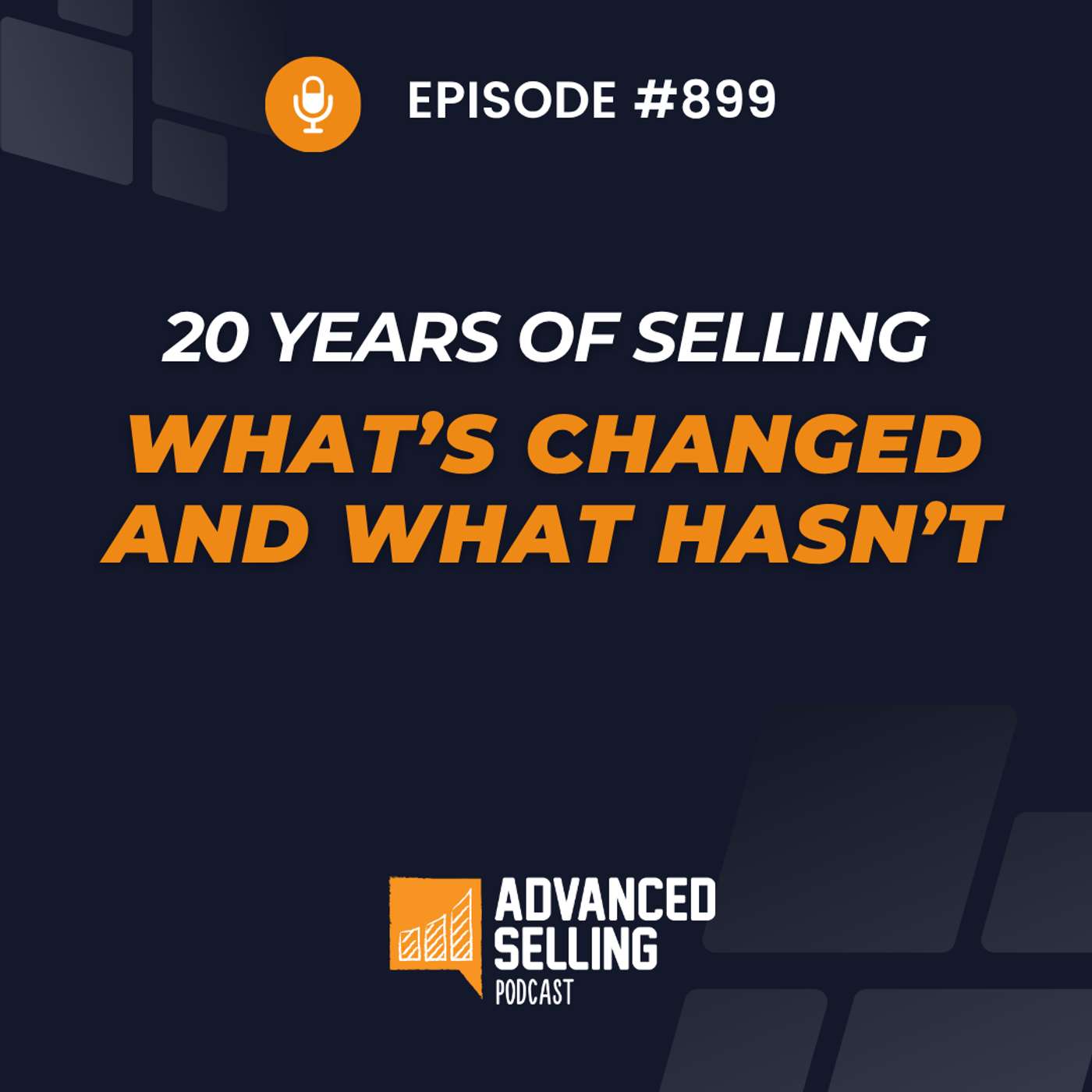
E899 · 21 Sep 2026 · 27 min
Send us Fan Mail Twenty years ago, LinkedIn had 50 employees and cold calling ruled the day. Now AI writes your emails and nobody's picking up the phone — so what actually still works? This week Bill and Bryan mark 20 years of the Advanced Selling Podcast with a celebration episode: listener shoutouts (including a great one from longtime listener Andy in the UK), a quick teaching on the WAG framework you can steal for your next client conversation, and an honest look back at how selling has c...

E898 · 15 Sep 2026 · 20 min
Send us Fan Mail Twenty years ago, Bill and Bryan started recording a podcast every other Monday. They never missed the behavior — and that consistency turned out to matter more than talent, luck, or a growth strategy ever did. To kick off ASP's 20th anniversary celebration, Bill and Bryan share the first of several listener tribute clips — this one from Scott, a longtime Insider member and one of the "Globetrotters," a small accountability group that formed out of the show. Scott's story bec...

E897 · 31 Aug 2026 · 20 min
Send us Fan Mail Got something genuinely new to sell — and buyers keep lumping it in with every other "revolutionary" pitch they've heard this month? This one's for you. Bill and Bryan work through a real scenario: a friend building software that could transform hospital billing, but can't get CFOs past their skepticism. The fix isn't a better pitch — it's a completely different approach to who you target and how you position the offer. You'll learn how to sort prospects by tolerance for chan...
E895 · 10 Aug 2026 · 16 min
Send us Fan Mail You didn't lose that deal on price. You lost it because your positioning wasn't strong enough to make you the obvious, can't-do-without-you choice. Bill and Bryan dig into a claim that gets argued in every sales meeting: is price really the reason deals slip away, or is it a symptom of weak positioning? They walk through a real audit of lost deals — 22 gone in six months, four of them deals that should have been won — and use it to unpack what separates a vendor from a "we ca...

E894 · 3 Aug 2026 · 18 min
Send us Fan Mail Every person you've worked with has a story you probably never asked about — and sometimes you don't find out until it's too late. In Part 2 of their series on the people of sales, Bill and Bryan honor a handful of people who shaped their careers — a neighbor and airline pilot, a mentor who connected without ego, a customer who never delayed a decision, and a prospect Bryan gave up on too soon. Each story carries a lesson you can use this week: ask people about their ac...

E893 · 27 Jul 2026 · 17 min
Send us Fan Mail Twenty years in this business means running into a lot of characters. This week Bill and Bryan riff on the people — bosses, clients, gatekeepers, baristas — who taught them something they never forgot, whether the lesson was about sales or just about being human. You'll hear about "Leisure Suit Larry," the grocery store manager who refused to acknowledge salespeople existed, and what he taught Bill about never forcing yourself on someone who doesn't want to talk. They also ta...
E901 · 5 Oct 2026 · 26 min
Send us Fan Mail Your sales skills didn't disappear. They atrophied. And the fix isn't picking up where you left off, because the market moved while you weren't looking. In Part 2 of their series on sales skill atrophy, Bill Caskey and Bryan Neale shift from diagnosis to repair. They start with a challenge: the modern skill isn't just learning. It's learning, unlearning, and relearning fast. What worked six years ago, or even last year before AI research tools changed prospecting, may be irre...

E900 · 28 Sep 2026 · 14 min
Send us Fan Mail What happens to your sales skills when you haven't had to use them? Muscles you don't use get weaker, and sales skills work the same way. In Episode 900, Bill and Bryan start a two-part look at skill atrophy. One team lost the lead channel it depended on and suddenly has to create sales from scratch. Another company's reps have spent five years telling customers to get in line. Neither group is ready for what comes next. Bill and Bryan also explain why "just talk like a norma...
E892 · 6 Jul 2026 · 17 min
Send us Fan Mail You're six months into the year. Do you actually know what's working in your sales process — and what you quietly stopped doing back in February? Bill and Bryan borrow a trick from football coaches: self-scouting. Before the next game, coaches review their own film to find what their team does well (so they can do more of it) and what they do poorly (so the other team can't exploit it). Bill and Bryan apply that same exercise to your sales year — build a 20-point scorecard, g...

E891 · 29 Jun 2026 · 20 min
Send us Fan Mail Imprecise language is quietly sabotaging your sales process — and most sellers don't even notice it happening. This week, Bill and Bryan dig into the art of precise communication and why "what they hear" matters more than "what you meant." Bryan shares a real example from his own sales process: his team retired the vague word "calendars" as the last item on a sales agenda in favor of the more direct "get calendars out." They also cover why stating up front how many points you...

The Melo app keeps playing with the screen off, works in the car and on your watch, wakes you to your station, and browses the whole catalogue offline. Free, no ads, no account.