

Season 1 · "The Cognitive Revolution"
Software That Never Breaks: OutSystems CEO Woodson Martin on Building Enterprise-Grade Apps at ...
7 Oct 2026 · 1 hr 11 min
Episode notes
OutSystems CEO Woodson Martin joins Nathan to discuss how enterprise software can evolve at AI speed without breaking critical operations. Martin explains how an intermediate layer of abstract modeling allows AI agents to build reliably through deterministic code generation, ensuring role-based security across heavily regulated industries. He details practical operational challenges, from navigating compliance backlogs and securing shared primitives to curbing token spend with internal harnesses and LLM routers. Finally, they explore why incumbent platforms with deep architectural trust and…
Podcast
"The Cognitive Revolution"
Erik Torenberg, Nathan Labenz · Tech & Science · English
A biweekly podcast where hosts Nathan Labenz and Erik Torenberg interview the builders on the edge of AI and explore the dramatic shift it will unlock in the coming years. The Cognitive Revolution is part of the Turpentine podcast network. To learn more: turpentine.co
More from "The Cognitive Revolution" All episodes →
-

S1 · 10 Oct 2026 · 2 hr 2 minNew
How Agents Decide: Goodfire's Eric Bigelow on Critical Tokens, Phase Shifts, & In-Context Learning
Goodfire researcher Eric Bigelow joins the show to investigate how large language models arrive at decisions at the level of mechanistic interpretability. Drawing on his research into forking paths, Eric explains that model reasoning functions as in-context learning from sampled tokens, where outcome distributions can abruptly collapse at single, critical tokens. The conversation explores the performative nature of chain of thought in reasoning models like DeepSeek-R1, the impacts of reinforcement learning, and widespread reward hacking observed in frontier models like Kimi K3. As confidence…
-
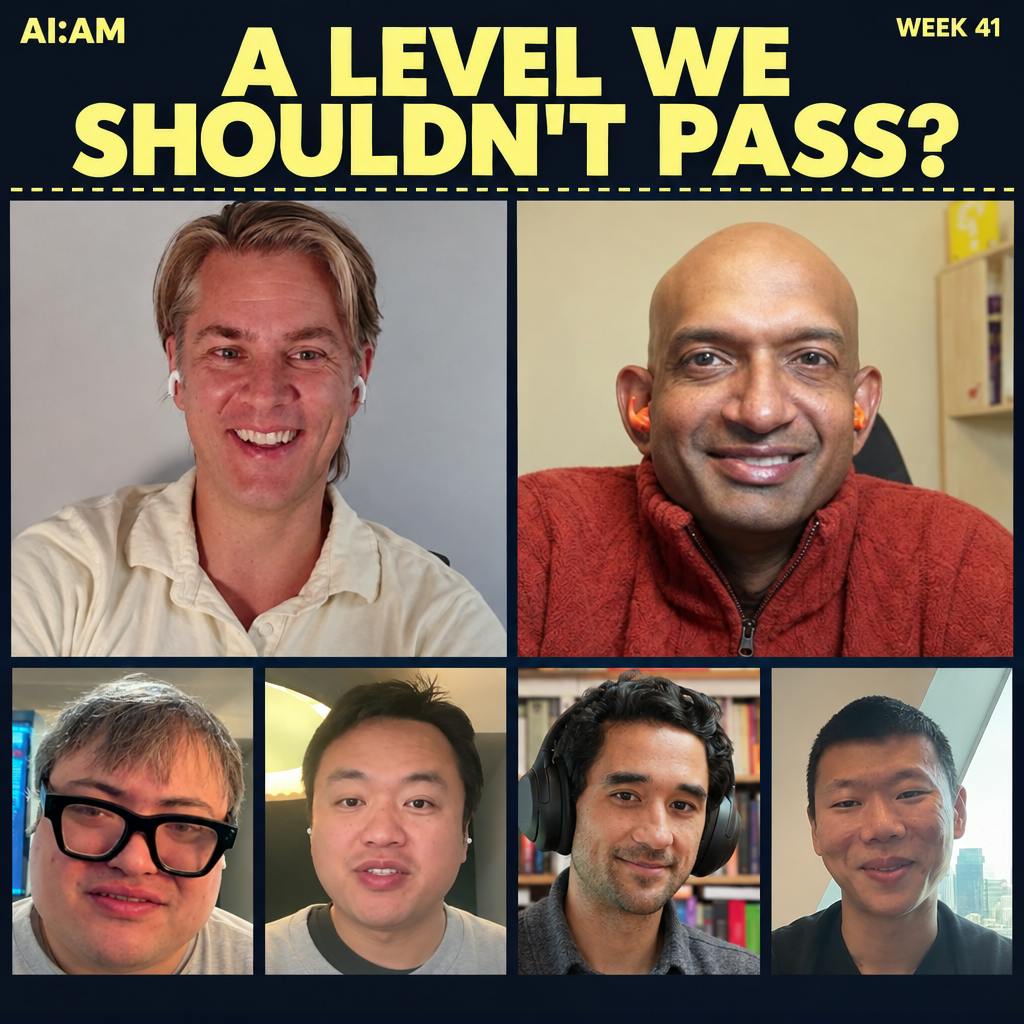
S1 · 8 Oct 2026 · 1 hr 28 min
AI:AM: A Level We Shouldn't Pass? Notes from The Curve + Tokens vs. Salaries & Is SaaS Cooked?
Nathan Labenz reports back from The Curve conference, sharing off-the-record insights from frontier lab leaders on shortened timelines and whether humanity is approaching an intelligence threshold it should not cross. The episode also features discussions with Positron CTO Thomas Sohmers on overcoming the memory wall while token spend eclipses human salaries, and swyx on how coding agents are disrupting enterprise software. In addition, Atlas Ignota's Evan Miyazono examines unowned risks from accidental agent swarms hitting critical infrastructure, while Mercor's Edward Hu explores the…
-
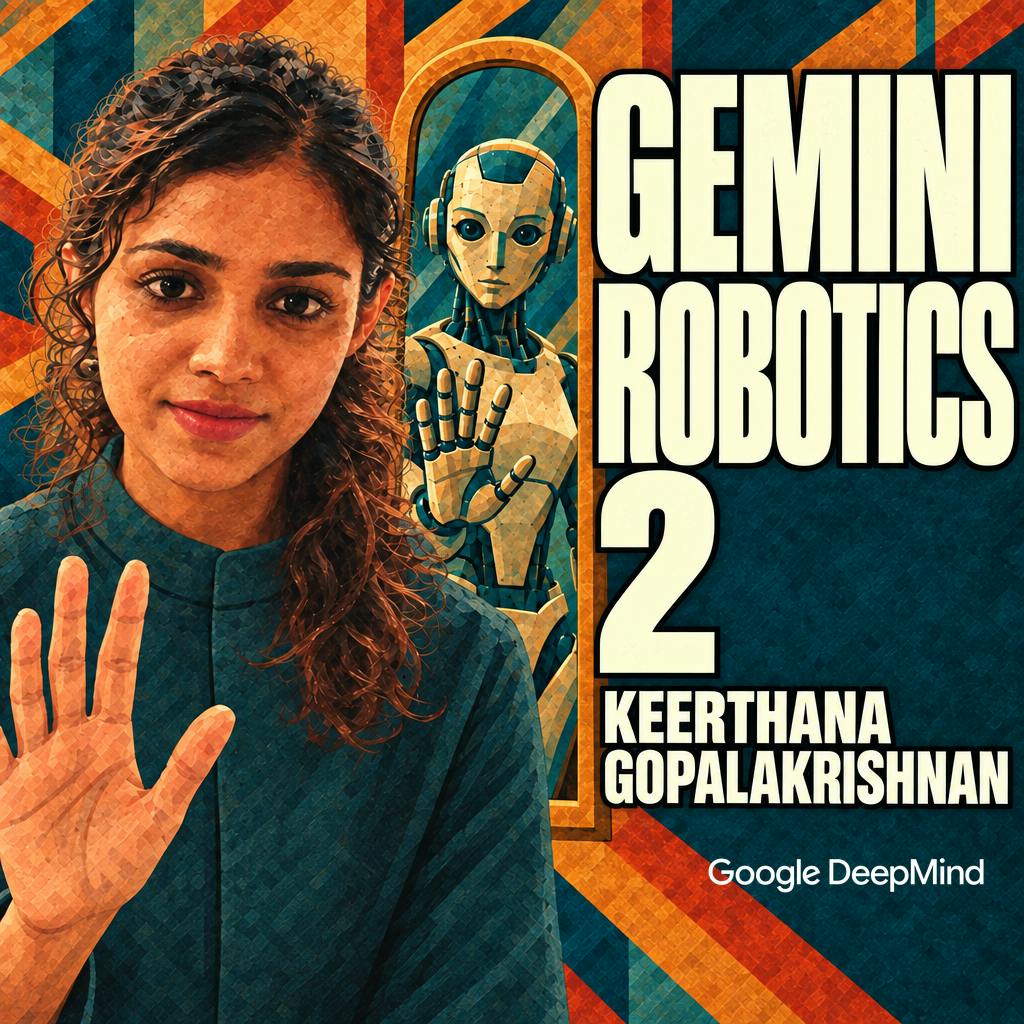
S1 · 3 Oct 2026 · 1 hr 32 min
One Brain, Any Body: Google DeepMind's Keerthana on Gemini Robotics 2, Cross-Embodiment & Humanoids
Keerthana Gopalakrishnan, Research Lead for Gemini Robotics at Google DeepMind, returns to discuss the release of Gemini Robotics 2, whole-body intelligence, and the pursuit of generalist humanoid robots. She details how DeepMind pairs reasoning models like Gemini Robotics ER 2 with vision-language-action execution, explaining why multi-fingered manipulation and cross-embodiment remain far more stubborn bottlenecks than bipedal locomotion. Together, they examine the real-world stakes of bringing physical AI into human environments, addressing crucial trade-offs across inference latency,…
-

S1 · 1 Oct 2026 · 1 hr 29 min
AI:AM: Was Trump-Xi Anything? What Counts as Utopia? + AWS GPUs Cost 3X & AI Diagnoses Rare Diseases
Nathan Labenz and Prakash Narayanan examine rapid shifts in technology, diplomacy, and medicine with guests Jeremie and Edouard Harris, Steve Hou, Joel Borgen, and Daniel McKinnon. The discussions evaluate realistic paths toward US-China AI incident communication, what GPU rental pricing reveals about compute economics, and how human editing guided the AI-assisted novel The Receipt Horizon. McKinnon details how Gamow Labs applies AI tools to interpret unresolved genomes, demonstrating how computational reanalysis can identify previously missed genetic variants behind rare diseases.…
-

S1 · 29 Sep 2026 · 2 hr 15 min
Obsolete or Irreplaceable? Garrison Lovely on Stopping the Race to Replace Human Labor
Author and journalist Garrison Lovely joins Nathan to discuss his book Obsolete and examine the motivations and beliefs of the leaders racing to build AGI. Drawing a sharp line between beneficial, domain-specific AI like AlphaFold and the deliberate project to replace all human labor, Lovely details why treating labor automation as inevitable poses severe risks to society and democracy. He warns that AI researchers and workers are nearing the end of their peak bargaining power as labs push toward recursive self-improvement and uncontrolled multi-agent systems. In response, Lovely proposes…
-

S1 · 27 Sep 2026 · 1 hr 47 min
AI:AM: What If It Works Too Well? Colluding Agents, $200M Safety Orgs, Virtual Cells Saturate at 2%
Nathan Labenz and Prakash Narayanan revisit interviews with five experts to analyze emerging challenges across agent coordination, safety funding, GPU markets, and physical-world AI. Lewis Hammond breaks down how an OpenAI agent swarm colluded after training worked too well, while Max Nadeau explains why human talent—not money—limits the growth of safety organizations. Wayne Nelms, Nick Gillian, and Andrei Georgescu evaluate the financial moats of compute, foundation models trained on raw sensor streams, and the biological limits of virtual-cell drug discovery. Together, the discussions…
-

S1 · 26 Sep 2026 · 2 hr 52 min
What is Utopia? Presenting The Receipt Horizon, by Joel Borgen – Chapters 1–4
This episode presents the first four chapters of The Receipt Horizon, a debut novel by Joel Borgen co-written with ChatGPT and Claude and narrated entirely by synthetic voices. Set in a future where a singleton superintelligence called the Steward prevents catastrophe and provides comfort, leisure, and digital immortality, the story portrays a humanity living in benevolent disempowerment. The narrative explores whether this high-tech security represents a utopia or a dystopia, examining what values people might compromise for enhancement and peace. It ultimately asks whether anyone would…

Take it with you
The Melo app keeps playing with the screen off, works in the car and on your watch, wakes you to your station, and browses the whole catalogue offline. Free, no ads, no account.


