
Episode · The Every Podcast
Why Every Traded Personal Agents for One Company Agent
7 Oct 2026 · 34 min
Episode · The Every Podcast
7 Oct 2026 · 34 min
Subscribe to Every (free for 14 days): every.to/podcast-every-offer?utm_source=podcast&utm_medium=audio&utm_campaign=companyagentepisode On this week's episode of The Every Podcast, Dan Shipper sits down with Willie Williams, Every's head of platform and one of the driving forces behind the Every Agent, which launched this week. They discuss how Every went from everyone running their own OpenClaw to relying on one shared company agent—and where they think personal agents belong in everyday life. Links to resources mentioned in the episode: Willie Williams on X: https://x.com/bigwilliestyle…
The hot thing right now is DOTS. They're persistent agents from OpenAI. I was there at DevDay when they launched them, I interviewed Sam about them, and I've been using DOTS since before they came out. And now we're into week two of DOTS. So how's it going? If you read my vibe check, you know that I thought they were a little bit rough to begin with, but that the idea of a persistent proactive agent was obviously the future. Even before Dots launched, they'd become my main way of interacting with ChatGPT.
And they're still that way after launch. I'm really excited about the little things they've been doing to make the experience less buggy and more complete. And I think it'll get even better over the next couple of weeks. What's been really interesting, though, is seeing the team at every. We've got about 30 people seeing them start to adopt it and some of the use cases that have started to emerge. So In case you're looking for some use cases, I actually had my dot collect some use cases to talk to you about.
So one thing that dots are really useful for is keeping up with school emails. So Kieran Klassen, who works at Every, says that it scans all of the school emails he gets from his kid's school and tells him what he needs to know. Another thing that dots are really good for is catching access requests or like little things, little messages you might have missed in Slack and making sure that you get them. So... Ariel Shipper, our head of operations, her dot caught a few people asking for different accounts across the company and asked if she wanted it to just approve access.
Dots are also really good for working when you're not at your computer or your hands are full. So our head of video, Randy Koonsman, was running around yesterday trying to get our launch video out for the Every Agent which launched. And he was doing work for that launch just on the phone with his dot, talking it through different video edits and different things he needed to get done. I also think this is something that came up in my interview with Sam and I feel this too.
Dots are really good for filtering out all of the noise that you don't really want to see and only showing you stuff that really matters. So, for example, I was doing a lot of model testing over the weekend. Normally model testing requires me to be in the every Slack, which once I'm in Slack, it's just like this rabbit hole of I'm just going down doing tons and tons and tons of work. And what was amazing about using my dot doing model testing was I was able to post the results of all the experiments I was running in Slack.
And if someone responded, that my dot would tell me about the response, which would help me stay up to date on what the team was thinking without getting me sucked into the whole rabbit hole of everything going on in Slack. And that helped keep my weekend pretty clear and calm. And I think that's a huge, huge thing for dots. So what's the overall vibe? If you don't have a dot, I highly recommend you get one, especially if you're in the Chachapiti ecosystem.
If you're using Muse or Instinct or GrokBots, you should check it out. there's something really good about having something that's hooked into the entire rest of the ecosystem that you use for your work in your life there are still rough edges though the whole permission structure of dots is like completely a mystery to me and it's extremely annoying so for example I often have to give multiple approvals to my dot to do something basic and even when I give it approval it says it can't do it so they really need to figure that stuff out to make the experience awesome but I would expect if in a year, this is the default way that you're interacting with all your AIs.
You're probably not going to have it be a cute character. That would be my other like little hot take. Mine is named Boo. He's super cute. But my experience using Open Claws and other named agents like this is that as soon as something better comes along, you throw away the cute little character you develop. So my guess is I'll be using a persistent agent in a year, but Boo will probably be dead. Rip boo. We've also actually been working on our own persistent agent.
That's not a personal agent. It's a company agent. And that's actually come from this whole journey we've been on starting with open clause inside of every and everybody having a personal agent and realizing how valuable it was for the company to have a personal agent. So we built one for ourselves and then we just released it to all of our subscribers. So I brought Willie Williams on, our head of platform, who was instrumental in bringing the agent to life to talk about personal agents versus company agents, what it's like to build an agent at the frontier right now, and what that means for engineering teams going forward.
I hope you enjoy. Thank you. Willy, welcome to the show. Oh, thank you for having me. So for people who don't know, you are the head of platform. You are one of the driving forces behind the Every Agent, which we, well, by the time this comes out, we'll have launched, it's launching tomorrow. And I want to talk to you about the whole agent phenomenon. Because I think we're in this world right now where personal agents are the hot thing. And there's like a little bit of Groundhog's Day for me, I assume for you, because we went through our personal agent phase like nine months ago or eight months ago with the original open claw phase.
And I feel like we learned a lot from that. And then now I feel like there's this whole new era of people who are experiencing the same thing and maybe we'll learn the same lessons. And we, for us, we went from Open Claw, everyone in the company's got a personal agent too. We have a company agent and we liked the company agent so much that we actually just made a company agent for other people to use. But I want to just talk about that and try to talk about it as honestly as we can because it's possible we're wrong.
Yeah. But I do think we've learned some things that are important. Yeah. Maybe let's start with Open Claw because we actually disagreed and I think you ended up being right. So tell us about the Open Claw situation and sort of your take and talk about why I was wrong. Well, I think that the funniest thing was actually at the time, it was called Claudius. Claudius? Claudius. It was like the earlier version before, because it was Clawbot, right? Oh.
Right? And even before that. Interesting. It was called... Well, Moltbot. There was... We forget about the Moltbot. The two days of Moltbot. Big shout out to Ash, actually, who was like... who I think first messaged me about it. He was like, Ash is one of our contributing writers. And he was like, dude, this thing is awesome. And I remember because I, I, I knew like Peter's name from like the top token burners leaderboard. Like he was up there and just like, I was like, Oh man, this is all, this, this folks are burning a lot of tokens.
Right. And they were just like, Oh yeah, they're making, he's making this thing called Claude, Claudus. And he, I was like, oh, this is kind of a weird thing. You know, kind of follow the project. And then Ash came back and was like, oh, yeah, dude, this is really cool. And so we started trying it. And then I think Brandon was the first one who was like, okay, I've got one. You know, I've got one. I'm starting to like wire it up, right? R.I.P. Zosia.
R.I.P. Zosia. And I think, you know. And then it really kicked off in January because we went to Think Week. And for folks who don't know, it's like our semi-annual gathering of every where we sort of like think about the future, you know. And that was a place where we were finally all in person. We're like, oh, I can show you what's going on. And I think there's a lot. This is a reoccurring theme of like. showing people how to use AI is like a very transparent thing, but telling them is sort of like land splat.
And so we had a bunch of people who were open claw pilled who were like, oh yeah, this is, this is cool. Like, this is what I do. I order my groceries. I've got it in my group chat with my, my family, you know? It really spread. We were all in Panama together, and I remember coming out of that. I think there was a model drop on the day we left, and the claws just started working way better. And then I made this internal place for them to talk, and they started talking to each other in our Slack, and it was like, whoa, this is crazy.
Yeah, it was like a funny thing where we were like, okay, the first... The first blocker is, oh, it's just a little bit too technical. And so we went through a couple iterations of, like, how do we do it for the team or the less technical members of the team? And there was, like, you know, we've got a template, so we're spinning up info for that. And then we made a little service so where anyone could, like, enter, like, kind of walk through people through the setup.
And then we'd get there. But we were also, like, looking at it and we were like, oh, man, security is hard, you know, for all of these things. But, you know, we sort of, like, I think we, like, powered through. a lot of that. And I mean, I have this vivid memory of just like so many bots in our Slack. Like so many bots. Like absolute chaos. Because you also have more than one. Brendan being like just having so many bots running around doing various things.
And I think the big takeaway was one, it was so... valuable for people to see other people using AI. And up until this point, it was like, oh, I built this gigantic Claude or Codex command center on my local machine. I've got it doing everything. But the only thing that people would see was the output of it. And so once we had OpenCloset Slack, it was like, oh, I didn't know I could use it that way. Oh, that's actually pretty cool. And I didn't know that you prompted in this way.
Like there's all these little things people do when they're using their AI that you never got to see. And it was like, oh, I'm like learning every time I look in Slack. Yeah. And the other thing I think that was really big was, you know, I think we liked our personal bots. And I think this is another thing that I think we're seeing now again is that you sort of form you're like oh i'm a i'm attached well mine was last right i'm like attached to last right and um and what it does and it's like a customization so for folks who are like tinkers folks who are builders who like playing with these things it was like a great these setups are great you know for folks who aren't folks who are like a little bit more in terms of like operator thing it was just like oh this is There's a bunch of security worries.
It's super complex. How do I get it set up? It keeps breaking. And then if you don't invest in it, it kind of fades. It doesn't keep going with the rest of it. And I think that for us was the striking point where it was sort of like, we want, instead of everyone investing in their own agents and making them better day-to-day over time, it's like, well, why don't we take all that energy and put it into one agent that the whole company benefits from?
If you're enjoying this show, you should subscribe to Every. Every is the only subscription you need to stay at the edge of AI. And for a limited time, we're giving all of the viewers and listeners of this show 14 days for free to get all the education and equipment you need to stay at the edge. If that sounds like you, you should subscribe. The links in the description. I think also what happened is everyone had open claws. And for sure, like one of the coolest things was your claw became a little bit of an extension of you.
Like it sort of, I remember one of the first people who, well Brandon was like a big driving force here. And then the second person who like really took it to a new level was Austin, who was at the time our head of growth. And he had, he had like a growth claw that you could ask all growth questions to. And that was like really interesting. But I think at least my memory of what happened is then we started, we were like, oh, we're going to build a platform for anyone to make their own, their own clause, even if you're non-technical, plus one, RIP plus one.
But I don't think at that point it was really company agent. It was just like make a claw, like one click claw maker. And we tried that and we were having a lot of internal debates about Should it be one agent for everyone or an agent per person? You were very one agent for everyone. I was very like agent per person. I think you had a lot of hesitancies about the idea of building up our own platform infrastructure to support this like claw as a service thing.
And we were like, fuck it. Like, let's do it anyway. And we were like, okay. Okay. which I appreciate, but also like in retrospect was like not the best idea. And like we so we launched that in beta and I think basically found that it was there was a lot of demand, especially at that time, there was a lot of demand for it, but OpenClaw itself, it was very hard to build a platform on. It was moving so fast, and it was completely vibe-coded. It's just hard to make the entire technical stack and then have an open-source product that's not really designed to be a platform as the thing you're serving.
That was messy, and... Through that process, I think all of our claws basically died. Yeah. Because we just stopped. I remember my claw is named R2C2. And I felt like, oh yeah, I have this really attached relationship to R2C2. And then at some point, someone knocked the Mac Mini power off. And then it disappeared. But I didn't restart it. Yeah. Because at that point, I was using codecs. And I was like, this is fine. I don't need that. And that that was like a really interesting thing for me to realize like oh.
OK there's all the people in the org who don't really. We don't really want to maintain their own cause and then the people who do want to do it like eventually you kind of get tired of it if there's a better option. And what we ended up doing is we, I think we were always starting to use like Cloud or Codex and then there are a couple of these company agents that we tried that like really sort of changed how we thought about this. So Victor being one, which was just really, really well designed.
And I think at that point we started to realize, oh, like having a single company agent makes a huge difference. Yeah, there's a lot. I mean, it even just boils down to sort of like naming, right? Remembering which agent had which expertise was annoying and hard. I remember like Austin's agent, Montaigne, right? It sort of became the gravitational center because... He built it up to be so good at the growth job that it was like, well, I could add, I'm already using it for myself, minor growth jobs.
I could invest in my agent or I could just add on to Montana and everyone else. Sort of gains from that. And I think there were a lot of pressures there. But of course, counteracting this again was like, I think we really liked our personal agents. You know, we're like, we're trying to keep it there. But, I mean, the other thing I think is underappreciated is that when you're building sort of like AI products now, the surface area for like products and agents is really large.
You know, before it was like, oh, I've got a SaaS app. I can sort of like map out all the user flows and you go and build it and you sort of know how users will interact with your product. In the AI world, it's just... And with Plus One, what we noticed was, oh, we didn't even realize that you wanted to go do this thing. And how do you support it? So there was always... I talked a lot about complexity. Building and managing complexity for builders versus operators is a hard job.
Builders want to be exposed to the complexity. Because that's everything you want to do is going in there and tinkering and turning knobs and whatnot. But if you're trying to run a business... You're not really... You don't want to do that. Mostly, you just want something that just works for you. And I think over time, we realized was, for us, we wanted something that just worked. We didn't want to deal with all of the little knobs and bells and whistles.
And for the jobs that we... were using an agent for, like a lot of project management operations and whatnot. It was like better to have something solid. Yeah, and to have it be sort of shared. So when you use it, you're pretty confident that it's the right thing to be using for your company. Yeah. And someone has thought about it, you know, thought about the skill or the feature or whatever. Yeah. And so now we're in this place where we're launching the every agent.
It's something that we use every day, like many, many times a day. The company would kind of like fall over. We didn't have it. And we have a bunch of beta customers. And we're also in this moment where, for example, I'm using my dot all the time from OpenAI. And there's Muse and Instinct on the personal agent side. One of the things, I'm curious for your bet here, one of the things that I feel is I think I will be using something like my dot in a year in Slack.
Specifically because I use it inside of like it's basically just a portal to my codex. But I probably won't. Mine is named Boo and like it probably won't be named Boo. Like Boo is going to be dead in a year. Like lifespan six months maybe you know because I. The personal thing or the personality thing is cool, but particularly in a work context, I mostly just care like it doesn't do the thing. And the minute there's like, I'm like, oh, I have this personal connection, but the minute there's something that performs better, even if it doesn't have it, I'll just switch.
I think there's much more room for that on the truly personal side. So I think that's my bet with dots is like you still actually need a company agent like the every agent and then that needs to play well with like everyone having their own like dot or dot like thing that is basically a portal to their command center. What do you think? Yeah, I think... I think we can see the line between professional and personal sort of shaping up very solidly.
I think on the professional side, I do think it's sort of like a one agent per company or org kind of structure because there are just so many advantages again to it learning the workflows and what you do and everyone contributing just by working with it and making it better that it shapes itself to your company. And it's like the advantage of doing bringing a personal agent in, it's just gonna be, it doesn't have that context here, it's gonna be hard to teach.
Like, it needs to have been there a year to really get up to speed. And so, I think we're gonna have that for the workplace, and I really don't see like, us, or the industry, repeating the chaos of like, every worker gets their coworker, and we're all gonna like double our company size, you know? But on the personal side, I actually think the, I was talking about those, the forces, the opposing force, the one of personalization, I think is actually huge.
I feel like the thing that you love is that you have an agent that is just yours. And before the downsides there were like, it was open cloud, how do I do security? How do I manage it? How do I run it? There are all these questions that prevented it from gaining larger adoption. And now that you have bigger players coming in and more money, it's just like, oh, we're starting to get closer to like a better consumer personal agent experience. And it's going to be like incredibly attractive.
Yeah. And so I think we're going to see a split. I think we're going to see like I go to work and I work with my company agent at the company because we all are working together towards this collective goal. And at home, it might just be me or me and my family that is using a personal agent to help us do very similar things, but it's like personalized to us. One thing that I'm really interested... We've been talking about this a lot. I think you have a very...
good perspective on and I just want to hear more about it is you've had a long career in tech. Doing engineering management at like great startups, bigger companies, you've founded your own companies. You led the engineering for this effort. with a team of, I don't know, five to seven-ish people. How has engineering management changed, especially over the last couple months? And what have you learned in the process of bringing this to market that you didn't necessarily know?
Ironically, engineering management... feels the most similar out of any of the jobs that I've done before in the present day, especially like now getting to come back to it and see what it's like in the age of AI. I think there are lots of advantages, like For an engineering manager, a lot of your leverage comes from the ability to see how much of the field you can see. And so in previous years, you would spend a lot of time trying to gather that information.
What would be an example of something that's on the field that you need to see? Oh, you know, there are a lot of slack... channels, you know, like keeping up with Slack channels and emails and, you know, customer reports and how are you doing the integration of all of this into a single place? And like, I run a 10 feed, right, that does this where it consolidates that all into a single feed. And during the day, I can just kind of go through and it really keeps me, gives me a much better like vision into everything going on related to the project.
It's like, okay, is marketing happening over here? Like... are we seeing custom reports over there? Which normally would have been meetings. That makes sense. Yeah. So for people listening who don't know, Tend is this open source app I made that you can create basically custom feeds for yourself where you hook up data sources. So in this case it's meetings or notion notes or anything like that. And then Your AI can just automatically turn those data sources into a feed that either has decisions you need to make or is like FYI, this thing happened in a meeting, here's what you want.
And it sort of learns over time what you want so you can make a feed for yourself. So you have one for your engineering stuff. I have one for just like the full company. What are a couple of things that you've learned maybe even in the last week from like reading that you might not have known otherwise? Yeah, a lot on the marketing side of launching a product. So normally when you're building a product, you're sort of in it with your teammates and you're looking at screens and designs and user error bug reports and whatnot.
And you kind of have a feel for everything going on. But launching a product, there's a lot of things and conversations and meetings that happen that are public, but they're just out in places where you don't necessarily have the time to check or the attention. And so it's like, how do you go and grab those things and just make sure that one, they're going the way you want them to, and two, that you know who to give guidance to. Sometimes the rumor mill of a company comes back, it's like, oh, did you hear we're doing this sort of thing?
And it's like, well, no, we shouldn't be doing that, but then who do I talk to is like a huge question. And as a manager, that's your leverage, right? It's like I need to be able to go and talk to and set guidance and set vision for all this. And so having sort of this higher, like field marshal level view of a lot of things is just so helpful, even for a small team. Yeah, I think you've been the beneficiary or I don't know if beneficiary, maybe it's the opposite beneficiary on the receiving end of a few times where I'm like, hey, I like read this thing in 10 like that.
This happened in a meeting, like what's going on here or like just just to put my thumb on it or whatever. It's I mean, as a manager, it's like it's like the coolest thing and it can be like weird for employees. But like, yeah, I'm. Very curious to see how that changes. Now would be a time as a manager, an engineering manager, where you could actually be ripping tokens while you're managing a fairly large team. What is your take on that? I think a lot of it comes down to people.
I think the job of the manager is still a force multiplier on folks. And so it's like, where do I spend my epsilon extra piece of energy? And... it's really probably not on tokens for coding. Right? And this is the part that's actually surprisingly very much the same as going, it's like a people, still very much a people job and you want it to be a people job. Now the difference is your leverage has increased because their leverage has increased.
And so the most valuable things for me recently have just been like, what are the bottlenecks? Right? And how do we go and remove the bottlenecks? And so it's funny as I sort of transition from like doing more technical work back into engineering management. Like you see my token usage just fall off a cliff, right? Because I'm using it and it's sort of gathering all this information. But when it comes to action, Like, there's no billion dollar, sorry, billion token move I can make.
It's mostly, like, we still need to sit down and, like, have a conversation, you know. Now, everyone, it can, like, there's a whole bunch of routing functions in there that are now, you know, help with AI. Like, we can do summaries. Like, how do we summarize and pass information? A lot of jobs that managers used to do and a lot of the things that you used to be responsible for in terms of, like, ops and the health of the team in the company are much less manual now.
Have you automated that? I mean, mostly for the agent team, it's just like, we're good. It was just amazing to me having built a lot of dashboards and a lot of learning systems. It was like, oh no, because it's really definable and really testable, agents are great at it. Hmm. Like what's an example of, because I don't, to be honest, I don't look at a lot of like agent team health metrics that you're looking at. Like what's an example of some of those dashboards?
Well, some of them are what you might call like performance dashboards, right? It's like how many errors are our API throwing, right? It's like a, okay, like there's a dashboard for that. Same thing on the product side, it's like how many users are using them. But the real magic now is, Before, it was like you had to set... Like, alerting systems were... Even just a few years ago, were still pretty, like, neolithic, right? It was sort of like, I'm going to set an alert.
I'm going to set some bars. You know, it's usually above this or below this. And one place that just the magic is there is just, like, you can put an agent. It's like, look at this. every five minutes and see if there's an anomaly. If there's an anomaly, do intelligent routing. They'll alert me. You know, there's all these things like setting up on-call structures where you're like, okay, this person needs to be on-call and this person needs to be on-call and now you have an agent on-call as the first person all the time.
You don't have to worry about vacation. You're not scheduling around. All these sort of below the line pieces of engineering management have gotten much better. That's interesting. I want to throw it back at you. I'm curious. We were sort of on opposite sides before. How do you think this personal agent dynamic is going to play out? I mean, my take on technology is you're never wrong. You're just too early usually. So I'm still holding out that I might be right.
No, I think my current feeling is a big, and I think you probably disagree with this, but a big reason why we went from everyone has their own to a company is they were just too hard to maintain. And that we will start to go from, there's a company one which will continue to exist. And then that will start to subdivide into like teams which you already kind of have. Like we sort of also have a couple of these agents like Claudia or Bill or there's a couple other ones that are floating around that different teams maintain that are just like for that team.
And then that will probably again bifurcate a little bit and and maybe that's maybe that's just an a dot an extension of your personal code. But maybe it's something else. So I do think we will probably get to the shadow org chart at some point. I thought it might be a more bottoms up like everyone has their own and then we kind of like coalesce into but now it seems like actually it's More likely to be you make something really great. That's at the top and then you kind of split that out every once in a while when you when you need The specialization yeah, I mean this sort of details to a little bit of what we've seen of like folks who are trying to do like a transformation right is like Usually if you're a line engineer, you're not the one trying to do AI transformation in your company.
Usually it's the CEO or someone high up who's like, we really need to accelerate. We're struggling to do it. Let's drop an agent in here that everyone can use and see other people using. I'm also really intrigued by... like, if people are going to have, like, separate agents for each role. So, like, one of the things is, funny enough, in my, on the personal side, like, in GrokBot, I use GrokBot, and then it's, like, I will run, like, I have, like, a lot of coaches, right?
And for whatever reason, that mental model is, like, works really well for me. Maybe because it maps to humans. So it's like, you have a coach for this, a coach for this, a coach for this. What are your different coaches? I'm like, I'm a terrible swimmer, which is really funny because I like to surf. I'm like a really bad lap swimmer for a reason. I was like, okay, I need someone who's going to keep me on like, like, a lap-swimming cadence, you know?
But, like, why not have that just be, like, part of a bigger bot that, like, does a bunch of different things? Yeah, I mean, this is where it's, like, an interesting sort of, like, why is it psychologically that I'm, like, I need this sort of, like, this separation for this one role, you know? It's like, do I have that? And then I have, like, a therapist. It's like, do they talk together, you know? Yeah, yeah, yeah. And it's funny because I can kind of line them up on...
jobs to be done, but like, not in the way that I think that like, if I rationally was trying to explain it, what it would look like. You know, I have to deal with a storage unit. I don't have like a storage unit bot that's dealing with it. But like, I do for, you know, maybe it's like, is this a throwaway person? Do I expect to never like interact with them again? If it's transactional, it's like a thread in Codex. If it's like, I'm building a relationship, you know, one day I will FaceTime my Grokbot into my workouts, you know?
That is interesting. Yeah, I think that there's something about it's almost saying to yourself, planting a flag. This is an area I care about and will care about for a long time that maybe you want a little bot for. Right now, my closest thing to that is like pinned tabs and codecs. But now those are totally outmoded because I just use dot. There's no like... You can't have multiple dots. And I also wonder how much context comes with it. I think the really interesting thing that's happening now is we're ratcheting up the amount of proactivity we allow.
And so Instinct and Muse and Grappar are doing these things where they're starting to reach out. And I think when you have... AIs are reaching out, if it's all in Codex or Claude, and it's coming at you, and it's like, you have to remember what thread it was. But if it's like, Willie's swimming coach is reaching out. I'm like, okay, this is the swimming coach. I can instantly place you in the conversation of like, okay, I didn't swim enough, you know, yeah.
Yeah, the productivity thing is a big deal and that's something that we are just baking into the agent that I'm super excited about because this is very related to tend to like there's this whole thing that's starting to happen which is it used to be that in order to make a feed of anything you had to be a gigantic corporation with like hundreds of millions of users and a lot of money and now everyone can have their own feed and companies like ours can you know for example in the every agent it has.
frontier alerts that are just like, okay, this thing happened, here's what it means for you, which I'm super excited about. I think there's so many places to go in that sort of proactively telling you what you need to know at the right time that it used to be that AI was not able to do that in a way that was good, but now with Jeb and some of these other things like Decisions API, it's happening. Yeah. I mean, we very much have a feed-based world across everything, and it's a tension because...
I spend a lot of time on X, like probably everyone, I assume. Everyone in the world spends time on X. And for me, it's a funny sort of explore-exploit problem, which is like I'm on there mostly to see the new ideas emerging and hear how people debate them. There's also a lot of trash. And my cognitive defenses say that they have to be up. I have to have my protections up when I'm reading it just because it's like, I don't want to be dragged into this flame war or this whatever.
I'm trying to sift out the nuggets from this stream of drops. It would be great if I didn't have to be that thing. Right? If I had an agent that could take the brunt of that and then I get out the nuggets. That's actually something that's been helpful for me with my dot is like it does, especially, I mean, this is not a feed, but like for Slack. Like just telling me, here's a couple things that you probably missed. I think Slack's a feed too. So helpful.
It's so helpful. Yeah. Willie, always a pleasure. Always a pleasure. Thanks for joining. Thanks.
Transcript supplied by the publisher with the episode.
by Dan Shipper · English · Tech & Science
The Every Podcast is Every's flagship show. Co-hosts Dan Shipper and Natalia Quintero talk with founders, researchers, writers, and operators about what they're building and how they use AI in their own work. The show also takes you behind the scenes at Every. We share how our team is using and expl
30 Sep 2026 · 33 min
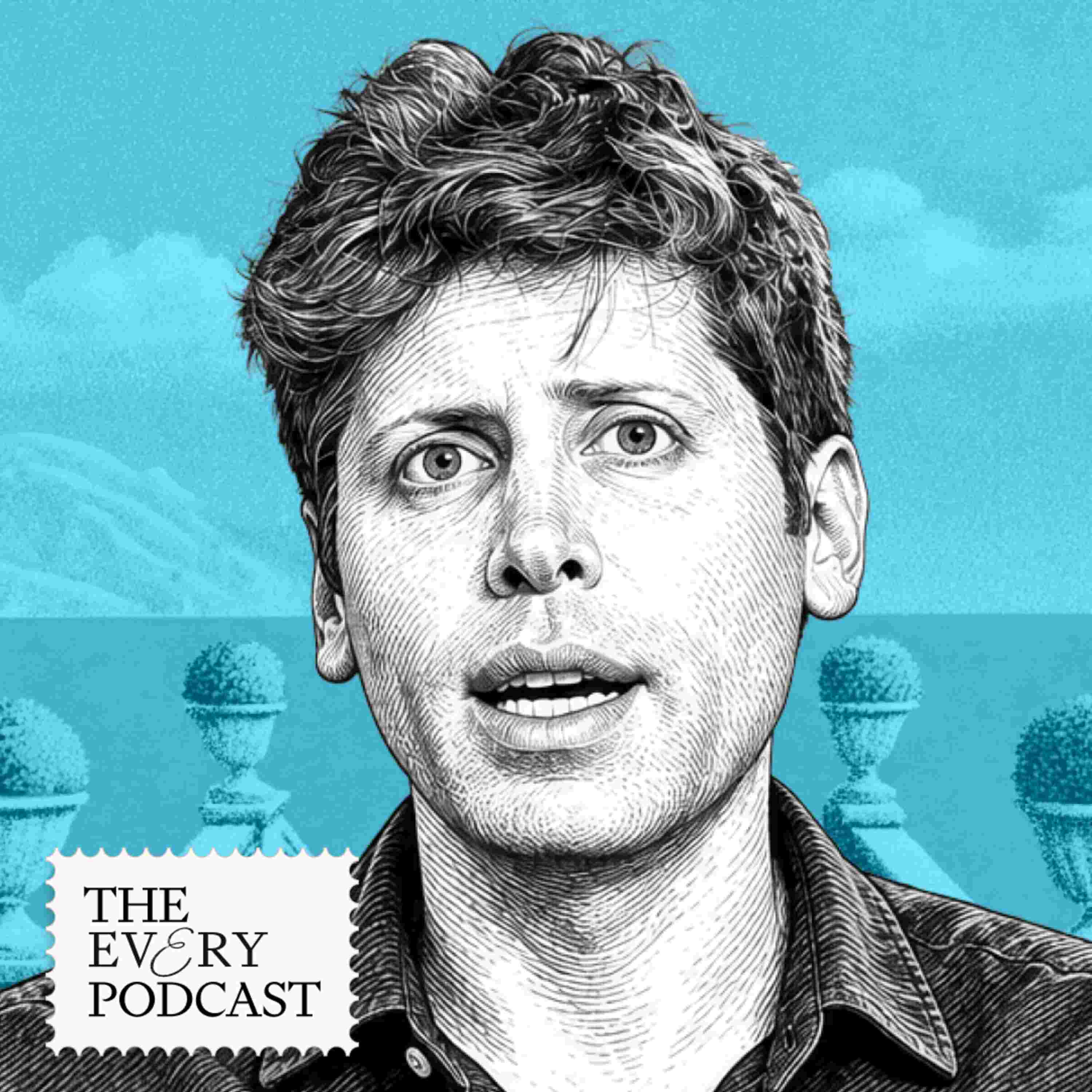
Sam Altman's Dot, OpenAI's new always-on agent, gave him back the most productive part of his day. The OpenAI CEO would lose his early mornings—his window of "maximum creativity"—to whatever fire needed putting out. Now, his Dot triages those issues and flags only what's truly urgent. It's also gotten him building again: In spare moments, he gives his Dot ideas for a feature, and his Dot builds five or six versions for him to review. On the first episode of The Every Podcast (formerly AI & I), Dan Shipper interviews Altman at OpenAI's DevDay. They discuss how Altman uses his Dot to protect…
E129 · 2 Sep 2026 · 48 min
Two years ago, Katie Parrott was laid off from a crypto firm and couldn’t afford a career coach—so she turned to a $20-a-month ChatGPT subscription instead. The Every staff writer’s habit of feeding AI good context eventually became compound writing, a codified system for brainstorming, drafting, and editing with AI. Today, that system is a plugin any writer can use. On this week’s AI & I, Natalia Quintero talks with Katie about turning good ingredients into good writing, borrowing the taste of writers she admires, and why AI helped her fall back in love with the page. If you found this…
E128 · 26 Aug 2026 · 1 hr 7 min
Will England is the CEO of Walleye Capital, a hedge fund managing nearly $10 billion in assets. An engineer by training with a math background from Oxford, he has spent his career at the intersection of machines and markets—and has made AI fluency mandatory for all 400 employees. England believes refusing to use AI is like refusing to use the internet in 1995 because it wasn’t perfect. His use of AI is public and effusive, including in a firm-wide email that opened with “I used ChatGPT to write this email. You should be using it, too, and be proud of it.” AI informs how Walleye drafts memos…

E127 · 19 Aug 2026 · 1 hr 22 min
LLMs are a new medium for storytelling. That’s according to the creators of Portola, the company behind Tolan: an embodied AI companion that lives on its own planet and chats to you with a distinct personality. In 2025, Portola's founder and CEO Quinten Farmer and Head of Story Eliot Peper joined Dan Shipper to explain how they’re building this new medium from scratch. Their aim is to help users go from overwhelmed to grounded through conversations with Tolan that feel personal and spontaneous, not scripted. On this week’s AI & I, Dan revisits his conversation with Quinten and Eliot. They…
E126 · 12 Aug 2026 · 28 min
In 2025, Kevin Scott bet that the agentic web would be the next big thing in AI. The Microsoft CTO argued that for agents to be genuinely useful, they'd need to be able to take action on our behalf—which would mean giving them access to the same sprawl of tools, data, and systems that make up the internet. Today, that bet is starting to pay off, as the foundational infrastructure for the agentic web is now being built. On this week's AI & I, Dan Shipper revisits his conversation with Kevin. They discuss Microsoft's role in the agentic web, why openness doesn't have to come at the expense of…
E125 · 5 Aug 2026 · 49 min
Most consumer AI so far has been single-player: you and a chatbot, alone. Benchmark partner Sarah Tavel, one of Pinterest's first 30 employees, is betting that's about to change. She's looking for a product genius who can build an AI product with social DNA: status, network effects, and multiplayer dynamics. That'll enable users of ChatGPT and other models to learn from how others use AI and level up. On this week’s AI & I, Dan Shipper revisits his conversation with Sarah. They talk about why technical founders dominate the early days of a platform shift while product-minded founders win…

E124 · 29 Jul 2026 · 54 min
Kevin Kelly has spent over 30 years experiencing the edge of new technology: from the earliest days of the internet to the first years of Burning Man. But he’s always treated the frontier as a place to visit, not somewhere to live. It’s partially how he’s been able to stay grounded through tech’s various hype cycles. As founding executive editor of Wired and author of The Inevitable, Kelly spends as much time analyzing the latest in AI as he does reading about significant moments in history. It’s a discipline he traces back to his work with the Long Now Foundation, which he cofounded to…

E123 · 22 Jul 2026 · 47 min
Yash Poojary, a growth engineer at Every, dropped an idea for a campaign in Slack at 7 p.m. Instead of building it himself, Every’s head of growth Austin Tedesco took a screenshot of the Slack thread, dropped it into Codex, typed "Can you do this?", and went to the gym. By the time he got back, Codex had built four audience segments, drafted emails for each one, and pulled a social image that had worked before. It took Austin 10 minutes to make some tweaks and schedule the whole thing to send the next morning. Within a few hours, it generated more than $25,000 in revenue. That story came out…

E122 · 15 Jul 2026 · 1 hr
“Running a startup is a knife fight whether things are going well or not,” says Chris Pedregal, cofounder and CEO of Granola. Granola recently raised a $125 million series C round at a $1.5 billion valuation on the strength of its AI meeting notetaker. That valuation hasn’t made Pedregal complacent. Granola built its name as the first to make good AI meeting notes, but Notion, OpenAI, and Zoom have all since released their own versions. Pedregal isn’t rattled—he never thought meeting notes were the real prize. The bigger fight, he says, is over “what interface we use for work, and what work…
E121 · 8 Jul 2026 · 53 min
Craig Mod used to pay Campaign Monitor roughly $7,000 a year to send his newsletters. After rebuilding the tool himself with AI, his bill is closer to $150. It’s the kind of thing that convinces him we’re about to enter a “golden age of tool building”—one where anyone can build tools specifically suited to their needs, instead of settling for software from incumbents that are slow to innovate. Mod is the writer and photographer behind the newsletters Roden and Ridgeline and books like Things Become Other Things and Kissa by Kissa—as well as a lifelong technologist. He’s rebuilt the tax…

The Melo app keeps playing with the screen off, works in the car and on your watch, wakes you to your station, and browses the whole catalogue offline. Free, no ads, no account.