
Episode · The Quanta Podcast
Audio Edition: ‘Reverse Mathematics’ Illuminates Why Hard Problems Are Hard
10 Sep 2026 · 11 min
Episode notes
Researchers have used metamathematical techniques to show that certain theorems that look superficially distinct are in fact logically equivalent. The article ‘Reverse Mathematics’ Illuminates Why Hard Problems Are Hard first appeared on Quanta Magazine.
Podcast
The Quanta Podcast
Quanta Magazine · Tech & Science · English
Exploring the distant universe, the insides of cells, the abstractions of math, the complexity of information itself, and much more, The Quanta Podcast is a tour of the frontier between the known and the unknown. In each episode, Quanta Magazine Editor-in-Chief Samir Patel speaks with the minds…
More from The Quanta Podcast All episodes →
-
6 Oct 2026 · 28 min
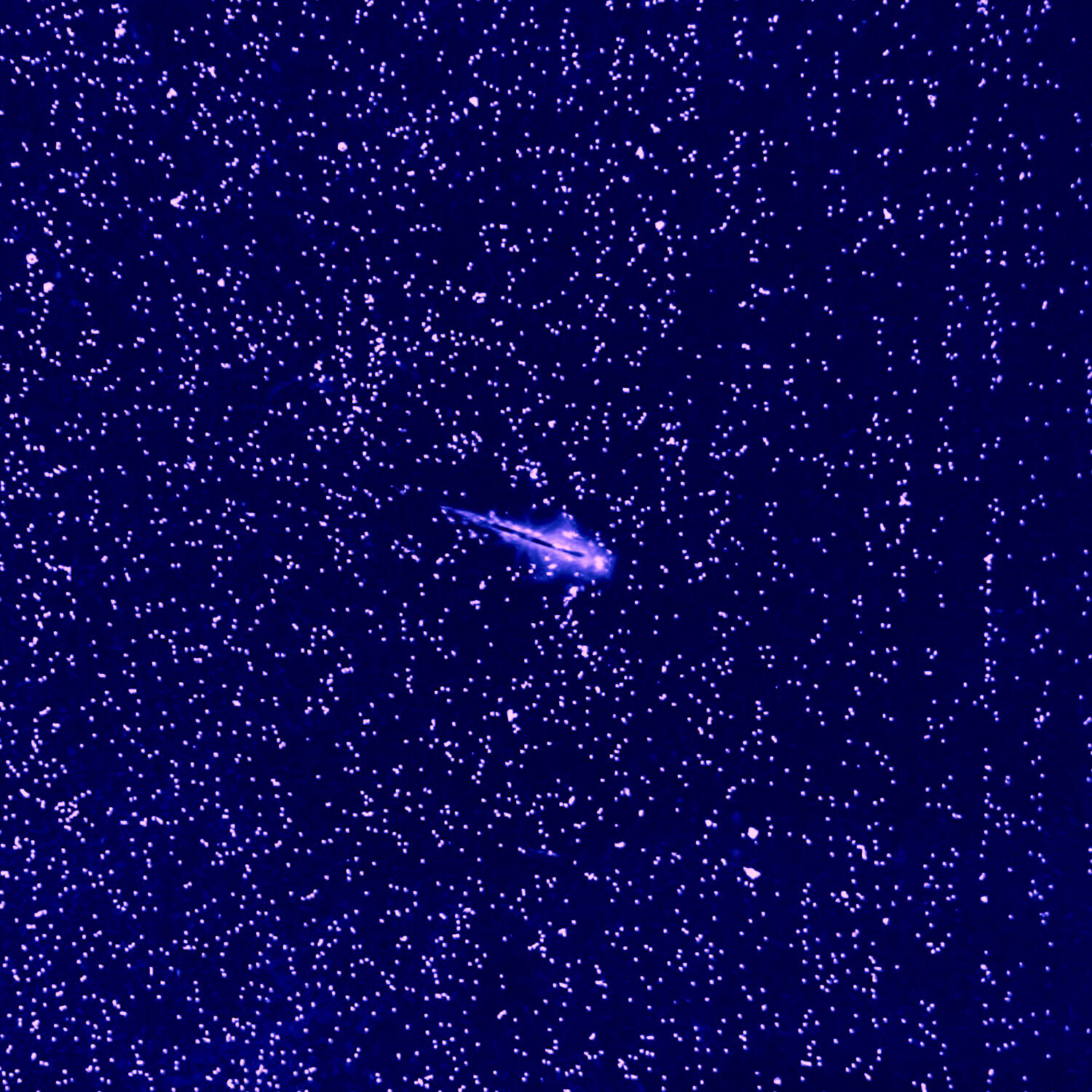
Sea Monkeys, Jupiter, and the Mystery of Turbulence
Turbulence is all around us: bumping our planes, roiling our rivers, swirling milk into our coffee. These systems quickly become extremely chaotic and complex. On this episode of The Quanta Podcast, host Samir Patel speaks with contributing writer Stephen Ornes about a recent study that used sea monkeys to complicate one of turbulence’s many mysteries. This topic was covered in a recent story for Quanta Magazine. Each week on The Quanta Podcast, hear the people behind the award-winning publication navigate through some of the most important and mind-expanding questions in science and math.…
-

29 Sep 2026 · 27 min
‘Jumping Genes’ Are More Than Parasitic DNA
You might imagine that the DNA in your cells has a simple history. But that’s not the entire story. Nearly half of your genome is a wild drama, thanks to a genetic material called transposons that can clip itself out of the DNA sequence, float off, and paste itself somewhere else. While these “jumping genes” may seem pathological, they’re more than just junk. On this episode of The Quanta Podcast, host Hannah Waters speaks with writer Jake Buehler about these unruly genetic fragments and their connections to the evolution of everything from moths to wombs. This topic was covered in a recent…
-

24 Sep 2026 · 27 min
Audio Edition: For Hong Wang, Living Fully in the Math World Means Threading the Needle
Focus, commitment, and insight resulted in a “once in a century” proof. Hong Wang is now just the third woman to win a Fields Medal. The article Living Fully in the Math World Means Threading the Needle first appeared on Quanta Magazine.
-

22 Sep 2026 · 34 min
Are the Little Red Dots Actually Black Hole Suns?
When all you can see is a speck, it’s hard to tell what you’re looking at. Astronomers first argued that little red dots spotted by the James Webb Space Telescope in 2022 were distant galaxies on the cosmic horizon, mainly because of their brightness. Later, they concluded that little red dots look more like the supermassive black holes that sit at the heart of most galaxies. But in the spring of 2025, two teams of astronomers simultaneously announced observations of a pair of little red dots that were unlike all the rest. In fact, they were unlike any object ever seen. On this episode of…
-

15 Sep 2026 · 30 min
Four-Color Theorem Is Still a Math Favorite
In 1852, the mathematician Francis Guthrie was coloring in a map of English counties when he noticed that he needed only four colors. Was this always true, he wondered? The question captured the imagination of hobbyists and professionals alike — and in 1976, the mathematicians Kenneth Appel and Wolfgang Haken proved it, rather controversially using computers. Recently, mathematicians have revisited the four-color theorem and found a more efficient way to color maps with just four colors. On this episode of The Quanta Podcast, host Samir Patel speaks with writer Greg Barber about the…
-

8 Sep 2026 · 30 min
Does Computer Science Need Computers?
In popular culture, computer science is practically synonymous with programming. There are obviously branches of computer science in which computer hardware and software are essential, such as in the design of operating systems or the study of memory management. But in the theoretical side of the field, researchers need not ever touch a real, physical computer. Do computers play an essential conceptual role in that kind of theoretical work? On this episode of The Quanta Podcast, host Samir Patel wades into an age-old debate with writer Ben Brubaker: If computer science isn’t about computers,…
-
1 Sep 2026 · 31 min
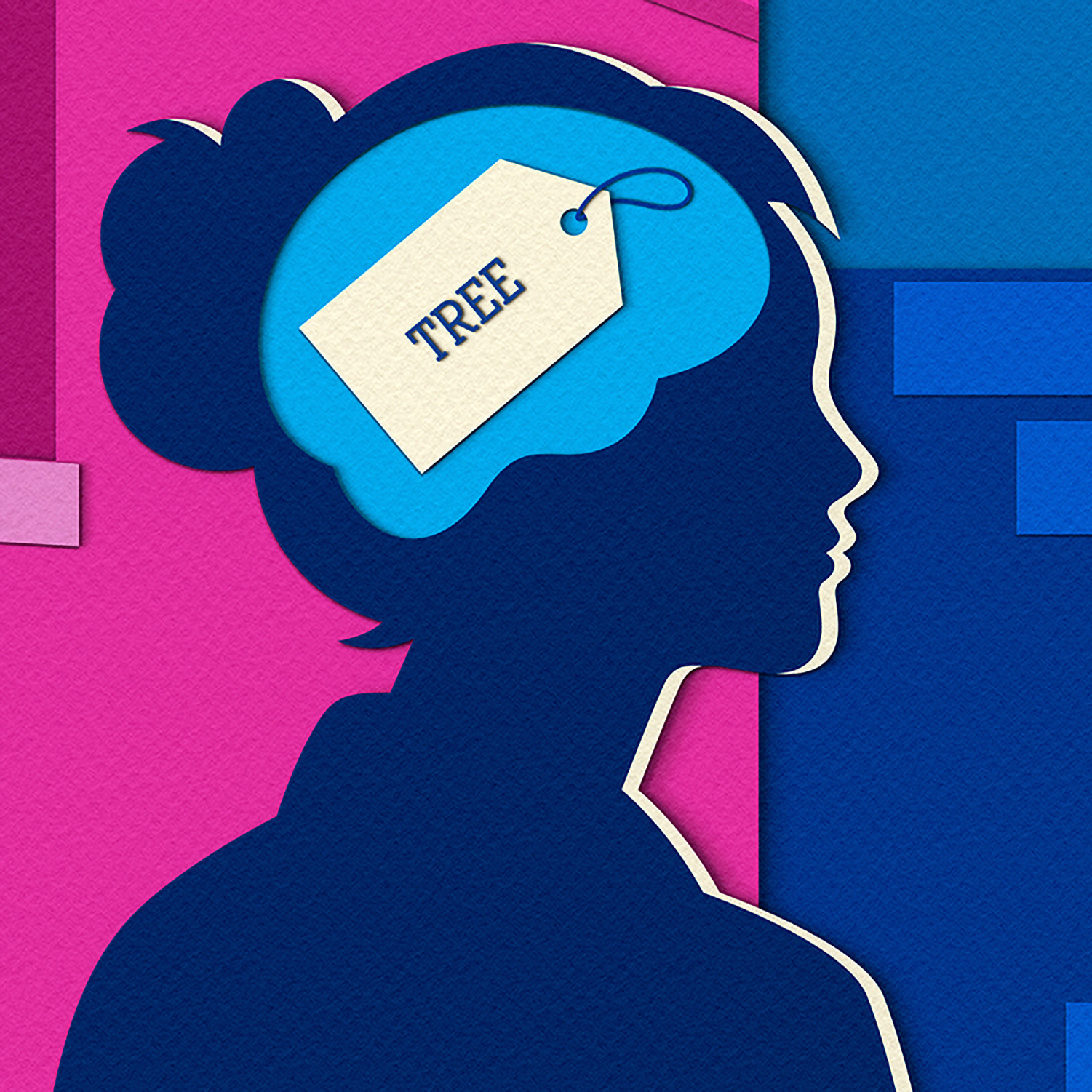
How the Brain Compresses Our Noisy World
If you are well rested and full, your brain tells you that a bruised overripe apple is a piece of subpar fruit to be passed over. However, if you are exhausted and hungry, an overripe apple is categorized as much-needed food. But how is the brain able to categorize that same apple in these situations? On this episode of The Quanta Podcast, co-host Hannah Waters speaks with contributing writer Conor Feehly about how the brain manages to categorize similar sets of sensory signals in radically different ways. This topic was covered in a recent story for Quanta Magazine. Each week on The Quanta…
-

27 Aug 2026 · 17 min
Audio Edition: A Cell So Minimal That It Challenges Definitions of Life
The newly described microbe represents a world of parasitic, intercellular biodiversity only beginning to be revealed by genome sequencing. The article A Cell So Minimal That It Challenges Definitions of Life first appeared on Quanta Magazine.
-

25 Aug 2026 · 31 min
Picking Teams With the Math of Imbalance
Combinatorial discrepancy theory is a branch of mathematics concerned with balance. If you’re making two teams — sports, trivia, you name it — how can you make sure that they’re perfectly balanced and fair, skill-wise? You start with vectors. On this episode of The Quanta Podcast, host Samir Patel speaks with award-winning science journalist and regular contributor Max Levy on an “absurd,” “holy grail” conjecture, and the major breakthrough made in fall 2025 by two theoretical computer scientists. This topic was covered in a recent story for Quanta Magazine. Each week on The Quanta Podcast,…
-

18 Aug 2026 · 36 min
What Makes a Fluid a Fluid?
The Navier-Stokes equations are enormously successful at predicting how fluids flow and swirl. But they fail to account for the microscopic bits that make up matter. But now math based on symmetries offers a new conception of fluids and why they behave the way that they do. On this episode of The Quanta Podcast, host Samir Patel speaks with writer Charlie Wood on the longstanding effort to rebuild the theory of fluids from the bottom up, including a strange connection to black holes and models that simultaneously run time forward and backward. This topic was covered in a recent story for…

Take it with you
The Melo app keeps playing with the screen off, works in the car and on your watch, wakes you to your station, and browses the whole catalogue offline. Free, no ads, no account.


