
Episode · What Bitcoin Did
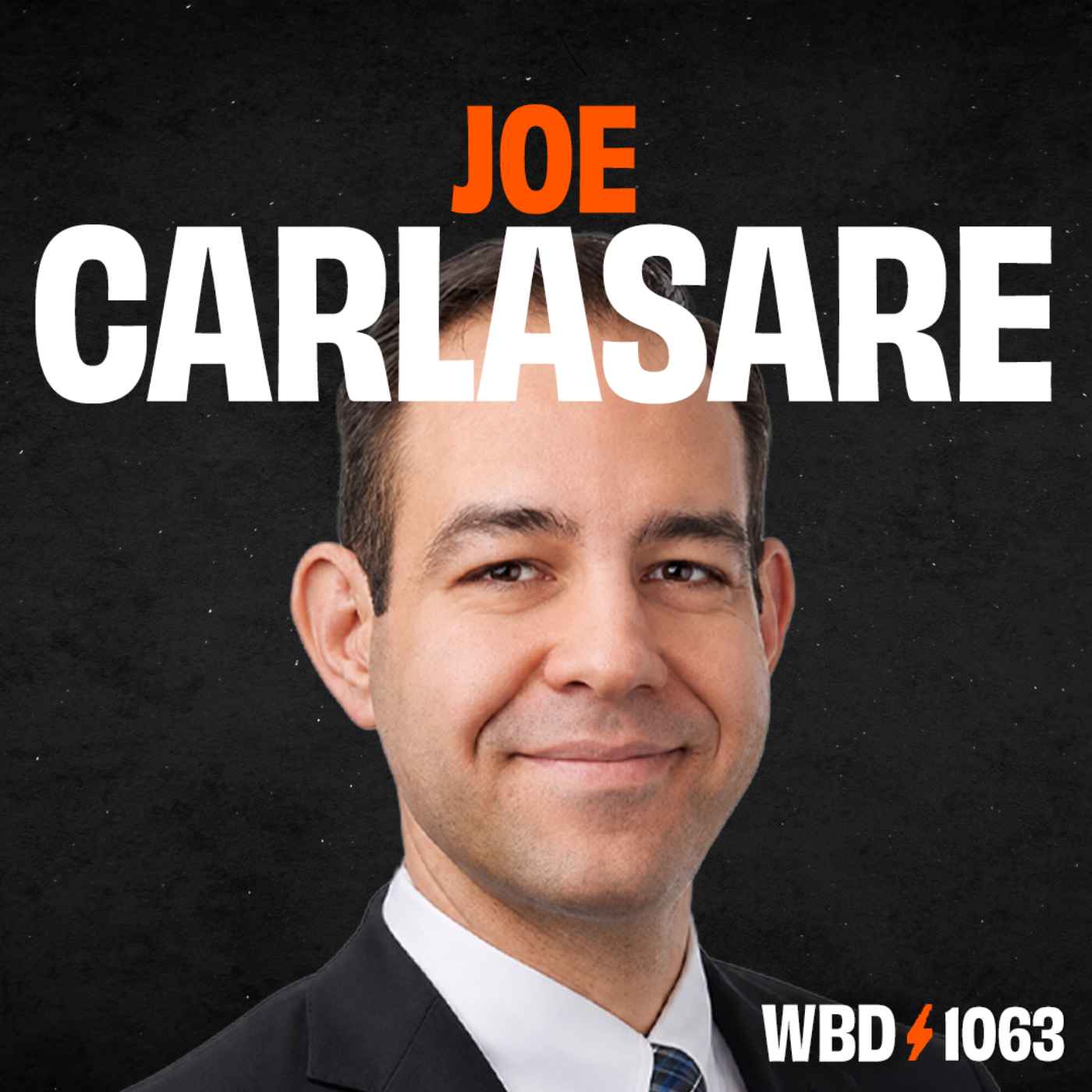
The Everything Rally Is About to Begin | Joe Carlasare
1 Sep 2026 · 1 hr 11 min
Episode · What Bitcoin Did
1 Sep 2026 · 1 hr 11 min
“You could have a massive cycle here this time around that will shock people.” — Joe Carlasare Joe Carlasare is a commercial litigator, Bitcoiner and author of Unconfiscatable. In this interview, we discuss why he believes the Bitcoin bottom is in, how the recent drawdown changes Bitcoin’s risk profile, and why a move above $100K could trigger the next major cycle. We also discuss institutional adoption, the future of the four-year cycle, Bitcoin-backed banking and credit, Treasury buybacks, fiscal dominance, AI investment, structural inflation and why Joe is bullish on the economy, markets…
Tap a chapter to play from there.
I think there's plenty of indications that the bottom is in. You're about to do a monthly close over the 10-month moving average, which historically has marked the end of every single Bitcoin bear cycle since at least 2016, 2017. You have a very compelling case that this was the most muted, mild drawdown in Bitcoin history. That is extremely persuasive. I think the vast majority of people will have exposure to Bitcoin in one form or another without even realizing.
If you have a situation where you get back over 100K, you have an economy, which I think is starting to turn up and start to be humming along here. You could have a massive cycle here this time around that will shock people. And you have this Industrial Revolution 2.0 with AI, which is going to have huge effects on our economy that we can barely feel. And to me, the consistent picture through all commodity markets is higher structural inflation. Joe Carl Sari, how are you doing, my friend?
I'm doing excellent. Good to see you. Good to see you too. One of my favorite people to speak to. You always have a bit of a, I don't want to say contrarian because I feel like Bitcoin is a contrarian, but you have a different view to the normal Bitcoiner on the state of the economy, what Bitcoin's doing. So I'm excited for this. We've got a lot to talk about. A lot to talk about. So where do you want to start? Well, I think we've got to start with the price. So Bitcoin's absolutely ripped in the last two weeks. We're just under 80K now. This kind of came on the back of the treasury announcement, the buybacks. How much do you think that played into this? I think it was sort of the match that lit the fuse. But to me, I think Bitcoin bottomed effectively in February when we hit that 60K down. Yes, it is true that we went slightly lower. I think, you know, it tested 58K gain, came through and held that report strong, which I thought was great. I love memes. Bitcoin is so sentimental that memes narratives really do control. But if you look, just sort of take a step back. For one, I was a big person, as you know, I think it faded this like four-year cycle
theory because I didn't think fundamentally there was any reason for it, especially given the economic data, which I look at pretty closely, as you know, stock market, which has been doing really well just consistently all year, many other asset classes ripping. That being said, that was wrong, right? The idea of the four-year cycle, whether it is a self-fulfilling prophecy, whether it is something that is just something that is traded upon by Bitcoiners, sort of becomes that self-fulfilling prophecy, it doesn't really matter. It is what it is. So everybody that was fading that narrative was wrong. That being said, I think there's a lot of green shoots you can look at with the Bitcoin price that show you that fundamentally at this time is different, at least with respect to the mutedness of the drawdown, right?
So if you go back and look, we had that cycle high in the fall where Bitcoin was at roughly 126, 127, thereabouts. And then you sold down hard very quickly. You were at 80K in November. And then you had to rally back. And then you had the whole sort of slow grind lower until February, which basically went down. And then really we've been bouncing around between 60 and 80 roughly for the entirety of the year. Right now, as we record this podcast, Bitcoin is at $79,000 after that big run.
So what do you take away from that? You take away that to me, you had one of them, because I think personally the bottom's in. I think there's plenty of indications that the bottom's in. You're about to do a monthly close over the 10 month moving average, which historically has marked the end of every single Bitcoin bear cycle since at least 2016, 2017. If the bottom is in fact in, you have a very compelling case that this was the most muted, mild drawdown in Bitcoin history. That is extremely persuasive.
The fact that Bitcoin roughly fell from peak to trough, you know, a little over 50% compared to prior 70 or 80% drawdowns, that's really encouraging. So yes, I mean, I thought that, I thought this was sort of a, I used the term artificial sell-off. It's sort of like it felt like it had to happen. Like people just didn't want to get burned again. So they had all these profits above 100k. They saw that nice run up since the 2022 bottom. So they felt like a prudent thing to do was, you know, don't fool me again. But I do think that the vast majority of Bitcoin, Twitter and Bitcoin traders were waiting for much lower numbers, which they may not get.
And that's exactly what market does. Over time, the market evolves, it changes sort of the patterns that people come very familiar with. And whatever worked in the past tends to no longer work in the future. It certainly worked for people that sold in Q4, right? But when you sell, Danny, the difficult thing, why I sort of rage against people trying to trade and sell Bitcoin is that not only do you have to nail the top, you have to account if you're in certain jurisdictions for taxes, but you also have to nail the bottom. And there were plenty of people sitting at 60K where we were at for a very long time saying Bitcoin's going much lower, Bitcoin's going much lower. If the bottom is in and Bitcoin heads up from here, um, you know, your, your ability to sort of take advantage of that trade is very challenging.
Um I know a lot of people now uh since we had that big move up into the high seventies they saying when are we getting a pullback when are we going to get a pullback um maybe you get one maybe get one in the low 70s but i bet there are going to be a lot of people afraid to buy that because they believe that you know we get we're going to go much lower so to me like i look at this whole year as basically sort of a game of chicken like people were playing games of chicken last year i don't want to sell they're playing games of chicken i'm going to buy to me what's more encouraging is where do we go from here? Because even among the cycle believers, even among the four-year cycle, they're telling you Bitcoin's going to bottom sometime in October, right? Well, October is less than 60 days away. We're in September by the time you record this.
So to me, what is the compelling bear narrative? I don't really hear any. And given the fact that we're down roughly 40% as we record this podcast from the all-time high, to me, it's a very poor risk award. They're trying to mess around trading Bitcoin. And I think far more individuals are going to be front running that expectation that the bottom's in, we're going to have bright, sunny skies ahead, and Bitcoin's going considerably higher. So all of that is to say, I'm really bullish. I think that what you've done here is you've done what Jordy Visser calls the IPO moment of Bitcoin, where you've wiped out a lot of people that had psychologically that 100K mark in their head. They were going to sell. They were going to take some profit. You've gotten rid of that supply. You've made it, you diffused the supply. You've got it into stronger hands that are going to hold for the long term. And you had a very muted drawdown, you know, by Bitcoin terms, at least 50%. To put that in context, there are mega cap tech stocks that fell 50% not too long ago, right? A 50% drawdown in a high volatility asset, although it sucks, right? It's painful
relative to a 70 or 80% drawdown, that is very constructive, right? So going forward, if you're a money manager, you're looking at this, Bitcoin's starting to trade differently. Bitcoin's starting to have a different risk profile relative to other assets. All of these things are little thumbs on the scale that you want to see as this matures into an institutional quality asset. And man, if we get back over 100K, I think the FOMO is going to kick in big time.
And I think we're going to get moving very quick. I think you could be at new all-time highs, if not this year, later in 2026, early 2027. So you basically outlined every single reason I don't ever bother trading Bitcoin. Because realistically, normal people, it's very hard to call the top. The people who are creating the ITO moment in Bitcoin, that guy selling 80,000 coins back in 2025, which we all funnily call bullish selling, they're the ones that put the top in. But realistically, if you're trying to catch the top, you're probably going to be selling somewhere around the 100k range. Very few people get the actual top. And then the interesting thing is like when we were down at 60ish K, under my videos, like I did a video with Checkmate, every comment was calling for, you know, somewhere in the 40s. And so if you miss the 60K, like Bitcoin moves so fast that realistically, you're now looking at buying at 80K. And once you factor in tax, like, have you made any money?
These are the really like hard things about trading Bitcoin and so few people win. Well, I think the same is true right here, right? So like you can make a case, a very compelling case and i i i always scan some of the the comments to your point because they're very interesting like people are are the overwhelming majority thinks bitcoin needs to reset you had this awesome run so we need to retest lower it needs to go into the 70s or maybe it goes and retests you know even even the high 60s right um but the the challenge is that if the opposite is true let's just say you break through this 82 to 84k range all the ta traders they'll say, oh, the market structures change. Now we put in a higher high relative to where we were in the spring, right? So that move from 8284, say, upwards to the 90s, it's going to happen just as quick.
You're going to have a bunch of fast money piled back in all the traders, all the momentum junkies, they're going to flow back in, and Bitcoin can rocket higher. So do you really want to gamble here? And it's like, you know, to me, when you have this incredible asset, I don't want to live with that sort of stress of, oh, I have to wait now to buy it back lower. And if I don't have to buy it back lower, then I have to move very quickly if it breaks through 84K because it's going to run even higher. It's just a mess, right? It's not something that I think, I mean, they're playing markets to trade. And I trade traditional markets all the time. It's way easier.
I think Bitcoin is a much more challenging asset, particularly with size to trade. And I've seen weird things happen over the course of Bitcoin's existence where TA traders and people were telling me there's no way Bitcoin can do this. There's no way it can move this low or this high. And it doesn't. It seems to always find that max pain point and cause a lot of frustration for people. So to me, it's a loser's game to trade Bitcoin. I always say like you should be focused on having a sizable allocation that you feel is appropriate for your risk tolerance, that you feel is appropriate for your portfolio, and then let it go. Just forget about it. Yeah. And this is the crazy start in Bitcoin, which is I think if you take out the 10 or 12 most volatile days in Bitcoin, you basically wipe out all the gains Like Bitcoin is a very volatile asset but it does it in very short bursts and it sideways a lot And like holding is definitely the way But I interested to know why you think this time is different.
Because like you, I thought the cycles were done. I still in my heart just can't believe that the calendar they take when the Bitcoin price goes up and I find it very hard to get into the four year cycle. And I'll probably be the first person saying it's done again next time. Because at some point that four year cycle has to break, I think. But why do you think this time is different? Well, first off, I want to just emphasize something you just said.
If Bitcoin is perpetually locked into a four-year cycle, I don't think Bitcoin is fully realized that makes it a perpetual trading asset. There's no reason to own the asset if it's always going to boom bust every four years. So I think even the cycle theorists, right, they will concede, yes, at some point it has to break, but they will say, oh, we got two or three more cycles in where this pattern will repeat. to me okay fine but the one time you screw that up could be the most the biggest cycle in bitcoin's history or one of the bigger cycles relative to how much capital could float into the markets and that again that game of chicken i don't want to play i'd rather just hold through it particularly since you know i thought holding through this bear market although annoying and frustrating was perhaps the easiest to hold through i mean a 50 it was not even you know in prior bear markets people were legitimately saying bitcoin's going to zero it'll never come back this one we're debating about, will it bottom in the spring or will it bottom in the fall? You didn't have a contagion event like an FTX type event, which was causing panic and forced selling across the board.
The most you had was STRC and strategy, which we'll put that aside. Why do I think it's different? I think it's different because psychologically, again, we talked about this and I'll credit Jordy Visser because I completely agree with his thesis on this. I think there was an IPO moment of Bitcoin, I think when you had the final coming of the ETFs, BlackRock, major institutions involved, and that wave of early hodlers who, to your point, they're selling Bitcoin at 80,000 coin to clip. That's significant, right? So getting that supply diffused out into the marketplace was huge. I mean, I know personally, because I have some clients who told me anecdotally, like 100K was a threshold that are selling 20 to 30% of their Bitcoin, because they can buy that second or third house they can buy that yacht they can take advantage of hodling for the last 10 years and i don't begrudge them that that's a good thing right if they if they want to sell because they're going to you know put in something else or diversify so be it um a lot of these guys are really still bullish on bitcoin they just they just realize like you know okay i bought bitcoin
in my 20s now i'm coming into my 40s whatever uh it's time to sort of you know uh to diversify buy what I need to buy for the family, do what I need to do, right? They were hodlers for years. But what I find to be very bullish about that is you do that once, okay? You have that sale one time and that supply is diffused, right? Other people now have it as some allocation of their portfolio. That's hugely significant. You can't overstate the fact that if you really want Bitcoin to become more of diamond handedness, right? You don't want concentrations of supply because the concentration of supply make it altogether easier for those folks with the bigger allocations to just sell and do certain periods. You want it to be where people have their 5% allocation. They see that 5% or 10% double or triple into the future. And then they say, hey, maybe I want to just hold this. There's no real reason to. I have other assets. And I think that's increasingly going to become the story. I think the vast majority of people will have exposure to Bitcoin.
in one form or another without even realizing. I think financial advisors already that I'm aware of are sticking 2%, 3%, 4% into Bitcoin. There are guys that will, I listen to a lot of Trot Fight podcasts. There are guys that absolutely do not care at all for Bitcoin and they're putting their client's Danny into a 2% or 3% allocation because they see what it does from a portfolio construction standpoint. And to me, that's awesome. I love that idea that you don't have to be in love with the asset.
You don't have to get married to it. But you're going to realize, like from a portfolio construction standpoint, it makes sense to own some. You know, it's like the old Satoshi adage, you know, it would make sense to buy some just in case it catches on, you know, that type of thing. That's sort of the, I think, analysis that a lot of FAs are doing with real money at this point. I think it's only going to become more significant in the days ahead.
And then, man, if you have a situation where you get back over 100K, you have an economy, which I think is starting to turn up and start to be coming along here. To me, I think you could have a massive cycle here this time around that will shock people. Because right now, here's what the dominant expectation is. The dominant expectation is Bitcoin is going to maybe give you a 1 or 2x. Okay? And what have we learned time and again? Whatever the majority consensus view is in markets, it's usually wrong.
I don't care what market you're talking about. In 2025, people were saying we're going to go over 200K. I mean go look at some of the projections of people that they had They said 300 400 500K Bitcoin People were disappointed I wasn As you know I was going for 130K to be the high for the year I thought that was sort of a reasonable framework of where Bitcoin would be given the move it had. And I think it needed to reset from there. I certainly didn't expect it to draw down as much.
But now, I mean, I don't see any reason why you can't be approaching well into the high twos the next time around, perhaps even higher. And to me, I mean, I can't find a time in Bitcoin where I've been more bullish about the, you know, high movements and I think the allocation that is going to come to Bitcoin in the traditional finance world over the next, say, 18, 24 months. If you hold Bitcoin long enough, there's going to come a time when you need some dollars.
It might be a tax bill, a business expense, life getting in the way. But whatever it is, it might come at a time when you don't want to sell your Bitcoin. That's where Ledin comes in. Ledin lets you borrow against your Bitcoin instead with tiered rates that go as low as 9.25%. So you don't have to sell your stack if you don't want to. Ledin have operated through every market cycle since 2018 and have originated over $11 billion in loans. But the important part for me is the way Ledin handles these loans.
Your collateral is held in custody and never lent out to generate interest. And Ledin's more than just loans. Tether Gold is now live alongside your Bitcoin with instant trading across 10 pairs. And later this year, you'll be able to borrow against gold in the same way that you do with Bitcoin. Ledin really is an awesome company. I've used them multiple times. The applications have taken me less than 15 minutes and you have the dollars in your account within hours.
If you want to check out Ledin, go to ledn.io and use the code WBD for 0.25% off your first loan. That's ledn.io and use the code WBD. Every Bitcoiner eventually has to answer one question. If something happened to me, would my family know what to do? Could my wife or parents recover my Bitcoin? And would my children inherit the Bitcoin that I spent years stacking. That's where Anchor Watch builds Bitcoin custody models to protect you and your family against real life, accidents, errors, kidnappings, and even your own death.
Every Anchor Watch custody solution includes their inheritance protocol, designed so when the unthinkable happens, your Bitcoin reaches the people you intended it for. Whether you're a self-custody expert or want multi-institutional support, your Bitcoin estate plan shouldn't be an afterthought. Bitcoin is only generational wealth if it can actually be passed down through the generations. so make sure they can access in the future what you've built today.
AnchorWatch is your custody, your way. Visit anchorwatch.com to get started. That's anchorwatch.com. If you own a Bitcoin ETF, especially if it's GBTC, you need to listen up. Spot Bitcoin ETFs provide price exposure to Bitcoin, not direct ownership. You can't withdraw it, you can't self-custody it, and they charge you a management fee every year to hold it. Well, Swan recently announced Swan Real Bitcoin Exchange, and it's ready to use right now.
RBX is a structured in-kind exchange that converts your spot Bitcoin ETF shares into real on-chain Bitcoin It does that without selling on the open market and is designed to support a tax-efficient outcome So for example, if you hold GBTC, you're paying 1.5% a year in management fees for Bitcoin price exposure But by swapping GBTC for real Bitcoin with RBX, you can drop that figure as low as 0% by just holding it in self-custody This is designed in a way that maintains your cost basis and in a manner that supports the deferral of capital gains tax.
So if you own a Bitcoin ETF, especially if it's GBTC, you need to talk to Swan Private about RBX today. Head over to swan.com forward slash WBD and book in a call with one of their team. That's swan.com forward slash WBD. Let's go. Because I mean, I was one of the people calling for way too high a number. I can't remember what I said. but yeah you were probably the most accurate call that I can think of I mean you basically nailed it I think 130k, 126k same thing but what I want to know from you because like for me as a Bitcoiner Bitcoin dropping 50% is obviously better than dropping 70% but I was never going to be a seller like I've been through worse bear markets but what does Bitcoin only dropping 50% mean for like the serious like TradFi investors with a lot of money like does that change their analysis of it when it only drops 50% during a bear market assuming the bottom's in. Yeah, absolutely. It changes the risk profile because if you have a, first of all, in our markets today, one of the things I think is critical, I don't care if it's the treasury market, if it's the equity market, the real estate market, Bitcoin market. And it's
true in a weird way. It's true with the cycle theory. I think narratives are so important. We live in such a media driven world and you can see this from five minutes spent scrolling through your doom feed on Twitter, right? Whatever anybody's talking about. We live in such a hype and narrative driven world that when you start getting narratives like, you know, Bitcoin, the days of 60, 70, 80% wipeouts are gone. Now, maybe you see a pullback of 30, 40, 50%. That's going to be more normal going forward. People start to repeat that. You know, the idea of the debasement trade, the idea of the debt, the idea of, you know, a digital gold. These narratives are really helpful in people communicating it.
And what I think you'll see from financial advisors and traditional financial allocators over again the next couple years here is if if knock on the wood the bottom is it and that was the bottom at 58k they will start to repeat the fact that you know bitcoin has matured to the point where we're no longer going to see the 70 80 drawdowns and we just had a case you know case study in that we just had a period where there was maximum negativity. I mean, look, if you go back and play, I save occasionally some of the spaces on Twitter where people are talking.
They're talking about quantum. They're talking about Saylor going to jail, right? Like I heard a title of a space with about 2,000 people in it saying Michael Saylor was going to jail because of STRC. You had all of these narratives that Bitcoin can't survive quantum and can't survive XYZ. that's data technology, that there's just no more gains to be had. If Bitcoin actually starts ripping in that environment and you have the historical example of a muted drawdown, that will be something that people cling to. People will say, despite all that maximum negativity, there were not sellers to drive this thing under 60K for any significant amount of time.
I think all in, you might know this better than that, but I think it was like 72 hours, we were under 60K, something. Yeah, it was no time. It was no time at all. 60K Bitcoin, which tells me that there was a lack of sellers, that you had just the diamond-handed folks at the bottom. They were never going to sell. And I think that floor only gets higher. I think we will see a time in the near future where it's going to be really difficult for people to give up coins under 100K.
And once you have that floor at 100K, psychologically, that unlocks multiples of 100K, 2, 3, 400, 500K. And then at each level, right, there's going to be some group of people. There's going to be some cohort that says, you know what? I've had a good run. 200K might make sense here. 300K might make sense to lighten up. That's going to be true for all of the rest of time. You're going to have some level where it unlocks more supply. But to me, the psychological support of 100K is significant.
Having that firmly established as the floor makes every multiple of that look even more cheaper. So that's why I'm bullish. I mean, I think it's great. I mean, I'm super bullish at this point as well. And I want to bring up Checkmate one more time, because he, I mean, he's done really well calling this bear market. But one of the things that I really like is he says that the bull market author is the bear that follows. And because we didn't have a crazy exponential run up last time, do you think that's why we only got the 50% pull down?
And then to add to that, what does that mean going forward? Does it mean we're going to have less volatile upside? Because you're talking, you know, high 200s, maybe 300k. Like that's a pretty significant bull market do you think the volatility is going to be dampened both ways going forward i think that any market and in the way i visualize it i think about a rubber band okay if you have a market that becomes stretched okay and it's unreasonably stretched you generally get a snapback okay um and we did not have i don't i don't think even at you know the high high to mid 20s on 120s I don't think Bitcoin was stretched as a market so yes I think that played into uh uh the downside being rather muted right because you didn't have the blow off I don't think you're going to have as big as big of a drawdown that that's not to say that can't happen in the future I mean if if I'm right and Bitcoin has a serious bull move which I don't think we've really seen since probably 2021 uh maybe even 2017 that was the last real move uh if you have that period like where you're getting up into the three or four hundred thousand then yes i i would expect
there to be a pretty vicious snapback just because you know at that point you've exhausted so many buyers and i think there's going to be an incredible wave of sellers at that point it's just so to me what i would much rather see and again this is not like a call or a forecast it's just my preference I would much rather see a more slow and steady climb. I think that's more sustainable. I think slow and steady, where you build up sort of support levels is really positive long-term, and it's much better.
Think about this, if you're trying to spur adoption, and I think your podcast talks about the idea behind getting broader adoption, and you view that as a goal, right? Yeah. Seeing somebody buy when there's massive FOMO and Bitcoin's ripping every day and you have massive gains and then having that person have to endure a 60 70 80 drawdown psychologically is devastating even even if they have a smaller amount of money in it i mean i know plenty of people who they bought you know between say two and five thousand dollars of bitcoin in 2017 and then they saw that you know if they're buying in november or december they saw that get cut in half or down 70 psychologically that's very difficult for people and although we can preach as Bitcoin is DCA, DCA.
We know that's not what people are going to do. People are going to put the money in when it gets fast moving when there momentum and they going to take the money out when it keeps moving against them So what I would rather see is more like equity performance on steroids almost like NASDAQ performance on steroids where you have you know 15 20 gains year over year consistently. Maybe you don't have the five, you know, 10x moves, but you have consistent, you know, double digit returns. And when you have a drawdown, it's a 20, 30% digestion move, where you, you You attract buyers at lower prices and they come back in and then we off to the races.
I mean, if you can break this cycle thesis, which the first step of that is, I think, putting in this low and making sure we don't go back to the 58K area. If you can break that cycle thesis that we have to pull back 70, 80%, to me, that's going to mean Bitcoin trades better in the future. And I think it's going to be less of an incentive to try to gain tops. You know, the equity market, one of the reasons the equity market trades like how it does, Danny, is because the investors in VU or the S&P 500 index funds, they have been conditioned that, yes, you'll occasionally get a 10 to 15 to 20% correction, but we will make new all-time highs within, you know, a month or two months or six months, whatever it is, right?
um so you know you saw that in april of this year you saw it the year before and during in april of 25 you see these very sharp downturns but then it rapidly goes right back up if bitcoin can start to trade like that man um the whole noise about it being too volatile or uh not something for regular investors i think it all changes i think it goes to a position where like bitcoin is seen more as a fundamental pillar of your portfolio. Yeah. And I think to your point, it really doesn't matter how much money you have in Bitcoin. And if you take that to sort of the logical extreme, I love grassroots adoption in Bitcoin. And last year I was in Kenya and we went to Kibera, which is the largest slum in Kenya. There's like a million people in this slum. They have very, very little. And there's an awesome little Bitcoin circular economy that's built there.
There's like 60 merchants. And the idea of people getting onboarded to that kind of program, buying Bitcoin at the top and then them losing half their net worth, which is a very small amount in Kibera, is a very, very poor area. That's devastating. And if we want real grassroots adoption, that does need to stop at some point. And I remember when we first spoke, I think, in Vegas, you were saying you like the idea of Bitcoin stair-stepping to a million dollars rather than these crazy moves up and down.
Do you still think that's on the cards at all? Absolutely. I mean, here's the thing. the Bitcoin market, and I think this dovetails really nicely with what we've been going through with this cycle thesis. Bitcoin, perhaps more than any other asset, I think it survives and thrives on narratives. And the narratives have changed, to be clear. If you're being honest, the narratives from the early days to now, they've changed the narrative from peer-to-peer currency has changed, I think now to more store of value.
And I don't view that as a negative. The narratives of companies change. The narrative of nations change. The narratives of even religions change. I don't view the fact that narratives change as somehow being a negative. I think what you're going to look at is an alternative to sovereign debt as closer to a digital gold, but far more versatile and having far more utility and verifiability. I think gold will have a place, or Bitcoin will have a place in a portfolio.
I think that will be very encouraging moving forward. the narrative that we have that we have to have boom and bust cycles, although we will always have corrections and we'll have bold moves and consolidation moves, I think the boom and bust narrative may die. I think you may at some point in the near, not too distant future, put it that way, not too distant future, I think you may have a period where Bitcoin, instead of having these boom and bust, it has more of a stable growth within corrections. But the secular story of it being the world's greatest store of value that can survive and thrive.
And it's only enhanced, right? If I'm going to present something as a store of value, one of the common knocks that I see from the Tradify people is, well, what kind of store of value loses 50% in a year or 60%, right? Well, I would say gold, right? Gold is, you know, look at gold at various different points. It's gone down 20, 30, 40%, even in recent history. So you always have those corrections, but you don't have it with the regularity that I think Bitcoin has. Bitcoin is far more regular. And to me, all that is, is that's the volatility, that's the angst of like a young child who is extremely volatile. If you have little kids, that's just a maturing asset. Okay. But mature assets trade differently from immature assets.
so where where i draw the parallel with bitcoin is i think as bitcoin has more capital as bitcoin has more tools as bitcoin has you know ways where you can and i know of three three platforms where you can buy a mortgage with bitcoin as collateral right when you have more of that versatility and integration in the traditional finance system you have a less compelling reason to sell when you can buy in any u regulated brokerage account you can buy uh various derivatives to help protect your downside risk from holding Bitcoin it going to trade differently And I think some of these things coming online with the ETF which again I know that we lose sight of this but we're like a little over two years into the ETF era of Bitcoin.
To me, that's nothing. It's absolutely nothing. So for people to tell you they know with certainty how Bitcoin is going to perform, I have a lot of skepticism over that. And I think that you will be surprised over the next five years, all the different ways in which Bitcoin is starting to adapt into looking very different from how it did in the early days. I think things like the mortgages as well are really interesting. If there was a mortgage with a Bitcoin kicker where I locked Bitcoin up, I would certainly take that.
I think they don't exist in Australia at the moment. But that kind of changes the duration of the asset a little bit as well. If you're locking Bitcoin up on a 30-year mortgage, it changes your ability to sell at such tight intervals. Absolutely. Why do we have a lack of sellers, even among very negative, concerning economic news and inflation news and war and trade? Why do we have a lack of sellers in the equity market? Because a lot of that money is in 401k and retirement accounts where, you know, people just say, oh, I can't really, I can't.
One partner of mine, he says he looks at his retirement accounts as sort of like fake money. Like he doesn't even acknowledge it exists because he can't really tap into it. And I think that's subconsciously like a lot of ways people in the United States and other countries that have access to 401k retirement type structures, they just think of it's like, it's there, whatever. I can't tap it. I can't really get liquidity of it. I'm just going to leave it.
And that's becoming the dominant philosophy, the dominant mindset that, you know, we're not just going to mess with it. I think that will increasingly be the dominant view towards Bitcoin. You get a little, you hang on to it. You don't mess with it. You don't try to time it. And once more and more people do that, you're exhausting supply. You're taking those coins out of circulation and you're leaving only new marginal buyers, very limited marginal sellers, unless, of course, you move the price up.
And then you move that price up and that will always unlock more supply. So it's always sort of going to be a balancing factor. But to me, I think there's going to be far more coins available for far more coins that are being huddled that are available for sale in the coming years. I mean, I do the same thing with my Bitcoin. I don't think of it as not real money, but I do have sort of a silo around it where I'm like, that's the last thing I touch.
And that's something that I'm holding for a long time. But the more people we get thinking like that, the better. I have a question for you though, because you said you don't think Bitcoin being sort of just a store of value is a negative. And it has a place in a portfolio. I don't disagree with that. I think you're right. And I think that's how the world will view it. if Bitcoin doesn't become sort of like money, as in it's used as store value, medium exchange and unit account at some point in the future, I think this is a long way off.
Do you think it's failed in any way? You wouldn't reuse a Bitcoin address. So why does your phone broadcast the same identifier for life? Every SIM has a static ID and carriers, ad networks and bad actors all use it to track you. The big carriers have been caught selling that data over and over again. CAPE is America's privacy first mobile carrier. Their identifier rotation feature changes your ID every 24 hours so you look like a different subscriber every single day.
And SIM swaps are off the table. Your number can't move without a 24-word phrase that only you hold. There's also no name at sign up, no social security number, and there's no profile to build on you. If you're a Bitcoiner in America, I honestly don't know why you'd use any other network. You can head over to cape.co forward slash WBD and use the code WBD for 33% off your first six months. that's c-a-p-e dot co forward slash w-b-d if you're already self-custody bitcoin you know the deal with hardware wallets complex setups clumsy interfaces and a seed phrase that can be lost stolen or forgotten bitkey fixes that bitkey self-custody built for real life it gives you an intuitive easy to use wallet with no seed phrase to sweat over and it has a strong recovery system and built-in inheritance for long-term peace of mind and bitkey's just had a massive upgrade. The new device now has a screen. So before you approve something, you can check it on the BitKey itself. The transaction, the address, or any account changes. It's a big difference.
You're not just trusting what's on your phone, you're seeing it for yourself on the device. It's simple, secure self-custody without the stress. Go to bitkey.world today and use the code WBD to get 10% off the new BitKey. That's bitkey.world and use the code WBD. i think it's interesting that we borrow a lot of this rhetoric about store of value medium exchange unit of count uh really from aristotle um there's some similar philosophers of of his era that talked about the different various attributes of money and what i think is fascinating is that you know we're applying sort of this framework that it has to be all of the above Um and I would argue that in the future I not certain that that has to be the case I don really understand why a money can be primarily the store of value because if you think about it from an emphasis standpoint what matters more to you what matters the most to people is their net worth overall right the fact that you don't have it liquid to be used for coffee every day to me although it it somehow it disintermediates sort of the the tangible nature of money like okay i'm using this for a purchase with technology i
think you're just going to see this seamless integration between all these things. Like I'm aware of a company that is now letting you access payments for shares of VOO, the S&P 500 ETF. Like literally you can go buy a coffee and you can use a partial share of your VOO, right? I think you're going to see technological innovation blur the framework of medium of exchange to the point where really there's no distinction between any asset that could be a store of value and also a medium of exchange. Now to your point, like, is there some sort of drawback to it never becoming the dominant medium of exchange? I don't really think so. And the analogy I would use is the treasury market. You know, you and I have talked at length about how important and integral treasuries are to the global system, right? I think there's not a single individual that's an economist in the world who would say that the treasury market is not one of the top, if not the top global reserve asset, period, full stop. It's the whole backbone of our credit system, our banking system. It's the backbone of U.S. hegemony. The treasury market is massive, right? My question to you, Danny, is
when was the last time you went and took a 30-year bond and used it to buy bread at the grocery store or used it to buy a cup of coffee? Do you walk in with 10-year notes and say, here's my 10-year note i would like to buy a cup of coffee no you don't but its place is paramount among the reserve assets it's the highest quality liquid collateral that's accepted everywhere you know through banking systems so to me like the lack of payment systems that are tailored around bitcoin i think you know obviously you want something one day where that becomes a more dominant medium exchange i don't see any reason why that's not a good thing i definitely would encourage that i'm not negative on that. I just don't necessarily think that that needs to be a necessary condition for Bitcoin to have success. You know, I frequently quote it in spaces on Twitter, and I think it's the single most pressing thing that was said in the early Bitcoin talk forums, and I really mean that, when Hal Finney talks about his belief that the end game for Bitcoin is to be high power money among between banks with banks issuing you know various different coins on higher layers to me
that makes way more sense i mean if you had a banking system that was built on the back of bitcoin as opposed to sovereign debt how it currently has i think the world would be a much better place i think there would be a lot more of a disincentive to do the types of malinvestment and you know too big to fail type public policies that we have uh than currently uh to me that i think that is key even if it wasn't even the dominant form even if they had a blend of treasuries gold and bitcoin i think you'd have a more stable banking system with that under the hood then we have to have all sovereign debt sovereign that's the only name in town i think private sector forces that would put a uh you know a curtail on the government excess saying like okay we have a choice between gold bitcoin and uh treasuries what what do we want to hold as a central banking institution as high quality, uh, collateral, that would be positive. Okay. Rather than right now, which you have compulsion where they're almost forced, many institutions are forced to hold treasuries by law, uh, which to me, that's not as healthy of a system. I think the only sort of
cancer to that is from like an ideological perspective, does that mean that we don't really get the full benefit of permissionless freedom money? Because you're still, you, you have that as your sort of savings, your store of value, but you don't necessarily have that. you still work within a mission system to actually interact with the economy well this is where i differ okay from many bitcoiners i i don't i think the uh i don't mean to use a pejorative but i'll just i can't think of a different a crypto anarchist okay version of permissionless freedom money that we're not going to have any curtail or any laws that would be applicable uh to our financial transactions i think that is a fantasy i think it will never come to pass i think there will always be rules in place. The question we should be asking ourselves is not a system of no rules. It's what rules make sense? What rules are authoritarian? What rules are far too pernicious in terms of undermining privacy and liberty considerations? What is the right balance of rules? I wrote a book recently that we will probably get into, where I try to explain this
tension, okay? There are real reasons why we would want to have some order and structure on financial transactions, okay? Now, I'm not at all defending the current regime because I think there are many problems with the current regime that we all know about. And we're all Bitcoiners because we care about trying to make something better. That being said, the idea of a laissez-faire where there's no restrictions whatsoever on financial transactions, I just don't think that's realistic. I think society on balance will reject that. And you'll have more of a situation where, well, maybe we don't want that much regulation. Maybe we don't want that much control. We need to have the pendulum swing far back in the favor of liberty and privacy and and more of a, you know, I won't say freedom money, but a freer money, right? Probably just on the spectrum, you'd want it to be closer to the ideals of what, you know, I think a lot of the original intent of Bitcoin was. And so from that perspective, do you think that Bitcoin essentially acts as like a check and balance in this new system? Yes, 100%. I mean, that, like, that, that,
if you had a banking institution, okay, that, let's just imagine this with me, you had a banking institution where one of the major assets that's that it held is bitcoin okay and it's not just all sovereign debt then the notion of too big to fail radically changes okay which you know satoshi is creating bitcoin in the wake of the financial crisis right when you chance around the break of second bail out of the banks right that i think most human beings look at that and say there's there's something wrong with that if it's something we have for a working system if you have to have skin in the game. You can't just make a ton of risky bets and then get bailed out and parachute out with payments and bonuses and have no repercussions to your negative decision making, your bad decision making. I think if you had a banking system there that was built with some core of it being Bitcoin, there's a real practical consequence that comes from a bank going down.
right that bitcoin that had a run on it is gone you're not going to be able to bail that person out there's real consequence that no public policy maker can just tap a few keys and print more bitcoin uh so that that to me would encourage more prudent decision making at the commercial banking level which to be clear like you know the the non-fiction book that i've been writing is about bitcoin in the credit markets and how that works and to me that's the most interesting discussion in Bitcoin today is like, how do you forecast credit markets in the future? You have the extreme of, there's going to be no credit, it's going to be Bitcoin only. Then you have sort of the more, I think, realistic perspective that you're going to always have some form of credit because credit is just a private arrangement between actors that is regulated, right? So like, how do you marry these two? What's the appropriate level of credit? How do you put a curve on excess credit that leads to volatility in markets that is not good? You know, when crises happen, when there's liquidation events, it's always an asset liability mismatch. That's what it really is.
That's the core of most crashes, asset liability mismatch. So how do we create more of a yin and the yang, more of a balance that is somehow curtailed by the inclusion of Bitcoin into the system so that people have more free market potential for how to store their capital, where to store it, what degrees, what reliance you want to put on somebody. I mean, there's this whole debate right now, Danny, about like custody versus non-custody Bitcoin, et cetera. To me, Bitcoin succeeds so long as I have the choice. If I have the choice to be able to decide if I want custody or not custody, to me, that's an infinitely better system than one in which I'm required to rely on custodians. Absolutely. I totally agree with that. Okay. I mean, first of all, I want to read this book. When is it going to be out? Well, it's a fiction book. I think we talked about it in the past August. It is out.
You can buy it right now on Amazon. By the way, if you have an Audible account, Audible Premium, or you have a Spotify Premium account, you can download it. It's got an audiobook. It is a Bitcoin thriller. It explores the tension between the law, something I live every day, and Bitcoin. I've tried to use sort of a realistic plot to the extent you can make a realistic plot between how judges I've experienced treated Bitcoin, some animosity I've seen towards Bitcoin.
And I try to do it in a compelling way because I believe there have been a lot of great books written by very smart people about Bitcoin explaining, right? But one of the great things about fiction that lets you play in the sandbox and actually communicate in a different level to people is that it lets you have people learn through the act of entertainment. I mean, I believe most people want to be entertained rather than sit down, read a dry thousand year history of money and how one island used giant large rocks as money.
I think they want to get immersed into a narrative. The example I always use is like The Big Short, right? The Big Short I think taught more about some of the issues with our economic system than a lot of other stories because you went and you went into the movie and there was all these funny stories and backdrop that was engaging and people learned a lot along the way along a pretty interesting story I tried to do that that in a fiction setting um and uh i hope i succeeded i i gotten some great early reaction to it and uh it called unconfiscatable you can pick it up on audible or amazon um right now and and uh highly recommend the audiobook because the guy that did the voiceover he's a professional voice actor he's fantastic he nailed all the characters uh so it's a good ride um yeah and uh i'm excited to hear what people think about it.
I was trying to trying to introduce Bitcoin to a mainstream audience. But I think if you're a Bitcoiner, like you'll love the book, because there's so many references to a lot of the stuff we talk about in the same themes of, you know, the individual versus the state and the government and non-governmental actors and how they have tension between the two. I love it. I've literally just ordered it while you were talking then. And I've got the hardcover for the bookshelf, but I need the Kindle version when this is fully released.
Absolutely. Okay. I want to go back to the sort of very start of this conversation where we're talking about one of the catalysts for this move, at least from a narrative perspective, was what happened in the treasury market. Or what Scott Percent said, came out and said. Do you want to explain what happened there? You'll do a better job than I will. Sure. Okay. So again, we'll start from the standpoint of narratives. Okay? Because again, as I told you, I think, and as I get older and more of a student of markets, I consider myself evolving student markets i i continue to remind myself is that it's not necessarily about the reality it's about the perception of the reality perception of reality governs people's actions okay so you know lynn alden who i i love her work um she put out this you know sort of breakdown of common things you see about the treasury market and misnomers and is this deal curve control is is this not yield curve control?
Is it QE? Not QE? You know, all the different monikers. But at the end of the day, I think there was a message that was intended to be sent by Besant when he said we're going to double the size of the buybacks. But I want to make sure people understand as we sort of conflate things what we're actually talking about with the buybacks, okay? So when people think about the treasury market, you or I, we may naturally think about like Bitcoin, right? The idea of one Bitcoin equals one Bitcoin, right?
You know, if I have a Bitcoin, you have a Bitcoin, for all intents and purposes, they're equal. That's not true in the treasury market, Danny. It's not. There are different tenors of treasuries. There are what's called on-the-run treasuries, off-the-run, right? Off-the-run treasuries are more illiquid. So just think about it like this. There are certain tranches of treasury market securities that are thinly traded, that because of when they were issued, at what time there was more of a variety of different tenors.
There's more than less. Some don't have liquidity as some of the other instruments. And when we talk about the treasury, we really talk about the treasury curve. You're familiar with the treasury curve, right? All the different durations. You've got the bills, notes, bonds. And yes, it's all government debt, right? But it's not really equal. You know, warehousing a 20-year is different than warehousing three-month bills. and for your audience to think about this is like, okay, if I have three month bills, those are effectively cash in three months. I'm going to get whatever the, the, the yield is plus the cash back. Okay. Now that's different. If you're an institution, if you're housing that three month bill on your books, that's different from housing a 20 year, right? Cause you're still going to get paid with that 20 year, but you got to house that thing for decades, or maybe there's eight years left on it. And it was issued during the pandemic, you know, it was a note issued in 2020 yielding 0.4, 0.5%, and you've got X amount of years left on that particular security.
So why does that matter? Well, the treasury market has the ability, and they have consistently had this ability, to manage their profile of debt however they see fit. So in other words, if they think that there are certain tenors or tranches of the treasury market that are thinly traded, that are not good for liquidity overall, they have the right, and they've done this repeatedly, they did this in the early 2000s and at other periods to exercise a buyback. So they say, okay, we're going to take all these off the run treasuries that are thinly traded, and we're going to swap them. And then how do you make up the difference? Because unlike the Fed, as you know, and your listeners know, the Fed can just print money, Fed can just go buy things, right? You know, tap the computer, ding, ding, ding, bought X amount of, you know, whatever would engage in QE. The Treasury can't. Every single thing the Treasury has to do has to come from an expenditure of the Treasury, the TGA. And the way they do that is through either taxes, which we know they're running structural deficits. So they have to borrow, okay? Because the taxes
don't make up the full outlay that the Treasury market does, the expenditures the U.S. government does. So they have to go borrow money from the bills market or the short rate market, and then they take that borrowed money to swap out the longer treasury So they had a buyback program for years now It was instituted in 2023 I believe And they said well we going to double the size of it So the idea is to improve liquidity. We're going to go buy more of a certain vintage or a certain tenor of these securities.
Now, why does that matter? Well, it matters because I think from a market perspective, from a trader perspective, the message is clear. And it's always the message. It never changes, whatever it takes. I mean, this is why I frequently fade the treasury market doomers, because to me, I think the constant rule, the only rule that matters is whatever it takes. We'll do literally whatever it takes, including rewriting all the rules that we have to, to make it work. So for me, like hearing the message of asset, we'll do up to 4 billion or more. What he's clearly saying is, look, if these rates get out of control, we're going to do what we need to do and improve liquidity. Now, to be clear, that is not yield curve control. That's very different from a yield curve control type approach where you just say, look, there's, you know, Japan style, there's going to be an infinite bid. We're not going to let the yields rise higher than a certain level. That may or may not be the policy of the United States at some point, but it's not today. Okay. We have done yield curve control in the past. I think we've
done a whole variety of things, but really right now, I think what they're saying is we don't need to go that far. We don't need to fire that, that bullet in the gun at this point. What we can do is just say, look, to the extent there's illiquidity in certain tranches or tenors of the treasury market, we're just going to go buy those. We're going to take them off the books, we're going to swap them for bills, and that'll make it far easier for these institutions to hold.
Because again, it's easier to hold short bills because they're basically cash than have duration risk with longer dated instruments. So if that's what it takes, we'll do it. Okay, I've got a ton of questions on that. But let's start with the swapping the older are liquid bonds for, like you say, the bills that are effectively cash. What does that actually do to the economy? If it has the perceived result, which is that there is a backstop between, you know, the treasury market and investments working with Warsh, and, you know, there's no need to fear any concerns about debt. If that is the perception, I think practically what it does is it puts a lid on yields. It puts a floor on the bond market, and it gives investors confidence to say, you know, we don't really need to worry about, you know, a runaway 2022 style sell-off in the bond market.
If that is the perception, right? You know, Ben Bernanke, former chair of the Federal Reserve, he said, and again, we're talking about treasury here, so just be mindful of the difference, but he said, you know, the chief tool of the Federal Reserve chairman is to talk, right? His most powerful, one of his most powerful policy tools is to set expectations. Now, we have a Fed chair now who's sort of raging against that, who doesn't want to set forward guidance. In many ways, he's deferring, I think, to the Treasury Secretary, which is altogether fitting, I think, because you're in an era of fiscal dominance, where fiscal deficits are perhaps the most important factor in the economy overall, you know, 6% to 7% deficit GDP.
in that era, whose voice is more impactful? Is it the treasury secretary or is it the Fed chair? I think that they're in a coordinated way sort of trying to say, look, the Fed is going to take a backseat to treasury. We're going to let the voice of the treasury secretary speak more loudly and clearly about the intention of fiscal policy. And I think in terms of the economy, again, if you set a floor on the bond market, meaning a ceiling on the yields, to me, that's really positive um we'll see i mean i think that part of the reason you're dealing with high yields uh is you've got oil shocks which continue to be pervasive longer than people expect you've got massive capex coming from the hyperscalers which is causing inflationary pressures i mean go talk to builders about raw commodities and the prices there i mean i was uh my wife and i are looking at building a house and we were talking to the builder and he's saying, look, every single raw component, the copper, et cetera, it's all going through the roof because the hyperskills are gobbling everything up and all that puts upward pressure on yields. So the question is,
can the policymakers, can they talk down the real inflationary pressures you're seeing in society just by talking? Is that going to be enough? We'll see. And I know you say it's not yield code control and I get that like technically it's not. They're not saying at this price we're biased, but they're doing something a little more ambiguous, which is like, we'll step in when we see fit, essentially. Does it have the same impact as your curve control?
I mean, that remains to be seen, right? So to me, I think its intention is to have the same impact. You know, I got to remember, I think folks don't appreciate it fully enough. I certainly didn't used to until I studied it deeply. how much confidence, how big of a role confidence plays. Okay. You can have a bank. And the example is if you go read some of the uh some of the fallout even from recently like 2023 Silicon Valley right On paper there will be people that swear up and down to this day Silicon Valley was entirely sound And there were other banks that were entirely sound that didn't need to fail. And what happened? You had a rumor, you had a rumor be pushed by very prominent people, and it causes a bankrupt. Okay? It causes panic. When it causes panic, what that perception is that their bank is somehow unsound, it takes hold. And that perception can literally bring down an institution. The same is true of governments, to varying degrees, right? The same is true of companies. You could have a company that on paper is just humming along, making a ton of money. If there's a bad scandal that hits, if there's negative
press that hits, if there's a scandal about a button-like commercial, right? That company can can sink overnight because of that perception. So to me, like if you are, if you have confidence in Besson, if you have confidence in Warsh, that actually can move markets and that confidence can have the practical result, which is to answer your question of something akin to yield curve control. You know, it also has the practical result of yield curve control, actual yield curve control.
Actually, we're going to do an infinite bid, right? But if you were trying to convince people to have confidence, you don't want to go to the extreme unless necessary, right? Unless they stop believing you then, and we see this with the yen market, right? Like I think it's amazing. If you follow like the Japanese yen market, right? The yen will sell off against the dollar and all of a sudden, like on a random Sunday night or, you know, middle of the week, the bank of Japan will come in and scare, put the fear of God into some of the traders. They'll just come in like a massive amount of defensive policy to defend the yen, defend a certain threshold. And then what do you see? You see the yen, you know, skyrocket against the dollar because the policymakers have intervened.
That is not, I think, a isolated aberration. It's not a one-off, right? That's sort of what policymakers do. They try to keep this fragile system together through jawboning, through cajoling, through policies when they need to make the policies. And then they're always debating how much do we need to do? What's the minimal effective dosage, to borrow a medical term, minimal effective dosage we need to use in terms of central planning to get a desired outcome?
So, and I think it's important to say, talk about the scale of this, because it's gone from two to four billion, which is like a drop in the ocean when we talk about these kind of numbers. Yeah. And I think the Treasury General Account has about a trillion dollars in it. Is that right? Something like that. And so the people that have seen this happen and are starting to talk about like this is the start of the next big print. And again, I know the Treasury can't print money, but saying this is kind of like the escalation point and eventually the Fed might step in.
Do you think that's overstating what's happening right now? Yeah, I don't think it's anywhere near the next big print. I think it is mostly a narrative that has taken hold. I think it was coincident with this other narrative that I think the $40 trillion psychological debt, you know, it hit is it permeated. I think it got some media traction. It's a big round number. People love big round numbers. They repeat it. It's very easy. It's 30, you know, 38 trillion or 37 trillion just isn't as impactful as 40 trillion.
Right. And then I think you do have real inflationary pressures in society with the things we mentioned, oil and trade and tariffs and CapEx build out. So to me, like, I think it's a little bit overblown. I don't think it's a big print. I think it's sort of a cajole. is like we're really not comfortable with rates in the high fours, or we're not really willing to accept that. But it's not a catastrophe. It's not like we're bearing down on 5.1% tenure, which I think at 5% is a real line in the sand.
I mean, it has been consistent. I think if you were above 5%, you might actually see more overt policy action that was taken, but we're not there yet. So we'll see to be determined. I think the question right now for people is, can they talk down the yields? Can you get a bid on bonds right now just by the Treasury Secretary and Worsh talking? And I also think, coincidentally, if you listen to Jackson Hole, I was playing around with the speech. I was looking at the text.
And I mean, if you just looked at that speech, and it's a fun exercise, like you could ask an LLN to do it. like just take the text of the speech and without looking at any other indicator, any other market pricing, if a venture is giving this speech, what are the chances of a hike in the near future? And some of the LMs I was running through were like, oh, it's like 80, 90%, right? Well, the bond market says the chances of a hike right now are like a coin flow. It's like 50-50.
That's telling, right? When you give a maximum hawkishness speech, because he went through sort of out of his way at Jackson Hole last Friday, as we're recording this on the 31st of August, Chair Warsh went out of his way to talk about how corporate profits are great, unemployment is low, we've got massive capex, we've got low signs of stress in the credit markets, basically painting all of the steps and saying, and you've got a bad inflation where it's running higher than the trend.
He went through all the things you would say if you're trying to state the case for a hike and you have 50% odds in the betting market. To me, that's really interesting because I think what he was trying to do is trying to talk up maximum hawkish so he could just hold. Because if you think about it, you and I can't borrow at the funds rate. We have to rely on the private sector. So if the curve sells off and the curve actually has a steepening, you know we have rates go higher in some ways that's already doing the practical effect of a hike without actually having the hike which which is significant right like trump was pounding the table for for two years about how the fed is behind the curve and should be cutting it should be cutting um you know i think he does a bona fide chairman that comes in but really shortly into his tenure he's he's hiking rates i think the far better thing is to let the curve do the work for you let the curve through talking it up let it sell off and that yields rise and then hopefully by the election and post-election, you'll have let these inflationary forces abate.
You'll get a 10-year back down into the lower fours, which if you come back down into the lower fours, I think they're perfectly happy with a 10-year sitting there. I don't think they care much about having to do more than that. That war speech kind of asked the question of who really dictates what the rates are. He obviously gets to set them, but is he just listening to the bond market? Is the bond market a place you get the actual signal from? Absolutely. We've talked about this like you know on other podcasts um and and i think on one of one of the versions we did together i think that the federal reserve mostly you know you had this language they're always behind the curve well if you believe that they're behind the curve by definition you mean that they're sort of following uh uh wherever the wherever the private rate market is going the private rate market is is setting these rates and what i think is interesting about his whole thing about forward guidance is like he's like i don't want to give the market forward guidance Well okay if you not going to give the market forward guidance it not like it not going to still make prognostications on what you going to do Might just be worse guesses Right
I mean, it's just going to be more guessing. Think about this. The Fed has people that leave the Fed and know how their models work, knows how the Taylor rule works, knows the personalities. I mean, if you're at the highest level trading fixed income, you are able to forecast not only what the raw econometric models say, but also the personalities involved, also the politics of it, also all these factors. It's no different than betting on a sports game, right?
If you go at the highest levels and you're betting on NFL football games, they will say, well, how does this tackle match up against this running back? How does this quarterback match up in this arena, which is a dome versus an open field, and there's going to be cold weather on Sunday? They're going to match all those variables up and they're going to make a model as to what their probability forecast is. The same is true of the bond market dealing with huge amounts of money.
They're going to make a forecast based on all the personalities, all the data and all the knowledge that they have about how the Fed makes decisions. So the removal of order guidance like that's going to somehow eliminate market conjecture as to what is going to happen, what's going to take place. To me, I don't I think it's always going to be there. It's just a question of what information you want to give. Okay, so with this move by the Treasury, I understand you don't think this is the start of the big print.
Is there anything that worries you about this move? Does it signify anything to you that concerns you? In the bond market? In the economy in general, but yes, the bond market as well. I think the economy looks great. I think the economy is humming along. You've got second quarter GDI, 4.2%. 2%. You've got corporate profits, very strong, $400 billion corporate profits. I mean, I think that you've got sticky, higher inflation. When we talked about this last time, my view is for the rest of the decade you going to have stickier higher inflation closer to 3 than 2 I think you going to have a yield curve that constantly under some sort of stress I will fade the narratives that we going back to a 2 you know, 10 year or 3%, 10 year, anytime soon. I think you're stuck in a range.
I think you've established sort of an equilibrium, say between four and five. And I think it's going to chop there for a long time. I think you could chop there for the rest of the decade, the next four years. I don't expect there to be anywhere near the move that the bond bears are thinking that we're going to go to like 10%, you know, 10 year rates. I don't expect that. But I also think that the doves, the people that think we're going to go back down to the pre-COVID era, they're also crazy. I think you've established this equilibrium. I think that the most concerning thing, if you're looking at, you know, economic news, the biggest event last week was not the Jackson Hole or Besant talking. It's really NVIDIA and NVIDIA earnings and the AI CapEx.
And is there any slowing in sight of that? Because if that is finally cooling off and the capex associated with that is truly going to be drying up, that's going to be significant. But, you know, to me, I don't really see any of that. I mean, there's even manufacturing PMI about 55. I mean, that's a killer number compared to where we've been in recent years. So very encouraging, very positive. I think you can make a case that looking back, say, five years from now, we will say that the period from really 2022 to 2026, that was all this massive digestion of the higher interest rate environment.
A lot of assets went nowhere. A lot of productive capacity was really struggling in the manufacturing sense just because we had to deal and react and respond to these rates. rates. We had the shock of 2022, but we're seeing finally the green shoots come into the economy where we're adapting and we're able to overcome this. And you have this industrial revolution 2.0 with AI, which is going to have huge effects on our economy that we can barely feel.
And to me the consistent picture through all commodity markets is higher structural inflation Doesn doesn mean runaway It doesn mean hyperinflation It means higher structural inflation again closer to 3D, low threes than 2%. And I don't think there's anything they can do about it. I think in Warsh, by the way, I think he has basically resolved himself to that fact. I think he thinks no matter what we do or say, I can't get inflation back down 2% because we're in a different era and there's too many inflationary forces that we're going to have to deal with from commodities and labor, et cetera, for the next, you know, five, 10 years. So, so for a takeaway, Joe, is it, is it like you're, you're bearish on inflation, bullish on the economy, bullish on assets, most bullish on Bitcoin? 100%. Yeah, no, I mean, that, that, that's generally it. Um, I got a break here in a little bit. We're running a time on my end, but, uh, but yeah, I mean, I, that, that's it. I, I, I find it very difficult for people to believe that any of these things really breaks hard for example like what would change my mind we're suddenly going to become
fiscally prudent and engage in austerity not going to happen we're suddenly going to have a huge influx of housing that brings shelter costs down which is the main driver inflation i don't think that's going to happen i think people are locked into two percent uh houses for a long time in the future suddenly we're going to have a a massive amount of you know raw materials come into you you know, into circulation. No, no, we're going to have refinery and capacity issues for the coming future.
I just think you're in this environment where it's not great, but it's very, there are pockets of greatness, right? There's pockets of really a lot of strikes. So with that, I think that's a good summary. All right, Joe, I love it. I always love to talk to you. Thank you, man. And go out and buy Joe's book. I'm very excited to read this. I've got it on the way. But appreciate it, man. I'll speak to you soon. Absolutely. Take care. you
Transcript supplied by the publisher with the episode.
by Danny Knowles · English · Business
<p>What Bitcoin Did unpacks Bitcoin’s role in reshaping money, freedom, and the future of finance.</p>

11 Sep 2026 · 1 hr 5 min
“I think AI is officially too big to fail.” Jeff Ross returns to discuss why he expects an AI-led manufacturing boom in the US and how rising productivity could help America grow its way out of debt. We also get into why AI-driven deflation could benefit people but threaten a debt-based monetary system, and why the government may eventually have to backstop the AI buildout with QE or yield curve control. • - - - - - - - - - - - - - - - - - - - - - - - - - - - - - - - - - - - - - - - - - - - - - - - THANKS TO OUR SPONSORS: LEDN - Explore Bitcoin-backed loans and get 0.25% off your first loan.…

8 Sep 2026 · 1 hr 15 min
“We don’t really have the tools to deal with fiscal-driven inflation.” Lyn Alden returns to discuss why the US is entering deeper fiscal dominance, what the Treasury’s recent buybacks signal, and why America’s growing debt and $2 trillion deficits are changing what monetary policy can actually achieve. We discuss the increasingly K-shaped economy, why developed markets are beginning to take on characteristics once associated with emerging markets, and why Lyn believes this macro environment could persist well into the 2030s. Lyn also explains why she believes Bitcoin is increasingly well…

3 Sep 2026 · 1 hr 10 min
“There is a reckoning. There is a point at which something has to be addressed.” Nik Bhatia returns to get into America’s $40 trillion debt problem, why the real danger is the share of tax revenue being consumed by interest, and how continued Treasury bill issuance could eventually trigger stress in the repo market and force the Fed to intervene. We discuss whether Treasury buybacks helped drive Bitcoin’s recent 20% rally, why the UK, France and Japan may face major monetary intervention before the United States, and how Washington is attempting to reclaim control of the offshore dollar…

27 Aug 2026 · 1 hr 19 min
“Everything’s structurally changed.” Eric Yakes is back on the show to explain why Bitcoin may never suffer another 80% crash, and why the recent 50% drawdown could prove that the four year cycle is finally dead. We discuss whether yield curve control has arrived under another name, why Bitcoin is becoming a hedge against monetary debasement and the potential for a great rotation out of AI and gold and why gold could reach $10,000 while Bitcoin runs from $80,000 to $800,000. Eric also gets into how the US push for stablecoins could unintentionally accelerate Bitcoin adoption, why stablecoins…

25 Aug 2026 · 1 hr 30 min
“Your conversations and your money should not have to live in totally separate places.” Seth for Privacy is the COO of Cake Wallet and Radar, a Signal-compatible messenger combining encrypted conversations with self-custodial Bitcoin payments. In this episode, he explains why the next wave of Bitcoin adoption may begin inside an everyday messenger—not a standalone wallet. We discuss how Radar makes sending Bitcoin feel as natural as sending a message, why Spark made that experience possible, and the challenge of combining simple UX, privacy and self-custody at scale. Seth also breaks down…

21 Aug 2026 · 1 hr 23 min
“They’re saving all their money in Bitcoin and they’re doing all the right things. They’re self-custodying it. And then overnight, it’s just gone.” Frostsnap’s Lloyd Fournier and Nick Farrow join me to break down the catastrophic Coldcard vulnerability that made supposedly secure Bitcoin keys guessable and allowed attackers to drain more than 1,700 BTC without ever touching the devices. We discuss how a five-year failure in Coldcard’s randomness generation went undetected, why every safeguard failed and the role AI played in discovering and exploiting the bug. Nick also explains how he…

9 Oct 2026 · 1 hr 30 minNew
“We experienced, as a percentage of deposits, the biggest bank run in history.” Alan Lane joins to discuss the fall of Silvergate, the bank run that followed FTX’s collapse, and how his team kept meeting withdrawals as 70% of deposits left. He explains why he believed the bank could rebuild and what changed between surviving the run and deciding to close. We also get into Operation Choke Point 2.0, why Alan believes Washington wanted the industry cut off from banking, and the failures of Silicon Valley Bank and Signature just days after Silvergate’s wind-down announcement. THANKS TO OUR…

5 Oct 2026 · 1 hr 39 min
“You actually have the president and the Treasury working for Bitcoin because they’re working for a weaker dollar.” Matt Cole joins to discuss why he believes America’s debt crisis leaves the government with few good options, how rising bond yields could force the Treasury and Fed to intervene, and why a weaker dollar could fuel Bitcoin’s next bull market. We also get into why AI could create abundance without generating enough tax revenue to fix the debt problem, his case for $500K Bitcoin by 2030, and whether Bitcoin is entering a supercycle. THANKS TO OUR SPONSORS: LEDN - Explore…

30 Sep 2026 · 1 hr 20 min
“I think everyone is underestimating the speed of AI.” Jordi Visser joins the show to discuss why he believes AI could trigger a major shift in global wealth, weaken the investment appeal of stocks and real estate, and create a new bull case for Bitcoin. He explains why wealthy investors haven’t needed Bitcoin yet, and how AI’s deflationary effects could change that. We also get into whether AI is a bubble, how agents and tokenization could transform finance, and why Big Tech may struggle to maintain its dominance. THANKS TO OUR SPONSORS: LEDN - Explore Bitcoin-backed loans and get 0.25% off…
28 Sep 2026 · 1 hr 13 min
“The things they need to do to bring inflation down are just too painful for them.” Andy Constan returns to discuss why he thinks politicians will keep running large deficits, how inflation can shift the cost of America’s debt onto savers and future generations, and why that creates a bull case for Bitcoin. We also get into how institutions decide whether to own Bitcoin, why its volatility and weak correlation with gold keep Andy on the sidelines, and whether a US debt collapse is inevitable. Andy explains why bonds look more attractive to him today, what it would take to bring inflation…

The Melo app keeps playing with the screen off, works in the car and on your watch, wakes you to your station, and browses the whole catalogue offline. Free, no ads, no account.


