
Episode notes
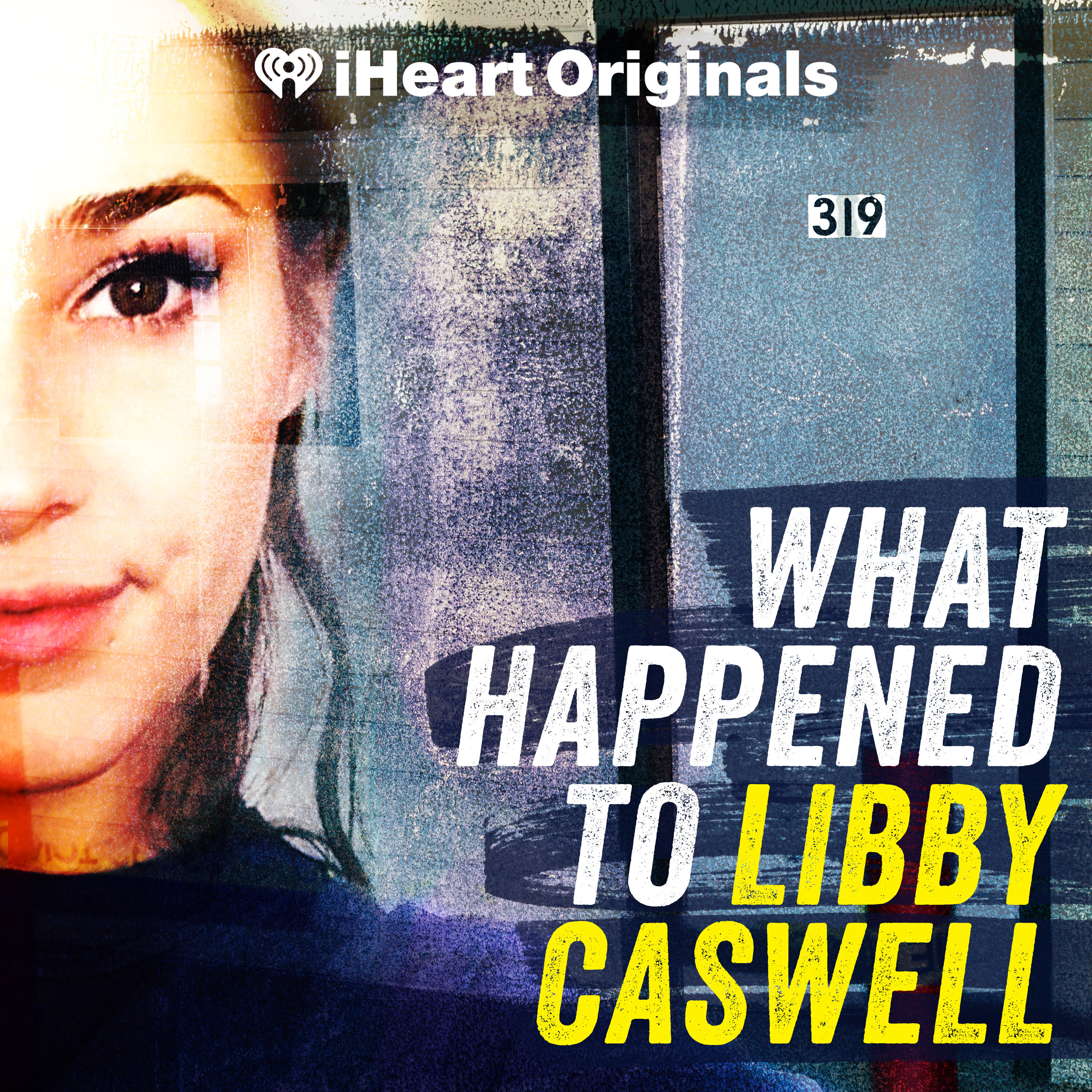
Go behind the scenes on the making of What Happened to Libby Caswell. Host Melissa Jeltsen talks to fellow journalist and podcaster Emma Gray (MSNBC columnist, host of the Love To See It podcast, and co-author of the Rich Text Substack) about what drew Melissa to Libby's case, what she looks for when considering a new investigative project, why she focuses on stories about violence against women, and what she hopes both seasons of What Happened To tell us about how we, as a culture, view women's lives and deaths. See omnystudio.com/listener for privacy information.
Transcript
Read the transcript · about 3,930 words, follows along as you listen
Speaker 1:Originals.
Speaker 2:This is an iHeart original. Hi, what Happened To? Listeners? Melissa here, I wanted to pop into your feed and share a special bonus episode with you. Usually I'm the one interviewing people, but this time, my friend and fellow journalist, Emma Gray turns the tables and interviews me. Emma and I work together for many years at the Huffington Post, both covering women's issues. She's now a columnist at MSNBC, co author of the Rich Text Substack, and co host of the fantastic podcast Love to See It with Emma and Claire. In this conversation, Emma lifts the curtain a bit on the making of What Happened To, the reporting that went into this season, the challenges and lessons I learned, and so much more. I hope you enjoy listening.
Speaker 3:I'm so excited to have this conversation, Melissa. I was so gripped by Libby's story, and you're reporting, and you are just such an expert in this space, and I am just so glad that you are taking on these stories. This is obviously the second season of What Happened To, the first season was about a young woman, Sandy Beale, who died in the nineteen seventies. This season is about Libby Caswell, who died forty years later in twenty seventeen. I'm curious to hear you talk a little bit about the ways in which these stories overlap and also the ways in which they diverge, because I feel like I picked up on some very parallel themes and then in other ways, you know, these two women have such distinct stories.
Speaker 2:Yeah, it's a great question. Both of them were very young, and both of them were really out going and kind of ambitious, and both of them sort of came from more working class backgrounds. I was very struck by my reporting in season one on Sandy Beil. There wasn't a single news article written about her death. Right she was found shot in her car in a poleyard that was frequented by police, and there wasn't even a news article generated from this very unusual death. And similarly, in Libby's case, she would someone that the police didn't necessarily. I don't want to say that they didn't value, because I do think there are people in the department who really cared about her case. But she didn't come from money or have a lot of influence in society. She was just a young woman with a child who was really trying to see how to get her foothold in the world and make her way. And so both of them didn't have very much power or influence in society at that point, and I think both of their deaths didn't really generate much interest or curiosity about what really happened to them.
Speaker 3:I was very struck in both seasons by the way that these women were viewed and valued by the culture at large, specifically by the police, in a way that ultimately seems to have really impacted the investigations into their deaths. What do you think these stories tell us about how we as a culture view women's lives and then also their deaths, like on a larger scale.
Speaker 2:Well, I think about Libby, and I don't want to give way any spoilers here, but you know, she was found in a really shady motel on the bad part of town, and I think that speaks to how her death was viewed right as sort of not very important, not something that deserved a lot of consideration. And for Sandy, I think it was basically just kind of swept under the rug. I have thought a lot about what would happen today. If Sandy Bial, someone who's training to become a police officer working with the Police Explorer program, was found shot to death with letters and stuff in her car that really indicated that she had relationships with male police officers, I think it would be a much bigger scandal.
Speaker 2:I think that there is so much more understanding these days about power and the responsibilities we have to young people and young women in this situation, and I think it would have gone very differently. And we have seen a case in Massachusetts just in the last few years that was very similar to this that has gotten a lot of attention and investigation. But the more that I have uncovered about Libby's case, the more I'm like, I'm shocked this stuff is happening in twenty seventeen. And it's not just the investigation into her death, which I think was far too short and far too shallow considering the circumstances surrounding it, but just also how she was treated by police and by the systems that were supposed to support her during her life, Like it is really incomprehensible how someone who is asking for help ends up being punished by these systems. Still today, there's such a superficial understanding of how domestic violence operates that leads a lot of victims to end up being held responsible themselves, punished themselves, and ultimately set the message that they're not valued and
Speaker 2:if they try to get help, they are likely to get in trouble themselves.
Speaker 3:Yeah, I mean, a major theme of Livy's story is this disconnect between the realities of what it means to be in and attempt to get out of an abusive relationship. And then I'll say lackluster resources available to victims, to their loved ones, resources like the police. What more specifically, do you think this story tells us about the gaps in law enforcement's ability to adequately deal with domestic violence cases.
Speaker 2:I think this question is why I was really drawn to Libby's story, right beyond even trying to work out what happened to her in her death, but how what happened in her life when she was presenting as a pretty typical teenage domestic violence victim. Like at this point, I've covered so many of these stories and they're not unique, they follow very traditional patterns, and that was what was going on for her. She had a boyfriend who but many many accounts, was physically abusive towards her. And we know that victims are told to call the police. That that is the recourse that we have been told is available to us. When I first started working in this area, I too thought, well, yeah, every time I saw a domestic violence case that went poorly, I was like, the police should have done more. That was what the problem is.
Speaker 2:But the more I've reported in this area and the more I've sort of questioned that premise, the police are not always the best response in these cases and often can make things worse. And I think we see that in Libby's case. Her family was calling the police over and over again seeking help, and the police did not offer her resources beyond basically giving the family a lecture and then ultimately calling their house a nuisance property, finding them and taking them to court for calling the police.
Speaker 2:And these nuisance ordinances exist all across the country and have been used against domestic violence victims a lot as a way of not so subtly sending the message we don't want you to call. This is not a role that we want to be playing here. But you know, I've had a lot of conversations with Libby's mom about like what could she have done differently, like what else would have been out there for her? Because she didn't know. All she thought was like, oh, Okay, this is happening.
Speaker 2:The police are the right people to respond, and she learned pretty quickly that it wasn't. But I've had a hard time trying to identify other areas for her to look into. I mean, clearly there are shelters. Shelters offer some support, but they're also not necessarily a great place for everyone to be, especially if you have a child. There's just kind of a lack of imagination around what can be offering victims that can improve their lives. And I hope that this podcast will spur a conversation about what we can do to support people and families.
Speaker 3:I'm curious, you know, you are a journalist who tends to focus on reporting that has themes of violence against women. What is it about that area of journalism and storytelling that drew you to it.
Speaker 2:I sort of came there in a haphazard way of writing about gun violence and writing about specifically how women were affected by gun violence, and as I dug into that data, really coming to this realization that so much gun violence that involves women is domestic violence, is violence as committed by their partners. So that was sort of how I started my entry point into this world. But I think what made me really interested in continuing to report is that it is such a form of violence, and yet there's so many misconceptions about it, and it's often sort of just overlooked even when these stories are being told.
Speaker 3:Something that I love about your reporting is this effort not to just focus on Libby's death, but to talk about her life and talk about what her story says about the larger gaps that exist in our society. And I'm curious if you could talk a little bit about how and when you first heard about Libby Caswall like, let's take it back to the beginning.
Speaker 2:Yeah, So I was still reporting Season one at the time, and I had been working with a source, a doctor Bill Smock, who's a forensic pathologist. I've known him for many years and I really trust his judgment, and I had been running some stuff by him for the Sandy Beale story and he reached out to me and was like, look, I have another case and if you are going to do another story, I really want you to con this one, and there's so much documentation that you can dig into.
Speaker 2:I mean, that was a very big difference between doing a story from the nineteen seventies and a story from twenty seventeen. Is just the sheer amount of paperwork and people to talk to. So that was like when I first heard it and he sent me some information. He had a PowerPoint presentation that he had created about the forensic evidence that he found very compelling in her case, and so he sent that to me. I looked through it, but in the moment, I was like, I need to finish season one before I can start thinking about any other cases. But I couldn't stop thinking about her and the circumstances surrounding her death, the stuff about the nusance law, all the nine one one calls, the way they had been treated, And I knew that the family was willing to talk. And you know, it's no small feat being involved in a podcast like this. It involves communication with me for over a year where I'm really dredging up stuff from the past and I'm asking difficult questions and not everyone is up for that. And so I had a conversation with her mom and really tried to lay out what it would look like if I was to
Speaker 2:take on this story and she was willing to do it.
Speaker 3:There is a lot of context given within this podcast. I feel after listening to it, like I have an understanding of the forces that were at play that made livy situation or Sandy's situation so dangerous and volatile, and the ways in which the systems that we all operate within failed both of them in different ways. Definitely, something that I've noticed consuming a lot of true crime is this almost disconnect that I sometimes feel from the person telling the story from the humanity of the people that they are talking about. And I think something this show does really well is paint a real human picture of all of the characters involved. The victim of course, Libby of course at the center of this story, but also the people that are around her, her family members, even potential perpetrators. And I think you do a great job of really resisting flattening these stories into tropes.
Speaker 2:Yeah, thank you for that. And I think that's what makes the podcast process like so robust is just you can talk to a million people. So I tried to talk to as many people as who would be willing to talk to me about Libby to get a really, you know, three sixty view of her life and her personality. And later on in the season you'll see I do the same thing for her boyfriend. It was a harder lift because I wasn't able to get him to speak with me, but I got a lot of his family, and I think that's probably one of the episodes that I'm proudest of because I know from just the amount of people who I've talked to who are domestic violence victims, they don't see their partners or the ex partners most of the time as monsters, as evil. They see them as people who are hurt and had really bad things happened to them too, and you know, are going through their own struggles, and they oftentimes love them and want the best for them. So it was very important to me that although you know, I didn't want to shy away from any of his like alleged behaviors and how they might have impacted her and traumatized her, but I
Speaker 2:also wanted to create some space to understand the forces at play that might have created him and his behavior.
Speaker 3:So before the first season of What Happened to You, primarily worked with the written word line media. Both of us now work a lot in the audio space, and I'm curious to hear from you what are the challenges of transitioning into audio journalism and also what ways do you feel it's kind of deepened your ability to tell these stories.
Speaker 2:Yeah, I mean, it's it's such a shift, i think, especially coming from the background that we both did where it was like a pretty fast paced news environment. There's been a real challenge of like being able to be a little more patient and work on things for a longer time period before they come out. I mean I was used to, you know, putting out multiple stories in a single week, and this is spending a year and a half on a single story. And there's many months of that where I'm like, oh, I've just got this great story that I'm developing, but no one can hear it yet, and you're just kind of in the weeds for a while. That was challenging for someone who's a little impatient like myself, But now it's all worth it when it's coming together. You know, I've always loved long form investigative journalism. It's just the best when you get to develop characters, you know, really get ameshed in different people's lives, and I feel like being able to do a podcast like this where you get to hear people, you hear their accents, you hear how they are approaching things like the emotion, it deepens the story so much,
Speaker 2:and I'm just really grateful that I get the opportunity to spend as much time as I have with these people and really bring their stories into focus.
Speaker 3:I want to talk a little bit about some of the specifics of Libby's story before we finish. Libby and Devin both struggled with drug abuse. We know that there is a lot of stigma towards people who have substance abuse disorder who struggle with drug use, and particularly about why they start and why they continue to use these drugs. Can you talk about that a little more and how that stigma played into both of their stories.
Speaker 2:You know, one of my concerns even covering Libby's story was will people care about her when they find out that she did struggle and she struggled with meth a drug that has a really bad reputation. I didn't want people to write her off and just see her as I don't know trashy or weak or whatever these stereotypes are around people who use drugs like meth. I do try to spend some time in the podcast really exploring her as a person before we introduce the drug use, so that the listener has an opportunity to see her beyond just one of the struggles that she was facing.
Speaker 2:But drug abuse is incredibly common in the US and across the world, and it affects family tremendously. And I really felt for Cindy, Libby's mom, the struggle it was for her, seeing her daughter go through something like this and trying her best to support her and not knowing how I mean, that's, you know, a very universal story. In particular for Libby and Devin, their drug use, paired with the violence in their relationship, really worked to push their relationship more into the shadows and make it even harder to seek support. So if you're thinking about police is the support, right, that's also you're not going to want to go talk to police if you're doing a legal behavior like using drugs, But it's something that has shame wrapped up in it already, privacy secresy. So these two factors kind of melding together I think made it more dangerous for both of them.
Speaker 3:Yeah, it's sort of a perfect story. And I'm so struck by your choice to hold onto that information so that those of us listening could kind of go on this journey of empathy for Libby before introducing that. And to me, that brings up a question of kind of what do we demand from our victims, Like what sort of quote unquote perfection do we want from people who are victimized in this world, especially women.
Speaker 2:Yeah, I feel like her story is a great example of not a perfect victim. Right, She had problems with meth, she had resisted law enforcement if they responded to her house. She was called uncooperative because she did not want to work with the police. She had gotten in trouble herself before. When we're looking for like the perfect victim to be grateful for police intervention and do all the right thing, are the quote unquote right things like that's not where she was at. And I think those are the stories that are really important to tell because that's the majority of victims are not going to act like how you might expect them to or how you might want them to, and it's really up to us to do the work to understand where they're coming from, where she's coming from, and how to support someone in that situation, because if you're not in it, you don't really know what's best, right.
Speaker 2:I think one of the things I learned covering domestic violence was like, victims might act counterintuitively to how you might imagine that they should act, but they might be doing things that will keep them safe, that will keep their kids safe that you just can't even understand. Having a little bit of faith that they know what they're doing to try to protect themselves and trying to support them where they are, And oftentimes that means that they don't necessarily want to leave their partner, or they might not be ready to leave their partner. They just want the violence to stop, and how can we support them there, even if it's uncomfortable.
Speaker 3:Yes, Yeah, pushing through that discomfort, I feel like is a big part of it, and understanding that people who experience violence of any kind shouldn't need to earn our empathy through their quote unquote good or correct behavior. One of the strongest through lines through the podcast is the voice of Cindy Caswell, Libby's mom. She's been a major advocate for her daughter, getting her story out there, uncovering things that are unknown or have been not investigated enough.
Speaker 3:Can you talk more about Cindy and what it's been like for you to get to know her. Obviously, as you said, you've spent a lot of time talking to her over the last year.
Speaker 1:Yeah.
Speaker 2:I mean, Cindy is really a remarkable person, and she's gone through such a transformation even in the time that I've known her. When I first went and interviewed her in Missus, I remember being like, I wonder if her voice is going to come through very well because she's so quiet, and she was so soft spoken and reserved when I first met her. And now I talk to her and it's like a different person because she really has just done a lot of processing over the last year, but also just becomes so educated about domestic violence, about cases like her own daughters, and she's found like a well of strength and it's really changed who she is.
Speaker 2:She's gone back to school for early childhood education, Like, she's made a huge amount of changes in her life and it's been a real honor to watch it and also just to bear witness to her ongoing understanding and interpreting of her daughter's experience, like she's has a much different perspective on it now than she did when it first happened, and her own role in it, and she's dealt with a lot of shame around it, a lot of guilt that she didn't understand well enough that she didn't do the right thing for her daughter. And that's a very common experience for someone who loses someone so early.
Speaker 2:But I think that witnessing what she's gone through is a real testament just to the strength that can come from living through something like this and really trying to help others as an outcome.
Speaker 3:So, just to finish up, Melissa, I'm curious what kind of story are you interested in exploring next. Do you already have one in your back pocket for a potential season three?
Speaker 2:Well, I won't give anything away. I have a few ideas, but I'm curious to see how this season is received and what comes out of it. And I'm just very hopeful that a lot of people will listen to Libby's story and it will resonate with them.
Speaker 1:I think God did from Lorraine and Attim, keep you grown, don't make.
Speaker 2:What happened to Libby Caswell is written reported and hosted by me Melissa Jelson, with writing and story editing by Marisa Brown and Lauren Hanson. Episodes are edited by Jeremy Thal and Carl Catle. Our executive producer is Ryan Murdoch. For iHeart Podcasts, executive producers are Jason English and Katrina Norvell, with our supervising producer Carl Catle. Fact checking by my Shoe Cree. Our theme song is written by Aaron Kaufman and performed by Aaron Kaufman and Elizabeth Wolfe. Original music by Aaron Kaufman with additional music by Jeremy Thal. Our episodes are mixed and mastered by Carl Catle. To find out more about my investigation or to send a tip, please email me at what Happened to Libby at gmail dot com. Thanks so much for listening.
Speaker 1:Fie my soup in Pieces.
Speaker 2:In Pieces
Speaker 1:You in Peace, sids and pie sizes in the
Transcript supplied by the publisher with the episode.
What Happened to Her
by iHeartPodcasts · English · True Crime
For four seasons, investigative reporter Melissa Jeltsen has told the stories of women whose lives — and deaths — were shaped by the failures of the systems meant to protect them. Now she's widening her lens, with new episodes every week. In What Happened to Her, Melissa takes on the stories that wo
More from What Happened to Her
-

S3 · 7 May 2025 · 3 min
What Happened to Talina Zar — TRAILER
It’s April 2020 and the world is locked down. In Oklahoma, a woman named Talina Zar posts a chilling message on Facebook: she’s sick with COVID and heading to a remote lake, alone — to recover, or to die. Then, she vanishes. As days turn into weeks, strangers online — true crime obsessives with time to kill and nowhere to go — begin digging into her disappearance. What they uncover is something far stranger, and far more disturbing, than they could’ve ever imagined.. In Season Three of What Happened To… , investigative journalist Melissa Jeltsen…
-

S2 · 28 Feb 2024 · 29 min
The Survivors — Libby Caswell BONUS
Libby Caswell is unable to share her experience of domestic violence in her own words. In this bonus episode, four anonymous women tell their stories of domestic abuse- the details they remember, the ones they wish they could forget, and how they eventually got out. If you or anyone you know is experiencing domestic abuse, call the National Domestic Abuse Hotline for help at 1-800-799-7233. See omnystudio.com/listener for privacy information.
-
S2 · 8 Feb 2024 · 22 min
Nuisance laws — Libby Caswell BONUS
The nuisance law in Independence, Missouri played a pivotal role in Libby's story. In this bonus episode, hear Melissa's extended conversation with Sandra Park, former ACLU lawyer and current head of the Civil Rights Bureau of the NY State Attorney General’s Office, as they discuss what nuisance laws are, how they're often misused and what's being done about them. See omnystudio.com/listener for privacy information.
-

S2 · E8 · 22 Dec 2023 · 48 min
Epiphany — Libby Caswell E8
In the final episode, a new witness comes forward with details that raise tantalizing questions. Cindy becomes a national advocate for changes in how domestic violence is handled. See omnystudio.com/listener for privacy information.
-
S2 · E7 · 15 Dec 2023 · 44 min
Black Shadows — Libby Caswell E7
Family members defend Libby’s boyfriend and help shed light on his actions over the years. See omnystudio.com/listener for privacy information.
-

S2 · E6 · 8 Dec 2023 · 44 min
The Twist — Libby Caswell E6
A forensic expert discovers evidence that upends the official narrative about Libby’s death and points to a coverup. Local police defend their work. See omnystudio.com/listener for privacy information.
-

S5 · E3 · 8 Oct 2026 · 37 min
Isolde Raftery
When Isolde Raftery was in her senior year of high school in the late 90s, the budding journalist and her best friend published a piece in the school newspaper that deeply fractured — even shattered — the image the school had of itself. Not only that, it led the two teenage friends to believe they were responsible for the death of a teacher, who died by suicide. Twenty-five years later, Isolde, now managing editor at KUOW, and her friend Ella, a civil rights attorney, reinvestigate their own story to get to the bottom of the guilt they carried, in a fantastic podcast called,…
-

S5 · E2 · 30 Sep 2026 · 41 min
Lisette Johnson
Lisette Johnson survived what almost no one does: her husband shot her, then killed himself. Murder-suicides happen every week in America, and they usually disappear after a local headline — with the perpetrator dead, there's no trial, no unfolding story. Except, Lisette lived, and what she told Melissa Jeltsen has shaped how she's covered these cases ever since. When a murder-suicide made national news this spring — Virginia's former Lieutenant Governor Justin Fairfax killed his wife, Dr. Cerina Fairfax, then himself — Melissa thought of Lisette. In this first episode of…
-

S5 · E1 · 23 Sep 2026 · 2 min
Coming Soon … What Happened to Her
For four seasons, investigative reporter Melissa Jeltsen has told the stories of women whose lives — and deaths — were shaped by the failures of the systems meant to protect them. Now she's widening her lens, with new episodes every week. In What Happened to Her, Melissa takes on the stories that won't let her go. Women whose deaths were too quickly ruled suicides. Women no one believed. Cases everyone else called closed. Some weeks, a mystery unfolds across multiple episodes. In others, Melissa sits down with fellow investigative journalists and podcast hosts to go behind the…
-

S4 · E6 · 17 Dec 2025 · 43 min
Beginnings and Endings — Nashville E6
As new chapters unfold, experts examine whether the law can truly recognize the harm caused when fertility care fails. Former CRH patients are left to reckon with the lives they’re living — and how far some have diverged from what they once imagined. See omnystudio.com/listener for privacy information.

Take it with you
The Melo app keeps playing with the screen off, works in the car and on your watch, wakes you to your station, and browses the whole catalogue offline. Free, no ads, no account.