Season 1, Episode 508 · YouTube Creators Hub
What 6 Years of Weekly Uploads Actually Pays a YouTube Creator | Tasia Custode
10 Jul 2026 · 38 min
Season 1, Episode 508 · YouTube Creators Hub
10 Jul 2026 · 38 min
Tasia Custode lost 90% of her video production business overnight when the pandemic hit. One weekly YouTube video later — every Thursday, for six straight years — and her channel (121K subs) is now a legitimate income arm of her company. In this episode, Tasia opens the books: what YouTube ad revenue actually pays at 121K subscribers, the "invalid traffic bug" that gutted her revenue for 14 months, and how partnerships (including ones that never touch her own channel) became her biggest creator income stream. We also dig into her all-Google production workflow, how she uses Gemini as a daily…
Once I figured out that structure and, like, what does my week actually look like that I'm delivering YouTube content every single Thursday morning, what does that look like in terms of, like, the mini work back for the week of, like, what tasks need to be done when? Hello, and welcome to the conversation this week on the Creators Hub podcast, where I sit down with a creator each and every week and I break down what makes them successful, and we talk about their journey as a creator.
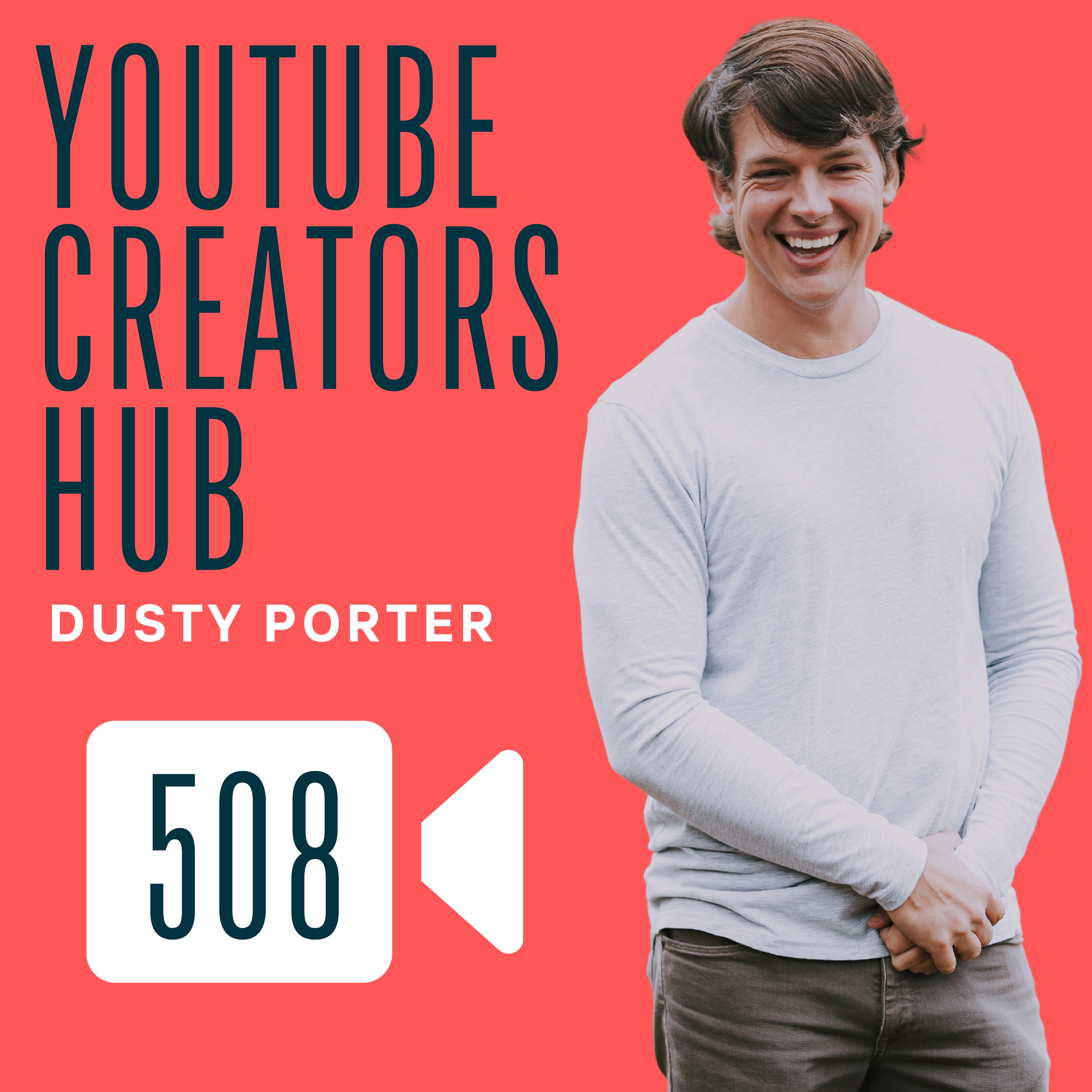
Today, I'm joined by Tasia Custode. She has a YouTube channel just after her name. I'll link it in the show notes, as I always do. As of right now, 121,000 subscribers, over 400 videos uploaded. She's got a great community over there, and I'm gonna tell you a little bit about her before I introduce her. So Tasia is a TV host and video producer with nearly 20 years of broadcast experience, honing her skills both in front and behind the camera. As founder and CEO of Brio Media, she splits her time between business ops, story producing, directing creative, and editing.
So she's got her hands full. Tasia is also the sole content creator for her YouTube channel that I just mentioned, where she provides viewers with tech tips, app reviews, and a metric ton of Google content. When she's not producing videos, and she, uh, can also be found traveling the globe, listening to T Swift music, and cheering on the Montreal Canadiens, which by the way, the Canadian team is still in. Or no, did they get beat in the World Cup?
Nope. Oh, no. They're out. Brought up a, nah, brought up a sore subject. But anyways, Tasia, how are you doing today? I'm doing really well. Thanks so much for having me, Dusty. It's great to chat to you today. Absolutely. Really looking forward to it. As I mentioned kind of in the open there, your YouTube channel focuses on tech tips, uh, s- a lot of specifics around kind of Google and the Google Work suite. Obviously now you're talking a lot about Google Gemini, which is their AI, the, their, the head of their AI stuff they have going on.
But you'll also talk about just tech in general. So can you give my audience a brief kind of rundown of the origin story of this channel? Yes. Brief, brief is a, so you're asking me to be brief. I don't know. I'll try. That's all right. I'll try my best for you. But yeah, I, as you so lovely mentioned, I have a background as on-camera talent, video producer, and the like, and I was doing that gig. I'm Canadian. I was doing that gig in Canada, and when I moved to the States, I really just thought, "You know, how do I stay relevant in the tech space?
What does that look like?" And so I thought, "Well, I'll just throw content at the wall," if you will. I'll put a video up on YouTube every now and then. There was no plan. I was not consistent. I would not even say I had a, you know, like I technically had a channel, but I just was throwing stuff randomly. Could be a few times a year even. If people were googling me, they'd say, "Oh, Tasia's still doing tech stuff. Cool for her." And then, um, you know, I had started my own video production company.
It's a little boutique video production company in Scottsdale. And when the pandemic hit, basically overnight I lost like 90% of my business. It was just like people were like, "Yeah, video is not priority." And my best friend was back home in Canada, and she said to me, she had two little kids, and if you remember, schools were closed, and she said "You gotta post content about educational tech for kids, like helpful educational tech." And I was like, "Okay, what else do I have going on?
Might as well." And that was like February, March of 2020, and I just stayed consistent and just kept posting every single week. And fast-forward to now, to 2026, I think it was a natural kind of niche down. I never-- People always talk about niching down on YouTube. I never did anything intentional to like move towards the Google workspace ecosystem, but I do live and work between that ecosystem. So the basis of my channel has really always been, how can I provide helpful educational content to people?
What's something they would find interesting, they might need to know? What is something they're struggling with? And that is literally six years later, six and a half years later, what I'm still doing. I always just lead first with what should people know? Am I struggling with a thing? Do I think a thing's cool that someone else should know about? I'll make a video on it So it's tech tips, and it's a lot of Google tactics. Do you do this full time or, or what, do you still do other stuff?
I still do other stuff. So what Brio Media looks like for me is there's different arms of my production business now. So I have, like, my what I call traditional clients, where I'm shooting content for them and/or scripting content, producing content, editing content, all that kind of stuff. They distribute it. They decide where it lives. I'm just behind the scenes on them, helping them produce whatever they need. And then there's this whole other arm, which is YouTube, which because I've been growing it for the last six years, is, uh, funneled under my business now.
It is, it is an income earner under my business, and that's weekly. It's, no matter what is going on, there's gonna be a video out. That is what I do. Sometimes I'll do a bonus one too if I'm really acting crazy. But it's just, you know, it's become something I, I just love doing, and even though it is a lot of work, I really like it, and I like the content I'm doing, and it, it keeps my, helps keep my business fresh because it's not just kind of the more, like, boring traditional client work.
It's stuff that I'm actually, topics I'm actually interested in. What do you think's been the hardest part of running the YouTube channel? Like, from six years ago when you decided to t- take that jump and to now to where you upload a cou- maybe one to two videos a week. What's been kind of the, I wouldn't say kind of the roadblock, but something that, you know, you look back at and think, "Man, I, I really had to work to get through that"? I think for me it was figuring out what the schedule looks like.
And I think, you know, a lot of people can get caught up in that, and maybe we overthink it a little bit, and I always just preach, like, consistency over anything, so that could look different for you than it does for me than another creator. So for me, it was just working it in and treating it as part of my business. Like, this is a legitimate arm of my business. I need to treat it as such. So when I'm color blocking my G Cal, which is something I do, I don't just make content on it, it's how I live.
I- it's open on my other screen right now. I'm looking at my calendar. And, like, that to me was just once I figured out that structure and, like, what does my week actually look like that I'm delivering YouTube content every single Thursday morning, what does that look like f- in terms of, like, the mini work back for the week of, like, what tasks need to be done when, and that's a non-negotiable. So to me, it was just, like, building those deadlines in and sticking to it no matter what.
So even if it's a busy week on the client side, it's like, I'm working late then because I have to get I have these deadlines. And so it's… it was just more so once I got my head around that, then it was like, okay, I can figure out how to manage the time, and sometimes it'll be a lot of hours, but it's worth it to me because I like doing it. What does that look like as far as your video production process? So from start to finish, and you don't have to be brief here if you don't want to, because I, I wanna kinda really understand for you, b- behind the scenes, what does that look like?
All the way from ideation until, post publish. What does that look like? Yeah. So I keep a running Google sheet, and it's, like, every year. So I… it's a big, it's a big sheet, but I have different tabs for each year And essentially what it looks like, it's all my idea, all those ideas that I might have or I might think I wanna do, and I throw them in a sheet. And, like, as I'm working, this is, like, bef- prior to the start of the year essentially.
And I'll say, okay, like I know I'll start filling in the sheet with, okay, I know Prime Day is gonna be a thing, so I'm gonna talk about that. I know typically every year I talk about my favorite travel tech that I'm using whenever I'm traveling and I need to stay connected. So I start there with the things like I know, and then I'm like, okay, I know Google's gonna have a software thing, a product launch here, and I kinda just start filling in a schedule in a Google sheet.
And it's malleable. Like, I can move it around as stuff changes, as, you know, if, if something happens and I go, oh, this needs to go here. Like, it's never something that I'm like, must be locked in unless we're gonna talk about partnership stuff that I know has to go at a certain date, then that's a lock-in. Um, but other stuff can be kind of like, okay, I know we're gonna talk about this. And then from there I'll just fill that, like, as the year goes on and stuff comes up or interesting things happen or I- I'm having a problem with a tech thing I need and I go, "Oh, this might be an idea," I'll add it to my sheet, add to my sheet.
Even that sheet, Dusty, is color-coded, 'cause I'm like a very visual learner, so it's not just my G Cal. Like, everything to me is like, so then in one look at my Google sheet I can see, like, this was published, here was the date that it was published, this was what the topic was, like, here are my notes on it. Everything is in the Google sheet. And you're doing… Do… When you're doing this, are the tools all Google tools? So like all of your notes are taken in, say, Google Docs and Google Sheets?
Like, because I want people to understand a lot of the tools you're using are just free. Other than like- Correct paying for the storage you know, the storage behind- Mm-hmm … the scenes of getting, you know, a few terabytes to make sure you can upload and have storage to do this. But what does that kind of suite of tools look like for you while you're doing this? Yep. And then finish that process. Yeah. It's pretty well all the Google Workspace suite of apps.
So it kind of all starts in that sheet, and then where I keep kind of everything, all the scripting done once I move to the scripting stage, that's all Google Docs. Everything's in there, because everything's so searchable and findable to me that it's like, I mean, you know as a content creator, sometimes you'll be like, "Did I do a thing on this? This seems like I did a… Did I do…" You know? And I'll go back in my sheet or my Docs or my Drive, and with a quick little search it's like, oh, okay, I can, yes, I did, and here's when it went out.
Here's what it… and it's a very easy, searchable way for me to keep everything super duper organized. And I'll just keep all of my YouTube scripts are Google Docs, every single one. And then when I'm going to make the next script, typically what I'll do is like- And another thing that might be helpful for people, it's not just a script I'm doing. When I write a YouTube script in Google Docs, I have my, my title, I have my description, I have my, any links that need to be in the description.
I have all my tags. So, like, everything is in there. So then when I'm making content for the weeks out I'll typically just copy that over, and then it's a wh- obviously a whole new script. The description changes, the tags will change, but the format is always there for me, so I'm not starting from scratch each time. When it comes to actual editing softwares, screencasting softwares, there's a couple different screencasting softwares I use that are not in the Google ecosystem.
I use Camtasia, is one of the, which is just happens to have my name in it. No, I don't get a kickback from them, but I should. Too bad. I have used them for, like, a million years now. They're my go-to just because of, like, the suite, but there's, like, you know, there's a, a few. And then I'm editing on Final Cut Pro, um, because I do have a Mac, and I feel like, again, people wanna overthink stuff. Do you need to use an Adobe suite? I have the Adobe suite for when I need to, but I feel like for a lot of my tutorial-based content, Final Cut Pro does just fine.
That's, uh, so that's how I edit it all. Now, when it comes to, like, the promotion side of it, I use Gemini. Um, Gemini will help me, because it can pull from the depth of my YouTube, it understands my tone, it understands my audience best. I can say, like, "Can you make a Facebook post for me? Turn it into three tweets. Give me an email newsletter, including a punchy subject line that people are gonna wanna click on." So I really do use the Google Suite from top to tail, if you will.
Conception to publishing It's so cool that we live in a world where we have tools that can kind of be that helpmate beside us, like Gemini or Claude or whoever you wanna use. And maybe you can speak to this, I always tell people, like, that I coach as far as creators, y- you gotta be using AI or you're gonna be left behind, but you don't wanna use it to replace what you're doing. You wanna use it- 100% … as kind of a guide, or kind of a, a, a guardrail per se of just like, okay, I'm gonna use this as let's bounce some ideas off of each other.
Here's the title that I've come up with. Mm-hmm. What are five to 10 other alternatives that you think would be good, you know, optimizing for curiosity and all the things that we know work on YouTube? And then you don't necessarily have to copy and paste what it says, you just use that kind of as idea generation. Can you speak on kind of your usage of AI and whether or not you're pro, it sounds like you are, for using it, but kind of how you utilize it within your workflow?
Yeah. I, I couldn't agree more with what you just said. I think the biggest thing for me is AI is not… I don't believe it's going to replace us. Like, yes, there's some scary stuff out there in terms of, like, being a content creator and seeing how easy AI-generated content is, but I still think there's a big value add in having a real human aspect to content. So I feel like for people that are afraid of it completely, that is to me the crux of, like, the issue, is you will be left behind if you don't understand the tool and know how to use it.
It's not that it's there to replace you, it's you understanding it enough to use it to help you, whatever that looks like for you. So for me, I use it a lot as a personal assistant, and that's probably super basic. Like, a lot of people are probably using it much more advanced than that. But it can look different every single day what I need from Gemini or Claude or whatever anyone's using. They're all generally the same, you know? So, like, whatever you're comfortable in.
Mm-hmm. There's no right answer. But- For me, like in Gemini, so sure, it can look like very simple stuff, helping me promote social content. But on the client side of things, it's like if I have a work back schedule I need to get created and my calendar is just packed, I've had Gemini linking to my G Cal say to me, like, keeping my calendar in mind and, like, all the stuff I have going on, a client is asking for all of this. Here's the document of the brief.
Can-- Is this deadline even attainable? And if so, what does that mean for my calendar? And in seconds, Gemini has told me what… You know what I mean? Like, either it's attainable or it's not, or here's what we need to do. Here's when you need to start this work back. And, like, that saves me literally probably an hour and a half of time. Yes, I'm still physically creating my work back because I'm tweaking things on my calendar as stuff moves around sure, sure.
But again, so it's-- while it's not completely taking it off my plate, it took a good hour and a half in just that one example off my plate. So different things will look different to me on the day. I don't… some people use it for scripting. I don't use it too much for scripting. I use it a lot for idea generation, whether that be for my own stuff or for client stuff, because again, because it's linked to my YouTube, it can tap into, like, what is my audience looking for.
So if it's a particular slow time, the summer can be slow sometimes, and I'm like, "Ugh, I'm just not inspired by the ideas I have in my, my Google sheet." Like, I'm like, "Ugh, what's Gemini thinking?" Like, what is something that… Because, you know, it ties in and, like, you know, on YouTube, they have all the AI suite now based on the back end of YouTube too to help creators, like to say, like, "Here's some idea generation." But I'll use it for that.
And, you know, it'll sometimes spit out a script and, like, it's never how I would talk, you know? So, like, again, it's not there to replace you. It's there to help you and say, "Oh my gosh," like, "I wouldn't have thought about this thing. This is a great idea, and actually, it made me think of another one." So even if you're not taking the idea it gave you, it can really help you in, like, a brainstorming capacity as well. A lot of people are probably using it a lot for actual content creation.
I do a few images songs, stuff like that, videos for fun mostly. I don't, I don't use that stuff in terms of, like, client-facing stuff or on my YouTube channel, but to each their own. So it really looks different how I use it, but I do use it every single day. I interrupt the show this week just to tell you briefly about what we offer creators. I don't run ads on this podcast currently for a specific reason. I just wanna let you guys know about all of the amazing things that we here at the studio can offer you, the creator.
I do one-on-one coaching. I do about seven to 10 calls a week. I offer a lower entry, cheaper option, which are YouTube channel reviews or audits if you just want a different set of eyes on your channel. I sit down, take a look, record about a six to eight-minute screencast video letting you know where I think you can most efficiently spend your time. And then we have other offerings like our mastermind group, where we do monthly mastermind calls.
I record exclusive solo podcast episodes there every Friday, and you just get to rub elbows with other creators. And then all of our free offerings, like our email newsletter, our spreadsheet that has a running list of all the tools that are mentioned here on the podcast. All of that will be in the show notes down below. And now, back to the show. Yeah, I, I do as well. I think you just made a very good pitch to exactly what I would say, so no need to kinda double down there.
I do wanna ask you, you mentioned consistency and how important consistency is. Can you talk about why you feel that way as far as the YouTube side of things go? Because it's important for a number of reasons, but I'd like to hear your kind of thoughts on consistency and why it's so important to you on your channel. Yeah. For me I picked once a week because that's simply just with my schedule what was attainable for me. There's a lot of creators that I've had the pleasure of meeting at some events and stuff, which is so fun, and a lot of them are doing two to three times a week, and think it's crazy that I'm only doing one, you know?
So, like, it's all of what works for you. So for me, that is what works right now currently with my business, is once a week. It's something that I knew I could do and I could stick to, number one. That's why I'm doing once a week. Number two is all about the audience. So to me, it's like the audience then knows I've gotten used to this pattern recognition. Every Thursday at 8:00 AM MST, Teja is releasing a video, and it's probably gonna be on one of these three or four topics.
So it begins something like a repetitive like old-timey TV shows when we all used to have to sit down and watch something on Thursday nights or something. Like, you get in that mindset of like, "Oh, yeah, my favorite creator is posting this thing today. I'm going to watch it." And then it's also, too, like, just with people, and probably why content creators are creating more now on YouTube, is just- People are consuming content like never before and quicker before.
So you have to be putting stuff out in order to please the algorithm. 'Cause I feel like algorithm, another word for that could just be audience. That's what it is. So in order to be fed and to feed the audience, you have to keep posting stuff because YouTube's gonna look at it and be like, "Well, this person isn't actually active anymore." Doesn't mean old stuff can't pop up. It still happens to me on YouTube where, like, a very old video all of a sudden it's been fed and people are commenting, and I'm like, "Where is this coming from?"
But like- Yeah … it's just to keep it relevant and that on the back end of that too is important. Because YouTube has years and years and years and years and years and such a depth and searchable platform If someone get, happens upon a video of yours from, like, three years ago, it's then, "Oh, look, this person is still making content. Oh, look, she's got something from this week or last week. Cool." And it just gives them that another opportunity for you to be seen.
There's a lot of reasons. We could talk for four hours of why you need to be consistent on YouTube. It's- We definitely could. A lot of it is optics, and you just mentioned it there- Yes at the back half of that answer. A lot of it I, I take into consideration what I do with podcasting. This show is almost 16 years old. And when I started this show, I had, you know, I wasn't married, I didn't have any kids. Now I have a bunch of kids and I'm married, and so, like, a lot of things have happened, but one thing has stayed the same, and that's that every Friday I release an episode where I have a conversation with a creator, and I think that people love the comfort of knowing that- Like you said, the TV show on a Saturday morning or whatever it may be, that consistency not only helps you in the algorithm, whether it be podcasting or YouTube or blogging or whatever it may be, but it helps you kind of stay grounded and helps you stay on top of things- 100% … when you know that you had that deadline.
So I think that you said it very well there. Next thing- You bring up another good point, too. Go ahead. Sorry to interrupt you. I wanna tag onto that because I'm, like, a completist when it comes to podcasts. So, so when I stumble upon a new podcast- Listen, yeah … I'll, like, oftentimes go right back to the beginning and be like… And so you having that depth of content, that just speaks to why that's so important because then you're giving somebody, like, "Oh, I can binge. Now I have bingeable content that I can catch up on- Yes … and then wait the weekly releases."
Yeah, absolutely. That's, uh, that's exactly what I was trying to, to get at there. I wanna now transition into monetization, uh, because you mentioned it off air. Oftentimes people think, you know, I've had a lot of creators on this show, hundreds of them, when I've had people email me, and creators will say something along the lines of this. They'll say, "Yeah, you know, on a bad month I might make $15,000." And people hear that and they think to themselves, "Oh, man, they're living in a completely different realm than I am." Now, there is money to be made as a creator.
Mm-hmm. There's good money to be made if you know what you're doing. But do you mind just breaking down kind of how you make money as a creator, and then maybe on average what you might make from those things? For sure, and it's nowhere near that number. So I think this is important for people to understand because- People have a tendency to look at subscribers, which is, let's just be real, it's cool, but it's a van- vanity metric. It really doesn't actually mean anything at the end of the day.
Like, I love my plaque. It's, I'm proud that I got there, you know, passed 100,000, but it really doesn't mean anything. And the tricky thing for me that I have found on YouTube is because we do not control, we have no control over how, really how our content's fed or how much advertisers are willing to pay for any ads. So for me, a good month is like, I- I'm just gonna talk ad revenue first, just so YouTube ad revenue on the back end. A good month is, like, maybe 25 or $2,600.
That's a good month for me. In a slow month like the summer, 1,600, $1,700. So I also need to mention, and, you know, like I don't wanna get in too into the weeds on this, but a couple years back, I was one of the channels that got hit with what I call a bug, the invalid traffic bug. I met a lot of other creators that it happened to, where YouTube just pulled our revenue, and they just said, "Oh, you have invalid traffic to your channel." So basically they hold ba- "Oh, we overpaid you because it was invalid, so now we're holding back." So I had a good 14 months of that, where I was making next to nothing.
It would be like $600, $700. So I went from like $2,500. So this is a lesson for creators to say, first of all, I had talked to people that had quit the full-time gig and were doing YouTube full-time, and this happened to them, and that's horrific. And it was such a mind trip for me, and honestly quite depressing when you're putting out all this hard work and all this content, and then YouTube is telling you you're responsible for traffic to your channel, and it's well, I would own YouTube if a cr- like if I was a creator that knew how to control traffic to my channel, I would own the platform.
But anyway. So like, and you can't get any help. You can't get anybody to help you. You just have to ride out the horrible wave. So I also just mention that as a cautionary tale for people, because I think a lot of people see these numbers and these vanity metrics and go, "You must be making bank off YouTube." And it's like, listen, I'm not gonna knock making, you know, this year if I, if I make, let's just s- throw out a number of 24 grand from ad revenue.
I'm just making up a number based on an average, just on ad revenue. That's not something to sneeze at, but like that's not a livable wage by any stretch. So it's like if I would have stopped the other side of my business, I would be effed. Like, you know what I mean? Pardon the language. Because at any time, and creators know, like we don't own the content. We don't own the platform. So at any time, like I live with this fear in the back of my head that YouTube could either pull my channel, pull my revenue, tell me I have invalid traffic again, and then what?
So that's always something I keep in mind. So what I started doing after… This is all to say, after that happened and everything took such a hit and I was basically still putting out my content but making almost nothing for it, was, okay, I really need to branch out and like start doing more of like the partnerships and the like. So I do ha- use, like I have affiliate linking that I use. A lot of creators do better with affiliates than what they make in YouTube ad revenue.
I'm not one of them, because I don't really do a ton of product-based stuff or s- you know, like even the software-based stuff I'm not, it might be a couple hundred dollars a month that I'm making off affiliate revenue, unless I have a good month that's like Prime Day or it's like tech stuff I'm doing. That'll get a bit of a bump. But it's essentially dribbles in for me. So that's something as a creator I'm working more towards is, like, affiliate marketing.
I wanna grow that. The big thing I jumped into when all this invalid traffic stuff was happening a couple years ago was the partnerships and the sponsored content. And for me, it's this fine line because I won't take-- I don't take 98% of things that people reach out to me about because it's not aligned with what my audience would want. So I'm only taking a partnership or a sponsorship if there's value in it to the audience. So do I use the product or software, and/or do I think my audience would get value from it?
That's it. That's how I base everything. So if it's a no on either of those, I don't do it. But I have picked that up. So I would say, like, for this year, that number will probably end up being 10 to 12,000 in partnerships. But then also from YouTube, and I think, uh, something a lot of people miss, is you can have partnerships that don't live on your own channel. So now what I'm doing is branching off to other partners, if you w-will, where I'm creating the content, I'm producing the content.
They found me because of my YouTube channel. They want that style, but they want it-- They wanna own it, and they want it to live on their channel. And a lot of creators will say, "No, no, no." For me, because I'm in the background, like, I used to host content all the time, I'm like, "Yeah, sure, I'll do that." So that to me for this year is probably going to look at 25 to 35,000, just dependent. There's a couple contracts that may or may not come through.
So if you put all that together on just the creator side, it's not bad. Someone could live on that. Yeah. You know what I mean? Like, okay. So that's kind of the the nutshell of like what I'm doing, and it's always a work in progress in trying to, like, find that balance because I don't wanna be like, "Oh, I'm just selling out to take a bunch of partnerships." The money seems nice, but, like, it's just not aligned. I just don't, I don't look at my YouTube channel like that at all.
I know a lot of people do, and I don't judge it, and I think good on you. I just don't want that for my channel or for my audience. Yeah, it's wise not to put all of your eggs into one basket. I think the invalid traffic situation that you mentioned is perfect proof in case of that, and I hate that you had to deal with that. I had some clients who did as well. But that's just one of many things that could happen. You know, the algorithm changes on a day.
They sneeze and push a button, and next thing you know, your videos aren't showing up. Uh, there was a bug about two months ago where videos the YouTube, w- they, uh, you weren't getting shown in Google Search anymore, and so that, like for a search-based channel like ours, you know, a lot of times that can tank views. And so there's a lot of things that can happen, which is why I preach, you know, email newsletter, start consulting, get a premium group, make sure your website's up to date.
Mm-hmm. All the things to make sure that as a creator you're setting yourself up for success on things that you own, and you're not just counting on the window dressing of, of your YouTube channel, right? Use it as my buddy Roberto says, he uses every video kind of as a business card per se, where that video could land you that next job, or in your case, that next partner that you work with on their channel, whatever it may be. Mm-hmm. And I've done a lot of work like that as well.
Um, there's been a lot of big software companies who like my screencast videos, and they'll hire me, and they'll say, "Hey, you've done these videos now for almost 15 years. Can you come do it and showcase my software but on my channel?" I'm like, "Yeah, if you pay me enough, I will." Exactly. And so yeah, and so there's, there's some kickbacks there. There's so many creative ways that, uh, that we can make money as creators. I wanna ask you- And you really, you really, with the email newsletter thing, that was a game changer for me.
When I finally got… I really was not serious about the email newsletter until a couple years into COVID, I'll say, 'cause that's when I started my chan- really getting consistent on my channel. And, like, it was a freaking game changer for me because then when I created a course, 'cause I had done that a couple years ago, I launched a Google course, what a great way, like I had built up this email newsletter. Like, great way, easy way to promote to people and to create.
And, like, I do respond to people if they have questions via the newsletter or whatever. So it's just like creators should not sleep on that. It can take time. Like, it's, it's taken me years to build up an email newsletter, but it's wonderful because then when I'm ready to, like, release a new course or, or webinar offering or something, it's like you have, like, a built-in audience that you can spread that too. So that's huge to not sleep on the newsletter, I think.
What is something that you wish you would've known sooner? Now that you are six to eight years into this, what is something that you look at it and say, "Man, I, I wish I would've known that sooner"? Be patient. Because there's a lot of advice out there for creators, some of it really good, some of it is just nonsense. It's like I think a lot of us get too far in the weeds on it, and I think for me, it's just like be patient and just keep up with the consistency.
Because like if you would've said to me, "Yeah, you're gonna be six, seven, eight years in, and like you're still trying to figure out how to get watch time up. You're still trying to figure out how to get more viewers. You're still trying…" You know, I'd be like, "Really? After that many years?" But it takes time. Like everyone likes to look at YouTube or any content creator and be like, "Oh, that must be nice. Oh look, they have this," and they don't look at all the hundreds and thousands of con- pieces of content that were made before the one thing hit.
So it's just be patient and I mean, to me, I feel like I had a leg up because I just like the content and I like what I'm doing. And I think for anyone out there listening that if you do not like it, it's not going to work. It's just not. You're not gonna be consistent, and y- if you are, the audience will know immediately that you're phoning it in. You have to like it because it is work and it is a job. So I give the members of our mastermind group the ability to ask questions to our guests that we bring here on the podcast, and I've got one for you here as we close out the show today.
The person is Homa Rapid Repair is the name of the channel on our mastermind group, and they ask, "What metric did you use to consider your YouTube channel successful? Was it a sub count, views, ad revenue, brand deals, funnel to other businesses?" When did you consider your channel successful, and what metric did you look at? I think for me it's watch time. Views I used to look at a lot more. I'm questioning views now because, you know, we could have a whole other episode on- Sure just what I think AI search is doing to our content and watch time, which is upsetting.
But I think for me it is that overall watch time and how long people are staying on the content is most important. I like views 'cause it's a pretty metric. I like subscribers because it's a pretty metric, and brands still ask for that. I don't think that's a measure of success at all. I think something people should look at is your view-to-subscriber ratio. So that is something I've been trying to work on in terms of like what does this look like?
Because just somebo- just because somebody hit subscribe, like, you know, as a subscriber of channels, you don't necessarily watch every piece of content someone puts out. No. So to me, like, and every niche looks different, by the way, for this. So some niches it's super low of a percentage, other niches much higher percentage of view, like the view-to-subscriber ratio. But do some digging and find out what is the metric for you, and see how you can up that on your channel.
That's something I'm really focused on right now. And that user also brought up another good point, which is also just I look at it as the opportunities I've, I'm being given at this point as a metric of success. So that's not actually a technical metric on YouTube, but it's something where for me personally where I'm like, wow, like it's really cool. You know? Like I'm invited to like a Google event as an example. That is so freaking cool to me, and even if it's just something where it's like, yeah, I don't-- I'm not getting paid to do that thing, I just, I love this stuff.
So to me to go out and meet other creators and be recognized by a company, whatever the company is, to be like, "Hey, be part of our newsletter," or, "Come to this event," or, "We'd love to partner with you on this thing," that to me is a sig- is a sign of success in terms of like, whoa, the content is actually hitting and it is working because people wanna work with me because of it Yeah. I love the view- So it looks different for everyone … I love the view to sub ratio thing.
For like- Yeah … tech channels and tutorial channels like mine and yours, oftentimes that is a really wide gap. Yep. Because a lot of times I'm uploading a video for the long term. I'm uploading a video to get- Correct you know, maybe discovered six months from now. I have videos all the time that are eight, nine, 10 months old, and all of a sudden they get, they get picked up by search. Yes. And you mentioned AI search and, and that's a whole nother topic and a whole nother podcast episode that we can do obviously.
But I do believe there's always going to be a place for video. I really believe that. I think that when people are searching how to do something I'll speak as a parent here, when I'm looking how to build something or I'm looking how to fix something, yes, the AI search can get me to a certain point, but there is oftentimes- Yes … 75% of the time I will always opt back to, man, it got me this far, but in order to finish this thing, I've gotta watch the video.
And so I think I'm learning as the consumer, I just wanna start at the video. That way I- Mm-hmm … can kind of go start to finish. So I think there's always gonna be a place for video, especially for, for tutorial content, but I think that it, it does look different now. For simple answers, you can just go right there, the AI search, it fixes it for you. The last question I want to ask you a- and pose to you is, as you, as we close out today, y- thousands, tens of thousands of creators listen to this each and every week, what would you leave them with?
What was maybe a bit of advice that you've gotten that, that has really helped propel you or get you to where you are? This is gonna sound extremely basic, but just do the damn thing. Make the content. A lot of people get stuck in the what if this happens? What about that? What if I don't say this right? Oh, what if I can't edit very well? What if I don't have the best camera? What if I don't… None of it matters, and I know there's gonna be creators cringing that I just said that right now, but, like, any of us that have been creating for years go back and look at our first years of content, and we're gonna cringe.
Like, the goal, of course, you're gonna get better from doing, and this is easy for me to say because I'm, I'm a visual learner, so just like you're touching on the how-tos on YouTube, it's like, yeah, I need to see it, and then I can go, "Okay," and then I can do it hands-on, you know? And so this to me, like, is a natural sense of, like, I need to do the thing in order to get better at the thing. So if I never would have posted that first piece of content, or when COVID hit, if my best friend wouldn't have been like, "Please, put some educational content out," I wouldn't, wouldn't have thought to do it, and then I just… I pushed myself to, like, well, I might as well now because the rest of my business is on hold.
Let me just do this weekly, and what do I find helpful and interesting? I just kept putting it out. My old stuff is garbage. There's gonna be people that watch… I should be kinder to myself. Garbage in production value. In tutorial and content, it's very helpful, but, like, there's gonna be people that watch my newest stuff and go, "Oh, I can make better video." Great. It doesn't have to be perfect and, like, perfection will kill you on, on any, I think any platform at this point, especially if it's just you and you're just starting.
You do not need a whole team. You do not need expensive equipment. You need to make the content that people want to see, and that looks different for everybody and every audience. That… Just do it. Put it out there, and who cares what other people-- Like, who cares if you're embarrassed what someone's gonna… I don't care. Put the content out. I completely agree. Tasia, I could not have said that any better. You have been a phenomenal guest. I'm going to link your YouTube channel for those who are interested to follow along with her journey a little farther beyond this podcast episode, as well as her website.
She's got a lot of stuff and offerings for people, and if something that she said resonated with you, reach out to her. Let her know. I always tell people that when they're listening to the podcast to, to let the guest know if something they said really helped them on their journey. So Tasia, thank you so much for joining us today. Thank you so much, Dusty. I really appreciate it. And that's a wrap on this week's episode of the podcast. I hope you enjoyed that conversation.
If you did and you are not subscribed, whether it be on your podcast player of choice or over on YouTube if you prefer to watch the video version of the show, do so. It's absolutely free. Don't forget to check the number of things that we have as far as offerings for creators, one-on-one coaching, YouTube channel reviews, mastermind group. All of that will be linked down below. With that said, if you know someone who you think would be a great fit as far as a creator to have on this podcast, please send me an email, dusty@dustyporter.com.
And with that said, we'll talk to you guys next week
Transcript supplied by the publisher with the episode.
by Dusty Porter · English · Business
Introducing the YouTube Creators Hub podcast - your ultimate destination for taking your YouTube channel to new heights, whether for business or personal growth! Join our host, Dusty Porter - a certified YouTube expert with a wealth of knowledge - as he delves into the fascinating world of online vi

S1 · E511 · 31 Jul 2026 · 31 min
Alexa Milmont left a 12-year corporate marketing career, started documenting her reselling business on YouTube as a hobby, and was monetized in 19 days. Two months and 12 videos later she's past 14,000 subscribers with a video sitting near 400,000 views. We get into the real numbers. Her first AdSense check, what affiliate links actually brought in, and why a cell phone lanyard outsold everything she tried to sell on purpose. She also shares the rule she made for herself after deleting the YouTube Studio app off her phone. About Alexa: Alexa Milmont is the creator behind Shop Style Cycle,…

S1 · E510 · 24 Jul 2026 · 38 min
Most creators are told to build an audience first and figure out the money later. Spencer Scott Pugh did the opposite — and it worked. In this episode, the tech reviewer behind Form and Function breaks down how one unpaid smart-ring review turned into $280K in sales for a brand, why he treats his channel as a marketing business instead of a personality play, and how he lands, prices, and negotiates brand deals that actually pay the bills. We get into product-first thumbnails, the pricing "three-package" trick, the brand deal that burned him, beating burnout with a team, and the one question…

S1 · E509 · 17 Jul 2026 · 35 min
He streamed to 10 viewers for two years. Now Zealand runs three 100K+ YouTube channels and a full-time team. He shares his real monthly numbers, his exact production system, why over-polished content is dying, and the one DM rejection that fueled it all. About Zealand: I was a professional sports broadcaster who started streaming my Football Manager game play for fun in college. An FM website offered control of their 200 subscriber YouTube channel, I took over and started making FM guides. I fell in love with YouTube and have since reached 100k on three different channels, branching out into…

S1 · E507 · 3 Jul 2026 · 28 min
Lucas built a YouTube channel about barefoot shoes — then a video of him staring at a wall pulled 1.8 million views in four months and changed everything. In this episode, Lucas (Simple Lucas) breaks down exactly how he escaped the niche that grew his channel but boxed him in, how he engineered the "world's simplest productivity trick" video from thumbnail backwards, and why faking expertise got him called out by his own audience. We dig into his planning-heavy production process, the affiliate video that made him $1,000 off one piece of breaking news, and his three rules for creators that…

S1 · E506 · 26 Jun 2026 · 32 min
What's a brand deal actually worth and how much are you leaving on the table by saying yes too fast? This week, Dusty sits down with Christene of AyChristene, a creator with nearly 700,000 subscribers who's built a full-time career on reaction content across gaming, animation, and TV. Christene breaks down the exact negotiation that turned a $1,000 offer into $5,000, why the biggest money in her business isn't AdSense, and the counterintuitive reason rushing to be "first" can actually hurt a reaction channel. If you've ever undercharged, undervalued your work, or hesitated to hit publish,…

S1 · E505 · 19 Jun 2026 · 19 min
In this special YouTube Creator Q&A episode, we tackle the questions creators are asking right now—how to choose a niche, grow consistently without burning out, and build a monetization plan that actually fits your channel. We also break down sponsorship pricing, what to focus on in 2026, and how to know when (or if) it's time to go full-time. What We Offer Creators Join Creator Communities . A place to gather with other creators every single day. This provides access to Our Private Discord Server, Monthly Mastermind Group, and MORE! Hire Dusty To Be Your YouTube Coach YouTube Channel…
S1 · E521 · 9 Oct 2026 · 36 minNew
Millie Adrian turned a love of making videos into Modern Millie, an educational channel that helps creators build a personal brand and a sustainable business. This week on YouTube Creators Hub, Millie joins Dusty Porter to explain how YouTube became the main funnel for her business. She breaks down six primary income streams: brand collaborations, online courses, YouTube monetization, memberships, digital products, and affiliate income. She also shares her reported YouTube ad revenue and explains why courses and brand deals are her largest income sources. The conversation covers her return…
S1 · E520 · 2 Oct 2026 · 36 min
Grady Hillhouse started making woodworking videos as a hobby while working as a civil engineer. That experiment eventually became Practical Engineering. This week on YouTube Creators Hub, Grady joins Dusty Porter to share the decisions and systems behind his educational channel. He explains how his team pitches ideas, looks for compelling visuals, and mocks up titles and thumbnails before a video moves into production. We explore the full workflow, from scripting and fact-checking to demonstrations, filming, editing, and motion graphics. Grady also talks about setting deadlines, keeping…

S1 · E519 · 25 Sep 2026 · 32 min
Marco Bucci started posting art videos as an experiment. Over time, teaching became the foundation of a full-time creator business. This week on YouTube Creators Hub, Marco joins Dusty Porter to talk about creating art lessons that stay useful for years and turning free teaching into trust. He explains how paid courses offer greater depth, where mentorship and sponsorships fit, and why YouTube ad revenue is only one part of his business. We also explore a tension many creators face: how much production is enough? Marco values highly crafted lessons, but says he would simplify his approach…
S1 · E518 · 18 Sep 2026 · 31 min
Chelsea Swindle started sharing sewing projects online because she wanted something creative of her own—and a way to contribute to her family's income. That grew into She Sews Seams and a full-time creator business. This week, Chelsea joins Dusty Porter to share how she moved from short-form videos to slower YouTube tutorials, found confidence in a focused niche, and built a community around making sewing approachable and fun. We talk about the preparation behind her tutorials, hiring an editor who keeps her humor intact, and earning through YouTube, Amazon, PDF patterns, sewing journals,…
The Melo app keeps playing with the screen off, works in the car and on your watch, wakes you to your station, and browses the whole catalogue offline. Free, no ads, no account.