
Season 1, Episode 135 · Behavioral Science For Brands: Leveraging behavioral science in brand marketing.
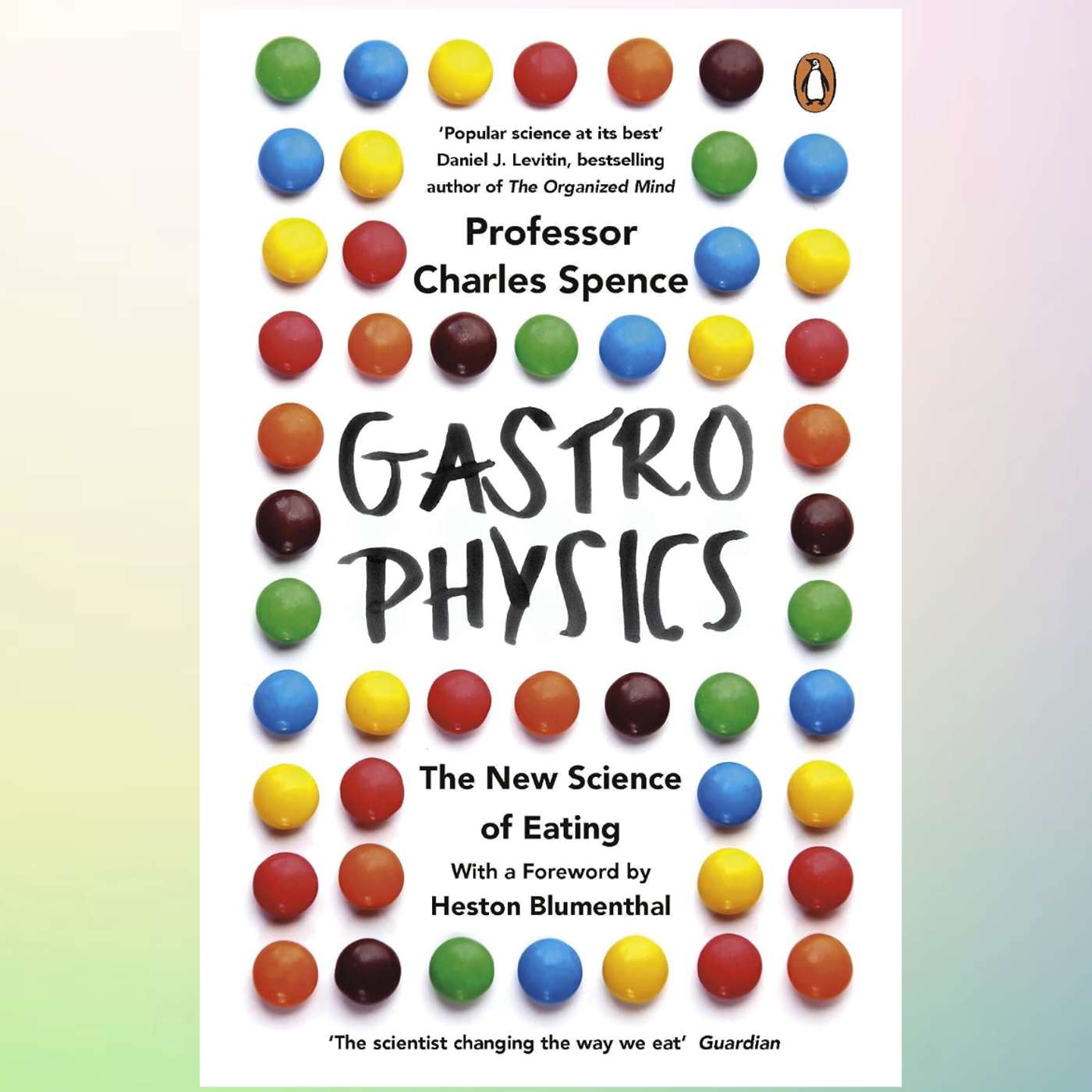
How Charles Spence's book Gastrophysics translates sound, shape and weight into pricing power
9 Sep 2026 · 46 min
Season 1, Episode 135 · Behavioral Science For Brands: Leveraging behavioral science in brand marketing.
9 Sep 2026 · 46 min
Charles Spence's book Gastrophysics argues that taste is built by every sense, not just the tongue. MichaelAaron and Richard work through the evidence: classical music lifting restaurant spend 10%, heavy cutlery raising willingness to pay 16%, rounder chocolate read as 50% creamier, and what brands should do with it.
MichaelAaron Flicker: [00:00:00] Welcome back to Behavioral Science for Brands, a podcast where we bridge the gap between academics and practical marketing. Every week, we sit down and go deep behind science that powers great marketing today. I'm MichaelAaron Flicker.
Richard Shotton: And I'm Richard Shotton.
MichaelAaron Flicker: And in today's episode, we're exploring the fascinating book Gastrophysics by Dr.
Charles Spence. Let's get into it. So Richard, the title Gastrophysics sounds like it could be about advanced cooking but happily Dr. Spence has created this book and this platform asking a pretty fundamental question: where does the experience of eating actually happen? And when I was thinking about this, preparing for the episode, it was like you taste in your mouth.
Every food has a taste. You put it, [00:01:00] the food on your tongue, and you sense what's there. But the book really goes into great detail on how eating is a much more constructed experience. What we see, what we hear, what we smell all influence what we expect and ultimately what we believe we taste, like what we actually experience.
And so this is why you and I decided to come back to this topic again. Dr. Spence joined us back in episode 60, but we think this is so important for marketers that we said, "Let's bring this book back. Let's really dissect the book that he has written," because brands spend enormous amounts of time optimizing the product itself, things like the recipe, the formulation even the texture But what Dr.
Spence said when he was on our show [00:02:00] was everyone studies the drink, but comparatively few people study the glocitin. Everyone studies the food, but far fewer people study the plate, the cutlery, the package through which it is experienced. And that was a big unlock for me. It was the commercial opportunity that he opened to say that even the most studied, optimized, painstakingly perfected products in the world still may be surrounded by a customer experience that has massive opportunities to be optimized.
And as I went back through our show with Dr. Spence, I was thinking that some of these details that we're gonna go through can sound maybe a little small. Maybe it may even sound like a little gimmicky to some marketers, the types of things we're gonna discuss today. But Dr. Spence does a brilliant job of showing the academic work of [00:03:00] why these make a big impact and our mission, as it always is we're gonna bring it to our listeners, let them decide, but really make the case that you can meaningfully improve your brand and your product by focusing on these other things that surround the consumption experience.
And that's the way brand advantage is often built, not just through improving the product itself or a big creative campaign, but thinking about all the ways that the brand's experienced. Yeah. Ab- So-
Richard Shotton: Absolutely.
MichaelAaron Flicker: Oh, go for it, please.
Richard Shotton: No, I was gonna say it, I think it's a, a brilliant book. It's got implications far beyond just those revolving around food manufacturers, anyone that's doing packaging, in-store, lots and lots of implications from this essential idea that one sense affects the other, so the sound or the smell or the, the weight of a, a product.
So it can be applied far beyond [00:04:00] food. And crucially, there is sometimes a criticism of marketers of being overly fixated on the P of the four Ps in, on promotion. I think what this shows is ideas from psychology can be applied way beyond what we say, but it can affect the product design itself, the packaging, the in-store.
So th- yeah, I think there's a lot here that can be applied.
MichaelAaron Flicker: And maybe one last build before we get into starting to go through the book. Depending on which side of the marketing table you sit on, I think brand leaders are very aware that there's a lot more to the brand than just promotion.
Agency marketers are often concerned with their scope, with their remit, with what they've been asked to do. And I think for both sides, leaning back and saying, "Customers, buyers never experience [00:05:00] the product alone. They experience it with everything that's coming around it," and so th- being more holistic in how we think about consumers' experience is really at the heart of Dr.
Spence's argument, and I think could be at the heart of how we look at ev- everything today. The customer experience holistically is what's gonna shape their ex- their experiences, and it's what's gonna ex- shape how they think about the brand after they're finished experiencing it. So with that, maybe we should get into our first area which maybe some people might think is the furthest part from taste, and that's it- that's when he talks about sound.
Richard Shotton: Yes. So the broad idea from Dr. Spence is this idea of sensation transference. So as you say, when we taste something, it's not just the chemicals in our [00:06:00] mouth that create a pleasant or unpleasant experience, it's also the interaction with other senses, like sound. Now, some of Spence's most famous work that he covers in the book is the work he did with Heston Blumenthal, one of the most celebrated chefs in the world has a three Michelin star restaurant called The Fat Duck.
And back in 2007, after working with Charles Spence, the signature co- course of this restaurant is a fish dish, which is called Sounds of the Sea, and it's a beautifully plated course of f- fish. But the unique thing is before the diner starts to eat it, they are given an iPod, and they put the iPod, the earbuds in, and then they listen to a seascape.
So there's- Love it ... squawking gulls, there's crashing waves. They listen to all these sounds, and what Spence has shown is the, when people [00:07:00] experiencing the food with the music, they get a more intense reaction. It feels saltier, it feels fishier. It's a more pleasant overall experience. Now, Spence is very well known for that engagement with Heston Blumenthal, but people might easily think, " okay, I don't run a Michelin star restaurant.
How am I gonna use this?"
But the broad underlying point that you should be giving more attention as a marketeer to sound, that is something everyone can apply. So there's an amazing study done back in 2003. This is from Adrian North at Leicester University. Leicester is a great place.
It's one of those areas where it always catches out American tourists. So if you ever hear someone talking about Leicester Square, it's actually Leicester Square. So that's where North worked. We'll put the
MichaelAaron Flicker: spell- we'll put the spelling in the show notes. We'll do
Richard Shotton: it phonetically in the show notes.
Yeah.
MichaelAaron Flicker: Exactly.
Richard Shotton: The American listeners. Yeah. And for 18 [00:08:00] nights North does this very simple experiment, works at the restaurant, and he just alternates the music that's played. So sometimes there's no background music, sometimes there's classical music. And what Spence finds-- Sorry, what North finds-
MichaelAaron Flicker: Right
Richard Shotton: is that when there's no music, average spend is 30 pounds. When there's classical music, that average spend goes up by 10%. It's now 33 pounds. The argument from North is that there are quite a lot of cultural associations with classical music. It implies premiumness. We have a very strong association in our mind between classical music and it being fancy and upmarket and premium.
So what North suggests is you play classical music, and it just encourages people to splash out that little bit more. Maybe they order the slightly fancier wine, or they get a they get the Wagyu beef rather than the rump [00:09:00] steak. A very subtle change in the environment increases people's willingness to pay.
Now, that study, if you run any retail environment, you should be, I think, considering how you apply it, recognizing that the music isn't there just to be chosen as representative of the type of genre that your customers might like. It is a way to change their behavior to your advantage.
MichaelAaron Flicker: It strikes me, I hadn't thought about this until we were talking just now, but there's been such a movement of brands to make Spotify playlists for their brand, whether they're, of course, retail in-person experiences have them playing in the speakers, but even brands that are experienced at home or CPG brands often have a playlist, and I think there's just something very natural about wanting to pair your brand [00:10:00] with the sounds that go along with it.
And I had-- I hadn't thought about just how popular branded playlists were until you were talking about the ability for classical music to raise the sophistication of a dining moment.
Richard Shotton: Yeah. British Airways, I think, a great example of applying classical music. So back in the late '80s maybe, early '90s, when They were going through a bit of a trough, their reputation was a bit tarnished.
They overcame some of those problems, not by talking about how well-trained their stewardesses were or how new the, the planes were, but the thing they did was make sure that every bit of audiovisual communication, whether it was in the cinema or the radio, on TV, it always had the same bit of classical music.
I think it was the Flower Duet from Lakmé, I think is the opera. But they always applied that, that song. Even when you walked onto the plane, they were playing [00:11:00] that music, and it was just a brilliant way of associating British Airways with being high status being premium, being a little bit luxury.
Whether it's the TV ad, whether it's the, the experience on the plane or in the store, I think this is a, a consideration more people should pay attention to.
MichaelAaron Flicker: It struck from me, United Airlines, which is a major US airline, use "Rhapsody in Blue" by George Gershwin everywhere. It's in their TV- Yeah
commercials, it's in their pre-boarding, it's in their as you're exiting the airplane. So a g- a probably taken from that playbook, a really great, a, a really great similar experience where they're trying to build their sophistication of their brand with sonic branding. Yeah.
Richard Shotton: But again, nicely there, not just picking any old classic musician, they're picking a American classic.
Yes. So yeah. Yeah. There's kind of layers there. I like that. Lovely example.
MichaelAaron Flicker: Without a doubt. Yeah, without doubt. Into the [00:12:00] restaurant industry, we also see Chipotle using music in a very specific way. Great case study by Chipotle, where in their restaurants, the music changes depending on the time of day.
During busier lunch and dinner periods, the tempo increases to keep customers moving through the store, and then during quieter period, they slow their music down to encourage people to linger and to help the restaurant feel just a little bit more full and active. You and I found a great quote from their in-house DJ.
Yes, Chipotle, the fast food restaurant, had a in-house DJ who said, "The dinner and lunch rush have songs with higher BPMs, beats per minute, because we need to keep customers moving." So this isn't just incidental or observational. It's a strategy that they ha- they've deployed. So sound is doing much more [00:13:00] than just creating atmosphere.
The North study shows that it can influence how people assign a premium-ness and to the experience, and Chipotle shows us that it can also influence the pace of the experience. And to me, that's the bigger opportunity for brands, is to treat sound as a commercial tool, designing the environment around the behavior the business needs at that particular moment.
Richard Shotton: Yeah, and it's a wonderfully flexible tool. So we've got North and price sensitivity. We've got Chipotle and speed of dining. There's also work that I've done this year with a big train company in Britain. So there's a brilliant train company called Avanti, and they have millions of passengers every year.
And if you have that many people, you're gonna have some accidents. People are rushing through stations. There are sometimes trips and falls. So they are very keen to try and reduce those injuries. [00:14:00] So what we've been testing is can music influence behavior? Because just putting up a poster about slowing down isn't very useful in a station environment because people are so task-driven- They're in a rush, yeah
they probably just don't notice it. Yeah. So for our experiment, we found this underpass at one of the stations, about 50 yards along. It was at Stoke station. And as people walked down the steps and they entered the underpass, we were watching them, and we started a timer, and as they exited the underpass at the other end, we stopped the timer, so we could monitor their walking pace.
And then across a whole day, we just rotated the music that was playing. So sometimes there was no music, so it's just the noise of a station in the background. Sometimes there was classical music, sometimes easy listening, sometimes 528 Hertz, sometimes birdsong. So we always chose very relaxing music 'cause we're trying to slow people down.
And the key finding was that every musical intervention slowed people down. [00:15:00] The walking pace dropped But the best performer it was birdsong. So we found that it reduced walking speed by 8%. Now, this was a test done over a single day, so we're gonna repeat the study to see if it holds. We're gonna try and do some studies where we look at different nature sounds.
But it's a, just another example of thinking about sound as a really powerful, and I think underappreciated tool for influencing behavior, whether it's safety, pace of eating or price sensitivity.
MichaelAaron Flicker: It's a it's a great example, Richard, of something we talk about a lot, which is s- take a hypothesis and how can you get even a minimally viable experiment in market to see how it can work?
I had not heard your full explanation of the Stokes station, but one day just rotating music and timing people can [00:16:00] give you really good directional information that you can then use to build a bigger case study for. And 8% slower is meaningful. That's a meaningful change by just, but not by just, but by playing bird- Yeah
by bird music.
Richard Shotton: Yeah. And it's-- I think that for me, the key thing is the fact that every musical intervention, every calming- Yes ... musical intervention slow people down. So I think it's that, that broad direction, I think that'll be the most robust findings. The other thing to s- to say there is how we came up with the idea.
There was another study that we'd read, I think it was a Czech study, and I'm not 100% sure of the author now. I think it might be Judek, but I'm not 100% sure. And they had shown about 10 years ago that if you gave people a task there was some kind of subterfuge, they were given some bogus task, walk 15 minutes, spot some sights.
But what do that walk while you're listening to an iPod. People were shown to walk slower with classical music than with- [00:17:00] Pop music. But that was over a 15-minute exposure. So it gave us a hypothesis, music can change people's behavior. But the test here was trying to learn something new, which is can a really fleeting exposure we're talking like 30 seconds, 40 seconds, maybe 50 seconds.
Can a fleeting exposure of music have that effect? And I think that's fairly typical for the experiments I, I certainly do. You find a similar study which has proven something in an adjacent area, and then you test whether you can make a bit of a leap with the experiment to apply it commercially or apply it in a slightly different setting.
MichaelAaron Flicker: Yeah. And I think that's w- something that any marketer can take on their own and use, or that's why we have the Consumer Behavior Lab. That's t- the type of stuff we love to help people with. But the, the point is that you can use this very public information and then say, " how can I apply it to my brand?"
Richard Shotton: [00:18:00] Yeah.
Advertisement: Yeah. Exactly.
MichaelAaron Flicker: Beautifully. So we've covered sound Now let's go to sight and how does vision really play into what Dr. Spence is talking about in the book?
Richard Shotton: Yeah. So a lot of different experiments about vision. So for example, in the book he talks about how the color of a liquid affects people's sense of the taste.
But I thought I'd go for a slightly more surprising study from the book. It's a 2017 study. So it was done by Charles Spence and Qian Wang, and they ran a study into the effect of shape and taste. So they get a, a vat of chocolate and then they put it into slightly different molds. So sometimes the chocolate comes out in this circular shape, sometimes it comes out as a, a square.
But apart from the shape, it's [00:19:00] identical, tastes the same, looks the same, it's the same colors. But they show these two chocolates to participants and they ask them to predict what they think the sweetness, the creaminess, the taste is gonna be. And what they find is that the shape has a significant influence.
People expected the round chocolate to be 34% sweeter and 50% creamier. Amazing. Now that expectation is really interesting because we know that often expectation affects the experience. If you think a food's gonna be brilliant, if you think it's gonna be really sweet, we look for confirming evidence. So this fact that shape can affect taste expectations, I think is a really interesting area.
And at first it feels like just a bit rogue. Is this a random study? But Spence has a really interesting explanation. He says people are pattern-making machines and [00:20:00] we often will notice patterns in food and then, let's say for example, the round foods tend to be sweeter, angular foods tend to be sharper.
So for example rocket or as you'd say arugula. You know- Yes, we would say arugula. Yes ... it's got those sharp leaves. They tend to be bitter. So people notice this pattern and then they apply it even in situations where it doesn't occur. So I think this is a really interesting area where there's probably big headroom for brands because if sound is underexploited, I think shape is far less thought about, far less discussed.
This is very underexploited.
MichaelAaron Flicker: And if we have doubters of the academic finding that Dr. Spence brings up in the book, he shares a almost identical [00:21:00] brand study where Cadbury has a product not in America, but I believe in Europe, called Dairy Milk. And it- Massive in the UK.
Richard Shotton: Okay. Biggest
MichaelAaron Flicker: chocolate
Richard Shotton: brand by far, yeah.
Huge.
MichaelAaron Flicker: Yeah not certainly not common in the Northeast where I live in America. I don't believe it's very popular in America, but known for its chocolate chunks that are more angular in nature, and Cadbury changed them to be more round. And consumers complained that the chocolate had gotten more sweeter and more creamier, even though Cadbury insisted that they had not changed the recipe.
The pushback was so strong that they reverted the shape back away from rounded to more angular. So a real-world example to co- to confirm and go along with what the academic study that Dr. Spence did himself.
Richard Shotton: Yeah, and it's a lovely example. I think that one, it [00:22:00] almost backfired because they hadn't considered shape- as a determinant of taste. But you could also imagine another brand who could apply this proactively to their advantage. So a lot of consumers are trying to reduce their sugar consumption. What you could do as a brand is take out, I don't know, 5% of the sugar, make it, your bar slightly less sweet, but then you could increase the roundness of the bar, increase the roundness of those chunks to counterbalance it.
So everyone ends up in a better place. The consumer gets just a tastier a bar, but there's less sugar going into it, which is better for their waistlines, and it's also better for the budgets of the- The carbs. Yeah ... Yeah of the company, 'cause it's a, sugar's a very expensive ingredient. So I think there are really positive ways you could apply this principle of shape as well.
MichaelAaron Flicker: I was [00:23:00] reading an article a while ago about 7Up, and 7Up was was involved in a study back in the '90s. It is a classically green can in America, Richard, and they added 15% more yellow to the packaging, just to the color of the can, and it caused people to describe the drink as tasting more lemony.
So changing... Even if you don't change the shape, even changing the color of the package can communicate what the consumer might taste. And so it changes their flavor experience. The design can really behave almost like another ingredient, to the point you're making. Could you lower sugar content?
Could you change color to change perceived taste? [00:24:00] For marketers, visual design should not be outside product experience. It's all one product. And so thinking about how they all interplay together opens up a world of opportunities that you might not be currently thinking about. Very interesting.
Okay. We've covered two.
Richard Shotton: Yeah.
MichaelAaron Flicker: Let's go to touch.
Richard Shotton: Yes. The
MichaelAaron Flicker: third of our senses.
Richard Shotton: So again this is a, I don't know, 300-page book, lots of different examples with touch. The roughness of packaging makes things feel a bit crunchier. There's some, some stuff on that. But the one that I really liked is around the sensation of weight and people's perceptions of quality.
MichaelAaron Flicker: Love this one.
Richard Shotton: So 2015 study Spence does this with Velasco. They're all at University of Oxford, and at a conference in [00:25:00] Edinburgh, 121 people attend, and they are randomly assigned to different tables. Now, the twist in the experiment is some people sit down and there is heavy cutlery, and other people are sitting at tables where there is very light cutlery.
Everyone is then questioned after the meal as to how much they liked the food, what it tasted like, and their willingness to pay. So firstly, in terms of taste, it's a seven-point scale. If people got the light cutlery, there's a 5.1 out of seven rating. If they had the heavier cutlery, it's 5.7. So you get this 12% improvement in taste if people are given the heavy cutlery.
Then when it comes to willingness to pay, you see a very similar pattern. Light cutlery, average willingness to pay is £12. Amongst the group who had the heavy cutlery, average willingness to pay is £13.90. Wow. A slightly bigger improvement, 16% improvement. Now again-
MichaelAaron Flicker: But almost £2, they're willing to [00:26:00] pay almost £2 more for the same food.
Richard Shotton: Yeah. Yeah. It's pretty meaningful. And the great thing here, if you're a business, if you spend all your money on higher quality steak or ingredients that is a cost that you have to-
MichaelAaron Flicker: Every
Richard Shotton: time ... redo every... Exactly. But the cutlery, you can amortize that over hundreds upon hundreds of diners.
So investing in that heavier cutlery can pay back very nicely because it's something you're gonna have for years. And the explanation for this, again it's very similar to what we were saying about shape. People notice over time that heavier goods tend to be higher quality.
Light stuff is flimsily and poorly put together. So we notice this assumption, and then people bring that assumption to bear even in situations where it's irrelevant. There could be an argument that heavy cutlery makes for sturdier, stronger, better cutlery. [00:27:00] But of course, it's illogical to say that it affects the taste of the food.
But because people have this assumption, they apply it even if rationality suggests it, it's not the right thing to do.
MichaelAaron Flicker: Yeah, I think that's the underscore. Even if rationally you would never say the weight of the cutlery affects the flavor of the food, the quality perception, the willingness to pay of the food, the study shows it does.
And we have a nonprofit example, Christian Aid, which tested this same hypothesis in a completely different setting. They had a randomized fundraising trial. They sent out an appeal for fundraising in a heavier-weighted envelope. And when they used a heavier-weighted envelope, the average donation increased by 16%.
Same letter, same appeal, just a heavier-weighted envelope. And this was Ogilvy Consulting that was running this. Their explanation was costly signaling. The more [00:28:00] substantial envelope made the communication itself feel more valuable and important, and that led to higher higher donations.
So lovely similar ex- insight in a completely different field.
Richard Shotton: Yeah. And to me, I really like that Christian Aid example, because if you didn't know about some of these experiments about weight signifying quality, you would never think of testing that. And as you said, people would never mention, if probed, that they like the food more because of the weight of the cutlery.
They would never say, "I donated more because of the quality of the paper stock, the heaviness of the paper used in the envelope." People would never say that. And that is a consistent theme, that you've got to separate out what people say motivates them and what the experiment suggests. And it is a far more accurate guide.
It might not be a perfect guide, but it's a far more accurate guide to look at these test and control [00:29:00] experiments rather than relying on a survey or a focus group.
MichaelAaron Flicker: But I just feel like I have to mention this at this point in our conversation because Dr. Spence raised it when he was on our show, and it was in our book, Hacking the Human Mind.
Bang & Olufsen- Oh, love it ... makers of very expensive audio equipment, use the same idea in luxury electronics. So when you get one of their expensive stereo systems, they add a weight into the remote control. It serves no functional purpose, but every time you pick up that remote, you feel the weight of the electronic in your hand, and it helps communicate the quality of the product before you click play, before you even hear the quality of the stereo system.
And so to me you take these three together and there's a larger, broader commercial implication, which is that weight can [00:30:00] make an invisible brand promise tangible. You can hear the sound system before you play. You can taste the food before it goes in your mouth. You're experiencing the entire brand rather than only a, only the taste of the food or the sounds of the audio.
And I think that, to me, is the wider commercial opportunity for listeners.
Richard Shotton: Yeah. It's a great one. I think there are occasions, let's say you're a, I don't know a soft drink, drinks manufacturer, you might think, " actually transport is a huge cost, so the idea of increasing the weight of our packaging- Yeah
Because of the pricing and because of the carbon, we're not gonna, we're not gonna do it." So it's not something that I think weight should be added in every occasion.
Said. But at least a brand should consider if it's the right thing to do, and then maybe because of the economics of their particular situation, they might wanna reject it.
For all these [00:31:00] experiments, they at least give you pertinent questions that you should be asking. You don't have to follow them through, but at least you should be asking those questions.
MichaelAaron Flicker: Don't we have an example we've talked about in the past, Apple's packaging, when you pull it open, they added friction- to make it the draw of opening the new Apple product take longer. There's resistance as you literally slide open the package. That's not weight. That adds no cost to the shipping, but it required a special design to get done. It's about adding an ex- a tactile experience to getting the product open.
K- similar, not exactly the same insight- Yeah ... but in the same space, yeah?
Richard Shotton: If we go back to that point that we've said a few times, which is people are pattern-making machines, and they begin to build these associations that they apply beyond where it might be sensible. One of [00:32:00] those associations could be things that are valuable and high quality, they tend to take longer to open.
MichaelAaron Flicker: Love that.
Richard Shotton: Yeah. We tear open a bag of crisps that has minimal... Sorry, a bag of chips, because it has minimal value. If it's a birthday present, we wrap it up beautifully. It takes time to take off the bow, to unwrap all the paper. There is this association between quality of product and time it takes to unwrap.
So I think, yes, there is something there about Apple that taps into that. They're recognizing that association, and then they're harnessing it.
MichaelAaron Flicker: Lovely. Yeah, I think that's... It gives listeners a lot to think about where in my brand or in my product experience could I, could I- Yeah
access this.
Richard Shotton: And do you know what? The, the other one that sticks in my mind, because you mentioned that lovely Bang & Olufsen example that Spence talks about. I think if we remember back to that episode we did with him where we interviewed him, I think he also talks about the wine bottle. [00:33:00] So I was a little bit skeptical about the whole weight thing, but then he described this behavior of shoppers in the wine aisle that I found myself doing.
You have two bottles of wine, you juggle it up and down or you're weighing them. And what you're subsequently doing is saying, "Which is the heavier one?" The- Yeah ... and I associate a heavy bottle with high quality. Yeah. And Spence talks about how he'd spent hours and hours in different supermarkets and wine stores looking at the weight of bottles and the price, and it is absolutely true.
More expensive bottles tend to be heavier. So this is something that often we can see affecting us if we're really honest with ourselves and look to our own, at our own behavior.
MichaelAaron Flicker: Lots for people to think about. We got one more area that we wanted to spend time in. Maybe the most predictable when we're talking about experiencing food, and that's smell.
Because lots of people think that smell and eating are connected and [00:34:00] lots of people might expect that. But we had some really interesting areas to uncover here as well.
Richard Shotton: Yeah. So this is a a study that is done by Richard Stevenson. It's quite an old study. It's done back in 1999.
He's at Macquarie University in Australia, and he asked participants to smell, in turn, either a sm- sweet odor or a sour odor. So they might be smelling caramel or malt vinegar. And after they've smelt that item, they then taste a small quantity of sugar. Now, it's exactly the same amount of sugar on every occasion, so it should have the same taste.
But after people have smelt the caramel or the vinegar, they are then asked to rate how sweet the sucrose tasted on a 100-point scale. So if we're going from not sweet at all to very strong. And what they find is that if people have [00:35:00] just smelt a very sweet odor like caramel, they rate the same amount of sugar as tasting sweeter than when there was no smell or they had a sour odor.
So some of our perceptions of taste are affected by what we have just, what we've just smelt. So they're far more intertwined than one might, one might imagine.
MichaelAaron Flicker: And to me, that is something that folks may think, but it- they would put- they would struggle to make that connection so clearly. And you and I found this lovely brand called Air Up.
Richard Shotton: Yeah.
MichaelAaron Flicker: And for those that
Richard Shotton: do not- Has this come out in America yet? Is this-
MichaelAaron Flicker: No, I have not
Richard Shotton: seen it in America. Okay, so I've just started to see, last three or four months, we're seeing ads in the UK now. Yeah, it's- I think it's fascinating, yeah.
MichaelAaron Flicker: It's a fascinating brand. I spent a bunch of time researching it- Yeah
in prep of this episode. [00:36:00] So for those that have not been exposed to this brand, think of any reusable water bottle that you have seen before. Plain water goes in, but their innovation is a scented pod that goes around the rim of your mouthpiece, and it injects smell into your mouth when you're swallowing.
So your brain experiences flavor Even though there's nothing added to the water. And so up- at air up, they're using scent as part of the product innovation itself. Plain water, normal water bottle, but scent is being delivered to really change the user experience. It's a lovely product that's really built all around this insight that scent can change flavor.
Richard Shotton: Yeah. And if you think about a massive social problem in both Britain and America, I think we are two of the largest [00:37:00] nations in the world in terms of waistlines. Big problem with obesity and overweight, that this is something that could really help. Because unfortunately, we have a situation at the moment where often people say Water doesn't really taste anything.
It's a little bit boring." It's more pleasant to have a can of Coke or a can of 7 Up, but there is a lot of calories in that, empty calories. You go to the waistline and you're not satiated. The amazing idea from air up is you can drink water, get the benefit from water of having no calories, but you get the taste profile of a soft drink.
So it-- I think it's one of these areas where it has... If the brand can communicate it really well, I think that's a big if. If they can communicate this offering very well, it can help with one of the biggest social pressures we have on, on, in terms of health.
MichaelAaron Flicker: Yeah. And when you go to their website and you scroll through their pages, they have these great infographics, [00:38:00] smell going up to your brain- Yeah.
Yeah ... plain water going down to your belly. They've got the idea. Now the question is, will consumers really feel that it's, it- it's compelling to do?
Richard Shotton: And I think it is really tricky 'cause it's such a radically new thing. Yeah ... we've talked in previous episodes and in the Apple chapter of Hacking the Human Mind about this idea called optimal newness.
Most advanced, yet acceptable being Raeburn and Loew's interpretation of it, and that's essentially the argument that people have a strange relationship with new. They both find it exciting, it draws attention, but they also find it scary. So I think for someone like air up, they've got to think an awful lot about how do you make this radical new way of consuming liquids, how do you make it f- how do you create a everyday as- association, or how do you reframe it as not that different from what we've done in the past?
They've got to normalize it. There's this brilliant line from Derek Thompson in his book, Hit [00:39:00] Makers. He says To sell something surprising, make it familiar, and for something familiar, make it surprising." So with such a radically new way of consuming liquids, I think they've got to focus on that familiarity bit.
MichaelAaron Flicker: It's interesting because there's other examples of using smell in this way that feels so much easier to get behind. You and I both spend plenty of time in Heathrow Airport. The Perfectionist Cafe which is-- We started the episode actually with Heston Blumenthal and the Fat Duck. This is another one of his restaurants.
They have a fish and chips, a fish and chips dish where you use an atomizer to spray vinegar and the smell of vinegar on the food as you're eating it. It allows you to get the sensation of that classic, y- U- United Kingdom dish while [00:40:00] keeping the crispy fish while you're eating it. That, for whatever reason, seems very easy to think people would love to do it at the restaurant.
It's so easy- Yeah ... to take that sp- that a- atomizer, that spritzer, and get a fun experience while you eat. And drinking plain water with a scent pod feels like a meaningfully step further.
Richard Shotton: Yeah. Yeah. I love that example, The Perfectionist Cafe, because you say it's not just that it makes the same food taste better, it's also fun.
Yeah. And we know from studies by Kahneman and Rademacher that people won't remember a trip to a cafe by averaging the entire time they spent there and amalgamating all the different experiences. What they remember is the single peak moment. And that, to me, having an atomizer with your fish and chips, that's the single fun moment that will stick in people's minds for months, if not years.
So trying to think about [00:41:00] all these different opportunities, all the different senses, and then how can you inject an element of fun into them? And if you do that, I think you're onto a winner.
MichaelAaron Flicker: And then more broadly about scent and smell, this doesn't have to sit in the background for brands. It can be designed into the product experience whether you're using The Perfectionist Cafe as a peak moment or whether you're building a brand around it like Air Up what- however you build scent into it, it can be much more than complementary.
It can be a, a critical part of how the brand delivers value to the customer. So Richard, we've taken a tour of our favorite parts of "Gastrophysics" by Dr. Charles Spence. Would you help us remember the key- Yeah ... highlights of what we hit so far?
Richard Shotton: Okay. So it's a brilliant book, and we have covered how it addresses this [00:42:00] idea of sensation transference.
So what happens in one sense, like smell or touch or vision, affects what we actually taste. So we went through each sense in turn. We talked about sound, how playing classical music can create a perception of premiumness. You can encourage people to spend a little more. We talked about how the speed of music can change the pace at which people eat.
Very useful for a, a quick service restaurant. If you want to get people out in the middle of the day, turn up the BPMs. We talked about how we'd run ex- or run an experiment with a, a train company showing if you play classical music, you can slow people down. So that was our element of sound.
We then moved on to vision and mainly talked about shape because it was quite a surprising finding. But we talked about how different shaped chocolate, even if it was from the same [00:43:00] batch, it tasted different if it was in a round shape rather than a square or angular shape Now we've got this association between bitter foods and being angular, sweet foods and b- and being round.
We then talked about touch, and there we talked about weight and the experiment from Spence and some of his colleagues showing that if you gave people heavier cutlery, because of the association between weight and high quality, people rated the taste of of the same dish about 12% higher. And then finally, we talked about smell.
So that was the study around if you complement sugar with a sweet smell, that same dose of sugar will taste sweeter than if people consume sugar just after or at the same time as smelling something sour. And then we finish with those lovely examples of the Perfectionist [00:44:00] Cafe and Air Up of how brands are putting that into a practice.
So a lot that we covered there, but probably worth stressing that even though we've covered loads, definitely worth buying "Gastrophysics." There's an awful lot that we haven't touched upon.
MichaelAaron Flicker: And listening to our interview with Dr. Spence as well, episode 60, to hear different angles on his book and his- Yeah
work more broad than his book though. So lots of material here- Yeah ... for people to dig deeper into.
Richard Shotton: Yeah. And he's a real character, so I... That's, that episode's one of my favorites. It's well worth a listen.
MichaelAaron Flicker: He was a great guest and brought a lot of meaningful ideas to the table, so love for everyone to listen to that.
And with that, we say thank you. If you enjoyed today's conversation, please do share it with others, and and comment on our pages so we can reach more people just like you. And until next time, I'm MichaelAaron Flicker.
Richard Shotton: And I'm Richard Shotton.
MichaelAaron Flicker: Thanks for listening.[00:45:00]
Advertisement: Behavioral Science for Brands is brought to you by Method1, recognized as one of the fastest-growing companies in America for the third year in a row, featured on Inc.'s 5000 list. Method1 is a proudly independent creative and media agency grounded in behavioral science. They exist to make brands irresistible, helping people discover products, services, and experiences that bring moments of joy to their lives.
As behavior change experts, Method1 creates emotional connections that drive true brand value for their clients, focusing primarily with indulgence brands in the CPG space. Find out more at method1.com.
Transcript supplied by the publisher with the episode.
by Consumer Behavior Lab · English · Business
The Consumer Behavior Lab is dedicated to teaching marketersacross the United States how behavioral science principles can beapplied to help their brands. By decoding the underlying motivationsof how consumers make decisions, the CBL seeks to make a betterindustry - where both brands and agencies pu

S1 · E138 · 30 Sep 2026 · 36 min
Polish law requires every club to identify each fan entering the stadium. Wisła Kraków's Football Club turned that compliance database into the Lucky Fan Index, a metric for how much luck each supporter brings, and game attendance rose 42%. MichaelAaron and Richard dissect the superstition research behind it.
S1 · E137 · 23 Sep 2026 · 42 min
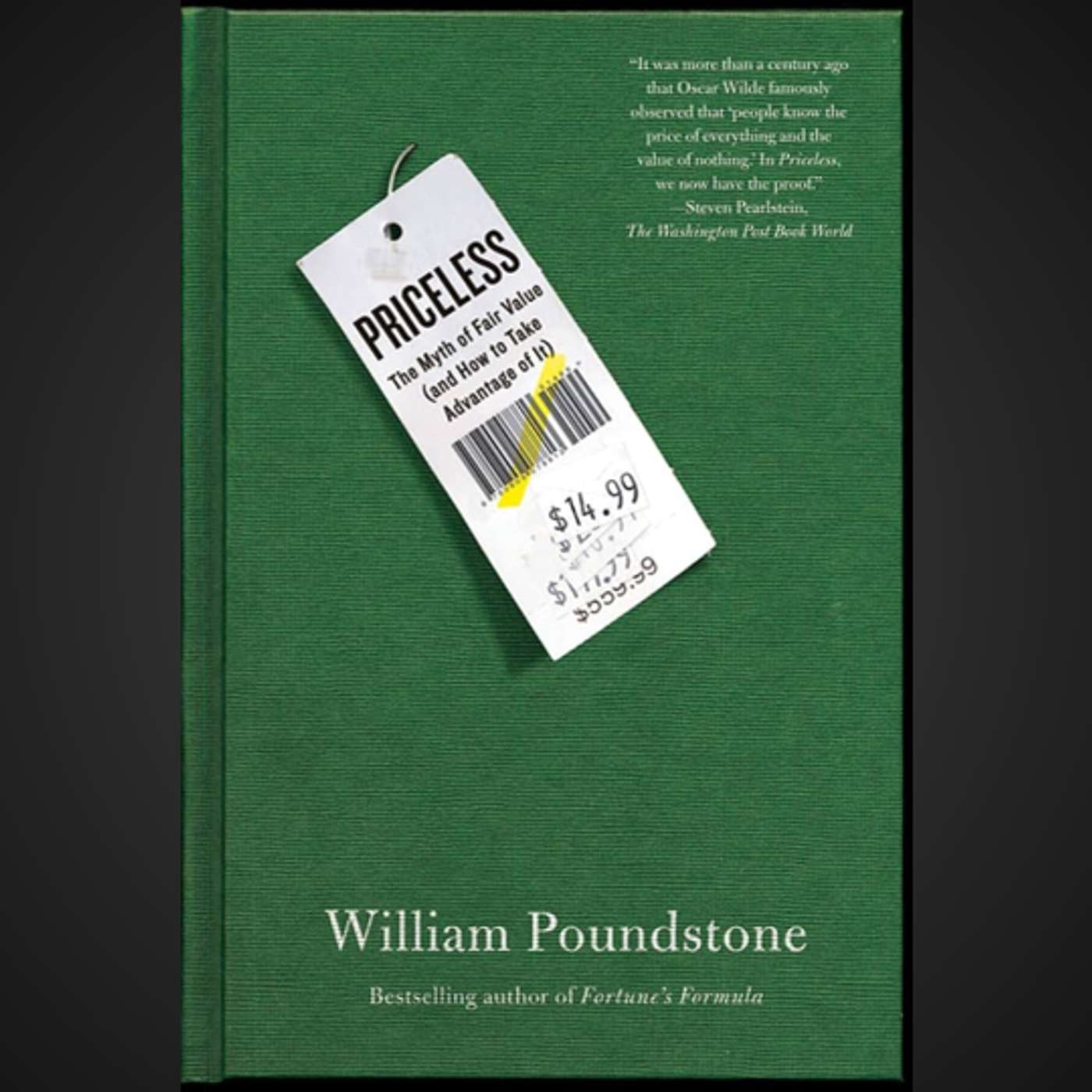
MichaelAaron and Richard revisit William Poundstone's Priceless to unpack why price feels relative, not absolute. They cover anchoring in courtroom and Williams-Sonoma pricing, why a $5 saving matters more on a $15 item than a $125 one, and how visible costs and higher prices signal quality and fairness to buyers.

S1 · E136 · 16 Sep 2026 · 46 min
MichaelAaron and Richard unpack Writing for Busy Readers by Todd Rogers and Jessica Lasky-Fink: six evidence-backed principles for readers who skim rather than read. Why a 49-word email beat a 127-word one, why subheadings doubled newsletter clicks, and why making a task easy beats making it exciting.
S1 · E134 · 2 Sep 2026 · 58 min
Guinness made you wait, Avis was second, VW was small. Andy Nairn and Richard unpack why owning a flaw beats hiding one, and how the same instinct led Lucky Generals to raise its own size in pitches before a prospect could ever hold it against them.

S1 · E133 · 26 Aug 2026 · 52 min
MichaelAaron and Richard explore why charity donations are especially resistant to typical marketing tactics. They unpack behavioral studies on anchoring, present preference bias, reciprocity, and overhead aversion that show small shifts in framing and timing can raise donations by double digits.

S1 · E132 · 19 Aug 2026 · 55 min
Courage strategist Rami Dudin joins MichaelAaron and Richard to discuss why distinctive often beats different, using SickKids' $1.3 billion fundraising turnaround, CIBC's no-fee campaign, and neobank scarcity tactics like Monzo's golden ticket to show why owning one idea can perform better than chasing novelty.

S1 · E139 · 7 Oct 2026 · 30 min
After 12 tons of KitKat bars vanished the week before Easter, the brand turned a supply chain crisis into a Cannes Grand Prix winning campaign. MichaelAaron and Richard unpack the scarcity, Zeigarnik and IKEA effects behind it, and how brands can turn spectators into participants in a story.
S1 · E131 · 12 Aug 2026 · 46 min
MichaelAaron and Richard explore why half of chronic-illness patients skip their medication, and why scaring them into compliance backfires. They cover a study on avoiding bad medical news, a simple diagram that cut medication errors in half, and two studies showing doctors are swayed by menu order and time of day when prescribing.

S1 · E130 · 5 Aug 2026 · 50 min
Harvard professor Michael Norton, author of The Ritual Effect, joins MichaelAaron and Richard to explore why identical actions feel meaningful to one person and trivial to another. They cover how Oreo, Stella Artois, and Guinness turn consumption into ritual, and what marketers should watch for when customers improvise their own rituals.
S1 · E129 · 29 Jul 2026 · 48 min
MichaelAaron and Richard unpack a new Behavioral Insights Team report on why most companies fail to get employees using AI, covering how social proof lifts adoption, why removing small points of friction beats motivational pitches, and why framing AI as something to lose outperforms framing it as a gain.
Every episode of Behavioral Science For Brands: Leveraging behavioral science in brand marketing. →

The Melo app keeps playing with the screen off, works in the car and on your watch, wakes you to your station, and browses the whole catalogue offline. Free, no ads, no account.


