
Episode · Express Conversations
Abhishek Bachchan: 'It was terrifying to first face the camera with my father'
4 Jul 2025 · 18 min
Episode · Express Conversations
4 Jul 2025 · 18 min
In an exclusive interview with Devansh Sharma, Abhishek Bachchan talks about his 25-year journey from Refugee to Kaalidhar Laapata, 20 years of working with father Amitabh Bachchan in Sarkar, and his memories of watching mother Jaya Bachchan's films in childhood. Edited and Mixed by Suresh Pawar
Speaker 1:Welcome to another episode of Express Conversations, a podcast where eminent voices from the world of politics, governance, sports, business and arts talk to us about their life, work and issues that really matter. In this episode, we will hear from Indian actor Abishaik Butchen. Our guest is in conversation with Divan Sherma from the Indian Express. In this episode, Abishaik talks about his upcoming film karlidhr Lapata and the experience of working with a child actor. He also reminisces his twenty five year long journey in the film industry, starting with his first film Refugee, working with his father, Amita Butchen and more.
Speaker 2:Hi, Abishaik, welcome to screen.
Speaker 3:Thank you.
Speaker 2:So it's great that I'm catching me.
Speaker 3:Ye're back? Wow? Oh that's great. Oh how nice? Screen is bad? Yeah, oh that's great news. My first ever award for acting was for a screen award. Oh yeah, was this for Refugually No, I got for you are Best Supporting Actor. First ever award. Like in those days, there were basically two there was screen and filmfare. Well, how nice that's great to hear. Yeah, congratulations, yes, sorry, no.
Speaker 2:No, that's okay. We we love you. Too, So it's great that I'm catching you in the same month that your film debut film refuge is completing twenty five years June thirty, yes.
Speaker 3:Two thousand, yeah. Wow.
Speaker 2:Do you have any memories from this exact day twenty five years ago?
Speaker 3:Oh? Vivid memories?
Speaker 2:Yeah yeah.
Speaker 3:How much time do you have, man, I can go on for it, please go. So Refugee was my first release, which released on the thirtieth of this month in two thousand. I remember I was filming in Manali for a film of mine called Sharadath, and I came down on the twenty ninth of June because there was a huge set and there were some fifteen actors over there, so I couldn't come back earlier. And in those days the promotions weren't as extensive, although I must admit this whole thing of city tours and all beborne I started. Yea, So we did it for the first time with Refugee. With the music we used to go to different cities, but we had completed that and the audio launch it happened.
Speaker 3:There was a big function at the club and then I went away for this outdoor and now shooting and on the twenty ninth. I remember I came back to Mumbai twenty ninth night, JPSAB showed us the film for the first time for the families in a small theater called Starsity in Mahim and the next day was the premiere. And obviously that night I didn't sleep because the first time you saw your film and there were a lot of nerves, there was a lot of excitement. But I remember it was the day of the premiere and it rained and everybody panicked because they said, oh, the premiers at Liberty. And I said, it's auspicious because in you know, in India, we believe is auspicious if on a big day rains, it's considered God's blessing. And I remember we drove in about three forecast because there's so many of my family and my close friends. And I remember I traveled with my with my Chachaji, with my friend Sickonda and myself and I drove and I remember we had to go to Liberty and along the way from my house all the Mondays that I normally do visit. I remember I stopped at and took a quick blessing and we reached Liberty and we were reaching Liberty when I
Speaker 3:got a call from JPSA was saying I've not reached. This issue has come up in the office which I won't mention, but take care of the premier. I said, wait, this is my debut. I mean, I you know, how am I to handle You're not here. He's like, no, no, no, I'm trying to come, but you handle everything. So I was. Anyway, we somehow reached and it was so wonderful. The entire film industry had showed up, and instead of getting nervous, that kind of relaxed me because I'm like, okay, you know, being somebody who's been born and brought up in the film industry, this is your extended family. So they were all there, they all had big smiles, and I still remember getting out of my car right outside the gate of Liberty, and that walk from the gate to the first four stairs entering Liberty was felt like the gauntlet.
Speaker 3:There was a lot of media and stuff and that was panicky. And I remember the end of that mister astro Cross standing there and the first person I met was Jiashrankle, so I touched his feet, took his blessings, he gave me a big hug. He gave me some fantastic advice, and then I remember going in and the premier started and it was wonderful. Everybody was there. They were all so loving and encouraging. Premier got over and we all Then there was a dinner and a party at the Oberoi Hotel and the Regal room right opposite your office, and that became a long night. And I remember driving back quit Secanda at around seven in the morning, stopping off on Marine Drive and just getting out of the car and going and sitting there and just taking in the moment that the film was going to release. Unfortunately, the next day, the day of the release, I had to fly back to Manali, so I didn't really get to enjoy much of it. And I went asleep, woke up, I was getting ready for the flight, and when I got a call saying that due to some bad weather, the flights to Manali from Delhi had been canceled. Those days you had to go to Delhi and to Manali,
Speaker 3:and then I had two days in Mumbai. I remember calling up Babo quick Free. She's like, let's go to the theaters, and I remember we did Gatty Galaxy and Jandon. I mean, unfortunately, Chandan is not there anymore, and it was terribly exciting. I remember they locked they had to lock us into the projector room because the crowd got to know we were there, and there was so much excitement and it was wonderfully I get Gooselesh talking.
Speaker 2:Yeah, so yeah, I remember vividly. Yeah, that just sounds great. You've painted the whole week for us. But if you look back so in the twenty five years since, what is it that that has stayed constant in you? And what is it that you've seen it change over the years as personally?
Speaker 3:What stayed constant with me? Personally? I think my features. I'd like to believe everything else changed, because I think it's very important for an actor, if not with every film, but year or year, to learn something new and improve and try and do something a bit differently. That's been my quest to a certain extent. So I hope I've managed to evolve as an artist. I hope I've managed to improve, And so that's what I feel has changed a lot. Audiences changed, tastes change, the movies change, but it's important for the actor to also evolve, and I'd like to believe I've done that. I've attempted to do that.
Speaker 3:I think the audiences always will decide eventually whether they accept it or not, so i'd like to I definitely feel that's one thing that's changed. Some things that stay the same, I think a lot. I mean from when we started. It's a very different film industry too. It is far more mechanical in the sense it's very professional. Twenty five years ago, it was more about relationships and just doing things because you know, some disaster you or it was tell dagger. That was the way films are made. Today, everything is a lot more regimented. Everything is a lot more professional and organized. But there was a great charm to the way it happened in the olden days as well.
Speaker 3:I kind of missed that a bit, you know, especially whilst making a film. Whilst making a film, I missed that a bit. There was a family atmosphere while making a film. Now it's more about, you know, the eighties around U saying okay, lunch break finished, let's get back in, and which is also great because I mean it makes us a lot more efficient and cost conscious. But I feel maybe somewhere we've treated in the fun familiness.
Speaker 2:Of the whole thing Yeah, you know, when I watched klie Her Lapata, it's a rule that's completely stripped of vanity, and it kind of took me back to I Want to Talk. Very different worlds, very different characters, but both are completely stripped to vanity. When you started out in the early two thousands, vanity was a big thing.
Speaker 3:Right, No, it wasn't a big thing. It was one of the main things. Yeah, how you looked your make up, your body, your clothes. It was very, very important. But I think that's still the case. It's an audio visual medium. I think with time and experience, you start empowering yourself and becoming more confident to do without that armor. It's basically that their crutches and armor, and then you're also able with experience to attempt different kind of stuff. Weirdly, actually, Kali that we shot before I Want to Talk, and all these films, they all came at a very interesting phase in my life where I was wanting to delve into something far more creative, personal, which had depth of character.
Speaker 3:You know, I was in that mood and we tend to I think we tend to forget that in today's day and age, that we expect so much of our actors, and rightly so, fair enough, we forget that there are also artists at the end of the day that maybe want to do something and maybe might not want to be doing something at that point of time. Currently, I'm in a different mind space altogether, you know. Right now I'm looking forward to getting back into the commercial stuff and the songs and the dance and the action, you know.
Speaker 3:But there was a phase where I said, no, I want to do something which is a bit more intimate, quieter. So I did a couple of films like that, and I thoroughly enjoyed it. But I think with experience you just learned to say, okay, I don't feel the need that I have to look like this to play a protagonist.
Speaker 2:What has brought this change about that you were again feeling like doing, say maybe a houseful or maybe an action film.
Speaker 3:What has caused that shift? You know, as creative people you go through cycles. I feel, I think just around twenty twenty and just as COVID happened, and then soon after that, I think everybody was in a particular frame of mind. Things were, in a sense a lot slower because for months on end, just sitting around so the pace of life also became that, and I just felt at that point in time more settled. So I felt, Okay, this is the kind of zone I want to do.
Speaker 3:And then once you and I did three four films like that, once I got off, it's like, okay, now I'm done with that. I feel like doing something else. And for a very very long time. In fact, the last out and out commercial commercial film I did till Houseful was Houseful three actually in twenty fifteen, so a good ten years. So I think you go through that cycle, you're done, and now you want to, you know, go back and do something else. You say, Okay, I've done that.
Speaker 3:I'm satiated, I'm saturated, and now move to this.
Speaker 2:Yeah, it's Today's also interestingly fifty years of Millimcergy's film with your Parents, and I see, I saw it's a fire fish parallel between your mom's character in that film and your character here both. That's a fring film, and you know, something un usual and they're family members of their loved ones want to stay at a distance from there. They're not very right comfortable.
Speaker 3:Right, I never thought of that.
Speaker 2:Yeah, it's really nice. Yeah, and you watched that film as an actor, what do you have?
Speaker 3:You know, I haven't seen Millie for a good ten audios. I must go revisit it again. But when I was a kid, I just not like watching my mother's films because I used to find them very sad and you'd end up crying. And I used to get into a lot of trouble because I used to watch them with my sister and she'd end up crying, and then I'd get into trouble because somebody thought i'd like hit her or something. But Milli, after I became an actor and then obviously needs to revisit a lot of it. It's just brilliance. I mean, I think, you know, if you see the Great Rishi, I mean, unbelievable to just take such a human story and just tell it so dramatically without being dramatic. It's just brilliant. And Mom was obviously, I mean, she is brilliant. But actually I thought my father had that more difficult role in the film because he didn't really have any of the crutches that the protagonist did, which was Milli. The title role was us and I thought he was brilliant in the film as well. Yeah, that's I think that's what the parallel starts and ends with.
Speaker 3:But thank you. I mean that's a huge compliment. If you, I mean, if you, if you went back to Millie, I mean, it's a classic. And wow, fifty years time is flying.
Speaker 2:It's also twenty years of Sircard and is it Yeah, No, C Card was two thousand and five, early June.
Speaker 3:Yeah, I think we finished that.
Speaker 2:I think first July.
Speaker 3:Is it first July? The release? That's right, because yeah, I remember had four or five of these films coming back to back at bunt Yeah. Twenty years huh.
Speaker 2:So again, twenty years of working with mister Button.
Speaker 3:Yeah.
Speaker 2:And you know, I've talked to Shadeli and you know Sarkaros.
Speaker 3:The first time I actually worked with my dad. Okay, the first release was Buntier, but we actually shot just before we left for Buntier Bubbley's Outdoor to to Banaras. We shot for like six days in Mumbai for sarkar So the first time I faced the camera with my father was was for scar Oh. It was terrifying. It was terrifying, but wonderful memories and especially of Ramu and the way he adapted The Godfather. I thought it was just so finite and a great, great memory. One of my favorite films. I really enjoy watching it and I saw the first five minutes and then I said, okay, I'm done, And it was just a certain shot of that he took off my father, which was used with the zoom lets a close up. He's drinking tea and it just looks up And I said, you know that is power and no dialogue, nothing, just looking up And in that one shot its summed up the character, the power that he wields, brilliance. I mean, what a performance.
Speaker 3:And yeah, a huge learning experience to work with him.
Speaker 2:Finally, I say this young actor next to you, Derek, Yeah, yeah, and you've worked with the young actors recently and be happy?
Speaker 3:Yes?
Speaker 2:What is it about working with an actor much younger and you know we can call them a child actor?
Speaker 3:Yeah?
Speaker 2:Yeah, how great of a coastar? Or what do you learn from.
Speaker 3:Derevic was brilliant. So Devic is from Bopal, so we had that connect my Nani, so we had that connect. And he does a lot of theater with his with his father, and he was very well prepared. You know at that age when you don't expect them to become prepared. You expect to have to handle them on set, but for somebody to come. He knew the scenes, he knew the dialogues, he was he was very open to direction by Modh Meta. Mother Meda is a very particular director, you know, and what I loved about working with her is that her her attention to emotional detail is wonderful. Sometimes, you know, as in a performance, if it's if it's an emotional scene, you get emotional, you cry, and okay, we got it. She's very specific about what kind of emotion she wants exactly, because that is how finally she she developed the characters. Now for an actor of devistation when we made this film, I think he must have been eight or nine at that point of time. To remember all of that and to deliver that was amazing.
Speaker 3:So I thoroughly enjoyed working with him, and I hope to get the opportunity to meet him. He's just a firecracker. He's great, fun and always and it was just a lot of fun. It was good fun.
Speaker 2:Yeah, looks late. Thank you so much for your thanks, No, thank you forward to your next phase of Oh, thank you, next creative face.
Speaker 3:Thank you, Thanks very much.
Speaker 1:You were listening to abishaikh Batchen on Express Conversations. If you like the show, then do subscribe to us wherever you get your podcasts. You can also recommend the show to someone you think we'll like it, share it with a friend or someone in a family. It's the best way for people to get to know about us. You can also tweet us at Express Podcasts and write to us at podcasts at Indianexpress dot com.
Transcript supplied by the publisher with the episode.

by Express Audio · English · Society & Culture
Express Conversations: Listen to celebrities and public figures dive into their lives and careers, and discuss contemporary issues as they are interviewed by our editors from the Indian Express. Join us to hear the wisdom of the some of the greatest living legends of our time
8 Aug 2025 · 1 hr 14 min
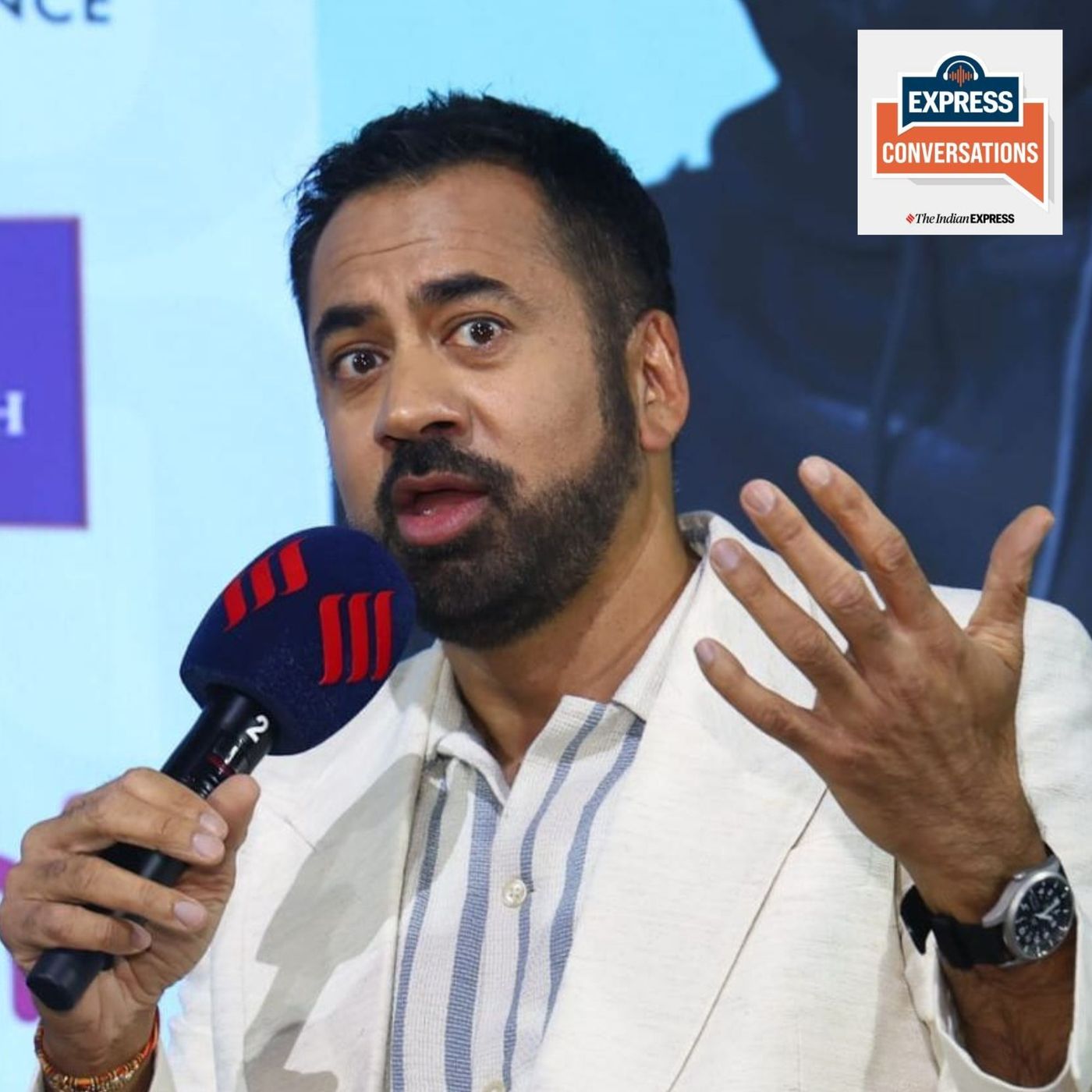
Join us for an insightful conversation with Kal Penn — acclaimed actor, author, and former White House staffer. Known for his breakout role in Harold & Kumar Go to White Castle (2004) and his powerful performance in The Namesake (2006), Kal Penn has long been a familiar South Asian face in both Hollywood and public service. In this engaging session, Penn reflects on his journey from Hollywood to the White House, where he served as Associate Director of Public Engagement under President Barack Obama. He discusses his advocacy for young Americans, Asian Americans, and the arts, as well as his…
1 Aug 2025 · 18 min
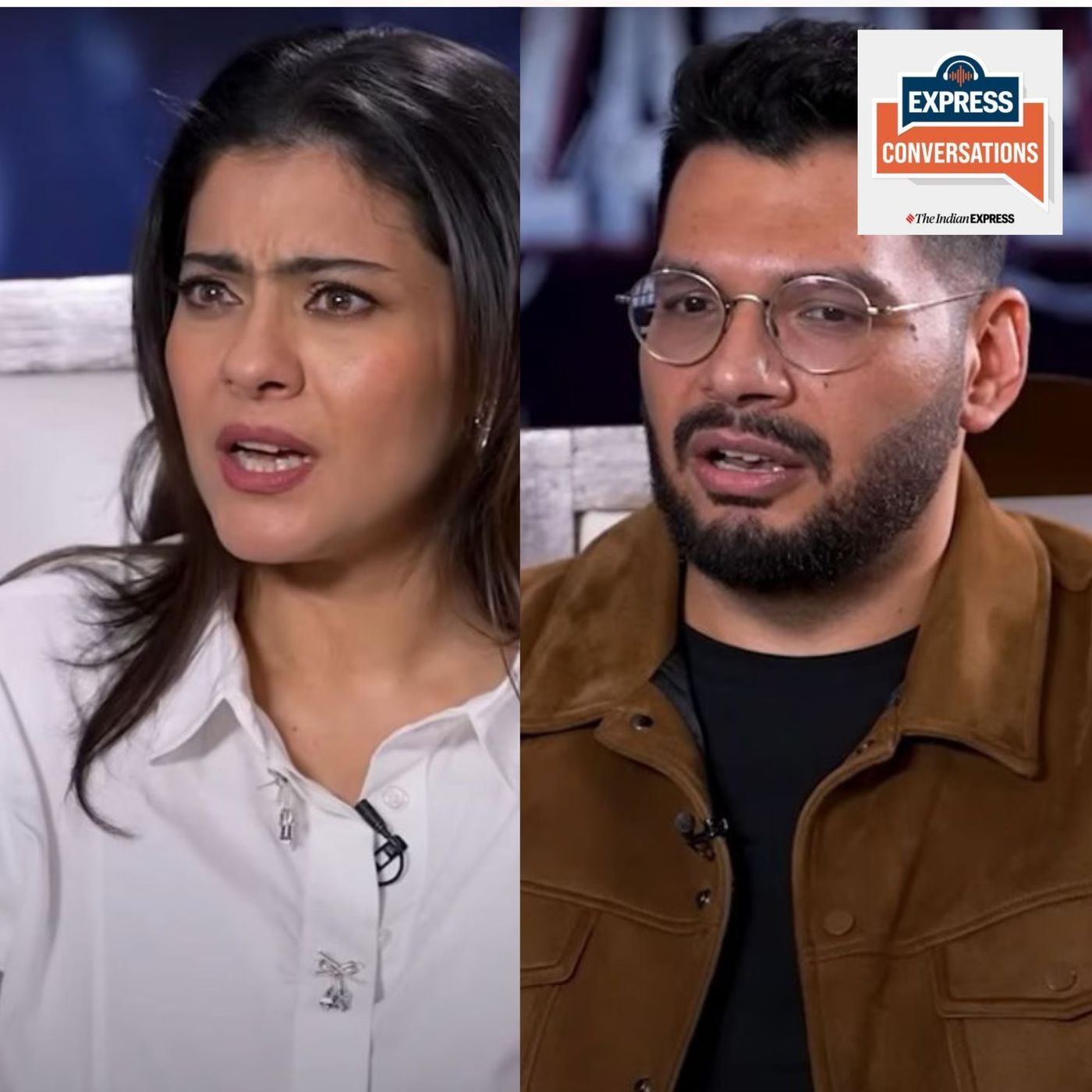
In this exclusive chat with Nawaz Kochra, Kajol and Kayoze Irani open up about their film 'Sarzameen'. The duo talks about working with Ibrahim Ali Khan, Kayoze’s directorial debut, and share thoughts on kids from film families. Edited and Mixed by Suresh Pawar

11 Jul 2025 · 14 min
In this exclusive conversation Rajkummar Rao and Manushi Chhillar speak to Anas Arif about their new film Maalik. They discuss their respective roles, what they look for when choosing a script, and the kind of experience audiences can expect from the film. Edited and Mixed by Suresh Pawar

27 Jun 2025 · 18 min
Audrey Truschke discusses her book on 5000 years of South Asian history, starting with the Indus Valley Civilization around 2600 BCE. She explains the choice of 5000 years, including a brief account of early human migration 120,000 years ago. Truschke emphasizes the importance of diverse voices, particularly women and oppressed castes, in her narrative. She critiques political appropriations of the Indus civilization and highlights the book's non-nationalist approach, covering historical connections, cultural exports, and the evolution of Hindu nationalism. She was in conversation with The…
20 Jun 2025 · 14 min
In this riveting interview, veteran actor Boman Irani talks to Navya Kharbanda about his memories of shooting Munna Bhai MBBS with Sunil Dutt, popularity of his character Virus from 3 Idiots, his recent Cannes debut, and his upcoming Zee5 film Detective Sherdil. Edited and Mixed by Suresh Pawar
13 Jun 2025 · 12 min
In an exclusive interview with Devansh Sharma, producer Zoya Akhtar and director Ayesha Sood talk about their new unscripted series In Transit, having trans people tell their own stories, and the failure of Superboys of Malegaon. Edited and Mixed by Suresh Pawar
4 Oct 2026 · 1 hr 3 min
This time, the spotlight is on Prithviraj Sukumaran, Kareena Kapoor Khan and Meghna Gulzar, who joined us for a candid conversation. During the session, the trio spoke about their upcoming film Daayra, the complexities of its central characters, their creative choices, and the differences between the Malayalam and Hindi film industries. Edited and Mixed by Suresh Pawar
8 Aug 2026 · 1 hr 9 min
Will Netflix bid for IPL rights? Why did it bring Samay Raina’s India’s Got Latent to the platform and how is AI transforming entertainment? Netflix Co-CEO Ted Sarandos joins Anant Goenka for a wide-ranging conversation about Netflix’s ambitions in India, the future of streaming and the changing rules of global entertainment. As one of the most influential leaders in global entertainment, Sarandos has transformed how audiences around the world discover, watch, and experience content. With India emerging as one of the most important content markets globally, his perspectives offer valuable…
15 Jun 2026 · 25 min
Writer-director Imtiaz Ali discusses his recent film 'Main Vaapas Aaunga', that released on June 12, in an exclusive conversation with Alaka Sahani. Inspired by real stories from the 1947 Partition, the film explores themes of identity, loss and belonging. Imtiaz also talks about reuniting with Diljit Dosanjh after Amar Singh Chamkila, working with Naseeruddin Shah, and casting Vedang Raina and Sharvari in key roles. Edited and Mixed by Suresh Pawar
1 Jun 2026 · 14 min
In an exclusive conversation with Devansh Sharma, Madhuri Dixit, director Suresh Triveni, producer Vikram Malhotra and Ruchikaa Kapoor, Director of Original Films at Netflix India, spoke about their film 'Maa Behen', which released on June 5. During the discussion, the team also reflected on how stars from the 1980s are making a strong comeback in today’s entertainment industry and shared their thoughts on whether the growing trend of casting influencers is affecting opportunities for trained actors. Edited and Mixed by Suresh Pawar

The Melo app keeps playing with the screen off, works in the car and on your watch, wakes you to your station, and browses the whole catalogue offline. Free, no ads, no account.