

Episode · Express Conversations
Historian Audrey Truschke Breaks Down India Through Lens of Marginalised
27 Jun 2025 · 18 min
Episode notes
Audrey Truschke discusses her book on 5000 years of South Asian history, starting with the Indus Valley Civilization around 2600 BCE. She explains the choice of 5000 years, including a brief account of early human migration 120,000 years ago. Truschke emphasizes the importance of diverse voices, particularly women and oppressed castes, in her narrative. She critiques political appropriations of the Indus civilization and highlights the book's non-nationalist approach, covering historical connections, cultural exports, and the evolution of Hindu nationalism. She was in conversation with The…
Transcript
Read the transcript · about 3,170 words, follows along as you listen
Speaker 1:Welcome to another episode of Express Conversations, a podcast where eminent voices from the world of politics, governance, sports, business and arts talk to us about their life, work and issues that really matter. In this episode, we will hear from historian Audrey Trishke. Our guest is in conversation with adri Ja Roi Chadri from The Indian Express. In this episode, Audrey discusses her book on five thousand years of South Asian history, starting with the Induspali civilization around two.
Speaker 2:Thousand, six hundred BCE.
Speaker 1:Shares how her book covers historical connections, cultural exports, and emphasizes the importance of diverse voices, particularly women and oppressed casts.
Speaker 3:My first question to you is that there's a very specific number that the title of your book has as five thousand years of South Asian So could you elaborate a little bit as to why how did you zero down on five thousand years?
Speaker 2:I mean how and why both? Sure?
Speaker 4:So, for the last century, the conventional beginning of sort of Indian history, kind of recorded human history, has been about four thousand, six hundred years ago with the Indus civilization or the Indus Valley civilization, and so that too is where I begin my narrative. We rounded up for the title because publishers like round numbers, but that's where the five thousand comes from, So I don't adhere to it strictly. I do start sort of in earnest with the Indus civilization around twenty six hundred BCE.
Speaker 2:Also before that, I do give a brief.
Speaker 4:Account of how people sort of populated the subcontinent in the first place. And that's a story that goes back one hundred and twenty thousand years.
Speaker 3:Okay, but I understand that you know the first chapter of your book it begins with the Indus Valley civilization. Well why did you choose to begin with the Indis civilization? Do we know that it was the beginning of Indian history and all of Indian history?
Speaker 2:Can we say that? No?
Speaker 4:I think it depends on your perspective, right, I mean, you know, the beginning of Indian history geologically goes back millions of years, right to when the subcontinent is formed. The Hamalias are still rising from the crashing together of two tectonic plates. Human history goes back, as I said, around one hundred and twenty thousand years, give or take. I begin the book in the most in a sense conventional way a historian would do this, which is with recorded known human history, right in a civilization that was robust enough, and they left behind significant material evidence for us to work with.
Speaker 2:Okay, just because.
Speaker 4:So I should say not all of the past is recoverable. Okay, but history is a positivist discipline. We work with the evidence we have, and so there's no value judgment that the indiscivilization was somehow more important than other groups of people doing other things in India around the same time. It's simply that they're the ones for whom we have significant material evidence.
Speaker 3:Okay, all right. You know, we know that there's a lot of politics around the Indus civilization lately, with a lot of political parties trying to appropriate it around religious or regional lines. How do you respond to that? Do you think there is some truth to whatever the parties have to say about the indis civilization.
Speaker 4:I think that essentially every single political party in India will be disappointed in my take on the indiscivilization. I know there's a huge push right now for it to have been a Druvidian civilization. There is no positivist evidence that shows that none whatsoever. It's plausible, but a lot of things are plausible. That's not how history works. Right. The bottom line is we don't know much about who the Indis civilization people were. We know they built cities, we know how they lived, know fair amount about their diet, right.
Speaker 4:I mean, there's certain things that are recorded in the material and skeletal records, but we don't fundamentally know who they were, except that we think they were from northwestern India.
Speaker 2:That was a long time ago.
Speaker 4:How that maps on to modern linguistic and political and ethnic groups, we really don't know.
Speaker 2:And so for those who are making modern political.
Speaker 4:Claims, insofar as that's a political claim, I suppose I have less to say about it. But in so far as you're trying to make a historical claim, you need to be a little bit more concrete about the evidence.
Speaker 2:Oh thank you.
Speaker 3:Oh and there's also a section annial book where you speak about the first Indians.
Speaker 2:So would you elaborate a little bit on who were the first Indians? Sure?
Speaker 4:I'm taking from Tony Joseph there who has an excellent book called The First Indians, so that I highly recommend, great book. So the First Indians were not actually the first people to like the first Homo sapiens to set foot on the Indian subcontinent. That would be the one hundred and twenty thousand years years ago group. But they all died out all right. About sixty five thousand years ago, another migrant group came. There may have been some in between, a little unclear on that, but around sixty five thousand years ago, another migrant group came again, coming roughly from Africa, coming over land east. They enter the subcontinent and some of those people survive. They have left behind a genetic lineage that is shared by some, not all, modern Indians.
Speaker 2:Right, It's especially.
Speaker 4:Strong in South India and those we call those people the first Indians because they're the first ones to make it.
Speaker 2:Okay, got it? Thank you.
Speaker 3:There's also a section in your book that you mentioned in which you mentioned that you have tried to include diverse voices and representation of diversity in your book.
Speaker 2:So how do you do that?
Speaker 3:How could you give me some examples of how more women and the oppressed casts are represented in this book?
Speaker 4:Absolutely so, like many historians right now, I think it's so important to have a more diverse set of voices when we're.
Speaker 2:Looking to the past, right.
Speaker 4:And the thing is, it's hard because the people who tend to be recorded tend to be members of dominant social groups.
Speaker 2:So in South.
Speaker 4:Asia, that means they tend to be men, they tend to be upper cast and they tend to be Hindu, And so I'm looking for people who don't fit that bill. I also think it's really important to bring in diverse voices, not just as oh, here's somebody else on the side who you don't think about doing X, but rather to also bring in diverse voices to explain sort of key shifts in South Asian history.
Speaker 2:So, for example, I of course covered.
Speaker 4:The advent of Buddhism about twenty four hundred years ago. Any historian would cover that in in and over you book. Most people would probably cite from male authored Buddhist sources to talk about that, and I don't. I cite from the Terry Gatta, which is a collection of poems and hymns by Buddhist women collected in the early centuries BCEE, And so I tell the story and part of the advent of Buddhism by using female voices of the terries.
Speaker 2:The enlightened nuns.
Speaker 4:Later on I bring in so far later I bring in female voices. For example, when I talk about the Hindu reform movements and criticisms of Hinduism that arise in the nineteenth century, that's a well known story. You know, the British show up, they have a lot of negative things to say about Hinduism, and Hindus respond in different ways, and that spawns the Hindu reform movements. But usually it's a straight up lineup of gentlemen that people talk about.
Speaker 2:There. I talk about some of the men.
Speaker 4:I talk about Ramo Henroi, and you know, I talk about Viva Kananda. I also talk about Rama bay May, who is an upper cast who is a Brahm and Hindu woman later in life converts to Christianity and writes actually a pretty good book called The High Caste Hindu Woman, still pretty good reading today. And so lower casts are a little there. In a sense, it's harder even than to bring in female voices.
Speaker 2:For ancient India, we.
Speaker 4:Have very like little to nothing that's actually written by Shudras and dullets.
Speaker 2:Right.
Speaker 4:Let me note I do use the word dullit throughout the book, even though that's anachronistic, and that's to avoid using offensive terms for that broad based group of people. So it's not till later that we get stuff authored by Shudras and dullets.
Speaker 2:But I at least try to bring in texts about them.
Speaker 4:So, for example, I have a section where I'm talking about the seventeenth century, and I talk about cast in the seventeenth century.
Speaker 2:I talk about some Shudra kings. That's great, but they are kings.
Speaker 4:I also print part of a Telugu drama written around seventeen hundred CE. It's written by an upper caste individual, but it depicts a Brahmin been very poor light all right, and this is the text, So folks don't get mad at me get mad at the seventeen hundred text. It depicts this Brahman who is l thing after a dullat woman. It is, you know, sort of abusing his bermonacal privilege. He cites Sanskrit versus to her and sort of, you know, plays with religion to try to get this dull woman to sleep with him. This is not a dull voice, but at least it's a dulic character. So you work with what you have for the historical evidence. There is no getting around the fact that dominant groups are better represented in the South Asian historical record. That is true of all histories in all parts of the world. But that did not absolve historians of doing the hard work of trying to recover what we can both about and from the perspective of less discussed, less represented groups.
Speaker 2:Thank you so much.
Speaker 3:That you also say that you know, Indian history, especially ancient India and medieval India, has always been.
Speaker 2:Connected with the world.
Speaker 3:And you mentioned that you know how a certain there are certain episodes, major historical episodes in which India was connected to parts of the world. Can you elaborate a little bit on that as well, But what are some of these major historical periods when India has been connected to the world.
Speaker 4:I mean from the beginning and throughout right, and I mean how people get to India as a story of migration. The Indus Valley civilization has extensive trade connections with Mesopotamia and possibly through Mesopotamia to ancient Egypt the Vedic period. That's so, that's after the Indus civilization. Those were migrants, right, They come from outside, they come into northwestern India and then compose the Betas, so the Vedas are an Indian composition, but the language group and that that community does come from outside Originally. There's trade connections throughout the trade connections which really get going in sort of the mid to late BCE era. Those you know, it's via land to the north, via sea, both east and west, and a little bit south as well. What you can move goods along, people can move along, So South Asians travel both out of the subcontinent. Migrant groups continue to come in. South Asia then has some pretty remarkable cultural exports. Right it's starting in the few centuries before the turn into the CE era, and so of course Buddhism is probably the most well known one, which travels both on the sea
Speaker 4:trade routes and along the silk roads, surviving ultimately largely outside of the subcontinent. There's also stories, the Puncha tantra stories. There's games like chess and Parcheesi that are still popular across the West today. All of Sanskrit, which especially travels east to Southeast Asia. All all of that attests to India and the subcontinent more broadly being part of an interconnected world. As always for a historian, what's really fun are the details.
Speaker 2:So while the big picture.
Speaker 4:Is that India's always connected, I mean what really gets me excited is thinking about that at specific points in time. Big picture, though, there's never a point where India is disconnected from the rest of the world ever, including today. If anything, India is more connected today. Beginning I would say the fact that we're having this conversation in English and many Indians will listen to it in English. That's impossible to explain without extensive connections with the rest of the world.
Speaker 3:Of course, this is you know, with a book like this, there's always this question on what is included and what is excluded because here you are mapping five thousand years of Indian history. So how have you made any conscious choices in terms of how.
Speaker 2:To include and what to include?
Speaker 3:And do you feel there is any significant chunk of painted history that you think has been left out?
Speaker 4:So I will say I cut the vast majority of known South Asian history. That would be true of any book that covers this time period in the same amount of pages, right, and I mean seven hundred and twelve pages. You can't get much longer than that, even in the single volume. I think in terms of what I included and excluded. Probably the biggest difference is that I cut a lot.
Speaker 2:Of kings, a lot of kings for those who want so there.
Speaker 4:For decades, many people have told what they say is the history of South Asia, that what they've really told is the political history of South Asia.
Speaker 2:Political history is important, trust me.
Speaker 4:There's a lot of rulers in the pages of my book, kings and queens and later prime ministers and presidents. However, political history is only one kind of history. There's also religious history, social history, material history, economic history. All of those are just as important as political history. In order to make room for talking about say fashion in you know what jewelry you wore twenty five hundred years ago, all the way through to I talk about Bollywood in the present day, you have to cut stuff to make room for that. Otherwise you just, you know, you never finish the book. So for those who are who think they're interested in South Asian history but really just want all the dynasties, I would direct you to other books.
Speaker 4:That's not my book, right, I would also say, and I have I have a bit at the end of the book where I actually deal with this issue of like, how dare you not cover fill in the blank? Because I think a lot of people are going to have that, right. There's a lot of people that are attached to, you know, if they're academics, what they study in South Asian history, if they're popular, if they're not academics, you know, where they're from, or their sort of favorite bit of South Asian history. And I think a lot of people are going to be upset that, you know, I cut their favorite bit, and I do plead to consider what cutting that allowed me to include.
Speaker 2:Right.
Speaker 4:Also, it's an overview book. It's not a comprehensive book. I don't think it is possible to write a comprehensive book of five thousand years of history. But also one other thing I'll say that might help for folks who are who are a little upset a little mytht that I cut their favorite bit. So one thing that I do is I do try to get a bit of every kind of history in the book, not just the politics, but all the other stuff too. And in order to do that, if I go, say heavy on political history in one chapter, in the next chapter, I might not have so much on that. If say I go heavy on religious history in a particular chapter, Well the next chapter might be a little bit more about society and land and economics and things like that, right, And so I do try to mix it up. That results sometimes in some interesting omissions. All right, But as I say at some point in the book to my readers, don't let it be the last book you read on South Asian history.
Speaker 2:It's one book, It's not the only one, Okay. I have one last question.
Speaker 3:Yeah, we know that you know right now the history in Indian history has become a very hot topical debate, but with a lot of arguments about nationalism and what constitutes Indian history. And you know what is to what extent we have the way we have been studying history as of till until now, that itself is being challenged by the dominant political mood in the country right now? How would yourself say that your book addresses the current political mood in India and when it comes to how the current politics looks at Indian history, how is your book responding to that?
Speaker 4:One is that I think my book is pretty staunchly and openly and decidedly a non nationalist history, right. I mean, among other things, I am an American by nationality, so that wouldn't work out so well. Right down to the title, and I say this in the introduction in the India of the title, that is not the modern nation state of India. The modern nation state of India was born like yesterday. From a historian's perspective, right, it's less than a century old, right, that's very very recent. I use India in the title and throughout most of the book until the last couple of chapters in its historic sense of the subcontinent, so it's a geographical designation. It very much includes Bangladesh, Pakistan, and southern parts.
Speaker 2:Of Afghanistan as well.
Speaker 4:And I realized that's going to be a little uncomfortable for a lot of readers who are really used to India being the modern nation states with militarized borders and an army and a set of nationalist symbols. And I am trying to challenge that that's not what India has been historically. Maybe that's what you think India is now. I have less to say about that. But historically history doesn't culminate in you. It doesn't culminate in the modern Indian state. This is just another moment.
Speaker 1:You were listening to Audrey Rishke on Express Conversations. If you like the show, then do subscribe to us wherever you get your podcasts. You can also recommend the show to someone you think we like it, share it with a friend or someone in a family. It's the best way for people to get to know about us. You can also tweet us at Express Podcasts and write to us at podcasts at Indianexpress dot com
Transcript supplied by the publisher with the episode.
Podcast
Express Conversations
Express Audio · Society & Culture · English
Express Conversations: Listen to celebrities and public figures dive into their lives and careers, and discuss contemporary issues as they are interviewed by our editors from the Indian Express. Join us to hear the wisdom of the some of the greatest living legends of our time
More from Express Conversations All episodes →
-
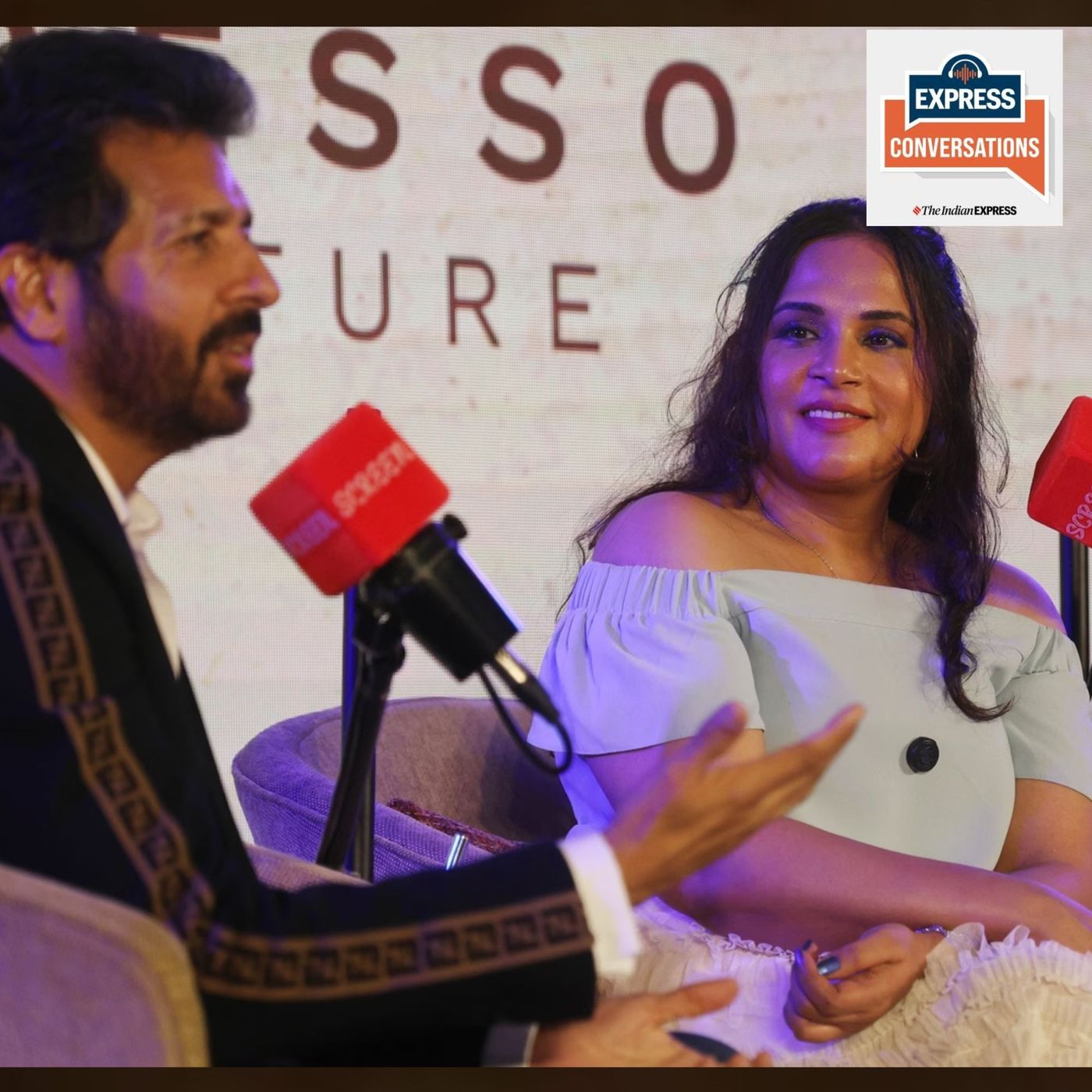
15 Aug 2025 · 51 min
Kabir Khan & Richa Chadha Exclusive On Struggles, Stardom & Stories That Matter
In this insightful and inspiring interview, acclaimed filmmaker Kabir Khan and celebrated actress Richa Chadha come together to share their remarkable journeys — from facing struggles in the early stages of their careers to becoming influential voices in Indian cinema. Titled “From Struggles to Stardom & Stories That Matter,” the conversation explores the personal and professional milestones that shaped their paths, as well as their commitment to storytelling that goes beyond entertainment. Kabir Khan, known for his powerful and socially resonant films like Bajrangi Bhaijaan, Ek Tha Tiger,…
-
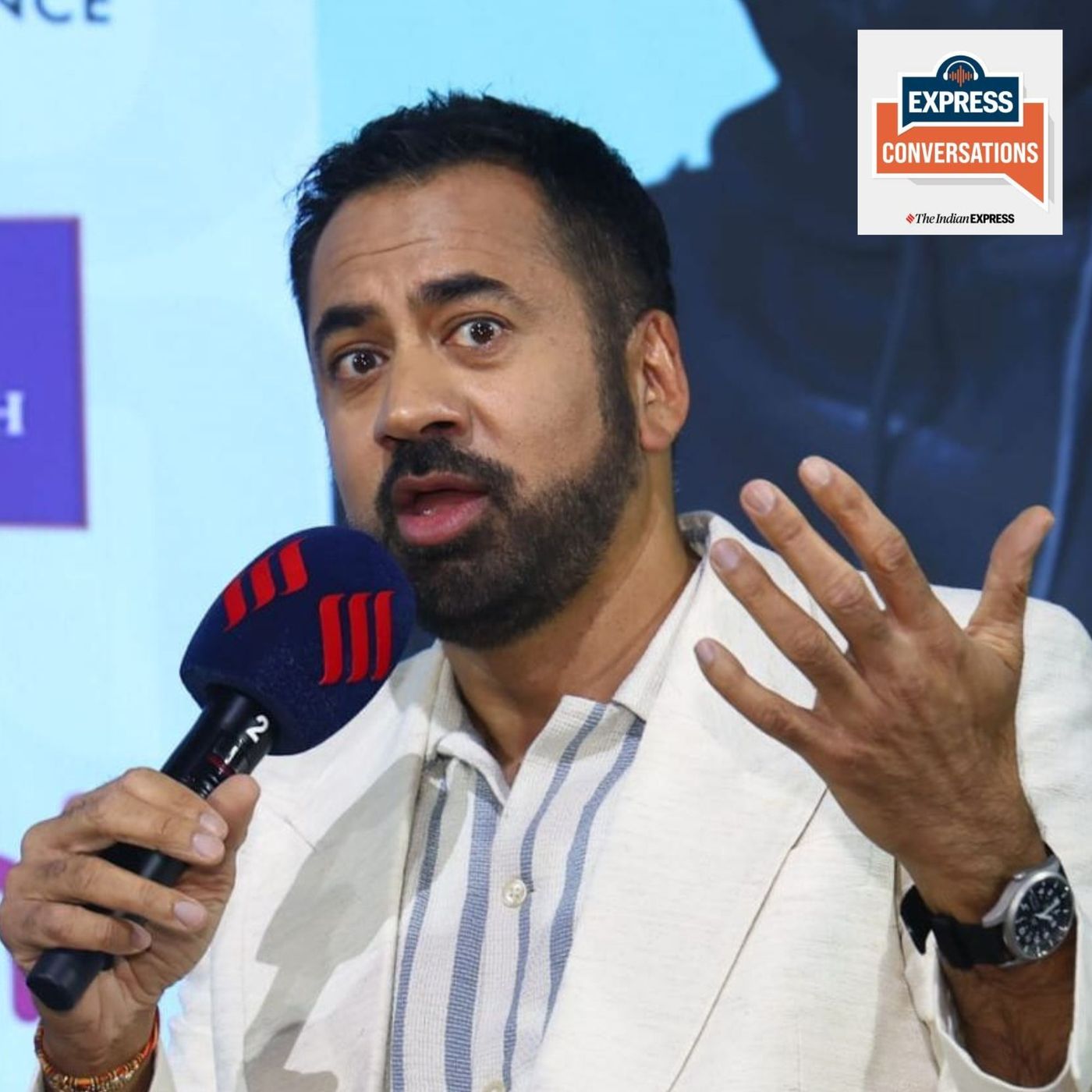
8 Aug 2025 · 1 hr 14 min
Kal Penn Exclusive: From Harold & Kumar to the Obama White House
Join us for an insightful conversation with Kal Penn — acclaimed actor, author, and former White House staffer. Known for his breakout role in Harold & Kumar Go to White Castle (2004) and his powerful performance in The Namesake (2006), Kal Penn has long been a familiar South Asian face in both Hollywood and public service. In this engaging session, Penn reflects on his journey from Hollywood to the White House, where he served as Associate Director of Public Engagement under President Barack Obama. He discusses his advocacy for young Americans, Asian Americans, and the arts, as well as his…
-

1 Aug 2025 · 18 min
Kajol & Kayoze Irani On Sarzameen, Working With Ibrahim Ali Khan, Parenting
In this exclusive chat with Nawaz Kochra, Kajol and Kayoze Irani open up about their film 'Sarzameen'. The duo talks about working with Ibrahim Ali Khan, Kayoze’s directorial debut, and share thoughts on kids from film families. Edited and Mixed by Suresh Pawar
-

11 Jul 2025 · 14 min
Would Love To Work With Shah Rukh Khan On A Film Like Gangs Of New York: Rajkummar Rao
In this exclusive conversation Rajkummar Rao and Manushi Chhillar speak to Anas Arif about their new film Maalik. They discuss their respective roles, what they look for when choosing a script, and the kind of experience audiences can expect from the film. Edited and Mixed by Suresh Pawar
-

4 Jul 2025 · 18 min
Abhishek Bachchan: 'It was terrifying to first face the camera with my father'
In an exclusive interview with Devansh Sharma, Abhishek Bachchan talks about his 25-year journey from Refugee to Kaalidhar Laapata, 20 years of working with father Amitabh Bachchan in Sarkar, and his memories of watching mother Jaya Bachchan's films in childhood. Edited and Mixed by Suresh Pawar
-
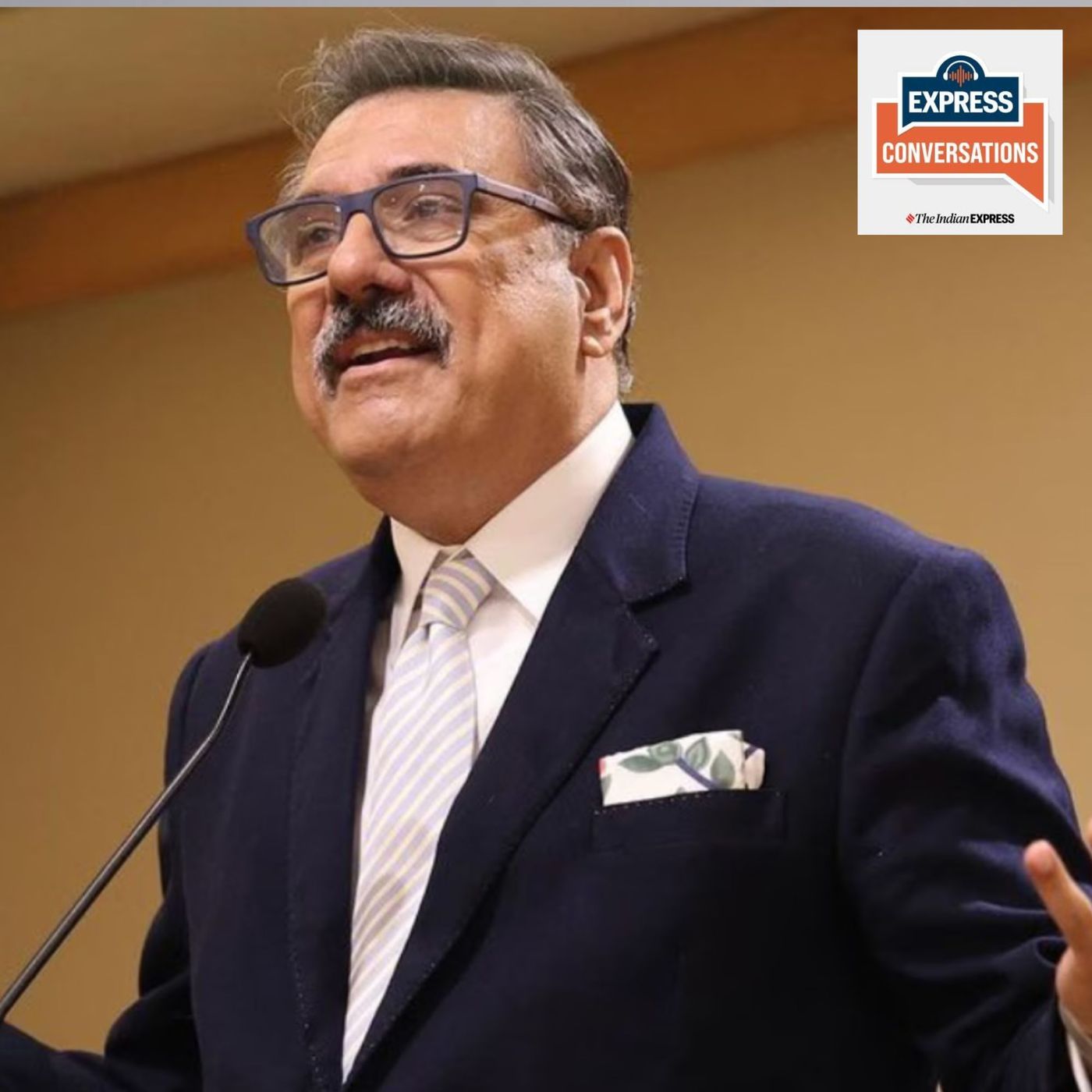
20 Jun 2025 · 14 min
Boman Irani on Detective Sherdil
In this riveting interview, veteran actor Boman Irani talks to Navya Kharbanda about his memories of shooting Munna Bhai MBBS with Sunil Dutt, popularity of his character Virus from 3 Idiots, his recent Cannes debut, and his upcoming Zee5 film Detective Sherdil. Edited and Mixed by Suresh Pawar
-
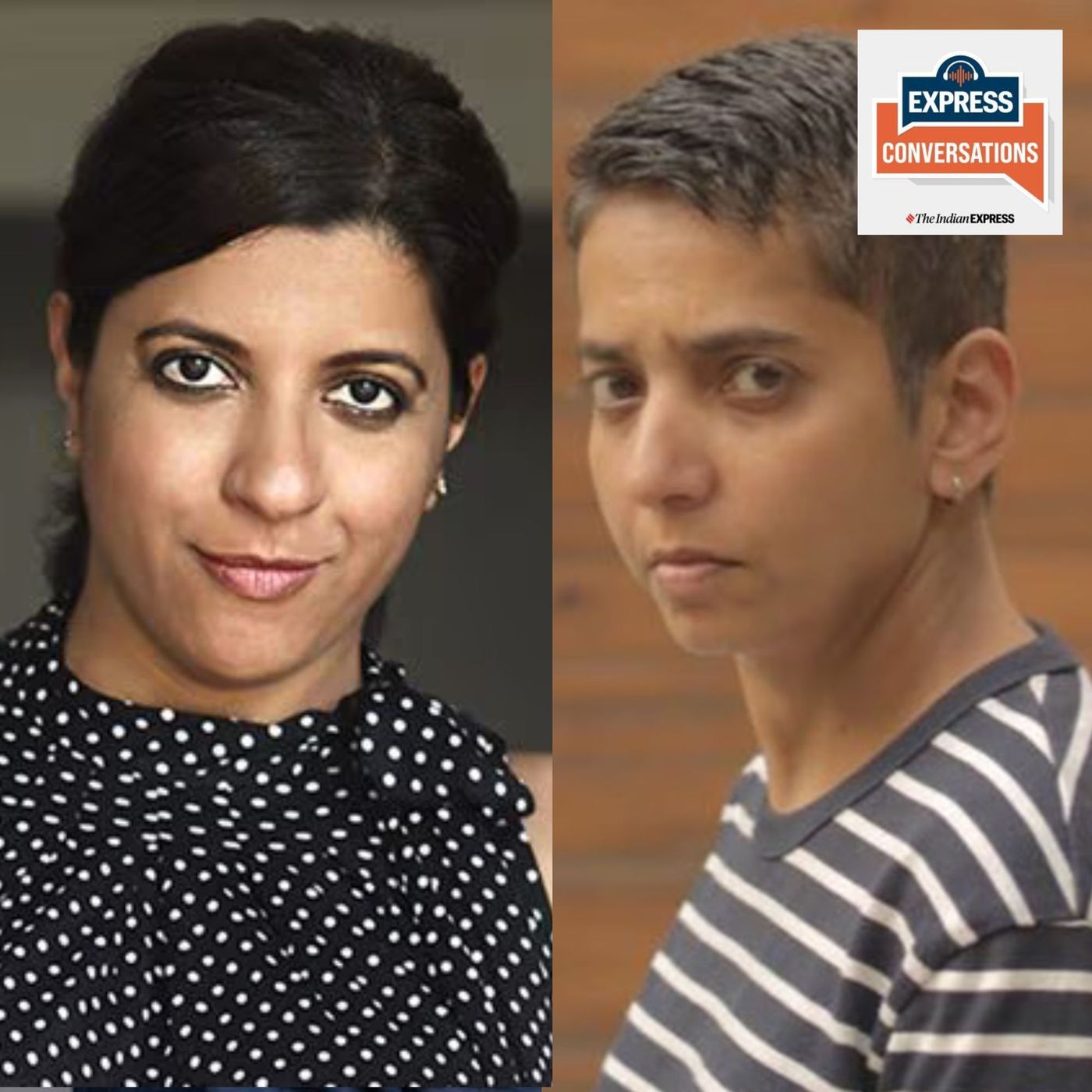
13 Jun 2025 · 12 min
'We wanted trans people to tell their own stories': Zoya Akhtar
In an exclusive interview with Devansh Sharma, producer Zoya Akhtar and director Ayesha Sood talk about their new unscripted series In Transit, having trans people tell their own stories, and the failure of Superboys of Malegaon. Edited and Mixed by Suresh Pawar
-
6 Jun 2025 · 1 hr 8 min
CM Devendra Fadnavis Exclusive Interview on Power, Politics, & Maharashtra’s Future
Join us for an exclusive conversation with Maharashtra's stalwart leader, Devendra Fadnavis. In this insightful interview, CM Devendra Fadnavis shares his perspectives on the 2024 general election's challenges and the BJP's remarkable turnaround, Maharashtra's transformative infrastructure projects, and his development-driven vision for the state. He also discusses building consensus across party lines in a polarized political landscape, upcoming local body elections, and national economic challenges. Get a glimpse into the politics of transformation and the road to Viksit Bharat 2047, and…
-
24 May 2025 · 26 min
Rajkummar Rao and Wamiqa Gabbi on Bhool Chuk Maaf
In this exclusive interview with Nawaz Kochra, Rajkummar Rao and Wamiqa Gabbi talk about their upcoming film 'Bhool Chuk Maaf'. While Rajkummar opens up about married life and shares instances from his wedding day, Wamiqa reveals how her grandmother pressurizes her for marriage. Watch this candid and fun conversation to know more. Edited and Mixed by Suresh Pawar
-

16 May 2025 · 45 min
Nawazuddin Siddiqui and Sejal Shah discuss their recent film Costao
Actor Nawazuddin Siddiqui and director Sejal Shah discuss the experience of shooting their film Costao, trend of creating biopics in Bollywood, friendships in the industry, perceptions and stereotypes in Bollywood and much more. Edited and Mixed by Suresh Pawar

Take it with you
The Melo app keeps playing with the screen off, works in the car and on your watch, wakes you to your station, and browses the whole catalogue offline. Free, no ads, no account.


