Episode · Express Conversations
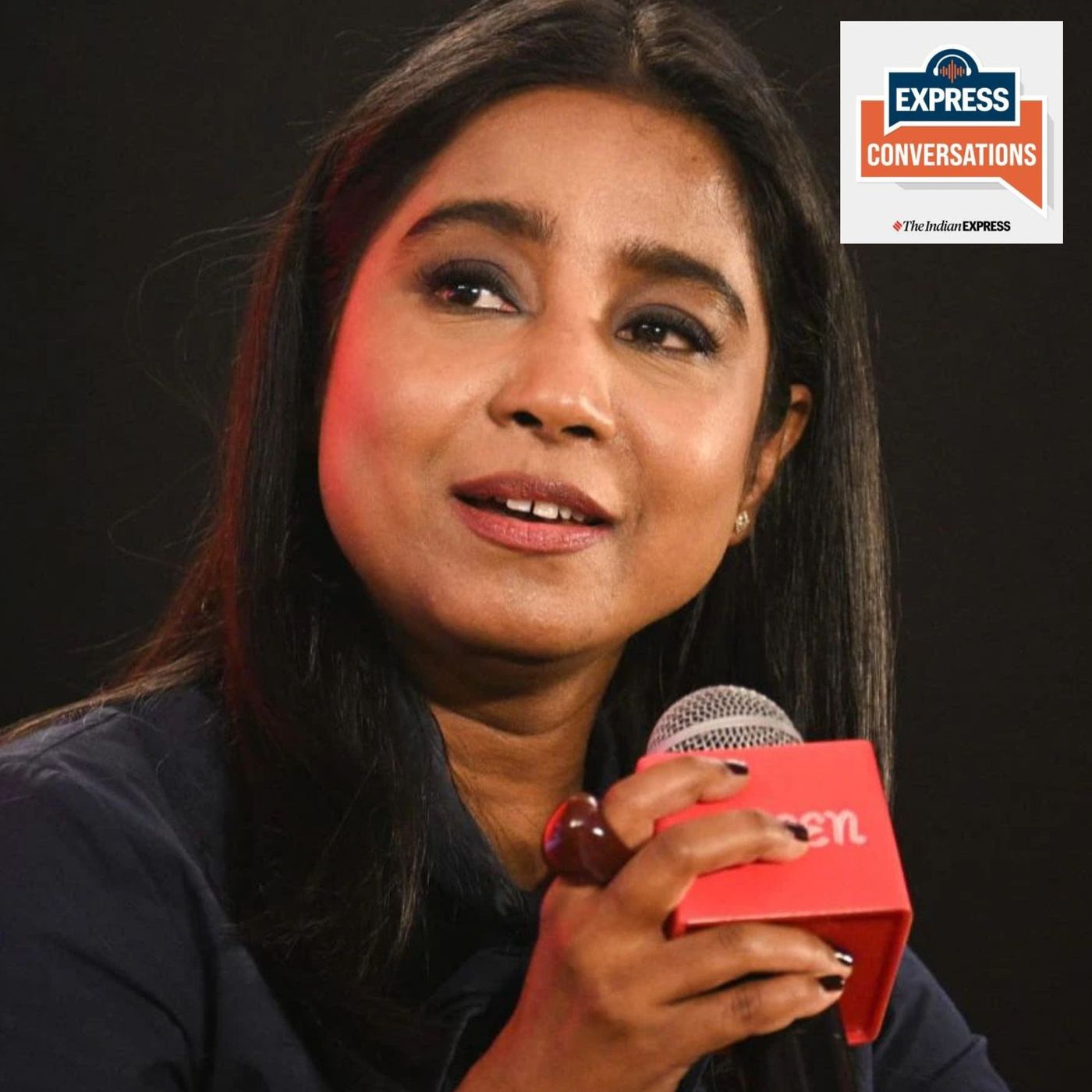
Singer Shilpa Rao on Creativity, Growth & Industry Challenges
8 May 2026 · 37 min
Episode · Express Conversations
8 May 2026 · 37 min
In this exclusive interview, Shilpa Rao takes us through her remarkable journey in the Indian music industry, sharing deep insights into creativity, artistic growth, and the realities of being a playback singer in Bollywood. Known for her soulful voice and hit songs across films and independent projects, Shilpa Rao opens up about how she approaches music, the process behind finding her unique sound, and the importance of constant reinvention in a competitive industry. She also speaks candidly about the challenges artists face today - from industry pressures to evolving audience…
Speaker 1:Welcome to another episode of Express Conversations, a podcast where eminent voices from the world of politics, governance, sports, business and arts talk to us about their life, work and issues that really matter. In this episode, we hear from Indian singer Shilpaao. Our guest is in conversation with celebrity chefs Subli Saren and Suan Shu Karana of The Indian Express. In this interview, shap opens up about how she approaches music and the process behind finding her unique sound. She takes us through her remarkable journey in the Indian music industry, sharing deep insights into creativity, artistic growth, the realities of being a playback singer in Bollywood and more.
Speaker 2:Thank you everyone for being here, shupa, thank you for making time.
Speaker 3:Oh no, thank you.
Speaker 4:I had no idea, but now I'm nervous.
Speaker 2:Okay, we won't talk music yet. What do the day off in landship look like a day off? Do you have a day off?
Speaker 3:I don't think I work. It doesn't feel like work.
Speaker 2:I mean, I mean, is this somebody else day back singing for you?
Speaker 1:People?
Speaker 3:Calmly like? I mean, this is something which.
Speaker 4:I believe that more than your friends, your partner, anybody that that you that you love that dearly. You need to really love what you do because I think you spend most of your life doing.
Speaker 2:That and it shows your voice.
Speaker 3:If if you're not.
Speaker 4:In love with it, it feels like a chore, and I think should think of doing something else.
Speaker 3:So this, this doesn't feel like work.
Speaker 2:How incredible do you work out? You cook, you read, you travel, all of that, all of that while singing?
Speaker 4:You travel because again, travel makes everything better and and you have so many ideas when you travel. You put it in this because one art form after a point doesn't inspire you that much. You need other art forms to inspire you. So you know, even a a ballet recital can inspire you to do music.
Speaker 3:Food, Oh my god, I think everything starts with good food and good company.
Speaker 2:Yeah. And you know what's the last thing you read, heard or did? Let's stayed with you will make it into your music. Last thing I read was that's memorable that hasn't gotten out to vegetarian vegetarian, vegetarian hang kang.
Speaker 4:I think one of those very moving. I don't know, I won't say a story. It's it's it's that that whole Journey of of that Woman. I think I think it was very very special for me to read it.
Speaker 2:It's on my bedside table and I haven't read it, so you've shamed me.
Speaker 3:No, no, no, please go and read it.
Speaker 4:I I've been buying copies of it and giving it to friends. I think it's something which I really like. So if I like something, I keep sharing it with friends.
Speaker 3:Yeah.
Speaker 2:Is that a song that haunted you that you heard and you said, I.
Speaker 3:Think it's the most beautiful, like.
Speaker 2:You said, my mother donetlan Now, but you grew up in some ship Purta. Yeah, it's a small town that's a big city, and it's thinking supposed.
Speaker 3:Exactly it's it's it's very perfectly sized and vision.
Speaker 2:Yeah.
Speaker 4:The flex of parents is my my son or daughter got this rank at iety or or we got into excel arios and that's the flex.
Speaker 3:It's it's not about money or or.
Speaker 2:What's the facts that we'll all be surprised by the thing that you do that nobody will associate with you. Not amazing hobby.
Speaker 3:I don't believe in hobbies.
Speaker 4:Like if I'm making coffee, it's a very like ritually soulful thing making it, having coffee. It's it's I think one of the most beautiful things to do. And yeah, black coffee.
Speaker 2:And did you cook it? Yes? What kind of food?
Speaker 3:Everything?
Speaker 4:But I think the just bought stressful music, music business, stressful other so I and just put Mary Sabs music on and and do a slow cooke mutton for about three hours.
Speaker 2:Do you have a favorite spice? Favorite spice? Pepper? Black people, black pepper, perfect, incredible, it's the world. We discovered so many parts of the world because of it. And russome. What does it mean to you that black peper.
Speaker 4:Soul food that's in fact like oil mom, yeah, like like I don't know, something is off. Okay, there's rice which is cooking and Russum's made on the same time. The leg he no no gi ogi with this. This is just rice and russeum and it's perfect.
Speaker 2:Oh wonderful.
Speaker 3:You've spent two decades, almost two decades.
Speaker 5:Swallowing the film industry, two decades in the film industry. When you look back at this fantastic journey and a glimpse of which we saw just now, when you look back at this journey, how do you think Shilpa Rao the twenty two year old applied statistic student who walked into Mithun's studio and him playing him singing to Sinena for you on the harmonium.
Speaker 3:How do you.
Speaker 5:Think your approach to music has changed from that to now? When you walk into a studio this can't didn't musician who knows her way around?
Speaker 4:Tell me how has your approach changed towards a song? So I'm not confident at all. You know, I'm still scared like I was, and I want to retain that feeling. It just makes you a more alerted position. I feel that fear. I always have a fear that I won't be able to sing the song. Yeah, it's always there, and I feel it's a good fear that you're still bothered by doing a bad job.
Speaker 3:I don't think I would want to change it.
Speaker 4:And I also try to retain that that person who went in for the first song. I like to retain that version of myself that again, what is in my hands is to right now do this song any which way. Once the song is released or or or gone to mix, it's not yours, it's it's it's all of you guys. So the only thing that I can do is make it sound good, and if I can do that much, I'm that's it half fun, half fun in the studio AA.
Speaker 5:And you know, in an ecosystem which is so driven by virality, by by numbers.
Speaker 3:I mean, I'm a journalist.
Speaker 5:I know how how numbers are so significant for everything right now. And I had a recent conversation with Amitrivedi who said it's all about algorithm. You know, if it's not earwormy enough, it won't be picked up or amplified.
Speaker 3:By an algorithm.
Speaker 2:Uh.
Speaker 3:From I mean, do you think it's really altered?
Speaker 2:Uh?
Speaker 5:This reverse engineering? Do you think it's really altered? The way a film song was made? The soundtrack to our Lives? How significant it has been from the time we've been hearing some wonderful music from our films.
Speaker 3:This reverse engineering?
Speaker 5:Does it bother you when you walk into a student you are now and there? I mean, I'm sure there are conversations around this and both sides to it, of course, talk to us about it.
Speaker 3:Well.
Speaker 4:I do believe in the whole fact that your reality is your reality, and he can be bothered by other people's reality. So it's very possible. So as long as you're not gullible I think you're fine, So if you can enter the studio and uh, has has anyone watched that match where Djokovic and Federer Timbledon finals and and and Peder is on championship point and he's I think forty forty loves retire. Oh no, this is when he was I think twenty eighteen. I think before that, And uh, you should have seen Djokovic's face Eden flinch. His reality wasn't forty zero. His reality is the match is still on and I can do something about it. And he switched his mind to think it's a clutch game, so I'm gonna like win this point and then the next and the next and the next, and he finally did win it. So it's all reality versus someone else's reality.
Speaker 4:So I know there are numbers, I know there are algorithms, but then there is magic in what one person can do in that moment and change the next second. So if I can forget everything, the algorithm, the numbers, everything and just do something with that line which sparkles, well, I think you can change the next Is that why you always prefer the com in the studio with you? Where definitely just saying on a created track oh no, no, no, I I don't believe in remote recordings. I make sure I'm there in the room with the composer. The energy matters, like like like Fretham being their visual checker, being there, ramance A being there. It matters. The energy matters. And and uh, I know there's a lot of technology, there's so much happening, but then you need you need people, you need to be human.
Speaker 3:Yeah, it's very necessary. Yeah, since we're talking.
Speaker 5:About the industry, I I want to sort of bring in you know, mister Rahman recently spoke of a power shift in the industry.
Speaker 4:Uh.
Speaker 5:He spoke about how non creative and in his words, non creative people are now in charge a saying has left, uh you know, retired, so to say, from the industry.
Speaker 3:Industry is not film industry. He's doing music. He's he's doing music that we love him.
Speaker 5:And he's doing he's not doing film music. So these two things happen quite recently, and it kind of made us look at the industry a little harder as to what's really happening. Are the labels really controlling so much the composers because there is the algorithm as well in the mix what's really happening to you because someone from within the industry, if you could give us a view from there.
Speaker 4:Like I said, I mean, if you can abstain as much as possible from being gullible and to listen to our narrative and believe it and also do it. If you can't abstain from that as much as possible, that's that's a good thing, even if someone's making those kinds of decisions. So yeah, I mean, you might lose a project or two, or you might let go of a song or two in the cabinet, have you in the path of course all that it happens all the time. You might lose it for that particular moment, but the bigger picture, if you can project yourself as yourself. For example, if I have to choose between doing run of the mill kind of a song and play it safe, or choose from in your face kind of a song which I'm being crazy, I will choose the second option even if it fails. At least I did what is me instead of being soft and going for a song which is boring. So yeah, I mean, at the end of the day, we have enough examples of people who've succeeded, but between the two successes, the amount of failures that has happened. Yeah, I mean no one sees that. But then then you have to keep trying, if you have to keep pushing back, you have to keep fighting for
Speaker 4:for yourself.
Speaker 2:Are you who are you abstaining from these days?
Speaker 3:Abstaining from these days?
Speaker 2:People?
Speaker 4:Directors, composers are amazing. You don't abstained from composers. They're lovely people. They're lovely people. And in fact, there's so many directors who see like Saddhartan and I think he sees uh music very differently. For Bishang, I asked him it was a very obvious question, is it to do it? How many lines do I have? Chill Pa, it's a solo go for it? Like yeah, he he has those you know that, that kind of vision. So it's great to work with such people.
Speaker 2:Yeah, do you think you are the sah Ludhian view of this moment? You know, he was so out there and so brilliant, and he said a lot of what you've said. He wrote it to do do and argued and made a point with the theatric's happening in his lifetime. But you just talked about was so powerful. How do you manage the women are being punched on every minute and every industry, but you've managed to keep yourself there? What's the recipe?
Speaker 3:Yeah, there was a phase where we had songs where second and.
Speaker 4:Or chorus lines and the male ki is so high that you have to sing the lower octave and then the higher octave.
Speaker 3:Was a lot of such things.
Speaker 4:But the thing is a little bits two lines.
Speaker 3:Sing it in a way that it can't be missed.
Speaker 5:You know, it's been eighteen days since Asha g passed away, since we yeah, yes, since we're talking, I thought I'll bring this in now. It's been eighteen days since she passed away. You know Asha Gi or even Lag. You know, in the structures that they worked in, even in a very male dominated times that they were working in, even then, their.
Speaker 6:Voices and there's song songs were quite central to a lot of films at that time. Yes, they were doing duets, but there were also a lot of solo specifically created you know Bandini or you look at those lovely songs there or cabarets by ash all solos, right, you know, from then to now, there there are murmurs.
Speaker 3:That one hears about a lot of gender inequality.
Speaker 5:And you said that there are those two lines that happened a CONTRAMELEGI do line.
Speaker 3:Of course one does put their heart in it.
Speaker 2:I get that, But that.
Speaker 5:Change, how do you see that? How do you see the a woman's playback voice change from how it was to how it is?
Speaker 4:What are the changes that you've seenso musically? Was there give me a pre role like pieces. So if you if you hear or if you hear suring theircology or or ormmity or bath razy for the list is endlest Gerald, Edith Pf I mean, Julie London, I mean the list doesn't stop. All these women sounded like themselves, and you have one life. Please sound like yourself, please please just do that. And and when when I when I hear it? Because in our house we heard all of these women the quiet frame of reference here, yeah, follow now, But when when you listen to so many amazing voices and you get confused and then you start finding your own and uh, I think that's what did we found her own voice? And and and that's why there's nobody exactly.
Speaker 2:There's nobody exactly.
Speaker 4:So I think it's it's necessary to have parallels. So so if I'm working and there are many other singers, it's nice to.
Speaker 3:Have those those uh.
Speaker 4:You know, colleagues, because then they're we're pushing each other. You you are doing something beyond your capacity to do something new because you know that someone is just also doing well and you're happy for each other, and it's also pushing you to be a better artist. So I think having these many voices and having that pushback sometimes necessary because yeah, I'm a very lazy person with the you just get up and yeah I'm a little lazy that way. So I need that little urge.
Speaker 2:And you know you've hinted it. Collegiality. You've spoken again and again about people coming together to do things. Who are your network of people in this industry that you rely on, that you know are They're for you and will guide you to the right place.
Speaker 3:So long list, Vish shake her.
Speaker 4:There is freethm there's Amita, there is a Manswer. We usually converse on emails. It's he's super sweet because I I when when he's in front of me, I can't talk to him.
Speaker 3:I go like the so on email.
Speaker 4:I just write him like long thoughts and everything so yeah, he's he's he's such a great person to talk to. Amazing, So yeah, so many people are there is mister Ramon really difficult to record with the records at night?
Speaker 3:I hear and long recording ours and is that for a nocturnal person? He's at works?
Speaker 2:Are you? Are you? And are the do or Hindi poets that fed your soul? Because you're singing that smokiness. I can see so many people's at least.
Speaker 3:Is longer like fest up.
Speaker 4:There is moment Khan, woman Mirisa, there is there is.
Speaker 2:For us roots and but this is delicious. You are India and your Hindustani is very saff.
Speaker 4:Dad was very when you learned teen fourteen when I started, because my father is a very difficult teacher, but a great dad.
Speaker 2:And what did you do?
Speaker 4:I mean, my dad's morning was started with recording the day with that, I had no choice. I had to hear it and I loved it. I still love it. It started with that. Of course, My first education was music.
Speaker 2:I mean I.
Speaker 4:Did academics later, but as as a child, me and my brother we both were first guru teach. My dad actually because he's done his music, so he knows he's amazing, so he taught me music. I had no choice. Initially I didn't want to become a singer. I love music.
Speaker 3:I didn't want to be a singer because I don't think I was putting.
Speaker 2:More than that, because you as a playback singer, you're giving mood and nuance.
Speaker 3:And as a child, I wasn't very good at it. I'll be very honest.
Speaker 4:I hear these kids who sing on on on the reality shows, I think they're so talented. I was not even close to that. But in terms of my father's assistance, he never gave up, and he taught me everything that he could. He taught me Hindustanic classically, taught me KNATUK music, He taught me. He taught me everything, and finally I just realized that, no, this is what I.
Speaker 3:Want to do. And now we have very good friends.
Speaker 2:Was one of us every other before you lose you to do first, ub poet, street activist, or a person who looks at history with a mirror's gaze.
Speaker 3:I think all of it.
Speaker 4:It's it's it's not either our situations about up poetry, protest or up couldticularly be taking.
Speaker 3:I don't think there's an either all of them.
Speaker 5:You were talking about your father's I could just figure you know this disciplinarian guru teaching you.
Speaker 4:If he was your I would be very scared because his face is like a GPS man up here.
Speaker 3:Are you done this?
Speaker 2:This is.
Speaker 5:Involved involvement, involvement become. He also tore off posters in your room.
Speaker 4:I believe he's done all that. That's why yas he's like Amir Khan from.
Speaker 2:Oh and Mom, what role did your mother play?
Speaker 4:Your My mom is like a like a he's a champs.
Speaker 3:She's a champ. My my nanny was a champ.
Speaker 4:She said, you don't get married first, first, to get a job, to get a bank account, put money in it.
Speaker 3:You do what you want, but.
Speaker 4:Make sure you you you have your life shorted. It's it's very important. And and same with my mom.
Speaker 2:Yeah, you know you In passing mentioned and carnatic music, I've learned Hindustany classical music for forty six years. I sang with M four times at the stage and lucky I considered message, You're very fortunate. Last time I was seven years old, I sat on a lap and she was an amazing person. MS. What you what did you learn from mine what is Knatic music to you? As a Hindustani class singer.
Speaker 3:You bought the.
Speaker 4:Bought the different or web a form of music and you it takes a whole lifetime to learn.
Speaker 2:Yes, not just to learn to even inhabit.
Speaker 4:With it, even live with it. Like I I this. Haji always tells me, he's my guru. So I used to always say this. He learned from his mother who was who is an absolutely beautiful Kanatic musician. She sings like a dream. He also learned from Medison sub so medicine. Sub job is that you know, the used to sit with music and the intonations of of the same surs so different from from Hindustanding classical up to kinnatuck. So you would actually tell her that you are curring.
Speaker 3:I can't do this.
Speaker 4:So for an artist of that stature and caliber and and and capacity to be able to be not modest, humble, to realize the fact that every art form is a lifetime of effort. So it's it's a very big thing.
Speaker 2:Yeah.
Speaker 5:Do you think that in terms of domination of the film music, I mean that is our main thing, right, does that takeaway space for alternate music? I mean we've sort of not really pushed forward in that space. I mean, films take too much from us. I think we're doing so many things here.
Speaker 4:I I mean we we were not even discussing the indie music that is being done in the south, which is so powerful.
Speaker 3:Uh.
Speaker 4:So many musicians from the Malayalam film industry or the Malayalam Indian industry.
Speaker 3:I listen to them and I'm.
Speaker 4:Like, it's it's a splash of cold water on your face, Like so much is happening there.
Speaker 3:It's it's I can't even begin to.
Speaker 4:Imagine what kind of radical ideas that they have. And and uh, you don't understand the language, and you don't need to at many many points, but but it evokes something that is so beautiful from from the Bengali Indie indie music.
Speaker 3:I mean, there's just so much happening there.
Speaker 4:Music you have you do that that of course, it's it's classic, that's that's classic folk. I'm talking about the indie stuff that's coming from the from the from the new age artists. I think, and also when when we want to represent Indian uh sound internationally, I think it's high time we we take all of the out and Okay, you know, there's not one sound that comes from in there.
Speaker 3:We have so much.
Speaker 4:We have so many languages, we have so many artforms, we have so many voices and so many stories to tell. Actually, so I think we're doing well, doing great.
Speaker 2:So is there a story inside you that you're going to tell us to a song? If you don't know about music, poet, it's your story story, Honey, what song represents your life? Or a or a geek.
Speaker 4:Or recording able, tell us one that you really one one song that your voice lingers. I think there was one song which was a very important song and an important lesson also color Cactually, so.
Speaker 5:The framework that you spoke of as a child, that you know equal framework. But when you know when there is no framework, when everything is greater, you listening to everything, and then but the industry, you know, that defined voices in a box for a long time, until of course the film's changed and the voice has changed, and you know, then Yatia ask the thin voice is you know me?
Speaker 2:Tia?
Speaker 3:You have a very different bass voice and you work beautifully.
Speaker 4:Don't have a different voice. This is my voice. I don't like this term. You have a different face, you have a different voice, you have a different dressing style, or you have a different point of view. You don't, that's your point of view. You are you, so please don't change.
Speaker 2:And you're not different.
Speaker 3:You're you and you should be you. So I I I that.
Speaker 4:That's why I said, if that was was for fifty years, go go back. No, I w look at the opera singers like, yeah, my god.
Speaker 3:So would.
Speaker 4:Industry defined industry is actually a mirror to all of you guys, mainstream curveter.
Speaker 3:So I think it's all.
Speaker 4:You guys who who break at mold every single time.
Speaker 3:So it's you guys, it's it's it's not us.
Speaker 4:So thanks for taking all my being in every possible manner.
Speaker 5:When I say different, I say different for us because we were used to a certain kind of singing that was happening, and this came for me.
Speaker 3:It was different. It came like a breath of fresh air.
Speaker 2:So that was different.
Speaker 3:You worked with Aniwood in Kellia that the song that won you were National Award twenty years some lovely beautiful songs, but for lack of better word, a simple breezy number got to the National Award.
Speaker 5:Did you think of it? How did you interpret this award. I mean, there's such lovely songs, but Kellia gets the award. So how do you see that culmination of an entire career or for a specific song. It's not an easy song at all.
Speaker 3:It's not. It's not but I meant breezy. I mean it's it's it is.
Speaker 4:It sounds breezy because that is a lot of effort in being non breezy. Non breezy effort made it easy. So if you want to sound effortless, there's a lot of effort that goes back into sounding effortless. So it was a very difficult song. The first time I got onto the mic in Bombay, I took some three four hours.
Speaker 3:I couldn't crack it.
Speaker 4:Uh huh no, because it's a very technically speaking, it's it's it's a shuffle, uh you know, rhythm structure. You have to sing in pocket like how Michael Jackson sang. It has to be in the pocket. It has to be quantized. But by being quantized, you should also make it flowy because the lyrics are like that. So three four hours struggle didn't make it. I gave up, went to Chennai Energy Matters. Any Ruth was there. We finished the recording in twenty minutes.
Speaker 5:Twenty minutes, but it was hours and hours.
Speaker 4:I went into it us thirty five, thirty six years of listening to music consciously and trying to learn it. So every song that you do, your entire life experience goes into it.
Speaker 3:And sometimes that's not enough either.
Speaker 4:So uh, the nationalt of was yeah, So so anything that comes my way, I'm I'm very happy and grateful, and I accept it with with with open.
Speaker 3:Arms and open heart.
Speaker 4:And my heart went a little and you just get next recording, that's it.
Speaker 3:You're as happy as I was.
Speaker 5:And I was like Myra favorite Manmasia with those saying that you know, that's what my heart thought, that you know, such fabulous songs.
Speaker 3:And of course you know chellis a lovely song. But up quake, regret you feeling, I don't do regrets like this is not a waste of time.
Speaker 2:So so tell me. Was there ever a song you sang that you felt the song was more truthful than the story that presented it.
Speaker 3:That's a very interesting question, because.
Speaker 4:Only what I truthfully act for the other I agree, I mean I I I don't think there was a mismatch with with anything.
Speaker 2:Do you think taranas?
Speaker 4:When we were learning music, it was a lot of bandiana perhaps, but trying to find expression and connection with with rag Yeah, what do.
Speaker 2:You think of Rupert?
Speaker 4:It gave us uh such hera actually yeah did you? And and also a lot of drama, I think. And then again with Rayal, it it just became so much more.
Speaker 3:I don't know more more, you know, like human.
Speaker 2:Is like it's auras of just devotion to the note.
Speaker 3:It's very.
Speaker 4:Sometimes takes a lot of understanding to listen to it with l I think, but.
Speaker 3:You you just are you know, so I think, look at that we share it.
Speaker 4:I that that that is the.
Speaker 2:Would you think do you teach anybody? Do you have students that you are teaching learning? Because we need both pas for the future.
Speaker 4:I am very bad at at at teaching.
Speaker 3:I have zero patients.
Speaker 2:You're an artist, zero patients.
Speaker 3:I have zero patients.
Speaker 4:I have this So so Dad is a very patient man, or probably me only that that he just wanted me to learn.
Speaker 3:But so so you know better, and you know it was a first time. So I would hear it.
Speaker 4:I would hear it like when I want want to learn something, I hear it back to back so that I can put it in my subconscious. So I started start hearing it, and I've heard it for about ten times, twelve times, twenty times, fifty times, and I start singing it.
Speaker 3:Before we go to the audience. Just one one question.
Speaker 5:You know ap guarding you live music alg as I hear, but what you enjoy him as a studios that thing mean when you walk into a studio and there is there is a song, there is a lyricist, there is focus on various things, pronunciation at track. I mean, I'm sure you enjoy live music more, but talk to me about the different approaches that you take when you when you walk into a studio and you walk into a.
Speaker 4:Life stage the live performance. Obviously, a lot of prep is done beforehand. And it's not just me, we have twenty five to thirty people. It's it's it's that necessary your team to to put everything together to make us sound and give you that experience. So it's it's very important. So it's it's it's a little little, little little effort of everyone and everything is Obviously we make sure it is rehearsed, we are we are on point. You're moving a lot on stage, so you need to balance the physicality of it with being able to sing. So you know, Subtizoka dere. So this is something that you've already done your homework and gone to studio in to the stage.
Speaker 4:In the studio, you've done homework for all of your life. But I don't know what will help me here because it's a very new It's it's like man doesn't step into the same river twice because it's not the same river. It's not the same man. So you get in the studio, it's a new it's a new person and you have to deal with it. You have to make friends with that person, and there's always a fight until you make that friendship.
Speaker 3:Once the friendship is made, then you fly together.
Speaker 4:But it's amazing to be able to find those personalities within you, to be able to sing that song ex singing for the scream for that because so after you after recording you who also wonder a cha I had that person in me? I had no idea and yeah it's right there. So you get to know new things about yourself.
Speaker 5:Yeah, yeah, thank you.
Speaker 1:You were listening to Schilbarrao on Express Conversations. If you like the show. Then do subscribe to us wherever you get your podcasts. You can also recommend the show to someone you think we'll like it, share it to the friend or someone in your family. It's the best way for people to get to know about us. You can also tweet us at Express Podcasts or write to us at podcasts at Indian Express dot com
Transcript supplied by the publisher with the episode.

by Express Audio · English · Society & Culture
Express Conversations: Listen to celebrities and public figures dive into their lives and careers, and discuss contemporary issues as they are interviewed by our editors from the Indian Express. Join us to hear the wisdom of the some of the greatest living legends of our time

8 Aug 2026 · 1 hr 9 min
Will Netflix bid for IPL rights? Why did it bring Samay Raina’s India’s Got Latent to the platform and how is AI transforming entertainment? Netflix Co-CEO Ted Sarandos joins Anant Goenka for a wide-ranging conversation about Netflix’s ambitions in India, the future of streaming and the changing rules of global entertainment. As one of the most influential leaders in global entertainment, Sarandos has transformed how audiences around the world discover, watch, and experience content. With India emerging as one of the most important content markets globally, his perspectives offer valuable…
15 Jun 2026 · 25 min
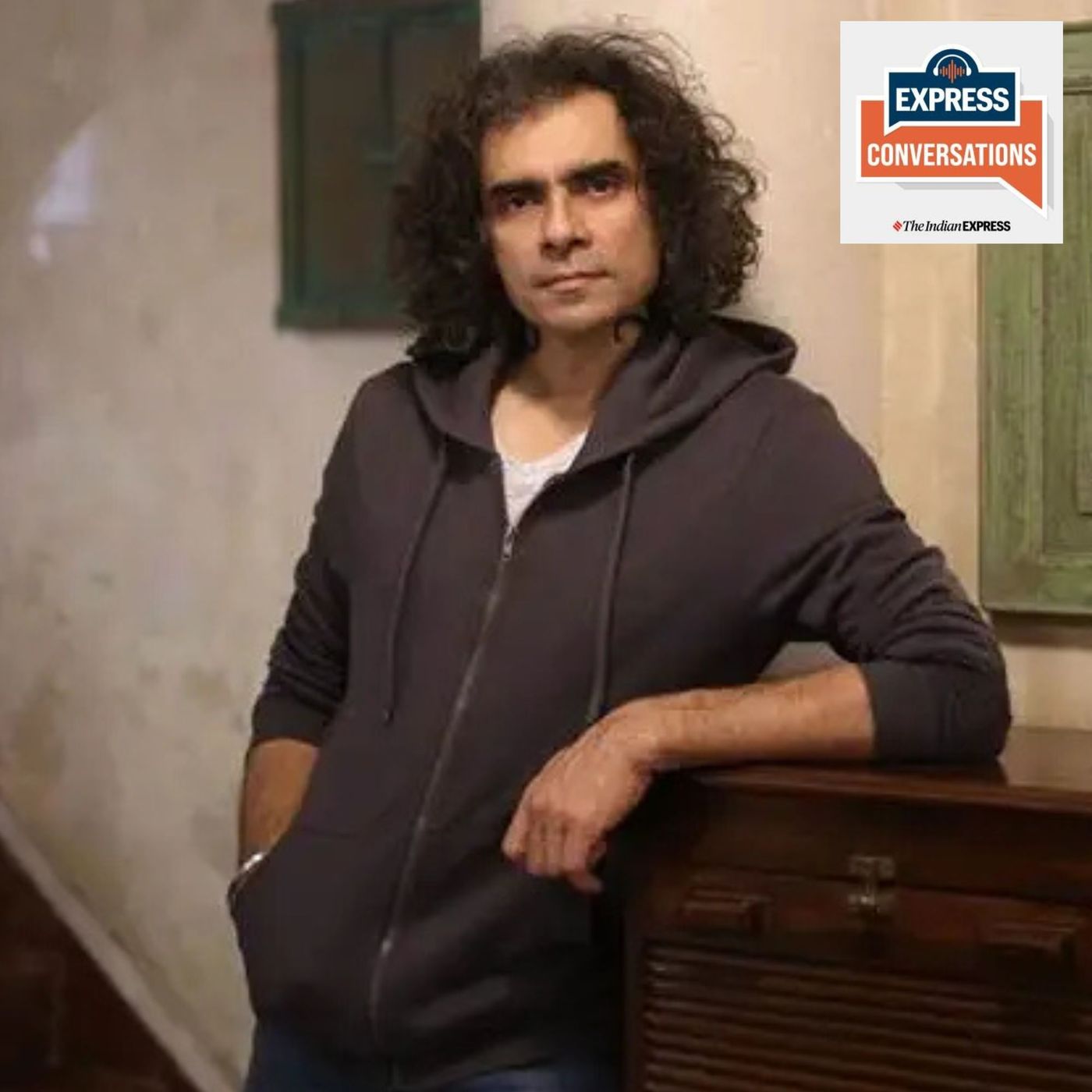
Writer-director Imtiaz Ali discusses his recent film 'Main Vaapas Aaunga', that released on June 12, in an exclusive conversation with Alaka Sahani. Inspired by real stories from the 1947 Partition, the film explores themes of identity, loss and belonging. Imtiaz also talks about reuniting with Diljit Dosanjh after Amar Singh Chamkila, working with Naseeruddin Shah, and casting Vedang Raina and Sharvari in key roles. Edited and Mixed by Suresh Pawar

1 Jun 2026 · 14 min
In an exclusive conversation with Devansh Sharma, Madhuri Dixit, director Suresh Triveni, producer Vikram Malhotra and Ruchikaa Kapoor, Director of Original Films at Netflix India, spoke about their film 'Maa Behen', which released on June 5. During the discussion, the team also reflected on how stars from the 1980s are making a strong comeback in today’s entertainment industry and shared their thoughts on whether the growing trend of casting influencers is affecting opportunities for trained actors. Edited and Mixed by Suresh Pawar

24 Apr 2026 · 47 min
In this exclusive interview with Devansh Sharma, actor Mona Singh opens up about her back-to-back theatrical releases, her recent projects — Kohrra Season 2, Border 2, and Happy Patel — her journey from Jassi Jaisi Koi Nahin to The Ba**ds of Bollywood*, and her unique “umbilical cord” connection with Aamir Khan. Edited and Mixed by Suresh Pawar
17 Apr 2026 · 22 min
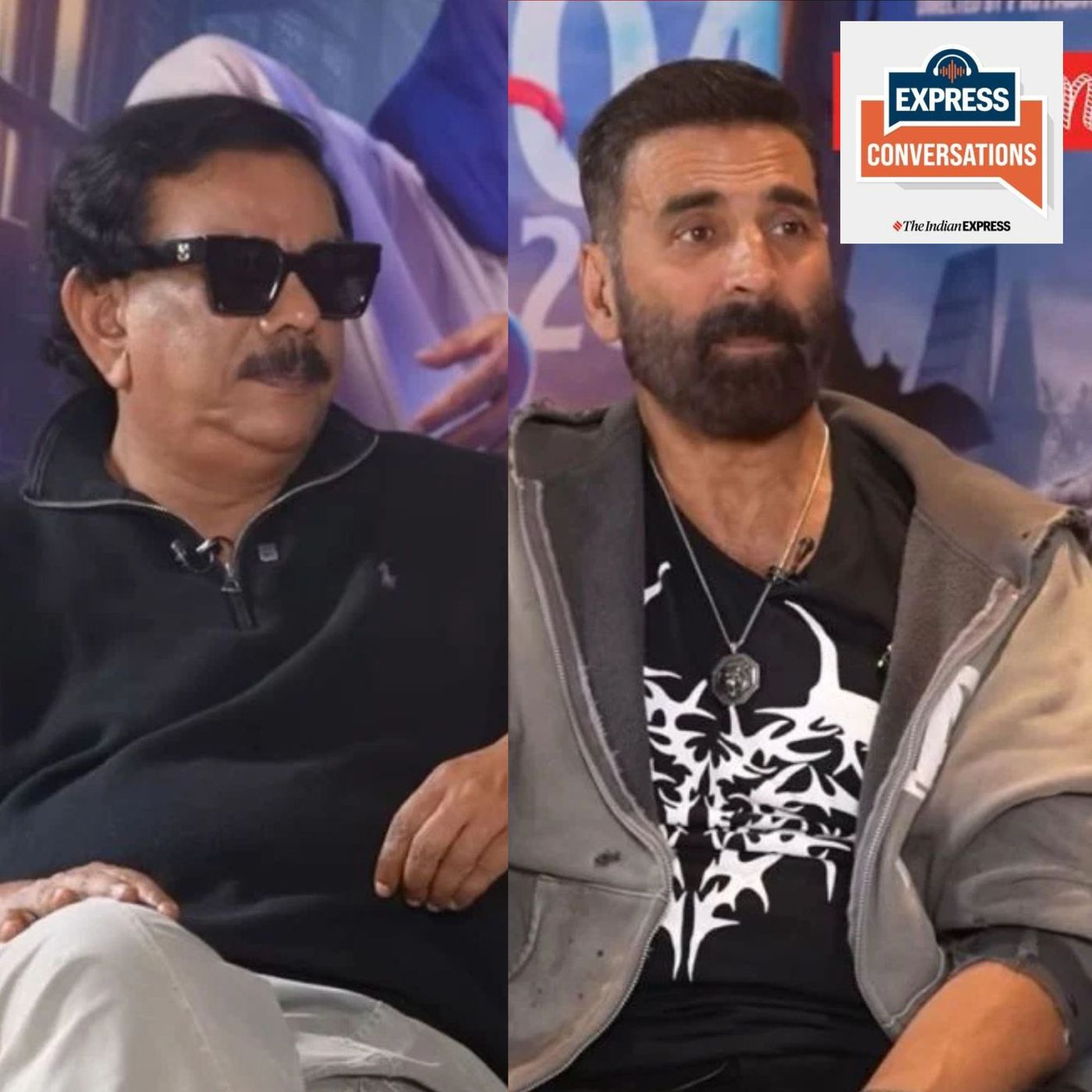
Akshay Kumar and Priyadarshan have revealed exciting details about their upcoming film ‘Bhooth Bangla’, sharing insights into the storyline and their collaboration. They also discussed working with veteran actor Asrani and addressed the Rajpal Yadav controversy, providing clarity while highlighting the film’s unique blend of comedy and horror, along with its strong ensemble performances. Edited and Mixed by Suresh Pawar
7 Apr 2026 · 37 min
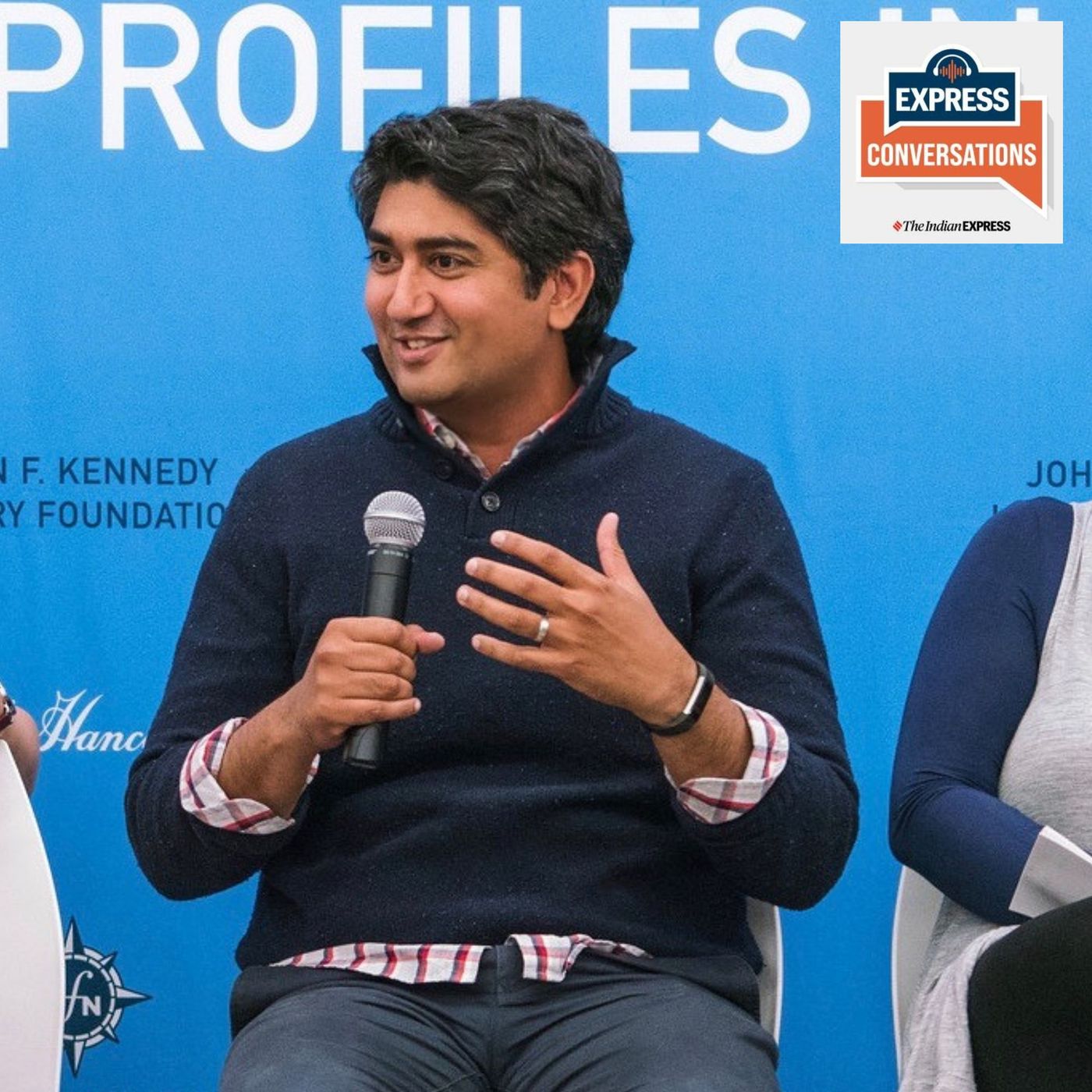
Is AI coming for your job? Aneesh Raman, Economic Opportunity Officer at LinkedIn, has an unexpected answer: that's not the right question. In this candid conversation with Aishwarya Khosla, of the Indian Express, Aneesh — a former war correspondent and presidential speechwriter — cuts through the fear and fatalism surrounding AI. He argues that the work we're afraid of losing isn't work that ever let us bring our best as humans. He explains a simple 3-bucket method to figure out if AI is coming for your work, practical first steps for anyone feeling afraid (including a 30-60-90 day plan)…
4 Oct 2026 · 1 hr 3 min
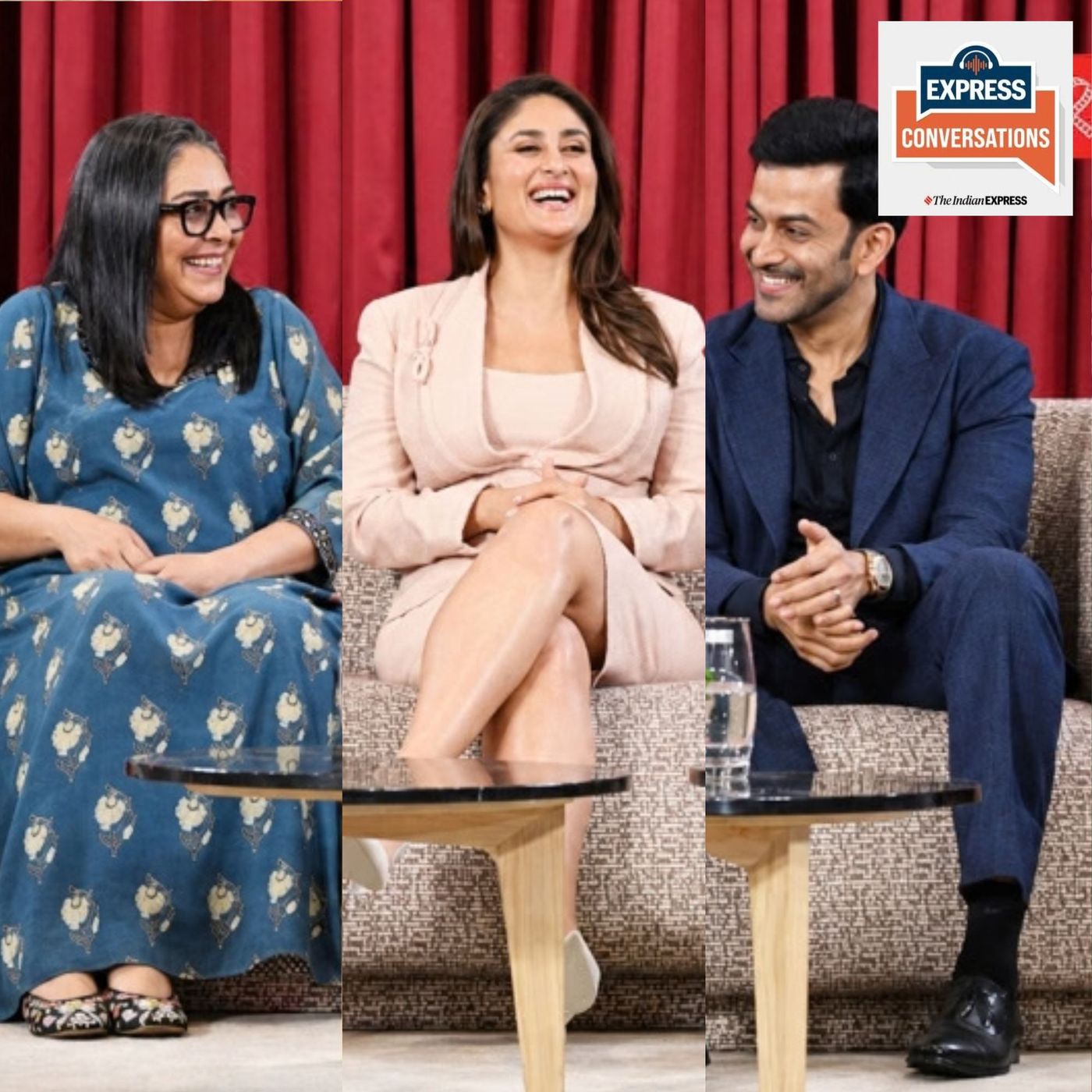
This time, the spotlight is on Prithviraj Sukumaran, Kareena Kapoor Khan and Meghna Gulzar, who joined us for a candid conversation. During the session, the trio spoke about their upcoming film Daayra, the complexities of its central characters, their creative choices, and the differences between the Malayalam and Hindi film industries. Edited and Mixed by Suresh Pawar

20 Mar 2026 · 43 min
In this episode of Express Conversations, filmmaker Sooraj Barjatya talks about his new show 'Sangamarmar'. He discusses the growing relevance of 'Rajshri Productions' in today’s action-heavy cinema landscape, shares insights into the production house’s new business strategies, reflects on the evolution of the iconic character 'Prem', and reveals what he continues to learn from younger filmmakers like Aditya Chopra, Karan Johar, and Aditya Dhar. Edited and Mixed by Suresh Pawar
16 Mar 2026 · 46 min
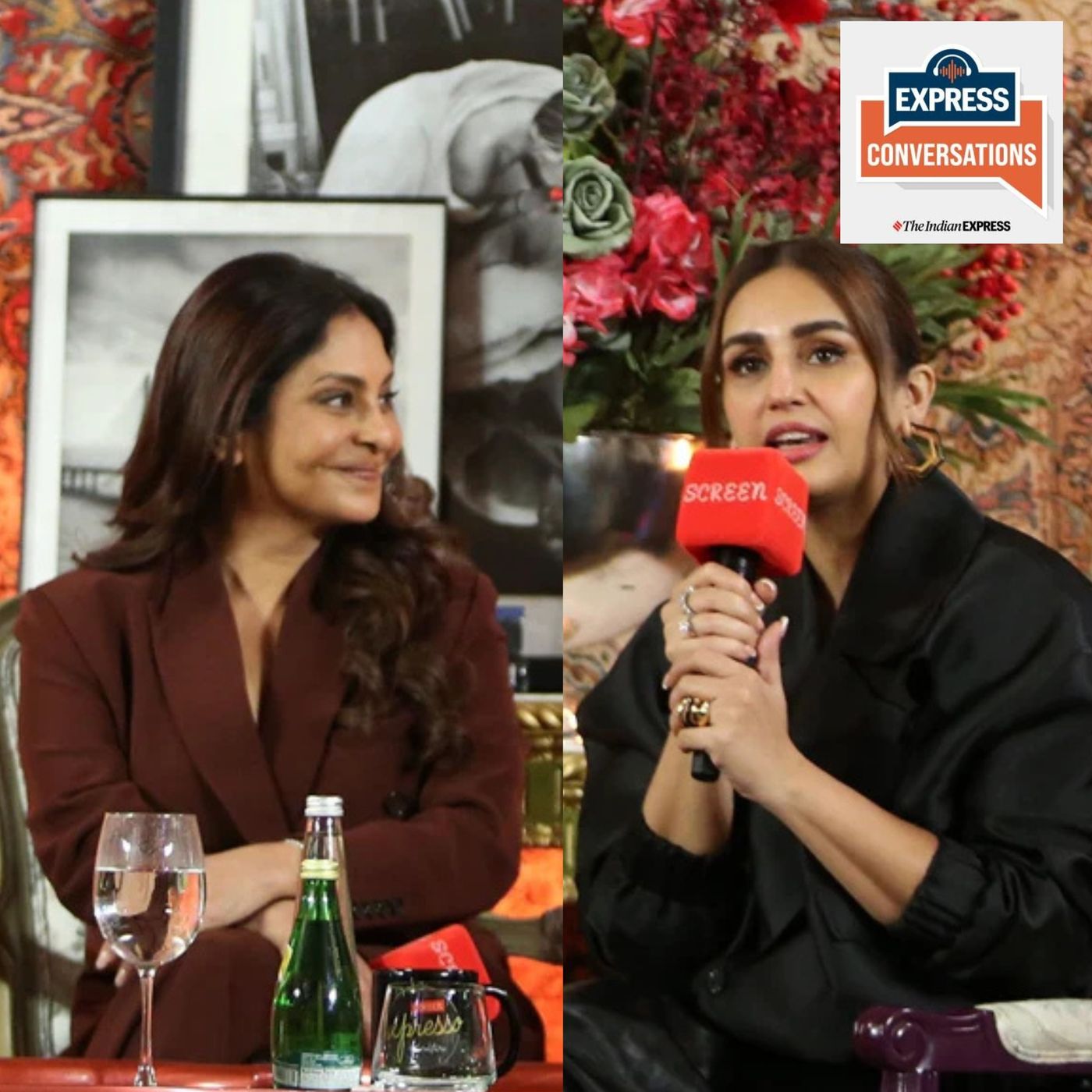
In this exclusive conversation, Huma Qureshi and Shefali Shah open up about the choices that shaped their journeys—both on and off the screen. From identity and representation to life beyond fame, the two powerhouse performers share honest, insightful reflections you won’t want to miss. Edited and Mixed by Suresh Pawar

27 Feb 2026 · 1 hr 6 min
A poet at heart and a storyteller by instinct, Zakir Khan has redefined Indian stand-up comedy with humor drawn from everyday life and emotional honesty. From the lanes of Indore to some of the biggest stages in the world, Zakir has become one of India’s most relatable and influential voices. In this special episode, Zakir Khan talks about his journey and iconic specials like Sakht Launda and Haq Se Single, as well as Kaksha Gyarvi and Tathastu. He shares how comedy, poetry, and personal experiences shape his storytelling, and what it means to connect with audiences across generations. As he…

The Melo app keeps playing with the screen off, works in the car and on your watch, wakes you to your station, and browses the whole catalogue offline. Free, no ads, no account.