Eye on A.I. is a biweekly podcast, hosted by longtime New York Times correspondent Craig S. Smith. In each episode, Craig will talk to people making a difference in artificial intelligence. The podcast aims to put incremental advances into a broader context and consider the global implications…
Everyone assumes AI in customer operations means fewer people and lower costs. The data from 700 customer operations leaders is more complicated, and more honest. Dan O'Connell, CEO of Front, joins Craig Smith with findings from a survey of customer support, service, and account management leaders that reveal what's actually happening as enterprises deploy AI at scale, and the central finding is a problem nobody has named yet. For every hour of actual customer resolution, organizations spend roughly three hours on internal coordination: the handoffs, context transfers, escalation management,…
Ukraine tracks every confirmed drone kill with video evidence, deduplicates the data to prevent double-counting, converts verified strikes into e-points, and delivers newly ordered weapons to frontline units in two weeks instead of twelve months. Andrii Hrytseniuk, CEO of Brave1- Ukraine's government defense innovation agency - joins Craig Smith to explain in precise operational detail how what started as a consumer loyalty program concept became the most consequential military procurement reform in modern warfare. The Army of Drones Bonus Program, running on the Delta command ecosystem with…
One in four patients currently being considered for life support withdrawal may actually be fully conscious, they just can't signal it. That single finding, from a landmark New England Journal of Medicine study, is the practical stakes behind one of the most philosophically rich conversations in this series. Dr. Christof Koch - former president of the Allen Institute for Brain Science, 25-year collaborator with Nobel laureate Francis Crick, and founder of the startup Intrinsic Powers - joins Craig Smith to discuss why the hard problem of consciousness remains unsolved, what integrated…
The AI systems guiding Ukrainian combat drones aren't running on expensive Nvidia chips. They're running on a Raspberry Pi Zero - a $15 hobby computer - and that single detail tells you more about how Ukraine's drone war is actually being fought than any headline about AI weapons. Craig Smith sits down with Alex Liannoy, CTO of NORDA Dynamics, for a technically specific and operationally candid conversation about what autonomous drone guidance looks like from inside the team building it. NORDA builds the avionics and targeting modules that plug into drones made by approximately 40 of…
The first armed drone Ukraine ever fielded wasn't built in a factory or procured from a defense contractor. It was built in four months by a network engineer using a Starlink terminal and a large agricultural quadcopter frame, and the man who built it, Maj Phoenix, co-founder of Lasars Group, joins Craig Smith in Kyiv to explain exactly how it happened and what the battlefield looks like now. The conversation traces the full arc from that first prototype - with its two-person crew of pilot and navigator, operating beyond line of sight using satellite imagery and landmarks - to the layered…
Most companies investing in AI visibility are optimizing for the wrong thing. Being cited by an AI response and being recommended by an AI response are completely different outcomes, with click-through rates that differ by a factor of 70. Tim Sanders, Chief Innovation Officer of G2 and executive fellow at Harvard's AI Institute, joins Craig Smith to explain the hidden mechanics behind how ChatGPT and Gemini actually decide which software to recommend, and why the answer has almost nothing to do with what's on your website. When a user asks a commercial intent question, both models enter a…
Every major data breach in the last 30 years shares the same root cause: the data inside the wall was never protected, only the wall. And AI frontier models are now making that wall easier to breach than ever, scanning codebases externally to discover undisclosed vulnerabilities and write exploits before anyone knows the hole exists. Trent Telford, Chairman, CEO & Founder of Qanapi, joins Craig Smith to explain why the entire architecture of conventional cybersecurity is structurally broken, and what a genuinely different approach, built from the opposite assumption, looks like. Rather than…
Every AI model in production today has the same hidden tax: doubling the context window quadruples the compute. That's what quadratic compute complexity means in practice, and it's the reason enterprises are spending most of their AI engineering budget on context management rather than on the actual problems they're trying to solve. Alexander Whedon, co-founder and CTO of Subquadratic, joins Craig Smith to explain how SubQ's sparse attention mechanism eliminates that tax, achieving 40 times faster inference and 64 times less compute than standard attention at one million tokens, and what…
In 2023, General Cherry started making 10 drones a month. Today they're approaching 100,000. Marko Kushnir, communications director of one of Ukraine's top-five drone manufacturers, joins Craig Smith for one of the most operationally specific conversations available about what drone warfare looks like at industrial scale, from the daily feedback loops with front-line units that drive product iteration, to the $2,000 interceptor drone that can destroy a $100,000 Shahed, to the on-device AI targeting model that guides an interceptor to impact at 70% accuracy after the operator activates it and…
A Ukrainian entrepreneur who spent 14 years building cameras for pets pivoted to building cameras that down Shaheds, and is now building the autonomy software that could define how wars are fought for the next generation. Yaroslav Azhnyuk, co-founder of Fourth Law, joins Craig Smith in Kyiv to explain why Ukraine has become what he calls the Defense Valley or the Florence of Defense: a dense, fast-moving ecosystem of founders, engineers, and military operators who are building, testing, and iterating on autonomous drone systems in real combat conditions, with a feedback loop that no defense…
The most consequential arms race in the world right now isn't nuclear, it's software. Craig Smith speaks with Alexander Palamarchuk, an engineer in the R&D department of Ukraine's Azov Brigade, calling in from approximately 18 kilometers from the front line in the Pokrovsk region. What emerges is one of the most technically candid accounts available of what drone warfare actually looks like from the inside: how Ukraine went from homemade reconnaissance drones in 2014 to AI-guided systems being developed and tested in real combat today, how the jamming arms race has forced his unit to develop…
It takes a few hours to build an AI agent. It takes six to seven months to get it into production. Manoj Saxena - the executive who commercialized IBM Watson - built TrustWise around one thesis: intelligence without control is not deployable. In this episode, he joins Craig Smith to explain why 95% of enterprise AI agent projects are stalling between pilot and production, and why the answer has nothing to do with the quality of the underlying models. The bottleneck, Saxena argues, is the absence of an entirely new class of infrastructure, something that can evaluate every tool call, every…
Most humanoid robot companies are still running curated demos in replica environments. Foundation Future Industries is running 150 robots on real automotive production lines in Georgia, and heading to Ukraine this year to deploy on the battlefield. Mike LeBlanc, the co-founder of Foundation Future Industries - currently the only company supplying humanoid robots to the US Department of Defense, with contracts across the Army, Navy, and Air Force, joins Craig Smith to explain why the race is moving faster than almost anyone in the industry believes, and why the companies that are moving…
The AI chip market looks monolithic from the outside - NVIDIA dominates, and everyone else is fighting for scraps. But d-Matrix's CEO Sid Sheth argues that the market is quietly splitting into two distinct tiers, and the one that's exploding right now is the one NVIDIA's architecture isn't built for. In this episode, Sid joins Craig Smith to explain the "premium token economy": a new class of AI inference where interactivity is the product, users pay ten times more per million tokens for instant responses, and the memory bandwidth limits of GPU-based systems create a structural ceiling that…
The same tools that slowed the U.S. military down in Afghanistan (PowerPoint, Excel, email, and Word) are now slowing American businesses down in the AI race. Drew Cukor spent 30 years as a Marine intelligence officer, helped build Project Maven into a battlefield command and control system, served as Chief Data Officer at JP Morgan, and is now leading AI transformation at TWG AI. In this episode, he joins Craig Smith to make a case that most enterprise AI strategies are fundamentally broken, not because the technology isn't there, but because companies are storing their data in Microsoft…
Hundreds of billions of dollars are flowing into AI data centers right now, and Paolo Ardoino, CEO of Tether - the company behind the world's most widely used stablecoin with 573 million users - thinks that investment is going to age very badly. In this episode, he joins Craig Smith to explain QVAC, Tether's open-source platform for running AI on smartphones, laptops, and edge devices, and to make a case that within five years, 90% of what ordinary people use AI for will run entirely on consumer hardware, without touching a data center. The evidence is already there: Tether's team built a…
Most enterprise IT teams spend the majority of their time fighting the same fires repeatedly. BMC Helix is building the AI system that handles those fires automatically, detecting anomalies, tracing root cause through millions of asset relationships, generating remediation plans, and learning from every incident it resolves. Craig Smith sits down with Erhan Giral, VP of AI Strategy and Innovation at BMC Helix, and Ryan Manning, Chief Product Officer at BMC Helix, to explain how agentic AI is transforming IT service management from a reactive, human-driven process into something closer to a…
Most companies think they're transforming with AI. They're not, and the gap between what they believe and what's actually happening on the ground is costing them far more than they realize. In this episode, Craig Smith sits down with Chris Blackburn, founder and CEO of Liatrio, a consultancy that has spent a decade embedding directly inside large enterprises to help them actually change how they work, not just what tools they use. The conversation opens with a striking data point: the average enterprise Blackburn works with operates at just 5 to 6% efficiency, meaning employees spend only…
Nobody has ever built a cell from scratch - assembled entirely from purified molecules on a shelf - that can feed itself, grow, and split into daughter cells through its own genetic activity. Until now. Dr. Kate Adamala, a synthetic biologist and a professor of genetics at the University of Minnesota, whose lab just published a landmark paper on what she calls "spud cells," joins Craig Smith to explain what her team built, why it matters, and what it will take to go from proof of concept to a platform that could eventually replace every molecule civilization currently extracts from…
Every company is creating content that nobody reads, nobody watches, and nobody remembers, and the CEO of the AI platform that 90% of Fortune 100 companies use to fix that just explained what comes next. In this episode, Craig Smith sits down with Victor Riparbelli, co-founder and CEO of Synthesia, to discuss the $4 billion company that is now redefining what video communication means for the enterprise. The conversation opens with the founding insight that still drives the company: AI is going to drive the marginal cost of creating video to zero, which changes not just how content is…
Companies are spending billions building AI factories, but most of them can't tell you why their AI workloads are failing, whether their GPUs are actually being used, or what their infrastructure is going to cost them when agents start running at scale. Paul Appleby, CEO of Virtana, joins Craig Smith to discuss the findings of their AI Factory Reality Check study, a research report that reveals a striking and underappreciated gap between the pace of AI infrastructure investment and the governance needed to run it safely and efficiently. Six in ten enterprises, the study found, cannot…
AI is moving faster than enterprise security systems were designed to handle. In this episode of Eye on A.I., Craig Smith speaks with Bradon Rogers, Chief Customer Officer at Island, Island about how companies are struggling to govern the rise of AI agents, browser-based workflows, and unsanctioned AI tools inside the workplace. The conversation explores why traditional "block-and-control" security models are breaking down and how a new approach, embedding policy directly into the browser and user workflows, may offer a path forward. It also dives into emerging risks like prompt injection…
Most AI is built for people sitting at desks. Kriti Sharma builds it for the people who work in refineries, aircraft hangars, and utility networks responding to wildfires at 4 a.m. and she spends weekends on-site with them to make sure what she builds actually holds up. In this episode, Kriti joins Craig Smith to discuss what industrial AI really looks like when failure genuinely isn't an option, and why the gap between an impressive AI pilot and a production-grade AI system is so much wider in the physical world than most technology companies appreciate. The conversation is grounded in…
What is an AI agent, really? Strip away the hype, and it's a model with access - to tools, APIs, databases, email, anything that lets it take real action instead of just generating text. That access is exactly where the risk lives, and Devvret Rishi, GM of AI at Rubrik, and former co-founder & CEO of Predibase, joins Craig Smith with a string of real-world incidents that make the case concrete: AWS reporting four major outages in 90 days after deploying coding agents, a Meta-related agent that deleted someone's emails while they were actively asking it to stop, and Rubrik's own internal…
It costs up to $2 billion and fifteen years to develop a drug, and big pharma still fails half the time at the final stage. BullFrog AI founder, Chairman, and CEO Vin Singh joins Craig Smith with a clear diagnosis of why: the industry keeps picking the wrong drug target from the beginning, and no amount of downstream optimization fixes a fundamentally wrong starting point. Built on AI technology originally developed at Johns Hopkins' Applied Physics Lab, BullFrog has assembled a three-stage platform that cleans messy clinical data, runs causal analysis to map disease pathways, and then ranks…
After two years of AI pilots, enterprises are finally diagnosing what went wrong, and the answer keeps coming back to data. Alberto Pan, CTO of Denodo, joins Craig Smith to walk through the findings of the company's AI Trust Gap Report: a survey of 850 enterprise data leaders that reveals the dominant failure modes of enterprise AI agents are almost never the model's fault. They're caused by stale data, missing context, and inconsistent semantics across the hundreds of data sources agents need to access to do real work. Pan explains why traditional data warehouse and lake house architectures…
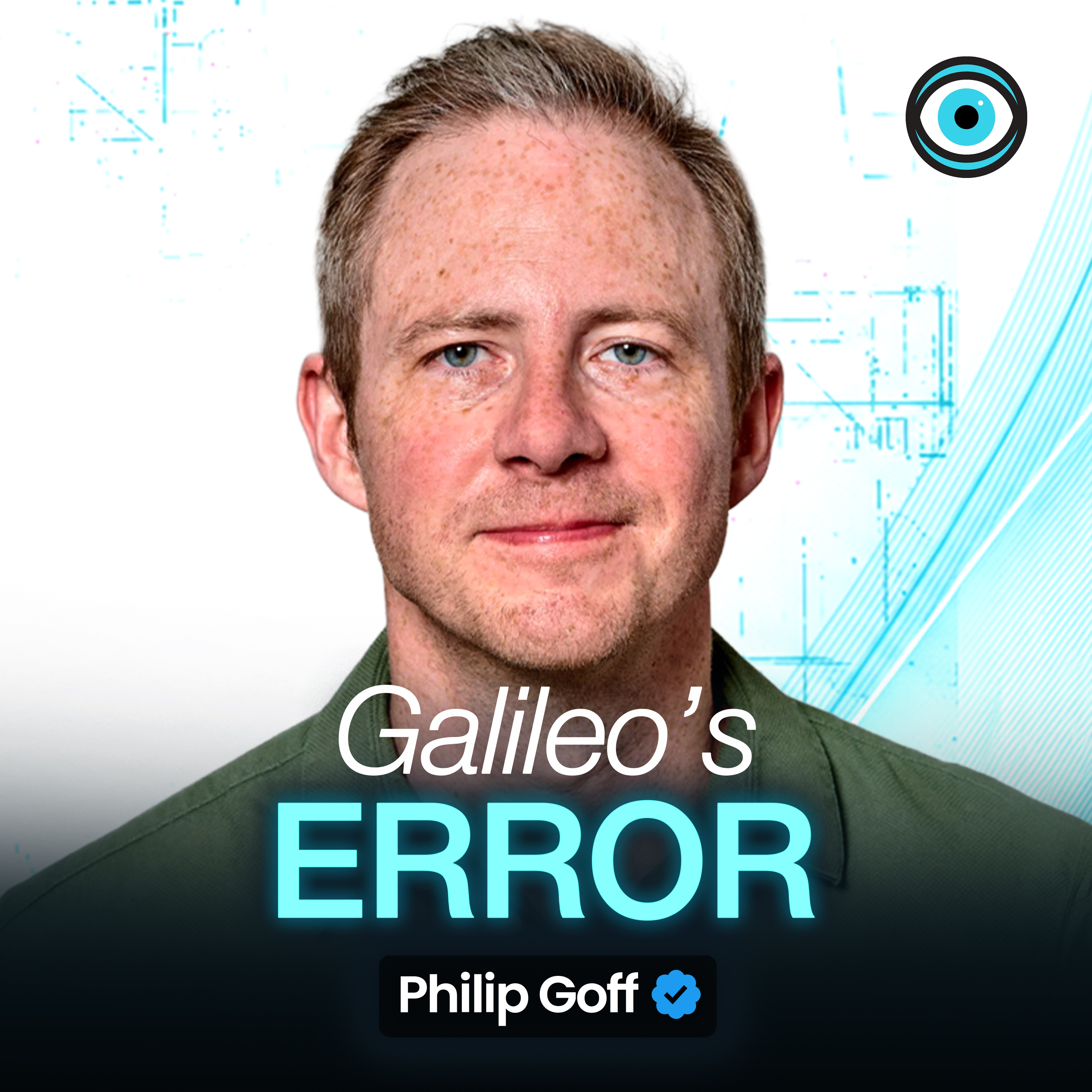
What if consciousness isn't a byproduct of complex brains, but a fundamental feature of reality itself, present, in some rudimentary form, all the way down to electrons and quarks? Philip Goff, a philosopher at Durham University and one of panpsychism's leading contemporary advocates, joins Craig Smith to make that case, arguing that modern science's founding move - separating the mathematical world physics studies from the subjective experience we know only from the inside - solved one problem while quietly creating another we've never resolved. The conversation inevitably turns to AI:…
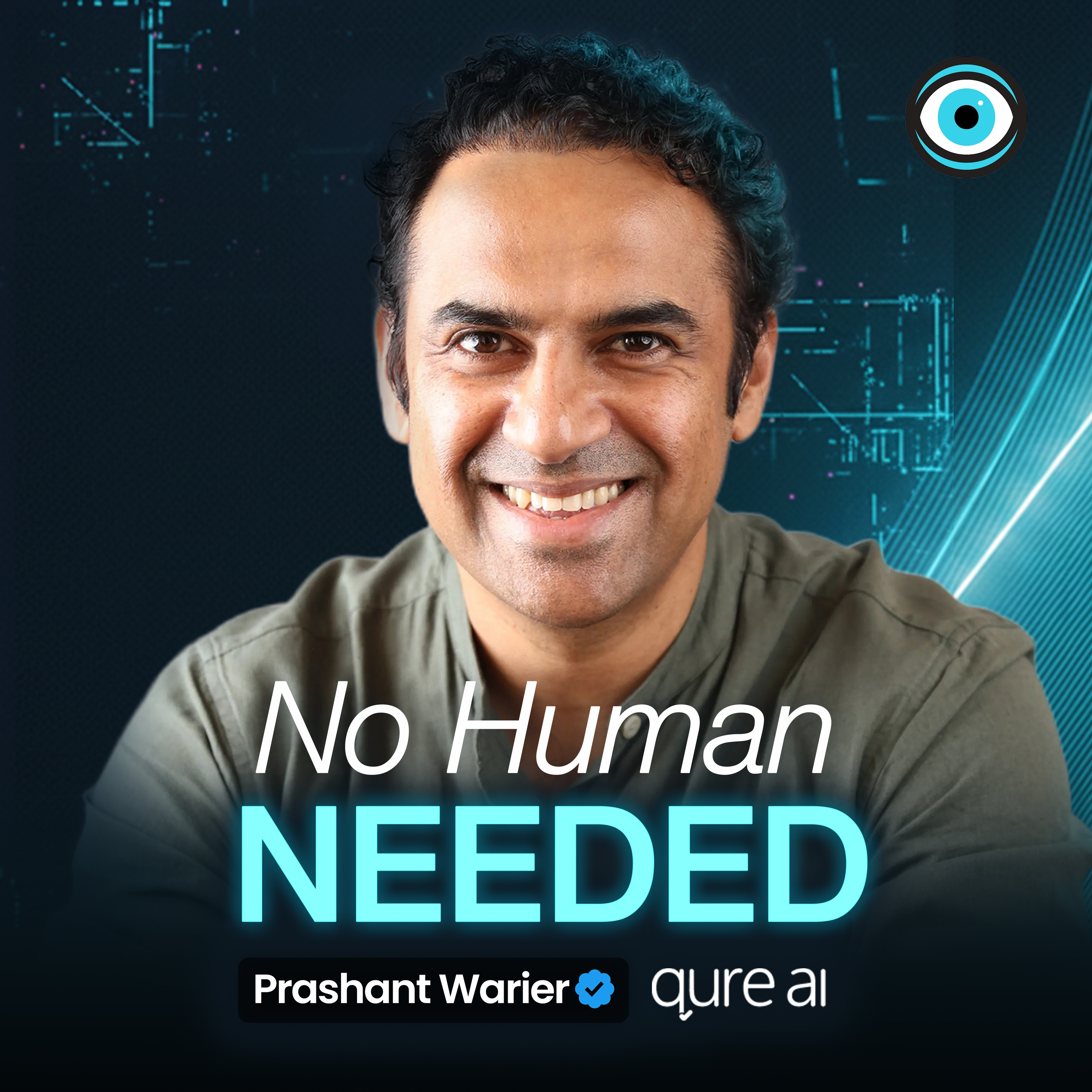
Eighty percent of lung cancer cases are diagnosed too late, not because the signals aren't there, but because nobody was looking at the right moment. Prashant Warier, co-founder and CEO of Qure.ai, joins Craig Smith to explain how his company is changing that using a tool most people already encounter: the routine chest X-ray. Cure's Lung Nodule Malignancy Risk Score - validated in the CREATE study - analyzes X-rays people get for unrelated reasons, identifies high-risk nodules, and flags which patients need follow-up CT scans. The result is a detection rate of 54 positive patients out of…
Genpact surveyed 500 senior executives to understand why companies are investing in AI but not seeing the value, and what they found was both clarifying and uncomfortable. Sanjeev Vohra, Genpact's Chief Technology and Innovation Officer, joins Craig Smith to share the results: only 12% of companies qualify as genuine AI leaders, meaning they're deploying AI in production environments, generating measurable business outcomes, and have the governance systems in place to actually assess that value. The other 88% are somewhere between experimenting and stalled, and the most common culprit isn't…
The Global AI Summit just happened in New Delhi, and the message from India was clear: this country is no longer just writing code for the rest of the world. It's becoming an architect of the global AI order. Ivana Bartoletti, Chief Privacy and AI Governance Officer at Wipro and Council of Europe advisor, joins Craig Smith to unpack what that shift actually means. Her frame is the sharpest line of the episode: Europe writes the rules, the US writes the checks, and India is writing the code, in 22 languages. But she's careful to add that the AI race isn't just a technical one. It's about…
About Eye On A.I.
Eye on A.I. is a biweekly podcast, hosted by longtime New York Times correspondent Craig S. Smith. In each episode, Craig will talk to people making a difference in artificial intelligence. The podcast aims to put incremental advances into a broader context and consider the global implications of the developing technology. AI is about to change your world, so pay attention.
Eye On A.I. is a English tech & science podcast from Craig S. Smith. Melo plays each episode straight from the publisher's own feed — no ads added, no account needed — and remembers where you stopped, in this browser only.
The Melo app keeps playing with the screen off, works in the car and on your watch, wakes you to your station, and browses the whole catalogue offline. Free, no ads, no account.