
Episode notes
Summary I have hosted First Principles for four years and 58 episodes, and I have never once stopped to look at it. This episode is me doing that. There is no guest. It runs about fourteen minutes, and it ends with something I need from you. Season 3 started with Vidit Aatrey of Meesho in April 2025 and ended with Mukesh Bansal in August 2026. A lawyer, a banker, a restaurateur and a venture capitalist were guests on a show I had built for founders. The businesses were trucks, fish, kitchens and bikes. And my questions moved away from fundraising and towards where a person came from and how…

First Principles
by The Ken · English · Tech & Science
First Principles is a weekly interview podcast comprising authentic, candid, and insightful conversations between some of India’s most accomplished founders and business leaders, and Rohin Dharmakumar, The Ken’s CEO & co-founder. From personal philosophies, mental models and decision making…
More from First Principles
-
S3 · E17 · 17 Aug 2026 · 1 hr 3 min
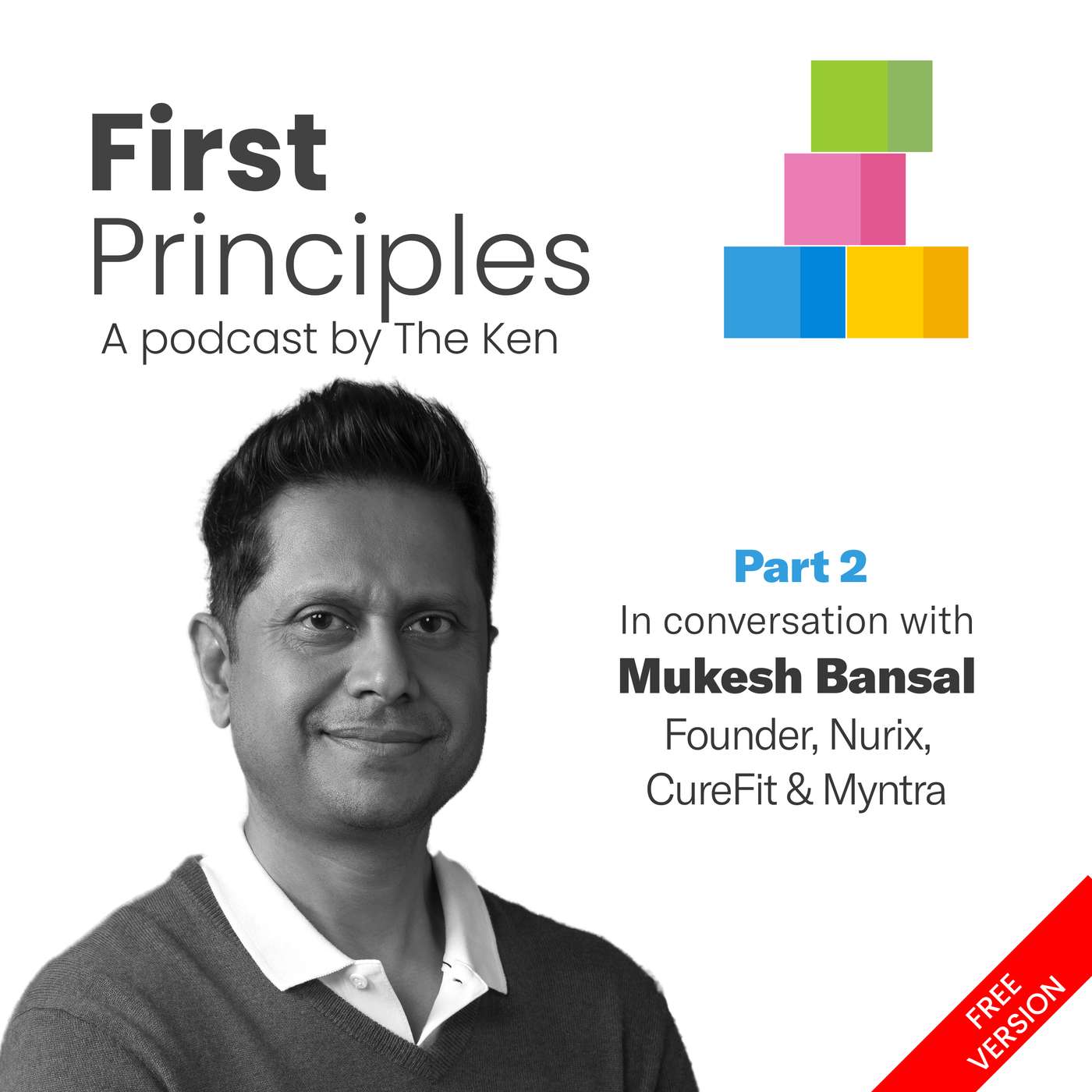
Part 2: Mukesh Bansal on hiring for loyalty to a mission, "no means not now", writing three books, and compounding sideways
Where Part 1 followed the companies, Part 2 is about the person behind them. Picking up from Mukesh Bansal's move from one venture to the next, this half gets into how he finds talent ("work with them for six months"), the mental models he runs his life by, and the beliefs underneath them. He explains why rationally no one should start a company, how he processes every rejection as "no means not now", why he writes three books by simply showing up to a blank page, and how he separated the longevity basics he trusts from the biohacking he no longer does. It ends close to home: loyalty as…
-
S3 · E17 · 10 Aug 2026 · 58 min
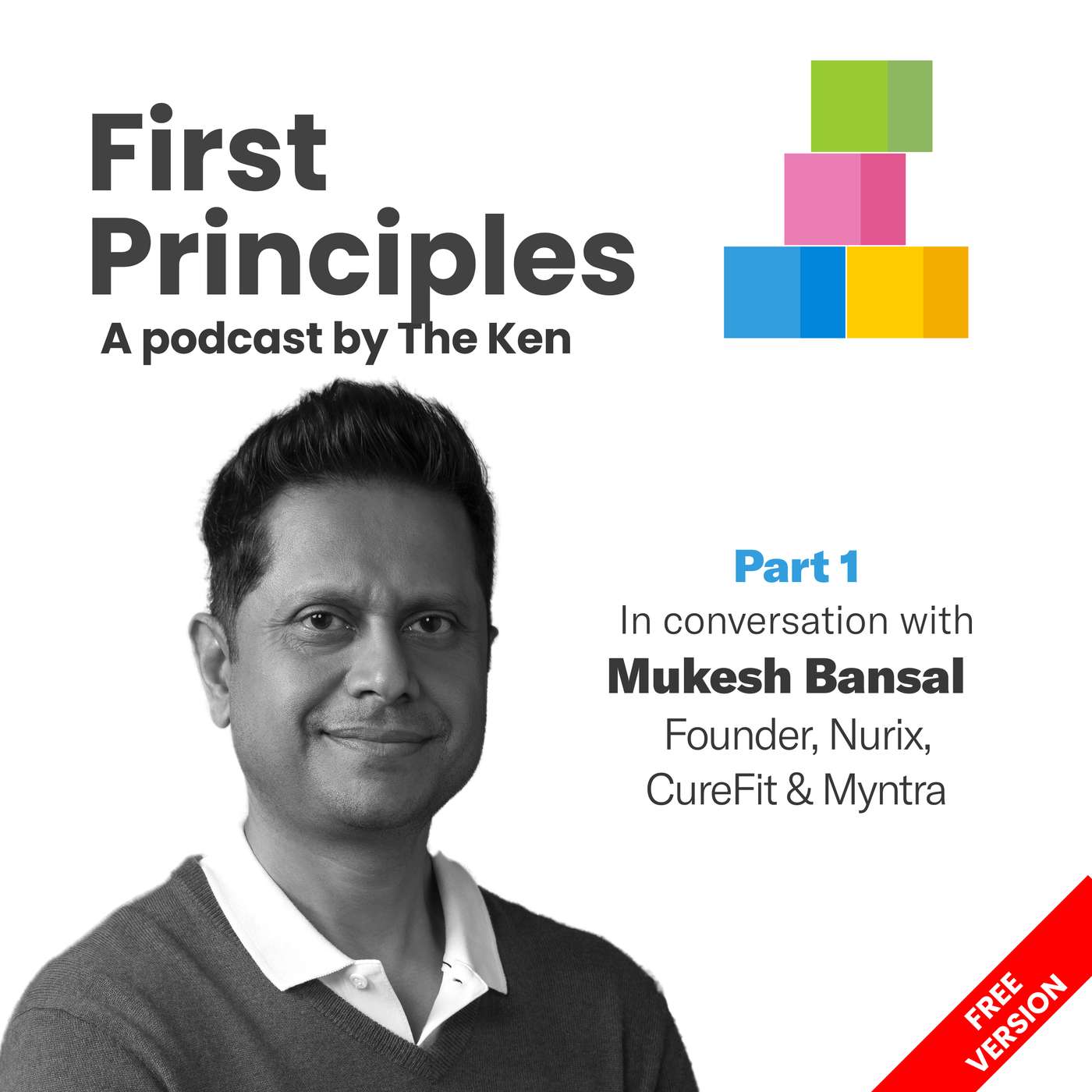
Part 1: Mukesh Bansal on founder mode in the AI age, the three kinds of professionals in the AI age, and the Haridwar boy who found entrepreneurship in a library
Mukesh Bansal has founded and left more companies than most people build in a lifetime, and in Part 1 he explains why. He founded Myntra and sold it to Flipkart; he co-founded Cult.fit and turned fitness into a category; and today he runs the AI company Nurix and the Meraki Labs studio. Asked what he is now, he says "a learner", and admits he gets bored the moment a company starts working. Part 1 traces the thesis and the companies: how he allocates his weeks, why he thinks the AI era rewards the hands-on operator over the people-manager, what Nurix and Fermi are, why Myntra's move into…
-
S3 · E16 · 27 Jul 2026 · 1 hr
Fireside Ventures' Kanwaljit Singh on the decade at Hindustan Lever that gave him consumer, raising half the fund he could have, and keeping a coach in his sixties
1 · Summary Part 2 of 2. Part 1 laid out the bet: a fund built only for Indian consumer brands, back when the idea sounded absurd, and the anti-power-law machine Kanwal Singh built to make it work. This half is the person. The near-decade at Hindustan Lever that gave him his love of consumer, the Intel years, and the Paper Boat conviction that taught him to back the founder over the idea. Then the man himself: parents who came to India as refugees from Pakistan, a father who kept collecting degrees while feeding the family, the coach he started seeing in his sixties and what separates…
-

S3 · E16 · 20 Jul 2026 · 1 hr 2 min
Fireside Ventures' Kanwal Singh on the consumer-brands bet nobody believed in, why "for a 5x, nobody will call you legendary," and on refusing the one-100x-outlier game
1 · Summary Part 1 of 2. Kanwal Singh is the first venture capitalist to appear on First Principles, and the reason is the bet he made with the fund itself. In 2017, at the peak of the tech boom, he walked away from tech investing to raise a fund only for Indian consumer brands, when almost nobody believed India had a consumer story worth venture capital. His first backers weren't institutions, they were the consumer families who had built India's brands. This half covers the whole bet: what investors actually said when he pitched a consumer-only fund, why he raised in India rather than…
-
S3 · E15 · 13 Jul 2026 · 1 hr 2 min
Part 2: Saahil Goel of Shiprocket on wanting a paisa of every Indian transaction outside the marketplaces, who doesn't survive at Shiprocket, and still playing Pink Floyd on a Fender
Part 2 of 2. In Part 1 we walked the road from 2011 — three companies, an investor ultimatum, and the capital it took to build. Part 2 is the mind. Saahil Goel starts with what, given hindsight, he'd do differently, then the first principles he runs Shiprocket on (distribution beats product), the two or three metrics he genuinely obsesses over, his bet on applied AI, why he believes you can't actually manage people, who does and doesn't survive at the company, the guitar he still plays, his dog, and the question Rohin closes every episode with, which Saahil answers with a single number.…
-
S3 · E15 · 7 Jul 2026 · 1 hr 5 min
Part 1: Saahil Goel of Shiprocket on rebuilding the same company three times, the $4 million he was told to take or leave and why in India you sell outcomes, not software
Part 1 of 2. Most people date Shiprocket to 2017; in truth it was born in 2011, and the road there runs through two companies called KartRocket and Craftly. Saahil Goel walks Rohin through the build: Rs 15 lakh of their own money, nearly not being hired by their own first engineers, the hard lesson that in India you sell outcomes not software, an investor ultimatum to take $4 million or nothing, and by the end, just how much capital it's taken to get from that first office to the edge of a public listing. Part 2 gets into how he actually thinks. Chapters 0:00 The company that started in…
-

S3 · E14 · 22 Jun 2026 · 1 hr 4 min
Part 2: Impresario's Riyaaz Amlani on digital landlords, doers & divas, and why delivery will never eat dine-in
Part 2 moves from the journey to the operating philosophy. Riyaaz Amlani unpacks his evolving stance on the aggregators — from resistance to "uneasy truce" — and the hard lesson that restaurateurs who send guests to Zomato and Swiggy have only themselves to blame. He argues delivery and dine-in are two different businesses, lays out his ambition to turn Impresario into a full-service-restaurant platform, and gets personal on hiring, Gen Alpha kids, weekends, and why his life scores 9.9 out of 10. CHAPTERS 00:00 Recap and what's ahead: aggregators, the platform, the missing 0.1 01:48 "Digital…
-
S3 · E14 · 15 Jun 2026 · 1 hr 4 min
Part 1: Impresario's Riyaaz Amlani on Mocha, "Handmade," four near-deaths and 25 years of building places to be
Part 1 of Rohin Dharmakumar's conversation with Riyaaz Amlani is the origin story: why a returning UCLA grad decided Bombay was missing "places to be," how Mocha became Social, and what it actually takes to keep a restaurant group alive for 25 years in the highest-mortality business there is. The shisha ban, the private-equity money that never arrived, COVID, the marble hustle at age six, and the real engine underneath it all: people. CHAPTERS 00:00 Intro: 95% fail by year two — and the man who didn't 01:46 Why Mocha in 2001: a city missing "places to be" 03:23 Bombay the "coolest cousin";…
-

S3 · E13 · 4 May 2026 · 1 hr 15 min
Part 2: Kuku’s Lal Chand Bisu on the Bathoth-to-Bandra arc, learning from iterations not books, and why nos beat yeses
Part 2 picks up exactly where I left Bisu — on why a 7-year-old audio platform is releasing a theatrical film on May 8. From there, we go everywhere. Bisu's actual journey from a small village in Shekhawati to Bandra. The "full equation" view of metrics. Why saying no requires more work than saying yes. Why most of his learning comes from iterations, not books. And, in his closing answer, a quietly devastating line about the startup ecosystem itself. If you haven't heard Part 1 yet, please go back and start there first. Chapter list 01:02 — Indian Institute of Zombies : why theatrical, why…
-
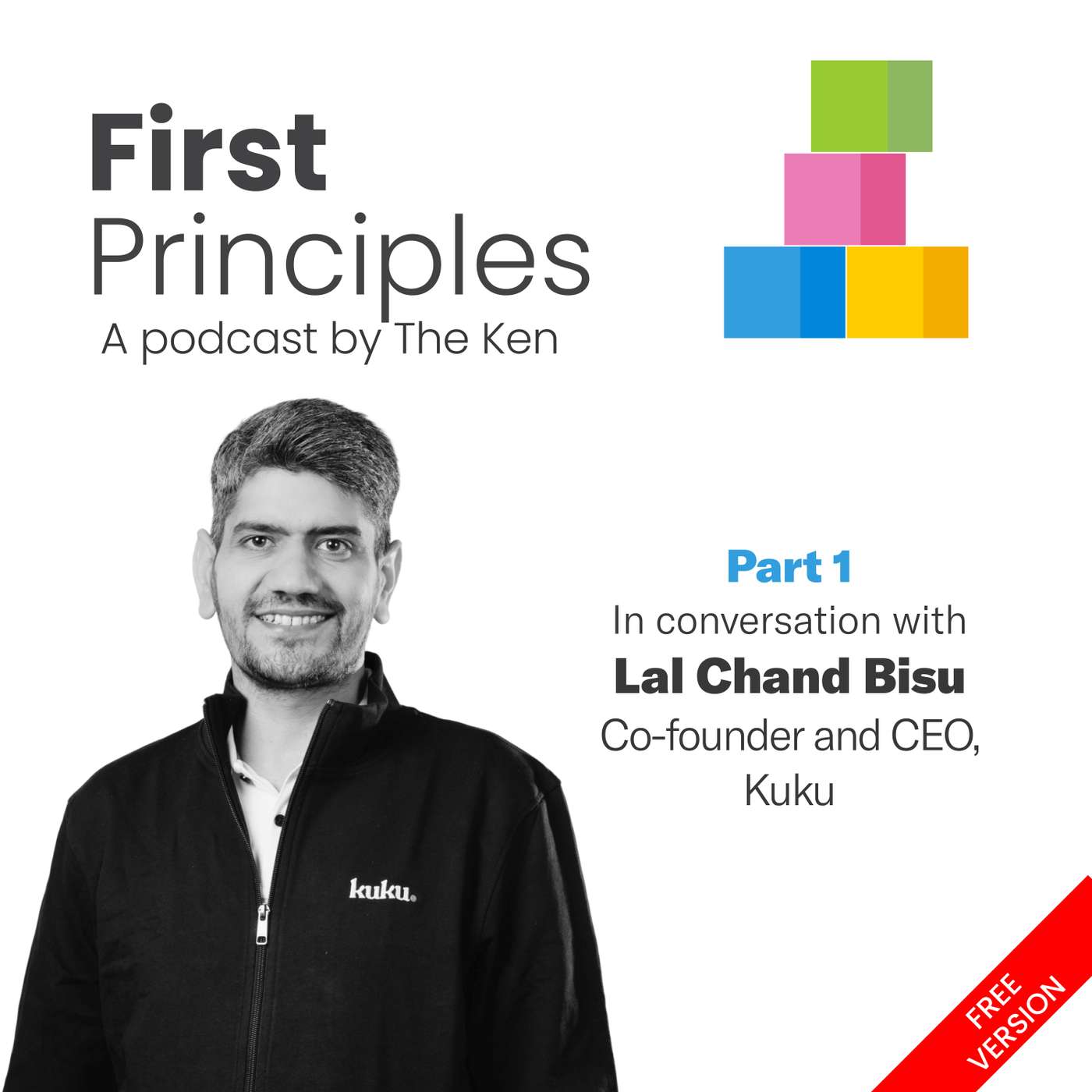
S3 · E13 · 27 Apr 2026 · 1 hr 4 min
Part 1: Kuku's Lal Chand Bisu on killing three products, ditching the free tier and charging Bharat ₹399 a year
Lal Chand Bisu started Kuku in audio in 2018. Almost everyone in the press wrote them off — the louder competitor was getting the headlines, the VCs didn't believe vernacular India would pay, and the assumption was that short-video would flatten audio. None of that aged well. Kuku FM did ₹242 Cr in FY25 at 175% YoY growth, with roughly 10 million paying subscribers. This is the conversation Bisu, who is just not the kind of founder who walks around telling you these numbers, finally agreed to do. In Part 1, we get into the company history, the pivots, the contrarian decision to cut the free…

Take it with you
The Melo app keeps playing with the screen off, works in the car and on your watch, wakes you to your station, and browses the whole catalogue offline. Free, no ads, no account.