Episode notes
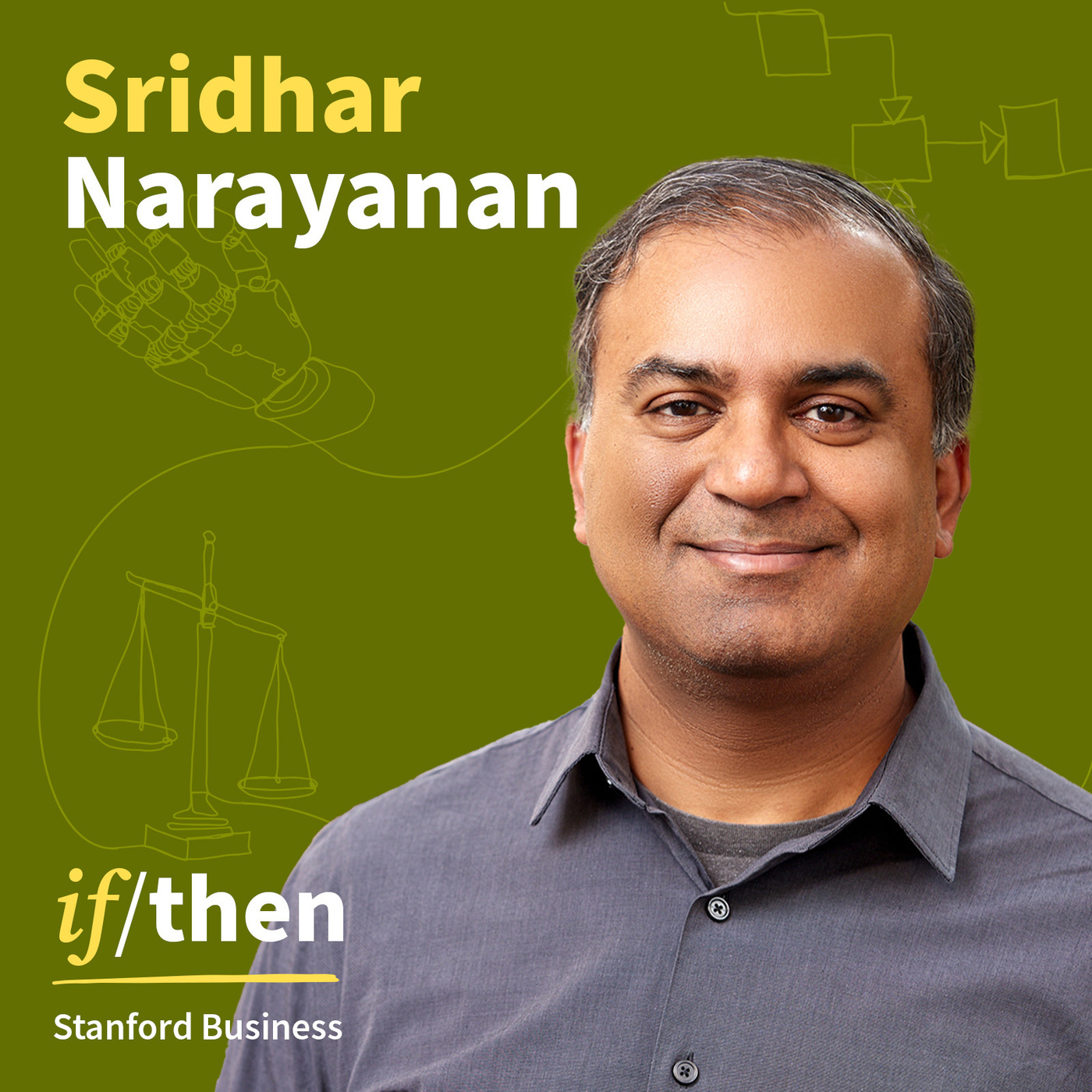
Sridhar Narayanan, a professor of marketing at Stanford Graduate School of Business, studies how small businesses operate and why they’re so important, especially in the developing world. “Modernizing small businesses will have a profound impact on economies worldwide in many ways,” he says. In this episode of If/Then, Narayanan explains why so many retailers still rely on cash, how modernization can boost revenue, and what these patterns reveal about credit access, trust in institutions, and global economic development.Have you modernized a small business or did you choose to stick with…
If/Then
by Stanford GSB · English · Business
How do we lead with purpose, make better decisions, and navigate an uncertain future? On If/Then , Stanford GSB faculty break down cutting-edge research on leadership, strategy, and more, exploring enduring questions and the forces reshaping business and society today, from AI to geopolitics. Hos
More from If/Then
-

S2 · E35 · 11 Jun 2025 · 28 min
The AI Prescription for Healthcare
AI has the potential to reshape medicine. But translating its promise into solutions for providers and patients is a high-stakes challenge.“There’s a lot more problems than solutions available,” says Mohsen Bayati, the Carl and Marilynn Thoma Professor of Operations, Information & Technology at Stanford Graduate School of Business. “So it’s ripe for innovation.”From trust and privacy to hallucination and data quality, the complications are significant. Bayati says that safely and effectively integrating AI into an enormous industry that treats people in their most vulnerable moments requires…
-
S2 · E34 · 28 May 2025 · 27 min
Designing the AI Organization
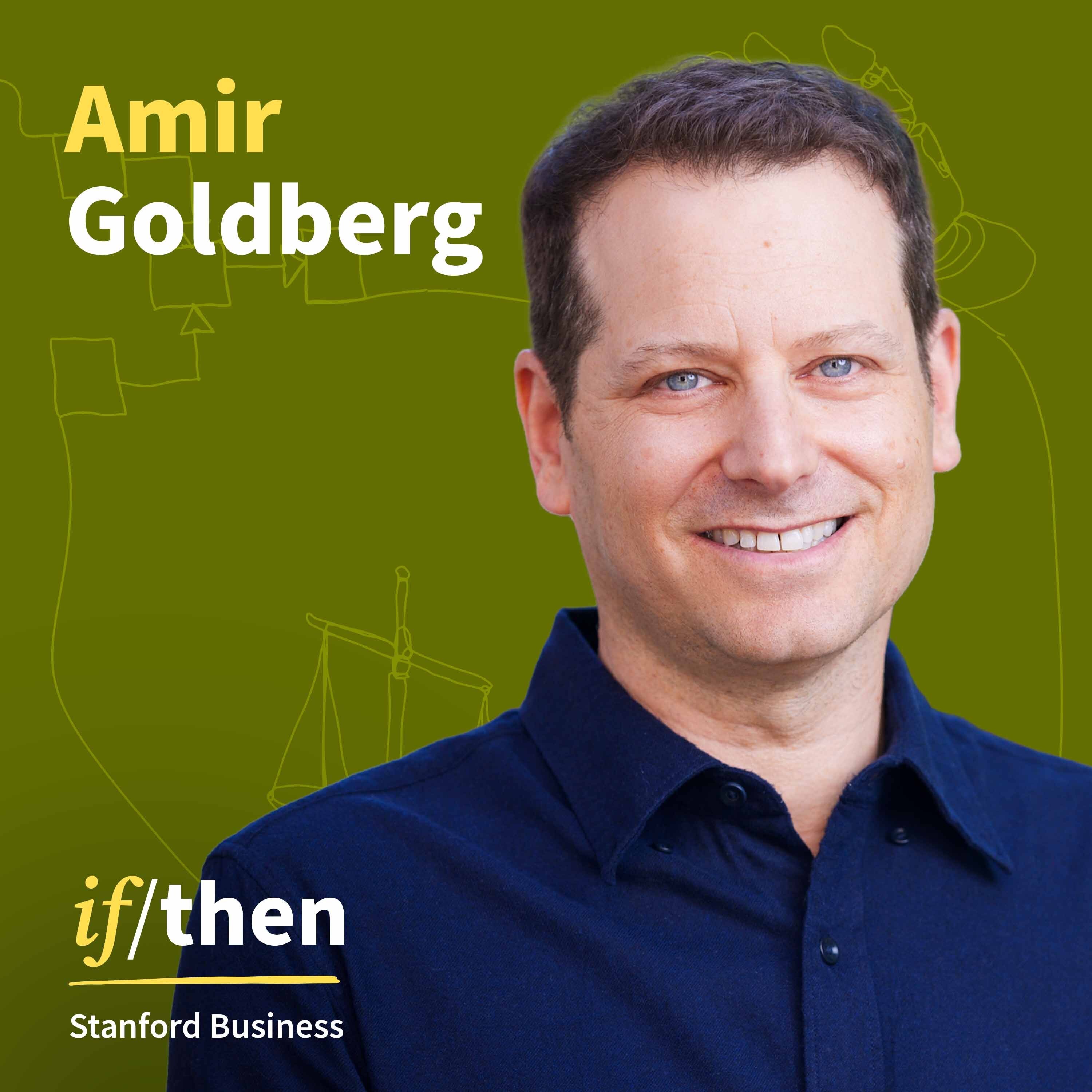
“The way I think about trying to anticipate and shape the AI future requires us to take a step back and ask ourselves first, ‘What does this technology do? What does it enable?’” reflects Amir Goldberg, a professor of organizational behavior at Stanford Graduate School of Business. “That’s very different from asking ourselves, ‘How is the technology implemented?’” From locating the origins of innovation to identifying hidden barriers blocking new ideas, Goldberg presents a framework for harnessing novel technological capabilities like AI — capabilities that are essential for staying ahead of…
-
S2 · E33 · 14 May 2025 · 30 min
What Happened to the Middle?
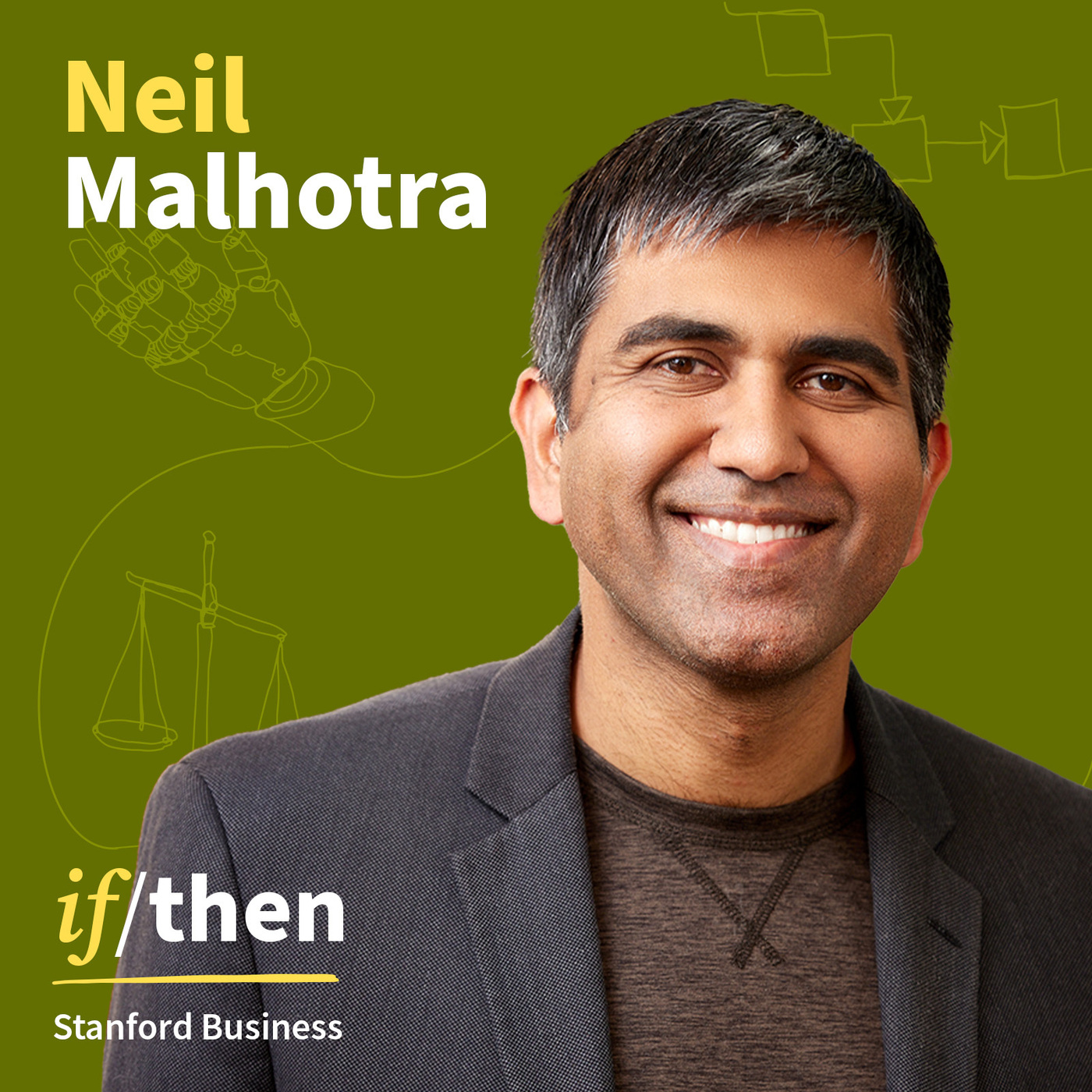
Neil Malhotra, the Edith M. Cornell professor of political economy at Stanford Graduate School of Business, aims to identify the nature of our tumultuous political moment in his work. In this episode, Malhotra explores rising distrust, shifting political identities, and what these changes mean for individuals — and businesses. Plus, the billion-dollar question: “Is Trump creating a movement that is separate from himself or is it identified with himself?” Malhotra asks. “It remains to be seen.”Is there a political question you’d like us to explore? Email us at ifthenpod@stanford.edu.This…
-

S2 · E31 · 16 Apr 2025 · 28 min
Could Financial Literacy Change the World?
Only a third of the global population is financially literate. Why? Because most of us don’t learn the basics of personal finance in school — or elsewhere. Treating financial literacy as an afterthought can have serious consequences, from personal calamities to economic crises, according to Annamaria Lusardi, a professor of finance and the director of the Initiative for Financial Decision-Making at Stanford Graduate School of Business. On this episode of If/Then, Lusardi makes the case for treating financial education like preventative care: essential, cost-effective, and an enormous…
-
S2 · E30 · 2 Apr 2025 · 25 min
Adapting To Massive Technological Change
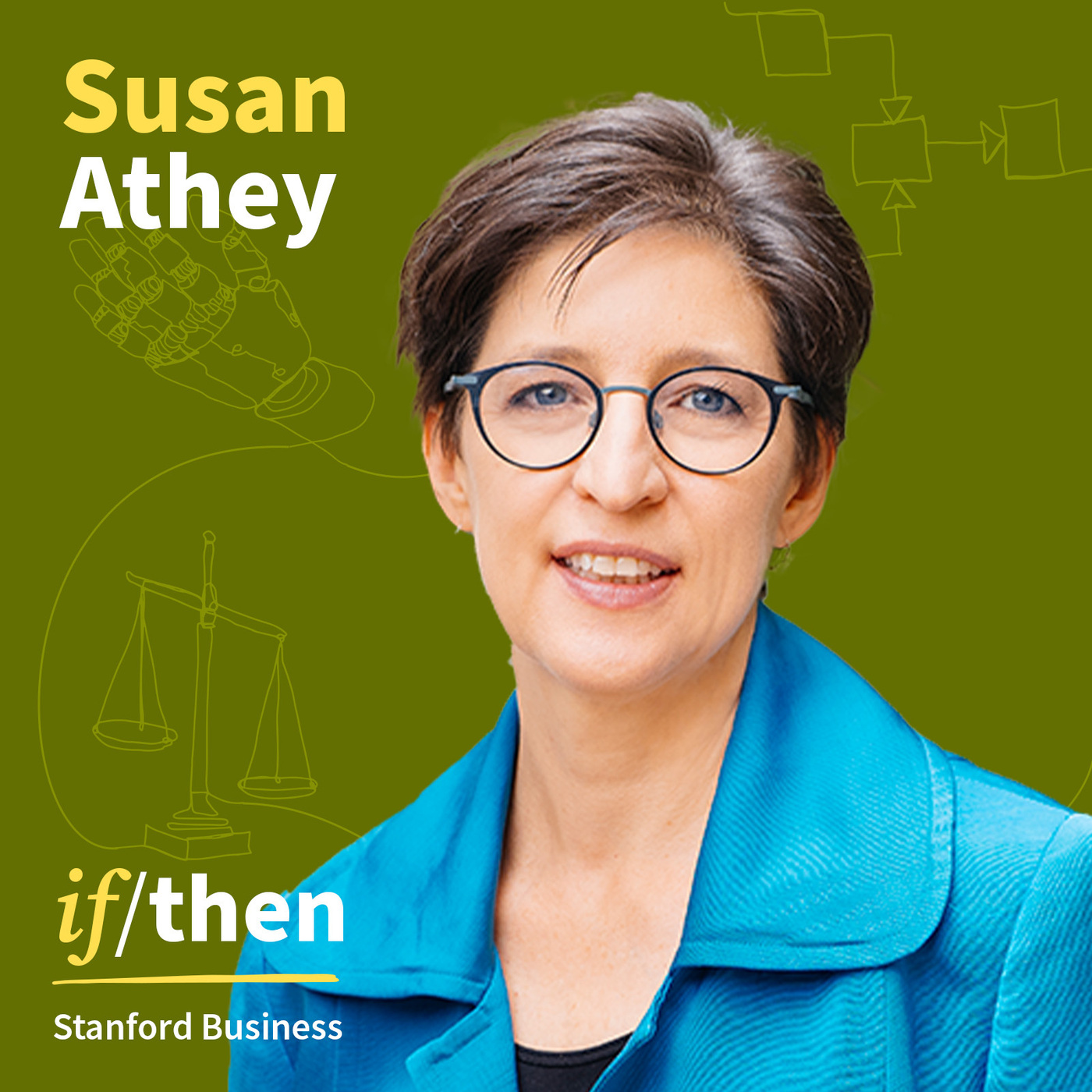
Susan Athey, the Economics of Technology Professor at Stanford Graduate School of Business and founding director of the Golub Capital Social Impact Lab, studies the impact of technological innovations on workers, businesses, and society. Will the world’s economies successfully adapt to a future defined by artificial intelligence? On this episode, Athey shares what the stories of 22,000 laid-off workers in Sweden can tell us about who recovers from economic turmoil, how small design changes and product features can have outsize societal impact, and how AI could transform the way we work, from…
-
S2 · E29 · 19 Mar 2025 · 26 min
Think You Know Yourself? Think Again.
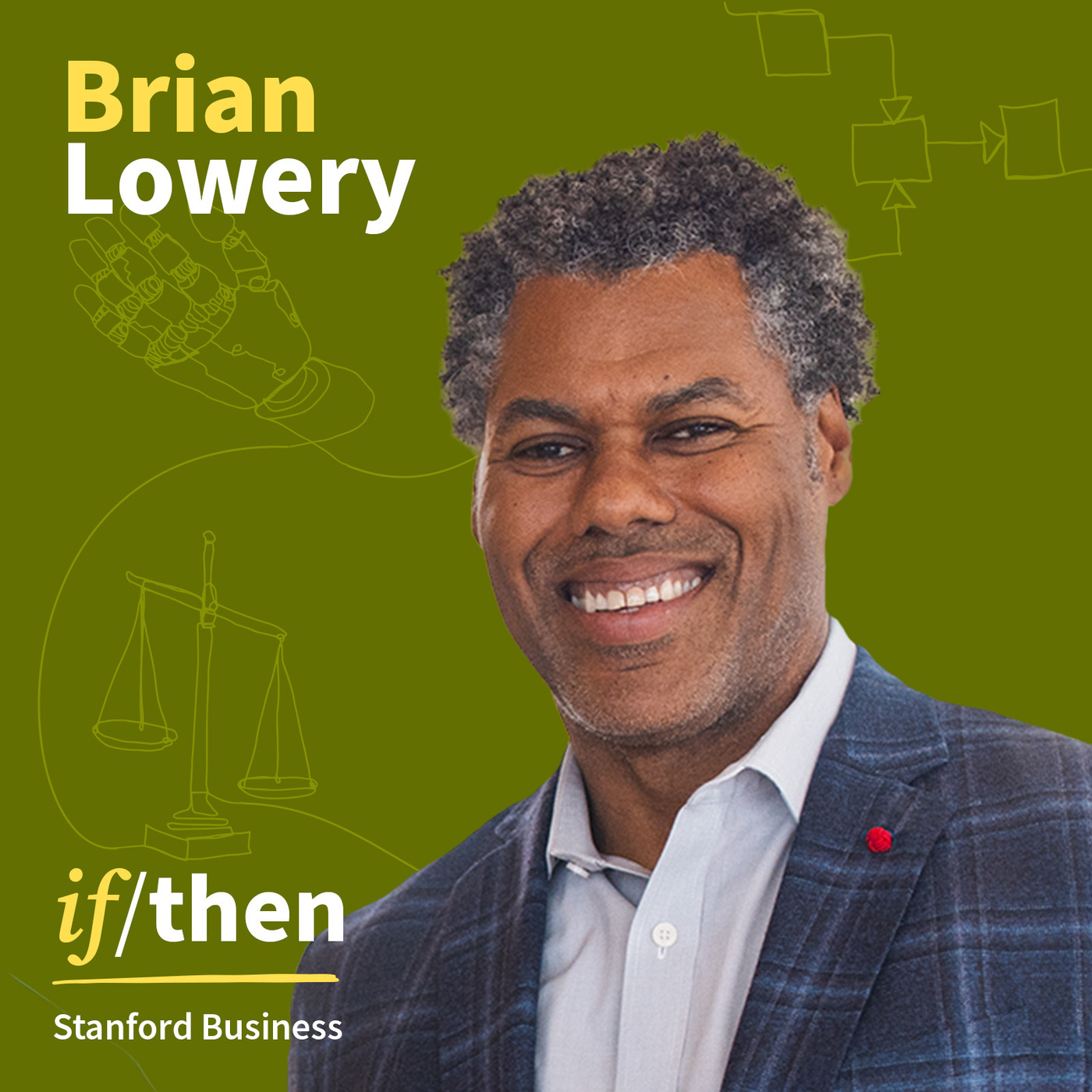
Brian Lowery, the Walter Kenneth Kilpatrick Professor of Organizational Behavior at Stanford Graduate School of Business and the author of Selfless: The Social Creation of You, argues that identity is about much more than external characteristics, family history, or the collection of experiences that compose the chronology of our lives. In fact, Lowery argues, our identities are constantly being formed, shifted, and even co-created — by the people around us. In this episode, Lowery breaks down how leaders, colleagues, and even casual acquaintances influence the people we are continually…
-

S3 · E57 · 23 Sep 2026 · 55 min
An AI@GSB Special: Demis Hassabis Thinks We’re in the ‘Foothills of the Singularity’
Google DeepMind's CEO discusses solving intelligence, giving away AlphaFold, and why he believes AGI is just around the corner.
-

S3 · E56 · 26 Aug 2026 · 20 min
Think Fast Talk Smart: "What Other People Teach You About Your Communication"
What if purpose is what drives us to act, but meaning comes from how those actions affect other people?This week on If/Then, we’re sharing a conversation between two Stanford GSB colleagues: Think Fast, Talk Smart host Matt Abrahams and organizational behavior professor Brian Lowery.Recorded live at Stanford’s LEAD Me2We event, Matt and Brian explore the difference between purpose and meaning, why meaning is rooted in our relationships with others, and how the way we show up shapes the people around us. They also discuss sincerity, leadership, and how to give feedback that helps people feel…
-

S3 · E55 · 8 Jul 2026 · 33 min
Stanford Legal: "The Importance of Critical Thinking and Civil Discourse in Today's Polarized World"
How do you engage effectively across deep disagreement without shutting down the conversation?This week on If/Then, we’re sharing an episode from our colleagues at Stanford Legal, the podcast from Stanford Law School that looks at the cases, questions, and conflicts shaping public life.In a world where confidence is rewarded and humility can feel like a liability, Stanford Law professor Robert MacCoun argues for something radical: fewer unwavering opinions, more critical reflection, and a better way to disagree. On Stanford Legal, MacCoun joins co-hosts Pam Karlan and Diego Zambrano for a…
-

S3 · E54 · 25 Jun 2026 · 29 min
What AI Can’t Do — And Why
“Humans manage to do so much with surprisingly little,” says Douglas Guilbeault, an assistant professor of organizational behavior at Stanford Graduate School of Business. “Whereas AI, by comparison, is doing relatively little, but with so much power, so much compute, so many resources, and by comparison, relatively fewer constraints.”On a bonus episode of the If/Then podcast, Guilbeault describes the implications of his recent work. Although he readily acknowledges that AI is “increasingly able to do quite a lot,” Guilbeault and his colleagues believe they have identified a key principle…

Take it with you
The Melo app keeps playing with the screen off, works in the car and on your watch, wakes you to your station, and browses the whole catalogue offline. Free, no ads, no account.