
Episode notes
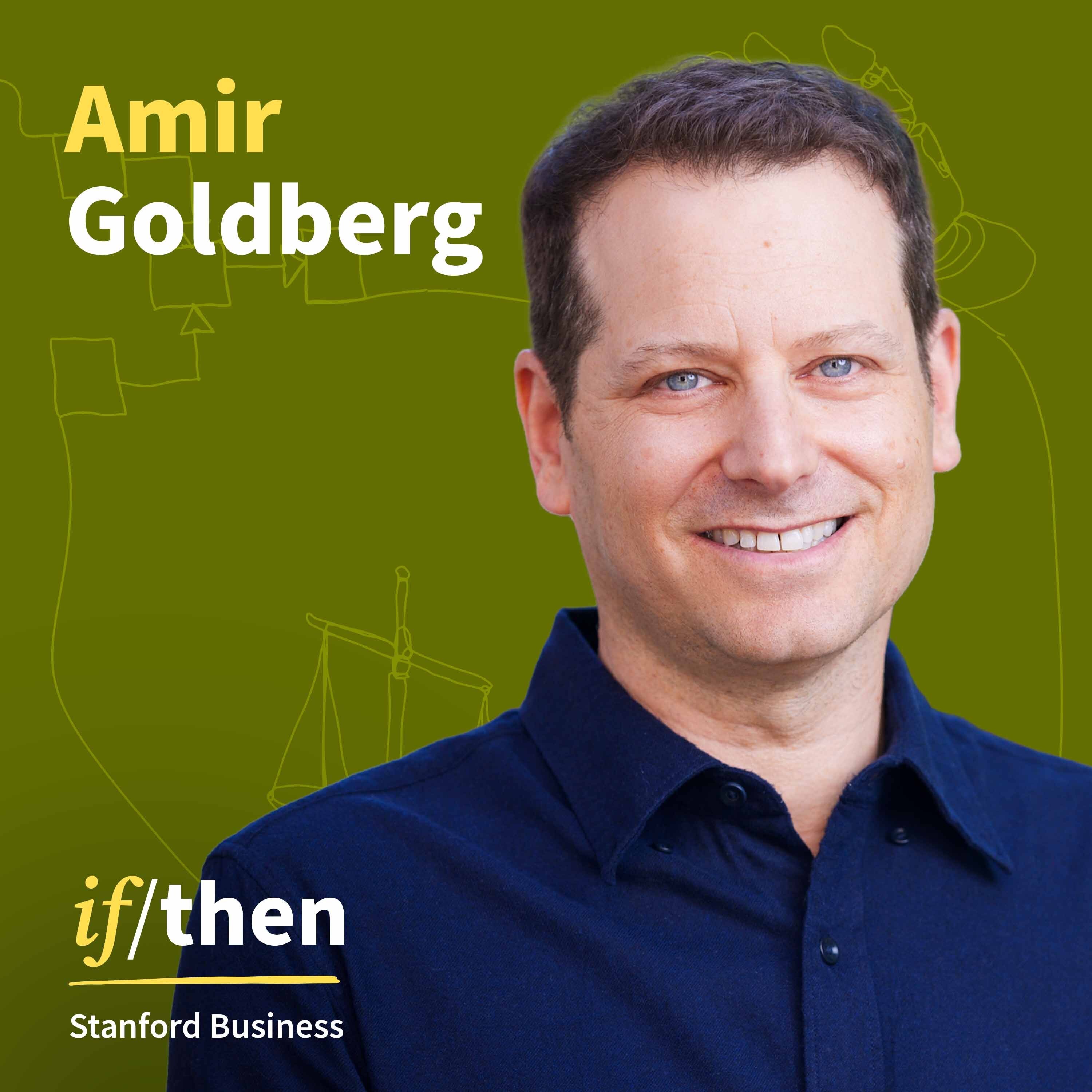
“The way I think about trying to anticipate and shape the AI future requires us to take a step back and ask ourselves first, ‘What does this technology do? What does it enable?’” reflects Amir Goldberg, a professor of organizational behavior at Stanford Graduate School of Business. “That’s very different from asking ourselves, ‘How is the technology implemented?’” From locating the origins of innovation to identifying hidden barriers blocking new ideas, Goldberg presents a framework for harnessing novel technological capabilities like AI — capabilities that are essential for staying ahead of…
Podcast
If/Then
Stanford GSB · Business · English
How do we lead with purpose, make better decisions, and navigate an uncertain future? On If/Then , Stanford GSB faculty break down cutting-edge research on leadership, strategy, and more, exploring enduring questions and the forces reshaping business and society today, from AI to geopolitics. Hos
More from If/Then All episodes →
-
S2 · E39 · 13 Aug 2025 · 16 min
The Joy of Discovery and Why Research Matters
As we celebrate the conclusion of the second season of the If/Then podcast, we present a bonus episode featuring Deborah H. Gruenfeld, the Joseph McDonald Professor and Professor of Organizational Behavior and a Senior Associate Dean for Academic Affairs at Stanford Graduate School of Business. Gruenfeld, who appeared on the first season of If/Then in an award-winning episode about hierarchies and the nature of power, returned to the studio to share her thoughts on the value of academic research and its impact on individuals and organizations. “The nice thing about research is that it…
-

S2 · E38 · 30 Jul 2025 · 34 min
The Future of Everything: "The Future of Motivation"
How do you stay motivated when your goal is months — or even years — away? Stanford’s Szu-chi Huang breaks down the science of sticking with it.
-

S2 · E37 · 9 Jul 2025 · 24 min
Think Fast, Talk Smart: "Tensions and Trade-Offs of Leadership and Communication"
Leadership isn’t about avoiding uncertainty: it’s about embracing the clarity that ambiguity can bring.
-

S2 · E36 · 25 Jun 2025 · 30 min
Culture Still Eats Strategy For Breakfast
Do you stick to the rules or do you roll through stop signs? Whether you’re “tight” or “loose” — how closely you adhere to social norms — has major implications for your life at home and at work. “To be effective, we want to be ambidextrous,” says Michele Gelfand, the John H. Scully Professor in Cross-Cultural Management and Professor of Organizational Behavior at Stanford Graduate School of Business. “Even if we might lean tight or loose, we want to be able to create a context where we can have both tight and loose elements.”Sophisticated strategies will fail if they don’t account for…
-

S2 · E35 · 11 Jun 2025 · 28 min
The AI Prescription for Healthcare
AI has the potential to reshape medicine. But translating its promise into solutions for providers and patients is a high-stakes challenge.“There’s a lot more problems than solutions available,” says Mohsen Bayati, the Carl and Marilynn Thoma Professor of Operations, Information & Technology at Stanford Graduate School of Business. “So it’s ripe for innovation.”From trust and privacy to hallucination and data quality, the complications are significant. Bayati says that safely and effectively integrating AI into an enormous industry that treats people in their most vulnerable moments requires…
-
S2 · E33 · 14 May 2025 · 30 min
What Happened to the Middle?
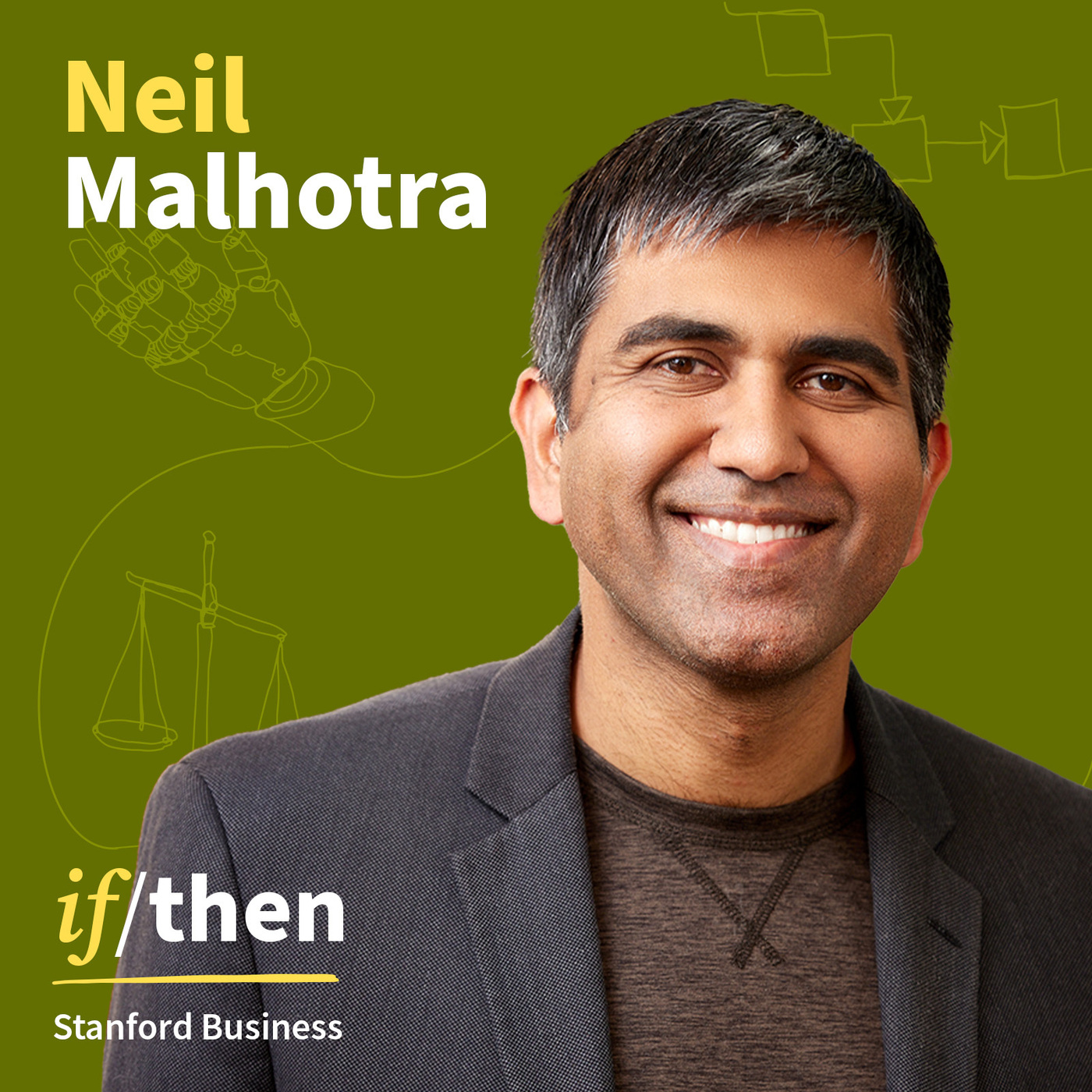
Neil Malhotra, the Edith M. Cornell professor of political economy at Stanford Graduate School of Business, aims to identify the nature of our tumultuous political moment in his work. In this episode, Malhotra explores rising distrust, shifting political identities, and what these changes mean for individuals — and businesses. Plus, the billion-dollar question: “Is Trump creating a movement that is separate from himself or is it identified with himself?” Malhotra asks. “It remains to be seen.”Is there a political question you’d like us to explore? Email us at [email protected]…
-
S2 · E32 · 30 Apr 2025 · 26 min
Small Business, Big Impact
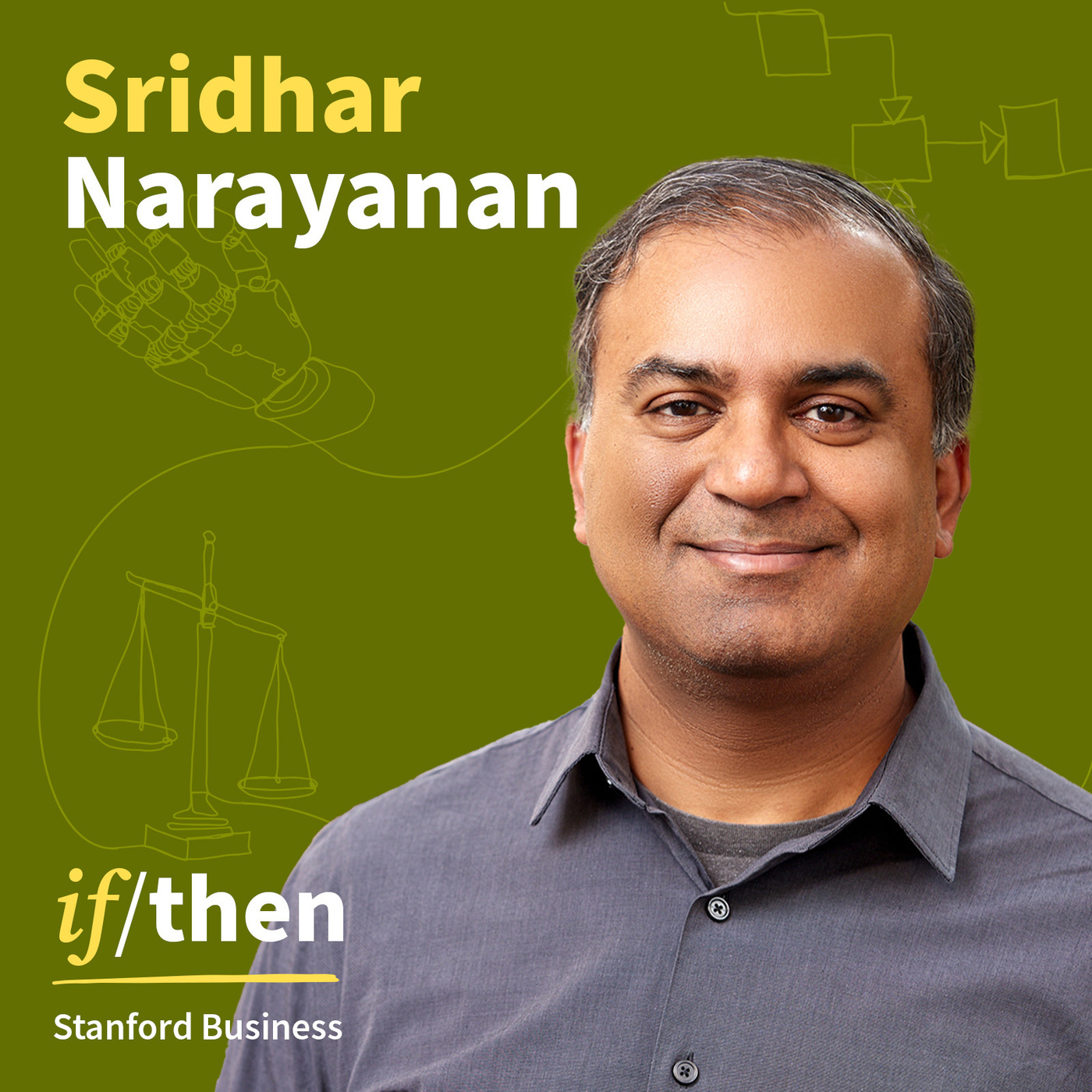
Sridhar Narayanan, a professor of marketing at Stanford Graduate School of Business, studies how small businesses operate and why they’re so important, especially in the developing world. “Modernizing small businesses will have a profound impact on economies worldwide in many ways,” he says. In this episode of If/Then, Narayanan explains why so many retailers still rely on cash, how modernization can boost revenue, and what these patterns reveal about credit access, trust in institutions, and global economic development.Have you modernized a small business or did you choose to stick with…
-

S2 · E31 · 16 Apr 2025 · 28 min
Could Financial Literacy Change the World?
Only a third of the global population is financially literate. Why? Because most of us don’t learn the basics of personal finance in school — or elsewhere. Treating financial literacy as an afterthought can have serious consequences, from personal calamities to economic crises, according to Annamaria Lusardi, a professor of finance and the director of the Initiative for Financial Decision-Making at Stanford Graduate School of Business. On this episode of If/Then, Lusardi makes the case for treating financial education like preventative care: essential, cost-effective, and an enormous…
-
S2 · E30 · 2 Apr 2025 · 25 min
Adapting To Massive Technological Change
Susan Athey, the Economics of Technology Professor at Stanford Graduate School of Business and founding director of the Golub Capital Social Impact Lab, studies the impact of technological innovations on workers, businesses, and society. Will the world’s economies successfully adapt to a future defined by artificial intelligence? On this episode, Athey shares what the stories of 22,000 laid-off workers in Sweden can tell us about who recovers from economic turmoil, how small design changes and product features can have outsize societal impact, and how AI could transform the way we work, from…
-
S2 · E29 · 19 Mar 2025 · 26 min
Think You Know Yourself? Think Again.
Brian Lowery, the Walter Kenneth Kilpatrick Professor of Organizational Behavior at Stanford Graduate School of Business and the author of Selfless: The Social Creation of You, argues that identity is about much more than external characteristics, family history, or the collection of experiences that compose the chronology of our lives. In fact, Lowery argues, our identities are constantly being formed, shifted, and even co-created — by the people around us. In this episode, Lowery breaks down how leaders, colleagues, and even casual acquaintances influence the people we are continually…

Take it with you
The Melo app keeps playing with the screen off, works in the car and on your watch, wakes you to your station, and browses the whole catalogue offline. Free, no ads, no account.


