In Season 5 of Interpreting India, we continue our exploration of the dynamic forces that will shape India's global standing. At Carnegie India, our diverse lineup of experts will host critical discussions at the intersection of technology, the economy, and international security.
In this episode of Interpreting India, Charukeshi Bhatt speaks with Jane Munga, fellow with the Africa Program at the Carnegie Endowment for International Peace, on the subsea cable landscape in Africa. With the continent now home to around 77 submarine cables and one of the fastest growing AI infrastructure markets in the world, the conversation moves beyond the headline investment numbers to ask harder questions: who benefits, who governs, and what does resilience actually look like when the cables go down? This episode explores: • Africa is seeing a surge in AI and cable infrastructure…
In this episode of Interpreting India, Shruti Mittal, research analyst at Carnegie India, speaks with Professor Mohan Yellishetty of Monash University on the India-Australia critical minerals partnership, what it has delivered so far, and where the two countries can build the most meaningful cooperation over the next decade. This episode explores: • How have India and Australia's mineral positions evolved individually over the last few years, and where do their trajectories stand today when viewed together? • Beyond the standard supply-demand complementarity, what do genuine areas of…
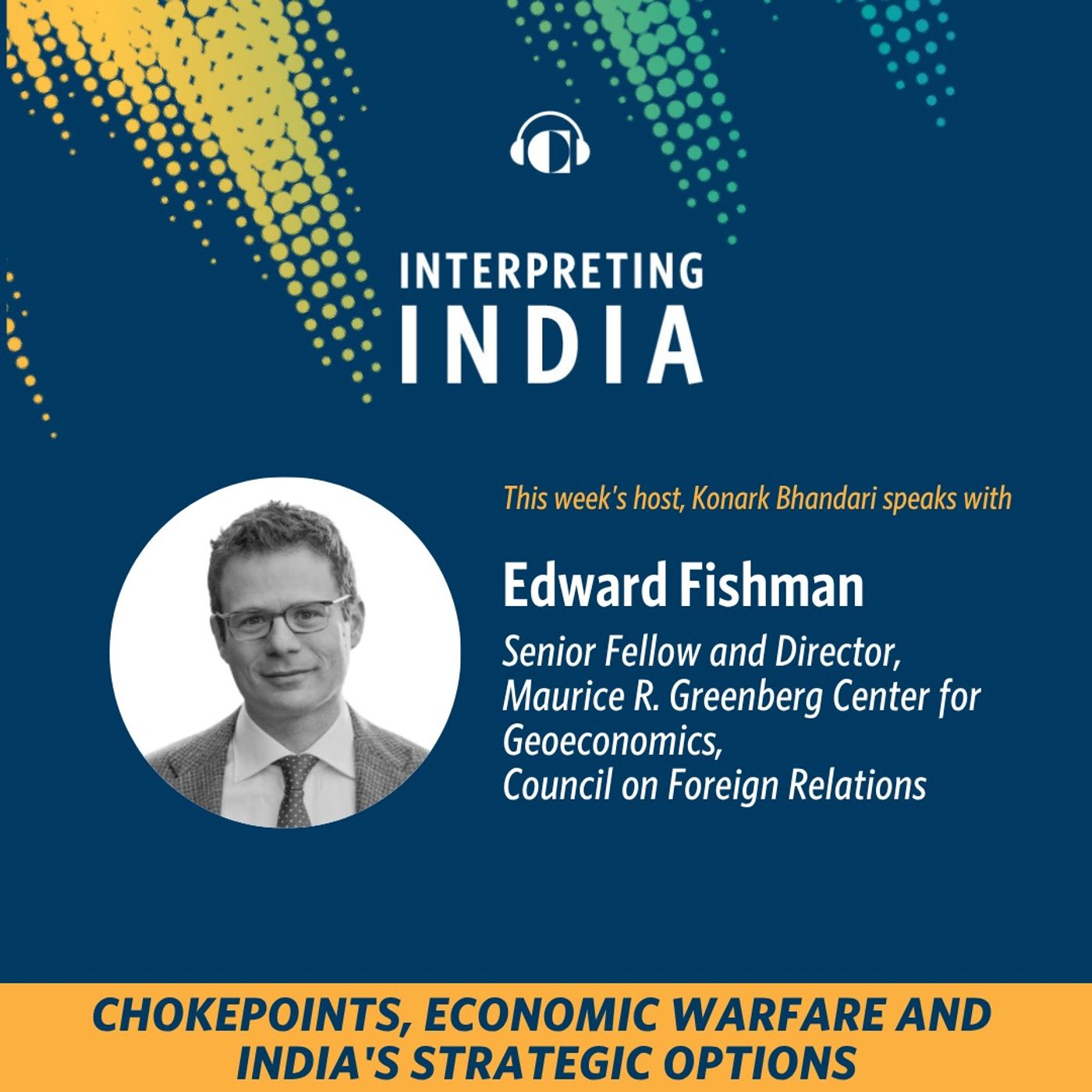
In this episode of Interpreting India, Konark Bhandari, speaks with Edward Fishman, author of Chokepoints: American Power in the Age of Economic Warfare, on economic statecraft, how the U.S. built its playbook for economic warfare over time, and what the lessons are for India as it looks to build its own economic resilience. This episode explores: • What makes something a genuine choke point, and is there a playbook that other countries can actually replicate? • Why were China's rare earth export controls and Iran's leverage over the Strait of Hormuz among the most consequential acts of…
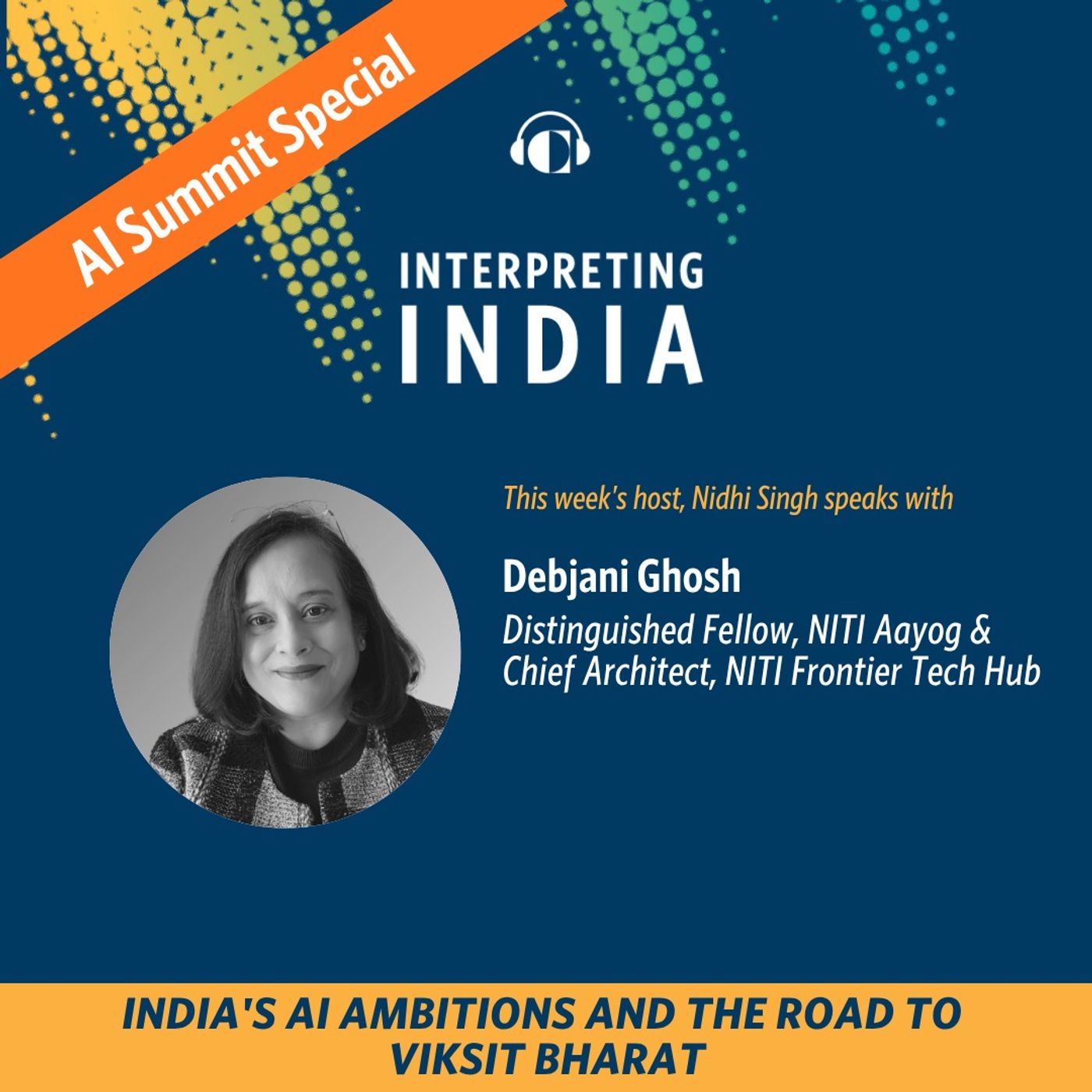
In this episode of Interpreting India, Nidhi Singh, speaks with Debjani Ghosh, Distinguished Fellow at NITI Aayog and Chief Architect of the NITI Frontier Tech Hub. With nearly three decades across Intel, NASSCOM, and now NITI Aayog, Debjani brings a perspective that is both deeply practical and genuinely optimistic. She co-chaired the working group on AI for Economic Growth and Social Good at the India AI Impact Summit, and in this conversation she reflects on what the summit delivered, what India's AI journey needs to get right, and why the human being has to stay at the center of all of it.
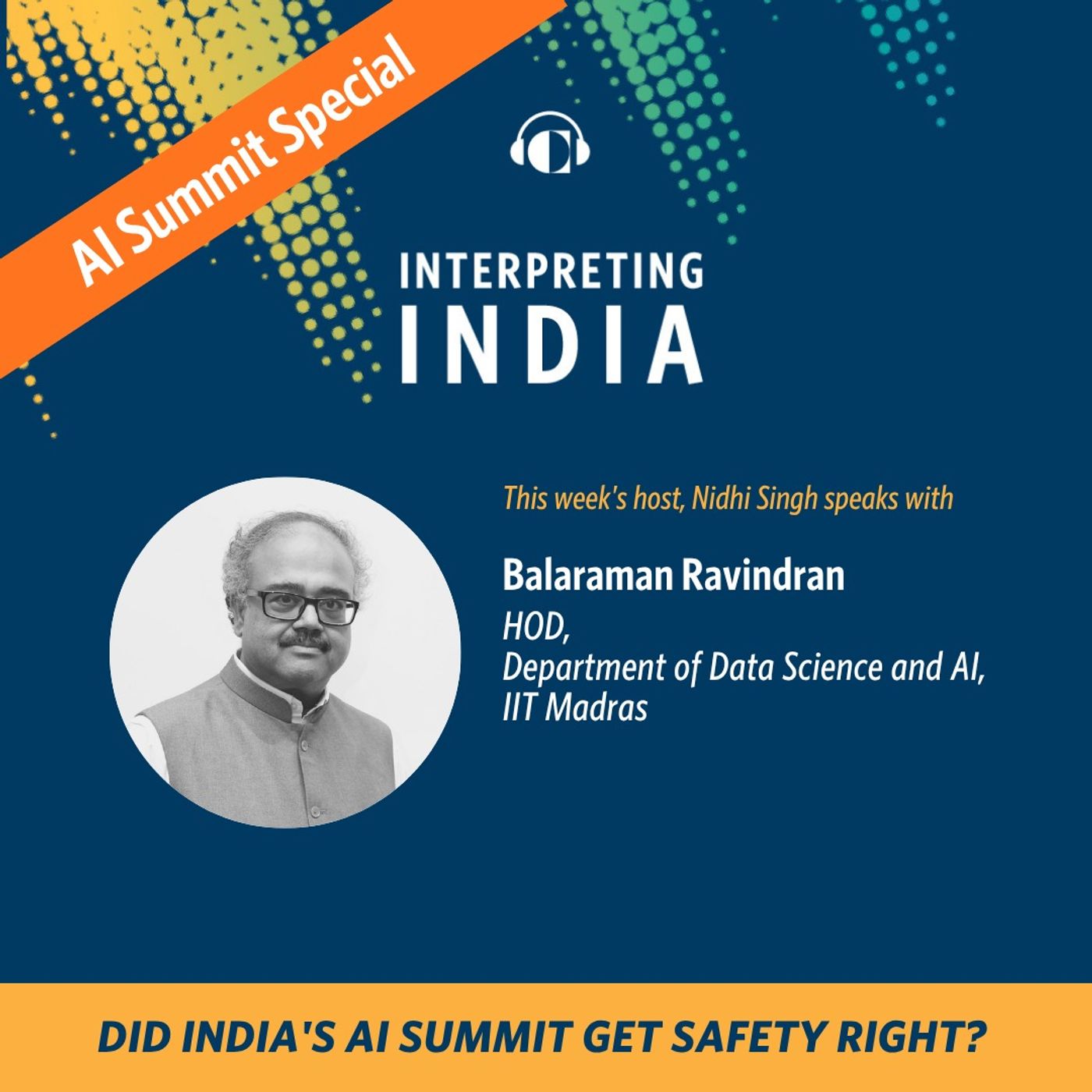
In this episode of Interpreting India, Nidhi Singh, Associate Fellow at Carnegie India, speaks with Professor Balaraman Ravindran, Head of the Department of Data Science and AI at IIT Madras, and Co-Chair of the Safe and Trusted AI Working Group at the India AI Impact Summit. Since the summit, Professor Ravindran has also been appointed to the UN's Independent International Scientific Panel on AI. There is a narrative that has taken hold since the summit, that India moved away from safety and left frontier risks behind. This conversation sets the record straight. This episode explores: What…
In this episode of Interpreting India, Charukeshi Bhatt speaks with Pooja Bhatt, associate professor, Jindal School of International Affairs, O.P. Jindal University, on a piece of infrastructure that is easy to overlook and very difficult to protect: subsea cables. Stretching over 1.5 million kilometres across ocean floors and carrying nearly 99% of global data traffic, these cables underpin everything from financial systems and cloud infrastructure to the everyday digital services that billions of people rely on. For India, a fast-growing digital economy with expanding data center…
In this episode of Interpreting India, Adarsh Ranjan, research analyst at Carnegie India, speaks with Jaspreet Bindra, founder of AI&Beyond and Tech Whisperer Limited, UK, and author of 'Winning with AI: Your Guide to AI Literacy.' Jaspreet brings a practitioner's perspective to questions that often get lost in the noise around AI: not just what is changing, but whether people, organizations, and policymakers are actually prepared for it. This episode explores: Is India's enthusiasm for AI actually translating into adoption on the ground, and which sectors are seeing real change? Is AI…
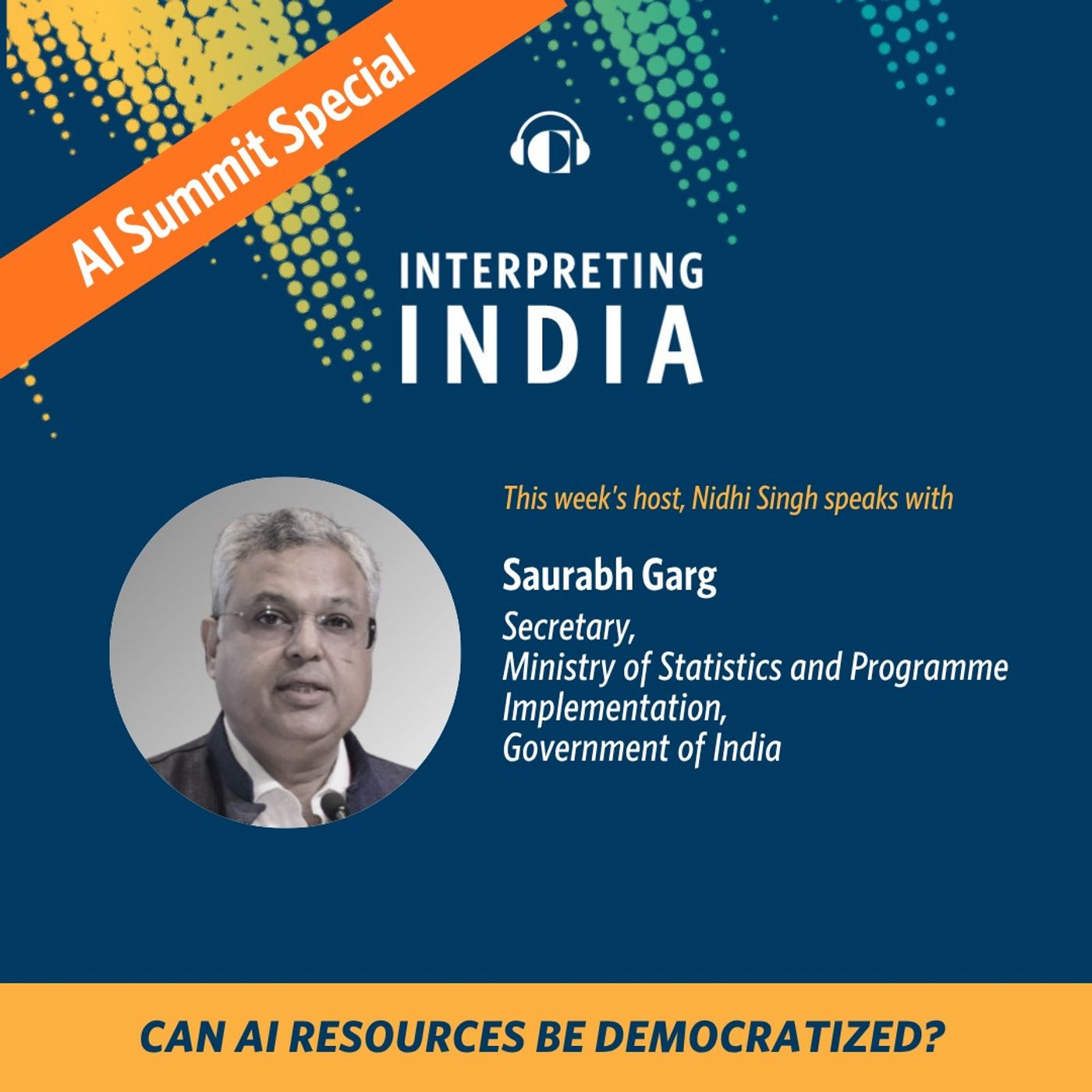
In this episode of Interpreting India, Nidhi Singh, associate fellow at Carnegie India, speaks with Saurabh Garg, secretary at the Ministry of Statistics and Programme Implementation, Government of India, who chaired the working group on democratizing AI resources at the India AI Impact Summit. The working group brought together over 30 countries and several international organizations to tackle a fundamental question: how do you make the foundational resources for AI, compute, data, models, and talent, accessible to countries that currently have very little of it? This episode explores: How…
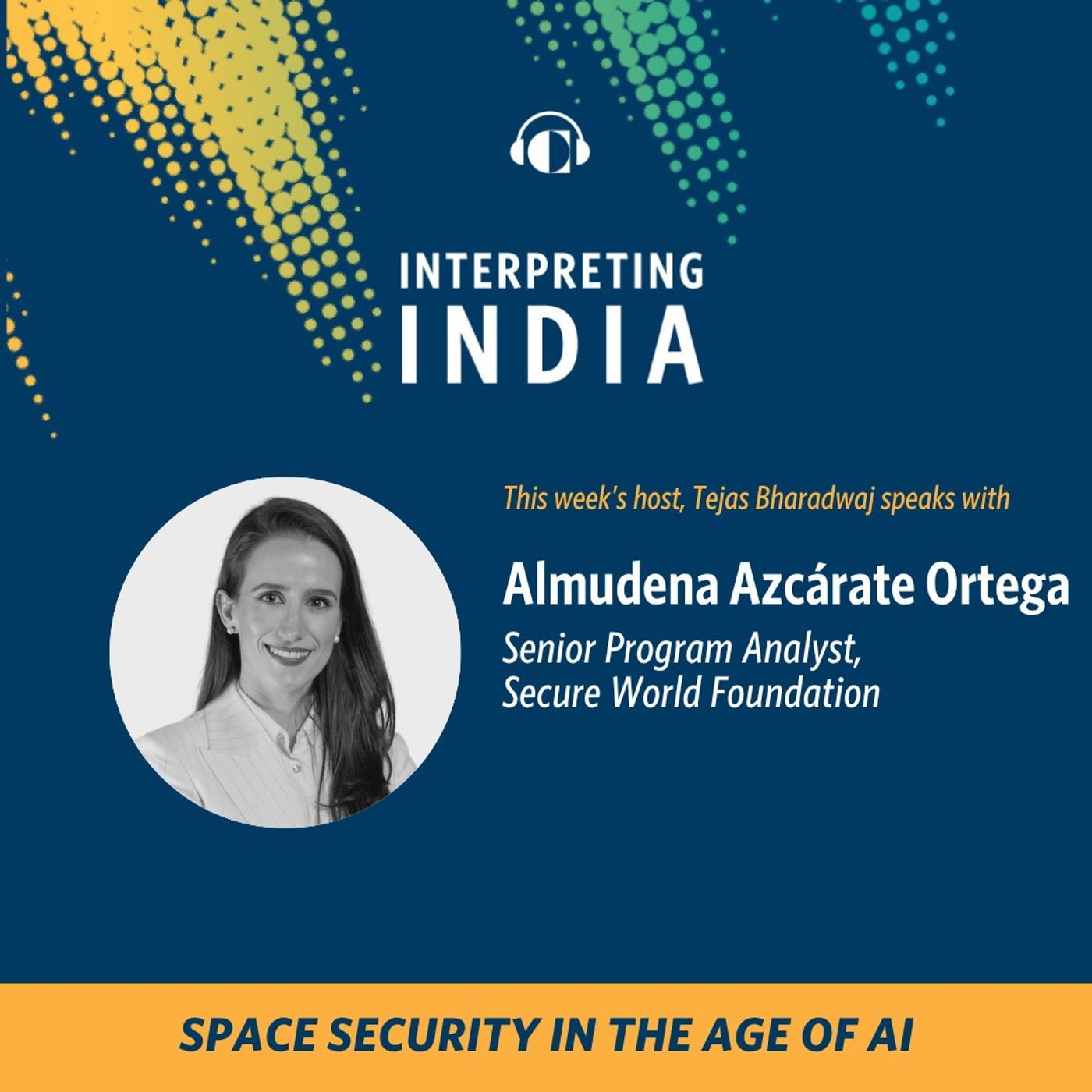
In this episode of Interpreting India, Tejas Bharadwaj is joined by Almudena Azcárate Ortega, senior program analyst at Secure World Foundation, for a wide-ranging conversation on how emerging technologies, particularly AI, are reshaping the landscape of space security. A space lawyer and policy scholar with deep experience in multilateral processes, Almudena brings both technical nuance and diplomatic realism to questions that most space conversations still treat as hypothetical. This episode explores: What is space security, and how is it different from space safety and why does that…
In this episode of Interpreting India, Nidhi Singh is joined by Raymond Ononiwu, founder and CEO of Horus Labs, for a conversation that cuts through the noise around compute, data centres, and AI infrastructure to ask a more fundamental question: who is this all actually being built for? Raymond brings the perspective of someone building AI infrastructure on the ground in Africa, and his account of what the global AI conversation is still getting wrong is both practical and pointed. This episode explores: What is compute, why has it become a strategic resource, and does every country…
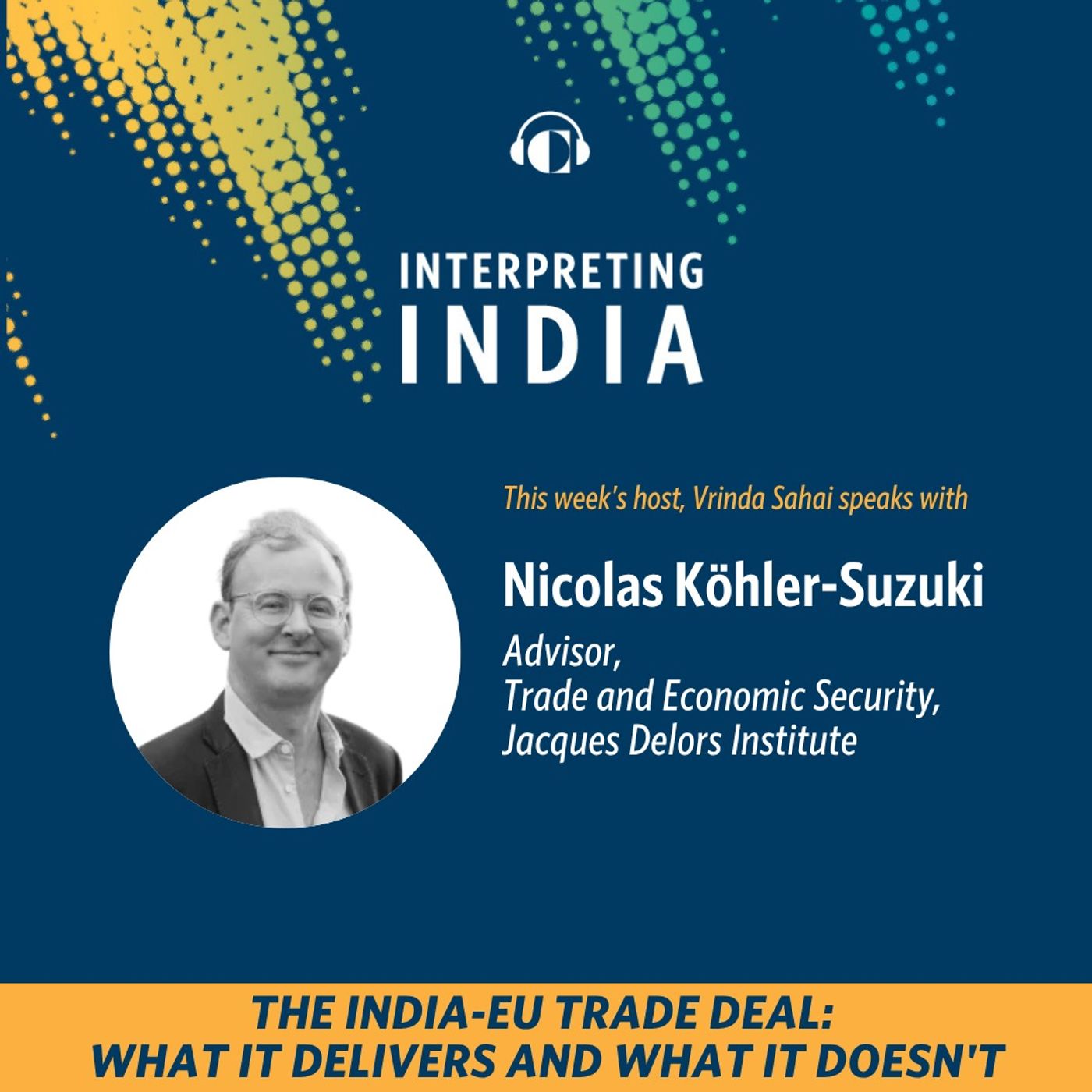
In this episode of Interpreting India, Vrinda Sahai is joined by Nicolas Köhler-Suzuki, Advisor for Trade and Economic Security at the Jacques Delors Institute, for a detailed conversation on the India-EU Free Trade Agreement. After decades of slow-moving negotiations, both sides have arrived at what is shaping up to be the most ambitious trade deal India has ever signed. Nicolas unpacks what is in the agreement, what is missing, and what its success will depend on in the years ahead. What finally brought India and the EU to the table after years of negotiations going nowhere, and why the…
In this episode of Interpreting India, Nidhi Singh is joined by Mariano-Florentino (Tino) Cuéllar, President of the Carnegie Endowment for International Peace and one of the very few people to have attended all four global AI summits, from Bletchley Park to Delhi. The conversation traces the arc of AI summit diplomacy, what has been accomplished, where the gaps remain, and what the process reveals about how different parts of the world are thinking about a technology that is moving faster than any single government or institution can keep up with. How has the conversation at AI summits…
In this episode of Interpreting India, Nidhi Singh is joined by Nikhil Narendran, Partner at Trilegal, for a conversation on two of the most pressing issues shaping India's digital future: data protection and AI governance. From the nuts and bolts of India's Digital Personal Data Protection Act to deeper questions about regulating artificial intelligence, Nikhil brings the perspective of a technology lawyer who is not just advising on these issues but actively living them. Is the DPDP Act really as consent-heavy as it's made out to be, and does India's regulatory design have the teeth to…
In this episode of Interpreting India, Srinath Raghavan speaks with Gaddam Dharmendra, Nonresident Senior Fellow, Carnegie India and India’s former Ambassador to Iran about the ongoing U.S.-Israel conflict with Iran and what it means for the region. The conversation looks at Iran’s response to sustained attacks, the wider impact on energy markets and regional stability, and the changing relationships between Iran, the Gulf countries, and global powers. It also reflects on India’s position as it balances its ties across West Asia while navigating strategic and economic pressures, and what…
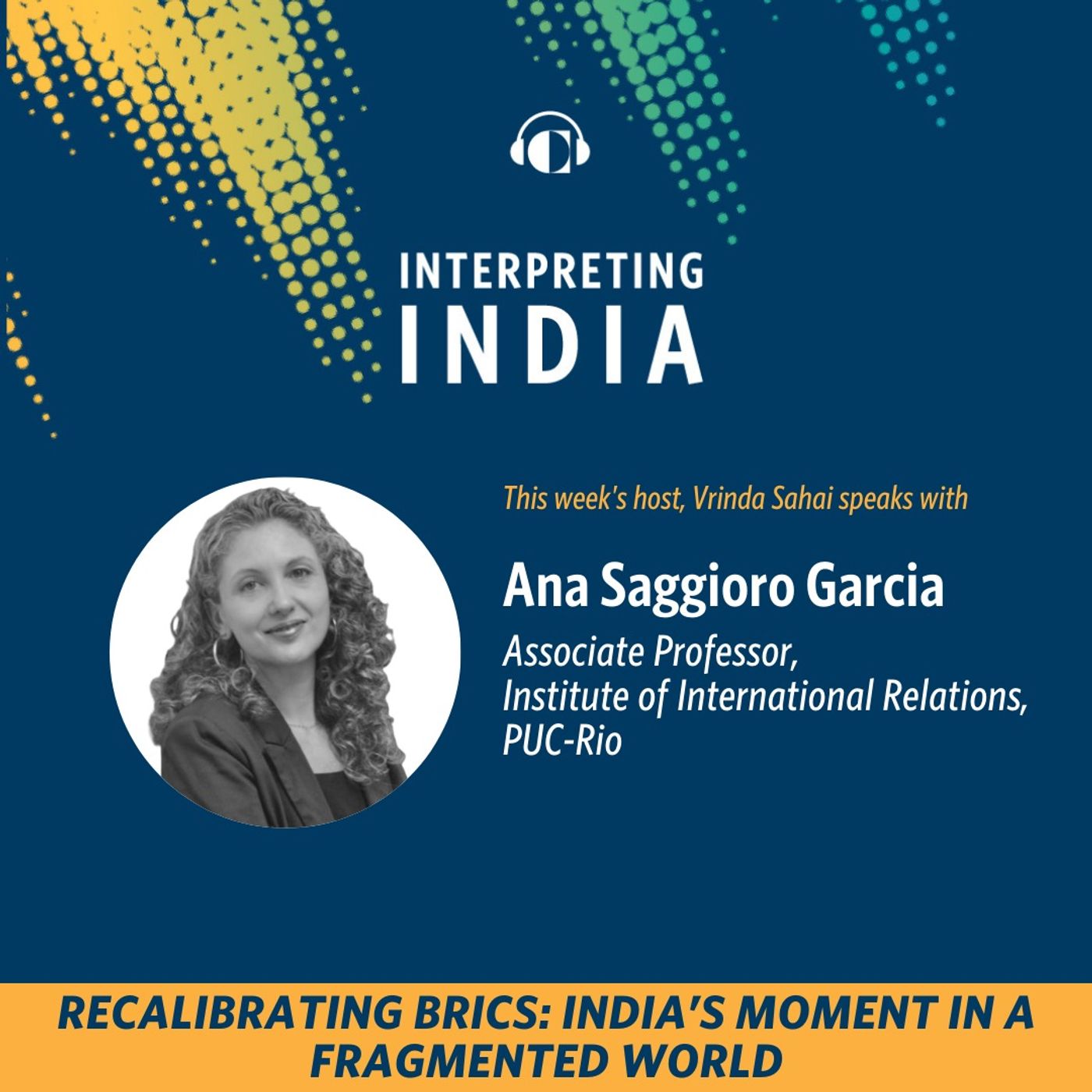
In this episode of Interpreting India, Vrinda Sahai is joined by Ana Garcia, Associate Professor at PUC-Rio and Coordinator at the BRICS Policy Center, to discuss the evolving direction of BRICS as India assumes the 2026 presidency. The conversation reflects on Brazil’s 2025 chairship, the bloc’s continued focus on reforming global financial governance, and the cautious progress on issues such as local currency trade, financial coordination, and institutional reform. Ana Garcia also highlights the limits of BRICS as a unified geopolitical actor and outlines key priorities for India,…
In this episode of Interpreting India, Dinakar Peri is joined by Mohan Kumar, former Indian Ambassador to France and a veteran trade negotiator, to unpack the newly concluded India–EU Free Trade Agreement and why he describes it as the “mother of all trade deals” for India. Kumar explains why the agreement is strategically significant, why the timing matters, and what it signals about India’s trade posture, competitiveness, and broader alignment between trade, technology, and security. Why is the India–EU FTA seen as India’s most consequential trade deal to date? Why did it take so long to…
In this episode of Interpreting India, Nidhi Singh is joined by Shalini Kapoor, chief strategist for Data and AI at the EkStep Foundation, and Tanvi Lall, director for strategy at People+ai. They unpack why so many AI initiatives get stuck after impressive demos, and what it takes to move from pilots to real, sustained adoption. Drawing on research spanning 1,000+ use cases across 25 countries, the guests introduce the Use Case Adoption Framework (UCAF) and explain how India can translate AI ambition into population-scale impact—especially across public services, agriculture, health, and…
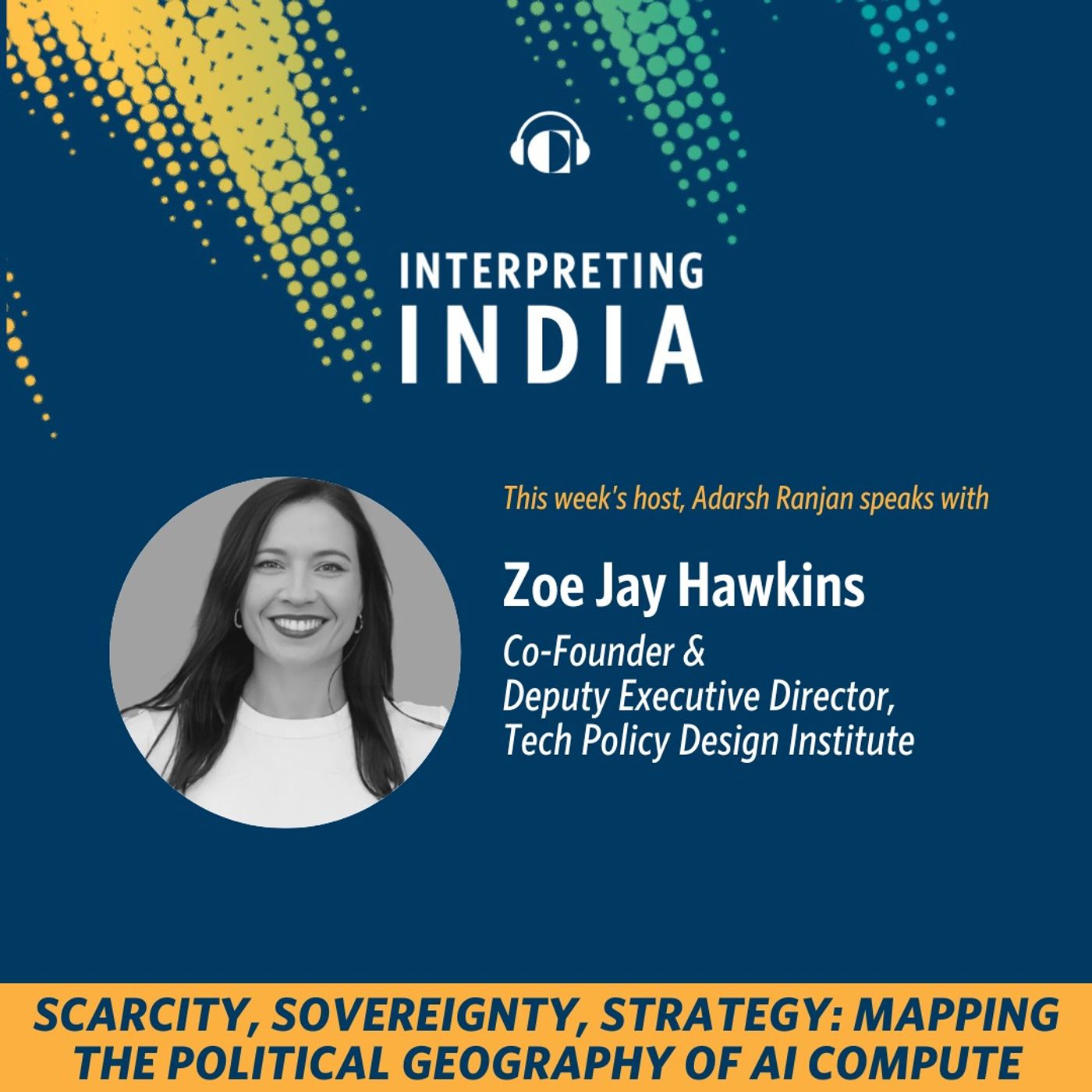
In this episode of Interpreting India, Adarsh Ranjan is joined by Zoe Jay Hawkins, co-founder and deputy executive director of the Tech Policy Design Institute. They explore the evolving idea of AI sovereignty, the geopolitics of compute, and how countries are navigating access to the foundational infrastructure that powers artificial intelligence. Drawing from her research at the Oxford Internet Institute, Zoe unpacks the political geography of AI compute, the rising concentration of AI chips and data centers, and what this means for both developed and developing economies. What does “AI…
In this episode of Interpreting India, host Tejas Bharadwaj is joined by P. J. Blount, an assistant professor of space law at Durham University. Together, they delve into the critical topic of cybersecurity in outer space, exploring the challenges and implications of protecting space-based assets amidst rising geopolitical tensions and technological advancements. Blount shares insights from his extensive research in international space law and cyberspace governance, highlighting the complexities of legal attribution and the evolving landscape of space security.
In this episode of Interpreting India, host Shruti Mittal, research analyst in the Technology and Society Program at Carnegie India, speaks with Chinmayi Sharma, associate professor of law at Fordham Law School and nonresident fellow at the Stoss Center, the Center for Democracy and Technology, and the Atlantic Council. Together, they explore the evolving and often misunderstood debate on openness in artificial intelligence. Drawing from her forthcoming paper, Unbundling AI Openness, in the Wisconsin Law Review, Sharma explains why the traditional “open versus closed” framing oversimplifies…
In this episode of Interpreting India, host Dinakar Peri is joined by Air Marshal (Retd.) Diptendu Choudhury, former Commandant of the National Defence College. Together, they unpack the evolution of India’s multilayered air defense network, tracing their journey from limited radar coverage in the 1960s to today’s multilayered, integrated network capable of projecting power into adversarial airspace. The discussion highlights how offensive and defensive air power work in tandem, lessons from Operation Sindoor, the growing challenges posed by drones, missiles, and cost-effectiveness, and the…
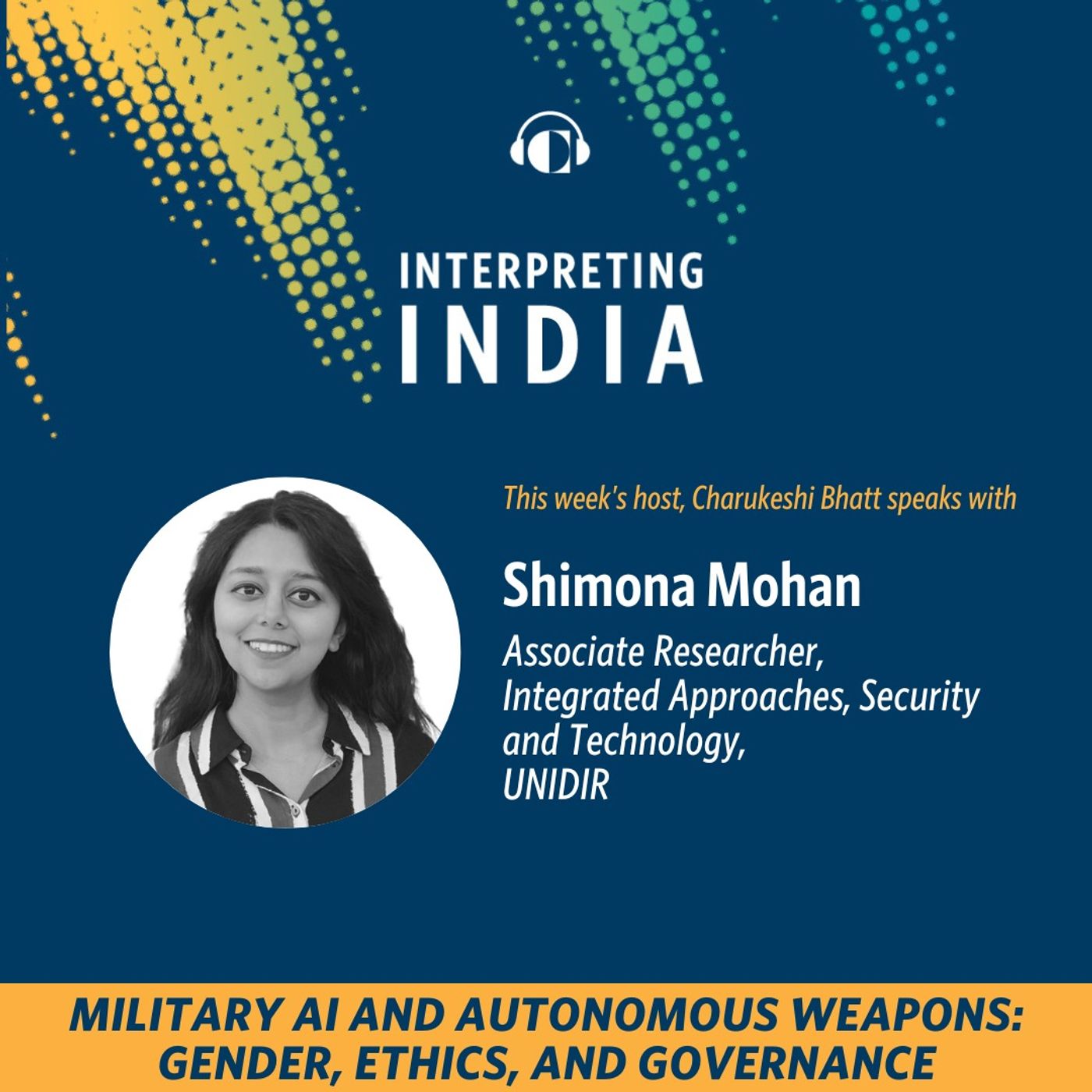
In this episode of Interpreting India, host Charukeshi Bhatt is joined by Shimona Mohan, associate researcher at the United Nations Institute for Disarmament Research (UNIDIR). Together, they unpack the rapidly evolving landscape of artificial intelligence in the military domain, with a special focus on lethal autonomous weapons systems (LAWS). The discussion traces how AI’s dual-use nature complicates governance, highlights the risks of bias and miscalculation, and explores why progress in international negotiations has been slow despite nearly a decade of debate.
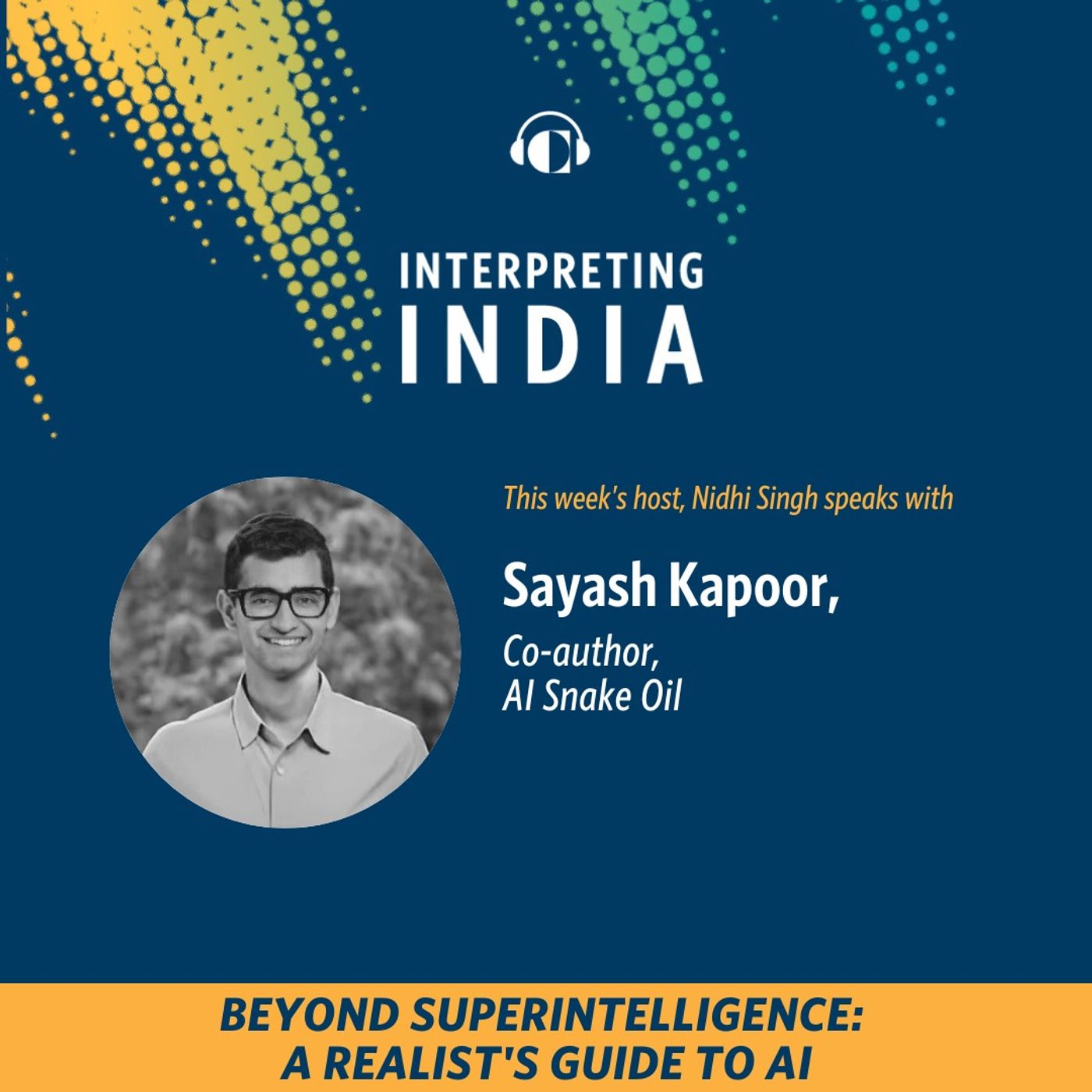
In this episode of Interpreting India, host Nidhi Singh is joined by Sayash Kapoor, co-author of AI Snake Oil, to unpack the myths, misconceptions, and exaggerated expectations around artificial intelligence. Kapoor challenges the dominant narratives of both utopian and dystopian AI futures and advocates instead for a more grounded perspective, viewing AI as a “normal technology,” akin to electricity or the internet, whose impact will unfold gradually over decades. Through a wide-ranging conversation, the episode examines the limitations of benchmark-based evaluation, the dangers of…
In this episode of Interpreting India, host Shruti Mittal is joined by Kailash Nadh, chief technology officer of Zerodha and co-founder of FOSS United, to provide a technologist’s perspective on one of the most consequential debates shaping the future of artificial intelligence: the open versus closed source AI debate. Against the backdrop of a rapidly evolving AI landscape, this conversation examines risks, rewards, and the strategic implications of open-source AI for India.
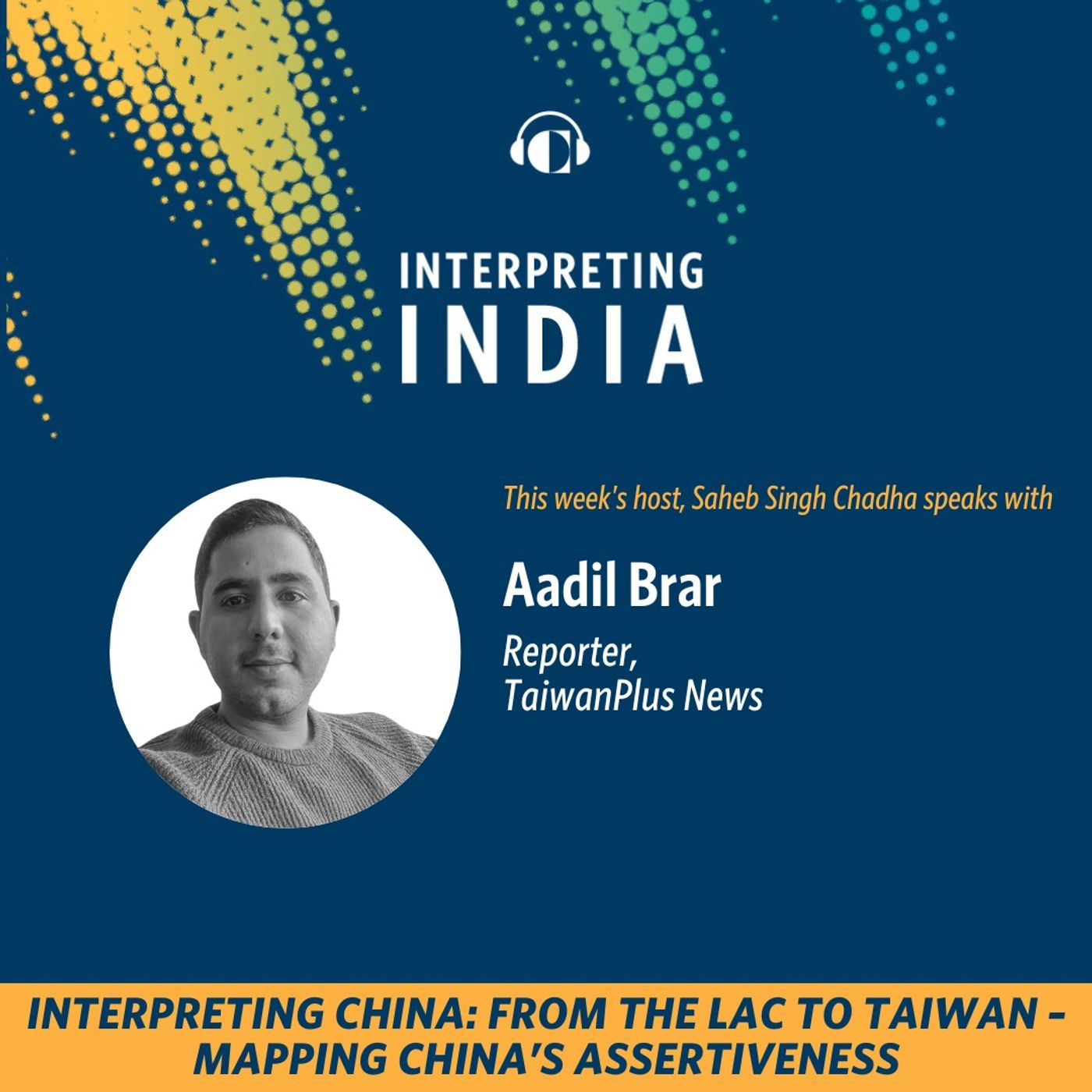
In this episode of Interpreting India, host Saheb Singh Chadha is joined by Aadil Brar, reporter at TaiwanPlus News and contributor to "Views from Taipei", to examine China’s evolving strategy across its contested borders. What connects China’s actions across these frontiers? How is it creating a new military normal around Taiwan? And has its assertiveness resulted in negative consequences for itself? This is the third and final episode in our special Interpreting China series, based on Views from Taipei, a collection of essays by young Indian scholars on China. Aadil’s essay, "From Land…
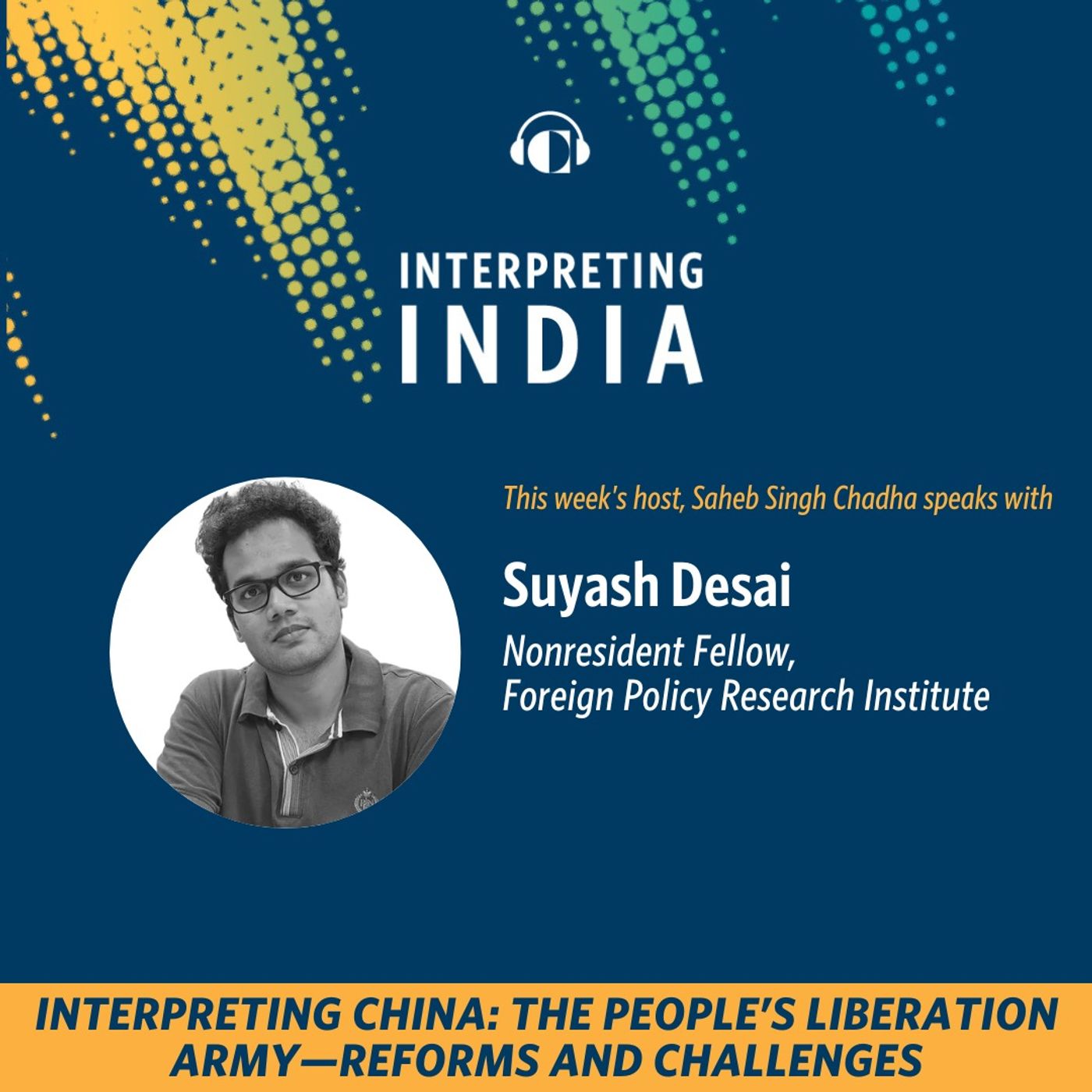
In this episode of Interpreting India, host Saheb Singh Chadha is joined by Suyash Desai, nonresident fellow at the Foreign Policy Research Institute, to explore the transformation and challenges facing China’s military, the People’s Liberation Army (PLA). Over the past decade, the PLA has seen rapid changes under Xi Jinping, from sweeping structural reforms to new mobilization and training strategies. But how ready is it really for a conflict over Taiwan? And what do these changes mean for India? This is the second episode in our special three-part Interpreting China series, based on Views…
In this episode of Interpreting India, host Saheb Singh Chadha is joined by Amit Kumar, staff research analyst at the Takshashila Institution, to explore the structural imbalances in China’s economy and what they mean for the world. The conversation delves into three major dilemmas facing the Chinese economy—fiscal stimulus, property sector instability, and domestic consumption rebalancing. Together, they examine how these economic dynamics impact China’s foreign policy, foreign economic relations and China’s outreach to countries like India. India–China economic relations are also…
In this episode of Interpreting India, host Tejas Bharadwaj speaks with Victoria Samson, chief director for space security and stability at the Secure World Foundation, about emerging challenges and opportunities in space security. As countries ramp up efforts to protect space-based assets from cyber threats, anti-satellite weapons, and other risks, the episode explores the strategic, technological, and diplomatic dimensions of space cooperation. How do bilateral and multilateral initiatives advance shared security goals in an increasingly contested space environment? Beyond the progress of…
In this episode of Interpreting India, Lt Gen P. R. Shankar (Retd.) joins host Saheb Singh Chadha to unpack the state of India’s defense industry. While India has made gains in modernizing its military and expanding domestic defense production, challenges persist, for example, in research and development, and procurement. Gen. Shankar also provided recommendations that would allow India to reduce its imports, diversify dependence, and export indigenous systems.
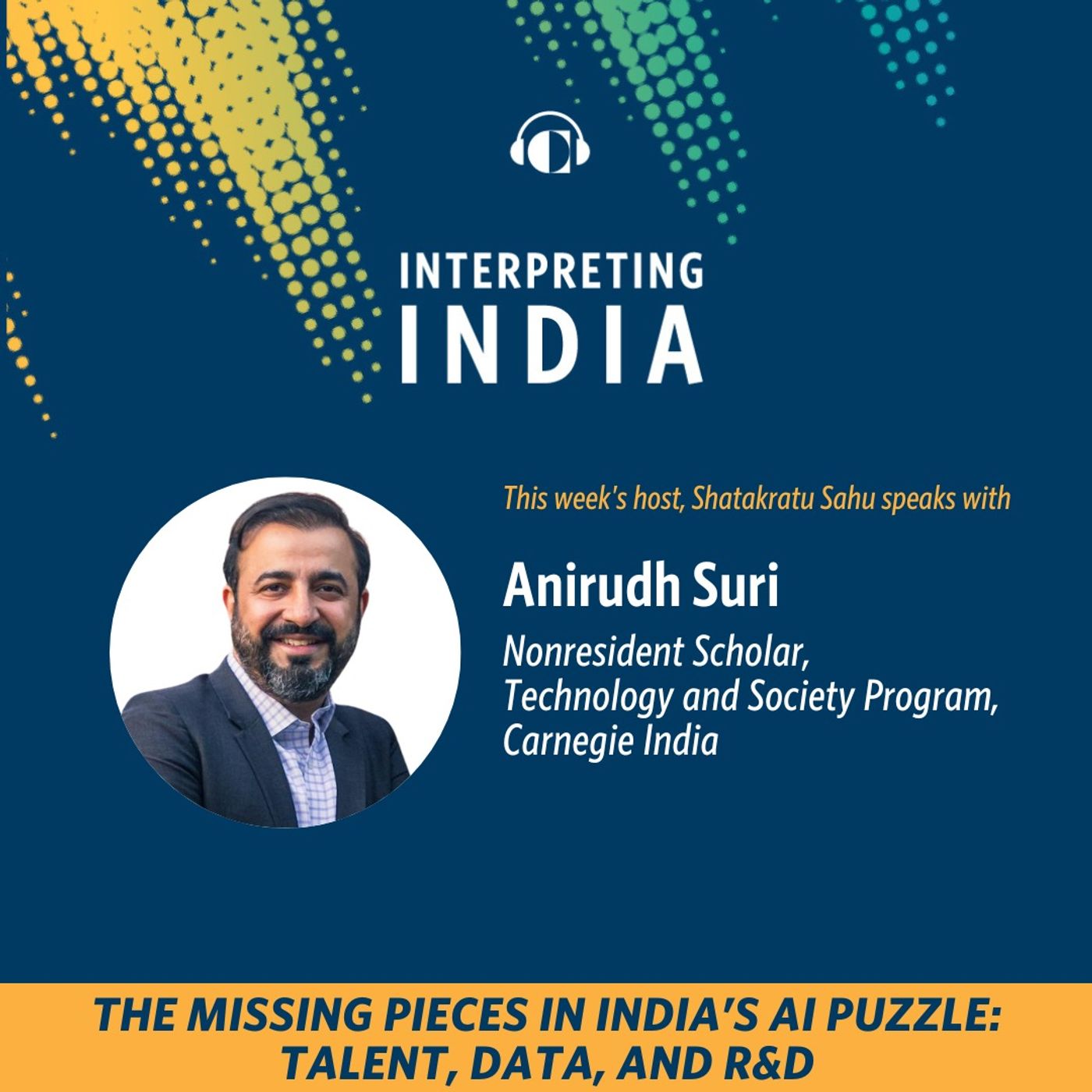
In this episode of Interpreting India, Shatakratu Sahu engages with Anirudh Suri, a non-resident scholar at Carnegie India, to discuss the gaps in India’s AI ecosystem. They explore India’s National AI Mission, which prioritizes compute infrastructure and can build focus on talent, data, and research and development (R&D). The conversation highlights why these three elements are crucial to India's AI ambitions and how the country can build a globally competitive AI ecosystem.
About Interpreting India
In Season 5 of Interpreting India, we continue our exploration of the dynamic forces that will shape India's global standing. At Carnegie India, our diverse lineup of experts will host critical discussions at the intersection of technology, the economy, and international security. Join us as we navigate the complexities of geopolitical shifts and rapid technological advancements. This season promises insightful conversations and fresh perspectives on the challenges and opportunities that lie ahead.
Interpreting India is a English news podcast from Carnegie India. Melo plays each episode straight from the publisher's own feed — no ads added, no account needed — and remembers where you stopped, in this browser only.
The Melo app keeps playing with the screen off, works in the car and on your watch, wakes you to your station, and browses the whole catalogue offline. Free, no ads, no account.