
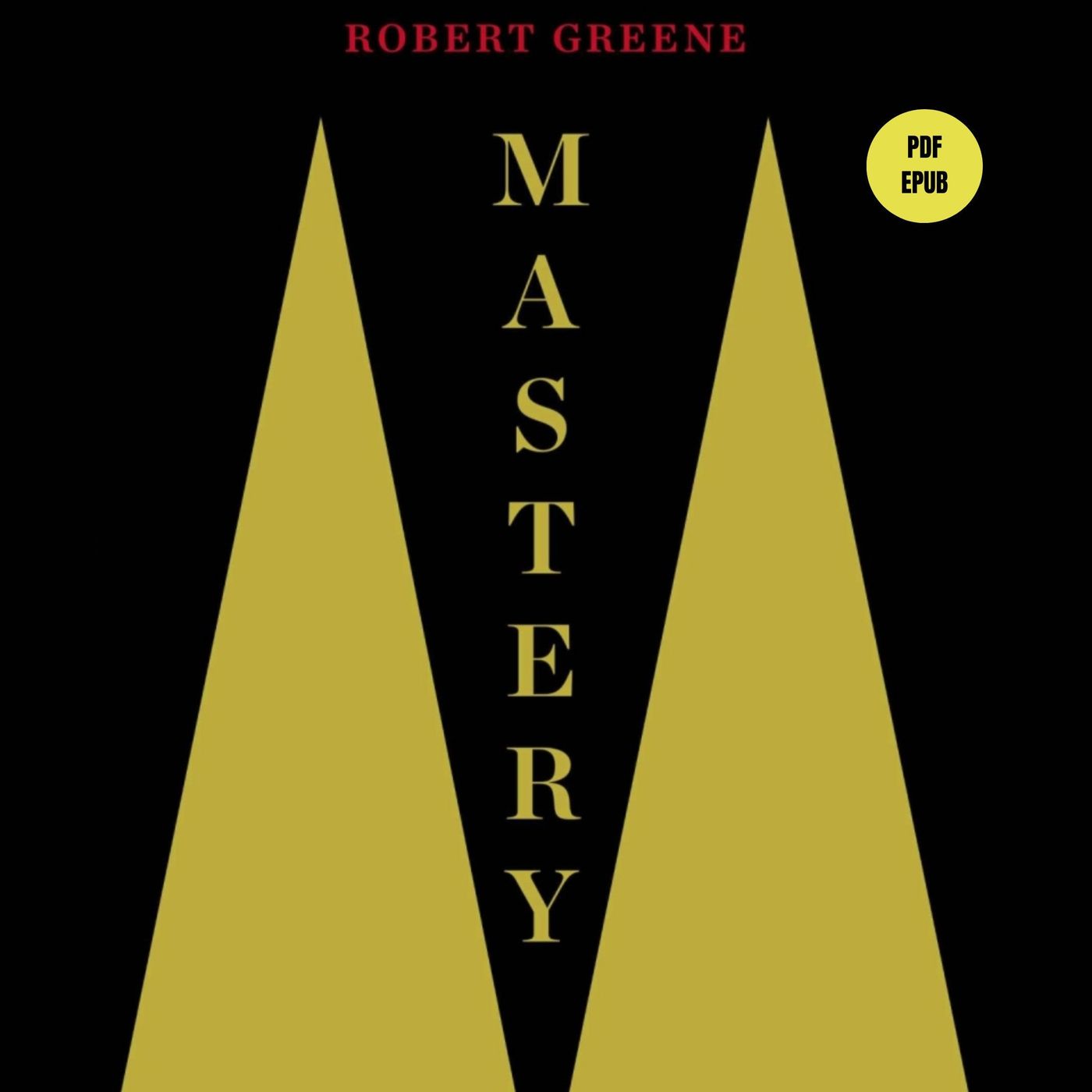
Episode notes
Mastery, written by Robert Greene, is a guide to unlocking one's highest potential by learning from the paths of historical figures and contemporary masters who have achieved greatness through dedication, practice, and deep understanding of their craft.
Transcript
Read the transcript · about 2,870 words, follows along as you listen
[Music] Please leave a follow and enjoy. Every person is born with a unique set of inclinations, interests and talents, often revealing themselves in childhood. These early signs of a clue is to discovering one's true calling, or what Robert Green refers to as the "life's task." Throughout history, the greatest achievers have always been those who aligned themselves with their life's task. This alignment sets them apart, creating a sense of purpose and drive that propels them far beyond the average person.
The journey to mastery begins by understanding that this task, your task, is not something given to you, but something you must uncover for yourself. However, society does not always support this exploration. Expectations from family, social pressures, and educational systems often push people toward careers or paths that do not fit their true nature. This misalignment can lead to years of frustration and dissatisfaction, where one's efforts feel forced and ineffective.
But those who reconnect with their original inclinations find a renewed sense of energy, a drive that can seem almost unnatural to those around them. Charles Darwin, for instance, was not a born scientist in the traditional sense. His family expected him to become a doctor, but he found himself inexplicably drawn to the study of nature. As a young boy, he spent hours observing plants and insects, losing himself in the mysteries of the natural world.
His true interests could not be contained, and eventually they led him to his life's work, transforming the way we understand life on Earth. Green argues that each person possesses a similar inner voice or feeling, a magnetic pull towards certain activities or fields. Yet, as people grow older, many suppress this voice, fearing that it may lead them astray from security or success, the challenge then is to listen carefully, to notice the activities that naturally attract and absorb you, even if they seem unimportant or impractical at first.
It could be an attraction to certain types of problems, a fascination with particular subjects, or a desire to explore specific types of work environments. The key is to recognize these natural inclinations and let them guide your choices, rather than dismissing them as childish or unrealistic. To do this, Green suggests a process of self-reflection and introspection, start by looking back at your childhood, recalling the activities that once held your attention effortlessly.
Ask yourself what you enjoyed before you were told what you should enjoy. Consider moments when you felt most alive or engaged. Green encourages you to explore those moments, to revisit those feelings, and to look for patterns in your past that may reveal deeper interests or talents. This is not a quick process, but a deliberate one, requiring patience and honesty. Throughout this exploration, you may find that some interests have remained consistent over time, while others have evolved or been reshaped by experiences.
This is natural, and part of the discovery process involves discerning which of these interests are core to your identity, and which are temporary passions. By identifying the threads that have remained constant, you begin to see the outline of your life's task, the direction in which your true potential lies. Green points out that finding your life's task does not always mean making a drastic change or abandoning everything familiar. Instead, it can mean making subtle adjustments, aligning your current work with your deeper inclinations.
Even within a field that seems unrelated, there may be aspects of the job that align with your natural strengths. For example, someone who loves solving complex puzzles might find fulfillment in the analytical side of a business role rather than the routine tasks. It is about gradually shifting focus towards the elements of your work that feel most natural to you, creating a sense of flow and purpose in your daily activities. The lives of historical figures demonstrate the importance of embracing this journey.
Leonardo da Vinci's relentless curiosity about the world led him to explore fields as diverse as anatomy, engineering, and art. Despite external pressures to specialize, he followed his interests wherever they led, ultimately achieving mastery by integrating his knowledge across disciplines. His example shows that the pursuit of one's life's task can often require rejecting conventional wisdom, embracing uncertainty, and remaining open to unexpected paths.
Once you identify your life's task, the challenge is to fully commit to it, regardless of the obstacles that may arise. This commitment involves a willingness to sacrifice comfort and security in the short term for long term growth and fulfillment. It means persevering in the face of doubt, criticism, or failure, understanding that these are natural parts of the process. Green argues that mastery comes only to those who dedicate themselves entirely to their path, who immerse themselves fully in their work and continually strive to improve their craft, to strengthen this commitment.
Green recommends creating a long-term vision, a mental image of where your task might lead you. This vision acts as a guiding star, keeping you focused and motivated even when the journey becomes difficult. It also helps in making daily decisions that align with your purpose, ensuring that your actions are always directed toward your ultimate goal. After discovering your life's task, the next step is to commit yourself to a period of intense learning and growth.
This is often called the apprenticeship phase, a time of dedication and purposeful practice, where the focus shifts from finding your path to developing the skills and knowledge necessary to excel on it. It is not merely about gathering information or mastering techniques. It is about transforming yourself, breaking down old habits and constructing new patterns of thinking and doing that will set you apart from others. This journey begins with the willingness to embrace the role of the student, to submit yourself to the reality that there is much to learn and that you are at the beginning of a long road.
Many people struggle with this mindset, because it requires humility, a recognition that your current abilities are limited. Green emphasizes that those who achieve mastery approach they're learning with a deep sense of humility and curiosity, setting aside ego and preconceived notions to fully absorb what their mentors and experiences have to offer. During this period, the primary goal is to observe deeply. This means immersing yourself in the environment where the skills you need are being practiced at the highest levels, watching closely how others work and absorbing every detail of their approach.
You must learn to pay attention to the smallest nuances and subtleties, which often contain the most important lessons. Leonardo da Vinci, for instance, spent countless hours studying the world around him, observing the flow of water, the structure of the human body or the way light reflects off surfaces. These observations formed the basis of his extraordinary understanding of nature and mechanics and they fed directly into his creative genius. This initial phase is not about achieving perfection but about gathering raw material.
You collect techniques, ideas and understandings, not by passive learning, but by engaging fully with your environment. Green advises seeking out the best possible mentors, those who embody the skills and knowledge you wish to acquire. The choice of mentor is critical for they become your model, your guide through this initial phase of learning. The right mentor can help you navigate the complexities of the field, offer you insights that are not available in books and push you beyond your comfort zone.
Once you have found a mentor, you must learn to absorb their lessons, not only intellectually, but also through imitation and practice. This is the period of skill acquisition where you begin to engage more directly with the work itself. You learn by doing, by replicating the methods of your mentors and then gradually making them your own. This can be a tedious and repetitive phase but it is essential for internalizing the foundational skills of your craft.
Henry Ford, for example, spent years working in machine shops and factories, mastering every aspect of mechanical work before he could innovate in the field of automotive production. As you progress, you move into the third stage of this transformative phase, experimentation. With a solid foundation of skills, you begin to test the limits of what you know, pushing boundaries and trying new approaches. This phase requires you to step out of the shadow of your mentors and begin to develop your unique style or perspective.
It is the time when you start to make mistakes, take risks and learn from the outcomes. You are no longer a mere apprentice, but not yet a master. Instead, you are in a liminal space where you balance between what is known and what is yet to be discovered. Being emphasised that during this phase, the most critical qualities to cultivate a resilience and adaptability. Mistakes and failures are inevitable, and many people abandon their journey at this point, feeling overwhelmed by the obstacles or setbacks they encounter.
But those who persevere understand that each failure is a lesson in disguise, an opportunity to refine their skills and deepen their understanding. Benjamin Franklin, for instance, faced repeated setbacks in his early career, yet each failure taught him something new, ultimately helping him to succeed as a printer, a writer and a statesman. The apprenticeship phase is also a time to build your network and learn the subtle art of social intelligence.
You must learn to navigate the personalities and power dynamics in your chosen field, understanding how to read people and situations and align yourself with those who can help you grow. This is not about manipulation, but about understanding the environment in which you operate, knowing who to trust, and learning how to communicate your ideas effectively. It's about creating alliances that will help you in your quest for mastery. Many will give up or settle for mediocrity, but those who persist will find that the rewards are profound.
The skills and insights you develop during this phase form the foundation upon which true mastery is built. Green insists that there are no shortcuts, no quick paths to greatness. Every master, from Mozart to Steve Jobs, has undergone a period of apprenticeship, a time of dedicated practice, and learning that laid the groundwork for their later achievements. After years of observation practice and experimentation, something profound begins to happen.
You find yourself approaching problems with a new perspective, seeing patterns and connections that others miss. You no longer rely solely on established rules or methods, but instead you start to innovate, create, and think in ways that are uniquely your own. This is the final stage of mastery, where the boundaries between knowledge and creativity blur, and you begin to operate at a level beyond the ordinary. This process of unlocking creative power is not something that occurs by chance, but is the result of a deliberate and conscious effort.
Green describes this phase as becoming creative active, a state in which the mind is constantly engaged in a dance between what is known and what could be. It requires a willingness to challenge conventions, to question the status quo, and to push beyond the limits of what has already been achieved. This is where true masters distinguish themselves, not by adhering to tradition, but by reimagining what is possible. To reach this state, you must first develop a deep, intuitive understanding of your field.
This intuition is not the same as a vague feeling or guess. It is a form of knowledge that has been internalised so completely that it operates almost automatically. This intuitive grasp allows you to make decisions quickly to improvise with confidence and to navigate complex situations with ease. It is built through years of focus, practice and immersion, where your mind has absorbed countless patterns, details and nuances, storing them away for future use.
When faced with a challenge, your mind draws upon this vast store of knowledge, forming new connections and insights almost effortlessly. But creativity at this level also involves a different kind of thinking, what Green calls high-level intuition. This is the ability to synthesise information from disparate sources to combine ideas in novel ways and to see connections where others see only chaos. It requires both a broad perspective and a detailed understanding, an openness to new ideas and a mastery of fundamentals.
For instance, Albert Einstein's theory of relativity emerged not from a specialised study of physics alone, but from his imaginative thinking and willingness to challenge established norms. He could see beyond the conventional understanding of time and space, combining scientific knowledge with creative thought to revolutionise our understanding of the universe. Another crucial aspect of this phase is learning to cultivate what Green describes as negative capability.
This is the capacity to tolerate uncertainty, ambiguity and contradiction, without rushing to impose order or certainty where it does not yet exist. Many people are uncomfortable with uncertainty. They seek clear answers and definitive solutions. But true masters learn to live with ambiguity, understanding that it is often in these uncertain moments that the greatest insights are found. This ability to hold multiple, sometimes conflicting, ideas in the mind at once allows for deeper exploration, leading to more profound discoveries.
Social intelligence also plays a vital role in reaching this stage. Mastery is not achieved in isolation. It involves navigating complex social environments, understanding human behaviour and influencing others effectively. It requires a keen sense of how to position yourself within a field, how to gain the trust and support of others, and how to communicate your ideas persuasively. This does not mean manipulating others, but rather developing a deep empathy and understanding of human nature, recognising the motivations, fears and desires that drive people.
Green suggests that by mastering these social skills, you can create an environment that supports your creative work, while also learning from others in unexpected ways. At this level, you must also learn to recognise and manage the emotional challenges that come with mastery. Creativity often involves moments of doubt, fear and frustration. You may struggle with imposter syndrome, wondering whether your ideas are truly valuable or innovative. You may face criticism, rejection, or even hostility from those who do not understand your vision.
These emotional challenges are natural, but they can also be paralysing if not managed effectively. Green advises embracing these emotions, rather than avoiding them, using them as fuel for further growth and creativity. To further enhance creative power, Green suggests engaging in a process of constant experimentation and play. Play is not frivolous. It is a state of mind that allows for exploration without the fear of failure, encouraging risk-taking and curiosity.
This playfulness can lead to unexpected breakthroughs, as it frees the mind from rigid thinking and opens it to new possibilities. Think of Thomas Edison, who conducted thousands of experiments in his quest to perfect the light bulb, approaching each failure not as a defeat, but as a valuable lesson that brought him one step closer to success. Moreover, reaching the level of mastery requires maintaining a delicate balance between intense focus and detachment.
You must immerse yourself deeply in your work, dedicating yourself fully to your craft, while also stepping back periodically to gain perspective. This alternation between deep focus and reflective distance allows you to refine your ideas, adjust your strategies, and avoid becoming trapped in rigid thinking. It enables you to see your work from a fresh vantage point, discovering new angles and possibilities that were previously hidden. Ultimately, mastery is a dynamic, ongoing process.
It is not a destination, but a journey of continuous growth and evolution. The world is constantly changing, and to remain at the forefront of your field, you must adapt, learn, and evolve in response to new challenges and opportunities. The true master remains forever a student, always seeking new knowledge, new skills, and new ways of thinking. This mindset keeps the mind sharp, flexible, and open, allowing you to stay ahead of the curve and maintain your creative edge.
To achieve this level of mastery, you must also learn to trust your instincts, those deep-seated feelings that guide you towards certain choices or directions. These instincts are not arbitrary. They are the result of years of experience, observation, and reflection. Trusting them means having the confidence to act decisively, even when the path is uncertain. It involves listening to your inner voice, recognizing when something feels right or wrong, and following that intuition with courage and conviction.
The rewards of reaching this stage are immense. You find yourself capable of doing things that once seemed impossible, solving problems that others consider unsolvable, and creating work that is truly unique and innovative. You gain a sense of fulfillment that comes from knowing you are operating at the highest level of your potential, making a meaningful impact on your field, and perhaps even the world. This is the essence of mastery, a state-west skill, knowledge, and creativity converge, allowing you to achieve extraordinary results.
This is the end of the episode. Thank you for listening. Leave a follow if you enjoyed.
Transcript supplied by the publisher with the episode.
Podcast
Key Points
Maxwell J Harrell · Tech & Science · English
Key Points podcast offers fast and free summaries of brilliant and popular books, giving you relevant Information without wasting your time. Understand the works of Aristotle, Marcus Auralius, Robert Greene, Daniel Kahneman, Napoleon Hill, Yuval Noah Harari, Ray Dalio and more. Immerse yourself in t
More from Key Points All episodes →
-

16 May 2025 · 17 min
Rich Dad Poor Dad - Summary
(00:00:00) The Two Fathers and Financial Education (00:05:59) Breaking the Cycle of Money Traps and Shifting the Mindset (00:12:12) Building Wealth through Assets, Action, and Lifelong Learning Rich Dad Poor Dad summary. This book written by Robert Kiyosaki breaks down the essential lessons of financial education, teaching how to build wealth through smart investing, asset management, and shifting your money mindset. This book is about practical strategies for entrepreneurs, written for anyone looking to escape the ‘rat race’ to gain true financial freedom.
-
15 May 2025 · 19 min
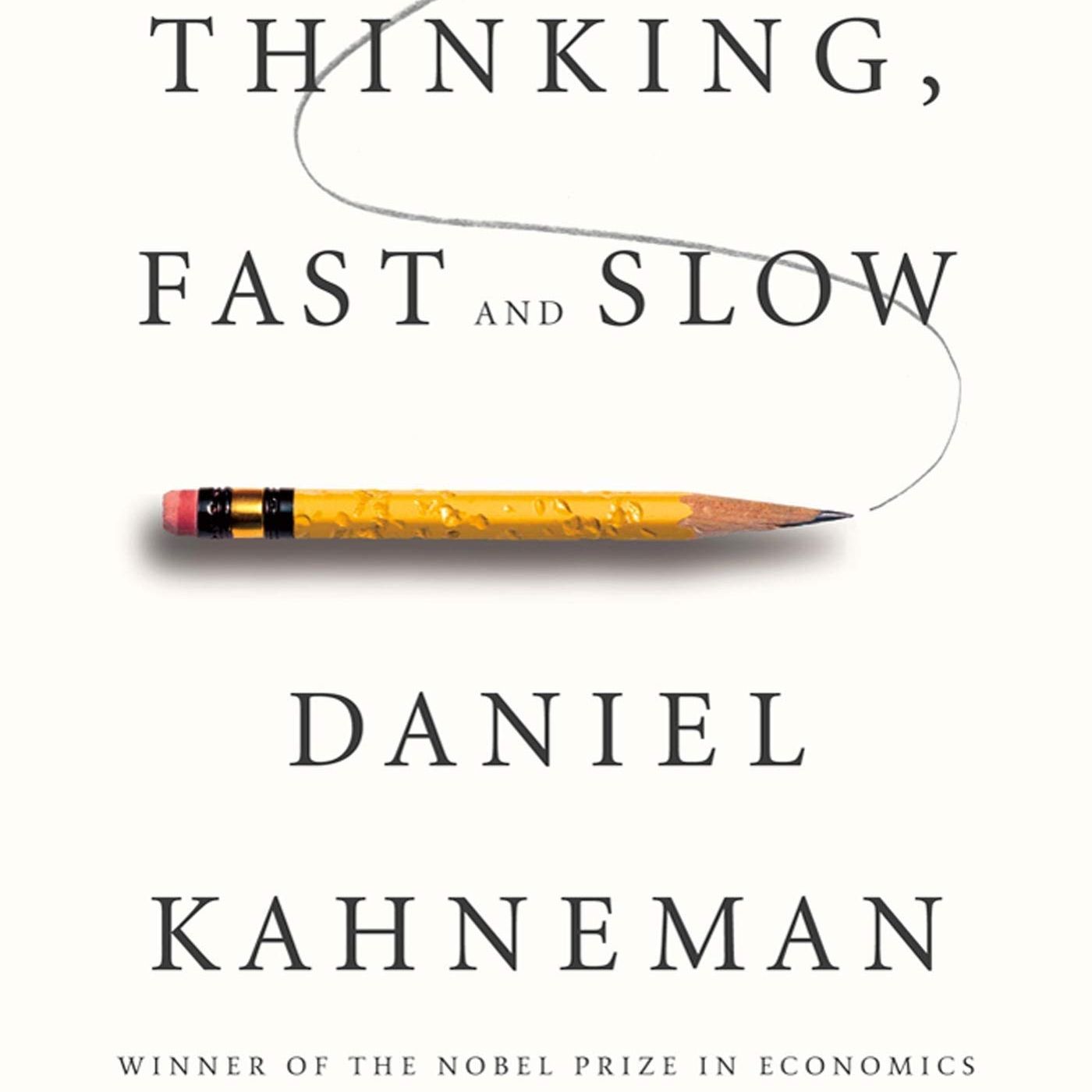
Thinking, Fast and Slow - Summary
Thinking, Fast and Slow by Daniel Kahneman breaks down the fascinating science of how our brains juggle instinctive intuition and deliberate reasoning, revealing key insights on cognitive biases, decision making, and behavioral economics that every psychology, business, and marketing enthusiast needs to know.
-
7 Sep 2024 · 17 min
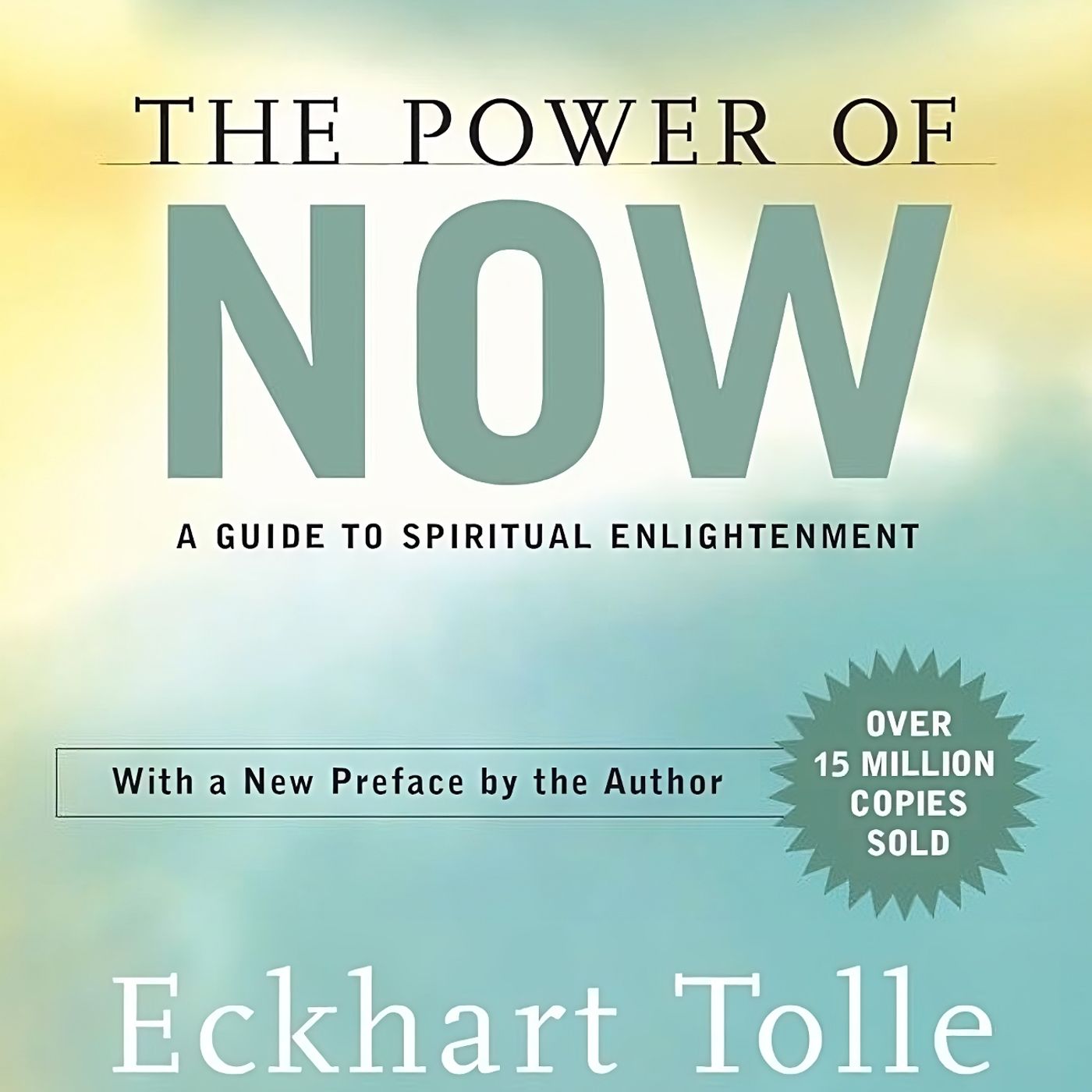
The Power of Now, Eckhart Tolle - Summary
The Power of Now by Eckhart Tolle is a spiritual guidebook that emphasizes the importance of living fully in the present moment to achieve inner peace and enlightenment.
-

5 Sep 2024 · 15 min
Atomic Habits, James Clear - Summary
Atomic Habits by James Clear is a guide to building good habits and breaking bad ones through small, incremental changes and an understanding of the psychological and environmental factors that drive human behavior.
-

1 Sep 2024 · 17 min
How to Win friends and Influence People, Dale Carnegie - Summary
How to Win Friends and Influence People is a self help book written by Dale Carnegie that offers practical advice on building relationships, improving communication, and influencing others positively.
-

30 Aug 2024 · 24 min
33 Strategies of War, Robert Greene - Summary
The 33 Strategies of War is a book by Robert Greene that explains military, political, and psychological principles of conflict into strategies for achieving success in both war and everyday life.
-
29 Aug 2024 · 18 min
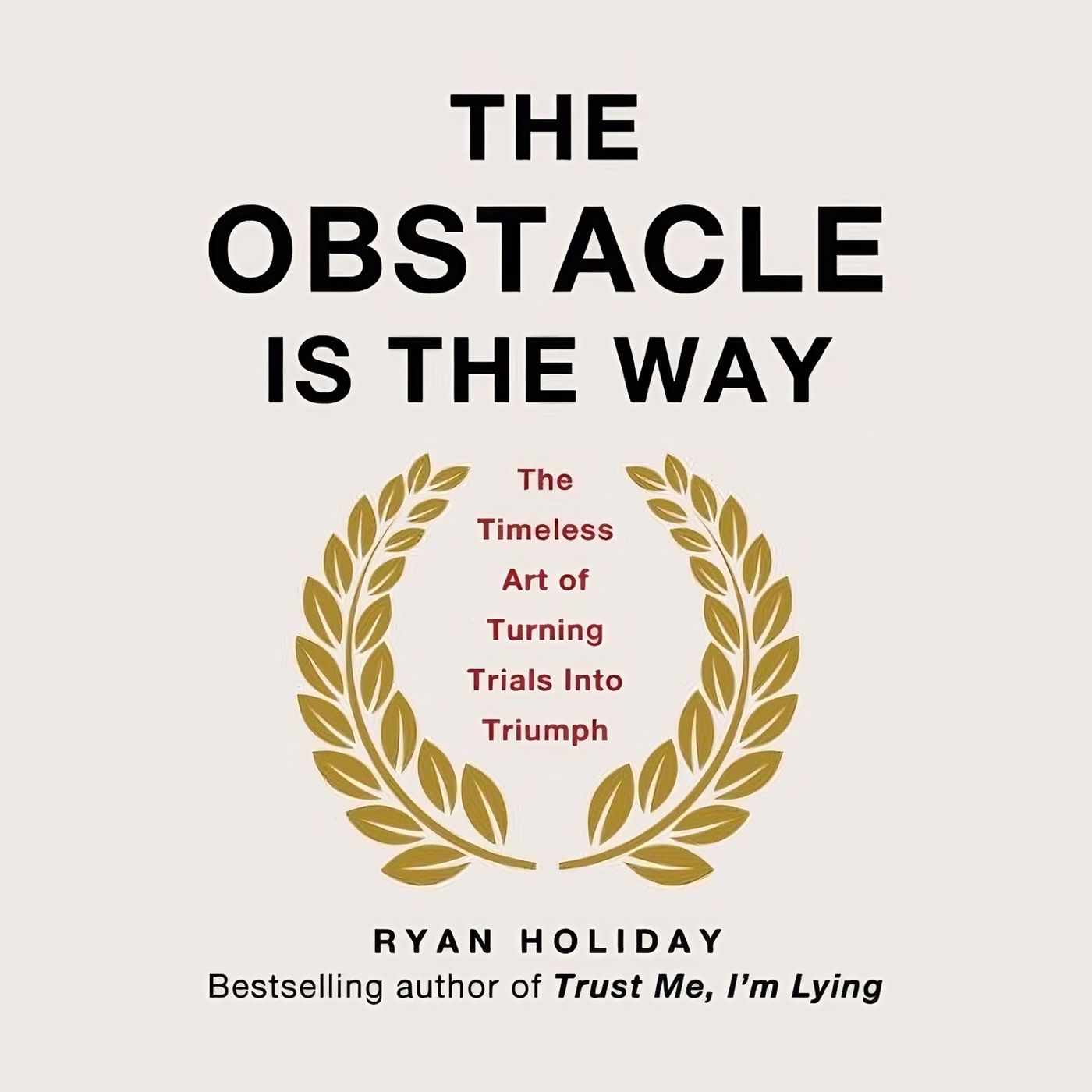
The Obstacle is the Way, Ryan Holiday - Summary
Ryan Holiday's "The Obstacle Is the Way" shows how to turn challenges into opportunities for success with practical strategies, habbit formation, and habbit manipulation.
-

27 Aug 2024 · 20 min
Art of War, Sun Tzu - Summary
Ancient wisdom, experienced insights, and the art of winning without battle. Book summary of Sun Tzu's The Art of War, writen in the 5th century BC.
-
24 Aug 2024 · 15 min
48 Laws of Power, Robert Greene - Summary
The 48 Laws of Power, written by Robert Greene, is his guide to gaining, maintaining, and wielding power through historical examples, strategies, and psychological tactics. This book was inspired by Robert's views of Hollywood stars gaining and maintaining power, as well as his memories of many other important historical individuals he'd read about previously.

Take it with you
The Melo app keeps playing with the screen off, works in the car and on your watch, wakes you to your station, and browses the whole catalogue offline. Free, no ads, no account.


