
Episode notes
Ever wonder what cavities are or how they form? 🦷 Or maybe why we have baby teeth? Or if the tooth fairy travels to different countries? This week we're joined by Prof. Ariana Vargas from the Texas A&M College of Dentistry! We explore the science of teeth, and amazing jobs like dental hygienists, dentists and dental assistants! This episode is part of the "Cool Jobs for Curious Kids" series, in collaboration with LevelUp Texas, powered by Texas A&M University. ➡️ Level-Up Texas:...
Transcript
Read the transcript · about 3,490 words, follows along as you listen
SPEAKER_03:Hey orbiters! This episode is possible thanks to Level Up Texas, powered by Texas AM University. We hope you enjoy it.
SPEAKER_07:Okay, let's get started. Oh, hey orbiters! Welcome to Smile Headquarters. And yes, you may have noticed this is my first day on the job. How can you tell? Well, for one, Hank told me I was wearing my badge upside down. Also, I have this checklist on my handy dandy clipboard. One, count teeth. Two, fine wiggly ones. Three, zap sugar bugs. And four, do not, under any circumstances, even if he asks very nicely and looks at me with those big doggy eyes, do not let Hank lick the toothbrushes.
SPEAKER_07:Hank, buddy, you are not helping me right now. Here at Smile Headquarters, everyone has a job. Dina, the dentist, fixes teeth. Daniel, the dental hygienist, stops cavities in their tracks. And Delilah, the dental assistant, makes sure the tools are all spotless and everything is running according to plan. And me? Well, I obviously hold the super important clipboard, and I make sure Hank doesn't lick all the toothbrushes. Hey, orbiters, I need your help.
SPEAKER_07:Can you help me go through my checklist to practice before my first patient? Okay, everyone, run your tongue around your mouth real quick. Let's do a quick check and all practice taking notes. If you felt big teeth, touch your ears. Okay, very interesting. I'm observing several ears being touched. If you felt a wiggly tooth, touch your nose. Higher than expected evidence of wiggly teeth? If you felt a hole where you have a missing tooth, pat your head and rub your belly at the same time.
SPEAKER_07:Very concerning. Lots of orbiters appear unable to pat their head and rub their belly at the same time. Okay, thanks orbiters. I'm feeling more ready. Today we have lots to investigate. A new orbiter sent in some awesome questions.
SPEAKER_02:Do all kids lose their teeth at the same age?
SPEAKER_05:Who runs at a dentist office? What are cavities?
SPEAKER_07:And we've got the perfect expert to help us out.
SPEAKER_00:Hi orbiters. My name is Ariana Vargas. I am a professor and I work at Texas AM University in the Department of Dental Hygiene. My job is to teach, do research, and help people take care of their oral health and their teeth.
SPEAKER_07:Hey Ariana, what were you like as a kid?
SPEAKER_00:Yes, of course. When I was a child, I was very curious and I loved asking questions. I always wanted to know how things worked and I liked helping others, especially by taking care of people. But I was also very mischievous. I didn't always listen to my mom or my dentist, and I ended up having braces for five years. That's when I started to really learn how important it is to take care of my teeth.
SPEAKER_07:Wow. Sounds like we can learn a lot from you. Hey orbiters, grab your toothbrushes and let's start brushing. I mean learning. Hey parents. If you're loving orbit, we'd love to receive questions from your little ones to feature in upcoming episodes. Teachers, you can also submit questions from your class. Just visit www.combrekids.org/slash questions. I'll leave the link in the show notes. Okay, back to the episode. Alright, let's get started with this question from our friend Damika.
SPEAKER_01:Hello, Orbit. My name is Damika. I am eight years old. I live in Venezuela. And my question is what are teeth and why we need them?
SPEAKER_00:Thank you. Goodbye. Damika, that is such a great question. A tooth is a hard structure in our body that helps us bite, chew, talk, and smile. Teeth can also give shape to our face.
SPEAKER_07:I hadn't thought about how they help our face have a certain shape. That's cool. Okay, Ariana, we'd like to know if teeth have different parts. But before she answers, let's make this a quiz for our orbiters. I'm going to list six different parts. When you hear a tooth part that is real, either stand tall or raise your hand high. When you hear a fake part, crouch in a ball or make like a closed fist. 1. Enamel. 2. Dentin. 3. Crunch layer. 4. Pulp.
SPEAKER_07:5. Snack shield. 6. Root. Okay. Now that we've registered our guesses, Ariana, what are the parts of the tooth?
SPEAKER_00:So there are four parts of the tooth that we're gonna go over. The first part is the enamel. That is the outer layer and the hardest substance in the human body. It protects the tooth. This is the part that we all see when people smile. And then we have the dentin. This is the layer under the enamel and helps us feel cold, heat, and pressure. We then have the pulp that is the center of the tooth. It has nerves and blood that keep the tooth alive.
SPEAKER_00:And last we have the root. This part holds a tooth inside of the bone.
SPEAKER_07:So if you stood tall for the enamel, dentin, pulp, and root, you got it right. Okay, we are very curious to learn about baby teeth. Let's start with Juliana's question.
SPEAKER_06:Hi, I'm Juliana.
SPEAKER_01:And um I have four years, and my question is Why do we have baby teeth and we lose them?
SPEAKER_00:Bye. Juliana, what a great question. Baby teeth help children chew food, speak clearly, and hold space for the permanent teeth that will come later. Most babies get their teeth around six months old. But every child is different and they lose their teeth at their own pace.
SPEAKER_07:Sam was curious about that exact point.
SPEAKER_02:Hi Orbit, my name is Sam. I am seven years old. I live in Newfoundland, New Jersey. My question is, do all kids lose their teeth at the same age?
SPEAKER_00:Thank you. Bye! Sam, to answer your question, no, every child is different. Some lose their teeth earlier and others later. And that is completely normal. Many children start getting teeth around six months old and have all their baby teeth by about age three. When the permanent teeth are ready to come in, the baby teeth all fall out. In total, we lose 20 baby teeth, and later, 32 permanent teeth come in.
SPEAKER_07:I remember when I lost my baby teeth, like a hundred years ago, I'd put my tooth under my pillow at night, and while I slept, the tooth fairy would come and replace it with money. Of course, the tooth fairy at my house gave out quarters, while the tooth fairy at my friends' houses gave out dollars. That never seemed fair to me. But speaking of tooth fairies, Wells has a super interesting question.
SPEAKER_04:My name is Wells, I'm from Houston, Texas, and I'm five years old. My question is, is does every country have a tooth fairy?
SPEAKER_00:Wells, what a great question. In many countries, children put their teeth under the pillow and the tooth fairy, or el ratón peres, which translates to the mouse, comes at night and leaves a coin or a small gift. In other places, children throw their teeth to the roof or they bury them. Every country has its own tradition to celebrate losing a baby tooth.
SPEAKER_07:Well, that's cool. Turns out the tooth mouse, or raton perez, and throwing teeth are common traditions. The tooth mouse can be found in countries like Spain, France, Venezuela, South Africa, and Finland. And lots of cultures throw their baby teeth up or down, like in Korea, Turkey, and Iran. But something cool. Each culture has its own twist. Like in Argentina, the baby tooth is often dropped in a cup of water so that the mouse can have something to drink when it comes to collect the tooth.
SPEAKER_07:In South Africa, children might put their tooth in a slipper instead of under a pillow. And in Korea, when a child throws their tooth on the roof, they might sing a song for a magical bird to come and take away the tooth to bring a new healthy one. Hey, orbiters, quick pull. Would you rather a put your tooth under your pillow? B. Throw it on the roof? C. Leave it in water for a mouse? D. Put it in a slipper? Or E. Come up with your own tradition.
SPEAKER_07:This is a good spot to pause the episode and talk as a family or with a friend. But hey, with all this talk about kids, where's the love for adults? Like me, or my grandma, or Jaeon, the local mailman? Woo! Calm down, Hank. He's really very nice if you gave him a chance. But Arianna, why do adults like us sometimes lose teeth?
SPEAKER_00:Older adults may lose teeth because of cavities, gum disease, or because they didn't take good care of their teeth when they were younger. That's why it's very important to take care of your teeth your whole life. Teeth do not grow back, which means we only get two sets. We have our baby teeth and our permanent teeth. If an adult loses a tooth, a dentist needs to fix or replace it. It will not regrow.
SPEAKER_07:You sure got my attention. Sounds like we all need to be taking care of our teeth so we have them for a long time. Speaking of cavities, Luna and I have a question.
SPEAKER_06:Hi, my name is Luna. I'm six years old and I live in the United States of America. My question is What are cavities?
SPEAKER_00:A cavity is damaged to a tooth that creates a small hole. This happens when bacteria damage the enamel. Bacteria come from foods and drinks that we eat. If they stay on the teeth for too long, like if we don't brush, they start making holes in the enamel.
SPEAKER_07:Okay, okay, okay. I think I get it. It's like a little hole in the tooth. But bear with me for a second. What if I invented a super cool shrinking machine that made me like the size of a chocolate chip? Then imagine that I jumped on a tiny hovercraft and flew around my mouth when I have a cavity. What would I see?
SPEAKER_00:If you were to go into the mouth, cavities look like small tunnels or caves where bacteria live and slowly damage the tooth. Bacteria like dark, warm places, which is why they love being inside our mouth.
SPEAKER_07:Yuck! So cavities are like bacteria caves. These bacteria kind of sound like tiny sugar bandits. They sneak into your mouth, they throw noisy dance parties with sugary sweets, and they hate toothbrushes. On that note, Sam has another question that I think is super important.
SPEAKER_02:Hi Orbit, my name is Samuel. I am seven years old. I live in Newfoundland, New Jersey. My question is, how do cavities get inside our teeth? Thank you.
SPEAKER_00:Bye! Sam, the reason that cavities form when bacteria use sugar from food to make acids that weaken and damage teeth. First, they damage the enamel, which is the first part, it's the hardest part of the tooth. If you don't visit the dentist, the bacteria keep going deeper into the dentin, and that's when the tooth can start to hurt.
SPEAKER_07:So the enamel protects us for as long as it can from bacteria caves. But eventually the caves can get deeper and deeper, and then we start to feel the cavities. Ouch! Hey, Ariana, how can we protect ourselves from getting cavities?
SPEAKER_00:Always remember the number two. Brush your teeth two times a day with fluoride toothpaste for two minutes. And be sure to visit the dentist two times a year. Other things you can keep in mind is you can use dental floss every day, especially at nighttime. Eat fewer sweets and sugary drinks, and last, make sure you drink plenty of water.
SPEAKER_07:Well, it's a good thing that two is my favorite number. My next favorite numbers, of course, are 22 and 222. Hank's favorite number is 47. Woo! Woo! Do you remember what the twos are for? Let's do a pop quiz. This should be an easy pop quiz. How many times a day should we brush? For how many minutes should we brush our teeth? How many times a year should we visit a dentist? And finally, what's Hank's favorite number?
unknown:Woo!
SPEAKER_07:I asked Ariana why water is important. She told me something very interesting, but it involves chemistry and some new words. Wanna learn with me? Okay. Here's what Ariana said about why water helps protect our teeth.
SPEAKER_00:As we discussed earlier, the reason that we do get cavities is due to acid being introduced into the enamel. With the water, it has a neutral pH, and our teeth thrive whenever our pH is neutral, which helps keep our teeth stronger. So anything that's neutral is great to eat, like cheeses, milk, and as we mentioned, water.
SPEAKER_07:Like I said, we are all getting a degree in chemistry today. Ariana said pH. PH is the scale that scientists use to describe when something is acidic. You probably know some fruits like lemons. Think about biting into a lemon. It's sour, right? They taste sour because they are acidic. So on the pH scale, they have a high acidity. But water is not acidic. It's neutral and it washes away all the acidity and leaves your mouth happy and protected. Okay, how about we take a moment to guess the mystery sound?
SPEAKER_07:We'll play it three times. You can wiggle while you listen. Think you got it? I'll give you a hint. It's either popcorn popping, soap bubbles bursting, or slurping through a straw. Stick around to the end for the answer. Okay, let's get back to more questions. Hey, Ariana, you really piqued my interest talking about protecting teeth from bacteria caves. Reminds me of this question from Naya.
SPEAKER_05:Hi, I'm Naya. I live in Minneapolis. Who works at a dentist's office?
SPEAKER_07:It's a really great question, Naya. I bet some of our orbiters find teeth super interesting and also like helping others. So what kinds of cool jobs exist?
SPEAKER_00:Naya, there are many jobs related to teeth. There are dental assistants, dental hygienists, which is what I am, and we also have dentists.
SPEAKER_07:Okay. Dental assistants, dental hygienists, and dentists. Try saying that three times fast. So what exactly do you do in your job as a dental hygienist?
SPEAKER_00:I am a dental hygienist and a professor. I clean teeth, teach people how to care for them, and help train future dental health professionals. Being a dental hygienist is very important. You help people keep their mouths healthy, check their teeth and gums, and clean them to prevent cavities and disease. You also teach people how to brush, floss, and care for their teeth every day. You explain the importance of eating healthy foods and visiting the dentist regularly.
SPEAKER_00:It's a job where you help people have strong, healthy smiles.
SPEAKER_03:Hey, it's me, Mylam. I'm seven years old and I live in Houston, Texas. I was wondering, what is it like to work in a dentist office?
SPEAKER_07:Great question, Mylam. Maybe we can start with your role as a dental hygienist, Ariana.
SPEAKER_00:Mylam, what a great question. We work with the dentist and dental assistant. Each person has an important role in patient care. Me as a dental hygienist, I greet my patient, I sit them down, I am able to work on my own. And when I check the patient, I also do an assessment that I look all over the mouth to make sure everything looks healthy. And I even check for oral cancer as well. And then when the patient is ready for an exam, I call the dentist.
SPEAKER_00:But as mentioned earlier, we do all work as a team.
SPEAKER_07:I love teamwork. Kind of like when Hank and I team up to make sure that Hank doesn't lick all the toothbrushes. Right, Hank? Okay. Maybe we're still working on that one. And how did you learn to do your job, Arianna?
SPEAKER_00:I learned by studying at the university and practicing with patients under the supervision of my professors.
SPEAKER_07:So a combination of studying and practicing. Seems like a great combo. Can you tell us more about types of education for orbiters who might want to be dentists, dental hygienists, or dental assistants, Ariana?
SPEAKER_00:Each job has a different educational path, depending on the role. A dental assistant helps a dentist and can earn a certificate in about six months. A dental hygienist cleans teeth and teaches patients how to care for them and can become licensed in two to four years. A dentist checks and fixes teeth and performs more advanced treatments.
SPEAKER_07:Hey, teachers and families, this could be a great moment to pause and talk about which role you like the most. The dentist who fixes the teeth, the dental hygienist who cleans the teeth, or the dental assistant who makes sure the entire operation runs smoothly. All the talk of tooth fairies and tooth mice and throwing teeth in the air earlier made me wonder something. Is it the same in every country?
SPEAKER_00:Education and requirements can vary by country, but the goal is always the same, to take care of teeth and oral health. For example, in Mexico, dental hygienists do not exist as a formal profession. But dental hygiene is a growing field. We serve as guides to help educate patients and teach them how to take care of their oral health.
SPEAKER_07:Okay, orbiters, I don't know about you, but I need a wiggle break. Think of your favorite animal, and let's use your mouth to move like that animal eating breakfast. You can take big bites or tiny bites. You can chew fast or slowly, or just really chomp away. And while we're impersonating our favorite animals, let's recap what we learned. Teeth are hard parts of our body that help us chew food, talk clearly, smile, and even give shape to our faces.
SPEAKER_07:Each tooth has different layers: strong enamel on the outside, sensitive dentin underneath, a living pulp in the center, and roots that hold the tooth in place. We start with baby teeth while we grow. They make room for adult teeth. People all around the world have different traditions when children lose their baby teeth. Cavities can form when bacteria use sugar to make acids that damage enamel. And that's why it's important to remember the number two.
SPEAKER_07:Brush two times a day, brush for two minutes, and visit a dentist two times a year. There are also many jobs that help keep our teeth healthy, like dental assistants, dental hygienists, and dentists who all work as a team. Hey Ariana, how can listening orbiters learn more about teeth?
SPEAKER_00:Children can read books about teeth, ask questions to their parents or dentist, visit the dentist regularly, brush and floss every day, and even sing songs like the ABC song while brushing to make sure they brush for two minutes.
SPEAKER_07:Those are great ideas. Hank loves listening to me sing my ABCs. Sometimes he even barks along, but he always gets the order wrong. Thanks for answering our questions today, Ariana.
SPEAKER_00:Thank you, orbiters, for listening. Remember, taking care of your teeth means taking care of your health. And don't forget the number two. Keep being curious.
SPEAKER_07:Thank you, Ariana, and thank you, orbiters. I just checked the clipboard. Teeth counted. Check. Sugar bug zapped. Check. Hank only licked a few toothbrushes. Half check. I'd say we had a great first day at Smile headquarters. Hey parents, our expert today was Ariana Vargas, a clinical assistant professor in the dental hygiene program at the Texas AM College of Dentistry. Professor Ariana has more than eight years of experience in clinical practice as a registered dental hygienist in general and cosmetic dentistry.
SPEAKER_07:We'll link to Ariana's webpage and the Texas AM College of Dentistry in the show notes. And before we wrap up, I bet you are curious about the mystery sound. Do you remember it? There were three options: popcorn popping, soap bubbles bursting, or slurping through a straw. If you said it's a straw slurping, you were right. Way to go. One more special thanks to our friends at Level Up Texas and the Texas AM Office for Youth Engagement for making possible this episode series about STEM careers.
SPEAKER_07:You can follow Level Up Texas on social media at levelup underscore Texas. We'll add the link in the show notes. Orbit is produced by Cumbray Kids. This episode was written by me, Robert Carpenter. The producer is Catherine Aguilar. Artwork for the episode by Moises Monsalde and Jorge Wake. And don't forget to check out this episode in Spanish on Cranio. See you in the next episode. Ciao.
SPEAKER_01:The important thing is not to stop questioning Albert Einstein. See you
Transcript supplied by the publisher with the episode.
Orbit: Science for kids on the move!
by Cumbre Kids · English · Kids & Family
Science made simple to help kids better understand the world around them. Publishing "Wild Critters," a series with PBS Nature and the National Wildlife Federation! 🦬 For kids ages 3-11. Perfect for car rides, family adventures, and learning on the go! 'Orbit' builds STEM vocabulary and in
More from Orbit: Science for kids on the move!
-

31 Mar 2026 · 32 min
How do satellites stay in orbit?
This week, we orbiters learn about orbiting! 🚀 This episode dives into the science and technology of machines in outer space, zooming around the Earth! Alongside Joelle Romeu, an aerospace engineer with Boeing Company, we learn what satellites are, how they impact our life on Earth, and about the incredible job of Aerospace Engineers! 🌍 This episode is part of the “Cool Jobs for Curious Kids” series, featuring STEM professionals responding to kids’ questions— a collaboration with LevelUp Texa...
-

17 Mar 2026 · 26 min
How zoos care for animals!
This week we're visiting the incredible San Antonio Zoo in San Antonio, Texas 🦁 to understand the inner workings of zoos! We're joined by Andreau Papadakis to learn why zoos exist, the role they play in protecting species through breeding and rehabilitation programs 🐢, and the different jobs and education paths that could lead curious Orbiters to work at a zoo someday! This episode is part of the “Cool Jobs for Curious Kids” series, featuring STEM professionals responding to kids’ questions, ...
-

3 Mar 2026 · 28 min
Drones and the future of rangelands
Ever wonder how drones can help scientists take care of wide open spaces? What do they look for from the sky and how does that help wildlife on the ground? 🦌 This week on Orbit, we’re joined by Dr. Humberto Perotto from the Texas A&M Department of Rangeland, Wildlife and Fisheries Management! He answers kids’ questions about how drones are used to monitor plant health, track animals, map changes across rangelands, and support conservation. This episode is part of the “Cool Jobs for Curiou...
-
3 Feb 2026 · 24 min
The building blocks of the universe!
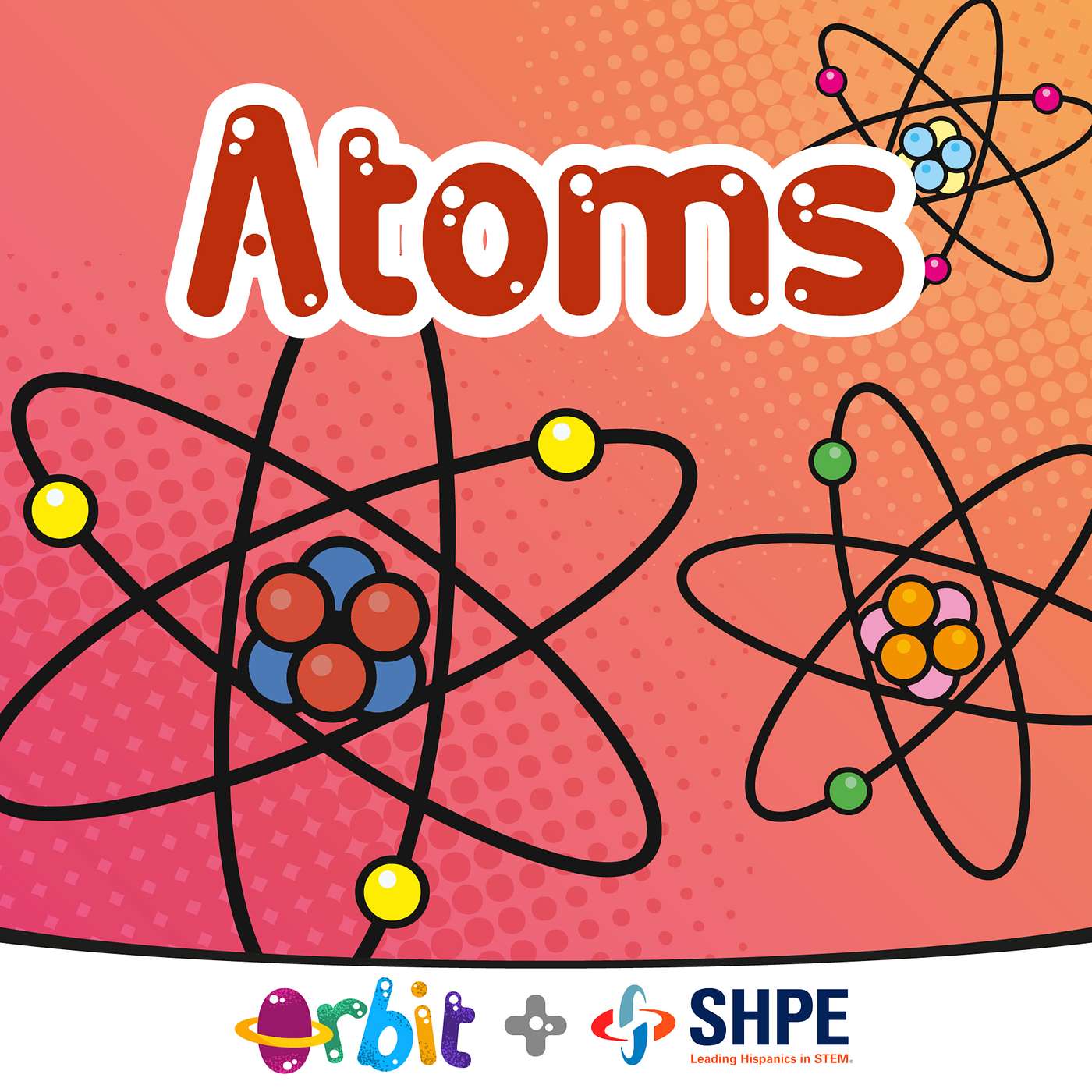
Orbiters! Today we’re exploring atoms - the tiny building blocks of the universe! We’ll discover what atoms are, what they’re made of, where they’re found, how scientists discovered them, and more (including how many atoms are in a blue whale!). We’re joined by PhD scientist and chemical engineer Dr. Fernanda Sulantay-Vargas from Yale University! Dr. Fernanda is also a science communicator, active with the Society for Hispanic Professional Engineers (SHPE), and the founder of InspiraSTEM, an ...
-

13 Jan 2026 · 31 min
Sedimentary Rocks: Nature's time machines!
Did you know that studying rocks today can teach us about the Earth millions of years ago!? We're joined by an incredible geoscientist - Dr. Lina Perez-Angel, from Brown University - to explore the incredible world of Sedimentary Rocks, including what they're made of, how they form, and how scientists study them! This episode was supported in part by the National Science Foundation Grant 2402100 from the Division of Earth Science. Orbit links 💬 Submit your kids' questions! Click here to...
-

9 Dec 2025 · 32 min
Why do we dream?
Ever wonder what happens in your brain while we sleep? Or why we need to sleep at all? In this episode, Dr. Daniel Davila-Williams - a pediatric neurologist from Texas Children's Hospital - joins Orbit to discuss the science of sleep! 🌐 Website for Dr. Davila-Williams: LINK 🎙️ This episode is also available in Spanish on our sister podcast, Cráneo: Ciencia para niños curiosos. Orbit links 💬 Submit your kids' questions! Click here to get started 💛 Support this podcast by joini...
-

7 Oct 2026 · 34 min
How strong was a T. rex bite!?
We're time traveling this week to get to know one of the most famous wild critters to have *ever* roamed the Earth! We're going back 70 million years to meet the infamous T. rex, the apex predator with an astoundingly powerful bite, huge teeth, ginormous legs, and ... surprisingly small arms? We're joined by an amazing paleontologist, perfect to teach us all about the T. rex and age of dinosaurs! Dr. Roger Benson, Macaulay Curator, Division of Paleontology at the American Museum of Natu...
-
22 Sep 2026 · 32 min
Sea otters: Superheroes of kelp forests!
Sea otters aren't just adorable! They're a critically important keystone species for a fascinating underwater ecosystem - kelp forests! In this episode of the Wild Critters series, we're joined by marine biologist and sea otter expert Leilani Konrad from the Monterey Bay Aquarium, who teaches us about sea otters, the relationship with kelp and sea urchins, how they are on the of the few animals to use tools, and the incredible role of foster moms in raising orphaned pups! Part of the Wild C...
-
16 Sep 2026 · 28 min
The race to save 3 mountain lion cubs!
Three mountain lion cubs were left orphaned in the California wilderness, and a team of scientists raced to find them before it was too late! In this episode of the Wild Critters USA series on Orbit, families meet wildlife ambassador Marco Wendt from the San Diego Zoo Wildlife Alliance. We learn about the incredibly versatile mountain lion - which can be found from Canada all the way down to Argentina - including what makes it a stealthy hunter and how it adapts to an incredible variety...
-

2 Sep 2026 · 31 min
How tiny corals build underwater cities!
Did you know a coral reef, one of the largest structures ever built by a living creature, is made by an animal smaller than a grain of rice!? And that corals aren't plants or rocks at all, but tiny animals related to jellyfish and sea anemones!? In this episode, marine scientist Dr. Mike Henley from the Smithsonian's National Zoo and Conservation Biology Institute joins Orbit to explore the underwater world of coral reefs! Learn how thousands of tiny coral polyps build a single reef, how cora...

Take it with you
The Melo app keeps playing with the screen off, works in the car and on your watch, wakes you to your station, and browses the whole catalogue offline. Free, no ads, no account.