
Episode · Orbit: Science for kids on the move!
How tiny corals build underwater cities!
2 Sep 2026 · 31 min
Episode · Orbit: Science for kids on the move!
2 Sep 2026 · 31 min
Did you know a coral reef, one of the largest structures ever built by a living creature, is made by an animal smaller than a grain of rice!? And that corals aren't plants or rocks at all, but tiny animals related to jellyfish and sea anemones!? In this episode, marine scientist Dr. Mike Henley from the Smithsonian's National Zoo and Conservation Biology Institute joins Orbit to explore the underwater world of coral reefs! Learn how thousands of tiny coral polyps build a single reef, how cora...
SPEAKER_12:This episode is part of the Wild Critters USA series. A collaboration with RB PBS Nature and the National Wildlife Federation.
SPEAKER_06:Well, Hank, this might be the first stop on our road trip that didn't come with any actual roads. You don't look so good, Hank. Do you get seasick? Well, hang in there, buddy. We're out here on our sailboat, turning our wild critters road trip into a boat trip. We're in the middle of the Pacific Ocean, just off the coast of Hawaii. We're getting close to the island now. Come on, Hank, let's go look over the side. Whoa, look down there. Do you see that?
SPEAKER_06:It's so colorful. It kind of looks like an underwater city. I can see fish and stingrays. Wow, is that a shark? And look at all those green, red, and yellow things there on the bottom. What do you think those are? No, Hank, I don't think it's sunken pirate treasure, but that would be cool. I wonder what it is. Maybe it has something to do with those coral reefs that the captain was telling us about. I want to learn more, and you orbiters do too.
SPEAKER_04:What is a coral reef?
SPEAKER_06:What animals live in coral reefs? And we have an awesome expert to help us out. His name is Dr. Mike, and he's a marine scientist from the Smithsonian's National Zoo and Conservation Biology Institute. I can't wait to ask lots of questions to Dr. Mike. But first, let's go catch up with our buddy Mylam. Welcome back, Mylam! It's been so long. We're so happy to have you on orbit. How are you doing, my man? Good. And what is new in life?
SPEAKER_13:I lost my tooth, this tooth. Uh, it's right next to the top right big one.
SPEAKER_06:I feel like someday I'm gonna talk with you and you're gonna be like, I don't have any teeth left. Every every time we talk, you have lost a tooth. What happened? Did you get in a fight with uh a big animal or something like that and it knocked your tooth out?
SPEAKER_13:No, it was really, really wiggly, and I could feel the bottom. It was like coming out, but then I was wiggling it and it got jammed sideways and it hurt. So then I tried to put it back normal so that it wouldn't hurt, and then I pulled it out.
SPEAKER_06:Wow. Well, very exciting. How many teeth now have you lost?
SPEAKER_13:That was my eighth.
SPEAKER_06:Well, all right, so you're making some real progress. You've got some grown-up teeth coming in, right?
SPEAKER_12:Yeah.
SPEAKER_06:All right, Mylam. Hey, before we learn about corals today, would you like to play a game?
SPEAKER_04:Yeah.
SPEAKER_06:Okay, cool. Today's game is called Build a Coral Reef Neighborhood. And the good news is that you get to choose your neighbors. You have five neighbors, and you get to decide what types of animals live in each house on your block. Uh, and families, you can play along as well. You get to choose your coral reef neighbors. Are you ready to get started, Mr. Milam?
SPEAKER_13:No.
SPEAKER_06:No, you need a moment?
SPEAKER_13:Fine, yes.
SPEAKER_06:Okay, now we're ready. All right. House number one. Is a clownfish or a sea turtle going to live there?
SPEAKER_13:Clownfish.
SPEAKER_06:Why is a clownfish?
SPEAKER_13:They're funny because they're clowns.
SPEAKER_06:It reminds you of finding Nemo. Um, and house number two, an octopus or a reef shark?
SPEAKER_13:Reef shark.
SPEAKER_06:And why reef shark?
SPEAKER_13:I like sharks. They're my second favorite animal.
SPEAKER_06:Alright, let's go to house number three. A parrot fish or a moray eel?
SPEAKER_13:Moray eel, please. I would like a moray eel.
SPEAKER_06:Okay, we want a moray eel. I think eels are super cool, especially electric eels. Alright, house number four. A crab or a seahorse?
SPEAKER_13:A crab.
SPEAKER_06:What is it about crabs that you like?
SPEAKER_13:I found over a hundred crab shells.
SPEAKER_06:When you went to the beach last time?
SPEAKER_13:Yeah.
SPEAKER_06:That is so cool. Alright, house number five is a wild card. You get to choose. Who's gonna live in that one?
SPEAKER_13:Sea cucumber.
SPEAKER_06:Oh, a sea cucumber. That's an interesting choice.
SPEAKER_13:They're the weirdest sea animal.
SPEAKER_06:Tell me about sea cucumbers.
SPEAKER_13:They're weird. They look like cucumbers. And they shoot out their organs.
SPEAKER_06:They shoot out their organs. That's kind of a that's a weird thing to do. Now let's learn a little bit about your neighbors. Which neighbor would throw the best birthday party?
SPEAKER_13:Blacktip reef shark.
SPEAKER_06:Yeah, why would it have the best birthday party?
SPEAKER_13:Cause only a couple people would go to it because all the pushies wouldn't, because then they would just get eaten. So so there would be a lot of space to do stuff. Woohoo!
SPEAKER_06:Yeah, yeah, wide open. Very, very low attendance at this Reef Shark birthday party. Alright, second one. Which one would have the messiest home?
SPEAKER_13:Sea cucumber. Cause it shoots out its organs. But have organs all over the floor. Sea cucumbers and the organs. Dun dun dun.
SPEAKER_06:Yeah, I don't think I would want to go into a sea cucumber's home. Alright, which one would have the best snacks?
SPEAKER_13:Crap. Because it has pinters, so it can cut open big ones into tinier sections.
SPEAKER_06:I feel like the pinchers, uh, its little claws would be perfect for snacking. And which one would be the best babysitter?
SPEAKER_13:Clownfish. Because they're clowns, so they would entertain the kids.
SPEAKER_06:It would be the funniest one, that's for sure. Alright, final question. You get to design the house in the coral reef that you live in. What would it look like?
SPEAKER_13:Shiny, color-changing rainbow house in a really cool shape, and it has a lot of windows and balconies to enjoy the ocean view.
SPEAKER_06:Ooh, I bet it would have a really cool view. Why don't we go ahead and jump into this episode? Are there things about corals or coral reefs that you're interested in learning today?
SPEAKER_13:What is coral bleaching?
SPEAKER_06:It's super interesting, and it has to do with the relationship between corals and algae. It's super interesting. Do you want to help me introduce our episode guest?
SPEAKER_03:Yeah.
SPEAKER_06:Today's guest is Dr. Mike Henley from the Smithsonian's National Zoo and Conservation Biology Institute.
SPEAKER_13:Hi, Dr. Mike. Welcome to orbit. What do you do for work?
SPEAKER_01:Hi, orbiters. Thanks so much for joining us today. My name is Dr. Mike Henley, and I am a marine scientist with the Smithsonian National Zoo and Conservation Biology Institute. I'm physically stationed and work at the Hawaii Institute of Marine Biology on a tiny little island called Moku Oloe, also known as Coconut Island, and I work with corals, coral reef reduction, and coral reef conservation.
SPEAKER_06:Hey Mylam, are you ready to learn about coral reefs with Dr. Mike?
SPEAKER_13:Maybe, but yeah, if you want me to, we can, sure.
SPEAKER_06:Okay, okay. Let's get started. Hey parents! If your little ones would like to submit questions for upcoming episodes of Orbit, just visit the link we'll leave in the show notes. Speaking of questions, let's get started learning with Dr. Mike. Alright, Dr. Mike. Hank and I have some very serious questions. We saw some corals underwater, and I think they're sticks at the bottom of the ocean, but Hank thinks that they're pirate treasure. And orbiters, pay close attention.
SPEAKER_06:There's gonna be a quiz in a moment about the three animals that Dr.
SPEAKER_01:Mike mentions. A coral is a tiny little animal related to sea anemones and jellyfish. Sea anemones, jellies, and corals all have stinging cells in their tentacles, which help defend themselves and also capture food. So now if you can picture a jellyfish with its long flowing tentacles coming down, and then take that jellyfish, turn it upside down, and attach it to the ocean floor. This is more or less a sea anemone. So now take that anemone and shrink it down even further until it's just a few millimeters across, surround it with a stony skeleton, and now you have a coral or a coral polyp.
SPEAKER_01:And so most of these corals or these coral polyps are living in a colony. So you take that little coral polyp and you replicate it or clone it thousands and thousands or hundreds of thousands of times, and that becomes your big coral colony.
SPEAKER_06:Okay orbiters, quiz time! Dr. Mike mentioned three related marine animals that all have stinging cells in their tentacles. The jellyfish, the sea anemone, and the coral polyp. Here's the quiz. Which one floats in the water and its tentacles hang down? Jellyfish, which is attached to the ocean floor and its tentacles point upward. Sea anemone. And last, but certainly not least, but definitely the smallest, which one is a tiny little animal that lives in a stony skeleton and a big colony?
SPEAKER_06:Which basically means with thousands and thousands of its friends. Did you get it? It's a coral pollen. Hey, orbiters, let's get this party started with a super cool fun fact that Dr. Mike told me. As a warning, it's kind of gross.
SPEAKER_01:So corals, jellyfish, C anemones, they all only have one opening, and that's their mouth. Okay? When they eat something, it goes down into the gut and it gets digested. Similar story with you and me, but here's where it turns a little bit different. So everything on this planet that eats eventually has to go to the bathroom. Yeah. They only have one opening, and that's the mouth. So corals, nemanese jellyfish, they have to poop out their mouth.
SPEAKER_06:They poop out of their mouth? That is so weird. But weird is Hank's and my favorite type of fun fact. Right, Hank?
unknown:Woo! Woo!
SPEAKER_06:That means yes. Okay, next question.
SPEAKER_13:Hi, my name is Alina.
SPEAKER_11:I'm living in Irvine, California, and my question is how are baby curtals made? Bye orbit, have a good week. Hello, I am Luis Mario. I am Fife and the Christianis.
SPEAKER_13:How corals reproduce? Bye bye.
SPEAKER_01:That's a great question, Alina and Luis Mario. Because most people don't even know that corals are animals. Corals are animals, they're not plants. Uh they're not sticks that living on the ocean floor. And apparently they're not sucking pirate treasure either, Hank.
unknown:Woo!
SPEAKER_06:Hey Dr. Mike. So how do these weird little pooping out-of-the-mouth animals make babies?
SPEAKER_01:So most corals reproduce by what we call broadcast spawning. And that means what they do is that they will release their egg and sperm into the water column.
SPEAKER_06:Not like a chicken egg. This egg is a tiny cell. It has the mom's puzzle piece of genetic information called DNA. Then the dad's puzzle piece is another cell called a sperm cell. So in broadcast spawning, all these puzzle pieces are just floating around in the water, waiting to bump into each other. And when the mom puzzle piece joins with the dad puzzle piece, the puzzle is completed and a baby polyp is born. Hey Dr. Mike, what's a baby coral called?
SPEAKER_01:And that developing baby coral, is what we call a larva, or larvae is plural, that developing baby coral is gonna drift in the open ocean for a few days, a few weeks, or months before it's gonna settle down onto a reef somewhere else and become a new coral colony. And on the nights when these corals are broadcast spawning, there could be tens of thousands or millions of larvae produced in one of these mass spawning events.
SPEAKER_06:A mass spawning event means when lots of coral moms and dads release their tiny puzzle pieces at the same time, which makes it more likely that they run into each other and create larvae.
SPEAKER_01:I've been in the ocean where it just looks it's an underwater snowstorm, except the snow is coming up from the seafloor. It's amazing.
SPEAKER_06:Orbiters, wiggle your fingers like they are coral larvae in underwater broadcast spotting snowstorm.
SPEAKER_03:Hi, my name is Julian. I'm seven years old, and my question is why if you touch a coral reef, it dies, and why when a fish touch it, it doesn't die?
SPEAKER_01:Thanks for that question, Julian. So if you touch a coral, they they may not necessarily die, but they're also gonna feel very slimy. And this is because they the corals will coat themselves in a slimy mucus coating, and that's just for protection. So when you touch the coral, you're wiping off that protective slimy coat, which could leave them more vulnerable to some bacteria virus infection, for example. Now, most fish actually leave the corals alone or maybe use them to hide in or hunt around for food.
SPEAKER_01:Did you hear that, Hank?
SPEAKER_06:We should leave the slime alone. Woo! No, Hank, you shouldn't lick the slime either. I don't think that would taste very good.
SPEAKER_04:Uh hi, hello, my name is Josh, and I'm four years old, and my question is, what is a coral reef?
SPEAKER_01:Great question, Josh. Coral reefs are these huge, vast ecosystems that support millions of animals and plants. They are built by some of the smallest animals in the world, and those are these tiny little coral polyps. And so those coral polyps are living together in this colony, and the reef is made up of their stony skeletons that they produce and they live in for protection. So these this coral reef is built by the collective effort of the tiny little coral polyps producing these stony skeletons, and the rest of the plants and animals live in and around these massive structures that are built by some of these tiniest little smallest animals.
SPEAKER_06:Okay, so corals have stony skeletons that are super slimy, but underneath they're hard as rocks. That reminds me of this super interesting question from our friend Wells.
SPEAKER_10:Hello, my name is Wells of Romans in Texas, and I'm five years old. My question is, what animals eat coral?
SPEAKER_06:Since they're super hard, I bet nothing eats them. They'd probably lose their teeth, kinda like Mylam. But just to be sure, we brought this question to our friend David Mozajuski. Mr. David is a science advisor for Ranger Rick magazine from the National Wildlife Federation and is helping us out with this wild critter series. Hey Mr. David, does anything eat corals?
SPEAKER_00:Oh, this is super interesting, Wells. Inside that hard outer skeleton, the living coral is actually a soft-bodied animal called a polyp. If you try to eat coral, you'd break your teeth on that hard skeleton. But for some sea creatures, that's not a problem. Parrot fish have strong teeth that form a beak like a parrot's that they use to crunch on coral. They're mostly feeding on algae that grows in the coral, but some parrotfish species also eat the soft coral polyps inside the skeleton.
SPEAKER_00:And even before they form their skeleton, corals are an important part of the ocean food web. Before they become part of the reef and grow a skeleton, the soft coral larvae are part of zooplankton, which are tiny animals floating in the water, which many ocean animals, from fish to whales, rely on for food.
SPEAKER_06:Wow, that is so cool! Thank you, Mr. David. And parents, if you'd like to check out the activities and wildlife resources from Ranger Rick magazine, I'll leave a link in the show notes. Okay, let's keep learning.
SPEAKER_02:Hi, my name is Cristo and I can pronounce it. I'm Sicier Sol and my question is why why are coral reefs so important for the world?
SPEAKER_07:Hi, my name is Federico Ayala. I live I'm five years old. I live in Gainesville. And my question is, what animals live in coral reefs?
SPEAKER_01:This is a great question. Yes, reefs are essential to the health of our oceans. Approximately 25% or one quarter of marine life spend at least part of their life on or around a coral reef. So they're providing food and habitat for those plants and animals. The diversity of life on a tropical coral reef is comparable to those found in tropical rainforests. And you've got everything from fish, crabs, lobsters, worms, snails, octopus, squid, and so, so much more.
SPEAKER_01:They are protecting coastlines from storms and hurricanes, their sources of food that support the economy and the people that live near them, and they are potential sources of medicine for us.
SPEAKER_06:Hey orbiters, which one of the animals that Dr. Mike mentioned is your favorite coral reef animal? Clap once when you hear one you like, and shout woo-hoo whenever you hear one that you really like. Lobsters, an octopus, a shark, a school of colorful fish, worms, snails, squid, or something else. You can pause here to talk as a family.
SPEAKER_08:I am seven years old. I live in Jemmu, India. My question is, why do ocean have coral reefs?
SPEAKER_06:Yeah, good question, Edwin. Dr. Mike, I've been to places in the ocean where there's just sand at the bottom. No coral reefs. We want to know why do coral reefs exist in some places in the ocean?
SPEAKER_01:Hey but great question. Well, oceans have coral reefs because these teeny tiny little animals called corals are building that huge underwater near shore structure called the reef with their stony skeletons. But the waters where corals live, these tropical warm waters, are, well, they're not only warm, they're also very clear. Um there's not a lot of microscopic food floating around that water. And so what we say is that these waters are oligotrophic, and that's it's a big fancy word that means low in nutrients.
SPEAKER_01:So we have waters that are low in nutrients and yet life is everywhere. How is this even possible?
SPEAKER_06:That's a good question, Dr. Mike. Hank, what do you think? If there are no nutrients floating around in the water, do you know why corals choose to live there, even though there's not a lot of food? Hank says he doesn't know either, Dr.
SPEAKER_01:Mike. Can you help us out? Well, the corals have adapted and specialized to live in these waters where there's not much food around, the water's very clear, and that means the light is penetrating down very far, very deep into the water. Now, corals are animals, they're not plants, but they have established a special relationship with some plants that actually live in and around these reefs.
SPEAKER_06:Hey orbiters, pop quiz. Do you remember how plants make food? I'll give you a hint. It starts with photo. That's right, through photosynthesis. You and I can't use sunlight to make food, but a plant can. Hey, Dr. Mike, is this where the algae show up?
SPEAKER_01:Great, great question. We absolutely need to talk about the algae. So an alga singular or algae plural, they're a type of aquatic plant or plant-like organisms. So commonly they're often referred to as seaweed, you may have heard that. But they can be huge, tall plants like kelp, or they can be smaller little tufts that look almost like grass growing on the rock near shore, or they can be microscopic. This is what we would call phytoplankton. But whether it's the big massive kelp or the tiny little phytoplankton, they're all doing just as land plants do, and that's using the sun's light as energy through photosynthesis.
SPEAKER_01:And through photosynthesis, they're creating their own food, but they're also producing waste in the form of sugars. Ooh, now that is cool.
SPEAKER_06:So algae combines sunlight with carbon dioxide in the water and create oxygen and sugars, just like the little cactus I have sitting on my table, but underwater and less prickly.
SPEAKER_01:Now, remember corals are animals, not plants, they cannot produce their own food. Where they get most of their food is from this very unique partnership. These corals have evolved this partnership with some of these single-celled algae, these phytoplankton, that the algae get a safe home in the coral to live in that coral, and the algae are doing just what plants do, photosynthesis, producing those sugars that then become food for the corals.
SPEAKER_06:I love learning about a cool animal plant partnership. Don't you orbiters? But how about we pause for a mystery sound? You can move around and wiggle while you listen and think about what the sound is. Here's a hint in the form of a riddle. Feed me all day, I munch and crunch, but I never ever eat lunch. What am I? Stick around to the end for the answer. Okay, let's get back to more questions.
SPEAKER_11:Hi, I'm Samantha. I'm from Costa Rica. I'm seven years old, and my question is how temperature can affect coral. Hi, thank you. Hi, my name is Luna, I'm six years old and I live in New York and my question is What is cold bleaching?
SPEAKER_06:Luna said a word in there. Bleaching. In this case, bleaching means that something used to be colorful, but then it turns white. Okay, Dr. Mike, can you help us out?
SPEAKER_01:Great question, Samantha and Luna. Yes, much of life has a balance. Not too much, not too little. When the ocean waters get too cold, those tropical corals can't live there. But likewise, when the ocean temperatures rise, it gets too warm for this coral algae partnership. And so what happens basically as the ocean temperatures increase, this photosynthesis goes into overdrive and this partnership will break down. So in the warm water, the algae are like, woohoo! Let's photosynthesize.
SPEAKER_01:And what the algae are producing, the sugar is it becomes too toxic for the corals. Yes. So they have to get rid of some or nearly all of their algae sometimes. So the coral's skin, their tissue, their skin, it's actually almost clear. Most of the color you see is actually from the algae litting inside them. And so when that algae is gone, that clear, translucent skin shows the bare white skeleton beneath. So that's when they turn white. When they don't have algae.
SPEAKER_01:Does that mean these corals are dead, Dr. Mike? Now a bleached coral is still very much alive, but they've lost their main source of food, those sugars from the algae. If the temperatures go back down, they can recolonize and come back into the coral, but if they stay too hot for too long, sometimes the corals actually die.
SPEAKER_06:Gotcha. So a white coral doesn't mean it's dead, but it does mean it's in danger. Dr. Mike told me some cool things about the coral reefs in Hawaii. There's been a lot of people who have moved to Hawaii in the last 100 years, and all these people were building houses and things. And that stirred up dirt and stuff called sediments that got into the water and covered the coral reefs and made it hard for the algae to get sunlight to photosynthesize.
SPEAKER_06:And to make it worse, all those people were going to the bathroom. And then they built pipes that dumped the poop and sewage into the ocean right on top of some of the reefs in the bay.
SPEAKER_01:So that's really kind of gross, right? Well, what happened was almost all of the coral in Kanye Bay died. So in the 1970s, those sewage lines were removed from the bay, which removed that major source of pollution from those reefs, and this was a turning point for sea life, especially in the bay for corals. Since the 1970s, the coral has returned in a really remarkable way, and today Kanye Bay is some of the highest amount of live coral among all of the main Hawaiian islands.
SPEAKER_01:It's a really amazing story of recovery.
SPEAKER_00:Wow.
SPEAKER_06:So when people removed all the yucky pollution and took care of the ecosystem, the corals and the algae and the sharks and the fish and the octopuses and the squids and the lobsters and oh thanks, Hank. Yes. All those amazing plants and animals move back. Dr. Mike told me something else that's super cool. All the construction changed how the water moves around in this specific bay, and the result was that water got warmer than the surrounding ocean.
SPEAKER_06:Now, we learned that warm water can be bad for corals because of coral bleaching. But in this case, the corals and the algae are doing really well together. So scientists like Dr. Mike are studying these coral reefs in Hawaii to learn why these corals are doing so well. They hope these lessons can help them take care of coral reefs in other parts of the world where the ocean temperatures are rising and coral bleaching is happening. Isn't science cool, orbiters?
SPEAKER_06:Especially when it's saving all these beautiful animals and habitats. Alright, how about we go check in with our buddy Mylam? Hey Mylam, are you ready to take a short break and stretch and move around a little bit?
SPEAKER_04:I got your back.
SPEAKER_06:Okay. Alright, what kind of movement should orbiters do today?
SPEAKER_13:This is pretty advanced. While sitting, put your feet flat on the ground with your knees up, thread your hands and arms through your calves and claw your hands together.
SPEAKER_06:Okay, so Mylam, can you show me how to do this? I'm gonna try to describe it. Alright, so your elbows go on the outside of your knees, and then you're holding your hands in the middle, but your your arms are underneath your knees. And while we're doing this incredible pretzel shape, let's recap what we've learned. Coral reefs are giant underwater ecosystems built by some of the smallest animals in the ocean. Tiny coral polyps that live together in huge colonies.
SPEAKER_06:We learn that corals aren't plants and they're not rocks. They're actually animals related to jellyfish and sea anemones, and they get most of their food from a special partnership with algae living inside their colonies. When ocean water gets too warm, that partnership breaks down, and the coral loses its color in a process called coral bleaching. But a bleached coral isn't dead, it's just in danger. Scientists like Dr. Mike are studying places like the coral reefs in Hawaii so they can learn how to protect coral reefs all around the world.
SPEAKER_06:Okay, let's get to this important question from Elisa.
SPEAKER_09:Hi, I'm Elisa. I'm nine years old and I live in neckwater. And my question is, how can I help coral reefs to stay healthy? Bye.
SPEAKER_01:Hey Elisa, good question. If you decide to eat fish that come from a reef or somewhere else in the ocean, see if you can find out how it was caught or if it came from a regulated or sustainable fishery. Try to make sure that fish that we eat are not depleting those on the reef or elsewhere in the ocean. If you are lucky enough to visit a reef, please do your best to not walk on or touch or stand on the coral, learn how to snorkle and swim before you just jump right in the ocean and trample all over it.
SPEAKER_01:We don't want to do that. And it's tempting to buy pieces of coral to take home from a shop. And I recommend taking pictures and memories instead.
SPEAKER_06:I've taken lots of pictures on this wild critter's trip, mostly of Hank. Hink eating breakfast, Hink sniffing a fire hydrant, Hank sleeping, Hink chasing squirrels.
unknown:Woo-woo-woo!
SPEAKER_06:Hey, Dr. Mike, how can families continue to learn about coral reefs?
SPEAKER_01:Well, I love a visit to a zoo or a local public aquarium if you live near one or make it part of your next trip somewhere. There are several amazing documentaries that highlight reefs. And of course, the Smithsonian Natural History Museum's website, ocean.si.edu, is a great resource, as well as uh Noah. Noah has great coral reef educational materials as well. We'll put some cool links in the show notes.
SPEAKER_06:Hey Dr. Mike, thanks for joining us on orbit today.
SPEAKER_01:Thanks to all you orbiter for tuning in along this journey to learn about some of the most amazing and smallest yet most industrious tiny animals found in our amazing blue oceans. I find them so fascinating. And so I hope to see you on the reef sometime and ahoe.
SPEAKER_06:Hey parents, our guest today was Dr. Mike Henley, a marine scientist with the Smithsonians National Zoo and Conservation Biology Institute. You can find more information about the Smithsonian Institute and its coral research programs in the show notes. Hey, before we wrap up, I bet a few of you are curious about the mystery sound. Do you remember it? Here was the hint. Feed me all day. I munch and crunch, but I never ever eat lunch. What am I? If you said it's a paper shredder, you were right.
SPEAKER_06:Way to go. Alright, let's go check in with Mylam one more time. Hey Mr. Mylam, what did you think about learning with Dr. Mike?
SPEAKER_04:I thought he was great. Excited about corals.
SPEAKER_06:He was very excited about corals. Dr. Mike might be the most excited person I've ever talked with when talking about corals. Before we say goodbye, why don't we give families a conversation starter? What is something that families can talk about or do together?
SPEAKER_13:Ask your family if they would ever want to go scuba diving or snorkeling at a coral reef. Research which coral reef you'd like to see one day.
SPEAKER_06:Ooh, that's really cool. Hey Mr. Milam, any special messages for our audiences today?
SPEAKER_13:Say cheese. If the cheese is stinky, then don't say cheese.
SPEAKER_06:Okay, so say cheese unless the cheese is stinky. In which case, say something else. Yeah. Alright, the cheese over here is not stinky, so we'll say cheese to everybody. Alright, bye everybody. Cheese. This episode is part of the Wild Critter series, a collaboration with our friends at PBS Nature and the National Wildlife Federation. Orbit is produced by Kumray Kids. This episode was written by me, Robert Carpenter. The producer is Hedwen Rietta. Artwork for the episode by Moisis Monsalve and Jorge Wick.
SPEAKER_06:Parents, if you enjoyed this episode, can you think of a friend's family who you would like to share it with? Thank you for your help. We'll see you in the next episode. Ciao!
SPEAKER_11:The important thing is not to stop questioning. Albert Einstein. The end.
Transcript supplied by the publisher with the episode.
by Cumbre Kids · English · Kids & Family
Science made simple to help kids better understand the world around them. Publishing "Wild Critters," a series with PBS Nature and the National Wildlife Federation! 🦬 For kids ages 3-11. Perfect for car rides, family adventures, and learning on the go! 'Orbit' builds STEM vocabulary and in

7 Oct 2026 · 34 min
We're time traveling this week to get to know one of the most famous wild critters to have *ever* roamed the Earth! We're going back 70 million years to meet the infamous T. rex, the apex predator with an astoundingly powerful bite, huge teeth, ginormous legs, and ... surprisingly small arms? We're joined by an amazing paleontologist, perfect to teach us all about the T. rex and age of dinosaurs! Dr. Roger Benson, Macaulay Curator, Division of Paleontology at the American Museum of Natu...
22 Sep 2026 · 32 min
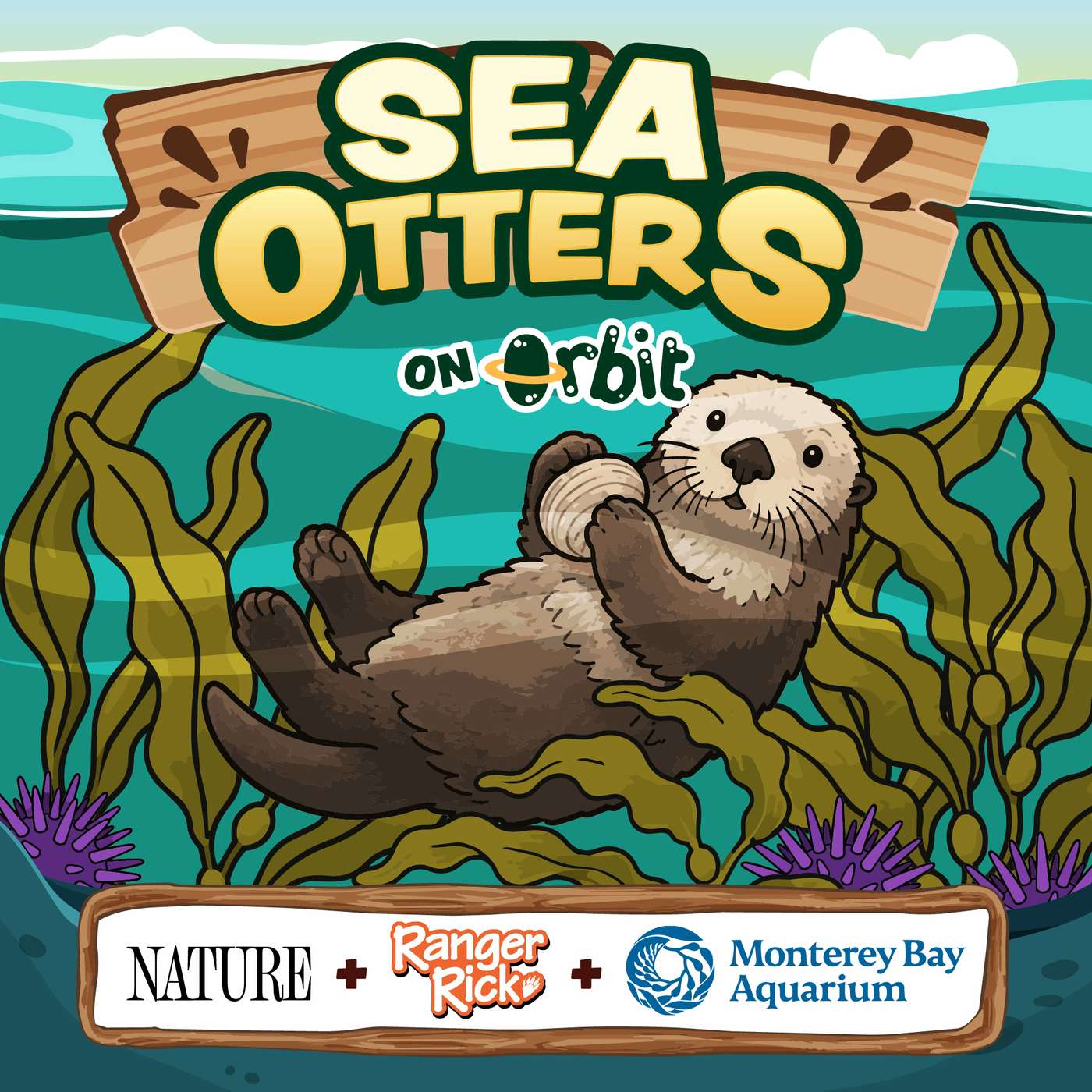
Sea otters aren't just adorable! They're a critically important keystone species for a fascinating underwater ecosystem - kelp forests! In this episode of the Wild Critters series, we're joined by marine biologist and sea otter expert Leilani Konrad from the Monterey Bay Aquarium, who teaches us about sea otters, the relationship with kelp and sea urchins, how they are on the of the few animals to use tools, and the incredible role of foster moms in raising orphaned pups! Part of the Wild C...
16 Sep 2026 · 28 min
Three mountain lion cubs were left orphaned in the California wilderness, and a team of scientists raced to find them before it was too late! In this episode of the Wild Critters USA series on Orbit, families meet wildlife ambassador Marco Wendt from the San Diego Zoo Wildlife Alliance. We learn about the incredibly versatile mountain lion - which can be found from Canada all the way down to Argentina - including what makes it a stealthy hunter and how it adapts to an incredible variety...
26 Aug 2026 · 29 min
Ever heard of the SUPER GENERATION of the monarch butterfly!? This little insect goes on one of the most incredible journeys in the whole animal kingdom! To learn more, we're joined in this episode by Dr. Dorothy Borowy, an ecologist with the U.S. National Park Service! We also have a new friend! Margaret joins Orbit to cohost and help us bring a chrysalis to life for families! ➡️ Part of the Wild Critters series, created with PBS Nature and the National Wildlife Federation ...

19 Aug 2026 · 26 min
Ever wonder how a turtle can trick worms into coming out of the ground just by dancing?! Or how scientists can tell a turtle's age just by looking at its shell?! We're continuing the Wild Critters series to learn all about wood turtles with turtle biologist Chris Polinski from the Smithsonian's National Zoo and Conservation Biology Institute! Along the way, learn why mama wood turtles travel for miles to lay their eggs, and exactly what to do if you're lucky enough to spot one in the wild! ➡️...

5 Aug 2026 · 27 min
Ever wonder how a fluffy baby bald eagle grows into the majestic bald eagles that soar through the sky!? Or why bald eagles build giant nests that can weigh as a pickup truck!? We're continuing the Wild Critters series to learn all about bald eagles with eagle biologist Ulgonda Dunlevy from the U.S. Fish and Wildlife Service! Along the way, learn why bald eagles almost disappeared in the 1960s, and how people worked together to help their population recover! ➡️ Part of the Wild Critters serie...

29 Jul 2026 · 29 min
Did you know a giant, dried-out pile of mammoth poop can survive for over 20,000 years!? And still hold the seeds, pollen, and even parasite eggs trapped inside it! Scientists call it "mummified," and it might be the ultimate Ice Age time capsule! This week, we travel to Waco Mammoth National Monument in Texas with Justin Tweet, paleontologist with the U.S. National Park Service! ➡️ Part of the Wild Critters USA series, created with PBS Nature and the National Wildlife Federation&...
21 Jul 2026 · 21 min
Did you know the welding arc can get even hotter than the surface of the Sun? 🔥 This week, we meet Rudy Rodriguez, a welding instructor at Weimar High School in Weimar, Texas. Together, we discover how welders use heat to join metal together, why they wear special helmets, what causes those bright sparks, and how welding helps build everything from playgrounds and roller coasters to bridges, airplanes, and even rockets! ➡️ Part of the Cool Jobs for Curious Kids series, made possible by ...

15 Jul 2026 · 28 min
Who cleans a river? It turns out some of the hardest workers are animals you may have never heard of: freshwater mussels. Join Tyler Hern from the U.S. Fish and Wildlife Service as we discover how these amazing animals help keep rivers healthy, how baby mussels hitch rides on fish, and why scientists are working hard to protect them. ➡️ Part of the Wild Critters USA series, created with PBS Nature and the National Wildlife Federation ➡️ Learn more about freshwater ecosystems with Ranger...
8 Jul 2026 · 27 min
Did you know that American alligator moms build nests, guard their eggs, carry their babies to the water, and come running when their little ones call for help? They might just be contenders for Wild Critter Mom of the Year! This week, we travel to Florida's Everglades National Park with Yvette Cano, director of education at Everglades National Park! ➡️ Part of the Wild Critters USA series, created with PBS Nature and the National Wildlife Federation ➡️ Learn more about Everglades National Pa...

The Melo app keeps playing with the screen off, works in the car and on your watch, wakes you to your station, and browses the whole catalogue offline. Free, no ads, no account.