Episode · Orbit: Science for kids on the move!
Why are alligator moms so awesome?
8 Jul 2026 · 27 min
Episode · Orbit: Science for kids on the move!
8 Jul 2026 · 27 min
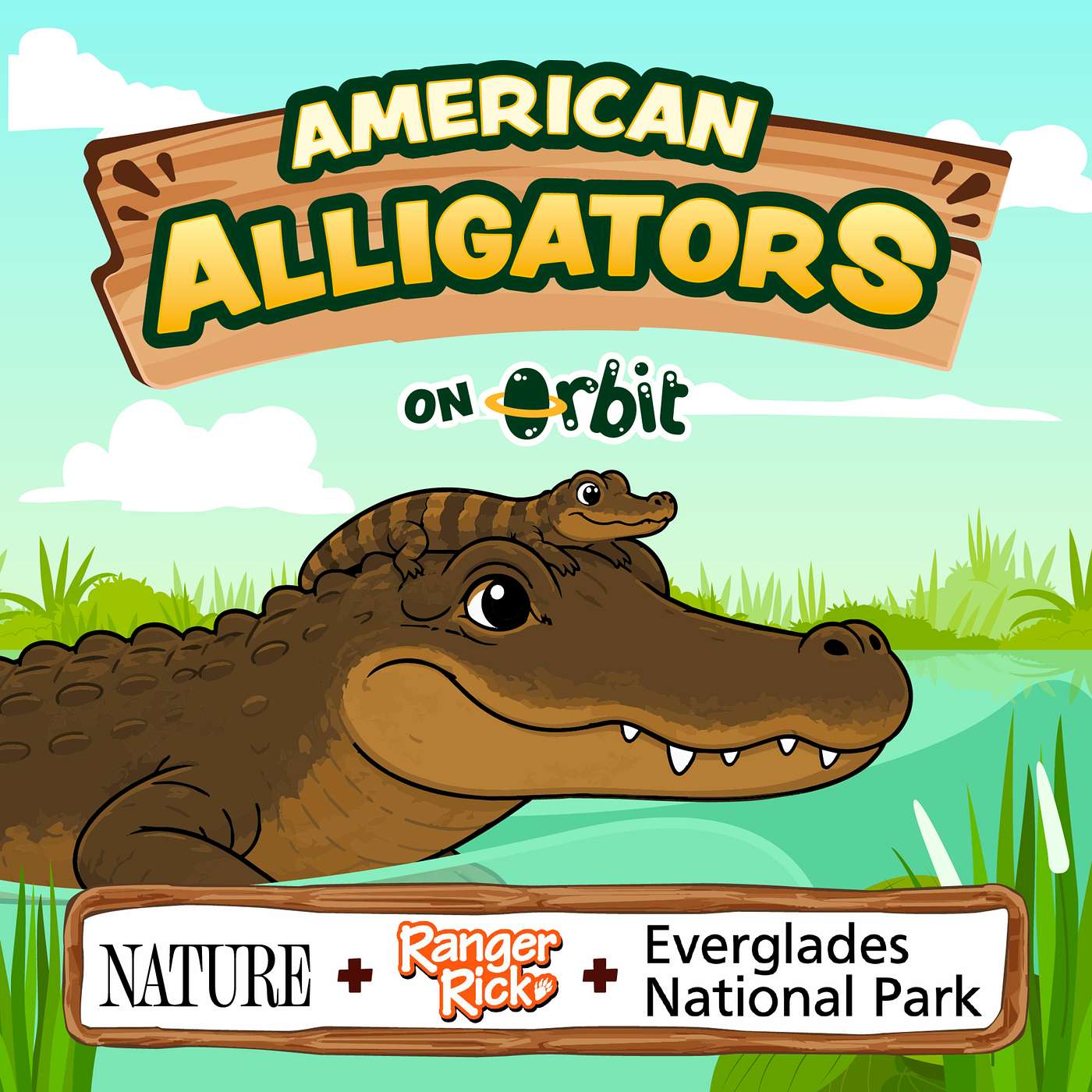
Did you know that American alligator moms build nests, guard their eggs, carry their babies to the water, and come running when their little ones call for help? They might just be contenders for Wild Critter Mom of the Year! This week, we travel to Florida's Everglades National Park with Yvette Cano, director of education at Everglades National Park! ➡️ Part of the Wild Critters USA series, created with PBS Nature and the National Wildlife Federation ➡️ Learn more about Everglades National Pa...
SPEAKER_05:This episode is part of the Wild Critters USA series. A collaboration with RB DBS Nature and the National Wildlife Federation.
SPEAKER_01:Alright, Orbiters, we're continuing our Wild Critters USA road trip today, and we just made it to the state of Florida. Hank and I are both missing our moms right now, so we decided that today we need to do something special. Welcome, welcome, welcome, orbiters, to our very first annual Wild Critter Mom of the Year Awards. I'm your host, Rob, and I'm joined by my co-host, judge, and snack table supervisor, Hank. Woo woo! Hank and I are both very excited to honor some of the most amazing moms in the entire animal kingdom.
SPEAKER_01:Let's meet three nominees for the grand prize of Wild Critter Mom of the Air. Our first nominee. She carries her baby inside her body for almost two whole years before it's born. That's right, Mama Elephant. Next up, she braves a dangerous journey across the frozen Antarctic wilderness to help feed her chick. That's right, Mama Emperor Penguin. And our final nominee. Wait a second. Hank, does this say what I think it says? An alligator? When I think mom of the year, I usually don't picture an animal with 80 super sharp teeth.
SPEAKER_01:But maybe I've got alligator moms completely wrong. Today, we're traveling to the Florida Everglades, one of the most amazing wetlands in North America, to learn about these incredible reptiles. And we have an amazing expert to help us out. Her name is Yvette Kano, and she's the Director of Education at Everglades National Park. I'm ready to learn all about alligator mobs. But first, let's go check in with our buddy Sam. Well, here we are with a familiar friend of ours.
SPEAKER_01:Sam, welcome back to orbit.
SPEAKER_12:Thank you for having me here.
SPEAKER_01:We are so excited, as always, to have you here with us, Mr. Sam. Well, Mr. Sam, we are excited to learn about American alligators. Do you know much about alligators?
SPEAKER_12:Not really.
SPEAKER_01:Well, today, do you know what a swamp monster is, Mr. Sam?
SPEAKER_12:Yes.
SPEAKER_01:What's a swamp monster?
SPEAKER_12:It's like the if you see a swamp, it's like a piece of water, and a monster is something that looked like I will jump out.
SPEAKER_01:That's exactly right. So it's a mysterious creature. And today we are gonna, maybe not a swamp monster, we're gonna create a wetland creature piece by piece, based on real animals that live in the Florida Everglades. How does that sound? Sam's giving me a thumbs up and making a silly face that I don't I don't really know what to do with that. Families, you can do this along. So what we're gonna do is we're gonna choose a part of its body for our wetland creature, and then Sam will have to choose one of two different species that he that he wants to use for that part of the body.
SPEAKER_01:And you can do this with your orbiters as you listen along. Alright, you ready to start, Sam?
SPEAKER_12:Yes, I'm ready.
SPEAKER_01:Alright. Things are about to get really weird. So let's start with the body. Does your wetland creature have a coiled body like a water snake? Or a fluffy body like a marsh rabbit? Fluffy. Why did you why a fluffy body? I thought you were gonna go with a snake.
SPEAKER_12:Because I don't want a snake, and then a snake, and then combined with a bunch of other things. No. Too weird.
SPEAKER_01:Okay, so we gotta. We're we're starting out with a fluffy body. Then for the mouth, do you want it to have a long snout like the American alligator or a giant scoop beak like a brown pelican?
SPEAKER_12:A long fin like a American crocodile.
SPEAKER_01:Okay, so it's got a long snout. I love it. I'm a huge fan of brown pelicans, but I I like your choice. Alright, let's go with the feet. Does it have webbed feet like a mottled duck, or powerful paws like a Florida Panther?
SPEAKER_12:Paws like a Florida Panther.
SPEAKER_01:Yeah, that one sounds like the right choice there. And let's talk about its skin. Does it have slimy skin like the American green tree frog? Or thick fur like a North American river otter?
SPEAKER_12:River otter! Yes, yes, yes.
SPEAKER_01:Why are you celebrating, Mr. Sam?
SPEAKER_10:Because it's my favorite animal!
SPEAKER_01:Okay, that's a good choice. Alright, how big is it? Is it tiny like a blue Dasher Dragonfly? Or huge like a Florida manatee?
SPEAKER_12:Huge like a Florida manatee.
SPEAKER_01:Okay. What color is it? Is it pink like a rosette spoonbill? Or is it silver like a tarpon fish?
SPEAKER_12:Silver like a tarponfish.
SPEAKER_01:That's a good choice. And they kind of shine when the sun reflects on them. Does it eat fish like a great blue heron? Or crabs like a raccoon? Fish. And its defense mechanism. Does it have protective shell like a Florida red-bellied turtle? Or stinky spray, like a striped skunk? I'm looking at Sam grinning right now, so I think I know what you're gonna say, Sam, but go ahead.
SPEAKER_12:Red-bellied turtle.
SPEAKER_01:Oh, okay, you went with the turtle. I thought for sure you were gonna go with a stinky spray. And we of course have to give it a name. What are you gonna call this one?
SPEAKER_12:Honor gator.
SPEAKER_01:An honor gator. I love it. I hope our families enjoy that too and they can play along and create their own and name their own wetland creature. Well, Mr. Sam, do you want to help me introduce today's guest?
SPEAKER_12:Yes.
SPEAKER_01:Okay. Uh today's guest is Yvette from the National Park Service.
SPEAKER_07:Hi Yvette, welcome to orbit. What do you do for work? Hi, orbiters! I am so excited to be here. My name is Yvette Connell, and I'm the director of education at Everglades National Park.
SPEAKER_01:Hey Sam, are you ready to learn about alligators in the Florida Everglades with Yvette?
SPEAKER_12:Yes, I'm ready.
SPEAKER_01:Alright, let's go. Hey parents, did you know that we feature real questions from kids in episodes? We let parents know via WhatsApp about upcoming episode topics so that they can send us their kids' questions. It's super easy and totally free. Just visit www.combraykids.org slash questions to get started. I'll leave a link in the show notes. Okay, let's get back to the Everglades. Margaret sent a question that is perfect to get us started.
SPEAKER_03:Hello, my name is Margaret. I'm eight years old. I live in North Carolina and I'm moving to Georgia, but right now I'm in New York City, and my question is what are wetlands and the Everglades? Thank you.
SPEAKER_01:Alright, Margaret. A wetland is a place where land and water meet, kind of like the middle point between dry land and a lake. It's not quite a lake because there's usually muddy ground, grasses, and other plants growing there. But it's not quite dry land either, because water covers the ground for at least part of the year. Wetlands are kind of like nature's sponge, soaking up and storing water when there's a lot of it, and slowly releasing it later.
SPEAKER_01:Alright, Miss Yvette, what exactly are these super special Everglades?
SPEAKER_07:That is such a great question, Margaret. The Everglades is a huge wet and wild place in the southern part of Florida. It covers more than 1.5 million acres, making it the biggest wetland in the United States.
SPEAKER_01:Good question, Hank. 1.5 million acres is the size of 1.1 million football fields. About the size of the entire state of Delaware. Can you imagine trying to explore a place as big as the Everglades orbiters? You could spend your whole life discovering new parts of it.
SPEAKER_07:The Everglades has many different habitats or homes for plants and animals, like swampy forest, grassy marshes, mangrove trees, and salt water areas. The water in the Everglades wetland moves very slowly, like a giant river. Wetlands help clean the water, it gives people in South Florida drinking water, and helps protect homes from floods.
SPEAKER_01:Isn't that cool, orbiters? It's like the hugest super slow river in the whole United States. Hey, Miss Evet, is this a good home for some cool animals?
SPEAKER_07:Animals like the Florida Panther, West Indian manatee, Florida Black Bear, American alligator, and the American crocodile all live in the Everglades. The Everglades is a perfect home for them because it has lots of different habitats for them to live. The animals can find plenty of food, water, safe shelter, and space.
SPEAKER_01:Bears, alligators, panthers, crocodiles. There's some really big predators in there, right? Speaking of predators, I'd like to learn more about these alligators. What exactly is an alligator, Missy Vet? But orbiters. Before Missy Vet answers, here's a trivia. How big do you think a baby alligator is? Is it as big as a penny? As long as a pencil? Or as big as a cat? Shout out your guess. Okay, Missy Vet, can you tell us about these American alligators?
SPEAKER_01:The American alligator is a cold-blooded reptile. Remember that cold-blooded means that it can't make its own body heat. So they use the sun and their environment to warm up or cool down.
SPEAKER_07:Its skin, it's dark green, almost black. Baby alligators are only about six inches long when they first hatch from their eggs. As they grow, male alligators can become as long as 13 feet.
SPEAKER_01:Wow. So even though they grow up to be about as long as two full-grown human adults stacked on top of each other, they start out just the size of a pencil. They also make really cute noises. We'll learn more about these noises in a little bit. But first, we got a question from our friend Mylam that I think is really important.
SPEAKER_06:Hi, I'm Mylam. I'm eight years old and I live in Houston, Texas. And my question is, how long have alligators been around?
SPEAKER_01:We brought this question to our friend David Mizujewski. Mr. David is a science advisor for Ranger Rick magazine for the National Wildlife Federation and is helping us out with this wild critter series. Hey, Mr. David, how long have alligators been around?
SPEAKER_00:Ooh, what a good question, Mylam. Alligators are reptiles that belong to the crocodile family, which has been around for about 95 million years. That's a really long time. There were different crocodilian species swimming in the waters and even running on land alongside the dinosaurs. And yes, there used to be crocodiles that could run around like a wolf or a lion. The American alligator that today lives in wetlands in many of our southern states evolved around 8 million years ago.
SPEAKER_00:And it hasn't changed much in all that time because it's perfectly adapted to survive in those wetland environments.
SPEAKER_01:Wow, I really love dinosaurs. So that's super cool. Hey parents, if you'd like to continue learning about wildlife like alligators, Ranger Eke magazine has some great resources for families. I'll leave a link in the show notes. Okay, let's get back to learning with Missy Vett.
SPEAKER_10:Hi, my question is can alligators run fast?
SPEAKER_07:Jane, I love that question. Alligators can run fast, but only for very short distances. They actually are much better swimmers. Hi, I'm Juliana.
SPEAKER_02:I'm the equador. And my question is, what do this alligator seeds by?
SPEAKER_01:With all those teeth, probably not broccoli and spinach.
SPEAKER_07:Juliana, alligators have a great appetite. They eat things like turtles, fish, birds, and even other smaller alligators.
SPEAKER_10:Okay, well, fellas Cat. I were real annoyed. And my question is, how Swalko alligators bite?
SPEAKER_07:Caleb, that question gives me goosebumps. You and me both missy that. The pressure of a large alligator's bite can be as much as 3,000 pounds per square inch compared to a human bite at only 162 pounds per square inch.
SPEAKER_01:Imagine biting down on something as hard as a turtle shell. You would need really strong jaws and teeth, right? That's why alligators need such powerful jaws, and they can bite 20 times harder than a human being. That's one reason why it's important to give alligators lots of space.
SPEAKER_05:Hello, I'm Mylam. I'm seven years old and I live in Houston, Texas. And my question is, how can you tell the difference between alligators and crocodiles?
SPEAKER_11:Hi Orbit, my name is Egret Mostaho, I'm 10 years old, I live in Santa Cruz, Bolivia. And my question is, what differences have the alligators and the crocodiles? Thank you, bye.
SPEAKER_01:Hey orbiters, which one do you think has a pointier snout? The alligator or the crocodile? Let's find out.
SPEAKER_07:Mylam and Egret, I get that question quite a bit. The American alligator is dark greenish black and has a wide rounded snout. You can see some of its top teeth when its mouth is closed. Alligators live in fresh water, like rivers, lakes, and swamps. However, the American crocodile is grey and has a long pointy snout. You can see both its top and bottom teeth when its mouth is closed. Crocodiles usually live in salty or mixed salty freshwater ecosystems.
SPEAKER_01:That's so interesting, Nissi. That's okay, orbiters. How about we pause for a mystery sound? You can move around and wiggle while you listen and think about what the sound is. I'll give you a hint. You can find this animal in a swampy place. Stick around to the end for the answer. Okay, let's get to the star of the show. Alligator Moms.
SPEAKER_09:Hi, I am Marquina. I live in Bovacia, Colombia, and my claims eat.
SPEAKER_12:How many eggs can boot the American alligator?
SPEAKER_01:Hey orbiters, let's practice forming a hypothesis. How many eggs do you think an alligator mom lays? And why do you think that? You can pause here if you'd like to talk as a family. Alright, Missy, that's help us out.
SPEAKER_07:Great question. Mother American alligators lay about 35 eggs in a nest, made of dry leaves and grass on the ground. These leaves and grass get warm as they break down, and this helps keep the eggs warm while the babies grow inside. Mother alligators stay close to the nest and help their babies get safely to the water after they hatch.
SPEAKER_01:I thought that was so cool, orbiters. Did you know that big piles of leaves or grass clippings can actually get warm? That's because it's not just a pile of dead plants sitting there. There's something magical happening inside. Tiny bacteria and fungi, called microbes, are breaking down the dead plant material. They are basically eating dead plants. And as they do that, the microbes release energy in the form of heat, which can make the whole pile warmer.
SPEAKER_01:So when alligator moms create nests from dead grasses and leaves, they are creating the perfect recipe for plant decay. And the heat from the decomposing plants helps keep their eggs warm while the baby alligators develop inside. Something we call incubation. Pretty cool, right?
SPEAKER_14:Hi, my name is Didian. I'm from New Jersey, but I'm 5 years old. Well, I have a question why um alligators and mom are special. Hi, I'm Elisa.
SPEAKER_11:I'm 9 years old and I live in Ecuador. And my question is why are mom alligators special? Bye!
SPEAKER_07:Vivian and Elisa, I love that you want to know about mom alligators. The American alligator moms are very special because they take great care of their babies. Sometimes baby alligators of different ages stay with their mom all at the same time. If the babies feel scared or unsafe, they make a sound, and their mom comes quickly to protect them.
SPEAKER_01:Do you remember the sound orbiters? Here it is. You know, when you were a baby, you cried when you wanted your mom's attention. Even before you could say words. It was how you told your mom, hey, something's wrong here. So those little chirps are how baby alligators get their mom's attention, just like you did.
SPEAKER_07:Baby alligators are born with yellow stripes on their body to help them camouflage in the grasses. But even with their stripes, bigger animals like birds, raccoons, snakes, and even larger alligators may still try and eat them.
SPEAKER_01:Wow. That's a scary world to be born into for a baby alligator. Good thing they have super moms there with them. Hey, let's go to this other super interesting question from our friend Luna.
SPEAKER_09:Hi, my name is Luna. I'm six years old and I live in New York. And my question is, how do alligators engineer the everplane?
SPEAKER_01:Engineer? Usually engineers build bridges or airplanes or buildings. How could an alligator be an engineer, Missy Bet?
SPEAKER_07:Luna, that is a brilliant question. American alligators dig gator holes in the ground in the Everglades. They are kind of like pools of water. The Everglades has a wet season and a dry season.
SPEAKER_01:In Florida, the wet season is from May through November. That means there's lots and lots and lots of rain for about seven months. But December through April, there's very little rain.
SPEAKER_07:During the dry season, most of the water disappears. But gator holes still hold water because they are deeper. Many animals gather around these water pools because they need water to live. When the rainy season comes back, the water spreads out again and the animals move all over the Everglades. Without gator holes, many animals would have a very hard time surviving the dry season.
SPEAKER_01:Wait a second. So an alligator digs a hole for itself and then a whole bunch of other animals end up using it too? That's kind of like building a neighborhood swimming pool that everybody gets to enjoy. And we've seen this before. Desert tortoises build burrows that owls and snakes use. Bison help create healthy grasslands for birds. And now we see how alligators create water holes that everyone uses in the dry season. Isn't it incredible how all these different ecosystems, deserts, grasslands, and wetlands, all have important animals that make the habitat healthy for others?
SPEAKER_01:Hey, let's get to this question from Maya.
SPEAKER_04:Hi, my name is Maya, and I am eight years old. I live in Teaneck, New Jersey, and my question is, why are the Everglades so special? Thank you. Bye.
SPEAKER_07:Wow Maya, that's a great question. You see, a long time ago, people learned that the Everglades is a very special place and they worked really hard to protect it.
SPEAKER_01:Ooh, orbiters. This sounds like a question for the orbit time machine. Let's travel back more than a hundred years. Three, two, one, here we go! Imagine you're standing in South Florida. There's no smartphones, no internet, no orbit podcast, and the Everglades hasn't been protected yet. People are trying to decide what should happen to this giant wetland.
SPEAKER_08:One important person was Marjorie Stoneman Douglas. Hi, I'm Marjorie. You know, the Everglades isn't just a swamp. It's home to lots of plants and animals. If we don't take care of it, what will happen to all of them?
SPEAKER_01:Okay, but why is Marjorie important?
SPEAKER_07:She saw all the water on the land and the ocean and noticed how many different plants and animals needed the Everglades to live.
SPEAKER_08:My favorite is definitely the alligator. Or maybe the panther. Or turtles, they're so cute. Or the slithery snakes. But I also like the birds and the dragonflies.
SPEAKER_07:She told many people about it, wrote many letters, and took people to visit so they could see it too.
SPEAKER_08:Dear person who works in Congress, did you know the Everglades is a living river that plants, animals, and people depend on? If we don't protect it, what will happen to all the creatures that call it home? Can we work together to protect this special place sincerely? Marjorie Stoneman Douglas.
SPEAKER_01:Marjorie even wrote a book about the Everglades called The Everglades River of Grass. Wow. So it's thanks to Marjorie Stoneman Douglas that families can visit Everglades National Park today and experience one of the most amazing wetlands in the world. And that's where Miss Yvette works. Hey, let's go check in with our friend Sam. Alright, Mr. Sam, are you ready to take a short break and stretch and move around a little bit?
SPEAKER_12:Yes.
SPEAKER_01:Yeah, me too. What is a movement that orbiters can do?
SPEAKER_12:An alligator snap.
SPEAKER_01:How should they do an alligator snap?
SPEAKER_12:You grab your two hands and then you do And you're kind of clapping them.
SPEAKER_01:Should they clap them up and down or sideways?
SPEAKER_12:Oh up and down. It can be both sides because maybe he's laying on the ground sideways.
SPEAKER_01:So they can they can decide if they want to be a sideways alligator or an up and down alligator. And how should they change it up if it's their second or third time?
SPEAKER_12:First they should do it slowly, then they should do it a little bit more slowly, and then have to lysin really fast.
SPEAKER_01:Okay. So if it's your third time, you better be chomping really, really fast. And while we're making gator chomps, let's recap what we've learned. Wetlands are places where land and water meet, and the Everglades is the largest wetland in the United States, providing homes for amazing animals and helping store, clean, and manage water. American alligators are cold-blooded reptiles that can grow from tiny hatchlings into powerful predators. We learn that alligator moms are super parents.
SPEAKER_01:Alligators are also ecosystem engineers because they dig gator holes that hold water during the dry season and help many other animals survive. Finally, we learned that people can make a difference too. Marjorie Stoneman Douglas helped protect the Everglades, which became a national park so future generations could enjoy this incredible wetland and the animals that call it home. Hey Messy Vet, let's say that a family is in Florida and they'd like to see alligators.
SPEAKER_07:Can they? The best time to see American alligators in the park is during the dry season. You can visit places like Shark Valley or walk on trails like the Anhinga Trail to see alligators and many other cool animals from a safe distance. The more you explore, the more you learn. Visit a national park. It is like an outdoor classroom full of fun adventures for the whole family.
SPEAKER_01:Hey parents, I'll also add some super cool resources to continue learning about alligators and the Everglades in the show notes. Thanks so much, Miss Yvette, for answering our questions today.
SPEAKER_07:Bye, orbiters! I can't wait to see you in a national park.
SPEAKER_01:Hey parents, our guest today was Yvette Kano, Director of Education for Everglades National Park. We'll leave information about Everglades National Park and the U.S. National Park Service in the show notes. And a special thanks to two more friends, Dave and Sarah from the U.S. Department of the Interior, for their help making this episode with the U.S. National Park Service possible. Hey, before we wrap up, I bet a few of you are curious about the mystery sound.
SPEAKER_01:Do you remember it? Last chance. Hurry, get your gas in. If you said it's a bullfrog, you got it. Way to go. Hey, Mr. Sam. What was the most interesting thing that you learned with Yvette?
SPEAKER_12:That they made holes in the ground and put water in.
SPEAKER_01:Oh, interesting. Yeah. It's so interesting that animals can kind of construct their environments like that, right?
SPEAKER_12:Yeah.
SPEAKER_01:And families, you can pause here and have a conversation. What was the most interesting thing to your orbiter? Hey, Mr. Sam, I think it would be super cool to leave families with a question that they can talk about or an activity that they can do together.
SPEAKER_12:My challenge for families is like pick two animals and mix their names together and create a brand new animal. So let's say that I did the otter and the gator. I put them together and put like otter gear. Or the penguin with the octopus, uh Penguacus.
SPEAKER_01:Pingwactus. And do you do you choose features of each animal or is it mostly about the names? Choose the features.
SPEAKER_12:Both.
SPEAKER_01:Alright, Mr. Sam, do you have a joke for us today?
SPEAKER_12:Yes. What do you call an alligator detective?
SPEAKER_01:An alligator detective. I wonder if the orbiters get these right because I'm I think I'm O for five right now, and I'm about to be O for six because I do not know what you call an alligator detective. What do you call it, Sam?
SPEAKER_12:An investigator.
SPEAKER_01:I should have known that one. An investigator. That's a great joke, Mr. Sam. Alright, any final messages before we say goodbye?
SPEAKER_12:Yes. Remember to stay curious.
SPEAKER_01:Alright, stay curious, everybody.
SPEAKER_12:Bye.
SPEAKER_01:This episode is part of the Wild Critter series, a collaboration with our friends at PBS Nature and the National Wildlife Federation. We also produce this episode about American alligators in Spanish on our sister podcast, Cranio. Ciencia para niños curiosos. Orbit is produced by Cumbray Kids. This episode was written by me, Robert Carpenter. The producer is Haru and Rieta. Artwork for the episode by Moises Monsalve and Jorge Wake. We'll see you in the next episode.
SPEAKER_01:Chao!
SPEAKER_13:The important thing is not to stop questioning Albert Einstein.
Transcript supplied by the publisher with the episode.
by Cumbre Kids · English · Kids & Family
Science made simple to help kids better understand the world around them. Publishing "Wild Critters," a series with PBS Nature and the National Wildlife Federation! 🦬 For kids ages 3-11. Perfect for car rides, family adventures, and learning on the go! 'Orbit' builds STEM vocabulary and in

29 Jul 2026 · 29 min
Did you know a giant, dried-out pile of mammoth poop can survive for over 20,000 years!? And still hold the seeds, pollen, and even parasite eggs trapped inside it! Scientists call it "mummified," and it might be the ultimate Ice Age time capsule! This week, we travel to Waco Mammoth National Monument in Texas with Justin Tweet, paleontologist with the U.S. National Park Service! ➡️ Part of the Wild Critters USA series, created with PBS Nature and the National Wildlife Federation&...
21 Jul 2026 · 21 min
Did you know the welding arc can get even hotter than the surface of the Sun? 🔥 This week, we meet Rudy Rodriguez, a welding instructor at Weimar High School in Weimar, Texas. Together, we discover how welders use heat to join metal together, why they wear special helmets, what causes those bright sparks, and how welding helps build everything from playgrounds and roller coasters to bridges, airplanes, and even rockets! ➡️ Part of the Cool Jobs for Curious Kids series, made possible by ...

15 Jul 2026 · 28 min
Who cleans a river? It turns out some of the hardest workers are animals you may have never heard of: freshwater mussels. Join Tyler Hern from the U.S. Fish and Wildlife Service as we discover how these amazing animals help keep rivers healthy, how baby mussels hitch rides on fish, and why scientists are working hard to protect them. ➡️ Part of the Wild Critters USA series, created with PBS Nature and the National Wildlife Federation ➡️ Learn more about freshwater ecosystems with Ranger...

1 Jul 2026 · 30 min
Did you know that American bison help prevent grasslands from turning into forests by body-slamming young trees? And that they once lived in herds so enormous they stretched all the way to the horizon? This week, we travel to the grasslands of Montana with Dr. Andy Boyce, a research ecologist at the Smithsonian's National Zoo and Conservation Biology Institute. Discover why bison live in herds, how they defend themselves from predators, and why scientists call them a keystone species. Along t...
24 Jun 2026 · 27 min
Did you know a single Mojave Desert tortoise burrow can become a shelter for rattlesnakes, owls, kangaroo rats, and many other desert animals? This week, we explore the Mojave Desert with wildlife biologist Brianna Fogel from the U.S. Fish and Wildlife Service. Learn how desert tortoises survive in one of North America's harshest environments, why they spend so much time underground, and why scientists call them a keystone species that helps support an entire desert community. ➡️ Part o...

24 Jun 2026 · 1 min
Discover the wild side of America with Orbit’s brand-new Wild Critters USA series! Join us as wildlife experts from the National Park Service, U.S. Fish and Wildlife Service, and Smithsonian's National Zoo and Conservation Biology Institute answer real questions from curious kids about alligators, bald eagles, desert tortoises, bison, and more. Perfect for summer road trips, family adventures, and screen-free learning for kids ages 3–11. ➡️ A special summer series celebrating Amer...

7 Oct 2026 · 34 min
We're time traveling this week to get to know one of the most famous wild critters to have *ever* roamed the Earth! We're going back 70 million years to meet the infamous T. rex, the apex predator with an astoundingly powerful bite, huge teeth, ginormous legs, and ... surprisingly small arms? We're joined by an amazing paleontologist, perfect to teach us all about the T. rex and age of dinosaurs! Dr. Roger Benson, Macaulay Curator, Division of Paleontology at the American Museum of Natu...
22 Sep 2026 · 32 min
Sea otters aren't just adorable! They're a critically important keystone species for a fascinating underwater ecosystem - kelp forests! In this episode of the Wild Critters series, we're joined by marine biologist and sea otter expert Leilani Konrad from the Monterey Bay Aquarium, who teaches us about sea otters, the relationship with kelp and sea urchins, how they are on the of the few animals to use tools, and the incredible role of foster moms in raising orphaned pups! Part of the Wild C...
16 Sep 2026 · 28 min
Three mountain lion cubs were left orphaned in the California wilderness, and a team of scientists raced to find them before it was too late! In this episode of the Wild Critters USA series on Orbit, families meet wildlife ambassador Marco Wendt from the San Diego Zoo Wildlife Alliance. We learn about the incredibly versatile mountain lion - which can be found from Canada all the way down to Argentina - including what makes it a stealthy hunter and how it adapts to an incredible variety...

2 Sep 2026 · 31 min
Did you know a coral reef, one of the largest structures ever built by a living creature, is made by an animal smaller than a grain of rice!? And that corals aren't plants or rocks at all, but tiny animals related to jellyfish and sea anemones!? In this episode, marine scientist Dr. Mike Henley from the Smithsonian's National Zoo and Conservation Biology Institute joins Orbit to explore the underwater world of coral reefs! Learn how thousands of tiny coral polyps build a single reef, how cora...

The Melo app keeps playing with the screen off, works in the car and on your watch, wakes you to your station, and browses the whole catalogue offline. Free, no ads, no account.