
Episode · Orbit: Science for kids on the move!
Why is it hard to make good choices?
14 Apr 2026 · 28 min
Episode · Orbit: Science for kids on the move!
14 Apr 2026 · 28 min
If you *choose* to listen to this episode, you’ll learn all about the science of making decisions! 🧠✨ We’re joined by Dr. Marco Palma from the Texas A&M Human Behavior Laboratory, as we seek to understand how the brain makes decisions, why we sometimes make bad decisions, and the biology of how the body reacts when we’re faced with decisions! This episode is part of the “Cool Jobs for Curious Kids” series, exploring 8 STEM careers and the science behind their jobs! This series is a ...
SPEAKER_05:Hey orbiters! This episode is possible thanks to Level Up Texas, powered by Texas AM University. We hope you enjoy it.
SPEAKER_00:Hey parents! This episode continues our series with Level Up Texas and the Texas AM Office for Youth Engagement. We're exploring eight exciting STEM careers and the science behind their jobs. Okay, let's get started. Okay, Hank. I have an internal dilemma right now. Do you know what a dilemma is? I didn't think so. It's when you can't make up your mind. Here's the deal. I'm trying to choose what shirt to wear today. One option is to wear my favorite Axolotl shirt.
SPEAKER_00:Yes, Hank, for the fourth day in a row. Or I could change it up and wear my favorite Triceratop shirt instead. Orbiters. Do you ever have this problem when you have to make a decision, but it's really hard? Like when you should go to sleep, but staying up sounds like more fun. Or when you saved money and you're trying to decide whether to buy a new toy. Well, I learned that there are scientists out there who use experiments to learn about how we make decisions and they study what's going on in our brains.
SPEAKER_00:I have some very serious questions for these scientists. You orbiters do too. And to help us out, we found an incredible guest. His name is Dr. Marco.
SPEAKER_01:Hello, orbiters. My name is Marco Palma. I'm a professor at Texas AM University, and I'm also the director of the Human Behavior Laboratory. I use economic experiments to better understand what motivates our decisions. And what were you like as a kid, Dr. Marco? I was very active, curious, and social. I enjoy playing sports, and school was a great place for me to learn and to make new friends. My favorite subject in school was math. I think numbers are pretty cool.
SPEAKER_01:And I chose to become a behavioral economist because it combines math with human behavior, so I'm always learning and researching something new. I agree.
SPEAKER_00:Numbers are cool. I can't wait to learn more with Dr. Marco. How about we get started? Hey parents, each episode features questions from real children in our audience. We have some awesome episodes coming up with universities, the National Park Service, the Smithsonian, and more. If your little ones want to submit questions, just visit www.cumbraekids.org/slash questions. I'll leave the link in the episode description. It's totally free to participate.
SPEAKER_00:Great. Let's get started with the questions.
SPEAKER_04:Hi Arbeid, my name is Igrid Mostajo. I'm 10 years old. I live in Santa Cruz, Bolivia, and my question is, what is exactly a decision? Thank you, bye.
SPEAKER_00:Love this question. And Dr. Marco, you said you work in economics. Could you also help us understand what economics means?
SPEAKER_01:Economics is the study of how we make decisions in a world where we always want more, but unfortunately we can't have everything we desire. If we had a Latin's magic lamp that gave us everything we desire, it would be quick for a little while. But I promise you, it would become boring at some point if we didn't have to work for it. So a decision is choosing what we prefer to do given the available options and our available resources. When we choose something, we also give up something else.
SPEAKER_01:And economics studies these trade-offs.
SPEAKER_00:Oh, so decisions involve trade-offs. Like when you have one thing, you can't have the other. So if I ride my tricycle right now, then I can't do my math problems at the same time. Or if I wear my axolotl shirt, then I can't also wear my triceratops shirt. Unless I put the axolotl shirt on top. But then you can't even see the triceratops. And the triceratops might feel sad because it's hidden. Woo woo! Thanks for helping me focus, Hank. Dr. Marco says that economics is a fancy word for the science of decisions and trade-offs that people make.
SPEAKER_00:Hey, Dr. Marco, where do we see decisions and trade-offs in our everyday life?
SPEAKER_01:We make thousands of decisions every day. Most of them are automatic, and we do not really need to stop to think about them consciously. Some decisions are part of our daily routine, like waking up, brushing your teeth, having breakfast, and preparing for school. Other decisions are life-changing events like choosing your job or the person you want to marry. Decisions can be very powerful and often have huge consequences. For example, government officials and other leaders make decisions that affect millions of people.
SPEAKER_00:Wow. Now that you mention it, there's a lot of decisions in life. Like when Hank has to decide whether he wants to be a good boy or pull me across the yard chasing a squirrel. Hey orbiters, do you ever make decisions in life? How about we take a moment to think about two decisions that you've made? One can be a small decision you made, and another can be a really big decision that was super important. Here's a couple questions to discuss. One, what was the decision?
SPEAKER_00:Two, what were the options you thought about? Three, what did you decide? And why? Pause the episode here to talk as a family or with a friend. Okay, go ahead, Kenji.
SPEAKER_02:Hi, my name is Kenji. I live in Pasadena, California. I'm six years old, and my question is, how does a brain know how to make a decision and when to make a decision? Bye.
SPEAKER_01:This is a great question, Kenji. Our brains are extremely complex, and we process a lot of information in our environment through our five senses in order to make decisions. Many scientists have tried to explain what happens in the brain using dual self-models. This is just a fancy word for saying that we need to think about us having two little people inside of our brains. Wow. Two little Robs inside my brain? One person is more automatic and only cares about having what our heart desires and wants to have it right now.
SPEAKER_01:I'll call this little guy right now, Rob. The other person is more careful and thinks about the consequences of what we're about to do. And I'll call him careful Rob. These two beings are not two real people. They are different regions in our brain. Remember when we talk about economics and studying how we decide based on what we want and its consequences? This is exactly what happens in the brain. Different brain regions carefully assign value to how much we really want something and the cost of choosing it.
SPEAKER_00:Okay, so when I need to make a decision, right now Rob jumps into action and makes a really fast decision that we don't even know is happening. Like, eat the chocolate, ride the tricycle. And then careful Rob shows up like, whoa there, right now, Rob. Shouldn't we think about that decision for a moment? And we have to decide whether we want to go with the thing that right now Rob wants or listen to Careful Rob. Have you ever experienced this orbiters?
SPEAKER_00:When you sense both the right now part of your brain and the careful, let's take a moment to think about this part of your brain. When did that happen? You can pause the episode to talk about it. Dr. Marco told me that right now Rob is super helpful a lot of the time. For example, when someone throws a baseball to me. The part of my brain that is right now helps me make a really fast decision about where to move my hands to catch the ball. The careful Rob part of my brain would still be thinking when the ball zoomed past me.
SPEAKER_00:But at other times, right now Rob is not very helpful. I should probably listen to Careful Rob. We'll learn more about this in a little bit. But first, Dr. Marco, I am curious, are there other things going on in the brain?
SPEAKER_01:The brain also triggers responses when we really like or when we really do not like something. When we receive a surprise gift from a friend, for example, our eyes get really big, which is called pupil dilation due to the pleasant surprise. Other times when we get angry or scared, our heart starts to beat faster, pumping blood to our body to make sure that we react to these emotions.
SPEAKER_00:I've noticed that. That's why we say our heart is racing whenever we're scared or excited. Dr. Markov told me that the brain does this to protect us. For example, let's say your family goes camping in the woods. And you hear rustling in the bushes at night. Your brain might send signals like, uh-oh, that might be a big scary bear. And automatically it makes your eyes super wide so that you can see everything around you. And it makes your heart beat really fast so that you're ready to run away.
SPEAKER_00:Then, when you realize the sound was just Hank going to the bathroom and the bushes, your brain tells your eyes that they can go back to normal. And your heart can slow down too.
SPEAKER_04:Hi Arbeit, my name is Igrit Mostaho, and my question is why sometimes I can't decide between two options?
SPEAKER_00:Yeah, like every morning when I try to decide between my axolotl shirt and my triceratop shirt, it's always a struggle.
SPEAKER_01:When the value of two options is very different, then the decision is easy and we can choose our favorite thing very quickly. When two things have almost the same value, then the decision is much harder and it takes more time because our brain has to calculate the value of the available options. Imagine your mom asking if you want to play right now or do your chores. That seems like an easy and quick decision, doesn't it? However, if your mom asks you which game you want to play, or perhaps asks you which chore you want to do right now, then the decision is harder because you probably like several games, and perhaps you also dislike chores and would prefer not to do any, but you still have to choose one.
SPEAKER_00:Oh so when two options seem similar, that makes the decision hard. Are there other things that make decisions hard, Dr. Marco?
SPEAKER_01:Making decisions under stress, or perhaps when we're sleepy, hungry, angry, or sad alters our ability to assign clear value to things. So this is why it is important to develop emotional regulation to reduce the risk of regretting our decisions in the future.
SPEAKER_00:Wow. So when I haven't eaten, that affects the decisions I make. Or if I didn't sleep well last night. Or if I'm worried because Hank's stomach is making weird noises and he might be sick on the carpet again and I'm gonna have to clean it up. This is a good reminder that our emotions are really important. You know, sometimes when I'm making a big decision, I'll stop and ask myself, Rob, how are you feeling right now? Do you feel sad or happy? Are you relaxed or worried?
SPEAKER_00:Because those emotions impact the decision I will make.
SPEAKER_06:Hi, my name is Margaret. I am eight years old. I live in North Carolina, and this is my question. Why do we sometimes take decisions that we know we're not supposed to take, and sometimes we take decisions that we know we're supposed to take? But why can't we always take the same is a good decision?
SPEAKER_01:Margaret, it is important to know that we all do this. And when you do, we need to realize it is okay, and we can move on and keep a positive attitude and try again. Sometimes we fall for what we really desire without fully realizing the consequences of our actions. This is because sometimes the consequences do not happen immediately, making it hard for us to fully experience the cost of an action until it is too late.
SPEAKER_00:Like that one time I was watching my favorite dinosaur show, and I kept thinking, just one more show. And suddenly it was super late, and I was really tired all day the next day.
SPEAKER_01:Especially if we do not have to pay the cost until much later. Instant gratification.
SPEAKER_00:Those are some really big words that basically mean when we get to feel good right away. Like eating another ice cream, even though it might make our stomach hurt. Or riding my tricycle with Hank, even though later I might not finish my math problems. Those are examples of choosing instant gratification. You know, Dr. Marco told me something really cool. Did you know that different parts of your brain finish developing at different times? Remember those two little people in our brain that Dr.
SPEAKER_00:Marco told us about? The right now person and the careful person? Well, they have different houses inside your brain. The careful person lives in a house in the brain called the prefrontal cortex. The right now person finishes building their house super early in life, but the careful part, the prefrontal cortex, is still under construction until you're really old, like 25 years old. That means kids and adults can make decisions differently because their brains are different.
SPEAKER_00:That's one reason why it's helpful to have parents or grandparents guiding us, including for decisions that you make every single day that affect your future, like studying for school, practicing an instrument, or eating healthy foods. The prefrontal cortex helps adults see the long-term benefits of these decisions, even when it's a little harder for kids. That's the scientific way of saying mom or dad knows best. Dr. Marco told me something else that I thought was really neat.
SPEAKER_01:But also, like many other muscles, the more we use this brain region and the more we exercise it, the better we become at it.
SPEAKER_00:So cool! You know how football players have big muscles because they exercise? Well, you can make your brain stronger by practicing too. You just have to practice making decisions that benefit you later instead of right now. Pretty cool, right? If you want to get started, look for an opportunity later today to start practicing. It can be small, like wait 10 minutes before eating a piece of candy. Or clean your room first and play later.
SPEAKER_07:Hi, my name is Rosen from Houston, Texas, and I'm five years old. And my question is, how do scientists study decisions?
SPEAKER_01:Hey whales, we have very cool equipment that allows us to measure brain activity and to capture our emotions and our visual attention to get a full picture representation of the choice process. Looking at the entire body helps us to get the full picture and to understand what drives our decisions. Decisions are different for every person, and we want to be able to understand the process from the brain to the action.
SPEAKER_00:We've talked about some of these sensors that economists like Dr. Marco use. Sensors to detect electrical signals in your brain, sensors that measure how fast your heart is beating, even sensors that monitor what your eyes are doing, how fast you're breathing, and how much you're sweating. Then Dr. Marco uses this information to learn about how people make decisions. Pretty cool, right?
SPEAKER_10:Hello Arbit. My name is Damita. I am eight years old. I live in Venezuela, and I want to know how we can make better decisions. Thank you, bye.
SPEAKER_01:Damika, the most important thing to remember is to be authentic and loving to yourself and your family. Yes, Hank. And your pets. And to make sure you think about how your decisions are going to impact you now, you in the future, and also other people you love. We can use the 1010-10 rule. How is your decision going to make you feel in 10 minutes, in 10 days, and in 10 months? This will help us to understand how important a decision can be and to also make better decisions.
SPEAKER_00:This sounds like a great way to make sure that right now Rob doesn't make all the decisions in my life. I think I'm ready for a mystery sound. You can move around and wiggle while you listen and think about what the sound is. Okay, let's learn more about these behavioral economists like Dr. Marco.
SPEAKER_05:Hi, I'm Maylam. I'm seven years old and I live in Houston, Texas. My question is what is a behavioral economist?
SPEAKER_01:Great question, Mylam. A behavioral economist studies the process of making decisions and how emotions influence our choices. Behavioral economics is a mix of economics, math, and psychology to help us understand why we do what we do. In our lab, we also include studies about how the brain and the body react when we make decisions. And adding neuroscience to this mix is known as neuroeconomics.
SPEAKER_00:Wow, that is so interesting. Remember what economics is? The study of how people make decisions and trade-offs. And psychology is the study of how people think, feel, and act. So a behavioral economist takes the lessons they learn in math and combines them with economics, psychology, and other fields like biology or medicine to understand why people make decisions.
SPEAKER_08:Hello, my name is Josh, and I'm four years old and when I live in Houston, Texas. My question is how do you research?
SPEAKER_01:Hey Josh, here at the Texas C ⁇ Human Behavior Lab, we invite people to come and participate in economic experiments. Economic experiments are like games that give people choices of what they want to do, and their actions have monetary consequences for themselves and for other people. We use equipment to monitor their brain and their bodies to get a full picture of how they make decisions. We then use mathematical models to help us predict and understand how people will behave in the real world.
SPEAKER_00:So people play games, you collect information from their brains and bodies, then you use math to make sense of it all. That is so cool.
SPEAKER_09:My question is how can we become economists someday?
SPEAKER_01:Luna, I started my career in agriculture and food, and I obtained a four-year Bachelor of Science degree, and then I went on to get a master's degree, which took about two years, and then I pursued my PhD.
SPEAKER_00:Oh. So Dr. Marco has three degrees from universities. First, a bachelor's degree, which takes four years, and then after that, Dr. Marco decided to continue studying and got a master's degree and a doctoral degree, which is also called a PhD. Each degree teaches something new, and people who do research often get a PhD, like Dr. Marco. Hey, Dr. Marco, let's say an orbiter decides to become a behavioral economist, like you. What kinds of things might they work on?
SPEAKER_01:Behavioral economies are in old places where people make decisions. From designing the layout of school cafeterias, menus in restaurants so people can make good food choices, and behavioral economies also study cooperation. They design programs to increase charitable contributions to help the poor. They help Increase organ donations at hospitals. They also help improve conditions in roads. They help design food programs to improve health and exercising routines.
SPEAKER_01:Behavioral economists also help people manage their savings and investments. And they also help governments by provide them with information about the impact of public policy and much more. Behavioral economists help us to make the world better.
SPEAKER_00:Wow. Hey, worbiters, which of these jobs for behavioral economists sounds interesting to you? Here's some ideas. Designing better buildings. Creating healthy menus for restaurants. Making roads safer for everyone. Helping people give more money or time to good causes. Helping people make smart choices with their money. Helping governments create better programs for communities. Or maybe you have your own idea. You can pause here to talk about it as a family or with a friend.
SPEAKER_00:Hey, Dr. Marco, one more question. What kinds of skills do curious orbiters need to be successful in these types of jobs?
SPEAKER_01:Math is an important skill, but the main skill is to be curious. An unrelentless drive to finding out why is all you need. All the other skills can be developed if you're highly motivated.
SPEAKER_00:So we should work hard learning math and stay curious about people and the world. And what kinds of people like having a job like yours, Dr. Marco?
SPEAKER_01:If you are curious about why we do what we do, and if you're determined to find out why no matter what, then you have a future in behavioral economics. You will need to become good at math and be willing to read about human behavior and also about the behavior of other animals for many different disciplines like psychology, anthropology, neuroscience, history, and many others.
SPEAKER_00:Wow. I bet there's lots of curious orbiters who would find it really fun to be a behavioral economist. Hey orbiters, how about we take a moment to wiggle? If you want, you can make a big circle and then a little circle with your head and repeat. So big little, big little, big little. And while we're making circles, we can recap what we learned. Behavioral economics is all about how we make choices, especially when we can't have everything we want.
SPEAKER_00:Our brains have a fast right now side and a slower, careful side, and both help us decide what to do. Scientists like Dr. Marco study decisions by running experiments and learning how our brains and bodies react. They use the knowledge they gain from these experiments to learn about ways to make better decisions. We can see the work of behavioral economists in lots of areas in life. They help us stay safe on the roads, make healthier food choices, and make responsible decisions with our money.
SPEAKER_00:To become a behavioral economist, we should stay curious and work especially hard on learning math. Finally, behavioral economists often get a four-year degree from college and then continue to get an advanced degree, like a master's or a PhD. Hey, Dr. Marco, thanks so much for answering our questions today.
SPEAKER_01:Orbiters, thank you very much for making the decision to listen to this program. I hope you enjoyed it as much as we enjoyed making it. Please keep asking questions and more importantly, keep asking why.
SPEAKER_00:I bet there's some curious families who want to keep learning about behavioral economics. Here are two fun activities to continue the learning with your family. Activity 1. When your family is thinking about a decision, like what to have for dinner, where to go after school, or what to do this weekend, put the 1010-10 rule in action. Talk about how this decision is going to make you feel in 10 minutes, in 10 days, and in 10 months. Activity 2. Grocery store economics.
SPEAKER_00:Next time you go to a grocery store, look for behavioral economics around you. While you're walking around, talk as a family about where things are in the store. When you walk down an aisle, notice where the products are, what's at kids' eye level, and what's at parent eye level, and why? I'll write these questions out in the show description. That's all for today. Our expert today was Dr. Marco Palma, a professor and director of the Human Behavior Laboratory at Texas AM University.
SPEAKER_00:We'll leave the links to the web pages for Dr. Palma and the Human Behavior Lab in the show description. And before we wrap up, I bet a few of you are curious about the mystery sound. Do you remember it? I'll be really impressed if you got this. If you said it's a roller coaster, you're right. Way to go. One more special thanks to our friends at Level Up Texas and the Texas AM Office for Youth Engagement for making possible this series about STEM careers.
SPEAKER_00:You can follow Level Up Texas on social media at LevelUp underscore Texas. We'll add the links in the show notes. Orbit and Cranio are podcasts produced by Coomberry Kids. This episode was written by me, Robert Carpenter. The producer is Catherine Aguilar. Artwork for the episode by Moises Monsalve and Jorge Wake. We'll see you in the next episode. Ciao!
SPEAKER_10:The important thing is not to stop questioning Albert Einstein. The end.
Transcript supplied by the publisher with the episode.
by Cumbre Kids · English · Kids & Family
Science made simple to help kids better understand the world around them. Publishing "Wild Critters," a series with PBS Nature and the National Wildlife Federation! 🦬 For kids ages 3-11. Perfect for car rides, family adventures, and learning on the go! 'Orbit' builds STEM vocabulary and in

27 May 2026 · 27 min
Ever wondered if rocks can melt like cheese, explode out of volcanoes, or travel to the bottom of the ocean? Today, we follow the incredible adventure of Walter the Rock through the rock cycle with geoscientist Dr. Lina Pérez-Angel from Brown University and the Geological Society of America. We'll discover how rocks form, melt into magma, cool into igneous rocks, break into sediments, and transform deep underground over millions of years. ➡️ This episode is possible thanks to the Geolog...

13 May 2026 · 27 min
Ever wonder what exactly is a flash flood? Are all floods flash floods? We have a fascinating episode featuring Nichole Cronce, a hydrologist from the National Weather Service. Join Rob, Hank and Sam as we learn not only about the science of floods, but how to stay safe when the storms get strong or the river starts running high! Episode Extra for middle school: LINKThree questions for families to discuss: Where is a safe place we can go if there is flooding? What should we b...

28 Apr 2026 · 29 min
This week, we dive beneath the surface - exploring the human heart not through sight, but through sound. Joined by Victoria Rivera, a cardiac sonographer at Texas Children’s Hospital, we uncover the fascinating world of sonography and echolocation. Discover how sound waves reveal the inner workings of the heart, and get an inside look at one of the most incredible careers in modern medicine. ➡️ Level-Up Texas: More Info ➡️ Explore Cool Jobs in the classroom! K-5 classroom resources: https:/...
7 Apr 2026 · 38 min
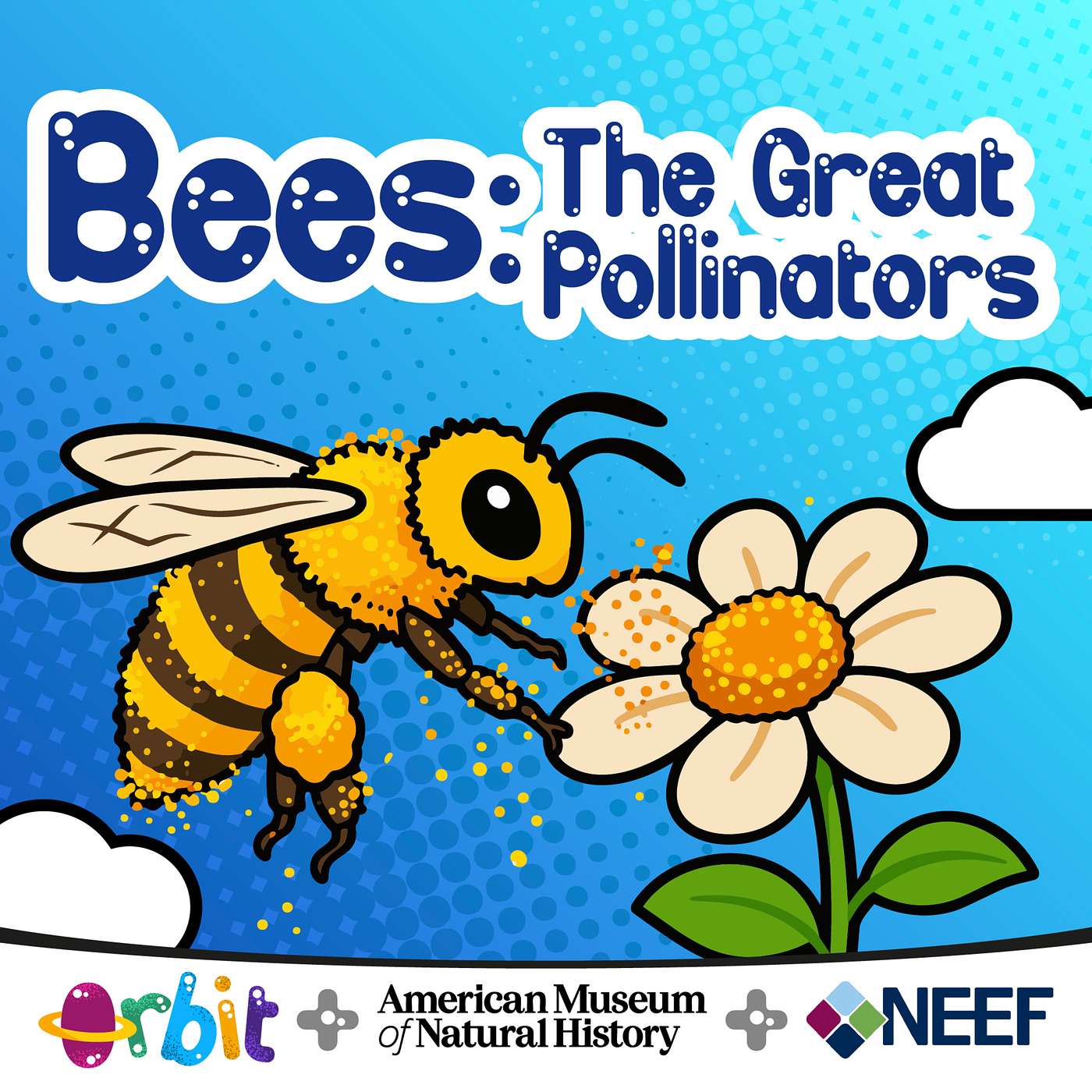
🐝 Earth Day activities for families: LINK Ever watched bees buzzing around and thought, what are they actually up to? 🐝🌼 In this super exciting episode, we dive into the tiny (but mighty!) world of bees and discover how they help plants grow, flowers bloom, and even the food we eat! We’re joined by the amazing Dr. Laura Gonzalez Mozo from the American Museum of Natural History, who answers your curious questions ! 🐝 ✨ A special thanks to the National Environmental Education Foundation (...

31 Mar 2026 · 32 min
This week, we orbiters learn about orbiting! 🚀 This episode dives into the science and technology of machines in outer space, zooming around the Earth! Alongside Joelle Romeu, an aerospace engineer with Boeing Company, we learn what satellites are, how they impact our life on Earth, and about the incredible job of Aerospace Engineers! 🌍 This episode is part of the “Cool Jobs for Curious Kids” series, featuring STEM professionals responding to kids’ questions— a collaboration with LevelUp Texa...
17 Mar 2026 · 26 min
This week we're visiting the incredible San Antonio Zoo in San Antonio, Texas 🦁 to understand the inner workings of zoos! We're joined by Andreau Papadakis to learn why zoos exist, the role they play in protecting species through breeding and rehabilitation programs 🐢, and the different jobs and education paths that could lead curious Orbiters to work at a zoo someday! This episode is part of the “Cool Jobs for Curious Kids” series, featuring STEM professionals responding to kids’ questions, ...

7 Oct 2026 · 34 min
We're time traveling this week to get to know one of the most famous wild critters to have *ever* roamed the Earth! We're going back 70 million years to meet the infamous T. rex, the apex predator with an astoundingly powerful bite, huge teeth, ginormous legs, and ... surprisingly small arms? We're joined by an amazing paleontologist, perfect to teach us all about the T. rex and age of dinosaurs! Dr. Roger Benson, Macaulay Curator, Division of Paleontology at the American Museum of Natu...
22 Sep 2026 · 32 min
Sea otters aren't just adorable! They're a critically important keystone species for a fascinating underwater ecosystem - kelp forests! In this episode of the Wild Critters series, we're joined by marine biologist and sea otter expert Leilani Konrad from the Monterey Bay Aquarium, who teaches us about sea otters, the relationship with kelp and sea urchins, how they are on the of the few animals to use tools, and the incredible role of foster moms in raising orphaned pups! Part of the Wild C...
16 Sep 2026 · 28 min
Three mountain lion cubs were left orphaned in the California wilderness, and a team of scientists raced to find them before it was too late! In this episode of the Wild Critters USA series on Orbit, families meet wildlife ambassador Marco Wendt from the San Diego Zoo Wildlife Alliance. We learn about the incredibly versatile mountain lion - which can be found from Canada all the way down to Argentina - including what makes it a stealthy hunter and how it adapts to an incredible variety...

2 Sep 2026 · 31 min
Did you know a coral reef, one of the largest structures ever built by a living creature, is made by an animal smaller than a grain of rice!? And that corals aren't plants or rocks at all, but tiny animals related to jellyfish and sea anemones!? In this episode, marine scientist Dr. Mike Henley from the Smithsonian's National Zoo and Conservation Biology Institute joins Orbit to explore the underwater world of coral reefs! Learn how thousands of tiny coral polyps build a single reef, how cora...

The Melo app keeps playing with the screen off, works in the car and on your watch, wakes you to your station, and browses the whole catalogue offline. Free, no ads, no account.