

Season 5, Episode 42 · Ruthie's Table 4
If You Can't Take the Heat… How Does a Restaurant Handle a Roasting Summer?
10 Aug 2026 · 40 min
Episode notes
As a farewell to series 5, I'm joined by Sian Wyn Owen to take you behind the scenes at The River Café during the recent heatwaves this summer—what we cooked and how we served. And Season 6 is on the way, starting off with the stars of Only Murders in the Building , Steve Martin and Martin Short, in an episode full of laughter, food memories, and banjo playing. See you in October! Order Table 4 at The River Cafe —the star-studded, food-filled book inspired by the beloved podcast: https://bit.ly/Table4AtRiverCafeBook See omnystudio.com/listener for privacy information.
Transcript
Read the transcript · about 7,500 words, follows along as you listen
Speaker 1:The intense July heat wave. The summer transformed London into a sun baked Mediterranean piazza, deeply shifting how we eat and what we do and how we move together. What a summer, What a time. I'm here today right now with Sean Owen, executive chef of The River Cafe, and we thought as our last episode for Ruthie's Table four, we would talk about what the experience was like, how we cooked, how we ate, how we worked the customers who came, and also how this might affect all of you and when you're cooking at home in the heat.
Speaker 1:So do you have any idea how hot it was.
Speaker 2:This summer outside or in the kitchen?
Speaker 3:Well outside one.
Speaker 1:I'd read the other day that there was most days, you know, very often it was thirty five degrees. Yeah, which is hot out if we're talking said degree fahrenheit. But I guess it's kind of for Americans since in the nineties here thirty five is high. And then in the even in the evenings the weather was, you know, it was hot. It was weird that week.
Speaker 2:I don't know, it was that the week just before Wimbledon where it was really the forties, like crazy and what I was just thinking when you were saying that, how they say you can't stand the heat out. But I've realized that chefs are generally quite masochistic. It turns out that the pure masochist in the chef really comes into it. So, okay, what is.
Speaker 1:That max masochism that makes somebody want to be a show? Do you think that's one of the driving for I think it. Let me punish myself in my career. Let me find a job where I have to be in at five in the morning and I have to cook things you know that I can't do. But what is that masochism that you call it? Drive something, isn't it?
Speaker 2:I think because chefs generally work, you know, not here necessarily, but work long hours, and you know, like shift work, it's always a bit of less favorable, especially in this dat age. It's not so you know, people don't want to do the hours, but in the heat that you really do cut the week from the chaff. And fortunately we've employed a great bunch of masochists. We've got The heat went quite well, including.
Speaker 3:To pregnant women. Yeah, let's worry about that.
Speaker 1:I think that I mean heat or no heat, But to have a summer in which we had Carlotta and Eliza both pregnant, both giving birth one in August, one in early September, and working through the heat in July. What did you notice about them?
Speaker 2:Well, I was really worried with them because I just wanted to make sure that they weren't overdoing it. And they were just such troopers that they would barely rest. And we had to have this room, this room that we're in set up as a core room because River Cafe is a listed building, so we don't have air conditioning in the kitchen. So the the temperature and in the actual kitchen itself was going into the way into the forties, and you know, having a seven month pregnant woman chef in the kitchen just feels, you know, like you have to really take care of them and make sure they're having breaks. So we set up this room with their conditioning in it. Didn't we kind of very dark?
Speaker 1:Don't you have a block of ice? At one point somebody told me that we brought a big block of ice.
Speaker 3:We're back century.
Speaker 2:I think we became quite acclimatized to it. Actually, in the end, felt it felt like everyone felt like they were in it. Everyone was in it together, and it's quite exciting having this heat in London because we never get such hot sme.
Speaker 1:I never complained about it. Yeah, I thought every time I thought about saying it too hard. I just remember those days in March when there was no sun, and so I loved every minute of the Yeah.
Speaker 2:I think as the head chef, one of the things I was really conscious of was making sure that everyone was hydrating on not just water.
Speaker 3:Let's talk about that.
Speaker 2:One of the chefs had read that the un dehydration solution, which is something like don't quote me on it, but it was some water with it had lemon juice, sugar and sald Once you're sweating so much and having so much water, you're actually dehydrating. I think at one point it was very hot and making sure that everyone was looked after was really important. A good excuse to get some ice creams.
Speaker 3:In the shops we have Magnums one day.
Speaker 1:We used to do that when we were I remember when we were you know, there were twenty of us, and of us we used to go down and get ice creams all the time.
Speaker 2:Yeah, and then also taking care of the food to make sure that we were paying attention to health and safety keeping things at there, well, not really keeping food in any way ambient because ambient it was too hot, so making sure that everything was being properly refrigerated and recording the temperatures so that making sure the fridges were all at the right temperatures. That was quite stressful, like as if you have one fridge breakdown, then you have to move everything out, and it was very you know, so we were just paying attention to the finer details to make sure that everyone's looked after.
Speaker 1:And there was also the thing about what they would wear, because you know that the we were discussing whether they had to wear their chef's whites, so which is a jacket with sleeves and the trousers, and we went through because a chef's uniform is also to do with safety, isn't it, So that you you know, the jacket is something that if you have boiling water or you spill or you cut that there is a kind of layer between you and the and the danger, I suppose. And then when you say okay, you can wear T shirts, you know there's a whole thing because they wear T shirts.
Speaker 3:Could they were shorts. What was your feeling.
Speaker 2:About that, Well, they can wear T shirts and they did, they did, and some of them are stilling T shirts because it's still quite hot. Chefs and shorts. I find it. I'm not too keen on the look myself, but they can wear what they like in this hot weather. It was like, if you feel more comfortable in shorts, I personally just wore chefs full chefs outfit.
Speaker 3:Did I found it?
Speaker 2:It was it's a hot either way, you might as well just wear a chef's jacket. At least you look a bit smarter than just sweating.
Speaker 3:Through a Yeah.
Speaker 1:And also well also partly had nobody inside ever, Yeah, a person, So that for me, that's always the change. You're cooking and you know, you have two or three hundred people coming in for dinner or lunch, and you see them, but you're there and it's noisy, and it's a crowded, you're trying to navigate yourself through the space, and then everybody was outside. It's the closest we have I think to having a non open kitchen is when you can imagine, you know, not seeing the people eating.
Speaker 1:If you're in a basement kitchen, then you have no idea what's going on upstairs, and here you do. But still everybody was outside, every single person. It's really nice, really really nice. And what about the menu, because everybody listening probably knows this by now. I'm with the table for we write the menu twice a day, so we come in and we write the menu for lunch, and then we come in three and write the menu for dinner. So there was a chance to say, I'm going to respond to the weather, you know, going to make a winter soup of beans and parmesan and pasta, and might make a cold tomato soup. I might yeah, a cold with you know, a recipe for the cold min estronia.
Speaker 2:I think it was a really good excuse to pull out recipes that we haven't done for years, well since I don't know when we had such an extended heat wave where you could do food that is so like just perfect for boiling hot weather, and even tomatoes, Like even if you have a tomato salad in I don't know, in a normal weather, you might want to have the tomato room temperature. But I felt in that forty degree heat you actually wanted to have the tomatoes chilled, you know, so that they were actually refreshing when you made them, rather than kind of room temperature felt too warm.
Speaker 1:So give me an example of a salad tomatoes that you made with well.
Speaker 2:So we could do and like you could do the panzaanella, which we rarely do, but that served from the fridge is lovely, isn't it?
Speaker 3:Love pans andella?
Speaker 2:Yeah, but there's a real I think the way we do it, or the way you showed me how to make it, was that we use all the different varieties of tomatoes. Some of these you don't need to even skin, like this tomato or the Sorrento tomato or the Vesuvio tomatoes. The skin is so soft that you don't need to skin it. I think you do need to.
Speaker 3:Take out of the seeds.
Speaker 2:Smzanos and you probably want to remove the skin.
Speaker 3:But then we made let's name these this is.
Speaker 2:That one is the vesuvio tomato, which is I think is from Campagna, and it's a lovely soft skin, not too many seeds. I don't think, you know, beautiful for a raw tomato salad. That is your samsano, your classic dop sanmoisano tomato, and you've got these little dashes down.
Speaker 3:Here yellow and red. Yeah, and these we often roast.
Speaker 1:And when we use them, would you peel these when you put them in the panzanella?
Speaker 2:We would peel them, I would say. But I think in the olden days we used to make the vinegarratte from the tomato, just the tomato seeds. It shows how much we must have made, hardly any. But now I tell them to blitz in the robocoop a couple of whole tomatoes. I agree, and then sif that.
Speaker 1:Because so let's describe what as pans andella is, because the pans andella is a bread salad.
Speaker 3:Yeah, taking the bread that you know you use.
Speaker 1:You know, Tuscany is the region of bread and so in the winter it's bread soups. In the summer it's bread soups, but with tomatoes, papa pomador and there's wonderful save pans andella, which there are so many variations on the pans and ellas that.
Speaker 3:Have you know, cucumber and no cucumber.
Speaker 1:Just tomatoes, anchovies, olives, chilies and always basil. So is something that your peppers and so let's just faber pads andella.
Speaker 2:Well, so what I what I did the other day, was have a variety of tomatoes skinned, all of them, all of them, this lovely one. Look at that one. I feel like you just need to eat that as a meal. That that was just your whole meal there, amazing, to be honest, you don't need anything else. Maybe just a ball of bots or other or something like that.
Speaker 3:Fantasy.
Speaker 2:Yeah, that tomato is is too magnificent to be chopped up exactly too much. It has to be in its own right. But the panzanella, we use all the varieties of tomatoes. This the bread that would have the crust off, and maybe some peppers that have been child grilled and peeled and cut in strips, and then we layer up the tomatoes with the bread, the peppers, olives, anchovies, basil, the vinaigrette, capers.
Speaker 1:I think the vinegartte the vinegar is important, I find we haven't talked about that, but even scientifically, I think you know the.
Speaker 3:Idea of acid heat is that something that.
Speaker 2:Yeah, long for refreshing.
Speaker 1:Yeah, And so the vinegar in the in the panzanela, I think is important. Yeah.
Speaker 3:And you cut the bread into pig.
Speaker 2:Pieces, the bread into big slices without the crust and then pull over the smart of vinegrap and let that sit in the fridge for a couple of hours and then like mix it up and then serve it from the fridge.
Speaker 1:Can you stas the variation where you cut up you tear up the bread and put it in the oven.
Speaker 3:I get it a little bit sort of darker, so it kind.
Speaker 1:Of does get less hard, yeah, and then it really does absorb tomato and it becomes kind of They're just different ways of doing however you feel.
Speaker 2:But it's kind of for retro. I feel like you don't see it. It's somewhere that you might think, oh, if I want to eat panza because you sort of feel like you've seen it. But actually I was like, let's bring it back.
Speaker 3:Yeah.
Speaker 2:But then one of the things with this this tomato, which is like a king, isn't it? It's amazing. I on one of the really hot nights, I just made that tomato vinaigrette, like with tomato juice and vinegar and olive oil, salt and pepper, a tiny bit of crushed garlic basil. Then I put in the fridge. I sliced this sort of tomato super thin, and then I just poured over the nice vinaigrette and let that chill really cold, and then serve that with maybe some potaga or some cool longers stems.
Speaker 1:I think if anybody's listening to this, if anyone should be and watching, the recipe for pans andella is in the blue book, definitely, And did we do one in the thirty I don't know if we've done it later.
Speaker 2:I don't think we've done it for a while. I've never had enough.
Speaker 1:Yeah, but the panzanella is very and if you're in Tescany, order it on the menu, and if you the River Cafe.
Speaker 3:Will probably be doing it some more this summer.
Speaker 1:Yeah. It So we also did chilled soups, you know, which for me, you don't really think of Italy with you know, the vicious aspacho as you have, but there is the in the you know, there is a Papa pomodoro which is not chilled.
Speaker 3:I wouldn't call that.
Speaker 1:And the summer minnestrone, yeah, which we we've done for years, which is that summer minnestroni with pesta.
Speaker 3:And are there any other ones that we did?
Speaker 2:We've done the one with tomato and bread and cucumber, that's great, chill very as we serve super cold. I did one on the mega heat wave, which.
Speaker 3:Where was I, yeah, what did you do? So?
Speaker 2:I it was like one of one of the you know, extremely hot hot nights as well, which is really rare. And so I made like a zucchini I made like a zucchini cream soup. So I've made it in the style.
Speaker 3:Just take it from the very beginning. What did you do?
Speaker 2:We made zucchini. We sweat down with a tiny bit of garlic, olive oil, basil and just cooked it under a tiny bit of stock. Then puried it like properly puried it and put a bit of the so it's smooth and you know, almost the thickness of double of cream. I suppose chilled that down to ice cold and then put some basil oil, some basil, some bread on it. And it was like, I don't I've never done that, but it was like I put like crema dazuka, but served chilled. But I think that sometimes you just don't have hot enough whether to eat that kind of very fine cold soup sort of thing was very nice. But yesterday we did pepa pomodoro, but I served it on a plated idea. I mean it is soup on a plate. Yeah, but it was so thick and I just served it temperature on a plate with a fog.
Speaker 3:Yeah, I think. Yeah.
Speaker 1:When I'm doing a menu and a hot night, I'm thinking of two things. What do they want people eating here and want to eat? But there's also what do we want them to cook? You know? So is it you're thinking about if it's a very hot morning and they have to prepare for lunch. You know, it'll be great during service because things will be cold, they won't have to use certain temperatures. But then in the mornings and you think about, well the fry. Are we thinking also of certain equipment we won't use because it's too hot.
Speaker 2:It's funny because say on some of the busier days, you need to have everything cooked so that you can have an easy service, but then you have to do a lot of cooking in the morning heat of the ovens, and then everyone's like the ovens off and trying to have a cool service. But even to do like a turbet and salt, you need the others to do that to get to the point of doing the cold service. What other things have we done. We've done the cold soups deserves. We've done lots of sawbets.
Speaker 3:Now did yeah? Peach and also peachas marinated in the wine.
Speaker 2:Oh yeah.
Speaker 1:The white peachs at the moment are so amazing. I just had some of the breakfast there. I think they're exceptional when you.
Speaker 2:Heat the hit peak season of any fruit or edge, like at the moment, we're in peak season for tomatoes, peppers, zucchini, basil, aubergines, and it's the right.
Speaker 3:Weather for it as well.
Speaker 2:You feel like ya because some summers you've got all this amazing stuff coming in. Yeah, you're like, I can assure you that summer somewhere else in the world, isn't it, So you can really go all out for that summer repertoire, which is which we long for usually every summer, don't we.
Speaker 1:Who is his table for It's now a book Paul McCartney, Michael K. Karmala, Harris, David Beckham, China fey Elton, John and anymore. It's full of stories, beautifully designed and a celebration of the way food connects us all. It's available now wherever you buy your books. We've just grabbed Jake Williams and Molly Lang and two chefs at the River Cafe to continue our conversation about this incredible summer and so as chefs as your as, we're kind of maybe coming out of it now or maybe still in it.
Speaker 3:Today looking back. What what what challenges did you think.
Speaker 4:We're You know, I think there's no a heat web tomorrow. Okay, I think it's again another four days of it.
Speaker 3:Is this your first summer as a chef had to suffer this?
Speaker 5:Did you ever work in summer here?
Speaker 1:Yeah?
Speaker 4:But I think my first summer dealing with this heat. I don't think it was a bad last year, but I definitely think it's been like a fun experience.
Speaker 1:Do you think that the heat wave just either working or not working made London a different city?
Speaker 6:Definitely? I think friends and f that we're complaining and then going to conditioned offices, we got to have a bit of superiority.
Speaker 3:Such a physical job and it's another challenge.
Speaker 6:But I think we all like kind of rallied together and helped each other and TikTok and standing in the walking to cool down and other things like that.
Speaker 2:And now it's mad that it is, like you say, teamwork because you really think that the essence of running a kitchen is all about the team, isn't it, And how if one person can't well, I suppose everyone supports everyone, but everyone came in. No one really called them sick. Everyone, even if you'd rather be in your home with your with your fan blowing on you, everyone came in and supported each other through it, and it just shows what a great team.
Speaker 5:Shirt.
Speaker 1:I'll just talk you about about what you wore, So so you know the question of whether it's shorts with those T shirts, whether we changed and then put down the chef's jackets or we kept them out. What was your feeling about mally about the clothes.
Speaker 6:My feeling was, I mean, it's it's kind of like two parts, but one of them is obviously it's cooler to not have it, but if you're working on the grill or the fryer, you do actually want protection of the shower. So we kind of adapted to, Okay, what section am I going to be on? And can I change halfway? And then we were sprinting ourselves with water, so.
Speaker 5:We go wearing a pair of chef shorts.
Speaker 2:Found himself No one should do that, know the chef's trousers cut them to take the legs. We put towels in the blast chill it didn't we so you could have cold towels around.
Speaker 1:I was just looking up the weather report. It said that most days was thirty five and then even the evenings were very tropical, and we were lucky to have a breeze from the river, and apparently the river in London, the terms all the places on the terms that people could go. People gravitated to the water, you know.
Speaker 5:So it was nice to be around water that hot.
Speaker 4:I was saying, saying something like, I, uh, you know how sometimes you sort of use the temperature broak to see the inside of like a meat cooked. And I had a piece of meat in the oven for like vitella for like forty minutes, and the temperature road was hot in the kitchen and it was inside the piece of meat that had been in the oven.
Speaker 2:So yeah, But the thing is when you the customers came in and they sat outside under the umbrellas in the evening and the sort of you know, the night drew in and it looked heavenly outside and absolutely heavenly, and then they'd come into the kitchen to say, hello, are quite hot on it.
Speaker 1:How did you feel about the actual menu and the cooking. Were there dishes that you wanted to make or that you felt It's not like.
Speaker 4:A lot of the menu changes would do with like things that were less hot. So you have covered room temperature dishes, which I thought was nice, and that's really good for us because we don't use the stove tops. Yeah, it kind of cools us down as well. And then you're sort of cooking things ahead of time, serving things room temperature, which I think is really nice in this time kind of heat, you know, like the tello and.
Speaker 5:Salt.
Speaker 6:I think first time we put the tellow on it was still pretty cold, and you're thinking, I know, we cook Italian sea small food, but England doesn't very often. So it's nice to actually feel like the food we were cooking really fit.
Speaker 2:Yeah, finally we've got the full Italian table and the full Italian weather experience on holidays.
Speaker 6:What do you like eating in the summer? But for me, all of the all of the fish and salt is what I find quite exciting. And tell us how you made the fish and salt, fish and salt, So it's pretty simple. We get these beautiful fish that come in and you don't have to do very much. So a sea bass or a turbot cut out the gills. But apart from that, we just make it not a cement, but you mix the salt in the water, pack it in with the fish, cook it, and then.
Speaker 3:I haven't.
Speaker 1:There's a two different methods. I think people listening might be there's a method of doing the salt and then putting the egg white in and then that kind of shell.
Speaker 3:But we do it really mostly just with water and salt. Yeah, yeah, yeah.
Speaker 2:I always think you need to have a feel for the fish. I always say that to the chefs. You need to like study the fish before you.
Speaker 3:There's no fish that would like egg whites.
Speaker 2:But you don't want to be like, there's a method, there's an exact I mean a lot of chess probe the fish. Now I don't now, but I'm always like, let's look at the turbot. Whature is the turbot for what's going in the oven? Is it straight out of the fridge? Is it is it more ambient in temperature, because that will affect how long you have to put it in the oven. For how hot is the oven. How deep have you put the salt on, Like if you put a massive thick crust on or a less of a crust, all of that impair or changes how long you're going to cook it for. So you need to be aware of all the factors. You can't just be like, chuck a load of salt on and cook it for twenty minutes. It's you've got to be like one with the sperience. Yeah, And it was the.
Speaker 3:Same with the pasta.
Speaker 6:You know, the Techni pasta a month ago. Suddenly it's trying out so much quicker because it's so much more hot, and a.
Speaker 3:Lot of pesta. You did a lot of pesta.
Speaker 1:Why did you describe a dish that you would have if you were coming here for Saturday or Sunday lunch that you would want to starve.
Speaker 6:To start with in the menu? I think the frito is a great thing to start with. Fruit and misto. With the different seafoods, I mean I was doing it yesterday, so there was a lot of them. But you get the polenta, beautiful and crisp that's been cooked till it's quite firm and then chilled down and thinly cut and then when it's fried, it's super crispy and quite a good kind of a bit more neutral than the rest of the seafood. So we had yesterday John Dory finally cut in polenta clams in the shell stills. They've been steamed and cook. People were loving it. And then what was the other fish? And so we had mullett mullet, long strips of mullets.
Speaker 3:Okay, frying in the heat. Did you mind using the fry.
Speaker 6:There were a few services I think where people were like, okay, no friend using the no fritzy, It's just adds another couple of degrees I think the edge. Apart from that, no, it was fine. I think it is that kind of salty food that you crave when it's so hot.
Speaker 1:One of the joys of summer, I think is peppers. Let's talk about peppers.
Speaker 2:Because pepper, I think, like, like we said that, we've got tomatoes, pepper, aubergine, and zucchini, basil, melon, summer garrole. You know, there's a list of the things that you really do identify with Italy, I think, and peppers. At the moment, the peppers are as red as they will go and as yellow as el go. And in this hot weather they really work. We've put them on the grill before service and blacken them, don't we, And then, much to the weights annoyance, they get to skin them, take the child girl the child's skins off, and take the seeds out and prepare them for us, which is quite a sort of fiddly job, isn't it, And some do it better than others. And then you just get all rid of all the charcoal, get rid of all the seeds, and then you can marinate them with them some crush garlic, a tiny bit of tiny bit of crush garlic, vinegar, olive oil, basil, basil oil, herbs, whatever you have, anchovies, olives, capers, and then have them with a brisketter, just a really nice chiarlgirl briskeetter. And the peppers should be served also, not in the very hot weather, not ambient. I think that's also too murky. You want
Speaker 2:it to be kind of fresh and vinegary and peppery, and I think I don't eat a lot of peppers, I have to say, But in the hot weather, I really feel that they just come into their own and the colors is beautiful, and really particular with the chefs about which way up to serve the grill pepper on the plate. I don't like serving the pepper inside. I like thet I'm constantly saying I don't like the pepper that way up because it excuse me, I like the pepper the correct way up. And you see the beautiful color.
Speaker 4:I think that's again like one of those things we were talking about earlier that doesn't require heating up when it's super hot. Le's great for us as well because you don't have to use any heating appliants. You can just put it straight on the plate, refreshing for the customer, and it keeps us cooler as well.
Speaker 2:If you're having a barbecue, so you're having a barbecue at home, when you're getting your fire going, you can put some peppers.
Speaker 4:On the barbecue sometimes and get done.
Speaker 3:Do you like summer pudding?
Speaker 1:Yeah, I know we have summer pudding now, so I love it. But that is not we try to italianate that some putting in such an English dessert. And I remember it was and I was looking at the thing, Well, we love it. It's got everything we love, you know, stale bread and fruits, and it says so we put the velpolaella, you know, and we thought, well we put val in a summer pudding that would make it a bit more at time.
Speaker 6:It's my favorite thing sometimes at the end of lunch service that has kind of half a scoop left over.
Speaker 3:Everyone rushing.
Speaker 1:Today.
Speaker 2:Yeah, it's one of the nicest. That is just the black cherries at the moment over ice peak season, black cherries and that like that crunch when you bite into the black cherry and it's really perfect.
Speaker 1:Okay, well back to lunch, thank you, good time. Okay, So here we are with Tom. I like we've been talking about the kitchen and how did you feel as senior manager of the River Cafe managing your teams that you had, and how is it for you? Tell us about summer heat wave in the River Cafe.
Speaker 7:Well, you know, I think initially everybody's very excited that it's going to be warm, and you know, they get to work outside, which is you know, a real blessing because not many people in this industry. You get to work outside in a beautiful garden by the river, So I think that's always exciting. We sort of bend the rules a little bit. We say the waiters can wear shorts because it's going to be hot. Of course, they've got to be smart shorts, and they've got to look good.
Speaker 7:But the real challenges is making sure everyone's happy, making sure that the staff are able to work in comfort, and making sure that the diners are also going to have a good time. Now, you do a wonderful job of changing the menu, putting on chilled soups or beautiful fish cooked in salt, you know, and that makes a big difference. But what we do, I mean, obviously we have private rooms, so we have to make sure hang on, you know, we've got to get some air conditioning in here and make sure that the twenty people in the private room today are not sweltering in there. One summer we did amazing thing. I think we did it earlier this summer as well. We just got these huge lumps of ice and it's such a simple thing, and people it became very tactile. People came and touched the ice and then would sort of rub it on the back of their necks or on their wrists, and it was a real talking point and it made a big difference to everyone.
Speaker 5:The other great thing we have at the River.
Speaker 7:Cafe is ice cream and ice cream and it just seems to work on a hot day and even if you've had you know, three hours running around serving people food, you give someone an ice cream and sort of everything is okay, everybody feels cool again. But you know, you touched on the river, and I think that's a great thing. You know, we have sort of two distinguished areas of outdoor seating. We have the terrace, which really is where people want to sit most of the year when they sit outside. But the smart money's always in the garden when the weather's above thirty degrees because you get the beautiful cooling breeze from the river. And yeah, so we sort of we make sure that people sitting there as much as possible. You know, if they're sat on the terrace at the beginning, then we'll slide them across through the garden when something freeze up and then breaks. Just lots of breaks for the staff, making sure that they're well hydrated and looking after themselves. But yeah, it was you know, normally I expect things to get a bit quieter when the the moment to reaches thirty five degrees and you know, who wants to come for lunch, But
Speaker 7:people do people still want to come to lunch, They still want to socialize, they still want to sit outside in the beautiful garden. But you know, it's a real credit to the waiters and the front of house staff and the kitchen. Well, thank you that you know that we keep going and we keep doing it with smile and grace and charm. And that's you know, that's that's what the River Cave has always been about.
Speaker 3:What did you find people eating here? Their moods were good.
Speaker 5:I think the moods were very.
Speaker 3:Good, did you There was a very very nice atmosphere.
Speaker 5:You know.
Speaker 7:And there's another thing that happens, and it actually hasn't happened this much this year, is normally you get these very very hot days and then suddenly, out of nowhere, no forecast. I have five weather out on my phone, and no forecast prepares me when all of a sudden there's a torrential downpour and we have, you know, one hundred and twenty people sat outside in the pouring rain. But nobody gets grumpy about that. There's almost a sense of release relief, excuse me, where everybody goes, oh my god, thank god, it's cooled down a little bit, and then we have this moment where we have to figure out where everybody's gone, what stage are they at in their meal.
Speaker 7:They've just got up from a table at the end of the garden and now sat inside by the wood oven, and we've all got to run around and be like this table's move there, this table's me there. But again everybody's very good natured about that, and I think it's you know, these things.
Speaker 5:Are out of our round.
Speaker 3:People don't want to move.
Speaker 5:Some people don't want to move. Their commitment is really quite.
Speaker 1:I remember there was a table at three oh one this summer you said, you know, you know it's raining, and then.
Speaker 5:Like staying here but outside.
Speaker 3:Tom, what about wine?
Speaker 1:Because we've been we have to be honest that we have been noticing in the last to a change of people's drinking. You know, they're they're still drinking, but they're drinking less. They're drinking glasses instead of bottles or that. On the other hand, when they often do drink, the data shows that they're drinking well, they drinking good wines, and they're appreciating the wine that we have also non alcoholic wines.
Speaker 3:But always wondering how the heat, what is alcohol.
Speaker 7:Think the biggest the biggest notable thing is that you know, we sell so much of this, you know, relatively reason to be priced crisp, easy drinking rose, which just goes I mean, we have to get so much in because you know, it's it's super refreshing and we serve it so cold.
Speaker 2:Which are the roses that people are drinking, well, I.
Speaker 7:Think they you know, first and foremost, there's a lot. If you're going for a still rose, it's the Monteti, the Tuscan rose, which goes very well with sunshine. But I think you know, people are out for a special occasion. They're often reaching for the sparkling roses. And there's one from Chateau la cost beautiful sparkling rose that has been very popular as well.
Speaker 5:I think what else do you.
Speaker 3:Find the people are drinking more white wine and roses rather.
Speaker 7:Than the Yeah, they're not going for the complex you know, you're not going for your big age barolos or you know, these beautiful brunello's. I think on the whole people are going, you know, quite a bit of chilled red as well. You know, we have some people drinking you know, there's a certain set I think certainly amongst the younger demographic who come to the restaurant, there's a lot more cocktails flying off the shelves. But yeah, I mean, we have noticed that drinking habits have changed a bit over the last few years, which is probably ultimately a good thing for people. But you know, and we had diversified so much with our non alcoholic cocktails as well, which have also been very successful this year. I think, you know, there's a long list now and that's the way people are drinking nowadays.
Speaker 3:So yeah, but did you want this to go on and on the summer?
Speaker 5:I mean, I love it. I'm a man of extremes.
Speaker 7:You know, I'm happy when it's really cold and I'm happy when it's really hot.
Speaker 2:But how many steps as you do on one of your gods?
Speaker 7:I mean, you know, we all have our watches on small watches, and you know, people on a double chiff will be doing twenty.
Speaker 5:Five thousand shifts steps a day. I mean, it's crazy. I don't know what that is. They're walking a huge ressaurant.
Speaker 7:Yeah it's not a huge restaurant, but you know, if you've got a table out at the end of the river and then you've got to go in and get them a bottle of barkling water or whatever it is. You know, those constant trips, they just add up great seeing.
Speaker 3:People that you have because you're in the summer, whether it's a hot summer or not hot summer.
Speaker 1:We have a lot of university students who are working for the summer. There's a lot of training. I think we have a fantastic group the summer.
Speaker 5:I think we have a great group.
Speaker 7:I mean, you know, we're very lucky to attract you know, really really bright, really charming, really successful young kids. I mean there was a big change after the pandemic and after Brexit, and so we we didn't get this this sort of European workforce that we were used to. But the British guys are great and they're here for the summer. You know, short term, we're going to make some money, but they really really, they really get involved and they sign up for everything that we stand for. And you know that's a credit to the team that are training them.
Speaker 7:And you know, come May, we're always thinking, right, we really need to bolster up for summer, and.
Speaker 5:This here it's it's it's paid off really well.
Speaker 3:I think what's your idea summer with a cafe meal. What would you start with?
Speaker 7:You know, that's a great question. What would I start with? I mean there was the other day there was a child zucchini soup on the.
Speaker 5:Great Yeah it was.
Speaker 7:I mean it's beautiful and I think every every customer who had had a big smile on their faces. And you know what, you know, one of my I mean, there's a bunch of it in front of me here. But the way we make our Lugurian do op basil pesto is just you know, I mean it takes you straight to a beach in chinku Tera or something like that, doesn't it And you're sat there and I know people think pesta pasta is you know, a kid's mill, but it's not. Actually, you know, it's like the tomato pasta we do all year. It's it's so brilliant in its simplicity.
Speaker 7:And so that's a great one. And then I love the fish that we do in Seoul. You know, I think it really is special because there's not many restaurants. I don't think any restaurants in London where you go and get a whole turbit that's been baked in soul.
Speaker 5:A beautiful wild sea burst that's.
Speaker 7:And that's a great way, you know, a little drizzle of balsamic on that, and some fine green beans with these Dattorini tomatoes, I mean happiness, and finish with an ice cream of course, of course. Well, I think for most of the year my go to flavor, just really for a hit is the caramel. But in the summer, you know, I'll probably go I mean, the sawbets are incredible. The melons orbe we have at the moment, it's just top notch, and the white peaches have coming. Now it's just such an exciting time for us. And now you know, I've been here seventeen years and every year I see this moment, but every year it's just as special. So yeah, no, it's been a great summer. And you know, you asked me if I'd love it to continue. Yeah, I would.
Speaker 7:I'd like it to rain a bit at night every once in a while, because our lawn is sort of suffering, and now there's a host pipe burn.
Speaker 3:But and September it will be great.
Speaker 7:September everybody comes back, everybody wants to reconnect, and everybody is ready to start the academic year again and we go.
Speaker 1:Yeah, I always think that September is the beginning of the year, not January. I feel much more the anticipation of the new year. And I always say next year, we're thinking it's September. Still in school, many many, many years.
Speaker 5:Yeah, I agree with that that way.
Speaker 2:You know, I was walking in Wales the other day and it's like in the country, in the countryside. Well, I was trying to tire out my twelve year old the thing you have to do that exhausted and she was, but there was hazel arts growing, you know, obviously blackberries. I saw a walnut treat that was in someone's garden and you just think, oh, there it is coming. It's just like amazing to see, you know, the mushrooms coming in. That just signals.
Speaker 5:There one thing I put so I do.
Speaker 7:I have an allotment and one thing that I plant and you have to do it in the summer. Is because I don't really even like them very much, but I take them every year for Christmas is Brussels sprouts. And now the Brussels sprouts are getting tall, and you know you'll realize that, you know, in four months time, you're going to be picking them and serving them, and question to the side of.
Speaker 2:My place, don't you think you feel a bit like this summer is so amazing.
Speaker 5:Food someone we all love it.
Speaker 3:I always think autumn is the cook season.
Speaker 1:And I know we've got poor chini, mushrooms, We've got grouse coming, We've got as soon fifteenth of August. Yeah, and so I think it'll be interesting to see grouse.
Speaker 3:In this season.
Speaker 5:Though it's too hot. It will be too hot to little and then truffles come.
Speaker 1:And then so there's always something that the new season, and we go rather get said. We say goodbye to to the vegetables and fruits of summer, we say hello to the vegetables and fruits of the autumn, and so we have new things to look forward to in the season. And I think there might be one more thing we're looking forward to.
Speaker 5:Its going to be another season of Ruthie's Table four.
Speaker 1:Four season six season.
Speaker 3:We are.
Speaker 1:We're going to start with Steve Martin and Marty Short. So they're here, we're playing the banjo, we're talking. We're talking about murders in the buildings and filming in London. They're two very funny, great guys.
Speaker 3:So see you. In October.
Speaker 5:Ruthie's Table four was produced by Robbie Hamilton, Zad Rogers and Ruthie Rogers.
Speaker 4:This has been an atomized production SORR Heartmedia
Transcript supplied by the publisher with the episode.
Podcast
Ruthie's Table 4
iHeartPodcasts · Arts & Books · English
For nearly forty years, The River Cafe in London has been a home-from-home for artists, architects, designers, actors, collectors, writers, activists and politicians. It is also the home of its co-founder, Ruthie Rogers — restaurateur, cookbook author, podcast host and one of the most influential fi
More from Ruthie's Table 4 All episodes →
-

15 Sep 2026 · 49 min
From the Archive: Zoe Saldaña on Growing Up in Queens, Family Recipes & Why NYC Has the Best Pizza
As we look forward to Series 6 in October, we’re revisiting some of our favourite episodes of Ruthie’s Table 4 . Zoe Saldaña was a force from the moment she entered the restaurant back in 2025. She told us stories about her grandmother’s coconut desserts, how her family dances through life, and what it was like growing up in Queens. We talked about Caribbean soups, Dominican cooking and New York pizza — and by the end of the episode, we were all ready to eat. Hit FOLLOW to make sure you never miss an episode, and join the Ruthie’s Table 4 community on…
-

S5 · E46 · 7 Sep 2026 · 21 min
How Food Shapes Our Work… Gayle King, Mark Ronson, Graham Norton, Emerald Fennell, and Patrick Radden Keefe.
Whether in film, music, books or television, food can be a source of inspiration or integral to the way we work. In this special compilation episode of Ruthie's Table 4, we're talking about the shared ingredients of what we do, with Gayle King, Mark Ronson, Graham Norton, Emerald Fennell – the director of Wuthering Heights, and Patrick Radden Keefe – the author of London Falling. Hit FOLLOW to make sure you never miss an episode, and join the Ruthie’s Table 4 community on social. Instagram: instagram.com/ruthiestable4 TikTok: tiktok.com/@ruthiestable4 YouTube:…
-

S5 · E45 · 31 Aug 2026 · 28 min
Where Food Meets Politics… Jacinda Ardern, Andrew Jarecki, Erin Lyall, Hilton Als, Annie Leibovitz, Kamala Harris
I've always thought we judge a culture by the way we feed our poor, our sick and our prisoners. In this special compilation episode of Ruthie's Table 4, we're talking about food and politics, in conversation with Jacinda Ardern, documentary filmmaker Andrew Jarecki, CBS conflict producer Erin Lyall, writer and critic Hilton Als, Annie Leibovitz, and Kamala Harris. Hit FOLLOW to make sure you never miss an episode, and join the Ruthie’s Table 4 community on social. Instagram: instagram.com/ruthiestable4 TikTok: tiktok.com/@ruthiestable4 YouTube: youtube.com/@RuthiesTable4Pod Shop River…
-

S5 · E44 · 24 Aug 2026 · 24 min
Why Restaurants Matter… Jamie Oliver, Piers Morgan, Marina Hyde & Richard Osman, Tracey Emin & Dara Khosrowshahi
It may come as no surprise that I have a special interest in restaurants. The River Café is where I work, where I record this podcast, and where I spend so much of my life. In this special compilation episode of Ruthie’s Table 4 , we’re talking about restaurants—how to run them and why they matter—with stories and memories from Piers Morgan, Jamie Oliver, Marina Hyde and Richard Osman, Tracey Emin, and Dara Khosrowshahi, CEO of Uber. Hit FOLLOW to make sure you never miss an episode, and join the Ruthie’s Table 4 community on social. Instagram:…
-
S5 · E43 · 17 Aug 2026 · 17 min
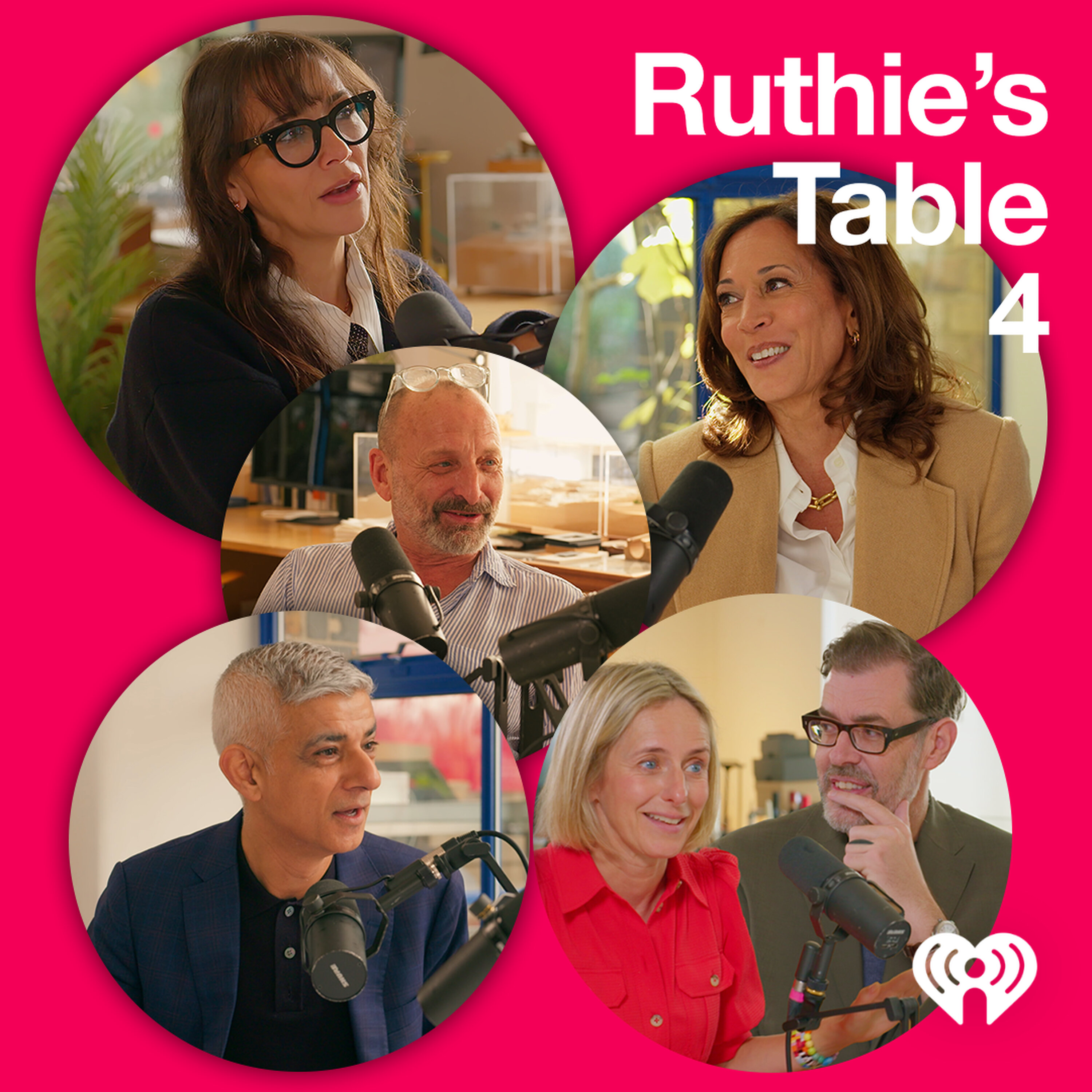
The Food That Shaped Us… Kamala Harris, Sadiq Khan, Ab Rogers, Marina Hyde and Richard Osman, and Rashida Jones.
Childhood kitchens, our parents' cooking—the food we eat when we're young stays with us for life. This special compilation of Ruthie's Table 4 celebrates food and childhood, featuring memories from Kamala Harris, Mayor Sadiq Khan, architect Ab Rogers, Marina Hyde and Richard Osman, and Rashida Jones. Hit FOLLOW to make sure you never miss an episode, and join the Ruthie’s Table 4 community on social. Instagram: instagram.com/ruthiestable4 TikTok: tiktok.com/@ruthiestable4 YouTube: youtube.com/@RuthiesTable4Pod Shop River Café Books and more……
-

S5 · E41 · 3 Aug 2026 · 21 min
Dorothée Boissier on Designing Restaurants, Paris, and Creative Partnership
Dorothée Boissier is an interior designer and co-founder of the Gilles & Boissier studio. Together with her husband, Patrick Gilles, she creates exquisite architecture and interiors around the world. Today, we're at Moncler's beautiful flagship store on the Champs-Élysées, designed by Dorothée and Patrick. We'll talk about Paris, food, their creative partnership, and the art of designing restaurants. Order Table 4 at The River Cafe —the star-studded, food-filled book inspired by the beloved podcast: https://bit.ly/Table4AtRiverCafeBook See…
-

S5 · E40 · 27 Jul 2026 · 34 min
Clare Hornby, Founder and CEO of ME+EM
Good food and good clothes should do the same thing: make you feel instantly comfortable, confident, and completely at home. In this episode Ruthie sits down with Clare Hornby, the visionary entrepreneur founder and CEO of ME+EM. Clare has built the UK's fastest-growing luxury label by mastering "intelligent style" -creating crafted, functional wardrobes for women. Bound by a shared love for exceptional ingredients in food and fashion, Ruthie and Clare talk about friendship, building a business from scratch, the food memories that shape them, and much much more. See omnystudio.com/listener…
-

S5 · 23 Jul 2026 · 20 min
Bonus: Michael Elias on his new book, Bender's LA
Ruthie speaks to her brother, screenwriter and author Michael Elias, about his latest novel, Bender's LA. In the coke-dusted canyons and deal-making rooms of 1970s Los Angeles, writer David Bender sets out to remake his life - romantically, professionally, and spiritually - after his wife walks out in Puerto Vallarta with a single sentence and a suitcase. Order a copy now: https://www.amazon.co.uk/Benders-L-Michael-Elias/dp/B0GWC41TVM See omnystudio.com/listener for privacy information.
-
S5 · E39 · 20 Jul 2026 · 22 min
In Conversation With Zanny Minton Beddoes, Editor-in-Chief of The Economist
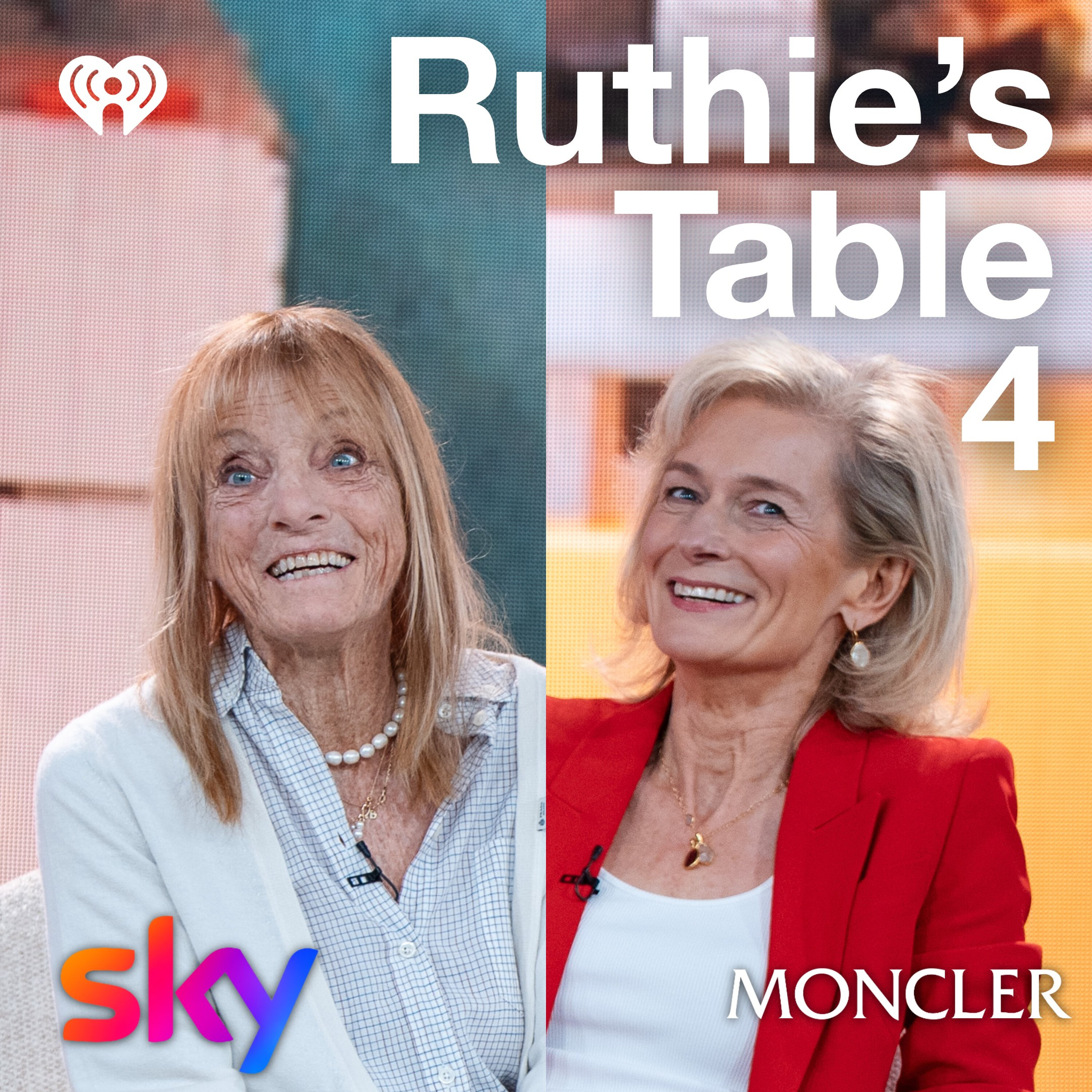
Zanny Minton Beddoes and I have different professions, and different workplaces. As editor-in-chief of The Economist, hers is in the newsroom mine is the kitchen. But we have much in common, sharing a message of honesty - me with ingredients, Zanny with words. And we both have time limits - in the case of this conversation, just 20 minutes which we recorded live onstage at the Google Zeitgeist conference. In this brief time, we explored her work and life through the lens of food. And what a life it is. Order Table 4 at The River Cafe —the star-studded, food-filled book inspired by the…
-

S5 · 17 Jul 2026 · 6 min
Bonus: Wine with Ab Rogers
Ab Rogers explains his fascination with wine and why he prefers grapes that have had to fight for their survival. Order Table 4 at The River Cafe —the star-studded, food-filled book inspired by the beloved podcast: https://bit.ly/Table4AtRiverCafeBook See omnystudio.com/listener for privacy information.

Take it with you
The Melo app keeps playing with the screen off, works in the car and on your watch, wakes you to your station, and browses the whole catalogue offline. Free, no ads, no account.


