
Episode notes
Last September, at the Venice Film Festival, I went to see Agon — a radical and powerful film. Afterwards, I immediately changed my schedule to attend a dinner for its director, Giulio Bertelli. Today, Giulio and I are back together in Hammersmith to discuss his filmmaking, the food of his childhood in Milan, his time as a professional sailor, the history of food and seafaring, and the company he has built as he looks to food's future. Order Table 4 at The River Cafe —the star-studded, food-filled book inspired by the beloved podcast: https://bit.ly/Table4AtRiverCafeBook See…
Transcript
Read the transcript · about 4,890 words, follows along as you listen
Speaker 1:Ruthie's Table four is now a book Paul McCartney, Michael Caine, Kamala Harris, David Beckham, China fe Elton John and many more. It's full of stories, beautifully designed, and a celebration of the way food connects us all. It's available now wherever you buy your books. Ruthie's Table four brought to you by Sky and Montclair. Last September the Venice Film Festival, a friend took me mid afternoon to see Agone, a radical and powerful movie. Afterwards, I immediately changed my schedule to attend a dinner for the director of the film, Julio Bertelli. We sat together to talk just for a few minutes about his work, and an hour and a half later we were still talking about food and film, food and architecture, food and sailing and growing up in a family of creatives. An Italian on Ruthie's Table for is always a joy. Our links are so close before we even start. The River Cafe is inspired by Tuscany, where Richard, my husband was born. I'm so happy to have Julia here with me today to carry on in London what began in Venice.
Speaker 2:Thank you welcome.
Speaker 1:What was it like to be in the Venice Film Festival for you last year with your film.
Speaker 2:I think, of course it was strong emotions my first film, yeah, and to do that in Venice, which is you know for me, is my encounter at the same time such an important and important festival. Yes, it's specially. It felt felt very good and I think it was a hard journey, as it oftenis, you know, for first films or in general, to make any film and to be there, presented and get the warm of the reception of the film was fantastic because it's quite a radical film.
Speaker 1:It's a radical film, yeah, yeah, but to use the words radical is so beautifully shot, so the design, the slow stuff. It was a brave film. I think, a really brave film. Tell tell the audience about the movie and what you wanted to do with that movie.
Speaker 2:I think in a way to start it, of course, I come personally from a background in as a professional athlete, and the film is about three athletes, three young athletes, in a fictional Olympic game. So there was I think multiple desire that was sort of a part of me that wanted to really look at what are the Olympics, What is a sport, and then there was a part of me that just really wanted to make a film on how it feels to be an athlete. And so the film is the story of three young girls that tries to go through this journey of trying to win a medal at the Olympics ultimately and unfortunately they can't.
Speaker 2:And so it's really about how it feels not to be able to do what you want to do. And it's originally started as an animation maybe remember that many years ago. So when I started writing it with a few friends, it started as an animation and it was originally the idea was, what if it's an animation about gen of Arc, a modern version of geno Ar who is a fencer and goes at the Olympics, kills someone and then a political trial and and starts on action and this sort of looking at the Olympics as this sort of geopolitical entity wherever country face each other, it's through the proxy of sports in a ways that kind of you know, warfare through through sport between different nations.
Speaker 2:And and then it developed into live action films and with multiple storylines and the film that it is now that I presented.
Speaker 1:We were talking about the Olympics. Have we talked about sports in the sense of sports and arts and something like to be an Ali.
Speaker 2:Have you know?
Speaker 1:The they have always the cloud of boycott, you know, and so this year the jury resigned because of Russia and Israel and that, you know, should you have a participation of two countries or which you're waging wars? And the the question and I think it isn't a question for having made a film about about sport and politics, and is whether someone I was asked whether I believe that they should be boycotted, and personally I think it's better to have them there and then for everyone to make their mind up if they want to pick it or protest or not watch. But when you think of artists and athletes who work so hard to to compete, to work to be in the Olympics or in the whether it be an Ali, then to be told they can't because of what their government is doing, it's quite punishing, I think absolutely.
Speaker 2:And I think you really sort of feed the nail in the head. And as you say here, because the movie is exactly about this. It is the modern Olympics are about, you know, one hundred and thirty years old, and the starting off for officers that they were, you know, in different army of different nations competing against.
Speaker 1:From it was military was in a way because the very first sport, yeah, pistol shooting some of the very very reports or fencing as.
Speaker 2:Sort of a practice that officer would still do. So those were the type of profile of athletes that originally started to compete. And I think, you know, after the Second World War it really became this kind of view and peaceful event for the country to be together. But realistically the value of politics, the soft power of each country. I'm wanting to the US, wanting to be to win more metal lash of China, that is a very strong value. And you you still see this today of maybe Uranian athlete not shaking hands or not wanting to go on the tatami against Israeli athlete and therefore, as you say, training our life but ultimately not competing or you know, there's really countless example. And I think this is in a way very similar to the another and two art and is this sense of excellence and how much is you as a person and how much then is sort of the system that you inhabit that drives your decision or what you can cannot do. And in a way, what is interesting is that even in a very sort of in a quick Olympics system or the agon, which were kind of the names of prior to the Olympics, this competition in ancient Greek they included the drama to gipar,
Speaker 2:the theater, the arts, so it was a much more the boundaries between all of this in a way, competition where very different. Yeah, you're always much more opaque.
Speaker 1:Were there for the Olympics in Milan, they were incredibly beautifully done. I thought, you know, no, I.
Speaker 2:Think it's and you know, it's about the architecture and the system. How do you depict sports and images? And you know, ultimately most of these minor Olympic sports, because they are minor in terms of audience, they exist for the video or content that generated of them. It's not that you're gonna go tomorrow in London and have five thousand people watching the final of the English Championship of Fencing. Yeah. So I think there is this relationship between media and the idea of performance that is similar to also in a way an actor and a cinema performer. So all of these overlaps, and I think, you know, it's a has been a hard journey. You know, the movie done and now I look at it and I'm proud of it.
Speaker 2:And I think ultimately is really about even though it feels sometimes is quite complex, some of the topics, but at the end, it's really about the feeling of how or the different ways or how it hits you when you cannot do what you want to do. And I think this is a feeling that you know, it's Sheldon on the Unfortunately almost everyone you know, sometimes you can succeed and you manage to open your restaurant or do a recipe, and sometimes you cannot, and you can win a medal or go home with nothing, and that fine line of still thriving for excellence, keep on trying and trying.
Speaker 1:In America, when and I'm sure it's in Italy but not so much, when you graduate from university, there's a speaker who speaks, and everybody talks about the speech by Roger Federer, because in that we see him as a winner, We see him as somebody who is a champion. We see him as somebody who want all the swimbledons. And he said to the students. Do you know how many games I've lost in my life? If I can tell you all the games of tennis that I lost, then you would understand what you know, the few that I've won, I've won the ones that are important to win. But so much about of life and about working towards a goal is to say, you know, it's okay to fail, and it's okay to lose, and it's okay to succeed.
Speaker 1:It's okay. All that is part of the of the journey that we're taking. Do you agree?
Speaker 2:This is what I like about sport because the sense of competition is very clear. You're there to try to win, but at the same time, if you don't, it's about, you know, sitting and understanding how to do better and try again.
Speaker 1:What is the next movie?
Speaker 2:It's really going to be an adventure, Yeah, and in a very hard environment, which will be a strong challenge to actually make the film. And I'm writing and also thinking how we can do it?
Speaker 1:How do you How do you eat when you're writing? Do you do you do you have to cook for your to stop and make something to go up for a walk? Do you write everything schedule when you write? Or do you just.
Speaker 2:I kind of keep on collecting ideas while traveling, while doing other things, taking sometimes at night, and then when I feel I am like I'm kind of fed up, I just close myself for a few days and I sort of vomit first draft, and then I continue to revision. I need sometimes to let the idea to sink, and then I go back at it. And this is very important, like I do the other things in my life also because they inform my writing. I could not have the idea I have if I were only doing that I know others can, I would not be able. I need to have something else to do while I want an idea to sing for a while, so that I can stress it and see is it really standing even the time of my own you know, imagination. Or I go back at it after three weeks and I think, but this is spit, you know, it's not that good. But when I write, I drink a lot of a tea or not much coffee, a lot of tea, and just.
Speaker 1:Is it a solitary life? Do you find that you're by yourself working on this or do you have colleagues that you work with at the stage.
Speaker 2:No, it's quite solitary. So yeah, no, I'm writing at the moment and trying to, you know, put the thing together. And I'm very excited. That's exciting, very very excited.
Speaker 1:I can see it in your eyes that you have a.
Speaker 2:First difficult to me that I love challenges. I don't to make my life easier.
Speaker 1:One of the things that we also start with is to choose the recipe for you to read. You chose, You chose polenta. I'm so happy you did that.
Speaker 2:Maybe it's because of let's talk about where I'm from.
Speaker 1:Yeah, what is so? This is from our first, very first cookbook.
Speaker 2:It's polenta, which is very close. I mean I need to be like probably would speak for three hours, but I think it's very you.
Speaker 1:Can speak to us about Palentia. You probably don't even need to look at the recipe.
Speaker 2:I think you know this is six eight and put the polenta flower in the jug with a ladle.
Speaker 1:I used to say that when you pour the polenta, you should be able to see every grain of polenta going into the water.
Speaker 2:And whisky and slowly, and usually the mistake is not to cook it enough. And then I think it's interesting because I'm from Milano, there is all of the regional b Lombardia and the Alps, and every few little towns is done slightly different. Sometimes it's added back with flour, different type of cheeses, garlics, for instance. One of the reasons why I picked this is my grandmother grandmother, which comes from a very unfortunately it is not now, but come from a very small town in Molina in the Lake of Como, on the mountains of top Como, and we used to get what we called polentavna polenta he's dirty. Yeah.
Speaker 2:It was basically a very very cheesy back with an corna polenta and in the preests, I remember, we were not doing it at all. We would collect it from a sort of a very very small, very very tiny restaurant down the road in this little town, and they used to put garlic in it as well, in the water or before that would get completely smashed in the so before adding the water and the polenta, they would do oil and garlic at the bottom of the completely.
Speaker 2:I would say, it's not really a recipe or something that.
Speaker 1:You have to read it, so okay, start.
Speaker 2:Put the polenta flower in a jug with the leathers so that it can be poured in a steady stream. Bring the water to a boil in a large saucepan and add one teaspoon of salt. Lower the heat to simmer, and slowly add the polenta flower steering with a whisky until completely blended. It will now start to bubble volcanically as Use the heat to as low as possible, and cook the polenta steering from time to time with a wooden spoon prevent a skin forming on the top for about forty forty five minutes. The plant is cooked when it falls away from the side of the pannet has been come very dense and thick. Still in the butter and parmesan, and season jeneralism with salt and pepper. I don't use parmesan. I would use other type of cheese beeto.
Speaker 2:Now there's a she's called storical rebelle, and but any sort of heart that cheese. It depends on the part of.
Speaker 1:And what you eat with it. When you have polenta, do you have a do you have meat with it? Do you have tomato sauce?
Speaker 2:Do you have if I? If I do the polenta with cheese and back with flour, I use it. I usually eat it does a mad By and I like it, which is next to it. I like it when then is grilled, like particularly the cheesy one. When it's grilled, I really like it.
Speaker 1:It's a very comforting food, isn't it. Yes, it's a very and you only have it and you never would have it in the summer, so you always have it in the in the winter in the mountains.
Speaker 2:Yeah.
Speaker 1:And your your grandmother came from the mountains.
Speaker 2:She had this house in this very very very small town, yeah, on top of Como, and we used together with all the cousins and family, and it's something that it never leaves you the taste. So for me, even when I cook or when I go back at the recipes, you're really just looking for memory to match what your expectation. I think there's two parts of me. There's one who wants to do what I desire. You know, maybe you know you want to do something as the TV. Yeah, exactly.
Speaker 2:But I think it's also sometimes I just want to match a memory, and particularly for certain comforting food or the smell.
Speaker 1:And the smell is important, you think, very important. I took to smell yeah, when I had a very sad day many years ago, my son died. I remember just wanting to smell tomatoes being cooked. I needed that smell of of something. Do you have you have the smells bring you back as well?
Speaker 2:Absolutely? No, absolutely, And I think you know when I we spoke about this, when I I have this U strangely enough, this freeze right food company.
Speaker 1:Yeah, so you're going to get onto that.
Speaker 2:Yeah, But anyway, but but what is one of the most intriguing thing about that is that when you when you cook, you araumatized. I don't know if it's the correct English. The room slowly, you know, actually, but when for instance, you rehiderate a a meal, you kind of have the order and the aroma coming all together.
Speaker 1:Yeah.
Speaker 2:And I think that is a very intriguing kind of process of also going back to the relationship with with the with the smell and memories, like all of a sudden walking into a room where they've been cooking for two hours. But you kind of through that process, and I think it's very fascinating.
Speaker 1:What are the smells that you remember growing up? Well, can you remember the kitchen in your house when you were growing up? Well, okay, tell me about the kitchen in your house.
Speaker 2:Stainless steel.
Speaker 1:Where was this smell in an apartment or an apartment?
Speaker 2:I remember it was a long corridor, just a corridor with green cabinets, and there was a stainless steel they're still there, actually, the stainless steel top.
Speaker 1:So who did the cooking?
Speaker 2:My mom, my dad, both, everybody cooked a lot of it. Very passionate, I think particularly my father.
Speaker 1:Was he also from that same Oh so he was ruskiing? So was there foods that he brought with him?
Speaker 2:Yeah? Lot? And I think there was a lot of that going on and just being you know, not fanatical, but really maybe you're working for weeks and weeks on rest, if you're just trying to get it better. I remember this period of maybe you know, having to eat the same three weeks, three times a week just to improve something or to make sure it was as we wanted. But yes it was.
Speaker 1:Would you have would you have dinner in the evening altogether?
Speaker 2:Yeah?
Speaker 1:Yeah. We really grew up then with the feeling that food was very important to you. Did you think that's a very Italian?
Speaker 2:I think so probably there is a value. I don't want to have any sort I'm really noticed kind of nostalgia no romantic person it relates to you know, related to Italy, but maybe yes, among many other countries, think some more.
Speaker 1:Than the real culture of food is a culture that goes way back to understanding what a loaf of bread is, what you know, what how you respect getting a fish on the bone and cooking it whole and explaining to you know in a way that it's the regionality. I don't really say it's you know, city to city or town to town. It's really family, the family, the way you cook the food. You know, how did your grandmother cook it? How do you cook it?
Speaker 2:No, absolutely, but I also think that it's sometimes it's not really about the quality or to make the best of it, but going back to the memories, you want a certain taste profile, even though you are aware that is not what potentially in the academy of cooking is not the best. So I think this relationship is very important and it goes back to culture. And I think also you said something that I absolutely agree, which is the originality, which is not the world the traditional traditional, which I'm kind of appalled I really like against also because it has no meaning.
Speaker 1:It's like it's when which tradition we end up.
Speaker 2:To when how further back you go, like being philologically in the instead of cooking is completely possible.
Speaker 1:And also tradition. I had a friend of mine and we they were here from the United States, from New York, and we had a we had lunch one Sunday, you know, and we had lunch. We said let's meet next Sunday. So we met next Sunday and then wed that Sunday lunch. We said, let's meet next Sunday. And their little son said, is this the meaning of tradition? You know that we had three Sundays in a row, and if we have another one, is that what tradition is? We said, yeah, you can create your own traditions. You say I'll see you every Sunday, that's a tradition, or you know the way we are at the table, or the food we cook, it's a it doesn't have to be You can create a tradition in one minute. You know, this is our tradition.
Speaker 2:So they've always done it, is just to know it's like some I personally, sometimes I've been the maddest, particularly with Italians or maybe other countries were the same off, like wanting to stick to a certain way of doing certain things because it's you don't really know what you're defending. Also because if you dig I am a passionate history, and if you dig into things, you are exactly I think everything I do is always as a relationship between whether it was the film or the film I'm writing now, is always about kind of a current status of themes that I try to connect that I'm interested about and try to trace them back and work my you know, work backwards in history. And then I think I'm not interested in the idea of just being observational. So it's always kind of okay giving a proposal in a way as I did with the film, or you know, speculating on us slightly, you know, the future ahead, or giving a proposal or an idea or a point of view, and not being not just depicting reality.
Speaker 1:The interesting thing that we were we refer to it just now, but as as your freeze dried food, but you talked about when we were in Venice, and it to me it's just a very very fascinating idea. Someone who takes the ingredients, as you say, the only in the river cafe, the only thing we freeze is water. Tell me about how this all started.
Speaker 2:I think it has multiple origin story. In a way, I spent a lot of time sailing offshore. I was a professional in a way I still at time do I still sail professionally, even though it's not anymore my the core of my profession. So and when you sail off shore, so kind of transatlantic type of voyage is on this very high performance bot. It's like being in a tent in a k TOO base camp, even though I don't do any helpings, but kind of that sinceitively so you are in a very small and closed environment where you can only bring just light foods. And so I spent a lot of time eating fizze drive, which to be honest, they were all quite pooring quality. And so many years ago, actually I was maybe twenty five, I thought of what if one day, you know, I do a company where I can use the same approach to freeze drying in this pouch for like outdoor sport at the moment, but do it with very good food that has a meaning. Fish drying is the technology that used to make vaccine and medicine. Now it's an incredible technology, it's just has been used maybe not at his best.
Speaker 1:How do you make freeze drive food? What is the technology?
Speaker 2:The technology is that basically what you do is you take a food, you freeze it, you plus chill it for someone who would be more in the know how like yourself. So you'll lower it to minus fourty quickly and then in a vacuum, through a process of what is called sublimation, the water is taken out. So to put it in simple terms, you are removing the humidity the moisture of a food, which is what it makes it go bad, but without using time like hair drying it for months, and without using heat which can ruin the food. You're doing it with cold. And this has been invented almost one hundred years ago, but only in the after the Second World War is really started to be used for space, food for outdoors.
Speaker 1:And what is some of the dishes I can have if I were to catch.
Speaker 2:Your There's a lentin and pasta soup. There's a chic peas and pasta as well. There's a easy busy, which is right. I had anything the last.
Speaker 1:Time, and the other night I had it at dinner in Venison.
Speaker 2:Is so good, I was.
Speaker 1:My mother in law used to say, you must put shees Italian from Trieste, and she said, you have to put a pe in for every grain of rice, every grain of rice as.
Speaker 2:A p So it's that there's what we're doing. We're doing your recipes with.
Speaker 1:Tell me about you say that you're a sailor. You say that you've sailed, and that we were talking about being solitary and being you know, against in the wild. You're in nature with the force of the wind. And when you're sailing, when you're in the water, are you thinking about the memories or the feeling of that you have of how does the food come into that experience?
Speaker 2:Probably my next film will present this again giving a hint on that. But so the ocean is a very wild place, you know, and eating in this very wild environment is and you know, you're basically on a boat. You're on a kind of a moving eye.
Speaker 1:It's the longest trip you've taken on about.
Speaker 2:Maybe twenty five days.
Speaker 1:With twenty five days without stopping. Where was that between?
Speaker 2:Where? And were that was on? With an Italian skipper called Giovanni Soldini from Okinawa to Melbourne.
Speaker 1:How many we were on the boat?
Speaker 2:We were probably ten? Yeah, ten, I would say ten rated I don't remember exactly, and I think the food is so does of course it developed for the ocean as an athlete, but there's also one as just extremely fascinated by that environment that I had the opportunity to explore and firstand and all of these together has led me to really study and understand the relationship between food and seafaring, you know, which is thousands of years old. And a lot of the methods that we used to preserve food today are directly linked with the ability to load it on a sheep and go for a longer voyage.
Speaker 2:So if you take a Dutch waxed cheese, the wax thing is a method to make sure that water or animal cannot access the cheese in a voyage. So even though everything has changed, there's a human component of it that kind of stays the same, you know. It's sometimes we joke about, you know, the technology of this boat when I sell of shore is incredible, and every thing has changed, but the feeling of being wet and cold in a bank is the same now as it was two years ago. The water is still cold, the water is still rough, So there is something that is completely cust through the generation and and and this research about how do we when you are off shore? And also what can you invent so that you can go for longer voyage? Yes, you know that's that's without going into the cracks of it. But there's really so many examples of how the two are strictly connected and and it's a beautiful short history.
Speaker 1:When you get off the boat. And this leads to my last question. When you when you get off the boat, is there something that you really crave that you need to to.
Speaker 2:Eat when you get back to Yes, I probably either salto yellow but made the day after, or even just a spaghetti with tomato and one of the two. Another comfort I have is to a pumpkin sweet field pasta. That's another one.
Speaker 1:I really I think your than three really good.
Speaker 2:You know tonight?
Speaker 1:Where are you eating tonight? Are you going home? Back to Milan? All those for the next time.
Speaker 2:Thank you so much, thank you, thank you much for Ruthy's Table four was produced by Alex Bow, Robbie Hamilton and Sad Wagers with Andrew Sang and Palasilina. This has been an atomised production for I Hot Video.
Speaker 1:Ruth's Table four brought to you by Sky and Montclair,
Transcript supplied by the publisher with the episode.
Ruthie's Table 4
by iHeartPodcasts · English · Arts & Books
For nearly forty years, The River Cafe in London has been a home-from-home for artists, architects, designers, actors, collectors, writers, activists and politicians. It is also the home of its co-founder, Ruthie Rogers — restaurateur, cookbook author, podcast host and one of the most influential fi
More from Ruthie's Table 4
-

S5 · 3 Jul 2026 · 6 min
Bonus: Graham Norton on why you should work in a restaurant
Graham Norton reveals what he learned from working in restaurants, what he noticed about tricky customers, and why he would recommend the experience to everyone. See omnystudio.com/listener for privacy information.
-
S5 · 2 Jul 2026 · 20 min
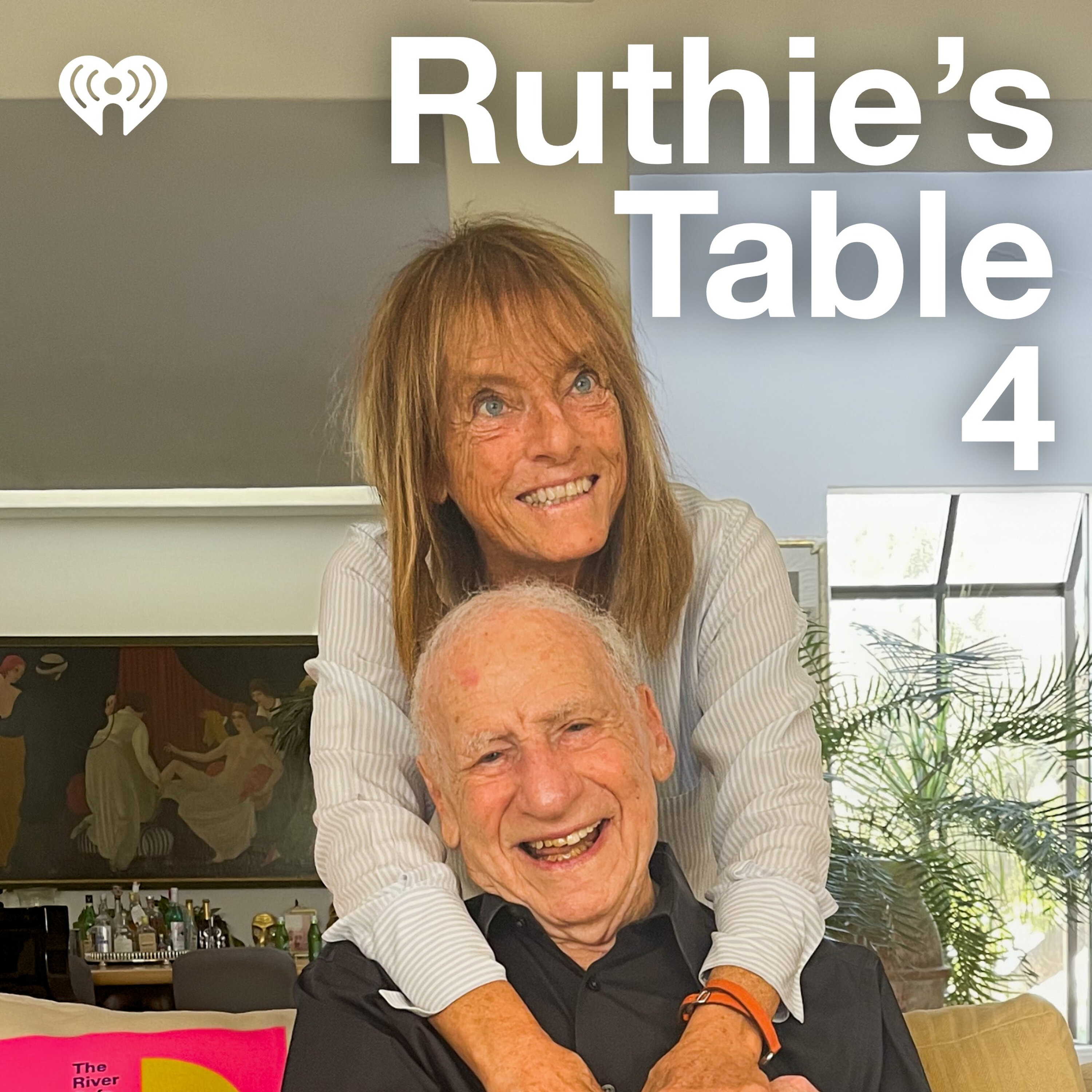
Mel Brooks Turns 100
This week marks a very special occasion. My friend, Mel Brooks, is turning 100. For the best part of a century, he has lit up the world with his warmth and humour, delighting audiences as a writer, director, actor and comedian. From The Producers and Blazing Saddles to Young Frankenstein, his unique talents have left an indelible mark on film, television and theatre. To celebrate Mel, we're going to revisit some of the best moments from his wonderful appearance on Ruthie's Table 4, back in 2023 - one of my favourite ever episodes. We talk about the food of his childhood in Brooklyn, keeping…
-

S5 · E36 · 29 Jun 2026 · 35 min
Graham Norton
To be a truly great host, as Graham Norton is every week on his television sofa, you have to understand and genuinely like people. It's the same for me at the River Café. There's no such thing as a difficult customer. Everybody has a story, and every table is a world. Usually it's Graham asking the questions, but today, he's answering mine—about his early years in an American commune, his time working in restaurants, cooking, writing, and the art of hosting. See omnystudio.com/listener for privacy information.
-
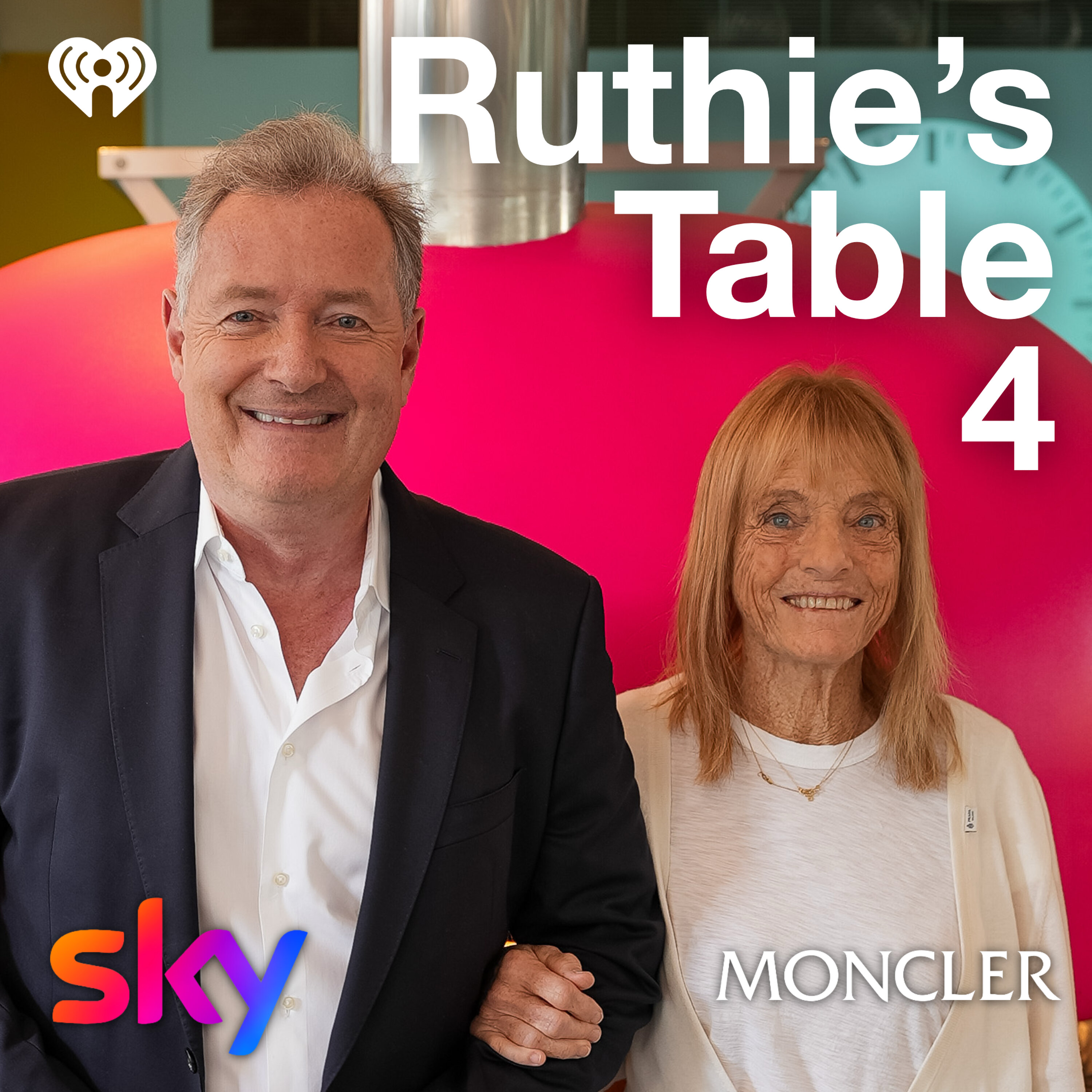
S5 · E34 · 15 Jun 2026 · 48 min
Piers Morgan, Broadcaster
Everyone knows Piers Morgan as a journalist, editor, and fearless interviewer. But I also know him as someone who loves food and can describe in detail what makes a great restaurant. Today, we're here together to talk about growing up in his family's country pub, the postcard he cherishes from his mother, drinks with Bill Clinton, dining with Tom Hanks, and seeing the glass half full. Order Table 4 at The River Cafe —the star-studded, food-filled book inspired by the beloved podcast: https://bit.ly/Table4AtRiverCafeBook See omnystudio.com/listener for privacy information.
-
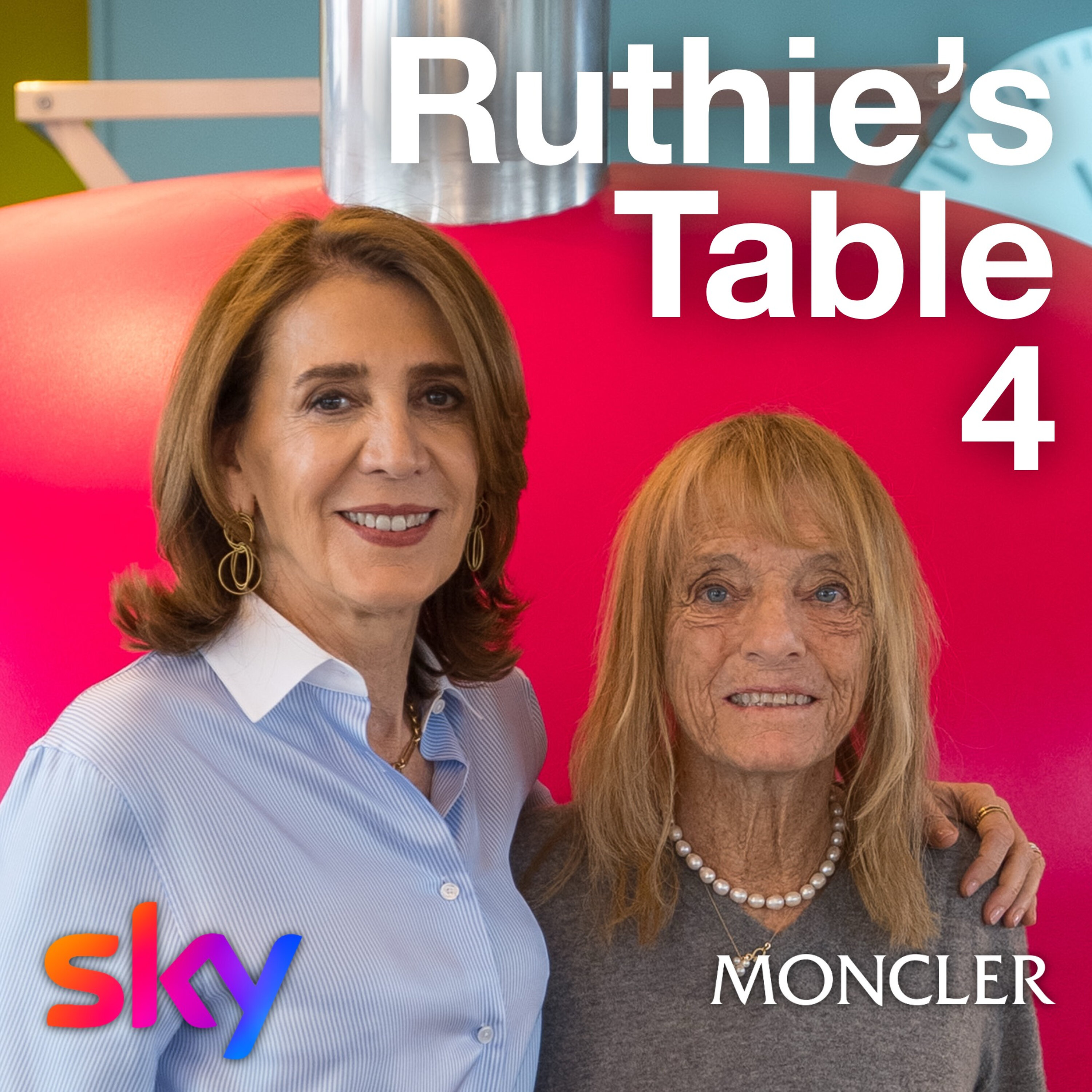
S5 · 11 Jun 2026 · 32 min
Bonus: Ruth Porat - “If We Can, We Must.”
Ruth Porat - President and Chief Investment Officer of Google and Alphabet - discusses the social responsibilities that come with technological advancement and how AI must be used to tackle society’s most intractable problems. Order Table 4 at The River Cafe —the star-studded, food-filled book inspired by the beloved podcast: https://bit.ly/Table4AtRiverCafeBook See omnystudio.com/listener for privacy information.
-
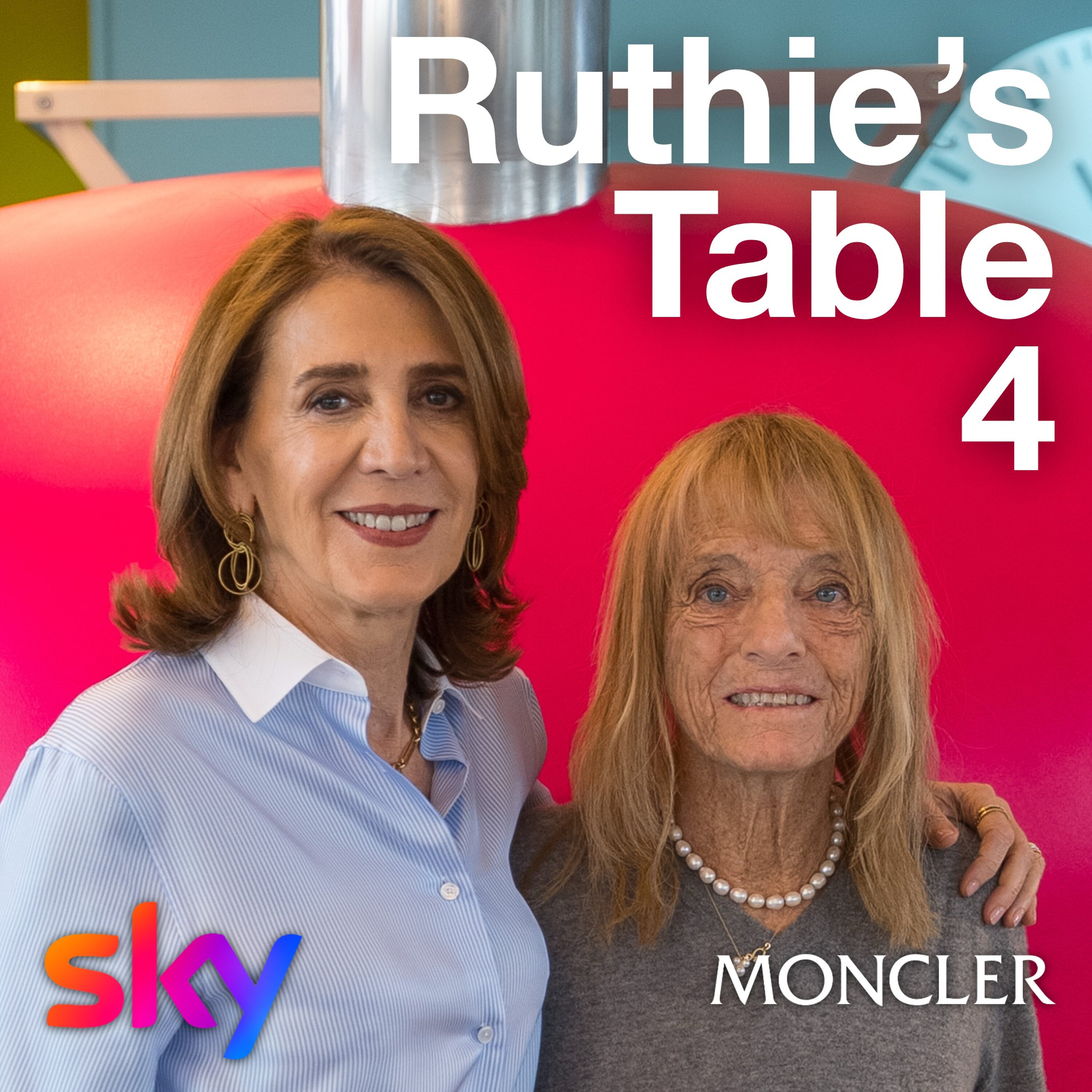
S5 · E33 · 8 Jun 2026 · 32 min
Ruth Porat, President and Chief Investment Officer at Alphabet and Google
Ruth Porat is the President and Chief Investment Officer of Google and Alphabet. She is also my friend. Her extraordinary schedule has often kept us thousands of miles apart as she moves across continents, connecting people, ideas, and communities. But today, we’re together at last - a Ruth and a Ruthie - to talk about the importance of food at Google, her scientific childhood, how her father survived the Holocaust to rebuild his family, and how her grandmother spent her last day showing love through food. Order Table 4 at The River Cafe - the star-studded, food-filled book inspired by…
-

5 Oct 2026 · 33 min
From the Archive: Cate Blanchett on growing her own food, multiculturalism, and a disastrous Christmas dinner
This week, we’re looking back to the summer morning we shared with Cate Blanchett, who joined me at The River Cafe after her run in Thomas Ostermeier’s The Seagull . We talked about the pleasures of touring a play, growing up between American and Australian food traditions, silent meals after losing her father, teenage dinner parties inspired by a Salvador Dalí cookbook, the joys of growing food, and her love of sake. Hit FOLLOW to make sure you never miss an episode, and join the Ruthie’s Table 4 community on social. Instagram: instagram.com/ruthiestable4 TikTok:…
-
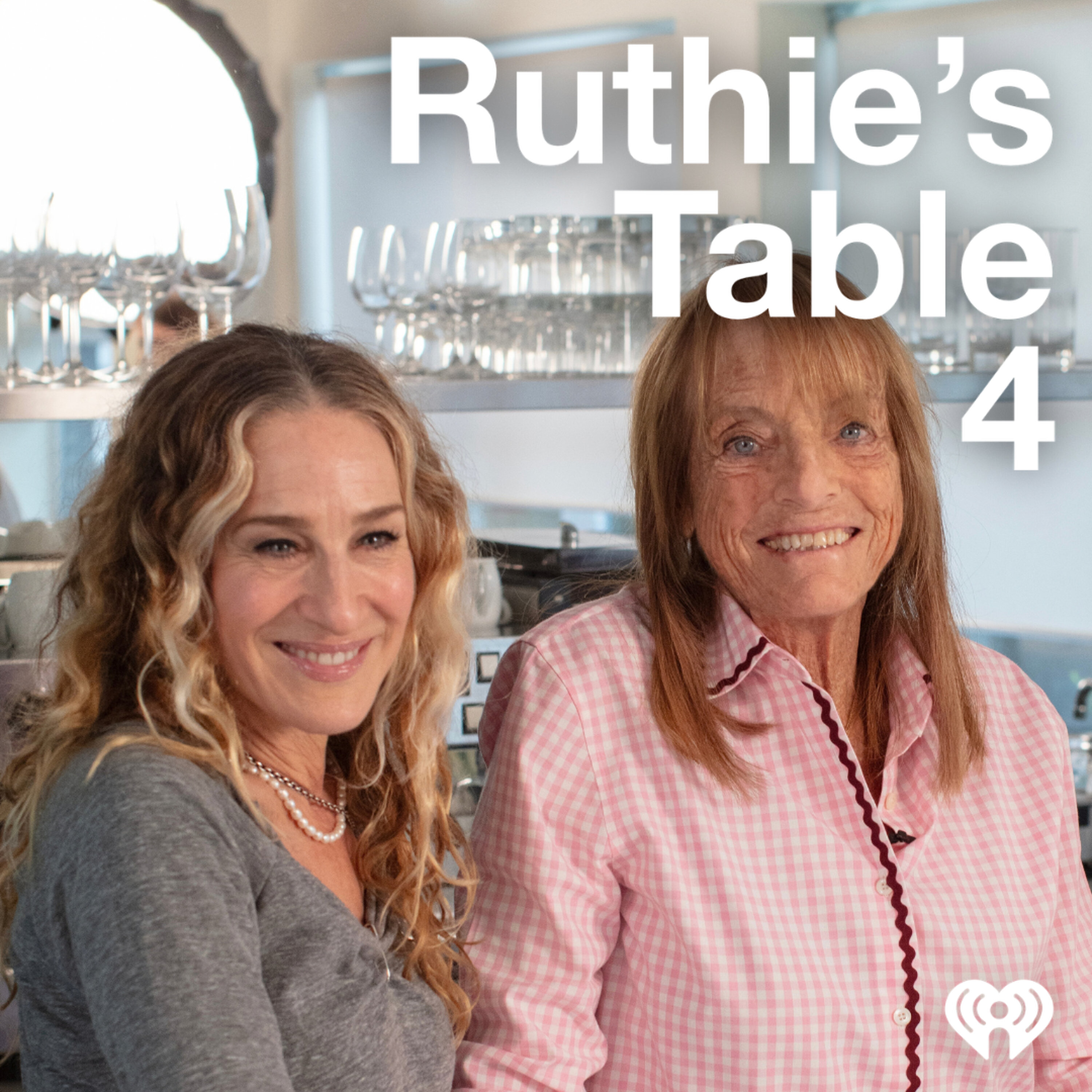
28 Sep 2026 · 44 min
From the Archives: Sarah Jessica Parker on the importance of food in Sex and the City, cooking with her husband, and pork chops.
This week, we’re revisiting our live episode with Sarah Jessica Parker. And what a guest she was. Sarah has always had a deep love of food, so we had plenty to talk about: from the role of food in Sex and the City , where so many memorable conversations unfolded around a meal, to growing up as one of eight children and cooking every night with Matthew Broderick. She cooked puntarelle in the kitchen with Sian Wyn Owen, took questions from our audience, shared her thoughts on airplane food, revealed her perfect pork chops, and her devotion to Burford eggs. Hit FOLLOW to make sure you…
-

21 Sep 2026 · 35 min
From the Archive: Benedict Cumberbatch on Living with Wes Anderson, Imitating Ruthie & ‘Daddy Pancakes’
During our between-season break, we’re revisiting some of our favourite conversations from the Ruthie’s Table 4 archive. This week, we're looking back to when Benedict Cumberbatch joined me at The River Cafe to talk about Negronis with Wes Anderson, growing up in a theatrical family, body transformations, and cooking for his children. Hit FOLLOW to make sure you never miss an episode, and join the Ruthie’s Table 4 community on social. Instagram: instagram.com/ruthiestable4 TikTok: tiktok.com/@ruthiestable4 YouTube: youtube.com/@RuthiesTable4Pod Shop River Café Books…
-
15 Sep 2026 · 49 min
From the Archive: Zoe Saldaña on Growing Up in Queens, Family Recipes & Why NYC Has the Best Pizza
As we look forward to Series 6 in October, we’re revisiting some of our favourite episodes of Ruthie’s Table 4 . Zoe Saldaña was a force from the moment she entered the restaurant back in 2025. She told us stories about her grandmother’s coconut desserts, how her family dances through life, and what it was like growing up in Queens. We talked about Caribbean soups, Dominican cooking and New York pizza — and by the end of the episode, we were all ready to eat. Hit FOLLOW to make sure you never miss an episode, and join the Ruthie’s Table 4 community on…

Take it with you
The Melo app keeps playing with the screen off, works in the car and on your watch, wakes you to your station, and browses the whole catalogue offline. Free, no ads, no account.