Episode notes
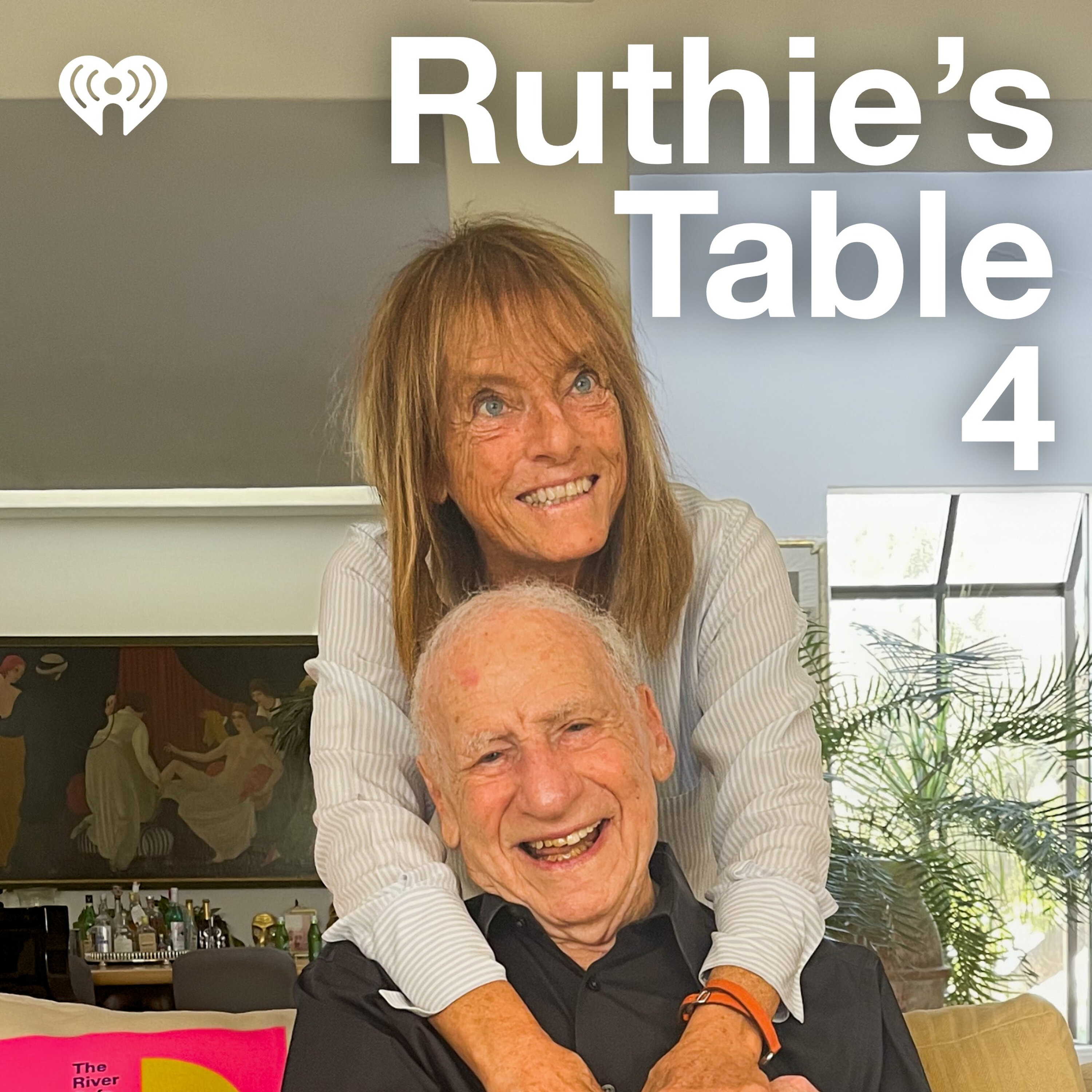
This week marks a very special occasion. My friend, Mel Brooks, is turning 100. For the best part of a century, he has lit up the world with his warmth and humour, delighting audiences as a writer, director, actor and comedian. From The Producers and Blazing Saddles to Young Frankenstein, his unique talents have left an indelible mark on film, television and theatre. To celebrate Mel, we're going to revisit some of the best moments from his wonderful appearance on Ruthie's Table 4, back in 2023 - one of my favourite ever episodes. We talk about the food of his childhood in Brooklyn, keeping…
Transcript
Read the transcript · about 2,940 words, follows along as you listen
Speaker 1:Mel Brooks makes the world laugh. Watch the Producers Blazing saddles Young Frankenstein, Listen to the two thousand year old Man, or read his autobiography All About Me, and you are guaranteed to find yourself laughing out loud until it hurts. But for me, having known mel for twenty five years, funny is not the first word I would use to describe this amazing man. Hungry, hungry, fiercely proud. Do you think that's your adjective? You get hungry with you? I get hungry when I see you. Well, we love you there, fiercely, proud of his children and his grandchildren, the first one to pick up a phone to a friend in trouble, refusing an award in opposition to the Iraq War and waiting to accept it from President Obama. Vulnerable after the loss of people he loved to mail. Food and wine are crucial. Many of his life's happenings have occurred in restaurants, and as for wine, he will tell you himself.
Speaker 2:Spill it all over the table.
Speaker 1:I'm trying to take this seriously. Today it is home. We are together, lucky me. We're going to talk about wine and family and friends. And be prepared to laugh because mel Brooks is funny. So that was a serious introduction. I want to tell you what do you want to tell me that.
Speaker 2:Before we stopped talking, before I forget, I would like to do my imitation of a cat, because not a lot of people know that I do it. I make the best cats sound in the world. Ready, I just want to just give me.
Speaker 1:I just need one second to really get myself into this.
Speaker 2:Here's no Brooks doing the sound of a cat. That is that is a perfect sound. It's hard to do, hard to do. How do it? In young Frankenstein? I think it's it's a dart throwing contest and one of the dots hits a cat and you hear you know, did.
Speaker 1:You do the sound? I get there every night? Can you do it again?
Speaker 2:Wow?
Speaker 1:That's good? So what's the technique?
Speaker 2:Technique is to is to squash some air between your cheek and the front of your mouth.
Speaker 1:Let's begin at the beginning. Earliest food memories. What do you remember from you know, your early days. Did your mother cook?
Speaker 2:Yeah? My mother, okay, it was it was a standard Williamsburg Brooklyn Jewish tenement food. So breakfast in the winter was always a hot cereal, cream of wheat or Rollston which was the kind of Barridge Brown Barridge. And then in the summer corn flakes, rice krispies or wheaties.
Speaker 1:What year would that have been? How old would you?
Speaker 2:I would that would be thirty five, I'd be around nine. That's when I went my uncle Joe, shortest jew on earth. Short he was about four to four when when a taxi, a big checker taxi cab rolled down the streets of Brooklyn and there was no driver. That was there was no driver. It was so short it get just about peer over the you know. Anyway, Joe took me because his friend Al was the doorman of the Alvin Theater on fifty second Street, and running at that same theater was Cold Porters Anything Goes. I had never seen a Broadway show. I was nine years old and Uncle Joe took me to see Anything Goes. I was stunned. I was.
Speaker 2:I couldn't believe it, even though we were in the second balcony, was far away from the stage as you can get ethel Merman was too loud, No MIC's she was just jish. Anything Goes. At the end, I nearly clapped my hands over. I just couldn't stop clapping and screaming and shouting. And then I got back in uncle Joe's cap. I said to him, Uncle Joe, I'm not going in the garment center. Everybody at three sixty five South third Street between on Hooper and Use, everybody in that building worked in the garment center. They were shipping clerks, they were cutters, these tenements. Everybody in the garment center.
Speaker 2:And I screamed at my uncle Joe, Uncle Joe, I'm not I'm not going into the garments at I'm not I'm gonna go into show business. I loved it. I loved it, you know. And it changed, but it did and I did.
Speaker 1:And because he take you to food, but do you take you out to eat? I always went to the theater as a kid. And then there was the meal afterwards, lunch before it was a day.
Speaker 2:We had some favorites that Uncle Joe would take us to. One was called Gallagher Steakhous. They had like half a cow in the window. I always had these half cows in the window, you know, raw hanging gallaghers, and the and the steak was incredible. Some a lot of Jewish restaurants were called dairy restaurants, and they serve stuff like blinches with sour cream and old dairy. You ever mixed meat and dairy with something some religious nonsense?
Speaker 1:Did your grandmother cook for you?
Speaker 2:My grandmother cook?
Speaker 1:What did she cooks? Which grandmother? Your mother's mother? I never knew, you never knew your father's.
Speaker 2:No, No, my father his grandmother. I didn't know. She did save her meals, best olden meals in Bensonhurst where they lived in a big one family.
Speaker 1:Did they come with their first generation?
Speaker 2:Yeah?
Speaker 1:They were European, Yeah, born born and so do you think your grandparents brought their food with them, the food culture.
Speaker 2:They cooked the same stuff. Mostly it was chicken, chicken and chicken soup.
Speaker 1:And uh briscuit.
Speaker 2:Yeah, they made brisket. Absolutely, they made brisket and brown potatoes.
Speaker 1:Do you know my grandparents came they were They came from Hungary and Russia. And my father remembers my grandmother having in the Lower East Side a carp swimming in the bathtub that they would make a filter fish out of. So can you imagine having a look, they would bring it a live fish.
Speaker 2:Live fish.
Speaker 1:We would get a live fish.
Speaker 2:My brother Bernie and I were usually one week. We loved and we called him already and we fed them bread crumbs and we chased them around the bathtub. And then it was unspeakable. I can't even describe it. Irving, my old oldest brothers Irving and Lenny held us back. We were screaming, don't kill him. And my mother would say, we gotta eat, we gotta eat supper. And she'd kill Audie and serve them and we would cry and we ate them.
Speaker 1:And then would you get another carp and kill that? We got another carp It's so interesting that they had live fish swimming in the back.
Speaker 2:And let me tell you that my mother used to make every once in a while on a Sunday night, she would make spaghetti. She would buy a box of Mullers noodles. They were flat, flat noodles, and she cooked them until they were dead. They were really soft, and then she put them in a baking pan and she would empty a bottle of Heinz ketchup over there, this is spaghetti. And then she'd bake it for thirty or forty minutes until the pan was dead, till everything was dead, and then She cut them into squares and served it to us and he said spaghetti. And I was from eight years old to about thirteen or fourteen. That was spaghetti and it was okay, Yeah, it was really okay.
Speaker 2:Then I had joined a club called the Baltzer Bugs. We made model airplanes. I think we enjoyed smelling the glue. Why do we like baking the planes? But we made so one of the Baltzer Bugs it was Bernie Steinberger, was Flappy Rothman, and there was Tony Galliani and Italian an Italian. And Tony said I'm going home. It was Sunday and I said. He said, I'm going home to have spaghetti. I said, we have spaghetti on Sunday too. He said, well try, you know, come on and have bar spaghetti. So I went home. I walked into his apartment, which was in green Point at on the edge of Williamsburg.
Speaker 2:As I walked in, I was assaulted by these incredible smells, just as the aromas of of of garlic, and I mean it was just incredible. Then I sat down. They served this warm, squiggly spaghetti, real spaghetti, squiggly but not dead. My fotback and saw this red thick red, beautiful sauce with meatballs in it, and and sprinkled on top of it was this white stuffed snow. I think it was parmesan cheese. And I took I took one bite, and I started to cried. I wept. I wept, and I said, Tony, this is spaghetti. This is spaghetti. I was about fourteen, and I just wept and I went. When I came home, I said, Mom, you're not making spaghetti. I don't know what that stuff is, that cardpoint, but it's not spaghetti.
Speaker 2:One of the most delicious things was very simple. We lived at five stories up in this tenement. I was not going to come up for lunch. I was not why because there was five stories and I didn't want to leave the game. So we took a break in the game and we all had lunch. They all brought bags and stuff with them, sat on the curve of my friends and my mother would throw in it, throw down in a brown paper bag, kaiser roll smeared with a lot of butter, fresh butter, and almost a whole tomato sliced and salted and put that and it was the most delicious thing. You'd catch it and I'd always catch it, but one time I missed it.
Speaker 1:I was going to say five stories up.
Speaker 2:As one time I missed it and splashed black. You heard the sound and the bag was crammed with wet So I very carefully peeled what used to be the bag away from the sandwich, and I began eating the sandwich, and I once again cried. It was so great. It was the closest thing to pizza.
Speaker 1:When did you have your first pizza?
Speaker 2:Oh, I have my first pizza when I was I don't I was sixteen or seventeen.
Speaker 1:Yeah, So you always cared about how food tasted.
Speaker 2:Yeah, And there was one big, another, very big revelation in my food. Jeane Wilder, I could cry. Take him, You're so sweet, sweetest invited Anne and I to dinner it is house and in the village at his house apartment in the village. I forgot what we hate. But he served wine. Up until then, the only wine I had ever really, I never cared for wine. I don't say it tastes a little sour up until then. Mana chevitza carmel is a sweet Jewish wine. And I tasted this wine.
Speaker 1:Was it a French wine?
Speaker 2:It was a French wine, Santa stef you know, and I said, what is this? He said, it's wine. I said, so this is wine? And he got me hooked. And from that day I think I was twenty something whatever, twenty four, twenty six, I don't know, to that day to this if I have wine, it's always a good wine. It's either a good Italian wine or a good French wine or a good half of valley wine. But he taught me that wine wine could actually taste, really taste good, you know.
Speaker 1:And so how did you make the kind of voyage from tasting wine to having one of the great sellers?
Speaker 2:And well, up until Blazing Saddles, I was hanging on the show business with the skin of my teeth, not making any money. The first movie I made was The Producers, good movie. I won the Academy Award for the screenplay, but just about broke even. And then the next one was The Twelve Chairs, which was a foreign movie kind of you know, made It was a good, very one of my best movies, but alas it didn't make a penny. So I was thinking of going back to television, where I was doing all right, I was making money, and then blazing saddles and that was an explosion, busted open the doors and windows and gave me enough money to buy house. And you know, finally pay pay for dinner and didn't have to slip me money under the table.
Speaker 2:And I was okay.
Speaker 1:When you were working in film in the studios, what would food be like? There would there be a canteen where you ate? What were they called the commissary?
Speaker 2:What would they commissary?
Speaker 1:Commissary?
Speaker 2:What was that my arm? It's a mess hall. Yeah, in the movie studios, it's a thomassary.
Speaker 1:And what happened? What was that like?
Speaker 2:Well? Some some had a Fox? Was very good?
Speaker 1:Was that a way of kind of meeting people? Who did you meet when you had a commissary? Yeah?
Speaker 2:Well mostly the folks that I met, you know, the stuff that you know, Allan Ladd Jr. Who ran Fox often liked to eat at my table.
Speaker 1:Yeah.
Speaker 2:And Jay Canter who at one time as an agent for MCA handle Marlon Brando, Grace Kelly, I mean, and they all liked him because he was soft and sweet and he was so Jay used to eat with us.
Speaker 1:Your good friend Alan Up who Alan whenever he was in town. He told me to ask you a story about Carry Grant. Yes, what's the story about Carry gran Oh, it's.
Speaker 2:A good story. Okay. I was not yet a filmmaker, but I was writing a movie for a guy called Marvin Schwartz on the Universe a lot. So I'm writing this movie and I look across the way and I see Grandhart g r a n Art and I say to Marvin Schwartz, Marvin, what the hell is Grant Grandhart? Who works there? He said, that's Carry Grant. That's Carry Grant. That's about twenty feet away. It's thirty feet away.
Speaker 1:What here was this smell?
Speaker 2:This was I can tell you exactly fifty nine. Yeah, I think fifty nine.
Speaker 1:So you're watching.
Speaker 2:I'm watching to see carry Grant. I'm watching, and sure enough a rolls Royce comes. I would know. A guy gets out of chauffeur. He opens the back door, bounding two steps at a time up up the stairs to Grandharts in a gray it has got to be Good's, dark gray with chalk stripes, double breasted Carry Grant. It was him. I said, holy shit, Carry Grant. I can't believe it. So one day soon after that, I'm walking down about twelve thirty two, the commissary at Universal. I hear a little click clack behind me, and I turn around and I hear mel Brookshaw. I don't believe it.
Speaker 2:It's mel Brooks. I said, oh my god, it's Carry Grant. I said, how do you know me? He said, I got your record. I just bought your record. You cost me one thousand dollars. I bought so many record And then he said, but where are you going? I said to the company. He said, well, let's go together. So wow, I'm going to have lunch. I had lunch with Carry Grant. I called my brother Bernie, Lenny, Irvy. I called everybody Williamsburg. They you wanted to know what he ate? I said he had two poached eggs yon toast, but I had Tunicial. Yeah, okay.
Speaker 2:Next day, phone rings, it's car Carrie. Yeah, it's mail Carry Mal. They come lunch. Yes, well boom. Together Me and Carry Grant. We walked down the Wednesday was me and carry it. Thursday, Me and we're talking. What's your favorite color? I say blue? He says yellow. What's your favorite car? I said buick? He says the rolls or yeah, comes right. I don't know what, they ask him. I don't you know, I know it's gonna call. I run out of dialogue. So the phone rings, and I said to Marvin, if it's Carry Grant, I'm not in, which is not true, but I mean makes.
Speaker 1:Great Did you see him ever again all the time? One of the carry Grunt stories.
Speaker 2:You know, I used it in my stand up stuff and I made it funny, but actually, if I told the truth, it was really very touching because he was really a good actor, and he had made some very beautiful, you know, intelligent soft films about love and people, and they have none of it. I kept saying, why don't that was such a great picture? What did they make? He said, because the money was in the light comedies.
Speaker 1:So I think that you know life through food and through your family and to your grandparents, and coming here to do this home and memories.
Speaker 2:Food at the River Cafe still is literally some of the best. And and I've eaten and some really restaurants, you know.
Speaker 1:And when I came here, I told Danny, remember Danny the chef, And I said I was coming to see you, and he said, you know, I once made a risotto for mel and he came up to the past and he said, Danny, you made that risotto. You should be proud of yourself. And it was so something, so meaningful because you didn't say I'm proud of you, and you said you should be proud of yourself. So I'd like to end this by saying, mel Brooks, you should.
Speaker 2:Be proud of you.
Speaker 1:I love you, No, thank you,
Transcript supplied by the publisher with the episode.
Ruthie's Table 4
by iHeartPodcasts · English · Arts & Books
For nearly forty years, The River Cafe in London has been a home-from-home for artists, architects, designers, actors, collectors, writers, activists and politicians. It is also the home of its co-founder, Ruthie Rogers — restaurateur, cookbook author, podcast host and one of the most influential fi
More from Ruthie's Table 4
-

S5 · 10 Jul 2026 · 7 min
Bonus: Erin Lyall on Eating With Soldiers
Erin Lyall, a conflict producer for CBS News, reveals what it's like to eat with soldiers, how an army feeds itself, and how she personally recovers after the strain of working in a war zone. See omnystudio.com/listener for privacy information.
-

S5 · E37 · 6 Jul 2026 · 40 min
Erin Lyall, Conflict Producer For CBS News
As a conflict producer for CBS News, Erin Lyall has eaten with Ukrainian soldiers on the freezing front line, cooked with families in their homes in Gaza, and shared meals on the battlefields of Syria and Iraq with bullets sounding in the distance. From these experiences in the field, Erin created Food Under Fire, a unique food blog featuring recipes, anecdotes, and portraits of the people she's met on her journalistic travels. Today, we're together in the safety of the River Café to talk about how food can bring us together, both in war and in peace. Order Table 4 at The River Cafe…
-

S5 · 3 Jul 2026 · 6 min
Bonus: Graham Norton on why you should work in a restaurant
Graham Norton reveals what he learned from working in restaurants, what he noticed about tricky customers, and why he would recommend the experience to everyone. See omnystudio.com/listener for privacy information.
-

S5 · E36 · 29 Jun 2026 · 35 min
Graham Norton
To be a truly great host, as Graham Norton is every week on his television sofa, you have to understand and genuinely like people. It's the same for me at the River Café. There's no such thing as a difficult customer. Everybody has a story, and every table is a world. Usually it's Graham asking the questions, but today, he's answering mine—about his early years in an American commune, his time working in restaurants, cooking, writing, and the art of hosting. See omnystudio.com/listener for privacy information.
-

S5 · E35 · 22 Jun 2026 · 31 min
Giulio Bertelli, Filmmaker
Last September, at the Venice Film Festival, I went to see Agon — a radical and powerful film. Afterwards, I immediately changed my schedule to attend a dinner for its director, Giulio Bertelli. Today, Giulio and I are back together in Hammersmith to discuss his filmmaking, the food of his childhood in Milan, his time as a professional sailor, the history of food and seafaring, and the company he has built as he looks to food's future. Order Table 4 at The River Cafe —the star-studded, food-filled book inspired by the beloved podcast: https://bit.ly/Table4AtRiverCafeBook See…
-
S5 · E34 · 15 Jun 2026 · 48 min
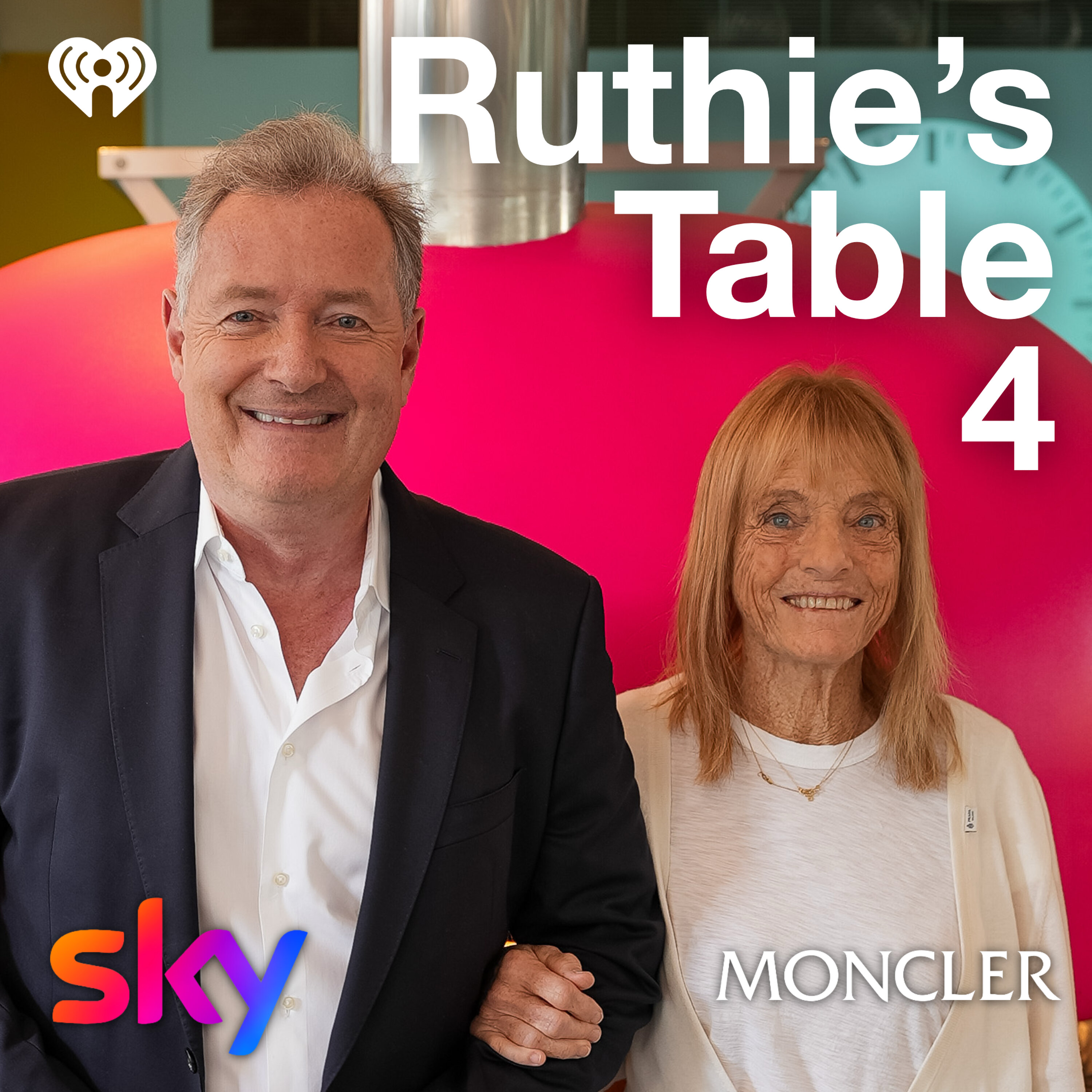
Piers Morgan, Broadcaster
Everyone knows Piers Morgan as a journalist, editor, and fearless interviewer. But I also know him as someone who loves food and can describe in detail what makes a great restaurant. Today, we're here together to talk about growing up in his family's country pub, the postcard he cherishes from his mother, drinks with Bill Clinton, dining with Tom Hanks, and seeing the glass half full. Order Table 4 at The River Cafe —the star-studded, food-filled book inspired by the beloved podcast: https://bit.ly/Table4AtRiverCafeBook See omnystudio.com/listener for privacy information.
-

5 Oct 2026 · 33 min
From the Archive: Cate Blanchett on growing her own food, multiculturalism, and a disastrous Christmas dinner
This week, we’re looking back to the summer morning we shared with Cate Blanchett, who joined me at The River Cafe after her run in Thomas Ostermeier’s The Seagull . We talked about the pleasures of touring a play, growing up between American and Australian food traditions, silent meals after losing her father, teenage dinner parties inspired by a Salvador Dalí cookbook, the joys of growing food, and her love of sake. Hit FOLLOW to make sure you never miss an episode, and join the Ruthie’s Table 4 community on social. Instagram: instagram.com/ruthiestable4 TikTok:…
-
28 Sep 2026 · 44 min
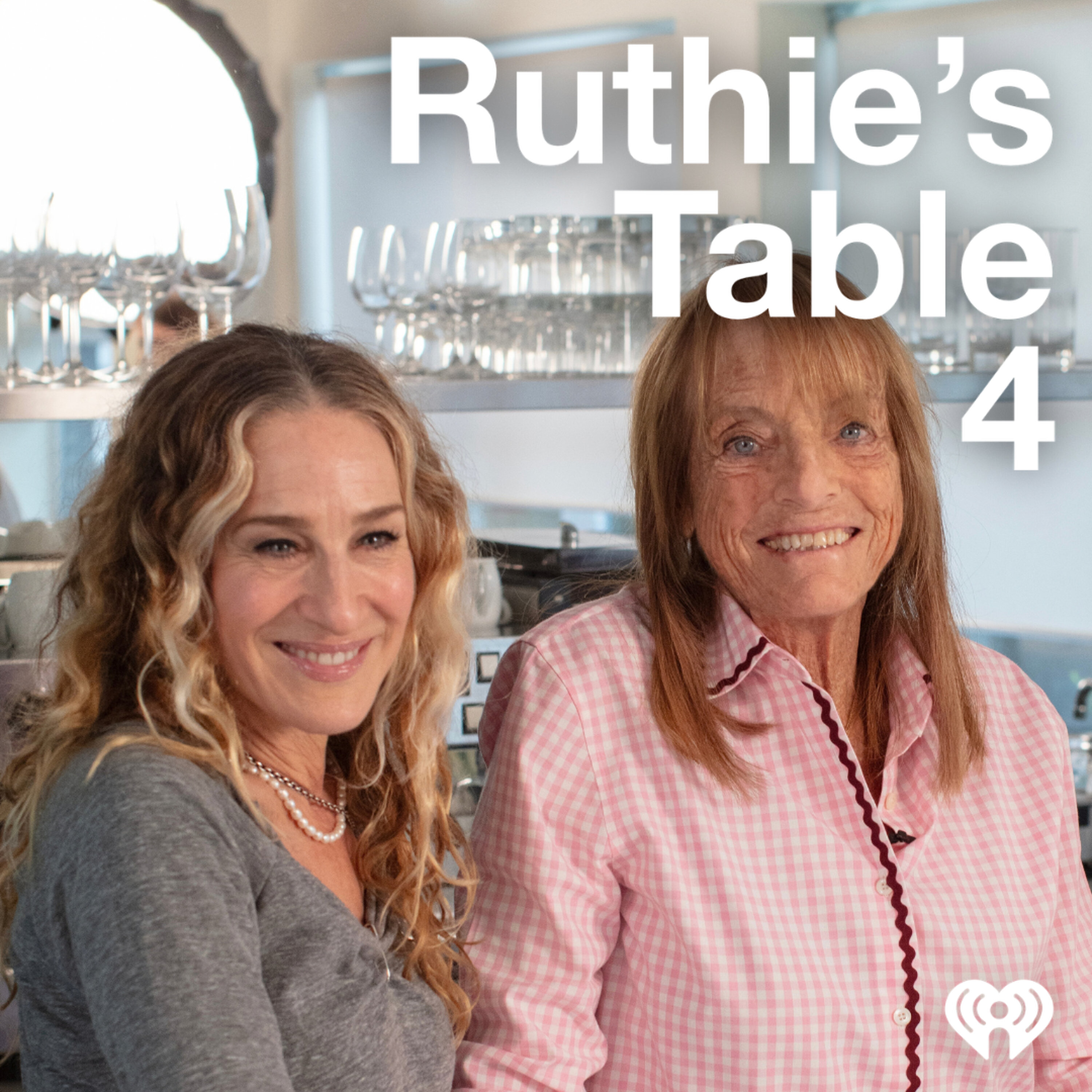
From the Archives: Sarah Jessica Parker on the importance of food in Sex and the City, cooking with her husband, and pork chops.
This week, we’re revisiting our live episode with Sarah Jessica Parker. And what a guest she was. Sarah has always had a deep love of food, so we had plenty to talk about: from the role of food in Sex and the City , where so many memorable conversations unfolded around a meal, to growing up as one of eight children and cooking every night with Matthew Broderick. She cooked puntarelle in the kitchen with Sian Wyn Owen, took questions from our audience, shared her thoughts on airplane food, revealed her perfect pork chops, and her devotion to Burford eggs. Hit FOLLOW to make sure you…
-

21 Sep 2026 · 35 min
From the Archive: Benedict Cumberbatch on Living with Wes Anderson, Imitating Ruthie & ‘Daddy Pancakes’
During our between-season break, we’re revisiting some of our favourite conversations from the Ruthie’s Table 4 archive. This week, we're looking back to when Benedict Cumberbatch joined me at The River Cafe to talk about Negronis with Wes Anderson, growing up in a theatrical family, body transformations, and cooking for his children. Hit FOLLOW to make sure you never miss an episode, and join the Ruthie’s Table 4 community on social. Instagram: instagram.com/ruthiestable4 TikTok: tiktok.com/@ruthiestable4 YouTube: youtube.com/@RuthiesTable4Pod Shop River Café Books…
-
15 Sep 2026 · 49 min
From the Archive: Zoe Saldaña on Growing Up in Queens, Family Recipes & Why NYC Has the Best Pizza
As we look forward to Series 6 in October, we’re revisiting some of our favourite episodes of Ruthie’s Table 4 . Zoe Saldaña was a force from the moment she entered the restaurant back in 2025. She told us stories about her grandmother’s coconut desserts, how her family dances through life, and what it was like growing up in Queens. We talked about Caribbean soups, Dominican cooking and New York pizza — and by the end of the episode, we were all ready to eat. Hit FOLLOW to make sure you never miss an episode, and join the Ruthie’s Table 4 community on…

Take it with you
The Melo app keeps playing with the screen off, works in the car and on your watch, wakes you to your station, and browses the whole catalogue offline. Free, no ads, no account.