
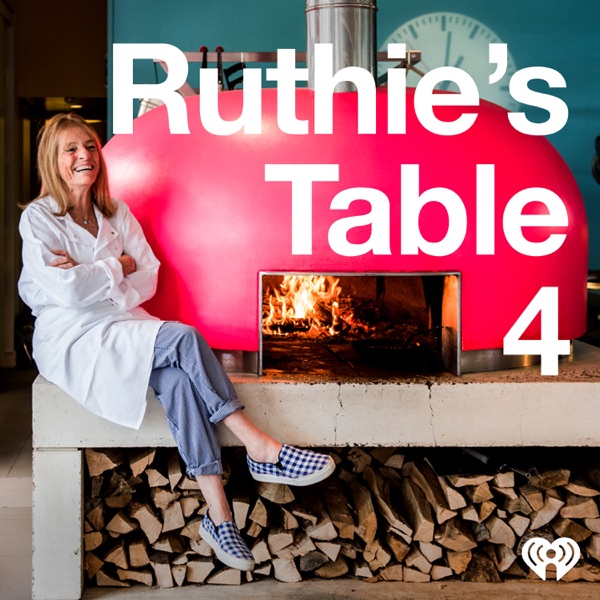
Season 5, Episode 30 · Ruthie's Table 4
Patrick Radden Keefe, Author of London Falling
19 May 2026 · 39 min
Season 5, Episode 30 · Ruthie's Table 4
19 May 2026 · 39 min
I’ve sometimes wondered whether writing a book might be a bit like cooking a meal. I create a menu by choosing the ingredients I’m drawn to. In the same way, today’s guest, Patrick Radden Keefe, creates a book by choosing the people he’s drawn to — most recently in his newly published London Falling: A Mysterious Death in a Gilded City and a Family’s Search for Truth. Today, we’re here together to talk about his latest book, his parents’ second dinner, the mise en place of his writing process, and the ingredients of his stories. Order Table 4…
Speaker 1:Ruthie's Table four, presented by Sky.
Speaker 2:It's interesting the idea of these kind of parallels between writing and cooking. I often use a kind of a culinary metaphor, so as I'm meeting with people, interviewing them, reading through archives, trying to get hold of documents, I'm always thinking, what's the story that I'm telling here? But when I sit down to actually write, it's usually close to the end, and I have this roadmap in front of me where I've actually arranged everything. I've plugged in all of these in raw form, all the little bits, and everything's roughly where I want it to be. But I say, it's like my mese on place. When I'm writing, I want I want the book to come together, the piece to come together for the New Yorker with.
Speaker 3:A kind of velocity.
Speaker 2:I want the sort of creative act itself to just flow through me as quickly as possible.
Speaker 4:David Fine, introducing me to Pat, Brad and Keith, said Ruthie, it's clear that you and Patrick have a lot in common. You're going to be good friends, and I think he was right. Growing up, we both remember ending every family meal with planning the next one.
Speaker 1:In our teens.
Speaker 4:We devoured the noir books by Raymond Chandler, Dashel Hammett, and jameson Kin. We both cooked and ate our way through college, and we.
Speaker 1:Both have rejected letters from The New Yorker.
Speaker 4:Patrick became a journalist and an author and I became a chef. But I still think we shared the way we approach our work. In fact, writing a book might be like cooking a meal. I create a menu, choosing the ingredients I'm drawn to in the same way I think he creates a book by choosing the people he's drawn to most recently, and is just published in London, Falling, a mysterious death in a gilded city, and a family's search for truth.
Speaker 1:Today we're here together to talk about all of this.
Speaker 4:Food and family, food and writing, food and stories. A writer and a chef much in common, and as David said, we are going to be good friends.
Speaker 1:Thank you for coming.
Speaker 3:That's so great to be with you.
Speaker 1:Yeah. So here we are, And how is how is it going in London?
Speaker 3:A little over stimulating?
Speaker 2:And the books about London And even though I have lived in this city and I love it and I know it well, I'm not from here I'm an interloper, and so I've.
Speaker 1:Been for fifty years and I'm an interview and you're.
Speaker 3:An interloper too, exactly, that's what yours are.
Speaker 2:The But so there was a question for me about how it would go down here. And then it's also a story about a family that's still alive and here and and you know, enmeshed in a community, and so there's a question of how's it feeling for them, you know, how are they doing?
Speaker 3:And the I mean, the good news is they're doing well. We're all okay, well.
Speaker 1:Let's get specific on London falling.
Speaker 2:You know, it's this story of family, really, Rachelle and Matthew, and they had two sons. Joe was the older boy and then Zach. And Zach was born in two thousand, was born with a shock of red hair and they didn't know where that came from.
Speaker 3:And I did, you know.
Speaker 2:The book in some ways sort of starts with that because it has a resonance, right, this idea that your own children can surprise you. I mean, the whole book in a way is about how strange it is to be a parent. And sometimes as you watch your child become an adolescent, they start to become someone you may not recognize. And I think in some ways this can be thrilling. You know, there are moments where Justina and I have adolescent boys, and there are moments where some some trait will manifest and we'll kind of look at each other and it's like, did that come from you?
Speaker 3:Did that come from me?
Speaker 4:No?
Speaker 2:And it's actually you realize now they're going to be their own person. You know, they're going to write their own story. And in this case, this boy, Zach grew up in London at a certain time with you know, the city becoming a destination for a lot of very very wealthy people. And he came from a family that was actually relatively well off and lived and made a veil a nice neighborhood in London, and it was a very close, loving family. But he felt a sense of inadequacy.
Speaker 2:You know, he would see the kind of supercars on London streets and some of the luxury real estate and found himself wanting more, wanting more than his family had, and I think that was quite destabilizing for an adolescent. And eventually what his parents come to discover after his death at nineteen is that he had been pretending that he was the son of a Russian oligarch. And so, you know, it's a story about family and adolescents, but also what happens when somebody who's one of the people you love most in the world turns out to be a person you don't really understand.
Speaker 4:And how is you tell us about the family? How you established that trust with them?
Speaker 2:So I had I was living in London in the summer of twenty twenty three, a happy summer in which I ate at this wonderful restaurant on more than one occasion, producing a TV series which is on a facsin It's called Say Nothing, and it's based on my book of the same title. And so the production got us an apartment, my family an apartment in notting Hill, and I was on set one day between setups, you know, like an executive producer, not doing much of anything, doing the word along my phone. A guy sat down next to me who was a visitor of the director, and we started chatting.
Speaker 2:I told him that I write for The New Yorker, and he said, I might have a story for you. And he said, I know this family here in London. I'm very close with them, and they had this terrible tragedy in twenty nineteen. They lost their nineteen year old son in mysterious circumstances. He went off the balcony of a luxury building overlooking the towns, just next to Vauxhall Bridge. And after he died, his parents made this shocking discovery, which is that he had had this secret double life and he had been pretending that he was the son of a Russian oligarch. So he told me that much, and I knew I have to write this story, but I didn't know if they would be ready to tell it.
Speaker 2:And so he arranged a meeting.
Speaker 1:How many years had it been since this is so?
Speaker 2:Zach had died in November twenty nineteen, and this was the summer of twenty twenty three.
Speaker 3:Yeah, four years. Yeah, And.
Speaker 2:We met for coffee about a week later in Bloomsbury, just sitting outside at a cafe on a summer day near the British Museum. And the understanding was it was all off the record. I try and be as kind of transparent as I can. I understood they had been very it was quite a private family and.
Speaker 3:It's a big step.
Speaker 2:I mean, this book, what became this book. It really reveals a great deal about you know, their family's history, this very traumatic, awful loss that they've had. That's a big step to open yourself up in that way. And so I said, I'm not going to put any pressure on you. You guys have to decide. And I think they did a bit of due diligence on me. I think they read some of my work. And we met again about a week later at a bar in Soho and at.
Speaker 3:That point they said, okay, we're ready to do this.
Speaker 2:And no, that was several years ago and we've been in almost constant touch ever since, just hundreds of hours of conversations.
Speaker 1:And would you always do them together?
Speaker 2:Would you know, sometimes together, sometimes separately. And interesting things came out when I was talking to them individually, and there were things I think it wasn't so much when they read the book, but when we got into the fact checking process for the book, there were things that Mathew and Rachelle learned that they hadn't necessarily known. And they read the book before it was out. I didn't show it to them until it was done. You know, I give to them and I said, I can't change a word of this At this point. But I do think that you, given how personal this story is, you deserve to see it before the rest of the world does.
Speaker 2:And you know, there are things in the book that I think make them uncomfortable. There are things that if they were in control, probably wouldn't be in the book. But they could see that this is partially a story about whining, and that's it has to be. I couldn't be holding things back, you know. So we launched the book about a month ago in New York at the ninety second Street Why and they came and they were there in the audience, and I'm doing an event tonight in Marley Bona dont Books, and they'll be there again.
Speaker 2:And yeah, it means the world to me that they that.
Speaker 3:They don't they don't replacing that trust in me.
Speaker 1:How do you feel having finished it?
Speaker 3:I feel good?
Speaker 2:You feel Yeah, I was, you know, I was nervous. I think about because I'm so often the outsider. You know, I wrote a book about the troubles in Northern Ireland and I'm from the US.
Speaker 4:I am.
Speaker 2:You never know how people are going to take it when you describe their place, and I try to do the work so that I can speak with a kind of authority. But also I think it's helpful sometimes to be an outsider. I think you have a perspective, you can sort of see things from a slightly different angle. And the reception has been amazingly warm to the book.
Speaker 4:And the way you write a book and the way I cook a meal or think about food. What would be interesting to see is how that slight parallel of the way that I might talk about the ingredients and the quality of the ingredients. And David told me that you really think about the people in the story before you write the story.
Speaker 3:So yeah, to you.
Speaker 2:I mean, it's interesting the idea of these kind of parallels between writing and cooking. It's funny because I often when I talk with I mean, this gets a little bit kind of technical and into the craft a bit. But when I talk to writers and journalists about how you assemble a book or an article or how I do, I often use a kind of a culinary metaphor, which is that the I never sit down to write with a blank page, because I go out.
Speaker 3:Into the world.
Speaker 2:I try and stay curious. I always start conversations with strangers. It's a habit of mine, but a good one, I think, because you never know where an interesting story is going to come from. And then I'll slowly start kind of building out the story as I go, and I'm outlining as I go, so as I'm meeting with people, interviewing them, reading through archives, trying to get hold of documents, I'm always thinking, what's the story that I'm telling here, what's the beginning of the middle of an end? Are the what are the kind of big moments along the way.
Speaker 2:And I have this outline that slowly populates and the culinary metaphor is coming. But when I sit down to actually write, it's usually close to the end, and I have this roadmap in front of me where I've actually arranged everything. I just haven't written it yet. I've just sort of I've plugged in all of these in raw form, all the little bits, and everything's roughly where I want it to be.
Speaker 3:But I say, it's like my mese on place, you know that.
Speaker 2:The that the when I'm writing, I want. I want the book to come together, the piece to come together for the New Yorker with a kind of velocity I want to. I want the sort of creative act itself to just sort of flow through me as quickly as possible, which means I kind of have a situation where I get to a certain section and then suddenly I'm thinking, oh god, there's that one great quote in which notebook is it in? And I go off and I'm trying to find it. Everything needs to be sort of to hand, so I've had to have done all the prep beforehand, and the way you do here, you know where you just it's all right there, and at the moment when you need it, it's it's it's it's in your hand.
Speaker 2:And I really think of it that way in terms of the kind of the assembly of a book, the way you would assemble a dish. And and what a nightmare it can be if there's some step that you've forgotten in your prep and everything else is there, and it completely takes you out of the flow and you have to kind of hit pause on the real fun of the thing, which is the alchemy of, you know, of producing something beautiful.
Speaker 1:Well, the rigor of being prepared.
Speaker 4:You almost can relax while you're yeah, well and also yourself open.
Speaker 2:To anything, well, to inspiration, And I don't it's not that you're it's not I guess it's It's interesting because there's an aspect of both activities that is mechanical, but then there's then you can but then there's another side of it that's just kind of pure creative inspiration. And in a kind of strange way, I think you need to do the mechanical stuff in order to put yourself into a position where inspiration can.
Speaker 4:Yeah, we've talked about the misplas. I know that when it's summer, I go to a certain ingredient. When I'm tired, I might go to a certain ingredient. I know there's ingredients like olive oil and salted anchovies and parmesan.
Speaker 1:She said, I always must have.
Speaker 4:Are there ingredients in that that that you think about when you're doing a book.
Speaker 2:It's almost a reflex more than it's a conscious thought. So I never have a list of ingredients in my mind when I'm going out looking for a story. But what's bizarre is that I I've learned to just listen to my own and tuition. I try and be very I mean, I've been doing this twenty years, and I try to really pay attention to my own impulses and so a lot of the time what it is is if you're telling me a story and I feel myself leaning forward, I feel myself wanting to know more, that's usually a good indication that I'm going to have the kind of curiosity and the excitement to pursue this thing, but also that I can make it exciting for a reader.
Speaker 2:And none of that is like rational or even conscious. Really, it's more just that I feel it happening. In retrospect. If you look at the work that I've done, there are these ingredients that come up again and again and again. So it's not that I I mean so to give you an example family. So it's not a situation where I kind of go out looking for a story that has to do with family, or if you're telling me a story that I'm thinking, oh, there's got to be a family angle in here, because that's what I do.
Speaker 2:But if you look in retrospect, if my books say nothing about the troubles, it's about a couple of different families, and or then iland if you look at my book about the Sackler family, all about three generations of this dynasty, and then this book London Falling is very much a story of family and so and across you know, New York articles over twenty years, there's often some some sense in which when I, you know, when you say that every table has a story, When I meet people and I hear their stories and I hear about them, I'm always very interested in where do they come from, how are they shaped, what's the family context in which they exist, because I think that tends to illuminate character in interesting ways.
Speaker 4:What was food like in your house when you're going to tell us about your parents and your siblings.
Speaker 2:So I grew up in Boston, in the city of Boston, in a fairly urban area called Dorchester, and my parents my mom's from Australia, my MoU's from Melbourne, and my dad is from Boston. But they met at Oxford in the sixties.
Speaker 3:They loved it.
Speaker 2:I mean it was a very I think for both of my parents, my mom coming from University of Melbourne, my dad coming from He had gone to Fordham in the Bronx in New York for college, and it was just a hugely eye opening experience. They really fell in love with England and have always come back, but also always been very into food. And it's funny because they they both would often tell me stories growing up about how terrible the food in England, and there are collections of food the late sixties.
Speaker 4:Yeah, there were no restaurants and they didn't embrace When I first came.
Speaker 1:You could either all of us just say Greek food, Indian food. And I tried not to be too.
Speaker 4:Hard on the British because they were coming straight out of rationing, you know. Yeah, I mean you could say so with the French, but it's okay, we kind of we forgive the British. I think, I think I.
Speaker 2:Do what's funny because I mean, when I was doing search for this book, one of the things I was doing was sort of looking at the way in which London as a city has transformed over the last fifty years, because I actually think in some important ways, if you want to understand why this kid, Zach Brother died, you sort of have to understand these deeper changes in London. But I was looking at what was happening in the eighties and nineties, and I initially almost had a section about the River Cafe because there are these articles if you go back, these kind of incredible articles when you first open the restaurant where there was an intense novelty to the idea that you were you were doing fresh ingredients, fresh preparations, getting certain ingredients from Italy. The kind of emphasis on on everything being kind.
Speaker 1:Of authentic, authentic is fresh, I have you.
Speaker 2:Yeah, it feels like something from a different era that they're kind of remarking on how astonishing that they that they serve fresh sort of you know whatever it.
Speaker 4:Is, oh yeah, or bread soups from Tuscany, or you know, not having a tomato in winter. People outraged that we could be open and be a Taian restaurant and not have a tomato.
Speaker 1:Salad in January.
Speaker 4:You could eat good British food at home, but the concept of bringing British food into a restaurant was still challenging.
Speaker 2:And yeah, and this is funny we now live in this kind of I don't know, it's obviously an unbelievably vibrant sitting in the country now in terms of food.
Speaker 3:It's when my parents talk about those days.
Speaker 2:It's hard for me to imagine what they're describing.
Speaker 3:But the it's like a vanished world.
Speaker 4:But I went to school, I went to not college here, and I remember just being amazed that you could have potatoes, baked potatoes with chips.
Speaker 1:You know, it was just everything was carves.
Speaker 4:But you have to also remember, you know, when you talked, when I've done interviews with Michael Caine or people growing up in Ireland, it was food poverty to a lot. Yeah, of course, but even the grand houses, you know, the really the aristocrats right kind of fairly starchy.
Speaker 3:Are you a found of the movie Big Night?
Speaker 2:The stattitude for that moment when the the kind of nineteen fifties American who gets I think they ordered risotto and then they asked for a side of spaghetti and meatballs or whatever it is, and the Tony Shaloup character says, you can start star.
Speaker 1:So did your mother who did cook in your house?
Speaker 3:Probably more so my mother.
Speaker 2:My dad was a big My dad, who came from a big Irish American family in Boston, was a big proponent of the kind of.
Speaker 3:You know, meat and.
Speaker 2:Potatoes Sunday dinner. So a lot of big roasts and things that he would he would cook that he would it made, I mean still makes phenomenal gravy. Nothing makes him happier than like a big roast beef and roast potatoes and gravy.
Speaker 1:Sunday thatch a big thing in your house. It was, yeah, that's here as well. And he grew up in Ireland or no, he grew up in Boston. Yeah.
Speaker 2:But with that kind of tradition and and the idea that you it's crazy for me to think back to this, but the you know, we needed about two pm.
Speaker 3:On Sundays, and.
Speaker 2:It seems so crazy to say that my dad would would like make this big extravagant meal, my mother as well, and then my dad would put on a jacket.
Speaker 1:And tie, sit down.
Speaker 2:And when I was a kid, I you know, I found all this a little tough, but it's it's funny to think back. I mean, it's almost the way people used to get dressed up to get on an airplane.
Speaker 4:Yeah.
Speaker 1:Yeah, you know, did you have to be dressed as well as children?
Speaker 3:No, generally not, I mean on special occasions.
Speaker 4:Nancy Pelosi, who I interviewed up until the time when she probably went to college, never had a meal without a table cloth, Is that right? Yeah?
Speaker 2:Wow?
Speaker 4:It was just her father was mayor of Baltimore. Yeah, and he was he was born in Italy and.
Speaker 3:It was formality.
Speaker 1:Yeah, so I think it means a lot.
Speaker 4:So you grew up, but you did have Sunday lunches and would you go to school, do your homework, come.
Speaker 1:Home and then all gather for around the table.
Speaker 2:Yeah, we would gather around the table when I was young, often my mother. It's so interesting thinking about these things now because this is so different from my life. But I had two siblings. My mom would often cook dinner for us early across three kids. She was working as well, but she would but my father would work later, and so we three kids would eat and then my poor mom would often then make dinner, make a separate dinner for her and my father. But it's interesting when you think about it, because they would have like this is not my experience as a parent and as a spouse right now, but my parents would then have this kind of separate time, just the two of them to relate and have an adult conversation over the meal. So I think a lot of work for my mom, who was already busy working during the day, but it also created this kind of zone. My parents have a very happy marriage.
Speaker 2:They're still married and very happily so and there.
Speaker 3:Maybe maybe this is maybe this the secret. Yeah, maybe our kids.
Speaker 1:So they would you were.
Speaker 4:So basically they sit with you for your dinner and then clear it away and.
Speaker 1:Then you go to bed and then they sit down. That's pretty wrong.
Speaker 2:They have a late meal and a glass of wine and always, uh, that's always funny saying these things out loud, like candlelight, candlelight.
Speaker 3:My parents really we never eat a meal without without letting candles.
Speaker 2:Yeah.
Speaker 4:Always, And so I think this is really cool, the fact that they had two dinners that they were with you.
Speaker 1:Yeah, and they preserve them. Maybe this is a secret.
Speaker 3:To a happy man. And there was definitely a sense that really cool. It was a sense that the table is is where it all happens.
Speaker 1:Did you ever work in a restaurant?
Speaker 2:You wouldn't call it a restaurant. My first job ever was when I was thirteen years old during the summer's.
Speaker 3:Routine is pretty young was illegal. Yeah, we would go.
Speaker 2:I got a country, I got five, I got five. I can tell you all about the job I got. So we used to spend the summers in a place where my parents now live full time, called Marrying Masters. It's on Buzzard's Bay before you get to kipe Cod in Massachusetts and we would go down to the beach, and at the beach there was a little kind of burger shack type snack bar run by this lovely guy who everybody called Uncle Dick. And he was a teacher at some other part of Massachusetts. And during the summers he would come and he would he would make hot dogs and hamburgers and tune of rolls and sometimes lobster rolls and Greek.
Speaker 1:Salads just on his own.
Speaker 2:I was a very ardent patron of Uncle Dick's as a kid, big eater, always in food. And at one point, when I was thirteen, he said to he must have said it to my parents. He said, what if you came and you worked two hours a day during the rush, pay five dollars an hour and all you can eat? And so I would go in and I would work basically five days a week. So I worked like ten hours a week flipping burgers. And he was a wonderful, muncular guy. There was a point where he actually told me he had he had to amend the all you can eat thing because he said I was eating him out of business.
Speaker 3:Yeah, he said, I was a growing boy.
Speaker 1:It teaches you, though, doesn't it. I think working. When I see it here, I think, you know, actually it's a.
Speaker 4:Really good place to be and it's a good restaurant that you understand how collaborate, collaborative it is.
Speaker 2:There's a famous story in my family, a story my kids love to your point. So Uncle Dick and I would be working in this. It was a really narrow kind of galley style kitchen, and there was I'm going to use my book here. There was a there was a freezer where the ice creams and so forth were, and it had a lid that opened like this.
Speaker 3:So the wall was here and here was the lid.
Speaker 2:There is this time where we had to there's a kind of ballet to it, as you know in a kitchen, especially a small kitchen, where you're kind of, you know, it's a bit like being in a summarine and you sort of always kind of wending around each other and have to know who's coming around the corner and so forth. And I was not paying attention to the fact that or I took an order for an Italian ice or some kind of little ice cream that would have been in that freezer, and I wasn't paying attention to the fact that Uncle Dick had taken an order.
Speaker 3:For a cup of chili. We were both to blame.
Speaker 2:He put the bowl of chili here and then laidled the chili into it, and he rested it down there for a second.
Speaker 3:And then I went to the other end of the.
Speaker 2:Freezer and what like that, and the chili sat against the wall.
Speaker 4:And it was a disaster.
Speaker 2:I mean, imagine just a chili explosion. It was like a catapult of chili against this wall. I had to clean up the whole thing. We had to move the freezer.
Speaker 3:It was I'll never live it.
Speaker 4:Down well, you know, and then you have to bring it to the person who was waiting for it exactly right right. You left this home where food was important, when the family meal was important. It reminded me so much of my family that, you know, finished eating and then my mother would often say, well what are we gonna do?
Speaker 1:Yeh feel so phil And then leaving home to go to college was in New York.
Speaker 3:It was New York.
Speaker 4:And did you was that an explosion of kind of restaurants eating out?
Speaker 1:Tell me about New York.
Speaker 2:I mean, I didn't have much money, so there was that side of it. But but I cooked a lot in college, my friends, I had this group of kind of boisterous, quite nerdy, but sort of joyous like everybody, they all loved Italy and I was the last of my friends to start learning Italian. But we would go to I mean, this is in the early days. This was you know, Mario Buttally was opening his first restaurants in New York. So we'd get a po and then Bamo went it open. And these were special occasion kind of things. It wasn't something you you would do with any regularity. But yeah, in the world of like great espresso and really good Thai food, which wasn't something kind of wasn't a thing Austin when I was going I had had Thai food, but I hadn't Korean food. All of these kind of cuisines that I discovered the.
Speaker 4:First Dami now is talking about making New York credit with the restaurants. You know that he's so involved in diversity, in cooking and bringing food into the culture and the culture of food.
Speaker 2:Is yeah, and his vision of the city is I mean, that's the city that I fell in love with in nineteen ninety five, you know, as a big, cosmopolitan place with and London has that same quality. I mean the idea that it's just funny to me because there are obviously, you know, we're talking the morning after an election in this country, and there are some currents in the politics here and in the US where people are really they have a lot of fear of that kind of vision, and to me, it's this is something to be celebrated, is right you?
Speaker 4:Yeah. I think what immigrants people from other countries brought is to be celebrating the.
Speaker 3:Richness of life.
Speaker 1:Yeah. Yeah. When you started working, would you have working lunches and did you have to do that?
Speaker 3:But being a journalist, is that you Oh yeah?
Speaker 2:I mean I certainly would meet people in the city for.
Speaker 3:Interviews and that kind of thing. I don't love.
Speaker 2:I don't love interviewing people over a meal. It's just there's too much going on, and I think people get self conscious about when I'm interviewing someone.
Speaker 3:It's funny.
Speaker 2:You'll hear sometimes from journalists that the best environment in which to interview somebody is in a car. Ideally if they're driving and you sit in the passenger seat, and if you can record it or take notes, they're looking straight ahead, not at you, so it's almost like sort of therapy where you can't see the therapists. They're ever so slightly distracted by the driving, but not as distracted as they would be if they were eating a meal.
Speaker 3:But I don't I'll do it.
Speaker 2:I'll interview somebody over lunch, but I prefer not to.
Speaker 4:Yeah, when I'm on the other side of the table and I'm being interviewed, I jumped do it other food.
Speaker 1:We might start with the dish that you just cooked.
Speaker 4:And I was so my first real introduction to you was your choice of the recipe, which was so eccentric in a way, you know, because it's a recipe.
Speaker 1:Who would ever thought of putting fruit in a pasta?
Speaker 4:You know?
Speaker 1:And why would you do that?
Speaker 4:I was trying to think where Rose and I had it first, and I have a feeling that we were. It was in August and we were in Piamonte and the figs were in season, the pasta was there, and it only has a couple of ingredients. It has the figs, and it has the chili and the cream and lemon and lemon?
Speaker 1:So what do you like about this recipe?
Speaker 3:So it's funny.
Speaker 2:I was cooking your food long before I ever actually ate here. When my wife and I were first married, I got the book A tig and easy, and we didn't have much money. And I do all the cooking in the house, Justina, and my wife doesn't cook, and so yeah, exactly.
Speaker 1:I love meeting a woman that doesn't.
Speaker 3:Get she.
Speaker 2:Doesn't bake, she makes very well, yeah, and there are many other things that she does do and things that I don't. Yeah, but I do the cooking, and I love cooking. And the brilliance of that book for me was that it's most of the recipes are fairly simple, that there's kind of five or six kind of core ingredients. There's a lot of overlap in terms of the ingredients, but then they're combined and recombined in all these interesting ways. And my two favorite cuisines are Italian food and Thai food.
Speaker 3:What I love about Thai food.
Speaker 2:Is that, in a kind of almost unique way, it's this it's often this balance, this kind of cocktail of sour and spicy and sweet all at the same time. And it's funny because American Thai food is often it sort of tends too much to the sweet, but if you go to Thailand, they're kind of preserved intension in this terrific way. And you don't associate those combinations of flavors with a Tian food.
Speaker 3:Necessarily, but this dish does it?
Speaker 2:Does you get the kind of fire of the chili, the sweetness of the figs, and then the sourness of the lemon.
Speaker 1:Do we have the recipe? Would you like to read the recipe?
Speaker 3:It would okay, okay.
Speaker 2:So this is teliatele with fig and chili, and it's eight chopped black figs, two dried and crumbled chilis, two lemons, fifty grams of grated parmesan, three hundred and twenty grams of egg taliatele, two tablespoons of extra origin olive oil, and one hundred millimeters of double cream. And you start by zesting both the lemons and squeezing the juice of one of them. You bring a large pan of salted water to a boil and cook the italiate until al dente.
Speaker 2:While it's cooking, this just comes together very quickly. You heat a frying pan, add olive oil, and when the olive oil is smoking, very important, olive oil be very hot. You had a single yeah, the figs in a single layer, turning immediately to caramelize, season and add the chilies. Now I would just pause and say, I just had the incredible experience of watching this dish that I've made so many times to be prepared here.
Speaker 3:The figs.
Speaker 2:I cut the figs a little thicker, and I cook them a little longer so that they really caramelize and get kind of a crust, and they also sort of absorb the chili. So you get this sort of interesting.
Speaker 4:Yeah, I would too, because I think that I always think that when you do a pasta or result, you want to slightly melt into it.
Speaker 2:Yes, yeah, which which very much happens almost a.
Speaker 1:Different chef making a pasta.
Speaker 3:That's the fun of it.
Speaker 2:Well, I'm going to get there's another there's another twist to this story.
Speaker 3:So, uh so you season, you add.
Speaker 2:The chilis to these figs, drain the pasta, stir the lemon zest and the juice into the cream, and mix it into the tail.
Speaker 3:So you're you're bringing.
Speaker 2:In the zest and the juice and then the cream as well and sort of folding the pasta into it, add the figs, and serve with parmesan. Here today they added basil, which was an interesting twist and not finally chopped basil, but big basil leaves.
Speaker 4:I think basil is I think it is really good with figs. We make us fix out in the summer, which is there's a that's a fruit. I think it does kind of mix with the and it's also very often you have the hot basil in the really you know, the heat of the months, and then you have the figs. We always take a house in Tuscany in the summer in August, and the big, big discussion will be will there be figs? Will the figs be ripe enough? We have a fig tree right outside of and you know, we're always gives a bit of tension to the month.
Speaker 4:That and then sometimes we have the wild mushrooms a bit earlier, So I always say when also in talking to artists and writers in terms of just eating during your do you have you try to start at a certain time break for food or do you skip lunch?
Speaker 3:How is you as I do? I you know a lot of my work is.
Speaker 2:Weeks go by, months go by when I'm not writing, because what I'm doing is I'm out in the world doing research, calling people, having meetings during reporting. That's actually most of the work, and then the writing happens quite quickly. It's very intense, and I will spend long days writing. I wake up in the morning, I have a lot of espresso. I drink a ton of espresso, and I.
Speaker 4:That's another thing we haven't come because I've read that most Yeah, why wouldn't you?
Speaker 2:Yeah, exactly, in the morning, I'll like to kind of write on an empty stomach, just feeling that slightly jangly espresso fueled and kind of get that velocity going. A big chunk of this book I got. I got a wonderful residency in Barcelona. I did for nine weeks, and I wrote much of this book, probably a half the manuscript there, and I had a great routine.
Speaker 3:I would wake.
Speaker 2:Up in the morning, drink sort of one espresser after another, and just write until about two or three PM, and then I would go out and get a sandwich and come back and revise a bit, and then I'd go out for some tops in the evening.
Speaker 1:And eleven and Night's great. Isn't that great?
Speaker 4:It sounds rather like when I had just live in Mexico City for four months and because my husband had an accident there and that routine. I love that way of eating, which is you eat nothing or sometimes you have breakfast around eleven and then you have lunch there at about four or five, and then you have an apple for dinner or else you got very very late, you know. And I loved that kind of way the day kind of Yeah, it's a.
Speaker 2:Different kind of yeah, yeah, yeah, it's funny because I think of that as I for years have done, for a variety of reasons, have done some version of dry January.
Speaker 3:And the thing that is always.
Speaker 2:Destabilizing for me about it is that not having a point at about seven pm when I have.
Speaker 3:A glass of white wine.
Speaker 2:Yeah, it feels as though there's a little bit of the architecture of the day. Like I like food and drink as these kinds of and espressally it's the same way as these sort of signposts of where you are and when, and so you.
Speaker 3:Remove the glass of seven pm, Am I really done with work? What's the you know what it is?
Speaker 1:The food like in Barcelona?
Speaker 3:Amazing?
Speaker 1:Yeah, tell me about it.
Speaker 3:Oh, it was so great. We loved it.
Speaker 2:I mean the family ended up coming over for about a month of.
Speaker 3:It and.
Speaker 2:We would, uh, we ate out a lot. I mean, the markets are wonderful, and so we cooked, but we.
Speaker 3:Didn't cook as well.
Speaker 1:One around, isn't it?
Speaker 3:Yeah?
Speaker 1:The one that I think it might not be there, and it was inside.
Speaker 2:Do you mean the big topost market. Well, there is a kind of an indoor cover. There's a covered mark top and they have all kinds of brush.
Speaker 3:Produce and it's great. Yeah, a lot of tourists.
Speaker 2:But there was one that was sort of closer to where we were staying that that was very kind of workday, just a lot of locals and wonderful stuff. A little unpredictable in terms of when it was open, but a terrific place. And and then we had a whole bunch of favorite places that we would that we would go out to in the evenings.
Speaker 3:We had out a lot. It's cheaper there to do so.
Speaker 4:And I suppose my last question, pat, if you seek comfort, is there a food that you might reach for go to?
Speaker 3:My parents make a mean spaghetti bonaise.
Speaker 1:Oh yes, I know.
Speaker 3:They cook it and cook it and cook it. It's a very very kind of intense slow cooking.
Speaker 1:Can you smell it?
Speaker 3:Yeah?
Speaker 2:And there's a you know, a way it's it's very it's more Italian than the American spaghetti bonnes you have to me often is kind of quite saucy and soupy, and.
Speaker 3:Whereas whereas the.
Speaker 2:Great bonaises in in Italy have this kind of concentration of flavor. And that's the way they do it, and I cook it that way too, and.
Speaker 1:You cook it the way they cook it.
Speaker 3:I mean I tweaked it.
Speaker 2:They were always just straight beef, and I will often do beef and veal and pork. I'll even occasionally, theoretically sometimes throw in a little lamb.
Speaker 3:I mean, there's all kinds.
Speaker 2:Of different things that I've tried, but it's the it's the kind of duration of the cooking and the concentration of the flavor that I think is continuous.
Speaker 1:Yeah, thank you very much, thank you.
Speaker 3:It is such fun.
Speaker 4:Ruthie's Table four is proud to support Leukemia UK. Their Cartwell for a Cure campaign raises funds for vital research and more effective and kinder treatments for a cue Malloyd and Kenia. Please don'tate, and to do so search Cartwheel for Cure.
Speaker 2:Ruthie's Table four was produced by Alex Bell Robbie Hamilton and Zad Rogers with Andrew Sang and Bella Selina. This has been an atomized production for iHeartMedia.
Transcript supplied by the publisher with the episode.
by iHeartPodcasts · English · Arts & Books
For nearly forty years, The River Cafe in London has been a home-from-home for artists, architects, designers, actors, collectors, writers, activists and politicians. It is also the home of its co-founder, Ruthie Rogers — restaurateur, cookbook author, podcast host and one of the most influential fi

S5 · 28 May 2026 · 10 min
The River Café’s Sian Wyn Owen joins Michael and Lindsay Tusk to discuss the menu she has prepared for the day, the seasonal ingredients she is using, and how she organises a lunch service with her team. See omnystudio.com/listener for privacy information.

S5 · E31 · 26 May 2026 · 30 min
Chef Michael Tusk and his wife and partner, Lindsay Tusk, believe great food is about simplicity, quality ingredients, and happiness. A few months ago in San Francisco, I saw this for myself at their restaurants - Quince, Cotogna, and wine bar, Verjus. Today, on a beautiful spring day at the River Café we will talk about creating food what we look for in a restaurant, and much more. See omnystudio.com/listener for privacy information.

S5 · 24 May 2026 · 8 min
Patrick Radden Keefe talks about two contrasting food pleasures - hosting and eating alone. Order Table 4 at The River Cafe —the star-studded, food-filled book inspired by the beloved podcast: https://bit.ly/Table4AtRiverCafeBook See omnystudio.com/listener for privacy information.

5 Oct 2026 · 33 min
This week, we’re looking back to the summer morning we shared with Cate Blanchett, who joined me at The River Cafe after her run in Thomas Ostermeier’s The Seagull . We talked about the pleasures of touring a play, growing up between American and Australian food traditions, silent meals after losing her father, teenage dinner parties inspired by a Salvador Dalí cookbook, the joys of growing food, and her love of sake. Hit FOLLOW to make sure you never miss an episode, and join the Ruthie’s Table 4 community on social. Instagram: instagram.com/ruthiestable4 TikTok:…

28 Sep 2026 · 44 min
This week, we’re revisiting our live episode with Sarah Jessica Parker. And what a guest she was. Sarah has always had a deep love of food, so we had plenty to talk about: from the role of food in Sex and the City , where so many memorable conversations unfolded around a meal, to growing up as one of eight children and cooking every night with Matthew Broderick. She cooked puntarelle in the kitchen with Sian Wyn Owen, took questions from our audience, shared her thoughts on airplane food, revealed her perfect pork chops, and her devotion to Burford eggs. Hit FOLLOW to make sure you…

21 Sep 2026 · 35 min
During our between-season break, we’re revisiting some of our favourite conversations from the Ruthie’s Table 4 archive. This week, we're looking back to when Benedict Cumberbatch joined me at The River Cafe to talk about Negronis with Wes Anderson, growing up in a theatrical family, body transformations, and cooking for his children. Hit FOLLOW to make sure you never miss an episode, and join the Ruthie’s Table 4 community on social. Instagram: instagram.com/ruthiestable4 TikTok: tiktok.com/@ruthiestable4 YouTube: youtube.com/@RuthiesTable4Pod Shop River Café Books…

15 Sep 2026 · 49 min
As we look forward to Series 6 in October, we’re revisiting some of our favourite episodes of Ruthie’s Table 4 . Zoe Saldaña was a force from the moment she entered the restaurant back in 2025. She told us stories about her grandmother’s coconut desserts, how her family dances through life, and what it was like growing up in Queens. We talked about Caribbean soups, Dominican cooking and New York pizza — and by the end of the episode, we were all ready to eat. Hit FOLLOW to make sure you never miss an episode, and join the Ruthie’s Table 4 community on…

S5 · E46 · 7 Sep 2026 · 21 min
Whether in film, music, books or television, food can be a source of inspiration or integral to the way we work. In this special compilation episode of Ruthie's Table 4, we're talking about the shared ingredients of what we do, with Gayle King, Mark Ronson, Graham Norton, Emerald Fennell – the director of Wuthering Heights, and Patrick Radden Keefe – the author of London Falling. Hit FOLLOW to make sure you never miss an episode, and join the Ruthie’s Table 4 community on social. Instagram: instagram.com/ruthiestable4 TikTok: tiktok.com/@ruthiestable4 YouTube:…

S5 · E45 · 31 Aug 2026 · 28 min
I've always thought we judge a culture by the way we feed our poor, our sick and our prisoners. In this special compilation episode of Ruthie's Table 4, we're talking about food and politics, in conversation with Jacinda Ardern, documentary filmmaker Andrew Jarecki, CBS conflict producer Erin Lyall, writer and critic Hilton Als, Annie Leibovitz, and Kamala Harris. Hit FOLLOW to make sure you never miss an episode, and join the Ruthie’s Table 4 community on social. Instagram: instagram.com/ruthiestable4 TikTok: tiktok.com/@ruthiestable4 YouTube: youtube.com/@RuthiesTable4Pod Shop River…

S5 · E44 · 24 Aug 2026 · 24 min
It may come as no surprise that I have a special interest in restaurants. The River Café is where I work, where I record this podcast, and where I spend so much of my life. In this special compilation episode of Ruthie’s Table 4 , we’re talking about restaurants—how to run them and why they matter—with stories and memories from Piers Morgan, Jamie Oliver, Marina Hyde and Richard Osman, Tracey Emin, and Dara Khosrowshahi, CEO of Uber. Hit FOLLOW to make sure you never miss an episode, and join the Ruthie’s Table 4 community on social. Instagram:…

The Melo app keeps playing with the screen off, works in the car and on your watch, wakes you to your station, and browses the whole catalogue offline. Free, no ads, no account.