

Season 5, Episode 31 · Ruthie's Table 4
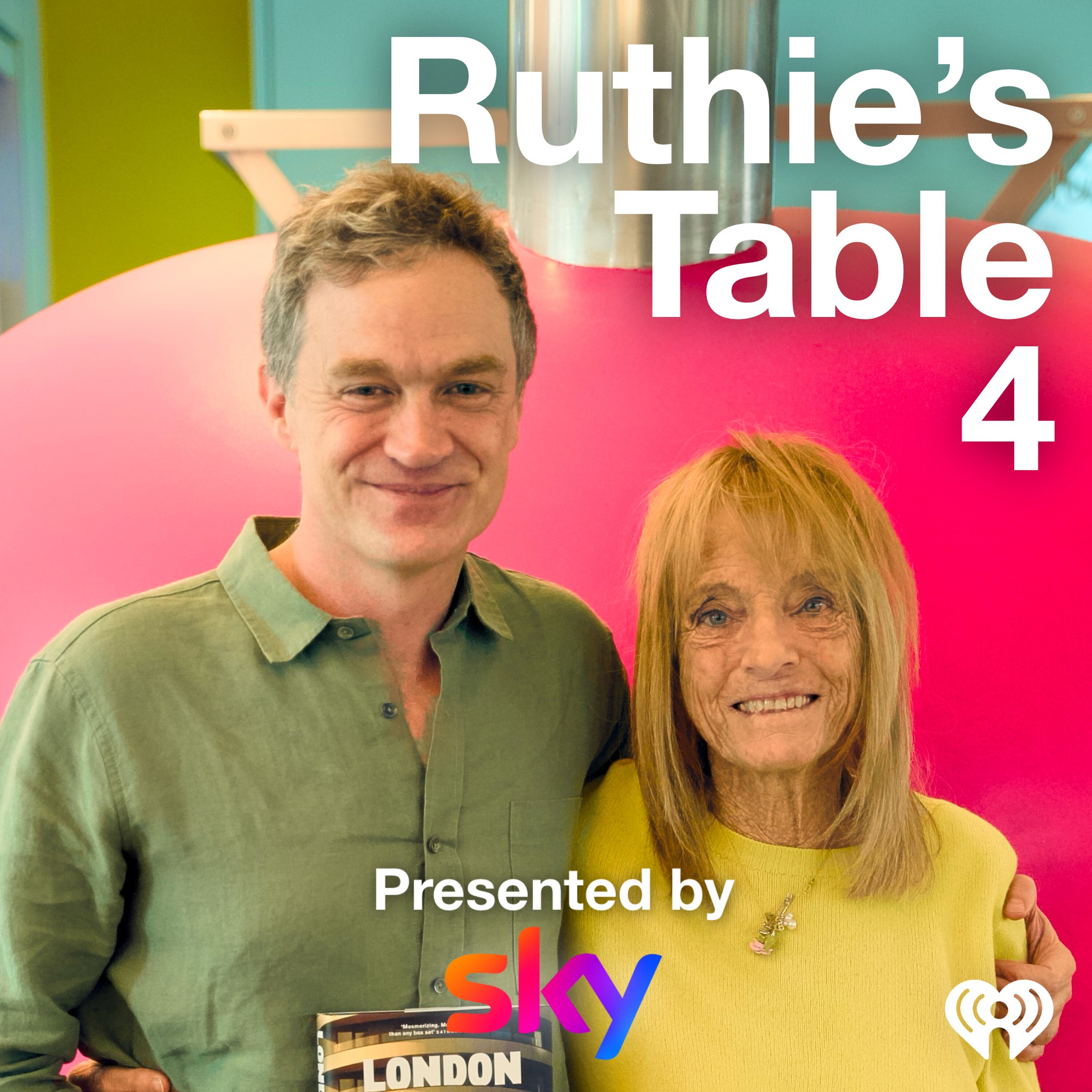
Michael & Lindsay Tusk, Restaurateurs, Quince & Co.
26 May 2026 · 29 min
Episode notes
Chef Michael Tusk and his wife and partner, Lindsay Tusk, believe great food is about simplicity, quality ingredients, and happiness. A few months ago in San Francisco, I saw this for myself at their restaurants - Quince, Cotogna, and wine bar, Verjus. Today, on a beautiful spring day at the River Café we will talk about creating food what we look for in a restaurant, and much more. See omnystudio.com/listener for privacy information.
Transcript
Read the transcript · about 5,100 words, follows along as you listen
Speaker 1:Ruthie's Table four, brought to you by Sky and Montclair. When my friends Johnny and Heather I've tell me to meet someone, I meet them. That's how I first connected to chef Michael Tusk and his wife and partner, Lindsey Tusk.
Speaker 2:You all share so much.
Speaker 1:They said, the way you cook, the way you work, your values and your core belief that great food is about simplicity, quality of ingredients and happiness. Ruthie, you are going to love them. A few months ago, I was in San Francisco and I saw this for myself at their beautiful and delicious restaurants, Quince Cortona and the Wine.
Speaker 2:Bar for Juice.
Speaker 1:We immediately made a plan to get together in London and do Ruthie's Table for to carry on the conversation. So here we are on a beautiful spring day at the River Cafe, and that's what we're doing. And Asoay's the ives, we're right.
Speaker 2:We'll tell me.
Speaker 1:First of all, we had dinner here on Monday night.
Speaker 2:What have you been doing since? Where have you been? Have you eaten anywhere else? Have you walked around you like London?
Speaker 3:Went to bron last night? Yeah? Yeah, we've also were at Mountain Wine Selections. The food, just the whole vibe was Brandon as a fish soup as a yeah, highly recommended. It was so concentrated in flavor. I worked and promounced my first time outside the United States for Suray, Oh outside near Agnon. So I became kind of addicted to. I didn't have a lot of money, so but I could afford the soup to plus On at the time. And I'm a big fan of rui. And then he reminded me back of the fireplace, the heart of Japanese.
Speaker 3:We had alice brought in Lulu Pero at the time from Domain Tapier. Yeah. Yeah, And one of the chefs sent me down the street to pick wild funnel in somebody's yard in Berkeley, and then we cooked the soup in the fireplace and a you know, a beautiful copper pot. And then the thing always remember is that she pushed monkfish liver and then wengfish living lungfish liver, and then she put that in the mortar and puzzle for the ruie. So and then so anytime I'm making ruy, I'm trying to find monkfish.
Speaker 2:And you were at.
Speaker 4:Berkeley studying third world development theory very very different. Basically it was socio economic studies of developing countries. But I would have had to go on and continue to pursue a very academic career.
Speaker 2:But I'd always worked in restaurants.
Speaker 4:You had you, Yeah, I'd always worked in restaurants, whether it be a host of seeing or busting.
Speaker 2:Yeah.
Speaker 4:And I think meeting Mike, we kind of thought we kind of forged a point of view or perspective about hospitality and the food that Mike wanted to cook, the table that I wanted to set, the hospitality that I wanted. There's such power and seeing people. People really want to be seen. And I think if you see people, you can give them so much confidence, you can give them so much joy. They can walk away lighter, they can walk away joyous. And for me, it was important to also do it in a setting, an environment that was beautiful and so our restaurants. I've been heavily involved in all the design of the restaurants, kind of the art of the table top and creating beautiful environments is really important to me.
Speaker 2:So you this love story. You met in San Francisco.
Speaker 4:Well, yes, Yes, and Berkeley in particular, but it's funny. This is the first time we have never when we started our career, we never really wanted to lean into the husband and wife relationship.
Speaker 2:We have to no no, no, no, no. So this is this is this is a love story.
Speaker 4:I do think it is clearly our love language. Being able to create these restaurants and feed people and take good care of people.
Speaker 1:I would just say that when I married Richard and I was very young, all he wanted me to do was to be an architect. I mean literally, I mean every day he would say, why did you go back to.
Speaker 2:School to study architecture? About a million reasons.
Speaker 1:But instead what we did was just I worked in the office doing bits and pieces and then when this opened, you know, we put it right here. So his office is five steps away, and he would call me up and say, come and look at a drawing, and I'd say, come and taste a suit.
Speaker 2:But that relationship not everybody likes that.
Speaker 1:But there you are, the two of you are working together and creating something together, and I you know, well.
Speaker 4:I think the greatest gift or what I'm most grateful about, is being able to work with purpose, because you know, I could have you know, you know, had a kind of a totally different career, But for us, it was about wanting to create something and having a point of view and a perspective that we wanted to share with people because we thought it was different and unique. And that's how kind of quints came about in the early.
Speaker 2:Why did you call it quints? It was a host of reasons, some really practical. It's a beautiful name. Yeah, it's a really beautiful time. I love it. Yeah, no, thank you.
Speaker 4:And I think Mike from art history background, like the queue, and you saw quince and representative in many cultures as a fruit and the alchemy kind of having to do something to the fruit to make it delicious just because it's, you know, pretty acerbic in its raw form. So I think there was a kind of a greater metaphor about taking product in the kitchen cooking.
Speaker 2:Was it tough in the early days when you started? Was it a struggle?
Speaker 3:Lord?
Speaker 2:Did it just because it was for us?
Speaker 3:Yeah, we definitely took the root of like all the money that you have kind of dip into some family. But we were we were luckier since in those days you can max out credit cards. You didn't need like what you need today to start a restaurant. Now, we just you just have to kind of go for it and be fearless. And that's what we did.
Speaker 4:And like what year two thousand and three, so it was really bedfore the internet, So you know, that was a time when food critics would still wait a month these for you to get your sea legs before they would come to the restaurant. There was no open table, there was no actually online platforms for reservations, so it was a really different It was a really analog time in.
Speaker 3:The room or is you in a newspaper or a magazine. I remember pretty clearly. We had a we were prepared our Botega Delvino wine glasses. We had been going to collecting Janoi, you know.
Speaker 2:Every time we visited, like knowing in the restaurant one day.
Speaker 3:So by the time we opened up we had all this stuff. Well I don't think we're nobody is fully prepared for for like opening a restaurant, but we were pretty fairless. So we just kind of went for it.
Speaker 2:Lucky too, and it was small, was it.
Speaker 1:We were, So we when we opened this place, we had nine tables, and you know, we did it for thirty thousand dollars and you know, we went up Rose went shopping for secondhand ovens, and you know it was really really really small and very you know, and I think now as you say what you have to go through to invest to do, I mean you still can't their tiny restaurants in Hackney people are doing, you know, small things. There are all different ways. So you started together.
Speaker 1:Was Italy an influence?
Speaker 3:So was it without a doubt? Yeah. My first trip was going to Milla, Romania to Mona. Yeah, and Paul Bertoli, who worked for Alice and he ran the kitchen for ten years at Chay. I worked with him, so he's started taking me to around and first it was Monona and we were in Pharma.
Speaker 2:You are a couple who work together, who cook together.
Speaker 1:And so you figure out this is your recipe, so you figure out how you want to read it.
Speaker 4:If it's risotto, I'm definitely going to let Mike have it all to himself because he It's the one thing I will say, in the years of ending the restaurant, it probably took about ten years before Mike would let anyone else cook risotto. For ten years he stayed at the risotto station. Eventually he felt comfortable turning it over somewhat.
Speaker 1:So we we edited it a bit. If anybody's listening to this recipe, I think this comes from River Cafe thirty.
Speaker 3:This recipe is zucchini and zucchini flower rosotto, and it served six. And we have eighteen torn zucchini flowers, six small zucchini, a liter of chicken stock, one hundred and fifty grams of unsalted butter, two tablespoons of olive oil, finally chopped medium red onion, three hundred grams of carnirolely rice, seventy five millimeters a million liters of vermouth, and uh some barmigiano reggiano grotajiatto or grated, some fresh basil to throw some Italian in there. So we slice the zucchini into diss then we heat the olive oil and half the butter. We fry the onion until it's soft. Then we add the rice and we stir. We add the vermouth and stir that until it's absorbed. And then we're adding the hot stock and simmer, stirring until the rice is absorbed all the liquid.
Speaker 1:So, ladle, by ladle, do you have any advice for that. When you're making risotta and you're adding the and you have the rice and then you have the stock next to you and it's quite hot, do you do it slower?
Speaker 2:Do you know?
Speaker 3:I get very particular with the entire process. Definitely, your stock probably the most important element is, you know, simmering. It doesn't have to be like a raging boil. But sometimes you'll look at a cook and the either panic and you know they or they run out of some and they just don't have the ability to get the stock back up to temperature. So I use a time or two from the time that I toast the rice. I feel like the toastator element. I go kind of like low and slow for like four or five minutes in the toasting, and then I think that takes the temperature a little bit down, or the time period down, and then I think most of the common mistakes are like if you're adding say another element to it, that's going to take the temperature down of the rice. I definitely want the rice to be at a certain temperature, but then I let it sit for like at least you know, thirty seconds or so, and then I'll add whether it's a parmigiana and the butter. I'll let it said for like thirty seconds, it doesn't kind of break it well, and then I'll stir it and then that last flourish. I really feel like if you're not there's
Speaker 3:nothing worse than getting a rice at is like not hot. I agree.
Speaker 2:Okay, so we finished? Do we have more to go?
Speaker 3:All right? We're adding the zucchini and the torn flowers. We're stirring in the remaining butter, the parmigiano regiano and the basil leaves.
Speaker 2:Simple. Simple. I was born in Maine, a very very very northern meme.
Speaker 4:Five more minutes and I would have been in Canadian Yeah, really right up against the border. But lived out of the country until I was about ten years old, moved back to the United States.
Speaker 1:So where did where did you when you went out of the country? A bunch of Greece, I remember you telling me why.
Speaker 4:My father came from a nautical background and he ran a shipyard for Olympic yachts and breeds for about ten years. Yeah, so yeah, it was a pretty gret childhood, do you remember. Okay, well, here's a good one. I think Greek Easter, you know, Greek Orthodox Easter. The neighbors we would all get together. We'd have a whole lamb and you'd put it on the spit outside in the backyard, and then all the neighborhood kids had to take an hour like it was their turn to turn the lamb on the spit, and everybody had, you know, slotted hour. The best thing is the lamb fat. The lambskin is so good with the salt and the.
Speaker 2:That's sort of crispy.
Speaker 4:Yeah, that is just I think that it's one of the most like delicious bites you can ever have.
Speaker 3:When we first met, she spoke about this lamb all the time.
Speaker 1:That's frenchlan that you have us in fence. I particularly had them there. What are the spring tiny baby, tiny baby lamb? I remember my baby was born in France. Through we said okay, we were coming home from the hospital. I said, I'll just stop with the butcher and get you know, a leg of lamb, and I weighed the same amount as baby. I said, I don't think I'll take it like KOs I said, maybe we'll have fish. Like you know, it's a bit too close to home with those baby, I sort of slightly.
Speaker 2:I absolutely love them.
Speaker 1:Now, I'm not sure I have the same taste for them because they're a little bit too a little bit too young, a little bit too delicate. But they are still they're very, very tiny, and they're they're good. But if you grew up in Maine and then went to Greece and then came back, you grew up in.
Speaker 3:I grew up in New Jersey.
Speaker 2:Yeah, what what did you did you have good? What was food like? Your food memories of the early years.
Speaker 3:When when I was a kid, before things started to change. There used to be like you pick strawberry, you know, farms where you'd walk through and you can pick all your strawberries and eat them. A lot of dairy farms, and the dairy was great. But my goal was always to since I was about thirty minutes outside of Manhattan, Yeah, my goal was always to you know, I'd hear about a review in the New York Times of a restaurant and that was a restaurants yea. In that period, it was everything was French. It was all French words that I kept on hearing like so, and I'd see the reviews and then they would It was always like going out on the weekend.
Speaker 2:For the big a teenager was later.
Speaker 3:I remembered it from the time I was, you know, ten or twelve years old. And then we moved to.
Speaker 1:Michael Task I'd like to book a table for one twelve good No.
Speaker 3:I was very persistent that I would eventually make it to these places with interesting French sounding names. And then the good thing that was and they went out. We had a house where the stoves were a former pastry chef in the house, so it was like a double It was a double unit, two girls, flat top, and it was from a pastry chef. So it was a pretty nice kitchen. So when the family did go away, I was able to find a cookbook and try to you know, make click.
Speaker 1:So this is.
Speaker 2:Another interest.
Speaker 3:Yeah, I love to eat. I think you have to if you're going to be a chef, and you have to have this love of like eating, eating and trying different things and or else you should go into a different Yeah. And then around seventeen, when I went to college, I moved to New Orleans and then that was like a whole new world flavor.
Speaker 1:I do think the South New Orleans and Louisiana and that that cooking is our closest, perhaps real fiercely regional food.
Speaker 3:Do you agree, I totally agree that that's why I went. I definitely was there more for drinking music.
Speaker 1:A good reason to go to college. I think that's perfectly yeah.
Speaker 3:There's like a festival every week weekend value decades. Was that that was in the late eighties before.
Speaker 4:You should tell Ruthy your story because I've always found this one really sweet any time, I don't know, just typical of your time in New Orleans.
Speaker 2:I think you know the story that I'm so.
Speaker 3:I like to explore a lot. And a friend of mine was from Chicago and he found a woman named Alberta Harris, and she had a little plaque outside of her door called Miss Alberta's. It was really a house. You'd walk in. Her husband would be at the kitchen table cutting like you know, all the bell peppers for dishes. To the left was her little kitchen with like a little pass through window. Then it led right into the bedroom. Although there was a jute box in the corner, blues jute box, and she was on the jute box because she had a version of Amazing Grace and she sang at jazz Fest, so she befriended us, and then we would just go eat everything with three dollars and fifty cents.
Speaker 3:She would ask us if we wanted seconds. And then one day when we were repeat guests, she'd ask us what she could make, whether it was red beans and rice and so forth. And then I asked her for jambalaya recipe. And John the husband was always at the kitchen table and there was a Bible there, so she proceeded to open up the Bible. She pulled out the jambalaya recipe. These were the days where we didn't have iPhones to funny half things with, but she gave me the recipe straight from the Bible. And I think at that point I knew that this was something that I wanted to do because of the how important it was and being passed, you know, recipes being passed down from different to generations. And I had it for a number of years and I would practice making it. Probably that was maybe what led me into my career cooking rice down the road, which I never really thought about until we just that came out. But yeah, you know, and then at that point there was also Paul Prudhom was really the king of like food in America, I think now that I think about it. You like, he moved to New York. He did like the New York kind
Speaker 3:of like the one of the first pop ups, I'd say, when he moved his restaurant there. So I just had his book and I would practice dishes from from that book. I didn't nobody taught me how to make them. She didn't. She just gave me the recipe. And then you know, I compared it to those books and would just make make things. I actually cooked for a fraternity for a while, and I would just make them New Orleans. They pay me. They just gave me a set of n I was happy, happy with that at the time.
Speaker 1:This is Joseph Joseph, so we thought it'd be really nice. I wanted to bring So you were just talking about I was asking them when they opened Quins in.
Speaker 2:Two thousand and three. Yeah, we were so excited.
Speaker 1:We were eighty seven some of comparing comparing notes. Joseph Tavelli is the executive chef. He's our partner that has been.
Speaker 2:Here for how many years? Twenty six? So she came one year before year.
Speaker 5:Yeah, she's one year before me. I tried, but she.
Speaker 2:And so we're here.
Speaker 1:So I think that a conversation might be quite interesting about the difference between having a restaurant which is surrounded by farms and probably one that is challenged by that.
Speaker 3:I think that's why I moved to California, to particularly northern California, because I wanted to work out a play like Japanese, because they had a you know, every day there'd be a van that would pull up and just herbs, just you name it, tomatoes and China egg plant summertime, like it was just it would just kind of get rolled into the kitchen. And then if you come from New Jersey, you're not used to myra lemons and carrots that have three different colors to them, and you know, six types of radishes, and it's just it was a whole new world of flavors, textures. Lindsay and I went to a restaurant in Rome. I love the shelling beans so much that the chef gave me Santo Plata, that was the name she gave me the bag of the shelling beans. I was able to bring the beans back and then we were able to plant get seeds and then so we've been growing those beans for like four different years. Things like that that just kind of ready too. Yeah, yeah, you know, all sorts of yeah whatever.
Speaker 1:You grew up in Italy, didn't nothing, but it's suite.
Speaker 3:Yeah.
Speaker 1:But I wonder how much of that romance of the farm, you know, it actually exists in Italy. You know, we all think I would have thought that a lot of the food that we come that comes to us, and as you know, the it's really it's really high quality, whether it's a data really tomatoes or or the Bollati beds. I wonder how much it's not produced in somebody's necessarily there far as it comes from.
Speaker 5:Well it can be. I mean, it was very much. You know, growing up was a different experience because it's all a bit further away. But it's that classic immigrant thing of getting parcels. You know, there would parcels would arrive in the post with peccorino cheese, things that now I managed to find in London, but at the time you didn't have. And tomatoes was one, you know, you know, jars have torn a sauce and what I like about that and still now in the restaurant is the the romance like yesterday, Sam Mutsana tomatoes arrived and I was cooking something last night, you know, when April and I was with this first and there happened to be another chef who was from Naples, and I was like this already, right, you know, the end of April and it's like, yeah, the seasons are changing, you know, so you have this feeling of you know, it's and it's not you know, it's not so far. You know, driving to a lorry from Milan to Scotland for us is the same, you know, so we don't get anything flown.
Speaker 1:The difference between also the other we have many yeah, with similarities, but you have you have two restaurants and now a wine bar and you're going to do another one.
Speaker 2:How does that affect?
Speaker 4:Yeah, I mean all of the restaurants are within one block radius.
Speaker 2:So you know, so that's pretty good. Yeah, it's a pretty good comeure.
Speaker 4:So it's easy to kind of well theoretically it's easy to kind of keep your hands.
Speaker 2:Around it all.
Speaker 4:But it's a lot of work. I mean no, but I think when you're presented with an opportunity or a good idea, it's so hard to say.
Speaker 3:Now.
Speaker 4:Yeah, you know, when you see something that you know that you can really make a go out of it and contribute and do something new and creative. It's really hard to turn away. It's really hard to say no. So I think this will be at THEA. I think this last.
Speaker 1:One should what is the new one?
Speaker 2:You should the future?
Speaker 3:So what is your future? It's called bar Koto, so it'll be a little extension of Katonio. But Jen Jennifer, who's our pastry chef, makes amazing gelato and that's her passion. So that's all how it started. And then then it kind of is morphed into something that's more of like maybe I'll let you describe it.
Speaker 4:Well, it is kind of like a little sister of Katonia, so it's more and you know, it's kind of maybe like your cafe cafe and that it's breakfast lunch apertivo, so that people can use it different ways at different times of the day.
Speaker 5:This was it like something that you felt that you needed somehow, I feel, as a local, the cafe face something that I kind of needed.
Speaker 4:Yeah, I think I kind of you know, I think you'll need to have one kind of three star mischiline restaurant in your life and everything else needs to be a little bit more spontaneous, and I think Barcoda will be spontaneous and kind of with the rhythms of the day and just kind of fun.
Speaker 6:Yeah.
Speaker 4:I think the nicest thing anyone ever said to me or to us about the restaurants is that we just had contributed to the quality of life in San Francisco, and that just been a lot.
Speaker 2:I mean, it really did.
Speaker 4:I mean, I think you can serve wonderful food and create these beautiful environments that if you're really enriching a community and feel that you're providing value and making people's lives better, really nothing better than that. So and we have a great new mayor and you know, the city is you know, it's really on an upward trajectory and it feels great.
Speaker 2:And I was really excited about.
Speaker 6:We have to go to Yeah, yeah, we'd love to have you and.
Speaker 3:Love that.
Speaker 2:Yeah.
Speaker 3:It's yeah, like night and day. It's a like we didn't have tourists for like almost like four years, and now people are coming back. Daniel the mayor, he's doing a great job supporting small businesses before, you know, but it was definitely hard. But I think COVID then directed us to make changes that we might not have made. We redid the dining room at Quint's because we moved the restaurant to the farm during COVID so that people could eat outside. And then once we saw how happy people were eating outside because San Francisco never know, we had six seats in front of our the restaurant Catonia for a number of years. Now we have an entire parklet, which you saw. So but we saw how happy people were, so we wanted to make the restaurant more kind of like natural, no tablecloths anymore, that type of thing. And and people seem they respond.
Speaker 2:That's right nice.
Speaker 6:You know.
Speaker 1:The other function of a restaurant what we can create as a place where people have spontaneous meetings. They bump into people they hadn't seen for a while, They meet somebody that you know, they didn't think they were going to meet because they were introduced, and then they become friends. And I think it is a place we all go, and that's where we're going to go. Now we're going to go and have some lunch. But before we do, there's a last question which we do ask everyone, which as if food alleviates hunger and food is sharing, and food is a performance, and food is making you feel happy or gathering, and also is comfort. And so Lindsay and Michael, thank you so much. This has been a great talk and we're going to have many more of them.
Speaker 2:Thank you.
Speaker 1:Before we say goodbye, would you like to tell me what comfort food you would if you need comfort?
Speaker 2:I hope if you don't need much comfort, but if you do.
Speaker 4:Is there something that you would want to eat? Lincy, Well, it was a dish that my mother used to cook when I was a child. So and it's simple, so I can do it. And it's pasta whatever the shape may be in the pantry, butter, lemon, salt, crimsonio and keeping amounts of dill oh, whether it be like fresh dell or dry dil weed. For some reason, the flavor of dill I don't I don't know why.
Speaker 2:Yeah, okay, and that's yours. That's fud.
Speaker 3:Before I tell you. I also wanted to congratulate you for your turning forty years old the restaurant restaurant. I know you're forty three.
Speaker 2:Party, amazing congratulations, congratulations to It's.
Speaker 3:An amazing accomplishment. I have to say, I kind of struggled with this question, just because as a chef, I feel like you have to be open to eating anything at any time. But like Lindsay, I kind of like went back to maybe a childhood memory for for and as strange as it sounds, as a kid, I went to this Italian restaurant but they had this chafing dish in the bar before you got seated, and they used to serve and I don't know another place that I ever did this, but they had fried frog's legs with parsley and garlic, and you would get them and then you get like if you're a kid, you got a surly temple or something, but I would probably drink from my parents glass or whatever. But I had like the little fried you get a little plate and you'd sit down before you're seated. And then that led me to like, you know, if you got a probons or niece or something and you're having crispy fried, so something fried like that.
Speaker 3:But but that was my memory of like if I really had to, they're just delicious, And then going back and actually having it again years later, it was like very very exciting because we don't you don't see it very often, but something fried, crispy, crispy, you know, grab a whether it's a beer cold glass of winer or something. But I definitely will never forget that for whatever reason. Or the soup to puss On would be the other one thes and the ruie would be something I'd find very like comforting.
Speaker 6:Well that's coach, Thanks very much much, Thanks very much, thank you, thank you.
Speaker 3:Ruthie's Table four was produced by Alex Bell, Robbie Hamilton and Zad Rogers, with Andrew Sang and Bella Celina. This has been an atomized production for iHeart Video.
Speaker 1:Ruthie's Table four brought to you by Sky and Montclair
Transcript supplied by the publisher with the episode.
Podcast
Ruthie's Table 4
iHeartPodcasts · Arts & Books · English
For nearly forty years, The River Cafe in London has been a home-from-home for artists, architects, designers, actors, collectors, writers, activists and politicians. It is also the home of its co-founder, Ruthie Rogers — restaurateur, cookbook author, podcast host and one of the most influential fi
More from Ruthie's Table 4 All episodes →
-
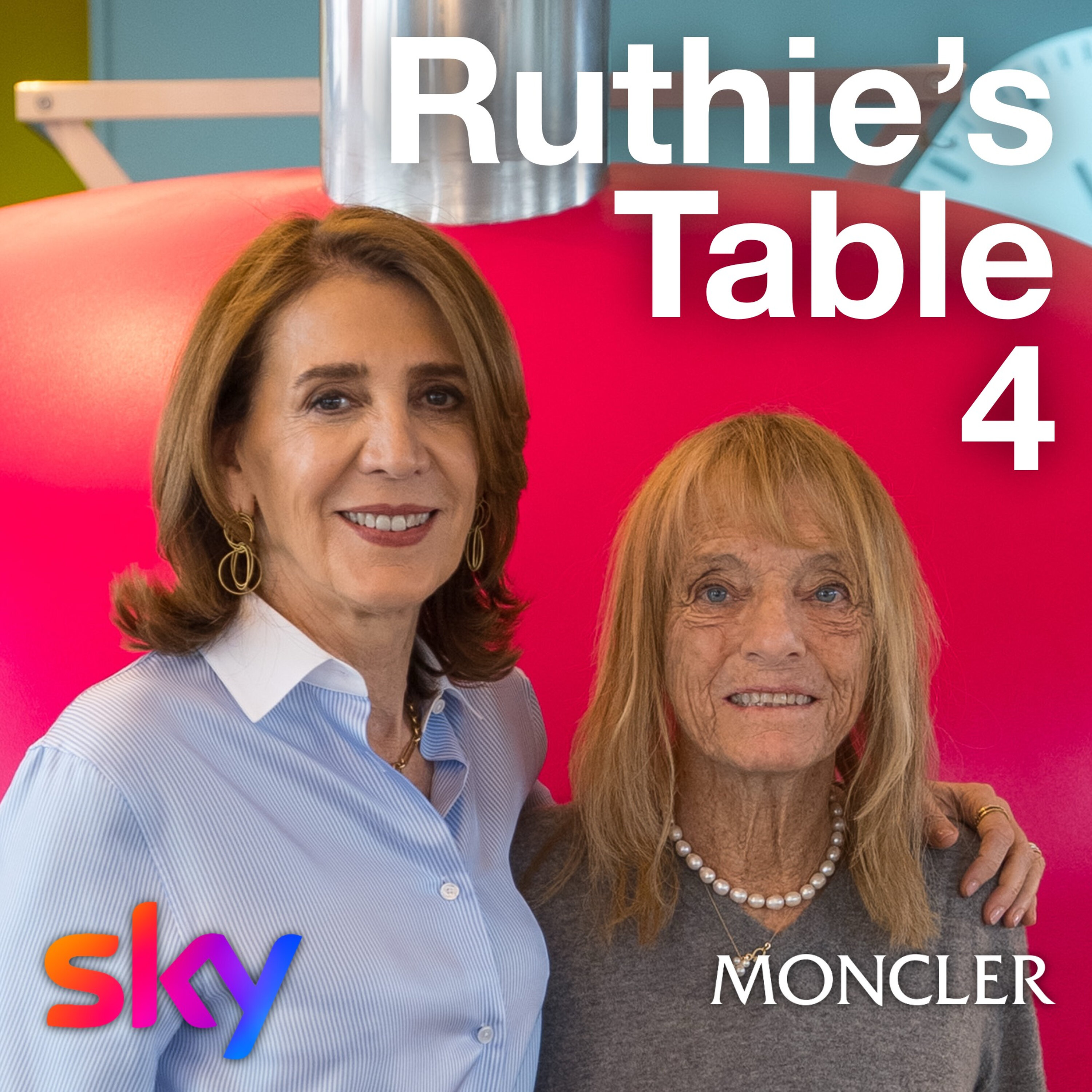
S5 · 11 Jun 2026 · 32 min
Bonus: Ruth Porat - “If We Can, We Must.”
Ruth Porat - President and Chief Investment Officer of Google and Alphabet - discusses the social responsibilities that come with technological advancement and how AI must be used to tackle society’s most intractable problems. Order Table 4 at The River Cafe —the star-studded, food-filled book inspired by the beloved podcast: https://bit.ly/Table4AtRiverCafeBook See omnystudio.com/listener for privacy information.
-
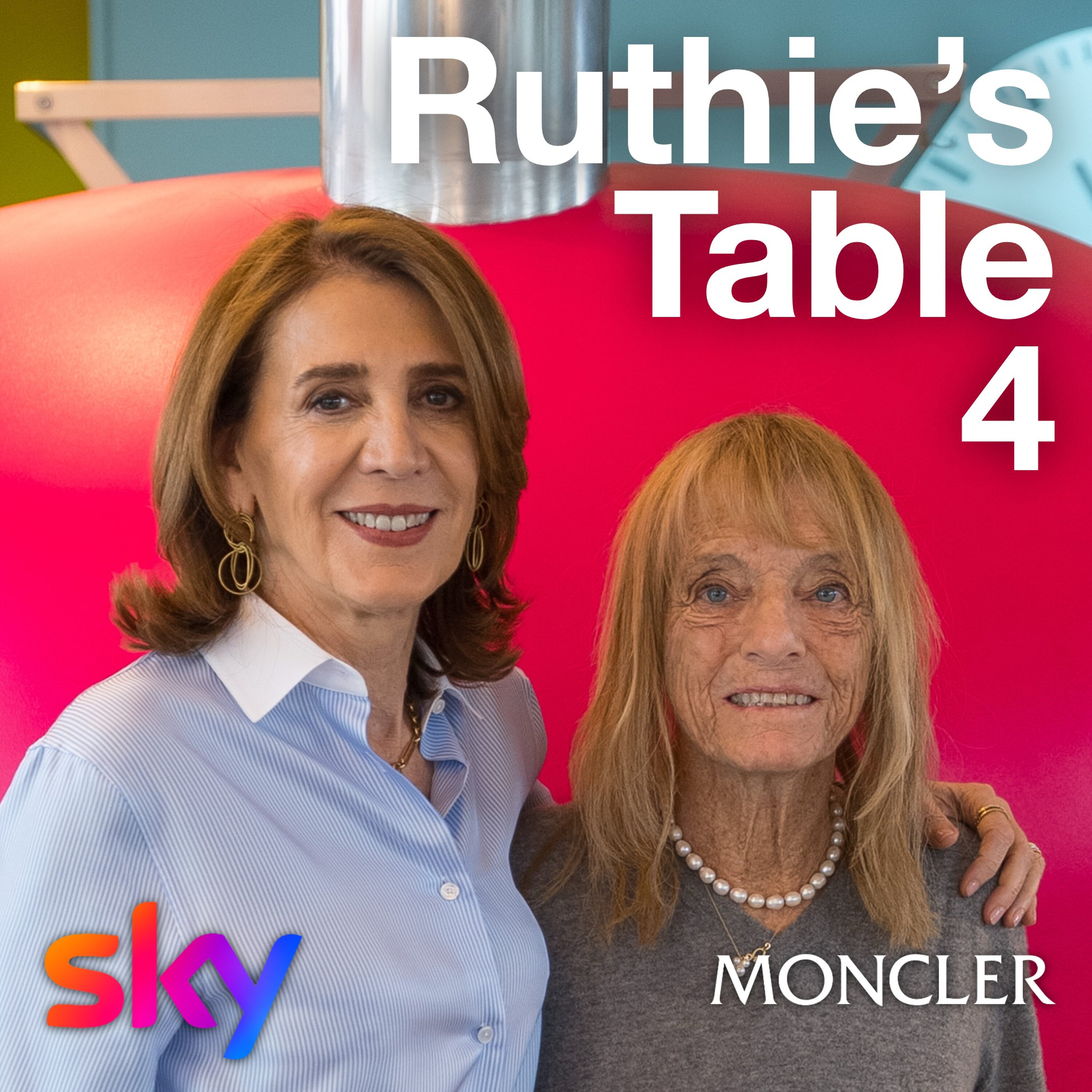
S5 · E33 · 8 Jun 2026 · 32 min
Ruth Porat, President and Chief Investment Officer at Alphabet and Google
Ruth Porat is the President and Chief Investment Officer of Google and Alphabet. She is also my friend. Her extraordinary schedule has often kept us thousands of miles apart as she moves across continents, connecting people, ideas, and communities. But today, we’re together at last - a Ruth and a Ruthie - to talk about the importance of food at Google, her scientific childhood, how her father survived the Holocaust to rebuild his family, and how her grandmother spent her last day showing love through food. Order Table 4 at The River Cafe - the star-studded, food-filled book inspired by…
-

S5 · 5 Jun 2026 · 6 min
Bonus: Declan Kelly On Going Vegetarian
Consello CEO Declan Kelly discusses his decision to become a vegetarian as a teenager in 1980s Ireland, and how he eats today. Order Table 4 at The River Cafe —the star-studded, food-filled book inspired by the beloved podcast: https://bit.ly/Table4AtRiverCafeBook See omnystudio.com/listener for privacy information.
-

S5 · E32 · 1 Jun 2026 · 39 min
Declan Kelly - Founder, Chairman and CEO of Consello
A few months ago, I met Declan Kelly, founder, Chairman, and CEO of Consello, one of the world’s most influential advisory firms. The connection between us was immediate, as I discovered a fascinating person with a fascinating life. Born in rural Ireland, from humble beginnings, he became an important journalist, created an influential communications company and in 2007 and 2008 served as one of the leading advisers to Hillary Clinton during her presidential campaign. Today he advises some of the most influential people who lead powerful institutions, while mentoring a new generation.…
-
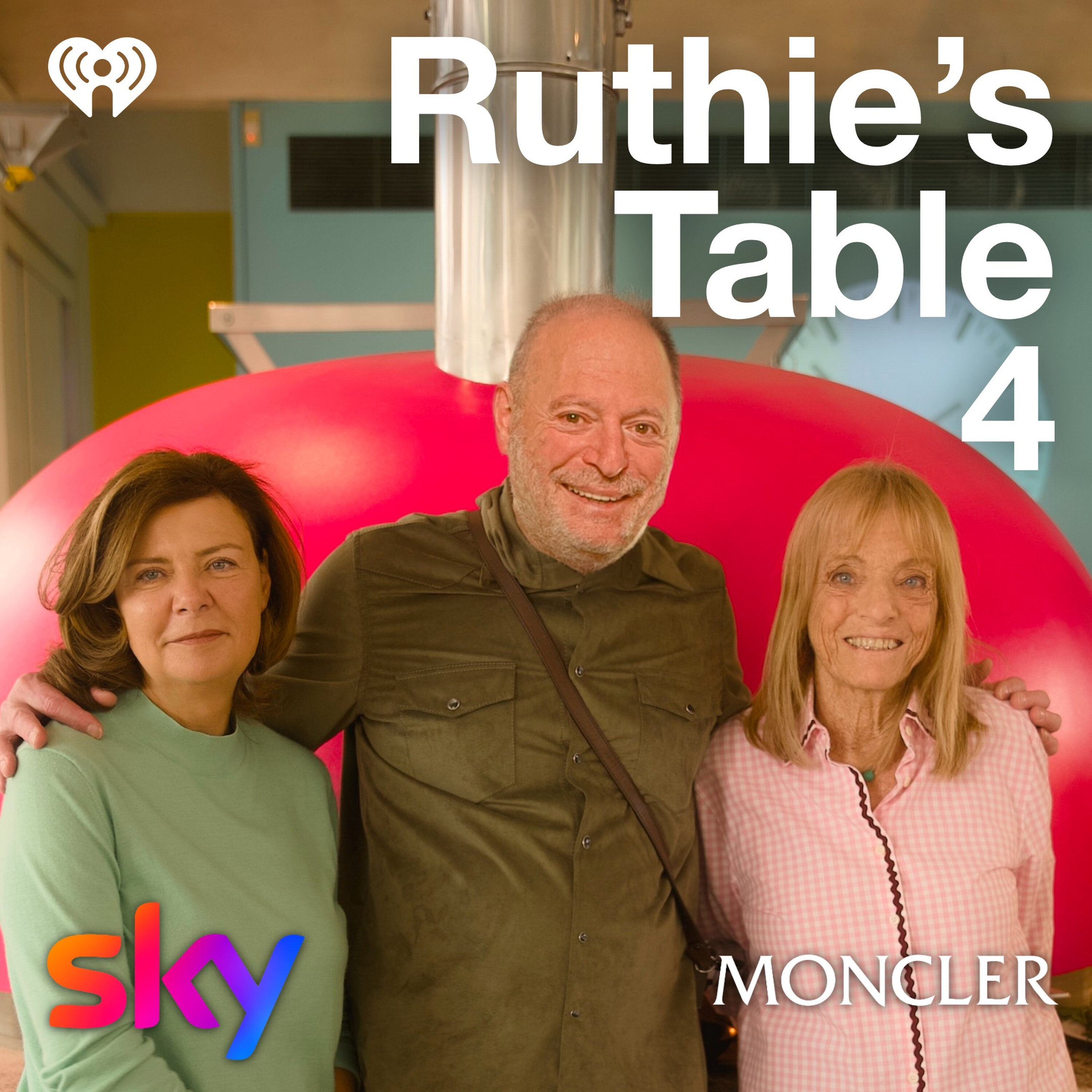
S5 · 28 May 2026 · 10 min
Bonus: Making A Menu
The River Café’s Sian Wyn Owen joins Michael and Lindsay Tusk to discuss the menu she has prepared for the day, the seasonal ingredients she is using, and how she organises a lunch service with her team. See omnystudio.com/listener for privacy information.
-
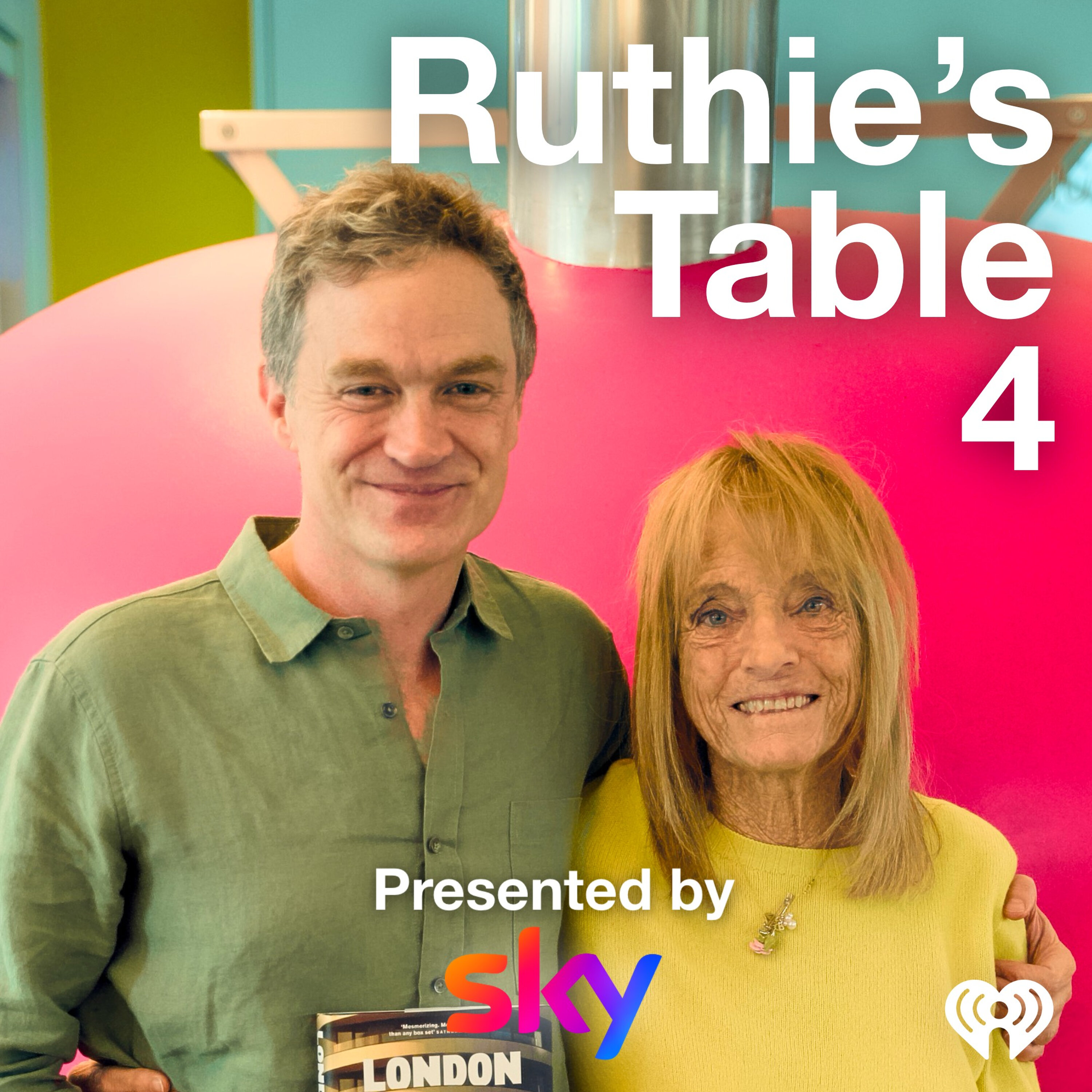
S5 · 24 May 2026 · 8 min
Bonus: Patrick Radden Keefe on eating together and eating alone
Patrick Radden Keefe talks about two contrasting food pleasures - hosting and eating alone. Order Table 4 at The River Cafe —the star-studded, food-filled book inspired by the beloved podcast: https://bit.ly/Table4AtRiverCafeBook See omnystudio.com/listener for privacy information.
-
S5 · E30 · 19 May 2026 · 39 min
Patrick Radden Keefe, Author of London Falling
I’ve sometimes wondered whether writing a book might be a bit like cooking a meal. I create a menu by choosing the ingredients I’m drawn to. In the same way, today’s guest, Patrick Radden Keefe, creates a book by choosing the people he’s drawn to — most recently in his newly published London Falling: A Mysterious Death in a Gilded City and a Family’s Search for Truth. Today, we’re here together to talk about his latest book, his parents’ second dinner, the mise en place of his writing process, and the ingredients of his stories. Order Table 4…
-

S5 · 14 May 2026 · 8 min
Bonus: Talking Restaurants with Paul Price
Burberry’s Paul Price talks about the restaurants of his past, and his idea to start one in the future. Order Table 4 at The River Cafe —the star-studded, food-filled book inspired by the beloved podcast: https://bit.ly/Table4AtRiverCafeBook See omnystudio.com/listener for privacy information.
-

S5 · E29 · 12 May 2026 · 36 min
Paul Price
Paul Price is Burberry’s Chief Product Merchandising Officer. When I asked his friend, film director Andrew Jarecki about him, he said ‘Paul is a tastemaker and a creator. He has reshaped my perception of what life can be, reimagining legendary fashion brands, most recently Burberry, making them newly relevant.” Paul and I are together to talk about life in fashion, the school lunches leaving paw prints in restaurants, the joy of throwing parties, and much more. Order Table 4 at The River Cafe —the star-studded, food-filled book inspired by the beloved podcast:…
-

7 May 2026 · 7 min
Bonus: Asparagus
Spring is here, which means it’s asparagus season. In this bonus episode of Ruthie's Table 4, we’re joined by The River Cafe executive chefs Sian Wyn Owen and Joseph Trivelli, to discuss their love of asparagus, and how they like to cook with it. See omnystudio.com/listener for privacy information.

Take it with you
The Melo app keeps playing with the screen off, works in the car and on your watch, wakes you to your station, and browses the whole catalogue offline. Free, no ads, no account.


