Episode notes
When 33-year-old Lashaun Keith’s body is discovered in a remote Michigan hay field, detectives have almost nothing to go on. There are no eyewitnesses and no clear suspects. All they find is a single glove. Sixteen months later, that glove points them to three men, each telling a different story about the same deadly night. Get instant access to all episodes, including premium unreleased episodes, commercial-free at swordandscale.com
Transcript
Read the transcript · about 8,720 words, follows along as you listen
Speaker 1:Sword and Scale contains adult themes and violence and is not intended for all audiences.
Speaker 2:Listener discretion is advised.
Speaker 3:I'm too drunk to even really run.
Speaker 4:What do I do?
Speaker 2:Oh my God.
Speaker 3:This is actually happening right now.
Speaker 4:Episode 367.
Speaker 3:Episode 267.
Speaker 1:Episode 276.
Speaker 2:Who gives a shit?
Speaker 1:Will you quit correcting me? It doesn't really matter. Just listen to the goddamn show and enjoy it. Or don't. I don't care. Stop telling me things. I don't want to hear it. I am not having a good week. As you can tell. But that's not your problem. A duck keeps shitting in my pool, if you must know. I can't get rid of it. Anyway, that's not your problem. Let's get to some murder.
Speaker 2:Shall we?
Speaker 1:Michigan State Police Detective Chris Hayward walks into a cluttered interrogation room in the Van Buren office. It's been 16 months since the body in the field was discovered back in November of 2022. He checks the thermostat setting and then starts preparing for his next interview. It's the one he hopes will finally explain how a dead man ended up in that field.
Speaker 5:Mr.
Speaker 6:Ochoa was taken into custody for what he assumes is a traffic violation.
Speaker 1:But he won't be surprised by what Detective Hayward wants to discuss. He's hoping Ochoa can provide all the answers.
Speaker 7:Yes, we're hoping to talk to you about another case, one of our many cases we've got going.
Speaker 2:It's a case that ties you into it with some DNA.
Speaker 1:Detective Hayward has been doing this for quite a long time. He's served the state of Michigan for 25 years and is close to retirement. This case might very well be his last. But his years of experience taught him a gentler approach to interrogation.
Speaker 8:It was November 3rd, 2022, when he had been called to a field in Van Buren County, just east of South Haven.
Speaker 9:A man had called in and said that he found a body while scouting for hunting locations.
Speaker 1:The field wasn't easy to access, not by vehicle anyway. The only way into the field was a muddy path cutting through the woods.
Speaker 9:Based on some of the background that we've done on you, I kind of have my thoughts on, we do too, on our thoughts on maybe how this thing went down. But we still got to put it together. So yeah, your DNA was found right there at the scene. So you know which one I'm talking about?
Speaker 4:No, sir.
Speaker 1:In this field, next to a large pond, was the body of a man. The first thing Detective Hayward noticed was the man's position. His body lay east to west directly between a set of tire tracks. Everything about the scene suggested that the body was dumped in that field. A theory further supported by the lack of shoes on the body. No one walks into a field in their stockings, especially in November. The man's t-shirt was pulled up under his arms, as if he'd been dragged. His clothes were disheveled and badly worn. It was the kind of wear that looked older than the night he died.
Speaker 8:The body was beaten and bruised.
Speaker 2:But the most noticeable injury was on the leg.
Speaker 1:His right leg was contorted in an unnatural position. It appeared his femur was broken. Identifying the body wasn't difficult. In one of his socks was his wallet, which contained his license. His name was LaShawn Keith. He was a 33-year-old, 310-pound, 6'1 man, whose only relatives lived in Georgia. The only clues as to where he came from and who put him there were the light-colored sand covering his body and a single glove found nearby.
Speaker 8:You know, he said somebody that he knew needed something. Not like no weapon or nothing, it was just like gloves and all of this. And the guy that he was telling me about, he said he do construction, so I'm thinking it's for a job job.
Speaker 1:Hayward hadn't mentioned a glove yet, but Ochoa did. It was a small thing, easy to miss, except it suggested that Ochoa already knew exactly which piece of evidence had brought him into that room.
Speaker 2:Frankly, we know more than what we're letting on here.
Speaker 9:I want you to be a little more at the front of it because, like I said, we.
Speaker 2:Do have gloves. I'll lay it right out there.
Speaker 9:Your gloves, your DNA is right there at the scene on those gloves, which you brought up so you already knew about that because then things got dropped and left behind.
Speaker 2:So you already understand that that With no other explanation, that looks bad.
Speaker 1:At first, the whole scene where they found the body confused Detective Hayward. It seemed like a spot that you would have to know about to find. While forensic techs took impressions of the tire tracks and sent off samples from the gloves, Hayward tried to eliminate his first person of interest, the man who reported the body. His whole story about scouting hunting locations didn't really make sense. It wasn't even hunting season. Hayward interviewed him, as well as the people who lived nearby. He took the caller's vehicles and processed them for evidence. He spent the first few weeks of the investigation looking into this man, but eventually ruled him out. Now he finally had someone he knew was involved in front of him. Hayward continued his delicate approach.
Speaker 1:He didn't have to bully Ochoa. He only had to let him talk long enough to tell on everyone else.
Speaker 8:A friend of mine, he told Zach to contact me. So I was a little confused on it. And I talked to him and he said him and a buddy of his, and I'll be honest, this is his words. He said him and a buddy of his... They fucked up bad. And I'm like, what is you talking about? He said, we fucked up, fucked up. He told me that him and a guy got into it. He said, I think he was a homeless man or something like that. And him and his friend that he was with at the time.
Speaker 10:They had, he said they beat on him, but they hit him with a sledgehammer and broke his bones or legs or something like that.
Speaker 2:Don't know if that was true.
Speaker 8:But he said they came back the next.
Speaker 2:Day for work because it was over by his job site.
Speaker 8:He went back to see if the dude was okay, and he was still.
Speaker 2:There, like still laying there.
Speaker 1:Initially, the DNA profile from the glove didn't match anything in the combined DNA index system, otherwise known as CODIS. But every once in a while, they would run it again. It took six months before it returned a match to Ochoa. But by then, no one could find him.
Speaker 11:He said the man was dead already, and he wanted help moving a body or something like that. Another reason he asked me to help him move that was because he had a cast on his hand.
Speaker 3:I don't know what happened.
Speaker 8:He said, yeah, my hand broke, but he never told me how it broke.
Speaker 2:And then, I'm going to be.
Speaker 11:Honest with you, one night he picked me up, and he took me to where everything he said happened happened at.
Speaker 2:He showed me what we was moving.
Speaker 8:We had to walk down a dirt hill, like where they.
Speaker 2:Do road work.
Speaker 8:It was train tracks at the bottom of it. It was a dirt hill. Like the dirt was soft to where your foot sink into it.
Speaker 1:It took another nine months before detectives finally had Ochoa in an interrogation room. And Detective Hayward was right. He had a lot of answers. The more Ochoa talked, the more his story lined up with the evidence Hayward had been staring at for months. LaShawn Keith was a homeless man. His body was covered in soft dirt. His leg was broken. A sledgehammer was a new detail, but it lined up with the injuries discovered in the autopsy. In addition to a broken femur, LaShawn also had several broken ribs.
Speaker 4:He did have me.
Speaker 2:Help him move something.
Speaker 3:It was super heavy, but it was wrapped up.
Speaker 2:I did not know what it was.
Speaker 3:It was.
Speaker 8:A carpet wrapped inside of that plastic that I was telling you about, the plastic that's wide, like, it almost looked.
Speaker 2:Like it was for furniture. After a certain while, I wanted to know what I was moving. But yeah, as we was going up the.
Speaker 11:Hill, this side started to unravel more than I was able to see. Dan, I'm going to be honest with you. I seen something slip out. It looked like fingers. I believe I saw fingers. There's no way around it. I know what a hand looked like. We all got hands.
Speaker 8:I don't know what color of body changed after so long of.
Speaker 11:Being dead, but the dude's skin looked at dark when I seen a finger. And it didn't look like his skin was that color. I don't think he was supposed to be that color. He was like a purplish, purplish white. But that made my body go cold. I'm not used to seeing, you know, dead bodies. And I'm going to be honest, I threw up.
Speaker 2:I'll do it. What else can I do? You don't see shit like that every day.
Speaker 1:When faced with the accusation of murder, Ochoa came clean. He claimed a friend of a friend accidentally killed a homeless man, and he helped move the body. But he was adamant he wasn't involved in the murder.
Speaker 2:We went.
Speaker 11:We was just driving down this trail, just driving and driving and driving.
Speaker 3:And then he hit a field. And then off to the left, if I'm not mistaken, it was water.
Speaker 2:It was like a lake or something or a pond. In my belief, if I'm trying to believe everything you're saying, which I am.
Speaker 3:Like I said, you can do a polygraph test.
Speaker 2:I believe you. Just hear me out on this one point. Because, yeah, I believe you helped load a body and go out here.
Speaker 9:But it seems like you're getting hung up on not getting out of the truck and helping.
Speaker 3:No, I got out of the truck to help him load it onto the truck.
Speaker 12:Yeah.
Speaker 10:But he didn't ask me for help to unload the truck.
Speaker 2:Did you personally kill this man? No, sir. Did you beat him at all?
Speaker 13:No, sir.
Speaker 8:I don't have anything like that.
Speaker 2:He told me they did it with a sledgehammer.
Speaker 5:Okay.
Speaker 3:And it was still in his truck.
Speaker 2:I seen a sledgehammer in the back of his truck.
Speaker 4:I couldn't sleep.
Speaker 3:I couldn't eat.
Speaker 2:It was hard for me to get that image out of my head.
Speaker 1:Ochoa wasn't the end of the story. He was the beginning. This friend of a friend was someone he knew from school years ago. His name was Zachary Traynor.
Speaker 2:Have you ever heard of.
Speaker 3:Zach doing anything like this before?
Speaker 2:Is he that type of guy?
Speaker 11:See, in school, he didn't even seem like the bad type of person.
Speaker 2:I mean, yeah, you see little signs.
Speaker 11:Of anger issues that he had in school, but it wasn't nothing major to where he seemed like he was going to actually physically do something to somebody.
Speaker 1:According to Ochoa, Traynor hadn't acted alone.
Speaker 2:If y'all could talk.
Speaker 11:To the friend, he's going to say the same thing that I'm telling y'all. Because he seemed like he was too scared to help Zach.
Speaker 2:So who do you think he was out there drunk with? Who was with him? It was one of his co-workers.
Speaker 1:He was most likely telling the truth, but the story wasn't complete just yet. Now, they needed to find Zachary Traynor and identify this co-worker. Ochoa was the first piece of the puzzle.
Speaker 14:Now.
Speaker 1:They knew how LaShawn got into that field. They just needed to know why he was murdered in the first place. After a year and a half of dead ends in the death investigation of LaShawn Keith, a DNA match brought Detective Hayward, a man with answers. Ochoa only helped Zachary Traynor with body disposal, not murder. Finally, Detective Hayward had the first part of the story, but He couldn't just take Ochoa's word for it. I mean, would you take the word of someone who just admitted to moving a body?
Speaker 1:He needed a fact check, so he went to talk to Ochoa's baby mama. She essentially corroborated his story, even if a few details were slightly off. The details weren't really big enough to cast too much doubt on him. Besides, Ochoa led detectives right back to that field from a year and a half earlier, Now, Detective Hayward needed to speak with Zachary Traynor and whoever this co-worker was. It wasn't difficult to find Zach. He lived in the small city of Watervliet. Really small town, 20 miles south of where the body was found.
Speaker 14:Hey, sorry. I was just trying to get somebody to answer the door.
Speaker 1:Who are you?
Speaker 14:I'm Chris Hayward. I'm a detective with the state police. You're Zach, right?
Speaker 4:Yeah.
Speaker 14:Hey, how you doing?
Speaker 3:I'm good.
Speaker 7:All right. Listen, I was hoping to talk to you. There's been a complaint made against you.
Speaker 6:And.
Speaker 14:What's going on?
Speaker 7:Are you able to go down to talk with us at the Waterville Police Department?
Speaker 2:About what?
Speaker 14:About this allegation made against you. What allegation?
Speaker 7:I think this is something you're going to want to talk with me about.
Speaker 14:I'm going to need to hear what you're talking about.
Speaker 7:Okay, I'd be happy to tell you then. And I think it's in your best interest. This case has progressed. I've spent a lot of time on it. I've got everything. I've got the what. I guess I'm just looking to find out from you, you know, what kind of guy you are and what was going on in your head. But this is about the body up in the field in Geneva. And I know this is hitting you like a ton of bricks. It would do the same for me.
Speaker 14:I'll come with you guys. sorry.
Speaker 7:I don't want to be involved in this, frankly. I wish, I can't wait until I retire. As you can see, I'm getting close in this. I'm hoping to be able to treat this thing a little bit different because in all the background that I've done on you, I don't see you as a That kind of guy that I deal with so often.
Speaker 14:That we have to deal with so often.
Speaker 4:Yes, sir.
Speaker 14:I know what you're talking about. I hope you feel like I'm approaching you. I know what you're talking about.
Speaker 4:I do.
Speaker 14:So it's been weighing on you?
Speaker 2:He knows.
Speaker 14:I know.
Speaker 2:I know what you're talking about right now.
Speaker 14:I do. Okay.
Speaker 15:Yes.
Speaker 3:Okay.
Speaker 14:So that's the gist of it, is just to gather your shoes on.
Speaker 1:Yeah, yeah, yeah.
Speaker 14:Do I have to ride with you guys?
Speaker 4:No.
Speaker 14:Or drive my car? Yeah. Like I said, I'll follow you guys down there.
Speaker 3:I'll be there.
Speaker 5:Okay.
Speaker 14:The initially confrontational Zach softened as soon as he understood why Detective Hayward was there. His 5'11, 160-pound frame shrunk. He swallowed hard and took a deep breath. I imagine he'd been looking over his shoulder for.
Speaker 2:The last 16 months.
Speaker 1:Expecting it to happen at any moment. He admitted he knew what detectives were talking about and said it had been weighing on him. He agreed to meet them at the station to talk, but he wasn't arrested. Detectives pulled down the street and waited just to see if he would actually come and not try to flee. About 15 minutes later, Zach sat down in an interview room with detectives. He would tell his version of events and identify his co-workers. Afterwards, Detective Hayward accompanied him back to his parents' house to break the news that the district attorney would eventually file charges and that he would be arrested. It was almost 9 p.m. when he arrived. As darkness fell over the city, Zach broke the news to his mother, grandmother, sister, and brother-in-law.
Speaker 1:His grandmother didn't take the news well at all. He didn't tell her the specifics, but she knew it wasn't good.
Speaker 2:Then he pulled Zach's sister aside.
Speaker 14:Zach said he had confided in her in one drunken night.
Speaker 4:At the casino.
Speaker 1:Detective Hayward needed to know how much he confessed and if it matched.
Speaker 2:He and another guy wound up killing somebody.
Speaker 7:Okay. Did you hear about that in the casino parking lot or whatever he's alluding to?
Speaker 15:Alluded to, yes, I've heard.
Speaker 2:I guess what story did he tell you?
Speaker 15:I just know his friend that he was hanging out with at the time was a really bad person.
Speaker 14:Do you know who he is?
Speaker 2:Brian?
Speaker 16:Yeah, yeah.
Speaker 15:He used to work there in that area. Him and Brian would, you know, get into a lot of bar fights and stuff. They would get into shit. He says that he did something he had regretted with Brian, that Brian was like the main person.
Speaker 6:Okay.
Speaker 14:Because he knew you'd be there for him, right?
Speaker 2:Absolutely, yeah.
Speaker 9:Did he say he did something he regretted?
Speaker 7:He stole a hubcap off a car or he killed somebody?
Speaker 14:Did he get into any details.
Speaker 2:With you on that?
Speaker 3:No, he didn't tell me that.
Speaker 4:Okay.
Speaker 1:Is it me or are people getting less and less sensitized to the act of murder? Maybe I'm just a bit old. Maybe I'm old-fashioned. But if law enforcement told me that someone I knew had killed someone, my reaction wouldn't just be, Oh, well, you didn't tell me about that. As if it's some sort of minor detail. I mean, like, what the fuck? Listen, half an hour later, Detective Hayward was back in the interview room. This time, he was getting Brian Wimbley's side of the story. But sometimes, there are three sides to a story. Once Detective Hayward had both Zach and Brian's sides, he now had two versions of the same night. They agreed on almost everything except for, you know, the one thing that the critics of this show hate I keep talking about. Personal responsibility. So back in fall of 2022, Zach and Brian became something sort of like friends. They weren't that far apart in age, and both were working for the road crew doing construction on an overpass. That's when they first became acquainted with LaShawn Keith.
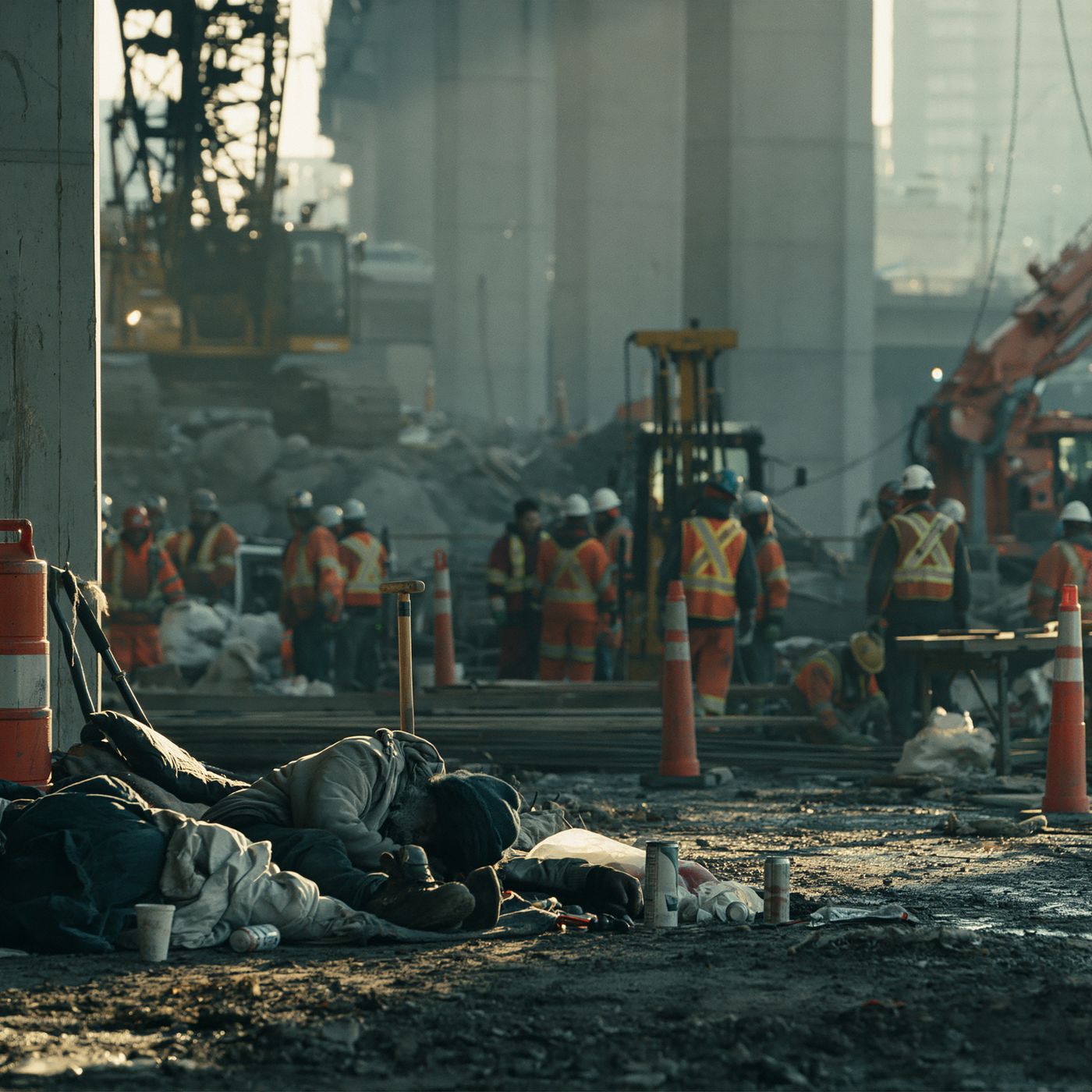
Speaker 4:And there was a Well, Sean was living under that overpass. He had a little.
Speaker 6:Impromptu campsite next to the train tracks.
Speaker 4:When more and more of the.
Speaker 6:Road crew started showing up week after week.
Speaker 4:He was pissed.
Speaker 1:Why are these people in his home? That sort of thing. Anyway, to LaShawn, this was his home. This piece of public property. And they were disturbing his peace.
Speaker 5:Tried to offer him a bottle of water one day because it was hot. And he was like, fuck you. And he just went off to like the violent stage. But one of the bosses tried to, I remember, he tried to give him a coat and some like pants because it was, Gotten cold towards the end of the season or whatever. It was starting to get chilly or whatever. And he pretty much told the boss to go fuck himself too. He had problems with the train guy too. He kept coming after the train guy. That's why the train guy would take one of us wood.
Speaker 1:Even in the face of kindness, LaShawn was combative. His antisocial, homeless man behavior only escalated.
Speaker 4:When Brian and his dad and all of them come down there later on.
Speaker 6:In the job site, he had started, like, tormenting people, messing with them, throwing rocks at people, stuff like that.
Speaker 4:Apparently, he threw rocks at Brian one day.
Speaker 1:Zach said LaShawn started to target Brian. But Brian said it was Zach who had the issue with LaShawn, and he didn't take death threats lightly.
Speaker 3:Yeah, I mean, that's... Homeless dude had issues, I guess, throughout the job.
Speaker 5:I guess he was the guy who was throwing rocks and stuff at him and threatening his life or whatever. Let me see him after work. Well, I thought it was just bullshit about that part, the after work part. The homeless guy had threatened Zach. He's like, I'll fucking kill you and your whole family or some shit like that. I remember him telling him that he was going to kill Zach. And then Zach's like, I'll.
Speaker 3:See about that. I'll see you after work and we'll see who ends up dead first. I didn't think that he was serious with that statement. Like I said, I thought he was just a big bullshitter.
Speaker 1:At the same time, Zach claimed it was Brian who became obsessed with teaching LaShawn a lesson.
Speaker 6:Brian, he's talking about how, oh, this guy, he needs to get an actual opinion. Hey, something needs to happen to him. And I was like, dude, that's like fucking let it go. You know, it's been like a week, I think.
Speaker 1:Whatever resentment had been building between the road crew and LaShawn didn't boil over immediately. Halloween came and went like any other work day. Earlier that evening, LaShawn walked to a nearby Circle K before returning beneath the bridge he called home. Hours later, After a night of drinking, Zach and Brian decided to go back and confront him.
Speaker 3:He decided, he's like, hey, let's go to the bar one night.
Speaker 4:I'm like, all right.
Speaker 1:Yeah.
Speaker 3:I need a DD.
Speaker 17:We went out on Halloween night, actually. And we got pretty drunk. I mean, it was about as drunk as we could get. And he brings up, he's like, hey, let's go to the job site. Let's see if he's there.
Speaker 1:That auspicious Halloween night, they closed down the bar. What a menace alcohol can be. When it came to leave, Zach said it was Brian's idea to go back to the job site, but Brian said he didn't even remember leaving the bar.
Speaker 5:I don't even really remember leaving that night. We ended up back at the job site, I believe. So I was kind of nodding off on the way there, but I know we ended up back.
Speaker 3:There Once we got there, part, we, I.
Speaker 5:Assumed he was just using John or something or whatever. And I think I remember him saying something about, I'm going to grab a sledgehammer. At that point, I'm drunk.
Speaker 3:I'm like, what the fuck am I going to get a sledgehammer for? We're not working right now.
Speaker 14:It's late.
Speaker 3:We just went to the bar.
Speaker 4:There's no way in hell.
Speaker 3:I'm doing anything if the boss asked right now.
Speaker 5:Like, I'm gonna tell him I'm drunk and I'm not gonna be able to do it. And then of course, I follow him down the hill.
Speaker 4:We walked down the hill and.
Speaker 6:He had his claw hammer. It was this blue and like black grip on it. I mean, it was a claw hammer. And I remember because he lost it out there somewhere. and he was freaking out about it the whole way home.
Speaker 1:Each man said the other had a problem with LeSean. Then they said it was the other's idea to go back to the job site that night. They both said it was the other one with the hammer. It's no surprise that each said the other was the first to approach LeSean. These are basically two murderers who have no loyalty to anything or anyone. If you don't respect human life, even if it's someone that's of no use to society, then you yourself are probably the bigger problem.
Speaker 4:Brian walked over there and he was like, hey, I know you're fucking awake. He took his hammer and he swung at him and I think he made contact with something. I mean, it sounded pretty loud and the guy jumped up, I mean, right away.
Speaker 1:But from Brian's perspective, that was all Zach.
Speaker 5:Because I kind of like stayed back a little bit once i realized he was walking towards the barrel where the dude was sleeping he uh walked over and he like he takes the hammer.
Speaker 12:Wake up motherfuckers bam i said get the fuck up and uh definitely like he smacked the barrel a couple times tell him get the fuck.
Speaker 2:Up with his hand or with.
Speaker 5:The hammer he smacked it with the hammer The guy gets out, like, you know, he.
Speaker 3:Gets out, and he's like, whoa, whoa, whoa, like, what the hell? He's like, remember me? You told me to meet you after work.
Speaker 12:Well, I'm here.
Speaker 2:Well, it's good.
Speaker 3:What's going on? Starts yelling at the guy, and the guy gets out and, like, bumps up to him.
Speaker 5:They got in each other's face, and then next thing you know, Zach kind of, like, pushed him a little bit, and he kind of, you know, your reaction is to push back when you're pushed. So the guy pushed him back, and then And they're kind of like pushing whatever is getting heated. I'm like, all right, ain't too bad, ain't too bad. I still don't know why he has the hammer. And then they got closer to the tracks. And I'm like, like I said, I'm probably 20, 30 foot away from them.
Speaker 5:Just keeping my distance.
Speaker 1:This is the part where their stories start to diverge the most. Who was the first person to assault this homeless man?
Speaker 3:He was here.
Speaker 5:And they were coming towards me, so I went this way and kind of hid by some bushes. And that's when I heard that first crack. And I'm like, that did not sound like a fist. That was a solid hard hit. I heard the dude ask for air after I heard the sledgehammer smack him.
Speaker 3:I'm assuming in the chest.
Speaker 1:Brian said he watched from a safe distance as a shoving match ensued. But Zach said Brian was the one in a rage-filled frenzy.
Speaker 4:Zach said he stood by as something of a referee.
Speaker 1:While Brian taught LaShawn a lesson. Regardless of who the aggressor was, the violence of the confrontation only grew. And no referee stopped it.
Speaker 6:So the guy, you know, he picked the hammer up and he tried swinging it.
Speaker 4:At us, hitting us.
Speaker 16:Because, all right, for your life at that point, you know, you don't know what's going to happen. I punched him because I was like, I'm not supposed to get hit by this fucking hammer. And when I punched him, I connected wrong. I hit something around here, and my pinky hit him up into.
Speaker 2:His tooth, and I broke my hand.
Speaker 4:Okay. So I was very pissed when I broke my hand. So I took the hammer, and I fucking took it, and I swung down his ribs. I took it out of his hand. I hurt him to the ribs, and I dropped the hammer.
Speaker 1:I walked away because I was like, Zach said he was a reluctant participant, only there to watch Brian's back. But when he got involved, he broke his hand and cracked LaShawn's ribs. So, there's that.
Speaker 5:They were kind of both tussling a little bit, and.
Speaker 3:He yelled for my help because he started to fall.
Speaker 5:And of course I come out of the spot I didn't want to come out of. And the guy came at me once I got over there. Me being a littler guy, I definitely started to get scared because, well, he's coming at me now. Zach had gotten my hammer out of the truck as well as his sledgehammer. I did not even know that he had had my hammer out in the first place.
Speaker 1:The hammers were central to both sides, but they changed hands depending on who was telling the story.
Speaker 3:Pulled out my hammer and was like, here, and threw it at somebody, and I'm like, oh.
Speaker 14:Oh, God.
Speaker 1:Brian said Zach yelled for help. LaShawn was getting the best of him. He said Zach tossed him his own hammer, and that's when LaShawn came at him. He must have been so scared.
Speaker 5:So I freak out and kind of like went for his legs, tried to take his legs, knock him out so he wouldn't come at me. I mean, I got a guy that's a giant compared to me coming at me.
Speaker 3:Like, I didn't want to. And it just kind of got worse from there. I know.
Speaker 2:I know it was a melee.
Speaker 12:A what?
Speaker 7:A melee is like a hustle where everybody's... Elbows and assholes all over the place.
Speaker 2:You know what I mean?
Speaker 1:Elbows and assholes. Never heard that one before. It's almost like poetry. In addition to having a small vocabulary, Brian was a man of small stature. He was only 5 feet 4 inches tall and 120 pounds. When LaShawn, a 310 pound 6 foot 1 man, came at Brian. He just swung the hammer.
Speaker 5:Got him in the leg with the hammer. The guy, you know, obviously, when we were doing that, he did kind of like buckle as he buckled down.
Speaker 3:Zach came over, tackled him down.
Speaker 4:Bam, bam, bam.
Speaker 3:Started hitting him. The guy ended up kicking me in my chest a couple times. Really good. And I kind of went into a fog. Kind of like a blackout.
Speaker 5:I kind of blacked out because, I don't know... I'm assuming it got worse, and I don't even fully know too much after.
Speaker 3:I blacked out. I'm not even really sure.
Speaker 6:When he got on the train tracks, was when he actually hit it hard enough that he was able to fall?
Speaker 2:Okay.
Speaker 6:And that was the degree of dynamite in his body that caused him to fall, if you remember?
Speaker 2:It was, like, his lower knee.
Speaker 12:Okay. Right.
Speaker 3:Hit it hard enough.
Speaker 4:Do you remember telling him about it or something? I mean, I moved the guy's leg and completely washed it.
Speaker 1:Leshawn let out a blood-curdling scream when Brian hit him in the leg. Zach pantomimed to detectives what Leshawn's leg looked like after Brian hit him with the hammer. He wiggles his limp hand in the air. Brian had broken Leshawn's femur clean through and turned his leg into jelly.
Speaker 6:And when the guy was on the ground or whatever, You know, I told him, I was like, all right. I was like, get the fuck up and leave. You know, I was like, this is enough of this shit.
Speaker 4:This is done. And he did get up and he started, like, running.
Speaker 6:And he was, like, hobbling, trying to run away, you know, on one leg. And I was letting him go. I turned around going the other way. And Brian went.
Speaker 4:And picked the hammer up and he chased him. And he went and he just hit him in the back of the head. He just hit him. He just keep fucking beating him. And I listen to that. He's just screaming, somebody help me.
Speaker 6:And I'm walking the other way, fucking throwing my hands up and down, like covering my ears.
Speaker 4:I don't want to hear this man begging for someone to stop beating him.
Speaker 1:This guy puts his hands over his ears and goes, la, la, la, la, la, la, la, while a homeless man is being murdered in front of him. I mean, what a fucking pussy. What a piece of shit. What is this, Clockwork Orange? Was Kubrick right about society? What is wrong with people? How do you put your hands on someone who just hurt your feelings with words, you know? Even if it's a threat. It's just a fucking threat. It's just letters strung together in a sound that comes out of your mouth. It doesn't hurt you unless you let it. Unless you're a weak, sensitive bitch.
Speaker 1:You don't put your hands on someone just because they hurt your feelings. That's not how society works. And I keep seeing more and more examples of this in general. LaShawn had several broken ribs and a broken leg. He was lying on the ground, begging for the beating to stop. But Zach and Brian got a few more licks in.
Speaker 4:So he's down at this point, then? Is he begging for help? I'm pleased you guys saw that.
Speaker 1:He's like, yeah.
Speaker 4:Okay, well, as he was remembering, begging, please don't touch me anymore.
Speaker 2:The doctor, I mean.
Speaker 4:He's like, please just stop. Did you both stop? I did.
Speaker 16:Brian hit him a few more times because he was fisted with a hammer because.
Speaker 4:He kept telling me, he said, I'm demanding respect from you. He goes, you don't get the point. I want respect. I don't want anything else. I want respect. And that's what he kept repeating.
Speaker 1:Brian, though, said Zach was the one to land the final blow.
Speaker 5:I realized that Zach was at this point on top of him.
Speaker 2:Okay.
Speaker 3:Literally just And then it was over. The melee had come to an end.
Speaker 5:The pair left LaShawn lying on the ground next to the train tracks.
Speaker 1:That's when the enormity of what just happened hit Zach. Apparently, he can't think when he's angry. Seriously, what has happened to men? Why are we such emotionally weak trash these days?
Speaker 18:Because I told him, I said, look, I said, you killed this guy. I said, believe it or not, I said, you're going to kill him. I said, look at the fucking knife leaving his body right now. He was like, oh no, he's fine.
Speaker 14:I said, no.
Speaker 18:I said, watch the heat leave his body.
Speaker 4:I said, you just killed him. So.
Speaker 6:We went to the gas station. I bought the guy two Gatorades and some food. He drank one of the Gatorades, ate some of the chips.
Speaker 2:Oh, you brought him right.
Speaker 4:Back to him? Yeah, I brought him right back.
Speaker 1:Do they teach that in med school? All you need to bring the dead back to life after a hammer to the back of the head is some gas station snacks and the Gatorade. A thirst quencher.
Speaker 4:Was he awake?
Speaker 2:He was awake. Yeah, he was awake and he.
Speaker 4:Was talking to me. He drank the Gatorade in front of me. Was he in pain? He was definitely in pain. What did he tell you hurt? Everything.
Speaker 6:He said he couldn't feel his lower half of his body.
Speaker 4:Okay.
Speaker 18:He was just like, you know, I'm going to try and make it.
Speaker 4:I'm going to try and do good. He said, I'm going to try and make it. Okay. I told him, I was like, you're going to, you know. Okay. Just, you know, knowing I'm lying.
Speaker 2:Well, you could have called an ambulance.
Speaker 1:Holy shit, this guy's dumb. Seriously, criminals are dumb as hell. That's why they're criminals. They never think to call an ambulance. I mean, if they had, they'd be in far less trouble. Unless he died, of course. But he could have lived, if only they had sought medical help. Instead, they got him a bag of chips and a Gatorade. What a bunch of nincompoops.
Speaker 3:Since when we left, I don't know.
Speaker 5:I thought the guy was still walking around, unless I knew. Like I said, I was drunk too, so he might not have been standing or walking or anything, but as far as I remember.
Speaker 3:he was still up and moving.
Speaker 1:LaShawn was alive, but badly injured. He lay on the ground, unable to feel his lower half, while Zach gave him a pep talk. Brian just assumed he'd be fine. But did the two intend to kill him, or just give him an ass-beating?
Speaker 18:My intention was not to kill anybody.
Speaker 4:That was not my intention.
Speaker 6:I wanted, yes, to hurt him and be like, here's your lesson.
Speaker 4:Some people are not to be fucked with in this world, but it was never my intention to kill somebody.
Speaker 13:From what you've described, it kind of sounds like an ass-beating gone wrong, but I don't know how you would characterize it, you know?
Speaker 6:I mean, it was never my intent to take anyone's life. That was never the goal. You know, that's what I thought. I said, you know, I want to, you know, beat this guy's ass at a point across. I don't fuck with people.
Speaker 15:Yes.
Speaker 4:Do I want to fucking take someone's life?
Speaker 2:Never.
Speaker 4:You know.
Speaker 1:But Brian said, So you guys are, went there, but you went there to have a confrontation with this guy.
Speaker 4:Right?
Speaker 15:Right.
Speaker 19:Mainly at him because it was time to send a message to him I guess did you set out with the idea in your mind because this is the important part did you intend to kill him no that's the critically important part.
Speaker 5:Absolutely not not even a slight I couldn't imagine killing I can't even kill a possum or a squirrel or a coon that's in a cage to your.
Speaker 2:Knowledge did Zach go there to try to kill him.
Speaker 5:I mean, I would think so, just from the conversation that happened earlier that day.
Speaker 7:I mean, from you riding her out of there, did he say, we're going to kill that guy, or did he say, we're going to give.
Speaker 2:Him a beating?
Speaker 3:He said, we're going to kick his ass.
Speaker 2:Okay, that's not... That's what I was under the... Okay.
Speaker 3:I don't have to understand you. That's as far as it was going to go.
Speaker 1:Whether they intended to kill LaShawn or not didn't really matter, because he was still dead. Of course, they wouldn't realize this until they returned to work.
Speaker 3:I remember waking up at home the next day. I knew something.
Speaker 5:When I woke up, I could just tell something wasn't right because we woke up, went back to work the next day. Me and the train guy, I helped the train guy, helped him take the.
Speaker 3:Derailleurs off, off the tracks.
Speaker 5:And we go back down there, and we're walking, and we seen the guy laying there. And me and the train guy both said, man, he's not moving.
Speaker 3:He's just, maybe he's sleeping.
Speaker 4:So I don't.
Speaker 3:Know if he's still there or not.
Speaker 4:I don't know.
Speaker 1:The train guy was going to call the cops if LaShawn was still there the next day. So when Brian saw he hadn't moved, he went to find Zach.
Speaker 5:Because I walked up to him after walking back, and I'm like, dude, that dude's not moving.
Speaker 2:And he goes, yeah, I know. I looked.
Speaker 3:I felt his pulse. And you don't have a pulse.
Speaker 4:He's dead.
Speaker 3:And I'm like, what? He's dead?
Speaker 1:This seems to be the moment that Brian suddenly realized the seriousness of what they had done. Hindsight is always 20-20, but sometimes if you're this dumb, you're just fucking blind. You're just an automaton acting on just emotion alone with zero impulse control. I don't think you're even human. At that point. They're just a walking, large language learning model. And not a good one.
Speaker 3:I don't even know.
Speaker 2:Did he try to get you to go back out and help?
Speaker 3:He did, and I'm like, I don't want no part of that.
Speaker 5:I can't even mentally bring in the fact that this is a real situation right now. I've only seen this on crime shows, and I don't even like to watch them because it just turns my gut.
Speaker 1:Aw, poor little baby can't watch true crime shows because they're too scary.
Speaker 6:He said, I didn't move by the next day.
Speaker 18:He was going to call the police and get him out there. So that's when I told Brian, I said, look, I said, we got to do something. He said he cannot stay sitting on these tracks. Brian would not help me deal with that situation.
Speaker 1:Brian immediately started to distance himself from the situation and from Zach. He refused to help Zach move the body, he said.
Speaker 4:Zach called his closest friends.
Speaker 1:A man who had since moved to Florida, of course. And this friend hooked him up with Ochoa.
Speaker 3:Saturday, we come back, and he was in orders to be found. He was gone.
Speaker 2:So what happened to the body then?
Speaker 3:He said him and one of his buddies.
Speaker 2:Did he tell you who it was?
Speaker 5:He wouldn't give me a name at all, so I don't even have the slightest clue.
Speaker 3:He's like.
Speaker 5:And then the next day... He showed up at the house. He goes, the guy is gone. And I'm like, what do you mean he's gone? He goes, we dissolved him. You dissolved him? What do you mean you dissolved him?
Speaker 3:Like, I don't get your concept.
Speaker 5:He was like, we covered him in acids and ate his body alive.
Speaker 1:Brian didn't help move the body and didn't help Zach pay Ochoa either. In the weeks and months to follow, the two separated. Brian lost Zach's number and Zach eventually gave up on getting Brian to pay his half of the money for Ochoa. They stopped talking completely. They built separate lives, but neither man ever managed to leave that night beneath the bridge behind.
Speaker 4:Has this affected you personally, mentally?
Speaker 6:I mean, it shows the way that I think about life in general, you know, like So.
Speaker 2:As the parents say, you've been living through some hell. Yeah.
Speaker 4:Yeah. Always have it in your mind. You can close your eyes at night and see someone begging for their life.
Speaker 3:Like, I feel so bad about it. I've been at the church.
Speaker 2:Okay.
Speaker 3:Way more than I, I mean, I'm there every Sunday. I talk to my pastor.
Speaker 5:I was like, Pastor, there's something on my mind that's not good. I said, I need help getting, not getting over it, but I need help with.
Speaker 1:Like, like, You heard that, right? He was about to say he tried to get a pastor to help him get over it before he realized just how bad that sounded out loud and corrected himself. Remember, people will always tell you who they really are if you pay close enough attention. By the end of the interviews, Detective Hayward heard the same story twice. Both men agreed on almost everything. They both admitted to their roles while trying to shift blame onto the other. But one thing wasn't in dispute.
Speaker 1:LaShawn Keith was dead because of what happened under that bridge. There wasn't one reason LaShawn died. There were weeks of resentment, too much alcohol, the wounded pride of young men, and one terrible decision after another. They had each expressed remorse. For the last 16 months, Zach and Brian had each been carrying the weight of that night. Zach said it changed the way he looked at life. Brian said it still haunted him. But remorse, and responsibility aren't the same thing.
Speaker 1:After 16 months of an investigation that was going nowhere, a DNA match brought detectives their final real break. After talking to Ochoa, they spoke with the two men who were responsible for LaShawn Keith's death, Zachary Traynor and Brian Wimbley. Zachary Traynor and Brian Wimbley both told the same story, but distanced themselves from responsibility, placing blame on each other. They minimized their roles, as most suspects do. But who were these two men when they were not trying to save themselves? Detective Hayward had done background research on the two young men. They were both holding down jobs and had supportive families. So, which one's story was more credible?
Speaker 2:I guess what story did he.
Speaker 15:Zach's sister had mentioned that Brian was the bad influence, and when Detective Hayward went to Florida to speak with Zach's friend, the one who connected him to Ochoa, he said something similar.
Speaker 20:Never really liked him because he was a bad influence. That's something I will tell you. He was always a bad influence. He got him into shit I would have never got him into. He's just a bad influence.
Speaker 2:I was only on the phone with Brian about once or twice.
Speaker 20:And the first time he was cool, but the second time he started fucking Zach.
Speaker 3:So I wasn't with all that shit.
Speaker 20:I'm going to be a hunter with you. He's going to be lying about some shit. Zach is probably going to be more cooperative. Brian is just trying to cover his own ass.
Speaker 1:But Brian wasn't afraid of the police. He was afraid of Zach.
Speaker 5:Pretty much this stuff happened and I kind of like cut ties with him because I was like, I.
Speaker 3:Don't want to be associated with you. You are bad news. I haven't even talked to him.
Speaker 21:Zach?
Speaker 3:I've lost his number.
Speaker 5:All communications. I want nothing to do with him. I still can care. Sorry about the language, but I can give two folks less to even see his face again.
Speaker 3:I hope I got you. Like, he stayed far away from me.
Speaker 5:He pulled the knife on my dad when me and my dad were arguing one day.
Speaker 2:Oh, no kidding.
Speaker 3:And he said, I'll fucking kill you right now. And he's told me.
Speaker 5:Before when I was working at the gas plant. He told me that he had.
Speaker 3:Killed somebody before.
Speaker 4:And I was.
Speaker 3:Like, ah, he's just bullshit. He seems like a bullshitter.
Speaker 15:No.
Speaker 1:But when Brian followed Zach beneath that bridge that night, he began to wonder if those stories had been true after all.
Speaker 3:Like, he's already killed one person.
Speaker 5:He obviously, it looks like, is coming here for another reason than what he told me he was coming for. And now I could be the third body. So at that point, my brain was just like, semi-go with the flow. So if he tells you.
Speaker 2:To do something.
Speaker 3:Just obey him. Just do what he says. But like I said, I was scared shitless at that point.
Speaker 7:So you heard a thud and you don't know who hit who then?
Speaker 5:I was assuming because the one dude kind of grabbed his chest and went back.
Speaker 14:The homeless man?
Speaker 5:Grabbed his chest and went back. I was like, dude, what the fuck are you doing? We're not trying to fucking kill the dude. You said you were going to kick his ass. Let's not kick his ass, dude. And his eyes like almost demonic looking dead at him like what the fuck are you doing you need.
Speaker 3:To stop then what happened next he's like.
Speaker 5:Don't fucking worry about me I think I at one point tried to walk away and he's like you better not fucking walk away or you're next but the voice his voice didn't even sound the same at that point like his voice had like changed like deeper which was scary That kind of told me, oh man, maybe he wasn't joking about the other person that he had killed.
Speaker 1:Brian wasn't the only person who described a different side of Zach. Months later, after they were both arrested, another man would tell Detective Hayward about conversations in jail. These conversations offered a very different picture.
Speaker 21:I got some information that you might have had a cellie at one point that had done a homicide in.
Speaker 2:He's like my son.
Speaker 4:He's so stupid.
Speaker 2:He's talking about it right there in court.
Speaker 22:I mean, in the holding tank, waiting to go to court.
Speaker 2:And what was he, was he talking to you or was he talking to somebody else? He was talking to me. Okay. Where did he, where did he say about this?
Speaker 22:He said it, uh, first, he was like, prosecution is stupid. He said the prosecution, everybody's stupid. Him and Wendell E. Oh, he told us the guy's name, too? That's the guy that sent it with him. That's what made him start it, because, uh... Were they both in the holding cell, or no? Wimbley or whatever was in the cell next to us.
Speaker 2:But he was like, it's code-offended. That's the game.
Speaker 22:God didn't start something by saying, dude, this is code-offended. He said the dude told on him. This man crazy as fuck. Tell him all this. He did a murder, and he tell him all this. Oh, and he said it, uh... He telling people, uh.
Speaker 2:I think I'm trying to awkwardly in jail.
Speaker 3:Okay.
Speaker 21:You think he was giving you an accurate account or you think he was trying to be a tough guy?
Speaker 2:I think he was telling the truth.
Speaker 4:He was telling the truth.
Speaker 2:He laughed in the whole time. Like, you don't have no remorse.
Speaker 14:He laughed.
Speaker 2:That's another thing.
Speaker 14:Like, damn.
Speaker 2:Like, he just, like, he didn't have no remorse. He was laughing the whole time.
Speaker 4:Like, you know what I mean?
Speaker 2:You know what I'm saying? Like, I'm only going to get 12 years.
Speaker 1:Whether Burton was telling the truth or simply repeating jailhouse bravado, he challenged the image of Zach that had emerged during the interviews. But Detective Hayward already had what he needed. Ochoa had admitted to moving the body. Zach and Brian had each admitted in taking part in the assault. Their stories differed on who threw the first punch and who struck the final blow, but they've already figured out all this shit in the law. If you go to a location with the intent of committing a crime, no matter what it is, whether it be assault or robbing a Snickers bar, and in that act, something goes wrong and someone dies, well, guess what? You're responsible for that. That's what the law is. So, it doesn't matter who threw the first punch. It doesn't matter who struck the final blow.
Speaker 1:Stupid people don't realize this, because they're stupid. Sixteen months earlier, Detective Hayward had stood in a muddy field looking at a body with no witnesses and only a single glove to guide him. That glove eventually led him to three young men with three very different stories, but enough truth between the three of them to hold each one of them accountable. In the end, both Zachary Traynor and Brian Wimbley were charged with second-degree homicide. Neither Zach nor Brian asked a jury to decide whose version of events was true.
Speaker 1:Both accepted plea agreements and pleaded guilty to second-degree murder. Ochoa was charged with accessory to a felony after the fact. He was sentenced to a year and a half in prison, Zach and Brian, though, were sentenced to 15 to 30 years in prison for their roles in the death of 33-year-old LaShawn Keith and dumping his body in a hayfield. LaShawn Keith didn't have many material possessions, but he had a life, and he had a family, and he was a human being. And that's all that matters. He didn't deserve to be beaten, bloody, and broken again. left to bleed internally until he finally passed away alone, in the dark, under a bridge. That's absolutely no way for anyone to go.
Speaker 1:Our latest episode of Sword and Scale television is available right now at swordandscale.com. It's called Frail. You should check it out. And if you still don't know why there's some episodes missing from the free feed, why some are marked plus and unavailable to you, well, that's because we're not a nonprofit and you're probably not smart enough to be part of our audience. Anyway, you can find them at swordandscale.com.
Speaker 14:Duh.
Speaker 18:Thank you.
Transcript supplied by the publisher with the episode.
Sword and Scale
by Sword and Scale · English · True Crime
Sword and Scale is a weekly true crime podcast covering the dark underworld of crime and the criminal justice system’s response to it. The first episode launched January 1st, 2014 and feature stories of murder, abduction, rape, and even more bizarre forms of crime. It’s the purest form of true-crime
More from Sword and Scale
-

S13 · E370 · 27 Sep 2026 · 53 min
Episode 370
Jennifer Dulos, an upper-class mom of five, vanished from Connecticut on a spring morning in 2019. Two women, both from privilege, both connected to the same man, would find themselves on opposite sides of what came next. One walked away. The other stayed. As the investigation unfolded, a story emerged - one shaped by money, control, and the quiet ways power is used and abused. Get instant access to all episodes, including premium unreleased episodes, commercial-free at swordandscale.com
-
S13 · E366 · 23 Aug 2026 · 1 hr 12 min
Episode 366
In April of 2024, 25-year-old Megan Bodiford went missing. The search for answers would uncover a violent crime hidden in plain sight and reveal how the signs of danger were there all along. Get instant access to all episodes, including premium unreleased episodes, commercial-free at swordandscale.com
-

S13 · E364 · 9 Aug 2026 · 1 hr 15 min
Episode 364
The British Club was a close circle of English expats in Fleming Island, Florida. They were friends who looked out for one another like family. So when 65-year-old Sue Mauldin suddenly vanished, they knew something was wrong. What followed was a desperate race by the Clay County Sheriff’s Office to track down a man hiding in plain sight and uncover what really happened to Sue. Get instant access to all episodes, including premium unreleased episodes, commercial-free at swordandscale.com
-
S13 · E363 · 6 Aug 2026 · 1 hr 18 min
Episode 363
A quiet evening in Washington City, Utah, ended in gunfire inside the Bailey family home. Gail and Joseph Bailey were executed. Their son and daughter-in-law barely escaped through a window. What followed was a sprawling manhunt through the desert edge of St. George with drones, SWAT teams, and a suspect hiding in the weeds with a gun to her head. Get instant access to all episodes, including premium unreleased episodes, commercial-free at swordandscale.com
-

S13 · E362 · 2 Aug 2026 · 1 hr 11 min
Episode 362
In Delray Beach, Florida, a routine traffic stop led police to a young man covered in blood. By the next morning, a body had been discovered. What followed was a tense interrogation — and a motive that felt disturbingly small compared to the violence it produced. Get instant access to all episodes, including premium unreleased episodes, commercial-free at swordandscale.com
-

S13 · E360 · 21 Jul 2026 · 59 min
Episode 360
13-year-old Madeline Soto vanishes on what should have been an ordinary school morning in Kissimmee, Florida. She’s dropped off just a block away, and nothing about it feels unusual. She walks off, heading toward school… and disappears. By the afternoon, panic sets in. Calls to 911 reveal a family scrambling for answers: rechecking routes, calling friends, waiting for help that isn’t coming fast enough. She never made it to class. No one saw her arrive. Beneath the family’s lies, it’s a race against the clock to find Maddie. Get instant access to all episodes, including premium unreleased…
-
S13 · E358 · 17 Jul 2026 · 1 hr 11 min
Episode 358
When 25-year-old biomedical engineer Jonathan Amerault disappeared, it felt like another one of his hiking trips had gone horribly wrong. But the scene in the woods, and the female co-worker found beside his brutalized body, told a much more sinister story of love and blind rage. Get instant access to all episodes, including premium unreleased episodes, commercial-free at swordandscale.com
-
S13 · E357 · 12 Jul 2026 · 1 hr 11 min
Episode 357
On a cold April afternoon in Milwaukee, two men walking along the Lake Michigan shoreline make a gruesome discovery: a human leg tangled in the weeds below a bluff. Within days, more body parts start surfacing across the city, and even across state lines. The remains belong to 19-year-old college student Sade Robinson, a young woman with a promising future - cut short. Piece by piece, investigators put together the puzzle of Sade’s grisly demise and learn that not everyone is redeemable. Get instant access to all episodes, including premium unreleased episodes, commercial-free at…
-

S13 · E356 · 28 Jun 2026 · 1 hr 10 min
Episode 356
In 2008, University of Wisconsin–Madison student Brittany Zimmermann was murdered in her apartment in the middle of the day, and then the trail went cold. An unlikely informant leads the police to search for two mystery men, a theory that would steer the investigation for years. As time passed and leads fell apart, the case slowly faded from view. Twelve years later, detectives discovered the truth wasn’t buried; it had been right in front of them all along. Get instant access to all episodes, including premium unreleased episodes, commercial-free at swordandscale.com
-

S13 · E355 · 17 Jun 2026 · 58 min
Episode 355
When Virgil and Shirley Best were found dead in their home, investigators expected a familiar explanation. What followed instead was an investigation defined by uncertainty and a motive that challenged the idea that violence always comes from clear intent. Get instant access to all episodes, including premium unreleased episodes, commercial-free at swordandscale.com

Take it with you
The Melo app keeps playing with the screen off, works in the car and on your watch, wakes you to your station, and browses the whole catalogue offline. Free, no ads, no account.