Wanna see a trick? Give us any topic and we can tie it back to the economy. At Planet Money , we explore the forces that shape our lives and bring you along for the ride. Don't just understand the economy – understand the world. Support public media by joining NPR+ at plus.npr.org .
Charles Ponzi was down on his luck. In 1919, the Italian immigrant had spent a decade and a half in the U.S. He was looking for a way to get rich and tried his hand at everything — including bookkeeping, sign painting, grocery clerk, dishwasher, and librarian. He caught a lucky break in August, when he received a letter from Europe. In the envelope was an International Reply Coupon, a clever way to prepay for international postage. Ponzi realized he might be able to use these coupons to make his fortune. All he needed was investors. What happened next made him a household name. This is the…
It's getting pretty wild in the beverage aisle these days — from the rainbow wall of seltzers, to the increasingly strange flavors of Pepsi, to the new "functional" sodas with added fiber or supplements that supposedly offer health benefits. Where are all these new drinks coming from? And why does it seem like the options are multiplying faster than ever? Today on the show, we go behind the scenes at one of the nation’s top-secret beverage laboratories. The food scientists in this lab have quietly helped companies design many of the new drinks on the shelves these days. We taste things we…
Very soon, Social Security may not have enough money to make full payments to retirees. Very soon. Like by 2032, just six years from now. So what are we gonna do about it? Today on the show, we look at some of the most talked about possible solutions; and exactly whose wallets we’ll have to rifle through to find the money to pay for each. Then we’ll run the options by the Social Security Administration's former Chief Actuary. The guy Congress used to call to crunch numbers and give them the bottom line. Read: - Our book: Planet Money: A Guide to the Economic Forces That Shape Your Life - Our…
Wanna know who is really in the top 1%? And how they use their influence? It may not be who you think. Look beyond Silicon Valley. Look beyond Wall Street. Look beyond the “oligarchs”. There's a much larger class of wealthy Americans hiding in plain sight. And, often, they got rich in mundane ways. They own car dealerships. They sell hot dogs and frozen mini-quiches. They run waxing salons. They supply fabricated metal and urinal cakes. They are dentists. Collectively, these "Main Street millionaires" control much more wealth than the billionaire lightning rods who launch rockets into space,…
(Note: A version of this episode originally ran in 2024 .) $40,000,000,000,000. Four commas. Thirteen zeroes. It’s an eye-popping, almost infinite-sounding pile of money. And every time the debt passes a big round number, almost everyone asks the same question: How much debt is too much? It’s maybe the most important question in macroeconomics. It’s also surprisingly hard to answer. When two economists tried to answer it back in 2010, it ignited a research slugfest that lasted a decade. We did a show on this question in 2024, outlining everything we know and don’t know about when the…
Did a pizza restaurant’s humble status page change how we wait forever? When you order a Lyft or Uber, you get texts every few minutes about your car approaching and arriving. When you have a package coming, you get a notification when it’s shipped, when it’s en route, and when it’s out for delivery. Why do so many companies send these constant updates? We have a theory: It’s because of Domino’s. In 2008, Domino’s launched the Pizza Tracker, a novel tool that delighted customers by allowing them to obsessively monitor their pizza’s progress from order to oven to delivery. The Pizza Tracker…
Margin borrowing and sports gambling “investments” are both on the rise! Today on the show, two stories from Planet Money’s daily podcast The Indicator about the ways investing is changing, and getting riskier. According to one study, more than half of Gen Zers are using investment dollars for sports gambling. On average, this is not a smart strategy for the long term. It might be that sports betting today is like day trading was for a previous generation of young investors: something a lot of young people, typically men, do, lose money at for a while, then quit. We review the early research…
There is a new type of loan that is sweeping through the country right now. It’s advertised as a super quick and super easy way to get a mortgage to buy a home. In recent years, Wall Street has been funneling billions of dollars into these loans. But these loans are also raising questions. Are they a financial innovation that’s helping the housing market? Or ... a sign that Wall Street might be forgetting the mistakes that led to the Global Financial Crisis? On today’s show, we head to Baltimore, where abandoned rowhomes have become a familiar sight. Reporters Hallie Miller, Jack Bologna and…
In this economy it is boom times and doom times all at once. The statistics aren’t really capturing it. K-shaped only goes so far as a metaphor. So … we asked you to help. And you delivered! One one hand, the stock market is on a prolonged, upward trajectory. Unemployment is low and inflation has come down from its peak. But on the other hand, inflation is frustratingly sticky and higher than we want, job turnover is extremely low making looking for work an endless grind, and more than 75% of Americans say they’re stressed about money. So we asked you – our listeners – how is the economy…
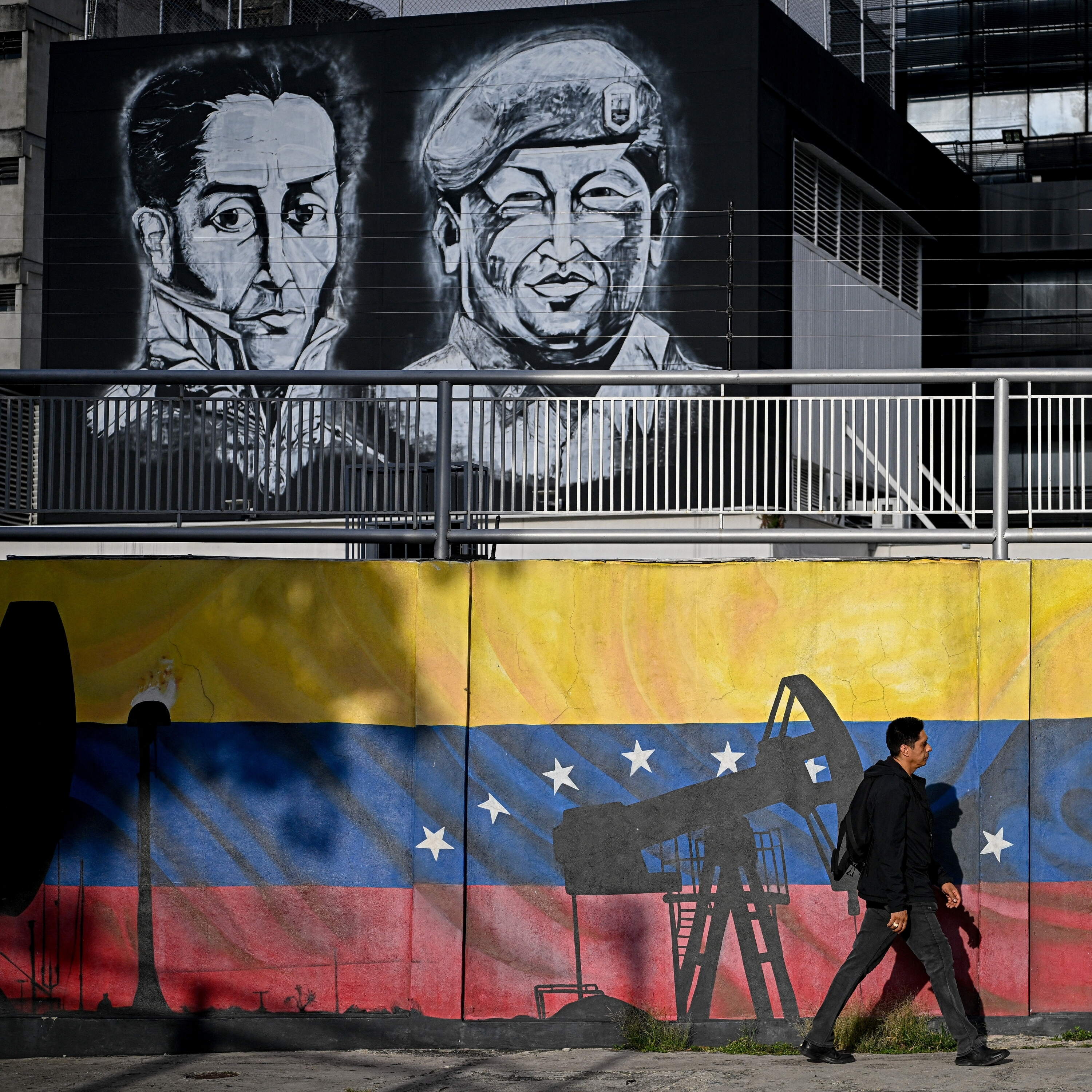
One week ago, President Trump announced a deal that would give the “U.S. control of more than 65 BILLION BARRELS of proven Oil Reserves in Venezuela, at no cost to the American Taxpayer.” The exact nature of this deal has been … obscure, to say the least. But today, we wanted to know, from someone who’s been through this before, what does this mean for Venezuela? José Ángel Pereira Ruimwyk is both optimistic … and wary. He’s a longtime Venezuelan oil insider. When Venezuela invited in foreigners, decades ago, he was there to greet them. And when Venezuela wanted them out? Well, that’s how he…
To a lot of people, Palantir is a mystery — what does the company know, what data do they have, and (if they have it) what do they do with it all? We dig into that mystery and take you to a singles event to see if Big Data is good for Big Dating. That event, deep in the heart of Manhattan, is called: “Singles Dating Matching Using Palantir Data.” The evening promised: “Data analysis!” and “Pattern matching!” We decided that we needed to know more. Read: - Our book: Planet Money: A Guide to the Economic Forces That Shape Your Life - Our weekly longform Planet Money newsletter - Our weekly…
The brilliance of "9 to 5" is that it is catchy even though it’s also kinda depressing. You will be dancing along. You're enjoying it. And, then when you really listen to the lyrics, you're like, Wait, this is messed up. This is real. This is a problem we need to fix. Like, why does it have to be this way? That is the spirit of the song, why it became an anthem, and the heart of the movie 9 to 5 . There’s so much to say about Dolly Parton, about her music, acting career, her business savvy, not to mention Dollywood. Today though, we wanted to bring you the audacious true story of 9 to 5 ,…
The produce aisle is changing. You’ve noticed this, I’m sure. It is now full of superstar fruits and vegetables: The Honeycrisp apple, The Cotton Candy grape, The Cuties mandarin orange. They stand out. They cost more. They have branding and sometimes trademarks and patent-ish kinds of protections. And now – it’s happening in the tomato bin too! Where once there were just plain old cherry or grape tomatoes, now there are Sugar Bombs, and Flavor Bombs, and Lolli Bombs and Sprinkles. Today, we are partnering up with Dan Pashman – host of The Sporkful food podcast – and heading to New Jersey…
This episode is packed with your best economic ideas from around the world and a penguin interview. It all comes together in this final session of Summer School 2026. Pack your parka, we’re headed to Antarctica. First, we’ll travel back in time to the late 1970s when NPR was a scrappy young network, with a synth soundtrack , and tons of heart. Science reporter Ira Flatow took a trip to the South Pole that put NPR on the news industry map. We’ll hear an excerpt where he brings us along through what life is like on the ice, including a memorable interview with the wildlife. Then we look inside…
There’s a room where the fates of retail products are decided. Will they make it onto the shelves of the big box stores? Usually the rest of us can’t get inside the room where decisions are made – until now! Today on the show, we pitch the Planet Money game, Sell Me a Sasquatch, to big box retailers. We go behind the scenes to learn about how products end up on big box store shelves, what’s going on inside the minds of the deciders, and find out our board game’s fate. Learn more about the story of Pantone: The company that owns colors Support: Planet Money+ Read: Our book: Planet Money: A…
This week’s stop on our world tour - Korea. A country divided into two very different power structures since the end of WWII. Today South Korea is the maker of some of the world’s favorite exports – from Samsung TV’s to BTS. But 75 years ago it was a much different story. How the textile industry and a partnership with Bangladesh lifted the country out of poverty and paved the way for rapid economic growth. Then later in this episode – how entrepreneurial endeavors look different on the other side of the 38th parallel. We’ll follow a woman who started her own small business selling goods in…
Some of the biggest firms on Wall Street are, at this very moment, waiting for thousands of strangers to die to reap their returns. Because there’s a market for life insurance policies. And it’s legal. You don’t have to actually die to get some of your life insurance money. Thanks to a secondary market for life insurance policies, you might be able to claw back money from beyond the grave. You just sell your policy to an investor. So when you die, the payout goes to them, instead of your family or beneficiary. On today’s show, how the wheels of finance transformed a desperate deal made…
Just about everyone in Argentina is an expert in inflation and whether they like it or not, economic flexibility. Can we learn from them? Over the years, we at Planet Money have checked in on Argentina as it tried to recover from economic collapse in 2001 and 2002, and as inflation shot up and the country defaulted on its debts. This week on our Summer School World Tour, we fly to Buenos Aires, mapping the moves of their economy through the eyes of people who live there – from tango classes and shoe shopping to a Coldplay concert that sparked a special exchange rate. We’ll consider the…
When workers past retirement age can’t afford to retire — that’s one thing. When they can, and just don’t want to — that’s trickier. It used to be legal to force people to retire when they hit a certain age. The trend used to be earlier and earlier retirement. Now it’s later and later retirement. And younger workers say it’s impacting their career advancement and their ability to save for their own retirement. At the same time, older workers are living longer, Social Security and Medicare funding are less secure than ever … and many people want to keep working. Age in the workplace is a…
Imagine a nation where, for the residents, land is for the claiming. You walk down the street, pick out a nice looking plot of land, and just plop down a marker. No rent, no taxes, no deed – just free land. That’s the communal system of property rights that governed a small Caribbean island for over a century. This week on our Summer School World Tour we make port on the small economies of island nations, a great place to explore how different experiments play out. Every small change – the good and the bad – has big consequences. First, the fascinating test case on the island of Barbuda,…
Squishy, slimy, fidgety toys are having a moment. But it’s more than just an anxiety-soothing, social-media fueled trend – these toys are reshaping how toys get made. Today on the show, we have the story of the once-humble squishy dumpling and what it teaches us about how to make a viral hit and how to manufacture it, without getting left holding the bag. Hear it all firsthand from the creator of this trendy toy. Read: Our book: Planet Money: A Guide to the Economic Forces That Shape Your Life Our weekly longform Planet Money newsletter Our weekly Indicator round-up newsletter Follow:…
Let’s call it the luxury of restraint. This is what enabled Norway to avoid the fate of so many other countries when they discovered oil and it changed the mix of their economy overnight. Norway! It’s expensive, wealthy, and abundant in resources. We’re going to compare two of them in particular today: deep reservoirs of oil and icy waters full of salmon. While one resource was heavily in demand, the country had an oversupply of the other. In this episode, we learn how Norway built its wealth by carefully avoiding the pitfalls of discovering oil that have plagued countries in the past and…
Let’s head to a small town in Kenya that’s become globally famous for helping economists answer some of the biggest questions facing humanity. In Kenya and Nigeria, economics isn’t just theory, it’s real life. We’ll look at some radical experiments that turned out to be enormously successful. What are the building blocks of health, education and prosperity for all? How does a nation grow rich? What is the most effective way to spend a dollar to fight poverty? We find answers in a town that became the laboratory for new concepts in economic research that netted some researchers the most…
The cyclospora outbreak that’s sickening thousands of Americans got us interested in the rise of Big Lettuce, and the challenges of keeping it clean. So on today’s show, we tell you just how much lettuce Americans eat every year (SO MUCH!), how bagged lettuce came to dominate grocery store shelves, what that means for food safety, and why these outbreaks continue to happen — despite the FDA’s efforts to stop them. Check out other related episodes: Food Scare Squad How refrigeration took over the world Support: Planet Money+ Read: Our book: Planet Money: A Guide to the Economic Forces That…
In the summer of 2020, sixteen-year-old Antonio Mays Jr. traveled a thousand miles to join the racial justice movement of his generation in the wake of George Floyd's killing. Antonio arrived in Seattle during the Capitol Hill Occupied Protest, known as CHOP. Less than a week later, he was shot and killed there. The case remains unsolved. In this eight-part series, hosts Sydney Brownstone of The Seattle Times and Will James of KUOW team up with NPR's Embedded to investigate Antonio's death. They track down key eyewitnesses and surface crucial evidence that's never been made public. Find "We…
As the World Cup comes to a close, so does a massive real-time experiment happening just around the edges. Major League Soccer – the top men’s professional soccer league in the U.S. and Canada – has been scrambling to take advantage of this once-in-a-generation opportunity when average American sports fans suddenly cared a lot about soccer. In between World Cup matches, NPR Sports Correspondent Becky Sullivan has been following Major League Soccer executives as they try to figure out how best to get a foot in the door with sports fans in the U.S. In this episode, we tag along to see if U.S.…
China’s turbocharged growth may have made it rich, but now it has to deal with rich country problems. High-speed trains that connect every town. Gleaming new bridges and skyscrapers. An apartment (or two) for every family. No country on Earth has seen the kind of economic growth that China has over the last 50 years. China has become the factory to the world, a grand experiment in central government planning mixed with personal ambition. It was all enabled by what our guide for today calls, an engineering state, a central planning mindset where leaders believe they can engineer their way out…
Once upon a time, if you wanted to buy a luxury brand item secondhand (say, a Chanel handbag) you had to have an in. There was no easy way to find one. But over the past decade, the market for secondhand luxury goods has exploded. There are now many online resellers where you can shop for used and discounted luxury items. One big problem — how can you be sure if it’s real and authentic? Some online resellers claim to have solved this problem. They say they’ve developed a process of authentication, and so buyers can trust that the bag is really Gucci or Cartier or Hermès or whatever. But…
Come along as we travel the world in search of the best economic ideas to bring home! From the beaches of Barbuda to the fjords of Norway, there's money (and money problems) everywhere. For this summer travel season, Planet Money Summer School will take you on a world tour for your ears. Pack that sense of wonder and nose for adventure, this is our semester abroad. We’re going to explore exotic locales and discover cultural norms, but we’re also going to buckle down and learn the biggest economic lessons around the world from our guides. We start as far away as you can get from Planet Money…
Lionel Messi is arguably the greatest soccer scorer of all time. But when it comes to penalty kicks, Messi is merely average. Why? Maybe the answer involves game theory. According to game theory, there’s an optimal strategy for taking penalty kicks. This strategy involves an idea that was once somewhat controversial in economics — that is, until economists started studying soccer players in real life. On today's show, we kick it over to the hosts of the Soccernomics podcast to explain how game theory has changed soccer, and how soccer has changed game theory. Watch the penalty shootout…
About Planet Money
Wanna see a trick? Give us any topic and we can tie it back to the economy. At Planet Money , we explore the forces that shape our lives and bring you along for the ride. Don't just understand the economy – understand the world. Support public media by joining NPR+ at plus.npr.org . You’ll get perks for over 25 NPR podcasts, including bonus episodes and sponsor-free listening for Planet Money.
Planet Money is a English business podcast from NPR. Melo plays each episode straight from the publisher's own feed — no ads added, no account needed — and remembers where you stopped, in this browser only.
The Melo app keeps playing with the screen off, works in the car and on your watch, wakes you to your station, and browses the whole catalogue offline. Free, no ads, no account.