
Episode · Ready or Not
Lindsey Clancy, Hayden Panettiere, and a labor senator's postpartum health push
23 Aug 2026 · 37 min
Episode · Ready or Not
23 Aug 2026 · 37 min
CONTENT WARNING: Episode discusses death, addiction, and postpartum mental health. Welcome back to the show! Coming up: a look at some of the biggest stories in the news currently, and why postpartum health is at the forefront of our minds as we read about them. TODAY IS THE LAST DAY TO ENTER THE MINGLE SEASONING TINY FOOD CRITIC COMP: https://www.mingleseasoning.com/pages/tiny-food-critics Got a question? Submit it here! — Thanks for listening! If you liked the show, please tell your friends, subscribe or write a review. You can also find us on Instagram: @readyornot.pod…
Speaker 1:Nobody believed postpartum depression was a thing. If you think about this from a start, with money and power beyond most people's scope, how on earth does the average person with little power money actually advocate for themselves in a system that doesn't support them.
Speaker 2:I don't think it's about money or power though, when it comes to postpartum as system, I think the first step is recognizing that it is a thing. This podcast was recorded on the lands of the boon Warong people of the Kulin Nation, the land on which we're lucky enough to raise our sons and daughters, always was, and always will be Aboriginal Land.
Speaker 1:Hello, and welcome to Ready or Not, the show where two mums try to figure out how to make work work.
Speaker 3:I'm struggling with that at the moment. My friend I'm lou was.
Speaker 1:And coming up on today's show, Lindsey Clancy, Hayden Panetier and Labor Senator Mariel Smith's successful pushit for a national inquiry into postpartum healthcare.
Speaker 3:This is going to be a pretty heavy topic.
Speaker 1:We're going to be covering some pretty gruel stories that have been in the news, so take care listening. But before we get into the heaviness of it all. How are you, my friend?
Speaker 4:Great? I mean I'm actually getting sick.
Speaker 2:I feel like this way, this whole way through my entire family, and now it's time for me to shine.
Speaker 4:Yeah, so I am actually getting sick.
Speaker 3:So we might make the gems words in here and get more seed.
Speaker 4:Yeah, exactly, just sick in each other. But I have had a really good couple of weeks.
Speaker 2:So I had the Chemist Warehouse event, which is unbelievable, Like they do such an incredible job, and every brand that goes there activates it so well, and there's a lot of thought put into it. There's a great opportunity for new brands or new founders to showcase their products. Like I found this new product called Eve which is very very cool, and I met the founder she was there, so it was nice to actually get to see people behind the brand, if that makes sense.
Speaker 3:Yep.
Speaker 2:But a couple of key things I need to call out Mimi kids. They are going from strength to strength about so good. So for example, has really really thin fine Hairit loads of it and it gets super super natty.
Speaker 3:Yes, I have.
Speaker 4:Spreadlocky, yes same.
Speaker 2:So I have tried the old school, you know, what was it like Johnston Johnson, you know, the one that kind of smells like banana. I've tried them all just to see, like how I can get the knots out because she's constantly winging about it. This is one of the very few brands that seems to work. And they've just got a new hair product and see was so excited. It's like the slick back Pony. But it's friendly enough for kids to do themselves, which I think is really sweet.
Speaker 2:So they're doing great things, will Leader, I mean their skin loving food whatever it's called. The pale green bottle of gorge diver is gorgeous. A couple of other things that I should also touch on. There's some new Revlon products, some lip liners that are.
Speaker 3:Dukes of Road. Probably the wrong girl should.
Speaker 2:Probably get on too, if you're listening. There's just so many good things. There's so many probiotics, probiotics, collagen things like the wellness sector is just expel loading. Like I tried a vaginal probiotic.
Speaker 3:Did you put it up that way?
Speaker 4:No?
Speaker 3:Or do you follow it?
Speaker 2:No?
Speaker 4:It's just a gummy that you eat. And I thought to myself, Wow, like, did.
Speaker 3:You vagina feel good that day.
Speaker 4:I don't even know what it was meant to do.
Speaker 2:But there's a product for Jesus Christ. It doesn't make me think though, we are doing so much more in the women's health space, which I know is what this segment is going to be about.
Speaker 1:Yes, more broadly that that's going to be a loud bit of audio.
Speaker 2:Sorry, run this snoon, No, I do, you think to myself. Slowly, slowly, We're getting there. And it is great to see brands like Swiss making a heavier investment in products specific the hystereomyl campaign. Yeah, yeah, that's really good stuff. Also want to touch on the fact that you and I we had a Mingle event.
Speaker 3:Were mingled with Mingled.
Speaker 4:Yeah, that was fun. It was so fun.
Speaker 2:So it was for their Fussy Eaters Tiniest Food Critic campaign, which is the first event that they've actually ever done.
Speaker 4:I couldn't believe that neither.
Speaker 1:When Jordan the founder said that, and she is the way hearing her story from the early days all those years ago to now.
Speaker 3:I think the business has been around for nearly eleven years.
Speaker 1:With that's what she said, yeap, oh my word, she was inspiring. Humble down to earth just a legend.
Speaker 2:Yeah, but it also gives you a very good all round of view of just how hard it is. So she's not one of those like overnight success stories. Eleven years is a long time, but she has the exception.
Speaker 3:Yeah, just what I always say about you and I yep.
Speaker 2:And she has done some grinding. She has really started from like food stalls. She's gone to Colson Will Worse and she's pitched and they've said no, and then eventually they've said yes. And now it's this incredible brand that it is today.
Speaker 3:So it's incredible. It is love what she's doing.
Speaker 2:If you do want to win a holiday, oh you're mad not to want to, you know, you're mad not to waunt to you. Today is the last day to enter. So there is a link in our bio for the Mingle competition in.
Speaker 3:Our show notes. We'll put in our show.
Speaker 4:We'll put it in our notes and it's also in our Instagram bio.
Speaker 2:Should you wish to follow along, please do you have to provide a story on your fussy eater And there are some absolute bangers.
Speaker 3:We were laughing on the night. Yeah, they're all sharing their stories.
Speaker 4:There's some really good ones, but enter closes today.
Speaker 1:Closes today, and thanks so much to Mingle for supporting us and for such a fun event. It was wholesome and lovely and creative, and I loved every second of it. I agreed, what's happening with me?
Speaker 3:Not much?
Speaker 2:I will say, Okay, sorry, I'm so sorry. He is a laugh for anybody in the audience. So everyone has been saying to me. It was, you're so busy, you should start using the slow cooker.
Speaker 4:And I have a slow cooker, I must say.
Speaker 1:Of course you have as soon as you saw it on the market. Of course that one exactly.
Speaker 4:Right, and everyone keeps raving about how it is.
Speaker 2:So the other day I thought, surely you can just make bolonnaise in this, Like, how hard can it be?
Speaker 4:Right?
Speaker 3:Yep?
Speaker 4:I put it on the night before.
Speaker 2:In the morning, I woke up and said, smells like dog food in here, and I was like, it actually.
Speaker 3:Does a bit.
Speaker 4:I'm like, it genuinely does. What is that smell? Ma, I don't know.
Speaker 2:I had thought nothing of it. And then I went into the kitchen and as I took the lid off the slow cooker, not only did it smell like dog food, it looked like dogs.
Speaker 3:So it looked a bit dry.
Speaker 4:It was through you did.
Speaker 3:Did you just chop everything up throw it all in?
Speaker 4:Yeah?
Speaker 3:Oh babe, surely the stages.
Speaker 2:No, the recipe I read say just put it all in, really cooker, So I trust.
Speaker 4:You genuinely was inedible.
Speaker 2:I was thinking to myself, are there other ways that I could do this?
Speaker 4:Like kind of pure it?
Speaker 3:Yeah?
Speaker 4:I know Gus is past puree, but we all know I'm still on that.
Speaker 2:Yeah, even he was repulsed, you would need it and eventually just went in the bin. So for anyone using the slow COOKU send me your tips and b add some mingle seasoning like this isn't even a plug for them. But you know that the last time I cooked it, I mean, it wasn't the stove and I did add there everything.
Speaker 4:I think it's called mix.
Speaker 3:Oh yeah. That bagel one that you love is not.
Speaker 2:A date one, a different one. It was in a blue shaky thing and the kids loved it.
Speaker 4:Sorry, I mean to do as I.
Speaker 1:Do as I say, not as I do. I have some correspondents for you. Firstly, we had a good news story from Amy, our listener. Love you Amy, She says, a good news story for you story a good nerd I love send.
Speaker 3:Me your nude stories too, do not do that.
Speaker 1:I've recently finished off at my teaching job after fifteen years at the same school, seeking something new and some flexibility around my kiddoughs, so I signed up with an agency to do some CRT.
Speaker 3:The on body experience has been flawless.
Speaker 1:Yesterday I had a chat with one of the account managers who's also a mum, who asked me, Amy, what would you want for your first day back from maternity leave to look like and feel like?
Speaker 3:I was so chuffed. Love it and we love to see it.
Speaker 4:We do love to.
Speaker 2:Say we'd love to see positive stories of a return to work, because as we know, they can be few and far between.
Speaker 4:But that is amazing.
Speaker 1:And another piece of correspondence we had which I wanted touch on, which is a bit heavy art, goes back two weeks ago, I think it was two weeks ago to your incredible episode about childcare and male educators, which you handled so well, by.
Speaker 3:The way, and we listened to her.
Speaker 1:I was nervous that going out, and we didn't get any negative feedback.
Speaker 3:Really, the only negative feedback.
Speaker 1:We got is when people saw like a snippet of a reel and came at us before they understood what we talked about. Besides that, it went really well, which is good because that was a hard topic to tackle. So we heard from a listener who devastatingly has been through child sexual assault with her own child. So she said, Hi, I listened to your episode today about males working in early childhood education and really wanted to reach out because this topic hits very close.
Speaker 3:To home for me. It makes me emotional.
Speaker 1:I'm a teacher and our family has unfortunately experienced the absolute worst case scenario. Our daughter was sexually abused by a male educator at a center. Despite everything our family has been through, I still would never say that males shouldn't work in early childhood education.
Speaker 3:I actually feel really strongly about that.
Speaker 1:At the center I work out, we have male educators and they are such an important part of our servers. There are some bloody amazing male educators out there, and I think it's really sad that the actions of offenders are casting suspicion over an entire generation within a sector that desperately needs great educators.
Speaker 3:I also one.
Speaker 1:Hundred percent agreed with the discussion around where money is being spent in the sector, particularly within some of the big companies. There can be so much money going towards people in roles removed from the day to day reality of centers, while the educators actually on the floor doing incredibly important work with children are underpaid and undervalued. I've worked in both that environment and in a genuine not for profit community focused service.
Speaker 3:And the difference can be huge.
Speaker 1:She goes on which I've posted to our Instagram feeds so you can find it there. But I just am so grateful for her sharing such an eloquent story about something so deeply upsetting. Yeah, so hats off to that listener for sharing that with us.
Speaker 3:Now some good news, some.
Speaker 2:Good news Aware, Super, one of Australia's biggest industry super funds, now give staff eleven paid days a year for IVF. Metopause was an endometriocess. It is also extended to part timers and men can use it to support a partner through IVF, which I actually think is probably.
Speaker 4:The best of the whole lot of the whole scheme.
Speaker 2:It's locked in viral three enterprise agreement, not just a press release, and it is backed by the fact reproductive health issues costs the economy twenty one point three billion dollars a year in lost productivity.
Speaker 4:Wow, it's a good start.
Speaker 1:I love it when we can always tie it back to like the capitalists.
Speaker 3:So I'm like, guys, it's better.
Speaker 4:For you to support us too. It's true.
Speaker 3:It's not just better for society, it's better up for the banks. The banks. I don't know why I said the point. Can you get what I mean?
Speaker 4:I do?
Speaker 3:And with that in mind, sorry, yeah.
Speaker 2:Let's move on and get into it. It is a heavy topic today, so I'm not ready. We're not ready, but I mean I'm not ready.
Speaker 3:I'm tired.
Speaker 2:I haven't even read it. So that's how ready I am. But Louis, I can't take us through it.
Speaker 3:I'm here to take us through it.
Speaker 1:Lindsay Clancy, Hayden, Pantea and Senator Else Smith successful push for a national inquiry into postpartum healthcare. Now I want to set up top here that, of course, Hayden's experience with alcoholism, drug addiction, and navigating the trials and tribulations that come with being a star so young. She had a first role at eleven months old. Those things are very likely to have contributed to her death as well. If her death was what they're suspecting to be an overdose, We're not sure at the time of recording, but I just wanted to put that out there, and with Lindsey Clancy, which will get further into a woman experiencing postpartum psychosis does not always, of course kill her children.
Speaker 3:That is a very rare thing, and we'll get into some stats there.
Speaker 1:But with all that aside, all I've thought about this past week, while also seeing Smith highlight the need for inquiry into postpartum healthcare, is how intertwined all these things are. First up, any early thoughts, feelings, what you've been seeing in the media.
Speaker 4:My husband did it interesting?
Speaker 3:Oh my god, we're not even going there, are you king?
Speaker 4:Have you gone down the TikTok hole?
Speaker 3:My friends have sent it to me, but I have not.
Speaker 2:I have spent I want to say, hours upon hours deep diving into this, to the point where I feel like we have so many different WhatsApp groups around it because it's obviously I mean, I don't want to say it's relevant to us in the fact that we're going to understand it, but it feels very close to home because all of us have very newly born children. Yeause, none of our children are past the age of ten at this point in time, and a lot of my friends have also gone through very difficult times with their children.
Speaker 4:Yeah.
Speaker 2:So I am so invested in this case. There are so many things I can say, but I think everybody kind of puts down to Everyone keeps saying, oh, you know, postpartum psychosis, and I appreciate that, but I'm like, there's so.
Speaker 4:Much more to it.
Speaker 2:Yeah, Like there's such a tiny, tiny aspect, and you've got to look at everything else surrounding and leading up to when this happened. There was years of her needing help.
Speaker 1:Yeah, so the trial isn't even considering a possibility in which he did this. So I've stuck to the trial details for today. Yeah, but I've also heard a lot about this thing.
Speaker 2:It's just not right, as in I always think from a partner perspective, I mean, this is just me throwing out and being yea, so.
Speaker 1:We need to be careful because because it's America, are we allowed to sort of say what we want about this?
Speaker 3:I don't know.
Speaker 4:Look, I'm not saying he definitely did it.
Speaker 2:I don't have no idea, but I'm like, regardless of the situation, in my mind, I still think to myself, there was a lack of support, yes, from somebody that is meant to be truly your lifeline, Like your partner, in my opinion, is like, you're right or die. They are in it with you day in, day out, or they should be. That's the type of partner that you should have. And the fact that he's so easily dismissed things as she seemed fine, Yeah, I'm like, I just I don't.
Speaker 1:Did he actually say that, though, because I feel like in the trials he's been saying that she was struggling a lot he has.
Speaker 4:But then on the morning of he said, true, sorry, I'm with you now.
Speaker 2:Yeah, there was no one noticeable behavior. She woke up and she felt good and it was one of her better days. And I'm like, even a wording around that.
Speaker 4:A better day.
Speaker 1:It's interesting though, because if the narrative was flipped and we are literally putting the car for the horse, here're actually not literally.
Speaker 4:These are just my opinions.
Speaker 1:If we are euphemistically doing that, as the saying suggests, we will sort of get into the details of what we're talking about, but a lot of people obviously listening, you know exactly what we're talking about. But if the script was sort of flipped, I also have sympathy if he didn't do it, and if he's all innocent and protected her as much as he could. I also have sympathy for like wanting to get out of the house for a second when you're with a partner that's been side well. So I feel like it is really complicated, it's very is a good person I don't, of course, And I.
Speaker 2:Think the other hard thing is I don't know anybody personally who has been through that level. Yes of postpartum psychosis.
Speaker 3:Yeah, yeah, it's new. It's like it's very neat to the end of the spectrum.
Speaker 2:And I also think you can always put these things in your mind where you're like, oh, if I was doing this, but until you're in it, you're never going to know, Like you just won't understand the complexities.
Speaker 1:So let's actually get into it for anyone that's like, what the fuck are you two talking about. So a murder trial currently happening in the US has taken the entire world by storm. I don't remember this level of friend around such a serious think. Mother of three Lindsay Clancy is currently on trial for killing her three children in twenty twenty three before trying and failing to take her own life. She had a five year old, a three year old, and an eight month old at the time of her children's deaths. And I think the key thing here is that the trial is all about whether she can be held accountable for the death of her children.
Speaker 1:That she isn't denying it, but she said she was suffering from postpartum psychosis, which is going to be a big part of what we're talking about today. I don't know about you, loss, but I've probably never seen the level of sympathy for the crime.
Speaker 3:Yes she's receiving. Have you noticed that a lot online?
Speaker 2:I have, and I will say I think it's because when you become a mother, it seems completely unimaginable that you would ever harm your children or ever get to the stage of ending their lives. Yes, it feels like it's so far fetched that it couldn't possibly.
Speaker 1:Happen, that you're almost like trying to understand what she must have been going through, because you're like, only someone really unwell would do that, and so there's a level of sympathy attached to it.
Speaker 3:That's it.
Speaker 2:Yeah, there's a level of symp but it's also a bit like it's unexplainable. Like in my mind, I'm like, there has definitely been times when I hate myself for it, but I've been so frustrated.
Speaker 3:Yah, and in the.
Speaker 2:Back of my mind, I think to myself, oh my god, you're so annoying.
Speaker 4:Yeah, but that's where it ends.
Speaker 1:And like you feel discussed towards yourself even in that moment. So it's like, what the fuck was happening here?
Speaker 4:Exactly right?
Speaker 2:And so for her to get to that stage, yeah, it's almost as if you like block it out of your mind.
Speaker 4:You're like, it couldn't have possible.
Speaker 2:That couldn't have possibly happened unless she was completely out of her mind.
Speaker 1:Yes, I actually have an interesting parallel, and it's quite like an awkward thing to admit out loud, but I've been thinking about, you know, if we hear about like a mum of a one year old sort of walking out, and we just hear that she's walked out, and I.
Speaker 3:Could never do that.
Speaker 1:But there's moments in motherhood when it's really hard, where for a second you can understand wanting to run out that door and you wouldn't do it, but you can almost have sympathy. So it's like, fuck, if she was struggling this much, I can for some reason find a level of sympathy for someone doing this, because, as you say, you can't imagine doing.
Speaker 2:It, I can't imagine doing it multiple times either.
Speaker 3:Yeah.
Speaker 2:I think that's the other thing that really I grapple with, not that I can even comprehend doing anything once to that extent. Obviously I cannot, But in my mind, I'm like, how does this happen?
Speaker 4:Three times?
Speaker 5:Yeah?
Speaker 4:Like, how do you not stet in, pause.
Speaker 2:And think to yourself, oh my god, what the fuck have I done?
Speaker 4:And continue to redo it?
Speaker 2:And I know that we talk about, like as a mother, how we shouldn't say it because everybody's equal and it doesn't put you in a different bucket. But in this case, if I'm honest, I think it does because you have a level of love and empathy and because.
Speaker 3:You carry the baby in your own stomach here, yeah, and you.
Speaker 2:Just there's a connection. I know this sounds woo woo. You cannot understand until you become a mum.
Speaker 4:You just can't.
Speaker 1:So a few more details here and then I'm going to get you to read a chunk of passage from the Guardian. So one thing I want to acknowledge is that there is no doubt in my mind that because she is an attractive white woman, she gets more sympathy for that. Let's just like I want to call out because I think it's definitely agree with relevant. I think we'd have more suspicion or not you and I sitting here, but society would have more suspicion of a woman of color, which is devastating to me, but that's true. On top of that, I think, as we've discussed, so many mums see a woman who was so deeply unwell that she did the unthinkable. Lindsay Clancy was talking a lot about feeling unwell. She mentioned being suicidal, she was on drugs, she was seeing things and it might be her mum's words that killed me the most. Are you comfortable reading this chunk of passage because I want to bring you in so that I'm not talking to you the whole time.
Speaker 1:This is the bit from the Guardian that Laws is going to read now.
Speaker 2:Under questioning from defense attorney Kevin Reddington, Clancy's mother, Paula Musgrove, testified that her daughter's statements and actions had unsettled her. In the months leading up to twenty four January twenty twenty three, Clancy Musgrove testified to court in Massachusetts had asked if she could sleep in her mother's bed and told her she felt the medication she had been prescribed for postpartum depression were destroying her mind. I mean, how vulnerable do you have to be to revert back to childhood and wanting to be that close with your mom.
Speaker 3:Yes, to be in your bed with your mom or have your mommy, That's.
Speaker 4:What I mean. It's devastating, devastating.
Speaker 2:Musgover also disclosed it on one occasion her daughter had approached her and Lindsay's former husband, Patrick Clancy and said, I want to tell you guys something. She said she had thoughts of harming the children. Musgrove testified Patrick had previously told the court of his former wife's statement and said she told him she had no plans to hurt the kids. Durors have heard testimony from Patrick that his wife told him after the killings while in hospital, that she'd heard a man's voice telling her that if she didn't do it now, she would lose her chance or something like that. Lindsay's mother also said she received a text from her daughter on twentieth of October, three months before the killings.
Speaker 4:I'm really sick.
Speaker 2:Something is wrong, Lindsay wrote, saying she didn't know how she would get through each day and that medicine had not helped.
Speaker 4:How could this have gone.
Speaker 3:Slipped through the cow?
Speaker 4:I actually don't.
Speaker 2:Understand, Like there's so many people that she's reaching out to. Yeah, what on earth has happened here?
Speaker 1:And obviously this is like the furthest end of the spectrum of where these things end up. But it goes to show how important postpartum care is, because like the whole saying like this gives a whole new light and a very extreme light to the saying that if the mother's not looked after, the children aren't looked after either. And this is an extreme but we need fucking better care. So it just doesn't happen.
Speaker 2:Beyond comprehension from my perspective that these kind of comments would be fobbed off if what was comments like, I'm fine, I just don't feel like myself. I'm not justifying this, but I can see how people might be like, Okay, if this person is wanting to get into her mother's bed and he's saying she feels so scared of herself, that is a cause for serious concern. It's not just like a you'll be fine, have a sleep. Maybe she's just tired. Yeah, from those closest, like within her circle, it is beyond belief that none of those people stepped in also to help.
Speaker 4:I'm sorry, I have to say it.
Speaker 1:It's interesting to know what the level of stepping in did occur, because I feel like I don't know that information. But like, if someone's saying their medication's not working and sending them crazy, why, like, who's doing something about that?
Speaker 4:In this case?
Speaker 3:Yeah, it's fucking terrifying.
Speaker 1:I did touch on the idea that obviously a mom with postpartum psychosis, it's still very unlikely that they're going to kill their children, and that this is a really extreme example. But there was a great piece written by clinical and forensic psychologist doctor Ahona Gua for Cheek Media that shows the data around this, specifically to Australia. So I just wanted to give this context, so she said, phill aside, where a parent deliberately kills their own child is rare. It accounts for most cases of child homicide in Australia, approximately nineteen deaths each year, still nineteen too many.
Speaker 1:Research suggests that a few risk factors are associated with philocide, namely a history of serious mental illness, prior suicide attempts, younger age of child and parent, exposure to recent violent victimization, and financial hardship. I just thought it was worth having that little foot broad there before we now get.
Speaker 3:On to Hayden Panetier.
Speaker 1:Then we're going to bring it all together through looking at this Labor senator's push for an inquiry into maternal mental health in Australia. So Hayden Paneteer tragically died on August sixteen. Many will know her from her many roles including Nashville and Ice Princess, to name just a few.
Speaker 3:The list is long.
Speaker 1:But she was also a mum to an eleven year old and she's spoken at length about her struggles with postpartum depression. So that's what we're going to talk about today. An official cause of death for Hayden has not yet been determined at the time of this recording.
Speaker 3:I want to make that really clear.
Speaker 1:The thirty six year old actress was found unresponsive in cardiac arrest and an apartment in Greenville, South Carolina. While emergency dispatch audio and sources pointed to a potential drug overdose, authorities emphasized that the final medical ruling remains pending toxicology and ongoing investigation results. So Jay Shehtty is not a podcast that I've ever listened to on preapers with Jay Shehtdy. Now, I've never listened to it, but it is interesting. But it is where it turnative for this because he interviewed her eerily recently.
Speaker 3:It was on eleventh of May.
Speaker 1:It was a two hour long episode, so I knew I'm going to get some information her and her.
Speaker 3:Life in here.
Speaker 1:Here are some of the key things that she said in that conversation. Nobody believed postpartum depression was a thing. If you think about this from a start, with money and power beyond most people's scope, how on earth does the average person with little power of money actually advocate for themselves in a system that doesn't support them.
Speaker 2:I don't think it's about money or power though. When it comes to postpartum a system, I think the first step is recognizing that it is a thing. I think that was her whole problem, because she could have seen and spent hundreds of thousands of dollars on different doctors and specialists, and all of them would have fobbed her off in the same way that the average Joe would have because ten years.
Speaker 4:Ago wasn't a thing, or it might have been a thing.
Speaker 3:But there was such a thing.
Speaker 4:No, And the only.
Speaker 2:Reason why I think it's becoming more and more a thing is because women like ourselves and others are speaking about their experience. Ye are saying that the way that I'm feeling is not normal and that I need help. Like, I don't think that's been a conversation that's been had for a long period of time.
Speaker 1:Yeah, because it's so scary to have, right, because Yeah, worried judgmentory about it child being taken away from them. She then went on to say that what she was doing to suppress her emotions during that early postpartum period was completely unhealthy and that she'd never heard it spoken about before. So postpartum depression and symptoms like that, she said from her mother or any of the women around her. She'd only had positive experiences of postpartum spoken about around.
Speaker 3:Her, and so that was what she expected. She was then treated for.
Speaker 1:Alcoholism at about four months postpartum in rehab, and even though she said she was struggling in postpartum land, no one mentioned postpartum depression. So she felt like she was unfixable in that environment. So she's in rehab for like during this period of her time, and all they're looking at is alcoholism.
Speaker 2:Again, though this is women's health in general. It's so bad, but it's I don't think this experience is uncommon and nothing. This still happens today when maybe you're the first three months and you have a child that doesn't sleep, and I so don't worry.
Speaker 4:You're just tired. You're like, no, no, this is beyond tired.
Speaker 3:Yeah, it's funny.
Speaker 1:Actually, even when Justify speak about how much I struggled with Posey when she wasn't sleeping, and you've talked about your struggles with sleep two in the past, I actually do feel like a tiny bit ashamed of how I felt during that time. Yeah, and I'm only just thinking about that now, So like, if I say that, fuck, imagine what a more extreme version of.
Speaker 3:This feels like.
Speaker 4:Yeah.
Speaker 3:She then went on to say that it took her ten.
Speaker 1:Months to realize what it was that she had postpartum depression, and she had to do the research herself. She lost an endorsement deal after talking about postpartum depression publicly with Neutrogena.
Speaker 3:The deal had been over ten years. It was the last thing she.
Speaker 1:Thought they'd fire her over because people were capturing her in her worst states of alcoholism, in photos of her with cigarettes when she was postpartum, all of this stuff. So she was like, I can't believe of all things, talking about postpartum depression is.
Speaker 3:What actually got that deal. I guess ceased.
Speaker 1:And she didn't hear it so much as a word from the Neutrogena team, and it broke her heart, which she said still to this day. This last line I want you to read out, Lozzia. I'll highlight it in the schedule because I think this is so telling of how extreme this still felt to her in the lead.
Speaker 2:Up to her death, and it made me realize and understand exactly what people think of women who experience postpartum depression.
Speaker 1:So now on top of that, I'm going to play you a clip that relates literally to what Loves just read out to us.
Speaker 5:And it made me realize and understand exactly what people thought of women who experience postpartum depression, and how misunderstood it is, how much stigma there is around it, and how I mean, we're already in pain. We are already like the worst possible thing, one of the worst possible things in the world. To add it to a woman is already happening to her. The last thing we need is, you know, the icing on the cake, you know, and feeling so judged in such a negative way that.
Speaker 3:Breaks my heart.
Speaker 1:What she says there, I'm now going to go into when her partner flat or ex partner, yeah, took custody of her daughter when she was two years old. She said, the idea that anyone would think I'd give away my own child and be okay with it is heartbreaking and so far from the truth.
Speaker 3:I completely lost myself.
Speaker 1:I think a misconception is that I've been forced into treatment when I've been the one who sought it out and said I desperately needed help, even when I knew it.
Speaker 3:Looked terrible, but I was desperate.
Speaker 1:It's really interesting I saw this parallel somewhere online where they talked about sort of Lindsay Lohands come back after a bit of a you know, a downfall period, where because she came back with like a partner and a child and she seemed to be thriving, everyone was like, cool, she's back, we love her. With Hayden Paneteer as a bit of like a I guess contrast to that, it was like the world could never forgive her for giving quote unquote her child over to the father at a time when she was so deeply, deeply troubled.
Speaker 2:Yeah, but that still comes back to the whole thing, right that you should be this good mom. Yeah, and a good mom looks like the person that's primarily responsible and accountable and has the majority of her time with her children. Yeah.
Speaker 1:And so the last bit of detail that I'll give on Hayden here is this common misconception she talks about that she gave up on her child, when that couldn't be further from the truth.
Speaker 3:She really grieved not being the mother that she thought she'd been.
Speaker 1:She said that again this year, so again shows how this pain is so palpable and stays with her. And this line really killed me. She said, the grief has got the better of me many many times.
Speaker 2:It's really hard to sit with that one, I think for her in particular, because it's so out in the open and has so public and children have very limited memories. But the older you get, it's like your memory gets amazing. You can read things and listen to things and hear things, and I feel like, when you're small, you don't understand what's going on. But the older her child has gotten, she's probably like, why did you? Yeah, And as an eleven year old, your brain also isn't fully formed and it's very hard to understand what's going on completely. So I feel like there's pressure from every point in her life, really.
Speaker 1:And especially because, as you say, it's publicly blasted everywhere. She actually talks about her relationship with her daughter being really good, and I'm really sad. She was talking about like how she's so excited as her daughter gets older out to have.
Speaker 3:More and more time with her.
Speaker 1:Yeah, it was bloody heartbreaking to hear that bit. So the sort of through line here for me is that no doubt like many life experiences contributed to her death, but I also have absolutely no doubt that her struggles as a mum in that early postparton period absolutely.
Speaker 3:Added to her death.
Speaker 4:Couldn't agree more.
Speaker 1:Well, let's now move on to Marielle Smith. So Labor Senator Marielle Smith recently revealed her experience with breastfeeding difficulties and post natal anxiety, pushing for support for a national inquiry into postpartum healthcare. She wants a Senate committee to spend a year listening to women and families about physical and mental health, infant feeding, and access to support after birth. And the best news about this is that on the nineteenth of August, the Senate agreed to establish a Senate Select Committee on Women's Health following the motion moved by Smith, which is bloody exciting and so neat, so needed.
Speaker 3:What would you like to see be the focus of this committee?
Speaker 4:More funding?
Speaker 2:Yeah, More in depth understanding of different women's experiences and like, for example, there's a large spectrum for ADHD and autism. I'm not suggesting like a linear passage between the two, but there's also such a huge spectrum for postpartum and that experience and I think there needs to be a common understanding that there can be an issue over here that is still just as big of an issue to that one person as there is something on the other.
Speaker 4:Side of the spectrum. So I would love to see it looked up more.
Speaker 2:Holistically, as opposed to like putting you in one bucket and then dealing with you the same way.
Speaker 1:Yeah, it's like severely unwell or you're fine, Yeah, and there's no in between.
Speaker 4:Yeah.
Speaker 3:I think that's a great answer.
Speaker 1:So fortuitously, I happened to have coffee before this recording with Claire Andrews, who's a maternal health nurse and very very passionate about this space.
Speaker 3:I asked her.
Speaker 1:Because she obviously deals with these types of mums or any type of mum, like she's on the front line of this, So I asked her what her top three pieces of advice would be if she was to give advice to this committee. She said, universal access to postpart and support that extends beyond first six weeks. She said, it's such a fragmented system and support is different in every state. There is no national support in place. From a ppe perspective, a postpartum perspective, it's all state run.
Speaker 1:There's no cohesion. If a mother gives birth in one state or another, the care is world's apart. And she wants to see that continuity of support which is her second point and care at least for the first twelve months. So a known care is a really important one here. And I can't help but think in cases like Lindsay Clancy, if she had a dedicated continuity of care with one maternal health nurse for example, or someone probably a bit further up the rungs for what she was dealing with, maybe this could have been avoided last up And you'll love this one far more. Care for the mum. Baby can't be well without a well mum, she said. The system we have is archaic. It was designed in the fifty and hasn't changed since. Modern day approach is needed for modern day parenthood.
Speaker 4:Oh, I couldn't agree more one hundred percent.
Speaker 2:Even with feeding and there's so much shame around how you feed your baby and a lot of the time, I mean, everyone's experience with maternal health nurses is different, and I've had three different experiences, but I would say there's still a lack of listening and there's a lot of advice, and sometimes I think maybe where we start is just sitting back and genuinely listening to the person that's on the other side at the desk. Couldn't agree more because when you're sitting there giving advice all the time, half it's not even relevant.
Speaker 1:It's like people are so uncomfortable saying someone else in discomfort, They're just like.
Speaker 3:Solve, solve.
Speaker 1:Yeah, it's like, just fucking listen to people are actually going through, what women are actually going through.
Speaker 3:I think they're such a good point.
Speaker 1:Something else I've really noticed is we assume that once a mother is through the first twelve months, she's fine. And we also assume that like a third time mum, for example, if it doesn't have to postparton depression the first or second time, she'll be fine.
Speaker 3:But we know that's not true.
Speaker 4:No, and postpartum is what do they say now seven years?
Speaker 3:Yeah?
Speaker 2:Yeah, And I always find it harder on that eighteen month mark. Oh yeah, that that's when I'm like at my lowest.
Speaker 4:Terms of depletion.
Speaker 3:Yeah. I couldn't agree more obviously as well.
Speaker 1:Something that we've talked about a lot in this episode is America and America's health system is far worse than ours, but even in Australia, we've spoken at length about what mums need and there's actually an episode we released on Monday, the thirteenth of July with a bit more in that, so go listen to that.
Speaker 3:We also got this DM before I get you.
Speaker 1:To read out this quote from Mariel, I'm going to read out this DM from listener Anna, who's happy for a name.
Speaker 3:To be attached to this.
Speaker 1:I put on my stories that I was going to talk about this and wanted to understand what people wanted me to explore, and this really stood out to me, and I said that being curious about partner's involvement in psychosis or her environment see the Clancy trial online skepticism is actually not working against postpartum psychosis awareness. I'm a mental health nurse. I've been there with women in the groups of acute psychosis, and I've been there with the partners of them.
Speaker 3:It is real devastating.
Speaker 1:However, I've just come out of working in women's trauma recovery and oh my gosh, the way that men have been using these women's vulnerability for their own gain is real. And if we want to care for women who are experiencing postpartum psychosis. We need to be aware of those who may or may not have supportive partners.
Speaker 4:Agreed, Yes, I feel like that goes to what you.
Speaker 1:Were saying earlier so much women's and mother's mental health. It means considering their entire support system. And I'm here for the women who are questioning his role in her illness journey, because that is awareness of nuance. Mental illness does not occur in a vacuum. I am so upset by women saying it takes away from postpartum psychosis awareness because to me, I hear women actually considering what women with postpartum psychosis needs and valuing her as a whole person rather than simply a diagnosis. We work with the whole person. We don't stop at a diagnosis.
Speaker 4:I couldn't agree more.
Speaker 2:And I often think to myself, there are times when all of us not in a situation like that, but where all of us are having a bad day, and we might speak to a girlfriend or our parts and say today was tough, and if that is where the conversation ended, the next day is going to be equally as bad. But in a lot of situations. Your friends, your partners are going to say, what happened? Yeah, I'm here for you.
Speaker 4:Are you okay? You want to talk about it?
Speaker 2:I can imagine if it stopped there, which is exactly what's happened in this case. She was asked for help numerous times and getting and it keeps getting stopped. No one doesn't need deep diving. No one prods, and so she keeps going on like she's completely alone. And then this is the end outcome.
Speaker 4:It can't. We cannot as a society be okay with us.
Speaker 1:Yeah, Anna, literally just read your mind. I feel like when she wrote that on thousand percent. I want to end on this quote from Mariel. It's at the end of the production schedule? Do you want to do the honors?
Speaker 4:Sure?
Speaker 2:I don't just accept that in a country like Australia, good quality postpartum healthcare should be a matter of what you can and cannot afford. It shouldn't be a matter of where you live, and it absolutely shouldn't rely on.
Speaker 4:Luck or chance.
Speaker 1:Powerful sentiment to end with, I don't think there's ever been a stronger example or examples of the mums need to be cared in order for babies to thrive, and it makes me emotional about all the children in these stories we've told today. They're either now not with us or suffering greatly at the loss of their own mum.
Speaker 4:Very well said.
Speaker 3:And on that note, now you've got to a sudden feel happy and sign.
Speaker 2:Us if you've loved today's episode, Please leave us a review, send us a DM and follow us and ready or not at pod. We love to hear your thoughts on stories like these, and we love receiving comments around whether or not you have anything else to add to it or what your personal experience was.
Speaker 4:See you next week.
Transcript supplied by the publisher with the episode.
by ODd Network · English · Kids & Family
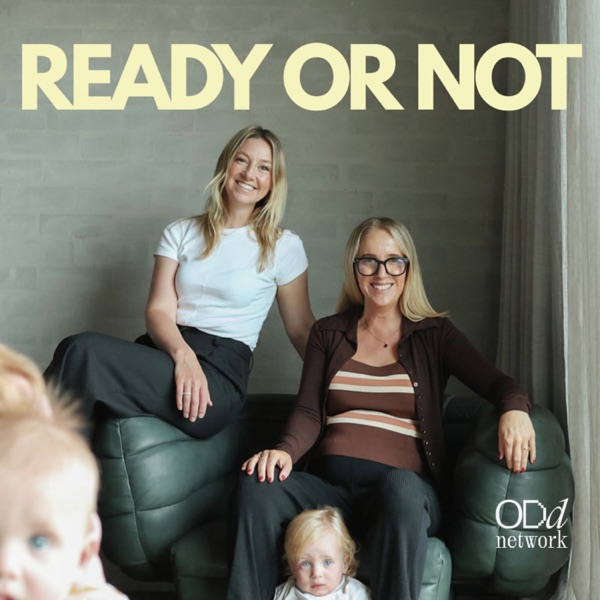
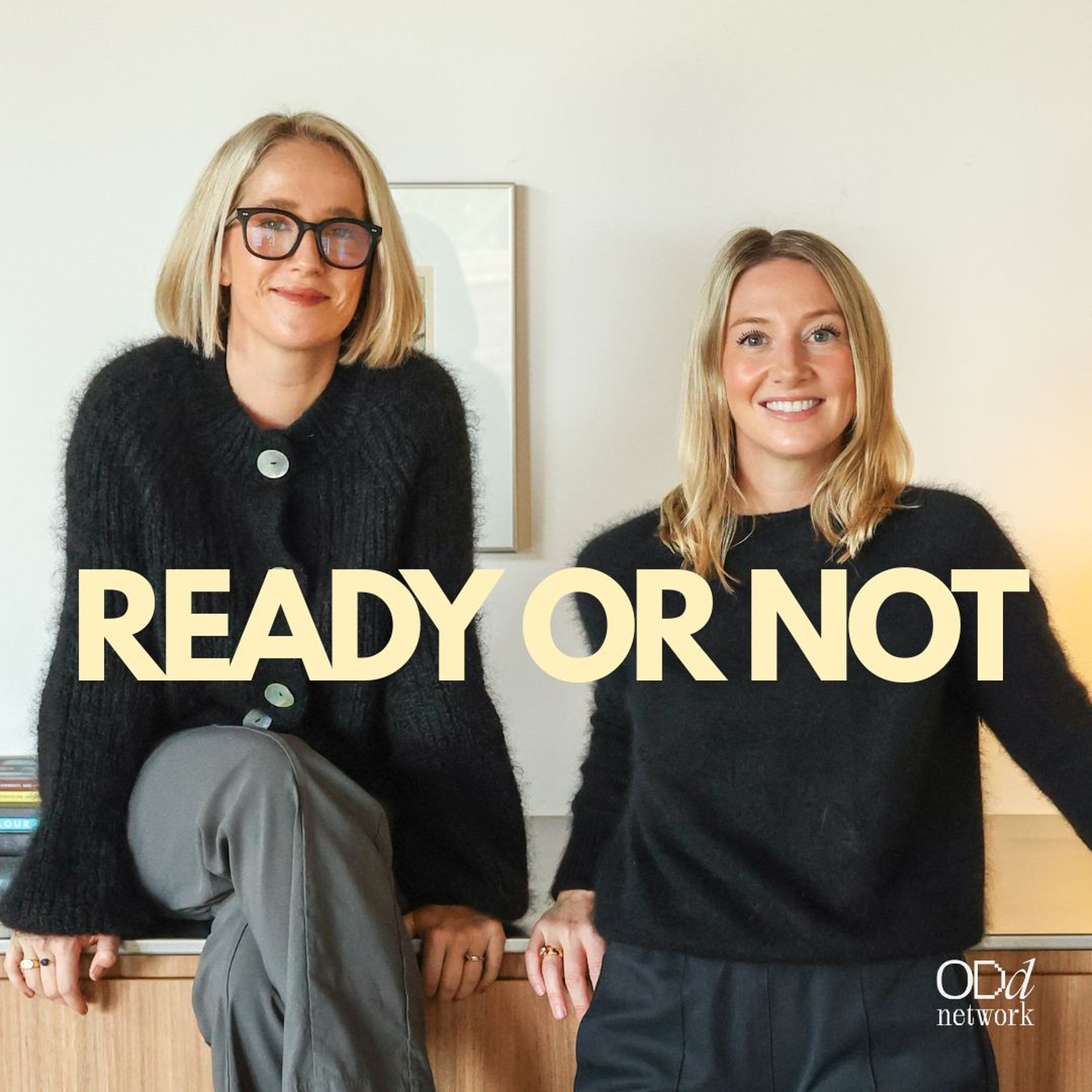
The podcast for and about mums who make work, work, brought to you by two sort of cousins Loz (mum of three) and Lu (mum of two). Each Monday, we banter on all things motherhood, feminism, career, ambition, and pop culture. Thursdays, we answer three listener questions on all things motherhood and c

2 Sep 2026 · 18 min
DEAR READY OR NOT: How do you deal with a sexist manager? Does work travel count as time away? And what do you do when becoming a parent leaves you questioning your identity at work? — Got a question? Submit it here! — Thanks for listening! If you liked the show, please tell your friends, subscribe or write a review. You can also find us on Instagram: @readyornot.pod @laurentreweek_ @lucindamckimm_ — This podcast was recorded on the lands of the Boon Wurong people of the Kulin Nation. The land on which we're lucky enough to raise our sons and daughters always was and always…
30 Aug 2026 · 24 min
Welcome back to the show! Coming up: light and fluffy things ahead, as Lu takes Loz through a list of motherhood and career cliches, and the pair rate them together. Got a question? Submit it here! — Thanks for listening! If you liked the show, please tell your friends, subscribe or write a review. You can also find us on Instagram: @readyornot.pod @laurentreweek_ @lucindamckimm_ — This podcast was recorded on the lands of the Boon Wurong people of the Kulin Nation. The land on which we're lucky enough to raise our sons and daughters always was and always will be Aboriginal land.…

26 Aug 2026 · 12 min
DEAR READY OR NOT: Which day should you take off if you’re returning to work four days a week? Should you accept a 12-month contract extension when you’re pregnant and know you’ll be taking maternity leave a few months in? And is one too young to leave your baby for a week-long international work trip? — Got a question? Submit it here! — Thanks for listening! If you liked the show, please tell your friends, subscribe or write a review. You can also find us on Instagram: See omnystudio.com/listener for privacy information.

19 Aug 2026 · 11 min
DEAR READY OR NOT: How do you juggle daycare sickness with a full-time job? Is there ever a right time to have baby number two? And should you list parental leave on your resume? — Got a question? Submit it here! — Thanks for listening! If you liked the show, please tell your friends, subscribe or write a review. You can also find us on Instagram: @readyornot.pod @laurentreweek_ @lucindamckimm_ — This podcast was recorded on the lands of the Boon Wurong people of the Kulin Nation. The land on which we're lucky enough to raise our sons and daughters always was and always…
16 Aug 2026 · 30 min
WARNING: Today we’re discussing child sexual abuse within the childcare system, and two recent stories of male childcare educators that have flooded our DMs. It was a hard episode to record, so take care and consider if it’s right for you right now. Get tickets to our rodeo with UKOO here: https://events.humanitix.com/one-night-off-boots-and-bubbles Got a question? Submit it here! — Thanks for listening! If you liked the show, please tell your friends, subscribe or write a review. You can also find us on Instagram: @readyornot.pod @laurentreweek_ @lucindamckimm_ —…

12 Aug 2026 · 12 min
DEAR READY OR NOT: What do you do when you're made redundant on maternity leave? Should you feel guilty taking a second round of parental leave when you're still relatively new in the job? And is it time to walk away from a high-paying job that's boring? — Got a question? Submit it here! — Thanks for listening! If you liked the show, please tell your friends, subscribe or write a review. You can also find us on Instagram: @readyornot.pod @laurentreweek_ @lucindamckimm_ — This podcast was recorded on the lands of the Boon Wurong people of the Kulin Nation. The land on which…
11 Oct 2026 · 26 minNew
Welcome back to the show all about motherhood and career! Coming up on today’s show: What parenting rules do you live and die by in your house? A post from Paige Connell got us thinking, and our listeners weigh in! — Got a question? Submit it here! — Thanks for listening! If you liked the show, please tell your friends, subscribe or write a review. You can also find us on Instagram: @readyornot.pod @laurentreweek_ @lucindamckimm_ — This podcast was recorded on the lands of the Boon Wurong people of the Kulin Nation. The land on which we're lucky enough to raise our…

7 Oct 2026 · 12 min
DEAR READY OR NOT: How do you announce another pregnancy when your boss has already judged you for it? What can employers ask you about having kids in a job interview? And what do you do when you earn more than your husband but still do more at home? — Got a question? Submit it here! See omnystudio.com/listener for privacy information.

4 Oct 2026 · 27 min
Welcome back! Tough titties: Loz has been thinking a lot about the parenting phrases we all grew up with. So, which ones would we take, and which ones should we toss? — Got a question? Submit it here! — Thanks for listening! If you liked the show, please tell your friends, subscribe or write a review. You can also find us on Instagram: @readyornot.pod @laurentreweek_ @lucindamckimm_ — This podcast was recorded on the lands of the Boon Wurong people of the Kulin Nation. The land on which we're lucky enough to raise our sons and daughters always was and always will be…

30 Sep 2026 · 13 min
DEAR READY OR NOT: How do you stop resenting your partner after having a baby? How do you tell a brand-new employer you’re pregnant? And should you stay in a job you hate for the parental leave benefits? — Got a question? Submit it here! — Thanks for listening! If you liked the show, please tell your friends, subscribe or write a review. You can also find us on Instagram: @readyornot.pod @laurentreweek_ @lucindamckimm_ — This podcast was recorded on the lands of the Boon Wurong people of the Kulin Nation. The land on which we're lucky enough to raise our sons and…

The Melo app keeps playing with the screen off, works in the car and on your watch, wakes you to your station, and browses the whole catalogue offline. Free, no ads, no account.