

Episode notes
In this episode of Science Quickly, host Rachel Feltman talks with author Rowan Jacobsen about new research on sun exposure and health. While too much sun increases skin cancer risk, moderate sunlight may offer surprising benefits—raising questions about whether avoiding the sun entirely is the right approach. Recommended Reading: In Defense of Sunlight. Rowan Jacobsen. Scribner, 2026 Can sunlight cure disease? Join our Summer Reading Challenge E-mail us at [email protected] if you have any questions, comments or ideas for stories we should cover! Discover something new everyday:…
Podcast
Science Quickly
Scientific American · Tech & Science · English
Host Rachel Feltman, alongside leading science and tech journalists, dives into the rich world of scientific discovery in this bite-size science variety show.
More from Science Quickly All episodes →
-
3 Aug 2026 · 13 min
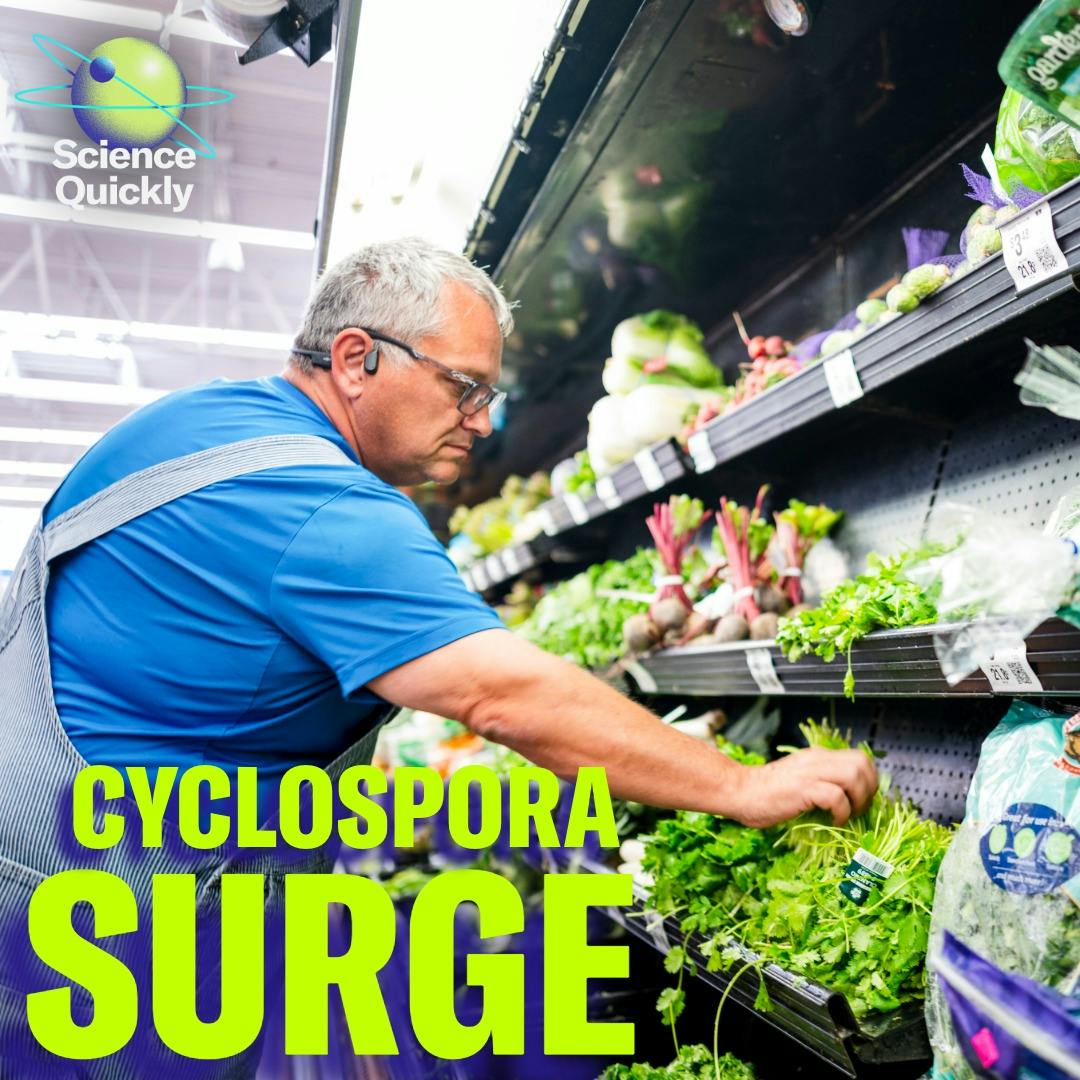
Explosive diarrhea, ‘protein maxxing’ and the science of burnout
In this episode of Science Quickly, we unpack a major outbreak of Cyclospora infections linked to contaminated produce, explore new research that suggests that “protein maxxing” may do more harm than good and examine mental exhaustion’s effects on the decisions we make. Plus, Europe faces another devastating wildfire season, with one blaze having become so intense that it created its own weather. Recommended Reading: Is buying lettuce off the table all summer? How mental exhaustion changes the choices you make Eating less protein could help you live longer Inside the race to spot wildfires…
-

31 Jul 2026 · 26 min
Lewis, Clark and America’s first great science mission
In this episode of Science Quickly, Scientific American’s books and culture lead Bri Kane talks with historian Craig Fehrman about This Vast Enterprise, his fresh take on the Lewis and Clark expedition. Rather than focusing solely on the famous explorers, Fehrman highlights the often overlooked people who made the journey possible, including Sacagawea, York and the expedition’s enlisted men. The conversation explores how science, survival, politics and personal stories shaped the expedition while challenging some of the myths many of us learned in school and revealing a much richer, more…
-
30 Jul 2026 · 8 min
How to beat rogue antibodies at their own game [Sponsored]
Almost all of us know someone who suffers from an autoimmune disease. Or maybe you do yourself. Autoimmune diseases are common: only cancer and cardiovascular diseases are more prevalent. So how do you fight a body that is fighting against itself? argenx, an immunology innovation company that develops antibody-based therapies, is developing a new toolkit of molecules that can tamp down the rebelling part of the immune system. Scientific American Custom Media recently talked to argenx’s new CEO, Karen Massey about what's in the toolkit -- and how it's helping patients. This podcast was…
-

29 Jul 2026 · 14 min
Summer Reading Challenge: Quantum queerness, Pompeii and plant horror
Science Quickly’s summer reading series continues! Host Rachel Feltman chats with Scientific American books editor Bri Kane about the magazine’s Summer Reading Challenge and swaps recommendations—from queer physics memoirs and Pompeii history to ecohorror, sci-fi adventures and other books you won’t want to put down. They also discuss what makes a great summer read, what the joys of reading communities are and how listeners can participate in the challenge for a chance to win prizes. Recommended Reading: Join our Summer Reading Challenge E-mail us at [email protected] if you have any…
-

27 Jul 2026 · 12 min
Your summer reading list starts here
Kick off Scientific American’s first-ever Summer Reading Challenge with book recommendations from our editors, including mind-bending fiction, ecohorror and fascinating nonfiction. Host Rachel Feltman and editor Bri Kane share some of the titles on their summer reading lists and offer tips for tackling our science-themed book bingo challenge. Recommended Reading: The alien stories Scientific American editors keep coming back to 10 best dinosaur books, according to a paleontologist Join our Summer Reading Challenge E-mail us at [email protected] if you have any questions, comments or…
-

22 Jun 2026 · 13 min
Ebola update, World Cup heat risks, dad brains
In this episode of Science Quickly, we start with a quick update on the Ebola outbreak surging in parts of Africa. Host Rachel Feltman is then joined by Scientific American’s senior desk editor for life science Andrea Thompson to discuss what rising temperatures mean for the FIFA World Cup currently underway in North America. And finally, in honor of Father’s Day, SciAm’s senior desk editor for health and medicine Tanya Lewis gives us a glimpse into the often overlooked science of how fatherhood changes the brain. Recommended Reading: Just how big is the new Ebola outbreak? The World Cup is…
-

19 Jun 2026 · 16 min
How common viruses could quietly raise your cancer risk
In this episode of Science Quickly, one of SciAm’s Young American Scientists, biologist Jaye Gardiner, explores how common viral infections may raise cancer risk—not just through genetic mutations but by reshaping the body’s “extracellular matrix” of molecules that support cells and tissues. She explains how viruses can alter the extracellular matrix, potentially creating conditions that allow tumors to grow, and why this emerging view could change how we think about everything from colds to long COVID. Recommended Reading: Jaye Gardiner’s Young American Scientists profile Join our Summer…
-

17 Jun 2026 · 19 min
The neuroscientist decoding how the brain learns
In this episode, host Rachel Feltman interviews neuroscientist Kauê M. Costa, who is among Scientific American’s inaugural cohort of Young American Scientists honorees. Costa shares how being surprised by experiments has led him to new ways of thinking about learning in the brain. He explains how dopamine does more than signal reward, how there are two big frameworks of how the brain learns and how his findings could help us better understand—and treat—mental illness. Recommended Reading: The Young American Scientists Kauê M. Costa’s Young American Scientists profile Join our Summer Reading…
-

15 Jun 2026 · 23 min
From aspiring actress to NASA astrophysicist
In this episode of Science Quickly, host Rachel Feltman interviews NASA astrophysicist Erini Lambrides about her unconventional journey from pursuing the performing arts to studying supermassive black holes. Lambrides reflects on how curiosity, persistence through early struggles in physics and a background in acting shaped her scientific approach and mentoring philosophy. Recommended Reading: Young American Scientists Profile: Erini Lambrides Join our Summer Reading Challenge E-mail us at [email protected] if you have any questions, comments or ideas for stories we should cover!…
-

12 Jun 2026 · 16 min
Disclosure Day and the science of alien language
In the new movie Disclosure Day, aliens communicate through a series of strange clicks and pops. But what could an alien language actually be like? In this episode of Science Quickly, host Rachel Feltman puts that question to linguist Jeffrey Punske. We explore why fictional aliens in Hollywood and beyond tend to sound the way they do, what real human languages can teach us about communication and why math could be humanity’s best shot at first contact. Recommended Reading: Steven Spielberg shares his favorite sci-fi story ever What Disclosure Day gets wrong about the search for aliens Join…

Take it with you
The Melo app keeps playing with the screen off, works in the car and on your watch, wakes you to your station, and browses the whole catalogue offline. Free, no ads, no account.


