What does exercise do to your brain? Can psychedelics treat depression? From smart daily habits to new medical breakthroughs, welcome to TED Health, with host Dr. Shoshana Ungerleider . TED speakers answer questions you never even knew you had, and share ideas you won't hear anywhere else, all arou
From group chats to video calls, technology should make social connection easier than ever. So, why is everyone so lonely? In this episode, Sabrina sets out to investigate the "loneliness epidemic" that is sweeping the globe and impacting her friends and cohosts. She interviews Professor Fay Bound-Alberti, author of "A Biography of Loneliness: The History of an Emotion" to understand what loneliness is, where it comes from, and whether there is a "cure". In the process, Taha and Melissa challenge Sabrina to tackle her own loneliness through a sidequest that reveals just how hard connection…
Where does pain originate? According to Rachel Zoffness, a scientist and psychologist who studies pain, research shows that pain originates in the brain. In this episode Rachel joins Shoshana to talk about how stress and anxiety can amplify pain. They also discuss the ways medical programs fall short when they don’t teach biopsychosocial pain education and how understanding pain can help you regain power over your body. Hosted on Acast. See acast.com/privacy for more information.
Your belly and your brain speak to each other, says obesity researcher Mads Tang-Christensen. Offering scientific proof that obesity is a disease influenced by genetics and the environment, he introduces a molecule discovered in both the brain and gut that helps control appetite -- and which could be engineered to promote healthy weight loss for those living with obesity. Hosted on Acast. See acast.com/privacy for more information.
Women and girls with autism spectrum disorder often don’t display the behaviors people typically associate with neurodivergence, greatly impacting when, how -- and if -- they are diagnosed. Autism acceptance advocate Kate Kahle makes the case for more research into this gender discrepancy, sharing her personal experience with masking, being diagnosed as a teenager and how it allowed her to better understand herself. “Autism is not a disease, and it doesn’t need to be cured,” she says. “It’s just a different way some brains can work.” Hosted on Acast. See acast.com/privacy for more information.
When does vision loss become blindness? Writer, audio producer and editor Andrew Leland explains how his gradual loss of vision revealed a paradoxical truth about blindness -- and shows why it might have implications for how all of us see the world. Hosted on Acast. See acast.com/privacy for more information.
Have we misunderstood pain? Researcher and physician Amy Baxter unravels the symphony of connections that send pain from your body to your brain, explaining practical neuroscience hacks to quickly block those signals. Her groundbreaking research offers alternatives for immediate pain relief -- without the need for addictive opioids. (Followed by a Q&A with TED current affairs curator Whitney Pennington Rodgers) Hosted on Acast. See acast.com/privacy for more information.
Ever had a hard time doing daily household tasks -- cooking, cleaning, laundry -- and felt like a terrible person for struggling in the first place? Therapist KC Davis is here to flip that negative internalized script with a simple yet perspective-shifting fact that may change your approach to life. Learn a gentler, more practical approach to mental health as Davis shares hard-won wisdom and helpful shortcuts on how to get by when you feel like you've barely got it together. Hosted on Acast. See acast.com/privacy for more information.
Silvana Konermann and the team at Arc Institute are trying to crack one of science's most difficult problems: why complex diseases like Alzheimer's and cancer remain so stubbornly unsolvable, even as research advances. Her solution is a universal “virtual cell” — an AI model trained on a billion biological experiments that can read the language of human cells, predict what's going wrong and reveal how to fix it. In conversation with TED’s Chris Anderson, Konermann explores how this work could fundamentally change the way we discover drugs and treat disease. (This ambitious idea is part of…
When Dr. Charles Moore, professor in the Otolaryngology or ENT department (Ear, Nose, and Throat), saw patients coming in with undiagnosed late-stage diseases, he decided to do something about it. Dr. Moore got into his car and drove directly to neighborhoods to administer care. In this episode. Dr. Moore joins Shoshana to talk about the various programs he implemented, including the “Walk With a Doc” program where patients can go on walks with doctors and ask questions outside traditional healthcare locations such as hospitals and clinics. Hosted on Acast. See acast.com/privacy for more…
When attending live music events, it’s tempting to want to immerse in the full experience—standing by the stereo, head banging near the stage, singing at the top of your lungs. But in maximizing your concert experience, are you harming your body? In this final episode of the Senses Miniseries, Shoshana shares talks that touch on the consequences of loud noise exposure and a surprising benefit of ear protection. Talks featured The beautiful, mysterious science of how you hear | Jim Hudspeth What is earwax — and should you get rid of it? | TED Ed Hosted on Acast. See acast.com/privacy for more…
What does Parkinson's smell like? Ask nurse Joy Milne. Born with a hypersensitive nose, she spent a lifetime learning to recognize diseases through their scents. When she smelled Parkinson's on her husband years before his diagnosis, she decided to put her gift to the test. Today, her extraordinary nose has been translated into a non-invasive test — helping researchers diagnose what was right under their noses all along. Hosted on Acast. See acast.com/privacy for more information.
“My lens around style doesn’t have anything to do with style anymore — it’s about physicality,” says stylist and fashion consultant Stacy London. “What do I want to be able to do? How do I keep myself strong?” Stacy’s message has resonated for many women, and for this episode, she joins Dr. Shoshana Ungerleider, host of TED Health, at TED2025 for a special live conversation about why women are so embarrassed to talk about aging. For Stacy, aging became a chance to reassess her relationship to her body, and her experience with menopause and spinal surgery shifted her focus to health and…
Does venting actually help you cool off, or does it just add fuel to the fire? Social psychologist Jennifer Parlamis busts common myths about anger, showing how curiosity — not catharsis — can keep you calm. Discover the surprising science behind anger management and four practical tools for building stronger relationships from a researcher who’s rethinking Freud, one deep breath at a time. Hosted on Acast. See acast.com/privacy for more information.
Welcome back to our "A Healthier You" series, where TED Health host Shoshana Ungerleider guides you on a journey to your healthiest self. Join her and healthcare experts as they uncover insights that could revolutionize your understanding of health – from your heart to your brain to your gut. Embarking on a fitness journey can be overwhelming, but it doesn't have to be intimidating. In today's episode, Shoshana unveils practical strategies for creating an exercise routine that lasts and explores all kinds of workouts – from weightlifting to walking. She shares motivational fitness tips that…
Join Shoshana in this live taping at TEDNext 2024 for a perspective-shifting conversation on achievement with ethicist, author, and rabbi Ira Bedzow. Shoshana and Ira challenge the way today’s culture and individuals look at success, exploring life’s deeper meaning and purpose in a time that celebrates "urgency culture." You’ll gain practical strategies for reducing burnout, improving your mental well-being, and aligning your actions with your values. This is the last episode of our series "A Healthier You" -- check out the rest of the episodes and tell us what you think by leaving us a…
Have we lost the practical wisdom of what happens as people die? With lessons from a career witnessing thousands of people's final breaths, palliative care expert Kathryn Mannix urges us to demystify the experience of death, sharing how a better understanding of what actually happens can reduce fear in the final days, for you and your loved ones. After the talk, Shoshana shares how one patient changed her life forever and led her to found endwellproject.org, a platform dedicated to making end-of-life PART of life. This episode originally aired on March 26, 2024. Hosted on Acast. See…
Are screens ruining our eyesight? Will eating carrots fix your vision? And are blue light glasses essential… or a scam?! In this episode in the five-part miniseries on senses, Dr. Rupa Wong joins Shoshana to talk about eye diseases, what technology is doing to our vision, and why spending at least 2 hours a day in the sun can help your eyesight. Hosted on Acast. See acast.com/privacy for more information.
With fascinating research and hilarious anecdotes, neuroscientist Camilla Arndal Andersen takes us into the lab where she studies people's sense of taste via brain scans. She reveals surprising insights about the way our brains subconsciously experience food -- and shows how this data could help us eat healthier without sacrificing taste. Hosted on Acast. See acast.com/privacy for more information.
David Eagleman is a neuroscientist who studies brain plasticity and how our senses help us perceive the world. Over the next 5 weeks, Shoshana is diving into ideas about our senses. First up she invites David to talk about touch and its relationship to brain plasticity. She then asks what role touch plays in a world that is increasingly digital and mediated by screens. Hosted on Acast. See acast.com/privacy for more information.
Trigger warning - this episode contains mention of suicide and severe depression. For years, the warning has been: smartphones are destroying a generation. But developmental psychologist Candice Odgers says that decades of data on teens tells a different story — violence, alcohol use and pregnancy are at historic lows, and research shows social media may not actually be the culprit for mental health problems. Hear her analysis of what’s really troubling kids these days, and why banning them from online spaces may make things worse. And stick around after her talk for a deep dive conversation…
Why do we feel exhausted all the time? We’ll get through the workday, collapse on the couch, scroll for a while, and go to bed… but wake up still feeling depleted. In this episode, Shoshana seeks to understand the concept of“deep rest.” She speaks to psychologist Dr. Alexandra Crosswell on the role stress plays in our daily lives and what safety has to do with bodily repair and restoration. Talk featured What’s the best position to sleep in? | Rachel Marie E. Salas Hosted on Acast. See acast.com/privacy for more information.
In this episode, Shoshana invites Dr. Vivek Murthy, the 19th and 21st Surgeon General of the United States, to discuss the ongoing loneliness epidemic. After the interview, Shoshana shares a TED-Ed talk from Terry Kupers, "What happens to your brain without social contact?" Everyone needs time to themselves, and peaceful solitude has stress-relieving benefits. But when being alone is forced upon you, the effects can be surprisingly extensive. And though different people experience distinct effects, symptoms tend to become more severe and persistent the longer they're isolated. So, how…
When has healthcare advice become so complicated? And how should we be thinking about long-term wellness? Zeke Emanuel is an oncologist and bioethnicist whose latest book, Eat Your Ice Cream, might sound paradoxical against modern health trends and wellness noise. Zeke joins Shoshana to discuss what healthy aging looks like and why it’s never too late to practice health habits. Talk featured TED-Ed: The 3 best predictors of how well you’ll age | Juulia Jylhava tid163157tid Hosted on Acast. See acast.com/privacy for more information.
In this episode, Shoshana sits down with Dr. Megan Rossi, aka The Gut Health Doctor. As a leading scientist, registered dietitian, and nutritionist, Dr. Rossi reveals the crucial link between digestion and general health. She debunks common myths about the microbes that help (or harm) us, and shares accessible, evidence-based nutrition strategies to help you transform your diet for a happier, balanced gut microbiome. Hosted on Acast. See acast.com/privacy for more information.
Attention isn't just about what we focus on -- it's also about what our brains filter out. By investigating patterns in the brain as people try to focus, computational neuroscientist Mehdi Ordikhani-Seyedlar hopes to build computer models that can be used to treat ADHD and help those who have lost the ability to communicate. Hear more about this exciting science in this brief, fascinating talk. After the talk, Shoshana speaks with psychiatrist and ADHD specialist Dr. Sasha Hamdani on transforming healthcare for patients and families with ADHD. tid2798tid Hosted on Acast. See…
Many women move through major life transitions without getting clear information about what's happening in their own bodies. Whether it’s conversations about painful periods or menopause, fertility or contraceptives, these topics affect millions of people everyday, but they are difficult to talk about openly. In this episode, Shoshana sharesthree TED Ed lessons centered around women’s health help you understand your body better. Talks featured What is vaginal discharge, and what does it say about your health? | Elizabeth Micks 3 things that can cause painful periods | Chen X. Chen How does…
When does normal aging end and something more concerning begins? In this episode Shoshana invites neurologist Drs. Ayesha and Dean Sherzai to discuss their studies on Alzheimer’s and Dementia. They debunk myths around Alzheimer, discuss what a brain-healthy way of eating looks like, and share why good sleep hygiene is more crucial for brain health than you think. Hosted on Acast. See acast.com/privacy for more information.
What’s something that makes your life immeasurably better? For Shoshana, it’s habits people often overlook, such as a good night's rest or a conversation with a friend. In this episode, Shoshana shares a TED Ed lesson on how practicing gratitude makes life more meaningful. Then, psychologist Sonja Lyubormisky talks about the science of happiness and why our relationships with others affect our health. Talks featured Sonja Lyubomirsky: 1 thing you can do today to be happier TED-Ed | How to increase your happiness Hosted on Acast. See acast.com/privacy for more information.
Physician-scientist David Fajgenbaum was dying from a rare disease that didn't have a cure — until he discovered a lifesaving drug that wasn't originally intended for his condition. In an astonishing talk, he shares how his near-death experience led him to cofound the nonprofit Every Cure, which is using AI to uncover hidden treatments in existing medicines in order to save lives. (This ambitious idea is part of The Audacious Project, TED’s initiative to inspire and fund global change.) Hosted on Acast. See acast.com/privacy for more information.
In this powerful and personal talk, Quentin Mezetin shares his journey raising two sons with autism—and the challenges of parenting in a world that often treats neurological differences as deficits. As he reflects on his family’s experience, he points to a powerful statistic from The Centers for Disease Control and Prevention in 2000—1 in 150 children in the U.S. were diagnosed with autism; by 2020, that number rose to 1 in 36. This rise isn't just a data point—it’s a call to action. Quentin urges us to build a society that uplifts and includes every child, and the need to confront ableism…
About TED Health
What does exercise do to your brain? Can psychedelics treat depression? From smart daily habits to new medical breakthroughs, welcome to TED Health, with host Dr. Shoshana Ungerleider . TED speakers answer questions you never even knew you had, and share ideas you won't hear anywhere else, all around how we can live healthier lives. Follow Dr. Shoshana Ungerleider on Instagram at @shoshanamd and LinkedIn at @shoshanaungerleidermd Hosted on Acast. See acast.com/privacy for more information.
TED Health is a English health podcast from TED. Melo plays each episode straight from the publisher's own feed — no ads added, no account needed — and remembers where you stopped, in this browser only.
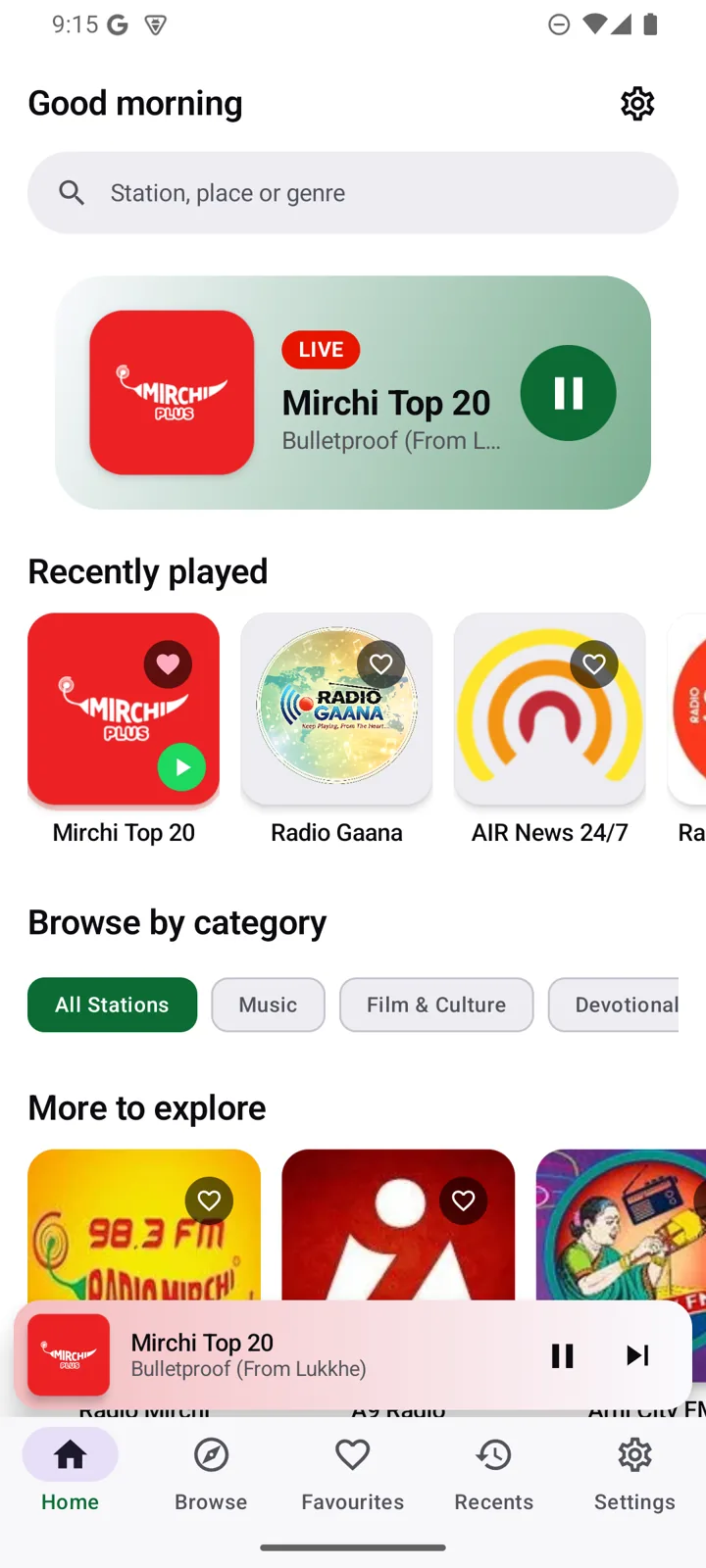
The Melo app keeps playing with the screen off, works in the car and on your watch, wakes you to your station, and browses the whole catalogue offline. Free, no ads, no account.