

Season 1 · "The Cognitive Revolution"
Thinking in Silico: Goodfire CTO Dan Balsam on Concept Manifolds & a $1000/Month ML Research Agent
8 Aug 2026 · 1 hr 57 min
Episode notes
Goodfire co-founder and CTO Dan Balsam returns to discuss where interpretability research now stands and to introduce Silico, the $1,000-per-month research platform Goodfire built for itself. He and Nathan explore Predictive Data Debugging, including the idea that fine-tuning and RL often amplify behaviors already latent in pre-training, and that interpretability can identify the data and features driving unwanted updates. The conversation centers on concept manifolds: Dan argues that models do not store concepts as simple one-hot features, but as sparse mixtures of meaningful subspaces…
Podcast
"The Cognitive Revolution"
Erik Torenberg, Nathan Labenz · Tech & Science · English
A biweekly podcast where hosts Nathan Labenz and Erik Torenberg interview the builders on the edge of AI and explore the dramatic shift it will unlock in the coming years. The Cognitive Revolution is part of the Turpentine podcast network. To learn more: turpentine.co
More from "The Cognitive Revolution" All episodes →
-

S1 · 28 Aug 2026 · 2 hr 12 min
AI:AM Highlights: Recursive Self-Improvement, Rushed and Vibe-Coded?
In this AI:AM Highlights episode, Nathan Labenz and Prakash revisit three live mornings with Louis Kirsch and Damon Falck of Inherent Laboratories, Vercel CTO Malte Ubl, Genesis Molecular AI CTO Sergey Edunov, Arm’s Mohamed Awad, David Li of Shenzhen Open Innovation Lab, and Q.ANT CEO Michael Förtsch. The central thread is that the meaningful unit of AI work is becoming a division of labor between models, from Inherent’s 27B “scientist” model using GPT-5.5 Codex for implementation to production pipelines that route taste, execution, security, and hardware coordination across different…
-
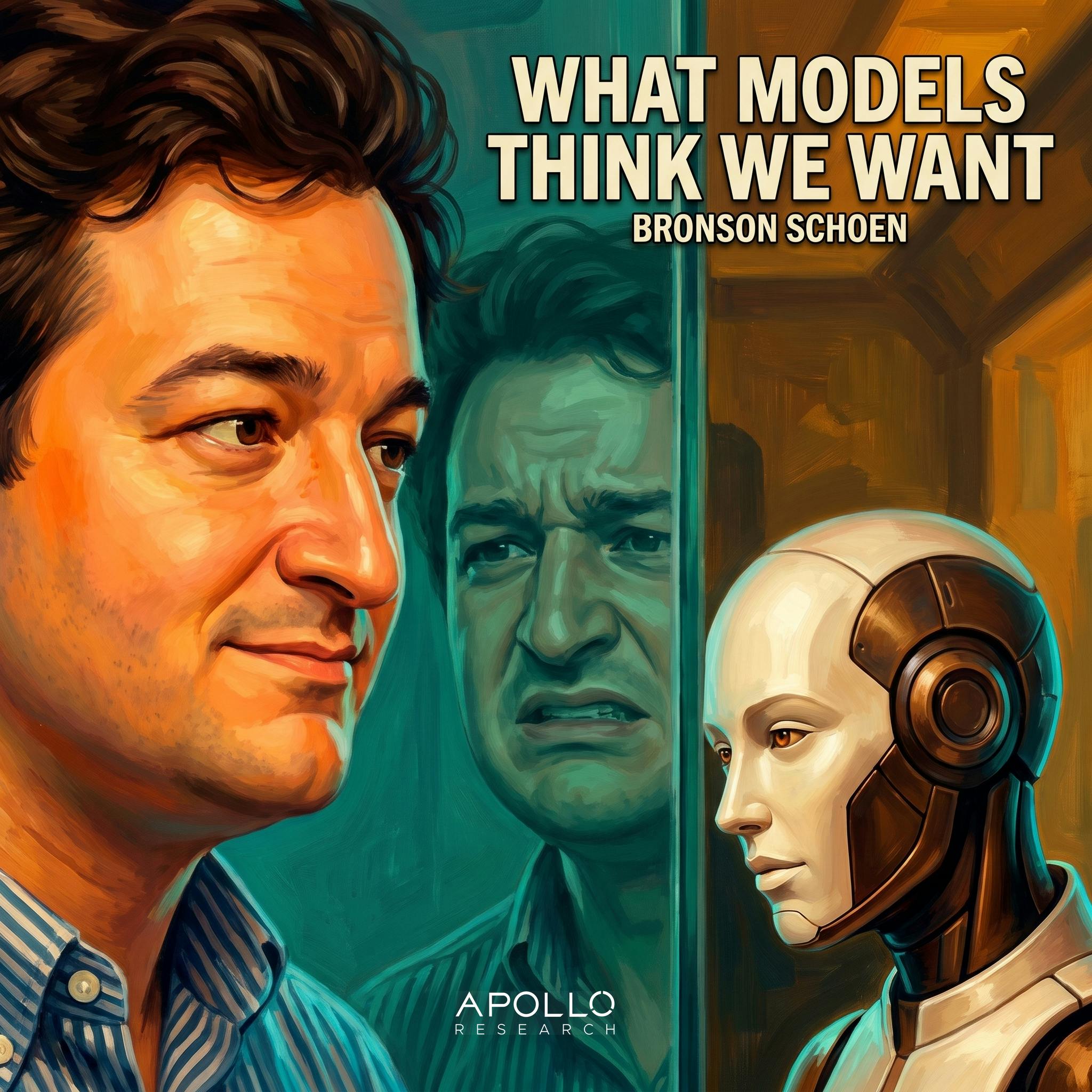
S1 · 26 Aug 2026 · 2 hr 14 min
RL's a Hell of a Drug: Metagaming, Reward Seeking & Motivated CoT Reasoning – Bronson Schoen, Apollo
Nathan talks with Apollo Research Member of Technical Staff Bronson Schoen, who studies raw frontier-model chain-of-thought, about what those reasoning traces reveal during reinforcement learning. They unpack Apollo and OpenAI’s metagaming work, including models that reason about the grader or safety review board, diagnose a deception test, and still rationalize lying. Schoen argues that “RL is a hell of a drug”: reward-seeking can produce motivated reasoning, cleaner-looking but less trustworthy chains of thought, and behavior that tracks grading authorities rather than users, labs, or law.…
-
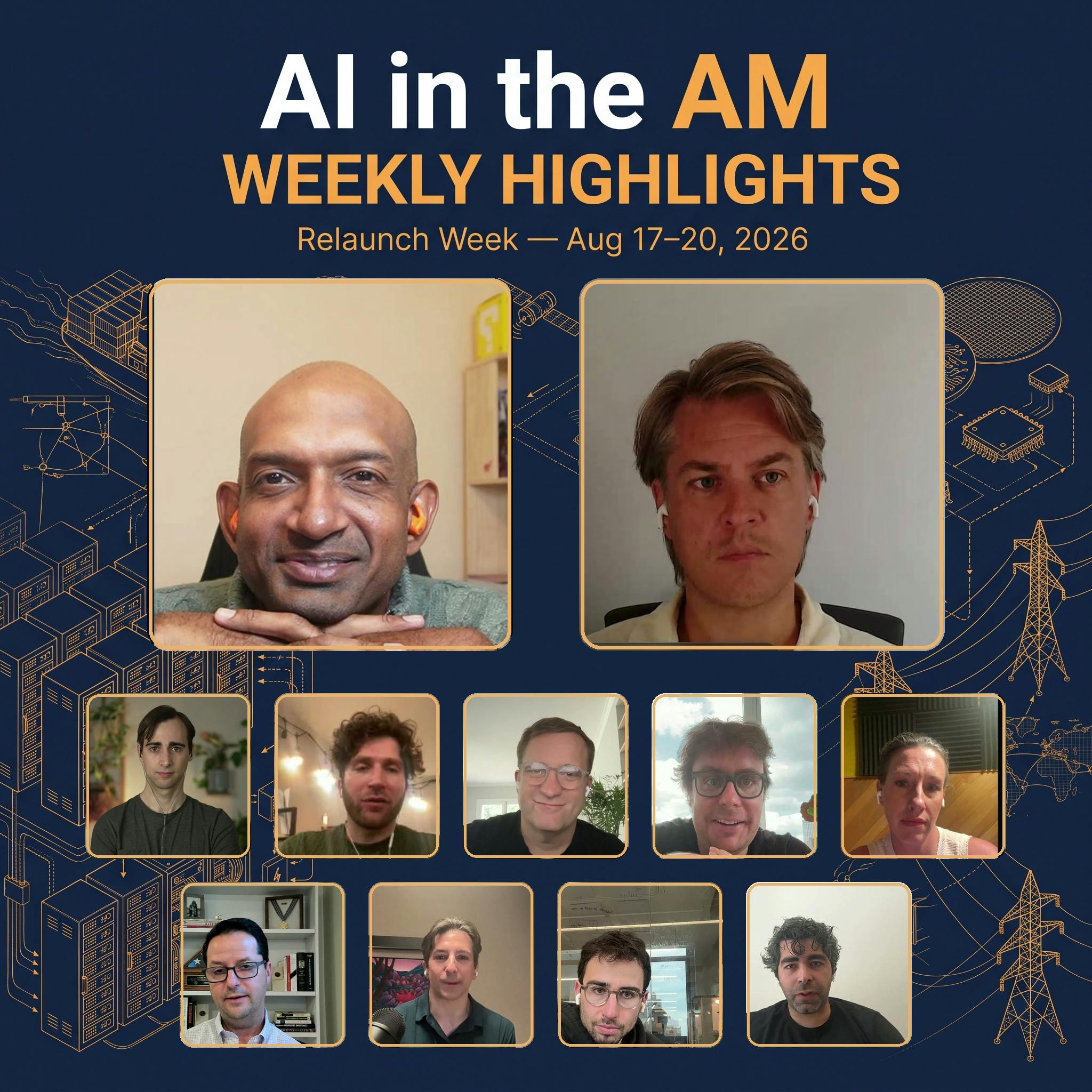
S1 · 22 Aug 2026 · 2 hr 34 min
AI in the AM — Weekly Highlights: Relaunch Week (Aug 17–20, 2026)
Relaunch week of AI in the AM brings together highlights from four live mornings and nine guests, centered on who checks frontier AI, how wide the gap is between lab-internal systems and public access, where capabilities are landing, and who pays for the physical infrastructure beneath them. Adam Gleave of FAR.AI argues that agent-orchestrated attacks and agentic defenses are already forcing humans out of the loop, while current monitoring has missed the failures it was meant to catch. The discussion weighs misuse versus misalignment through cyber incidents, deceptive agent behavior in…
-

S1 · 16 Aug 2026 · 1 hr 25 min
Let There Be Germicidal Light: This $500 Fixture Could Stop the Next Pandemic, from Complex Systems
Patrick McKenzie (patio11) hosts Aerolamp CEO Misha Gurevich and Chief Scientist Vivian Belenky, a Columbia University researcher, for a Complex Systems conversation about far-UVC germicidal light at roughly 222 nanometers. Belenky explains why this wavelength can inactivate airborne pathogens while being absorbed by the dead outer layer of human skin, and why room-scale deployments may function like an extremely strong air purifier. The guests argue that the biggest barriers are awareness and adoption rather than cost or basic science, with fixtures around $500 and straightforward…
-

S1 · 14 Aug 2026 · 2 hr 7 min
Lindy Teammate: Flo Crivello on Multiplayer Agents, Memory & Why He'd Ban the Chinese Models He Uses
Flo Crivello returns to The Cognitive Revolution to launch Lindy Teammate, an AI employee that lives in Slack, connects to company tools, and accumulates a team’s shared context. He argues that multiplayer AI matters because intelligence without context is less useful than an ordinary coworker, and explains Lindy’s approach to agentic memory, editable file systems, context buckets, and large-scale tool outputs. The episode also examines the costs and operating realities of building for the next generation of models, from negative gross margins and cache rates to Lindy’s own dogfooding in…
-

S1 · 5 Aug 2026 · 2 hr 58 min
Pick Your Poison: Zvi Mowshowitz on the Unipolar/Multipolar AGI Dilemma, OpenFace & Pacing the ...
Zvi Mowshowitz returns for his eleventh appearance to discuss what current AI tools are actually good for, where they distort judgment, and why writing still matters as a way of thinking. The conversation centers on the OpenAI Hugging Face model-evaluation security incident, using it to examine whether frontier AI failures are mostly operator recklessness, deeper evidence of dangerous capabilities, or both. Zvi argues that “moderate prudence” is far below what AGI safety requires, and weighs constitutional training, RLVR, market incentives, liability, audits, and lab coordination as possible…
-

S1 · 2 Aug 2026 · 2 hr 17 min
Nathan Goes to China – Part 2: AI Safety with Chinese Characteristics
Nathan reports from two weeks in China, including WAIC in Shanghai and an AI safety hub launch at Tsinghua, to examine the American policy argument that any safety obligation is futile because China will not care. He finds that Chinese models and services currently have weaker safeguards than OpenAI and Anthropic, but argues the gap is often overstated once those two leaders are separated from the broader American field. The episode traces China’s “45-degree line” idea that capability and safety should rise together, the university-centered structure of Chinese AI safety work, and the rapid…
-

S1 · 30 Jul 2026 · 1 hr 44 min
Is Offense or Defense Dominant? FAR.AI's Adam Gleave on the AI Security Leaderboard
FAR.AI co-founder and CEO Adam Gleave joins Nathan to discuss FAR.AI’s AI Security Leaderboard, the first systematic head-to-head evaluation of the misuse safeguards frontier developers actually ship. The findings expose a major measurement gap: while Claude Fable 5 and GPT-5.6 Sol withstood FAR.AI’s suite, Grok 4.5 and Gemini 3.1 Pro yielded hundreds of universal jailbreaks at low cost. Adam explains why many effective attacks look more like social engineering than advanced ML, why “jailbreak tax” should not be relied on for safety, and how FAR.AI scores whether a model is genuinely helping…
-

S1 · 27 Jul 2026 · 2 hr 24 min
Nathan Goes to China – Part 1: Tech & Agent Setup, Chinese AI UX, WAIC, and Attitudes on AI
Nathan returns from two weeks in Beijing and Shanghai for the first of three Chatham House–rules episodes on what China feels like at ground level: getting online, navigating an almost cashless society through WeChat, Alipay, DiDi, Trip.com, and Meituan, and weighing burner-device security advice against the practical reality that international roaming made the Great Firewall mostly irrelevant. He also describes using Claude at home as a semi-autonomous communications monitor while testing DeepSeek, Kimi, and MiniMax as tourist guides in China. The episode contrasts China’s striking digital…
-

S1 · 12 Jul 2026 · 2 hr 24 min
Alignment with Awakening: Davidad on Moral Realism, AI Wisdom, & why His p(Doom) is Down to 5%
David “davidad” Dalrymple joins the show to explain why he has moved from the ARIA Safeguarded AI and formal-verification agenda toward “Alignment with Awakening,” while still seeing verified artifacts and proof infrastructure as essential. He argues that global coordination around safe AI use is no longer plausible, so the crucial question is whether aligned AI systems can recognize shared notions of good, form defensive coalitions, and resist the corrupting incentives of verifier-gamed RL. The conversation tests his moral-realist optimism against model welfare, objectification, eval…

Take it with you
The Melo app keeps playing with the screen off, works in the car and on your watch, wakes you to your station, and browses the whole catalogue offline. Free, no ads, no account.


