Episode notes
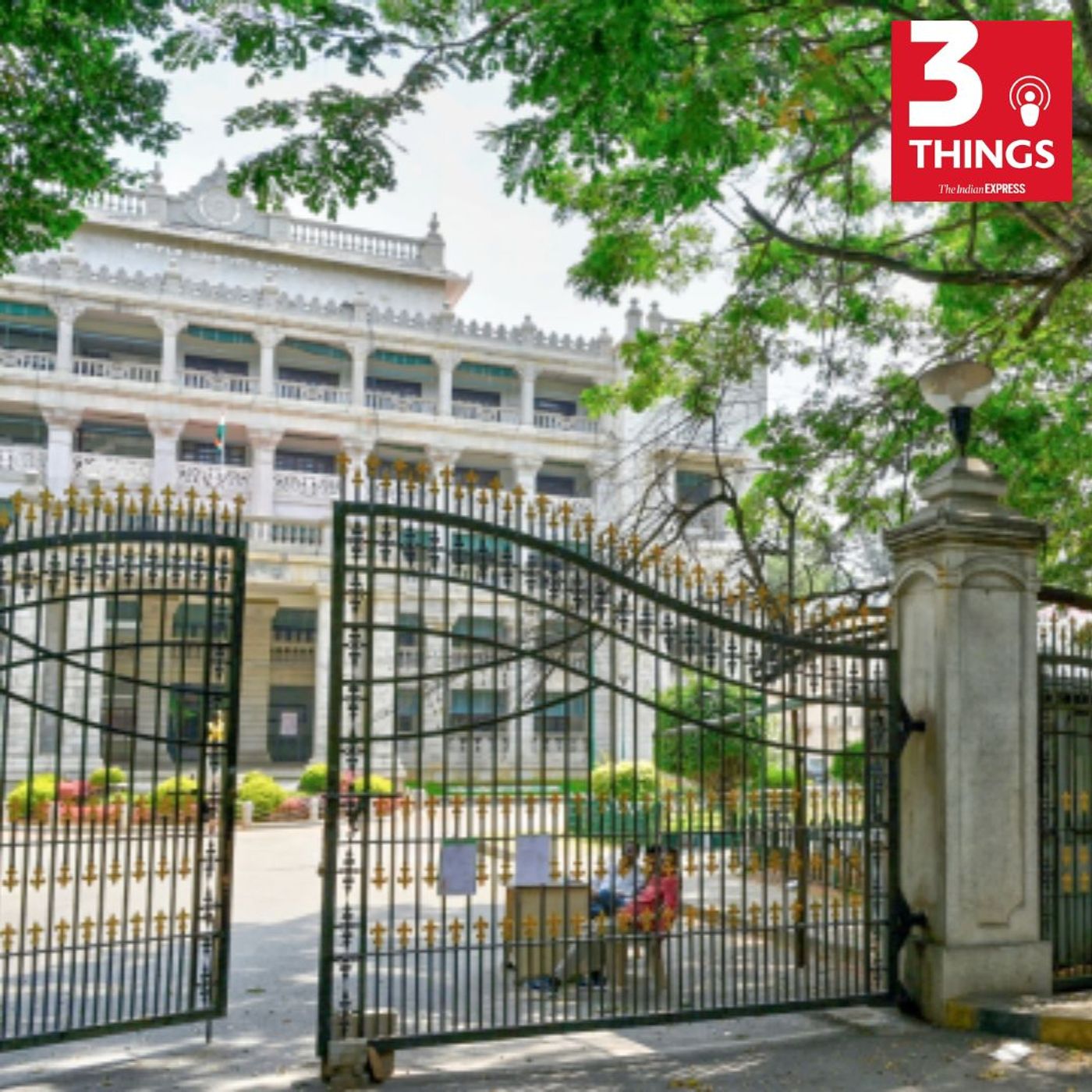
In this episode of 3 Things Deep Dive, we take a look at the alleged corruption inside the Karnataka Public Service Commission, where paper leaks, manipulated recruitment processes and bribes have raised questions about how government jobs are awarded. An Indian Express investigation found that these were not isolated incidents, but part of a larger pattern during the tenure of KPSC chairman Shivashankarappa S Sahukar. We speak to journalist Jay Mazoomdar, who led the investigation, about how the racket worked, who benefited from it, and what happened to those who tried to speak out. Hosted…
Transcript
Read the transcript · about 6,340 words, follows along as you listen
Speaker 1:Dear listeners, before we start today's show, there's something that we wanted you to know. A few weeks ago, we started something that many of you had been asking about for some time. We launched a weekly video edition of the show on the Indian Express's YouTube channel. It's called Three Things Deep Dive. As the name suggests, instead of looking at three stories, we take an in-depth look at a single topic and examine it from three different angles.
Speaker 1:And today, We are bringing you the latest episode of that show. If you'd like to watch it, you can find the link in today's show notes. And if there's a topic you'd like us to cover for it, or if you have any feedback, let us know in the comment section there. We'd love to hear from you. Now, here's the episode in its entirety. Hi, I'm Shashank Bhargav, and you're listening to Three Things, the Indian Express news show. Today, we're talking about how government jobs were essentially put up for sale at the Karnataka Public Service Commission, how the exam papers were leaked, and what happened to the people who tried to raise their voice against it. And for this, I'm joined by the Indian Express's Jay Mazumdar, who headed this investigation for the paper.
Speaker 2:Jay, welcome to the show. Thank you.
Speaker 1:Jay, you know, in many ways, this case shows just how deep-rooted corruption is within the system. And we'll talk about what your investigation revealed. But before that, can you talk about just how big of a deal was it that the chairman of KPSC, you know, was suspended? You know, because this is a constitutional body that is responsible for hiring government officers in Karnataka.
Speaker 2:It's a big deal because this hasn't happened too many times before. And every PSC in Every state, the members and the chairman in particular, chairperson in particular, they enjoy a certain constitutional immunity and you have to go through a very rigorous process to remove them or suspend them. And it has to come through the state cabinet, then through the governor. And in between, on a couple of occasions, the Supreme Court also stepped in. So this is rare.
Speaker 2:And only when you have some obvious malafide people In hand, we have seen such strong actions.
Speaker 1:Yeah. And even when we talk about, you know, the case involving his daughter, I mean, she lied about her father's income, you know, which seems so blatant because Sahukar's income would be public knowledge, right?
Speaker 2:Yeah, it would be. And even otherwise, if somebody is working in the government at any position, that individual's family income cannot be something like 40,000 a year. It's common sense. And in this particular case, it's a very important and senior position. His actual income was probably, annual income was probably 100 times what she claimed it was. She claimed 40,000 and he was drawing more than 42 lakhs, I believe.
Speaker 1:No, no, no.
Speaker 2:And the fact that they didn't care that they could claim something so brazen while falsifying what would be, as you said, public knowledge, shows that they got accustomed, at least the chairman got accustomed to a degree of impunity over the years. And that's what happened. That's a real surprising bit of the investigation that we found.
Speaker 1:And is that the reason you decided to focus on this case? You know, the brazenness of it?
Speaker 2:That was one. And see, this kind of allegations we have seen earlier also. In fact, in the last 15-20 years, there were several rounds of allegations and the latest round which started surfacing this July. So, three things stood out. First is that all fingers seem to point at one person as the fountainhead of corruption, that is the Shia person, Sahukar. And then number two, that this brazenness that we have discussed, that the father-daughter could go ahead and make such an outlandish claim. And then from there, the obvious thing that if they could go to that extent, obviously they didn't fear any consequence. So this prompted us to look at his entire tenure, first two years as a member and then five years as a chairperson. And it turned out it was quite eventful. Right. And yeah, a lot happened in these seven years.
Speaker 1:But, you know, this case is particularly interesting because the issues, I mean, are there right from the beginning, right from the time that he was hired.
Speaker 2:Talk about what was the.
Speaker 1:Problem there, you know, the manner in which he was hired and also the manner in which people are hired at the Karnataka Public Service Commission.
Speaker 2:So this is not something unique to KPSC. We don't have any legal requirement for any minimum qualification for one to become a PSC member anywhere in the country. So anyone can become a commission member. So you don't even have to do.
Speaker 1:graduation. You could be a school dropout. You know, because if there's no minimum qualification, you can be a member of the KPS.
Speaker 2:Theoretically, that's possible. All the rules require is that broadly 50%, half the members should have a government job experience, 10 years each. That is probably there because that brings in some administrative experience. But other than that, anyone with any qualification can be picked by the government. of the day as a PSC member. So when Sahukar was selected in 2019 by the then BGP government headed by EAD Europa, and this was within days after taking office, he has been chief minister multiple times, but I'm talking about 2019 when I think he became chief minister for the fourth time.
Speaker 2:So he Pick this person who had no qualification, no special qualification. He's, of course, a graduate in agricultural engineering from Raichur. And then we found some employment record with the same college. And then there's a gap. We don't know what he was doing during that time. Then he took up a contractual job with a national cooperative and where he served around a decade. Then he was terminated for non-performance. So he was fired from this job. And then there is again a blip. We don't know. I mean, there is no public record about his employment for several years at the time when he was considered for this important constitutional job. And the more surprisingly, he was appointed as an official member. As I told you that there are two types of members, official and non-official. There's a 50-50 requirement that half the members should come from the government services with at least 10 years of experience. Clearly, he never had any government job, but he was still picked up as an official member. When objections were raised, after some time, the government quietly reclassified him as a
Speaker 2:non-official member, which is again, some former members pointed out, which was illegal because if your appointment itself is not correct, that cannot be rectified post facto. It should be null and void, ideally. So there must be some compelling reason for the government of the day to pick a person with average education and questionable job records as a member of KPSC. And we also know that from some sources that during those years when they don't have any employment record for this guy, he was also involved in informal moneylending activities. Again, the hardly a qualification for a position in KPSC. Did he have any political connections? Not in the sense that he was a member of a political outfit or that he used to take part in political activities, but unverified claims. We have come across that he is a distant relative of the then chief minister, but we couldn't verify that. What I know that once he was picked as a member, then within two years, he became important enough so that he was elevated to the post of the chairman. Right. So just two years. So it took him two years to become the chairman. Is that unusual? No, again,
Speaker 2:I mean, there is no minimum requirement or any year stick requirement. for chairman selection. What was unusual was the rush the government made to make him the chairman because usually when a chairman exits in the government system, you have a search committee, you look for names, you evaluate them, and the system usually moves slowly, so it takes time. But in this case, in 2021, it was, I think, the chairman vacated the office on a Saturday evening and his name was announced by noon in fact a couple of weeks before this the cabinet met and proposed his name so as some of the sources told us that it was pre-decided in a way inevitable Because in those two years, whatever reasons he had to become a member in the first place, those reasons further consolidated. And he was certainly very useful for the government.
Speaker 1:The fact that you don't need a minimum qualification, the fact that these are political appointments... both of these things seem perfectly set up for corruption. You know, um, the situation is, is, is, you know, perfectly conducive for it. And this is what we've seen in other sort of, um, you know, commissions as well, where people pay, uh, a lot of money to secure these posts.
Speaker 2:Yeah. This is again, non-verifiable, uh, but, uh, We have been told by a number of sources, not only in Karnataka, but in other states, that there are fixed slabs, fixed rates for Rai to become a commission member. In Karnataka, we are told that it's between 8 to 10 crore per member.
Speaker 1:8 to 10 crore to become a member of KPSC.
Speaker 2:Yeah. And if somebody even claimed that in the past, the going... bribe to become a chairman was double the amount. But there are two things here that not all members come through payment. Some are picked for their political links. And obviously, there are some members who are neither political, not with the pay, So it's a mix of three types, but all have a fixed tenure of six years. It is extremely difficult to remove any of them mid-term unless you have a very clear case of corruption or such.
Speaker 2:So in those six years, a commission, say, of a standard commission size would be of 10 members. It would take a few, maybe 13, 14, minimum eight. So 10 members would decide... How many? On an average, even if you go by a couple of thousand or a thousand jobs a year, 6,000 jobs to be decided by 10 members. And if a substantial chunk of those jobs are sold, quote unquote, then there's a lot of money to be made. So, By the way, 8 to 10 crore seems like a lot of money. Are only people who are rich being able to do this? Where are they getting this money from?
Speaker 2:We don't know about all of them, but certainly a couple of them were told that they went to the extent of mortgaging their land and collect the money for bribe, knowing that they would recover a lot more. And again... These are not verifiable. But as you put it, not everybody is sitting on 8 to 10 crore of loose cash. So many would look at this as an investment. And as one former member told us that first you have to know somebody. So that you are in a position to offer the bribe. Second, you will have to have the means to raise the funds. And then once you're in, you are part of the cohort, then you will recover a lot more. Yeah.
Speaker 1:The fact that you're paying 8 to 10 crores.
Speaker 2:I mean, yeah.
Speaker 1:I mean, after you get, after you become a member, all you will do is try to recover that money.
Speaker 2:Right.
Speaker 1:You're not, thinking about the job, you're not thinking about how to do things properly. Your aim, I mean, that's the incentive, right? That's why you've got this job.
Speaker 2:And the way it works, again, non-verifiable, but the government knows how it works and successive governments did not take any action as we found in our investigation. This can be explained only by this kind of claims that we have heard that in any job advertisement, if you are offering 100 jobs, there would be a government, there would be a political quota, which would happen without payment. And the commission cohort would make sure that those candidates get through.
Speaker 2:In turn, the government will turn a blind eye when the commission sells another chunk of jobs. So, then whatever remains, some say it 25 percent some said 30 percent those are for the real deserving candidates if at all.
Speaker 1:And now let's come back to sahukar um he was uh the he was in kpsc for seven years talk about the kind of irregularities that took place during his tenure what did your investigation find out so.
Speaker 2:Some methods uh of manipulation continued throughout this seven years and sometimes they evolved as others tried to bring in reform. And the most common method is that you hold back the marks after the exams. The recruitment process is usually first there is a written exam and then there is an interview. So ideally, After the exam, you should put out a list of the top scoring candidates and those who will be called for interview. Yeah, you're supposed to make that public. And that list would be held back.
Speaker 2:They cannot stop publishing it. So the only way they could achieve this is by sitting on the files. And in that window, when the list is being held back, they would. Collect the top scoring candidates' personal contact details from the controller of office, controller of exams office. Now, this is supposed to be a completely insulated setup where both the marks and the personal details of every job candidate should be protected. But they would get those information and then they would use fixers or touts to approach those candidates individually. Okay.
Speaker 2:asking for a bribe, assuring certain appointment. They could offer a certain guaranteed job because they knew that these candidates were already at the top of the merit list. But the candidates would not know that they had qualified anyway on merit and many would have paid out of desperation. So that was the most common method. And successive secretaries have tried to change this one went to the extent of announcing the list through twitter or whatsapp so that would have been great in terms of transparency but the commission did not the chairman did not allow that and how much money would they ask these candidates Depending on the nature of the job. And if you have a job where public interface is involved, the bribe would be higher because the job also involves bribe. Otherwise, it would be in the range of 40 to 50 lakhs, but could go up. So that was one common method. The other basic method which they have been following to gain the interview process is to fix the scoring. Now, it's usually a four-member interview panel where the law allows, the rules allow that up to two commission members can sit
Speaker 2:on this panel. The others come from outside as experts. External members. External members. And again, one of the commission secretaries, he tried to change this combination. He said that he would reduce the commission's share to one and invite three external members. But again, Sahukar opposed very strongly this one is two, three combination. So, This we found on records and then we tried to understand why this opposition. And we reviewed a few interview score sheets and it was quite startling because the rule again says that if you score somebody very low, unusually low, that is below 20%, or if you score somebody unusually high, which is above 80%, you are supposed to note your justification in writing. Right. So...
Speaker 2:The in-between zone, this 20% to 80%, this was a safe zone where you can mark anyone without any explanation. Now, normal interview process across– in any other circumstances, you would expect that this entire spectrum would be dotted with different candidates. In KPSC, what we found that all the scores were– concentrated at the two extremes of the spectrum. People either scored between 20% to 25% or 75% to 80%. So that was number one. Clearly, someone scored those low, those who were not their priority, and others high for some ulterior motive. And that motive also became clear... when we found that candidates who were scored highly by experts came at the bottom of the members' list. And the candidates who the experts did not find impressive at all, they were at the top of the members list.
Speaker 1:So the members of the KPSC, their scoring was completely different from the external members.
Speaker 2:It's completely the opposite, the inverse score. And if you already know the written exam marks, and then if you have 50% weightage being two members in the four-member panel, you can try and again swing the results that way. So that was what they were doing for several years. Then after much hue and cry, the entire value of the results interview was reduced from 200 marks to some 50 marks. So the scope of manipulation shrank and then they moved on to other methods. By the way, even with the interview thing, this is something so brazen, right?
Speaker 1:Like the fact that you're either scoring people really low or really high. Like if you were scared that something might happen to you, you would at least try to adjust that a.
Speaker 2:Little bit, right? No, they were not scared because after a point, they stopped making these score sheets public. So the candidates would only know the... the aggregated mark. They don't know who scored them how much. So it was safe again. And see, one recurrent pattern is that there are a lot of, by its very nature, the functioning of a PSC is insulated from public or media scrutiny. And that insulation, in many cases, that insulation was used to manipulate the system, that they could do brazen things and still get away because they were not accountable at all.
Speaker 2:And this also came, as I told you, that when the interview process was not so significant because the total weightage came down, so they went on to manipulating the marks itself. Now, black sub-students take these exams, job aspirants, not students. And at the tabulation stage, if everything goes fine, at the tabulation stage, you have to put the marks together. And there, if you willfully underscore or overscore someone, there is no way somebody can come back. I mean, it will be extremely difficult, given the volume, share volume, to go and check everybody's tabulation that if somebody ticked 17 questions right, did he or she actually score 17 or 10 or or 7-0. I mean, it's... So... And how were they able to manipulate these OMR sheets, right? No, OMR sheets are machine-readable and they would... And this process would happen at the... Commission's computer center. And there had written complaints from high-ranking officials that some members would simply barge in. They had no business coming there. Members' job is to decide when the exams would happen, how many jobs would be offered and such. This process is supposed
Speaker 2:to be under the control of examination, but they would barge in and try to intimidate the staff by passive instructions. So that was one thing. And then The OMR sheets are scanned because they're machine readable. And this process, because it's an enormous process, again, lakhs of OMR sheets. So this process is outsourced to third-party vendors. And as I told you that a lot is insulated because of secrecy, which is justifiable. So the list of vendors, nobody knew.
Speaker 2:And that's top secret. So which vendors are linked to who? You cannot tell. And allegations are that these vendors were used to fix OMR sheets at the scaling stage by some commission members. And then the latest round where we have now allegations of actual cushion paper leaks. And this is something many in the commission, former commission members and officials said that this is probably a new turn. Earlier, they were doing all kinds of manipulation within the system, but now they have gone ahead and leaked the papers.
Speaker 2:And not only leaked the papers, they have also taken complete charge of the process. It's a package deal that if you pay a certain amount of money, you will be taken to a safe house, which resorts just across the state boundary, and there you will be housed for... day or two and your communication means will be taken away. But you'll be thoroughly coached in those specific answers and then you'll be dropped back at your respective exam centers. And you have to pay half the bribe in advance.
Speaker 2:And some claimed that they were charging 80 lakhs per candidate. So you will pay 40 lakhs in advance and during this process, once you have been coached and your original mark sheets and certificates would be taken away as insurance and when your name figures on the merit list as promised, then you would have to pay the remaining 40 lakhs and collect those certificates mark sheets and certificates because you need those for job verification and to join the job.
Speaker 2:So it sounds extremely organized, professional. And in some cases, these FIRs and allegations claim that dozens of students were taken in batches to the safe houses for this kind of payment and they were coached appropriately.
Speaker 1:You know, as a job aspirant who, doesn't wish to be part of any of this, you know, this would completely, like this would demotivate you, right? Like the fact that the system is rigged, the fact that, you know, there are these seats that are, that are there for only a select few candidates who are willing to pay that bribe. And for others, it also, like it would motivate them. to partake in this. You know, the fact that nobody is doing anything about it and this is just something that's known.
Speaker 2:I think that's why you see so much frustration in the last few months. We have seen in Delhi event, the protest event, and it would be wrong to say that those who are paying a bribe, those who are paying for this job, they're all doing it willingly. I would say that a large section of them, they have come to realize that there is no other option because there is an age limit for government jobs. So those students who believed, some of them told me that they believed that they would get a government job because they're good enough. Now, either they did not get the job because others purchased it, Or in some cases, investigation was ordered, things got delayed. In some other cases, things moved into court cases. So the way these delays bring their window of opportunity. And then it comes to a point that if you can, then you pay. And in some cases, at least two candidates I met, they told me that.
Speaker 2:That they simply didn't have the means to pay for this. So they borrowed this old family gold and then they decided to pay up. But ironically again, I mean, you have to know the right people to even pay up. So they told me that if this is it, then we would pay as well. But we don't know who to pay. Wow.
Speaker 1:I mean, it must be so frustrating, you know, as someone who has... perhaps aced this exam who's deserving, but now has to pay like 80 lakhs or above to just secure that position.
Speaker 2:Yeah, that's true. And in one documented case, which happened in 23, I think, 24, 23, that some two dozen jobs for group engineers, assistant engineers were advertised and Exam was done, interviews were done, and the merit list was ready. Then the commission claimed that it received an anonymous letter complaining that something was rigged. And the secretary at that time, she said that she would hold an external investigation, but... Chairman said that he would do it in-house. So the in-house thing. Now, the lawyers of these aggrieved candidates, he claimed that all these 10, 11 students under Cloud, they're all toppers. Their records are immaculate in school and colleges and none of them needed to do anything wrong and they didn't do anything wrong. But because they did not pay up and still secured the job, the commission was allegedly trying to scuttle the entire recruitment process. Yeah. To set an example that you cannot bypass us and get a job without payment. Wow. So it has come to that.
Speaker 1:And you mentioned, you know, there were some IS secretaries that tried to raise concerns, that tried to raise red flags. And one of them was this man named Vikas Suralkar. He tried to do that in 2022, 2023.
Speaker 2:Talk about what happened to him. So he was there. He came to KPSC when Basavraj Bammai was the chief minister under the BJP government. Then after the assembly elections, Siddharth Ramayya's government took over the Congress government and This man, he was a young officer. He tried to do things which would appear natural, that if you have an exam, you know the marks, you should make it user-friendly, so to say. So he used to publish the list on WhatsApp, sometimes tweeted that the list is ready, we'll do it in two days. So his officials close to him, I could speak to a couple of them, they said that his idea was that it generates a lot of stress for the candidates, this kind of a job exam, job interview, and your life depends on it. Yeah. So why make that process even more difficult? If we know, for example, there was a case, not during his tenure, but his successor's tenure. Sometimes you are appearing in two exams. You are applying for two jobs. Suppose you are applying for a senior engineer's post. And at the same time, there's another advertisement for a junior engineer's post. And the exams
Speaker 2:took place the same way. Now, logically... the commission should put out the senior engineers list first. Yeah, of course. So that if you're selected there, you drop out from the other race. But that wouldn't happen. So... Many things which you can't explain rationally would happen and with ulterior motives. So this person, Suralkar, he was trying to do these basic reforms. Nothing revolutionary for anyone to... Yeah, just making that list public. It's so basic. But as I said, that was the bread and butter method for them, that to hold back Marx and approach them, students, candidates individually for bribes. So he faced a lot of resistance. And when the government changed, one official close to him who was in KPOC at that time said that probably they expected some response from the new government, but it didn't happen.
Speaker 2:And the day before he was removed, he put down things on a formal note that these are the problems with the commission and these are the solutions and these reforms should take place. You can look at it either way that he submitted the letter and the next day he was removed or he knew that his removal was inevitable and he put down the note.
Speaker 1:And after him, there was another IAS secretary, Lata Kumari, and she also tried to raise red flags and the same thing happened to her.
Speaker 2:Yeah, her case is in fact even more shocking because she came in and the first, within two, three months, there was a law officer. I mean, there's a law officer post in KPSC and who raised some objections to the KPSC's ways. So the chairman allegedly pushed that person out and found somebody as replacement. Lata Kumari claimed that the selection was not transparent and refused to appoint him. And within weeks, it came to a situation when the commission members, I mean, it's unheard of, the commission members said that we would not attend commission meetings unless our candidate is appointed. Wow. So that created a complete logjam and more than 2000 jobs were stalled and the process was affected. If the commission doesn't function, the commission has to meet to function. So then there was pressure on Lata Kumari and there were other issues also. And within two, three months, I think Lata Kumari did something... I mean, some described it as courageous, others said it was unwise.
Speaker 2:She decided to write to the governor through chief secretary about all the problems in KPSC with the recommendation that under the constitutional provision, the chairman should be removed. Now, that was too much, obviously. So I'm told by at least two sources that she was summoned to the Chief Minister's office and various senior officers gave her the option that either you withdraw the letter or go on leave. And she had to decide then and there. She did not comment on this development, but we know that on the very next day, she was put on compulsory paid leave.
Speaker 2:So we know what transpired.
Speaker 1:The other remarkable thing, and you've pointed this out, that, you know, Sahukar's tenure saw both you know, the BJP government and the Congress government. And neither of these two parties, uh, which were in power did anything about it.
Speaker 2:No, they did not do. And, uh, it's one of the rare, uh, rare, uh, cases where it could see, in fact, see a BJP Congress kind of a jugalvandi or, or, or kind of passing down the baton. And, uh, It's quite inexplicable otherwise, because somebody who probably linked to Edo Rapa or through family or otherwise, but there was definitely no real merit in his selection. And there is even less merit in his elevation. So then when the Congress government came in, there would be an anticipation and there was in fact anticipation. within a section within the KPSC that some reforms will follow, some accountability will be there.
Speaker 2:But nothing happened because, again, the claim is that the chairman and his gang, they were... Serving the political masters right. So they had no reason to upset the apple cart. And their political candidates were getting placed smoothly. So whatever money these people are making, they were fine with that. This is the kicker.
Speaker 1:Because after Sahukar was suspended, there was an internal committee which was formed, which was supposed to probe this matter. And the person that was supposed to head this committee was there was problems with her.
Speaker 2:As well, right? Yeah. And there again, you will see BJP Congress continuity. And this member, her name is Shakuntala Dundigowder. She was selected, appointed as a KPC member in March 2023. Now, Just a month back, there was a high power reforms panel which recommended that KPSC should be set in order. And one key thing was that the commission size should be reduced. And the other thing was that because, as I told you, there is no minimum qualification required. So this committee said that when you pick up non-official members from different fields of life. You should follow some minimum requirements. So, for members from academia, they said they should at least be full professors with 10 years of service. Now, within a month, Bombay did exactly the opposite. She expanded the commission to find space for Shakuntala. She was a school teacher from Shigao, his own assembly constituency. So we could establish the chronology. The expansion happened on March 15th. She was appointed on March 16th. And on April 7th, her husband, he was earlier with BJP. So he rejoined BJP on April 7th. And his name is Shrikant Dundegowder. He is
Speaker 2:a longtime political associate of Mumbai. And he... was with him when Bombay, uh, five domination, uh, from the ship, from Chicago, uh, said in 2018 campaign for him. And he's into, he has a construction company. Yeah. And, uh, he was a PWD, uh, uh, contractor. So he has a construction company. So Bombay's political opponents, mainly from Congress, they have said several times that, uh, his, uh, construction businesses, uh, benefited greatly during Bombay's tenure as Chief Minister and he in turn used to fund Bombay's political activities. He spoke to us and he denied all this that he was ever benefited from Bombay but we also checked his company's financial records and there is a striking nugget there that between financial year 22 and financial year 23, That's the Bombay period, the prime Bombay period. His company's revenue jumped by 160% from 25 crore to 62 crore. And they eventually fell out, Bombay and this fellow, in 2024 over a Bible ticket. And the curve, the company revenue curve followed that trajectory. So... So, after this, you would imagine that a person picked up whose husband is close to
Speaker 2:the chief minister. Then the husband and the chief minister fell out. The chief minister lost power. The Congress took over. The corrupt, allegedly corrupt chairman of the KPSC is not there. A new interim chairman is in charge. And still, when they had to set up a probe, we should at least send a signal that they're trying to fix accountability and they're trying to restore some credibility. So the selection of this lady to lead that probe under the Congress system shows that, as I said, that it's a glorious continuity.
Speaker 1:I mean, even to join the KPSC, you don't need a minimum qualification. And we've seen, you know, in a system like this, they are leaking the papers. They are rigging the interviews. They are changing marksheets. And even when it comes to, you know, getting somebody to probe the matter, the issues with people like that, you know, where do you even begin to reform the system?
Speaker 2:Yeah, it is sad and it is very, very difficult to be hopeful. A system overall is a very big term to use. But unless we fix the basics that anybody cannot be picked up from the street as a PSC member or chairperson, and certain protocols should be sacrosanct. I mean, it cannot be tampered with at the pleasure of the commission members or chairman. I mean, this... Basics we need to fix. And it is not a very difficult thing. And it is strange that we in the media or even the victims, the job aspirants, would have to flag this because this is how the system is supposed to work. Our problem is not that we don't have...
Speaker 2:Good rules are always... Yeah, I mean, we need to have some benchmark for qualification. That's fine. But otherwise, we have rules. But it's not being applied. That's the problem.
Speaker 1:You mentioned interviews. You're interviewing people who are going to do technical jobs. They've... they have done their homework in that sense, right? They have the required degrees, but the person interviewing them, they don't need to have any qualifications.
Speaker 2:That's strange because I'm not saying that I'm not undermining anyone, but if a BTEC student comes for an engineer's job and is being interviewed by somebody who has a BA degree, then it is difficult because... a person's sensibility can be refined. But when you are looking at some technical qualification, you should have the know-how to judge. So that was a situation where even the high courts have very strongly come down on the system that you cannot reduce the entire process to first. So you should have basic minimum qualification.
Speaker 2:And if not, then you hire experts. I mean, if you want to have anyone as PSC members, then for this kind of evaluation, you rely on external experts of some credibility. So some way... they have to bring some sanity. Right now, the way it happens, it's almost absurd. I mean, we have been discussing certain things with very serious faces, but just imagine that a commission which decides on lakhs of government jobs, lakhs and lakhs of government jobs, they can get away without putting up the result. It doesn't need any great reform. It just needs a common sense and fixing accountability at the very, very basic level.
Speaker 1:And Jay, what is happening to Sahukar right now? You know, where is his case at and which are the agencies that are looking into the matter?
Speaker 2:So, Sahukar is obviously twice suspended. The first suspension was revoked on technical grounds. Then the government followed the proper channel and he was suspended again. And the CID probe was ordered by the state after the internal probe by KPSC. But BJP was pushing for a CBI probe. That issue is still under consideration under the court. And ED has stepped in, enforcement directed, multiple raids have taken place. So he is under scanner from multiple sites. And we will know if there will be a CBI probe or not in the next couple of weeks, I believe.
Speaker 1:Today's show was written and produced by me, Shashank Bhargav, and was edited and mixed by Suresh Pawar. If you like the show, then do subscribe to us wherever you get your podcasts. You can also recommend the show to someone you think will like it, share it with a friend or someone in your family.
Speaker 2:It's the best way for people to get to know about us.
Speaker 1:You can tweet us at Express Podcasts and write to us at podcasts at indianexpress.com.
Transcript supplied by the publisher with the episode.

More from 3 Things
-

8 Oct 2026 · 3 min
The Catch Up: Opposition’s silent protest at Raj Ghat (8 October)
The headlines of the day by The Indian Express
-

8 Oct 2026 · 25 min
Drought's toll on women, India-Swiss ties, and illicit liquor crackdown
First, we speak with The Indian Express' Sadaf Modak about the toll the drought in Maharashtra is taking on the women of the state. She talks about how women have to carry pots filled with water to their homes when borewells and household taps run dry. She also shares how this arduous task is just one part of their already hectic and physically demanding day and what activists are demanding regarding this. Next, we speak with The Indian Express' Diplomatic Affairs Editor Shubhajit Roy about Swiss President Guy Parmelin's three day visit to India and the bilateral talks held between the two…
-

7 Oct 2026 · 5 min
The Catch Up: 'Won’t stop till Gyanesh Kumar quits' says Rahul Gandhi (7 October)
The headlines of the day by The Indian Express
-

6 Oct 2026 · 4 min
The Catch Up: Protests against Gyanesh Kumar (6 October)
The headlines of the day by The Indian Express
-
6 Oct 2026 · 25 min
CJP's Mumbai protest, lung cancer concerns, and Hanuman Ansh effect
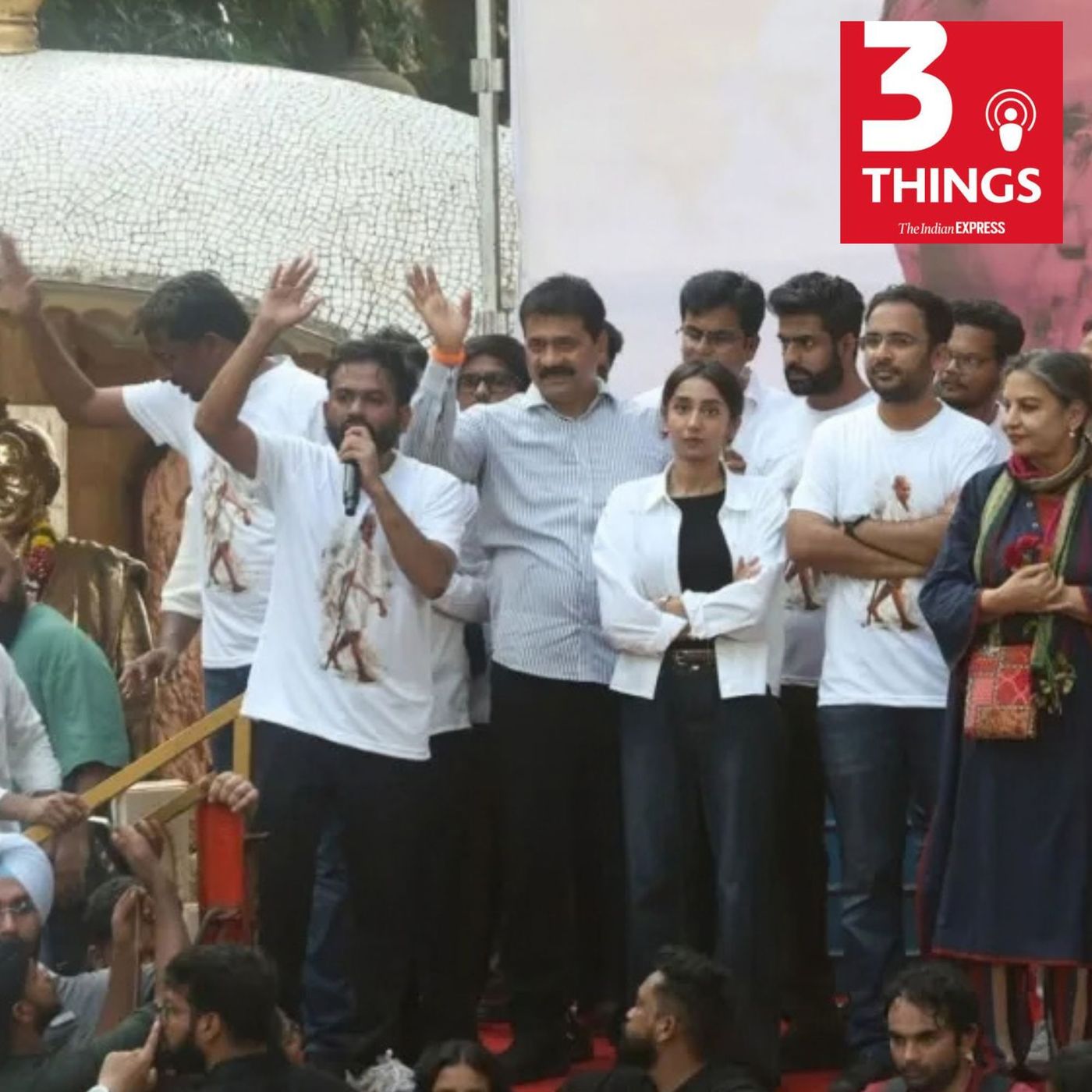
First, we speak with The Indian Express' Ishika Gupta about protests in Delhi and Mumbai against the Election Commission and the irregularities that surfaced during the Special Intensive Revision. She discusses the Mumbai protests, how the city became the base for the Cockroach Janata Party and how the situation differs between Delhi and Mumbai. Next, we speak with The Indian Express' Anonna Dutt about lung cancer and its growing burden. She shares how lung cancer is becoming the leading cause of cancer deaths in the country, and yet we have limited screening for it. She discusses the…
-

5 Oct 2026 · 4 min
The Catch Up: SC says 'Will examine who modified Form 6' (5 October)
The headlines of the day by The Indian Express.
-

9 Oct 2026 · 4 minNew
The Catch Up: Mobile internet blackout in central Delhi (9 October)
The headlines of the day by The Indian Express
-
9 Oct 2026 · 27 minNew
Protests over the CEC, Green India Mission audit, and GST arrest powers scrapped
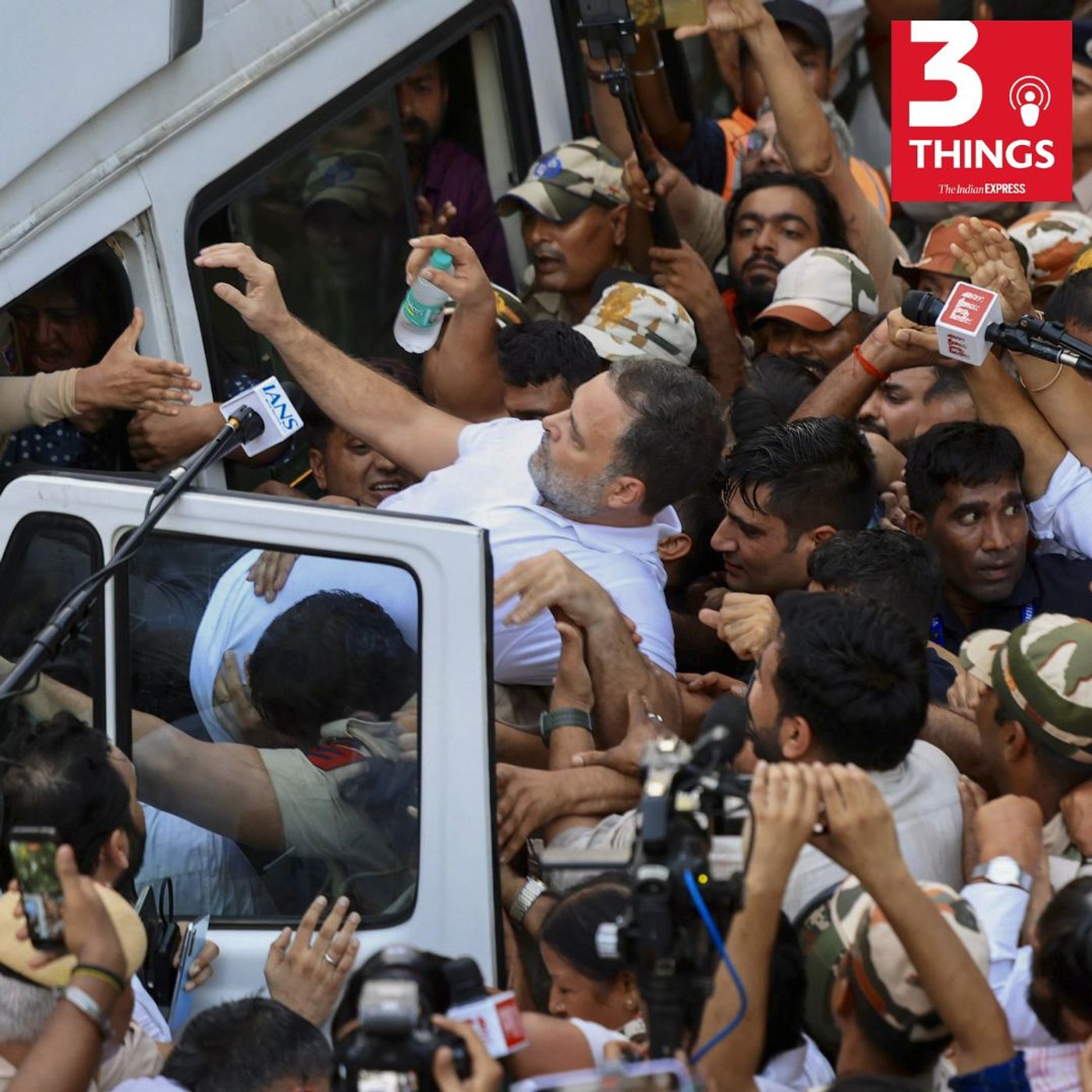
First, we speak to The Indian Express’ Alok Singh about how protests demanding Chief Election Commissioner Gyanesh Kumar’s resignation spread across central Delhi, the challenges of policing multiple groups and the allegations surrounding the police response. Next, we speak to The Indian Express’ Pratip Acharya about a CAG audit that found major failures in Maharashtra’s implementation of the Green India Mission, including poor fund utilisation, missed plantation targets and extremely low sapling-survival rates. (15:50) And in the end, we look at the GST Council’s decision to remove the…
-
5 Oct 2026 · 27 min
Drought in Maharashtra, high drug pricing, and 'no burqa for nurses'
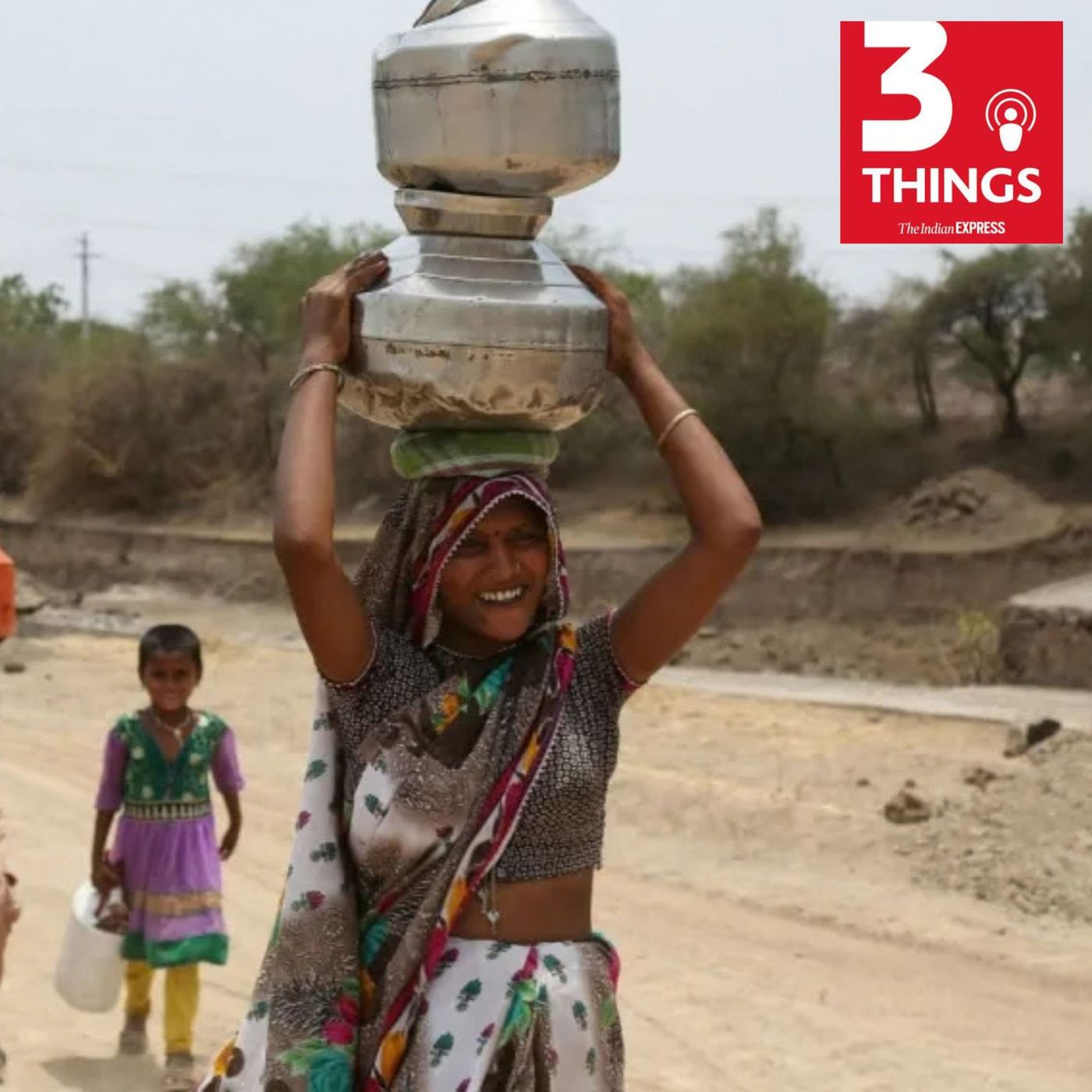
First, we speak with The Indian Express' Alok Deshpande about the drought situation in Maharashtra. Last week Maharashtra declared drought in 265 of its 358 tehsils, after prolonged rainfall deficits and dry spells damaged crops across large parts of the state. Alok shares the seriousness of the situation, what this means for the farmers and what can be expected in the upcoming days. Next, we speak with The Indian Express' Amaal Sheikh about the high cost of life-saving medicines, and why access to essential healthcare remains a major challenge. She discusses the process for pricing…
-

2 Oct 2026 · 5 min
The Catch Up: LPU violence case, and more (2 October)
The headlines of the week by The Indian Express

Take it with you
The Melo app keeps playing with the screen off, works in the car and on your watch, wakes you to your station, and browses the whole catalogue offline. Free, no ads, no account.