Episode · 3 Things
CJP's Mumbai protest, lung cancer concerns, and Hanuman Ansh effect
6 Oct 2026 · 25 min
Episode · 3 Things
6 Oct 2026 · 25 min
First, we speak with The Indian Express' Ishika Gupta about protests in Delhi and Mumbai against the Election Commission and the irregularities that surfaced during the Special Intensive Revision. She discusses the Mumbai protests, how the city became the base for the Cockroach Janata Party and how the situation differs between Delhi and Mumbai. Next, we speak with The Indian Express' Anonna Dutt about lung cancer and its growing burden. She shares how lung cancer is becoming the leading cause of cancer deaths in the country, and yet we have limited screening for it. She discusses the…
Speaker 1:In this episode, we talk about lung cancer, for which screening remains limited in India, even as it becomes the leading cause of cancer deaths in the country. We also talk about a sharp surge in visitors at the Kenchi Dham post the release of Hanuman Anj. But we begin today by talking about the ongoing protests against the Election Commission and the special intensive revision. Hi, I am Niharika Nanda and you are listening to Three Things, the Indian Express News Show. Since Friday last week, thousands of people in Delhi and Mumbai have joined the protests demanding the resignation of Chief Election Commissioner Gyanesh Kumar over alleged irregularities in the special intensive revision. In Delhi, more than 600 people have so far been detained, including All India Students Association President Neha Bora, activist Yogendra Yadav and senior advocate Prashant Bhushan.
Speaker 2:In fact, in the capital, three women.
Speaker 1:Journalists have also accused Delhi police officers of sexual harassment and the crime branch has now been tasked with investigating the allegations.
Speaker 2:But the situation in Mumbai has been quite different.
Speaker 1:There, the protests have largely been peaceful and have been led by the Cockroach Janta Party.
Speaker 2:The Indian Express's Ishika Gupta has been.
Speaker 1:Covering these protests for the paper and she joined my colleague Shashank Bhargav to discuss what has transpired in Mumbai and.
Speaker 2:Why the CJP chose the city as its base this time.
Speaker 3:Ishika, you've been covering these protests for the paper. Tell us what have we seen play out over the past couple of days in Mumbai?
Speaker 4:All right.
Speaker 5:So this was the first protest organized under the official banner of the CJP in Mumbai. So the one that took place before this for the education, former education minister Dharmendra Pradhan's resignation, that was basically done by a lot of political parties and outfits, which had the support of the CJP, of course.
Speaker 4:But this was the first one in which the.
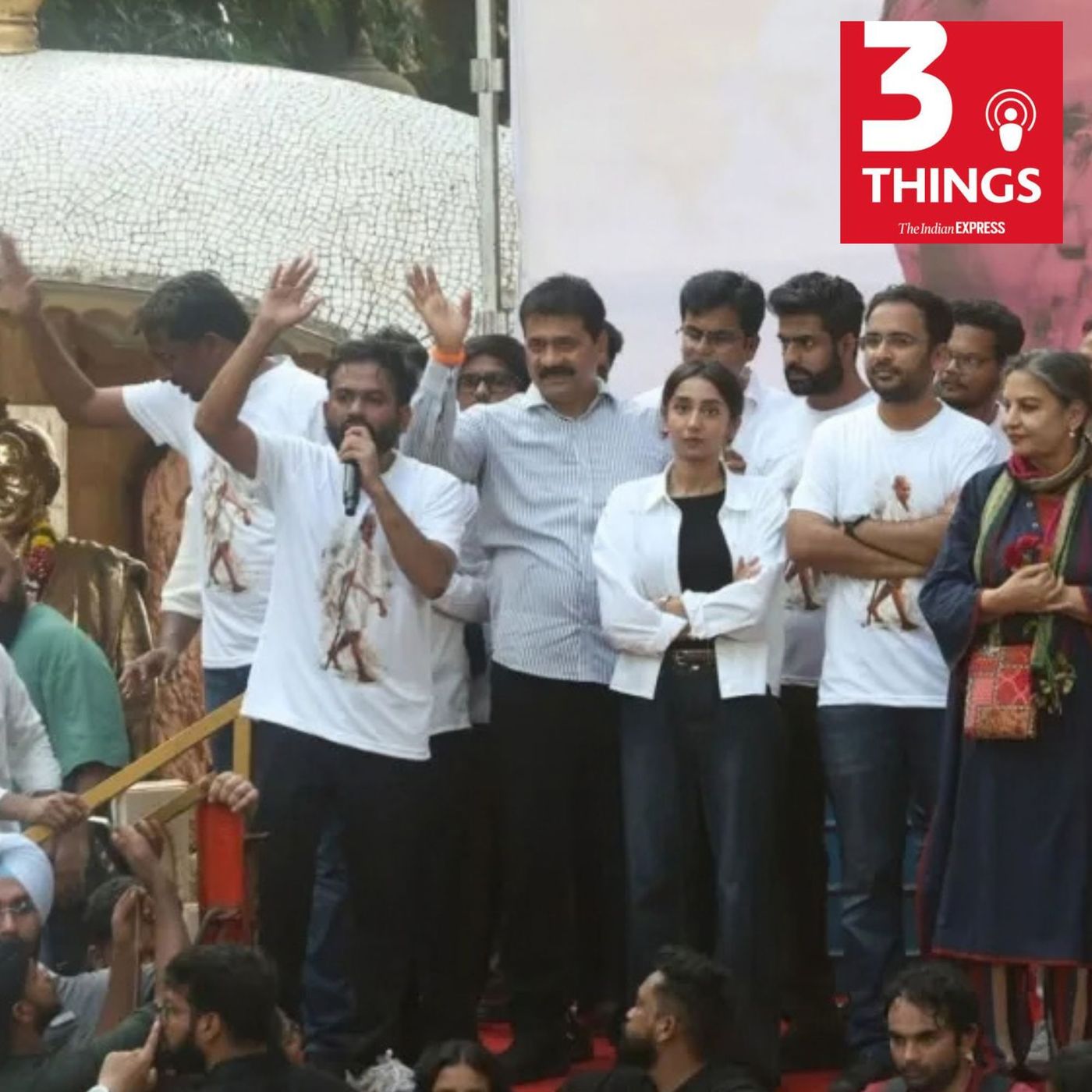
Speaker 5:CJP founder, Abhijit Dipke, actually flew down to Mumbai and announced that, you know, we will be starting this nationwide protest from Mumbai itself. So the site, I think, represented the enthusiasm of the people very well. There were about 4000 people who had gathered outside the Shivaji Park. There were about 300 police personnel who were there to sort of monitor the situation. And there were people from across all generations and ages. There were school going children. I met someone as young as the age of 14. And there were also people who were personally affected by the SIR process, you know, who had their names removed. So the crowd included a lot of those people as well. Also, in a unique turn of events, there were people who were not just residents of Mumbai, but those who had travelled from faraway states as well. There was a person from Pune who was dressed up. in a Gandhi sort of attire with the dhoti and the shawl and everything.
Speaker 5:And because the protest was organized on October 2nd, I think that was a very fitting appearance as well. There was someone who had traveled from Manipur. He had come, you know, to support the CJP in their movement, but also to request Deepke and the other CJP functionaries to come back home in Manipur and actually speak to the warring Kukhi and Mehati communities to sort of foster a peace situation there.
Speaker 4:So there were people from all over, they.
Speaker 5:Had different sorts of aspirations, but I think the overwhelming sort of motive was the reform of the electoral process, which all of them were calling for.
Speaker 3:And you mentioned how the city had very recently seen protests. take place regarding the NEET paper leak. And those were led by opposition leaders, but supported by the CJP. Because that time, all the main CJP leaders were protesting from Jantar Mantar in Delhi. And even right now, protests are going on in Delhi regarding the EC. But why has the CJP chosen Mumbai as their base this time?
Speaker 5:So this choice actually was a very deliberate one to start with. Before the October 2nd protest, Dipke had held a media interaction where he actually explained that, you know, in the 2024 Lok Sabha or general elections, as we call them, BJP had won only nine out of 48 seats from Mumbai. But in the assembly election that happened just a few months later, the scenario changed altogether almost with the BJP and its allies forming the government at the state level. So he sort of questioned the logic behind this reversed outcome of sorts. And he said that the agitation had ultimately decided to be started from Mumbai.
Speaker 5:And he had also said in Marathi that, you know, even the throne in Delhi is guarded by Maharashtra. So Mumbai was the perfect place to start this agitation. And of course, then it will carry on in states including Goa and Kolkata before it's finally with a sit down protest, they end it in Delhi.
Speaker 3:And you had covered the need protests as well, right? What difference did you see between those protests and the one happening right now?
Speaker 5:So that protest, I think a large part of the crowd during that protest was, you know, students, people from all.
Speaker 4:Ages, maybe 10 and upwards.
Speaker 5:And then even, you know, their parents, like who were essentially demanding for a.
Speaker 4:Reform of the education system overall.
Speaker 5:Right now, what we could see in the crowds who were gathered outside Shivaji Park, there were people who were personally affected by the SIR process. There were people, very few, I would say younger students, but there was a lot of Gen Zs as were in the previous protests. There were actually famous Bollywood celebrities. There was Shabana Azmi.
Speaker 4:There was.
Speaker 5:Anand Patwardhan who was the documentary filmmaker and the overall flavour of the crowd was a little mixed this time because while there were people who were seeking for the electoral reformation there were also people who had responded personally to Dipke's call who wanted to support the CJP in their overall mission so that was also a large part of the crowd that was present.
Speaker 3:And, you know, in Delhi, for example, we have seen a lot of people being detained by the police. We have also seen Lathi charge. But have we seen any kind of police action in Mumbai against the protesters?
Speaker 5:So there were about 300 police personnel who were stationed at Shivaji Park in and around at different locations. But there was no sort of crackdown or action against the protesters as such. It was appearing only as if the police were there to monitor the situation and to do crowd control. Now, this was a very deliberate choice, actually, and it came from a directive from the top brass. So within Maharashtra, the chief minister, Devendra Fadnavis, he holds the home portfolio and he had accordingly issued directives against the use of excessive force. And to ensure that the protests would proceed peacefully. A senior BJP leader had also spoken to the Indian Express's Shubhangi Kapriya and he had mentioned that, you know, as opposed to 2023, when the protests had taken place by the Maratha Kota protesters, where Devendra Padnavit, who was the then Deputy Chief Minister, had used excessive force against the protesters, which led to him later apologising. The situation now has played out a lot differently with the police just being there to monitor the situation.
Speaker 5:And this attitude of the police, of course, earned a lot of praise from the CJP's core team and the protesters alike, who appreciated the differences between the Mumbai and the Delhi police.
Speaker 3:And talk about what are the kind of things that the CJP is demanding right now and what have been the demands of the other protesters? Right.
Speaker 5:So the CJP at the outset of the protest had three primary demands. Firstly, the most sort of popular one that is heard was the resignation of the incumbent chief election commissioner, Gyanesh Kumar, and the initiation of criminal proceedings against him and initiating an inquiry of sorts. It also called for a freezing of the SIR electoral roll and using of the 2025 electoral roll for the upcoming elections in whatever states that are set to have elections now.
Speaker 5:And it also called for a more independent and transparent process of appointing election commissioners, which included participation from civil society members. Currently, election commissioners are appointed by the president directly. There's not a lot of civil society involvement. So that was the third demand that the CJP had. Of course, other than that, the protesters on ground were demanding for an overall reformation of the system. Gyanesh Kumar's resignation as like in line with what the CJP was demanding as well.
Speaker 5:But they were also demanding for a chance to be heard and to have their names actually back on the electoral rolls. We met a lot of people who, despite the fact that, you know, they had submitted necessary documents, and had done all the due actions that needed to be taken, they still found their name struck off the rolls with a very sort of vague indication as to what they should do to reverse the judgment. There were people who, again, sought for more transparency in the process and a more streamlined process so that, you know, this wouldn't take place. There were also people who basically thought that, you know, I met a 14 year old who basically mentioned that even though I cannot vote right now, I'm scared of what will happen when I get to an age where I can vote. Because if the process is so sort of opaque now, what will happen then? So there were also people who wanted for a reform of the system in the long run.
Speaker 4:Those were the kind of aspirations as well.
Speaker 1:And next, we turn our attention to the leading cause of cancer deaths.
Speaker 2:In the country.
Speaker 1:While breast, oral and cervical cancers have been among the most common cancers in India for years, it is lung cancer that is now causing the most cancer deaths.
Speaker 2:And while the disease is largely.
Speaker 1:Associated with smoking in the West, here in India, a significant proportion of lung cancer cases occur among non-smokers. What makes the situation even more concerning is that lung cancer is often detected at a later stage, when treatment becomes more difficult and chances of survival fall significantly. What is also worth noting is that there is very limited screening for lung cancer in India, and the government's screening program at primary healthcare centres doesn't not currently cover this type of cancer. So how big is the burden of the disease and why are so many cases being detected late?
Speaker 1:To answer these questions, we speak with the Indian Express's Anona Dutt who reports on health for the paper. Anona, does India have a larger number of lung cancer cases in comparison to other countries?
Speaker 6:So no, India is not at the top if we talk about lung cancer. There are countries like the US or... China, for example, which have a much higher burden of lung cancer. But what we have seen is the incidence of lung cancer going up in the recent years. If you look at the data for 2022 and 2024 that's released by the Global Cancer Observatory, we see a jump in the lung cancer cases And we see lung cancer has moved from the fourth position in terms of new cases to third position.
Speaker 7:And it has also moved.
Speaker 6:Up in terms of the number of deaths it causes annually from the fourth position to the first position, which means instead of breast cancer being the biggest killer in India now, it is lung cancer, according to the latest data, which is for the year 2024 released by the Global Cancer Observatory. It is also accounting for a higher proportion of cases. So what we have seen is now it accounts for 10.9% of all cancer deaths and 7.2% of all new cancer cases, which is more than what we saw previously.
Speaker 2:But why is that?
Speaker 1:Is it mainly to do with smoking or does air pollution also make the problem worse?
Speaker 7:So there is a study that is going on to see whether it.
Speaker 6:Is the ambient air pollution which sort of leads to more lung cancer cases in India or not. There's also a study to look at how much contribution air pollution plays when it comes to lung cancer because That would determine the sort of screening criteria. This is a study that is underway right now. But there are also other problems.
Speaker 7:So two things.
Speaker 6:One, in India, a lot of the lung cancer cases, nearly half of them are not caused by smoking per se. It happens in non-smokers, never smokers. Secondly, there are also other risk factors, such as a large proportion of the people who do smoke tobacco in India actually use BDs. And we do not have any international standard on... you know, how many BDs actually lead to increased risk for lung cancer like we do have for cigarettes. There is also air pollution within the homes from women using chulas, etc., which leads to a lot of smoke within the household.
Speaker 6:That can also be a contributing factor for the increased, I mean, for the lung cancer that happens in non-smokers in India. But these are all factors that have to be determined immediately. through research, whether and how much they are contributing towards the increase in the lung cancer cases.
Speaker 1:And you write that people often consult doctors only at a later stage of the disease when the chances of their survival are much lower.
Speaker 2:So why is that?
Speaker 1:Does lung cancer not have obvious or visible symptoms?
Speaker 7:So you're right. These symptoms are not very pronounced.
Speaker 6:Usually people would have, say, a cough, which can be, you know, I mean, you don't think lung cancer when you cough. You would think you have flu or maybe you have TB. You do not think of lung cancer. So that is one of the most commonest symptoms. Then you have things such as drastic weight loss, etc. But these are not very distinctive lung cancer symptoms per se. So people do not realize And a lot of the times doctors also are not suspecting lung cancer as the first diagnosis.
Speaker 7:So there is a delay in diagnosis.
Speaker 6:Also, if you have, say, a normal cough, you are unlikely to go to a doctor, which is why a lot of the patients do end up in the clinics only when the cancer has spread and they are in the advanced stages of the disease. In fact, the group that is doing the air pollution study, they have looked at some data and they found that approximately 93% of the lung cancer patients actually reached the doctors only when their cancer was advanced, which drastically reduces survival.
Speaker 1:And now coming to screening, tell us about the screening process and how accessible it is for people. And is it as accessible as screening for other cancers is?
Speaker 6:So the way to screen for lung cancer is low dose CT scan. This is essentially, you know, using any CT scan machine at a setting where the radiation levels are lower because you do need to do multiple scans over the years to keep a track. If you know you have found some lumps in your lung, you have to over the years check them to see whether it's growing, what is happening to ensure that it is not cancer.
Speaker 7:So that is why the CT is used at a lower dose of radiation.
Speaker 6:To ensure that patients are not exposed to a very high radiation threshold. Now, the problem is there is no screening program for low-dose CT in India. When it comes to the other common types of cancers, such as cervical cancer, breast cancer, oral cancer, there is a government screening program which is implemented across the primary health centers where patients The staff at the health centers actually inspect the, they do a clinical examination of the breast. They do a visual inspection of the oral cavity for oral cancers. So these are very simple tests which can be done at a primary health center and then if the health worker suspects that a person is likely to have cancer, then they are referred to higher centers. However, when it comes to LDCT, this is not possible. LDCT is more resource intensive.
Speaker 6:You require a CT machine, which is not possible to have at the primary health centers, which means patients would have to go to a higher center to get the tests, even when they are not experiencing any symptoms. which is somewhat unlikely to happen. This is the reason, you know, screening for lung cancer is virtually non-existent. It only happens in case, you know, you have gone for other treatments and the doctor suspects something, then they will ask you to get the test.
Speaker 1:So we need to increase lung cancer screening then. But why is there such a lack of screening for it in India? How come we are not prioritizing it?
Speaker 7:So there are.
Speaker 6:Several reasons why lung cancer screening is not very commonly, actually, it's not really available in the country.
Speaker 7:One is the cost.
Speaker 6:While there are multiple studies that show that it is cost effective to do lung cancer screening because that would detect the lung cancer at an early stage and increase the survival a lot. So if you look at lung cancer in the advanced stages, the chances of survival are say 7 to 18%, but that.
Speaker 7:Increases to 80% if it is detected early.
Speaker 6:So while it has been shown to be cost effective in many countries and even an ICMR, you know, study looking at the cost of the test versus the benefit that you get from it, they did call the screening program a cost effective way to look at lung cancer screening. However, it still is a significant cost and it would add to the government budget to do a CT scan for a huge population. The second thing is just availability of the CT scan machines. It's not available at the primary health center near the people. They would have to go to the district hospitals or a higher center to get these CT scan. And that makes the screening program more difficult because the access is not there. Thirdly, of course, and which is very important, is that we do not have a great criteria for screening selecting the people who should be screened in the first place. So when we look at the Western countries, most of their lung cancer cases happen in smokers, which is why the current guideline for screening for lung cancer is basically people between the ages of 50 and 80 years who have smoked a pack of cigarettes a day for at least 20 years.
Speaker 6:This is the current global guideline. But In India, like I mentioned earlier, a lot of the people who do get lung cancer are not necessarily smokers. So then if we follow the global guidelines, a significant proportion of the people who are at.
Speaker 7:Risk will be missed out.
Speaker 6:So India actually needs to develop its own sort of risk profile and see who should be screened.
Speaker 1:And Aruna, you write that India's high tuberculosis burden also impacts lung cancer screening.
Speaker 2:So can you tell us why that is?
Speaker 6:So because tuberculosis also results in these nodules in the lungs, which sometimes may look like lung cancer. But there are several pilot studies that have now happened. One in Mumbai, which was published in 2021, said that even in tuberculosis-endemic country, LDCT can actually pick up the malignant nodules. And another study that was done by some Ames doctors and others also said that you know, the proportion of people who are screened positive with the LDCT, the lung cancer detection rate and the proportion of false positive cases are comparable to Western countries, even in a country like India that has a lot of TB cases. So all of these are arguments for implementing a lung cancer screening program.
Speaker 7:However, it would take time and money to do so.
Speaker 1:So Anuna, according to experts, who are the people more at risk of developing lung cancer and should consider getting screened?
Speaker 6:So as I mentioned, the current global guideline is anybody who is between the ages of 50 and 80 who has been smoking a pack of cigarettes for at least 20 years, they should definitely get tested. But now, of course, experts are looking at other factors, as I mentioned, at air pollution, at pollution within the household, exposure to secondhand smoke. among others, to look at whether a person who's not a smoker is also at risk of lung cancer. So those guidelines need to be established still. But the current global standard is anybody between the ages of 50 and 80 years with a history of 20 years of smoking.
Speaker 1:And Anona, could you also talk about some preventative measures that people can adopt?
Speaker 6:So, of course, the most important measure is, you know, to quit smoking. Smoking cessation is the most effective way to reduce lung cancer cases that we know of right now. Of course, we are looking at the other factors like it is mentioned. But again, even if pollution is linked to lung cancer, that is a bigger problem which has to be dealt with the government, the society, etc.
Speaker 7:But smoking can be stopped by an individual.
Speaker 6:Also, it has been seen that smoking cessation is much more effective than any drug per se when it comes to improving the treatment outcome. So if a lung cancer patient actually stops smoking, their treatment outcomes improve significantly. So the best preventative measure and the best way to reduce mortality from lung cancer is to stop smoking.
Speaker 1:And finally, we talk about the Kanchi Dham, an ashram in Uttarakhand that has been closely associated with the Hindu saint Neem Karoli Baba. Over the long weekend, the ashram has seen a sharp surge in visitors with thousands of vehicles crawling through Kumau hills and traffic jams stretching across Bhimtal, Bhuwali and Kanchi. The Indian Express's Vidhisha Kuntimala writes that the congestion has prompted the Nenital administration to consider opening an alternative route to ease pressure on Kanchidham. Nenital District Magistrate Lalit Mohan told her that the administration is considering a new standard operating procedure under which an existing bypass connecting the Kanchi area towards Almora and Ranikhet could be opened to divert traffic. According to Mohan, two factors contributed to the latest increase.
Speaker 2:The end of the monsoon season, which.
Speaker 1:Brings travellers back to the hills after the rains and the landslides, and the release of Hanuman Anj, a film based on the life and teachings of Neem Karoli Baba.
Speaker 2:Vidisha writes that 24.34 lakh.
Speaker 1:People visited Kanchidham in the first six months of 2026, compared with around 8 lakh visitors in the whole of the previous year. The surge also prompted Hanuman Anj director Vishal Chaturvedi to ask devotees to check the situation before travelling to Kanchidham, and consider other sites associated with Neem Karoli Baba if the shrine remains overcrowded. Vidisha writes that Uttarakhand is already building a Kanchi Dham bypass, while the Public Works Department has identified another.
Speaker 2:Alternative route as well.
Speaker 1:While authorities said the situation at the temple remained manageable and the immediate congestion had eased by Monday, Vidisha writes that the problem extends beyond tourists.
Speaker 2:Residents told the Indian.
Speaker 1:Express that traffic affects people going to work, bringing supplies, travelling for medical needs and simply trying to get home. As one resident put it, the same infrastructure has to serve both pilgrims and locals, pointing to the need for a permanent.
Speaker 2:Solution rather than additional police.
Speaker 1:Deployment during long weekends. You were listening to Three Things by the Indian Express. Today's show was edited and mixed by Suresh Pawar and produced by Shashank Bhargav and me, Niharika Nanda. If you like the show, then do subscribe to us wherever you get your podcasts. You can also recommend the show to someone you think will like it. Share it with a friend or someone in a family. It's the best way for people to get to know about us. You can also tweet us at Express Audio and write to us at podcasts at indianexpress.com.
Transcript supplied by the publisher with the episode.


7 Oct 2026 · 5 min
The headlines of the day by The Indian Express
7 Oct 2026 · 46 min
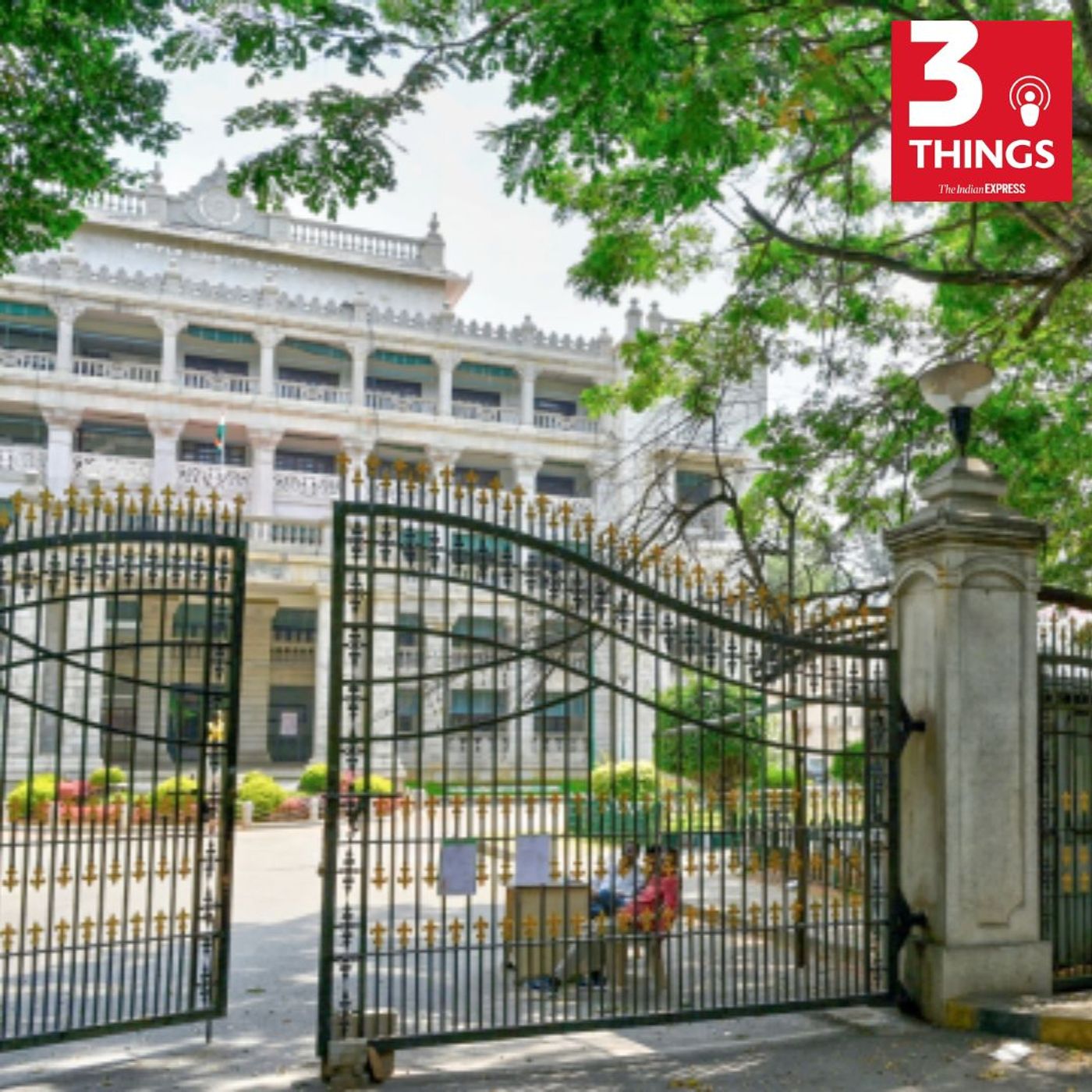
In this episode of 3 Things Deep Dive, we take a look at the alleged corruption inside the Karnataka Public Service Commission, where paper leaks, manipulated recruitment processes and bribes have raised questions about how government jobs are awarded. An Indian Express investigation found that these were not isolated incidents, but part of a larger pattern during the tenure of KPSC chairman Shivashankarappa S Sahukar. We speak to journalist Jay Mazoomdar, who led the investigation, about how the racket worked, who benefited from it, and what happened to those who tried to speak out. Hosted…

6 Oct 2026 · 4 min
The headlines of the day by The Indian Express

5 Oct 2026 · 4 min
The headlines of the day by The Indian Express.
5 Oct 2026 · 27 min
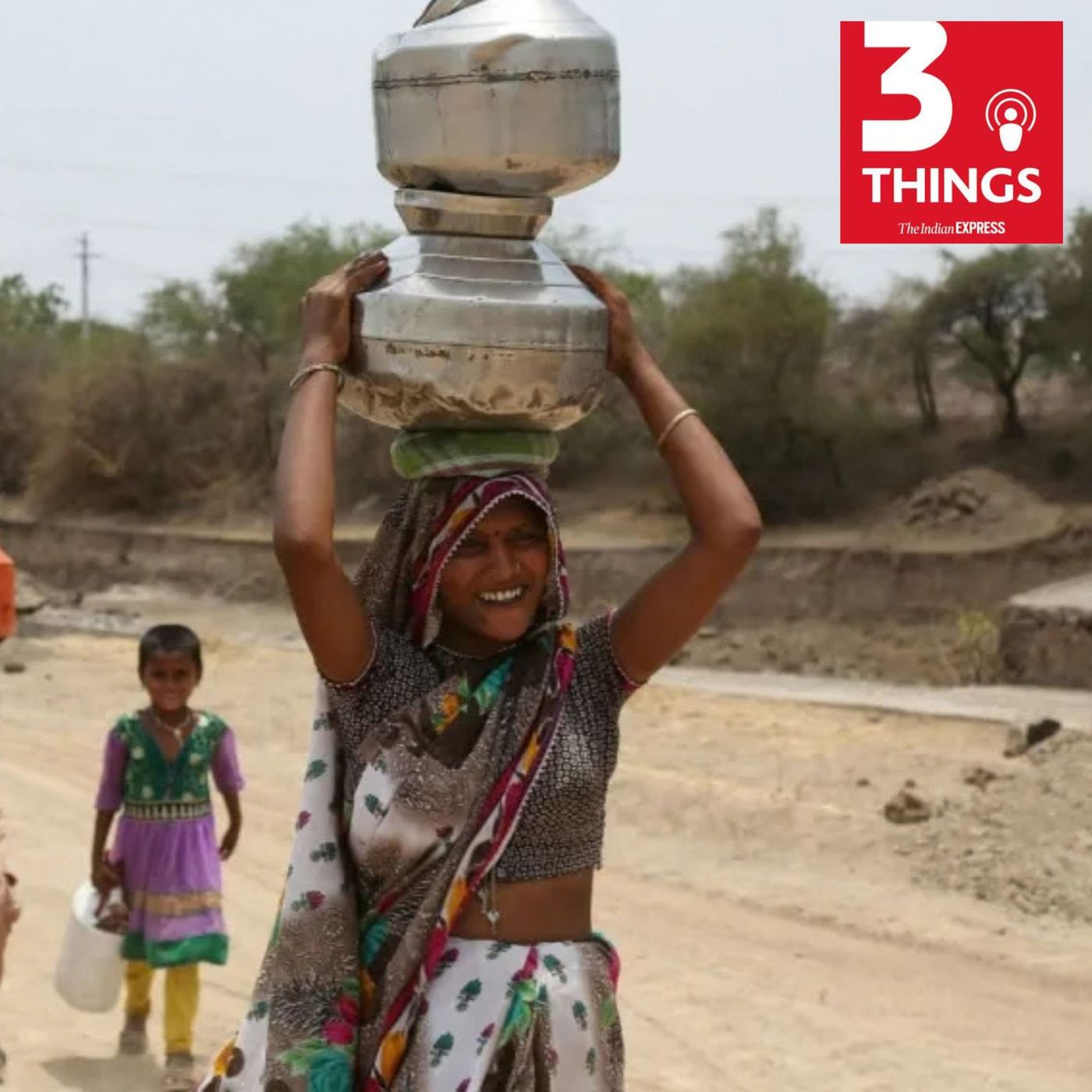
First, we speak with The Indian Express' Alok Deshpande about the drought situation in Maharashtra. Last week Maharashtra declared drought in 265 of its 358 tehsils, after prolonged rainfall deficits and dry spells damaged crops across large parts of the state. Alok shares the seriousness of the situation, what this means for the farmers and what can be expected in the upcoming days. Next, we speak with The Indian Express' Amaal Sheikh about the high cost of life-saving medicines, and why access to essential healthcare remains a major challenge. She discusses the process for pricing…

2 Oct 2026 · 5 min
The headlines of the week by The Indian Express

9 Oct 2026 · 4 minNew
The headlines of the day by The Indian Express
9 Oct 2026 · 27 minNew
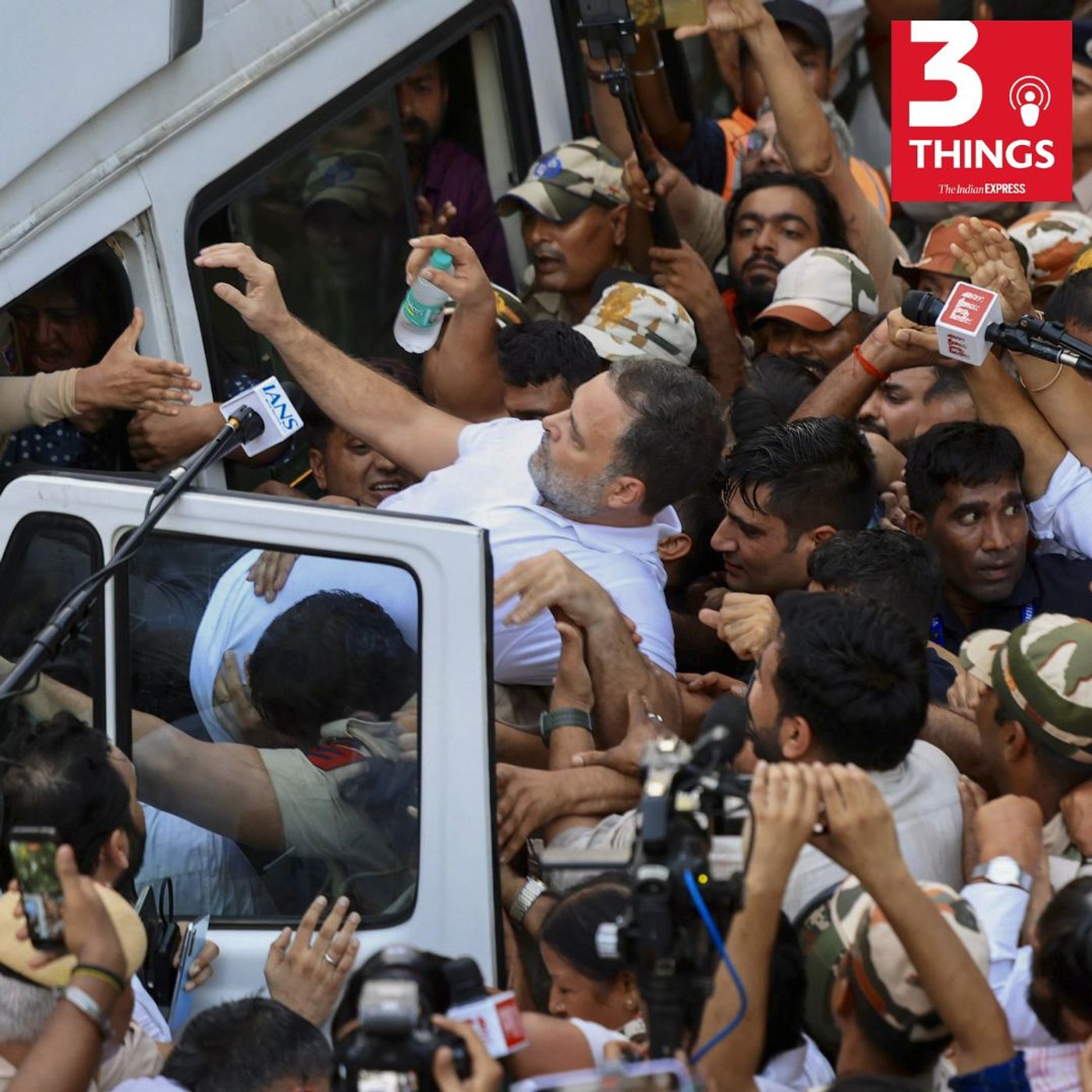
First, we speak to The Indian Express’ Alok Singh about how protests demanding Chief Election Commissioner Gyanesh Kumar’s resignation spread across central Delhi, the challenges of policing multiple groups and the allegations surrounding the police response. Next, we speak to The Indian Express’ Pratip Acharya about a CAG audit that found major failures in Maharashtra’s implementation of the Green India Mission, including poor fund utilisation, missed plantation targets and extremely low sapling-survival rates. (15:50) And in the end, we look at the GST Council’s decision to remove the…

8 Oct 2026 · 3 minNew
The headlines of the day by The Indian Express

8 Oct 2026 · 25 min
First, we speak with The Indian Express' Sadaf Modak about the toll the drought in Maharashtra is taking on the women of the state. She talks about how women have to carry pots filled with water to their homes when borewells and household taps run dry. She also shares how this arduous task is just one part of their already hectic and physically demanding day and what activists are demanding regarding this. Next, we speak with The Indian Express' Diplomatic Affairs Editor Shubhajit Roy about Swiss President Guy Parmelin's three day visit to India and the bilateral talks held between the two…

The Melo app keeps playing with the screen off, works in the car and on your watch, wakes you to your station, and browses the whole catalogue offline. Free, no ads, no account.