
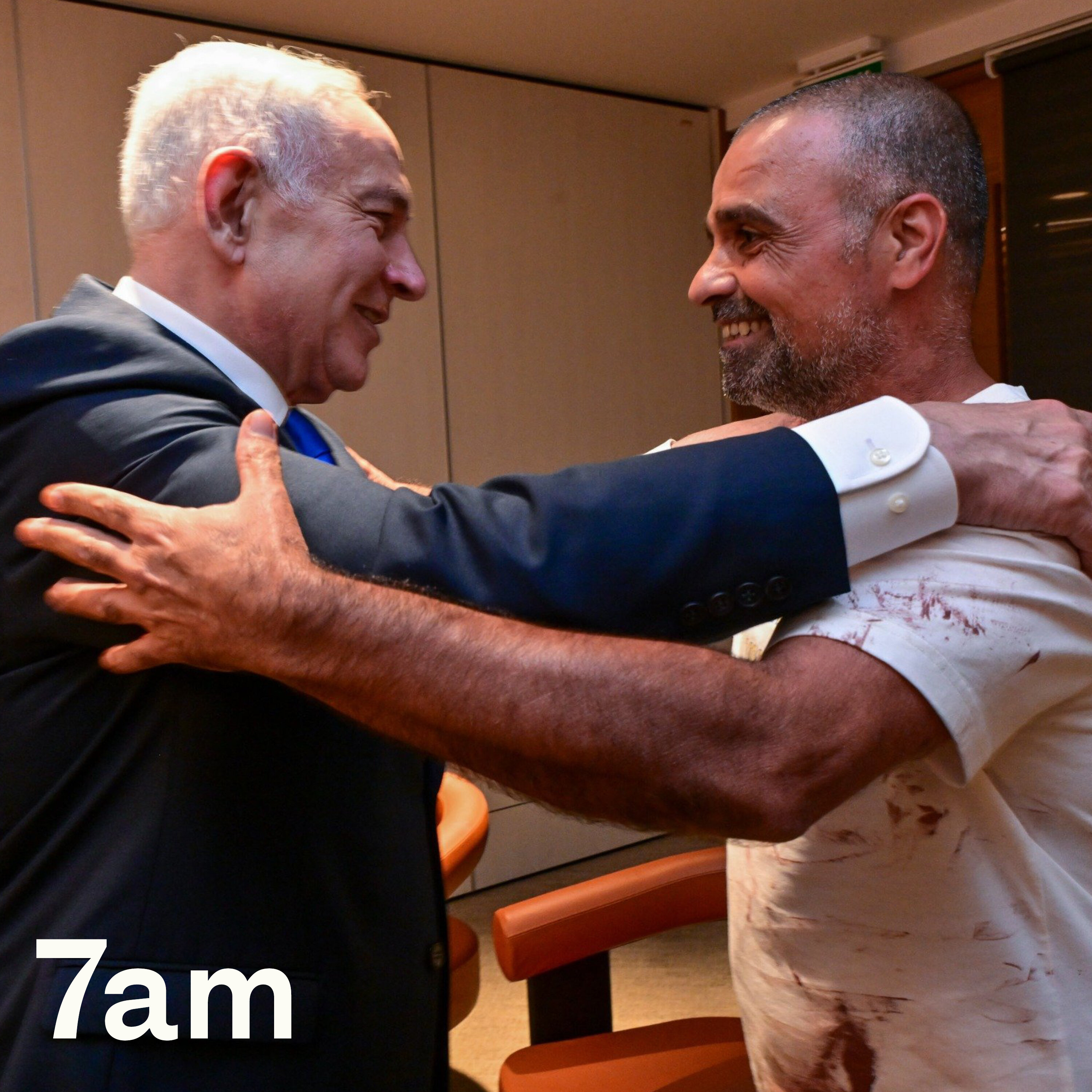
Episode notes
Big events have always had the power to shape elections: from John Howard and the Tampa affair, to the attempted assassination of Donald Trump. And it doesn’t get much bigger than a foiled attempt to bring down a plane mid-flight. One week on from the Flydubai incident, details are continuing to filter out about the co-pilot accused of stabbing his colleague in an effort to crash the Tel Aviv-bound plane. And as investigations continue, Israeli Prime Minister Benjamin Netanyahu has been front and centre – with the country’s election just weeks away. Today, Middle East…
Transcript
Read the transcript · about 2,530 words, follows along as you listen
Speaker 1:Big events have always had the power to shape elections. John Howard and the Tampa affair.
Speaker 2:We will decide who comes to this country and the circumstances in which they come.
Speaker 1:The attempted assassination of Donald Trump.
Speaker 3:I stand before you in this arena only by the grace of almighty God.
Speaker 1:And it doesn't get much bigger than a foiled attempt to bring down a plane mid-flight. One week on from the fly-Jabai incident, details are continuing to filter out about the pilot accused of stabbing his colleague in an effort to crash the Tel Aviv-bound plane. And as investigations continue, Benjamin Netanyahu has been front and centre, with the Israel election just weeks away.
Speaker 2:I asked him, how did you know how to do that? And he said, well, I watch these air disaster films. I told that to President Trump yesterday. He was amazed, you know, because we all see these films. So to actually be in this thing, this is Hollywood on steroids.
Speaker 4:You can't make this up. You can't believe that it actually happens in real life.
Speaker 1:I'm Ruby Jones, and you're listening to 7AM. Today, Middle East correspondent for The Economist, Greg Karlstrom, on what we know about what happened on FlyJubai Flight 1073 and whether Netanyahu could use it to help him get re-elected as Israel's president. It's Thursday, October 8th. Greg, let's begin with the co-pilot who is suspected of trying to bring down the fly-by plane on route to Tel Aviv. So he's been named as Amani National, Hammam al-Hammami. He's been interrogated by UAE authorities, and more details are emerging about him and his background every day. What do we know at this point?
Speaker 2:Right.
Speaker 5:So the biographical details that have come out suggest what sounds like a very peripatetic response life. He was born to an Armani father and a Syrian mother, grew up for a few years in the UAE, the United Arab Emirates, eventually moved back to Oman. But there are some reports also that he may have studied in the UK for a stretch. He may have studied in Australia as well for a period of time. Investigators in both of those countries are looking into that. And then ultimately, went on to work for Armand Air, which is the state-owned carrier in that country, worked there for several years, left, moved to Morocco, had a brief stint with the Moroccan airline, and then moved to Dubai not that long ago to take up work at FlyDubai. So bouncing all over the place in terms of his personal life, his biographical details.
Speaker 1:And there are reports coming out now that the plan might have been for an attack earlier this year. There are also reports of different potential targets, including Tel Aviv's main airport.
Speaker 3:Sources tell CNN that the suspect likely wanted to crash the plane with more than 170 passengers into Israel's Ben Gurion Airport, the country's main international hub, with an untold thousands of commuters on the ground.
Speaker 1:Talk me through what we know at this point about what he was actually planning on attempting.
Speaker 4:Right.
Speaker 5:It sounds like essentially a 9-11 style attack, right? Using the plane itself as a weapon, planning to fly it into something. There have been some reports that the target may have been downtown Tel Aviv, that he may have been planning to fly into skyscrapers there. Obviously, that would be very reminiscent of September 11th, but also some reporting, as you say, that Ben Gurion Airport, the main international airport, might have been a target.
Speaker 6:The official says the co-pilot, identified by multiple sources as Hamam al-Hammami, has told investigators he wanted to evade Israel's defenses, then crash into the airport or another building in Tel Aviv.
Speaker 5:And then if he was unable to do that, reportedly, if he was unable to reach Israel as a sort of backup plan, he was aiming to fly into an American base in Jordan, a military base that American troops have been using in Jordan, particularly this year, where it's been a major hub for American warplanes involved in the war with Iran. So Again, some sort of mass casualty attack against a civilian target was the main goal here. And then if he wasn't able to do that, an attack against the military base.
Speaker 1:And you mentioned that he at one point worked for Oman Air. They had reportedly banned him from flying over concerns that he was showing an interest in radical ideology. So do we know how he got hired by FlyJabai?
Speaker 5:There's been a bit of a blame game around that in some of the leaks that have been coming out. And this is something that investigators are no doubt going to look into. I think there's blame to go around. On the one hand, Oman didn't initially fire him. They reassigned him to a different role within the company. They moved him off the pilot track and to a desk job, essentially an administrative role where he wouldn't be able to fly planes. And so because they did that, There may not have been some big red flag in his file saying this person was fired for extremist views. On the other hand, you would imagine that his employment at Armand Air was public.
Speaker 4:It was listed on his LinkedIn page.
Speaker 5:So when he took up employment with FlyDubai or when he was applying to work at FlyDubai, you would expect both authorities there and authorities in the UAE to contact the Armanis to ask if there were any concerns about him. This is a state-owned airline in a country that takes security quite seriously. And so there were obviously some failures somewhere on the Emirati side as well. Other employees from FlyDubai are being questioned by interrogators, people who were involved in the hiring process, I think, to find out exactly what went wrong here and why that information from the Armanis was never either transmitted to FlyDubai or made use of by.
Speaker 4:The officials there.
Speaker 1:Yeah, and as an Omani national, he actually wasn't supposed to be operating a flight to Israel at all. And now we have Israel and the UAE both blaming each other, as you say, for how he ended up on that flight.
Speaker 5:And again, I think there will be blame to go around. You're right that in general, airlines are not supposed to assign pilots to flights to Israel. if they are from countries that don't have diplomatic relations with Israel. And so we've heard Israeli politicians, Israeli security officials faulting the UAE for that. Ultimately, though, Israel has the final say on who is able to fly a plane to the country, right? The manifest for any flight headed to Israel is sent to authorities there. Ahead of time, that manifest includes the names and nationalities of of the flight crew working that flight.
Speaker 5:And so the Israelis could have told FlyDubai that this person should not be allowed to work this route. There have been cases in the past where they have told Turkish Airlines not to send a pilot from a country that did not have diplomatic relations with Israel. But it sounds as if Either the Israelis didn't properly review the manifest. There's a bit of a question about who exactly is supposed to do that. The Shin Bet is the main security agency in Israel, but the transportation ministry has authority over foreign airlines that are flying to Israel. They're the ones that actually vet the manifests. And so this may have just fallen through the cracks, but it seems like a security failure within the Israeli system where this didn't raise any flags that it should have.
Speaker 1:Still to come, the potential impact on Netanyahu's re-election chances. Benjamin Netanyahu has been at the helm of this story from the moment it happened. He took photos, did interviews with people who were on the plane. He appeared on US TV in the hours after it happened.
Speaker 2:Iran and its proxies are trying to conduct attacks against Israel and Israelis right now in this election season. And therefore, I asked Israelis to be on special alert. But we're going to probably draw a lot of conclusions from this investigation and tighten up the security. We always try to do that.
Speaker 4:We do a pretty good job of it.
Speaker 1:Do you think he sees this as a political opportunity?
Speaker 5:He certainly seems to think it's a political opportunity. You're right that he very quickly was cutting these campaign-style videos and splashing them all over social media.
Speaker 2:Captain, I want to invite you and my dear friend, Prime Minister Narendra Modi, to light a celebratory flame on our next independent day. You are a true hero of the brave peoples of India and Israel, and you're a hero of the entire world.
Speaker 5:The further we get from this event, the more I'm unsure that it's actually useful to him. I mean, he's trying to present this as further evidence for his main campaign pitch, which is the world is a very dangerous place, Israel's in a very dangerous neighborhood, and only I, Benjamin Netanyahu, can keep you safe. But actually, in this event, I mean, first of all, again, there was a security failure. And it's going to remind Israeli voters that of the much bigger security failure that preceded the October 7th massacre. And then also the Netanyahu government didn't actually do anything here to keep Israelis safe. What prevented a tragedy on that plane was the quick thinking of the pilot who opened the door to the cockpit and allowed a handful of ordinary Israeli passengers to come in and restrain the co-pilot and then get the plane out of a dive and back into level flight. The Israeli government really had nothing to.
Speaker 4:Do with this.
Speaker 5:And so Netanyahu trying to make this a campaign pitch for voters, I'm not sure it's actually going to do what he hopes it's going to do.
Speaker 1:And this comes at a time when Netanyahu has been fending off questions about whether he ignored warnings ahead of October 7th, How politically damaging has that been, just wakes out from the elections?
Speaker 5:They were explosive reports that started coming out back in September in the Israeli newspaper Haaretz and then in other media outlets as well, suggesting that the president of the United Arab Emirates, Mohammed bin Zayed, called Netanyahu just a couple of weeks before October 7th to tell him that he had received intelligence that Hamas was planning a some sort of major attack, something that would shake Israel, that would change the region, and urge the Israeli government to take that seriously. And the Emirati president was basically dismissed by Netanyahu, who didn't take those reports seriously.
Speaker 4:So a bombshell story.
Speaker 7:For his part, Netanyahu wrote on social media that no such call took place between September and October 7th and called the story a malicious fabrication with a clear political timing.
Speaker 4:How much did it hurt him politically? Less than you might think.
Speaker 5:I mean, if you look at the polls, actually, he seems to have gained perhaps a seat or two in parliament since these reports first came out. I think the problem is Netanyahu has been in power for the better part of the past two decades. Everyone in Israel has a fully formed view at this point of the Israeli prime minister. There's a large chunk of the country that hates him, that wants him gone. there is a smaller chunk of the country that will stand by him sort of no matter what. And I think it's very hard for anything at this point to create a dramatic swing one way or the other. I think politics have become deeply polarized in Israel and deeply personalized. And if you love Netanyahu after everything that has happened over the past few years, I don't think there is anything that is going to make you change your mind at this point.
Speaker 1:Okay, so if Netanyahu doesn't win this upcoming election? How significant would that be? And what would it mean for the Middle East, for Gaza, for Iran?
Speaker 5:It would be very significant for Israel if someone like Gadi Eisenkot, who is his main centrist or center-right challenger, were to win the election. I think you've had years in which the Netanyahu government has been empowering the far-right of Israeli politics, has been pursuing the all sorts of anti-democratic or undemocratic reforms trying to weaken the Supreme Court, trying to undermine the free press in Israel. So a change of leadership would probably reverse many of these trends internally.
Speaker 5:What does it mean for Gaza, the rest of the region? I think there it's much less clear that we would see a dramatic change. I would expect in the West Bank, where settler violence has reached unprecedented levels over the past few years, a new government might take that a bit more seriously, might try to crack down on that, certainly at least would not encourage or look the other way at settler violence against Palestinian civilians the way this government has.
Speaker 5:In Gaza, I think the next government's policy will depend to a large extent on What Hamas does.
Speaker 4:Does it agree to disarm?
Speaker 5:Does it meet its commitments under the ceasefire that it accepted in October of last year and start handing over its weapons and really relinquishing power in Gaza? And we don't know if it's going to do that so far. All signs suggest that it's not. Similarly, in Lebanon, would a different Israeli government withdraw? That depends on whether the Lebanese army is able to effectively deploy in southern Lebanon, whether it's able to begin disarming Hezbollah. And so I think you might find that, yes, in the West Bank, there could be a meaningful change. But for Israel's other wars and conflicts around the region, a new government may be a less dramatic break with Netanyahu than people are expecting.
Speaker 1:Well, Greg, thank you so much for speaking with me.
Speaker 4:Thank you.
Speaker 1:Also in the news, a landmark ruling in the High Court has found authorities must consider the emissions caused by burning fossil fuels overseas when approving projects. A Hunter Valley community group won the fight, with the court ruling that the approval of the coal mine expansion in Musselbrook was invalid. The case is expected to set a national precedent for the way fossil fuel approvals take global emissions and local climate change into account. And Dave Hughes says he's been forced to stop speaking at Liberal Party events after a report to the Victorian Electoral Commission. Hughes, who's been a vocal critic of Labor since Albanese's negative gearing and CGT changes, had been providing his speaking services free of charge in the lead up to the Victorian election. But because of what he usually charges for that service, it could be seen to be in breach of donation limits.
Speaker 4:I'm Ruby Jones.
Speaker 1:This is 7am. Thanks for listening.
Speaker 6:You
Transcript supplied by the publisher with the episode.

More from 7am
-

E2070 · 9 Oct 2026 · 16 minNew
As the Coalition veers right, should Albo hold the centre?
The Coalition is under pressure from One Nation, and its response is becoming increasingly clear. Angus Taylor is pushing a much harder line on immigration, borrowing language that echoes populist movements overseas. At the same time, One Nation is escalating its own rhetoric as it tries to capitalise on the anger and discontent spreading across the electorate. It’s part of a broader fracturing in Australian politics, as the major parties try to confront a more volatile electorate – and as the government faces renewed pressure over interest rates, inflation and the cost of…
-

E2069 · 8 Oct 2026 · 16 minNew
The $25 billion plan to take on Coles and Woolworths
The Greens’ official think-tank has a new proposition — a national chain of 624 publicly owned supermarkets. To make that a reality would cost more than $25 billion, and involve the forced sale of 200 Coles and Woolworths supermarkets. But the Institute, which took its inspiration from New York mayor Zohran Mamdani, says it would cut grocery bills by 22 per cent. Today, former MP and now Green Institute Executive Director Max Chandler-Mather on his proposal for a publicly owned supermarket chain. If you enjoy 7am , the best way you can support us is by making a contribution at…
-

E2067 · 6 Oct 2026 · 15 min
'Biggest cut in history': What Angus Taylor’s migration cuts would do to Australia
Angus Taylor has promised “the biggest cut to immigration in the history of this country” – vowing to cut net overseas migration to one hundred thousand for two years if he wins office, slashing Australia’s temporary migration intake by 650 thousand over four years. Temporary graduate visas would be scrapped and new international students capped at 240 thousand. Australia’s humanitarian intake to be halved at ten thousand a year. In a press conference which saw classic Coalition slogan “stop the boats” make a comeback, a new catch cry made an…
-

E2066 · 5 Oct 2026 · 17 min
Undercover inside Cuba: The world’s longest-running blockade
The United States is once again tightening its grip on Cuba. New travel and economic restrictions are adding to a brutal oil blockade that has already pushed the country deeper into crisis, leaving Cuba increasingly isolated both politically and economically. But behind the decades of hostility between Washington and Havana, there’s a human cost that can be easy to lose sight of. Power cuts stretch through the night. Food and medicine are scarce and millions of people are struggling with water shortages. Today, SBS reporter for Dateline, Colin Cosier takes us inside Cuba, where he…
-

E2065 · 4 Oct 2026 · 19 min
Alastair Campbell on Pauline, Trump and the shifting world order
Last week, Britain’s new Prime Minister Andy Burnham stood in front of the Labour Party conference and promised to break politics as usual. In an emotional speech, he took aim at privatisation, austerity and Brexit, arguing that Britain’s departure from the European Union had done more harm than good. Alastair Campbell was in the room and he sees Burnham’s speech as part of a much bigger political moment, as populist parties gain ground, America redraws its alliances and China is asserting more power abroad. For countries like Britain and Australia, that means old…
-

E2064 · 3 Oct 2026 · 17 min
‘It’s not 1800-phone-a-friend’: the failed promise of therapy apps
If you listen to podcasts, and let’s be honest, there’s a fair chance that you do, it’s likely that you’ve heard ads for a thing called Better Help. It’s an app offering flexible, affordable therapy whenever you need it. Kind of an “Uber for therapy”. Since we first brought you this story two years ago, app-based therapy has continued to grow – and now AI chatbots are increasingly being used for mental health support too. So are we actually better off with BetterHelp and apps like it? Today, we’re returning to our conversation with…
-
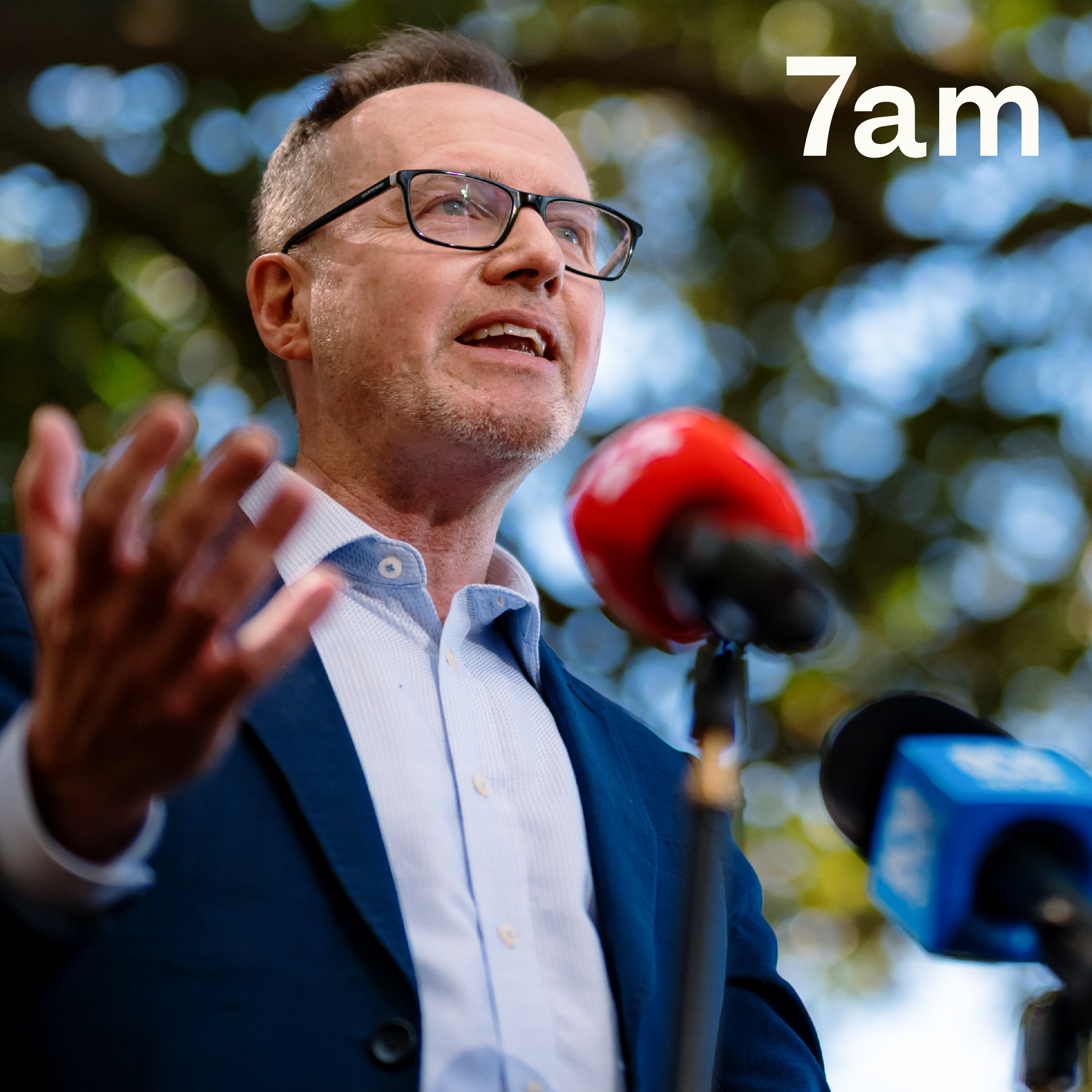
E2063 · 2 Oct 2026 · 17 min
New leader, new Greens?
David Shoebridge has taken over the Greens leadership with a big ambition: to replace Labor. He’s doing it at a time when Australians are becoming less attached to the major parties, and less trusting of the people who run them. But so far, it’s Pauline Hanson’s One Nation that has made the most of that anger, while the Greens, after losing seats at the last election, have stagnated in the polls. Their challenge now is to convince disillusioned voters that the Greens can be more than a bit player in the halls of parliament. Today, Greens leader David Shoebridge on his plan…
-

E2062 · 1 Oct 2026 · 15 min
What the ‘Cornell 7’ tells us about male silence, violence and misogyny
News of an alleged rape involving seven men at an elite university – a case being called the ‘Cornell 7’ – is reverberating across the US. For many people, the case – and the way the men and the institutions involved responded at the time – echoes high profile incidents here in Australia. So what responsibilities are our institutions failing to live up to? And what should they be doing differently? Today, advocate Tarang Chawla on the so-called Cornell 7, and what the case tells us about misogyny at home. And a warning – while we try not to get too…
-
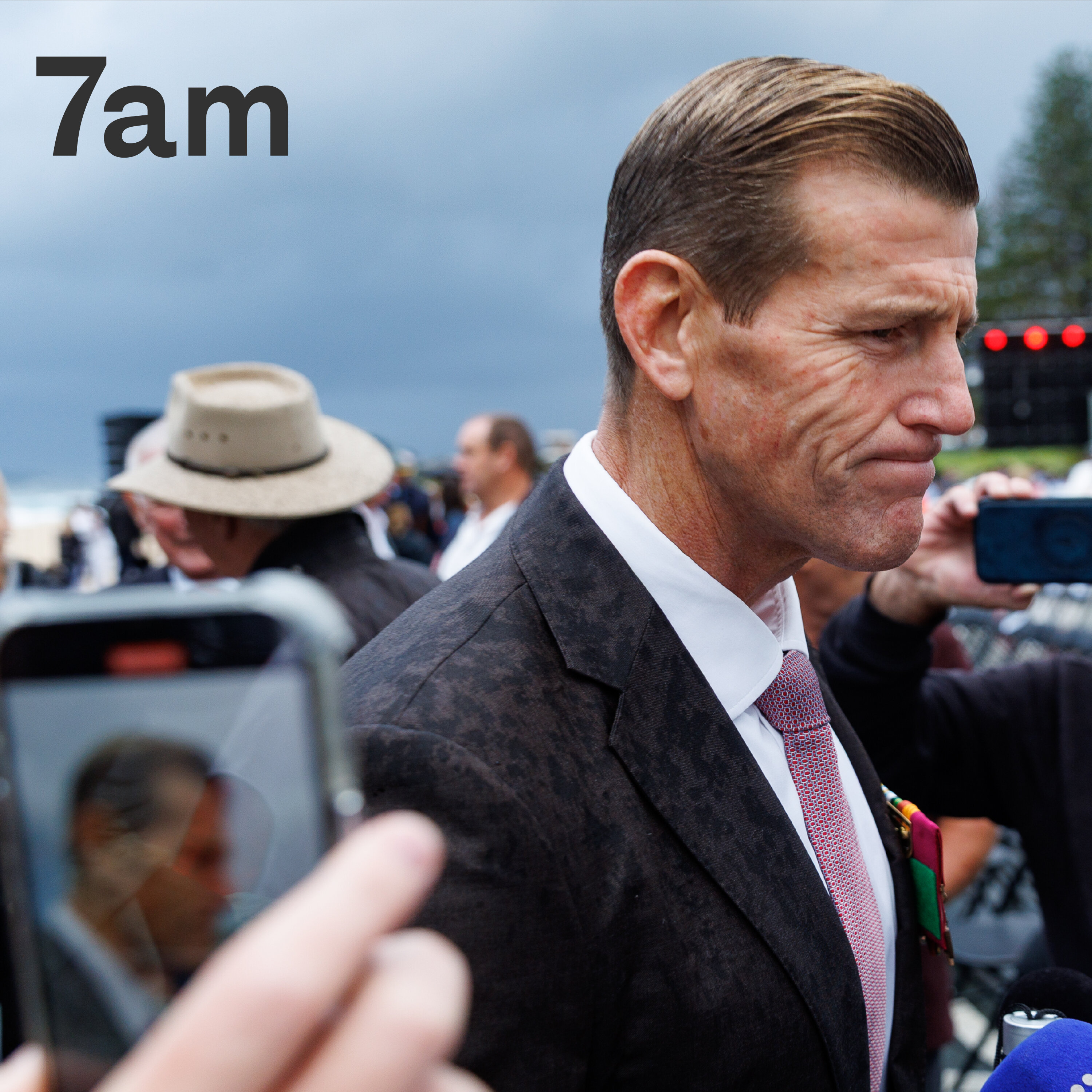
E2061 · 30 Sep 2026 · 13 min
Ben Roberts-Smith and the One Nation law change that could impact his trial
In April this year, Ben Roberts-Smith was arrested and charged with five counts of the war crime of murder. He’s now out on bail and maintains his innocence – and One Nation has swung its support behind him. Now, the minor party says it’s also seeking to make a change to the criminal code — a change that could make a big difference to Roberts-Smith’s upcoming trial. Today, journalist Ben McKelvey on the law One Nation wants changed — and what that could mean for Australia’s international standing. If you enjoy 7am , the best way you can support us is…
-
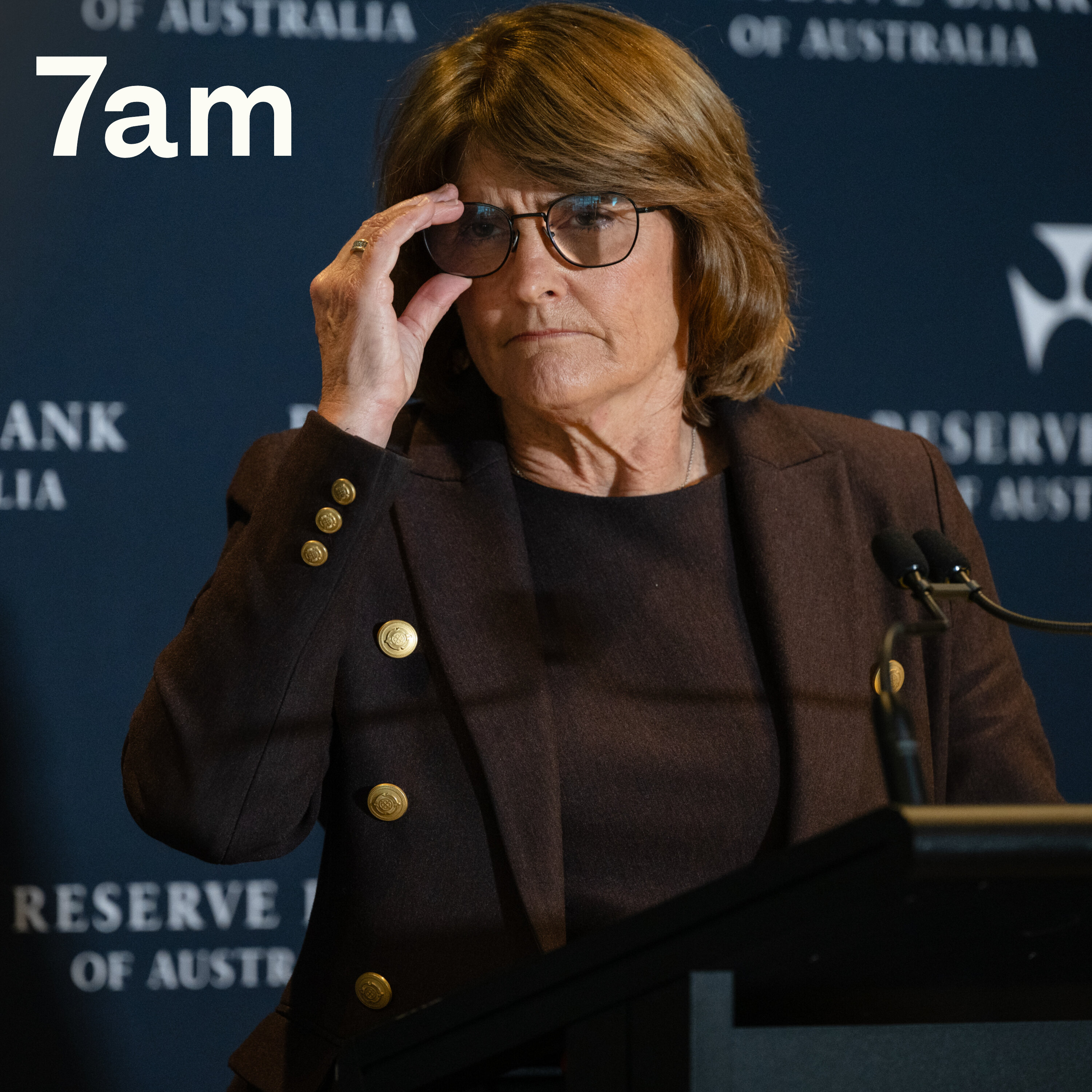
E2060 · 29 Sep 2026 · 16 min
Why interest rate pain is now worse than the bad old days of 17.5%
For years we’ve heard from older generations that the current interest rate pain is nothing compared to the horror of 17.5 per cent rates in the late ‘80s and early ‘90s. But now, as the Reserve Bank delivers its fourth hike this year, analysis shows the pain being inflicted on homeowners is comparatively worse. So, as the official cash rate hits a 15 year high of 4.6 percent – how bad could it get? Today, KPMG senior economist Terry Rawnsley on the chance of more interest rate hikes, the flow on effects of this latest hit, and whether we should be looking at…

Take it with you
The Melo app keeps playing with the screen off, works in the car and on your watch, wakes you to your station, and browses the whole catalogue offline. Free, no ads, no account.


