
Episode notes
The United States is once again tightening its grip on Cuba. New travel and economic restrictions are adding to a brutal oil blockade that has already pushed the country deeper into crisis, leaving Cuba increasingly isolated both politically and economically. But behind the decades of hostility between Washington and Havana, there’s a human cost that can be easy to lose sight of. Power cuts stretch through the night. Food and medicine are scarce and millions of people are struggling with water shortages. Today, SBS reporter for Dateline, Colin Cosier takes us inside Cuba, where he…
Transcript
Read the transcript · about 2,590 words, follows along as you listen
Speaker 1:I'm Daniel James, and you're listening to 7am. The United States is once again tightening its grip on Cuba. New travel and economic restrictions are adding to a brutal oil blockade that has already pushed the country deeper into crisis, leaving Cuba increasingly isolated both politically and economically. But behind the decades of hostility between Washington and Havana, there's a human cost that can be easy to lose sight of. Power cuts stretch through the night, food and medicine are scarce, and millions of people are struggling with water shortages. Today, SBS reporter for Dateline, Colin Kosier, takes us inside Cuba where he travelled undercover to document what life has become for the people caught up in an age-old power struggle.
Speaker 2:It's Tuesday, October 6th.
Speaker 1:Colin, we don't hear a lot about what's going on in Cuba from inside the country because foreign journalists aren't welcome.
Speaker 2:There right now.
Speaker 1:So first off, tell us how you managed to get in and stay undercover as you reported.
Speaker 2:So I went to Cuba pretending to be a tourist. Dateline is normally at minimum a two-person crew, a reporter and a camera person. But in this instance, because access for foreign journalists is so highly restricted, I went, under the guise of a tourist, filming purely on my telephone, which meant I didn't have the normal big camera, microphones, tripods that I would normally use. On the plus side, it was wonderfully unencumbered. It meant I could just kind of walk around Havana and talk to people in a very casual, low-key way.
Speaker 1:We know that Trump's oil blockade in the aftermath of his intervention in Venezuela has made life incredibly difficult there. Can you describe what happened and the impact it's actually having on the people of Cuba?
Speaker 3:Sure.
Speaker 2:I'll actually take a small step back. I mean, Cuba used to be reliant on the Soviet Union, but after the end of the Cold War, it then became very reliant on Venezuelan oil.
Speaker 4:The United States Armed Forces... conducted an extraordinary military operation in the capital of Venezuela to bring outlaw dictator Nicolas Maduro to justice.
Speaker 2:When the U.S. captured the Venezuelan president, Nicolas Maduro, in January, Trump saw to it that that oil supply was essentially turned off from Venezuela. And he also pressured other oil supplying countries like Mexico through tariffs to not supply Cuba.
Speaker 5:Tonight, the president also threatening tariffs on any country selling oil to Cuba, a move putting pressure directly on Mexico and its president, Claudia Scheinbaum. Mexico being the only economic lifeline left for Cuba.
Speaker 2:In essence, the oil tap was turned off. Russia did supply one shipment of oil earlier in the year. And the country does produce some oil, but by all accounts, it doesn't even meet half of its own needs. So the place essentially ran out of fuel. It should be said that a lot of the problems that Cuba is experiencing now were kind of in place before. This oil blockade, however, was more a nail in the coffin.
Speaker 1:And so when you're roaming the streets of Havana, what impact is that having on the people that live there? What's life like?
Speaker 2:So the first thing that I noticed was a lack of cars on the street. There were some cars, but just hardly any. The second thing I noticed was a lack of tourists. Havana is a beautiful old city, clearly geared towards tourism, and I honestly felt like the only foreign visitor in the whole city. Why is everyone lining up for bread? The other thing you notice walking around is the rubbish. They keep the touristy areas kind of clean, but move not far into the back streets and you will just see household waste strewn everywhere. The city apparently doesn't have the fuel for the dump trucks to pick it up regularly, so it just piles up in the streets.
Speaker 2:It stinks. You would see people picking over it. It was gross, actually. So as well as there being hardly any cars on the road and rubbish everywhere, the power outages are the big one. The blackouts, people told me, lasted 16, 20, sometimes more hours a day. There have actually been three nationwide outages this year alone. And what that means is when you walk around at night, it's dark. It's really dark. And you would hear the occasional generator that might be powering a shop here or an apartment there.
Speaker 2:And when you look in through people's windows, you see these little battery-powered lights. But it was quite something to see a city so blacked out. And that's most nights. And it's been that way all year. The other thing that affects people is the lack of water. It's not that there's no water in Cuba, but the city is having trouble through a lack of fuel from running the main water lines. And then at individual houses, they need electricity for their little pumps to get water into the little blue tubs that kind of dot every rooftop. So locals told me that more often than not, you turn the tap on and no water comes out. So you would often see, I would see people wheeling buckets of water down the street or little water deliveries happening, literally buckets of water being walked into homes. Is that the.
Speaker 1:Case for everyone there? Because also in the documentary, a lot of people spoke about how That scenario actually isn't being suffered by everyone. There are the rich that are not suffering in the same way as the people on the street, which is an obvious thing worldwide. But can you describe that double standard?
Speaker 2:Yeah, I think that's fair. I mean, my hotel was quite fancy. It was one of the few that was still open. It still had 24-hour electricity. It had air conditioning. I had a lovely meal and it was surreal because at night I could see most of the city blacked out and yet I was kind of living in luxury. I went to a supermarket that stocked imported goods, kind of like chocolates from Europe and juices and the like, and the shop only took US dollars and euros. It didn't even take the local currency. that shop would just be inaccessible to most average Cubans. But I did see people in there shopping, so clearly it's not everyone.
Speaker 1:One of the most confronting scenes you filmed was that of a 100-year-old woman who looked incredibly sick. Can you just tell us about that scene?
Speaker 2:So a lot of my reporting there was simply walking the streets of Havana and talking to people. And in this instance, I met a woman in her front door.
Speaker 3:Hello.
Speaker 2:We went down this little corridor. She opened the door into this small room. And this incredibly frail old woman was just sitting there hunched over. I'm not even sure if she recognized that I was there. The daughter explained that she's 100 years old, that she's quite sick. She's asthmatic and can't afford her medication. She's incontinent and they can't afford the incontinence aids to help her. And she said that the mother receives a pension that essentially amounts to about $ 2, $ 2. 20 US dollars, which she equated to the cost of a bottle of cooking oil. It was quite confronting.
Speaker 1:And the interview itself was kind of interrupted by neighbors, wasn't it? So how hard is it to get people to speak freely there at the moment? Because that's something that they can get into trouble for, isn't it?
Speaker 2:Yeah. So I'd only been speaking to this woman for a few minutes when a neighbour interrupted us and told her, in his words, that she was being dumb and that it wasn't a good idea to speak with a foreigner like myself. To her credit, she defended herself and said, no, I'm not saying anything bad about the revolution, I'm just telling this guy about my sick mother. But look, Cuba is an... authoritarian single party state where it's well-documented, speech is not very free. There's not really a free and independent press to speak of. And so, yeah, naturally in that environment, people are guarded.
Speaker 1:I was surprised.
Speaker 2:I didn't really see a heavy police presence, but I was also told that they have this kind of neighborhood watch system. It's called the CDR, the Committee for the Defense of the Revolution, which kind of essentially works as a dobbing your neighbor system.
Speaker 1:So what sort of sense did you get from the people that you spoke to about who's to blame for what's happening? Are they blaming Trump, Rubio, or their own communist government?
Speaker 2:Both, though it depended on who you spoke with. I spoke to an 87-year-old woman who, like everyone else, is struggling with no power at home and hardly any water, and she was a lifelong member of the Communist Party, and she lays the blame squarely at the US and said, you cannot blame... the cuban state but when you speak with young people like i did they told me that yes there are these external pressures that are making life difficult but they pointed to what they called the internal blockade meaning the uh the the internal economic mismanagement and problems uh from the cuban state.
Speaker 1:Coming up, as Washington ramps up pressure on Cuba, how much further can its people be pushed?
Speaker 4:Communism will never be coming to America, but freedom will be coming to Cuba and safety and security.
Speaker 1:Just over a week ago, the Cuban delegation walked out of the UN General Assembly after Donald Trump said that Cuba, which he called a failed state, will soon be released from communism. Is that another threat? Because there's been speculation for some time now that Cuba could be next on, for want of a better term, the US hit list.
Speaker 2:Trump has more or less said it, that after Venezuela, after Iran, that Cuba is next.
Speaker 4:They built this great military.
Speaker 2:I said, you'll never have to use it, but sometimes you have to use it.
Speaker 4:And Cuba's next, by the way.
Speaker 2:But Pretend I didn't say that. Yeah, he's been saying this all year and it's been backed up by the fuel embargo and these extra sanctions. Is it a failed state? Look, I'm no political scientist, but I don't think it meets the criteria of a failed state. You know, it still has the rule of law, still has some state institutions functioning poorly. I think what you can say is... It's in an economic and social crisis. That's not in debate. And none of this is new for Cubans. In the last six years alone, it's thought that, and this is the conservative estimate, that at least 1.6 million people have left the country. That's roughly one in 10 people. Locals told me that since COVID, things have been very, very bad and the place never recovered. And this fuel blockade this year that really turned the oil tap off and meant that there's been rolling nightly blackouts and a lack of water at home and all the other associated problems has really just been more of a final straw.
Speaker 1:Was there a sense of inevitability while you were there that the US would actually do something sort of more serious when it comes to actually taking over the country and invading Cuba? Was there a sense that that is on the horizon or are people just taking things one day at a time?
Speaker 2:One day at a time. I think the more immediate problems people have, can I charge my mobile phone at home tonight? Will water come out of the tap? What am I going to eat and how am I going to cook it? Saying that, I did ask people, what do you make of Trump's comments? And by and large, they were all dismissed. Most people thought he won't go ahead with anything more serious. But, and I guess they're just used to decades of US sanctions. It's kind of not really new in that regard.
Speaker 6:I'm taking one further step to protect the dollar. As a temporary measure, I am today imposing an additional tax of 10% on goods imported into the United States.
Speaker 1:There is a history of US leaders lashing out that dates back to Nixon and Kennedy.
Speaker 6:All ships of any kind bound for Cuba, from whatever nation or port, will, if found to contain cargoes of offensive weapons, be turned back.
Speaker 1:How does this current situation compare to those times, though?
Speaker 2:Look, I wasn't around in the Kennedy and Nixon era, but I did speak to some older people. You know, I spoke to, so Marta, the older woman I spoke to, she remembers what's called the special period, which was when the Soviet Union collapsed and there were, it was another crisis. There was hardly any fuel, food was short. She remembers that being bad. She acknowledges this is bad. She didn't really kind of rate it as one was worse than the other. But a 65-year-old tobacco farmer I spoke to said that in his view, this really is the worst crisis that he has experienced.
Speaker 1:The US aside, what is the government going to do to get the country back on its feet? Is that something that people are demanding? Is there sentiment for change within the country itself against its own government?
Speaker 2:There were protests, big protests back in 2021 that were quite harshly put down. And following that, there was the mass exodus of 1.6 million minimum people. Everyone's gone. Everyone's gone. That kind of would be agitating for change. You know, a man I spoke with, a very young man who was fishing for his dinner, told me that One of his neighbours is facing 20 years in jail for banging pots and pans and demanding electricity. And another young woman I spoke to told me bluntly she doesn't have any hope.
Speaker 2:She loves her country, but doesn't have any hope. It's quite grim.
Speaker 1:Well, it's a fascinating insight into a forgotten part of the world in many senses. Colin, thank you for your work and thanks for speaking with us.
Speaker 2:Thank you, Daniel.
Speaker 1:And Dateline's Cuba Inside the Blockade airs tonight, 9.30 on SBS. Or you can stream it on SBS On Demand.
Speaker 3:Also in the news, former Bachelor star and fitness influencer Sam Wood will remain in custody until a bail application hearing on Thursday after being charged with domestic violence offences, including strangulation. Wood's lawyer says he'll defend the charges after being arrested following an alleged incident in Noosa on Saturday night. Wood has been stood down from his fitness business, 28 by Sam Wood. He and his wife, Susanna Wood, have posted that it's a difficult time and that they're working through it as a family as they cooperate with authorities.
Speaker 3:And Israeli media is reporting that a fly-Jubai pilot who allegedly attacked his colleague on a flight to Israel had planned to crash the plane in Tel Aviv. The man is being grilled by authorities in the United Arab Emirates and reportedly told them he'd planned to kill his co-pilot, then continue flying normally to Israel before crashing. There are conflicting reports about whether his final target was Tel Aviv's main airport or a block of skyscrapers near Israel's military headquarters.
Speaker 2:I'm Ruby Jones. This is 7am. Thanks for listening.
Transcript supplied by the publisher with the episode.

More from 7am
-

E2069 · 8 Oct 2026 · 16 minNew
The $25 billion plan to take on Coles and Woolworths
The Greens’ official think-tank has a new proposition — a national chain of 624 publicly owned supermarkets. To make that a reality would cost more than $25 billion, and involve the forced sale of 200 Coles and Woolworths supermarkets. But the Institute, which took its inspiration from New York mayor Zohran Mamdani, says it would cut grocery bills by 22 per cent. Today, former MP and now Green Institute Executive Director Max Chandler-Mather on his proposal for a publicly owned supermarket chain. If you enjoy 7am , the best way you can support us is by making a contribution at…
-
E2068 · 7 Oct 2026 · 17 minNew
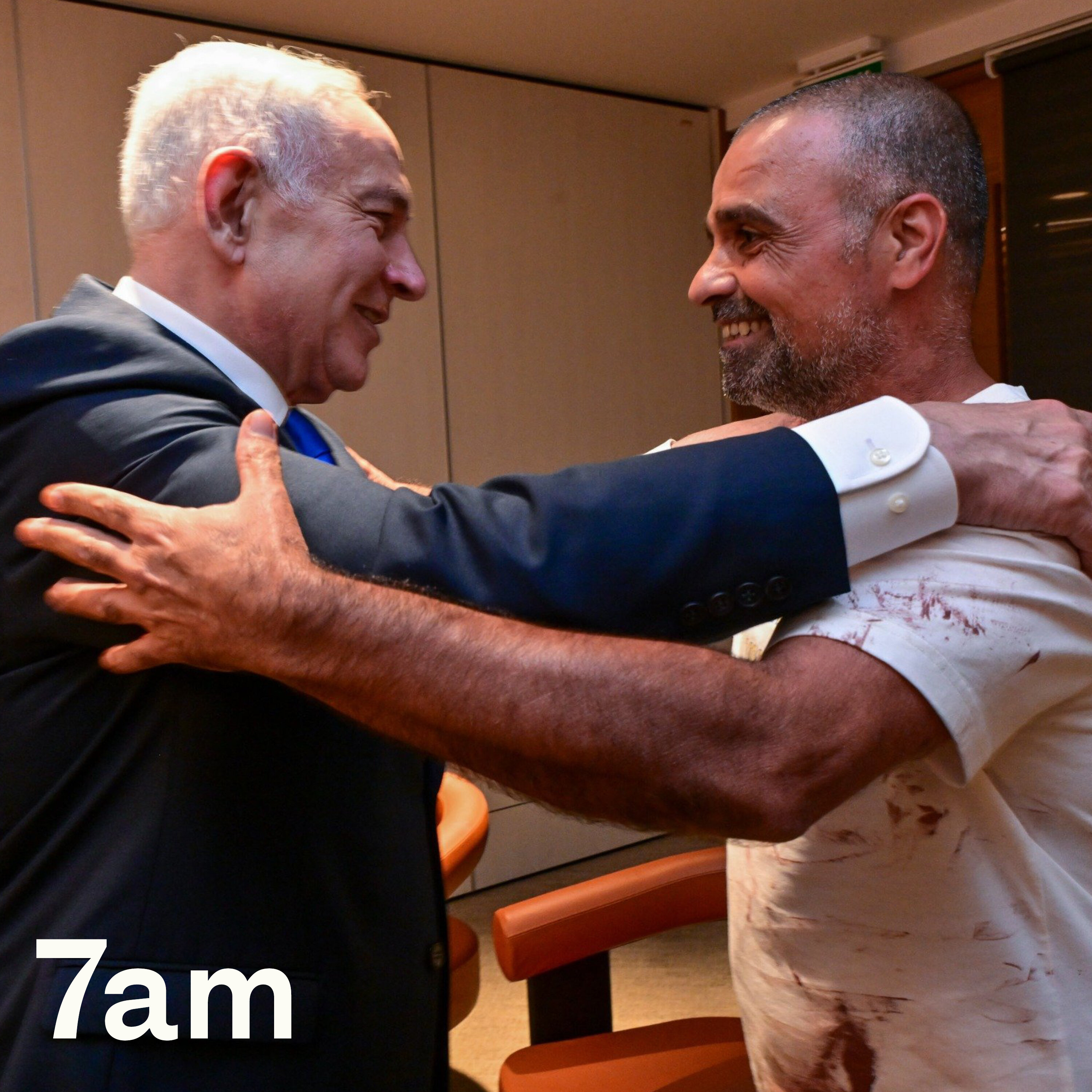
Could the Flydubai attack keep Netanyahu in power?
Big events have always had the power to shape elections: from John Howard and the Tampa affair, to the attempted assassination of Donald Trump. And it doesn’t get much bigger than a foiled attempt to bring down a plane mid-flight. One week on from the Flydubai incident, details are continuing to filter out about the co-pilot accused of stabbing his colleague in an effort to crash the Tel Aviv-bound plane. And as investigations continue, Israeli Prime Minister Benjamin Netanyahu has been front and centre – with the country’s election just weeks away. Today, Middle East…
-

E2067 · 6 Oct 2026 · 15 min
'Biggest cut in history': What Angus Taylor’s migration cuts would do to Australia
Angus Taylor has promised “the biggest cut to immigration in the history of this country” – vowing to cut net overseas migration to one hundred thousand for two years if he wins office, slashing Australia’s temporary migration intake by 650 thousand over four years. Temporary graduate visas would be scrapped and new international students capped at 240 thousand. Australia’s humanitarian intake to be halved at ten thousand a year. In a press conference which saw classic Coalition slogan “stop the boats” make a comeback, a new catch cry made an…
-

E2065 · 4 Oct 2026 · 19 min
Alastair Campbell on Pauline, Trump and the shifting world order
Last week, Britain’s new Prime Minister Andy Burnham stood in front of the Labour Party conference and promised to break politics as usual. In an emotional speech, he took aim at privatisation, austerity and Brexit, arguing that Britain’s departure from the European Union had done more harm than good. Alastair Campbell was in the room and he sees Burnham’s speech as part of a much bigger political moment, as populist parties gain ground, America redraws its alliances and China is asserting more power abroad. For countries like Britain and Australia, that means old…
-

E2064 · 3 Oct 2026 · 17 min
‘It’s not 1800-phone-a-friend’: the failed promise of therapy apps
If you listen to podcasts, and let’s be honest, there’s a fair chance that you do, it’s likely that you’ve heard ads for a thing called Better Help. It’s an app offering flexible, affordable therapy whenever you need it. Kind of an “Uber for therapy”. Since we first brought you this story two years ago, app-based therapy has continued to grow – and now AI chatbots are increasingly being used for mental health support too. So are we actually better off with BetterHelp and apps like it? Today, we’re returning to our conversation with…
-
E2063 · 2 Oct 2026 · 17 min
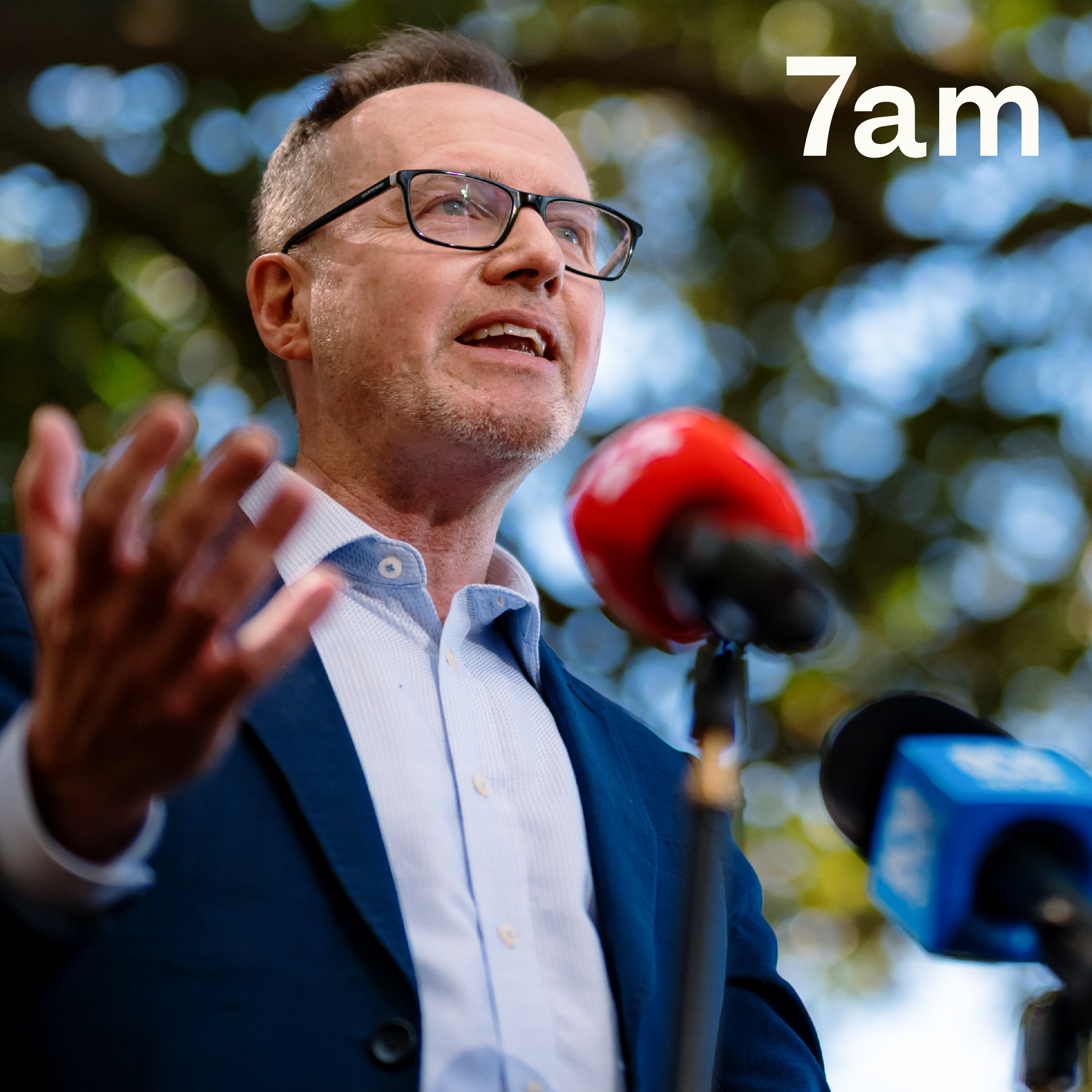
New leader, new Greens?
David Shoebridge has taken over the Greens leadership with a big ambition: to replace Labor. He’s doing it at a time when Australians are becoming less attached to the major parties, and less trusting of the people who run them. But so far, it’s Pauline Hanson’s One Nation that has made the most of that anger, while the Greens, after losing seats at the last election, have stagnated in the polls. Their challenge now is to convince disillusioned voters that the Greens can be more than a bit player in the halls of parliament. Today, Greens leader David Shoebridge on his plan…
-

E2070 · 9 Oct 2026 · 16 minNew
As the Coalition veers right, should Albo hold the centre?
The Coalition is under pressure from One Nation, and its response is becoming increasingly clear. Angus Taylor is pushing a much harder line on immigration, borrowing language that echoes populist movements overseas. At the same time, One Nation is escalating its own rhetoric as it tries to capitalise on the anger and discontent spreading across the electorate. It’s part of a broader fracturing in Australian politics, as the major parties try to confront a more volatile electorate – and as the government faces renewed pressure over interest rates, inflation and the cost of…
-
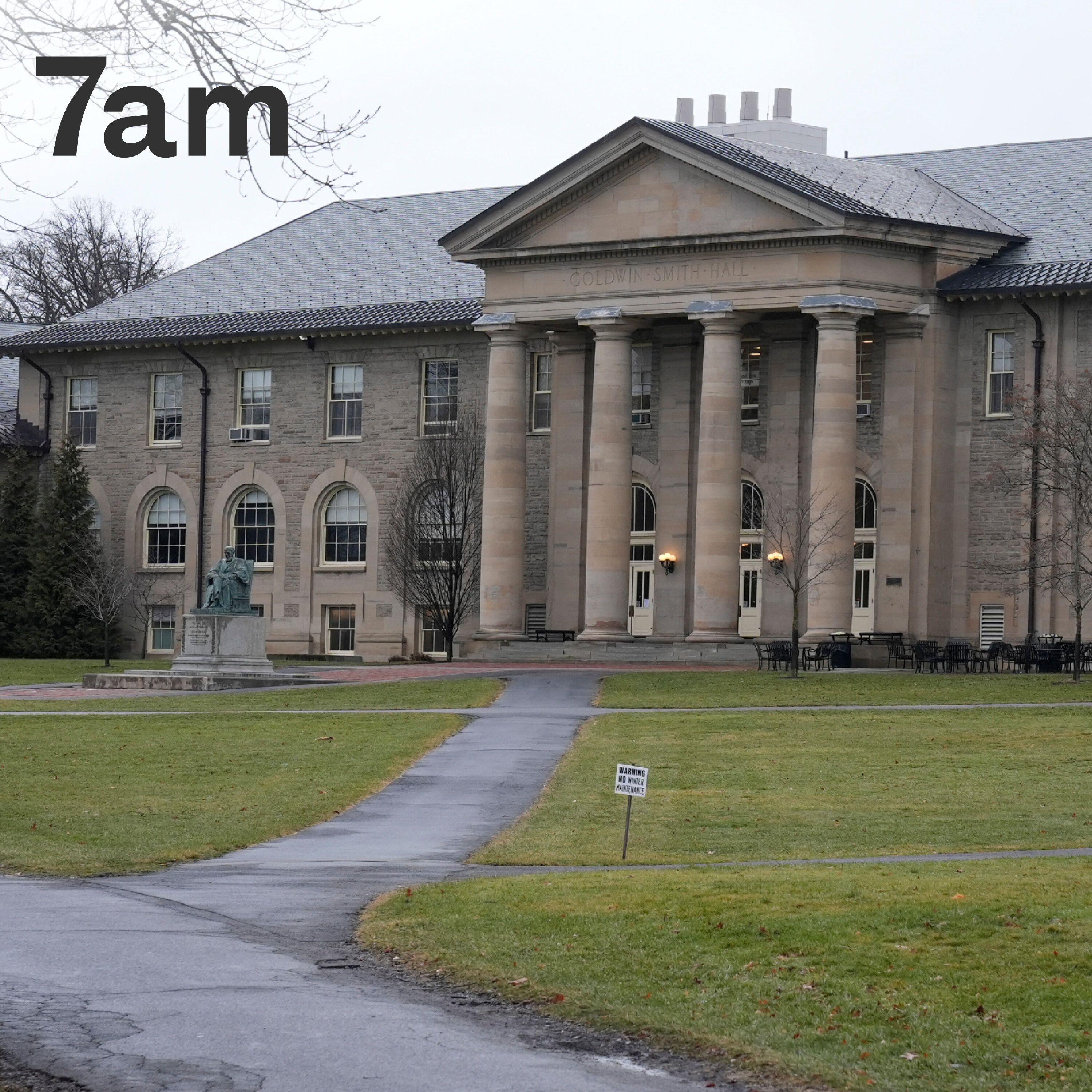
E2062 · 1 Oct 2026 · 15 min
What the ‘Cornell 7’ tells us about male silence, violence and misogyny
News of an alleged rape involving seven men at an elite university – a case being called the ‘Cornell 7’ – is reverberating across the US. For many people, the case – and the way the men and the institutions involved responded at the time – echoes high profile incidents here in Australia. So what responsibilities are our institutions failing to live up to? And what should they be doing differently? Today, advocate Tarang Chawla on the so-called Cornell 7, and what the case tells us about misogyny at home. And a warning – while we try not to get too…
-
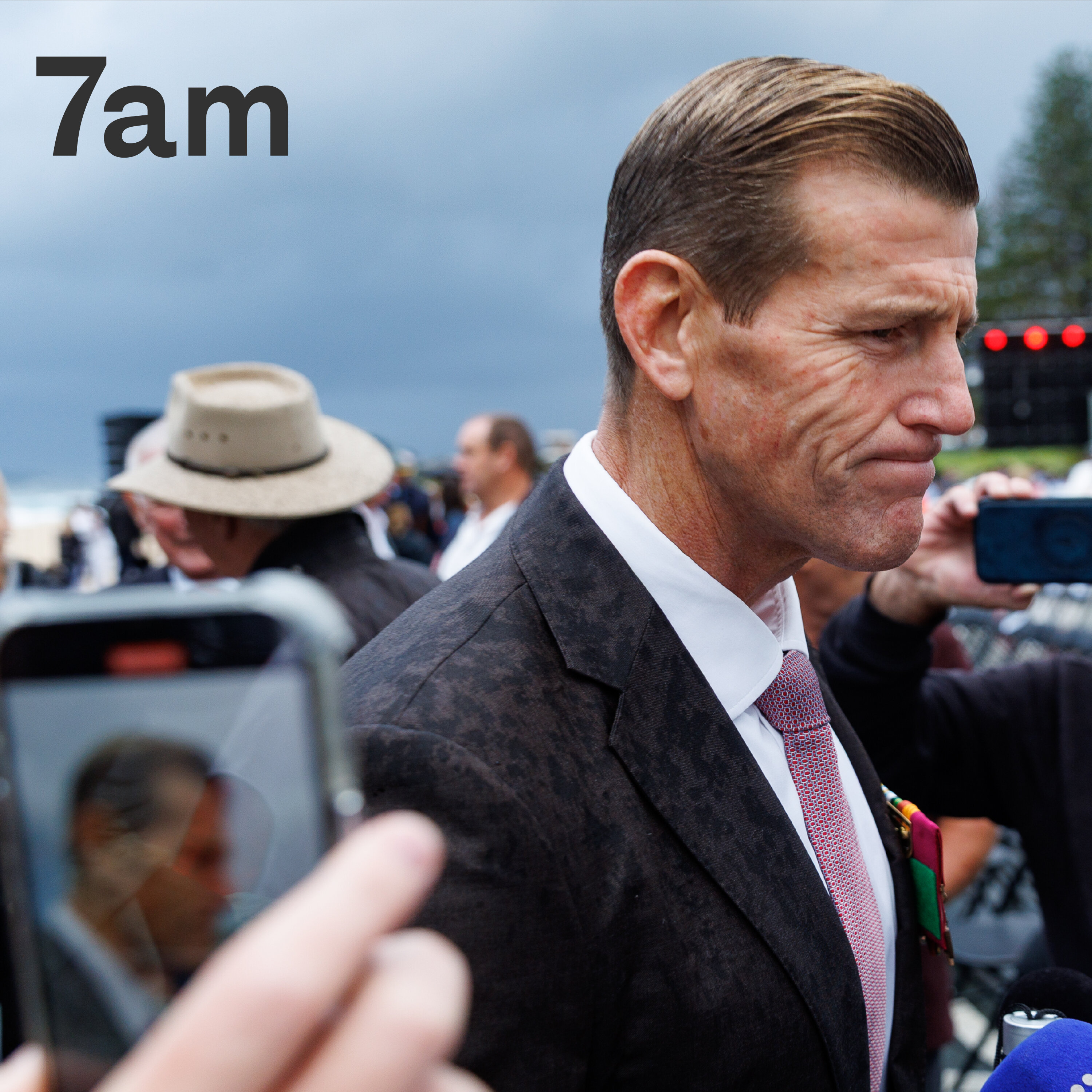
E2061 · 30 Sep 2026 · 13 min
Ben Roberts-Smith and the One Nation law change that could impact his trial
In April this year, Ben Roberts-Smith was arrested and charged with five counts of the war crime of murder. He’s now out on bail and maintains his innocence – and One Nation has swung its support behind him. Now, the minor party says it’s also seeking to make a change to the criminal code — a change that could make a big difference to Roberts-Smith’s upcoming trial. Today, journalist Ben McKelvey on the law One Nation wants changed — and what that could mean for Australia’s international standing. If you enjoy 7am , the best way you can support us is…
-
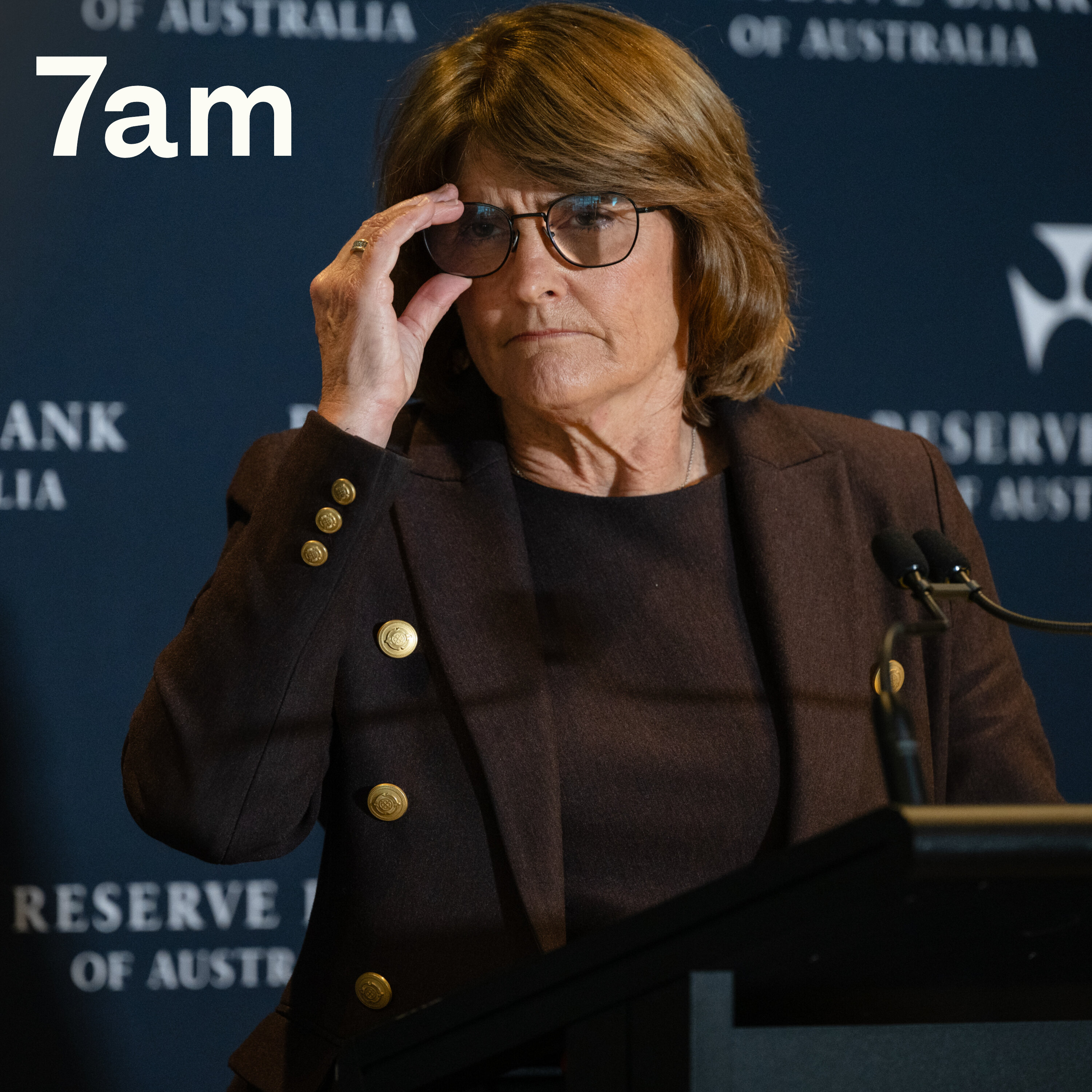
E2060 · 29 Sep 2026 · 16 min
Why interest rate pain is now worse than the bad old days of 17.5%
For years we’ve heard from older generations that the current interest rate pain is nothing compared to the horror of 17.5 per cent rates in the late ‘80s and early ‘90s. But now, as the Reserve Bank delivers its fourth hike this year, analysis shows the pain being inflicted on homeowners is comparatively worse. So, as the official cash rate hits a 15 year high of 4.6 percent – how bad could it get? Today, KPMG senior economist Terry Rawnsley on the chance of more interest rate hikes, the flow on effects of this latest hit, and whether we should be looking at…

Take it with you
The Melo app keeps playing with the screen off, works in the car and on your watch, wakes you to your station, and browses the whole catalogue offline. Free, no ads, no account.